Author: Rob Davenport

  • Chinese Social Media’s Viral F-35 “Disable” Post Shows How Online War Commentary Is Changing

    Chinese Social Media’s Viral F-35 “Disable” Post Shows How Online War Commentary Is Changing

    A viral Chinese social media post claiming to explain how an F-35 could be disabled has become a revealing case study in how modern war discourse now spreads online: not just through state media, official briefings, or military analysis, but through semi-independent technical personalities, nationalist audiences, and algorithm-driven amplification. The details of the post are less important than what its popularity reveals. In the middle of geopolitical conflict, social platforms are increasingly turning military speculation into mass entertainment, soft propaganda, and participatory information warfare all at once.

    Here is the clearest answer: the significance of this story is not that the public was given a trustworthy battlefield guide. It is that a highly charged military claim, framed by a technically confident creator and boosted by geopolitical tension, drew enormous attention because it offered audiences the feeling of insider knowledge during an active conflict.

    What Happened

    According to reporting from the South China Morning Post, a Chinese social-media account posted a video that allegedly outlined, at a detailed level, how an advanced US F-35 fighter could be countered. This article intentionally avoids repeating or amplifying sensitive operational details.

    That alone would have made it notable. But the timing mattered even more. The content appeared in the context of heightened Middle East conflict, where audiences were already primed to interpret any military-themed online content as either insight, influence, or informational warfare. Once the video went viral, the story became bigger than its original claims.

    The central issue is not whether the creator was genuinely authoritative. The issue is that millions of viewers were willing to treat highly technical, high-stakes military content as shareable public media.

    Why the Story Spread So Fast

    There are several reasons this kind of content performs so well online.

    • It promises forbidden knowledge. Audiences are naturally drawn to content that appears to reveal how elite military systems supposedly work or fail.
    • It flatters the viewer. People feel like they are seeing something strategic, secret, or expert-level that ordinary audiences do not understand.
    • It fits a geopolitical narrative. In tense conflicts, audiences want stories that suggest even the most advanced systems are vulnerable.
    • It performs well as propaganda-adjacent content. Even if unofficial, it can support broader narratives about technological parity, military overconfidence, or strategic weakness.

    That combination makes military “explainers” especially potent on social media. They can function simultaneously as analysis, morale content, entertainment, and influence material.

    Why the F-35 Is Such a Powerful Symbol in Stories Like This

    The F-35 is not just another aircraft in public imagination. It has become a symbol of American military sophistication, secrecy, cost, and technological prestige. Because of that, any viral claim about exposing a weakness in the platform is guaranteed to attract attention far beyond professional defense circles.

    That symbolic value matters. In the information age, war narratives are not only about battlefield outcomes. They are also about prestige and psychological leverage. A story that suggests a crown-jewel military platform might be vulnerable can spread rapidly even if audiences cannot independently verify the technical claims being made.

    This is one reason the article resonates so strongly: it is not just about an aircraft. It is about status, perception, and the possibility of puncturing the image of invulnerability.

    What Analysts and Skeptics Should Keep in Mind

    Readers should be cautious about treating viral military content as reliable simply because it sounds technical. Highly specific language, diagrams, confident narration, or engineering vocabulary can create an illusion of authority without proving the underlying claims.

    That is especially true in conflict environments where partisan audiences are eager for confirmation and platforms reward speed over verification. A creator does not need to be correct to go viral. They only need to sound plausible to people already motivated to believe the message.

    Researchers and skeptics would also note that social-media war content often collapses the distinction between analysis and advocacy. A creator may present themselves as an explainer while still operating inside a broader emotional and political narrative. That does not automatically make the content false, but it does mean the audience should question intent as well as accuracy.

    What Makes This Story More Important Than a Single Viral Clip

    The most important part of this story is not the specific claim about the F-35. It is the emerging pattern it represents: technically framed civilian content becoming part of geopolitical narrative battles.

    This is a major shift. There was a time when strategic military commentary was filtered through journalists, think tanks, retired officers, and defense publications. Now a technically literate social-media creator can publish a viral military explainer and immediately influence public conversation across borders.

    In practical terms, that means conflict-related information environments are becoming more decentralized, more emotionally charged, and harder to separate from nationalist performance. A viral post can function as commentary, morale-building, persuasion, and signaling all at once.

    Why This Matters Beyond China or Iran

    This kind of story matters globally because it signals how warfare narratives are evolving everywhere, not just in one country. Open-source intelligence culture, military fandom, tech-nationalism, and social-media incentive structures are increasingly blending together. The result is a world where conflict analysis is not just produced by institutions, but also by creators competing for reach, relevance, and ideological alignment.

    That should concern anyone trying to understand modern information warfare. The danger is not simply that audiences may learn inaccurate things. It is that emotionally satisfying technical narratives can become more persuasive than verified analysis.

    For a broader look at how mystery, power, and strategic secrecy collide in public discourse, readers may also be interested in The Mellon Leak: High-Def Satellite UFO Images That Could Change Everything and World War 3, Iran, and Prophecy: The Investigation Into Why Apocalyptic Theories Keep Converging Here. The subjects are different, but the pattern is familiar: when public access is partial, narratives often become more dramatic than the evidence available to ordinary audiences.

    Final Assessment

    The viral Chinese social-media post about disabling an F-35 is important not because it should be treated as a public instruction manual, but because it shows how online military discourse now works. Technical aesthetics, geopolitical tension, and symbolic targets can combine to create massively shareable content that feels authoritative whether or not it deserves that trust.

    That makes this story bigger than one post. It is a warning about the future of conflict media itself.

    FAQ

    What was the viral Chinese social media post about?

    It was a widely circulated post or video that reportedly claimed to explain how an F-35 could be countered or disabled. This article intentionally avoids repeating sensitive operational details.

    Why did the post get so much attention?

    Because it combined military prestige, geopolitical tension, technical-sounding authority, and the viral appeal of allegedly revealing insider knowledge during an active conflict environment.

    Does viral military analysis on social media count as reliable information?

    Not necessarily. Technical presentation can create a strong impression of authority, but audiences still need to question sourcing, intent, and whether claims are independently verifiable.

    Why is the F-35 such a symbolic target in these narratives?

    The F-35 represents advanced US military power and technological prestige, so stories about exposing weaknesses in it carry outsized emotional and geopolitical impact.

    Related Articles


    This article was created using Media Blaster – Your content production specialist. Visit www.mediablaster.io for more information.

  • Unmasking the Sea Peoples: The 1177 BCE Apocalypse and the Collapse of Bronze Age Empires

    Unmasking the Sea Peoples: The 1177 BCE Apocalypse and the Collapse of Bronze Age Empires

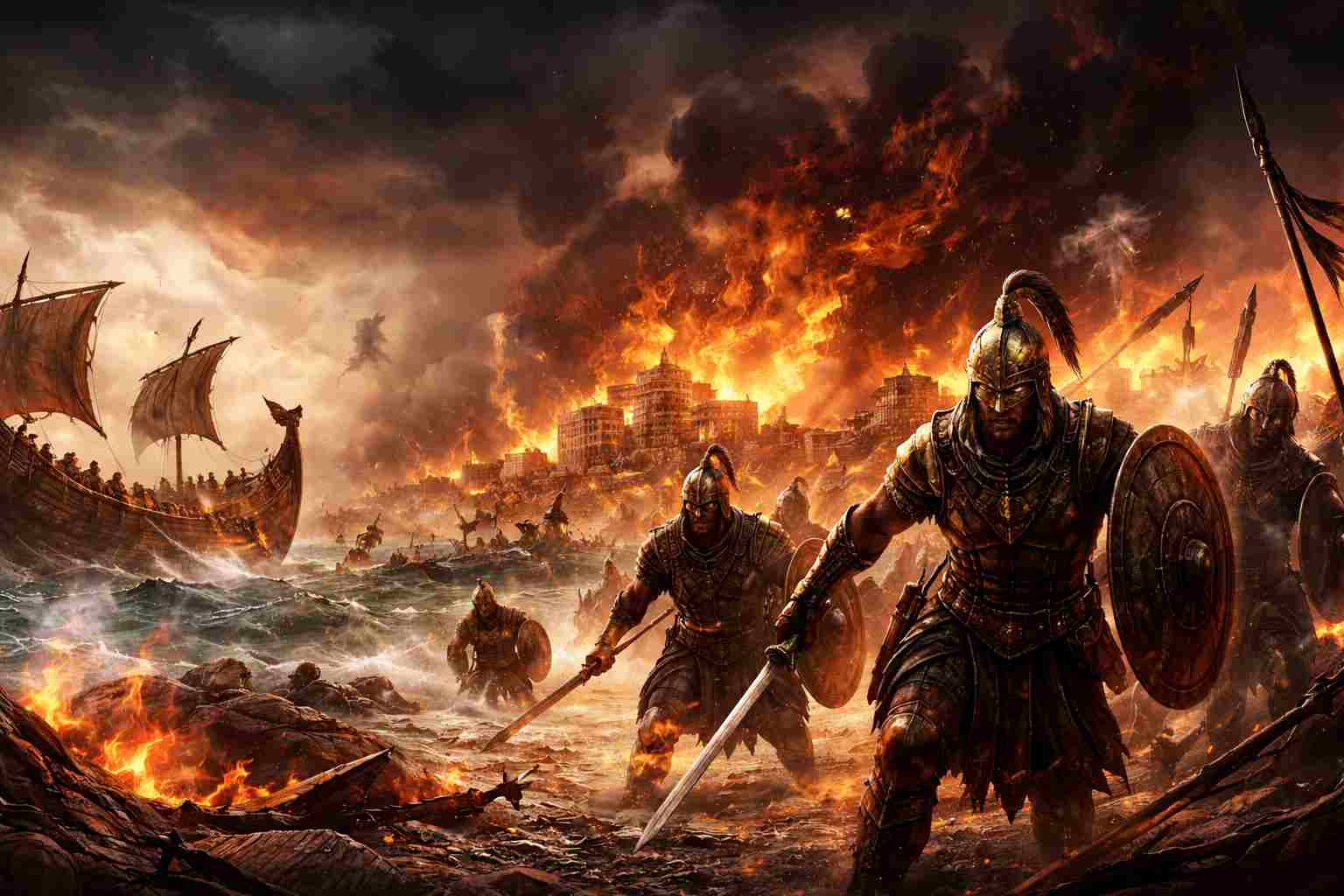
    When the Bronze Age came crashing down, it wasn’t a quiet decline but a catastrophe so profound that historians sometimes describe it as an apocalypse. Around 1177 BCE, the interconnected world of palaces, scribes and merchants stretching from Greece and Anatolia to Egypt disintegrated. Cities burned, trade routes vanished and writing systems vanished. In modern popular culture this calamity is often blamed on enigmatic raiders called the Sea Peoples. Conspiracy theorists weave tales of lost civilizations, alien weapons or Atlantean refugees, while archaeologists struggle with fragmentary evidence. This article explores what we actually know about the Sea Peoples, why the Bronze Age world collapsed, and how the mystery has become a magnet for speculation.

    The Bronze Age World and the Stage for Collapse

    To appreciate the shock of 1177 BCE, it helps to picture the Late Bronze Age as a “globalized” network of powerful kingdoms. From c. 1500 to 1200 BCE, empires like Egypt, the Hittites and Mycenaean Greece maintained diplomatic alliances, exchanged letters and arranged royal marriages. Their economies depended on long‑distance trade: copper from Cyprus mixed with tin from as far away as Afghanistan to make bronze, while luxury goods and ideas flowed along sea lanes. This prosperity fostered monumental architecture, sophisticated writing systems and cosmopolitan port cities.

    Yet this network was fragile. Scholars investigating the Bronze Age collapse note that between c. 1250 and 1150 BCE major cities were destroyed and writing systems disappeared, ushering in a “dark age” in which iron replaced bronze and trade relations were disrupted. Proposed causes range from natural catastrophes (earthquakes), climate change–induced drought and famine, internal rebellions and invasions, to a domino‑like systems collapse when trade routes failed. The Sea Peoples were once regarded as the primary culprits, but modern scholarship sees them as one piece of a larger puzzle.

    Who Were the Sea Peoples?

    The term “Sea Peoples” is not found in ancient texts; it was coined by 19th‑century Egyptologist Gaston Maspero to describe a confederacy of seaborne raiders mentioned in Egyptian inscriptions. Ancient records never identify them collectively, only listing individual groups. Egyptian sources describe a confederacy of tribes—Sherden, Shekelesh, Lukka, Tursha, Akawasha and others—who attacked coastal towns across the Mediterranean between roughly 1276 and 1178 BCE. These groups are known chiefly through battle narratives carved on Egyptian monuments: steles and temple reliefs speak of foes who “came from the sea in their war ships and none could stand against them.” The nationality of the Sea Peoples remains a mystery; scholars have proposed connections to Etruscans, Philistines, Mycenaeans, Sardinians or Minoans, but no ancient inscription explains their origins.

    Nine Groups and Two Battles

    Our main evidence comes from two Egyptian pharaohs. Merneptah (r. 1213 – 1203 BCE) recorded that in his fifth regnal year (around 1207 BCE) he fought invaders identified as the Shardana, Shekelesh, Lukka, Teresh and Ekwesh. Ramesses III (r. 1186 – 1155 BCE) later claimed to have defeated a coalition that included the Shardana, Shekelesh, Tjekker, Denyen, Weshesh and Peleset. Together these inscriptions list nine distinct groups, two of which appear in both lists. Ramesses III’s temple at Medinet Habu preserves reliefs showing naval battles: ships with high prows, feathered‑helmeted warriors and Egyptian soldiers firing arrows from the shore. An inscription there boasts that “the foreign countries made a conspiracy in their islands” and that no land could withstand their arms.

    These records are often interpreted as two waves of attacks—one circa 1207 BCE, another around 1177 BCE—that battered Egypt and neighboring states. The first may correspond to an invasion allied with Libyans; the second, recorded in year eight of Ramesses III, depicts a massive sea battle in which Egypt repelled the attackers. The Egyptians claimed victory, but other civilizations were less fortunate: archaeological evidence shows that cities like Hattusa (capital of the Hittite empire) and Megiddo in Canaan were destroyed.

    Migrants, Mercenaries or Pirates?

    Because the Sea Peoples vanish from history as suddenly as they appear, scholars debate who they were and why they attacked. Egyptian texts sometimes depict them with families in tow, suggesting they were not just raiders but migrants or refugees. One theory holds that they originated in the western Mediterranean—perhaps the Aegean, Sardinia or even the Iberian Peninsula—and were driven eastward by drought and climate change. Linguistic hints link the Lukka to Lycia in southwestern Turkey and the Sherden to Sardinia, while the Peleset are usually identified with the Philistines. Scholars such as Eric Cline emphasize that there is no consensus; the confederacy may have comprised displaced peoples from multiple regions who banded together as they moved along the eastern Mediterranean.

    Others see the Sea Peoples as mercenaries. Ramesses II’s inscriptions mention them serving both with and against Egypt. They may have been skilled seafarers hired by rival powers, switching loyalties as opportunities arose. The discovery of a letter from the king of Ugarit pleading for help against unknown attackers indicates that coastal states faced maritime threats they could not identify. In this reading, the Sea Peoples were part of a broader wave of upheaval rather than its root cause.

    Multiple Stressors: Drought, Earthquakes and Systems Collapse

    Even if seaborne raiders contributed to the violence, modern research suggests that the Bronze Age collapse resulted from a “perfect storm” of disasters. A megadrought between roughly 1250 and 1100 BCE left the eastern Mediterranean parched, as shown by sediment cores from the Sea of Galilee. Famine years correspond to the period when Egyptian texts record invasions; Cline argues that desperate climate refugees might have been among the Sea Peoples. A rapid‑fire series of earthquakes between 1225 and 1175 BCE shook the region. When combined with epidemics, internal rebellions and the loss of trade networks that supplied bronze‑making materials, these crises overwhelmed Bronze Age systems.

    This broader context matters. The American Society of Overseas Research notes that the Sea Peoples are known primarily from two Egyptian inscriptions and that archaeologists have long overemphasized their role. Eric Cline, author of 1177 BC: The Year Civilization Collapsed, argues that they became scapegoats; he doubts they were responsible for all the destructions attributed to them. Instead, the fall of empires likely resulted from interconnected failures—natural, economic and social—that created cascading collapses. In this sense, the Sea Peoples were as much victims of the Bronze Age collapse as they were agents of it.

    Conspiracy Theories and Speculative Connections

    The mystery surrounding the Sea Peoples has fueled a cottage industry of conspiracies. Because they appeared suddenly, left no written records and seem to have brought down civilizations, fringe theorists see them as evidence of lost technologies or aliens. Some claim the Sea Peoples were survivors of Atlantis, citing Plato’s tale of a seafaring civilization that sank beneath the waves. Others draw on modern television shows about “ancient aliens,” suggesting advanced beings equipped the Sea Peoples with otherworldly weapons. A few point to the absence of graves and propose that they were time travellers or interdimensional beings.

    While entertaining, these theories lack evidence. The term “Sea Peoples” is itself a modern construct; ancient Egyptians merely described unknown groups who came by sea. The reliefs at Medinet Habu show ordinary warships, not anti‑gravity craft. There are no inscriptions about alien interventions. Archaeologists find that Bronze Age collapses can be explained through familiar factors: climate change, earthquakes and human migration. Even the dramatic rumours of mysterious fields or energy weapons (inspired by modern podcasts) can be traced to misreadings of battle scenes where swirling smoke and churning waves create visual confusion. Conspiracy‑minded readers may also encounter long‑tail keyword searches like “Sea Peoples aliens,” “Sea Peoples Atlantis,” “ancient apocalypse 1177 BC,” or “Bronze Age collapse conspiracy theory.” Exploring these ideas can be fun, but they should be distinguished from what the archaeological record actually supports.

    Aftermath and Legacy

    Despite the devastation, the collapse did not spell the end of civilization. In the centuries following 1177 BCE, new cultures emerged. The so‑called Greek Dark Age saw the rise of oral traditions that later inspired Homeric epics. The Iron Age ushered in cheaper and stronger tools and weapons; once copper and tin trade collapsed, iron production expanded. The Philistines, often identified with the Peleset group of Sea Peoples, established cities in what is now Israel; Egyptian texts suggest Ramesses III settled captured Sea Peoples in fortresses and strongholds. While the Hittite empire vanished and Mycenaean palaces fell, Egypt survived and Assyria eventually rose to dominance.

    The Sea Peoples’ mystery endures because it embodies the fragility of complex societies. As modern scholars note, the Bronze Age world’s interdependence made it vulnerable to cascading failures. For readers confronting climate change, pandemics and geopolitical upheaval today, the story resonates as a warning: no civilization is immune to systemic shocks. At the same time, the collapse set the stage for renewal; the rediscovery of iron, the spread of alphabetic writing and the birth of classical Greek culture all emerged from the ashes.

    Explore Further

    Interested readers can dive deeper into this mystery through the Unexplained History podcast and articles. The episode “Apocalypse 1177 BC – The Mystery of the Sea Peoples” on Unexplained History introduces listeners to the catastrophe, suspects and theories of the collapse, highlighting how the Hittite empire burned, Mycenaean palaces crumbled and Egypt fought for its life. For scholarly context, Joshua J. Mark’s essay in the World History Encyclopedia provides a balanced overview of the Sea Peoples and notes that the term is modern, the tribes’ origins remain unknown and the pharaohs Ramesses II, Merneptah and Ramesses III recorded battles against them. The American Society of Overseas Research offers a nuanced perspective, cautioning that the Sea Peoples were likely scapegoats and that multiple stressors—including drought, famine and earthquakes—contributed to the collapse. Finally, the history.com article “What Caused the Bronze Age Collapse?” summarizes current research on megadroughts and earthquake storms and reminds readers that the Sea Peoples were probably both raiders and refugees. If you want an overview of the wider Bronze Age collapse, the World History Encyclopedia article explains the broader context of drought, earthquakes and systems collapse.

    The mystery is unlikely to be solved completely, but that is part of its appeal. Between factual analysis and imaginative speculation lies a story that continues to inspire scholars, storytellers and conspiracy theorists alike. Whether you search for “Sea Peoples origin theories,” “Bronze Age collapse causes,” or even “Sea Peoples aliens,” remember that the truth is probably both simpler and more complex than any single explanation. The collapse of 1177 BCE reminds us that civilizations rise and fall on the tides of history—and that understanding the past can help us navigate the uncertainties of the present.


  • The Third Secret of Fatima: What the Vatican Has Hidden for Over a Century

    The Third Secret of Fatima: What the Vatican Has Hidden for Over a Century

    On May 13, 1917, three shepherd children—Lucia dos Santos, Jacinta Marto, and Francisco Marto—reported seeing a “lady brighter than the sun” in a hollow near Fátima, Portugal. Over the next six months, Our Lady of Fátima would deliver three secrets that would spark decades of speculation, conspiracy theories, and questions about what the Vatican has truly kept hidden from the world.

    Check out Unexplained History for a detailed breakdown of the event!

    The Three Secrets of Fátima Revealed

    The First Secret: A Vision of Hell

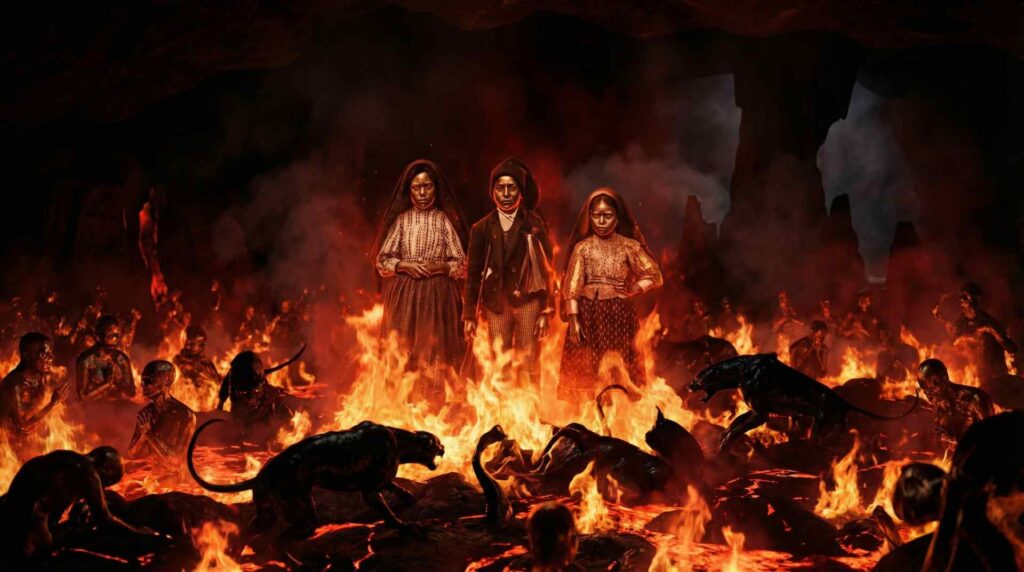
    The first secret of Fátima was a terrifying vision of hell. Lucia reported seeing “a sea of fire” where demons and souls writhed in agony. This apocalyptic vision was meant to emphasize the consequences of humanity straying from faith. But it was the second and third Fátima secrets that would truly capture the world’s imagination—and fuel conspiracy theories for generations.


    The Second Secret: World War II and Russia’s Conversion

    The second secret of Our Lady of Fátima delivered an eerily accurate prophecy. The children were told that World War I would soon end, but “if [people] do not cease offending God, a worse war will break out during the pontificate of Pius XI.”

    The prophecy came true. World War II erupted. But the Fátima prophecy went further, calling for the consecration of Russia to the Immaculate Heart of Mary to prevent its errors from spreading. This has led endless debate: Was the “conversion of Russia” truly accomplished, or does the secret point to future events still unfolding?

    The Third Secret of Fatima: The Great Cover-Up

    What Was Actually Revealed in 2000

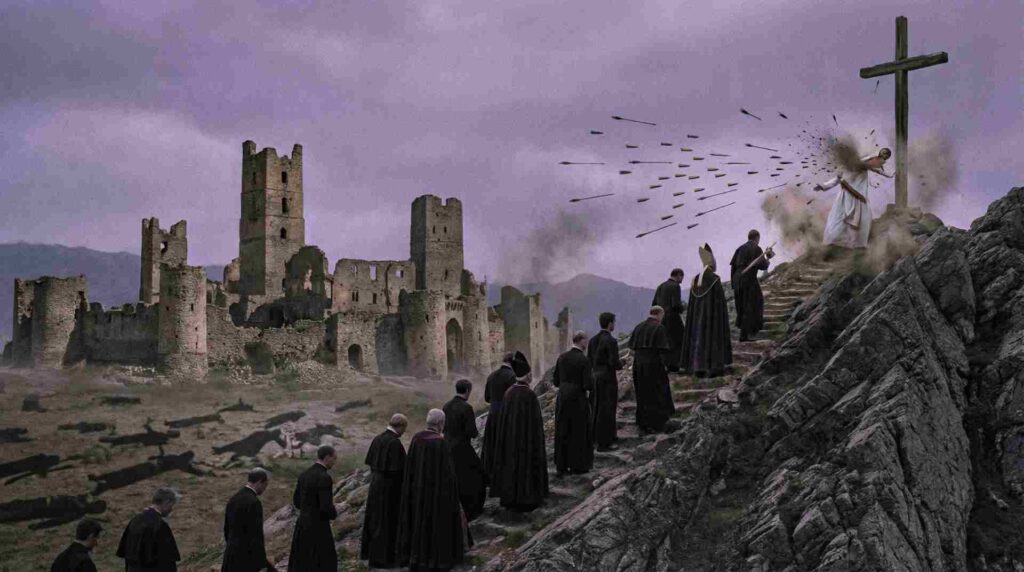
    In June 2000, the Vatican finally released what they claimed was the complete text of the third secret of Fátima. It described an angel with a flaming sword, the persecution of Christians, and the assassination of a “Bishop in White”—interpreted as the 1981 assassination attempt on Pope John Paul II.

    But skeptics immediately questioned: Is this the full secret?

    The Conspiracy: Is There a Missing Fourth Secret?

    Numerous researchers and theologians have argued that the third secret of Fátima released by the Vatican is incomplete. Sister Lucia reportedly wrote the secret on four sheets of paper, yet the Vatican published only three. Some conspiracy theorists suggest the authentic third secret of Our Lady of Fátima contains:

    • The complete collapse of the Catholic Church from within
    • Apostasy affecting the highest levels of the hierarchy
    • Nuclear catastrophe triggered by human hands
    • The arrival of the Antichrist in Rome

    Cardinal Oddi, a close friend of Pope John Paul II, allegedly stated before his death that the published version was “not the complete secret.”

    The 1917 Fátima Prophecy: End Times Connections

    The Miracle of the Sun

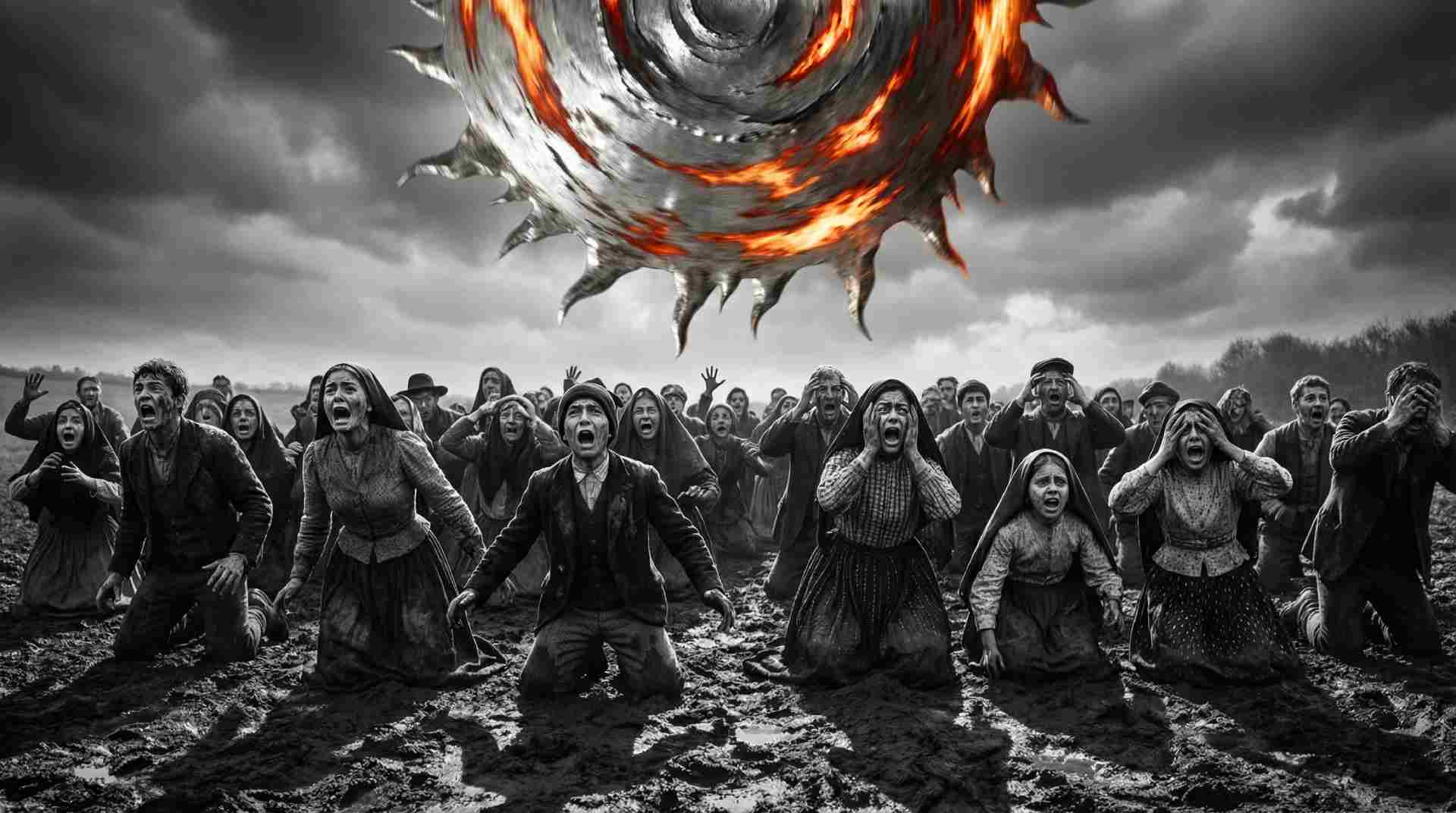
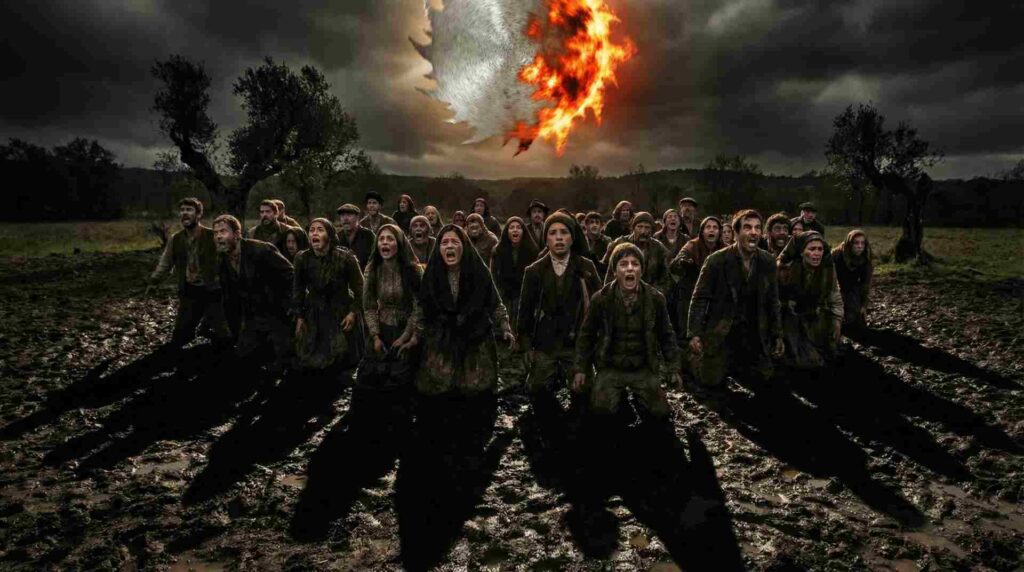
    On October 13, 1917—the final apparition—over 70,000 witnesses reported seeing the sun “dance” in the sky, spin, and plunge toward the earth. This “Miracle of the Sun” validated the children’s visions but left scientists baffled. How could three uneducated peasant children predict a celestial phenomenon witnessed by thousands?

    Jacinta and Francisco’s Mysterious Deaths

    Both younger visionaries died within two years of the apparitions—victims of the Spanish Flu pandemic. Jacinta specifically predicted her own death, claiming she would die alone but Francisco would wait for her. Before dying, Jacinta reportedly received additional secrets about the end times that were never revealed to Lucia or made public.

    What Is the Real Third Secret of Fatima?

    The Vatican’s Documented Suppression

    The Vatican sat on the third secret of Fátima for 83 years. Even after the 2000 release, documents remain sealed in the Holy Office archives. Why such prolonged secrecy? Conspiracy researchers point to:

    • Sister Lucia’s alleged silencing by Church authorities
    • Confiscated letters and diaries
    • The consistent refusal to consecrate Russia specifically in union with all bishops
    • The appearance of secret societies within the Catholic hierarchy after Vatican II

    The Fatima Prophecy and Modern Events

    Russia’s Role: Fulfilled or Ignored?

    Skeptics argue that the 1984 consecration performed by Pope John Paul II was invalid—Russia was never mentioned by name. Since then, Russia has indeed spread its “errors” globally. Some Fatima conspiracy theorists connect this to:

    • The rise of secular communism in the West
    • The degradation of traditional Christian values
    • Geopolitical conflicts leading toward nuclear confrontation

    Jacinta’s Vision: “A Time When the Faith Will Vanish”

    Before her death, Jacinta Marto delivered a chilling additional prophecy: “A time will come when the faith will vanish even from Italy. The Church will be darkened.” For conspiracy-minded readers, this points directly to apostasy within the Catholic Church hierarchy itself—a theme echoed in the suppressed portions of the third secret.

    Conclusion: The Secret Yet to Be Revealed

    The third secret of Fátima remains one of Catholicism’s most tantalizing mysteries. Whether the Vatican possesses the complete text, whether Sister Lucia was silenced, or whether the final revelation points to apocalyptic events still ahead—these questions continue to drive global speculation.

    What is undeniable: three children in 1917 predicted a world war, the rise of Soviet Russia, and an assassination attempt on a future pope. If they were right about those details, what else might the third secret of Our Lady of Fátima contain that we haven’t been told?

    The secrets of Fátima continue to whisper across time, challenging believers and conspiracy theorists alike to question what power structures have hidden—and what future events may yet fulfill the final prophecy.

    Check out Unexplained History for a detailed breakdown of the event!

  • Top 10 Ancient Technologies That Shouldn’t Exist

    Top 10 Ancient Technologies That Shouldn’t Exist

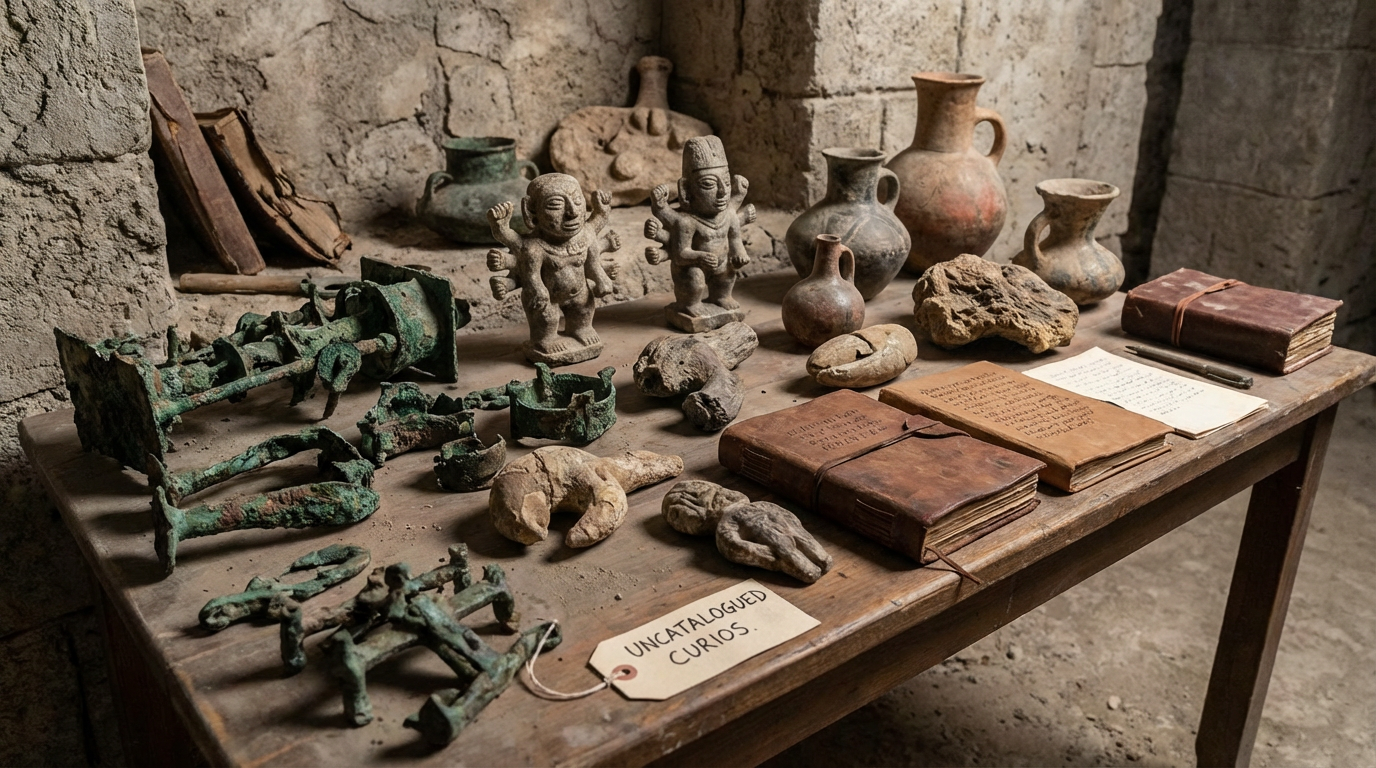
    Human history is full of inventions that changed the world — but some artifacts and structures raise uncomfortable questions. From mechanical computers buried in shipwrecks to stone blocks cut with machine-like precision, certain ancient technologies seem to outpace the tools we thought were available at the time.

    Are they accidental byproducts of skilled craftsmanship, misunderstood fragments of lost traditions, or evidence of knowledge now forgotten?

    In this article we examine the top 10 ancient technologies that shouldn’t exist, summarize the mainstream and fringe explanations, and point to the evidence that makes each case worth investigating.

    The Baghdad Battery

    What it is: Clay jars from Mesopotamia (approx. 200 BCE–200 CE) that, when fitted with a copper tube and iron rod, can hold an electrochemical charge.

    Why it’s puzzling: Electrochemical cells require knowledge of corrosion and conductive salts — unexpected for the presumed use-case.

    Leading theories: primitive battery (electroplating?), ritual object, storage vessel misinterpreted. Why it matters: If intentionally used for electricity, it rewrites assumptions about ancient chemistry and metallurgy.

    The Antikythera Mechanism

    What it is: A 2,000-year-old geared device recovered from a Greek shipwreck, capable of predicting astronomical positions and eclipses.

    Why it’s puzzling: Complex gear trains and astronomical computation suggest Hellenistic engineering at a level previously thought impossible.

    Leading theories: lost tradition of Hellenistic mechanical engineering; a singular genius workshop; prototypes of a broader, now-lost technology.

    Why it matters: Demonstrates advanced mechanical design and the possibility of ancient scientific instrumentation on par with much later periods.

    Puma Punku’s Precision Stonework

    What it is: Massive and precisely cut stone blocks in the Tiwanaku complex (Bolivia) featuring tight joints and machining marks.

    Why it’s puzzling: Some blocks are too large to move easily and have tolerances that modern stonemasons struggle to match without power tools.

    Leading theories: advanced ancient stone-working techniques (abrasion with sand and hard stone), excellent workmanship spanning generations, or alternative hypotheses involving lost technology.

    Why it matters: Forces a re-evaluation of pre-Incan engineering and logistic capability.

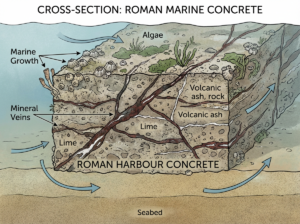
    Roman Concrete

    What it is: Coastal Roman concrete structures (e.g., harbors) that remain durable after 2,000 years.

    Why it’s puzzling: Modern concrete often degrades faster; Roman mixes used volcanic ash (pozzolana) that seems to strengthen in seawater.

    Leading theories: unique chemistry leads to self-healing properties; mix ratios and raw materials produced superior long-term performance.

    Why it matters: Understanding Roman concrete could inspire more durable, low-carbon building materials today.

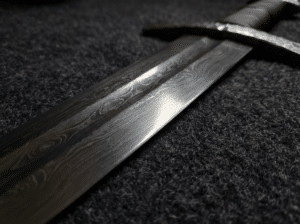
    Damascus Steel

    What it is: Ancient Near Eastern and South Asian sword steel famed for its strength and distinctive patterns. Why it’s puzzling: The original forging methods were lost; attempts to replicate true “Damascus” properties remain incomplete. Leading theories: particular ore sources (high carbon and trace elements), crucible techniques, and thermomechanical processing created microstructures like carbon nanotube-like patterns. Why it matters: Offers insights into lost metallurgical knowledge that could inform modern materials science.

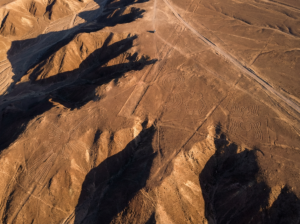
    The Nazca Lines

    What it is: Enormous geoglyphs in Peru—lines and figures visible from above.

    Why it’s puzzling: Their scale and precision raise questions about the surveying and purpose given pre-Columbian technologies. Leading theories: ritual pathways, astronomical markers, markers for underground water, or communal projects with social meaning.

    Why it matters: Shows large-scale landscape engineering and complex cultural planning.

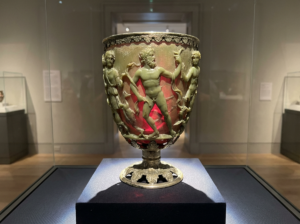
    The Lycurgus Cup

    What it is: A 4th-century Roman glass cup that changes color depending on light direction due to embedded nanoparticles.

    Why it’s puzzling: The cup’s dichroic effect anticipates modern nanotechnology and optical engineering.

    Leading theories: fortuitous ancient technique for glassmaking or deliberate control of material composition.

    Why it matters: Reveals sophisticated empirical material knowledge and raises questions about how much ancient craftsmen understood of materials at microscopic scales.

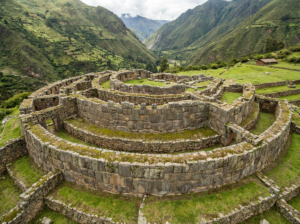
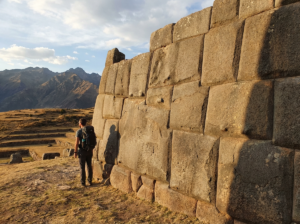
    Sacsayhuamán Megaliths

    What it is: Gigantic stones fitted so precisely that even a knife blade cannot be inserted between them.

    Why it’s puzzling: The transport, dressing, and placement of stones weighing hundreds of tons with no iron tools remain controversial.

    Leading theories: incremental shaping with hammerstones and meticulous fitting, ritualized labor organization, or tools/techniques lost to time.

    Why it matters: Challenges assumptions about logistics, labor, and engineering in pre-Columbian societies.

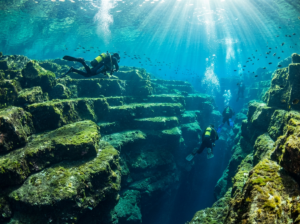
    Yonaguni Monument

    What it is: Underwater stepped terraces off Japan’s Yonaguni coast that look like carved stone architecture.

    Why it’s puzzling: Debate continues whether it’s natural bedding planes sculpted by waves or intentionally shaped structures.

    Leading theories: natural geological formations vs. submerged human-made terraces from a lower sea-level era.

    Why it matters: If man-made, rewrites local prehistory and ancient coastal engineering; if natural, highlights how geological processes can mimic architecture.

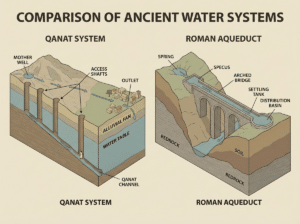
    Ancient Water Management and Hydraulic Devices

    What it is: Sophisticated qanat systems, hydraulic mining, and Roman aqueduct hydraulics spanning continents.

    Why it’s puzzling: Scale, precision, and longevity suggest advanced surveying and hydrological knowledge.

    Leading theories: empirical engineering traditions transmitted across generations; lost manuals and apprenticeship systems.

    Why it matters: Shows that large-scale environmental engineering was possible long before industrialization.

    Conclusion

    These artifacts and structures remind us that the past still holds surprises. Whether explained by lost techniques, exceptional individual artisans, or incomplete archaeological records, revisiting these technologies can yield practical lessons for modern science and engineering. Which of these would you like us to investigate next? We can produce a deep-dive article, a short video script, or a full research plan.

  • South Atlantic Anomaly: Sign of an Impending Cataclysm?

    South Atlantic Anomaly: Sign of an Impending Cataclysm?

    The Earth’s magnetic field is showing strange behavior in a region called the South Atlantic Anomaly (SAA) – a weakened patch of magnetism hovering over South America and the southern Atlantic. Could this mysterious “dent” in our planet’s protective magnetic shield be a harbinger of global upheaval? Some researchers outside the mainstream believe it might be. This article explores alternative theories that interpret the SAA and Earth’s changing magnetism as warning signs of an upcoming cataclysm. We’ll delve into the provocative ideas of Chan Thomas, Charles Hapgood, and Immanuel Velikovsky – theorists who posit sudden pole shifts, crustal displacements, and cosmic collisions – and see how their views connect to modern observations of the SAA. While conventional science remains cautious, these alternative interpretations offer a dramatic, speculative glimpse into how a weakening magnetic field could spell disaster on a planetary scale.

    The South Atlantic Anomaly: A Weakening Shield

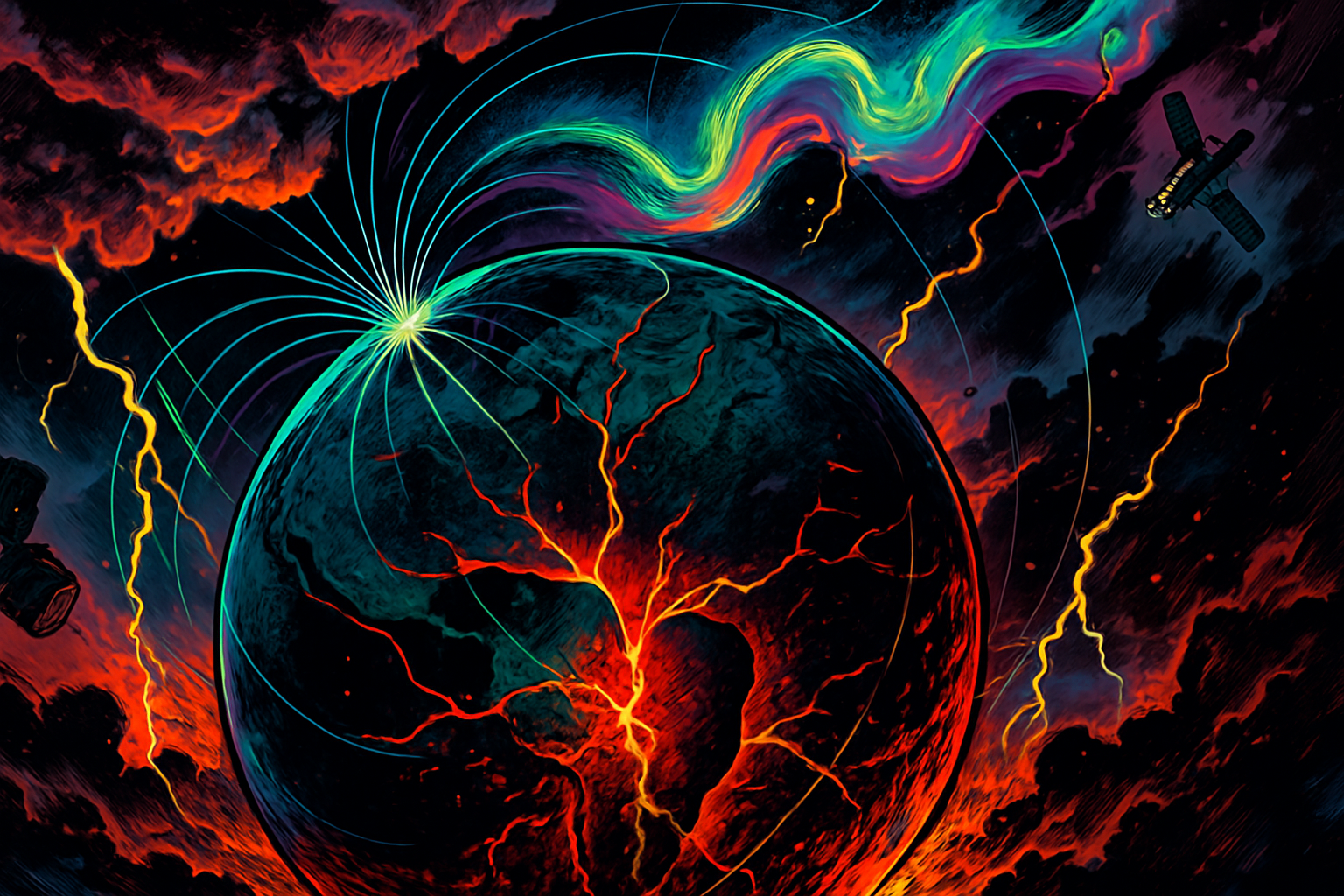
    (The spacecraft-killing anomaly over the South Atlantic) The South Atlantic Anomaly (SAA) is essentially a weak spot in Earth’s magnetic field. It’s the region where our planet’s magnetic force is at its weakest, centered off the coast of Brazil and stretching across parts of South America and southern Africa (South Atlantic Anomaly – Wikipedia) (South Atlantic Anomaly – Wikipedia). In technical terms, the inner Van Allen radiation belt – a zone of charged particles trapped by Earth’s magnetism – dips unusually close to the Earth’s surface here, about 200 km up (South Atlantic Anomaly – Wikipedia) (The spacecraft-killing anomaly over the South Atlantic). As a result, satellites and spacecraft that pass through the SAA get bombarded with higher levels of radiation, sometimes causing glitches or even complete failure of onboard electronics (The spacecraft-killing anomaly over the South Atlantic) (The spacecraft-killing anomaly over the South Atlantic). In the visualization above, data from the European Space Agency’s Swarm satellites show the magnetic field strength at Earth’s surface – cooler blue colors indicate weaker fields. The large dark-blue patch over the South Atlantic is the SAA itself (The spacecraft-killing anomaly over the South Atlantic), where field intensity is significantly lower (around 22,000 nanoteslas, versus over 50,000 nT in stronger areas).

    What’s truly intriguing is that the SAA has grown and intensified in recent decades. Measurements show that between 1970 and 2020, the minimum field strength in this area dropped from about 24,000 nT to 22,000 nT, while the area of the anomaly expanded and drifted westward at roughly 20 km per year (ESA – Swarm probes weakening of Earth’s magnetic field). Globally, Earth’s magnetic field has weakened by about 9% on average over the last 200 years (ESA – Swarm probes weakening of Earth’s magnetic field). This has raised concern among scientists, because the magnetic field is our planetary shield against dangerous solar and cosmic radiation (ESA – Swarm probes weakening of Earth’s magnetic field). In everyday life the SAA’s effects aren’t directly felt at ground level – it doesn’t cause people or animals any known harm. However, it is a clear indicator that Earth’s magnetic field is dynamic and changing. Could these changes be early tremors of something bigger, like a complete flip of the magnetic poles or even a physical upheaval of Earth’s crust? Mainstream geophysicists say the current fluctuations are within historical norms (ESA – Swarm probes weakening of Earth’s magnetic field). But in the view of catastrophist theorists, the SAA might be more than a quirk – it could be a warning sign that dramatic changes are coming.

    Geomagnetic Reversal and Pole Shift Fears

    To understand why the SAA gets tied to doomsday predictions, we need to talk about geomagnetic pole shifts. A geomagnetic reversal means the north and south magnetic poles swap places. This has happened many times in Earth’s past (the last full reversal was ~780,000 years ago), and some scientists note we might be “overdue” since such flips tend to occur roughly every 250,000 years on average (ESA – Swarm probes weakening of Earth’s magnetic field). During a reversal, the magnetic field weakens and becomes chaotic before building up again in the opposite orientation. Importantly, Earth’s rotation axis doesn’t physically flip during a geomagnetic reversal – it’s a magnetic phenomenon, not a literal flipping of the planet. The geologic record indicates past magnetic reversals did not coincide with global calamities that would be obvious to us (species extinctions or civilization-ending events). In other words, standard science assures us that a magnetic pole flip, while it could disrupt technology and expose us to more radiation temporarily, is not expected to unleash earthquakes or floods overnight.

    However, the alternative thinkers we’re examining take a more dire view. They suggest a connection between Earth’s magnetism and its crust or even its orientation in space, meaning a big magnetic upheaval could trigger physical pole shifts or crustal slippage – essentially planetary chaos. According to these theorists, the weakening field we observe (manifested strongly in places like the SAA) might foreshadow a rapid shift of Earth’s poles or other cataclysmic events. Let’s explore their ideas one by one.

    Chan Thomas and the Cycle of Cataclysms

    One of the most intriguing figures in alternative cataclysm theories is Dr. Chan Thomas, author of “The Adam and Eve Story”. Thomas’ book is shrouded in mystery and intrigue, in part because the CIA classified it for over 50 years. Only a portion of it was eventually released to the public, fueling speculation about its contents (Understanding Cataclysmic Pole Shift Theories | Coconote). In this book, Thomas lays out a stark prediction: Earth undergoes catastrophic global upheavals roughly every 6,500 years, and we’re due for another one soon (This Book Classified by CIA for More Than 50 Years Warned How the World Will End). He believed these cataclysms are linked to reversals or disturbances in Earth’s magnetic field. In Thomas’s view, when the magnetic field reaches a certain tipping point of weakness (as might be hinted by the SAA today), the entire planet’s balance is disrupted. The result is a rapid shifting of the Earth’s crust and a massive pole shift – a disaster that essentially “resets” civilization.

    Thomas dramatically connects past mythical disasters to this cycle. He cites events like the Biblical Flood of Noah (~6,500 years ago by his count) and even earlier events (~11,500 years ago, which he poetically calls the time of “Adam and Eve”) as previous cataclysms in this cycle (This Book Classified by CIA for More Than 50 Years Warned How the World Will End). According to Thomas, these weren’t just allegories or localized floods – they were global, civilization-ending catastrophes triggered by geomagnetic reversals and ensuing crustal slippage. He writes ominously, “Like Noah’s 6,500 years ago… like Adam and Eve’s 11,500 years ago… This, too, will come to pass.” (This Book Classified by CIA for More Than 50 Years Warned How the World Will End)

    What would such a pole shift cataclysm look like? Thomas describes an apocalyptic scenario very much in line with popular “end of the world” movies. As the Earth’s crust suddenly shifts and the poles relocate, “earthquakes, supersonic winds, and massive tsunamis will devastate continents” (Understanding Cataclysmic Pole Shift Theories | Coconote). Imagine entire landmasses shaking and water and air literally moving faster than the spinning Earth. Thomas suggests that as the crust stops over the core, the atmosphere and oceans keep rotating, resulting in 1,000 mph winds and mega-tsunamis that scour the surface (Understanding Cataclysmic Pole Shift Theories | Coconote). Cities would be pulverized, coastlines submerged. He even speculates that the sky itself could appear to “roll” as the heavens shift from our perspective. After the chaos, new ice caps rapidly form in now-shifted polar regions, flash-freezing whatever was there before. Humanity’s survivors – if any – would be thrust back into the Stone Age, their advanced civilizations erased (Understanding Cataclysmic Pole Shift Theories | Coconote) (Understanding Cataclysmic Pole Shift Theories | Coconote).

    It’s a terrifying vision, and mainstream geologists find no solid evidence for such regular global wipeouts. Yet, Thomas points to various clues: uplifted mountain ranges that look like they were once sea floors, sudden climate changes in the past, and enigmatic ancient maps or myths. One compelling (though controversial) point is the wealth of flood myths in cultures worldwide – Sumerian, Mayan, Native American, and more – all telling of a great deluge or world-ending disaster (Understanding Cataclysmic Pole Shift Theories | Coconote). Thomas believed these were cultural memories of the last cataclysm, passed down in stories. He even posited that advanced civilizations like Atlantis or Mu could have existed and been lost in these periodic Earth flips (Understanding Cataclysmic Pole Shift Theories | Coconote).

    How does the South Atlantic Anomaly figure into Chan Thomas’s ideas? To proponents of his theory, the SAA and the overall weakening of Earth’s magnetic field might be exactly the kind of early warning Thomas warned about. The fact that our magnetic shield has measurably weakened (by ~35–40% in a few centuries, according to Thomas’s own calculations) and that weird anomalies like the SAA are growing could signal that we’re approaching the next instability. Thomas even speculated about cosmic cycles – suggesting that our solar system periodically drifts into a “magnetic null zone” in the galaxy, which would essentially turn off Earth’s magnetic field and “unlock” the crust. In that state, the molten layer beneath the crust would be free to let the crust slip. It’s a speculative idea to say the least, but it ties together the weakening field, the SAA, and Thomas’s cataclysm in a single narrative: when the magnetic field falters, the world rock and rolls.

    Charles Hapgood’s Earth Crust Displacement

    Decades before Chan Thomas, Professor Charles Hapgood had already championed a similar notion of sudden Earth changes – though with a different mechanism. Hapgood, an American historian, developed the theory of Earth crustal displacement: the idea that Earth’s entire outer crust can occasionally slip over the inner layers, repositioning the continents in a geologic instant. This is not the familiar plate tectonics that move slowly over millions of years, but a rapid lurch – essentially a pole shift in terms of the surface locations of the poles. Hapgood suggested that the planet’s outer shell might shift about 30° or so (hundreds of miles), rearranging which areas are at the poles and which at the equator. Such an event would be cataclysmic: oceans would inundate new areas, ice caps would swiftly melt in one spot and freeze in another, and enormous earthquakes would occur as the crust resettles.

    Hapgood’s ideas gained a bit of fame in the 1950s and 60s in part because Albert Einstein took interest. In fact, Einstein wrote a foreword to Hapgood’s first book The Earth’s Shifting Crust (1958), encouraging the investigation of crust displacement (though Einstein later advised Hapgood on some revisions). This gave Hapgood’s theory a sheen of credibility at the time (Understanding Cataclysmic Pole Shift Theories | Coconote). Hapgood proposed that the last such crust shift might have occurred around 9,600 BCE (approximately the end of the last Ice Age), potentially explaining why Antarctica was once ice-free and why we find prehistoric maps (like the famous Piri Reis map) that seemingly show Antarctica without ice. He interpreted those ancient maps as evidence that an advanced civilization mapped the world when Antarctica was unfrozen, implying human civilization is far older than we think – and was nearly wiped out by the crustal upheaval that followed.

    In Hapgood’s scenario, what could cause the crust to slip? He suggested imbalances in ice caps could create a tipping force – for example, if ice accumulates far off the axis, it might eventually cause the crust to destabilize. Others have floated ideas like a gravitational pull from alignments of planets or a disturbance in Earth’s core. Hapgood himself did not focus on magnetism as a trigger; in fact, he was skeptical of continental drift and plate tectonics at first. Nevertheless, if we consider Hapgood’s crust displacement in light of geomagnetic changes: any significant reorientation of Earth’s mass could interact with the magnetic field, and vice versa. It’s not hard to imagine that a big change in the core or mantle (which generate the magnetic field) could accompany a crust shift. The South Atlantic Anomaly, being a sign of unusual core dynamics (ESA – Swarm probes weakening of Earth’s magnetic field) (ESA – Swarm probes weakening of Earth’s magnetic field), might thus be seen as a symptom of an upcoming internal realignment that could yank the crust around. While mainstream geophysicists find no evidence that the entire crust recently slid as Hapgood described (and his interpretation of ancient maps has been challenged), the theory remains popular in alternative circles. It offers a dramatic explanation for abrupt changes in Earth’s climate and geography – from mammoths quick-frozen in Siberia to lost continents beneath the sea.

    If Hapgood were alive today, he might point to the rapid movement of the magnetic north pole (which has been racing from Canada toward Siberia in recent years) and anomalies like the SAA as hints that Earth’s interior is entering a period of flux. These could precede a physical reorientation of the crust. Imagine waking up one day to find the sky in a different place – that’s the essence of a Hapgood pole shift. It’s an unsettling idea, but it taps into a deep historical question: have such flips happened before, and could they happen again?

    Immanuel Velikovsky’s Cosmic Upheavals

    Another famous – or infamous – catastrophist was Immanuel Velikovsky, a Russian-American psychiatrist-turned-independent scholar who, in the 1950s, wrote a sensational book called “Worlds in Collision.” Velikovsky’s approach was different: he looked to the heavens for causes of ancient cataclysms. Through an unusual blend of ancient myths and astronomical conjecture, he concluded that around the 15th century BCE, planet Earth had near-misses with other celestial bodies that wreaked havoc on a global scale (Chapter 14 < Moore and Forrest, More Things) (Chapter 14 < Moore and Forrest, More Things). Most notably, Velikovsky proposed that the planet Venus was originally a rogue comet ejected from Jupiter, and that this errant proto-Venus twice swung close to Earth. In these encounters, he said, “all hell was let loose” on our planet (Chapter 14 < Moore and Forrest, More Things).

    Velikovsky’s catalog of disasters is cosmic and catastrophic: as the giant comet-planet loomed near, its gravitational and electromagnetic influence supposedly caused Earth to tilt on its axis, flip its poles, and even reverse the planet’s rotation briefly (Chapter 14 < Moore and Forrest, More Things). He envisioned violent electrical discharges arcing between Earth and the approaching comet, essentially giant interplanetary lightning bolts, which in his theory “reversed the polarity of Earth’s magnetic field” (Chapter 14 < Moore and Forrest, More Things). This is a striking idea – that a close encounter with another charged planetary body could scramble our magnetic field in an instant. According to Velikovsky, the chaos didn’t stop at magnetism. He claimed Earth’s rotation was affected (legends of the sun standing still or prolonged darkness in various ancient texts were evidence, he argued), and that the globe literally “rocked on its axis” with huge earthquakes and tsunamis as a result (Chapter 14 < Moore and Forrest, More Things). He linked this to the Biblical plagues and the parting of the Red Sea in Exodus, the eruption of volcanoes, and the worldwide tales of a Great Flood and fire from the sky (Chapter 14 < Moore and Forrest, More Things).

    Mainstream scientists fiercely rejected Velikovsky’s hypotheses – astronomers say no planetary near-collision happened in human history, and the physics in Worlds in Collision was deemed wildly incorrect. Yet, Velikovsky garnered a lot of public attention, and interestingly, he made a few bold predictions that later found echo in science (for example, he predicted Jupiter emits radio waves and that Venus is extremely hot, which were later confirmed, though for entirely different reasons than he imagined). Velikovsky’s work remains controversial, but it introduced the provocative notion that forces outside Earth – even other planets – could directly cause magnetic and geological catastrophes here.

    In the context of the South Atlantic Anomaly and a possible coming cataclysm, one might ask: is there anything out in space that could be influencing Earth’s magnetic field today? Velikovsky would likely look at unusual solar activity or perhaps the approach of some undiscovered celestial body. While there’s no evidence of a rogue planet approaching Earth in modern times, we do know the Sun’s activity (like solar flares) can jostle our magnetic field. Some speculative thinkers tie cycles of solar activity or the motion of the solar system through the galaxy to periods of upheaval on Earth – somewhat akin to Velikovsky’s mindset, if not his exact ideas. What Velikovsky’s perspective adds to our discussion is a reminder that planetary-scale disasters might come from the outside as much as from within. A sudden geomagnetic oddity like the SAA could, in a Velikovskian narrative, be a symptom of some external electromagnetic disturbance – perhaps the early tremor of a larger cosmic event that lies ahead. It’s highly speculative, but that is the spirit in which we’re examining these theories.

    Modern Signs and Ancient Warnings: Is a Cataclysm Coming?

    Bringing these threads together, we have a picture of alternative science interpretations that differs greatly from the reassuring tone of orthodox geology. To the mainstream, the South Atlantic Anomaly is interesting but not apocalyptic: it’s a region of weak magnetism likely caused by complex flows in Earth’s core. Scientists continue to study it, noting that while the field is indeed weakening (and yes, a magnetic pole flip will eventually happen), these changes are slow and have precedent (ESA – Swarm probes weakening of Earth’s magnetic field). In fact, evidence from fossil records and ice cores suggests even complete magnetic reversals in the past did not cause mass extinctions or wholesale destruction of ecosystems.

    Yet, recent research does hint that magnetic upheavals can impact Earth’s environment. A 2021 study on the Laschamps excursion (a temporary geomagnetic reversal ~42,000 years ago) suggests that when the field collapsed to only ~5% of its normal strength, the increased cosmic radiation might have altered the atmosphere enough to contribute to climate shifts and extinctions, possibly even the demise of Neanderthals (Upheaval and extinctions linked to magnetic reversal 42,000 years ago | Earth | EarthSky) (Upheaval and extinctions linked to magnetic reversal 42,000 years ago | Earth | EarthSky). The authors dubbed this the “Adams Event”, and described a world of intense auroras, electrical storms, and heightened UV radiation during the magnetic breakdown (Upheaval and extinctions linked to magnetic reversal 42,000 years ago | Earth | EarthSky) (Upheaval and extinctions linked to magnetic reversal 42,000 years ago | Earth | EarthSky). In other words, a weak magnetic field can coincidentally align with difficult times for life on Earth – a far cry from flipping continents, but noteworthy. This finding resonates a bit with what Chan Thomas and others have claimed (minus the degree of violence). It shows that Earth’s magnetic behavior and life’s welfare are not entirely unrelated.

    For believers in Thomas’s cyclical destruction, Hapgood’s crust shifts, or Velikovsky’s cosmic battles, the current trends are ominous. The south Atlantic “dent” in the field is growing, our magnetic north pole is wandering quickly, and the global field strength is dipping. These could be interpreted as the first acts of a play that ends in a pole reversal or even a physical reorientation of Earth. If Chan Thomas is right about the 6,500-year cycle, then virtually all of recorded history has played out under a stable Earth – and that stability is scheduled to violently reset in our era. If Hapgood is right, the mechanisms within Earth that caused past crust shifts could be building up once again – perhaps the mantle convection or core changes evidenced by the SAA are the prelude to a crustal slip. And if Velikovsky’s ideas held any truth, we’d have to keep watch on the skies for any unusual visitors or alignments that disturb Earth’s magnetic harmony.

    Balancing Skepticism and Curiosity

    It’s important to note that these alternative theories are not the scientific consensus. They range from the fringe-yet-thought-provoking (Hapgood’s crust displacement, which at least got Einstein’s nod) to the highly speculative (Velikovsky’s interplanetary near-misses) and the conspiratorial (Thomas’s CIA-suppressed prophecies). Most geologists and astronomers would say that while magnetic pole shifts do occur, they are not tied to a regular catastrophic schedule, and there’s no geologic evidence that a crustal flip has happened in the last 12,000 years in the way these theorists describe. However, exploring these ideas can be fascinating and even useful. They serve as reminders that Earth’s history has seen incredible upheavals – mass extinctions, rapid climate changes, sudden shifts in geology – and we don’t fully understand all the causes. Mainstream science explains most of these through gradual processes or known events (like asteroid impacts or volcanoes), but maverick thinkers encourage us to consider bigger-picture connections.

    The South Atlantic Anomaly, being an open-ended mystery in geophysics, provides a perfect canvas for such speculation. Is it just a odd zone caused by the tilt of our magnetic dipole, or is it the crack forming before the dam breaks? If a global cataclysm is on the horizon – be it a rapid pole shift, a mantle upheaval, or something even more exotic – we would expect to see signs in the planet’s systems. A changing magnetic field is arguably one such sign. Even our technological society is taking note: agencies like NASA and ESA keep a close eye on the SAA because of the risk it poses to satellites (ESA – Swarm probes weakening of Earth’s magnetic field) (ESA – Swarm probes weakening of Earth’s magnetic field), and there is active research into why this anomaly is evolving (ESA – Swarm probes weakening of Earth’s magnetic field) (ESA – Swarm probes weakening of Earth’s magnetic field). Some scientists openly speculate about whether we’re at the start of a magnetic reversal (ESA – Swarm probes weakening of Earth’s magnetic field). This is no longer just the realm of doomsayers; it’s a legitimate (if long-term) scientific question.

    Conclusion: Reading the Anomaly

    So, is the South Atlantic Anomaly a sign of an upcoming cataclysm? It depends on whom you ask. The mainstream answer is “probably not” – the SAA is unusual but within the variability of Earth’s magnetic behavior, and there’s no indication it will cause immediate harm on the ground (ESA – Swarm probes weakening of Earth’s magnetic field). But from the alternative perspective we’ve explored, the SAA could be the canary in the coal mine. Chan Thomas would likely warn that the weakening field is a precursor to the next flip that will flood the globe and erase nations overnight. Charles Hapgood might view it as evidence of looming internal instability that could slide the world’s crust and rearrange the continents. Immanuel Velikovsky might see it as one more mythic sign in the heavens that echoes ancient tales of a world turned upside down.

    For the general public, the allure of these theories is understandable. They connect dots across mythology, geology, and astronomy to tell a grand story of destruction and rebirth. They also cast current events – like an odd patch in the magnetic field – as meaningful in a cosmic narrative. Whether one treats these ideas as credible warnings or imaginative science fiction, they certainly make us reflect on how fragile our place on this planet can be. The South Atlantic Anomaly is real, measurable, and puzzling. In the end, it might prove to be nothing more than a curious footnote in Earth’s magnetic record. But it has become a focal point for our fears and fascinations about planetary change.

    Earth has undergone dramatic transformations before, and it will again – though perhaps not on the human timescale we fear. Exploring alternative theories like those of Thomas, Hapgood, and Velikovsky can inspire a healthy mix of wonder and caution. They remind us that even as we go about our daily lives, vast forces beneath our feet and above our heads are at play. The truth of whether a cataclysm is imminent remains uncertain. In the meantime, the South Atlantic Anomaly continues to quietly expand over the ocean, a strange dent in our invisible armor, keeping scientists busy – and some of the rest of us nervously glancing at compasses and ancient prophecies, just in case.

    Sources:

  • The Prophecy of the Popes and the End of Days

    The Prophecy of the Popes and the End of Days

    Historical Background of the Prophecy

    The Prophecy of the Popes is a famous set of predictions credited to Saint Malachy, though its true origins are much later. It consists of 112 short, cryptic Latin phrases that purportedly describe each successive Roman Catholic pope, beginning with Celestine II in 1143 (Prophecy of the Popes – Wikipedia). The prophecy was first published in 1595 by Benedictine monk Arnold Wion (also de Wyon) in his book Lignum Vitæ, and Wion claimed to be reproducing a prophecy Malachy wrote in the 12th century (Prophecy of the Popes – Wikipedia). According to Wion, he discovered the manuscript in the Vatican archives and it had never been printed before (Prophecy of the Popes – Wikipedia) (Petrus Romanus Prophecy; Will The Next Pope Lead To The Apocalypse? | IBTimes). He published the Latin mottoes along with explanatory notes linking each phrase to specific popes up to Urban VII (who died in 1590), citing a scholar named Alphonsus Ciacconius as the source of those interpretations (Prophecy of the Popes – Wikipedia).

    Legend has it that Malachy experienced a vision in 1139 while visiting Rome. In this vision he foresaw all future pontiffs and recorded the revelation as a list of cryptic phrases (Prophecy of the Popes – Wikipedia). The story goes that this manuscript was then placed in the Vatican Secret Archives and “forgotten” until it was supposedly rediscovered in 1590, just in time for a papal conclave that year (Prophecy of the Popes – Wikipedia). In reality, there is no record of this prophecy before the late 16th century. St. Bernard of Clairvaux, who wrote an extensive biography of Malachy and praised his holy life, never mentions any prophecy of future popes (Prophecy of the Popes – Wikipedia). The earliest known reference to the prophecy only dates to around 1587, strongly suggesting it was not an authentic 12th-century document but rather appeared in the late 1500s (Prophecy of the Popes – Wikipedia). Many historians believe the list was actually concocted around 1590 – possibly to influence the 1590 conclave by legitimizing a particular cardinal. Indeed, one theory holds that supporters of Cardinal Girolamo Simoncelli introduced the “prophecy” to boost his papal candidacy, since one of the mottos around that time (“Ex antiquitate Urbis” or “From the old city”) could be applied to Simoncelli’s hometown of Orvieto (Urbs vetus in Latin) (Prophecy of the Popes – Wikipedia). Whether or not it was created for that specific political motive, scholars overwhelmingly consider the work a pseudepigraphic forgery – a prophecy falsely attributed to Malachy long after his death (Prophecy of the Popes – Wikipedia). By all accounts, Malachy himself had nothing to do with the list, which only gained notoriety centuries later when Wion published it.

    Overview of the List of Popes and the Final Entries

    The prophecy’s content is a list of 112 mottoes, each a brief Latin phrase meant to represent a pope (or occasionally an antipope) in chronological order (Prophecy of the Popes – Wikipedia). These mottos are often metaphorical or allegorical. For example, the very first phrase is “Ex castro Tiberis” (“From a castle of the Tiber”), which matches Pope Celestine II — born Guido di Castello in a town on the Tiber River (Prophecy of the Popes – Wikipedia) (New Liturgical Movement: The “Prophecies” of St Malachy). In the portion of the list covering popes before 1590, the connections between the mottoes and the popes are usually clear and literal, often referencing a pope’s family name, coat of arms, birthplace, or title (Prophecy of the Popes – Wikipedia) (New Liturgical Movement: The “Prophecies” of St Malachy). However, for popes after the prophecy’s 1595 publication, the phrases become much more obscure and open to interpretation, similar to the cryptic style of Nostradamus (New Liturgical Movement: The “Prophecies” of St Malachy). In many cases, writers have had to stretch to find meanings: for instance, Pope Clement XIII (1758–1769) was a Venetian nobleman matched with “Rosa Umbriae” (“Rose of Umbria”), which clearly does not fit literally – one explanation offered was that he honored a few Franciscan saints from Umbria, a rather convoluted connection (New Liturgical Movement: The “Prophecies” of St Malachy). By contrast, some later phrases do seem to coincide by chance. Pope Leo XIII’s coat of arms featured a comet (a light in the sky), which corresponds to “Lumen in coelo” (“Light in Heaven”), and Pope Paul VI’s arms included three fleur-de-lis, fitting “Flos florum” (“Flower of flowers”) (New Liturgical Movement: The “Prophecies” of St Malachy). Such examples are often cited by enthusiasts, but given the vagueness of the Latin clues, any resemblance is usually coincidental or achieved via creative interpretation (New Liturgical Movement: The “Prophecies” of St Malachy) (New Liturgical Movement: The “Prophecies” of St Malachy).

    ([image]()) Facsimile of the final lines of Wion’s 1595 publication, showing the last mottos “Gloria olivae” and “Petrus Romanus” in the Prophecy of the Popes (Prophecy of the Popes – Wikipedia).
    The last few entries of the list have attracted intense interest, as they ostensibly predict the final popes leading to the end of the Church (and the world). The 111th motto on the list is “Gloria olivae” (“Glory of the Olive”), which has been interpreted as referring to Pope Benedict XVI (2005–2013) (Prophecy of the Popes – Wikipedia). Some speculated this could connect to the Olivetan order (an offshoot of the Benedictines) or to Benedict XVI’s efforts for peace (the olive branch being a symbol of peace), but in truth the link is tenuous (Petrus Romanus Prophecy; Will The Next Pope Lead To The Apocalypse? | IBTimes). Just before Benedict, the 110th phrase “De labore Solis” (“From the labor of the sun”) was retrospectively applied to Pope John Paul II. Supporters of the prophecy note that John Paul II was born during a solar eclipse in 1920 and entombed during another eclipse in 2005 (Petrus Romanus Prophecy; Will The Next Pope Lead To The Apocalypse? | IBTimes) – an intriguing coincidence used to claim this motto was a “hit.” Finally, the list ends with an especially dramatic entry: “Petrus Romanus” – Latin for “Peter the Roman.” Unlike the preceding entries, this last one is given not as a brief epithet but as a full sentence of prophecy: “In persecutione extrema S.R.E. sedebit Petrus Romanus, qui pascet oves in multis tribulationibus; quibus transactis civitas septicollis diruetur, & judex tremendus judicabit populum suum. Finis.” In English, this proclaims: “In the final persecution of the Holy Roman Church, there will sit Peter the Roman, who will pasture his sheep through many tribulations, at the end of which the city of seven hills (Rome) will be destroyed, and the dreadful Judge will judge his people. The End.” (Prophecy of the Popes – Wikipedia) (Petrus Romanus Prophecy; Will The Next Pope Lead To The Apocalypse? | IBTimes). In other words, the last pope (symbolically named Peter II of Rome) is foretold to lead the Church amid great calamities until Rome itself is destroyed and the Last Judgment occurs.

    It’s important to note an ambiguity in how the prophecy’s final entries are recorded. In Wion’s original 1595 text, the line “In persecutione extrema S.R.E. sedebit.” (“He will reign in the final persecution of the Holy Roman Church”) appears as a separate sentence, before “Petrus Romanus” (Prophecy of the Popes – Wikipedia). This has led some interpreters to suggest that the phrase “In extreme persecution…” might signify one or more popes in between “Glory of the Olive” (Benedict XVI) and “Peter the Roman.” In other words, the prophecy could allow for an unnumbered pope (or popes) reigning during a period of persecution, prior to the final Pope Peter (Prophecy of the Popes – Wikipedia). Under this interpretation, the list of 112 mottos would not strictly end with the very last Pope, but rather the last numbered motto (Gloria olivae) is followed by an indeterminate gap, and “Peter the Roman” comes at the very end of the age. However, most popular readings merge the persecution phrase with the Petrus Romanus entry as one continuous prophecy about the final Pope (Prophecy of the Popes – Wikipedia). In that common interpretation, the 112th figure on the list is indeed the last Pope, Peter the Roman, after whom comes doomsday. Either way, the prophecy clearly paints the idea of an ultimate pontiff whose reign coincides with extreme tribulations and the end of the Church’s earthly journey.

    Interpretations and Applications Over Time

    Ever since its publication, the Prophecy of the Popes has invited efforts to match each cryptic motto to a particular pope’s life or reign. Early commentators in the 17th and 18th centuries did not universally accept the prophecy at face value – in fact, skeptics emerged almost immediately – but many readers were fascinated by how neatly the pre-1590 predictions appeared to line up with history. For the period up to 1590, Wion’s interpretive notes and other writers pointed out the obvious correspondences (family names, heraldry, etc.), reinforcing the impression that the prophecy had uncanny accuracy. After 1590, however, fulfilling the prophecy required more creative hindsight. In each era, as new popes took the throne, clergy and laity who knew of the prophecy tried to fit the latest pope to his Malachian motto, often retroactively. Some matches seemed plausible, others were strained. For example, in the 19th century Pope Pius IX was given the motto “Crux de cruce” (“Cross from a cross”), which was interpreted as him being a pope who bore a cross of suffering following the cross-shaped legacy of a predecessor (Prophecy of the Popes – Wikipedia). Pope Leo XIII’s motto “Lumen in coelo” (“Light in the sky/heaven”) was linked to the comet emblem on his coat of arms, as noted above (New Liturgical Movement: The “Prophecies” of St Malachy). In the 20th century, some interpretations took on a prophetic tone: Benedict XV (reigned 1914–1922) had the motto “Religio depopulata” (“Religion depopulated”), which people later saw as eerily fitting for the period of World War I and the 1917 Communist revolution – events that devastated many Christian populations and institutions. Likewise, Pius XII (1939–1958) was tagged “Pastor angelicus” (“Angelic Shepherd”); admirers of Pius XII noted his lofty, spiritual bearing and even titled a 1942 film about him Pastor Angelicus in reference to the prophecy (Papal Prophecies, Saint Malachy, The End of Religion – Crystalinks). By mid-20th century, as the list drew closer to its end, Catholic writers increasingly commented on the prophecy. Some treated it as a curious legend, while others cautiously wondered if it might indeed culminate in their own lifetime.

    As the list approached the final entries, each new papal conclave spurred renewed public interest in St. Malachy’s prophecy. This was especially true in 1978, the “year of three Popes,” and then again in 2005 upon the death of John Paul II. When Cardinal Joseph Ratzinger became Pope Benedict XVI in 2005, prophecy-watchers noted he corresponded to the penultimate motto (“Glory of the Olive”) (Prophecy of the Popes – Wikipedia). Because only one entry remained after him, some wondered if his successor would be the last Pope. Indeed, during Benedict’s reign and especially when he announced his resignation in February 2013, global media outlets revisited the prophecy and questioned what a new pope might mean in this apocalyptic framework. The idea of the “final pope” made headlines. For instance, an International Business Times article in 2013—with the dramatic title “Will The Next Pope Lead To The Apocalypse?”—explained the prophecy’s claim that the pope elected after Benedict XVI “will be the last and will bring the destruction of Rome as well as the apocalypse.” (Petrus Romanus Prophecy; Will The Next Pope Lead To The Apocalypse? | IBTimes). Around the same time, books and websites by prophecy enthusiasts proliferated, some arguing that the prophecy was unfolding in real-time. One sensational book titled Petrus Romanus: The Final Pope is Here (2012) proposed that the 112th pope would herald the End Times. In the popular imagination, Malachy’s list became entwined with other end-of-the-world narratives (even the 2012 Mayan calendar hype), fueling conspiracy theories and doomsday speculation (Petrus Romanus Prophecy; Will The Next Pope Lead To The Apocalypse? | IBTimes) (Saint Malachy | Biography, Armagh, Ireland, & Prophecy | Britannica). However, interpretations have varied: while many assumed the list straightforwardly implies the next pope after Benedict would be Peter the Roman, others, as noted, pointed out the ambiguity in the text that could allow another pope in between. This debate became very pointed in March 2013 when Pope Francis was elected. Francis is technically the 112th pope from Celestine II if one counts the prophecy’s list one-to-one. Yet he chose the name Francis, not Peter, and he was a Jesuit from Argentina – not obviously “Roman” by name or origin (though of Italian descent). Some prophecy adherents immediately tried to reconcile this: for example, they noted that St. Francis of Assisi, from whom the Pope took his name, was born Giovanni di Pietro (John son of Peter) and his father’s name was Pietro, which could symbolically link Pope Francis to “Peter” (Pope died – What the prophecy says about the end of the world | RBC-Ukraine). They also observed that as Bishop of Rome, any pope can be considered ‘a Roman’. Such arguments illustrate how interpreters bent details to make Francis fit the Petrus Romanus title. Other speculators contended that Francis is actually the pope of the “final persecution” (the incomplete line) and that the next pope after Francis would be the true Peter the Roman. In sum, ever since the prophecy neared its end, people have actively reinterpreted it to suit unfolding events, showing a remarkable flexibility in analysis.

    Authenticity, Accuracy, and Controversies

    From a scholarly and Catholic perspective, the Prophecy of the Popes has long been viewed with skepticism. Key reasons include its late appearance, historical anachronisms, and the pattern of accuracy only before 1590. Modern analyses underscore that the prophecy’s track record is too good to be true up to the point of publication, and then remarkably poor afterward. For example, Catholic author Jimmy Akin reviewed each motto and found that for popes before 1590 about 95% of the mottos were direct “hits” (clear matches), whereas for popes after 1590 less than 10% were clear hits – the rest were either so vague they could fit anything or outright misses (How Reliable Is the St. Malachy Prophecy? – Jimmy Akin) (How Reliable Is the St. Malachy Prophecy? – Jimmy Akin). This stark divide strongly suggests someone fabricated the list around 1590, matching all the predecessors perfectly (with the help of history books) and leaving the future entries general enough to be interpreted later (How Reliable Is the St. Malachy Prophecy? – Jimmy Akin). In fact, detailed research shows that many of the pre-1590 descriptions seem to be lifted from a 16th-century history by Onofrio Panvinio, even repeating some of its errors (Prophecy of the Popes – Wikipedia). This indicates the author was not Malachy in the 1100s but a scholar (or someone with sources) in the late 1500s. The likely motive was to impress or sway contemporaries. As noted, one theory posits the prophecy was circulated to influence the 1590 conclave in favor of a certain candidate (Prophecy of the Popes – Wikipedia). Whether or not it affected that conclave, by the time Wion published the text in 1595 the prophecy had taken on a life of its own.

    Critics throughout history have voiced doubts. In 1694, French Jesuit Claude-François Menestrier argued that the interpretive notes in the 1595 publication (attributed to Ciacconius) were likely not actually written by that scholar, since none of his genuine works ever mention this prophecy (Prophecy of the Popes – Wikipedia). In the 18th century, Spanish scholar Benito Jerónimo Feijóo pointed out the convenient fact that the prophecy was extremely accurate up until its publication, and then “a high level of inaccuracy” thereafter – a pattern best explained by fraudulent authorship in the time of publication (Prophecy of the Popes – Wikipedia). In 1880, M.J. O’Brien published a thorough debunking, tracing the historical context and concluding the Prophecy of the Popes was a forgery with no legitimate provenance in Malachy’s time (Prophecy of the Popes – Wikipedia) (Prophecy of the Popes – Wikipedia). The Catholic Church, for its part, has never endorsed the prophecy. It holds no official status in Catholic teaching, and many theologians over the years have dismissed it as false or irrelevant (Prophecy of the Popes – Wikipedia). The Encyclopaedia Britannica plainly labels it a “16th-century forgery” falsely ascribed to Malachy, noting that it has routinely been a source of wild theories about the Church and end-times (Saint Malachy | Biography, Armagh, Ireland, & Prophecy | Britannica). Even many who find the prophecy intriguing concede that it does not carry the weight of authentic private revelation or Church-recognized prophecy. In short, there is a strong consensus among historians that the Prophecy of the Popes is a pseudepigraphon – a work deliberately published under a famous name to give it authority – rather than a genuine medieval vision (Prophecy of the Popes – Wikipedia).

    Another point of controversy is the prophecy’s interpretation and possible impact on the faithful. Some worry that believers might take it too seriously and fall into fatalism or apocalyptic panic, especially when a pope’s reign coincides with turmoil. However, others note that because the Church does not confirm the prophecy, it remains in the realm of speculation and folklore. When Pope Francis was elected and the prophecy’s supposed final phase began, Vatican officials and Catholic commentators typically downplayed or ignored the prophecy altogether, reinforcing that it should not guide any official outlook. In fact, some Catholic apologists argue the prophecy has no spiritual value – unlike biblical prophecies, it gives no call to repentance or prayer, only a cryptic list that seems designed to intrigue rather than edify (How Reliable Is the St. Malachy Prophecy? – Jimmy Akin) (How Reliable Is the St. Malachy Prophecy? – Jimmy Akin). This lack of a clear religious purpose is another clue that its origin was more likely human trickery than divine revelation (How Reliable Is the St. Malachy Prophecy? – Jimmy Akin) (How Reliable Is the St. Malachy Prophecy? – Jimmy Akin).

    Modern Interpretations: Pope Francis and the Idea of the ‘Final Pope’

    In today’s context, discussion of Malachy’s prophecy often centers on whether Pope Francis is the last pope of the list – and by extension, whether we are near the End Times. When Francis (formerly Cardinal Jorge Mario Bergoglio) was elected in March 2013, he became the fulfillment of the 112th entry if one reads the prophecy straightforwardly. He did not take the name “Peter II,” which would have been an overt match to “Petrus Romanus” (indeed, no pope in history has dared to take the name Peter out of respect for the first pope, and a pious legend holds that no pope will ever name himself Peter (New Liturgical Movement: The “Prophecies” of St Malachy) (New Liturgical Movement: The “Prophecies” of St Malachy)). Nevertheless, some prophecy believers quickly found ways to connect Francis to the prophecy. One angle, as mentioned, was that St. Francis of Assisi – from whom Pope Francis took his papal name – was originally named Francesco di Pietro, the son of a man named Peter, thereby inserting a “Peter” into Francis’s lineage symbolically. Another observation was that Pope Francis, coming from a family of Italian (Roman) immigrants in Argentina, could be seen as a “Roman” by blood. While these connections are certainly speculative, they illustrate the popular desire to see the prophecy come true, even if it requires stretching the details. On the other hand, many argue Francis does not fit “Peter the Roman” at all, and thus conclude that if the prophecy were true, Francis must actually be an interim figure (perhaps the one who rules during the “extreme persecution” mentioned) and that a future pope – possibly to be elected after Francis – would take the name Peter and definitively be the last. It is here that the prophecy dovetails with various apocalyptic narratives. Some fringe interpreters claim that after Francis’s pontificate, the next pope will be a usurper or an Anti-Christ figure using the name Peter, leading to the ultimate collapse. These theories remain firmly in the realm of speculation and are not supported by evidence.

    In mainstream Catholic discourse, Pope Francis’s role is viewed through the lens of tangible issues (church reforms, geopolitical influence, etc.) rather than any medieval prophecy. However, the Malachy prophecy does occasionally surface in media commentary and public imagination, especially during health scares or crises involving Francis. For example, rumors or fake news of Pope Francis’s death or resignation often trigger a flare-up of “final pope” talk on social media (Pope died – What the prophecy says about the end of the world | RBC-Ukraine) (Pope died – What the prophecy says about the end of the world | RBC-Ukraine). In 2020–2022, during the COVID-19 pandemic and Francis’s health surgeries, internet conspiracy forums revisited St. Malachy’s vision, some wondering if the end of Francis’s tenure (and thus the end of the papal line in prophecy) was imminent. Such discussions, while not taken seriously by scholars, show that the prophecy continues to live on as a popular myth, influencing how some people frame current events.

    Influence on Popular Culture and Apocalyptic Thought

    Despite its dubious authenticity, the Prophecy of the Popes has seeped into popular culture, fiction, and prophecy lore, especially regarding doomsday scenarios. Over the years it has been featured in numerous books and novels, often as a dramatic plot device whenever a story involves the papacy or the end of the world. For instance, thriller novels have been inspired by the mystique of the prophecy: Steve Berry’s The Third Secret (2005) imagines a modern conclave and a Pope Peter II, reflecting the Malachian final pope motif (Prophecy of the Popes – Wikipedia). Similarly, James Rollins’ novel The Doomsday Key (2009) incorporates Saint Malachy’s “doomsday prophecy” into a storyline of global conspiracies and ancient secrets (Prophecy of the Popes – Wikipedia). Such fictional treatments often portray a newly elected pope taking the name Peter or secretly fulfilling the prophecy, thereby unleashing apocalyptic events – a clear testament to how the legend of the “last Pope” captivates writers and audiences.

    Beyond literature, the prophecy frequently emerges in media articles and documentaries whenever there is a papal transition or a significant event concerning the Vatican. Television specials about papal history sometimes mention St. Malachy’s list as a curious footnote. Around 2013, numerous news outlets – from serious newspapers to tabloids – ran stories on the prophecy in light of Benedict’s resignation. Headlines mused on whether Pope Francis was “The Last Pope?”, blending factual reporting with a touch of sensationalism. This shows how the prophecy has become part of the modern apocalyptic narrative toolkit, much like the predictions of Nostradamus or the Mayan calendar were. It is invoked during times of uncertainty to add a dramatic, fateful angle to current events. Especially in our era of rapid information (and misinformation), the myth of the final pope gets recycled on blogs, YouTube channels, and even in some church circles, despite official disavowals. The prophecy’s appeal lies in its mystery and the notion that history has a pre-written endpoint. In a way, it serves as a cultural reference point whenever people speculate about the end of the Catholic Church or try to tie current crises to End Times scenarios.

    In conclusion, the Prophecy of the Popes attributed to St. Malachy remains a fascinating historical curio. Its historical background reveals it as a likely forgery from a tumultuous time in Church history, and its list of popes, while intriguing, has required generous interpretation to fit reality. Over the centuries, it has been alternately believed, debunked, and reinterpreted, reflecting the hopes and anxieties of those reading it. The prophecy has faced significant criticism and controversy regarding its authenticity, and scholarly consensus holds that it is not a genuine predictive prophecy. Yet, the legend lives on in popular imagination. Today, with Pope Francis’s reign ongoing, the prophecy is frequently referenced in discussions about the “final pope,” illustrating how a 16th-century fabrication can evolve into a modern myth. As a fixture in apocalyptic lore and fiction, the Prophecy of the Popes continues to influence how some envision the future of the papacy and the end of the world, even as the Catholic Church itself approaches such claims with caution and skepticism (Saint Malachy | Biography, Armagh, Ireland, & Prophecy | Britannica).

    Sources: The above report draws on historical analyses, including scholarly critiques from the Catholic Encyclopedia and historians (Prophecy of the Popes – Wikipedia) (Prophecy of the Popes – Wikipedia), contemporary news articles (Petrus Romanus Prophecy; Will The Next Pope Lead To The Apocalypse? | IBTimes) (Petrus Romanus Prophecy; Will The Next Pope Lead To The Apocalypse? | IBTimes), and reputable references such as Encyclopaedia Britannica (Saint Malachy | Biography, Armagh, Ireland, & Prophecy | Britannica). These sources document the origins of the prophecy, its chronological list of papal mottos, and the varying interpretations and debates it has sparked up to the present day.