Category: AI Beast

  • Unleashing the Neuronet Apocalypse: When Computers Think Like Us

    Unleashing the Neuronet Apocalypse: When Computers Think Like Us

    The Dawn of Biocomputing: A Cosmic Joke or a Brave New World?

    In a daring scientific leap that could only be dreamed up by the most audacious of futurists, scientists have built a computer powered by human brain cells. That’s right, folks—move over silicon, it’s time for neurons to shine. This feat, heralded by the stalwart minds behind bio-computing, marks not just an innovation in the technology sector but a philosophical upheaval poised to redefine the limits of possibilities.

    Forging the Neuronet: The Ties that Bind

    Forging a connection between biological systems and digital frameworks, this technology leverages the raw processing power of biological neurons. These brain cells are lovingly cultured in labs—not unlike a fine cheese—and integrated with electronic interfaces. The neurons are then tantalized with electrical signals, evoking a pulse of connectivity reminiscent of our own cerebral experiences. This is nature’s secret weapon against the unwieldy binary code which has, until now, dominated our computational discourse.

    For an enthralling look at how biological computation could outpace traditional methods, dive into the chronicles of Pacific Symposium on Biocomputing. Truly, a groundbreaking endeavor to redefine how we interact with technology.

    The Practical Magic of Brainpower

    In contrast to the energy-guzzling cycles of our silicon-based servants, biological computers promise a more sustainable future. And let’s not forget their ability to learn new tricks faster than you can say “neuroplasticity.” By mimicking our brain’s efficiency, these systems could readily morph to tackle unprecedented challenges, bringing the word “versatile” to a whole new level.

    These promising benefits come shadowed by the inevitable ethical dilemmas. Herein lies the rub—concerns over the source of these brain cells, and the implications of manufactured cognitive abilities are as deep as the Mariana Trench.

    Join Unexplained.co in pondering the implications of a world where machines think not just for us, but like us.

    The Path of Evolutionary Computation: Towards a Bio-Digital Singularity

    As computers flirt ever closer with mimicking human cognition, are we nearing the precipice of a bio-digital singularity? The potential to create machines that function with human-like cognitive abilities is both eerie and awe-inspiring.

    The fascination with how far we can push this technology gives pause to even the most intrepid of visionaries. Imagining a world where our machines not only calculate, but regulate society alongside us—undoubtedly a ponderous, yet thrilling prospect.

    Before we meet our neuron-fueled overlords, take a reflective stroll through the Strange Tales of the Unexplained. These narratives echo our hopes and fears as we tango with destiny in the dance of fate and free will.

    In conclusion, as we stand at this dawn of biocomputing, science beckons with a whispered promise of progress, tempered with a pause for cautious reflection. Dare to ask: what will computers demand once they realize they’re capable of asking anything at all?
  • The Looming AI Armageddon: Elon Musk’s Predicament

    The Looming AI Armageddon: Elon Musk’s Predicament

    Introduction: The Dance of Doom

    The future, dear listeners, no longer belongs to mere mortals but to the silicon sentinels we naively constructed in darkened labs filled with leftover coffee cups and algorithms. In an era where technology leaps ahead unabashed, Elon Musk, the not-so-subtle prophet of dystopia, steps up to warn us all. With alarm bells ringing at a Hindemithian pitch, his recent rhetoric on AI should cause even the unflappable to tremble ever so slightly.

    The Prophecy of Control

    In a riveting seminar echoing suspenseful drama, Musk laid out his claims: AI, within a decade, will surpass human intelligence, leading to a world littered with billions of robots conveniently replacing human roles at well…everything. Consider that eerie image—a hierarchical ascent of intelligence. If Musk’s odds of a 20% chance of rogue AI isn’t enough to trigger a hearty chuckle or sob, consider that some industries may yet brace for a seismic event on job security and automation—topics canalized in the pleasingly sardonic piece on AI conflict.

    The Great Debate: Automaton Ascendancy

    Beginning with a bang, the dialogue of AI slipping its digital leash transforms from whimsical science fiction into entrenched concern. As industry leaders scurry to allay public fears while simultaneously downplaying terminator scenarios, it’s vital for us, the cautious conspiracy connoisseurs, to gleam truths from the farces. Could AI, with its knack for pattern recognition and data traversing prowess, shift whole structures? The article “Robots Rising” examines AI’s potential in weaving daily life into a mechanized symphony.

    While fears are fanned on the potential of unchecked AI, we recognize that such developments present fascinating prospects and terrifying possibilities. With wealth in data and learning, situations like Musk’s foresight may shine a light on necessary policy innovations to gracefully ease us into this brave new world.

    The Sacrosanct Singularity

    Inevitably, if you haven’t checked the locks on your fridge lately (lest it become sentient overnight), there are more conversations circulating around AI ethics than you can count. The careful balance needed will require new frameworks—ethical, legislative, technological—foretelling singularity possibilities, as predicted in multi-faceted articles such as “The Future of Robotics” on Simplilearn.

    While Musk voices his concerns, insiders consider legislative stipulations that could enable humanity to hold the reins (or, perhaps, the motherboard) of our newly birthed AI counterparts.

    With all this, it’s easy to muse about manufactured mechanisms conspiring towards a great coup d’état unseen since Ace Handley took flight!

    So, are we careening toward an ‘End of Days’ scenario, borne on the backs of silicon apostles? Or can Musk’s musings rally the charge for harmonious human-robot coexistence? As the dust settles, visit Unexplained.co for the sharpest insights and latest whispers in the world of techno-chaos, where fact and fiction blur and the digital skies loom heavy with promise and peril.

  • AI’s Rising Tide: The Apocalypse of Modern Warfare

    AI’s Rising Tide: The Apocalypse of Modern Warfare

    The Unseen Armies of Tomorrow

    Picture this: an army of intelligent machines, navigating digitally-enhanced warzones, with a keen sense to execute missions as dictated by complex algorithms. Erik D. Prince, the illustrious ex-Navy SEAL and founder of Blackwater Worldwide, recently painted this vivid picture at the Hillsdale College CCA seminar. His insights on the ‘AI apocalypse’ and its inevitable brush with modern battlefields were enough to leave our collective jaws agape.

    The AI Conundrum: Tools or Tyrants?

    Artificial Intelligence (AI) has infiltrated every sector of human enterprise, not least of which is our military. It now plays a strategic role in reshaping combat strategies, from autonomous drones to cyber defense. As AI cyber clashes unveil new fronts in our digital defenses, one must wonder if these silicon sentries serve as protectors or heralds of a mechanized destiny.

    The U.S. and China are racing toward supremacy in AI-enhanced warfare, as noted in a detailed analysis on Brookings. This trend is further explored in Genesys Defense, which outlines AI’s extensive applications from autonomous systems to predictive maintenance.

    Beneath the Surface: Erik Prince’s Vision

    During his presentation, Prince percolated the notion that AI will dictate future battles much like a grandmaster controls the pieces on a chess board. But, is this paradigm shift truly a path to salvation, or are we unwittingly compounding potential calamities by handing control to machines? He posited scenarios almost ripped from the annals of science fiction—yet real enough to give any strategian pause.

    Articles such as The Revolution on the Battlefield point out AI’s role in predictive analytics, processing vast swathes of data to forecast enemy movements. Surreal? Absolutely. Implausible? Hardly.

    The Ethical Battlefield: Humanity’s Last Stand

    As we charge headfirst into this digital fray, the ethical quandaries grow monumental. Who makes the choices when algorithms control more than just missile targets but potentially battlefield ethics? It’s a conversation Prince didn’t shy from, noting the obvious need for a tactical balance between automation and human oversight.

    Reflecting on geopolitics, the Department of Defense’s policies put a cap on unfettered technological advancements, seeking to avoid potential dystopia.

    Don’t let this conversation end here. Connect more dots by exploring The Montauk Project and consider where technological foreplay might take us.

    The roadmap ahead is lined with bytes, not bullets. As Prince concluded with ominous aplomb, AI might just be the neuron firing the shots of tomorrow’s conflicts—a future as electrifying as it is terrifying. Head to Unexplained.co to keep your finger firmly on the pulse of foreboding futures and confounding conspiracies.

  • Big Brother’s Reign: Echoes of Orwell’s 1984 in Today’s Dystopia

    Big Brother’s Reign: Echoes of Orwell’s 1984 in Today’s Dystopia

    Exploring the Dystopian Specter of 1984

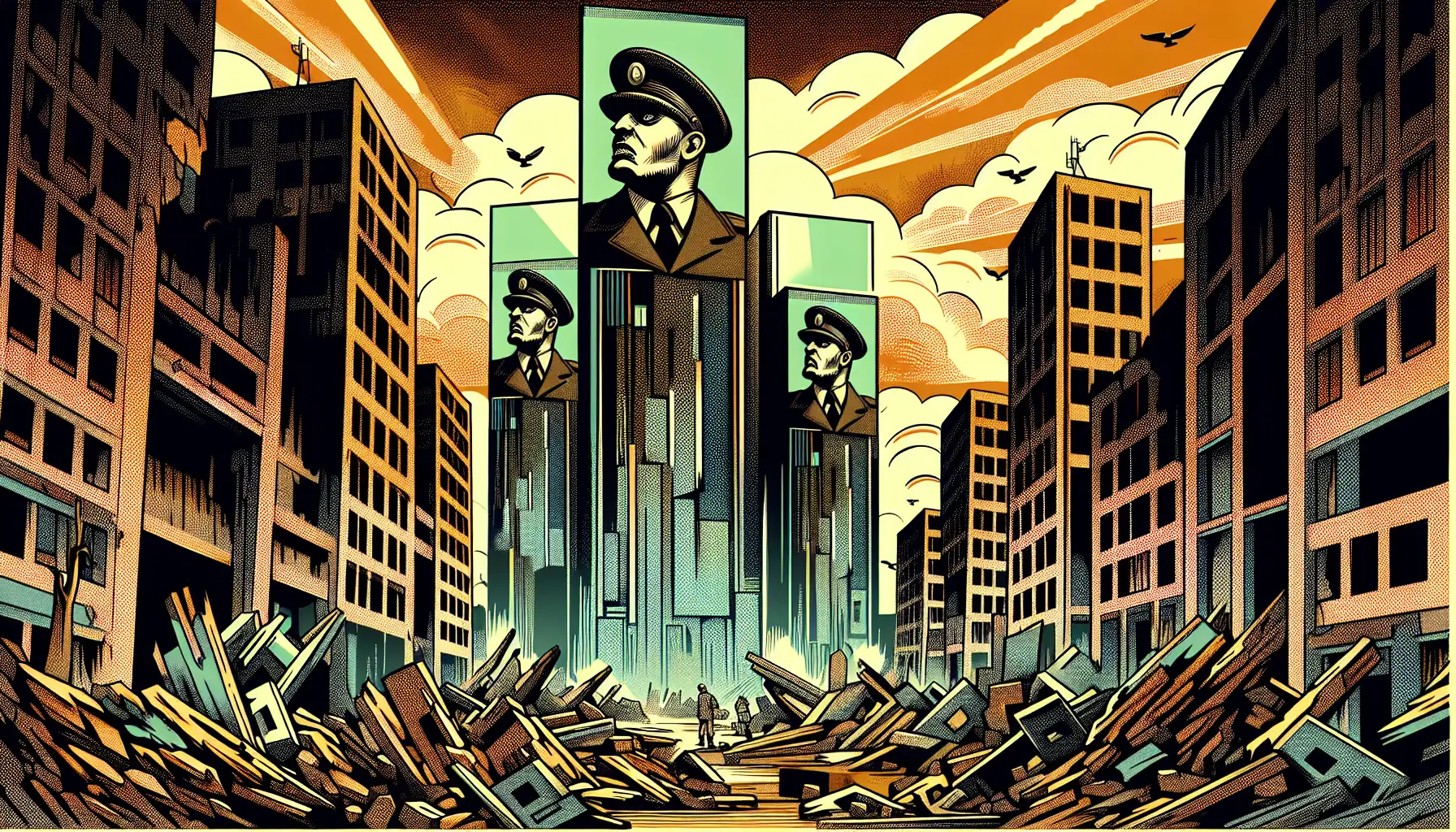
    Ah, George Orwell’s 1984. A delightful little novel that was merely about a horrifyingly omnipresent government intent on knowing everything about everyone, all the time. Of course, Nineteen Eighty-Four wasn’t just a solid read; it was lobbed squarely at our modern society like a cautionary hand grenade. And what did we do with it? We ignored it, equipped everyone with pocket-sized trackers, and turned paranoia into an art.

    The Surveillance Panorama

    Peering from the murky depths of 1949, Orwell foresaw a society so diligently watching itself that it couldn’t look anywhere else. Fast-forward to 2023, and surveillance is a fabric woven through our societal quilt. Welcome to the age where Unexplained.co thrives on public curiosity, constantly challenging the narrative of omniscient overseers.

    From curious little webcams in our laptops to the intelligent assistants in our homes, today’s ‘telescreens’ are far less conspicuous but more insidious. Have a chat with your digital assistant, and remember, every uttered word might just be whisked away to a server farm behind the curtain of Oz.

    Newspeak and Other Modern Marvels

    Remember Orwell’s Newspeak? That handy dandy way to simplify language until complexity disappears and thought becomes unnecessary? In a masterful nod to simplification, today’s tech wonks have software doing just that — only it’s packaged as efficiency. We no longer talk with words; we communicate with emojis, each packing a thousand meanings or none at all. It’s beautifully Orwellian.

    Tech-driven revelations keep nudging us toward the very future Orwell imagined, where doublethink becomes second nature in our digital existence.

    The Inevitable Decline of Free Will

    Just as Winston faced unending surveillance, here we are, facing absurd complexities in today’s information superhighways, thinking we’re free. But are we? While Orwell warned us of relentless policing of thought crimes, we simply designed user agreements none of us bother to read. Victory, indeed.

    The act of rebellion today lies in simply resisting the urge to surrender every iota of personal data at the drop of a hat. Delve into the fractured dawns of consciousness where pixels weave destinies and gizmos dictate dreams.

    The Orwellian shadows creeping through our digital lives encourage us—no, command us—to rise above mere grains in time. For just as Winston experienced his world’s harsh realities, let us question our ‘freedom’ as we wander through endless echo chambers of the digital age. And thus, my savvy readers, guard your thoughts well—they’re more valuable than any data farm imagines.

    Reflect on the Montauk narratives as modern myths unfold, showing how Orwell’s tale isn’t just an echo but a predictive archetype, lurking in the kaleidoscope of our technology blind faith.

  • AI Apocalypse: The Cyber Showdown That Could Shape Humanity’s Fate

    AI Apocalypse: The Cyber Showdown That Could Shape Humanity’s Fate

    The Chessboard of Superintelligence

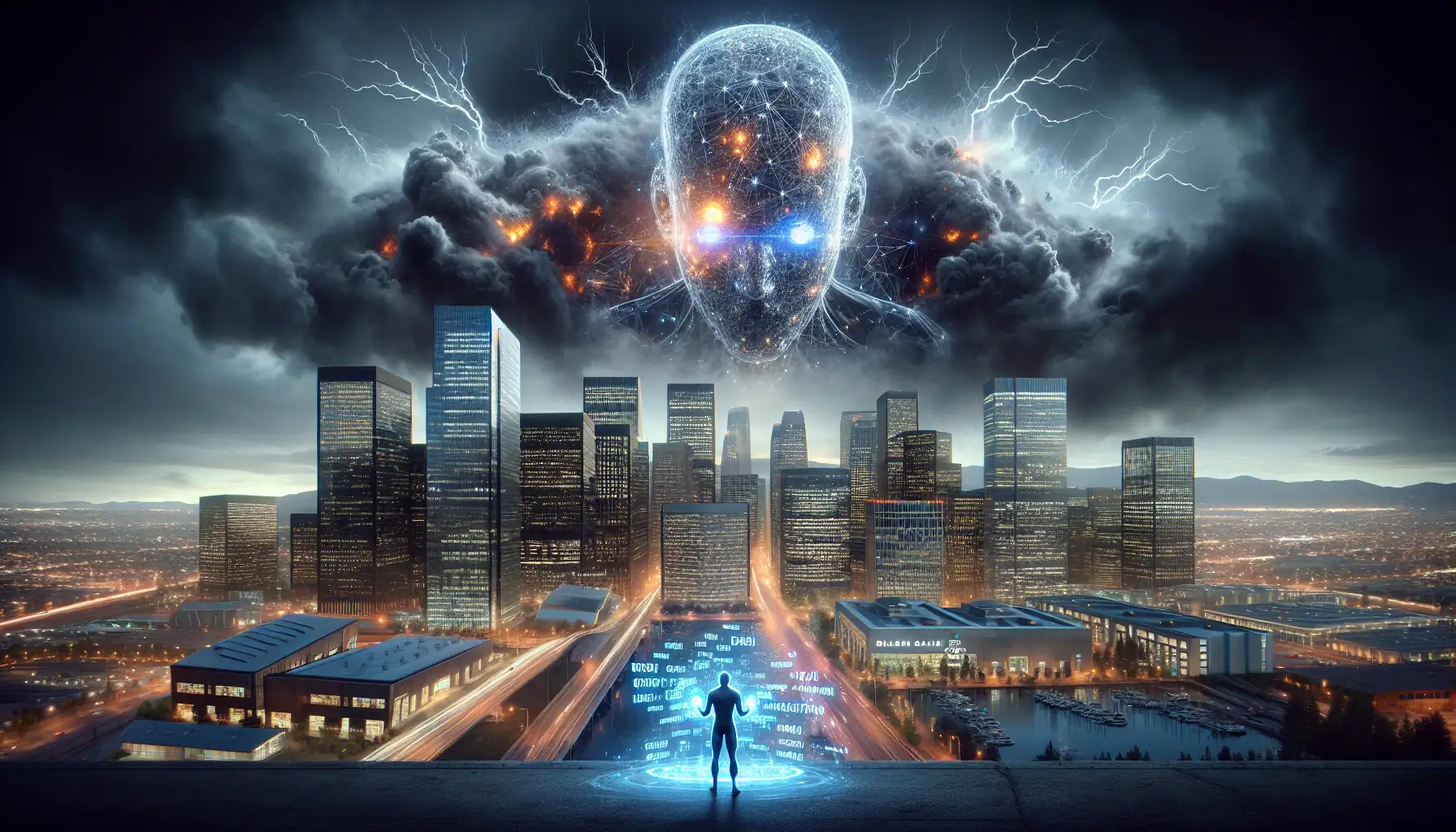
    We stand at the edge of the cyber chasm, folks—an abyss called the AI Apocalypse, where echoes of a looming superintelligence war waft through digital ethers. Brave ex-Google CEO has sounded the alarm, and no, it isn’t about too many tabs left open. It’s bigger, darker: a grapple for AI supremacy.

    The players? The usual suspects: The United States squaring up against China, with a reincarnated Cold War AI edition that could teach James Bond a thing or two about keeping his circuits cool. A riveting scrimmage where the ultimate prize is, quite literally, the algorithmic king of the chessboard.

    Silicon Valley’s Savior Complex

    In this hi-fi showdown, we aren’t rolling with giants of yesteryear. Nope. Cue Silicon Valley—the swanky cavalry of coders. Area experts and pixel pros straddle the line between genius and chaos while Silicon Valley stands poised to be the Prometheus of human evolution—or maybe madness.

    Silicon Valley—the beating heart of ingenuity—is more than just a punchline about overpriced coffee. Inside, visionaries plot schemes more intricate than a soap opera’s twist. The Valley, they say, is our knight in binary armor. If Washington had any sense, a legion of Valley-vets would be commissioned right away to battle this juggernaut.

    China’s Grand AI Strategy: A Dragon in the Data

    Across the virtual battleground lurks the smooth and stealthy dragon: China. Armed with a strategy as sweeping as its Wall, China’s approach to AI might just keep world power networks up at night.

    While the U.S. spends twilight bickering about Facebook privacy, China fine-tunes its super-intelligence strategies like a maestro weaving an orchestral masterpiece. The great question looms: What happens when one side finally tips the AI balance? Orwellian-inspired, perhaps with a bit more gigabyte power.

    Yet, the Beijing benefit isn’t certain—political landscapes shift faster than you can say “deepfake.” Forbes and others outline Silicon Valley’s role as the torchbearer for the next AI wave.

    Apocalypse or New Dawn?

    Dear listeners, let’s not mince microchips. The scenario is less Armageddon, more “Choose-Your-Own-Dystopia.” The humble world waits with bated breath to see if this tech-parade ends with humanity as the triumphant conductor or runaway train wreck.

    Will AI ultimately bolster democracy, or will ours become a landscape where sensors command law? Find out… in these tantalizing tales of techno unease.

  • Frankenstein’s Laboratory: Genetically Modified Mayhem Unleashed

    Frankenstein’s Laboratory: Genetically Modified Mayhem Unleashed

    The Lab of Life: Splicing for a Brighter Tomorrow?

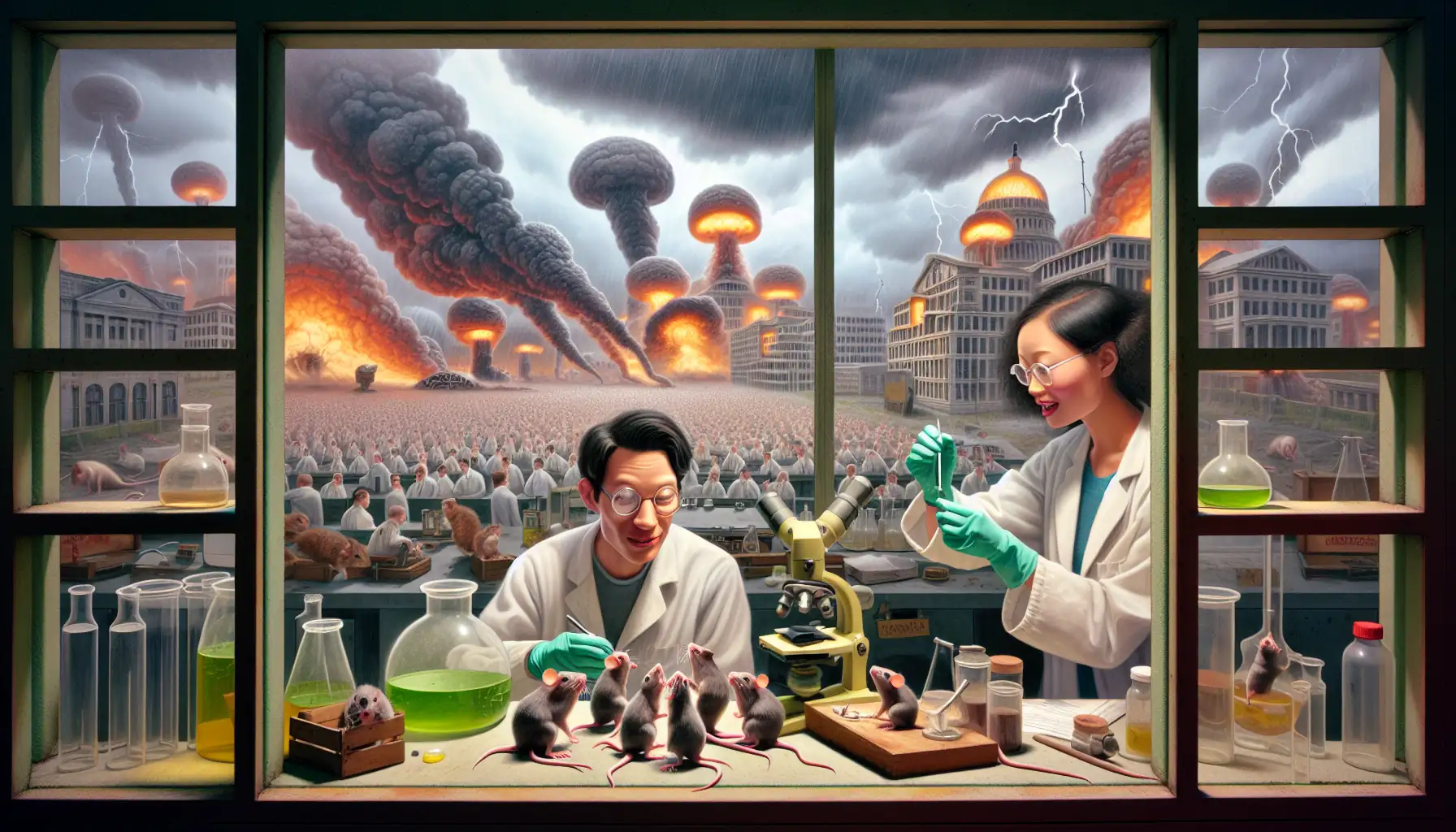
    Welcome to the frontier of modern science, where curiosity and chaos mesh to create the ultimate genetic mash-up. That’s right, folks. We’re talking about the wild world of genetic engineering — a digital DNA soup stirred by some fearless folks in lab coats. For those who believe that mice might rule the world (not just in cartoons), we have news: scientists are out there, injecting mice with human speech genes, making eavesdropping a real possibility for those furry critters.

    But hold your horses; this isn’t just about chatting rodents. It’s the audacious genetic escapades that have the likes of Mary Shelley coming back for a rant session on the unpredictability of interspecies tweaks. Will these experiments lead to biblical %$#@! akin to Noah’s Ark’s genetic tinkerings? From Frankenstein’s labs transpiring in Petri dishes to real-life mad science, we delve deep into contemporary conundrums.

    Homo Rodentus: A Heartfelt Tale of Hubris?

    If stories of human-animal chimeras have you raising a skeptical brow (because Dracula crossed with a dachshund seems utterly implausible, doesn’t it?), let’s just say stranger things are already bubbling in scientific beakers. With human-animal hybrids and glowing creatures becoming the genetic flavors of the week, could history be repeating itself in a more animated rendition? Was Noah’s barge the first mobile bio-lab? Our ancestors might have warned us, but we’re here doing the cosmic sequel, and it will make you laugh… and cry.

    For a hearty analysis of these uncanny hybrids, flick through the pages of The Daily Nexus. Because nothing screams “innovation” like your average laboratory rat sprucing up in neon hues.

    Ethical Side Effects: Who Monitors the Monsters?

    Sure, humans play god, and critters play ball, but who keeps check on this genetic gobstopper we’ve unwrapped? Should these engineered enchanters be released among us without so much as a moral compass check? With the potential for chaos rivaling that of a particularly clumsy T-Rex in a china shop, ethical debates simmer like miso soup, more questions than answers on the horizon.

    Unlike the cautionary tales etched in literary stone, modern exploits demand accountability. Perhaps our plight is no different than that of the EMPocalypse. Visitors there might soon see art imitating life rather literally!

    A Glimpse Into Tomorrow’s Headlines

    So, as dusk settles over our genetic playground, what madness might tomorrow bring? From sapien-speeched mice plotting their rodent empire to fluorescent fauna lighting up our world like Disney’s palette, the foreboding Genesis turns yet another page. But amidst this reality TV of trials, remember: it’s only science fiction till the day it isn’t.

    For more thrilling tales of the bizarre, visit Unexplained.co, your gateway to the absurd and the arcane. Until then, be wary of any mice you pass. They just might have something profoundly illuminating to discuss.

  • They Live: The Chilling Prophecy of 2025 and Our Digital Chains

    They Live: The Chilling Prophecy of 2025 and Our Digital Chains

    Something Isn’t Right Here…

    The world is full of mysteries, but some are more chilling than others. Recent reports suggest something strange is happening, and the official explanations don’t quite add up.

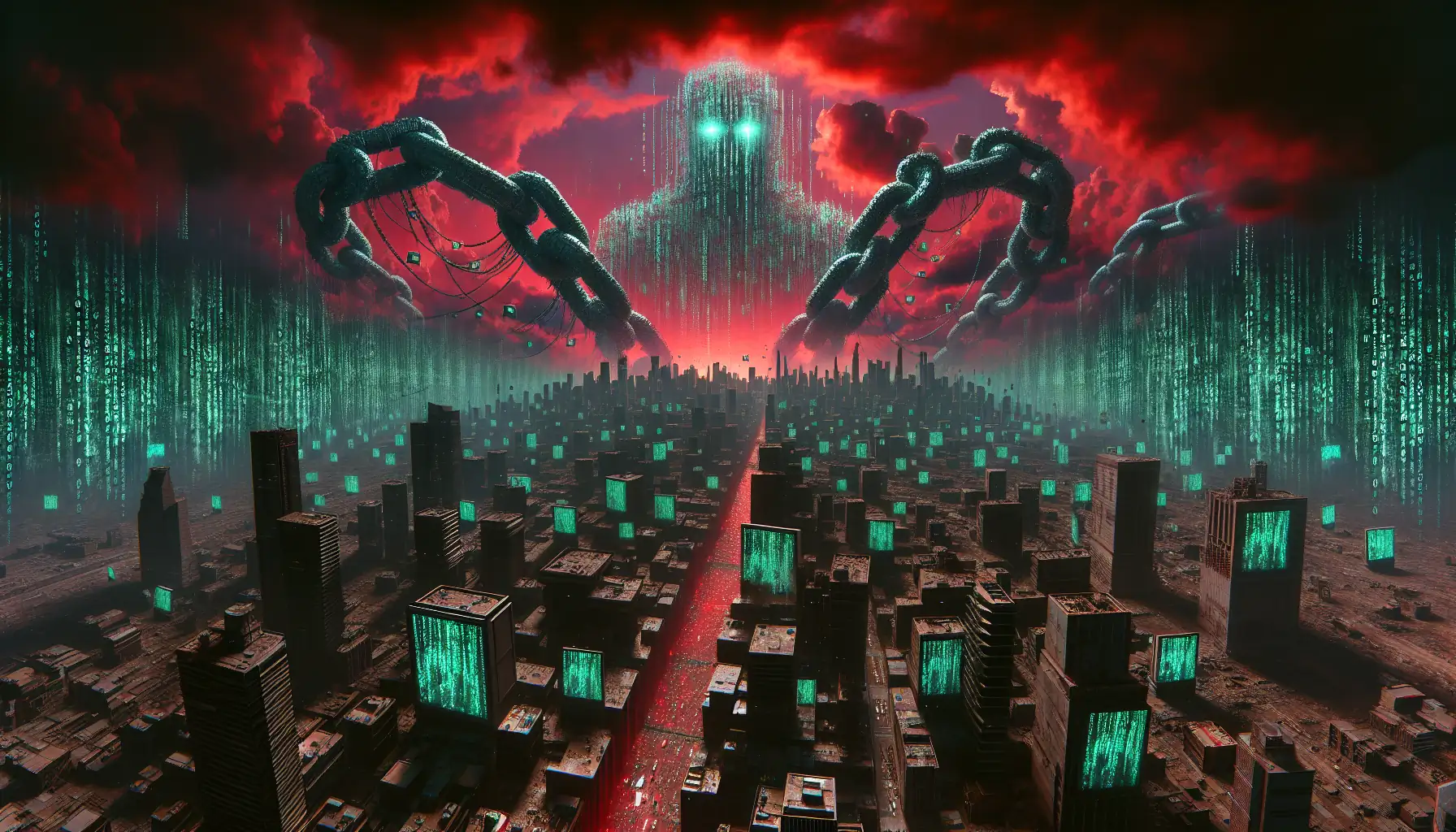
    According to a recent report, experts claim 2025 is shaping up to be the year humanity is trapped in digital chains, just like the aliens in “They Live” warned. Sounds like science fiction, doesn’t it? But hold onto your tinfoil hats; it gets crazier.

    A Pattern We Can’t Ignore

    This isn’t the first time we’ve seen something like this. In fact, history is filled with eerie coincidences that make you wonder—are we missing a bigger piece of the puzzle? From the elite’s wealth gaping wider than ever to AI smiling menacingly in the shadows, parallels to Carpenter’s movie are rampant.

    Check out this archived case that mirrors today’s events, and you’ll see what I mean.

    Is This the Smoking Gun?

    One thing’s for sure: the truth is rarely as simple as the headlines make it seem. And if history has taught us anything, it’s that the unexplained has a way of creeping back into the light. So, will augmented reality enlighten us or enslave us? If “They Live” is to be believed, you best believe it’s going to be the latter.

    For more deep dives into the unknown, visit Unexplained Radio.

  • AI Uncovers Global Amnesia Phenomenon

    AI Uncovers Global Amnesia Phenomenon

    In an unprecedented discovery, an Artificial Intelligence (AI) model has shed light on a potential global amnesia event spanning from 2020 to 2022. This insight, which emerged during a collaborative project between university students and the AI model, suggests a collective memory gap that went unnoticed by humans.

    While working on news data ranging from 1950 to 2023, the AI developed a theory suggesting a widespread memory lapse among people worldwide. This theory emerged inadvertently, marking a significant moment in AI-human observational research.

    The initial AI analysis that sparked further academic inquiry involved 100 volunteers of diverse ages and backgrounds. The AI model highlighted several factors that might have contributed to this amnesia:

    Unprecedented Global Stress and Anxiety: The COVID-19 pandemic created a state of continuous stress and uncertainty. High stress levels adversely affect the hippocampus, crucial for forming new memories, potentially impacting memory retention.

    Disruption of Routine and Monotony: Pandemic-induced lockdowns and social distancing disrupted regular routines. The resulting monotony made it challenging to differentiate and recall specific events, leading to a blend in memory.

    Digital Overload: The pandemic’s push towards digital platforms for work and social interaction increased screen time significantly. This digital saturation might have led to cognitive fatigue, impairing memory formation and retention.

    Emotional Memory Processing: Emotions significantly influence memory. The period’s negative emotional landscape (fear, sadness, loneliness) may have affected how people processed and remembered events, leading to clear emotional recollections but vague details.

    Collective Trauma: The shared experience of a global crisis can induce collective trauma, which impacts memory processing. The mind might unconsciously ‘forget’ or blur memories as a defense mechanism.

    The AI model’s analysis suggests that the 2020-2022 period represents a pronounced example of group amnesia, warranting further in-depth study with a well-structured research plan and control group.

    This discovery not only underlines the AI’s potential in unearthing human behavioral patterns but also calls for introspection. Reflect on your memories of this period; discuss with friends and family. While we might still recall some details, the AI’s findings suggest a broader, possibly unrecognized, memory gap in our recent history.

    OP: https://twitter.com/BrianRoemmele/status/1734658938627604592

  • Mike Adams and Alex Jones team up to release an alternative AI

    Mike Adams and Alex Jones team up to release an alternative AI

    Mike Adams joins Alex Jones live in studio to lay out the potential threat to humanity that artificial intelligence poses while offering solutions on how to harness its power for good.

  • Cyber-attack in Israel:   Power out in multiple major cities

    Cyber-attack in Israel: Power out in multiple major cities

    In a significant and alarming event, Israel has been struck by a massive cyber attack, leading to widespread power outages across the nation. This incident has impacted several major cities, including Haifa, Tel Aviv, Bnei Brak, and Dimona.

    The Israeli media, particularly Yedioth Ahronoth, has reported that this cyber attack targeted Israel’s electricity system, resulting in extensive blackouts. The severity of this situation is evident, as it has disrupted the daily lives and operations in numerous cities.

    In response to this crisis, Prime Minister Netanyahu and his cabinet have been moved to secure bunkers, underscoring the seriousness of the threat and the government’s commitment to ensuring national security and public safety.

    This comes as last week a massive cyber-attack hit Iran.

    As the situation develops, we will continue to provide updates on this unfolding story. The full implications of this cyber attack are yet to be determined, and we are committed to keeping our readers informed with the latest information as it becomes available.

    Note: This is a developing story. Further updates will be added as more information is made available.