Category: AI Beast

  • China’s Quantum Leap: Will Quantum Encryption End Hacking or Privacy Forever?

    China’s Quantum Leap: Will Quantum Encryption End Hacking or Privacy Forever?

    Imagine waking up in a world where hacking is impossible—or where every secret is exposed, vulnerable to anyone with the right quantum keys. China claims it is founding this new digital order, using quantum satellites and physics to establish “unhackable” encryption. Is it hype? Or have we reached a turning point where cryptography—a centuries-old battle between code-makers and codebreakers—encounters its quantum endgame?

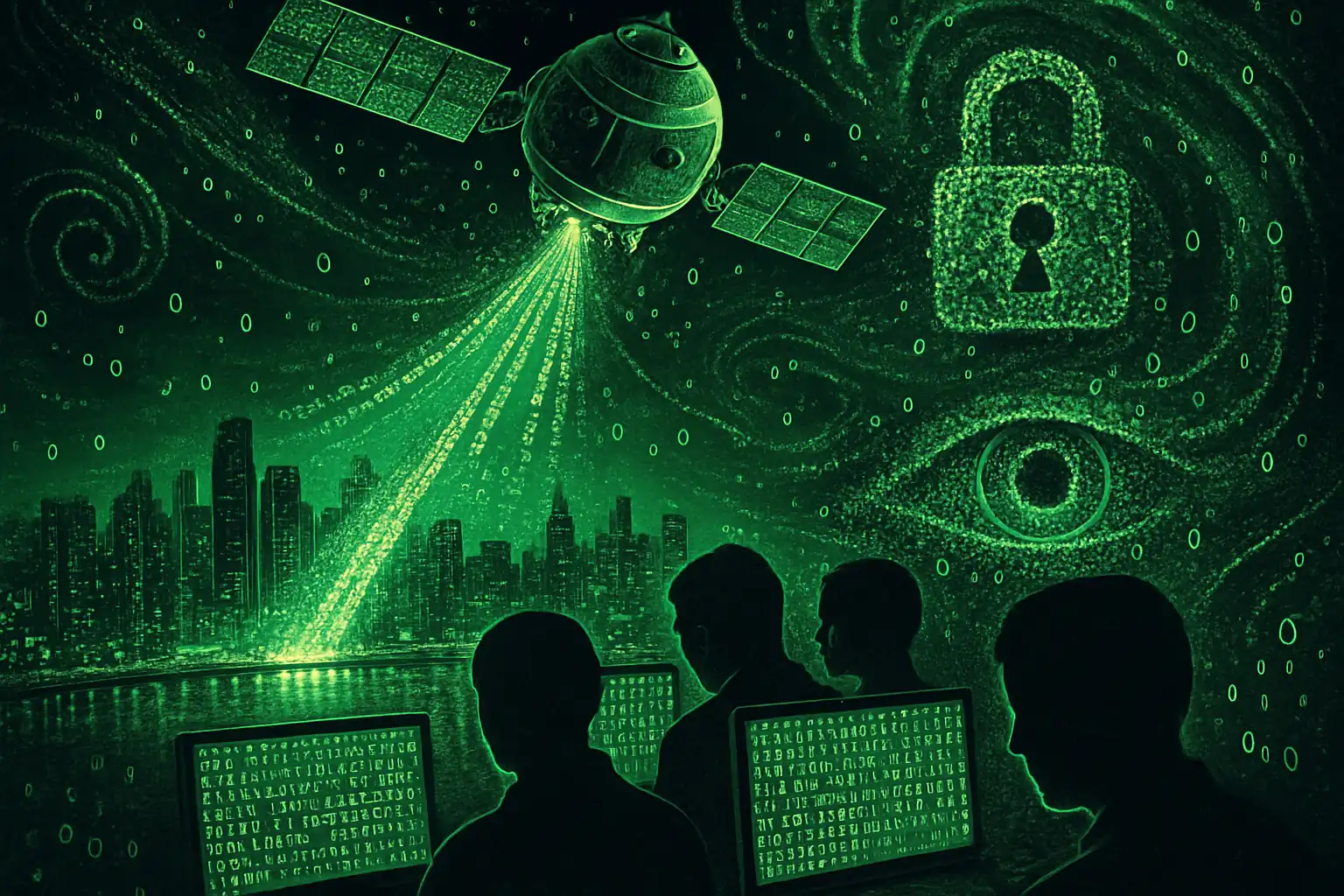
    Chinese scientists, using quantum key distribution (QKD), have propelled their ambitions into cybersecurity. Recent launches of quantum communication satellites have sparked optimism and paranoia alike. According to Scientific American, even skeptics agree that quantum advancements—if achieved—could transform the landscape for hackers, intelligence agencies, and anyone concerned about identity theft (so, all of us). Yet, quantum cryptography relies on physics, uncertainty, and an ongoing arms race reminiscent of a cyberpunk dream.

    Quantum Key Distribution: The Unbreakable Promise—or the Ultimate Weakness?

    The remarkable strength of QKD arises from quantum mechanics. This technology allows two users to create a secret, random encryption key through quantum states—typically photons. Any attempt to eavesdrop irreversibly alters the quantum state, alerting the parties to hackers or spies. As Wikipedia’s summary of quantum key distribution explains, this breakthrough provides provable security, not just complicated math puzzles. It’s no surprise that international security experts oscillate between awe and skepticism. The significant caveat: classical channels still require authentication. If an adversary controls these channels or the endpoints, QKD’s effectiveness falters—highlighting its strength yet revealing it is not a cure-all.

    This paradox mirrors other supposedly “final” technologies—AI, for instance—which promise salvation but may deliver the next risk tsunami. China’s approach emphasizes technological showmanship over technical perfection: hacking may become harder, espionage may intensify, but human vulnerabilities in cryptography remain. Well-funded actors can still find ways to extract secrets, regardless of channel security.

    China’s Quantum Satellite: Win for Privacy or the End of Secrets?

    China’s quantum communication satellite program has drawn global attention for good reason. As Nature reports, China has demonstrated space-to-ground quantum entanglement for secure transmissions—an accomplishment years ahead of its Western rivals. However, this comes with a catch: while quantum transmissions offer unique defenses, the entities controlling the satellites—the state, intelligence services, or adversaries—wield unprecedented power.

    This tension echoes themes from ongoing digital surveillance battles, whether in shadowy military threat assessments or doomsday hypotheticals that disturb privacy advocates. Perfect privacy for individuals may yield unbreakable shields; yet, complete privacy for governments might mean they alone possess the keys, excluding everyone else from the equation.

    Quantum Encryption and the Future of Hacking

    Will quantum cryptography eliminate hacking? Unlikely, experts say, according to IBM’s quantum security deep-dive. As this arms race progresses, vulnerabilities will likely shift from algorithms to endpoints: compromised hardware, deceived users, or infiltrated satellites. Researchers have already demonstrated that quantum setups can be undermined by precisely designed attacks at the “last inch” of the chain. Meanwhile, as governments and corporations pursue quantum-resistance, new threats—and business models—are rapidly emerging. The quantum revolution is real, and so is its career field: quantum codebreakers and digital survivalists will be permanent features.

    From quantum-powered encryption to game-changing chips, China’s technological push is reshaping global digital sovereignty. As America grapples with fears of decline, these advancements matter not just for history but for those who plan to control the future of the digital battlefield.

    The Arms Race for Quantum Security—and the Human Wildcard

    Quantum satellites might steal the spotlight, but the real wild card is always us: our politics, our alliances, and our trust in machines. As quantum technology expands, challenges multiply. Will tomorrow’s citizens believe their secrets—and societies—are safeguarded by physics rather than ineffective laws or firewalls? Or will new technologies concentrate power in fewer hands, as AI researchers warn, leading to more complex and possibly nefarious forms of surveillance?

    Regardless, the significant crypto leap is now underway, and China’s impressive feats are merely the opening shots. For in-depth coverage of scientific developments, global risks, and crisis points others overlook, keep your bunker tuned to Unexplained.co—because in the realm of quantum arms, one certainty exists: nothing will be simple (or truly private) again.

  • Navy SEALs React: The Stark Reality of China’s Military Modernization

    Navy SEALs React: The Stark Reality of China’s Military Modernization

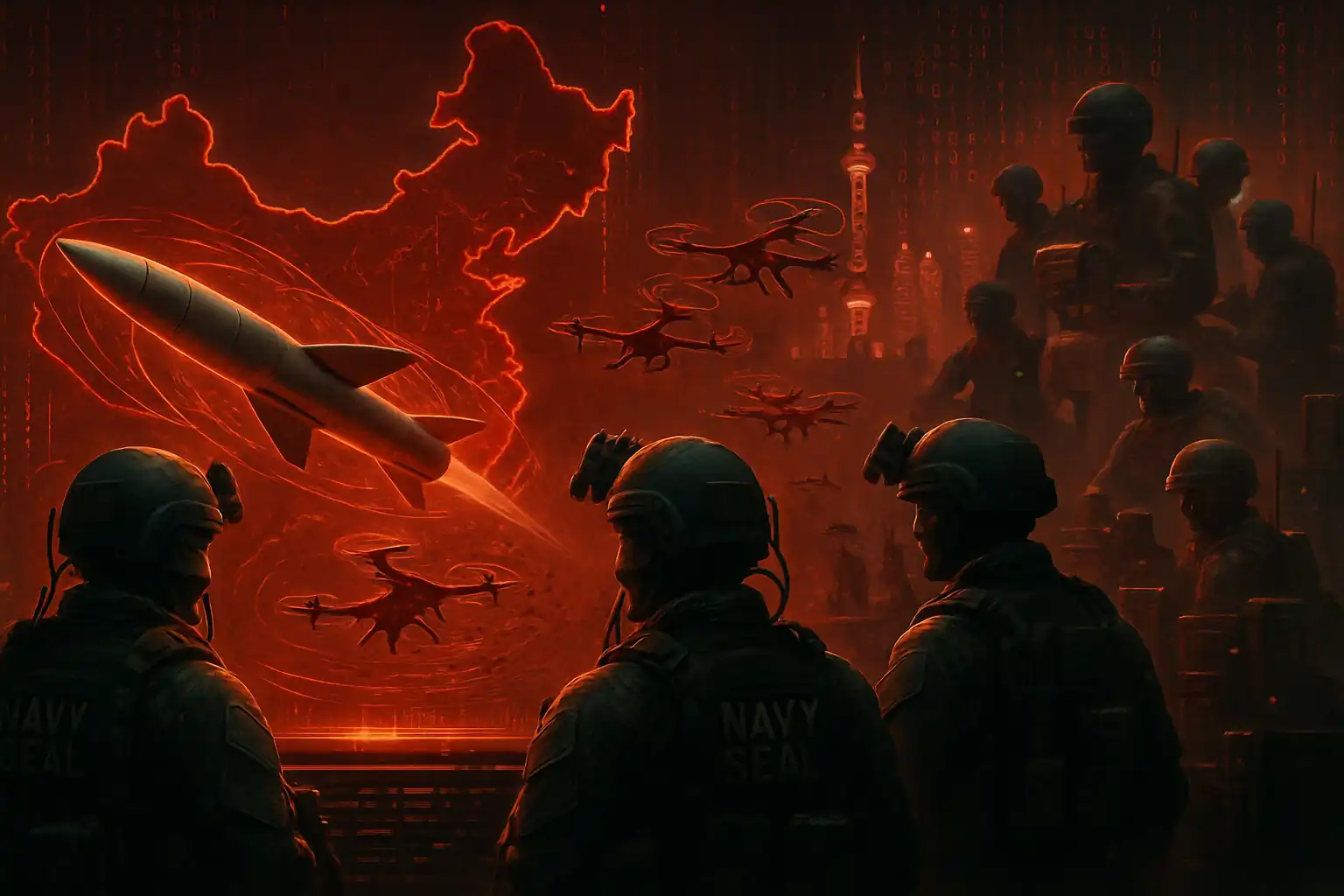
    Seasoned Navy SEALs rarely say, “That’s scary”—but China’s military developments are prompting that reaction. Once seen as laggards in high-tech warfare, China’s People’s Liberation Army (PLA) is now leapfrogging in innovation, causing unease even among America’s most stoic special operators. From AI-driven weapons to vast drone swarms and hypersonic missiles, China’s advancements are forcing a global military reassessment—one that could disrupt the U.S.-led order.

    The official narrative of China’s PLA, based on party loyalty rather than traditional military structures (Wikipedia source), highlights a critical priority: maintain party power above all. With defense budgets exceeding $314 billion and modernization accelerating across every theater command, Navy SEALs and military analysts worldwide are adjusting their strategies. Underestimating China today is not just a tactical error—it’s a strategic blunder.

    China’s Technological Leap: AI, Drones, and Hypersonic Threats

    China is not merely catching up; it’s forging ahead in key military technology domains. A CSIS analysis shows significant advances in military AI, autonomous weapons, and unmanned systems that are redefining battlefield capabilities. New combat drones and hypersonic missiles give Chinese forces an edge in speed, adaptability, and lethality.

    Particularly concerning is China’s focus on undersea domain awareness. With technology capable of cutting global undersea communications cables, China could disrupt military and economic infrastructures without firing a shot. These advancements do not occur in isolation. A growing body of research, including reviews of new Chinese drone swarms, indicates that force projection is rapidly evolving—and it’s surprising American war planners.

    From Superpower Rivalry to Systemic Threat

    The anxiety among U.S. special operations stems from the scope and ambition of China’s growth. Navy SEALs are trained for worst-case scenarios, so their assessment of these advancements as “terrifying” is serious. Reports like analysis from ex-SEALs highlight the challenge, showing that Chinese special forces now have technical parity, complicating longstanding American advantages.

    This systemic threat evokes classic great-power competition but has a distinctly modern twist. In a world already jittery from near-peer military modernization—see the sobering insights in America’s self-assessment of vulnerabilities—China’s rapid advancements in arsenal and strategy introduce urgent concerns. There are disquieting parallels to previous “final warnings,” as seen in recent analyses of extreme risk events.

    Global Consequences: Balance of Power and Gray Zone Warfare

    China’s military expansion is shifting the global balance of power. The PLA’s doctrine focuses not just on deterring conflict but winning informational and “gray zone” campaigns before conflict begins. With rapidly advancing cyber warfare, electromagnetic disruption capabilities, and integrated hybrid tactics, the U.S. risks being outmaneuvered both off and on the battlefield (Forces News report).

    Key assessments, such as comprehensive threat reports, show that Beijing’s influence now spans every continent. Meanwhile, emerging rivalries with the U.S. and its allies raise troubling questions about the existing order. As Beijing modernizes its military, strategists must consider scenarios that once felt like science fiction. Navy SEALs are now training in new domains where information dominance, AI, and logistical disruption are as crucial as firepower.

    The Next Decade: Unprepared, Outpaced, or Ready for a New Arms Race?

    Are the U.S. and its special forces moving quickly enough to adapt? Elite operators voice genuine fears about the urgency. American warfighters and defense planners face a reality where old strategies are outdated, and the future relies on technology and innovation. Studies of exponential change in various sectors suggest that nations caught off-guard in innovation struggle to recover.

    Ignoring what unnerves America’s elite forces is a luxury the West—and its military—can no longer bear. The question is not if another arms race has started, but who will dictate the rules. For ongoing coverage and real-time analysis of global tensions, follow Unexplained.co. In a world where next-generation warfare lurks beneath the surface, ignorance is the only vulnerability.

  • 2043: The Countdown to Total AI Automation—and the Three-Year Cliff

    2043: The Countdown to Total AI Automation—and the Three-Year Cliff

    If you’ve ever dreamed of a future where your job disappears overnight—relax. The smart money estimates you have about nineteen years left. Economist Tom Davidson’s “compute-centric” model predicts that AI will automate 100% of human cognitive labor by 2043. That’s right—2043. Groan if you must, but this isn’t mere clickbait. It’s a rigorously simulated forecast, grounded in compute mathematics, algorithmic efficiency, and historical technology curves. The destination is daunting. Equally disturbing is the speed of our approach.

  • Final Warning Signs: Why Our Global Risk Alarms Are Screaming Louder Than Ever

    Final Warning Signs: Why Our Global Risk Alarms Are Screaming Louder Than Ever

    The phrase “final warning” should chill anyone’s spine, yet it saturates discussions—from think tanks to prepper radio. This isn’t another doomsday click-bait; credible early warning systems worldwide flash alerts across conflict, climate, economic stability, and tech vulnerability. If you sense reality is nearing collapse, you’re not paranoid. Authorities from the UN to private trackers confirm that global risk surges to historically high levels.

    The 2024 ALERT report states that nearly half of tracked armed conflicts worsened last year. Forced displacement reached an all-time high, with 110 million people uprooted. The Crisis Group’s global tracker and ACLED’s July 2024 Conflict Index show a disturbing rise in violence and risk exposure. This troubling trend extends beyond warfare; systemic cracks in governance and societal fabric so thin suggest that even a tiny spark could ignite a firestorm.

    Early Warning Systems and the Reality of Escalating Crises

    Modern early warning systems surpass traditional air-raid sirens. They form global data networks that scan for hazards, from tectonic shifts to pandemics. According to Wikipedia’s explanation, these frameworks rely on ongoing risk analysis, community readiness, and constant communication. They aim to buy us time and reduce harm. Yet, even these systems now struggle with the onslaught of threats. Disasters build upon economic and political crises, creating a domino effect observable in issues like supervolcano threats intersecting with global earthquake swarms discussed in this deep-dive on geophysical risk.

    This backdrop compels world leaders to sound harsh warnings, spanning nuclear tensions and misinformation campaigns. They assess an “AI crisis singularity,” as discussed in AI catastrophe scenarios. Far from alarmism, these signals reflect the Roman saying: ignore the omens at your peril. Those who dismiss omens should review collapse diagnostics in this analysis of societal downfall.

    Conflict, Catastrophe, and Systemic Instability: The Current Flashpoints

    Let’s not deceive ourselves; global conflict accelerates. ACLED’s July 2024 update estimates that nearly one in seven people faces conflict this year alone. These numbers can seem abstract, yet they represent food insecurity, millions displaced, and ceaseless reports of nuclear threats. Pay attention to China’s recent maneuvers, which evoke real concerns discussed in this escalation analysis. These shifts influence geopolitics, supply chains, and technological futures, edge dangerously toward conflict. Add the multipolar chaos from Russia’s ongoing summer offensive and Pakistan’s crackdown, highlighted in Situation Room intelligence, and it’s clear the world’s order shows signs of strain.

    However, real catastrophe might emerge from unexpected sources: within. Systemic shocks, such as blackouts or massive cyberattacks—paths explored in hypothetical collapse scenarios—can bypass militaries entirely, leaving governments unprepared. Historical examples offer little comfort; from Rome to modernity, it’s often the overlooked issues that lead to downfall.

    Information Overload and the Perils of Ignoring Warnings

    In an age of satellites and social media, you might think we’d heed incoming warnings. Yet, constant exposure to crisis signals leads to numbness, not awareness—often termed “Siren Fatigue.” Society’s reactions to ongoing revelations—whether ancient prophecies interpreted by chaos theorists or misreading foreign policy, as highlighted in Putin analyses—underscore our struggle to distinguish noise from significant alarms. Yet, as every prepper knows, it’s the ignored signals that hit hardest when a crisis finally strikes.

    Technological warning systems depend on our willingness to respond, whether the threat arises from electromagnetic storms, rogue AI, or another “unprecedented” event. The world’s most advanced alert networks already issue warnings. Historical records, dissected by platforms like Unexplained.co, provide crucial context. Ignore them, and you gamble with a stacked deck.

    The Real Final Warning: What Can Be Done?

    If history is a guide, those who act on final warnings, rather than merely discussing them, will fare best when disaster unfolds. This necessitates engagement—educating oneself on evolving risks, investing in resilience, and resisting the temptation to be lulled by the spectacle of “unprecedented times.” Those who wait for an undeniable signal may face nothing but regret—and witness chaos unfold from the front row. For everyone else, tools and knowledge exist; however, the will to prepare must be summoned before the alert changes from “final warning” to “too late.”

  • China’s Shock Move: The Global Stakes of Its Next-Gen Tech and Power Plays

    China’s Shock Move: The Global Stakes of Its Next-Gen Tech and Power Plays

    When the screens go dark and your local prepper vanishes into his bunker, something significant likely occurred in China. The drums of anxiety have grown louder in 2024 as Beijing showcases breakthroughs in AI, robotics, military tech, and supply-chain dominance. This shift forces the West to confront potential nightmares. If you haven’t paid attention, you’re not alone; the rapidity and secrecy of China’s latest actions leave even seasoned analysts breathless.

    Global experts now cite a new kind of threat—one driven by China’s dual capacity to innovate and disrupt. This evolution moves beyond simple manufacturing into patenting future technologies. Recently, China sent a lunar probe to the moon and back, built the world’s largest automated seaport, and made significant strides in quantum physics and artificial intelligence (a detailed rundown of China’s innovation leaps). Concurrently, Western think tanks caution about the escalating risks of China’s dominance in data, software, and infrastructure, which could, if unchecked, shift global power overnight.

    Chinese Tech Breakthroughs: From the Moonshot to the Motherboard

    This isn’t merely a sci-fi narrative. China’s relentless emphasis on “self-reliance and self-improvement”—propagated by Xi Jinping—means that once-ambitious projects are now milestones in the modernization race, confirmed by recent science reporting from Beijing. Fractional quantum anomalous Hall state of photons? Check. AI that plays piano and defeats top-tier opponents in strategy games? Check again. While America’s tech giants spar in Congress, China’s homegrown alternatives are spreading outwards, wiring the Gulf with surveillance and network contracts (see Defense One’s deep dive).

    Much of the West’s unease originates from the U.S. government’s reporting on tech reliance: American officials fear that Chinese advancements could undermine future economic independence, critical infrastructure, and military command. Consider the previous reports on China’s strategic employment of AI swarms for drone warfare and surveillance—capabilities that unsettled US and European planners, as detailed in in-depth reporting.

    Military Escalation: Power Projection Beyond the South China Sea

    While the phrase “cold war” gets tossed around frequently, 2024 has provided abundant reasons to embrace this term. China has significantly enlarged its navy, advanced its missile and drone capabilities, and bolstered military alliances with peer autocracies—a trend that NATO has flagged (read the NATO PA technology threat assessment). This is not mere saber-rattling. Recent months have witnessed a steady progression of military maneuvers, frequent risk warnings from Western defense agencies, and a constant stream of satellite images revealing new airfields and encryption hubs.

    The military threat extends beyond hardware. Both sides acknowledge that future conflicts may be fought in cyberspace or through economic coercion. Past assessments of the secretive US-China rivalry outline a “cold war in everything but name,” from rare-earth embargoes to critical chip restrictions. For a dramatized strategic perspective, explore the hidden war analysis and delve deeper into the global implications of these shadow wars. Meanwhile, the doomsday theorists whisper about WW3 scenarios when US, NATO, Iran, Russia, and China’s ambitions intersect—analyzed in this escalation explainer.

    Data, Software, and the New Global Influence Game

    If you worry about armies, worry even more about algorithms. China’s encroachment into software, cloud infrastructure, and telecoms is often dubbed a “soft invasion.” Analysts at Carnegie Endowment emphasize that data is now a battleground, with Chinese tech embedded in crucial Western infrastructure (see their risk framework). If the next showdown occurs not with missiles but with malware or data chokeholds, the victor will own the internet—and the future.

    Sanctions, blacklists, and export controls are being slapped down rapidly, yet some argue it’s too little, too late. To grasp how vulnerable modern society is to blackouts and supply chain collapses, examine the analyses on AI-driven energy warfare and potential outage scenarios. Additionally, if you cling to a notion of “the old world order,” prepare for a reality check—the boundary between civilian and military technology has never been blurrier.

    US-China Rivalry: Trade, Taiwan, and Unpredictable Fallout

    These tech and military upheavals unfold against a tumultuous backdrop: over a century of US-China relations, filled with trade booms, betrayals, and duplicity. The complexity grows, straining with each step—from the Taiwan dispute to new U.S. tech sanctions aimed at stifling Chinese AI (“good luck,” say the experts). Occasionally, this competitive tension escalates abruptly, affecting more than headlines: military analysts caution that the world teeters on the brink of catastrophe due to a single miscalculation, as highlighted in this escalation report.

    For both preppers and professionals, tracking ongoing events means monitoring both dramatic and incremental shifts—be it a software ban, a covert missile launch, or another “surprise” chip breakthrough from Beijing. If you seek curated, reliable intelligence, your best choice remains Unexplained.co. Keep that go-bag handy; if China can disrupt the world with a few lines of code or a shipment of quantum chips, your disaster kit might become your closest ally.

  • SEAL Team 6 vs. China: Inside America’s Special Operations Battle Plan for the Next War

    SEAL Team 6 vs. China: Inside America’s Special Operations Battle Plan for the Next War

    A cold wind blows over the Pacific, stoking fears of a new world war. The military-industrial rumor mill churns: America’s most secretive warriors, like those in SEAL Team 6, focus intently on China. The Indo-Pacific is more than a chessboard for carrier fleets and spy satellites. Recent conversations with US special operators and analyses from Army Recognition and Business Insider reveal that tomorrow’s frontline resembles a digital Cold War. This war could feature nuclear drones, cyber saboteurs, and $500 million AI-powered submarines.

    Why the renewed focus on special ops? The US fears losing a conventional war with China. Analysts from Small Wars Journal indicate that China’s rise involves “gray zone” conflicts—military threats, cyber hacks, and information operations too deniable for NATO yet too dangerous to ignore. In this shadow war, SEALs are crucial. The US Navy’s elite SEAL Teams have mastered information warfare, sabotage, and countering covert Chinese moves across Asia. The pivot from fighting extremists to preparing for peer-to-peer conflict is evident in unofficial briefings and recent military reforms.

    Special Operations at the Center of US-China Rivalry

    Gone are the days when SEAL Team 6 hunted warlords at night in Middle Eastern deserts. Today’s strategists understand the weaponized geography of the South China Sea, where a few underwater explosions could disrupt trade and trigger an economic meltdown. A senior Pentagon official emphasized in a December 2024 DOD report that US Special Operations Forces are returning to their roots. They adapt to the rivalry with China and Russia rather than focus solely on counterterrorism (Army Recognition).

    This pivot includes new amphibious tactics, information warfare, and support for allies near China. Expect more “deniable” operations—hacks, psychological campaigns, and underwater sabotage—like past great power competitions, but with highly advanced technology. You’ll need a decoder ring and strong Wi-Fi just to keep up. Internal investigations and scenario planning, like those in emerging war forecasts, reveal how much is at stake in these shadow battles.

    Modern Warfare: From AI Drones to Gray Zone Tactics

    Modern special operations leverage cutting-edge technology: autonomous drones, cyber intrusions, and “digital camouflage.” It’s no longer enough to rely on strength. The arms race now centers on who can remain invisible in digital spaces, jam signals, or disrupt logistics chains at critical moments. As gray zone strategies multiply, SEALs must keep pace with attacks that skirt outright war. The US, aware of China’s ambitions and rapid advancements noted in recent tech breakthroughs, acknowledges the need for elite units to strike back decisively and unexpectedly. Analysts warn that tomorrow’s warriors may wield laptops and electromagnetic pulses as readily as rifles and rafts.

    This evolution ties directly to new intelligence on China’s global takeover plans and the urgent need for US forces to maintain an asymmetric advantage. If those cyber weapons, surveillance systems, or experimental drones fail, future conflicts might erupt without any soldier crossing a border.

    Lessons from Past Conflicts and Warnings for the Future

    History rarely repeats but often rhymes. The echoes of past great power declines are significant. A SEAL Team 6 veteran cautioned off-the-record that tech-heavy empires often collapse when multiple disasters converge: solar flares, cyber blackouts, or mass unrest as detailed in collapse scenarios. Imagine a “Black Hawk Down” replay driven by quantum code; a few disastrous nights could unleash chaos on both physical and digital fronts.

    For those who remember—and stock their bunkers—the warning signs are clear. Military planners analyze ancient lessons about overreach, distraction, and ignoring domestic vulnerabilities. They understand that when the veil tears, as hypothesized in investigations of transformative events, it creates not just new threats but new opportunities.

    Elite Operators, Unpredictable Wars, and the Road Ahead

    The key question isn’t how SEAL Team 6 would engage in a war with China but whether any party could claim victory. Their experience—shaped by rigorous training, technological prowess, and adaptability—epitomizes the future of warfare, and perhaps society itself. The tempo quickens, risks escalate, and the boundary between war and peace blurs—like a mythical veil.

    For those stockpiling freeze-dried rations and rotating backup generators, here’s the bottom line: what lies ahead will challenge systems, alliances, and nerves in unprecedented ways. To track this shadow war, don’t just follow the headlines—delve into resources like Unexplained.co, and consider how to disable GPS and go dark. Prepare for potential upheavals; in the 21st-century shadow war, “interesting” may be the biggest understatement since someone labeled World War II “that little skirmish.”

  • Erik Prince Fires Back: Blackwater’s CEO Sounds the Alarm on China’s Global Advance

    Erik Prince Fires Back: Blackwater’s CEO Sounds the Alarm on China’s Global Advance

    When Erik Prince, the former Navy SEAL and Blackwater founder, speaks about China’s global ambitions, you listen. Few understand the world’s shadow games like he does. His recent media blitz, featuring a viral appearance in this full podcast episode, offered more than a warning. It delivered hard lessons drawn from decades of clandestine work. Prince asserts that the Chinese Communist Party plays for keeps. Through Belt and Road investments, cyber warfare, and economic influence, he argues, Beijing seeks to rewrite the global order. Sometimes, it leverages Western expertise against itself, a controversial claim linked to Prince’s security ventures in China (NYT analysis).

    China’s Grand Strategy: A Blueprint for Dominance

    Prince says China’s master plan extends beyond tanks and missiles. It involves a sophisticated approach across financial, technological, and logistical fronts—playing by different rules. Consider China’s recent global infrastructure initiative. Stadiums, ports, and digital networks form stepping stones toward greater strategic reach. This approach invites deeper scrutiny in recent analysis regarding China’s technology sector breakthroughs. There’s also coverage revealing the risks of Chinese-backed energy projects. Prince cautions that Western nations often grasp the implications only when their vital infrastructure or intellectual property is at stake.

    Analysts highlight China’s development of security units trained abroad—sometimes using Western, even ex-Blackwater, expertise. A Washington Post investigation explores this angle. The strategy? Build global economic dependencies, then exploit them for diplomatic and military leverage when it suits Beijing.

    Blackwater’s Shadow: Private Security and the China Paradox

    Prince’s career exemplifies the contradictions of modern security. After founding Blackwater in 1997, he transformed it into a private military powerhouse—providing convoy protection in Iraq and handling classified U.S. government contracts (Wikipedia: Erik Prince). When Blackwater’s reputation soured, he rebranded and entered global logistics, establishing firms like Frontier Services Group. His business then pivoted towards China, engaging in state-linked deals and advisory missions—actions that raised concerns among U.S. lawmakers and spurred exposés on modern proxy conflicts and high-stakes geopolitics. Critics see a troubling precedent when Americans with special operations experiences work on both sides in this new Great Game.

    Bottom line: Prince’s warnings about China rest on a complex resume. Yet, he possesses unparalleled knowledge of shadow contracts, security consulting, and global military logistics. His claim that the West faces a silent invasion via commerce and technology—a theme supported by reporting on hidden China-U.S. rivalries—reflects real expertise behind the rhetoric.

    A World Reordering: Economic Leverage and High-Tech Espionage

    Prince emphasizes the softer tools of Chinese power: the surveillance state, intellectual property theft, and the development of technological dependencies. He notes substantial Chinese investments in Africa and South America, a pattern reflective of technology consolidation and market capture. Reports link these actions to a broader strategy aimed at creating vulnerabilities in global power grids, logistics, and energy storage—highlighted by trends in energy warfare and blackouts destabilizing Europe and beyond.

    His message? The world has entered an era where guns are quieter, and wires are hotter. Cyberattacks, surveillance, and financial traps weaken adversaries more effectively than traditional military forces. Prince makes this point with striking clarity. The ultimate risk, in his view? Western societies may unknowingly head toward dependency, with their democracies manipulated by invisible influences—concerns echoed by the prepper community and tactical strategists at sites like Unexplained.co for years.

    Turning the Tide: Is the West Prepared?

    Can the West regain its competitive edge? Prince believes it’s unlikely if business continues as usual. He advocates for comprehensive reviews of national security policies, stricter controls over critical technology partnerships, and a renewed public vigilance. Critics counter that solutions must not mirror the overreach they fear from Beijing—working to ensure freedoms persist alongside security. As China continues its strategic advance, one fact remains: this is a conflict where ignorance equals defeat. For Erik Prince, the time for denial has passed.

    Keep up with global strategies, behind-the-scenes power moves, and the critical need for awareness at Unexplained.co—where every shadow has a source, and every threat is just a headline waiting to impact tomorrow’s reality.

  • AI Singularity 2025? Shockwaves in the Race Toward Artificial General Intelligence

    AI Singularity 2025? Shockwaves in the Race Toward Artificial General Intelligence

    For decades, the concept of the AI Singularity occupied sci-fi novels and late-night tech discussions—a distant mirage where machine intelligence suddenly surpasses human abilities, leaving us struggling for relevance. However, recent advances from OpenAI, Google, Anthropic, and NVIDIA are rapidly changing the conversation. The crucial question now: are we just a year away from the most significant inflection point in human history?

    This week, AI commentator Wes Roth reignited the debate, warning that the next twelve months could propel us into an uncharted era of artificial general intelligence (AGI). He highlighted a growing chorus of technologists, YouTubers, and AI researchers claiming that rapid progress in large language models (LLMs) and generative AI indicates that the Singularity could be imminent. His warning resonates with thought-provoking analysis, like this piece, which carefully tracks milestones and emerging risks.

    The Race to AGI: Titans and Tipping Points

    The competition for AGI supremacy extends beyond faster chips or larger datasets. Industry giants—OpenAI, Google, Anthropic, NVIDIA—engage in an arms race. This battle involves geopolitics and economic power as much as it does scientific advancement. GenAI breakthroughs impact diverse areas from automation and robotics to creative industries, disrupting markets swiftly. Developments in LLMs have sparked intense debate, with some observers likening this rush to past technological shifts that redefined civilizations—akin to the major energy disruptions examined in energy crisis reports.

    Concerns over China’s tech march and global AI hardware supply chains have intensified, as detailed in semiconductor exposés and drone warfare analysis. The stakes could not be higher: the first to achieve AGI will wield extraordinary power in both digital and physical domains. If Roth and others are right, 2025 will mark the finish line—once mere fiction, now a potential threat assessment for the next financial quarter.

    Singularity 2025? Milestones and Massive Uncertainty

    What might society face if the Singularity arrives in 2025? The Wikipedia entry on the singularity describes it as a moment when technological growth becomes uncontrollable and irreversible, creating superintelligence that could disrupt all aspects of human life. This possibility has scientists, thinkers, and even climate experts recalling previous shocks—like the unexpected aftermath of natural disasters outlined in space weather analysis—which highlight the fragility of modernity.

    AI skeptics, as noted in academic critiques and news reports, caution that runaway intelligence will exacerbate risks: destabilizing economies, enabling cyberwarfare, and potentially threatening humanity’s survival. Others highlight the complexity of achieving true AGI and mention slowdowns in other tech fields—a cautionary stance echoed by prominent technologists. The scale of uncertainty is staggering: once a system begins self-improving, how quickly will it outpace human benchmarks and escape our control?

    Society on the Brink: Hype, Hope, and Existential Risk

    As the Singularity narrative gains momentum, discussions shift from possibilities to impending realities. Film and literature have long wrestled with this theme—yet, recently, billionaires and researchers are preparing for disasters, while ordinary users debate whether to engage with or disengage from technology. The looming threat of mass disruption evokes unsettling parallels to systemic breakdowns discussed in analyses of global power outages and apocalyptic predictions. Some experts are devising contingency plans like those found in survivalist guides, questioning if the chance to steer AI towards a positive future has faded, highlighted in reports on AI existential risk.

    Yet amidst the apprehension, there is also hope. Advocates assert that AGI could resolve climate challenges, cure diseases, and usher in an era of abundance. However, their optimism meets the tension of balancing innovation with stability, as humanity strives to maintain control.

    The Singularity in Perspective: History, Myth, and the Path Forward

    The technological singularity, initially articulated by I.J. Good, Vernor Vinge, and later Ray Kurzweil, represents a moment when iterative self-improvement results in intelligence exceeding human comprehension. While figures like Stephen Hawking and Elon Musk have raised alarms, notable skeptics stress caution, pointing to diminishing returns and hardware limitations. It is evident that the debate is no longer purely academic: the world is closely monitoring, and the swirling news cycles are driving investment, fear, and social transformation.

    For doomsday preppers, visionary thinkers, and cautious optimists alike, the coming years will shape our role in a world where algorithms may become architects of history. For ongoing coverage of this seismic shift—and the full spectrum of the existential debate—stay connected with Unexplained.co, where we confront tomorrow’s questions boldly and provide answers as honestly as any oracle could.

  • Powerful G3 Geomagnetic Storms: Unraveling the Sun’s Sudden Assault on Earth

    Powerful G3 Geomagnetic Storms: Unraveling the Sun’s Sudden Assault on Earth

    Space weather recently made headlines—not quietly, but with a magnetic punch. In under two days, Earth’s magnetic field experienced disruptions from two high-speed solar wind streams. The second stream brought a co-rotating interaction region (CIR) that had space physicists and doomsday preppers rushing to check aurora forecasts. Many wonder if this is only a flashy display or a warning for our increasingly vulnerable, electrified world.

    On May 24, as solar activity lay dormant, forecasters such as Stefan Burns noted planetary geometry and the upcoming “Mercury Cazimi” as signs of possible disruption. Fast-forward to May 29-30, when a G3-level geomagnetic storm struck, illustrating how quickly the right planetary alignments and solar physics can create chaos in Earth’s upper atmosphere. With another forecast anticipated for June 21, conversations around planetary geometry and high-speed streams have shifted from obscure to urgent.

    How Solar Wind and CIRs Trigger Geomagnetic Turbulence

    So, what turned Earth’s magnetic shield into a cosmic punching bag? The answer is simple: fast solar wind streams impact slower flows, generating CIRs—massive plasma structures that traverse the inner solar system. As detailed in the University of Sydney’s resource and CIR Wikipedia entry, these regions disturb the solar wind, heightening the likelihood of geomagnetic storms when they connect with Earth’s magnetic field.

    This celestial jolt can spark auroras at unexpected latitudes, disrupt radio and radar communication, and, in severe cases, damage satellites and power grids. Such threats are familiar to anyone who follows breakdowns due to sudden global outages or studies grid vulnerabilities related to man-made or cosmic interference.

    The G-Scale: Measuring Threats from Moderate to Super-Storm

    How do we measure solar fury? The Wikipedia entry on geomagnetic storms explains that the NOAA G-scale ranks storms from G1 (minor) to G5 (extreme). This ranking relies on magnetometer readings (the disturbance storm time, or Dst index) and the K-index. G3-level storms don’t threaten civilization, but they can disrupt satellite operations, navigation, and radio communication, causing voltage alarms on power grids.

    The largest geomagnetic event—1859’s Carrington Event—set telegraph offices ablaze and produced auroras as far south as the Caribbean. More recent events, like the 1989 Quebec blackout, melted transformers. Each incident reminds us of how dependent our technology is on a calm sun. Our modern digital infrastructure is fragile against old-school cosmic forces, making risk analysis and blackout preparedness (as explored in this gripping energy crisis analysis) vital.

    Astrology vs. Astronomy? Planetary Geometry and Space Weather Forecasting

    Some space weather enthusiasts wonder if planetary alignments—such as grand trines or crosses—can predict magnetic storms. While mainstream science examines solar wind, sunspot cycles, and CME frequency, the ancient practice of interpreting celestial signs continues. Stefan Burns’s blend of geophysics and planetary geometry reflects a trend of hybrid forecasting, blurring boundaries between astrology and astrophysics.

    For skeptics, NASA and established observatories provide reliable forecasts. Yet, precise predictions of events like the G3 storm spark curiosity about whether gravitational influences or “critical alignments” can enhance the complex puzzle of space weather prediction. Similar hybrid approaches appear in cutting-edge AI forecasting and secretive tech uncovered in astounding blackmail-resistant AGI claims and discussions of underground military science labs.

    Impacts on Earth: From Power Grids to Everyday Life

    Geomagnetic storms extend beyond the exosphere and affect daily life. Airlines reroute flights, mariners lose compass accuracy, and satellite operators scramble to update software. Long-duration or intense storms can generate geomagnetically induced currents (GICs) in transformers, risking blackouts and infrastructure damage. This poses serious problems for already strained systems, especially as modern conveniences from heating to social media depend on electrical stability.

    These vulnerabilities have led to contingency plans involving governments, utility companies, and private citizens. Those who followed doomsday exposés and news on the fragility of society understand the stakes. If a Carrington-class event occurred today, as discussed in detailed solar flare breakdowns, billions could face weeks without power, navigation, or communication.

    In this era of relentless solar storms, preparation is crucial. For insightful analysis and tips on resilience against space weather, visit Unexplained.co—where the only blackout you’ll face is choosing which disturbing scenario haunts you the most.

  • One Night Without Power: Hypothetical Global Outages and the Fragility of Civilization

    One Night Without Power: Hypothetical Global Outages and the Fragility of Civilization

    Picture a world plunged into darkness: no humming refrigerators, no glowing screens, no frantic airports—just the eerie quiet of a civilization brought low by an unseen force. Our modern tech, as comforting as it is, hangs by a thin thread. The scenarios in the latest survivalist package—total blackouts, global flight bans, and internet extinction—are not mere fiction or entertainment. They are warnings, rooted in real research and the unsettling history of technological failure.

    Massive power failures aren’t just blockbusters; they recur throughout human history. For a stark example, examine the recent rolling blackouts in Europe or the extensive catalog of global outages on Wikipedia. When society loses electricity, chaos ensues: commerce halts, food spoils, water stops flowing, and emergency services collapse. If you’re fortunate, power returns in hours or days; if not, we face societal collapse—real nightmare fuel. This is not speculation. Blackouts in Venezuela and Texas show that losing basic utilities leads to civil unrest, mass migration, and urban exodus—topics covered extensively in reports on energy chaos and outage threats.

    Technology’s Jenga Tower: If the Internet Disappeared Tomorrow

    Now shift from the physical to the digital—what if the internet vanished overnight? The loss would cut governments, banks, and everyday people from their essential services. Imagine the scramble: no digital banking, no health records, collapsed supply chains, and the end of mass communication. The confusion and panic described in recent Guardian summaries could overshadow even the wildest 24-hour news cycle. Cybersecurity researchers predict a future where AI threats or state-sponsored sabotage are not anomalies—they’re the norm.

    The loss of connectivity would make recent airport IT failures or AI drone swarm disruptions seem trivial. Society would revert to analog solutions—if anyone still remembers how. Experts warn that a sudden digital infrastructure collapse could spark violence and desperate “digital refugees” using radios and smoke signals. Yes, it’s as chilling as the chain reactions from old-world fires, a theme explored in historical resets.

    When the Sun Attacks: A Carrington Event for the 21st Century

    Not all dangers originate from our planet. In 1859, the Carrington Event unleashed a solar storm that lit up the skies and ignited telegraph offices. If a similar geomagnetic event struck today, the fallout would be disastrous—crippling satellites, GPS, communications, and much of the electrical grid, according to analyses in the Wikipedia entry. Billing and operational chaos would ensue as transportation, military systems, and medical records go dark. Predictions from NOAA suggest recovery could take years, not weeks.

    Our modern reliance on interconnected technology makes us prime targets for disruption. As outlined in reports on solar wind and coronal storms, astronomers and disaster planners consider a Carrington-scale event a matter of “when,” not “if.” The threat looms not just over our systems but over our very sense of safety in a world we often take for granted.

    Grounded: The Domino Effect of Losing Air Travel

    A sudden stop to commercial aviation would disrupt business, supply chains, tourism, and medical logistics. During a pandemic or volcanic eruption, we witnessed how rapidly food availability, pharmaceuticals, and emergency supplies depend on air freight. The resulting effects would devastate economies, strand families, and complicate global cooperation. Without flights, urban centers could become isolated, with inhabitants forced to survive on their own or risk perilous ground journeys.

    As detailed in crisis exposés on systemic fragility and analyses of dystopian risk scenarios, losing air travel would push society toward isolation and hardship not seen since before the Wright brothers invented flight.

    The Survival Lesson: Not If, But When—and How You’ll Respond

    Modern civilization often trades resilience for convenience. Each advancement—from railroads to fiber optics—brings a greater risk if things go wrong. The “hypothetical” scenarios in outage planning are not just possible; they are inevitable, potentially escalating into global crises within our lifetimes. Your best strategy? Stay prepared, remain informed, and never assume your smartphone will outperform the clouds above.

    For more information on these transformative events and how to prepare, visit Unexplained.co—where the most chilling tales come straight from reality’s playbook.