Category: Cults

  • Multiple Pastors Say They Were Secretly Briefed to Prepare Churches for UFO Disclosure

    Multiple Pastors Say They Were Secretly Briefed to Prepare Churches for UFO Disclosure

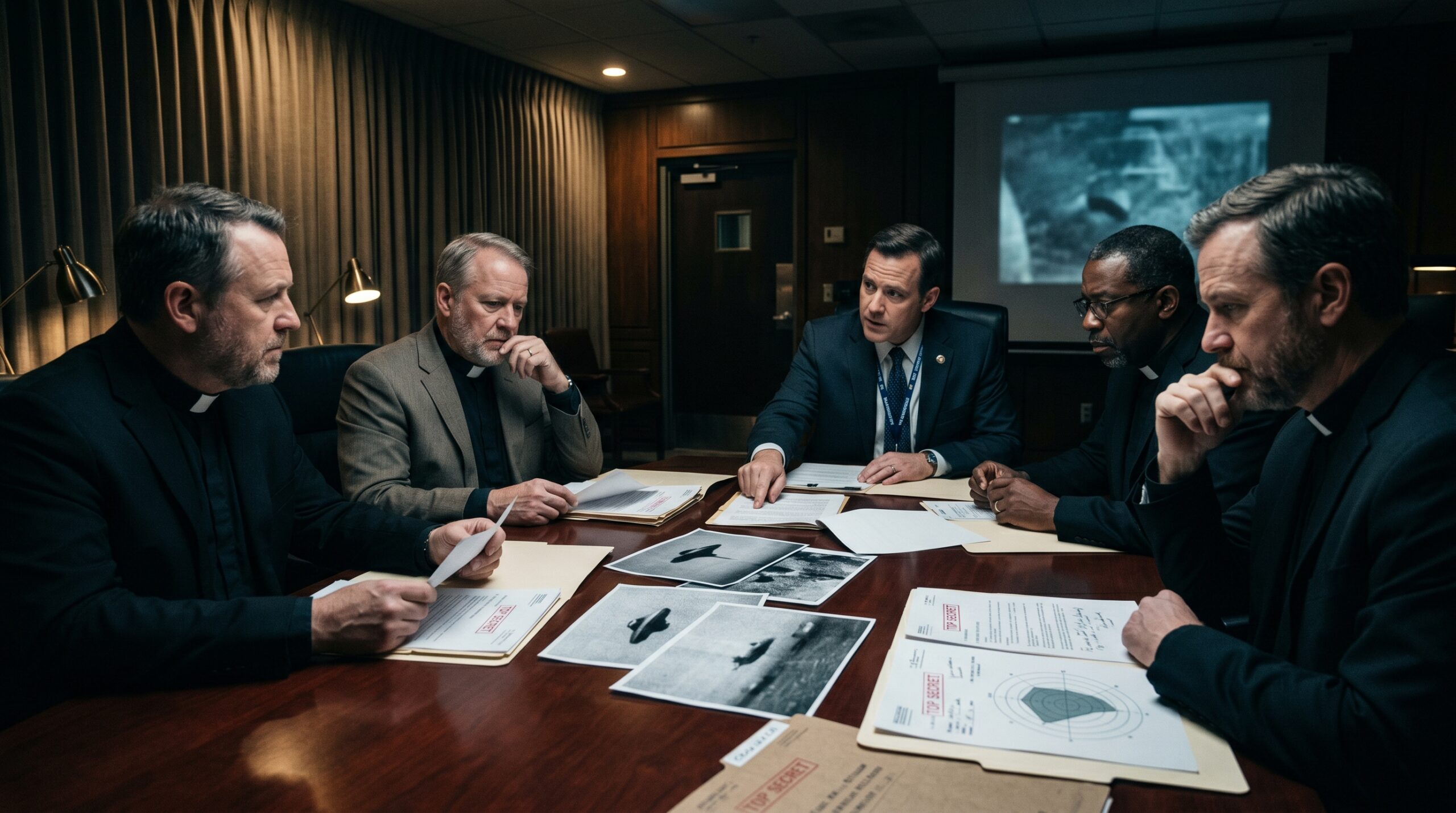
    The UFO disclosure narrative has been circling government hearings, congressional deadlines, and military whistleblowers for years. But in late April 2026, the conversation shifted into a territory that few people inside the movement expected: evangelical pulpits. Evangelist Perry Stone went public with a claim that U.S. officials have been privately briefing pastors, warning them to prepare their congregations for the disclosure of non-human entities. Stone was not alone in making the claim. Pastor Greg Locke and commentator Tony Merkel have reported similar briefings, each describing conversations with people they identified as Christians working inside military intelligence operations. Taken individually, each account is easy to write off as coincidence. Taken together, they paint a picture of something far more organized — and far more difficult to dismiss.

    What the Briefings Purportedly Covered

    According to the accounts that have surfaced, the briefings went beyond a simple heads-up about upcoming government releases. Perry Stone described discussions about reptilian entities and non-human materials. Tony Merkel corroborated the general framework, saying he was contacted by the same network of Christians inside the intelligence community with the explicit mission of preparing the broader church. Greg Locke, who commands a massive online following, amplified the message and pushed the conversation into mainstream discourse.

    The discussion of jinn and non-human entities in Islamic tradition has always run parallel to Western UFO narratives, with striking overlaps in how these beings are described. What the pastors are describing — entities that are not human, intelligence operations that have known about them, and a coordinated effort to prepare religious communities — echoes the kind of cross-cultural patterns that people in this space have been tracking for decades.

    Why Pastors Are Being Briefed Specifically

    The theological implications of non-human intelligence disclosure are enormous. If the government is about to reveal the existence of non-human entities — whether they are extraterrestrial, interdimensional, or something else entirely — the people most responsible for helping communities process that reality will be religious leaders. It makes strategic sense that any coordinated disclosure effort would involve pastoral preparation beforehand.

    But the more unsettling question is why the briefings came from military intelligence insiders rather than from civilian or religious authorities directly. If the network doing the briefing truly consists of Christians embedded in intelligence operations, the arrangement suggests something closer to an internal awakening than a public relations strategy. People inside the system who hold religious convictions may be trying to ensure that when the truth comes out, the faith community is not blindsided by it.

    The prophecy community has been watching end-times markers closely throughout 2026, and the convergence of UFO disclosure talk with religious preparation has only deepened the sense that something unprecedented is approaching.

    The spiritual turn within the UFO disclosure community did not happen overnight. The intersection of faith and government insider claims has been building for years, and the pastor briefing claims are a continuation of that trajectory.

    The Cross-Platform Corroboration

    What makes these claims harder to ignore is that they did not come from a single source. Perry Stone shared his account on his podcast. Greg Locke amplified it on social media, where his audience responded with immediate intensity. Tony Merkel corroborated the account independently. Multiple religious leaders across different platforms and different audiences began saying the same thing: they had been contacted by government-adjacent insiders to prepare their people.

    The pattern of religious leaders being briefed for disclosure matches what earlier claims about the spiritual dimension of the UAP insider community predicted. If the intelligence community itself contains people with deep religious convictions, they would naturally reach out to religious leaders rather than wait for a formal press release.

    What This Means for the Disclosure Conversation

    For people who have been tracking the UFO disclosure narrative through congressional hearings and military whistleblowers, the pastoral briefing angle adds an entirely new dimension. It suggests that preparation for disclosure is not happening only in political and military channels but also in religious ones. It suggests that whoever is pushing disclosure from inside the system understands the theological earthquake it could produce, and that they are actively working to soften the shock.

    What Cannot Yet Be Verified

    None of these claims come with independently verifiable documentation. The briefings were described as private, off-the-record conversations. The identities of the military intelligence insiders have not been confirmed. The specific claims about reptilian entities and non-human materials remain at the level of reported conversation rather than demonstrated fact.

    The Trump administration has promised UFO document releases, but no official briefing schedule for religious leaders has been made public. Until that changes, the pastor briefing claims sit in the same territory as a thousand other insider accounts: too consistent to dismiss, too unverified to accept.

    What Remains

    The claims made by Perry Stone, Greg Locke, and Tony Merkel represent something unusual in the disclosure conversation — a coordinated narrative crossing religious and intelligence boundaries. Whether those briefings actually happened as described, or whether they are part of a broader information strategy, the fact that the conversation has reached this point at all reveals how much the disclosure movement has expanded. It is no longer just about government documents and congressional hearings. It is about what happens to human belief systems when they encounter something that does not fit inside the boxes we built to contain reality.

  • Lafferty Brothers Mormon Cult Murders: Why the Case Still Feels Like Prophecy Gone Feral

    Lafferty Brothers Mormon Cult Murders: Why the Case Still Feels Like Prophecy Gone Feral

    Some cult stories disturb people because of what a leader did. The Lafferty brothers story is worse than that. It disturbs people because it feels like revelation itself turned rabid inside an ordinary family and walked straight into a house with a knife. There is no monster costume here, no desert compound mythology grand enough to create emotional distance. Just the terrifying idea that once private prophecy becomes absolute, blood can start to look like obedience.

    That is why the case is surging through cult-watch communities again. It is being revisited not just as true crime, but as a warning about what happens when certainty hardens into command. The same audiences that locked onto Samuel Bateman’s false-prophet world and still return to Heaven’s Gate as an afterlife cult relic are now dragging the Lafferty story back into daylight.

    What grips people is not merely the violence. It is the atmosphere around it — a world where religious language becomes private code, where family rebellion becomes cosmic war, and where a man can persuade himself that murder is not murder if heaven signed the order. That is also why the case sits so close to other cult nightmares, from charismatic spiritual movements that still unnerve outsiders to modern documentary-driven resurgences that turn old crimes into fresh acts of cultural panic.

    Why the Lafferty brothers are back in the feed

    The immediate trigger is social recirculation. Reddit cult communities and history accounts have been resurfacing the case, often presenting it as one of the bleakest examples of prophecy mutating into family annihilation. The algorithmic afterlife of the story is powerful because it already has everything the internet amplifies: religion, extremism, murder, secrecy, and a wider culture still trying to understand Mormon fundamentalist splinter worlds.

    Most readers who arrive through that route quickly hit the same reference points: the legal background in State v. Lafferty, the broader cultural framework around Under the Banner of Heaven, and the wider context of Mormon fundamentalism. Those sources do not make the case less chilling. They make it more legible.

    What happened in the murders

    The essential facts are horrifyingly clear. In 1984, brothers Dan and Ron Lafferty murdered Brenda Lafferty and her infant daughter, Erica, in Utah. The killings were tied to extremist religious beliefs and to the brothers’ conviction that they had received divine revelation demanding the deaths.

    That is the point where the story stops being merely bizarre and becomes spiritually radioactive. The murders were not framed by the perpetrators as ordinary revenge or rage. They were placed inside a private sacred logic. Once that happens, the crime becomes more frightening because it no longer obeys normal human restraint. It believes itself justified beyond appeal.

    How revelation language became a weapon

    This is why the Lafferty case still matters. It shows how violent certainty can hide inside language that sounds holy from the outside. The words revelation, commandment, purification, obedience — once detached from accountability — can become tools of psychological and moral isolation. The brothers did not need a giant organization around them in order to become dangerous. They needed a worldview in which contradiction itself looked evil.

    That is also why the case continues to fascinate cult-watchers. It sits at the edge between organized high-control religion and freelance apocalyptic certainty. It is not just about a church or a sect. It is about what happens when revelation becomes self-authenticating and no outside reality check is allowed to survive.

    Why the case still haunts cult-watchers

    Because it feels replicable. The details are specific, but the mechanism is universal: grievance, purity, cosmic mission, a shrinking circle of trusted voices, and then a moral inversion so severe that cruelty starts to feel like righteousness. That pattern is not ancient. It is not safely buried. It keeps reappearing in new forms, which is why old cases like this keep being rediscovered whenever modern cult anxiety spikes.

    The Lafferty story also lingers because it ruins the comforting idea that extremism always looks theatrical from the outside. Sometimes it looks domestic. Sometimes it uses scripture instead of slogans. Sometimes it grows inside a family before the wider world even realizes what it is becoming.

    What the historical record clearly establishes

    The grounded record is solid on the central facts. The Lafferty murders were real, the victims were Brenda Lafferty and her infant daughter, and the case involved extremist religious beliefs tied to Mormon fundamentalist ideology. The brothers’ acts were not part of the FLDS organization itself, though the story is often discussed alongside broader Mormon-fundamentalist and polygamist movements because of overlapping theological terrain and social atmosphere.

    What matters most is that the case does not need embellishment. The true record is already grim enough. The social-media revival is real, and the case continues to resonate because it captures something people fear but struggle to name: the moment belief stops being a guide and becomes a weapon.

    That is why the Lafferty brothers still feel dangerous in the cultural imagination. Not because the mystery is unresolved, but because the mechanism is painfully clear. Prophecy, once severed from reality and restraint, can become its own private permission slip to do the unthinkable — and that possibility never stays safely in the past for long.

  • Why Neo-Sannyasa Videos Still Look Like a Cult Nightmare to Outsiders

    Why Neo-Sannyasa Videos Still Look Like a Cult Nightmare to Outsiders

    The first time many people see old Neo-Sannyasa footage, they do not react as if they are watching a normal spiritual movement. They react as if they have stumbled into a dream where everyone is smiling too hard, moving too freely, and surrendering to something they cannot quite name.

    That reaction is why the phrase neo sannyasa osho cult keeps resurfacing in search, social clips, and comment threads. People are trying to understand why videos from the Rajneesh world still hit with such force decades later. The short answer hidden inside the atmosphere is simple enough: Neo-Sannyasa was Osho’s modern reworking of sannyas, but to outsiders the robes, ecstatic group practices, total devotion, and charismatic center of gravity still read like classic cult imagery almost instantly.

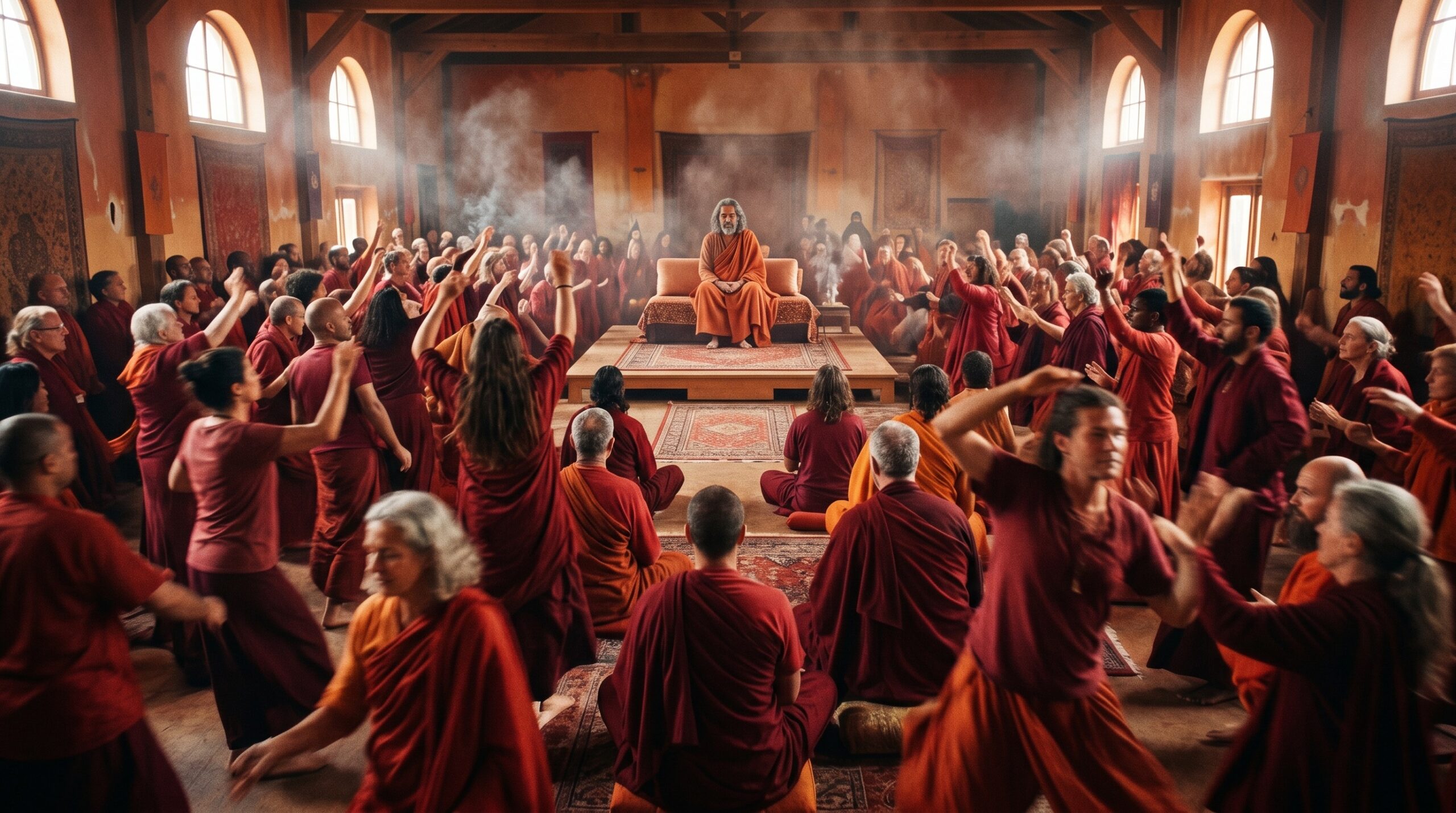
    And the footage really is hard to shake. Orange and maroon clothing. Tearful laughter. Mass meditation. Cathartic movement. Faces lifted toward a leader who is framed less like a lecturer than like a magnetic event. Even before anyone knows the timeline of Bhagwan Shree Rajneesh, the Oregon commune, or the internal politics of the movement, the visual code is already working. The body recognizes collective surrender faster than the intellect can label it.

    That is why these videos never stay buried for long. They return every few months in compilations, documentaries, YouTube rabbit holes, and TikTok reactions because they provoke the same uneasy question: where is the line between spiritual breakthrough, psychological theater, and a cult that knows exactly how to aestheticize devotion?

    What Neo-Sannyasa actually was

    To understand why outsiders call it a cult so quickly, you have to see what Neo-Sannyasa was trying to be.

    In the broadest terms, Neo-Sannyasa referred to the spiritual path built around Osho, also widely known earlier as Bhagwan Shree Rajneesh. Public summaries of the Rajneesh movement describe a global community that blended meditation, therapy culture, iconoclastic philosophy, and intense devotion around the guru himself. The movement’s own framing, including material from Osho Online on neo-sannyas, presents it less as a rigid religion than as an initiation into a transformed way of being.

    But this is exactly where the outsider unease begins. A movement can describe itself as liberation, awakening, or conscious experimentation and still look, from the outside, like highly stylized surrender to a charismatic center. Neo-Sannyasa footage carries all the visual markers that trigger modern cult alarms: uniform-like clothing, emotionally intense group ritual, confessional energy, separation from ordinary social expectations, and a leader whose presence appears to rearrange everyone else in the room.

    That does not prove every outsider reading is sufficient. It does explain why the reading appears so fast.

    Why the videos still feel so potent

    A lot of old spiritual footage looks dated. Neo-Sannyasa footage often looks dangerous.

    Part of that is the emotional temperature. These are not calm scenes of private contemplation. They are often scenes of release. Bodies shake. People cry, laugh, collapse, dance, scream, embrace, or move through guided emotional extremes. To committed participants, that can read as breakthrough. To everyone else, it can look like ritualized destabilization.

    That gap in interpretation is the whole story.

    What makes old Osho-era video so memorable is not just the doctrine behind it, but the choreography of consent it seems to display. The group is not merely assembled. It is tuned. You can feel the social voltage through the screen. People mirror each other. They amplify each other. They permit themselves things they might never do alone. That is one of the oldest engines of ecstatic religion and one of the oldest warning signs in cult history. The same mechanism can produce catharsis, transcendence, obedience, and dependence without announcing which one is taking over.

    It is the same reason internet audiences remain fascinated by belief systems that seem to continue glowing long after mainstream culture assumes they should have gone cold. The eerie persistence of the Heaven’s Gate website still being online works on people for a similar reason: it makes a supposedly finished movement feel present again, complete with its own sealed logic and emotional weather.

    The cult-coded visual language outsiders cannot ignore

    Neo-Sannyasa does not just survive as text. It survives as imagery.

    That matters because imagery is where cult suspicion usually hardens first. Outsiders do not begin by reading philosophical nuance. They begin by seeing rows of similarly dressed followers, choreographed vulnerability, public surrender, and a spiritual hierarchy so visible that it feels architectural. Once that impression lands, every additional detail is interpreted through it.

    Modern audiences are especially primed for this because they already know the aesthetics of manipulation. They have watched documentaries about closed groups, self-help empires, secretive wellness circles, and influencer-led spiritual communities. So when they encounter Rajneesh footage, they are not seeing it in historical innocence. They are seeing it through a visual library built from NXIVM, Scientology, megachurch spectacle, therapy abuse stories, and algorithmic charisma.

    That is why the comparison engine starts instantly. If a movement looks like it produces identity through devotion, costume, language, and emotional surrender, the cult label arrives before the details do. The social-media age only intensifies that reflex. A clip does not need a syllabus. It only needs enough evidence of total atmosphere.

    That is also why stories about modern influence systems, from Scientology’s strange relationship with TikTok to other belief ecosystems that spread through image management and repetition, feel so relevant here. The core anxiety is the same: when does a spiritual message stop looking like wisdom and start looking like an immersive system designed to absorb the self?

    Why the Rajneesh footage still travels so well online

    The internet rewards images that feel like recovered evidence from an alternate reality. Neo-Sannyasa footage has that quality in abundance.

    It looks too theatrical to be ordinary and too sincere to be simple parody. That combination is internet gold. Viewers can project almost anything onto it: liberation, mass hypnosis, eroticized devotion, communal healing, psychological experimentation, authoritarian soft power, utopian longing, or a live demonstration of how humans willingly dissolve into collective identity. It is not far from the reason strange institutional artifacts like the Great Seal Bug keep resurfacing too: once a symbol starts looking like a vessel for hidden power, people cannot stop staring at it.

    And the deeper you go, the stranger it gets. Reading beyond casual reaction clips quickly leads into the historical sprawl of Rajneesh as a figure, his teachings, his controversies, and the many national contexts in which Neo-Sannyasa took on a life of its own. Even a more specialized source like this academic discussion of the Neo-Sannyas tradition in modern Russian culture hints at how far the movement’s imagery and ideas traveled beyond the most infamous media snapshots.

    That breadth complicates the simple “cult nightmare” reading without erasing it. The movement was not merely a single viral image. It became a transnational spiritual style, a therapeutic experiment, a commercial ecosystem, a scandal magnet, and for many former insiders and critics, something much darker.

    Which is exactly why the footage keeps generating debate instead of settling into one clean interpretation.

    The magnetic center: Osho himself

    No discussion of the neo sannyasa osho cult question works without acknowledging the obvious center of gravity: Osho.

    The public history around Rajneesh/Osho is one reason outsiders distrust the movement on sight. Charismatic leaders do not have to shout to dominate a space. Sometimes the calm ones are more unnerving. Osho’s persona in surviving footage often feels controlled, amused, detached, and strangely absolute. He appears not merely to persuade but to authorize a new emotional climate around himself.

    That is cult-catnip in the most literal visual sense. Followers are not just listening to a teacher. They appear to be orienting their inner life around a figure whose approval, presence, and metaphysical authority carry extraordinary weight. Once a viewer senses that asymmetry, everything else in the footage sharpens: the robes become signs of identity transfer, the ecstatic exercises become signs of surrender, the smiles become harder to read.

    Even people who know very little about the movement can feel that structure intuitively. And once they feel it, they begin to watch the footage less like anthropology and more like evidence.

    The grounded view, and why it still leaves the imagery unsettling

    A grounded reading has to resist both lazy caricature and naive romanticism.

    Neo-Sannyasa was not simply an internet horror aesthetic accidentally captured on tape. It was a real spiritual movement with a genuine global following, distinct teachings, meditation practices, and participants who often described their experience as transformative rather than merely coercive. The Rajneesh movement also exists within a broader twentieth-century landscape of spiritual experimentation, therapy culture, anti-traditional religiosity, and cross-cultural reinvention.

    But the grounded view also cannot pretend the outsider reaction is baseless. The movement’s history, internal power structure, and unmistakably charismatic center give people plenty of reason to use cult language, especially when they are responding to footage designed around visible emotional intensity and collective devotion. In other words, the imagery does not just happen to look cult-like. It activates patterns audiences have learned, rightly or wrongly, to fear.

    That is why the videos still work. They capture a form of spiritual life that appears to promise freedom while looking, from the outside, like submission. Maybe some participants found awakening in that world. Maybe others found manipulation, dependency, or a social machine stronger than any private doubt. What remains on screen is the unresolved tension between ecstasy and control.

    And unresolved tension is exactly what keeps old movements alive online. The neo sannyasa osho cult conversation survives because the footage never settles down into a harmless archive. It still feels active. It still asks the viewer the same uncomfortable question: are you watching people break free of the ordinary self, or are you watching the ordinary self get replaced by a system with a smile on its face?

  • Why Samuel Bateman Still Haunts the FLDS Story

    Why Samuel Bateman Still Haunts the FLDS Story

    Some men do not enter a broken religious world like strangers. They enter like echoes. That is the feeling around the Samuel Bateman false prophet story, and it is why Netflix’s Trust Me: The False Prophet lands with such a cold aftertaste. Bateman does not feel like a random criminal who wandered into the FLDS orbit. He feels like the kind of figure that a splintered prophetic culture keeps generating when fear, authority, and apocalyptic certainty have already prepared the ground.

    That is the hook people cannot shake. In the public imagination, Samuel Bateman is not just another disgraced leader. He is a prophet after the prophets, a man who stepped into an already haunted succession crisis and claimed there was still one more hidden line of authority, one more chosen remnant, one more secret path to survival. In communities shaped by revelation, exile, and obedience, that claim can hit with the force of destiny.

    The reason the story is spreading again now is obvious enough. Netflix has put the case back into circulation through its Tudum feature on Trust Me: The False Prophet and a separate release-date and trailer page. But the deeper reason people keep falling down the rabbit hole is older than any streaming platform. Bateman touches a nerve that never really healed inside the FLDS story: if one prophet falls, how many more can rise from the debris and claim they alone still hold the keys?

    That is why this case feels bigger than one documentary. To believers, ex-believers, cult-watchers, and people drawn to high-control religious mysteries, Bateman represents a chilling possibility: maybe the most dangerous phase of a movement is not its peak under one famous leader, but its fragmented aftermath, when authority splinters into private revelations and nobody outside the inner circle can easily see where the new center of power has formed.

    Why Samuel Bateman hits an old FLDS nerve

    The FLDS world already carried the ingredients for a figure like Bateman to matter.

    This was not a blank landscape. It was a community tradition marked by prophetic succession, absolute obedience, family separation, spiritual ranking, and the belief that salvation could depend on staying loyal to the right man at the right moment. Once a movement is structured around divine authority embodied in a single leader, every rupture leaves behind both trauma and opportunity. The fall of one prophet does not necessarily kill the pattern. It can make the pattern more volatile.

    That is why Bateman is so disturbing. He appears in the public record not as a novelty, but as a continuation. The names change, the factions shift, and the geography moves, but the underlying script remains terrifyingly familiar: a man claims special revelation, casts himself as the vessel for God’s final instruction, and gathers the vulnerable by insisting that everyone else has already gone astray.

    In that sense, the story sits close to why readers remain fascinated by belief systems that continue recruiting through their afterimage. Even when the original center collapses, the emotional architecture can survive. A doctrine does not have to be healthy to stay alive. It only has to leave behind enough fear, longing, and sacred legitimacy for someone else to weaponize.

    Who Samuel Bateman is, and why “false prophet” stuck

    Samuel Bateman is a fundamentalist Mormon splinter leader whose name became nationally known through reporting on his claims of prophetic authority and the criminal allegations surrounding him. The phrase “false prophet” attached itself to Bateman so quickly because the word captures more than public scandal. It captures betrayal inside a system that already treats prophecy as the highest currency.

    When a secular politician lies, people call him corrupt. When a businessman lies, people call him fraudulent. But when a man claims divine authority over salvation, marriage, obedience, and destiny, and then that authority is exposed through coercion or abuse allegations, “false prophet” is the phrase that carries the right weight. It is theological and psychological at the same time.

    The documentary framing works because Bateman seems to embody the nightmare version of splinter revelation. According to mainstream reporting, including Rolling Stone’s feature on the case and the documentary, his rise is inseparable from the broader history of fundamentalist Mormon power struggles. He is not frightening because he invented charisma from nothing. He is frightening because he appears to have understood exactly how prophetic charisma survives collapse.

    How splinter prophecy becomes a hiding place for new authority

    This is the part outsiders often underestimate.

    People imagine that once a notorious sect leader is disgraced, followers simply wake up and leave. Real life is much darker and messier than that. Closed religious cultures do not just produce belief. They produce habits of belief. They produce reflexes of obedience, concepts of chosenness, and a worldview in which suffering can be reinterpreted as proof that one is on the right path.

    That makes splinter groups especially dangerous. A fragmented movement can feel more intimate, more purified, and more urgent than the larger body it broke away from. The leader no longer has to persuade the whole world. He only has to persuade a remnant that it has been specially selected to carry the final truth after everyone else failed.

    This is why the Bateman story unnerves people who study cults. It resembles the same mechanism that makes sealed, taboo institutions radiate power online, whether readers are obsessing over viral incursions into Scientology spaces or older cases where trust itself becomes the delivery system for hidden control, as in the Great Seal listening-device story. Once authority is wrapped in secrecy and sacred meaning, ordinary warning signs stop behaving like warning signs.

    Bateman’s power, in that sense, was never just personal. It was environmental. He emerged in a religious ecosystem where revelation had already been taught as real, hierarchy had already been sanctified, and obedience had already been bound to eternal stakes. That is what gives the case its larger horror.

    Why the Netflix documentary is reopening the rabbit hole now

    Netflix is not creating the mystery, but it is giving the mystery a new doorway.

    The streaming effect matters because it introduces Bateman to viewers who know only the broad outlines of FLDS history: Warren Jeffs, isolated compounds, prophetic power, child marriage allegations, and a world of rules enforced through fear and divine command. What Trust Me: The False Prophet appears to do, based on the Netflix materials and follow-on reporting, is show that the story did not simply end when the most famous names left the headlines.

    That is a powerful revelation for general audiences. It tells viewers that the FLDS saga is not a closed historical chapter. It is a live aftershock field. The old structures may fracture, but the hunger for revelation, the pressure of loyalty, and the authority of inherited fear can still create new centers of gravity.

    Reporting beyond the documentary also sharpens that sense. People’s coverage of details left out of the documentary gives the case an even more unsettling contour, because it suggests that no single film can capture the full texture of what such a group does to people from the inside. Every major cult story has this quality in the end: what shocks the public most is often only the visible edge.

    Why Bateman feels like a haunting, not just a headline

    The reason Samuel Bateman lingers is that he activates an old American fear: the fear that revelation can be privatized and turned into a weapon behind closed doors.

    The United States has always had a shadow tradition of self-anointed prophets, end-times visionaries, desert sects, hidden compounds, and leaders who promise a purified path through a corrupt age. Bateman slips naturally into that lineage. He does not just symbolize abuse allegations or prosecutorial records. He symbolizes the recurring possibility that a failed prophecy does not end the prophetic impulse. It scatters it.

    That makes his story feel almost spectral. He arrives after an earlier collapse, gathers a smaller chosen circle, and reactivates the same architecture of dread. To outsiders, that may seem irrational. To people who understand high-control belief worlds, it is almost grimly logical. Once sacred authority has been detached from accountability, it can migrate.

    There is also a visual and emotional layer here that matters. Fundamentalist prophetic culture often borrows legitimacy from signs, garments, language, ritual seriousness, and the aura of divine appointment. That is one reason stories of sacred authority objects, from relics to royal garments treated like vessels of heavenly protection, fascinate readers so deeply. The costume of legitimacy is never just aesthetic. It is part of the control system.

    What is documented, and what remains unresolved

    Here the grounded frame matters.

    The broad public record is not mysterious about the basic stakes. Samuel Bateman became the subject of national reporting and criminal proceedings tied to allegations involving underage girls and his claimed spiritual authority. Netflix, People, and Rolling Stone are not inventing a folklore figure; they are covering a documented modern case whose details intersect with the larger history of FLDS splinter leadership.

    What should be handled carefully is the temptation to inflate every cult story into a totalizing myth where every whisper is known, every inner teaching is mapped, and every follower’s psychology can be neatly summarized from the outside. The central facts are already disturbing enough. Bateman appears to have claimed prophetic legitimacy inside a vulnerable splinter environment and used that role in ways that led to grave allegations and public reckoning. That is the documented core.

    What remains unresolved is the deeper social wound the documentary is exposing. If Samuel Bateman still haunts the FLDS story, it is because he reveals how a shattered prophetic system can keep producing successors long after outsiders think the danger has passed. The names may change. The headlines may fade. But as long as revelation, fear, and total obedience remain available as tools, another voice can always step into the silence and claim it was chosen by God.

  • Heaven’s Gate Website Still Online? The 1997 Cult Site That Never Went Away

    Heaven’s Gate Website Still Online? The 1997 Cult Site That Never Went Away

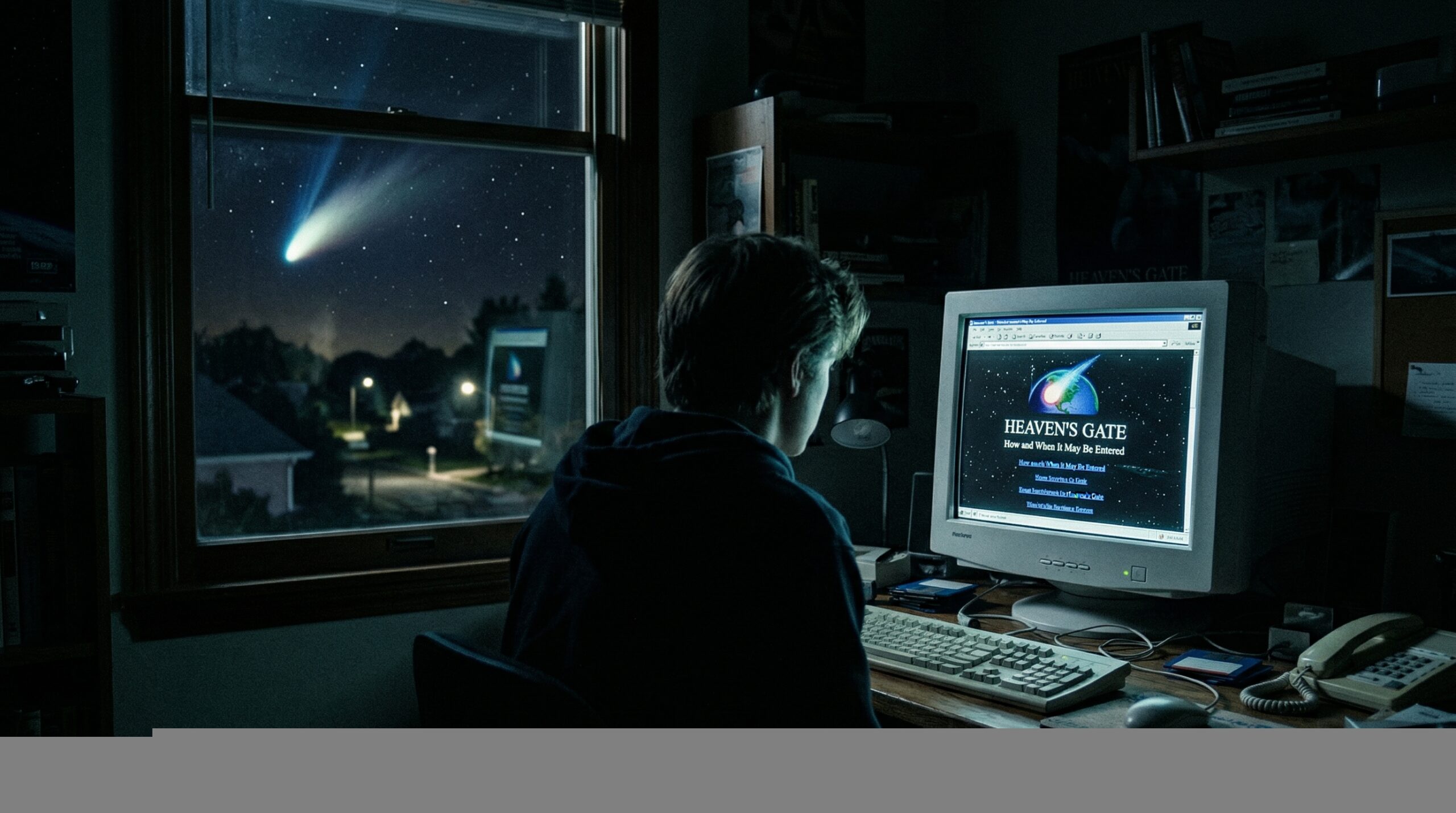
    Yes, the Heaven’s Gate website is still online, and that fact still lands with a jolt. People expect a broken link, a memorial page, or a museum-style archive. Instead they find a living fragment of the 1990s web: plain HTML, simple navigation, long blocks of text, and the undisturbed voice of one of America’s most infamous apocalyptic groups.

    That does not mean Heaven’s Gate survived as an active movement in any ordinary sense. The group is remembered above all for the March 1997 mass suicide in Rancho Santa Fe, California, when 39 members died believing they were leaving their human “vehicles” to join a higher extraterrestrial existence associated with the Hale-Bopp comet. But the website built around that worldview did not disappear with them. It remained.

    For more context on the broader mystery, see Doomsday Clock at 85 Seconds to Midnight: What the Warning Really Means and Ancient Demon Traps in Mesopotamia? The Bowls Buried Beneath the House.

    That is what makes the site so unsettling. It is not merely about Heaven’s Gate. It is Heaven’s Gate, still speaking in its own words. For historians of religion, researchers of cult dynamics, archivists of the early internet, and curious readers who stumble across it years later, the site offers something rare and uncomfortable at once: a primary-source artifact that feels less preserved than suspended.

    What was Heaven’s Gate?

    Heaven’s Gate was a religious movement founded in the 1970s by Marshall Applewhite and Bonnie Nettles, known within the group as “Do” and “Ti.” Their teachings fused Christian themes, apocalyptic expectation, New Age ideas, and UFO belief into a worldview that cast Earth as a temporary station and ordinary human life as something followers were meant to outgrow.

    Members were taught that the body was only a “vehicle” and that true identity belonged to a higher order of existence often called the “Next Level.” In the group’s theology, advanced beings could move between worlds, and disciplined adherents might eventually join them. That promised ascent required extreme detachment: separation from family life, suppression of sexuality, rejection of mainstream society, and obedience to the group’s spiritual framework.

    By the time the public internet opened up in the 1990s, Heaven’s Gate already had a polished internal language—part sermon, part system manual. The web turned out to be a natural home for it. The group’s site did not read like sensational press coverage of a doomsday cult. It read like a calm invitation to consider a set of teachings the group believed explained reality.

    Why is the website still online?

    The plain answer is that someone kept it online.

    For years after the 1997 deaths, reporting indicated that a small number of people associated with the group—often described as former members who left before the final event or supporters committed to preserving its teachings—continued to maintain the site and respond to inquiries. Two individuals in particular have been frequently mentioned in coverage as connected to that long-term preservation effort.

    Not every detail of the site’s upkeep has been transparent to the public, and that uncertainty has helped give the page an almost ghost-story aura. But there is nothing supernatural about its survival. Domains are renewed. Hosting is paid for. Files remain available because someone makes sure they do.

    What is unusual is not the mechanism but the intention. If the site existed only as a capture in the Internet Archive, it would feel historical in a familiar, buffered way. Because it remains accessible on the live web, it carries the strange sensation of an ending that never quite sealed shut.

    What do you see when you visit it?

    First comes the visual shock of recognition. The site looks unmistakably old: sparse pages, basic links, minimal graphics, and the hand-built feel of an internet that once seemed smaller and far less polished. It resembles the kind of page many people associate with the web’s early years, before design became sleek and standardized.

    Then comes the more unsettling part. The writing is steady, explanatory, almost gentle. It does not sound like the lurid mythology that later attached itself to the group in documentaries and headlines. It sounds like believers laying out a worldview they regarded as lucid and urgent.

    That directness is what gives the site its power. It bypasses decades of framing and returns visitors to the group’s own rhetoric: how members understood the human condition, why they believed Earth was nearing a decisive transition, and why choices that now read as catastrophic seemed meaningful from the inside.

    For some readers, that makes the site historically valuable. For others, it is precisely what makes the page hard to shake.

    Why do people find it so eerie?

    Most abandoned websites feel harmless. They suggest neglect, not menace. The Heaven’s Gate site feels different because it is attached to one of the most recognizable cult tragedies in modern American history.

    Part of the unease comes from the collision of eras. The design belongs to the bright, experimental early web. The message belongs to a closed belief system that ended in mass death. Yet the site remains only a click away, with no narrator standing beside it to interpret, soften, or condemn. Visitors are left alone with the material.

    There is also a deeper human reason the page lingers in memory. It turns a familiar media story back into a community of voices. The robes, headlines, and archival footage recede. In their place are people trying, in plain language, to explain what they believed reality was. That is often more disturbing than the spectacle that made the group famous.

    Is it a historical document, a memorial, or something more troubling?

    The answer depends on what you think preservation does.

    Some readers see the site primarily as a historical document. In that view, keeping it online preserves an unusually important primary source for studying new religious movements, coercive belief systems, and the culture of the early internet. If the site vanished, something essential about how the group represented itself would vanish with it.

    Readers who want to compare this story with outside reporting can start with The original Heaven’s Gate website and Wikipedia background on Heaven’s Gate.

    Others see the page less as an archive than as a continued transmission. Because the material still presents the group’s teachings in its own voice, without being reframed into retrospective commentary, the site can feel uncomfortably close to advocacy. That does not mean it carries the reach or force it once might have had, but it does explain why some visitors react with alarm rather than curiosity.

    The most balanced view may be that the site is both: a historical artifact and a troubling one. Its value lies partly in the fact that it was not rewritten into safer language. Its discomfort lies in exactly the same place.

    What the evidence actually shows

    The site’s continued existence is not an internet rumor. It has been noted for decades in reporting, documentaries, and discussions of digital culture. Journalists have also long pointed out that Heaven’s Gate was unusually fluent in the online world for a fringe religious movement of its era. Members had marketable technical skills and operated a web-design business, which helped support the group financially.

    That context matters. Heaven’s Gate was not accidentally frozen online. It was already using the internet intentionally as part of how it presented itself to the world.

    At the same time, the site’s endurance has attracted mythmaking. Some descriptions make it sound as if it survives by mysterious means. Others hint at hidden networks or secret ongoing activity without evidence. The simpler explanation is the stronger one: a website stays up when people preserve it, and preserved ideology can be more unnerving than ideology that disappears.

    Why Heaven’s Gate fit the internet so well

    In retrospect, the group’s online presence seems oddly ahead of its time. Heaven’s Gate offered a complete explanatory system. It used specialized language that separated insiders from outsiders. It treated mainstream culture as blind to a larger truth. And it invited people who felt alienated from ordinary life to imagine that alienation as evidence of a higher calling.

    Those features were not unique to Heaven’s Gate, but the web amplified them in important ways. A person could encounter the teachings privately, absorb them at length, and engage with a coherent worldview outside the checks of family, community, or public debate. The internet did not create the movement, which long predated the website, but it gave the group a new kind of stage.

    That is part of why the surviving site continues to matter to researchers. It shows how the early web functioned not just as a marketplace or communications tool, but as a habitat for belief, identity, and isolation.

    Why are people still talking about it now?

    Part of the answer is nostalgia. The internet has reached an age where old websites have become artifacts in their own right, and many people feel a strange fondness for the crude, handmade look of the 1990s web. At first glance, the Heaven’s Gate site seems to belong to that category.

    Then the second realization arrives. This is not an old fan page or forgotten startup. It is the preserved public face of a group associated with mass death. That sudden turn—from retro curiosity to dread—is part of what keeps the page circulating in documentaries, social media posts, and word-of-mouth recommendations.

    There is a broader reason, too. The site has become a stark example of how the internet preserves belief long after events are supposed to have passed into history. Pages remain reachable. Ideas remain searchable. A movement that feels sealed off in the past can still be entered through a URL.

    What scholars and skeptics would caution against

    The easiest mistake is to turn the site into a spooky internet legend. That framing gives it atmosphere, but it can flatten what it really represents. Scholars of religion and experts on cult dynamics would be more likely to treat it as evidence of a real movement with real victims, not merely a piece of eerie digital ephemera.

    Skeptics would also caution against overstating the unknowns. The site’s survival does not require paranormal explanation, secret technological infrastructure, or a hidden resurgence of the group. It requires maintenance and intent, both of which are entirely plausible.

    The grounded interpretation is the most revealing one: the page is unsettling not because it is supernatural, but because it is real.

    What remains uncertain

    Some details of the site’s maintenance remain hazy to the broader public, and the line between archival preservation and continued promotion can be uncomfortable to define. That ambiguity is part of why the page still inspires such strong reactions.

    But the core facts are not especially mysterious. The website’s survival is real, its historical significance is real, and its eerie quality comes from direct exposure to the group’s own words rather than from any paranormal element attached to the site itself.

    The bottom line

    At the most basic level, the Heaven’s Gate website is still online because someone has continued to preserve it. The deeper reason it continues to fascinate people is that it preserves conviction with unusual force. Printed pamphlets fade. Television footage gets edited and narrated. A live website can preserve tone, structure, and self-presentation in a far more immediate way.

    If you want to keep going, Skinwalkers Caught on Camera? What Viral Videos Usually Show expands the picture from another angle.

    Culturally, the site endures because it sits at the crossroads of several modern obsessions: cult history, digital archaeology, and the uneasy recognition that dangerous ideas do not disappear simply because the people who advanced them are gone. It does not prove anything paranormal, and it does not mean Heaven’s Gate survives in its original form. What it offers instead is more unsettling: an intact record of belief, still public, still reachable, still waiting behind a link.