Category: Top 10

  • 79 People Just Shared Their Creepiest Unsolved Mysteries

    79 People Just Shared Their Creepiest Unsolved Mysteries

    When ordinary people start sharing their strangest, most disturbing, most unexplained experiences — and millions of others can’t stop reading — something deeper than entertainment is happening. These are unsolved mysteries real stories that refuse to be explained away, and they’re resonating across the internet like a collective confession.

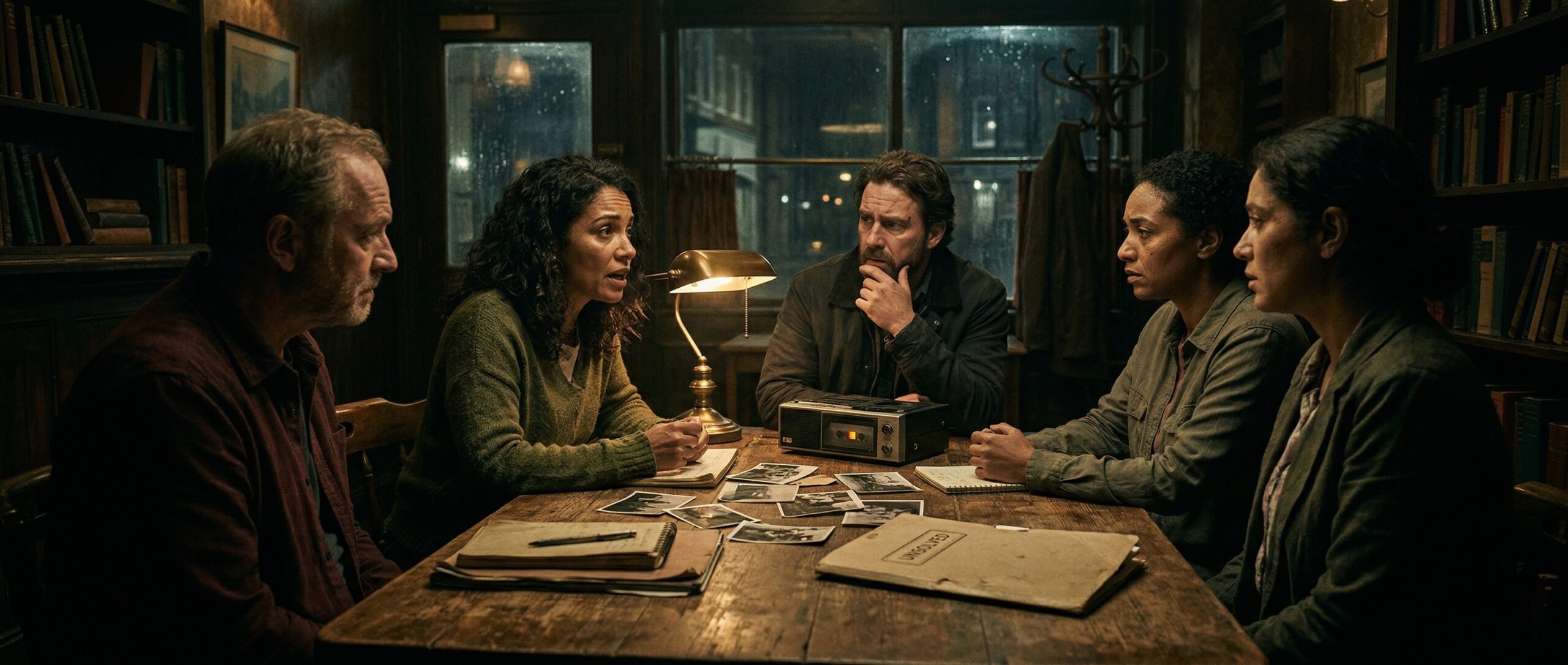
    Bored Panda recently published a listicle compiling 79 of the creepiest unsolved mysteries shared by real people online — and the response was immediate and overwhelming. Ghost sightings, shadow people lurking in doorways, unexplained disappearances of loved ones, dreams that predicted accidents before they happened, cold cases that haunted entire communities. The piece went massively viral, not because it was sensational or fabricated, but because it felt profoundly, uncomfortably real. These weren’t Hollywood horror stories. They were your neighbor’s story. Your aunt’s story. Maybe even yours.

    What This Story Actually Says

    The Bored Panda compilation didn’t invent anything. It gathered. What makes it remarkable is the sheer breadth and consistency of what people submitted. Across dozens of contributors spanning multiple countries, several themes emerged with striking regularity: encounters with shadow figures that couldn’t be explained by sleep paralysis alone, precognitive dreams that turned out to be accurate down to specific details, disappearances of people or objects that defied rational explanation, and cold case connections that left contributors wondering whether they’d witnessed something connected to an unsolved crime.

    The stories weren’t polished. They were raw, often grammatically imperfect, and filled with the kind of specific sensory detail — the particular smell in the hallway, the way the shadow moved, the exact words spoken in the dream — that’s hard to fabricate convincingly. Readers responded not with disbelief, but with recognition. Thousands of comments began with some version of: “This happened to me too.”

    Why This Topic Spreads So Easily

    Viral paranormal content isn’t a new phenomenon, but the Bored Panda format tapped into something particularly powerful: social proof at scale. When one person shares a ghost story, it’s anecdote. When 79 people share structurally similar experiences from independent sources, it starts to feel like data — even if it isn’t scientific data.

    Social sharing platforms have fundamentally changed how paranormal experiences are communicated. Where these stories once lived in hushed conversations or regional folklore, they now spread globally within hours. The result is a kind of distributed folklore archive — unvetted, unfiltered, but also unscripted. Pew Research has consistently found that large percentages of Americans report believing in or having experienced something they consider supernatural, and platforms like Bored Panda are simply giving those experiences somewhere visible to land.

    What the Evidence Actually Supports

    There’s no scientific evidence that the specific events described — ghost sightings, prophetic dreams, shadow people — represent genuinely paranormal phenomena. What the evidence does support is that these experiences are real to the people who have them, and that they’re far more common than mainstream culture tends to acknowledge.

    Sleep research offers partial explanations for some categories: hypnagogic hallucinations, sleep paralysis, and REM intrusion can produce vivid, terrifying experiences of presence or movement. Cognitive research on memory and pattern recognition helps explain why some people see meaningful patterns in coincidences. But these explanations don’t account for all reported cases — particularly the subset of precognitive dreams, which have been studied in controlled settings with results that remain disputed rather than definitively debunked.

    What Skeptics or Mainstream Experts Would Say

    Skeptics would correctly note that a viral listicle is not a research paper. Confirmation bias is a powerful force — people who’ve had strange experiences are more likely to submit, read, and share content that validates those experiences. The absence of mundane explanations in the stories doesn’t mean mundane explanations don’t exist; it more likely means contributors didn’t mention them, or didn’t pursue them.

    Mainstream psychologists would also point to the contagion effect of paranormal belief: exposure to others’ accounts can prime people to interpret ambiguous experiences through a paranormal lens. That said, dismissing 79 accounts across diverse demographics as pure confabulation is its own kind of intellectual overreach.

    Why This Story Still Matters

    The Bored Panda piece matters because it’s a cultural artifact — a snapshot of what people are actually experiencing and choosing to share publicly in 2026. The fact that millions engaged with it tells us something important: the appetite for authentic, unresolved paranormal narrative has not diminished. If anything, it’s growing.

    In an era of algorithmically curated content designed to deliver comfortable certainty, the enduring appeal of genuinely unsolved mysteries is striking. People aren’t just consuming these stories for entertainment. They’re using them to process experiences they don’t have language for, to find community around phenomena that feel isolating, and to push back against a culture that often treats the unexplained as the unimportant.

    The Bigger Unexplained Pattern

    The American Folklore Society has long documented how communities use shared supernatural narratives to process fear, grief, and the unknown. What Bored Panda’s listicle represents is a digital-age evolution of that same impulse. The stories follow recognizable folkloric structures — the warning dream, the entity at the threshold, the vanished person — because these archetypes map onto real psychological experiences that humans have been having for millennia.

    What’s new is the speed and scale. A 1970s shadow person encounter stays local. A 2026 shadow person encounter gets 2 million impressions by Thursday. The folklore is the same. The distribution is entirely new — and that changes what these stories can do, how many people they can reach, and how quickly a shared mythology can form around genuinely unexplained human experience.

    Final Assessment

    The Bored Panda 79 unsolved mysteries compilation is not evidence of the paranormal. It’s evidence of something arguably more interesting: the scale and consistency of human experiences that remain genuinely unexplained. Whether those experiences point toward something beyond conventional understanding is a question the listicle doesn’t answer — and that’s precisely why it went viral. The best unsolved mysteries real stories don’t resolve. They resonate. And right now, they’re resonating with millions.

    Frequently Asked Questions

    Are the stories in the Bored Panda unsolved mysteries list verified?

    No — the compilation is user-submitted and crowd-curated rather than independently verified. That said, the consistency of certain themes across unrelated contributors is itself noteworthy, and many details align with well-documented categories of anomalous experience research.

    Why do unsolved mysteries stories go viral so reliably?

    Unresolved narrative creates a psychological itch that demands scratching. Stories with no clean ending trigger continued mental engagement — you keep thinking about them. Combined with social proof from multiple contributors, viral paranormal content exploits some of the deepest engagement mechanisms in human psychology.

    What’s the most commonly reported type of unexplained experience?

    Shadow figures and precognitive dreams appear most frequently in large-scale user-submitted compilations. Both categories also appear consistently in academic anomalous experience research, making them the most studied — and most contested — categories in paranormal literature.

    Is there scientific research into precognitive dreams?

    Yes, though results are disputed. Studies conducted at institutions including the University of Edinburgh’s Koestler Parapsychology Unit have found statistically anomalous results in some dream precognition trials. Mainstream science remains deeply skeptical, but the research exists and has not been uniformly discredited.

    Related Articles

    This article was created using Media Blaster – Your content production specialist. Visit www.mediablaster.io for more information.
  • Best True Crime Podcasts of 2026: 10 Shows You Should Be Listening To Right Now

    Best True Crime Podcasts of 2026: 10 Shows You Should Be Listening To Right Now

    If you’re looking for the best true crime podcasts in 2026, the field is more crowded — and more competitive — than ever. The genre now stretches far beyond serial killer retrospectives and cold-case recaps. Today’s top shows mix investigative journalism, courtroom analysis, long-form storytelling, wrongful-conviction reporting, and documentary-level production. That’s great for listeners, but it also means finding the truly essential shows takes more work.

    This list is built to make that easier. Below, you’ll find the best true crime podcasts to listen to in 2026, including long-running staples, prestige investigative series, and one show that deserves much more attention from listeners who like dark cases handled with serious atmosphere: Dark Investigations.

    To keep this useful, every entry includes a direct link to the podcast’s official page or relevant home site.

    How We Chose the Best True Crime Podcasts of 2026

    There is no single perfect formula for ranking the best true crime podcasts, but the strongest shows usually stand out in a few key areas: storytelling quality, reporting depth, pacing, host credibility, production value, and whether the series leaves you feeling informed instead of merely manipulated.

    For this list, the focus is on shows that continue to matter in 2026 because they either define the genre, keep evolving, or offer something distinct enough to stand out in a crowded market.

    1. Dark Investigations

    Dark Investigations earns a place on this list because it sits in a compelling lane between narrative true crime and the darker edge of unexplained storytelling. If you like shows that do more than summarize cases — and instead build mood, tension, and a deeper sense of the mystery around them — this is one of the most interesting titles to watch in 2026.

    What makes it stand out is tonal control. Some true crime podcasts rely on speed, banter, or blunt shock value. Dark Investigations leans into atmosphere and sustained curiosity, which gives it a different feel from more mainstream network productions. For listeners who also enjoy paranormal-adjacent or high-strangeness storytelling, it offers a natural crossover entry point.

    2. Serial

    Serial remains one of the most important true crime podcasts ever made because it fundamentally reshaped the genre. Even in 2026, it still casts a long shadow over nearly every investigative audio series that followed it.

    The reason it endures is simple: it made long-form audio investigation feel urgent, intimate, and culturally central. For anyone exploring the best true crime podcasts, Serial is still required listening — both as a landmark and as a standard against which many later shows are judged.

    3. Criminal

    Criminal continues to be one of the smartest and most consistently rewarding true crime podcasts available. Hosted by Phoebe Judge, the show is less interested in lurid sensationalism than in the strange, human, and often morally complicated edges of crime.

    That approach is exactly why it remains essential. Criminal has range. One episode may focus on an infamous case, while another explores an overlooked legal issue, a bizarre historical crime, or a story about punishment, survival, or justice that most crime shows would never touch.

    4. Casefile True Crime

    Casefile True Crime is still one of the purest examples of high-discipline true crime audio. Its anonymous host, tightly structured scripts, and serious tone help the show maintain a clear identity in a genre where personality often overwhelms substance.

    For listeners who want immersive case breakdowns without excessive host chatter, Casefile remains one of the best true crime podcasts in 2026. It is especially strong when covering complex timelines, international cases, and crimes that demand careful narrative organization.

    5. Dateline NBC

    Dateline NBC continues to dominate because it combines broadcast-grade reporting with a massive archive of cases. It has reach, discipline, and the kind of established credibility that newer podcasts still struggle to match.

    There is a reason Dateline remains a default recommendation for true crime fans. The stories are polished, the reporting is familiar and reliable, and the format still works incredibly well in audio. If you want a dependable, high-volume entry in the genre, this is still one of the easiest recommendations to make.

    6. Bear Brook

    Bear Brook remains one of the strongest examples of what true crime podcasting can do at its best. The show’s first season became a benchmark because it combined deeply unsettling storytelling with real investigative progress and a sense of widening mystery that few podcasts have matched.

    What makes Bear Brook so powerful is that it does not just recount a crime. It maps the human damage around it, follows the evolving investigation, and lets the scale of the case reveal itself in layers. For many listeners, it is still one of the highest-quality limited true crime series ever released.

    7. Someone Knows Something

    Someone Knows Something remains essential for listeners who prefer empathetic, patient, deeply reported true crime storytelling. Hosted by David Ridgen, the podcast has always excelled at centering people rather than spectacle.

    That matters in 2026, when true crime audiences are increasingly more sensitive to exploitation, tone, and victim treatment. Someone Knows Something proves that a show can be compelling without becoming exploitative, and that alone makes it one of the best true crime podcasts still working at a high level.

    8. In the Dark

    In the Dark remains one of the most respected titles in investigative true crime because it repeatedly demonstrated that podcasting can do more than entertain — it can materially affect public understanding of a case.

    That gives it a different kind of authority. While many crime podcasts are content products, In the Dark often feels like actual reporting first and audio second. If you want the investigative end of the genre, rather than just suspense and structure, this is still one of the strongest recommendations available.

    9. Your Own Backyard

    Your Own Backyard became one of the most talked-about true crime podcasts of the modern era for good reason. It showed how focused, persistent, case-driven audio reporting could galvanize public attention and become central to ongoing interest in a long-cold disappearance.

    Its reputation remains strong in 2026 because listeners still point to it as an example of immersive, emotionally intelligent crime storytelling that never loses sight of the victim at the center of the case.

    10. Anatomy of Murder

    Anatomy of Murder continues to earn a place on best true crime podcasts lists because it offers a highly accessible format backed by credible experience. Hosted by a former deputy sheriff and a former prosecutor, the series gives listeners a more procedural look at how murder cases unfold.

    That practical edge helps it stand out. Not every true crime listener wants a serialized prestige documentary. Sometimes they want a well-constructed case breakdown with professional insight, and Anatomy of Murder does that consistently.

    What Makes a True Crime Podcast Worth Listening to in 2026?

    The best true crime podcasts in 2026 tend to share a few traits. They respect victims, avoid unnecessary sensationalism, understand pacing, and give listeners more than just a stack of grim facts. Great shows build context. They tell you why the case matters, how it unfolded, what remains uncertain, and what larger questions it raises about justice, media, policing, or human behavior.

    That is why the genre is still thriving. Even after years of oversaturation, the strongest podcasts continue to evolve. The bad ones exploit attention. The best ones earn it.

    Final Verdict: Which Are the Best True Crime Podcasts Right Now?

    If you want the most influential starting point, go with Serial. If you want consistent excellence, Criminal and Casefile remain elite. If you want a broadcast powerhouse, Dateline NBC is still hard to beat. And if you want something darker, moodier, and more crossover-friendly for unexplained.co readers, Dark Investigations absolutely deserves a slot on your 2026 playlist.

    The real takeaway is that the best true crime podcasts are no longer one-size-fits-all. The right pick depends on whether you want investigation, atmosphere, procedural insight, emotional depth, or genre-defining storytelling. This list gives you strong entry points for all of the above.

    Frequently Asked Questions

    What are the best true crime podcasts in 2026?

    Some of the best true crime podcasts in 2026 include Dark Investigations, Serial, Criminal, Casefile True Crime, Dateline NBC, Bear Brook, Someone Knows Something, In the Dark, Your Own Backyard, and Anatomy of Murder.

    Why is Dark Investigations included on this list?

    Dark Investigations stands out for its atmosphere, case-focused storytelling, and strong crossover appeal for listeners who enjoy darker mystery and investigative content.

    Which true crime podcast is best for investigative journalism?

    Serial and In the Dark are two of the strongest picks if you want journalism-heavy true crime podcasting with deep reporting and long-form structure.

    Which true crime podcast is best for case-by-case listening?

    Dateline NBC, Criminal, and Anatomy of Murder are all strong choices if you prefer episodes you can listen to individually rather than serialized seasons.

    Related Articles:

    This article was created using Media Blaster – Your content production specialist. Visit www.mediablaster.io for more information.
  • Top 10 Ancient Technologies That Shouldn’t Exist

    Top 10 Ancient Technologies That Shouldn’t Exist

    Human history is full of inventions that changed the world — but some artifacts and structures raise uncomfortable questions. From mechanical computers buried in shipwrecks to stone blocks cut with machine-like precision, certain ancient technologies seem to outpace the tools we thought were available at the time.

    Are they accidental byproducts of skilled craftsmanship, misunderstood fragments of lost traditions, or evidence of knowledge now forgotten?

    In this article we examine the top 10 ancient technologies that shouldn’t exist, summarize the mainstream and fringe explanations, and point to the evidence that makes each case worth investigating.

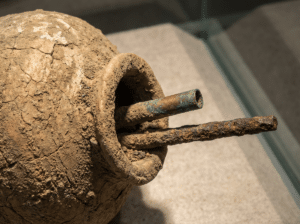
    The Baghdad Battery

    What it is: Clay jars from Mesopotamia (approx. 200 BCE–200 CE) that, when fitted with a copper tube and iron rod, can hold an electrochemical charge.

    Why it’s puzzling: Electrochemical cells require knowledge of corrosion and conductive salts — unexpected for the presumed use-case.

    Leading theories: primitive battery (electroplating?), ritual object, storage vessel misinterpreted. Why it matters: If intentionally used for electricity, it rewrites assumptions about ancient chemistry and metallurgy.

    The Antikythera Mechanism

    What it is: A 2,000-year-old geared device recovered from a Greek shipwreck, capable of predicting astronomical positions and eclipses.

    Why it’s puzzling: Complex gear trains and astronomical computation suggest Hellenistic engineering at a level previously thought impossible.

    Leading theories: lost tradition of Hellenistic mechanical engineering; a singular genius workshop; prototypes of a broader, now-lost technology.

    Why it matters: Demonstrates advanced mechanical design and the possibility of ancient scientific instrumentation on par with much later periods.

    Puma Punku’s Precision Stonework

    What it is: Massive and precisely cut stone blocks in the Tiwanaku complex (Bolivia) featuring tight joints and machining marks.

    Why it’s puzzling: Some blocks are too large to move easily and have tolerances that modern stonemasons struggle to match without power tools.

    Leading theories: advanced ancient stone-working techniques (abrasion with sand and hard stone), excellent workmanship spanning generations, or alternative hypotheses involving lost technology.

    Why it matters: Forces a re-evaluation of pre-Incan engineering and logistic capability.

    Roman Concrete

    What it is: Coastal Roman concrete structures (e.g., harbors) that remain durable after 2,000 years.

    Why it’s puzzling: Modern concrete often degrades faster; Roman mixes used volcanic ash (pozzolana) that seems to strengthen in seawater.

    Leading theories: unique chemistry leads to self-healing properties; mix ratios and raw materials produced superior long-term performance.

    Why it matters: Understanding Roman concrete could inspire more durable, low-carbon building materials today.

    Damascus Steel

    What it is: Ancient Near Eastern and South Asian sword steel famed for its strength and distinctive patterns. Why it’s puzzling: The original forging methods were lost; attempts to replicate true “Damascus” properties remain incomplete. Leading theories: particular ore sources (high carbon and trace elements), crucible techniques, and thermomechanical processing created microstructures like carbon nanotube-like patterns. Why it matters: Offers insights into lost metallurgical knowledge that could inform modern materials science.

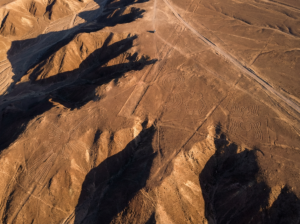
    The Nazca Lines

    What it is: Enormous geoglyphs in Peru—lines and figures visible from above.

    Why it’s puzzling: Their scale and precision raise questions about the surveying and purpose given pre-Columbian technologies. Leading theories: ritual pathways, astronomical markers, markers for underground water, or communal projects with social meaning.

    Why it matters: Shows large-scale landscape engineering and complex cultural planning.

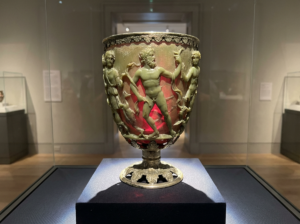
    The Lycurgus Cup

    What it is: A 4th-century Roman glass cup that changes color depending on light direction due to embedded nanoparticles.

    Why it’s puzzling: The cup’s dichroic effect anticipates modern nanotechnology and optical engineering.

    Leading theories: fortuitous ancient technique for glassmaking or deliberate control of material composition.

    Why it matters: Reveals sophisticated empirical material knowledge and raises questions about how much ancient craftsmen understood of materials at microscopic scales.

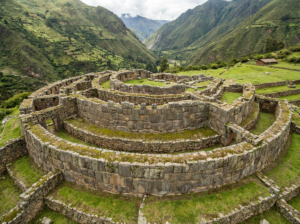
    Sacsayhuamán Megaliths

    What it is: Gigantic stones fitted so precisely that even a knife blade cannot be inserted between them.

    Why it’s puzzling: The transport, dressing, and placement of stones weighing hundreds of tons with no iron tools remain controversial.

    Leading theories: incremental shaping with hammerstones and meticulous fitting, ritualized labor organization, or tools/techniques lost to time.

    Why it matters: Challenges assumptions about logistics, labor, and engineering in pre-Columbian societies.

    Yonaguni Monument

    What it is: Underwater stepped terraces off Japan’s Yonaguni coast that look like carved stone architecture.

    Why it’s puzzling: Debate continues whether it’s natural bedding planes sculpted by waves or intentionally shaped structures.

    Leading theories: natural geological formations vs. submerged human-made terraces from a lower sea-level era.

    Why it matters: If man-made, rewrites local prehistory and ancient coastal engineering; if natural, highlights how geological processes can mimic architecture.

    Ancient Water Management and Hydraulic Devices

    What it is: Sophisticated qanat systems, hydraulic mining, and Roman aqueduct hydraulics spanning continents.

    Why it’s puzzling: Scale, precision, and longevity suggest advanced surveying and hydrological knowledge.

    Leading theories: empirical engineering traditions transmitted across generations; lost manuals and apprenticeship systems.

    Why it matters: Shows that large-scale environmental engineering was possible long before industrialization.

    Conclusion

    These artifacts and structures remind us that the past still holds surprises. Whether explained by lost techniques, exceptional individual artisans, or incomplete archaeological records, revisiting these technologies can yield practical lessons for modern science and engineering. Which of these would you like us to investigate next? We can produce a deep-dive article, a short video script, or a full research plan.