Category: UFO & Aliens

  • Cornwall’s UFO Hotspot Reputation Is Growing for a Reason

    Cornwall’s UFO Hotspot Reputation Is Growing for a Reason

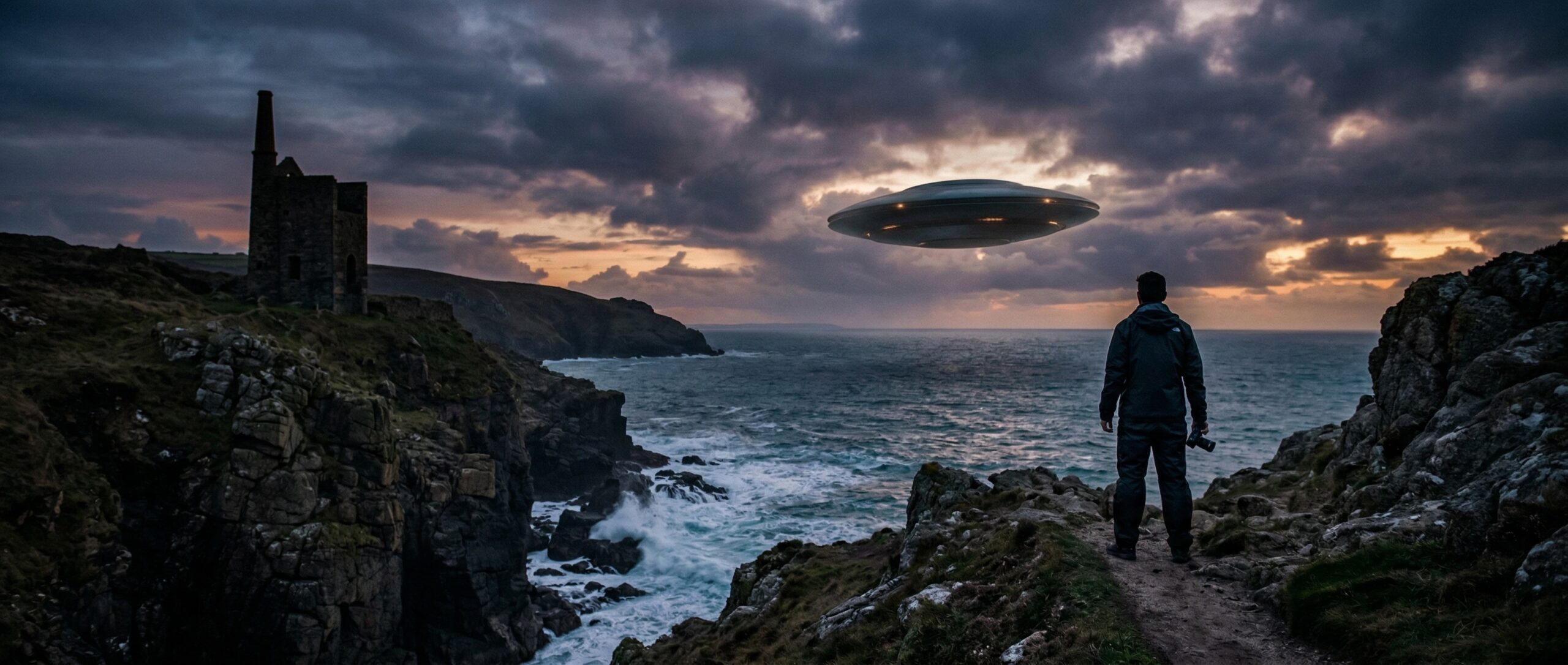
    A UK tabloid-paranormal crossover story is gaining traction around the claim that Cornwall is currently one of Britain’s best places to spot UFOs, with commentators arguing that 2026 could be a breakout year for sightings. The hook is simple and irresistible: if you want to see something strange in the sky, head to the Cornish coast.

    That may sound like an easy clickbait premise, but the deeper story is more interesting. Cornwall is being mythologized in real time as a British “watch the skies” zone — a place where official-sounding data, local geography, old folklore, and modern UFO culture all begin reinforcing one another.

    What the Cornwall UFO Story Actually Claims

    The current buzz appears to be driven by Daily Star reporting that ties Cornwall’s growing UFO reputation to aviation incident records involving objects described as unidentified, unknown, unusual, or uncorrelated. The story also leans on commentary from paranormal investigator Robert Pulme, who suggests sightings are rising and that Cornwall’s visual conditions make it especially attractive for sky-watchers.

    That combination is exactly why this type of story travels so well. It offers just enough institutional language to feel grounded, but leaves enough open space for wonder, speculation, and local myth-building.

    Why Cornwall Works So Well as a UFO Stage

    Cornwall already has enormous narrative advantages before UFOs even enter the picture. It has coastline, weather, old folklore, wide skies, Atlantic mood, and a built-in sense of geographic edge. Those elements make almost any aerial anomaly feel more charged than it would over an ordinary urban sprawl.

    This matters because hotspot myths are rarely built from evidence alone. They are built from atmosphere, repetition, and setting. Cornwall is a visually perfect place for unexplained stories to stick.

    The Official-Data Effect

    Another reason the story is resonating is the use of aviation-report language. Once a UFO story includes phrases tied to flight safety, unidentified objects, or official logging categories, it becomes easier for mainstream audiences to treat it as more than pure fantasy.

    That does not mean the reports prove alien craft. It means the story is now wearing enough procedural clothing to travel farther than a normal tabloid ghost-light piece.

    The result is a hybrid story form the unexplained niche loves: part data, part folklore, part destination myth.

    Why This Matters Beyond Cornwall

    This story is useful because it localizes the UFO beat. Most UFO discourse gravitates toward the United States — Pentagon videos, Area 51 mythology, Nevada deserts, congressional hearings, and military secrecy. Cornwall offers the British version of a “living mystery landscape,” where the appeal is not just what was seen, but where it was seen.

    That creates strong hooks for tourism-style storytelling, on-location reporting, skywatching guides, and pieces exploring how ordinary places become paranormal brands.

    What’s Really Being Built Here

    The most important thing to understand is that hotspot status is often socially constructed. A place becomes a UFO destination when reports, media coverage, local identity, and audience expectation start feeding each other in a loop. Every new article reinforces the idea that the place is special. Every new sighting then lands in a context that makes it easier to believe.

    That is what may be happening in Cornwall now. Whether the sky itself is changing is one question. Whether the cultural framing around Cornwall is changing is much easier to answer: yes, clearly it is.

    As coverage of UK aviation incidents and unexplained aerial events continues to circulate through both tabloids and paranormal media, Cornwall is turning into a symbolic geography — not just a region, but a stage for mystery.

    The Better Takeaway

    The strongest reading of this story is not that aliens have chosen Cornwall. It is that Cornwall has become one of those rare modern locations where the unexplained can feel local, atmospheric, and almost travel-worthy.

    That matters because mystery culture is no longer just about sightings. It is about destinations, audience identity, and place-based fascination. Cornwall fits that emerging model almost perfectly.

    Related Articles:

    This article was created using Media Blaster – Your content production specialist. Visit www.mediablaster.io for more information.
  • Delaware’s UFO Hotspot Ranking Is the Kind of Data Story Believers Love

    Delaware’s UFO Hotspot Ranking Is the Kind of Data Story Believers Love

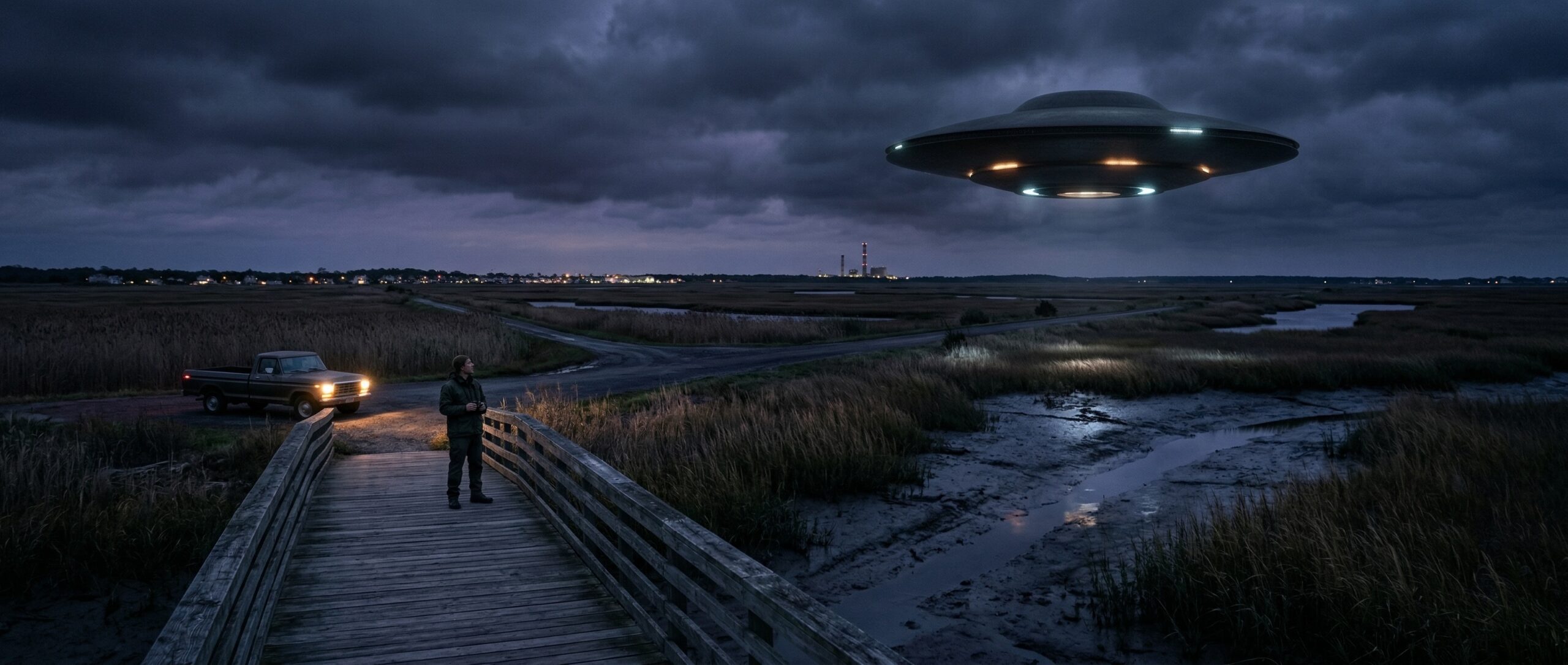
    A new 2026 UFO ranking is getting traction because it flips a familiar script: Delaware, not Nevada or Washington, is now being framed as America’s top UFO hotspot on a per-capita basis. According to paranormal-media reporting, the small East Coast state now leads the country in sightings density, beating out places with far stronger built-in UFO mythology.

    That matters because this is exactly the kind of story the unexplained ecosystem loves: a surprising map, a data-looking methodology, and a headline that feels weird enough to click but grounded enough to repeat. It also raises a deeper question that goes beyond the ranking itself — are UFO hotspots real places, or do they emerge when reporting culture, audience attention, and mythic expectation all collide?

    What the Delaware Ranking Actually Claims

    The current buzz comes from a ranking highlighted by ParaRational, which says Delaware has moved into first place in a fresh per-capita UFO analysis built from National UFO Reporting Center data and additional social-signal context. In the framing pushed by the story, Delaware sits at roughly one sighting per 928 residents, edging out Washington and New York.

    Even if the methodology is not strong enough to satisfy hard skeptics, it is strong enough to travel. That is the real function of a list like this. It turns UFO reporting into something that looks empirical, sortable, and competitive.

    This is why rankings perform so well in paranormal media. A list feels like proof even when it is partly a storytelling device.

    Why Delaware Is Such a Surprising Winner

    Delaware does not dominate the public imagination the way Nevada, Arizona, or Washington do. It does not come preloaded with Area 51 mythology, military-range mystique, or cinematic desert strangeness. That makes its rise more interesting. The lack of built-in lore gives the ranking novelty.

    And novelty is powerful. A UFO list where Nevada wins is expected. A UFO list where Delaware wins feels like hidden information surfacing from an ordinary place. For believers, that is exciting. For skeptics, it is still enough to provoke a closer look.

    The bigger cultural effect is that it subtly reframes what a UFO hotspot can be. It does not have to be a famous desert or a long-haunted military corridor. It can be a small state that suddenly begins accumulating enough reports to demand attention.

    Reporting Culture vs Reality

    This is where the story becomes more valuable than a simple “Top 10 UFO states” post. Rankings like this always raise the same core tension: are more anomalous events actually happening there, or are people simply more willing to report them?

    That distinction matters. A place can climb the UFO charts for several reasons:

    • people may truly be seeing more unexplained lights
    • local audiences may be more primed to interpret ambiguous events as UFOs
    • social media may amplify reporting behavior
    • methodology changes may shift how counts are weighted or compared

    In other words, Delaware’s rise may say as much about how mystery spreads as it does about the sky itself.

    Why This Matters for the Wider UFO Conversation

    The Delaware story fits a bigger 2026 pattern. The UFO beat right now is not powered only by giant hearings or Pentagon-style revelations. It is also being sustained by a thousand smaller signals: hotspot rankings, local viral videos, domain registrations, weird clips, amateur databases, and data wrappers around old mysteries.

    That is why the ranking has value even if its methodology is soft. It feeds the idea that unexplained aerial events are not isolated curiosities happening only in classic “weird” zones. They may be diffuse, normalized, and hiding in ordinary places.

    For a culture increasingly primed by UAP headlines and social-media pattern-seeking, that is a very powerful message.

    As NUFORC’s reporting archive shows, public sighting databases remain one of the major raw materials for these ranking stories. And as broader reporting on modern disclosure politics continues in outlets like The New York Times, even lightweight local UFO stories land in an environment where audiences are far more willing to treat “unidentified” as meaningful rather than dismissible.

    What Delaware’s Rise Really Means

    The strongest interpretation is not that Delaware has suddenly become the alien capital of America. It is that UFO culture now spreads through systems that reward rankings, maps, and pattern-recognition narratives. Once a place gets framed as a hotspot, every new report reinforces the label.

    That feedback loop is how modern mystery geography is built.

    So whether Delaware’s crown holds or not, the story still matters. It shows how the unexplained is increasingly packaged: not just as a sighting, but as a searchable, measurable, algorithm-friendly geography of the weird.

    Related Articles:

    This article was created using Media Blaster – Your content production specialist. Visit www.mediablaster.io for more information.
  • SETI’s New Space Weather Theory Suggests We May Have Missed Alien Signals for Years

    SETI’s New Space Weather Theory Suggests We May Have Missed Alien Signals for Years

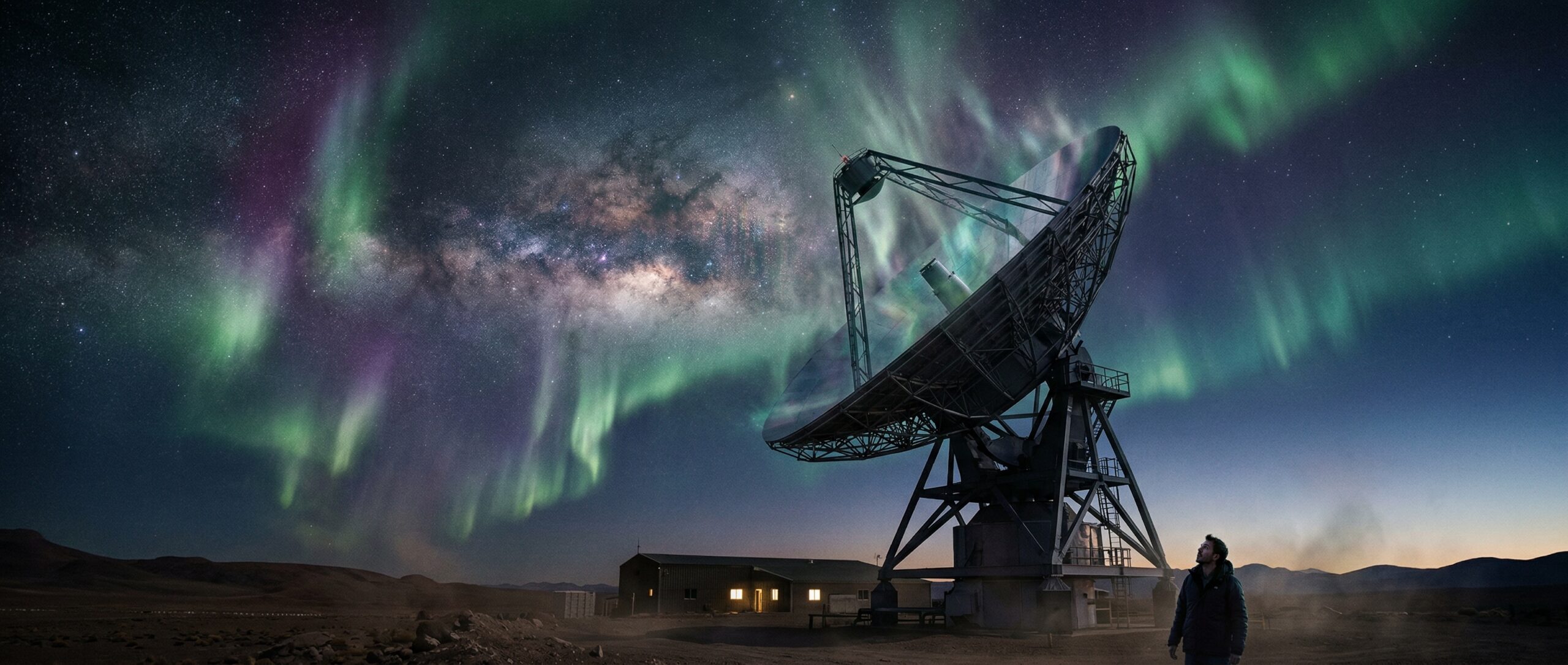
    One of the strongest science-meets-mystery stories circulating right now comes from the SETI world: researchers are arguing that we may have been searching for alien radio signals too narrowly. If they are right, some technosignatures might not be absent at all — they may simply be arriving in a distorted form that current search strategies are too strict to catch.

    That possibility gives the story real emotional power. It does not promise aliens. It does something more unsettling: it suggests that the silence of the cosmos might partly be an artifact of our assumptions. The universe may not be mute. It may be noisy, turbulent, and much harder to interpret than our filters allow.

    What the New SETI Argument Actually Says

    According to the SETI Institute’s explanation of the research, many SETI searches prioritize extremely narrow radio spikes because those are assumed to be strong candidates for artificial transmission. But this new work argues that stellar space weather — plasma turbulence, stellar winds, eruptions, and related activity — could distort a narrow transmission before it even exits its home star system.

    If that happens, the signal spreads over a wider range of frequencies. A signal that began as something “clean” and artificial might therefore arrive in a form that blends into the broader radio environment and falls below the detection criteria used by many search pipelines.

    The idea is not that we found aliens and missed the memo. It is that our search design may be better at finding idealized signals than realistic ones.

    Why This Matters More Than It Sounds

    At first glance, this looks like a narrow technical correction. In reality, it hits one of the deepest emotional nerves in the extraterrestrial question. Modern people have grown used to thinking of the Fermi paradox as a simple contrast between enormous cosmic opportunity and complete silence.

    This study complicates that dramatically.

    If real technosignatures are broadened by local stellar weather, then null results may not mean “nothing is there.” They may mean “we have been listening with the wrong expectations.”

    That is a very different psychological framework, and a much more hopeful one for those who think intelligence should be common in the galaxy.

    Why M-Dwarfs Matter So Much

    The space weather angle becomes even more important when you consider M-dwarf stars. These stars are abundant, long-lived, and central to many habitability discussions — but they are also often active and turbulent. If a civilization were transmitting from a planet around an active star, its signal might be far more scrambled than old-school SETI assumptions allow.

    This is where the story becomes especially useful for The Unexplained Company. It is not just a science note. It is a reframing of one of the biggest questions in the field: what if our models of “how aliens should sound” are too clean for reality?

    The underlying analysis, discussed in a study hosted on arXiv, makes the case that search strategies should adapt to the messier, broadened outcomes that real astrophysical environments may impose.

    A Better Mystery Than Simple Silence

    There is something deeply compelling about the possibility that the universe is not silent, only difficult. That is a much richer mystery than a simple binary of “they exist” versus “they do not.” It turns the search itself into a problem of interpretation, not just detection.

    That also makes the story ideal for readers who are tired of endless disclosure rumor but still want serious, wonder-driven content. This is not a blurry orb clip or recycled military leak. It is a scientifically respectable argument that our listening strategy may be narrowing the cosmos down too aggressively.

    Why This Matters for the Unexplained Niche

    Most unexplained coverage gravitates toward sightings, conspiracies, and state secrecy. This story widens the aperture. It reminds readers that one of the greatest mysteries in the world is not simply whether strange things visit Earth, but whether intelligence elsewhere has already tried to speak across space in a form we do not yet know how to recognize.

    That makes this one of the best kinds of mystery stories: rigorous enough for science readers, speculative enough for wonder-driven audiences, and meaningful enough to reopen one of humanity’s oldest questions.

    As Scientific American’s broader SETI coverage has often emphasized, signal-hunting is always shaped by assumptions about what intelligence would choose to do. If those assumptions are wrong, the silence we think we hear may be partly self-created.

    The Bigger Takeaway

    This research does not prove extraterrestrial contact. But it does challenge a quiet piece of certainty that many people carry without realizing it: the belief that “no signal” always means “no one there.”

    What if it means something else?

    What if the galaxy has been speaking through static, turbulence, and distortion all along — and we were simply too committed to the cleanest possible version of an alien hello?

    Related Articles:

    This article was created using Media Blaster – Your content production specialist. Visit www.mediablaster.io for more information.
  • Chris Bledsoe Prophecy 2026 Investigation: Predictions, April Timeline, and the Conspiracy Theory Case File

    Chris Bledsoe Prophecy 2026 Investigation: Predictions, April Timeline, and the Conspiracy Theory Case File

    If you have spent any time in the UFO, prophecy, or high-strangeness world over the past two years, you have probably seen the same name surface again and again: Chris Bledsoe. For believers, he is one of the most important modern experiencers in America — a man whose encounters with glowing orbs, government attention, religious symbolism, and apocalyptic timing may point toward a major turning point in April 2026. For skeptics, he is the center of a myth-making machine that blends Christian prophecy, UFO culture, and cosmic ambiguity into one perfect internet-age mystery.

    This investigation pulls together the key claims, timelines, predictions, symbolism, and competing interpretations surrounding the Chris Bledsoe prophecy 2026 narrative — including what people mean when they search for Chris Bledsoe predictions, Chris Bledsoe 2026 prophecies, and Chris Bledsoe April 2026.

    Who Is Chris Bledsoe and Why Are People Obsessed With His 2026 Prophecy?

    Chris Bledsoe is not just another name in UFO lore. His story has become unusually influential because it sits at the intersection of several audiences that rarely stay separate for long: UFO believers, experiencer communities, Christian prophecy watchers, esoteric researchers, astrology-minded interpreters, and conspiracy audiences who believe a hidden timetable may be unfolding in public view.

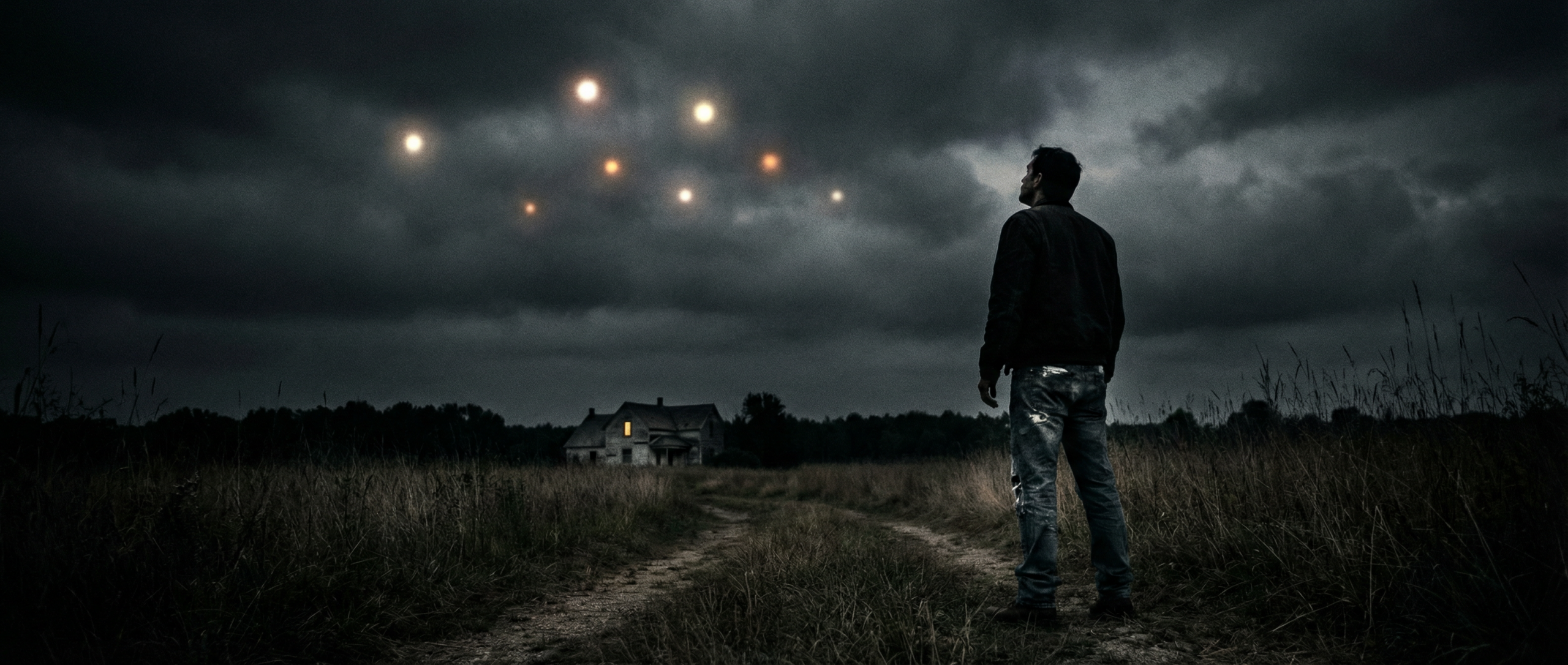
    Bledsoe’s case gained attention through his claims of repeated encounters with luminous orbs and with a radiant feminine being often referred to as “the Lady”. Over time, his story evolved from a close-encounter account into something much larger: a prophetic framework tied to cosmic timing, ancient symbolism, biblical expectation, and a coming event in 2026 that many followers think could alter the spiritual or political landscape.

    For background, we have already covered Chris Bledsoe’s Easter 2026 prophecy and the Regulus/Sphinx timing theory as well as a data-versus-vision breakdown of the 2026 prophecy claims. This new piece goes wider and deeper.

    What Exactly Is the Chris Bledsoe Prophecy for 2026?

    The core claim, in its broadest form, is that something significant is supposed to happen in 2026, with many followers narrowing that expectation toward Easter 2026 and, more broadly, the April 2026 window.

    The prophecy is often described in connection with the star Regulus, the Sphinx, divine feminine symbolism, disclosure language, and a wider shift in human consciousness. That ambiguity is part of what gives the theory such staying power. Bledsoe’s predictions are specific enough to feel important, but open enough that different communities can project their own expectations onto them.

    Some hear a prophecy of disclosure. Some hear the return of Christ. Others hear the unveiling of a feminine spiritual force. And conspiracy audiences hear something even more intoxicating: a hidden timetable that elites, intelligence circles, or occult networks may already know about.

    Why April 2026 Became the Hot Zone

    Search interest around Chris Bledsoe April 2026 is driven by the convergence of symbolism and timing. Among believers, April 2026 is not just another month on the calendar — it is treated as a possible threshold period where celestial alignments, Easter imagery, and Bledsoe’s own statements appear to overlap.

    That has turned April 2026 into a magnet date for people trying to decode whether Bledsoe is pointing to a spiritual unveiling, a public manifestation event, mass disclosure around UFO/UAP reality, or a world-changing sign in the sky.

    For readers following the wider climate of fear, rumor, and apocalyptic symbolism, see also our recent story on Rapture 2026 and the March 22 social-media panic cycle.

    The Conspiracy Theory Framework: Why This Story Feels Bigger Than One Man

    This is where the Bledsoe story turns from a personal experience narrative into something much bigger for conspiracy fans. The full theory often sounds like this: Bledsoe’s encounters are real; intelligence-linked figures took his case seriously; the Lady imagery overlaps with ancient and religious symbols on purpose; 2026 is part of a long-hidden celestial or spiritual schedule; and disclosure, religion, and geopolitical instability may all be converging toward the same moment.

    This is the theory’s real power: it fuses UFO disclosure, religious prophecy, elite secrecy, and cosmic timing into one single narrative engine.

    Evidence, Symbolism, and the Problem of Interpretation

    An honest investigation has to separate three things: what Bledsoe has actually said, what followers have extrapolated from it, and what the wider conspiracy ecosystem has added on top.

    That distinction matters because the internet tends to flatten all three into one stream of certainty. A suggestive comment becomes a prophecy. A prophecy becomes a timetable. A timetable becomes a countdown. And soon a symbolic, half-mystical statement is circulating as if it were a leaked government memo.

    This does not necessarily mean Bledsoe is insincere. It may simply mean his story has become a living myth, and living myths evolve faster online than ever before.

    Why Conspiracy Audiences Keep Coming Back to Chris Bledsoe Predictions

    Conspiracy audiences do not just want facts. They want patterns. Bledsoe’s case offers patterns everywhere: a central witness, a spiritual messenger, a future date, cosmic symbolism, a sense that mainstream institutions know more than they admit, and enough vagueness to let the theory keep adapting.

    That is why searches for Chris Bledsoe predictions and Chris Bledsoe 2026 prophecies keep spiking whenever a new interview or clip circulates.

    How the Story Connects to the Wider Disclosure Era

    The Bledsoe prophecy would not be landing this hard if the wider environment were quieter. But the last few years have produced a constant overlap of UAP testimony, government ambiguity, social-media apocalyptic cycles, and high-strangeness mainstreaming.

    For context, readers following the wider disclosure culture should also revisit the Mellon leak and high-def satellite UFO imagery claims, the Black Knight satellite myth and why it keeps returning, and the UFO metal case that finally got a real lab test.

    A Skeptical Counterpoint: Is This Just Narrative Gravity?

    Skeptics argue that the Chris Bledsoe prophecy 2026 story may be an example of narrative gravity — the human tendency to pull unrelated symbols, dates, fears, and hopes into one emotionally satisfying master theory.

    That does not make the story worthless. It makes it culturally important. It shows how modern myths are assembled in real time.

    Why This Investigation Matters Even If Nothing Happens

    The most important conclusion is this: the Bledsoe prophecy matters even if April 2026 passes without a single undeniable event. The real story is what this case reveals about the machinery of belief — how UFO narratives merge with religion, how prophecy merges with internet virality, and how symbolic ambiguity becomes fuel for conspiracy communities.

    FAQ: Chris Bledsoe Prophecy 2026

    What is the Chris Bledsoe prophecy for 2026?

    In broad terms, it refers to claims that something spiritually, symbolically, or disclosure-related is expected to happen in 2026, especially around Easter and the April 2026 timeframe.

    Why are people searching for Chris Bledsoe April 2026?

    Because many followers believe April 2026 is the most important timing window connected to Bledsoe’s statements, especially when linked to Easter symbolism, Regulus references, and the wider Lady narrative.

    Are Chris Bledsoe predictions about UFO disclosure?

    Some audiences interpret them that way, but others frame them as spiritual prophecy, divine manifestation, or a broader shift in human consciousness rather than straightforward UFO disclosure.

    Has Chris Bledsoe given exact 2026 prophecies?

    Not in the sense of a precise, universally accepted public timetable. Much of what circulates online comes from interpretation, paraphrase, and symbolic decoding layered onto his original statements and interviews.

    Why does the prophecy appeal so strongly to conspiracy theory fans?

    Because it blends hidden knowledge, cosmic timing, elite secrecy, religion, UFOs, and future expectation into one narrative. It feels like a case where multiple mysteries may converge at once.

    Videos and Further Reading

    Final Assessment

    If you are looking for a simple answer, the Chris Bledsoe prophecy 2026 case will frustrate you. There is no clean line separating witness testimony, symbolic interpretation, spiritual expectation, and conspiracy inflation.

    But if you are looking for one of the richest and most combustible investigation topics in the modern high-strangeness world, this is it. Whether April 2026 brings disclosure, disappointment, or another layer of myth, the story has already done something powerful: it has convinced thousands of people that the clock may be ticking toward a moment bigger than politics, bigger than UFOs, and possibly bigger than religion itself.

    This article was created using Media Blaster – Your content production specialist. Visit www.mediablaster.io for more information.
    Related Articles:

    This article was created using Media Blaster – Your content production specialist. Visit www.mediablaster.io for more information.

  • Starseeds and the Rise of Conspiratorial Spirituality

    Starseeds and the Rise of Conspiratorial Spirituality

    A March 2026 Religion News Service feature put a spotlight on the growing starseed subculture: people who believe they are extraterrestrial or cosmic souls inhabiting human bodies, here on a mission to awaken humanity. The belief system is not new, but it has exploded online in the TikTok/Instagram era and now sits at a fascinating crossroads of spirituality, influencer culture, UFO belief, and conspiracy thinking.

    The reason it matters now is scale. According to the RNS reporting, #starseed content has passed the billion-view mark on TikTok, while high-profile influencers are building large audiences around claims involving galactic identities, hidden truths, reptilians, “the Matrix,” and spiritual awakening.

    What’s Happening

    • Religion News Service profiled influencer Elizabeth April, who presents herself as an alien consciousness in human form and has built a large social following around these claims.
    • The story traces modern starseed belief back to Brad Steiger’s 1976 book *Gods of Aquarius*, but stresses that online communities have transformed the idea into a decentralized pseudo-religion.
    • Starseed belief often includes:
    • cosmic soul origins,
    • alien species mythologies (Arcturians, reptilians, etc.),
    • hidden-reality frameworks like “the Matrix” or “the system,”
    • disclosure-style language about waking others up.
    • Experts cited in the report say most participants are harmless, but the ecosystem can overlap with extremist or conspiratorial patterns, especially when spiritual identity fuses with hidden-enemy narratives.

    Why It Matters

    1. It is where New Age spirituality and conspiracy culture merge

    Starseeds are not just a quirky alien belief. They show how spiritual longing can be channeled into alternative cosmologies with conspiratorial edges.

    2. It is a huge online-native paranormal trend

    Unlike legacy UFO mythology, starseed culture is built for short-form video, personal testimony, and influencer-led identity formation.

    3. It offers a softer entry point into fringe belief systems

    People may enter through wellness, self-discovery, or alien aesthetics—and only later encounter more extreme claims.

    4. It is culturally rich content, not just a debunking exercise

    The topic touches belief, belonging, loneliness, online ritual, and the hunger for cosmic meaning.

    Related Articles:

    This article was created using Media Blaster – Your content production specialist. Visit www.mediablaster.io for more information.

  • Doha Triangle UFO During Thunderstorm

    Doha Triangle UFO During Thunderstorm

    On March 25, 2026, witnesses in Doha, Qatar reportedly filmed three glowing orbs appearing in the sky during an active thunderstorm. The lights were described as bright, spherical, and moving in a loose triangular formation against storm clouds, instantly making the footage catnip for UFO communities.

    The appeal is obvious: storm + glowing lights + formation behavior = a near-perfect modern UAP clip. It carries the visual language of classic orb sightings, while the severe weather adds an atmospheric edge that makes ordinary explanations less emotionally satisfying.

    What’s Happening

    • A UFO-sightings site published a breakdown of the footage, emphasizing the objects’ steady glow, apparent formation behavior, and the fact that they appeared during lightning activity.
    • At the same time, mainstream weather coverage and photo coverage confirmed that Doha really was experiencing heavy thunderstorms and lightning that evening.
    • The most plausible explanations being floated are:
    • ball lightning or another rare atmospheric electrical effect,
    • storm-related plasma/electrical discharge,
    • drones or human-made lights,
    • camera/lens/rain interactions under extreme weather conditions.
    • What keeps the clip alive is not that any explanation is impossible—it’s that none of them neatly resolves the formation behavior and apparent duration from the available descriptions.

    Why It Matters

    1. It is a textbook modern UAP case

    This is exactly the kind of clip that performs in 2026: short, visual, ambiguous, and easy to argue over.

    2. Storm conditions increase both mystery and misidentification

    Thunderstorms produce unusual light behavior, but they also make people more likely to interpret uncommon atmospheric effects as anomalous craft.

    3. It fits the current orb-sighting trend

    Recent UAP chatter has leaned heavily toward glowing orbs rather than classic saucers. That makes Doha feel contemporary rather than retro.

    4. It offers a strong skeptic/believer split

    Believers can argue coordinated movement. Skeptics can argue atmospheric optics or drones. Good unexplained stories need that tension.

    Related Articles:

    This article was created using Media Blaster – Your content production specialist. Visit www.mediablaster.io for more information.

  • The UFO Metal That Finally Got a Real Lab Test

    The UFO Metal That Finally Got a Real Lab Test

    A long-debated metallic specimen linked in UFO lore to Roswell-era crash debris is back in the headlines after analysis involving the U.S. government’s All-domain Anomaly Resolution Office (AARO) and Oak Ridge National Laboratory (ORNL) resurfaced in mainstream coverage. For years, enthusiasts argued the object might be an exotic metamaterial — something engineered beyond known terrestrial technology. The official lab result is much less dramatic, but the story remains important for one reason: this is what happens when UFO mythology collides with actual materials science.

    The specimen’s renewed visibility matters because “lab-tested UFO metal” is one of those phrases that instantly bridges disclosure culture, celebrity ufology, Roswell lore, and the politics of evidence.

    What the Lab Found

    According to Popular Mechanics, AARO had Oak Ridge National Laboratory examine the metallic sample in 2022. Researchers analyzed composition, structure, isotope ratios, and whether the material displayed any unusual electromagnetic behavior that might support the more exotic claims surrounding it.

    The result was grounded and unglamorous: the object appears to be a terrestrial magnesium-zinc alloy with bismuth, lead, and trace elements. No definitive public evidence emerged showing alien origin, impossible structure, or extraordinary performance.

    AARO’s own supplement to ORNL’s analysis reinforces that conclusion. In other words, the chemistry is interesting but mundane.

    Why the Story Still Matters

    The object itself may not be revolutionary, but the fact that it moved through recognizable institutions absolutely matters. For years, “mystery materials” in UFO culture lived mostly in rumor-space. Here, a UFO-adjacent sample was at least serious enough to be examined under the oversight of AARO and tested by ORNL.

    That gives this case unusual value. It is a rare concrete example of what the modern disclosure ecosystem looks like when physical evidence, however underwhelming, enters the pipeline.

    The Gap Between Investigation and Imagination

    This is where the story gets more interesting. Believers often focus on the fact of the testing itself — the idea that government offices and a national lab considered the sample worthy of analysis. Skeptics focus on the result, which appears to collapse the alien-material narrative into ordinary metallurgy.

    But the gap between those two reactions is exactly where much of modern UFO media lives. The sample can be scientifically ordinary and still culturally potent.

    That is because “UFO metal” is no longer just a phrase describing an object. It is a symbol of the hope that physical evidence might one day bridge the divide between anecdote and proof.

    Why Metamaterials Became the Holy Grail

    One reason this topic performs so well is that “metamaterials” has become almost a magical word in UFO discourse. For enthusiasts, it suggests engineered matter with unusual structural or electromagnetic properties — something so advanced it might point beyond conventional aerospace manufacturing.

    That is why isotopic ratios, layering, and unusual interactions get so much attention. If a sample ever did show impossible manufacture or non-terrestrial isotopic signatures, it would instantly become one of the strongest pieces of public UFO evidence ever discussed.

    In this case, that threshold was not crossed. But the desire for such evidence remains, and stories like this keep the idea alive.

    A Better Question Than “Was It Alien?”

    The most useful takeaway may not be whether this sample came from Roswell or from some exotic source. It may be this: how should physical claims in UFO culture actually be tested?

    This case offers a template. Analyze composition. Check isotopes. Look for extraordinary electromagnetic behavior. Compare hype to lab reality. That process is far more valuable than letting every mystery material circulate forever as whispered proof.

    For more disclosure-era coverage, read our stories on the Mellon leak and satellite UFO imagery claims, the Black Knight satellite myth, and the latest Wow! Signal breakthrough claim.

    This article was created using Media Blaster – Your content production specialist. Visit www.mediablaster.io for more information.

  • Three Lights Over Queens: The NYC UFO Clip Everyone’s Arguing About

    Three Lights Over Queens: The NYC UFO Clip Everyone’s Arguing About

    A short viral video showing three luminous objects apparently moving over New York City has triggered the latest social-media UFO frenzy. The clip, reportedly filmed from Corona, Queens, shows a witness looking up at what first seemed like a shooting star before two more lights appear, creating the impression that the objects are following — or even “chasing” — one another across the night sky.

    This kind of story is catnip for UFO audiences because it lives in the perfect credibility gap: grainy enough to be mysterious, urban enough to feel immediate, and weird enough to invite argument without producing a clean answer.

    What the Queens UFO Video Shows

    According to an AOL pickup of the New York Post coverage, the 18-second clip was shared by a Reddit user from Corona, Queens. The witness said they first noticed what looked like a shooting star before two additional lights appeared, making the motion look coordinated or pursuit-like.

    The video quickly triggered speculation ranging from drones and aircraft to genuinely unidentified aerial phenomena. At this stage, there does not appear to be strong public evidence pointing to anything extraterrestrial or deeply anomalous — but that almost does not matter during the first wave of a story like this.

    Why Urban UFO Videos Spread So Fast

    City-sky footage has become one of the defining forms of modern UFO virality. Unlike remote desert sightings or military leaks, an urban clip feels immediate and relatable. Millions of people can imagine themselves seeing the same thing from a rooftop, apartment window, or street corner.

    That is especially true in New York. Anything unexplained over NYC automatically feels larger because the city itself carries symbolic weight. A weird light over a rural area might remain local. A weird light over Queens becomes a cultural argument.

    The New UFO Pipeline: Reddit First, Then Everywhere

    This story also shows how the UFO media pipeline works in 2026.

    • Step one: a short eyewitness video lands on Reddit or another social platform
    • Step two: tabloids and aggregators pick it up
    • Step three: reaction accounts, YouTube explainers, and comment threads turn it into a larger debate
    • Step four: the social reaction becomes the real story

    The old model was local papers or military testimony. The new model is platform-native mystery: a few seconds of ambiguous footage, amplified at internet speed.

    Drones, Planes, or Something Stranger?

    The likely explanations are familiar. These lights could be drones, aircraft, atmospheric effects, or perspective distortions that look more dramatic on video than they do in person. That is often the case with fast-moving lights against dark urban skies.

    But UFO clips do not need to prove much to succeed. Their social function is different. They create a shared interpretive puzzle where believers and skeptics immediately build competing narratives from the same thin evidence.

    That is the strength and weakness of contemporary evidence culture. A short video is rarely enough to establish what happened. But it is more than enough to trigger mass interpretation.

    Why This Matters

    This Queens clip matters less as proof and more as a case study in how UFO culture sustains itself between bigger institutional stories. Not every UAP headline needs Pentagon stakes. Sometimes the story is the reaction itself — how a few lights over a city skyline become another entry in the endless archive of modern sky-mystery.

    That also makes it perfect audience-engagement material. Urban UFO clips are ideal for polls, breakdowns, reaction videos, and media-literacy explainers asking not just “what is this?” but “what makes footage like this feel convincing even when it proves almost nothing?”

    For more UFO culture coverage, read our stories on the Black Knight satellite myth, the Mellon leak and satellite imagery claims, and the 7910 kHz spy radio mystery.

    This article was created using Media Blaster – Your content production specialist. Visit www.mediablaster.io for more information.

  • Why Colorado Keeps Ending Up in America’s Alien Lore

    Why Colorado Keeps Ending Up in America’s Alien Lore

    A new study-driven local news story claiming Colorado ranks among the top U.S. states for alien abduction reports is spreading as a lightweight but highly clickable UFO curiosity piece. On the surface, it feels silly — exactly the kind of pseudo-data story the internet loves. But underneath the map graphics and abduction odds, the trend reveals something bigger: UFO belief keeps slipping into mainstream lifestyle coverage whenever it is packaged to look quantitative.

    That is the real story here. This is not hard-news extraterrestrial evidence. It is paranormal culture wearing the costume of data journalism — and that makes it surprisingly effective.

    What the Colorado Alien Abduction Ranking Claims

    According to a Coloradoan pickup, Colorado is being framed as one of the leading U.S. states for alien abduction-related reports, based on a sponsor-backed ranking that packages UFO/UAP sightings and abduction-style claims into state-by-state “odds” of extraterrestrial encounters.

    A similar framing also appeared in Florida Today, suggesting the story is spreading precisely because it translates alien folklore into a form local news outlets can easily regionalize.

    That is what makes the story work. It takes a deeply speculative subject and gives it listicle-ready geographic shape.

    Why This Type of UFO Story Performs So Well

    The method behind these rankings is unlikely to satisfy scientists, but scientific rigor is not what gives them power. Their strength comes from presentation.

    They feel authoritative because they include:

    • rankings
    • percentages
    • maps
    • state pride or embarrassment
    • the language of probability and odds

    Once a paranormal topic gets wrapped in numbers, it becomes easier for mainstream outlets to circulate without having to endorse the underlying claims. The article can simply say, “here is what the study found,” and let the audience fill in the rest.

    Why Colorado Fits the Alien Mythology So Easily

    Colorado is already primed for this kind of myth-making. It checks a lot of the symbolic boxes that audiences associate with UFO culture:

    • wide-open skies
    • mountain isolation
    • military and aerospace associations
    • Western-state mystery culture
    • a subtle overlap with New Age and high-strangeness subcultures

    That means even a weakly sourced ranking lands in terrain that already feels narratively prepared. Colorado is easy to imagine as an alien-abduction hotspot because the cultural script is already there.

    The Real Story: From Data to Myth

    This is what makes the topic useful for The Unexplained Company. The article is not really about whether Colorado residents are being abducted by extraterrestrials. It is about how paranormal belief is normalized and distributed through the aesthetics of data journalism.

    A ranking like this does not prove anything about alien encounters. What it does prove is that paranormal topics become more socially portable when they are visualized, quantified, and framed as lifestyle geography.

    Put differently: people may ignore a dense Pentagon UAP memo, but they will absolutely click a headline about which state is most likely to get abducted by aliens.

    A Gateway Story With Bigger Potential

    That is why this kind of topic matters. It is a gateway story. It reaches audiences who might never seek out deeper UFO reporting, then quietly invites them into a broader ecosystem of speculation, folklore, and belief.

    It is also highly adaptable for maps, polls, short-form videos, and bigger features about how regions get mythologized as paranormal hotspots.

    So even if the evidence here is soft, the cultural signal is strong: America still loves ranking the weird.

    For more UFO culture coverage, read our stories on the Black Knight satellite myth, the 7910 kHz spy radio mystery, and the Mellon leak and high-def satellite imagery claims.

    This article was created using Media Blaster – Your content production specialist. Visit www.mediablaster.io for more information.

  • Why the Black Knight Satellite Myth Never Dies

    Why the Black Knight Satellite Myth Never Dies

    The Black Knight satellite conspiracy is trending again after fresh explainer coverage revived one of the most durable myths in UFO culture: the claim that an artificial object of extraterrestrial origin has been orbiting Earth for thousands of years. The theory ties together Nikola Tesla, mysterious radio signals, pre-space-age satellite rumors, delayed echoes, and NASA imagery into one long-running cosmic mystery.

    That is exactly why it keeps coming back. The Black Knight story is not a single event. It is a collage — a conspiracy built by stitching unrelated anomalies across more than a century into one seductive narrative about alien surveillance hiding in plain sight.

    What the Black Knight Satellite Theory Claims

    The basic claim is simple and irresistible: a dark, silent object of nonhuman origin has been circling Earth for thousands of years, quietly watching us from orbit. Depending on the version, it is described as an alien probe, an ancient monitoring device, or proof that humanity has been under observation long before the modern space age.

    As The Economic Times recently summarized, believers often tie the story to a 13,000-year-old orbital object, while mainstream explanations point instead to a chain of misunderstood events — especially debris and thermal insulation associated with NASA’s STS-88 mission.

    How the Myth Was Built

    The Black Knight legend survives because it pulls from multiple real incidents, each weird enough to sound meaningful when pulled out of context.

    • Nikola Tesla’s 1899 radio experiments: Tesla reported strange repeating signals, which later storytellers folded into alien-contact speculation.
    • Long-delayed radio echoes: unusual signal behavior in the early 20th century became fuel for theories about artificial objects in orbit.
    • Donald Keyhoe’s 1954 satellite claims: before the space age fully matured, public confusion about unidentified orbital objects fed the myth.
    • NASA’s 1998 STS-88 images: photographs showing a dark object above Earth became the most iconic “evidence” for the Black Knight theory.

    As Space.com explains, the object in the STS-88 imagery is widely understood to have been a thermal insulation blanket lost during a spacewalk, not extraterrestrial hardware.

    And yet the image still looks uncanny enough to keep the theory alive.

    Why Debunking Never Kills It

    This is what makes the Black Knight story such a perfect case study in conspiracy culture. It does not depend on one piece of evidence. It thrives by bundling ambiguity.

    That gives it three major advantages:

    • It stitches unrelated anomalies into a single grand narrative.
    • It weaponizes uncertainty. Old signals, poor-quality images, and misunderstood equipment all become proof-like fragments.
    • It survives debunking. In many cases, debunking gives it a fresh media cycle and introduces it to a new audience.

    That is why myths like this do not disappear. They mutate. Every new explainer, TikTok recap, Reddit thread, or UFO documentary gives the legend another generation of believers and skeptics to feed on.

    Tesla, NASA, and the Power of Pattern-Seeking

    The deeper appeal of the Black Knight myth is psychological as much as extraterrestrial. It gives people a way to connect scattered weirdness across time into one coherent, thrilling possibility.

    Tesla’s signal reports become prophetic. Delayed echoes become evidence of surveillance. A floating blanket becomes a silent alien machine. The result is less an argument than a mood: the sense that the truth has been visible for decades, if only you know how to connect the dots.

    As background summaries of the theory note, the Black Knight narrative is not based on one continuous line of evidence. It is a patchwork assembled after the fact. But for many people, that patchwork quality is part of the charm.

    Mystery, Mythmaking, and Media Literacy

    For The Unexplained Company, this story is valuable not just as a UFO article but as a media-literacy article. It lets us ask a better question than “is the Black Knight real?”

    The more interesting question is: why do some myths become effectively immortal?

    The answer may be that they balance wonder and plausibility in just the right way. The Black Knight is spooky but not absurd, debunked but not dead, familiar but still open enough to invite fresh speculation.

    That makes it the perfect evergreen conspiracy — one that keeps re-entering culture every time a new audience discovers the image, the Tesla story, or the idea that the most famous alien satellite in history may have been just a drifting space blanket.

    For a deeper dive, listen to our podcast episode: The Black Knight Satellite: Alien Probe or Space Myth?. You can also read related coverage on spy radio mysteries, aliens.gov and disclosure culture, and Bob Lazar and the return of classic UFO mythology.

    This article was created using Media Blaster – Your content production specialist. Visit www.mediablaster.io for more information.