Tag: apocalypse

  • Doomsday Clock at 85 Seconds to Midnight: What the Warning Really Means

    Doomsday Clock at 85 Seconds to Midnight: What the Warning Really Means

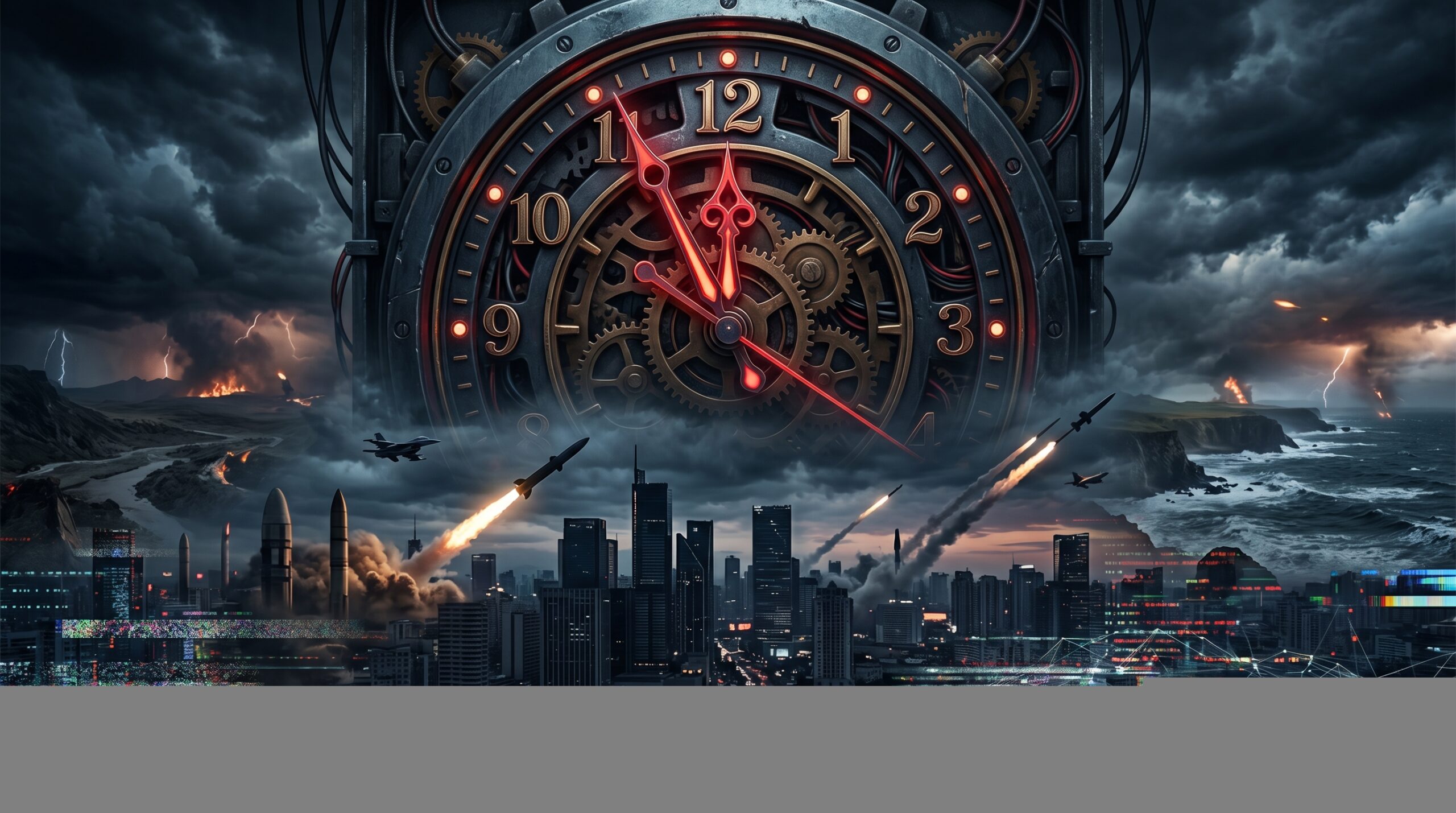
    Eighty-five seconds to midnight does not mean the world has 85 literal seconds left. The Doomsday Clock is a symbol, created by the Bulletin of the Atomic Scientists to express how dangerously close humanity appears, in its judgment, to catastrophic human-made disaster. Midnight stands for global catastrophe. The shrinking distance to it is meant to feel alarming, because alarm is the point.

    That is why the Clock still lands with such force. In a single image, it condenses nuclear danger, geopolitical instability, climate stress, technological risk, and failures of international cooperation into something instantly legible. Supporters see that as one of the most effective warning devices in public life. Critics see a theatrical metaphor that can make complicated policy questions sound like a cosmic countdown. Both views capture something true about why the Clock keeps returning to public conversation.

    For more context on the broader mystery, see Heaven’s Gate Website Still Online? The 1997 Cult Site That Never Went Away and Second Sphinx Under Giza? What the Claim Says, What the Scans Show, and What Remains Unproven.

    What the Doomsday Clock is

    The Doomsday Clock was introduced in 1947 by the Bulletin of the Atomic Scientists, an organization founded by scientists connected to the Manhattan Project who later became deeply concerned about the dangers created by nuclear weapons. The Clock was never intended as a scientific instrument. It was designed as a public symbol—a way to translate abstract existential danger into an image almost anyone could understand at a glance.

    Midnight represents civilization-ending catastrophe. When the hands move closer to midnight, the Bulletin is signaling that the international situation has become more dangerous. When they move farther away, it is signaling relative improvement. Although the Clock began in the shadow of nuclear war, the factors considered over time have broadened to include climate change, emerging technologies, misinformation, biological threats, and the weakening of the political systems needed to manage them.

    So when people say the Clock stands at 85 seconds to midnight, what they really mean is this: the Bulletin believes the world is in an exceptionally dangerous moment, and it wants that warning to be difficult to ignore.

    Why use a clock at all?

    Because symbols move faster than reports.

    Few people will sit down with a technical assessment of arms control, biosafety, climate feedback loops, or global information disorder. A clock hand edging toward midnight needs no glossary. It communicates urgency, proximity, and consequence in a single glance.

    That simplicity is the source of the Clock’s power, and also the source of its limitations. It makes sprawling issues legible. It can also make them seem more unified and measurable than they truly are. Nuclear war, climate disruption, and technology-related dangers do not run on one shared schedule. They are different problems with different pathways and timelines. The Clock folds them into one image because its purpose is communication, not precision.

    What 85 seconds to midnight actually means

    It means the Bulletin’s leaders and advisers believe humanity remains perilously close to self-inflicted catastrophe. It does not mean disaster is mathematically due, prophetically fixed, or literally timed.

    The number is best understood as a judgment rendered in symbolic form. It says that a cluster of major risks is being managed badly enough that the margin for safety has become frighteningly thin. The closer the Clock moves to midnight, the more urgently the organization is arguing that present conditions are unacceptable.

    That can make the Clock sound almost mystical to people encountering it for the first time. But the Clock is not an oracle. It is an argument, compressed into a picture.

    Why the warning feels so powerful

    The image works because it turns sprawling danger into story. A list of risks can remain abstract no matter how grave it is. A countdown does not. Midnight carries emotional weight even before anyone explains it. It suggests endings, finality, and the moment after which there is no easy return.

    That is why the Clock travels far beyond science and policy circles. It appears in conversations about apocalypse, civilizational collapse, end-times anxiety, and the broader modern feeling that history has begun to accelerate. The institution behind it is secular, but the metaphor brushes against very old human instincts. People are drawn to symbols that seem to sum up the age they are living through.

    Why the Clock moves

    The Bulletin adjusts the Clock when it believes the balance of global risk has shifted in a meaningful way. Historically, nuclear danger has remained central: arms races, deteriorating diplomacy, weakened treaties, and new weapons systems can all push the hands forward. In more recent decades, the organization has also emphasized climate change, biological threats, disruptive technologies, and information disorder.

    The specific mix varies from year to year, but the larger message is usually consistent. The danger is not just that catastrophic threats exist. It is that the institutions capable of reducing them often appear unable or unwilling to act with enough speed, clarity, or cooperation.

    That is one reason the warning can feel so bleak. It is not merely describing a hazardous world. It is describing a world in which hazards are being handled poorly.

    Is the Doomsday Clock scientifically objective?

    Not in the narrow sense.

    The Clock is informed by expertise, but it is not the reading of a device. There is no machine that measures “seconds to midnight.” The setting reflects deliberation by scientists, policy experts, and other advisers associated with the Bulletin, who review current conditions and issue a symbolic judgment.

    That does not make the Clock meaningless or arbitrary. It means it should be understood for what it is: an expert communication tool, not an empirical meter. This distinction matters because public arguments about the Clock often go wrong in opposite directions. Admirers sometimes talk about it as though it carries near-prophetic authority. Detractors sometimes ridicule it for lacking a mechanical precision it never claimed to possess.

    The fairest reading is simpler than either extreme. The Clock is a serious symbolic warning, not a scientific instrument.

    Why supporters defend it

    Supporters argue that the Clock remains useful for several reasons.

    First, it keeps existential risk visible. The gravest threats in modern life often become background noise precisely because they are slow-moving, technical, or politically exhausting. The Clock cuts through that haze.

    Readers who want to compare this story with outside reporting can start with The Bulletin of the Atomic Scientists on the Doomsday Clock and Wikipedia on the Doomsday Clock.

    Second, it encourages people to think about interconnected danger. Nuclear war, climate instability, disinformation, and emerging technologies may not share one timetable, but they can compound one another in a world already under strain.

    Third, its long history gives it resonance. Because the Clock has been part of public life for generations, each movement invites comparison with earlier eras of fear, brinkmanship, diplomacy, and uneasy reprieve.

    In that view, the drama is not a flaw but a function. A warning nobody notices is not much use as a warning.

    What critics object to

    Critics are not all making the same complaint. Some argue that the Clock is too theatrical, turning difficult policy debates into a press-ready image. Others worry that it can create fatalism, as though the world were trapped in an almost completed countdown. Still others say that combining very different threats under one symbol can blur more than it clarifies.

    Those objections are serious. A person who hears “85 seconds to midnight” may come away with a strong feeling of dread but only a weak sense of what changed, why it changed, or what actions might reduce the danger. A symbol can concentrate emotion more efficiently than it builds understanding.

    There is also the risk of repetition. If the Clock remains near midnight year after year, some audiences may grow numb to the warning. Emergency language can lose force when it becomes familiar.

    Why people connect it to apocalyptic thinking

    Even though the Clock comes from scientists and policy advocates, its imagery carries a mythic charge. Midnight is not merely a point on a dial. In literature, folklore, and popular imagination, it is the hour of endings, thresholds, and irreversible turns. When the public hears that humanity is seconds from midnight, the metaphor can slip easily into older patterns of thought: omens, reckonings, final warnings, and the sense that history is nearing a break point.

    That does not make the Clock mystical or religious. It means symbols carry emotional cargo whether institutions intend them to or not. The image is secular. The reaction to it may be cultural, psychological, or even spiritual.

    This helps explain why the Clock travels so widely. Few modern public symbols can speak at once to policy experts, casual news readers, and people already primed to interpret the moment as a sign of the end.

    Does the Clock predict the future?

    No. It warns; it does not predict.

    That distinction is everything. Prediction suggests certainty. Warning suggests contingency. The Doomsday Clock is not saying catastrophe will arrive on schedule. It is saying that the conditions under which catastrophe becomes more likely are dangerously present.

    The argument behind the image is that human choices still matter. The future is not fixed. The warning is urgent precisely because the trajectory can still, in principle, be changed.

    Why the Clock keeps coming back

    The Doomsday Clock endures because every era wants a symbol that can gather its anxieties into one frame. During the Cold War, the threat it evoked was stark and immediate. In the twenty-first century, the danger is broader and messier, which arguably makes the Clock more useful as a cultural shorthand and less satisfying as a precise explanation.

    It also persists because the conditions that gave rise to it never truly disappeared. Nuclear arsenals remain. Climate pressures deepen. Trust in institutions frays. Powerful technologies spread faster than governance. One danger may recede for a time, only for another to sharpen into view.

    The Clock returns, then, not because it is magical, but because the world keeps producing the kind of peril it was built to represent.

    What a reader should take from 85 seconds to midnight

    Neither panic nor contempt is especially useful.

    Panic mistakes the symbol for fate. Contempt misses why the symbol exists. The more reasonable response is to treat the number as a concentrated warning from people who believe current global risk is unacceptably high. You do not need to agree with every element of the Bulletin’s framing to understand the core message.

    The Clock does not tell you the exact future. It tries to make the present harder to ignore.

    The meaning of the metaphor

    At 85 seconds to midnight, the Doomsday Clock is doing exactly what it was designed to do: turning diffuse human-made danger into an image sharp enough to lodge in the public mind. Whether you see that as a necessary civic alarm or an imperfect piece of public theater, the symbol endures because people keep reaching for it when they want to describe a world that feels precarious.

    If you want to keep going, Ancient Demon Traps in Mesopotamia? The Bowls Buried Beneath the House expands the picture from another angle.

    That is the Clock’s real force. It is not a prophecy machine and not a literal timer. It is a human warning about human danger. The number is symbolic. The risks behind it are not.
  • Giant Fireballs Across the US, Why Meteor Season Keeps Turning Into UFO and Doomsday Speculation

    Giant Fireballs Across the US, Why Meteor Season Keeps Turning Into UFO and Doomsday Speculation

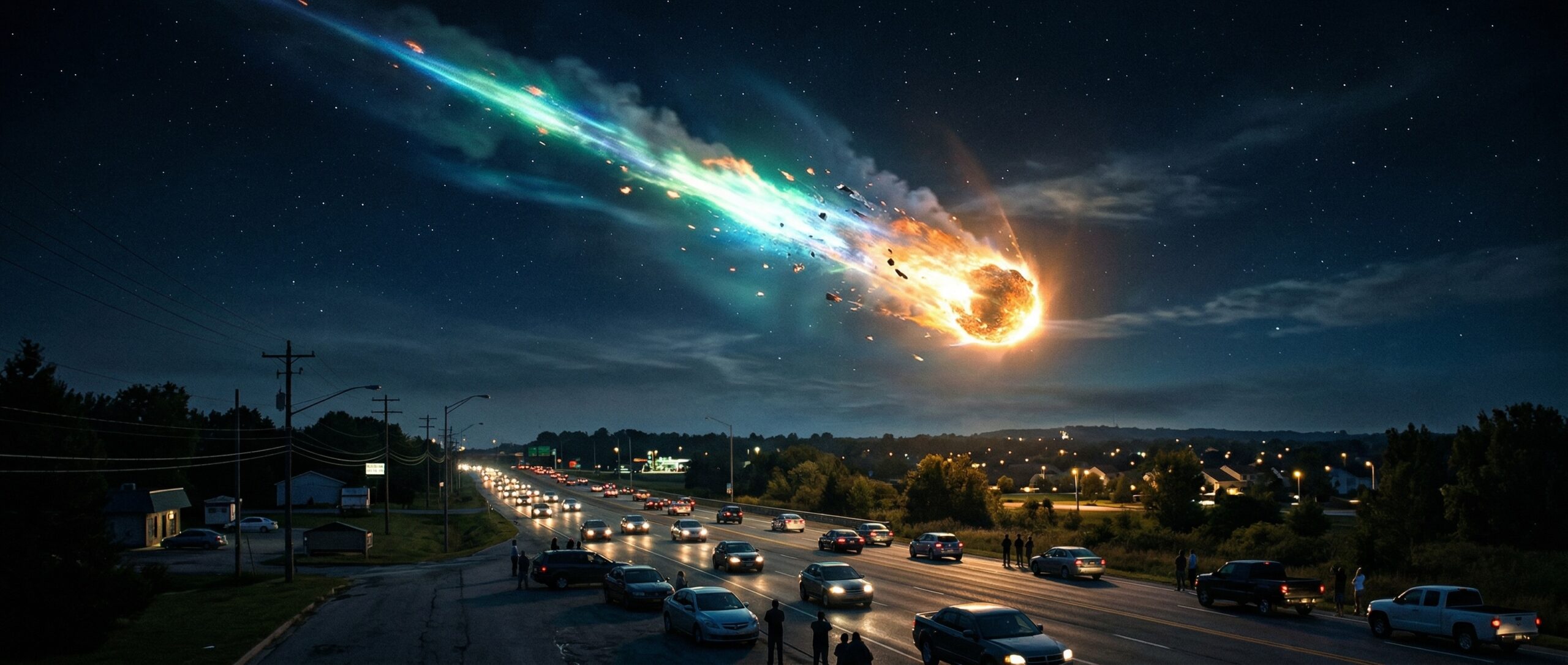
    When a bright object tears across the sky, glows green or blue, and seems to explode over a highway, suburb, or open field, most people do not experience it as a lesson in atmospheric entry physics. They experience it as a rupture. For a few seconds, the ordinary sky stops behaving normally. Dashcams catch it. Doorbell cameras catch it. Someone hears a boom. Someone else swears it changed direction. Within minutes, the explanations begin to split into camps: meteor, missile, UFO, warning sign, omen.

    That pattern is playing out again across the United States. Recent fireball sightings over the Northeast and Canada on March 17, 2026, along with additional American Meteor Society reports in early April over the Southwest, Texas, and the Mid-Atlantic, have reignited a familiar cycle of fascination and fear. NASA itself addressed the surge on March 26, 2026, noting that the northern hemisphere is in peak “fireball season” and that bright meteor sightings often rise between February and April. In other words, the sky is not necessarily becoming stranger. It is becoming more visible, more recorded, and more narratively unstable.

    This is what makes the current wave worth a full pillar treatment. The story is not only that giant fireballs are showing up across the US. It is that every sighting now lands in a culture primed for escalation. A meteor becomes a possible craft. A sonic boom becomes evidence of interception. A bright atmospheric breakup becomes a sign that something is wrong with the planet, the government, or the future itself. Readers who have followed how NASA glitches turn into conspiracy stories or how old sky anomalies get revived as modern evidence will recognize the same conversion process here. The object enters the atmosphere as a meteor. It enters the internet as a mystery.

    Recent fireball reports have made the sky feel newly unstable

    The current conversation did not emerge from a single isolated incident. It built from repeated sightings. NASA’s March 26, 2026 feature “It’s Fireball Season! Answering Your Meteor Questions” pointed directly to multiple recent states where bright meteors had drawn attention, including Texas, Ohio, California, and Michigan. The agency also highlighted a particularly dramatic daytime fireball observed the morning of March 17, 2026 across the northeastern United States and Canada, describing it as an object nearly six feet wide and about seven tons in mass before it fragmented over Ohio.

    That alone is enough to trigger a cultural response. When people hear that a multi-ton object blazed through the atmosphere over populated areas, the event does not stay in the lane of astronomy for long. It brushes against older fears almost immediately: impact events, military secrecy, cosmic warning signs, and hidden objects entering the atmosphere unnoticed. The fact that several more reported fireballs followed in early April only deepened the sense that something unusual was underway.

    The American Meteor Society has logged recent fireball witness reports over the Mid-Atlantic, Florida and Mississippi, Arizona-California-Nevada, and Texas. These are not proof of an incoming catastrophe. They are proof that a lot of people have recently looked up, seen something extraordinary, and felt the need to report it. But in a hyper-networked environment, repeated extraordinary visuals quickly create the impression of acceleration. It begins to feel as though the sky itself is entering a new phase.

    Fireballs are real atmospheric events, not automatically signs of danger

    A fireball is not just any shooting star. It is a meteor bright enough to outshine Venus, usually caused by a larger-than-average meteoroid entering Earth’s atmosphere at tremendous speed. As it compresses the air in front of it and heats up, it can flare brilliantly, fragment, and sometimes produce a delayed boom. NASA notes that the terms fireball and bolide are often used interchangeably in public-facing explanations, even though technical distinctions can matter in scientific contexts.

    That scientific explanation is important because it clarifies what people are actually seeing. A fireball is not evidence that a craft is intentionally maneuvering overhead. It is not evidence of a missile strike. It is not, by itself, evidence of an extinction-level threat. Most meteoroids that create these displays are too small to survive atmospheric entry intact in a hazardous way. Even the dramatic Ohio event cited by NASA was presented as a manageable meteorite-producing fragmentation event, not as a civilization-threatening near miss.

    Still, understanding the mechanism does not eliminate the emotional impact. A sky event can be perfectly explainable and still feel apocalyptic. That tension is part of why these stories endure. A fireball belongs to a category of phenomena that science explains clearly but human perception experiences viscerally. The same split often drives stories about strange sounds in the atmosphere or recurring sky anomalies that seem to exceed ordinary expectations in the moment.

    Spring is one of the times of year when fireballs feel more common

    NASA’s March 26 article makes an important point that should sit near the top of any responsible piece on this subject. The northern hemisphere is in peak fireball season between roughly February and April, with rates potentially rising by 10% to 30% around the weeks of the March equinox. Scientists do not fully agree on every reason why, but the pattern itself is not new. The sky is not suddenly inventing fireballs in 2026. The season is helping produce more of the brightest meteors, and public attention is amplifying the rest.

    That means one of the strongest apocalyptic interpretations already runs into a problem. A cluster of sightings does not necessarily imply that Earth is moving into a uniquely dangerous bombardment period. It may simply mean we are in a known seasonal window, during a time when almost everyone carries a high-resolution camera and social platforms reward dramatic interpretation. More eyes, more lenses, and more reposting create the emotional impression of escalation, even when the underlying astronomy is broadly understood.

    This gap between statistical normality and emotional abnormality matters. It is also what allows some stories to drift so easily into conspiratorial territory. If the average person does not know about fireball season, then repeated sightings can look like a hidden pattern. Once that happens, the event leaves the realm of skywatching and enters the realm of suspicion.

    Recent US fireball cases show how fast awe turns into speculation

    The Ohio-associated March 17 event is the obvious anchor because NASA elevated it in its own explanation. But it is not the only recent case adding momentum. The American Meteor Society logged a fireball seen over DC, New Jersey, and Virginia around April 2, 2026, another over Florida and Mississippi the same day, another over Arizona, California, and Nevada on April 5, and another over Texas on April 7. The Texas report included estimated magnitudes as bright as -20 from one witness, which helps explain why a single short-lived event can dominate local conversation.

    These reports show the same pattern over and over. A bright flash appears. Witnesses in multiple states compare notes. Some mention fragmentation, color, or delayed sound. Then the interpretive spread begins. If the event looked smooth and straight, people call it a meteor. If it appeared oddly brilliant, too low, too green, too long-lasting, or somehow directional, a different vocabulary emerges. The object becomes “weird,” “not natural,” or “too controlled.”

    That jump from unusual to unnatural is one reason this subject sits so close to unexplained.co territory. Earlier site coverage of the Great Ohio meteor event and asteroid airburst risks already showed how quickly a luminous event becomes a vessel for larger fears. People are not simply observing rocks burning up. They are testing whether the sky can still be trusted.

    Some witnesses read fireballs as UFOs because brightness, silence, and speed feel nonhuman

    A classic UFO interpretation does not require a craft with visible structure. It only requires something in the sky that feels too bright, too fast, too silent, too erratic, or too physically implausible for a casual observer. Fireballs do well on several of those fronts. They can appear suddenly, produce dramatic colors, vanish in fragments, and leave witnesses with only partial recall of trajectory or duration. Under stress, memory compresses. Distance is hard to judge. So is altitude.

    That is why meteor events and UFO culture have always overlapped. Many famous sky scares begin with a real aerial event that feels more intentional than it is. In the social media era, this overlap has become even stronger, because video clips circulate stripped of context. A clip of a brilliant streak over a neighborhood, divorced from timestamp, location, and expert interpretation, looks like raw anomaly footage. That dynamic also drives stories like The Triangle Above the Pines and older cases such as the Westall UFO mystery, where witness certainty and atmospheric mood become inseparable from the event itself.

    None of that means witnesses are foolish. It means human beings interpret rare sky events through the stories already available to them. In a culture saturated with disclosure talk, UAP hearings, and decades of cinematic alien imagery, fireballs do not land on neutral ground. They land inside a ready-made symbolic system.

    Apocalypse readings emerge because fire from the sky has always felt like a message

    Long before modern astronomy, blazing objects in the sky were read as omens of war, plague, regime change, divine anger, or cosmic reordering. That symbolism never fully disappeared. It simply migrated. Today, instead of court astrologers and medieval chroniclers, we have TikTok prophecy accounts, doom-focused YouTube channels, and algorithmic panic loops that splice meteor clips into broader stories about collapse.

    This is where the current fireball wave connects directly to the apocalypse cluster already thriving online. Readers who have watched April 2026 prophecy culture spread, or seen how end-times timelines converge online, will recognize the structure immediately. A dramatic sky event becomes visual validation for a prediction ecosystem that was already waiting for proof.

    In that ecosystem, the fireball does not have to do much. It only has to arrive at the right emotional moment. Once it does, it can be framed as the beginning of judgment, a warning about pole shift, a sign of secret warfare, or evidence that “they” are preparing the public for something bigger. The event itself remains brief. The symbolic life built around it can last for weeks.

    Social media now turns local sky events into national mythology within hours

    The most important difference between a modern fireball and one seen a century ago is not the object. It is the speed of narrative formation. A witness no longer tells neighbors and perhaps a local paper. They upload a clip, add a caption, choose a theory, and release it into a network built to reward certainty, alarm, and novelty. By the time astronomers or meteor trackers provide context, the emotional meaning of the event has often already hardened.

    This is why even ordinary celestial events now feel culturally radioactive. The same mechanics that transform a fireball into a UFO also transform it into a government cover-up or an omen of collapse. Clips get recopied with worse compression and stronger claims. Context gets replaced by text overlays. Someone adds ominous music. Someone claims they heard jets. Someone else insists no meteor can move like that. Very quickly, the event stops being a local report and starts behaving like national folklore.

    That process has parallels all across the unexplained ecosystem. We have seen it in viral CERN sky portal videos, in revived anomaly clips, and in the repeated way institutional ambiguity is treated as evidence of concealment. The internet does not merely spread these stories. It edits them into stronger versions of themselves.

    A skeptical reading explains the sightings without draining them of wonder

    The strongest skeptical explanation is also the most boring at first glance and the most useful on second reading. Bright meteors are real. Spring fireball season is real. Multiple sightings across the US can happen within a short window without implying an unprecedented threat. Witnesses are often sincere, but visual impressions under surprise conditions are notoriously difficult to interpret. That combination accounts for most of what the public is seeing and sharing right now.

    But skepticism should not become a flattening reflex. A meteor can still be astonishing. A fireball can still shake houses, leave meteorites, or become a local event people remember for years. The goal is not to sneer at awe. The goal is to separate the astonishing from the unsupported. When that discipline disappears, everything bright becomes secret, everything loud becomes military, and everything rare becomes apocalyptic.

    Good unexplained writing lives in that tension. It respects witness experience, acknowledges the emotional force of the event, and still asks the hard question: what does the evidence actually support? In the case of the recent fireballs, the evidence points overwhelmingly toward natural atmospheric events amplified by digital culture, not toward alien intervention or imminent planetary catastrophe.

    The deeper story is not the meteors themselves, but the fear structure wrapped around them

    That is why this topic matters beyond astronomy. Fireball stories reveal how modern audiences process uncertainty. We live in an era where trust in institutions is low, apocalyptic language is common, and sky events arrive preloaded with old symbolic force. When something luminous falls from above, people do not ask only what it was. They ask what it means, who is hiding the truth, and whether it confirms a larger pattern they already suspect.

    In that sense, giant fireballs across the US are functioning as cultural mirrors. They reflect our appetite for disclosure, our vulnerability to omen-thinking, and our habit of turning incomplete information into worldview-level evidence. That is why the same event can produce three entirely different emotional responses at once: wonder, conspiracy, and dread.

    The fireball is real. The doomsday reading is interpretive. The UFO reading is speculative. The viral panic is social. All four can live inside the same clip, the same comment thread, and the same article. That overlap is what makes the subject feel so alive right now.

    Frequently Asked Questions

    Why are so many fireballs being seen across the US right now?

    NASA says the northern hemisphere is in peak fireball season from roughly February through April, and bright meteor sightings can rise around the weeks of the March equinox. More cameras and faster social sharing also make the events feel more frequent than they once did.

    Are these giant fireballs a sign of an asteroid threat?

    Not usually. Most fireballs are caused by relatively small meteoroids burning up in the atmosphere. Some can drop meteorites, but most do not represent civilization-scale danger.

    Why do some people think fireballs are UFOs?

    Because fireballs can appear unusually bright, colorful, fast, and disorienting. Without context, video clips and eyewitness impressions can make a natural atmospheric event seem controlled or unnatural.

    Why are fireballs linked to doomsday or prophecy stories?

    Fire in the sky has been interpreted as an omen for centuries. Modern prophecy communities and viral social platforms keep that symbolic tradition alive, especially during periods of social anxiety.

    What explains the current wave best?

    The best-supported explanation is a combination of seasonal fireball activity, sincere eyewitness reporting, and an online culture that rapidly turns dramatic sky events into larger narratives about secrecy, warning, or collapse.