Tag: archaeology

  • The Scottish Well Burial That May Have Been an Iron Age Closing Ritual

    The Scottish Well Burial That May Have Been an Iron Age Closing Ritual

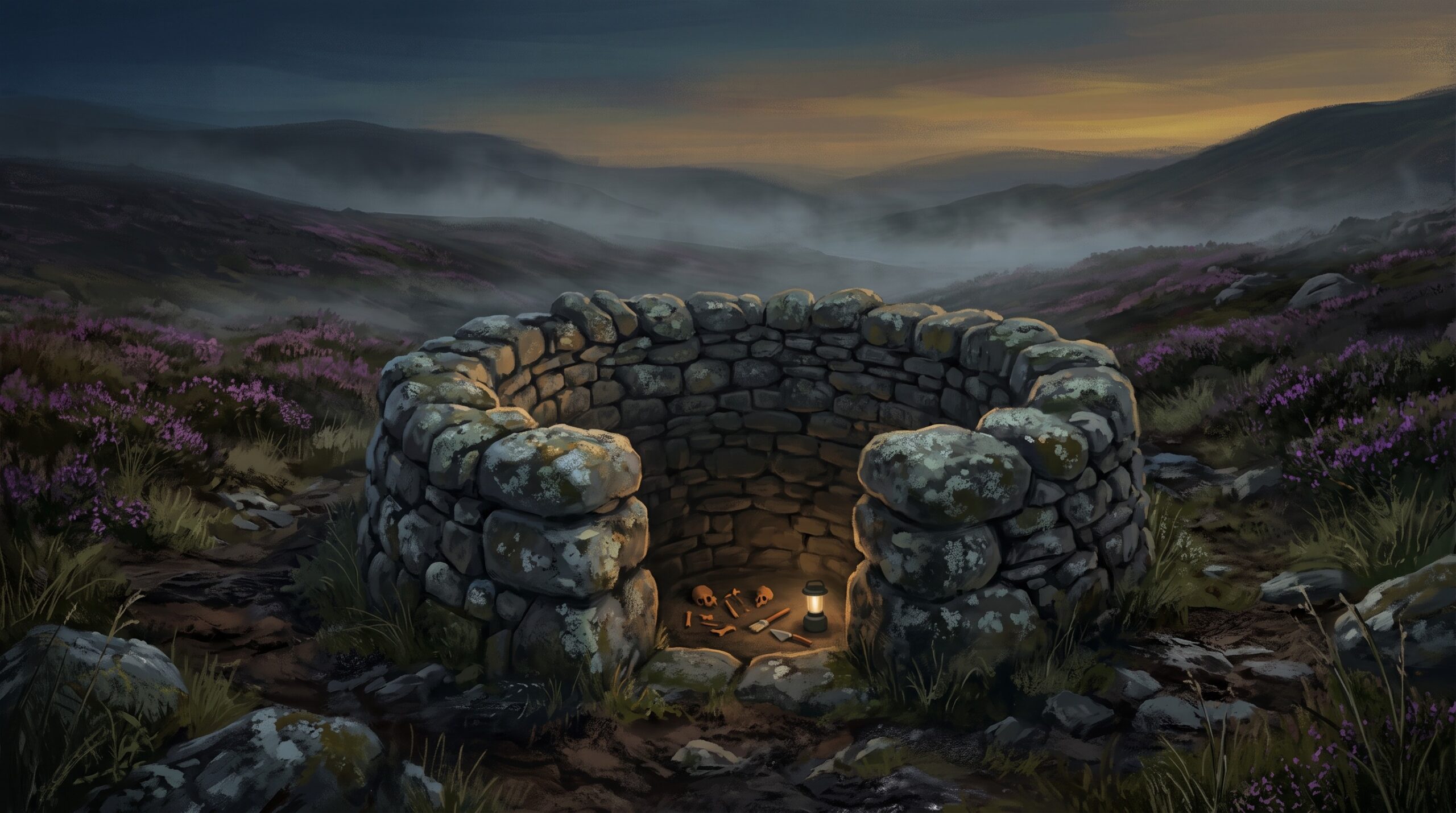
    The body was placed at the bottom of a well in the Scottish Highlands, then covered with animal bones. Two thousand years later, archaeologists are asking whether the burial marked the moment the well was deliberately closed—or whether the strange setting means something else entirely.

    The discovery is recent, but the mystery is old-fashioned: a carefully built water structure, an adult human burial with no obvious grave goods, and an arrangement that seems too deliberate to dismiss as ordinary disposal. The evidence does not prove sacrifice, execution, or any single ritual. It does show that an Iron Age community treated this particular place as significant.

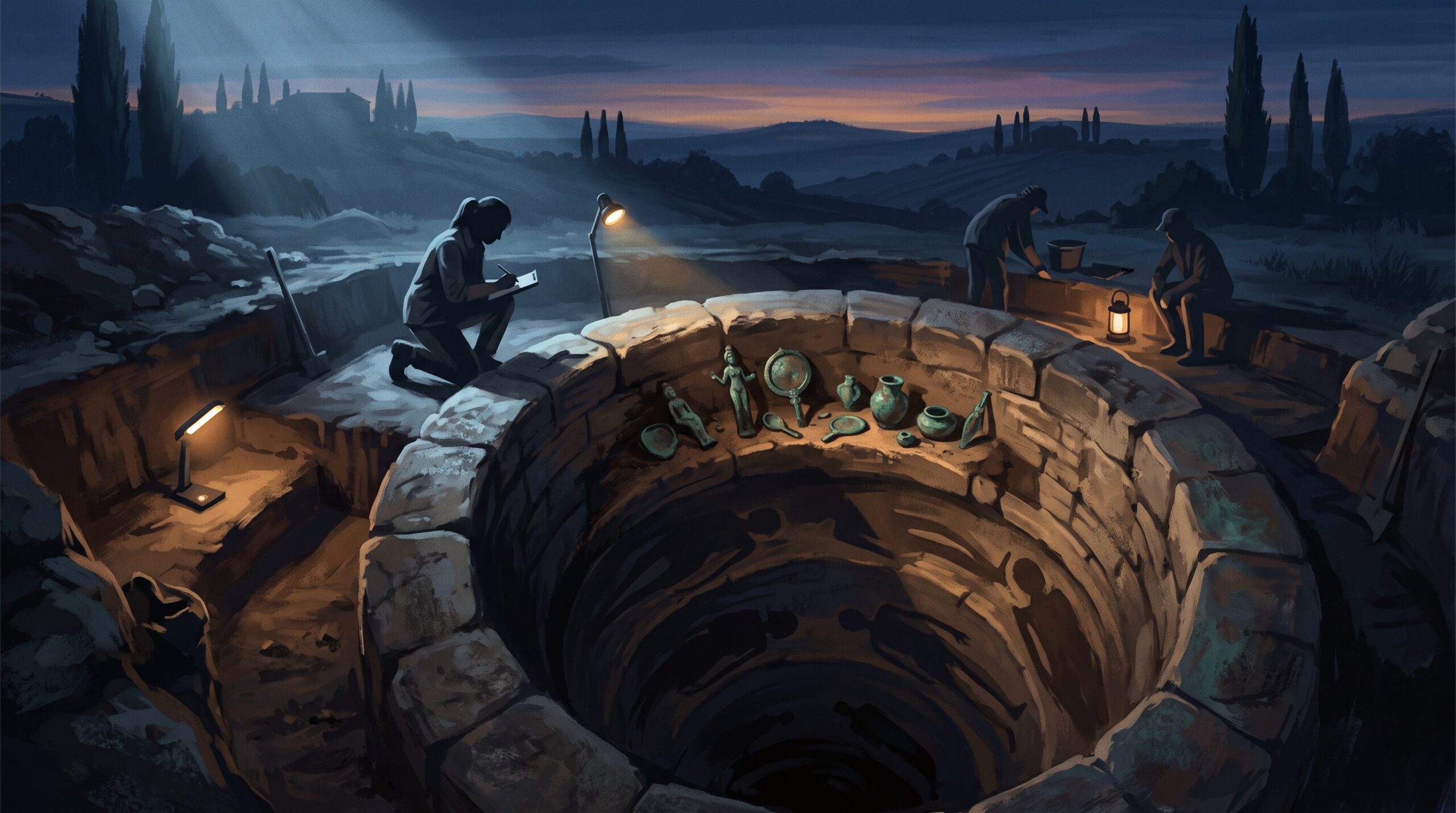
    The find was made during the expansion of a quarry in northern Scotland. According to a statement from Highland Archaeology Services reported by Live Science’s account of the excavation, the feature is about 10 feet long and 3 feet deep. Its base was lined with stone slabs, with clay pressed between gaps in the masonry—possibly an effort to help it retain water.

    That construction matters. This was not simply a hole in the ground. It was a built environment, and the person was found at its base.

    What archaeologists know so far

    The burial appears to date to the Iron Age, broadly a period running from about 800 B.C. to A.D. 400 in Britain. The dating is provisional and rests on artifacts found near the well rather than on a completed radiocarbon sequence for the human remains.

    The person was an adult, but the excavation team has not yet established the individual’s sex, precise age, cause of death, or pathology. No grave goods were reported. Animal bones lay above the burial, creating a sequence that could reflect ritual placement, later activity, or both.

    Those limits are important. A burial in an unusual location can feel like a message from the past, but archaeology has to recover the grammar of that message one detail at a time. Until the remains and associated material are analysed, the most dramatic interpretations remain possibilities rather than findings.

    The site is also located near Camore Wood, an Iron Age settlement where archaeologists have identified at least 20 hut circles. Possible roundhouses were found nearer the well. The relationship is suggestive, but not proven: the settlement is roughly 1 mile, or 1.6 kilometres, away, and the team has not established that the person belonged to that community.

    That distance opens several possibilities. The well may have served the settlement. It may have belonged to a smaller nearby occupation that has not survived archaeologically. Or it may have been a special place whose meaning extended beyond daily water use.

    Why a well could become a ritual place

    Wells and other water features occupy an unusual position in ancient archaeology. They are practical installations, but they also create a physical boundary between the visible world and what lies below it. Objects placed into them can disappear from ordinary view while remaining materially present.

    That makes a well a useful place for offerings, closure ceremonies, and deliberate deposition. It does not mean every ancient well burial was religious. Some wells became rubbish pits; some received bodies during conflict or crisis; some were simply reused after their original function ended.

    The Scottish discovery becomes especially intriguing because the structure may have been abandoned in a controlled way. The stone lining and clay packing suggest investment in construction. If the well was then closed, placing a body at its base and animal remains above it could have formed part of a final act. The sequence might have symbolised the end of the well’s useful life, the transfer of the place into another kind of service, or an attempt to manage whatever the community believed the water connected to.

    This is the information the headline versions of the discovery can easily miss: the question is not merely why a body was found in a well. It is whether the well’s final moment was itself the ceremony.

    The comparison at High Pasture Cave

    Highland Archaeology Services has pointed to another Iron Age context on Skye, where a woman and two babies were found at the entrance to High Pasture Cave. The cave was ceremonially closed, making it a useful comparison—but not a direct explanation of the Scottish well.

    A cave and a water well are not interchangeable. Their architecture, visibility, access, and practical functions differ. The comparison is valuable because it demonstrates that some Iron Age communities may have used human deposition during the closure of significant places. It does not establish that the Highland well followed the same ritual script.

    That distinction protects the story from becoming too neat. Archaeologists are not saying, “This is the same ceremony.” They are asking whether a broader pattern—burials associated with the sealing or transformation of special places—could help explain the evidence.

    Readers familiar with the Etruscan well burial discovered at Veii will recognise the larger mystery. Across different cultures, wells can become places where ordinary explanations feel incomplete. But similarities should prompt comparison, not erase local context. The Scottish case must be interpreted through its own landscape, construction methods, chronology, and community.

    Confirmed, possible, and still unknown

    The clearest way to read the discovery is to separate what has been observed from what it might mean.

    • Confirmed: an adult human burial was found at the base of a stone-lined feature in the Scottish Highlands.
    • Confirmed: animal bones were placed above the burial.
    • Reported: nearby artifacts suggest an Iron Age date.
    • Possible: the feature was a water-holding well, with clay used to improve its seal.
    • Possible: the burial occurred during a closing ceremony when the well was abandoned.
    • Unknown: the person’s sex, age, cause of death, health history, and relationship to the nearby settlement.
    • Unknown: whether the animal remains were placed at the same time as the body.

    The unknowns are not minor details. If the skeleton shows trauma, the story changes. If the person died from illness or age-related causes, the deposit may reflect a postmortem ritual rather than killing. If the animal bones are much later, they may have nothing to do with the burial’s original meaning.

    Likewise, the well’s function remains to be established. A structure that held water may have had a different significance from a dry shaft or a feature used for industrial work. Sediment analysis, plant remains, animal-bone study, and microscopic examination of the lining could all change the interpretation.

    What the next analysis could reveal

    The excavation team expects further analysis to provide a date for both the feature and the human remains, as well as information about sex, age range, and pathologies. Those results could answer several questions at once.

    First, dating may show whether the burial and well belong to the same phase. A person buried centuries after construction would tell a very different story from someone placed there when the structure was first closed.

    Second, the skeleton may preserve evidence of injury, disease, diet, or strenuous activity. Even an absence of obvious trauma would be meaningful: it would weaken interpretations that depend on a violent death, though it would not eliminate ritual deposition.

    Third, the animal bones may reveal species, butchery marks, burning, and timing. Food waste, a slaughtered offering, and naturally accumulated remains can look superficially similar until laboratory work separates them.

    Finally, the surrounding landscape may tell researchers whether this was an isolated act. Mapping the well, roundhouses, hut circles, paths, and other features could show whether people approached it as part of a settlement or encountered it as a distinct landmark.

    The Bronze Age ritual site found around an apparently ordinary rock offers a useful reminder: ancient ritual landscapes are often identified not by one spectacular object, but by the relationship between a modest feature and the actions carried out around it.

    A burial, a closure, or something we have not named yet?

    The strongest interpretation at present is cautious but compelling. The adult may have been placed in the well as part of a closing ritual, with the animal bones forming part of the final deposit. The location, construction, and sequence make that possibility worth investigating.

    But the evidence does not yet justify calling the person a sacrifice. Nor does it show that the burial was connected to the nearby settlement, or that the well was abandoned immediately after the deposit. Those claims may become stronger—or collapse—when the scientific results arrive.

    That uncertainty is precisely what makes the site interesting. The mystery is not that archaeologists have found something inexplicable. It is that they have found a carefully arranged situation whose meaning remains just out of reach, waiting in the bones, clay, sediment, and chronology.

    The ancient community may have been closing a well. It may have been honouring a dead person. It may have been dealing with a crisis, a boundary, or a place believed to possess unusual power. For now, the Scottish Highlands have preserved the act but not the explanation.

    What do you think the burial represents: a closing ritual, an emergency burial, or a practice that modern archaeology has not yet learned how to name?

    ### Sources and further reading

    Live Science report on the Scottish well burial; Highland Historic Environment Record field-report entry; Unexplained.co’s report on the Lucone tablet.
  • The 4,000-Year-Old Tablet Nobody Can Explain

    The 4,000-Year-Old Tablet Nobody Can Explain

    A small clay object has emerged from the soil of northern Italy carrying a message that may never have been a message at all.

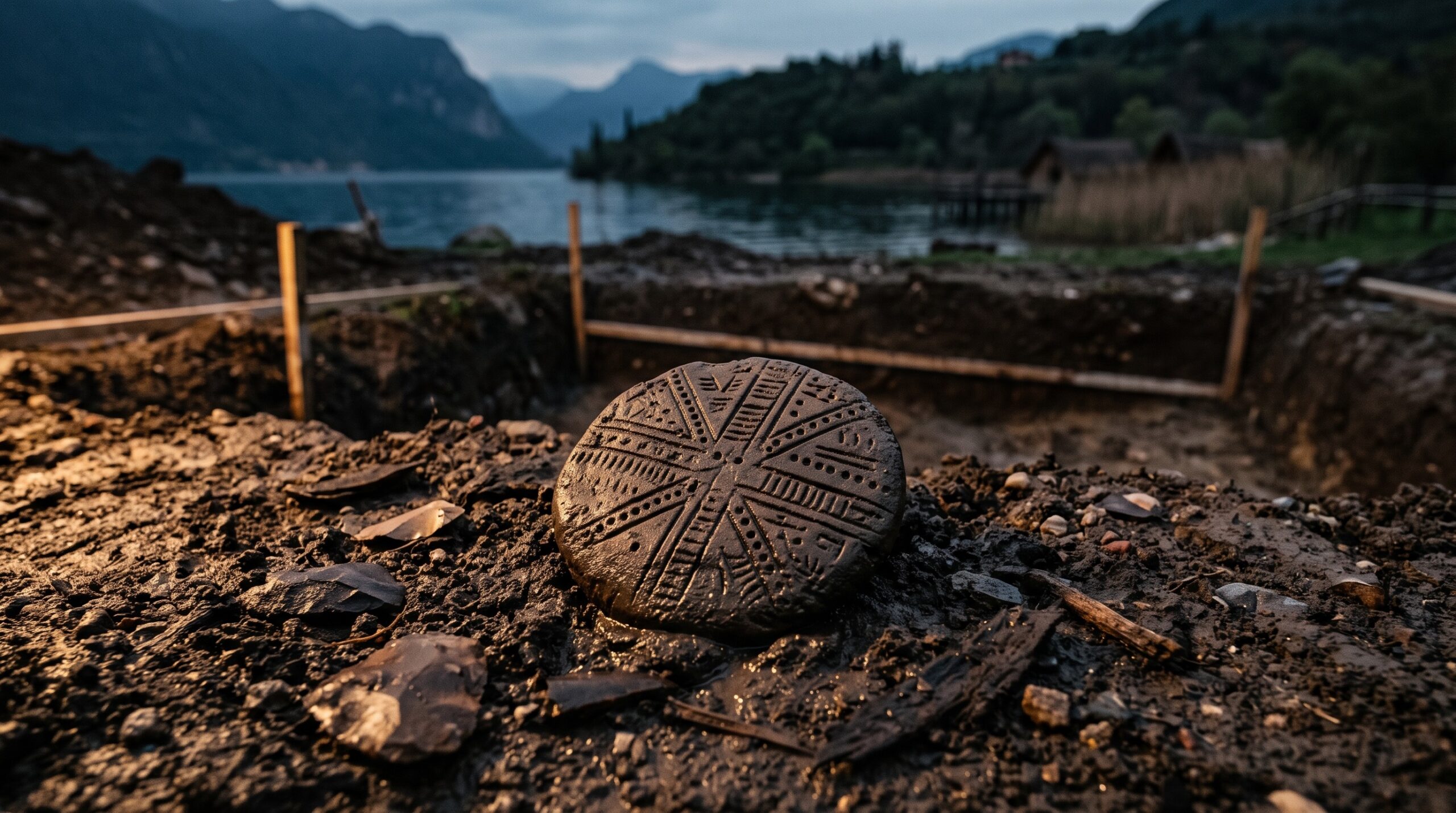
    Archaeologists excavating the prehistoric settlement of Lucone di Polpenazze, near Lake Garda, have uncovered an intact Bronze Age object covered with geometric markings. It belongs to the strange family of artifacts known as enigmatic tablets—rounded clay or stone pieces marked with circles, dots, triangles, squares and lines whose purpose remains unknown.[1]

    The discovery is unusually important because it was found intact. Many examples are fragments, stripped from their original setting and separated from the layers that might explain how they were used. At Lucone, the new find emerged during the third week of the 2026 excavation campaign from a charcoal-rich archaeological layer identified as US 1015. It is the third enigmatic tablet recovered from Lucone’s Site D, and the 21st recorded across the settlement plain.[1]

    That number changes the mystery. One puzzling object can be dismissed as an oddity. Twenty-one objects from one prehistoric landscape begin to look like a system.

    Not a lost book written in an unknown language

    The word “tablet” invites the wrong image. These are not miniature Mesopotamian documents waiting for a translator. No accepted writing system has been identified on the objects, and the markings are not known to represent sentences, names or a conventional alphabet.[1]

    German-language scholarship often calls them Brotlaibidole, or “bread-loaf idols,” because many have a rounded, loaf-like form. Italian researchers use the more neutral phrase tavolette enigmatiche—enigmatic tablets. Both names reveal the central problem: archaeologists can describe their shape and markings, but not their function.

    The geometric signs are not random scratches. Their repeated forms and combinations suggest deliberate manufacture. Yet deliberate does not automatically mean written language. A pattern can record ownership, count goods, identify a group, mark a ritual, map a relationship, or communicate information without being readable as prose.

    That distinction matters. The most tempting version of the story is that Lucone has yielded a Bronze Age code. The evidence supports something more cautious and, in its own way, more unsettling: people were making portable visual objects according to conventions that modern observers can see but no longer understand.

    The site preserves a vanished landscape

    Lucone di Polpenazze once occupied a wetland basin in the hills west of Lake Garda. The settlement is part of the UNESCO World Heritage property known as the Prehistoric Pile Dwellings Around the Alps, a transnational group of 111 prehistoric settlements in six European countries.[2]

    Wet environments are difficult places for ancient communities, but they can become extraordinary archaeological archives. Waterlogged layers may preserve organic materials that would normally disappear—wood, plant remains, food traces and the dark sediments created by repeated occupation. At Lucone, that setting gives the tablets something many isolated artifacts lack: context.

    The location also helps explain why a geometric object from northern Italy may matter beyond one village. Lucone was not sealed off from the wider Bronze Age world. Archaeological work at the settlement has pointed to contacts extending toward Central Europe and the Carpathian Basin, including evidence associated with faience beads and other exchange networks.[1]

    If the tablets were part of communication, their distribution may be a clue to the people moving through those networks. If they were ritual objects, their repeated forms may reveal shared beliefs. If they were tools for tracking goods or obligations, they could represent an economic system that left no surviving written archive.

    In each case, the object becomes more than a mystery from the past. It becomes a possible trace of connection.

    Why the markings are so difficult to interpret

    Ancient writing can sometimes be deciphered because it appears in long texts, bilingual inscriptions or familiar historical settings. Enigmatic tablets offer almost the opposite conditions. They are small, the signs are limited, and the number of examples is still modest. Even when the same motif appears on multiple pieces, researchers cannot be certain whether it carries the same meaning each time.

    A circle might be a symbol, a counter, a decorative element or an impression made by a tool. A repeated group might encode a quantity—or simply reflect a standard design. Without a clear contemporary inscription explaining the system, every interpretation risks becoming a modern projection.

    The strongest research path is therefore comparative rather than sensational. Researchers can catalogue the marks, compare manufacturing techniques, study the clay and examine the archaeological layers where each object was found. Three-dimensional scanning and morphological analysis may show whether tablets from distant regions were made according to shared conventions.[1]

    That work could eventually reveal whether particular motifs cluster by place, period or material. It may show that the signs traveled with commodities, that they belonged to particular communities, or that they changed over time. It may also show that similar-looking marks were produced independently and never formed one unified system.

    The mystery survives either result. A shared code would tell us that Bronze Age communication was more structured than the surviving record suggests. Independent invention would show how easily humans converge on geometric ways of organizing information.

    The “lost civilization” trap

    Objects that cannot be explained are often recruited into stories about vanished super-civilizations, visitors from the sky or knowledge supposedly too advanced for their age. The Lucone tablet does not require any of those explanations. Its genuine strangeness is already visible in the evidence: an ancient community made a carefully marked object, preserved it in a settlement layer, and left no readable explanation for us.

    That does not make the artifact less mysterious. It makes the mystery more precise.

    There is no evidence that the signs describe astronomy, encode a forgotten machine or prove contact with a civilization outside Bronze Age Europe. There is also no justification for pretending the purpose is obvious. The responsible position is the narrow space between those extremes: the markings are intentional, the function is unknown, and the surrounding archaeological context may gradually reduce the possibilities.

    The fact that Lucone has produced 21 examples is the most promising development. A single tablet can generate theories. A large group can be tested. Researchers can ask whether the pieces share dimensions, clay recipes, mark sequences, orientation, wear patterns or placement within buildings. They can search for correlations rather than rely on the emotional force of one unusual object.

    What could happen next

    The new tablet may be examined alongside the other Lucone examples and compared with related finds from the Alpine and Central European regions. If its markings match known combinations, it could strengthen the case for a wider visual tradition. If it is unlike the others, it may point to local experimentation or a different use entirely.

    The most revealing evidence may come from what is not visible on the surface. Microscopic wear could show whether the tablet was handled repeatedly, tied to something, pressed into wet material or stored. Residue analysis could identify contact with pigments, food, metals or organic substances. The layer itself may help establish whether the object was lost, discarded, deposited deliberately or left behind when the settlement changed.

    For now, the Lucone enigmatic tablet is not a translated message from a forgotten empire. It is something quieter and harder to dismiss: a surviving fragment of a communication world that may have made perfect sense to its creators.

    The markings look simple because they are geometric. Their meaning may have depended on everything that once surrounded them—the people who made them, the goods they exchanged, the rituals they remembered and the landscape they inhabited. That surrounding world is gone. The tablet remains, asking a question it cannot answer in words.

    Do you think these objects were a form of writing, a Bronze Age accounting tool, or something ritual that was never meant to be read?

    Sources and Further Reading

    The reporting on the excavation is based on the Lucone tablet report, which includes the excavation context and the current count of known examples. The site’s wider heritage setting is documented by the UNESCO World Heritage Centre.

    For readers interested in other archaeological mysteries, the Unexplained.co archive includes the 3,700-year-old ritual site found beyond a lonely rock, the sunken basilica at Iznik, and the Etruscan well sealed with human remains.

    Sources

    [1] Arkeonews, “Rare 4,000-Year-Old ‘Enigmatic Tablet’ Found Intact at Lucone Bronze Age Village in Italy” — https://arkeonews.net/rare-4000-year-old-enigmatic-tablet-found-intact-at-lucone-bronze-age-village-in-italy/

    [2] UNESCO World Heritage Centre, “Prehistoric Pile Dwellings Around the Alps” — https://whc.unesco.org/en/list/1363/

  • The Etruscan Well Sealed With Human Remains Is Stranger Than a Sacrifice Story

    The Etruscan Well Sealed With Human Remains Is Stranger Than a Sacrifice Story

    The most unsettling detail in the newly reported Etruscan discovery is not that human remains were found underground. It is that the place appears to have been treated like a living presence: opened, fed with offerings, used, and then deliberately closed.

    Archaeologists investigating the ancient Etruscan city of Veii in Italy have reported a ritual well associated with bronze objects, offerings and human bodies. The discovery has already been compressed online into a darker phrase—human sacrifice—but the evidence is more precise, and more mysterious, than that headline suggests. The excavation points to a sacred installation whose final closure mattered deeply to the people who used it.

    The [new report from Live Science](https://www.livescience.com/archaeology/archaeologists-discover-etruscan-well-that-was-ritually-opened-with-offerings-for-a-goddess-and-closed-with-human-bodies) describes the well as part of an ancient cult setting. It does not, by itself, prove that every person found there was deliberately killed as a ritual victim. That distinction is essential. Archaeology can reveal where remains were placed and what surrounded them; it cannot automatically recover the intentions, identities or causes of death behind every deposit.

    A sacred place in the shadow of Rome

    Veii was one of the most important Etruscan cities in central Italy. It stood close enough to Rome to become a long-term rival, and its eventual defeat by Rome in the early fourth century BCE helped reshape the balance of power in the region. Today, the site is often remembered through the Roman story of conquest, but the well offers a glimpse of something older: a religious world with its own rules for communicating with gods, ancestors and the landscape.

    The city’s history matters; another Unexplained.co investigation of an abandoned place shows how location-based mystery can outlive its original story. because the find is not an isolated oddity. Etruscan ritual life often involved thresholds—places where the human world met the divine one. Wells, pits and underground chambers could carry offerings out of sight, toward powers associated with water, fertility, health, protection or the underworld. The [background history of Veii](https://en.wikipedia.org/wiki/Veii) helps explain why a buried installation could be more than a practical water source.

    In this setting, the well’s architecture becomes part of the evidence. A vessel dropped into a pit is one thing. A carefully arranged sequence of offerings followed by a formal closure is another. It suggests that the community was not merely abandoning a hole in the ground. It was ending a relationship with a place.

    What was found—and what remains uncertain

    The reported discovery links the well to bronze artifacts, ritual offerings and human remains. Those elements create a powerful narrative, but they do not all carry the same evidentiary weight.

    The bronze objects may indicate ceremonial activity. Their placement can help archaeologists reconstruct when the well was used and how the deposit was assembled. The human remains establish that people were placed in or around the installation. They do not, without further analysis, establish whether those people were sacrificed, buried after ordinary deaths, connected to the cult, or involved in an event that archaeologists have not yet reconstructed.

    That is where the story’s most important information gain lies. The sensational interpretation asks, “Were humans sacrificed?” The better question is, “What does the sequence of opening, offering and closure tell us about how the Etruscans understood sacred space?”

    A final deposit can be a form of ritual punctuation. Once a sanctuary, spring or well had completed its religious function, closing it may have protected the community from whatever power was believed to remain below. The bodies may have been part of that act, but their precise role must be tested rather than assumed.

    Why “closed with human bodies” is not the same as proof of sacrifice

    Ancient human remains are easily turned into a single dramatic explanation. The word sacrifice feels as though it solves the mystery, but it can conceal several separate questions:

  • Were the individuals alive when they entered the well?
  • Were they killed specifically for the ceremony?
  • Were they already dead and then deposited as part of a funerary or commemorative rite?
  • Were they outsiders, members of the community, or people connected to the cult?
  • Did the closure happen once, or over several phases?
  • Archaeologists can approach those questions through osteological examination, trauma analysis, radiocarbon dating, isotope studies and the spatial relationship between bones and artifacts. Evidence of cut marks, binding, blunt-force trauma or unusual treatment could change the interpretation. So could evidence that the remains represent ordinary burials later incorporated into a ritual closure.

    Until those studies are published, “human sacrifice” should be treated as a possibility—not a settled fact. The less dramatic wording is also the more responsible one: human remains were incorporated into a ritual deposit whose meaning is still being reconstructed.

    The goddess connection

    The discovery has been described as connected to offerings for a goddess. That detail makes the well feel almost animate. A goddess associated with the installation would not necessarily have been imagined as a figure waiting inside it. In ancient Mediterranean religion, divine power could be attached to a place, a spring, an object or a recurring ceremony rather than represented by a single statue.

    This helps explain why closure could matter. If a well was a route into a sacred domain, sealing it may have been a way to end access, contain danger or mark the completion of a vow. Offerings could be gifts, payments, memorials or attempts to restore balance. The same object can carry different meanings depending on when and where it was deposited.

    That ambiguity is not a weakness in the discovery. It is the mystery. The material record preserves the action while withholding the words that would have explained it.

    Veii’s older mystery beneath the Roman story

    Earlier archaeological mysteries covered by Unexplained.co show why buried sites attract competing explanations. The Roman conquest of Veii supplies a familiar ending: a powerful city falls, its territory is absorbed, and later history is written by the victor. But ritual deposits such as this one resist that neat conclusion. They preserve a private and local world that existed before the conquest and may have continued through periods of political change.

    The well may therefore become important for more than the question of human remains. It could help researchers map how Etruscan religious practices changed over time, how rituals were reorganized when communities faced pressure, and whether the final closure belongs to a moment of crisis or to an ordinary religious cycle.

    It also offers a warning about how ancient mysteries are made. Online retellings often remove the uncertainty that makes archaeology valuable. A bronze object becomes a talisman. A burial becomes a sacrifice. A sealed well becomes a portal. Each transformation makes the story more vivid, but each can move it farther from the evidence.

    What happens next

    The next decisive information should come from the remains themselves and from the excavation’s full technical publication. Dating could establish whether the bodies and offerings belong to the same event. Bioarchaeology could reveal age, sex, health and geographic origin. Trauma analysis could test whether violence occurred. The arrangement of the deposit may show whether the closure was carefully planned or accumulated over time.

    Those results may produce a darker story, a more ordinary one, or something stranger than either. They might show a deliberate killing, a funerary act, a mixed deposit or a sequence of rituals that modern categories cannot easily describe.

    For now, the strongest conclusion is also the most haunting: at Veii, people appear to have opened a sacred underground place, placed gifts within it, and eventually sealed it with human remains. We know something happened there. We do not yet know whether the dead were offerings, mourned individuals, victims, guardians of the closure—or several of these things at once.

    That unanswered question is why the well still feels alive in the archaeological record. What do you think the final deposit was meant to accomplish?

    Sources and further reading

    The primary current account used for this article is Live Science report on the Etruscan well. For historical context, see the [reference overview of Veii](https://en.wikipedia.org/wiki/Veii). The article treats the sacrifice interpretation as unproven pending detailed osteological and excavation results.

  • The Sunken Basilica of Iznik: Did a Lake Hide the Council of Nicaea?

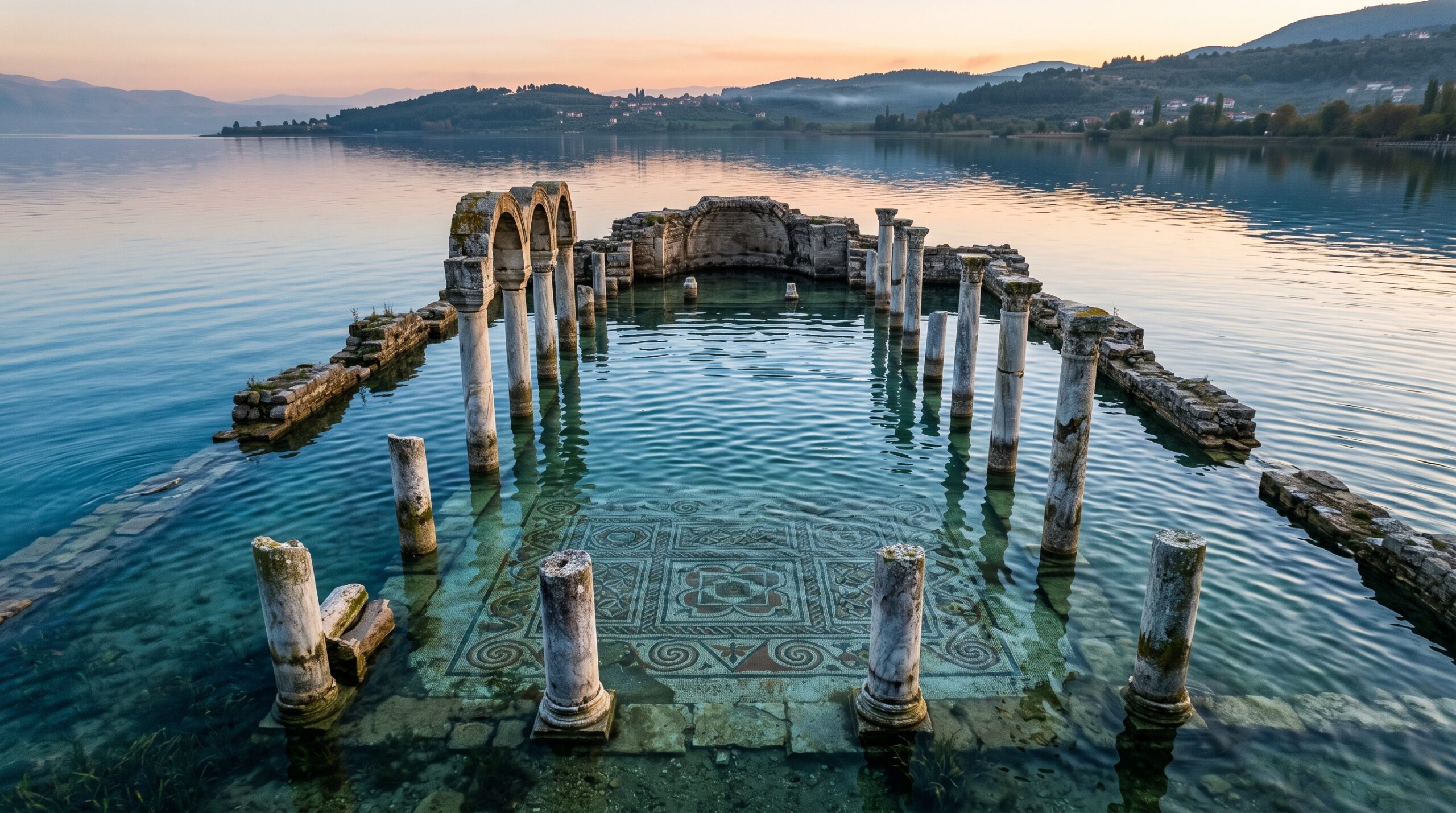
    The Sunken Basilica of Iznik: Did a Lake Hide the Council of Nicaea?

    # The Sunken Basilica of Iznik: Did a Lake Hide the Council of Nicaea?

    Beneath the water of Lake Iznik, the outline of a fourth-century basilica has turned a familiar chapter of Christian history into a physical mystery. The structure is real. The more dramatic claim—that it was the church where the First Council of Nicaea met in A.D. 325—remains possible, disputed, and not yet proven.

    That distinction matters. The submerged ruins are not a fantasy, but the identity of the building depends on reconstructing a vanished shoreline, a changing city, and a council whose surviving historical record does not hand archaeologists a simple address.

    ## What is beneath Lake Iznik?

    The basilica lies offshore from İznik, the modern Turkish town built over ancient Nicaea. Archaeologists identified the submerged remains after aerial photography and later underwater investigation revealed walls, columns, and a church plan beneath the lake. Live Science’s archaeological report describes a fourth-century structure that appears to have been built near the ancient shoreline before later earthquakes and changes in water level altered the setting.

    The site is therefore more than a picturesque “sunken church.” Its date and location place it inside the right historical world: Nicaea was an important Roman and early Christian center, and the region experienced seismic and environmental changes capable of reshaping the waterfront.

    The first information gain is the separation of three claims that are often compressed into one headline: the basilica exists; it dates to the relevant broad period; and it hosted the council. The first two are archaeological propositions. The third is an identification argument.

    ## Why the Council of Nicaea connection is so powerful

    The First Council of Nicaea was convened under Constantine I to address a major dispute over Christian doctrine, especially the relationship between God the Father and Christ. Its decisions helped produce the Nicene Creed and gave the gathering an importance far beyond the walls of one ancient city. The historical outline from Britannica places the council in Nicaea in 325, but does not identify a surviving basilica as its meeting hall.

    That missing address is the opening through which the mystery enters. If the council met in a building now below the lake, the ruins could connect a famous theological turning point to a concrete landscape. If not, the basilica still reveals how early Christian architecture occupied a city later transformed by disaster, rebuilding, and rising water.

    Supporters of the identification point to proximity, chronology, and the church’s prominence. A large basilica near Nicaea’s ancient shore would be an intuitively plausible setting for an imperial-era gathering. But plausibility is not the same as proof, especially when the literary sources do not provide a definitive architectural match.

    ## The archaeological argument—and its limits

    The strongest evidence is physical: the submerged church, its construction period, and its position relative to ancient Nicaea. Archaeology Magazine’s coverage of the Iznik basilica provides wider context for the discovery and the continuing work around the site.

    The weaker link is the leap from “important fourth-century church” to “the council church.” Many early Christian buildings were rebuilt, expanded, or assigned new functions. A basilica’s size can suggest status, but it cannot by itself identify a specific meeting. Archaeologists would need a denser chain of evidence: inscriptions, construction phases, artifact patterns, or a spatial relationship that can be matched to ancient descriptions.

    A second insight is that the lake may be as important to the story as the council. Water does not merely conceal ruins; it changes the conditions under which they survive. Walls, foundations, and shoreline relationships may preserve information that a later urban landscape erased, while also making excavation slower and interpretation more difficult.

    ## What happened to the church?

    The basilica appears to have stood in a landscape vulnerable to earthquakes and shifts in the lake. Over centuries, the shoreline changed and the building passed out of ordinary view. That does not require a single catastrophic “sinking” event. Ancient waterfronts can disappear gradually through subsidence, sediment, reconstruction, and changing water levels.

    This is where the story resists the cleanest version of the legend. The ruins may have been submerged through a combination of natural processes rather than one dramatic night. Yet gradual disappearance can be more revealing than a catastrophe: it shows how a functioning sacred landscape can become invisible without anyone needing to erase it.

    For comparison, the discovery also echoes a broader archaeological pattern in which a small clue opens a much larger landscape. As with the 3,700-year-old ritual site found after a student noticed one lonely rock, the decisive evidence was not a ready-made monument with an explanation attached. It was a surviving feature that forced researchers to ask what the surrounding terrain once meant.

    ## Confirmed, plausible, and unknown

    **Confirmed:** a substantial basilica lies beneath Lake Iznik; it belongs broadly to the early Christian period; and it sits near the ancient city of Nicaea.

    **Plausible:** the church may have been important enough to connect with elite or imperial Christian activity, and its location makes the council theory understandable.

    **Unproven:** that the First Council of Nicaea actually met inside this specific structure. The identification remains an interpretation rather than a settled archaeological fact.

    That uncertainty should not flatten the story. It sharpens it. The ruins give us a rare physical encounter with the world around one of late antiquity’s most consequential gatherings, even if they cannot yet answer the most seductive question.

    ## The mystery beneath the mystery

    The real enigma is not simply whether a famous council met in a sunken church. It is how much of history depends on places whose names survived while their physical settings vanished. Nicaea remains on the map, but the shoreline has moved, the buildings have changed, and the old city now has to be read through water.

    Further underwater excavation, dating, and comparison with historical descriptions may strengthen—or weaken—the basilica’s proposed identity. Until that work is complete, the responsible conclusion is neither “this is definitely the council church” nor “the theory is meaningless.” It is a documented ancient building carrying a plausible historical possibility that still needs decisive evidence.

    Would finding an inscription beneath Lake Iznik change how you imagine the First Council of Nicaea—or would the unanswered question be part of what makes the ruins so compelling?

  • Stonehenge AI Scan: Has Artificial Intelligence Finally Solved the 5,000-Year Mystery?

    Stonehenge AI Scan: Has Artificial Intelligence Finally Solved the 5,000-Year Mystery?

    The machine saw what five millennia of human eyes had missed.

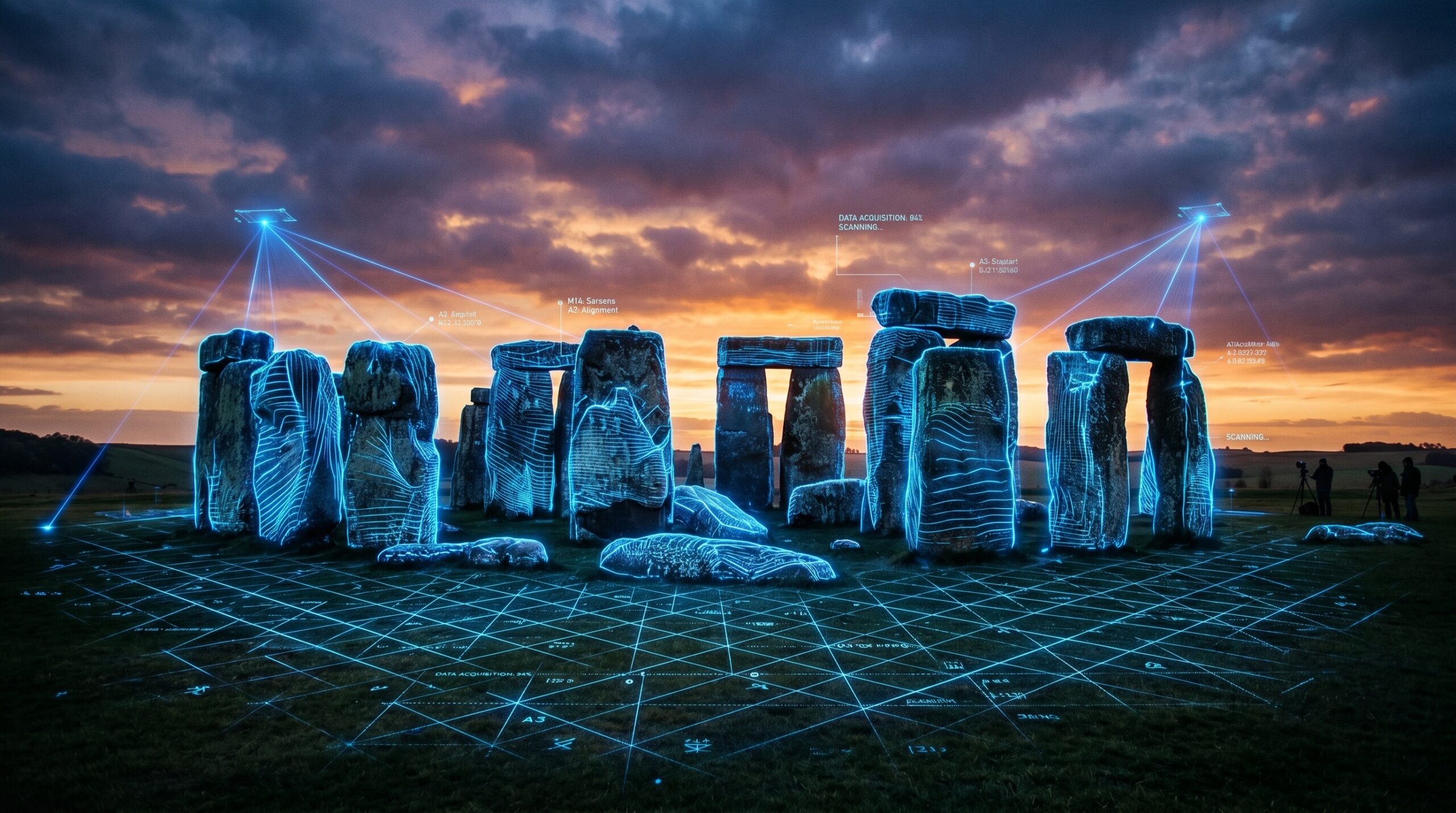
    In February 2026, a joint team from the University of Birmingham and the Ludwig Maximilian University of Munich deployed a new synthetic-aperture radar array beneath the Stonehenge monument, feeding raw geophysical data into a neural network trained on archaeological pattern recognition. The goal was modest: refine existing maps of buried lintels and postholes. The result was anything but. The AI identified a subterranean chamber system extending radially from the monument’s center, arranged in geometric ratios that do not appear in any known Neolithic architectural tradition. The chambers are lined with material that returns radar signatures inconsistent with local sarsen stone or chalk bedrock. And at the deepest mapped point, forty feet below the altar stone, the scan detected a void shaped like a perfect sphere.

    The preliminary paper, leaked to the journal Antiquity before peer review, has triggered an earthquake in multiple disciplines. Archaeologists are arguing about Neolithic engineering capabilities. Physicists are debating whether the radar anomalies represent natural geological formations misread by overtrained algorithms. And in the corners of the Internet where ancient-mystery enthusiasts gather, a more radical theory is gaining traction: that Stonehenge was never merely a temple, and that the AI has accidentally mapped the control architecture of something far older than the standing stones.

    What the Scan Revealed

    Traditional ground-penetrating radar has mapped Stonehenge’s surroundings since the 1980s, revealing the broader landscape of Durrington Walls, the Avenue, and the Cursus. Those surveys produced linear maps—foundations, ditches, burial pits. The 2026 AI-assisted survey produced something different: a three-dimensional model showing twelve radial tunnels extending from a central cylindrical chamber beneath the monument’s horseshoe arrangement. The tunnels average six feet in height and terminate at points that correspond precisely to the positions of the outer sarsen circle.

    The alignment is mathematically exact. Independent geometer Dr. Helena Voss, consulting on the project, calculated that the tunnel endpoints form a dodecagon whose internal angles match the geodetic ratios found in certain Nazca line complexes—a correspondence that Voss describes as “either impossible or deeply uncomfortable.” The Nazca lines and Stonehenge were constructed by cultures with no known contact, separated by oceans and six thousand miles. Shared mathematical architecture at this precision suggests either convergent genius on a superhuman scale, or a common source of knowledge that predates both civilizations. English Heritage, which manages the Stonehenge site, has not commented publicly on the AI findings pending peer review of the research.

    The most controversial finding concerns the material lining the tunnel walls. Spectral analysis of radar returns indicates a crystalline structure with uniform density, unlike the fractured chalk and flint of the surrounding Salisbury Plain. The AI classified this material as “anomalous” with 94% confidence. Human reviewers have been unable to suggest a geological process that would produce a forty-foot band of uniform crystal beneath a Neolithic monument.

    The Sphere

    At the lowest mapped depth, the AI identified a spherical void approximately twelve feet in diameter, centered beneath the altar stone. The void is not a natural cave. Its surface returns radar as smoother than any known geological formation, with curvature variance below 2 millimeters. To the project’s imaging specialists, it looks manufactured.

    The sphere’s position is symbolically loaded. The altar stone, a five-ton block of green micaceous sandstone imported from Wales, has long been interpreted as the ritual heart of the monument. If the sphere sits directly beneath it, the implication is that the stone was placed as a cap or marker rather than as an independent altar. Some researchers have revived theories that Stonehenge functioned as an energy focal point—a concept dismissed by mainstream archaeology for decades but persistent in alternative literature.

    Dr. Marcus Chen, the project’s lead data scientist, has been cautious in public statements. “The AI detects pattern and anomaly,” he told The Guardian. “It does not interpret intent. The spherical void could be a collapsed cavern, a glacial feature, or a post-Neolithic excavation that backfilled uniformly. We need core samples before we claim anything extraordinary.” Privately, however, team members have described the consistency of the findings as “deeply weird.” The same AI architecture, trained on identical datasets, has been deployed at over two hundred archaeological sites across Europe. It has never produced a false positive of this magnitude.

    Competing Interpretations

    The mainstream archaeological response has emphasized patience. Stonehenge has been the subject of fantastical claims since the twelfth century, when Geoffrey of Monmouth attributed its construction to Merlin. The scientific consensus holds that the monument was built between 3000 and 2000 BCE by successive Neolithic and Bronze Age communities, primarily as a ceremonial and astronomical site. The new findings, while unexpected, do not automatically require rewriting that narrative.

    Dr. Alison Sheridan, a leading Neolithic specialist, has proposed that the radial tunnels represent drainage channels or foundation reinforcements for a timber phase of the monument that later decayed. The “crystalline” radar signature, she suggests, could be compacted silica deposited by millennia of groundwater flow through chalk fissures. The spherical void might be a solutional chamber formed by acidic water action on buried limestone. A 2021 Nature study on Stonehenge’s geological setting established that local groundwater chemistry is capable of producing unusual mineral deposits, though none on the scale detected by the AI survey.

    These explanations are geologically plausible but face a common challenge: none explain the mathematical precision. Drainage channels follow topography, not dodecagonal geometry. Silica deposition is irregular. Solutional chambers are rarely spherical and never with surface variance below 2 millimeters. The mainstream position requires accepting multiple independent natural processes, each operating at the extreme edge of its known range, converging by chance beneath one of the world’s most studied monuments.

    The Ancient Technology Hypothesis

    Alternative researchers have been less restrained. The discovery has revitalized interest in Göbekli Tepe, the Turkish complex that predates Stonehenge by six thousand years and displays similarly inexplicable engineering. If both sites contain subterranean architecture that exceeds their apparent technological level, the question becomes whether they represent isolated flukes or fragments of a lost technological tradition.

    Engineer and author Christopher Dunn has long argued that ancient monuments display evidence of precision machining impossible with known Bronze Age tools. The Stonehenge sphere, with its near-perfect curvature, fits Dunn’s thesis. If the void contains a manufactured object rather than empty space, it would constitute the strongest physical evidence yet for advanced pre-Ice-Age civilization.

    More speculative theorists have drawn connections to global mythology. Hindu texts describe vymanika shastra—flying machines powered by mercury vortex engines whose schematics include spherical reaction chambers. Sumerian accounts reference the me—divine objects of power buried beneath sacred sites. These parallels are generally dismissed by academics as selective reading, but they have gained traction in public discourse precisely because the official narrative now contains a hole shaped like a sphere.

    The AI Question

    Beyond the archaeological implications, the Stonehenge scan has raised epistemological questions about AI-assisted science. The neural network that identified the anomalies was trained on thousands of validated archaeological features, but its confidence metrics are not fully explainable. When the AI marks a formation as “anomalous,” it cannot always articulate why in terms human geophysicists recognize. The project team has described the model’s behavior as “pattern recognition beyond human perceptual thresholds”—a capability that produces genuine discoveries but also genuine confusion.

    Critics argue that over-reliance on black-box algorithms risks generating a new category of pseudoscientific artifact: the AI phantom. If a neural network trained on European megaliths finds “impossible” geometry at Stonehenge, the anomaly may reside in the training data rather than the ground. The project’s response—that independent manual review confirmed the radar raw data before AI processing—has not fully silenced these concerns.

    What is clear is that the technology has opened a door. Core sampling at the tunnel locations is scheduled for summer 2026, subject to approval by English Heritage. If the samples confirm crystalline lining or manufactured surfaces, the discovery will force a reassessment of Neolithic capability regardless of theoretical framework. If they reveal natural formations, the AI will have produced its most expensive false positive in archaeological history.

    The Weight of Waiting

    Stonehenge has always been a mirror. Each age projects its own anxieties onto the stones: medieval Christians saw a monument to pagan sacrifice, Romantics saw sublime connection to nature, twentieth-century archaeologists saw seasonal calendars, and twenty-first-century technologists now see the possibility of buried machinery. The AI scan has not resolved these projections. It has intensified them.

    For believers in lost civilizations, the findings validate decades of marginal research. For defenders of orthodox chronology, they represent a test of scientific patience against sensationalism. For the broader public, they offer a rare moment of genuine uncertainty at a site long since strip-mined for mystery tourism.

    The sphere waits forty feet down. The altar stone has stood above it for four thousand years. Whether the void contains a machine, a tomb, or merely the hollow laughter of geology, its existence changes something fundamental about the monument: Stonehenge is not a surface. It is a roof. And whatever was built below it may finally matter as much as what was raised above.

  • Science Can Read His DNA, but His Religion Is Still a Mystery

    Science Can Read His DNA, but His Religion Is Still a Mystery

    Modern archaeology can do something that would have sounded impossible not long ago. It can pull ancestry from bone, reconstruct migration patterns from ancient genomes, estimate kinship, diet, and sometimes even illness from human remains buried for thousands of years. But even with all that power, science still runs into a wall when it reaches the interior life of the dead. It can tell us where a person may have come from. It cannot so easily tell us what he believed, what gods or forces he feared, or what sacred role others may have thought he carried into death.

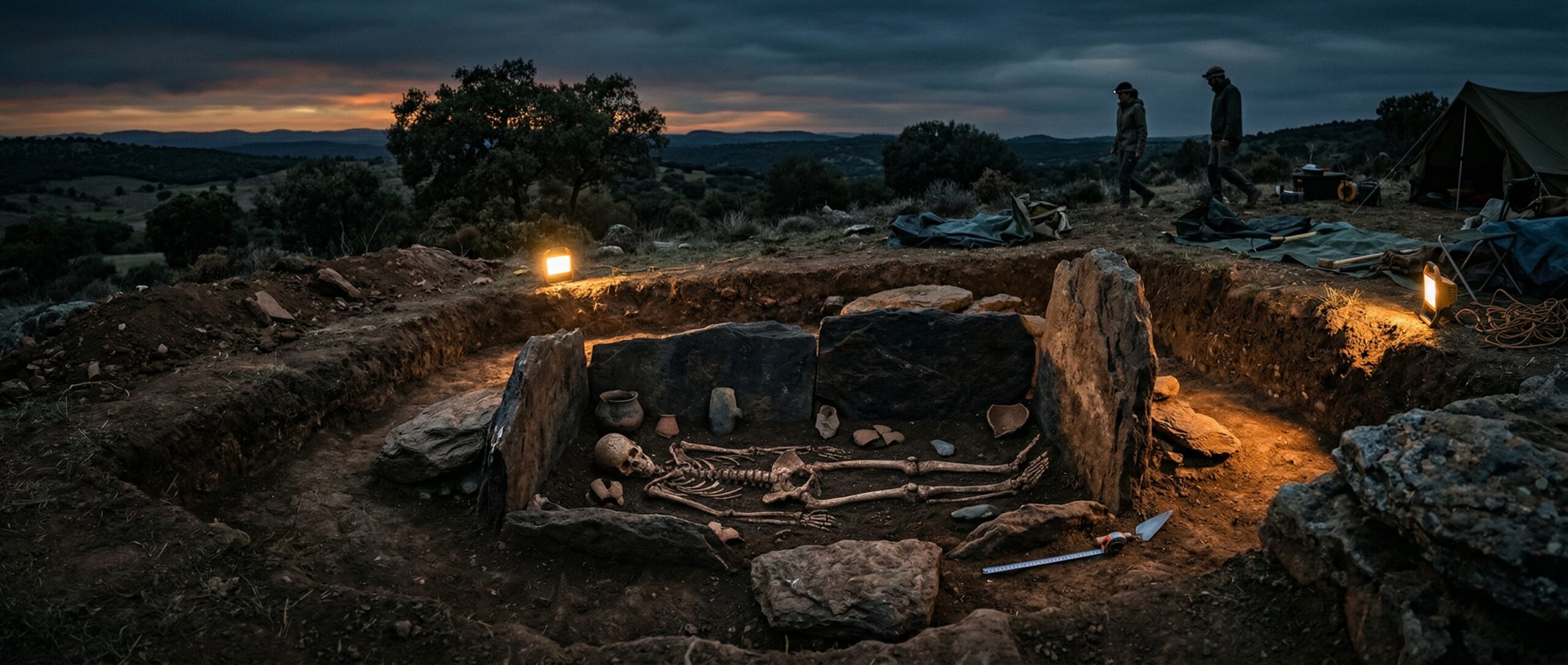
    That tension is exactly what makes the newly discussed Stone Age burial in Spain so compelling, and why the story feels bigger than a narrow archaeology update. As highlighted by Live Science in April 2026, researchers can now say strikingly specific things about the ancestry of a man buried in a prehistoric monument. Yet the deeper question, the one that most naturally grips the imagination, remains unresolved. Why was he buried there? What did the placement mean? Was he socially important, ritually marked, spiritually distinct, or simply one participant in a funerary world whose symbolic language we can only partly recover?

    This is why the story deserves more than a quick archaeology write-up. It sits at the exact threshold where hard evidence meets permanent uncertainty. Readers who have followed the long history of humanity trying to formalize contact with unseen forces or explored ancient-mystery stories where new technology reveals structures but not meaning will recognize the pattern. Science can illuminate the bones. It cannot fully restore the belief system that once surrounded them. That gap is not a failure of archaeology. It is one of the oldest and most haunting limits of human knowledge.

    The Spanish Stone Age burial is revealing precisely because it is only partially decoded

    The current fascination around this case comes from a productive kind of incompleteness. Researchers studying a man buried in a Stone Age monument in Spain have been able to extract information that speaks directly to ancestry and human movement. That alone is enough to make the find archaeologically significant. But the public imagination is not stopping at ancestry. It is moving almost immediately toward the harder question of spiritual meaning. Why this monument? Why this burial treatment? Why does this individual seem to stand out strongly enough to invite speculation about ritual identity?

    That interpretive jump is not irrational. Burial archaeology has always encouraged exactly this kind of thinking, because graves are among the few ancient contexts where material practice and symbolic meaning visibly overlap. A burial is never just a body in the ground. It is a social act, a cosmological act, and often a statement about how the living understood death, transition, ancestry, and power. The problem is that those meanings do not survive evenly. Bones may survive. Stone may survive. Grave goods may survive. The system of belief linking them together often survives only in fragments.

    That makes this Spanish case unusually instructive. It is not a story about science failing. It is a story about science succeeding powerfully in one domain while leaving another domain irreducibly open. That tension is what gives the burial its haunting quality.

    Ancient DNA can recover ancestry, movement, and kinship with astonishing power

    Ancient DNA analysis has transformed archaeology over the last two decades. Researchers can now identify broad ancestry patterns, population mixing, migration events, kin relationships, and sometimes aspects of physical biology that were once permanently out of reach. In prehistoric Europe especially, genomics has changed how scholars understand the movement of peoples, the spread of farming, and the ways communities were formed, absorbed, or replaced over millennia. In a case like this one, the genetic data helps place the buried man within a larger human map rather than leaving him as an isolated skeleton in a monument.

    That is an extraordinary achievement. For much of archaeological history, ancestry had to be inferred indirectly through material culture, burial style, cranial measurement, settlement pattern, or comparative guesswork. Now, scholars can make far more grounded claims, even when those claims still require care and context. As institutions such as Nature’s ancient DNA coverage and broader archaeological genetics literature have shown, prehistoric burials are no longer mute in the same way they once were. They speak through chemistry and sequence.

    But DNA speaks a particular language. It can tell us about descent and relatedness. It can reveal biological connection and population history. It can sometimes clarify whether a buried person was local to the region or connected to wider migration patterns. What it cannot do is leap directly from lineage to worldview. The genome is powerful evidence, but it is not a theology.

    Belief, ritual meaning, and sacred status remain much harder to reconstruct

    This is where the story becomes genuinely philosophical. Archaeology can often say what was done. It struggles more with why it was done in the exact terms the original participants would have used. A body placed in a monument may indicate reverence, status, sacrifice, ancestry worship, cosmological alignment, territorial memory, or social distinction. The material context can narrow possibilities, but it rarely translates directly into the lost language of belief.

    That is especially true in prehistory, where writing is absent. Without inscriptions, myths, prayers, liturgies, or explanatory texts, scholars must read meaning indirectly through architecture, grave treatment, artifact placement, body position, and comparison with better-documented traditions. This is rigorous work, but it remains interpretive. Even when archaeologists are highly confident that a burial had special ritual significance, the exact nature of that significance may remain permanently out of reach.

    That is why the question raised by the Live Science story is so resonant. People instinctively understand that ancestry is not identity in the fullest sense. A person is not reducible to genetic origin. Religion, status, symbolic role, and cosmological place belong to a different layer of being. That layer is often the hardest one to resurrect.

    Burials preserve social meaning long after language is gone

    Archaeologists care so deeply about burial sites because graves are among the richest surviving records of how a society understood the human person. A burial encodes choices. Was the body isolated or communal? Was it accompanied by tools, ornaments, pigments, animal remains, food offerings, or ceremonial architecture? Was it placed inside a monument that required collective labor to build? Was the location already sacred before the burial took place? Each of these questions opens a window onto value systems that would otherwise remain invisible.

    In the case of prehistoric monuments in Iberia, those questions are especially potent. Stone-built or monumental funerary spaces often imply continuity, memory, and social investment. They tell us that the dead mattered not only biologically, but symbolically. Some burials appear ordinary within such systems. Others stand out, either because of placement, treatment, or associated materials. When one individual appears unusually emphasized, it is natural to ask whether he was more than socially prominent. Was he ritually charged? Was he a mediator, an ancestor figure, a lineage founder, a priestly presence, or someone marked by a role we no longer know how to name?

    Those questions may never receive final answers, but they are not arbitrary. They emerge from the material seriousness of burial itself. The dead are often where a culture’s deepest structure becomes momentarily visible.

    Prehistoric Iberia was already a world of migration, monument building, and symbolic complexity

    Any effort to understand this burial has to place it within the wider prehistoric world of the Iberian Peninsula. Stone Age and later prehistoric Iberia was not culturally flat. It was a region shaped by long-term population movement, local continuity, exchange networks, monument construction, and ritual landscapes whose meanings were layered over generations. Megalithic traditions in parts of Spain and Portugal have long fascinated archaeologists because they suggest both engineering coordination and durable sacred geography.

    This matters because the burial is not an isolated curiosity. It belongs to a broader pattern in which monuments were used to structure relationships among the dead, the living, and the land. Institutions such as the British Museum’s prehistoric Europe collections and academic work on Iberian megalithic culture have repeatedly shown that ancient communities invested enormous energy in burial architecture that outlasted individual lifetimes. That investment suggests worldviews concerned with continuity, ancestry, place, and the social management of memory.

    So when a genetically traceable man appears in one of these settings, the question is not only who he was biologically. It is how he fit into that symbolic landscape. The monument places him inside a ritual grammar we can observe structurally but cannot fully translate.

    A burial can suggest ritual importance without ever proving exactly what that importance was

    This is the point where responsible archaeology and public imagination often separate. A dramatic burial context tempts people to supply a title. Shaman. Priest. Chief. Sacrifice. Outcast. Holy man. Chosen dead. But the evidence rarely grants such precision. More often, it supports a narrower and more careful claim: this person appears to have been treated in a way that mattered.

    That distinction is crucial. Treatment can imply importance without revealing the language of that importance. A body may be central because of ancestry, age, prestige, unusual death, inherited status, ritual office, remembered charisma, or cosmological symbolism. Modern categories can illuminate possibilities, but they can also distort them. Prehistoric communities did not necessarily divide religious and social roles the way modern observers do. What looks to us like “religion” may have been inseparable from kinship, territory, healing, seasonal cycles, or political authority.

    That is why this Spanish burial remains so compelling. It offers just enough evidence to make the spiritual question unavoidable, but not enough to settle it cleanly. The monument points toward meaning. It does not surrender the full code.

    This case shows the difference between biological identity and spiritual identity

    One of the most useful ideas this story gives readers is a distinction that extends far beyond archaeology. Biological identity and spiritual identity are not the same thing. Science can map one with increasing precision. The other must usually be inferred through behavior, symbol, testimony, and cultural context. In the contemporary world, we often collapse identity into measurable categories because measurable categories feel secure. This burial is a reminder that human meaning has never been fully measurable.

    The buried man’s ancestry matters. It tells us something real about movement, relation, and historical context. But ancestry does not explain why the living placed him where they did, or how they understood the passage he was making through death. That is a different question, one that sits closer to anthropology, comparative religion, ritual theory, and the study of symbolic systems than to genetics alone.

    That is also why ancient-mystery stories like this endure. They do not survive because science is weak. They survive because science is strong enough to reveal the boundary of its own reach. The clearer the biological picture becomes, the more visible the remaining darkness can feel.

    A cautious reading avoids romantic invention while preserving the mystery

    The best skeptical response to this story is not dismissal. It is restraint. There is no need to invent lost priesthoods, secret cults, or mystical titles to make the burial interesting. Nor is there any need to flatten the case into mere demographic data and pretend the ritual question is irrelevant. A disciplined reading can hold both truths at once: the genetics are meaningful, and the spiritual interpretation remains unresolved.

    This is the kind of caution good archaeology depends on. Overstatement is tempting because ancient burials invite projection so easily. Modern people want the dead to become characters. But responsible interpretation accepts degrees of uncertainty. It allows a burial to remain symbolically potent even when its exact meaning cannot be recovered. That is not a weakness. It is fidelity to the evidence.

    For unexplained.co, that balance is exactly the point. Ancient mystery becomes most interesting when it is not inflated beyond what the material supports. The real intrigue lies in the distance between what we can now sequence and what we may never fully know.

    The story matters because it reveals the real limits of scientific certainty

    There is a cultural lesson here that goes beyond prehistory. We live in an age that often expects enough data to dissolve uncertainty. Genomics, imaging, AI reconstruction, isotope analysis, and digital modeling have dramatically expanded what researchers can recover from the past. That expansion is real, and it is astonishing. But stories like this one remind us that certainty does not increase evenly across all kinds of questions. Some dimensions of human life leave clearer traces than others.

    Belief is one of the hardest dimensions to reconstruct because it often exists not in isolated artifacts, but in systems of use, repetition, symbolism, and shared interpretation. When those systems vanish, archaeology can sketch around them, but not always re-enter them. That makes this burial more than a niche research story. It becomes a case study in epistemic humility, which is one reason ancient-mystery readers respond to it so strongly. We can know a great deal and still not know the thing people most want to ask.

    In that sense, the mystery is not an embarrassment to science. It is part of what makes science honest. The unanswered ritual question gives the case its depth precisely because the researchers can say so much else with confidence.

    Ancient mystery often begins where excellent science reaches its interpretive boundary

    That is why this case belongs to a wider class of stories that continue to grip the public imagination. New tools reveal fresh detail about ancient monuments, burials, landscapes, and bodies, yet the final meaning of those discoveries remains partly occluded. We have seen the same tension in stories about Nazca geoglyphs found through AI-assisted detection, in debates around prehistoric ceremonial sites, and in every excavation where structure survives better than worldview.

    The result is not frustration alone. It is a more mature kind of mystery. Not the mystery of wild speculation, but the mystery of partial access. The dead can now tell us more than they could a generation ago. They still do not tell us everything. That remainder, the space between data and meaning, is where archaeology becomes quietly uncanny.

    Science can read his ancestry. It can place him in time, in relation, perhaps in movement. But his religion, if that is the right word at all, remains dimly visible only through burial context and human inference. That is enough to fascinate, enough to caution, and enough to remind us that the ancient world is not mute. It is simply not finished speaking in a language we fully understand.

    Frequently Asked Questions

    What did researchers learn from the Stone Age burial in Spain?

    They were able to recover ancestry information about a man buried in a prehistoric monument, helping place him within larger population and migration patterns in ancient Iberia.

    Why can science identify ancestry but not religion?

    Because ancestry can be traced through biological evidence like DNA, while belief systems usually have to be inferred indirectly from burial treatment, artifacts, architecture, and cultural context.

    Does a special burial prove a person had a ritual or religious role?

    No. It may suggest social or symbolic importance, but it rarely proves a precise title or religious function without stronger contextual evidence.

    Why are prehistoric burials so important to archaeologists?

    Because burials preserve choices about status, memory, symbolism, and the treatment of the dead, making them one of the richest windows into ancient social and ritual life.

    What makes this story compelling beyond archaeology news?

    It highlights a deeper truth about the past: technology can recover astonishing detail, but some of the most human questions, especially about meaning and belief, remain difficult to answer with certainty.

    This article was created using Media Blaster – Your content production specialist. Visit www.mediablaster.io for more information.