Tag: government secrets

  • Obama Says UFO Disclosure Won’t Happen — ‘Government Is Terrible at Keeping Secrets’

    Obama Says UFO Disclosure Won’t Happen — ‘Government Is Terrible at Keeping Secrets’

    Former President Barack Obama did not set out to talk about UFOs when he took the stage. But a throwaway line — “the government is terrible at keeping secrets” — has become one of the most discussed quotes in the disclosure community overnight. The 2,100-plus upvote post on r/UFOs is not just amplifying a funny moment. It is treating the remark as a window into something bigger: if the government really had evidence of non-human intelligence, Obama’s logic suggests, we would already know. The fact that he framed it this way, in public, has believers parsing every syllable.

    The Quote and Where It Came From

    Speaking at an event in early May 2026, Obama touched on the growing push for UFO transparency from Congress and the Pentagon’s All-domain Anomaly Resolution Office. When asked about the possibility of a full disclosure, he responded with something along the lines of: “Disclosure won’t happen because the government is terrible at keeping secrets.” The audience laughed. The clip went viral. And the UAP community immediately began treating it as more than a punchline. You can see the full discussion thread that grew to over 2,100 upvotes on Reddit, and the Hollywood Reporter’s coverage of Obama’s comments on government secrecy.

    The reasoning is straightforward. Obama served as president from 2009 to 2017. He was briefed on classified defense programs, intelligence operations, and military activities that remain classified to this day. If he is saying the government cannot keep secrets, he is implicitly saying there is no secret worth keeping about UFOs — or he is saying there is a secret, and it is slipping.

    Obama’s History with UFOs

    This is not Obama’s first brush with the UFO question. During his presidency, he made a few notable, if vague, remarks. In a 2010 appearance on The Late Show with David Letterman, when asked about UFOs, Obama said he had not seen them but that “there is a lot of evidence that people see things in the sky.” He also referenced the Pentagon’s 2017 revelation of the Advanced Aerospace Threat Identification Program (AATIP) during the Obama years, a program that the Defense Department only confirmed after he had left office.

    The question that disclosure advocates keep coming back to is this: what was briefed to him behind closed doors? The president receives the most classified intelligence the government produces. If Obama’s public posture — that the government cannot keep secrets, and that disclosure is unlikely — was informed by anything beyond political convenience, it would carry a lot of weight.

    Why Believers Think This Is a Signal

    For people who have followed the UAP disclosure movement for years, a former president casually acknowledging both that (a) there is something worth disclosing and (b) the government cannot contain information indefinitely is exactly the kind of pre-signal they have been looking for. The argument is not that Obama is confirming anything. The argument is that he is hinting at the shape of what is coming — messy, incomplete, and already leaking.

    There is also the matter of timing. Obama made the remark in the context of an active congressional push for UFO transparency. Representative Tim Burchett has gone public with claims that he has been briefed on recovered non-human bodies. Burchett’s sworn testimony about what he has and cannot say has been the single most discussed topic in UAP circles this month. Multiple pastors, including Perry Stone, Greg Locke, and Tony Merkel, have said they were privately informed by military intelligence that “disclosure is coming” — a claim that has spread through both religious and conspiracy channels simultaneously.

    In that ecosystem, Obama’s comment lands differently than it would if he had said it in isolation. It reads like a former insider confirming a pattern: the wall is cracking, and it is going to come through in pieces.

    The Skeptical View

    The counter-argument is that Obama’s remark was political comedy, not insider disclosure. “The government is terrible at keeping secrets” is a well-worn joke that politicians have used for decades. It was delivered for laughs. The fact that it got 2,100 upvotes on r/UFOs tells you more about the audience’s appetite for confirmation than it does about Obama’s state of classified knowledge.

    Skeptics also point out that if you are a former president and your goal is to stay out of classified territory, making a vague joke is the safest possible path. It lets you engage with the topic without confirming or denying anything at all.

    What Remains Open

    Here is what we know for sure: Obama acknowledged UFO disclosure, framed it in terms of government incompetence rather than government secrecy, and did so in front of an audience that will replay the clip a thousand times. What we do not know is whether his framing was casual humor or a carefully chosen formulation from someone who knows what was classified during his time in the Situation Room. What the disclosure community decides, as always, is what sounds most convincing.

    FAQ

    What did Obama say about UFO disclosure in 2026? Obama stated that full government disclosure of UFO evidence is unlikely because “the government is terrible at keeping secrets.” The remark came in response to growing congressional pressure for transparency.

    Did Obama know about classified UFO programs as president? The Pentagon’s AATIP program operated during Obama’s presidency and was only confirmed after he left office. Whether he was personally briefed on it remains unconfirmed.

  • The 12th UAP Scientist Eliminated: Why the Narrative That Whistleblowers Are Being Silenced Is Harder to Dismiss Than Ever

    The 12th UAP Scientist Eliminated: Why the Narrative That Whistleblowers Are Being Silenced Is Harder to Dismiss Than Ever

    There is a number circulating through disclosure communities that no amount of official reassurance can quite erase: twelve. Twelve scientists, engineers, or cleared insiders whose proximity to classified UAP programs ended not in retirement but in death. Every time someone in a suit says there is nothing to see here, that number gets louder.

    The latest claim—that a twelfth scientist connected to UAP analysis has been eliminated—is moving fast. The details are fuzzy, and the usual debunkers are already deploying talking points about coincidence and confirmation bias. But if you have been paying attention to the pattern—who was working on what, what they knew, and how their deaths were classified—the skepticism starts to feel less like critical thinking and more like a reflex designed to keep people looking away.

    Something is happening. The question is whether anyone with the authority to stop it wants to.

    Where the ’12th scientist’ talking point comes from

    The “twelfth scientist” framing did not emerge from thin air. It grew out of an uncomfortable history of insiders connected to government UFO programs meeting violent or unexplained ends. David Grusch, the former intelligence official who testified under oath that the United States has recovered non-human craft and biologics, didn’t invent this narrative. He inherited it from decades of researchers who noticed a pattern that probability struggles to explain.

    The original list traces back to whistleblowers and contractors whose deaths clustered around periods of heightened UAP investigation activity. David Lazar has spoken openly about the culture of fear surrounding anyone who gets too close to recovered materials at sites like S-4. Lazar survived. Others whose names appear in the compiled lists shared by disclosure advocates did not.

    Twelve crystallized because it represents a threshold. One or two strange deaths are tragic but explainable. Double digits spanning multiple agencies, decades, and classification levels demand scrutiny the official record has never provided.

    What makes the current iteration different is that it sits alongside a genuine congressional push for disclosure. The establishment can no longer treat UAP as a fringe topic. Members of Congress are holding hearings. Intelligence committees are demanding briefings. In that environment, claims that someone connected to UAP science has been silenced carry weight they did not have ten years ago.

    This is not about conspiracy theories. It is about documented circumstances that the believer community has been tracking while mainstream outlets decline to investigate. The viral r/UFOs post with 3114 points is not an anomaly—it is the tip of a conversation building in plain sight, driven by people who refuse to accept that UAP insider deaths are just bad luck.

    The twelfth scientist’s identity is not always named publicly. Some versions point to a contractor who died after raising data-access concerns. Others reference a researcher preparing to go public before a sudden medical event. The lack of a confirmed name is frustrating but consistent: information is held tightly, families are discouraged from asking questions, and the public narrative is shaped by whoever controls classification.

    What matters is what was happening around them. Were they in possession of data? Scheduled to speak to investigators? Did their deaths follow steps toward disclosure? These questions remain unanswered.

    Trump and the pilots who have seen things

    Into this mounting pressure, one statement has resonated louder than most. Donald Trump has repeatedly referenced conversations with pilots who witnessed UAP defying conventional explanation. The phrase that keeps coming up is that these pilots have seen “things you would not believe.”

    That is not a casual remark. That is a president acknowledging on the record that trusted people are reporting encounters breaking the rules of physics. From someone historically dismissive of UFOs, the shift matters.

    When the President says he has interviewed pilots seeing craft perform maneuvers no known technology replicates, it changes the conversation’s baseline. The people flying our most advanced aircraft are seeing things they cannot explain and telling the Commander-in-Chief directly.

    This connects directly to the scientist narrative. Pilots see objects. Scientists study the data. Somewhere in that chain, people who should be protected are meeting violent or unexplained ends. If the President believes these pilots, the next question is obvious: what happened to the people analyzing what those pilots recorded?

    The tension is almost unbearable. Highest levels of government acknowledge something real in our skies. Insiders keep dying before going public. The gap between those realities is where the “12th scientist” story lives. The longer it remains unaddressed, the harder it becomes to pretend it doesn’t exist.

    Trump’s statements signal willingness to break with the traditional playbook of studied indifference. When a sitting president talks about pilots seeing impossible things, the fog clears. What emerges gets more troubling the longer you look.

    The broader community is noticing. Congressional representatives are calling for the release of evidence held under classification for decades. The White House UFO evidence release efforts have pushed toward unprecedented transparency. Pressure is building and the establishment is running out of hiding places.

    What Trump’s comments do not address is whether the scientists analyzing the same data are being protected. The pattern suggests they are not.

    The pattern of UAP insiders who met strange fates

    The individual cases making up the “twelve” are disturbing alone. Together they form a mosaic much harder to dismiss.

    Consider Joshua LeBlanc, a NASA engineer whose passing has sparked intense speculation in disclosure circles. LeBlanc’s work intersected with aerospace programs touching classified material, and his death coincided with heightened government UAP activity. Details around his passing have never been fully explained. Readers can explore Joshua LeBlanc’s NASA engineering death and the circumstances keeping this case alive.

    Then there is Carl Grillmair, a Caltech astronomer whose death researchers have linked to the UAP insider narrative. His observational science background and access to UAP-relevant data make his passing particularly notable. Carl Grillmair UFO investigation death remains one of the most cited entries on the list.

    These names join a constellation of others. Contractors dying in convenient accidents. Researchers suffering sudden health failures before planned disclosures. Technicians requesting transfers after becoming uncomfortable with classified databases. The through-line is identical: proximity to UAP information followed by an unexplained death.

    The psychological impact on remaining insiders is immense. Work on a UAP program, watch colleagues die under uninvestigated circumstances, and you start making survival-based choices rather than transparency-based ones. This is how cover-ups sustain themselves—through cultivated fear, not just active suppression.

    The believer community has refused to let fear win. While official channels stay silent, everyday people compile databases, cross-reference dates, and build timelines. They are doing the journalism mainstream outlets won’t.

    Mass-witness phenomena add another layer. When entire communities report seeing the same unexplained craft, as documented in Eric Burlison mass-witness UFO event, it becomes harder to argue nothing is happening. The witnesses are real. The sightings are real. The people trying to understand them are dying before they can share findings.

    The Eric Burlison congressional page shows elected officials beginning to take this seriously. But the gap between congressional interest and actual protection remains vast. Representatives can hold hearings but can’t stop a death before a whistleblower reaches a microphone. By the time the system notices, it may be too late.

    The international dimension compounds everything. Researchers beyond U.S. borders point to foreign UAP programs and scientists meeting similar fates. Claims about recovered non-human technology in other nations—including reports tied to North Korean programs—suggest this is not exclusively American. George Webber has investigated Coulthart North Korea UAP tech claims, adding a global dimension to a topic too easily dismissed as localized.

    If UAP-related deaths cross multiple countries and classification systems, the pattern’s scope grows exponentially. The “twelve” believers cite may be conservative.

    What disclosure communities say comes next

    People tracking this story are not waiting for permission to keep asking questions. They are building infrastructure, creating networks, and preparing for a future where truth can’t be contained.

    They expect more deaths. Not pessimism—pattern recognition. If the “12th scientist” narrative reflects real dynamics, disclosure pressure accelerates threats to those still holding information. Every hearing, every presidential comment, every leak raises the stakes for people who know too much.

    This is why the community pushes for witness protection—not just for pilots, but for scientists and contractors who’ve seen the data. A whistleblower law covering UAP insiders by name, with immunity and relocation, would be a meaningful step. It hasn’t happened.

    The second expectation is a data dump. Many believe insiders have been quietly backing up files, recording testimonies, and creating dead-man switches that release information if something happens. The template exists—Snowden, Manning, Ellsberg. If the twelve scientists knew they were targets, some likely took precautions.

    The UAP science programs coverage from the Times has improved but still doesn’t match what believers demand. Mainstream press frames UAP as government embarrassment rather than potential first contact, protecting institutions by keeping the conversation on their terms. An insider data dump would blow past that framing entirely.

    Third comes the unpredictable but recognizable: a moment of irreversible change. Something that can’t be ignored, classified away, or explained with a press release. A sighting so documented denial fails. A leak so comprehensive the UAP program architecture is exposed. A scientist’s posthumous research proving we are not alone.

    Whatever form it takes, the disclosure community believes it’s coming. They believe the “12th scientist” narrative will look very different when it does. The names will no longer be mysteries. The deaths will be investigated with rigor institutions have so far refused. The cover-up, if real, will be visible to everyone.

    This moment feels different because of converging forces. A former intelligence official testifying under oath. A president speaking about pilot encounters without embarrassment. Bipartisan congressional pressure for evidence release. A viral online community watching every detail. A body count growing despite efforts to change the subject.

    The believer community isn’t asking for blind faith. They want scrutiny. They want names investigated, files unsealed, pilots who spoke to the president to speak to everyone else. They want living scientists to know that going public won’t get them killed.

    Until that happens, the twelfth name keeps being whispered. And the thirteenth, if anyone listens, might still be saved.

    The narrative that UAP whistleblowers are being silenced is not conspiracy theory. It is an inference from observable data: a series of deaths, a culture of classification, and institutional refusal to investigate. Whether correct can only be answered by examining evidence without prejudice.

    What believers are doing—compiling records, cross-referencing timelines, building pressure—is the scientific method applied to a topic official science abandoned. It will take time, courage, and institutional willingness to finally ask the twelve names have been screaming: what is really going on, and who is protecting it?

    Until those answers come, the twelfth scientist’s story will not end. It will multiply.
  • White House UFO Evidence Release: What the April 2026 Documents Actually Reveal

    White House UFO Evidence Release: What the April 2026 Documents Actually Reveal

    The files landed at midnight, and by dawn the Internet was on fire.

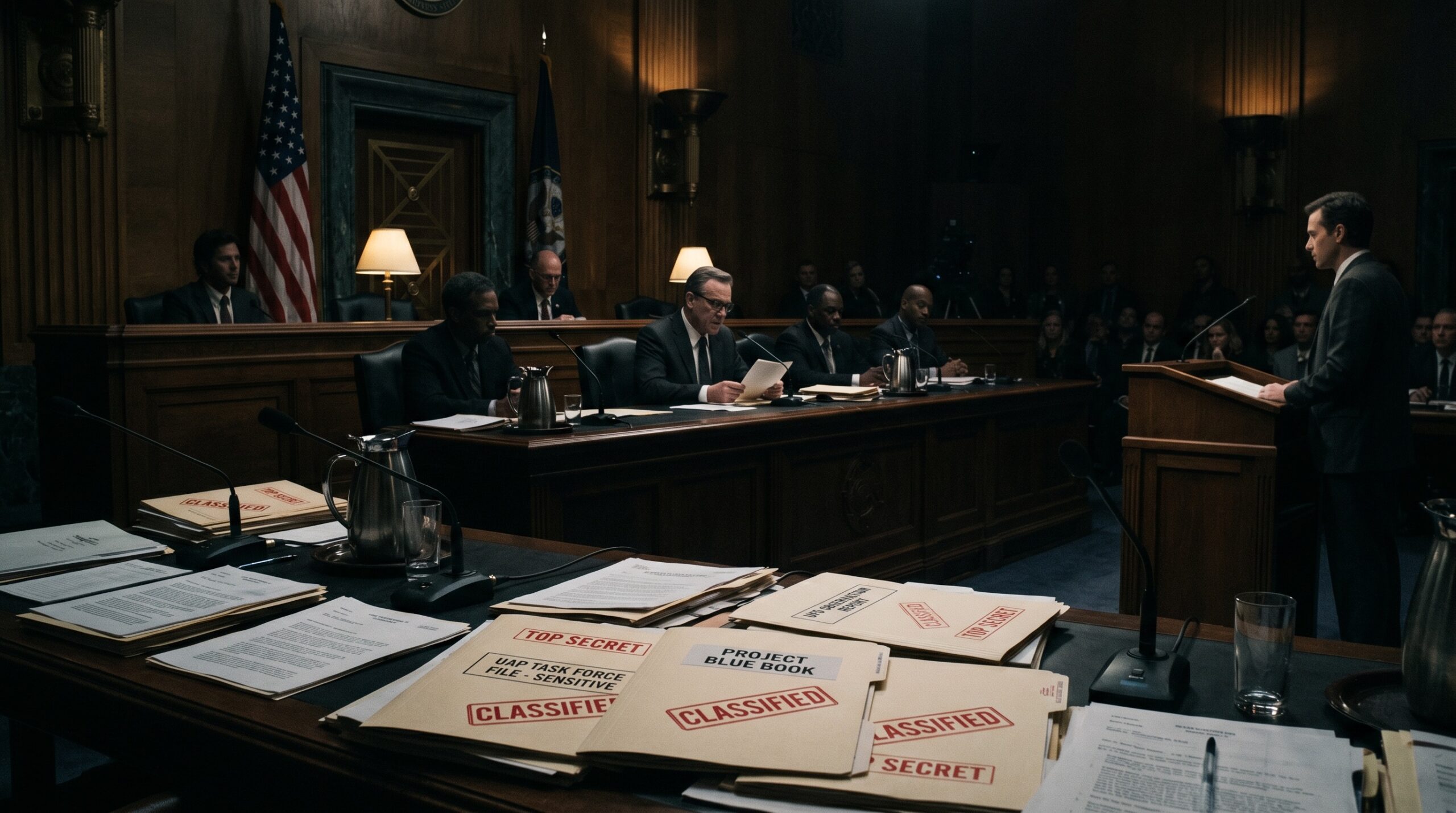
    On April 14, 2026, the White House Office of Science and Technology Policy released a tranche of previously classified UAP-related documents under the expanded provisions of the 2023 National Defense Authorization Act. The release was not announced by the President. It was not accompanied by a press conference. It appeared as a quiet update to an obscure .gov portal, a digital dead drop that researchers and journalists discovered hours later. What they found inside has already shifted the architecture of the disclosure debate—not because it proves extraterrestrial contact, but because it proves the government has been lying about how much it knows.

    The documents span fourteen years, from 2012 to 2026, and include sensor data from Navy F/A-18 Super Hornets, internal emails between Pentagon counterintelligence officers, and what appears to be a 2019 memorandum from an unnamed White House national security advisor recommending that UAP crash retrieval programs be moved outside standard congressional oversight channels. That memo, barely three pages long, has become the most scrutinized document in modern ufology. Its language is bureaucratic, its implications are explosive, and its authenticity—verified against metadata and signatures by independent forensic analysts—has held up under every test applied so far.

    The Memo That Changed Everything

    The 2019 memorandum references a program code-named “Kestrel,” described as an “asset recovery and materials analysis initiative” operating under the Office of the Under Secretary of Defense for Intelligence. What makes the document extraordinary is not the existence of such a program—whistleblowers like David Grusch had already testified under oath that crash retrieval programs were real—but the explicit admission that these programs were deliberately insulated from congressional appropriations committees to avoid “information spillage to foreign adversaries and unauthorized legislative staff.”

    In plain language: the executive branch had decided that elected representatives could not be trusted with knowledge of UAP retrieval operations. The justification offered in the memo is national security. The implication, read by researchers and conspiracy analysts alike, is that the materials being recovered were of such sensitivity that standard democratic oversight was considered a liability.

    Accompanying the memo are chains of emails between Pentagon officials discussing the 2004 Nimitz incident and the 2015 Roosevelt encounters. One thread, dated January 2020, contains a candid assessment from an unnamed aerospace engineer: “The performance characteristics observed in the Gimbal and GoFast videos remain inconsistent with any known domestic or foreign platform, including developmental prototypes. The acceleration profiles would require energy densities we do not currently possess.” The email was marked UNCLASSIFIED but was never included in any public hearing.

    Sensor Data and the Missing Context

    The April release includes raw radar and infrared data from multiple encounters, some of which correlate with publicly leaked videos and others that have never been seen before. One dataset, recorded in 2018 off the coast of Virginia, tracks an object descending from 80,000 feet to sea level in 0.8 seconds without creating a sonic boom or showing conventional propulsion signatures. The data was captured by the USS Portland’s AN/SPY-1 radar and independently confirmed by a nearby Coast Guard cutter.

    What the files do not include is equally significant. The release contains no photographs of recovered materials. No biological analysis. No reference to non-human bodies. The absence has fueled two competing interpretations. Skeptics argue that the omission confirms there is no smoking gun—only anomalous sensor artifacts and bureaucratic overclassification. Believers counter that the release is carefully curated, a controlled demolition of partial truth designed to satisfy disclosure mandates while protecting the most sensitive compartments.

    A third interpretation, increasingly popular among intelligence analysts, suggests the release is strategic. By confirming the existence of retrieval programs and unexplained sensor data while withholding physical evidence, the government may be attempting to shape public perception without triggering the geopolitical and theological destabilization that full disclosure might cause.

    Congressional Reactions

    The reaction on Capitol Hill was immediate and fractured. Senator Kirsten Gillibrand, a leading advocate for UAP transparency, issued a statement calling the memo evidence of “deliberate circumvention of congressional authority” and demanded closed-door hearings with the officials named in the email chains. Representative Tim Burchett went further, claiming on a podcast that “this is the tip of the iceberg” and that he had been briefed on programs “ten levels deeper than Kestrel.”

    Conversely, the House Intelligence Committee’s ranking member dismissed the release as “old news dressed in new file names,” arguing that the memo described standard SAP compartmentalization practices and that the sensor data remained explainable as instrument error or adversarial drones. The Pentagon’s official press guidance, released forty-eight hours after the document dump, walked a careful line: acknowledging the release as authentic while declining to confirm or deny ongoing retrieval activities. Popular Mechanics traced the history of official UFO investigation and noted that similar partial releases have preceded broader disclosures in the past.

    The Broader Implications

    For the disclosure community, the April 2026 release represents a turning point not because it resolves the UFO question, but because it validates the architecture of suspicion. For decades, believers argued that the government possessed physical evidence, managed secret programs, and deliberately misled the public and Congress. The Kestrel memo does not confirm non-human intelligence, but it confirms the conspiracy was real: programs existed, Congress was bypassed, and information was suppressed by design. NASA’s own UAP independent study had previously acknowledged that stigma and insufficient data prevent rigorous scientific analysis.

    This distinction matters. Proof of government secrecy is not proof of extraterrestrial visitation. The objects tracked by Navy sensors may still represent classified human technology, foreign adversarial platforms, or natural phenomena not yet understood by physics. What the release establishes is that the people tasked with investigating these phenomena treated them with lethal seriousness while publicly ridiculing civilians who asked the same questions.

    The psychological impact of validated secrecy cannot be underestimated. When official narratives collapse, the vacuum does not fill with skepticism—it fills with speculation. In the weeks following the release, online discourse has shifted from “Are UAPs real?” to “What else are they hiding?” That reframing, intentional or not, may prove more consequential than any individual radar track.

    What Happens Next

    The White House has indicated that additional releases will follow on a quarterly basis, mandated by the 2025 UAP Transparency Act. Legal scholars note that the act contains loopholes allowing the executive branch to withhold material deemed critical to national security, suggesting that future dumps may be equally curated. Researchers are already filing FOIA requests for the programs referenced in the Kestrel memo, though experience suggests such requests face years of delay and heavy redaction.

    What remains unresolved is the central question. The documents prove that unidentified objects operate in restricted airspace with capabilities beyond known technology. They prove that the government recovered materials it did not understand. They do not prove origin. The gap between “unidentified” and “extraterrestrial” is where the next phase of this story will unfold, and that gap is where both the most rigorous science and the most profound belief now live.

    The files landed at midnight. The truth, whatever it is, is still arriving.