Tag: high strangeness

  • Rendlesham Forest Binary Code 2026: “We Returned to Warn” and What It Might Mean

    Rendlesham Forest Binary Code 2026: “We Returned to Warn” and What It Might Mean

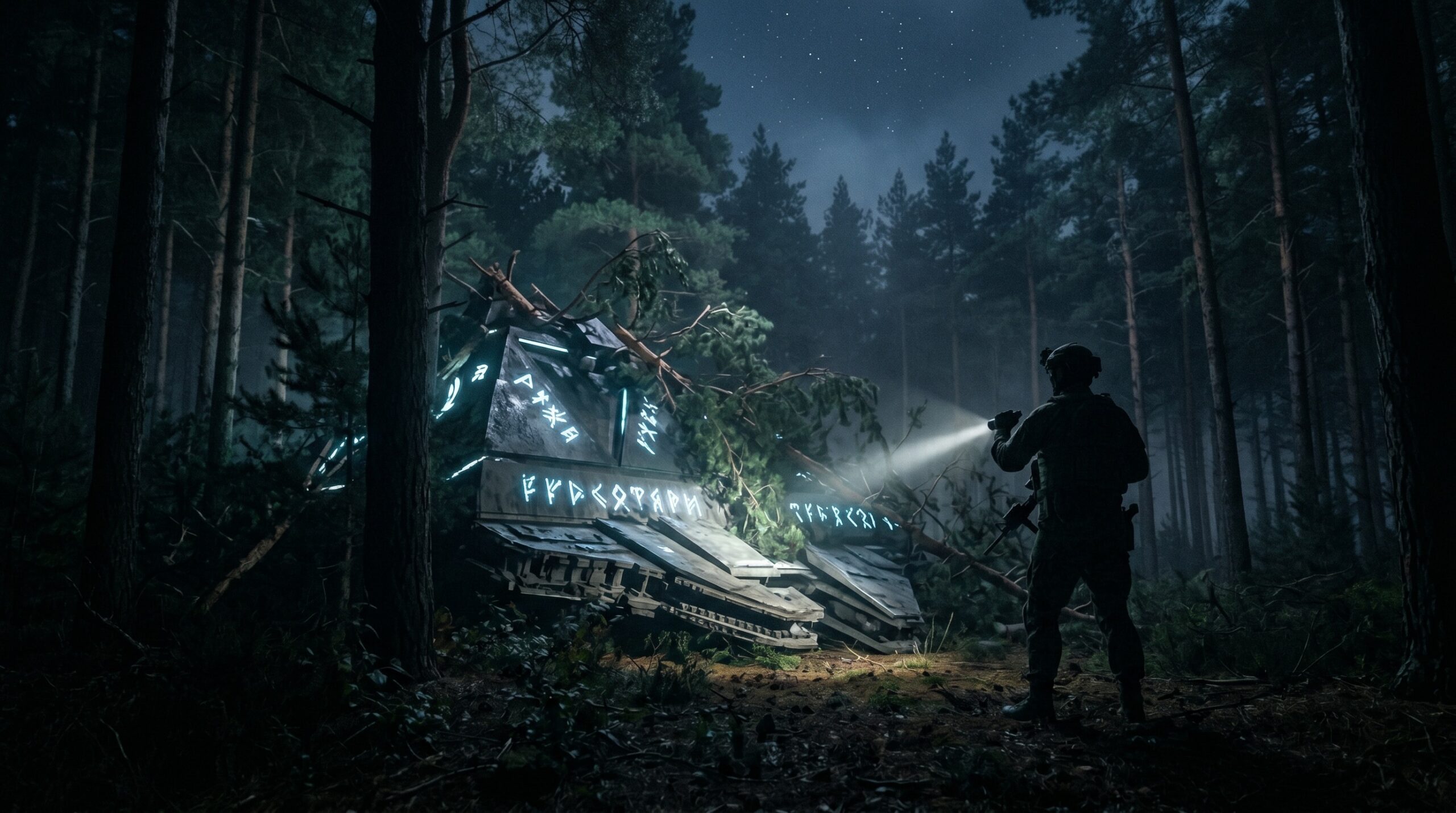
    The night watch stepped into Rendlesham Forest expecting a downed aircraft. What Sergeant Jim Penniston encountered instead was a triangular craft resting between the pines, its metallic surface inscribed with geometric symbols that pulsed in low light. He walked up to it. He placed his hand on its surface. And then, he says, binary code began pouring into his mind — not through his eyes or ears but through something else entirely, something that felt like knowing without being told.

    That was December 27, 1980. Three nights of the Rendlesham Forest incident had already placed it among the most rigorously documented UFO encounters in military history. Multiple witnesses. Cross-base corroboration. Physical evidence. An official memo filed by the deputy base security chief on the ground with a tape recorder running. But Penniston’s claim — the telepathic binary download — carried the incident into a territory that made even the skeptics pause.

    Because he wrote the code down. He decoded it. And the message was this: “EXPLORATION OF HUMANITY CONTINUOUS BEYOND 8100.” And beneath that: “WE RETURNED TO WARN.”

    The Three Nights of Rendlesham

    The incident began on December 26, 1980, at RAF Bentwaters and RAF Woodbridge — twin Air Force bases in Suffolk, England. Security personnel reported unusual lights descending into the forest adjacent to the base perimeter. What followed was a three-night sequence of sightings, sounds, and physical phenomena that generated the most substantial official documentation of any UFO encounter involving US military personnel on allied soil.

    Multiple airmen saw the lights. Different people, different positions, different vantage points. On the second night, Penniston and others entered the forest to investigate. Penniston claimed to have encountered a landed craft — triangular, dark metallic, roughly three meters across at its base — resting on three legs among the trees.

    WION described the decoded message and Penniston’s account of the binary transmission. The Rendlesham encounter shares DNA with other military UFO files that surfaced over the decades as one of the most extraordinary claims in the entire Rendlesham case file.

    The third night — December 28 — produced the most famous surviving evidence. Deputy Base Security Chief Lt. Col. Charles Halt grabbed a tape recorder and led a patrol into the forest. The recording captured his real-time observations of the lights moving through the canopy and above the bases. The Halt memo was eventually released through FOIA and it remains one of the most compelling official documents in UAP history because it was filed by a career Air Force officer, not a civilian enthusiast.

    The Binary Code

    Penniston’s claim is separate from Halt’s memo but equally compelling for those who study the case. He said that during his close contact with the landed craft, he experienced a telepathic data transmission — sequences of ones and zeros that he later transcribed, decoded into ASCII, and published.

    The decoded text reads, in part:

    • “EXPLORATION OF HUMANITY CONTINUOUS BEYOND 8100”
    • “WE RETURNED TO WARN”

    The second phrase is the one that has people unable to stop thinking about the case 45 years later.

    What warning? Warning about what? And who is “we”?

    Penniston interpreted the message as a warning about humanity’s trajectory — that the intelligence behind the craft had revisited Earth multiple times and was delivering an urgent, if cryptic, caution about the direction the species was heading. The “beyond 8100” fragment is deliberately vague — it could reference a date, a coordinate, a cycle, or a classification. Nobody has produced a definitive reading of it.

    The binary code has been analyzed by people who are not Penniston. Some confirm the ASCII decoding produces the quoted text. Others argue that the binary sequences are flexible enough to produce meaningful text through selective interpretation patterns. The debate itself is part of what keeps the case alive.

    Why This Is Resurging in 2026

    The Rendlesham Forest binary code hit r/HighStrangeness in early 2026 and immediately captured 773 engaged upvotes across a thread that dove deep into the decoded message and its implications. A new generation of UAP-curious readers discovered the case at precisely the moment when the broader disclosure conversation is reaching its highest energy.

    The case resonates for reasons that go beyond the binary. Rendlesham is one of the few military encounters with on-the-ground documentation. It is not a single blurry photo or a cockpit video — it is multiple witnesses, a taped recording, an official memo, physical marks on trees and soil, and now, a message. Whether you accept every element of the case at face value or not, it occupies a space that is difficult for skeptics to dismiss wholesale and impossible for believers to ignore.

    The warning message lands differently in 2026 than it did in 1980. In the 1980s, it was a Cold War curiosity. Today — with Congress discussing classified UAP videos, with Trump promising UFO file releases, with the disclosure conversation moving from congressional hearings to mainstream television — a warning from a non-human intelligence about humanity’s trajectory sounds less like folklore and more like something that people are actually preparing to hear.

    What the Files Actually Confirm

    The Halt memo is real. It is dated January 13, 1981. It was filed through official Air Force channels. It describes lights over the base, radiation readings elevated at the alleged landing site, and physical impressions in the ground. It was declassified through FOIA in the 1990s and remains a publicly accessible document.

    Multiple witnesses corroborated seeing the lights. The witnesses had different roles, different locations, and different reasons to be in the forest on those nights. Their accounts are not identical — which makes them more credible, not less, since genuine independent observations rarely align perfectly.

    Radiation readings at the alleged landing site showed levels approximately one-tenth of a milliroentgen above background. That is a tiny elevation. It is measurable. It is also small enough that environmental variation could account for it. But it was measured by base personnel at the specific location where a craft allegedly rested.

    What cannot be independently verified from the public record is Penniston’s binary code. Nobody else claimed to receive a telepathic data transmission that night. The binary exists because Penniston wrote it down and shared it later. His credibility as the primary close-contact witness in the case is solid. The binary message alone is the part of the case that pushes beyond documented evidence into personal testimony.

    The Warning Within the Narrative

    “We returned to warn” works on two levels. On the surface, it is a dramatic phrase from an unverified personal account — the kind of thing that could be confabulated after decades of thinking about a strange encounter. But embedded inside it is something that resonates with the current disclosure moment in a way that is hard to separate from the substance of the case itself.

    If the entities behind the Rendlesham encounter were delivering a warning — much like the questions raised by the Bluegill Triple Prime UFO shootdown — about nuclear escalation — about nuclear escalation in 1980, about environmental collapse, about military readiness and non-human technology and the direction human civilization is heading — then the warning is still active. It is still relevant. It still has not been received by the people it was presumably meant for.

    Whether you view the binary code as a genuine transmission, an artifact of a psychologically intense experience, or a later construction built from memory and imagination, the question it poses survives every level of analysis: what would it mean if the warning was real?

    What Is Actually Known

    The Rendlesham Forest incident of December 1980 involved multiple witnesses from two US Air Force bases in England. Lt. Col. Charles Halt recorded his observations on tape and filed an official memo describing lights, radiation, and ground impressions at the alleged contact site. Sgt. Jim Penniston claims close contact with a landed triangular craft and a telepathic binary message that decoded to “EXPLORATION OF HUMANITY CONTINUOUS BEYOND 8100” and “WE RETURNED TO WARN.” The Halt memo is an official government document. The binary code is personal testimony.

    What is not known is whether Penniston’s binary download was a genuine non-human communication, a psychological response to an extraordinary nighttime encounter, or a reconstruction built years after the event. What is known is that the incident happened, and what the witnesses saw and heard and recorded is documented well enough that no official explanation has ever fully accounted for it.

    The message — if it is a message — waits for the people who are ready to hear it.
  • Third Man Syndrome: Why Explorers in Extreme Isolation Keep Encountering an Invisible Presence

    Third Man Syndrome: Why Explorers in Extreme Isolation Keep Encountering an Invisible Presence

    The first time you hear about it, it sounds like a ghost story

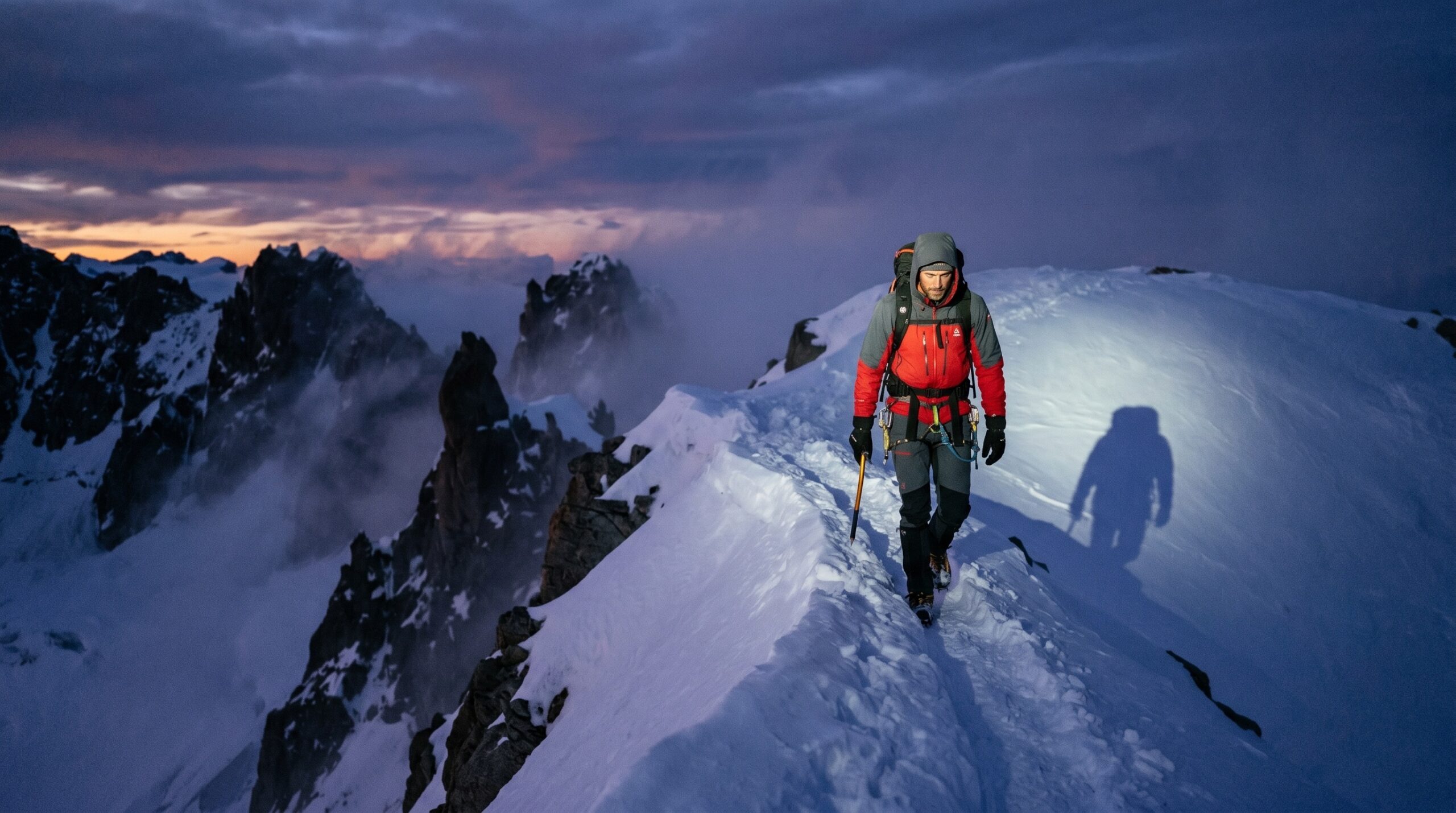
    You are alone on a mountain face where no living thing has any right to survive. The wind carries temperatures that freeze moisture from the air before it becomes snow. Your fingers, wrapped in triple layers of insulated gloves, stopped feeling anything useful hours ago. Behind you, two climbing partners lie motionless in a crevasse you could not pull them from. Ahead, the summit vanishes into a white wall that offers no horizon, no reference, no promise that there is anything above you except thinner air and deeper cold.

    And then you sense someone walking beside you.

    You do not see them at first. It begins as a pressure — the unmistakable sense of another presence occupying the same space, matching your rhythm, keeping pace step for step. When you turn your head, there is nothing there. Just the slope. Just the spindrift. But the presence does not leave. It stays with you through the next pitch, through the fixed rope that snaps under your weight, through the whiteout that swallows every landmark you thought you knew. And then, almost imperceptibly, it begins to guide you.

    Left here, it seems to suggest. Take the ridge. Not the gully. This way.

    You follow. Hours later, you stumble into a research station you had no map coordinates for. The scientists stationed there tell you nobody should have survived the route you just walked. You try to explain about the figure that stayed with you, the one that pointed you toward the only navigable line through a section of mountain that had killed four climbers the season before. They exchange glances. They have heard this story before — not from you, but from others who came down from the death zone carrying the exact same impossibility on their shoulders.

    This is Third Man Syndrome. It has a name now, but the people who actually experienced it knew it as something far older and far less comfortable than a clinical label. They knew it as a presence. A guardian. A companion that appears only when you have run out of every other reason to keep moving — and somehow gives you one more.

    The phenomenon traces its literary name to T.S. Eliot’s “The Waste Land,” where he described a figure walking behind a traveler through a desolate landscape: “Who is the third who walks always beside you?” When Ernest Shackleton led his desperate crossing of South Georgia ice fields in 1916 to rescue his stranded crew, he reported sensing a fourth presence joining the three men making the traverse. Four people walking across the glacier, he wrote, when only three were actually there. Shackleton, a man whose reputation was built on pragmatism, did not explain the figure away. He recorded it as fact — as real to him as the rope in his hands.

    Since then, the accounts have multiplied across every environment humans have ventured into alone and nearly died.

    The accounts that all agree on the same invisible companion

    What makes Third Man Syndrome compelling is not the volume of stories, but how consistently they agree on details that no single narrative should share. The presence never appears in ordinary circumstances. You will not meet it on a weekend hike or a routine patrol. It arrives at the extreme edge of human endurance: on the descent from K2 when oxygen bottles have run dry; in the Arctic during a blizzard that has erased the difference between ground and sky; in desert crossings where dehydration has pushed the body past the point where rational navigation is possible.

    The accounts cluster around a recognizable pattern, and investigators who have spent years collecting them have assembled a picture of remarkable consistency. Nearly everyone who reports the experience describes an initial phase of sensing rather than seeing. The presence announces itself as a feeling of proximity before it takes any visual form. It is protective, directive, almost always calm in circumstances where the person experiencing it is anything but.

    Mountain climbers describe being gently steered away from dangerous terrain. One survivor on Nanga Parbat reported that the presence tugged his pack when he attempted to descend a couloir that he later learned had collapsed hours earlier. Arctic explorers describe the presence as a voiceless guide that seems to know the landscape better than they do, pointing toward ridges, away from crevasse fields, toward shelter the conscious mind had failed to register.

    The common thread across every account is agency. This is not described as a passive hallucination — the kind of perceptual noise the brain might generate under stress. The presence acts. It guides. It corrects. And in more cases than most people realize, it saves the life of the person who can feel it walking beside them.

    There is a quality to these accounts that resonates beyond the mountaineering and survival communities. When investigators looked into the Al Qasimi Palace mystery and found accounts of unseen entities guiding disoriented visitors through corridors, the structural similarities to Third Man reports were impossible to ignore: presences appearing during acute disorientation, offering certainty when the conscious mind had lost all confidence. These accounts emerge from entirely separate cultural contexts, yet the experience maps onto the same template.

    You can feel something about extreme states of consciousness tearing holes in our ordinary understanding of what survives contact with reality. And the Third Man walks through those holes.

    What science calls the Sentinel Factor

    Psychologists and neuroscientists have built explanatory frameworks around this phenomenon, and they have given it a name that keeps the discussion within comfortable boundaries: the Sentinel Factor.

    The Sentinel Factor describes what happens when the human brain is pushed into prolonged isolation, sensory deprivation, physical exhaustion, and acute threat. Oxygen deprivation at altitude alters neural firing patterns in temporal regions associated with mystical experiences and feelings of unseen presence. The brain, deprived of reliable external input, constructs internal models to fill gaps — a process called predictive processing that generates percepts indistinguishable from actual sensory data.

    Add extreme fatigue and the stress hormone cascade that accompanies genuine survival situations, and the brain’s capacity to separate internal imagery from external reality degrades. The result is a “sensed presence.” Not a hallucination in the clinical sense — the person typically understands nothing is physically there — but a feeling that is entirely real.

    There is substantial survival psychology research on the Sentinel Factor documenting how the brain in extremis deploys what appears to be a psychological partitioning strategy. One part of the mind enters survival mode — hyper-focused, calculating, relentless. Another detaches and constructs a supervisory presence that can offer guidance without emotional contamination of panic. The Sentinel, in this framing, is the mind’s own wisdom externalized into a form the conscious self can actually listen to.

    John Geiger assembled decades of survivor testimony in his landmark work The Third Man Factor, cataloging hundreds of cases that fit this pattern with eerie precision.

    The explanation is compelling. It accounts for the protective quality — of course the presence feels like a guide, because it is the part of your brain that still knows the way when the panicked part has lost its bearings. It explains the timing. It explains why people survive situations they statistically should not.

    And yet something refuses to fit neatly into the framework.

    The presence sometimes knows things the individual does not. Climbers have been steered away from avalanche zones they had no way of assessing. A solo sailor in the Southern Ocean reported that the presence woke her from exhaustion-induced sleep minutes before a rogue wave broke over the bow. In at least one documented case, a climber descending in whiteout was guided to a supply cache placed by a team he had no knowledge of and no way to detect.

    There is a deeper question here, and it reaches into territory that makes comfortable science uncomfortable. If the brain can fabricate a supervisory intelligence under stress — one that feels separate, speaks without words, and sometimes possesses knowledge the waking mind does not — what does that tell us about the architecture of consciousness when it is functioning normally?

    Some researchers have gone further, proposing that the mind’s relationship with perception is far more porous than conventional neuroscience assumes. An Oxford physicist’s theory of consciousness suggests extreme states may not be generating artificial experiences but stripping away filters that normally prevent us from perceiving more of what is already there. If that is even partially true, the Third Man may not be a hallucination at all. It may be a glimpse of something always present.

    Why the explanation does not cover everything

    The Sentinel Factor is the best scientific explanation available, and it genuinely accounts for a significant portion of what people report. But there is a residue in these accounts that neurological mapping has not dissolved.

    Consider the timing. The presence almost never appears early in an ordeal. It arrives precisely when the individual has exhausted every strategy, every calculation, every memory of training, and found nothing left. It is as if something waits until you have reached the absolute end of yourself before stepping forward. That is not what a stress response typically does. Stress responses escalate with the threat, not after it has already won.

    Consider the cross-cultural consistency. Third Man experiences have been reported by climbers on Himalayan peaks, sailors in the Southern Ocean, astronauts during extended solo missions, desert traversers, and polar expeditioners — people sharing no cultural framework, no mythology, no expectation that a presence should appear during survival. If this were cultural conditioning, it should be confined to traditions with guardian spirit concepts. Instead, it appears wherever conditions demand it.

    The resemblance to other unexplained phenomena is difficult to ignore. People who survive Third Man encounters describe the experience using language nearly identical to accounts from hospice nurses describing end-of-life visions — a sense of profound calm, of being attended by something benevolent, of encountering intelligence that exists outside ordinary boundaries. Both types of experience occur at the boundary of what conscious perception can sustain, in states where the architecture of awareness is failing.

    When researchers examine the nature of consciousness and final moments in near-death experience accounts, a pattern emerges: intelligence present without visibility, protective without intrusion, knowledgeable without speech. The Third Man may be the survival-state equivalent of whatever people encounter at the edge of death — the same presence, appearing under different conditions.

    There is a growing community of people discussing these experiences online, and one recent r/Unexplained thread sparked serious conversation among readers who approached the accounts with skepticism and left with more questions than answers. The discussion included reports of presences during solo wilderness trips, during medical emergencies, during moments when people felt the boundary between themselves and something else dissolve entirely.

    What all of this adds up to depends on what you are willing to consider.

    If you approach Third Man Syndrome as a purely neurological event, the Sentinel Factor provides satisfying answers. The brain does create supervisory presences under stress. Predictive processing generates percepts indistinguishable from reality. This is documented, measurable, reproducible.

    But if you allow the possibility that these experiences point toward something the current framework cannot fully explain, the accounts carry weight that resists dismissal. The timing that feels almost intentional. The cross-cultural convergence. The knowledge the presence sometimes demonstrates. The calm it brings rather than the terror you would expect from pure neurological malfunction.

    The Third Man may be the mind talking to itself in a voice it can finally hear. Or it may be something else — something that walks beside us in our most isolated moments, and has been doing so for as long as humans ventured beyond the safety of firelight into unknown territory. The people who have encountered it rarely argue about which explanation is correct. They simply know something was there, something brought them home, and afterward nothing they believed about solitude felt the same.

    What that something actually is — a survival mechanism, a consciousness anomaly, a presence genuinely separate from the mind that perceives it — may be a question each person answers differently. But the accounts keep coming, and they all agree on one thing: at the far edge of endurance, alone in a place no one should survive, they were not alone at all.

  • Fresno Nightcrawlers: Why the Walking-Pants Cryptid Is Haunting Feeds Again

    Fresno Nightcrawlers: Why the Walking-Pants Cryptid Is Haunting Feeds Again

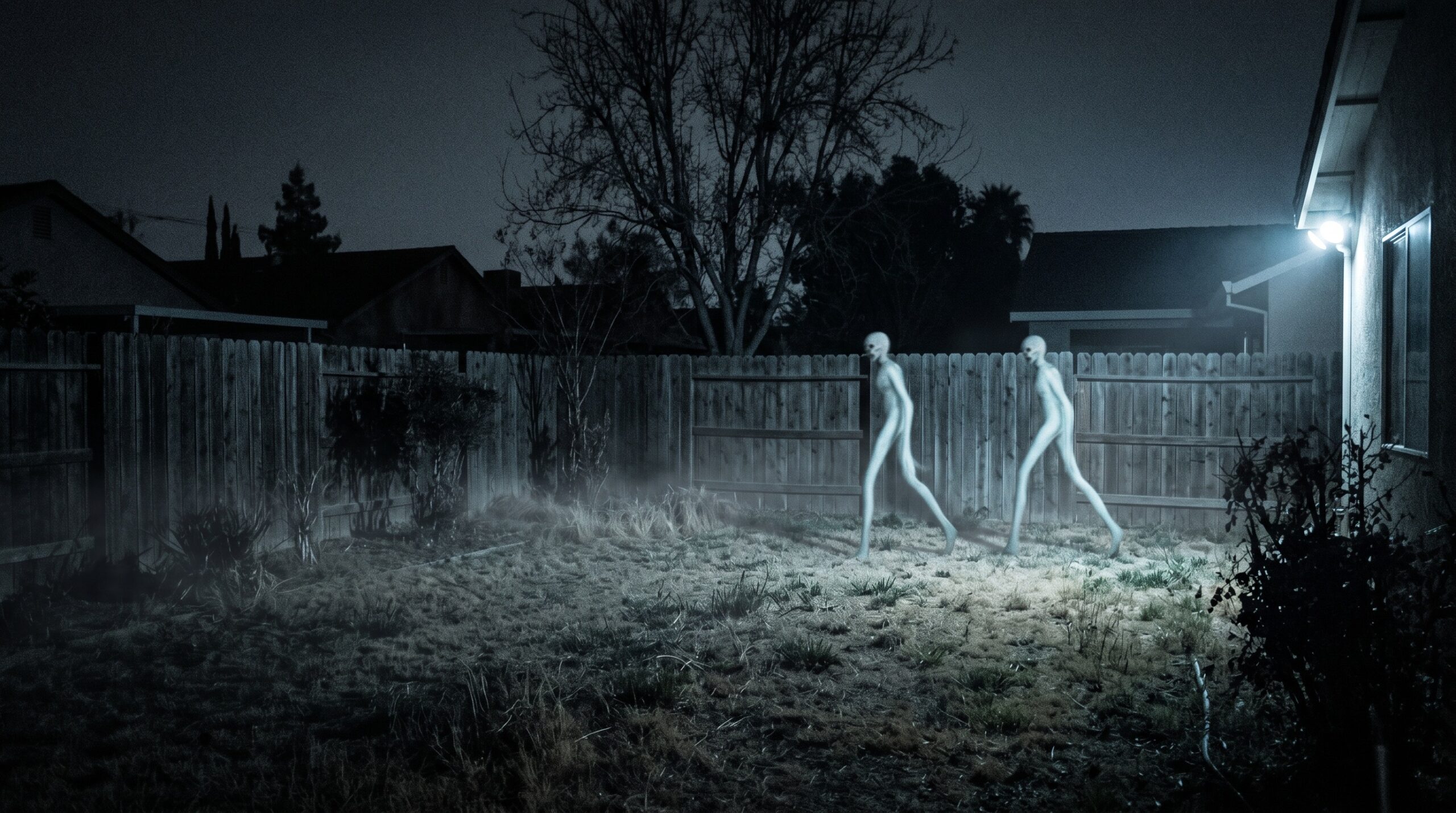
    Some stories do not arrive like normal news. They crawl in through a grainy clip, a half-panicked Reddit post, a search result that feels too fresh to be folklore, and suddenly Fresno Nightcrawlers is not just a phrase on a screen — it is a door cracked open in the wall of ordinary reality.

    That is why this story is moving now. The fresh signal is not a laboratory announcement or a police file; it is the collision of social chatter, search interest, and a believer community already trained to notice patterns before institutions acknowledge them. A current source trail includes a current r/cryptids discussion asking what Fresno Nightcrawlers are, corroborating search visibility through the Fresno Nightcrawlers overview circulating in search, and wider background from TikTok searches for the original Fresno Nightcrawlers video. None of that proves the strangest version of the claim. It explains why people are leaning closer.

    For Unexplained readers, Fresno Nightcrawlers also fits a larger map: recent cryptid sightings, Ohio Bigfoot flap, Loveland Frogman bill. The details change — a creature, a stone, a church warning, a forest road — but the emotional charge is the same. Something old seems to be pushing through a modern feed.

    Why the old footage still feels wrong

    The first thing believers notice is not the evidence package. It is the atmosphere. Fresno Nightcrawlers carries the feeling of a message received from the edge: a report that sounds small until you imagine being there, alone, when the ordinary world stops behaving normally.

    That is the reason the story survives the first skeptical shrug. A strange post can be dismissed in seconds, but a vivid image keeps working on the mind after the tab closes. The shape in the yard, the sound in the trees, the stone that should not fit, the prophecy language that suddenly feels public — these are not just claims. They are scenes.

    The shape that cryptid people cannot file away

    What makes the current wave sticky is specificity. The internet is full of generic mystery bait, but concrete details give believers something to hold: a place, a date, a witness, a source, a visual, a named tradition. Those details become hooks. People argue over them, remix them, search for them, and compare them against older cases.

    A good unexplained story does not need everyone to believe. It only needs enough people to feel that the official category is too small. Once that happens, the story starts behaving less like content and more like a signal flare.

    What skeptics say about the walking-pants video

    Skeptics have a simpler framework. They see social traction, old folklore, misread context, suggestive imagery, and the human hunger for patterns. In many cases, that caution is warranted. Viral mystery culture rewards speed, emotion, and repetition long before it rewards verification.

    But skepticism does not erase the cultural question. Why this story, and why now? Why does Fresno Nightcrawlers keep finding an audience at the exact moment people feel that institutions, science, churches, and media are all leaving something unsaid? That is the layer where the mystery keeps breathing.

    Why the Nightcrawlers keep coming back

    The most grounded reading is this: the current discussion around Fresno Nightcrawlers is real, the sources show a live curiosity signal, and the strongest versions of the claim remain unconfirmed. The available material supports an article about why the story is spreading, what believers think they see in it, and why the unresolved pieces keep pulling people back.

    That may sound like a narrow conclusion, but it is exactly where many unexplained stories live. Not proven, not empty, not finished. The facts set the boundary. The feeling presses against it. Whether Fresno Nightcrawlers becomes another internet flare-up or a lasting chapter in the unexplained archive depends on what surfaces next — and on whether readers decide the official explanation is large enough to hold what they sense in the dark.

    FAQ

    What is Fresno Nightcrawlers?

    Fresno Nightcrawlers is the search phrase now gathering attention around this specific unexplained topic, combining a fresh online signal with an older mystery tradition or belief system.

    Why are people talking about it now?

    People are talking because Reddit, search results, and adjacent Instagram mystery tags are all feeding attention into the same lane. That is a trend signal, not proof.

    Is Fresno Nightcrawlers confirmed?

    No public source trail confirms the most dramatic interpretation. The story is best read as a believer-first mystery with an evidence gap that still matters.

    Why does it fit Unexplained.co?

    It sits at the crossroads of folklore, internet signal, spiritual anxiety, and unresolved evidence — exactly where modern unexplained culture keeps producing its most persistent stories.

  • David Wilcock Death: Why the UFO Writer’s Final Hours Are Already Turning Into Myth

    David Wilcock Death: Why the UFO Writer’s Final Hours Are Already Turning Into Myth

    Some deaths hit the internet like news. Others arrive like an omen. That is what the David Wilcock death story felt like inside UFO and paranormal circles this week: not a quiet obituary, but a shockwave moving through livestreams, Telegram channels, grief posts, and the old half-spiritual, half-conspiratorial language Wilcock helped popularize for years.

    The immediate answer is that David Wilcock is being widely reported as dead, and the reason the story is spreading so fast is that he occupied a strange, powerful place in modern high-strangeness culture: part UFO commentator, part metaphysical performer, part end-times interpreter. A fast-moving Reddit thread announcing the report to UFO audiences, early mainstream pickup from Hindustan Times on the Boulder-area death probe, and even the bare-bones biographical record at Wikipedia’s profile of Wilcock have all fed the same reaction: believers are not just mourning a media figure, they are trying to decode the timing.

    That reaction makes sense once you understand what Wilcock represented. He belonged to the same ecosystem that keeps stories like Amy Eskridge’s last text messages, Jeremy Corbell’s “Sleeping Dog” trailer, and the Steven Garcia missing-person case circulating long after ordinary news cycles should have buried them. In that world, a death never stays only a death for very long.

    Why the news hit the UFO world like a ritual alarm

    Wilcock spent years speaking to audiences already primed to read hidden meaning into timing, symbols, institutions, and sudden reversals. When a figure like that dies, the community reaction follows an almost liturgical pattern: shock first, then tribute, then suspicion, then story-building. Every fragment gets treated like a shard from something bigger.

    That is why the first wave of posts did not sound like conventional celebrity mourning. They sounded feverish, almost apocalyptic. People were not only asking what happened. They were asking what it meant, who benefits from the timing, and whether the loss fits a darker pattern inside a culture already obsessed with suppression, disclosure, and spiritual warfare.

    Why Wilcock mattered to believers in hidden-history media

    For believers, Wilcock was never just another commentator. He was part of the bridge between old New Age metaphysics and modern disclosure culture. He talked like someone trying to weave ET contact, secret power structures, ascension language, and intelligence intrigue into one continuous fabric. You did not have to agree with him to feel the force of that role.

    That role matters now because it changes the emotional shape of the story. If an ordinary podcaster dies, the internet grieves and moves on. If someone long associated with prophecy-coded interpretations of current events dies suddenly, the reaction mutates. Followers start reading the event the same way they once read his broadcasts: as a signal wrapped inside a public incident.

    How online grief turned into suspicion within hours

    The suspicion arrived almost immediately because UFO culture has spent the last two weeks marinating in stories about dead scientists, missing insiders, unreleased videos, and names pulled from the shadows. In that atmosphere, even unrelated tragedies get absorbed into the same imaginative machinery.

    That does not make the suspicion factual. It explains why it was predictable. A community already living inside the emotional weather of hidden wars and suppressed truths was always going to interpret Wilcock’s reported death through that lens. The mood came preloaded.

    What is actually known so far

    This is where the fog has to thin.

    As of now, the strongest public point is that Wilcock’s death is being widely reported and actively discussed across both mainstream and fringe channels. Public reports have described an investigation, but they do not establish a broader conspiracy or prove the event belongs in the same category as the disclosure-linked cases believers keep invoking. The online reaction is real. The mythology forming around it is real. The leap from grief and timing to hidden-cause certainty is still a leap.

    That unresolved gap is why the story will keep growing. Wilcock spent years teaching audiences how to read events symbolically. In death, he is being read that way himself. Whether this becomes a memorial, a cautionary tale, or another sealed room in UFO culture will depend on what confirmed facts arrive next — and on how badly believers want the ending to mean more than the public record can yet support.