Tag: jinn

  • The Al Qasimi Palace Jinn Mystery: Why a $130 Million Mansion Was Abandoned Overnight

    The Al Qasimi Palace Jinn Mystery: Why a $130 Million Mansion Was Abandoned Overnight

    The servants did not pack their bags. They ran.

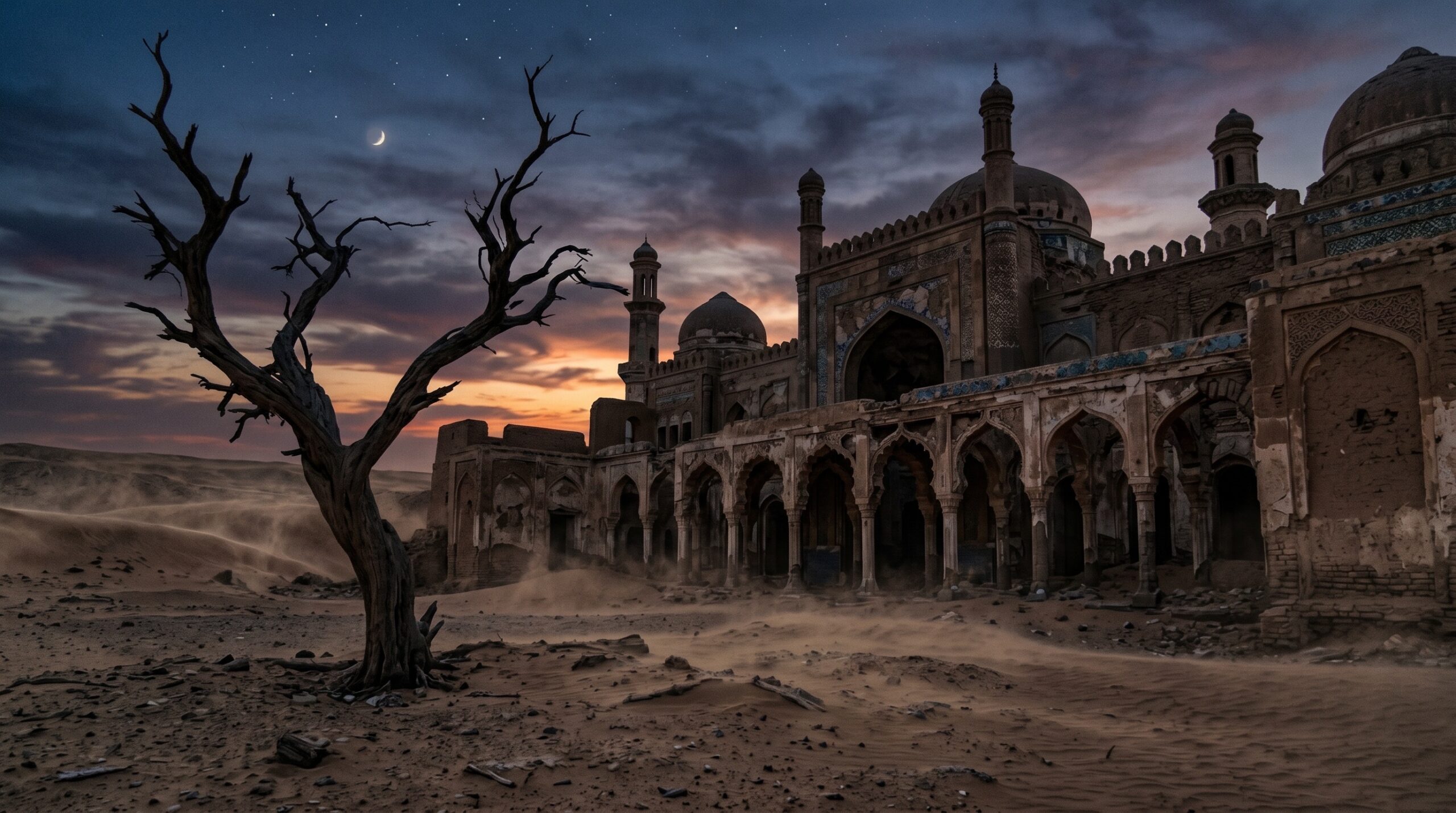
    In the arid hills outside Ras Al Khaimah, the Al Qasimi Palace still stands like a mirage that refused to vanish—marble columns crumbling under salt wind, Swarovski chandeliers swinging in empty ballrooms, and a fleet of luxury cars rusting in the courtyard. The family who built it as a $130 million monument to opulence left so abruptly that dinner plates remained on the table, closets still held tailored silk robes, and the keys to a Rolls-Royce Silver Shadow sat on a kitchen counter gathering dust. Officially, the story stopped there. But in the surrounding villages, whispers traveled faster than any press release. They spoke of jinn.

    Not ghosts. Not superstition. Jinn—intelligent, unseen beings recognized in Islamic theology long before Hollywood invented the poltergeist. According to locals who still refuse to approach the palace after sunset, something ancient and territorial had decided the Qasimi family had built too close, dug too deep, or simply claimed what was never meant to be owned. Within weeks of the sudden evacuation, construction workers hired to seal the property reportedly heard footsteps in corridors where no human walked. Security cameras placed by subsequent caretakers allegedly captured doors slamming with force that shattered their frames. One watchman, interviewed anonymously by Gulf paranormal investigators, claimed he saw a figure in traditional Emirati dress standing on the main balcony at 3:00 a.m.—a balcony that had collapsed the previous year.

    The palace was never merely a residence. Its architecture blended ancient Egyptian motifs with Islamic geometric patterns and subterranean chambers that extended far beneath the foundation plans filed with the municipality. Some researchers who have studied the property from satellite imagery note that the underground levels form a shape disturbingly similar to older temples found in the region—structures predating Islam by millennia. If the Qasimis accidentally built atop a site with older significance, the theory goes, they may have provoked guardians that do not recognize modern deeds of ownership. Islamic theological texts on jinn describe them as territorial beings capable of displacing human occupants from land they claim.

    What the Watchmen Saw

    By 2012, the palace had cycled through four different security firms. Each company terminated its contract early. The common thread in their exit interviews was not pay or working conditions—it was the third floor.

    Multiple guards described identical phenomena: a pervasive feeling of being observed in the east wing, electronic equipment failing simultaneously at 3:33 a.m., and the sound of heavy furniture dragging across marble above rooms that were definitively empty. One firm installed motion detectors throughout the corridor network. According to leaked maintenance logs, the sensors triggered 200–400 activations per night in a building with no occupants, no animals, and no accessible entry points. The pattern was not random. The activations moved sequentially, as if something was patrolling the halls on a route.

    A former supervisor told regional journalists that his team captured audio of a voice speaking classical Arabic—a dialect none of the guards recognized until a linguist identified it as rooted in pre-Islamic Nabataean pronunciation. The recording, which circulated briefly on Middle Eastern paranormal forums before vanishing, allegedly contained a single repeated phrase: “This threshold is older than your God.”

    The Jinn Framework

    Western paranormal enthusiasts often default to ghostly explanations, but the Arabian Peninsula has a far older conceptual vocabulary. Jinn are described in the Quran as beings created from “smokeless fire,” possessing free will, intelligence, and territorial instincts. Unlike ghosts—residual echoes of the dead—jinn are considered living entities with agency, capable of jealousy, rage, and protection of sacred spaces.

    Scholars of Islamic esotericism note that the Ras Al Khaimah region sits on trade routes active since the Bronze Age, corridors where incense, copper, and ritual artifacts moved between Mesopotamia and the Indus Valley. Local folklore holds that certain hills are “inhabited,” not empty, and that construction without proper acknowledgment can provoke retaliation. In this context, the Al Qasimi Palace is not an anomalous haunting but a predictable outcome within a cosmology that treats land as occupied by multiple orders of beings.

    The Official Narrative

    The Qasimi family has never publicly addressed the paranormal claims. Through representatives, they maintain that the palace was vacated for undisclosed financial reasons following the 2008 market contraction. Real estate analysts point out that Ras Al Khaimah’s luxury property sector did suffer significant losses during that period, and that abandoning a trophy asset—while extreme—is not unprecedented.

    However, the financial explanation struggles against certain details. The family left behind art collections conservatively valued in the millions. They abandoned vehicles rather than shipping them. They did not sell the property, lease it, or demolish it—they simply stopped returning, stopped answering questions, and stopped paying the local utilities, which were eventually disconnected by the municipality in 2010. A bankruptcy-driven exit typically involves asset liquidation. This looked like evacuation.

    Global Parallels

    The Al Qasimi case belongs to a category of high-value abandonments that resist neat accounting. In India, the Bhangarh Fort carries a legally enforced sunset curfew due to persistent phenomena that have made overnight stays impossible for centuries. In Romania, the Baciu Forest has driven experienced researchers to psychological breakdown. These locations share a common feature: they were not abandoned because of economic downturn, but because human presence became untenable.

    What distinguishes the Al Qasimi Palace is its scale of luxury. Haunted houses are typically decaying Victorian structures or remote cabins. A $130 million palace with imported marble, gold-plated fixtures, and underground temples suggests that whatever prompted the departure was powerful enough to override the most potent human motivator: wealth.

    What Remains

    Today, the palace stands in controlled decay. Local authorities have sealed the main entrances, but satellite photography shows fresh disturbances in the desert around the subterranean wings—excavation marks that do not match any permitted archaeological or construction activity. Drone operators who have flown over the property report GPS interference localized specifically above the central dome, a phenomenon documented in video but never explained by geologists.

    The surrounding communities have integrated the palace into their oral tradition. Parents warn children away from the perimeter fence. Taxi drivers refuse fares that end at the palace gates after dark. The structure has become a landmark not of wealth, but of boundary—a physical reminder that certain territories remain ungovernable by money, law, or modernity.

    Skeptics note that abandonment often breeds legend, and that economic trauma can be mythologized into supernatural narrative by communities seeking symbolic explanations for inequality. The Qasimi family’s silence, while consistent with private grief or legal strategy, has also created a vacuum that folklore naturally fills. Without access to the property’s interior, investigators cannot verify the motion logs, the audio recording, or the collapsed balcony apparition. Documented cases of abandoned luxury properties frequently attract paranormal attribution within months of vacancy.

    Yet the guards who quit keep quitting. The sensors keep triggering. And in the villages below the palace, where the call to prayer echoes across hills older than recorded history, the answer to what happened inside those marble halls has never changed. The jinn were there before the foundation was poured. They will be there when the last column falls.
  • Musallat and the Jinn Obsession Story Spreading Across the Internet

    Musallat and the Jinn Obsession Story Spreading Across the Internet

    Some hauntings are frightening because something appears in the room. The musallat jinn phenomenon is frightening because it suggests something has chosen the room, chosen the body, and may not be leaving.

    That is why the word musallat lands so hard online. Across TikTok clips, horror explainers, possession threads, and comment sections full of people swapping family warnings, the term is used to describe a jinn attachment defined not by one sudden shock but by obsession, oppression, and relentless proximity. In plain search terms, the musallat jinn phenomenon is the internet’s name for stories in which a jinn is believed to latch onto a person, household, or sleep state in a way that feels invasive, personal, and spiritually dangerous.

    And once you step into that rabbit hole, the story escalates fast. The fear is not just that a jinn exists. It is that it can fix its attention on someone. That it can follow. That what begins as dread, nightmares, paralysis, whispers, sexual menace, or irrational panic might not be random at all, but the first sign that the boundary has already been crossed.

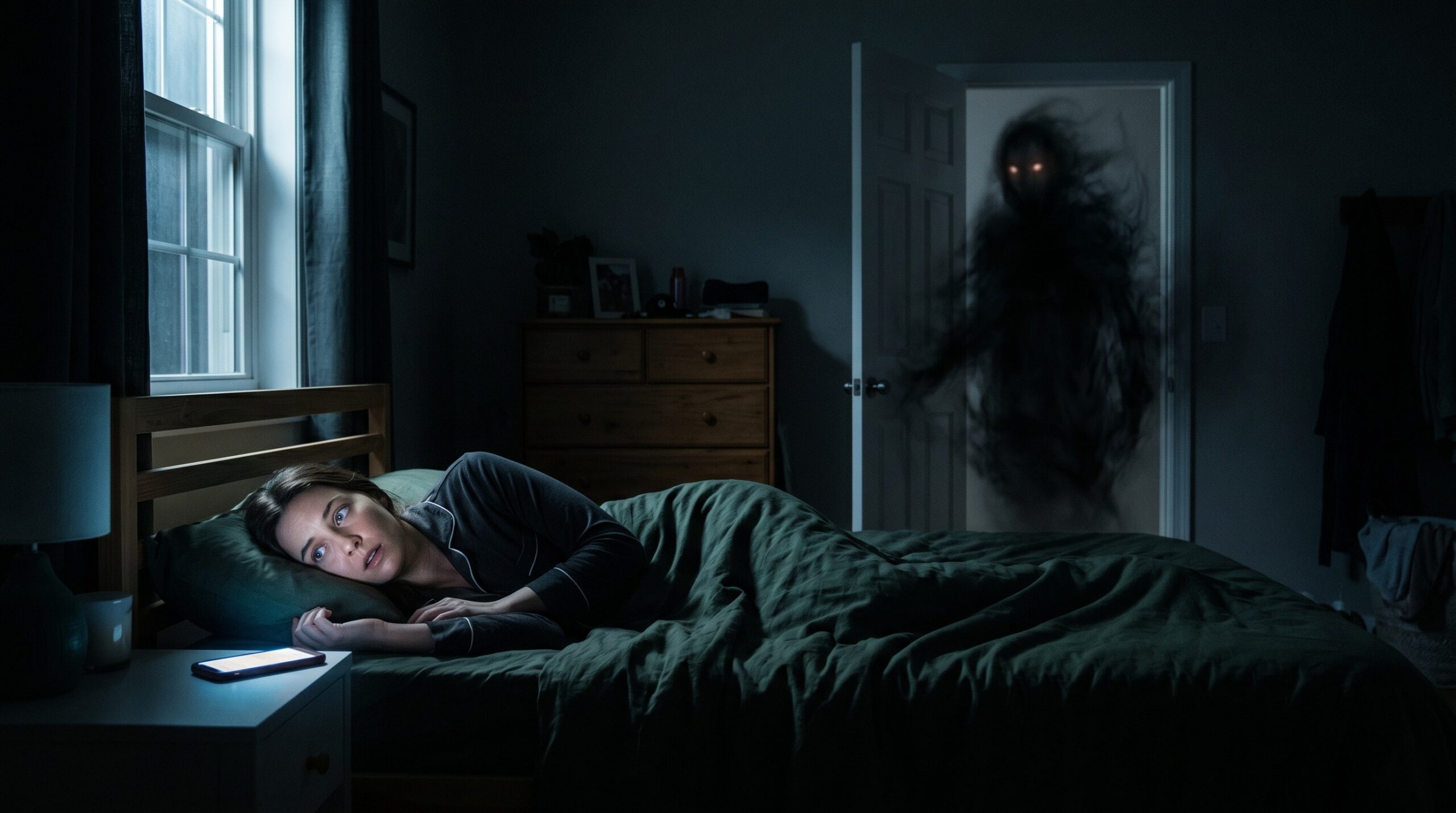
    This is the part believers and doom-scrollers alike find hard to shake. A ghost story can feel local. A demon story can feel theatrical. Musallat stories feel intimate. They are about being singled out. They carry the ancient horror of possession but filter it through modern habits of isolation: the sleepless bedroom, the phone screen glowing at 3 a.m., the viral clip with thousands of comments insisting, with unnerving certainty, that they have seen this pattern before.

    What people mean when they say musallat

    The term does not circulate online as a tidy academic category. It circulates as a warning.

    When people invoke musallat in internet discussion, they usually mean a hostile or obsessive spiritual attachment, often involving a jinn understood to be pressing in on a person’s life, mind, sleep, relationships, or body. The emphasis is not merely “there is a jinn.” The emphasis is “this presence is targeting someone and wearing them down.” That distinction matters, because it explains why the phrase carries more panic than ordinary supernatural talk.

    Within wider jinn lore, the category of dangerous or rebellious entities is already familiar. Readers trying to map the older cosmology often end up at references on figures like the ifrit in Britannica, where the jinn world appears not as a single flat concept but as a layered field of volatile beings, moral ambiguity, and spiritual threat. Musallat stories plug directly into that worldview. They are rarely told as neutral encounters. They are told as escalating pressure.

    That is one reason the phenomenon thrives online. The internet loves labels that feel both ancient and freshly dangerous. “Musallat” sounds specific, heavy, and inherited. It arrives with the authority of tradition, but it also behaves perfectly in a short-form horror ecosystem where people want a word that instantly turns vague terror into a named pattern.

    Why the internet cannot stop spreading it

    The musallat jinn phenomenon was almost built for algorithmic fear.

    A short clip can do the first half of the job. Someone whispers that they woke unable to move. Someone else shows a hallway, a dark doorway, a distorted face, or a half-heard sound from another room. Then the comments take over: This is jinn. This is attachment. This is musallat. Do not answer if it calls your name. Do not sleep without protection. The result is a folklore engine that runs in real time.

    TikTok’s own explainer-style content on what a jinn entity is helps show how the concept gets flattened and recirculated for mass audiences, while viral fear clips like “it’s a jinn guys run” demonstrate the much rougher version: panic first, lore second, certainty everywhere. Together they create the modern life of the story.

    That online life is not trivial. It changes the emotional scale. In a village, a possession rumor might belong to one family line, one healer, one local event. Online, the same pattern appears global. A teenager in London, a student in Karachi, a horror fan in Texas, and an insomniac in Jakarta can all stare at the same clip and feel they are looking at the same invisible category. The internet turns regional spiritual language into shared nocturnal infrastructure.

    The effect resembles what happens with old protective traditions and occult objects that survive because people still want a barrier between themselves and unseen attack. That instinct is why stories about ancient demon traps in Mesopotamia or the charged symbolism of Ottoman talismanic shirts still resonate now. Different cultures, different artifacts, same stubborn human impulse: if the unseen can reach in, then surely some ritual can push back.

    Why musallat feels worse than a normal haunting

    Most modern paranormal content teaches viewers to fear the moment of manifestation: the shadow in the corner, the door moving, the figure caught on camera. Musallat stories push the terror deeper. They are about occupation.

    That shift is everything.

    An ordinary ghost tale gives the listener distance. The entity may appear, but it is still “over there.” Musallat narratives close that distance until the horror becomes bodily and routine. The signs people list are often intensely personal: pressure on the chest, erotic dreams, compulsive fear, hearing a name called, a crushing sense of being watched while half-awake, sudden aversion to prayer, fractured sleep, or the feeling that one’s will is being eroded by repetition. Whether those experiences are interpreted as spiritual, neurological, psychological, or all three at once, the narrative form is stronger because it invades the private mechanics of selfhood.

    This is also why musallat stories merge so easily with sleep-paralysis lore. Few experiences feel more like supernatural assault than waking inside your own body and finding it unresponsive. A piece like this discussion of jinn imagery during sleep paralysis and REM states shows how readily these experiences are framed through spiritual language when the event itself already feels invasive, hyper-real, and impossible to dismiss in the moment. The body freezes; the imagination does not.

    For believer-first audiences, that overlap does not reduce the fear. It can intensify it. The possibility that certain altered states are precisely where a hostile presence presses closest only makes the old warnings feel more relevant.

    The occult aesthetic of being singled out

    There is another reason the musallat jinn phenomenon keeps growing: it offers an explanation for dread that feels larger than stress but more personal than abstract evil.

    A lot of online horror now is about systems — simulations, liminal spaces, cursed media, surveillance, hidden programs. Musallat is more primitive and more intimate than that. It says the danger is not in the system. The danger is in the attention. Something has noticed you.

    That is why the stories often blur into rules, cautions, and tiny domestic rituals. Keep certain verses close. Avoid certain places. Do not sleep in a state of spiritual neglect. Do not respond to voices in empty rooms. Do not treat recurring dreams as meaningless. Even for people who do not fully believe, these story-fragments have force because they offer a script for moments that otherwise feel shapeless.

    The same emotional architecture appears in older magical spaces like Rome’s alchemical Porta Magica, where symbols seem to promise access and protection at once. What makes musallat different is that it strips away the monument and leaves only the exposed person. The battlefield is the bedroom, the mirror, the night terror, the marriage, the mind.

    That is modern enough to go viral and old enough to feel inherited.

    Why these stories spread even among people who are not sure they believe

    The internet is full of people who say they are skeptical right before admitting they still will not watch certain clips alone.

    Musallat survives in that territory because it is emotionally legible even to outsiders. You do not need to know the full theology of jinn to understand the dread of persistent unseen attention. You do not need a formal doctrine of possession to understand why repeated sleep terror, sexual menace in dreams, abrupt personality change, or a house soaked in tension can start to feel narratively connected.

    In that sense, musallat functions less like a niche term and more like a sticky interpretive frame. It gathers scattered experiences under one name. Once a name exists, more people notice the pattern. Once more people notice the pattern, the name acquires even more authority. That is how internet folklore hardens.

    It also helps that the story lives at the intersection of ancient cosmology and digital intimacy. The same feeds that deliver beauty tutorials and football clips also deliver whispered exorcism stories and midnight testimonies. That collision makes the old fear feel current. The musallat jinn phenomenon is not archived belief. It is live belief, performed and reinforced in public.

    Even communities centered on totally different mysteries understand the attraction of that kind of ongoing, immersive narrative. The appeal is not far from why the still-active spectacle of the Heaven’s Gate website remaining online continues to disturb people: the feeling that a belief system did not end when modernity told it to end.

    The grounded view, and why it still does not fully kill the story

    A grounded reading of the musallat jinn phenomenon has to admit several layers at once.

    First, jinn belief is part of a serious and long-standing religious and cultural framework, not just a meme factory for internet horror. Second, many of the experiences now folded into musallat talk — especially night terror, chest pressure, sensed presence, and waking immobilization — overlap strongly with known sleep phenomena, stress states, trauma responses, and the frightening cognitive spillover of REM disturbance. Third, once a person is immersed in a spiritually charged interpretive community, ambiguous experiences can become easier to read as attachment, obsession, or attack.

    None of that erases the force of the phenomenon. It explains why the stories remain persuasive.

    The musallat jinn phenomenon spreads because it gives terrifying experiences a shape, a villain, and a logic. For some people, that logic feels spiritually true. For others, it is a folklore vessel carrying sleep terror, grief, anxiety, and inherited fear in a language vivid enough to survive translation onto social media. Either way, the pattern is real in the only sense viral mysteries need in order to endure: people keep experiencing something, naming it, and warning each other.

    And that may be why musallat stories remain harder to dismiss than generic internet horror. They do not just offer a jump scare. They offer an interpretation of vulnerability itself. Maybe the source is spiritual. Maybe it is neurological. Maybe the most disturbing cases live in the unstable territory where belief, bodily experience, and old warnings overlap. What keeps the story alive is that, in the dark hours when people feel watched, chosen, or pinned in place, that distinction can stop feeling theoretical very quickly.