Tag: ufo disclosure 2026

  • Ukrainian Defense Ministry Advisor Posts Star-Shaped UAP Video — and the Close-Ups Look Nothing Like a Drone

    Ukrainian Defense Ministry Advisor Posts Star-Shaped UAP Video — and the Close-Ups Look Nothing Like a Drone

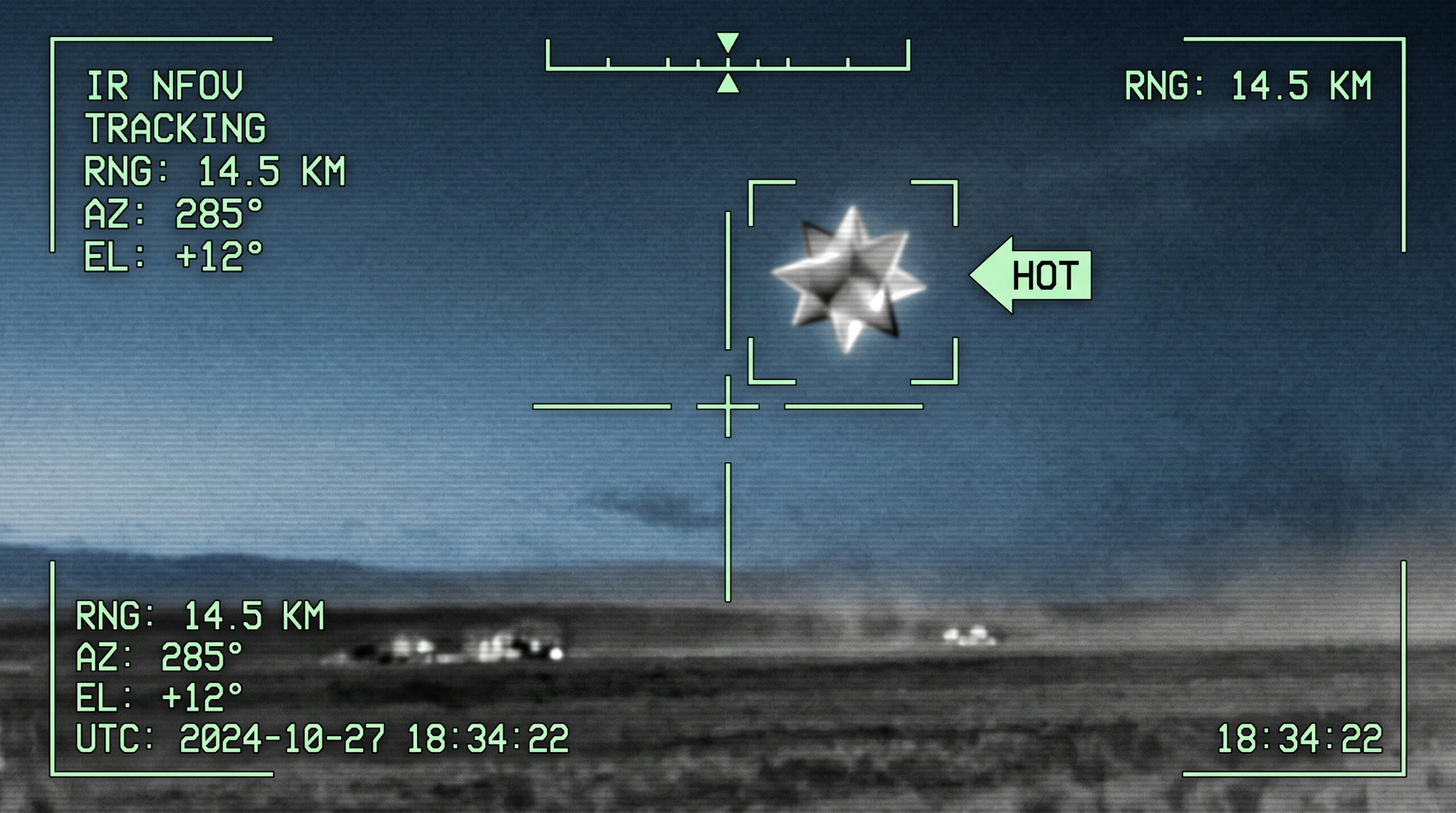
    A five-minute clip surfaced on Telegram last week that sent the entire UAP research community into overdrive, and it didn’t come from a fringe conspiracy channel. It was posted by Serhii “Flash” Beskrestnov — an advisor to the Ukrainian Defense Ministry, a senior official, someone with a public role in one of the most heavily monitored conflicts on the planet. The video shows a bright, star-shaped object hovering high above a flat expanse of terrain. Within hours, the same post had been amplified across Reddit’s UAP forums and racked up more than 8,000 upvotes on r/UFOs alone. What made it go viral was not just the source — it was what people began noticing when they zoomed in.

    The object sits motionless for long stretches, then appears to shift its orientation in ways that don’t match the wobble of a balloon or the drift of a weather platform. Enhanced frames pulled from the original clip, shared by independent analysts, reveal what looks like a structured, multi-pointed geometry — roughly symmetrical, with what some are calling “edges” that catch light asymmetrically as the object rotates. If that analysis holds, the shape is inconsistent with the known drone platforms operating in the theater.

    Why This Footage Has UAP Researchers on Edge

    What separates this from the hundreds of combat-zone UAP clips shared weekly is the combination of provenance and detail. Beskrestnov is not an anonymous uploader. He holds an official advisory position with Ukraine’s military apparatus, meaning the footage entered the public record through someone whose identity and reputation are attached to it. That distinction matters intensely in a landscape where most UAP evidence comes from civilians with dashcams, backyard security cameras, or anonymous Telegram channels.

    The video has already been stabilized, sharpened, and frame-by-frame analyzed by multiple independent researchers. The stabilized version circulated even faster than the original. In at least one frame, observers point to what appears to be a central dark region — described by some as a “pupil” or “eye” — that opens and closes as the craft seemingly rotates. Whether that pareidolia or something more intentional depends on who you ask, but the fact that trained analysts are pulling those frames out and sharing them publicly is itself notable.

    This is not happening in a vacuum. The clip arrived the same week the Department of War began releasing decades of previously classified UAP files from multiple federal agencies — a wave of transparency that has disclosure watchers comparing every new sighting against what the government is finally choosing to unseal.

    What the Pentagon Would Say About This

    The Pentagon’s All-domain Anomaly Resolution Office, or AARO, has spent years building a framework for categorizing UAP reports into identifiable phenomena — drones, balloons, sensor artifacts, and a small residual bucket of cases that resist classification. If this Ukrainian footage were submitted through official channels, AARO would likely begin by checking it against the known inventory of Ukrainian and Russian drone platforms, commercial quadcopters, and atmospheric phenomena common to the region’s altitude bands.

    That is the standard investigative pathway, and it is the right one. Most structured-looking objects in combat footage do resolve into mundane explanations once you have access to the flight logs, radar corroboration, and technical specifications of the equipment involved. The AARO investigation framework was specifically designed to separate the genuinely anomalous from the simply misidentified.

    But here is the gap: AARO does not have jurisdiction over footage collected and released by a foreign ally’s defense ministry during an active conflict. Unless Kiev chooses to route this through official military-to-military channels — which, given the sensitivity of the ongoing war, seems unlikely — the analysis falls to independent researchers, academic UAP groups, and the court of public opinion.

    What Believers Are Arguing

    For the disclosure community, the Ukrainian star-shaped UAP is another piece in an accumulating pattern that goes back several years. Believers point to Jeremy Corbell’s documentary work on classified UAP recovery claims, the UAP photographic plate analysis that surfaced through physicist Sabine Hossenfelder’s platforms, and Eric Davis’s testimony about dozens of craft recovered from the world’s oceans. Each of these threads, taken individually, can be explained away. Taken together, believers argue, they form a picture of a phenomenon that the government has been compartmentalizing for decades and is only now beginning to — reluctantly — let slip into public view.

    The Ukrainian footage, in this reading, is not just another video. It is footage of a craft with a shape that does not match known technology, posted by a high-level defense official, appearing during a period when multiple governments are simultaneously acknowledging UAP programs. Whether that is coincidence or convergence is the debate.

    The Genuine Gaps in the Story

    The honest uncertainty begins with the video quality itself. The footage was shot at distance, through atmospheric haze, by a camera that was almost certainly not designed for precision optical analysis. The “structured” appearance could be an artifact of digital compression, lens distortion, or the interaction between the camera’s sensor and a bright light source at a specific altitude. Every claim about the object’s shape needs to survive contact with those technical caveats.

    There is also the possibility that the object is a classified platform belonging to one of the parties in the conflict — something real, but human-made, and therefore not a UAP in the anomalous sense at all. That would be the most mundane explanation that still accounts for the strange geometry and the silence from both sides of the front line.

    For now, the frames are out there. The close-ups are being sharpened by people who have the time and the training to look closely. Whether this video becomes the clearest piece of structured-craft evidence to emerge from a war zone — or another case of a known object caught at the wrong angle through the wrong lens — depends on what the next set of analysts finds in the pixels. And on whether Kiev, Washington, or anyone with better data decides to say what they know.
  • Ukrainian Defense Ministry Advisor Posts Star-Shaped UAP Video — and the Close-Ups Look Nothing Like a Drone

    Ukrainian Defense Ministry Advisor Posts Star-Shaped UAP Video — and the Close-Ups Look Nothing Like a Drone

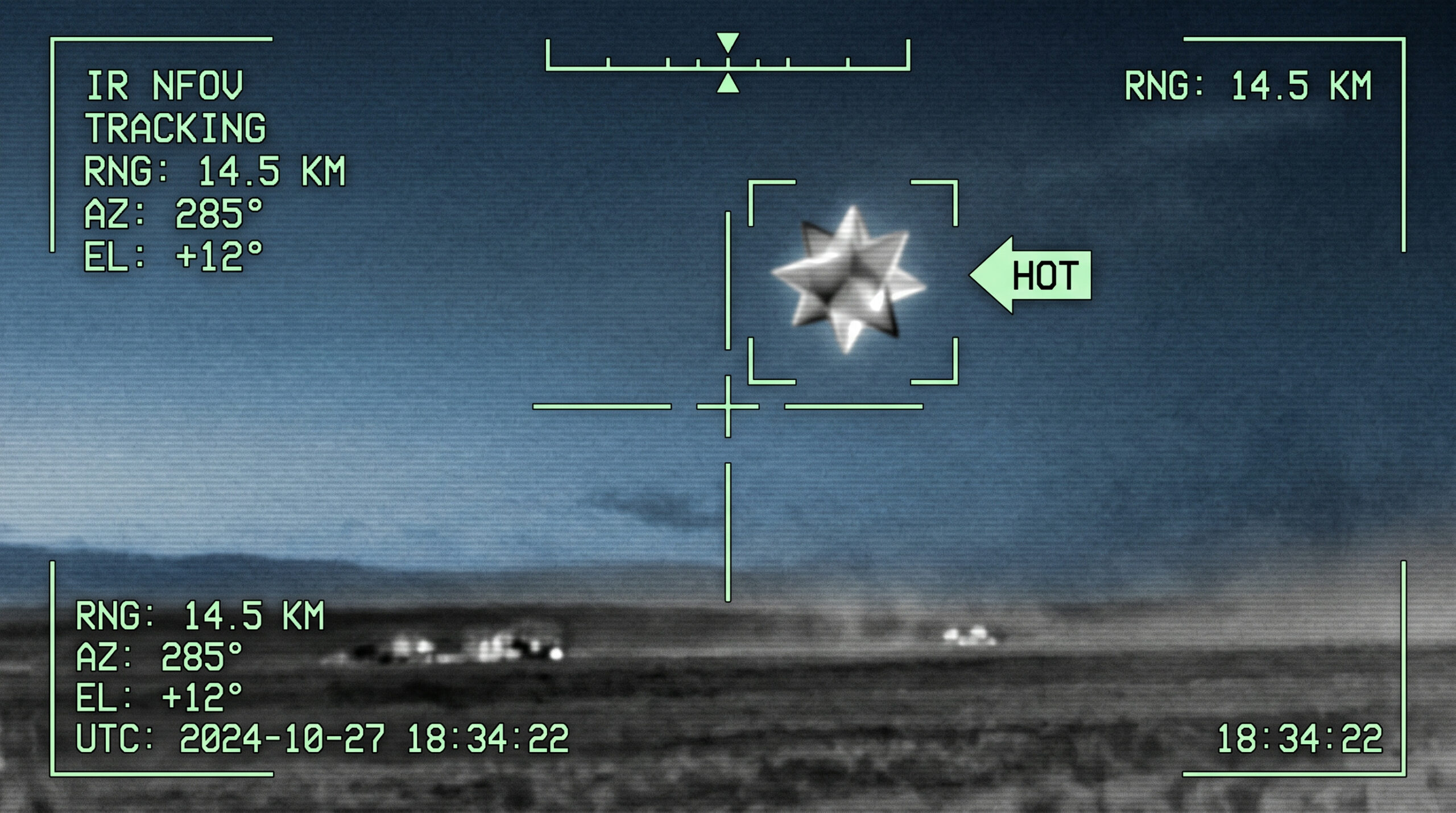
    A five-minute clip surfaced on Telegram last week that sent the entire UAP research community into overdrive, and it didn’t come from a fringe conspiracy channel. It was posted by Serhii “Flash” Beskrestnov — an advisor to the Ukrainian Defense Ministry, a senior official, someone with a public role in one of the most heavily monitored conflicts on the planet. The video shows a bright, star-shaped object hovering high above a flat expanse of terrain. Within hours, the same post had been amplified across Reddit’s UAP forums and racked up more than 8,000 upvotes on r/UFOs alone. What made it go viral was not just the source — it was what people began noticing when they zoomed in.

    The object sits motionless for long stretches, then appears to shift its orientation in ways that don’t match the wobble of a balloon or the drift of a weather platform. Enhanced frames pulled from the original clip, shared by independent analysts, reveal what looks like a structured, multi-pointed geometry — roughly symmetrical, with what some are calling “edges” that catch light asymmetrically as the object rotates. If that analysis holds, the shape is inconsistent with the known drone platforms operating in the theater.

    Why This Footage Has UAP Researchers on Edge

    What separates this from the hundreds of combat-zone UAP clips shared weekly is the combination of provenance and detail. Beskrestnov is not an anonymous uploader. He holds an official advisory position with Ukraine’s military apparatus, meaning the footage entered the public record through someone whose identity and reputation are attached to it. That distinction matters intensely in a landscape where most UAP evidence comes from civilians with dashcams, backyard security cameras, or anonymous Telegram channels.

    The video has already been stabilized, sharpened, and frame-by-frame analyzed by multiple independent researchers. The stabilized version circulated even faster than the original. In at least one frame, observers point to what appears to be a central dark region — described by some as a “pupil” or “eye” — that opens and closes as the craft seemingly rotates. Whether that pareidolia or something more intentional depends on who you ask, but the fact that trained analysts are pulling those frames out and sharing them publicly is itself notable.

    This is not happening in a vacuum. The clip arrived the same week the Department of War began releasing decades of previously classified UAP files from multiple federal agencies — a wave of transparency that has disclosure watchers comparing every new sighting against what the government is finally choosing to unseal.

    What the Pentagon Would Say About This

    The Pentagon’s All-domain Anomaly Resolution Office, or AARO, has spent years building a framework for categorizing UAP reports into identifiable phenomena — drones, balloons, sensor artifacts, and a small residual bucket of cases that resist classification. If this Ukrainian footage were submitted through official channels, AARO would likely begin by checking it against the known inventory of Ukrainian and Russian drone platforms, commercial quadcopters, and atmospheric phenomena common to the region’s altitude bands.

    That is the standard investigative pathway, and it is the right one. Most structured-looking objects in combat footage do resolve into mundane explanations once you have access to the flight logs, radar corroboration, and technical specifications of the equipment involved. The AARO investigation framework was specifically designed to separate the genuinely anomalous from the simply misidentified.

    But here is the gap: AARO does not have jurisdiction over footage collected and released by a foreign ally’s defense ministry during an active conflict. Unless Kiev chooses to route this through official military-to-military channels — which, given the sensitivity of the ongoing war, seems unlikely — the analysis falls to independent researchers, academic UAP groups, and the court of public opinion.

    What Believers Are Arguing

    For the disclosure community, the Ukrainian star-shaped UAP is another piece in an accumulating pattern that goes back several years. Believers point to Jeremy Corbell’s documentary work on classified UAP recovery claims, the UAP photographic plate analysis that surfaced through physicist Sabine Hossenfelder’s platforms, and Eric Davis’s testimony about dozens of craft recovered from the world’s oceans. Each of these threads, taken individually, can be explained away. Taken together, believers argue, they form a picture of a phenomenon that the government has been compartmentalizing for decades and is only now beginning to — reluctantly — let slip into public view.

    The Ukrainian footage, in this reading, is not just another video. It is footage of a craft with a shape that does not match known technology, posted by a high-level defense official, appearing during a period when multiple governments are simultaneously acknowledging UAP programs. Whether that is coincidence or convergence is the debate.

    The Genuine Gaps in the Story

    The honest uncertainty begins with the video quality itself. The footage was shot at distance, through atmospheric haze, by a camera that was almost certainly not designed for precision optical analysis. The “structured” appearance could be an artifact of digital compression, lens distortion, or the interaction between the camera’s sensor and a bright light source at a specific altitude. Every claim about the object’s shape needs to survive contact with those technical caveats.

    There is also the possibility that the object is a classified platform belonging to one of the parties in the conflict — something real, but human-made, and therefore not a UAP in the anomalous sense at all. That would be the most mundane explanation that still accounts for the strange geometry and the silence from both sides of the front line.

    For now, the frames are out there. The close-ups are being sharpened by people who have the time and the training to look closely. Whether this video becomes the clearest piece of structured-craft evidence to emerge from a war zone — or another case of a known object caught at the wrong angle through the wrong lens — depends on what the next set of analysts finds in the pixels. And on whether Kiev, Washington, or anyone with better data decides to say what they know.

  • Trump Says UFO Files Are Coming: ‘Things You Wouldn’t Believe’ — What We Know

    Trump Says UFO Files Are Coming: ‘Things You Wouldn’t Believe’ — What We Know

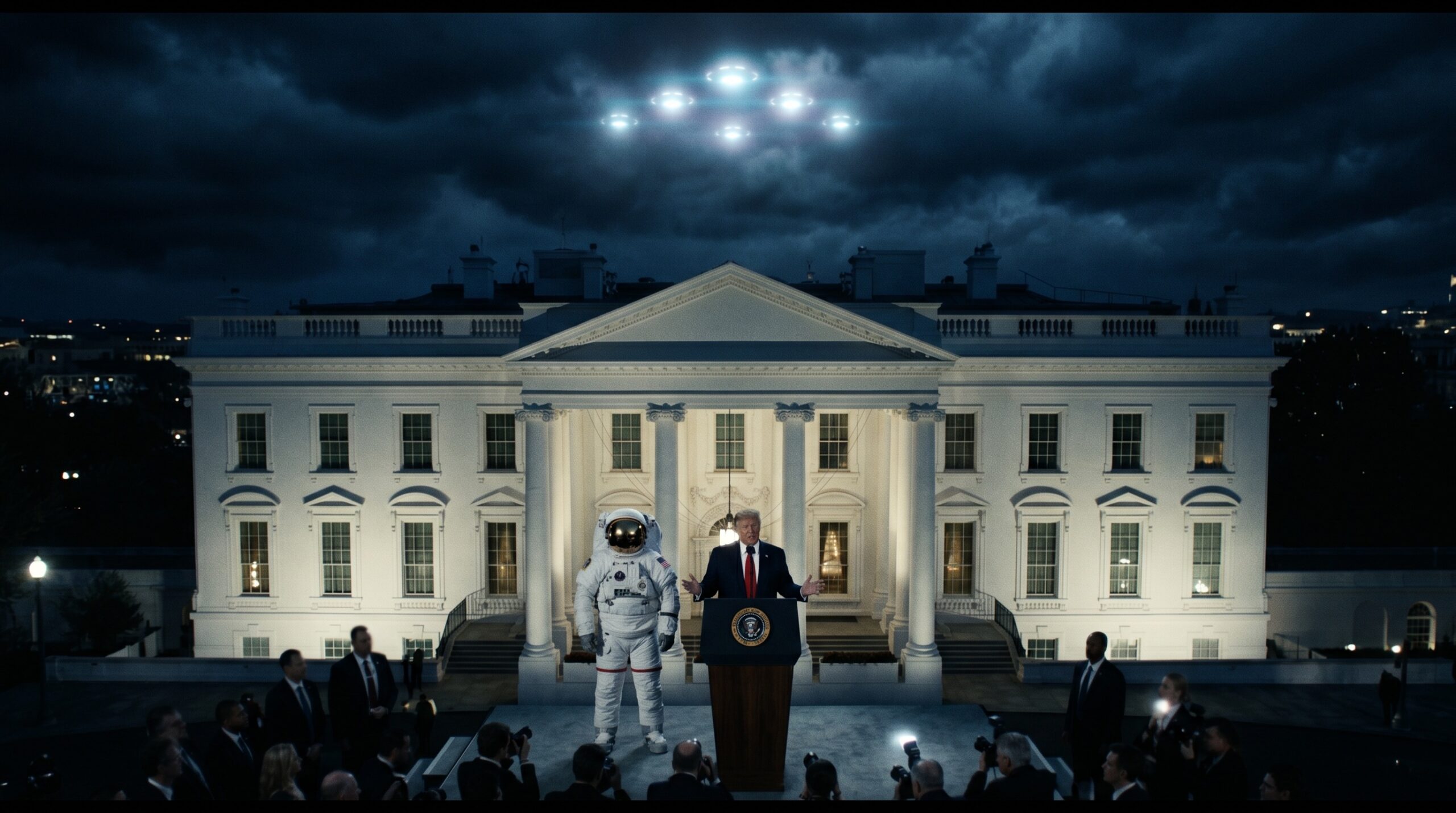
    Donald Trump stood behind a White House podium with the Artemis II astronauts beside him and delivered a line that sent UFO believers across every feed into overdrive — just weeks after the April 2026 White House document release, he doubled down: anything having to do with UFOs or related material is going to be released, and he thinks “a lot of it is going to be very interesting.” He had already said, in the same breath, that he’d interviewed pilots during his first term who saw “things you wouldn’t believe.” The cameras caught the astronauts. But the people locked into the disclosure conversation were locked onto the UFO words.

    This is not the first time Trump has teased a release. It is not the first time a politician has promised transparency while delivering timelines that evaporate. But the signal this time carries weight that older promises lacked. Eric Burlison has been telling anyone who will listen that closed-door Pentagon briefings showed classified UAP videos of objects “defying physics.” Steve Scalise reportedly called those same briefings “eye-opening.” And David Grusch — the man who forced this entire conversation into the congressional record — has been building public support for a release he warns will be “a hard pill to swallow.”

    What Trump Actually Said

    The setting gave the moment its gravity. Trump was introducing the Artemis II crew — the astronauts who will return humans to lunar orbit for the first time in half a century. But in the press conference that followed, the conversation pivoted before the questions even asked about aliens.

    Trump said: “We’re going to be releasing a lot of very interesting things… Anything having to do with UFOs or related material we are going to be releasing.” He paused, then added: “I think a lot of it is going to be very interesting.” He credited conversations with military pilots from his first term — pilots who, he said, “saw things you wouldn’t believe.”

    Newsweek and WSLS both published versions of the same quote within hours. Newsweek covered Trump’s statement about the UFO material and WSLS reported the context of the Artemis II press conference. The video clips spread across X and Reddit within the same hour.

    The words themselves are classic Trump: suggestive, non-specific, and impossible to pin on a date. But the people who have tracked disclosure from the inside say they hear something different underneath the rhetoric.

    What Files Could He Be Talking About?

    The Pentagon has more on UAPs than the public has ever seen. That is not speculation — it is documented. Congressman Eric Burlison has described SCIF briefings where classified UAP videos showed objects defying physics, and the broader recovery-program question remains unresolved. Steve Scalise reportedly called those briefings eye-opening, and the Office of the Director of National Intelligence has released summary reports identifying cases unexplained by any conventional explanation. And the AARO — the Pentagon’s own UAP task force — has compiled case files spanning years of military encounters.

    The question is not whether there is material. The question is how much of it will actually be released, and in what form.

    Trump’s framing — “anything having to do with UFOs or related material” — is sweeping enough to mean almost anything. A curated selection of declassified videos? A dump of raw intelligence? A formal report with findings he can call a “release”? Or a handful of videos the Pentagon has already reviewed and cleared for public consumption, dressed up as a landmark event?

    Grusch’s sworn statement before Congress outlined exactly the type of material believers are expecting — and what he described goes well beyond blurry cockpit footage.

    Grusch, Burlison, and the Disclosure Engine

    Trump’s comments did not land in a vacuum. They landed on top of a months-long disclosure push from the people most involved in driving it.

    David Grusch has been building toward this moment since his 2023 congressional appearance, where he testified under oath about alleged non-human programs and crash-retrieval operations. He has since warned that public disclosure will be “a hard pill to swallow” and that the American public needs to be prepared. His language has been deliberate: he is not promising a specific revelation, but he is signaling that what the government knows would fundamentally change how people think about humanity’s place in the cosmos.

    Eric Burlison has been the most aggressive advocate in Congress for full transparency. He has described SCIF briefings where lawmakers viewed videos of UAPs performing maneuvers that no known physics can explain. He has named specific objects and specific incidents and refused to back down from the language he uses to describe them. His most recent briefing — the one where he described an encounter involving military and intelligence personnel successfully luring and documenting a craft in controlled conditions — apparently reached Steve Scalise directly, which is why House leadership is now involved.

    Cybernews reported on the classified UAP videos shown in congressional briefings that Burlison says depict objects defying the known laws of physics.

    The alignment between Grusch’s public warnings, Burlison’s congressional pressure, and now Trump’s presidential promises creates a convergence that has not existed at any earlier point in the disclosure timeline. All three are working the same frequency at the same time.

    Why This Time Feels Different

    Previous disclosure promises have collapsed under their own weight. The Pentagon released those Navy videos, yes — but they went cold after the viral moment. Congress held hearings. Grusch testified. Then the news cycle moved on.

    What has changed is the narrative momentum.

    r/UFOs posts about Trump’s disclosure promises drew over 3,200 upvotes and 1,000 comments in a matter of hours, making them some of the most engaged threads in the subreddit’s history. The disclosure conversation stopped being an insider topic months ago — it became a feed topic, and feeds are where narratives gain momentum regardless of institutional speed. Goldie Hawn describing her alleged encounter on Jimmy Kimmel brought disclosure into daytime television. Burlison is talking about it in congressional briefings. Trump is talking about it at presidential press conferences. The narrative is moving from Washington to Hollywood to the world exactly as disclosure advocates have been trying to do it.

    What to Watch For

    The most important thing believers can do right now is manage expectations — not dismiss the signals, but understand how government releases work.

    A genuine disclosure event would include material that cannot be explained away as sensor artifacts, balloons, or optical illusions. It would confirm something that was previously only claimed in testimony. It would have specific, verifiable details that go beyond what has already been released through AARO and the ODNI reports.

    A managed disclosure event — and many disclosure advocates worry this is what happens — would look different. It would feature videos the Pentagon has already reviewed and cleared, with careful language attached, and a press release designed to answer the question without opening new ones.

    Watch for the difference. If the release is real, it will include specific incident data, pilot names, and radar confirmation. If it is managed, it will include language about “preliminary assessments” and “inconclusive data” and an invitation to stay tuned.

    What Is Actually Known

    Trump has said the Pentagon is preparing a UFO release. No date has been announced. No documents have been identified by title. Eric Burlison has seen classified UAP videos in a SCIF briefing that he says show objects defying physics. David Grusch has been warning that disclosure will be uncomfortable and that the evidence exists. These are all real, documented claims made by real people.

    What is not known is whether Trump’s promise translates into a specific release timetable, whether the material he is referring to is the same material Grusch and Burlison have described, or whether the public will receive anything beyond a small, carefully sanitized preview.

    For now, the pressure is real. The convergence is real. The material almost certainly exists in some form. Whether the release that Trump is promising matches the disclosure that believers are waiting for — that remains the biggest unanswered question.