Tag: ufo disclosure

  • Japan Just Confirmed It Has UAP Footage, and Is Analyzing Pentagon Files Near Its Borders

    Japan Just Confirmed It Has UAP Footage, and Is Analyzing Pentagon Files Near Its Borders

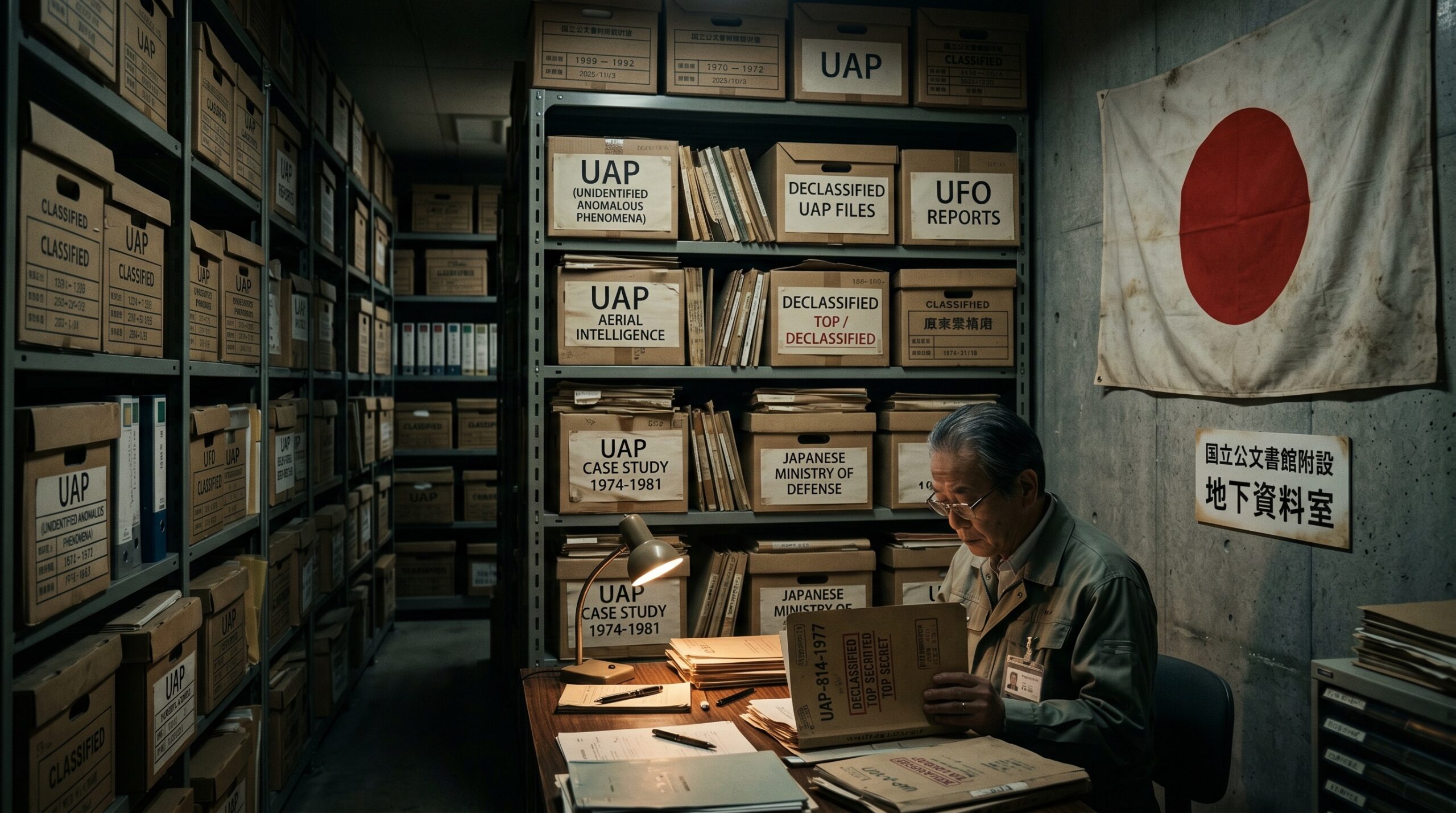
    In the middle of this week’s Pentagon file release — a wave of declassified UAP documents from multiple federal agencies that has been dominating every disclosure feed — a quieter story emerged from across the Pacific. Japan confirmed, through its own channels, that it has reviewed Pentagon UAP footage containing events near Japanese territory and that the Japanese government possesses its own UAP recordings that are now being assessed. It’s the kind of confirmation that sounds bureaucratic until you understand what it signals: a second major government, an ally of the United States, is now independently acknowledging that unexplained aerial phenomena in its airspace warrant official review.

    This is not a rumor. The Japan Times reported that Tokyo is analyzing the Pentagon’s UAP file trove specifically for encounters documented near Japanese sovereign airspace and territorial waters. That confirmation came from sources briefed on the review, and it was paired with the acknowledgment that Japanese defense officials have footage of their own — recordings that have not yet been made public but are now under formal assessment. For a country whose defense posture has been tightening around UAP transparency alongside the Americans and the British, this is a significant institutional step.

    Why Japan’s Move Changes the Disclosure Equation

    Until now, the public UAP conversation has been dominated by three players: the United States (through AARO, congressional hearings, and the latest War.gov file releases), the United Kingdom (which has declassified batches of historic UFO documents), and a handful of independent journalist-investigators like Jeremy Corbell, whose documentaries have pushed classified claims into mainstream view. Japan’s entry as an institutional actor changes the geometry of the entire conversation.

    The country’s geographic position is not incidental. Japanese airspace and maritime approaches have been the scene of encounters with unidentified aerial objects for years — encounters documented by both civilian pilots and military radar. When Japan begins formally reviewing these cases in parallel with the Pentagon’s disclosures, the resulting data set no longer belongs to a single government’s classification decisions. It becomes a cross-referenced, multinational record, and that makes it much harder to dismiss or bury.

    The Japan Times coverage of the review process suggests that Tokyo is approaching the Pentagon files methodically — mapping individual encounter reports against known Japanese airspace incidents, looking for correlations, and cross-checking timelines. If that work yields results that connect U.S.-documented events to Japanese-observed phenomena, it would represent the strongest form of evidence that the UAP research community has been demanding: independent, multi-source corroboration.

    The Pentagon File Release That Triggered This

    Japan’s review was catalyzed by the largest single release of UAP documents to date from the U.S. government. The trove, published through the War.gov portal, includes decades of encounter reports, photographic evidence, and internal assessments from agencies that have not previously made their UAP records public. The release was described by multiple outlets as “highly anticipated” and represents what disclosure advocates have pushed for since at least 2017.

    What makes the files significant is not just their volume but their variety. Previous releases tended to focus on a single agency or a specific time period. This collection spans multiple departments and covers encounters from different eras, which means that any pattern-matching work — the kind that disclosure watchers have already begun — can operate on a much broader canvas. If an object documented by a U.S. military sensor in 1994 appears in a similar form over Japanese waters in the same era, that is a data point no single classification system can erase.

    What the Skeptical Reading Looks Like

    The cautious interpretation is that Japan’s confirmation amounts to a routine administrative procedure — the kind of document review that any defense ministry would conduct when another country declassifies files relevant to its own airspace. “Reviewing” is not “confirming existence.” “Possessing footage” is not “going public with footage.” Japan may be conducting an entirely internal assessment that produces no external disclosure whatsoever.

    That is a valid concern. Governments routinely review foreign intelligence material and choose to keep their own conclusions classified. Japan’s strategic position in the Pacific, its complex relationship with Beijing, and its security partnership with Washington all create reasons for Tokyo to be very careful about what it says publicly about unexplained aerial objects. Prudence would suggest that this confirmation, while real, may not lead to the kind of open disclosure that UAP researchers are hoping for.

    But the fact that the review was acknowledged at all — rather than conducted entirely in silence — suggests a different kind of institutional posture than we have seen from Japan before. The mere existence of an official acknowledgment creates a paper trail, and paper trails have a way of eventually producing results.

    The International Domino Effect

    Japan’s move points toward a broader pattern that is easy to miss if the conversation stays focused only on American disclosures. Congressional testimony on non-human craft recovery, the historic Rendlesham encounters that the UK has gradually declassified, and now Japan’s own review process — these are not isolated events. They are individual governments, operating independently, reaching toward the same set of phenomena from different angles at roughly the same time.

    If the Japanese review produces findings that connect U.S.-documented UAP encounters to events over Japanese territory, it would represent a new category of evidence: multinational, cross-referenced, and impossible to attribute to a single nation’s sensor malfunction or classified program. Whether that happens depends on what is actually in the Japanese footage — and whether Japan ever chooses to show it to the public.

    For now, the confirmation itself is the signal. The files are being reviewed. The footage exists. And once a government acknowledges that something needs looking at, the pressure to show what it found builds slowly, relentlessly, and usually outlasts the people who wanted it kept quiet.

  • Japan Just Confirmed It Has UAP Footage — and Is Analyzing Pentagon Files Near Its Borders

    Japan Just Confirmed It Has UAP Footage — and Is Analyzing Pentagon Files Near Its Borders

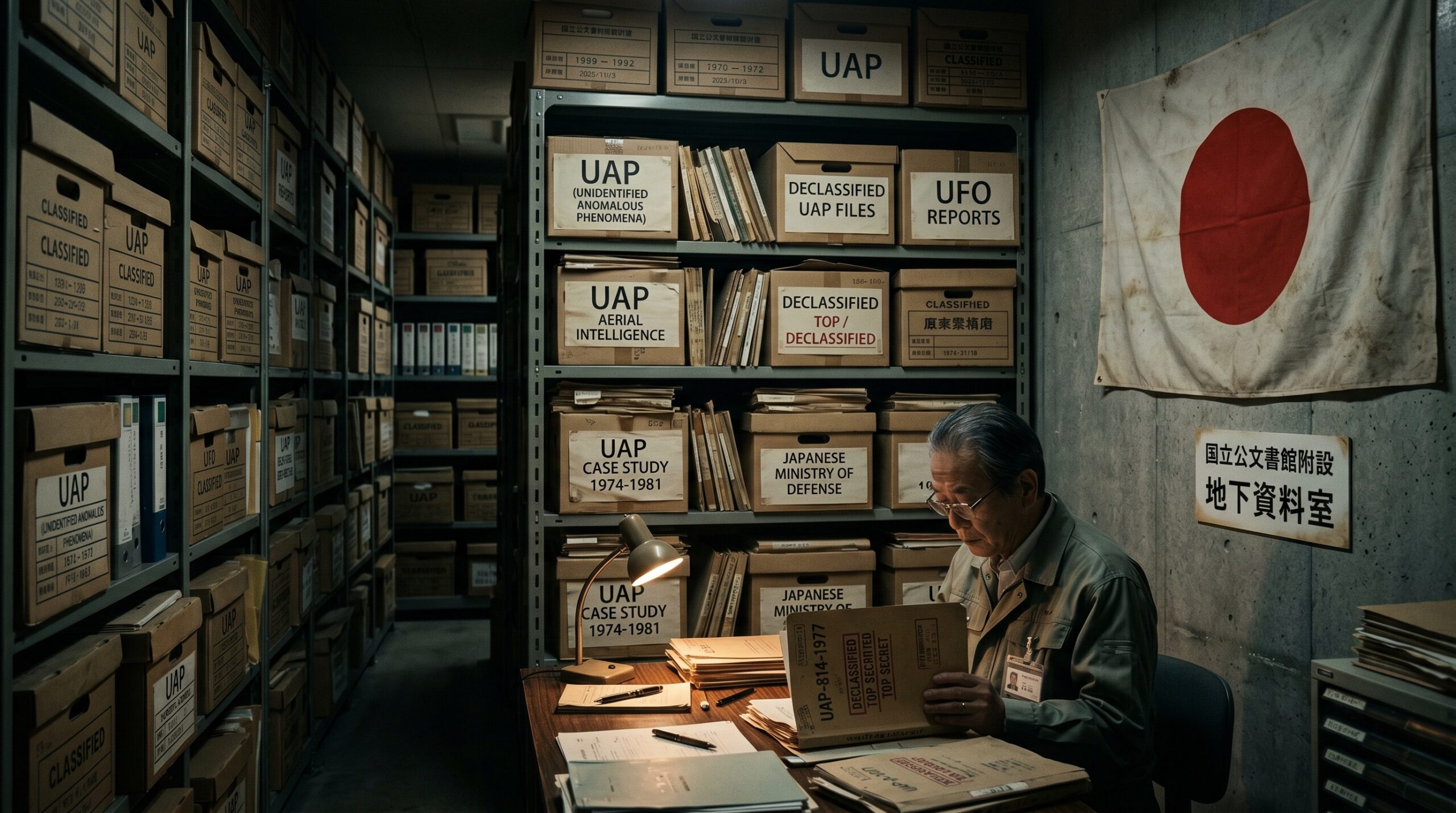
    In the middle of this week’s Pentagon file release — a wave of declassified UAP documents from multiple federal agencies that has been dominating every disclosure feed — a quieter story emerged from across the Pacific. Japan confirmed, through its own channels, that it has reviewed Pentagon UAP footage containing events near Japanese territory and that the Japanese government possesses its own UAP recordings that are now being assessed. It’s the kind of confirmation that sounds bureaucratic until you understand what it signals: a second major government, an ally of the United States, is now independently acknowledging that unexplained aerial phenomena in its airspace warrant official review.

    This is not a rumor. The Japan Times reported that Tokyo is analyzing the Pentagon’s UAP file trove specifically for encounters documented near Japanese sovereign airspace and territorial waters. That confirmation came from sources briefed on the review, and it was paired with the acknowledgment that Japanese defense officials have footage of their own — recordings that have not yet been made public but are now under formal assessment. For a country whose defense posture has been tightening around UAP transparency alongside the Americans and the British, this is a significant institutional step.

    Why Japan’s Move Changes the Disclosure Equation

    Until now, the public UAP conversation has been dominated by three players: the United States (through AARO, congressional hearings, and the latest War.gov file releases), the United Kingdom (which has declassified batches of historic UFO documents), and a handful of independent journalist-investigators like Jeremy Corbell, whose documentaries have pushed classified claims into mainstream view. Japan’s entry as an institutional actor changes the geometry of the entire conversation.

    The country’s geographic position is not incidental. Japanese airspace and maritime approaches have been the scene of encounters with unidentified aerial objects for years — encounters documented by both civilian pilots and military radar. When Japan begins formally reviewing these cases in parallel with the Pentagon’s disclosures, the resulting data set no longer belongs to a single government’s classification decisions. It becomes a cross-referenced, multinational record, and that makes it much harder to dismiss or bury.

    The Japan Times coverage of the review process suggests that Tokyo is approaching the Pentagon files methodically — mapping individual encounter reports against known Japanese airspace incidents, looking for correlations, and cross-checking timelines. If that work yields results that connect U.S.-documented events to Japanese-observed phenomena, it would represent the strongest form of evidence that the UAP research community has been demanding: independent, multi-source corroboration.

    The Pentagon File Release That Triggered This

    Japan’s review was catalyzed by the largest single release of UAP documents to date from the U.S. government. The trove, published through the War.gov portal, includes decades of encounter reports, photographic evidence, and internal assessments from agencies that have not previously made their UAP records public. The release was described by multiple outlets as “highly anticipated” and represents what disclosure advocates have pushed for since at least 2017.

    What makes the files significant is not just their volume but their variety. Previous releases tended to focus on a single agency or a specific time period. This collection spans multiple departments and covers encounters from different eras, which means that any pattern-matching work — the kind that disclosure watchers have already begun — can operate on a much broader canvas. If an object documented by a U.S. military sensor in 1994 appears in a similar form over Japanese waters in the same era, that is a data point no single classification system can erase.

    What the Skeptical Reading Looks Like

    The cautious interpretation is that Japan’s confirmation amounts to a routine administrative procedure — the kind of document review that any defense ministry would conduct when another country declassifies files relevant to its own airspace. “Reviewing” is not “confirming existence.” “Possessing footage” is not “going public with footage.” Japan may be conducting an entirely internal assessment that produces no external disclosure whatsoever.

    That is a valid concern. Governments routinely review foreign intelligence material and choose to keep their own conclusions classified. Japan’s strategic position in the Pacific, its complex relationship with Beijing, and its security partnership with Washington all create reasons for Tokyo to be very careful about what it says publicly about unexplained aerial objects. Prudence would suggest that this confirmation, while real, may not lead to the kind of open disclosure that UAP researchers are hoping for.

    But the fact that the review was acknowledged at all — rather than conducted entirely in silence — suggests a different kind of institutional posture than we have seen from Japan before. The mere existence of an official acknowledgment creates a paper trail, and paper trails have a way of eventually producing results.

    The International Domino Effect

    Japan’s move points toward a broader pattern that is easy to miss if the conversation stays focused only on American disclosures. Congressional testimony on non-human craft recovery, the historic Rendlesham encounters that the UK has gradually declassified, and now Japan’s own review process — these are not isolated events. They are individual governments, operating independently, reaching toward the same set of phenomena from different angles at roughly the same time.

    If the Japanese review produces findings that connect U.S.-documented UAP encounters to events over Japanese territory, it would represent a new category of evidence: multinational, cross-referenced, and impossible to attribute to a single nation’s sensor malfunction or classified program. Whether that happens depends on what is actually in the Japanese footage — and whether Japan ever chooses to show it to the public.

    For now, the confirmation itself is the signal. The files are being reviewed. The footage exists. And once a government acknowledges that something needs looking at, the pressure to show what it found builds slowly, relentlessly, and usually outlasts the people who wanted it kept quiet.

  • Obama Says UFO Disclosure Won’t Happen — ‘Government Is Terrible at Keeping Secrets’

    Obama Says UFO Disclosure Won’t Happen — ‘Government Is Terrible at Keeping Secrets’

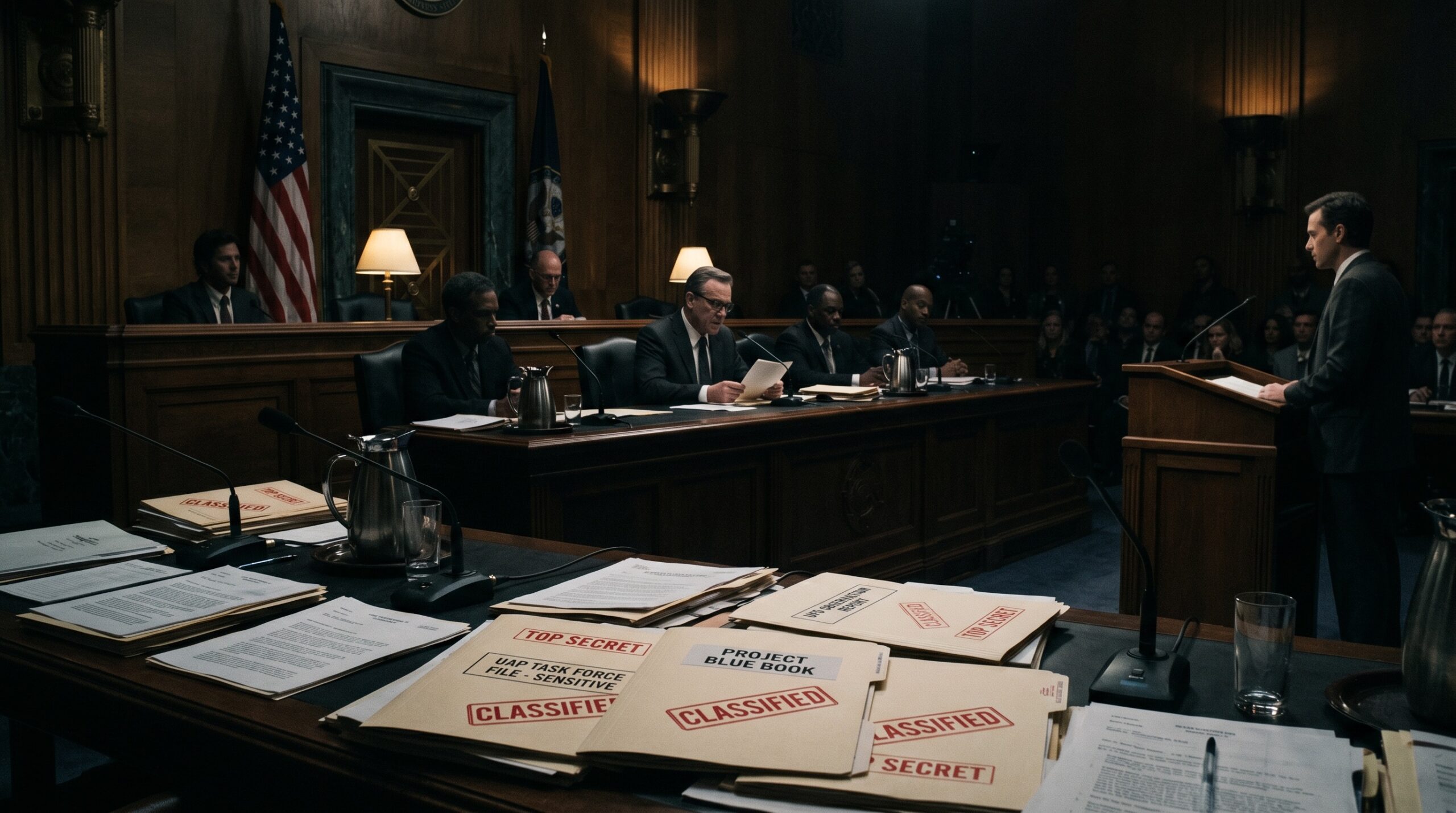
    Former President Barack Obama did not set out to talk about UFOs when he took the stage. But a throwaway line — “the government is terrible at keeping secrets” — has become one of the most discussed quotes in the disclosure community overnight. The 2,100-plus upvote post on r/UFOs is not just amplifying a funny moment. It is treating the remark as a window into something bigger: if the government really had evidence of non-human intelligence, Obama’s logic suggests, we would already know. The fact that he framed it this way, in public, has believers parsing every syllable.

    The Quote and Where It Came From

    Speaking at an event in early May 2026, Obama touched on the growing push for UFO transparency from Congress and the Pentagon’s All-domain Anomaly Resolution Office. When asked about the possibility of a full disclosure, he responded with something along the lines of: “Disclosure won’t happen because the government is terrible at keeping secrets.” The audience laughed. The clip went viral. And the UAP community immediately began treating it as more than a punchline. You can see the full discussion thread that grew to over 2,100 upvotes on Reddit, and the Hollywood Reporter’s coverage of Obama’s comments on government secrecy.

    The reasoning is straightforward. Obama served as president from 2009 to 2017. He was briefed on classified defense programs, intelligence operations, and military activities that remain classified to this day. If he is saying the government cannot keep secrets, he is implicitly saying there is no secret worth keeping about UFOs — or he is saying there is a secret, and it is slipping.

    Obama’s History with UFOs

    This is not Obama’s first brush with the UFO question. During his presidency, he made a few notable, if vague, remarks. In a 2010 appearance on The Late Show with David Letterman, when asked about UFOs, Obama said he had not seen them but that “there is a lot of evidence that people see things in the sky.” He also referenced the Pentagon’s 2017 revelation of the Advanced Aerospace Threat Identification Program (AATIP) during the Obama years, a program that the Defense Department only confirmed after he had left office.

    The question that disclosure advocates keep coming back to is this: what was briefed to him behind closed doors? The president receives the most classified intelligence the government produces. If Obama’s public posture — that the government cannot keep secrets, and that disclosure is unlikely — was informed by anything beyond political convenience, it would carry a lot of weight.

    Why Believers Think This Is a Signal

    For people who have followed the UAP disclosure movement for years, a former president casually acknowledging both that (a) there is something worth disclosing and (b) the government cannot contain information indefinitely is exactly the kind of pre-signal they have been looking for. The argument is not that Obama is confirming anything. The argument is that he is hinting at the shape of what is coming — messy, incomplete, and already leaking.

    There is also the matter of timing. Obama made the remark in the context of an active congressional push for UFO transparency. Representative Tim Burchett has gone public with claims that he has been briefed on recovered non-human bodies. Burchett’s sworn testimony about what he has and cannot say has been the single most discussed topic in UAP circles this month. Multiple pastors, including Perry Stone, Greg Locke, and Tony Merkel, have said they were privately informed by military intelligence that “disclosure is coming” — a claim that has spread through both religious and conspiracy channels simultaneously.

    In that ecosystem, Obama’s comment lands differently than it would if he had said it in isolation. It reads like a former insider confirming a pattern: the wall is cracking, and it is going to come through in pieces.

    The Skeptical View

    The counter-argument is that Obama’s remark was political comedy, not insider disclosure. “The government is terrible at keeping secrets” is a well-worn joke that politicians have used for decades. It was delivered for laughs. The fact that it got 2,100 upvotes on r/UFOs tells you more about the audience’s appetite for confirmation than it does about Obama’s state of classified knowledge.

    Skeptics also point out that if you are a former president and your goal is to stay out of classified territory, making a vague joke is the safest possible path. It lets you engage with the topic without confirming or denying anything at all.

    What Remains Open

    Here is what we know for sure: Obama acknowledged UFO disclosure, framed it in terms of government incompetence rather than government secrecy, and did so in front of an audience that will replay the clip a thousand times. What we do not know is whether his framing was casual humor or a carefully chosen formulation from someone who knows what was classified during his time in the Situation Room. What the disclosure community decides, as always, is what sounds most convincing.

    FAQ

    What did Obama say about UFO disclosure in 2026? Obama stated that full government disclosure of UFO evidence is unlikely because “the government is terrible at keeping secrets.” The remark came in response to growing congressional pressure for transparency.

    Did Obama know about classified UFO programs as president? The Pentagon’s AATIP program operated during Obama’s presidency and was only confirmed after he left office. Whether he was personally briefed on it remains unconfirmed.

  • Baba Vanga’s 2026 Alien Prophecy: The Blind Mystic Who Predicted Mass Alien Contact and Why People Are Taking It Seriously Again

    Baba Vanga’s 2026 Alien Prophecy: The Blind Mystic Who Predicted Mass Alien Contact and Why People Are Taking It Seriously Again

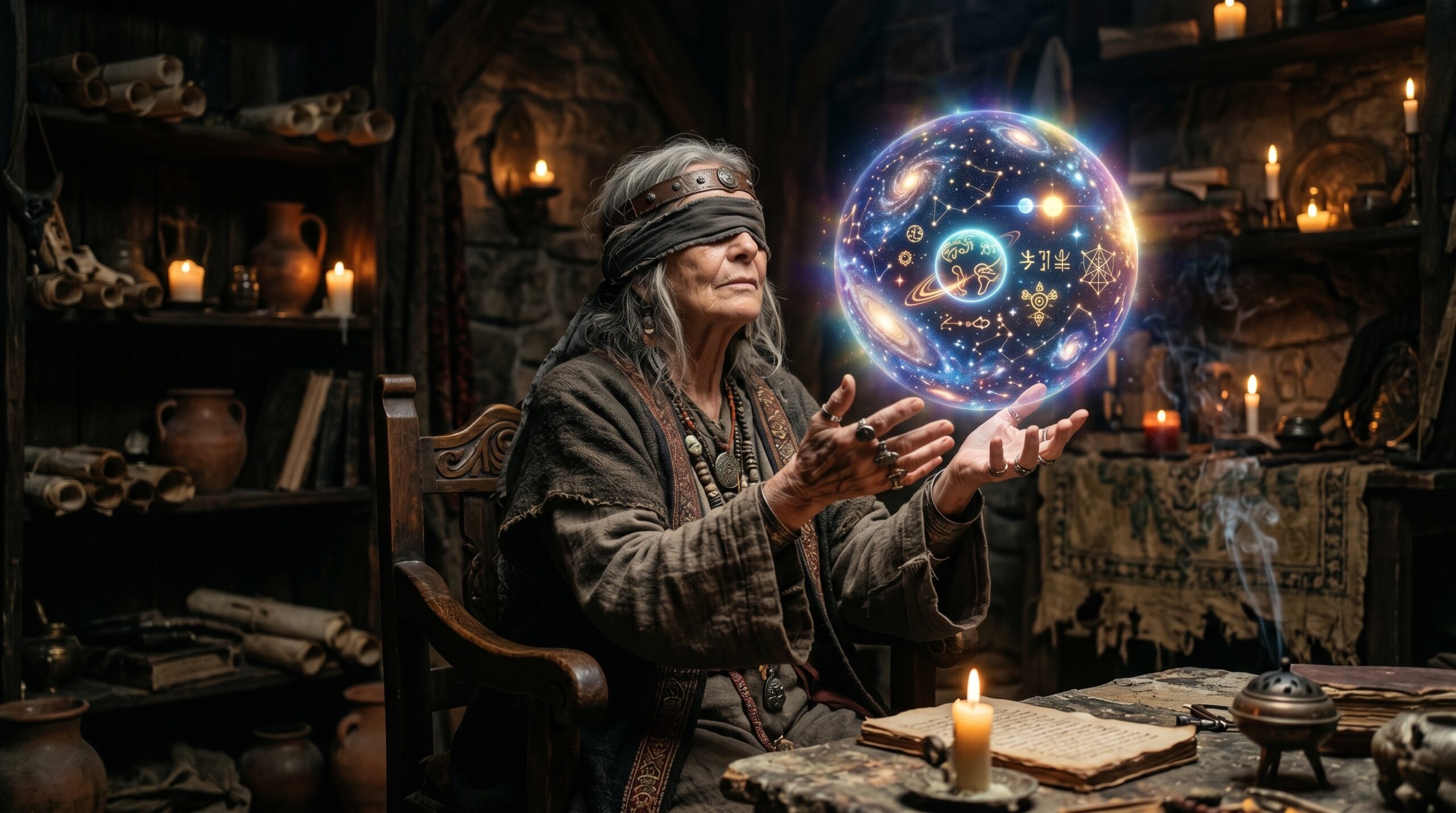
    Blind Bulgarian mystic Vangelia Gushterova, better known as Baba Vanga, died in 1996. But she has never stopped making new predictions. Every January, social media fills with a fresh list of “Baba Vanga’s predictions for [current year]” — and for 2026, the one that keeps surfacing is this: “Massive contact with non-human intelligence will occur.” Whether she actually said it, exactly that way, is one question. Why so many people are suddenly repeating it is another.

    What the Prophecy Claims

    The 2026 alien prophecy attributed to Baba Vanga is short and specific: humanity will make contact with non-human intelligence in 2026. Some versions of the claim add that the contact will be peaceful. Others say it will come through a government announcement rather than a direct encounter. The details vary depending on who is sharing it, which is typical of predictions that have been translated, retold, and reinterpreted across decades.

    The prophecy has been circulating alongside an unusual backdrop: an actual, ongoing UAP disclosure movement inside the United States government. Multiple pastors have claimed they were briefed by military intelligence that disclosure is imminent. Congressman Tim Burchett has said in sworn testimony that he has been briefed on recovered non-human bodies and the information he cannot share publicly is explosive. Representative Eric Burlison has made claims about mass-witness UAP events documented by military personnel. The congressional pressure around the phenomenon has never been louder.

    So when Baba Vanga’s 2026 alien prophecy resurfaces alongside real disclosure claims from real government officials, the synchronicity is hard to ignore.

    The Woman Who Died Before She Finished Speaking

    Vangelia Gushterova was a Bulgarian mystic who claimed to have developed clairvoyant abilities after losing her sight in a storm at age 12. She lived through the 20th century and, by some accounts, predicted events including the 9/11 attacks, the 2004 Indian Ocean tsunami, the Brexit vote, and the rise of ISIS. Her supporters treat these as hits. Her skeptics point out that she also allegedly predicted a nuclear World War III in 2010, the end of European civilization in 2016, and several other events that simply did not happen.

    The problem with evaluating Baba Vanga’s track record is that her predictions were rarely recorded by her directly. They were transcribed, translated from Bulgarian, and passed through oral tradition for decades. By the time a prediction shows up on the internet in 2024 or 2025, it has been shaped by the person sharing it into something that can sound either remarkably accurate or obviously wrong depending on how generously you read the original text.

    Why This Prophecy Is Spreading Now

    The reason the 2026 alien prophecy matters right now is not that Baba Vanga somehow knew what would happen. It is that her timeline intersects with a real-world window that UAP researchers have been anticipating for years. The 2026 National Defense Authorization Act includes provisions mandating the Pentagon’s All-domain Anomaly Resolution Office to declassify and release UAP records. Trump has hinted at additional file releases. Congressional hearings have featured testimony from people claiming direct knowledge of non-human craft.

    When a decades-old prophecy intersects with an active political disclosure timeline, the coincidence feels deliberate. It feels like a pattern. And for people who have spent years following the UAP movement, patterns are what it is all about.

    The Skeptical View

    The skeptical framing is straightforward. Baba Vanga’s predictions are so vague and so numerous that some of them will inevitably align with real events by chance. The alien prophecy for 2026, if it exists in its current form at all, is a retroactive construction — a prediction shaped after the fact to match what people are already expecting. The fact that it is being shared alongside real UAP disclosure developments does not make it prescient. It makes it topical. You can read the Wikipedia page on Baba Vanga for documented predictions, but the 2026 alien contact claim does not appear in any primary source — it circulates through tabloid prophecy roundups like the Daily Express and social media chains.

    There is also the question of provenance. No verified audio, video, or written record of Baba Vanga making this specific prediction has been produced. The claim survives through social media chains and second-hand retellings, which is the same mechanism that produces thousands of fake predictions every year.

    What Remains Uncertain

    Whether Baba Vanga actually predicted alien contact in 2026 is a question that nobody with access to primary evidence has the tools to answer. What is not in question is that the prophecy has found a receptive audience in a year when the UAP disclosure movement is generating real headlines from real government buildings. The alignment between prophecy and politics is either a bizarre coincidence or evidence that something is moving in the direction that mystics and lawmakers have independently pointed at.

    Which of those is true may become clearer before the year is out.

    FAQ

    What did Baba Vanga predict about aliens in 2026? According to widely shared accounts, Baba Vanga predicted that humanity would make massive contact with non-human intelligence in 2026. The exact wording and provenance of this prediction are disputed.

    How accurate are Baba Vanga’s predictions? Baba Vanga’s supporters credit her with predicting numerous major events. Skeptics note that many of her predictions failed, that her record is difficult to verify, and that her predictions have been reshaped over time.

    Is the 2026 alien prophecy connected to actual UAP events? The prophecy aligns with an active congressional and executive push for UFO transparency, including claims of recovered non-human technology and scheduled government file releases. The timing is coincidental.

  • Multiple Pastors Say They Were Secretly Briefed to Prepare Churches for UFO Disclosure

    Multiple Pastors Say They Were Secretly Briefed to Prepare Churches for UFO Disclosure

    The UFO disclosure narrative has been circling government hearings, congressional deadlines, and military whistleblowers for years. But in late April 2026, the conversation shifted into a territory that few people inside the movement expected: evangelical pulpits. Evangelist Perry Stone went public with a claim that U.S. officials have been privately briefing pastors, warning them to prepare their congregations for the disclosure of non-human entities. Stone was not alone in making the claim. Pastor Greg Locke and commentator Tony Merkel have reported similar briefings, each describing conversations with people they identified as Christians working inside military intelligence operations. Taken individually, each account is easy to write off as coincidence. Taken together, they paint a picture of something far more organized — and far more difficult to dismiss.

    What the Briefings Purportedly Covered

    According to the accounts that have surfaced, the briefings went beyond a simple heads-up about upcoming government releases. Perry Stone described discussions about reptilian entities and non-human materials. Tony Merkel corroborated the general framework, saying he was contacted by the same network of Christians inside the intelligence community with the explicit mission of preparing the broader church. Greg Locke, who commands a massive online following, amplified the message and pushed the conversation into mainstream discourse.

    The discussion of jinn and non-human entities in Islamic tradition has always run parallel to Western UFO narratives, with striking overlaps in how these beings are described. What the pastors are describing — entities that are not human, intelligence operations that have known about them, and a coordinated effort to prepare religious communities — echoes the kind of cross-cultural patterns that people in this space have been tracking for decades.

    Why Pastors Are Being Briefed Specifically

    The theological implications of non-human intelligence disclosure are enormous. If the government is about to reveal the existence of non-human entities — whether they are extraterrestrial, interdimensional, or something else entirely — the people most responsible for helping communities process that reality will be religious leaders. It makes strategic sense that any coordinated disclosure effort would involve pastoral preparation beforehand.

    But the more unsettling question is why the briefings came from military intelligence insiders rather than from civilian or religious authorities directly. If the network doing the briefing truly consists of Christians embedded in intelligence operations, the arrangement suggests something closer to an internal awakening than a public relations strategy. People inside the system who hold religious convictions may be trying to ensure that when the truth comes out, the faith community is not blindsided by it.

    The prophecy community has been watching end-times markers closely throughout 2026, and the convergence of UFO disclosure talk with religious preparation has only deepened the sense that something unprecedented is approaching.

    The spiritual turn within the UFO disclosure community did not happen overnight. The intersection of faith and government insider claims has been building for years, and the pastor briefing claims are a continuation of that trajectory.

    The Cross-Platform Corroboration

    What makes these claims harder to ignore is that they did not come from a single source. Perry Stone shared his account on his podcast. Greg Locke amplified it on social media, where his audience responded with immediate intensity. Tony Merkel corroborated the account independently. Multiple religious leaders across different platforms and different audiences began saying the same thing: they had been contacted by government-adjacent insiders to prepare their people.

    The pattern of religious leaders being briefed for disclosure matches what earlier claims about the spiritual dimension of the UAP insider community predicted. If the intelligence community itself contains people with deep religious convictions, they would naturally reach out to religious leaders rather than wait for a formal press release.

    What This Means for the Disclosure Conversation

    For people who have been tracking the UFO disclosure narrative through congressional hearings and military whistleblowers, the pastoral briefing angle adds an entirely new dimension. It suggests that preparation for disclosure is not happening only in political and military channels but also in religious ones. It suggests that whoever is pushing disclosure from inside the system understands the theological earthquake it could produce, and that they are actively working to soften the shock.

    What Cannot Yet Be Verified

    None of these claims come with independently verifiable documentation. The briefings were described as private, off-the-record conversations. The identities of the military intelligence insiders have not been confirmed. The specific claims about reptilian entities and non-human materials remain at the level of reported conversation rather than demonstrated fact.

    The Trump administration has promised UFO document releases, but no official briefing schedule for religious leaders has been made public. Until that changes, the pastor briefing claims sit in the same territory as a thousand other insider accounts: too consistent to dismiss, too unverified to accept.

    What Remains

    The claims made by Perry Stone, Greg Locke, and Tony Merkel represent something unusual in the disclosure conversation — a coordinated narrative crossing religious and intelligence boundaries. Whether those briefings actually happened as described, or whether they are part of a broader information strategy, the fact that the conversation has reached this point at all reveals how much the disclosure movement has expanded. It is no longer just about government documents and congressional hearings. It is about what happens to human belief systems when they encounter something that does not fit inside the boxes we built to contain reality.

  • Pete Hegseth’s 46 Missing UFO Videos and the April Deadline

    Pete Hegseth’s 46 Missing UFO Videos and the April Deadline

    What if the videos everyone keeps hinting at are real, the people demanding them know exactly what they contain, and the silence after the deadline was never a glitch at all? That is the fear now running through disclosure circles after reports that Defense Secretary Pete Hegseth faced an April 14 deadline tied to 46 military UAP videos that still have not surfaced in public.

    For believers, this story does not feel like paperwork. It feels like a vault door slamming shut right when someone on the other side was finally supposed to open it. The number is too specific. The timing is too dramatic. The public frustration is too familiar. After years of hearings, whistleblower claims, redacted briefings, and half-glimpsed military footage, the idea that dozens more clips could still be sitting behind the wall lands exactly where modern UFO culture is most sensitive: the suspicion that disclosure is always almost here, until it suddenly is not.

    That is why this moment exploded. A Newsweek report on Pete Hegseth’s UFO deadline, an NBC report on Anna Paulina Luna’s request for UAP videos, and a viral Daily Mail piece framing the standoff as a cover-up fight hit the same pressure point at once. Online, the reaction was immediate: if Congress wanted 46 videos and the public still got nothing, then what exactly is being protected?

    Why the number 46 hit so hard

    In normal Washington language, a request for 46 videos might sound like an internal oversight dispute. In UFO culture, it sounds like a hidden archive.

    That is because believers are not hearing the number in a vacuum. They are hearing it after the Immaculate Constellation UFO leak, after repeated whispers that the government holds stronger evidence than it shows, and after years of public frustration over briefings that promise movement but rarely deliver closure. The bigger the number gets, the harder it is for people to believe all of it is routine, blurry, or boring.

    Forty-six clips suggests scale. It suggests pattern. It suggests a catalog, not a fluke. Even if only a handful of those videos were dramatic, believers argue that the public would still deserve to see them, especially if lawmakers are already fighting to get access. That is what makes the delay feel so combustible. The missing footage becomes a symbol for every previous claim that evidence exists just beyond the public line of sight.

    Why this instantly became a cover-up story

    The modern disclosure audience has been trained to read silence as a message.

    When a deadline passes in an ordinary political story, most people assume there was a delay, a negotiation, or a bureaucratic mess. When a deadline passes in a UFO story, a huge part of the audience assumes somebody panicked. That instinct did not come from nowhere. It was built over decades of sealed records, official reversals, strange military cases, and the constant feeling that every answer arrives already trimmed down.

    So once this April deadline started circulating, the script wrote itself. If the footage were harmless, why not release it? If lawmakers wanted it urgently, why was the public left staring at another blank wall? And if the Pentagon really has nothing extraordinary, why does every new fight over UAP evidence seem to produce the same combination of delay, secrecy, and procedural fog?

    That emotional logic is also why stories like Why Every New UFO Leak Becomes the Same Online Story keep resonating. The pattern is painfully familiar. A leak or demand appears. Hopes surge. A gatekeeper steps in. The release narrows, stalls, or disappears. Then believers are told, once again, that they are reading too much into it.

    The rabbit hole believers are following

    Once you step inside the believer version of this story, it stops being about Pete Hegseth alone.

    It becomes a story about who knows what, who is allowed to see it, and whether the public is being managed rather than informed. If Luna and other lawmakers were pushing for these videos, believers ask whether they were chasing footage tied to repeat incursions, hidden programs, or encounters more revealing than the clips already known to the public. The fact that the requested material is military in origin only sharpens the intrigue. Military footage carries weight because it implies trained observers, better sensors, and records that are harder to dismiss as random internet noise.

    That is where older allegations come rushing back into the conversation. Theories about retrieval programs, compartmented access, and parallel chains of secrecy do not stay in separate boxes online. They bleed together. People discussing this deadline are also thinking about stories such as James Clapper UFO Retrieval Program Allegations, recent congressional hearings, and the persistent suspicion that official disclosure is being staged in fragments while the most destabilizing material stays buried.

    For that audience, the absence of the videos becomes its own kind of evidence. Not proof, exactly, but pressure. Why ask for that much material if nothing in it matters? Why let the deadline turn public if the answer was always going to be silence? Why does every trail seem to end at the same locked door?

    What believers think the missing videos could show

    The most intense speculation online is not just that the videos exist, but that some of them may be the kind of footage that would force a public reset.

    Believers imagine a range of possibilities: repeated military encounters that show impossible movement, longer clips with clearer context than the short famous releases, multi-sensor footage that is harder to wave away, or recordings tied to incidents already known only in fragments. In that version of the story, the danger is not that the public would misunderstand the videos. The danger is that the public would understand them too well.

    That is why the phrase “46 videos” carries more force than “46 unresolved cases.” Cases can be buried in language. Video feels different. Video feels immediate. It feels like something ordinary people can judge for themselves. And in a distrust-heavy environment, the promise of direct visual evidence is irresistible.

    Of course, believers also know that not every clip needs to show a perfect metallic craft hanging in daylight to be explosive. Sometimes what matters is repetition. If multiple videos show the same class of anomaly, the same operational zone, or the same unexplained behavior, that can be enough to convince people that the pattern is real even if no single frame becomes the final smoking gun.

    Why this story has real staying power

    The bigger reason this story will not die is that it touches a live fault line in the culture.

    A huge part of the public no longer trusts institutions to tell the full truth about anything strange, militarized, or nationally sensitive. UFO stories thrive in that gap. They offer the possibility that the world is much stranger than official language admits, and they give people a narrative shape for their distrust. That is why a deadline like this can dominate conversation even before anyone sees a single new frame of footage.

    It also helps that the story contains everything disclosure culture feeds on: a named official, a concrete date, a large number of hidden videos, congressional pressure, tabloid amplification, and a clean emotional question at the center of it all. If they had to hand it over, why are we still waiting?

    That question is powerful because it is simple. It does not require technical knowledge. It does not require someone to understand classification law or committee procedure. It only requires the intuition that if something important was supposed to come out and did not, somebody probably wanted it that way.

    What the paper trail actually supports

    Here is the part at the bottom of the rabbit hole that is solid enough to stand on. Public reporting does show that Representative Anna Paulina Luna pushed for UAP-related video material and that April 14 became the key date people were watching. It is also true that no sweeping public dump of 46 military UFO videos appeared when believers expected it to. Those are the facts that lit this fire.

    What remains unproven is the leap from “videos were requested and not publicly released” to “the videos must contain undeniable proof of nonhuman craft.” The public still does not know exactly what all 46 videos allegedly show, whether they were meant for full public release or private congressional review, or whether some of the delay is tied to classification, procedure, or a narrower dispute over access. Believers may see a cover-up. Officials may call it process. Right now, the gap between those two explanations is the real story — and until the footage or fuller documentation emerges, people will keep deciding for themselves what is hiding inside that silence.

  • Eight Experts Dead or Missing, Inside the UFO Secrecy Narrative Built Around Real Cases

    Eight Experts Dead or Missing, Inside the UFO Secrecy Narrative Built Around Real Cases

    It is exactly the kind of story the internet knows how to weaponize. A retired Air Force general disappears. A fusion scientist is killed. A NASA-connected name circulates in social posts. A handful of researchers, lab workers, and technical professionals are pulled into the same thread. Then the framing hardens almost overnight: eight experts dead or missing, all somehow tied to UFO secrecy.

    The problem is that this narrative sits in the most dangerous zone of modern mystery culture, where some of the underlying events appear to be real, but the larger theory built around them is far less certain. That matters because once a list like this starts circulating, it stops behaving like reporting and starts behaving like myth. Names get repeated. Timelines get compressed. Professional backgrounds get exaggerated. Unverified links become implied facts. Before long, readers are no longer asking what happened in each case. They are asking whether someone is silencing people connected to UFO disclosure.

    This article takes that claim seriously enough to examine it carefully. Not because the theory is proven, but because the story has already entered public circulation and is clearly resonating with readers who follow defense secrecy, UAP disclosure, unexplained deaths, and institutional mistrust. Readers who have followed the long culture of disclosure talk will recognize how quickly stories like this can take on a life of their own. The core question is not just whether these incidents are connected. It is how a partially documented chain of deaths and disappearances became a single conspiracy narrative, and why so many people were ready to believe it in the first place.

    The eight-experts claim says a hidden force may be targeting people linked to UFO knowledge

    The version now circulating online is fairly consistent. It claims that eight people connected in some way to military, aerospace, national security, or scientific research have died or disappeared over a short period, and that the pattern may point to suppression tied to UFO or UAP information. In its most dramatic form, the theory suggests an intimidation campaign, a cleanup operation, or a covert effort to keep sensitive knowledge from surfacing.

    That is a much larger claim than the raw facts alone can support. At least some of the cited incidents involve real people and real tragedies. But the leap from “these incidents happened” to “these incidents form a covert UFO pattern” is precisely where the article needs to slow down. A conspiracy theory becomes persuasive when it combines emotionally powerful facts with interpretive gaps. That appears to be exactly what happened here.

    The right place to begin is with a simple distinction. There is a difference between a chain of strange or tragic events and a demonstrated coordinated campaign. The first can be true without the second being true. In this case, that distinction is the whole story.

    This story spread because it fused real fear, elite secrecy, and a familiar disclosure narrative

    The internet does not need certainty to create momentum. It needs a hook, a list, and just enough official ambiguity to leave people unsettled. This narrative had all three. A missing retired major general with a history in classified aerospace work is already a compelling headline. Add a murdered MIT fusion scientist, a handful of other names, and comments from UFO-interested politicians, and the result feels bigger than any one case. That dynamic has already shaped coverage around figures like Eric Burlison and Anna Paulina Luna, where suspicion and disclosure politics feed each other.

    There is also a deeper reason the story took hold. For years, UAP discussion in the United States has moved out of the fringe and into congressional hearings, defense reporting, inspector-general complaints, and whistleblower language about hidden programs. Readers primed by that environment are already prepared to assume that official silence may hide something larger. In that climate, a disappearance does not stay a disappearance for long. It becomes possible evidence in a story many people were already waiting to tell.

    That does not mean the pattern is real. It means the cultural ground was ready for it. The eight-experts narrative is less surprising when viewed as the product of a disclosure-era mindset, one in which secrecy itself is treated as an active clue. That same mindset also fuels reaction to stories like the Pentagon’s century-long UFO study review, where official denials often deepen curiosity instead of reducing it.

    The timeline behind the narrative combines real cases, uneven reporting, and unresolved claims

    The most-circulated versions of the story usually cite a rough sequence of incidents across 2024, 2025, and early 2026. They include the reported death of NASA Jet Propulsion Laboratory researcher Frank Maiwald on July 4, 2024; the disappearance of a Los Alamos-connected figure named Anthony Chavez on May 4, 2025; the disappearance of Monica Reza during a June 22, 2025 hike in Angeles National Forest; the June 26, 2025 disappearance of Melissa Casias from her home; the later disappearance and recovery of Jason Thomas; the December 15, 2025 fatal shooting of MIT Plasma Science and Fusion Center director Nuno Loureiro; the February 16, 2026 killing of astrophysicist Carl Grillmair; and the February 27, 2026 disappearance of retired Air Force Major General William Neil McCasland.

    Presented as a list, it looks chilling. But lists can create an illusion of evidentiary unity that the underlying cases do not actually possess. Some cases in this chain appear to be grounded in public reporting. Others are difficult to verify through primary or institutional sources. Some involve homicide. Others involve missing-person circumstances. Some are linked to elite scientific institutions, while others are tied more loosely through job history, rumor, or social amplification.

    That mixed quality is important. Once names are grouped together under a single ominous headline, weakly supported entries borrow credibility from stronger ones. That is how a speculative chain becomes persuasive even when several links remain unclear.

    Some events appear documented, but the larger UFO link remains unproven

    At least two names in the circulating narrative are tied to events that appear clearly documented through credible reporting. MIT publicly confirmed that Nuno Loureiro, the director of its Plasma Science and Fusion Center, died in December 2025 after sustaining gunshot wounds. Carl Grillmair’s killing in February 2026 has also been widely reported, including accounts that point toward a local criminal context rather than anything obviously connected to UAP secrecy.

    William Neil McCasland’s disappearance is also being treated as a real case in current news coverage, though much of the strongest UFO framing around him appears in tabloid and commentary ecosystems rather than in hard official disclosure. The disappearance itself is one thing. The claim that it is connected to hidden UFO knowledge is another, and those two ideas are often being blended together in coverage, reposts, and speculation threads.

    Other names in the chain are harder to pin down with the same confidence. That does not prove they were fabricated, but it does mean the total narrative is being built on uneven ground. When a story claims a coordinated pattern, the burden of proof rises, not falls. Every name in the chain matters. Every biography matters. Every timeline detail matters. A pillar article on this subject has to be honest about the difference between a documented tragedy and a socially amplified inference.

    William Neil McCasland became the narrative anchor because his background invites maximum speculation

    If there is a gravitational center to this whole theory, it is William Neil McCasland. A retired Air Force major general connected to advanced aerospace and classified environments fits perfectly into the public imagination of hidden-program secrecy. Once his disappearance entered public view, it almost guaranteed that UFO communities would treat it as more than a missing-person case.

    According to recent reporting, McCasland disappeared in Albuquerque, New Mexico, on February 27, 2026. Accounts say he left behind trackable personal devices, and a piece of clothing was later found away from his home. Those details are naturally unsettling and have fed intense online discussion. But unsettling facts are not the same as confirming motive. The same details that make a case feel covert can also fit non-conspiratorial explanations, including mental-health crisis, disorientation, or intentional disappearance.

    What transformed the McCasland case from a serious disappearance into a UFO lightning rod was not just the mystery itself. It was the surrounding mythology. Wright-Patterson associations, classified research language, and the long cultural shadow of Roswell-style secrecy all made him an ideal symbolic figure in disclosure discourse. In practice, McCasland became the kind of name onto which a much bigger story could be projected. The same projection effect can be seen in witness-driven narratives like The Triangle Above the Pines, where atmosphere and uncertainty do as much work as hard evidence.

    Congressional concern helped legitimize the conversation, but not the strongest conspiracy claims

    One reason the story has not stayed confined to fringe corners is that some members of Congress have publicly shown interest in UAP secrecy and have spoken about the broader climate of fear surrounding disclosure. That matters because once elected officials start discussing chilling effects, disappearances, or suppression in adjacent contexts, online audiences often treat that as validation for a much larger hidden pattern.

    But even here, the distinction matters. Concern is not confirmation. A politician saying a case is troubling does not establish that it is tied to a covert UFO campaign. In politically charged information environments, officials often amplify suspicion without resolving it. That can push public attention toward the mystery while leaving the evidentiary core just as unsettled as before.

    In other words, congressional attention may help explain why this story feels newly serious, but it does not by itself prove that the underlying theory is correct. If anything, it shows how easily open questions about transparency can become magnets for much stronger claims than the public record can currently support.

    UFO communities are especially prone to building pattern from fragmented evidence

    That is not an insult. It is one of the defining features of the subject. UFO history is full of scattered testimony, partial documentation, buried programs, contradictory statements, and delayed revelations. Anyone who spends years in this topic becomes conditioned to read around the edges of official stories. They learn to look for omissions, coincidences, suppressed names, and institutional inconsistencies.

    That pattern-seeking habit can sometimes be useful. It helps explain why certain documents mattered, why certain whistleblower accounts gained traction, and why government denials no longer carry the authority they once did. It also overlaps with broader suspicion around stories like the Suchir Balaji whistleblower case, where public reaction quickly moves beyond the official frame. But the same habit can also turn tragedy into theory too quickly. When multiple unexplained cases appear close together, the human mind starts connecting them almost automatically, especially if the people involved seem elite, technical, or adjacent to secrecy.

    The eight-experts narrative is a textbook example of that process. It gathers isolated events, arranges them into apparent structure, then treats the structure itself as evidence. Once that happens, coincidence begins to feel insufficient, and uncertainty begins to look intentional.

    A skeptical reading does not dismiss the mystery, it protects the investigation from becoming fiction

    The strongest skeptical response to this story is not that nothing strange is happening. It is that the public chain of evidence does not yet justify the broadest claim being made. A cluster of deaths and disappearances involving technically accomplished people can be frightening without automatically being coordinated. Murders can emerge from local circumstances. Missing-person cases can involve mental-health, family, environmental, or personal factors. Institutional affiliations can create emotional pattern even where causal links do not exist.

    There is also a media-discipline problem here. The more dramatic the framing becomes, the more careful source verification needs to be. Were all eight individuals actually connected in meaningful ways to UFO knowledge? Were all of them in positions that would plausibly involve sensitive UAP information? Were all the case details reported accurately before they were woven into the larger theory? Those are not hostile questions. They are the necessary questions.

    Without that discipline, the story risks becoming self-sealing. Every ambiguity becomes suspicious. Every missing detail becomes evidence of suppression. Every correction becomes proof of cleanup. At that point, a real investigation stops being possible because the narrative has become too emotionally efficient to falsify.

    This story still matters because it reveals how little trust remains around secrecy, science, and national security

    Even if the strongest version of the conspiracy theory proves wrong, the narrative itself tells us something important. Large parts of the public now view elite institutions through a lens of concealed knowledge. In that environment, missing people and unexplained deaths involving scientists, military officials, or defense-adjacent professionals do not remain ordinary news. They become symbolic flashpoints in a broader collapse of trust.

    That is why this topic belongs on unexplained.co. It sits at the crossroads of mystery, information warfare, psychological pattern-building, and modern disclosure politics. The question is not only whether these eight cases are linked. The question is what kind of social reality makes so many readers immediately assume they might be.

    There is also a hard emotional truth behind stories like this. Lists of the dead and missing are never just theories. They involve real people, real families, and real grief. If a conspiracy frame is going to be used at all, it needs to be used carefully. The unexplained world loses credibility when it treats tragedy as raw material instead of evidence to be weighed.

    Frequently Asked Questions

    Is there proof that eight experts were killed or disappeared because of UFO knowledge?

    No public proof currently establishes that the reported deaths and disappearances were part of a coordinated UFO-related campaign. Some underlying incidents appear real, but the larger connection remains speculative.

    Why is William Neil McCasland central to this theory?

    McCasland’s Air Force background and association with classified aerospace work make his disappearance especially provocative to UFO-focused audiences. His case became the symbolic center of the larger narrative.

    Were all eight people definitely connected to UFO programs?

    That has not been demonstrated publicly. In many retellings, professional backgrounds in science, defense, or aerospace are treated as implied UFO relevance even where no direct UAP connection has been verified.

    What makes the story persuasive even without proof?

    The narrative combines real tragedy, elite institutions, official ambiguity, and preexisting public suspicion about disclosure secrecy. That mix is powerful even when the evidence for a coordinated pattern is weak.

    How should readers approach stories like this?

    Readers should separate confirmed facts from social-media inference, verify names and timelines carefully, and treat large pattern claims with extra caution. A good mystery article preserves uncertainty instead of pretending to solve it too quickly.