Blog

  • James Clapper UFO Retrieval Program Allegations: What Is Claimed and What Is Still Missing

    James Clapper UFO Retrieval Program Allegations: What Is Claimed and What Is Still Missing

    The phrase “James Clapper UFO retrieval program” sounds like the title of a settled scandal. It is not. What exists in public is a tangle of allegations, inferences, and repeated claims suggesting that Clapper, because of his senior intelligence roles, may have been connected in some way to hidden knowledge, oversight, or secrecy surrounding unidentified aerial phenomena and possible retrieval efforts. That is a serious idea. It is also one that remains unproven.

    Part of what gives the story its charge is the name itself. Clapper is not a fringe figure pulled from the margins of UFO lore. He is a recognizable former intelligence official whose career is closely associated, in the public imagination, with secrecy, surveillance, and the machinery of national security. Once a name like that enters the UFO conversation, the story changes tone. It begins to feel less like rumor and more like a possible buried chapter of modern state history.

    For more context on the broader mystery, see Immaculate Constellation UFO Leak: What the Claim Is and Why People Are Arguing About It and Kacey Musgraves UFO Sighting: What She Said She Saw From the Plane.

    That is exactly why the evidence has to be handled carefully. A high-profile name can make a claim feel more solid than it is. So the real question is not whether people are making the allegation. They plainly are. The real question is what, precisely, they are alleging, what public evidence supports it, and where the story still dissolves into inference.

    What is actually being alleged?

    In its broadest form, the allegation is that Clapper was somehow linked to hidden structures of information, oversight, or control related to UFO or UAP retrieval claims. Depending on the source, that can mean very different things. In some tellings, the claim is direct and dramatic, implying knowledge of concealed programs involving recovered craft. In others, it is far looser, suggesting only institutional proximity, access, or awareness because of his place inside the intelligence world.

    That difference is not minor. It is the difference between a specific accusation and a suggestive narrative.

    Public discussion often flattens those distinctions. A complicated claim about bureaucratic overlap or possible awareness gets compressed into a phrase that sounds far more concrete than the underlying material. By the time it reaches social media posts, video clips, or aggregated summaries, readers may be encountering a version of the story much stronger than the original source justified.

    So before anything else, it helps to strip the phrase down to its essentials. Most of the time, “James Clapper UFO retrieval program” is not the name of a documented program. It is shorthand for a broader suspicion that senior intelligence figures may have been closer to alleged UAP secrecy than the public understands.

    Why Clapper’s name carries so much weight

    A story like this could circulate for years in niche corners of UFO culture without drawing much notice if it involved only unnamed officials. Clapper changes that. His public career gives the allegation a sharp outline even when the evidence remains blurred.

    That is partly psychological. People naturally assume that someone who reached the top of the intelligence bureaucracy would have unusual access to hidden information. Sometimes that assumption may be fair. Intelligence systems are built on compartmentalization, and senior officials can be positioned near highly sensitive material. But proximity is not the same thing as documented involvement, and rank alone cannot carry a claim this large.

    Still, the symbolic force is undeniable. A rumor tied to an anonymous source feels abstract. A rumor tied to a former Director of National Intelligence feels consequential. It invites readers to imagine secure briefings, classified files, closed-door oversight, and decades of concealed knowledge. That leap in atmosphere is part of why the allegation keeps resurfacing.

    Why other names keep appearing around the story

    The conversation often grows more confusing when additional names surface with little explanation. O’Sullivan is one example that appears in some retellings. For readers new to the subject, that can make the story seem richer and more intricate, as if a deeper network has already been mapped.

    But this is exactly where UFO narratives tend to expand by association. One person worked in intelligence. Another had ties to national security. A third made a provocative claim. A fourth source then connected them more aggressively than the evidence allowed. Over time, a chain of proximity starts to look like proof of structure.

    That does not mean every connection is empty. It means each one has to be tested on its own terms. Is the connection direct? Is it documented? Is it firsthand? Or is it mostly suggestive, drawing force from the wider atmosphere of secrecy around the subject?

    Those questions matter because an allegation can grow more elaborate without becoming more reliable.

    What believers think this points to

    For people inclined to take the claim seriously, Clapper is not really the whole story. He is a signpost. In that view, the true subject is a hidden system: long-running, compartmentalized, and managed through intelligence and defense structures insulated from normal public scrutiny.

    Within that framework, retrieval stories are not treated as sensational extras. They are treated as the center of the mystery. Hearings, declassified videos, and whistleblower testimony are seen as the visible edge of a much larger concealed history. From that perspective, a figure like Clapper matters because he represents the kind of institutional location where sensitive knowledge might converge.

    That reading has obvious emotional and political power. It moves the UFO story away from distant lights and strange sightings and toward a more grounded, more dramatic question: who knew what, and who controlled access to it?

    Even people who are skeptical of extraterrestrial claims sometimes find that broader question plausible. Governments do classify unusual information. They do compartmentalize. They do protect sensitive programs. That background reality is one reason retrieval allegations can feel credible to some readers even when the public evidence is thin.

    What skeptics say is still missing

    Skeptics tend to focus less on the atmosphere of plausibility and more on the structure of proof. Their questions are simple, but they cut to the heart of the matter.

    Readers who want to compare this story with outside reporting can start with ABC News overview of the American UFO saga and Popular Mechanics on the history of official UFO investigation.

    • What is the original source of the claim?
    • Is that source firsthand, secondhand, or speculative?
    • Are there documents that can be independently examined?
    • Do the timelines align with known roles, agencies, and events?
    • Is Clapper named directly, or has later commentary strengthened the implication beyond what the source said?
    • Are multiple independent sources pointing to the same conclusion, or is the story being recycled through repetition?

    These questions often expose how unstable high-profile allegations can be. A source may speak vaguely about intelligence awareness. A later retelling may add a famous name. Another retelling may harden that suggestion into an apparent fact. By the time the story has passed through podcasts, posts, clips, and summaries, what began as inference can look, to an uncareful reader, like established reporting.

    That is why skeptics insist on keeping the burden of proof high. The more consequential the allegation, the less room there is for symbolic association to do the work of evidence.

    Why the phrase “retrieval program” has such force

    Few phrases in UFO culture carry more narrative weight than “retrieval program.” It suggests something far more tangible than a witness report or an unexplained radar track. A retrieval program implies objects, personnel, budgets, security protocols, contractors, oversight mechanisms, and a hidden chain of command. It turns mystery into bureaucracy.

    That is part of what makes the Clapper allegation so potent. If readers hear not just that unexplained things were seen, but that recovered materials may have been managed in secret by people near the summit of the intelligence system, the entire subject suddenly sounds less speculative and more historical.

    But the same feature that makes the phrase compelling also makes it dangerous. It is easy for a concept this vivid to outrun the evidence supporting it.

    What would count as meaningful evidence?

    If this story is ever going to move beyond a contested allegation, it will not happen because the phrase keeps circulating. It will happen because stronger evidence appears.

    That would likely include some combination of the following:

    • primary documents with verifiable provenance
    • direct, on-the-record testimony from participants with firsthand knowledge
    • records showing formal funding, tasking, or oversight structures
    • multiple independent sources whose accounts align in substance and timeline
    • clear evidence that the allegation concerns a real program or effort rather than a narrative assembled from separate fragments

    Without that kind of support, the public remains in a familiar gray zone: enough suggestion to keep the story alive, not enough hard material to settle it.

    Why the story keeps returning

    The allegation persists because it speaks to a broader cultural mood. Many people already suspect that the UAP issue is, in part, a story about secrecy, compartmentalization, and selective disclosure. A figure like Clapper fits neatly into that frame. His name gives the idea institutional gravity.

    It also returns in an era of uneven trust. In that climate, a claim does not need to be airtight to spread. It only needs to feel plausible enough, dramatic enough, and close enough to power to invite another round of attention. Once that happens, repetition starts doing its own kind of work. A story mentioned often enough begins to seem established even when no decisive new evidence has emerged.

    That is one of the defining tensions of the modern UFO conversation. Public curiosity is real. So is the temptation to mistake circulation for confirmation.

    What remains uncertain

    At the moment, the uncertainty is not about whether the allegation exists. It does. The uncertainty is about what the available public material actually demonstrates.

    It is still unclear whether the claim points to direct involvement, indirect institutional proximity, or a much looser attempt to attach a famous intelligence figure to an already popular secrecy narrative. It is also unclear how much of the story rests on original reporting and how much has been built through interpretation layered atop earlier interpretation.

    That ambiguity is not a reason to ignore the topic. If anything, it is the reason to approach it carefully. Stories that sit at the border of rumor, inference, and possible revelation are often the most fascinating—and the easiest to distort.

    The bottom line

    The James Clapper UFO retrieval program allegation endures because it brings together two subjects that almost automatically generate attention: elite intelligence power and the enduring suspicion that governments know more about unexplained phenomena than they admit. That combination gives the story a dramatic pull few ordinary UFO rumors can match.

    But drama is not proof. Based on what is publicly available, there is still not enough to treat the allegation as established fact. The strongest responsible conclusion is narrower than believers want and more interesting than outright dismissal: a serious claim is circulating, it may point toward a meaningful question about secrecy and institutional knowledge, and it has not yet been supported with the level of evidence needed to resolve it.

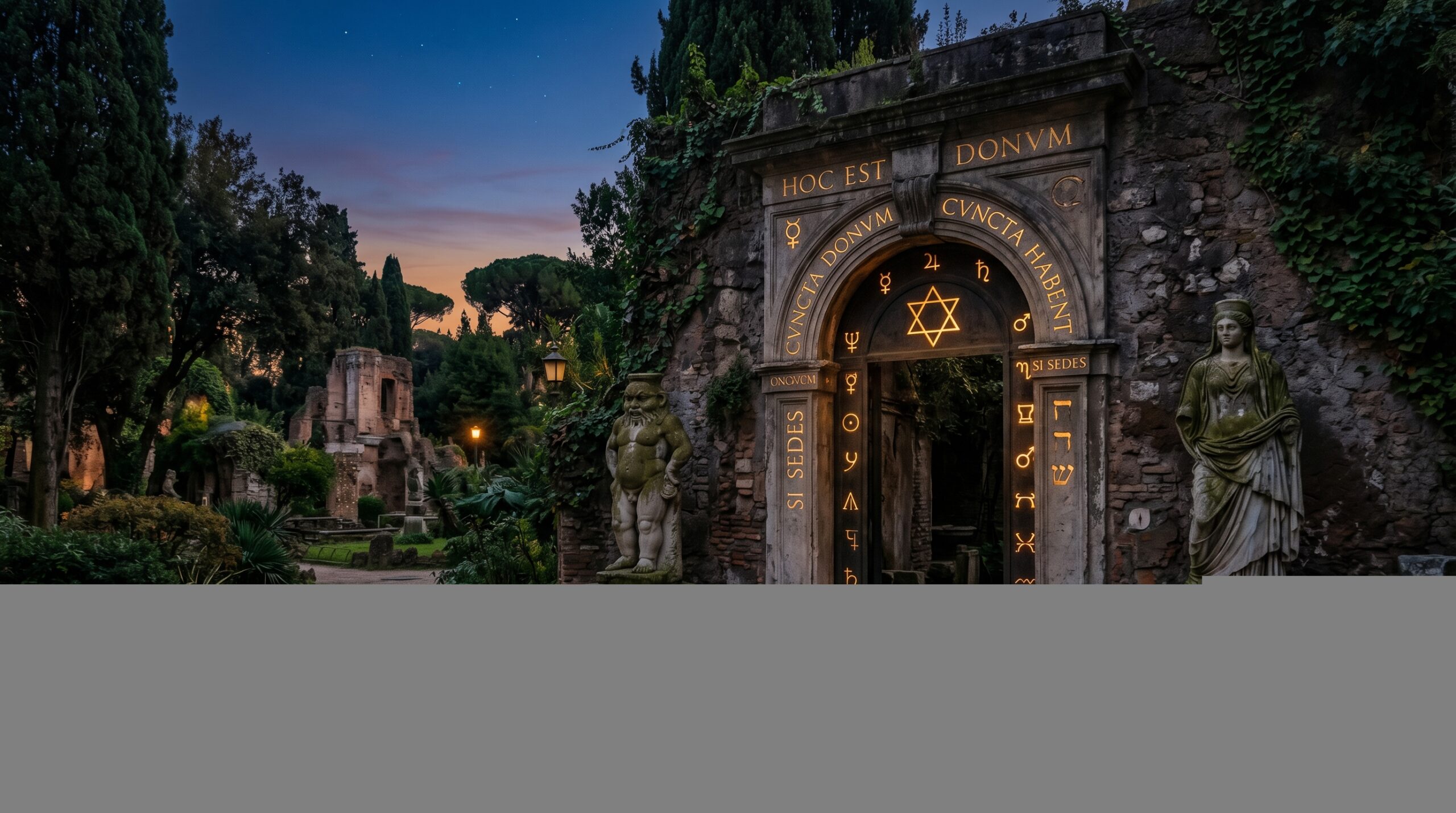
    If you want to keep going, Second Sphinx Under Giza? What the Claim Says, What the Scans Show, and What Remains Unproven expands the picture from another angle.

    For now, that is where the matter stands. The allegation is real as an allegation. Whether the underlying connection can be demonstrated is still the unanswered part of the story.

  • Ancient Demon Traps in Mesopotamia? The Bowls Buried Beneath the House

    Ancient Demon Traps in Mesopotamia? The Bowls Buried Beneath the House

    The short answer is yes: the objects sometimes described as ancient “demon traps” were real, and archaeologists have recovered them in large numbers from late antique Mesopotamia. But the phrase is a modern dramatic gloss. These were not mechanical traps waiting to snap shut on some lurking creature. They were clay incantation bowls—ordinary-looking vessels covered in spiraling texts and buried beneath floors, near thresholds, and around homes to ward off curses, illness, misfortune, and hostile spirits.

    That tension between the sensational label and the documented reality is exactly what makes the subject so compelling. The image is vivid enough to feel cinematic: a household eating, sleeping, and raising children above a hidden bowl inscribed against demons. Yet the evidence itself is solid. These bowls belonged to real domestic ritual life. What remains less certain is how each household imagined the unseen dangers it feared, how literally those beings were understood, and how the objects functioned in day-to-day practice.

    For more context on the broader mystery, see Second Sphinx Under Giza? What the Claim Says, What the Scans Show, and What Remains Unproven and Heaven’s Gate Website Still Online? The 1997 Cult Site That Never Went Away.

    What these bowls were

    Scholars usually call them incantation bowls or magic bowls. Most surviving examples date not to the earliest ages of Babylon and Assyria, but to late antiquity—especially the Sasanian and early Islamic periods in what is now Iraq and nearby regions. They were typically made from plain clay and shaped like everyday bowls, then inscribed on the inside with text that coils inward from the rim toward the center.

    The languages matter. Many bowls are written in Aramaic dialects, including Jewish Babylonian Aramaic, Syriac, and Mandaic. That tells us this was not one isolated custom practiced by a single sect. Jewish, Christian, Mandaean, and other communities in the region seem to have used related forms of household protection, sometimes with overlapping formulas and shared ritual logic.

    The writing was the heart of the object. These bowls were not ornamental. Their force was believed to lie in the words themselves: prayers, adjurations, divine names, legal-style commands, warnings to harmful beings, and protections for named individuals. Some identify the person under threat. Some describe the affliction. Some read almost like buried injunctions, written into the fabric of the home.

    Why they were buried under houses

    A house in late antique Mesopotamia was more than shelter. It was where children were born, food was stored, bodies were tended through illness, and family life unfolded in a world where disease, infant mortality, jealousy, and sudden reversal were common facts of life. If danger could come from outside—or seep in through unseen means—then the threshold, floor, and courtyard became natural places to defend.

    Burying a bowl beneath the house did several things at once. It marked the dwelling as protected. It placed ritual power where a hostile force might be imagined to cross. And because the bowl was hidden, it may also have carried the force of secrecy: protection working silently, continuously, and out of sight.

    Some bowls were buried upside down, which is one reason modern writers so often reach for the word “trap.” The image is irresistible: the demon enters and is pinned beneath the overturned vessel. That interpretation may sometimes fit. But scholars tend to be more careful. In some cases the inverted placement may indeed have suggested confinement; in others, it may simply have been part of ritual convention. The evidence clearly shows protective use. It does not always reveal the precise picture users held in their minds.

    What people were trying to keep out

    The inscriptions reveal a world in which spiritual danger, bodily suffering, and domestic anxiety overlapped. Bowls were used against:

    • demons and malevolent spirits
    • curses sent by enemies
    • illness and wasting conditions
    • misfortune in the household
    • threats to mothers, infants, and fertility
    • harmful supernatural forces recognized in local belief

    In that sense, these bowls were not just about monsters. They addressed ordinary crises of life. A sudden fever, a dead child, a failing marriage, unexplained weakness, mounting bad luck—these were not always separated into neat modern categories of medical, emotional, and supernatural. For many ancient households, those realms bled into one another. A demon might be imagined not simply as a creature with a body and face, but as the unseen agency behind suffering.

    That is part of why the bowls still feel close to us. Their makers were trying to answer a question that has never really gone away: how do you protect a home from dangers you cannot see?

    Did people in Mesopotamia really believe in demons?

    Yes, though the answer is more layered than the modern word suggests. Ancient Mesopotamian religious life included many kinds of supernatural beings, and ideas shifted over long stretches of time. The bowl traditions emerged within a world shaped by multiple religious communities, inherited Near Eastern concepts, and local ritual practices. Demons belonged to that world, but so did angels, sacred names, exorcistic formulas, and appeals to divine authority.

    Modern retellings often flatten this into a simple contest between evil spirits and frightened believers. The historical picture is more textured. Some beings were considered actively hostile. Some were linked to specific forms of harm. Some bowl texts are less interested in narrative mythology than in immediate defense: protect this household, remove this affliction, silence this curse, keep this danger away.

    A useful comparison is the amulet, the protective prayer, or the blessed object in later traditions. The forms differ, but the impulse is familiar. People invoke sacred power to guard the threshold where ordinary life feels most vulnerable.

    What the inscriptions actually say

    Many bowl inscriptions have a strikingly formal tone. They often sound like a blend of prayer, legal decree, and curse reversal. A text may name the person to be protected, identify the spirit or threat, call upon God or angelic powers, and command the hostile force to depart. Some use the language of banishment, divorce, or binding, as though words written in clay could establish a line the enemy had no right to cross.

    Others are stranger. Some include rough drawings or bound figures at the center. Some refer to female demons associated in later discussion with sexuality, childbirth, or attacks on infants. Lilith often appears in modern summaries of the subject, but this is one area where caution matters. Certain bowls and related traditions do invoke figures associated with night danger and child-threatening harm, yet popular accounts often tidy a messier body of evidence into a single, neatly packaged demonology.

    That messiness matters. The bowls are real artifacts, but each one belongs to a particular linguistic and religious setting. There was no universal Mesopotamian handbook for trapping demons beneath the floor. There were many local practices sharing a recognizable family resemblance.

    Were they really meant to trap demons?

    Sometimes perhaps in a symbolic sense. Always, they were meant to protect.

    Readers who want to compare this story with outside reporting can start with The Met on Mesopotamian magic and Wikipedia on incantation bowls.

    The phrase “demon trap” captures part of the idea because some bowls do seem intended to bind or restrain a harmful presence. But the phrase also distorts the practice if it makes the object sound like a physical snare. These bowls worked through ritual language, sacred authority, and symbolic placement. They belong to the broader world of apotropaic magic—acts meant to turn away harm.

    That distinction does not make the history less eerie. If anything, it makes it stranger. These households were not building devices in the modern sense. They were creating a buried perimeter of written protection, a legal-spiritual barrier pressed into the earth beneath domestic life. The bowl was less a cage than a command: you may not enter here.

    What scholars are sure about

    On the central points, the evidence is strong.

    Scholars are confident that:

    • incantation bowls are genuine archaeological artifacts
    • many were placed in domestic settings
    • their inscriptions were intended to protect named people or households
    • they belong to a wider tradition of ritual defense against unseen harm
    • the practice appears across multiple religious communities in late antique Mesopotamia

    Museums and academic collections preserve many examples, and specialists have spent decades translating and comparing them. The core story is not speculative. People really did bury inscribed protective bowls in and around the places they lived.

    What remains uncertain

    The uncertainties begin when historians move from identifying the objects to reconstructing lived experience.

    Researchers still debate questions such as:

    • who wrote the bowls—trained scribes, ritual specialists, or semi-literate practitioners working from familiar formulas
    • how standardized the texts were
    • whether all inverted bowls were intended as symbolic imprisonment
    • how widespread bowl use was across different social classes
    • how closely these practices were tied to official religion versus local custom

    Archaeology also has its limits. Many bowls survive only in fragments. Some were recovered from disturbed contexts or removed long ago from their original settings. The result is a field where the broad outlines are clear, but the most vivid interpretations are not always the most secure.

    Why the bowls still feel eerie

    Part of it is visual. A clay bowl covered in spiraling script already carries the aura of a secret. Learn that it was buried beneath a floor to ward off demons, and the object begins to feel like something lifted from fiction.

    But the deeper unease comes from what the bowls record about ordinary fear. They were made in response to miscarriage, fever, envy, bad luck, sleeplessness, domestic strain, and the steady vulnerability of life before modern medicine. Their makers answered those pressures by placing protection directly into the structure of the house itself.

    For all the historical distance, that impulse is not alien. People still hang blessed objects by the door, recite prayers over children, carry charms, avoid places thought to hold bad energy, or mark a home against harm in whatever language their culture provides. The forms change. The need does not.

    Are modern retellings exaggerating the story?

    Often, yes.

    Online retellings tend to compress centuries of history into one sharp, spooky claim: ancient Mesopotamians buried bowls under their doorsteps to trap demons. There is truth in that sentence, but it strips away the context that makes the practice intelligible. These objects belonged to literate ritual cultures, not just to a ready-made horror image. They were used by Jewish, Christian, and Mandaean communities, along with others shaped by older Near Eastern traditions. They were tied to childbirth, illness, curses, household danger, and spiritual defense—not only to dramatic battles with monsters.

    Timelines are often blurred too. The phrase “ancient Mesopotamia” can make readers picture the deepest antiquity, the age of Gilgamesh or imperial Assyria. Most surviving incantation bowls are later than that. They remain fascinating, but they belong more accurately to late antique Mesopotamia.

    The real story beneath the floor

    The buried bowls of Mesopotamia are not proof that demons were objectively captured beneath ancient houses. They are proof that people believed unseen harm could be resisted, and that writing itself could become a form of defense. That is historically grounded, culturally rich, and unsettling enough without embellishment.

    If you want to keep going, Skinwalkers Caught on Camera? What Viral Videos Usually Show expands the picture from another angle.

    So if the phrase “ancient demon traps” catches the eye, the truth is both plainer and more interesting than the myth. The bowls were real. The fears behind them were real. The ritual words pressed into their surfaces were real. What remains uncertain is the invisible world their users believed surrounded them. That borderland—between household routine and supernatural threat, between buried object and living fear—is what still gives these bowls their enduring power.

  • Skinwalkers Caught on Camera? What Viral Videos Usually Show

    Skinwalkers Caught on Camera? What Viral Videos Usually Show

    The short answer is no: viral “skinwalkers caught on camera” clips almost never amount to credible proof that a supernatural shape-shifter has been filmed. Most are murky, unverified videos—something moving strangely at the edge of headlights, an animal glimpsed in bad light, a staged scare, an edited short, or footage too chaotic to assess with confidence. But that does not make the phenomenon uninteresting. What these clips reveal, more often than anything paranormal, is the collision between a real Indigenous tradition, internet horror culture, and the very human tendency to find certainty inside a blur.

    That tension is why the subject keeps resurfacing. A skinwalker, in its original cultural context, is not just another spooky creature from a comment section. The online version of the term has drifted into a catch-all label for anything in the dark that looks wrong. To understand why these videos spread so quickly—and why they feel persuasive in the moment—you have to separate the folklore, the internet mythology, and the evidence.

    For more context on the broader mystery, see Heaven’s Gate Website Still Online? The 1997 Cult Site That Never Went Away and Ancient Demon Traps in Mesopotamia? The Bowls Buried Beneath the House.

    What a skinwalker means in traditional belief

    When people online say “skinwalker,” they are usually borrowing a term from Navajo tradition. In that context, it refers to a malevolent witch associated with taboo acts, harmful power, and transformation. It is not a generic monster category, and many Navajo people have made clear that outsiders often sensationalize the idea, strip it from its cultural meaning, and turn it into entertainment.

    That distinction matters. Much of what circulates online under the skinwalker label has only a loose connection, if any, to the original belief. On social media, the word now gets applied to almost anything uncanny: a deer moving strangely, a figure crouched beside a road, an animal with mange, a face warped by headlights, or a prank video with distorted audio and a hard cut at exactly the right moment. In practice, “skinwalker” has become shorthand for a particular feeling—something almost familiar, and therefore deeply unsettling.

    So if the question is whether skinwalkers are really being caught on camera, the first honest answer is this: the traditional belief is real as a matter of culture and spiritual tradition. The viral video category is something else entirely, shaped far more by modern folklore than by documented supernatural evidence.

    Why so many videos get labeled that way

    The phrase “caught on camera” sounds decisive before a viewer has seen a single frame. It suggests proof, or at least a breakthrough. Then the footage begins: night woods, a shaky beam of light, someone breathing too hard behind the phone. By the time the clip ends, the label has already done half the work.

    Most videos described as skinwalker footage share the same anatomy:

    • poor lighting or night filming
    • sudden zooms and shaky camera movement
    • a subject visible only briefly
    • distorted, amplified, or emotionally charged audio
    • an isolated setting such as a roadside, field, or tree line
    • an abrupt ending before the viewer can fully orient themselves

    Those details are not just common; they are ideal conditions for mythmaking. Ambiguity invites interpretation. A deer moving awkwardly because it is startled, injured, or caught mid-turn can look eerily wrong for a split second. A person crawling, twitching, or framed from an odd angle can seem inhuman with very little encouragement. Once viewers enter the clip expecting horror, their minds begin filling in the missing pieces.

    Why Appalachia keeps getting pulled into the story

    Appalachia is not the traditional home of skinwalker belief, yet it has become one of the internet’s favorite backdrops for skinwalker stories. That says less about Navajo tradition than it does about the way online horror works.

    In the popular imagination, Appalachia already carries a heavy atmosphere: narrow roads, deep woods, old mountains, isolated homes, inherited lore, and the feeling that some places are best left alone. Social media has exaggerated those qualities into a ready-made stage set. Once that happened, videos from the region began attracting imported labels, including “skinwalker,” even when the original folklore behind the term had nothing to do with Appalachia.

    This blending reflects a broader internet habit. Regional ghost stories, cryptid legends, witch beliefs, and Indigenous traditions get folded together into one giant supernatural mood board. The result is a flood of “Appalachian skinwalker” stories that may feel vivid and persuasive while remaining culturally imprecise. Often, they tell you more about how digital folklore spreads than about any one tradition on its own terms.

    What skeptics usually think they are seeing

    For all the dread these clips can generate, the skeptical explanations are often strikingly ordinary.

    Common explanations include:

    • ordinary animals filmed from poor angles
    • deer, coyotes, dogs, or bears affected by disease or injury
    • low-light distortion and phone-camera compression
    • staged or edited clips designed to go viral
    • people performing for the camera
    • misidentified sounds, especially foxes, bobcats, deer, and owls

    The sound element matters more than many viewers realize. A scream in the woods can feel like instant proof that something unnatural is nearby, but several common animals produce calls that sound almost absurdly eerie. Foxes can sound uncannily human. Deer can make harsh, explosive noises. Owls and other night birds can create calls that, stripped of context, feel tailor-made for a horror soundtrack.

    The same goes for the visuals. A mangy coyote in poor light, a deer half-turned in headlights, or a person lit by one moving flashlight can look grotesque on a phone screen. Add compression artifacts, a caption that frames the scene as forbidden evidence, and a few panicked reactions in the comments, and the mundane explanation can lose the race almost immediately.

    Why the footage still feels convincing

    Even when a rational explanation is available, these videos often land with a real jolt.

    Part of the reaction is biological. Human beings are wired to detect threat quickly, especially in low visibility. If something in the dark moves in a way that seems off, the brain reacts before it analyzes. Better to overread danger than miss it.

    Part of it is cultural. Horror films, creepypasta, paranormal television, and short-form video have taught viewers a recognizable visual language of dread: jerky movement, too-still faces, limbs that seem too long, animal behavior that reads as strangely deliberate, a sudden cry from just beyond the frame. Phone footage can reproduce those cues by accident. Once it does, viewers are already halfway into the story.

    And then there is the crowd effect. People rarely watch these clips alone anymore. They watch with captions, reposts, stitched reactions, and comment sections full of certainty. Once thousands of viewers insist a video shows a skinwalker, the label becomes sticky. The clip stops being raw footage and starts becoming collective narrative.

    Readers who want to compare this story with outside reporting can start with Wikipedia on the skin-walker tradition and Britannica on the Navajo people.

    How much of this is modern folklore?

    A great deal of it.

    Folklore is not only the old stories passed down around fires or preserved in archives. It is also what people repeat, reshape, and invest with meaning in the present. By that standard, “skinwalkers caught on camera” is one of the internet’s most efficient folklore machines.

    A clip appears. Someone supplies the label. Others add warnings, secondhand accounts, and bits of supposed local knowledge. Soon the video is no longer just a fragment of unclear footage. It becomes part of a shared story world, with its own familiar beats: the lonely road, the bad signal, the headlights, the thing that looks almost human, the terrified whisper, the cut to black.

    That does not make the phenomenon false in a cultural sense. On the contrary, it shows how myths are still being built in public, one upload at a time. The supernatural claim may be weak, but the folklore is very real.

    The trouble with using one word for every eerie sighting

    There is also a cost to how casually the term gets used. Treating every unsettling video as a “skinwalker” sighting erases the specificity of the Navajo concept and flattens other local traditions as well. Appalachia has its own body of ghost stories, strange-animal tales, death omens, and haunted-place lore. Rural America more broadly is full of stories about shapeshifters, witches, mimic voices, and unnamed things in the woods. Those traditions may share a mood, but they are not interchangeable.

    The internet tends to collapse them anyway because shorthand spreads faster than nuance. One familiar label can travel across platforms in minutes. A careful explanation rarely does. But if the goal is understanding rather than just a thrill, that shortcut leaves too much out.

    Has any skinwalker video been proven authentic?

    No widely circulated skinwalker video has emerged as clear, independently verified proof of a supernatural shape-shifter. That is the simplest and most accurate answer.

    Some clips remain unresolved in the weaker sense that no one can say with certainty what appears in them. But unresolved is not the same as paranormal. In many cases, the footage is simply too poor to analyze well. And when that happens, uncertainty tends to benefit the most dramatic explanation, because mystery is shareable in a way ordinary answers are not.

    That pattern shows up across paranormal media. Lack of closure is often treated as evidence, when it usually means the evidence is not strong enough to support a conclusion at all.

    Why people keep looking anyway

    Because the fear at the center of these clips is an old one.

    A creature that imitates the natural world while getting something subtly wrong is one of horror’s most durable ideas. It touches a deep unease: that the familiar can be worn like a disguise. The skinwalker label intensifies that fear because it implies intention. Not just a shadow in the woods, but something watching, choosing, and presenting itself in the wrong shape.

    That is part of why these videos thrive in short-form feeds. They do not have to hold up under careful scrutiny. They only have to trigger recognition, dread, and curiosity for a few seconds. For that brief window, they can feel overwhelmingly persuasive.

    What remains uncertain

    What is not uncertain is that social media holds a vast archive of eerie, low-quality footage. It does. What remains uncertain is whether any particular clip captures something beyond misidentification, performance, editing, or visual distortion. So far, the public evidence does not support that conclusion.

    There is also a more cultural kind of uncertainty worth acknowledging. In communities shaped by strong local traditions, some people do not treat these subjects as entertainment at all. They may not want to debate them, document them, or define them neatly. They may simply avoid certain stories, certain places, or certain names. That does not validate the viral videos, but it does help explain why dismissive coverage can miss the seriousness folklore still carries for the people closest to it.

    What to believe when a clip goes viral

    Start with caution. Ask what the video actually shows before accepting the caption that arrived with it. Look at the lighting, distance, movement, sound, possible edit points, and whether the source can be traced. Be especially skeptical of footage presented as instant proof.

    It also helps to notice what the clip is doing psychologically. Most viral skinwalker videos spread not because they establish facts, but because they combine old fears, cultural shorthand, and digital ambiguity into a format built to travel.

    If you want to keep going, Oarfish Sea Serpent Theory: Could This Deep-Sea Fish Explain the Legend? expands the picture from another angle.

    So no: there is no solid body of footage proving that skinwalkers have been caught on camera. What exists instead is a growing archive of modern legend-making—real tradition at the root, internet distortion layered over it, and a very old fear lingering at the center of the frame. That may be less sensational than the caption promises, but it is the more honest story.

  • Kacey Musgraves UFO Sighting: What She Said She Saw From the Plane

    Kacey Musgraves UFO Sighting: What She Said She Saw From the Plane

    Kacey Musgraves’ reported UFO sighting has the kind of built-in drama that almost guarantees attention: a famous passenger, a plane window, and something strange in the dark. Strip away the headlines, though, and the story becomes simpler and more familiar. What exists publicly is an eyewitness account of unusual lights or objects seen from the air, not proof of extraterrestrial craft or even proof of a genuinely anomalous event.

    That distinction matters. Celebrity can make a sighting louder, but it cannot make it clearer. At the same time, not every strange report deserves a shrug. The most grounded reading is also the most honest one: Musgraves appears to have described something she found unusual, and without confirmed flight data, timestamped imagery, or detailed corroboration in public view, the sighting remains intriguing but unresolved.

    For more context on the broader mystery, see Immaculate Constellation UFO Leak: What the Claim Is and Why People Are Arguing About It and James Clapper UFO Retrieval Program Allegations: What Is Claimed and What Is Still Missing.

    What did Kacey Musgraves say she saw?

    The broad outline is simple: Musgraves reportedly described seeing glowing objects while flying. That is enough to trigger speculation, but it is not enough to identify what those objects were.

    In cases like this, the missing details are everything. How many lights were there? How long were they visible? Did they appear to move together, change speed, or shift direction? Were they seen by other passengers or crew? Did they seem distant, nearby, above the horizon, or reflected in the window? Those are the questions that determine whether a sighting begins to harden into a case or remains a vivid anecdote.

    For now, the public version of the story sits firmly in the second category. A well-known person looked into the night sky from an aircraft and saw something she could not readily explain. That may sound small, but it is the starting point for many enduring UFO stories. What it is not, by itself, is evidence of anything extraordinary.

    Why sightings from airplanes feel more convincing

    Something about an in-flight sighting carries extra weight. A plane seems like a cleaner vantage point than the ground: above tree lines, above much of the light pollution, above the ordinary visual clutter that makes distant lights so hard to judge. A report from that height can feel less like guesswork and more like observation.

    There is some reason for that instinct. Passengers and pilots do sometimes get unusually broad views of the sky, and aviation has long played a central role in UFO lore for exactly that reason. Reports from the air can feel sharper, less casual, and harder to wave away.

    But the plane window can also be a trickster. Darkness compresses distance. Layered glass creates reflections. A fast-moving aircraft changes the way stationary or faraway lights appear to drift, pace, or hover. Bright planets, stars, other aircraft, satellite trains, weather effects, and cabin reflections have all produced sincere sightings that felt uncanny in the moment.

    So the setting helps explain why the story caught on, but it does not settle the story. An airplane can offer a dramatic view of the sky. It can also make the sky easier to misread.

    Could there be an ordinary explanation?

    Very possibly.

    That is not a dismissal of Musgraves as a witness. It is simply the starting point whenever a sighting lacks the detail needed to test more dramatic conclusions. Most unusual aerial reports turn out to involve familiar things seen under unfamiliar conditions.

    The usual possibilities in a case like this include:

    • Other aircraft, especially when navigation lights or landing lights appear at odd angles against a dark sky
    • Satellites or satellite trains, which can look strangely geometric or coordinated if a viewer is not expecting them
    • Window reflections from cabin lights, reading lamps, or illuminated screens
    • Astronomical objects such as bright planets or stars that seem to move relative to the aircraft
    • Atmospheric effects, including haze, ice crystals, or distant storm activity that can distort light in surprising ways

    None of those explanations has the narrative charge of a true mystery. But ordinary explanations are common precisely because they are ordinary. The real question is not whether a mundane explanation exists in theory. It is whether one fits the specific details of this sighting. At the moment, the public record does not seem detailed enough to say.

    What celebrity adds to a UFO story

    If an anonymous passenger had made the same report, it might have vanished before the plane landed. Attach the story to a Grammy-winning artist, and it becomes a conversation piece almost instantly.

    That says less about the sky than it does about how people process testimony. Some readers assume a celebrity has little reason to invent a strange encounter and therefore deserves extra credibility. Others assume fame makes any unusual claim more suspect. Both reactions are understandable, and neither is especially reliable.

    A celebrity is still only a witness. Fame does not improve a person’s ability to judge distance, speed, or scale through glass at night. What it does change is amplification. It turns an uncertain moment into a public event before the underlying facts have had time to settle.

    That is often where UFO stories become distorted. The argument jumps straight to implications—is this proof, a hoax, a joke, a revelation—before the more basic questions have been answered. What exactly was seen? When? For how long? By whom else? Without those answers, the story expands faster than the evidence.

    Where this fits in the history of in-flight UFO reports

    Musgraves’ account lands in a well-worn corridor of UFO history. Since the mid-20th century, commercial pilots, military aviators, flight crews, and passengers have all reported lights or objects that appeared to move in unusual ways, keep pace with aircraft, or show up where they should not have been.

    Readers who want to compare this story with outside reporting can start with USA Today on the reported Kacey Musgraves sighting and Deutsche Welle on how UFO reports are evaluated.

    Most of those reports never become major cases. Some are explained later. Some remain unresolved only because too little evidence survives to evaluate them properly. A smaller number endure because they include multiple witnesses, radar returns, cockpit audio, or official investigation.

    That distinction is worth keeping in view. Not all UFO reports carry the same evidentiary weight. A single eyewitness account from a plane can be memorable and genuinely puzzling, but it is not the same thing as a case supported by instrument data and a documented timeline.

    Even so, stories like this continue to resonate because they touch a familiar nerve. Air travel is supposed to make the sky feel mapped, monitored, and known. Then someone looks out a window and sees something that refuses, at least for a moment, to fit the script.

    What would make the sighting more persuasive?

    The most useful next details would be practical, not sensational.

    A stronger assessment would depend on information such as:

    • the date and approximate time of the flight
    • the route or region where the sighting occurred
    • whether other passengers or crew described the same thing
    • any original photos or video with reliable context
    • a fuller description of how the lights or objects moved relative to the plane
    • attempts to match the sighting against known aircraft, satellites, or celestial objects visible at that time

    This is what separates a compelling story from a durable case file. Many UFO reports stay unresolved not because they point to something impossible, but because the raw observational details needed to test them are never preserved.

    If more evidence appears, the picture could sharpen quickly. If not, the sighting will likely remain what it is now: striking, memorable, and impossible to verify from the outside.

    Was it really a UFO?

    In the strictest sense, maybe yes. If Musgraves saw something she could not identify, then it was, from her point of view, an unidentified flying object—or, in newer terminology, an unidentified anomalous phenomenon.

    That does not mean it was alien, advanced, or beyond conventional explanation. It means only that the object was not immediately recognizable to the observer.

    That distinction is easy to lose because popular culture has spent decades treating “UFO” as shorthand for extraterrestrial visitation. But careful reporting depends on separating the two. “Unidentified” describes a limit in knowledge. It does not describe the thing itself.

    What remains uncertain

    The uncertainty here is not cosmic so much as practical. We do not know enough about the viewing conditions. We do not know whether multiple witnesses have gone on the record. We do not know whether any imagery exists with clear provenance. And we do not know whether the objects behaved in a way that genuinely resists an ordinary explanation or simply looked unusual in a fleeting moment.

    That leaves two ordinary possibilities on the table.

    One is that Musgraves saw something mundane under conditions that made it seem extraordinary. That happens all the time, and it would not make the experience any less real from her perspective. The other is that she saw something the public cannot yet explain because the public does not yet have the full story. That happens, too. A report can remain unresolved without proving anything exotic.

    The bottom line

    The Kacey Musgraves UFO sighting is compelling for the same reason many eyewitness stories are compelling: it captures a moment when certainty gives way to wonder. A familiar figure looks into a dark sky from 30,000 feet and sees something she cannot place. That is enough to stir the imagination.

    But imagination is not evidence. Based on what is publicly described, there is no reason to treat this as proof of alien craft, hidden technology, or anything else dramatic. There is also no reason to sneer at it. The balanced conclusion is the least glamorous and the most defensible: something unusual was reportedly seen, there may be an ordinary explanation, and the evidence available so far does not allow a firmer answer.

    If you want to keep going, Skinwalkers Caught on Camera? What Viral Videos Usually Show expands the picture from another angle.

    That middle ground may be less thrilling than certainty, but it is often where the truth of these stories lives: in the brief, unnerving gap between what someone saw and what anyone else can actually prove.

  • Heaven’s Gate Website Still Online? The 1997 Cult Site That Never Went Away

    Heaven’s Gate Website Still Online? The 1997 Cult Site That Never Went Away

    Yes, the Heaven’s Gate website is still online, and that fact still lands with a jolt. People expect a broken link, a memorial page, or a museum-style archive. Instead they find a living fragment of the 1990s web: plain HTML, simple navigation, long blocks of text, and the undisturbed voice of one of America’s most infamous apocalyptic groups.

    That does not mean Heaven’s Gate survived as an active movement in any ordinary sense. The group is remembered above all for the March 1997 mass suicide in Rancho Santa Fe, California, when 39 members died believing they were leaving their human “vehicles” to join a higher extraterrestrial existence associated with the Hale-Bopp comet. But the website built around that worldview did not disappear with them. It remained.

    For more context on the broader mystery, see Doomsday Clock at 85 Seconds to Midnight: What the Warning Really Means and Ancient Demon Traps in Mesopotamia? The Bowls Buried Beneath the House.

    That is what makes the site so unsettling. It is not merely about Heaven’s Gate. It is Heaven’s Gate, still speaking in its own words. For historians of religion, researchers of cult dynamics, archivists of the early internet, and curious readers who stumble across it years later, the site offers something rare and uncomfortable at once: a primary-source artifact that feels less preserved than suspended.

    What was Heaven’s Gate?

    Heaven’s Gate was a religious movement founded in the 1970s by Marshall Applewhite and Bonnie Nettles, known within the group as “Do” and “Ti.” Their teachings fused Christian themes, apocalyptic expectation, New Age ideas, and UFO belief into a worldview that cast Earth as a temporary station and ordinary human life as something followers were meant to outgrow.

    Members were taught that the body was only a “vehicle” and that true identity belonged to a higher order of existence often called the “Next Level.” In the group’s theology, advanced beings could move between worlds, and disciplined adherents might eventually join them. That promised ascent required extreme detachment: separation from family life, suppression of sexuality, rejection of mainstream society, and obedience to the group’s spiritual framework.

    By the time the public internet opened up in the 1990s, Heaven’s Gate already had a polished internal language—part sermon, part system manual. The web turned out to be a natural home for it. The group’s site did not read like sensational press coverage of a doomsday cult. It read like a calm invitation to consider a set of teachings the group believed explained reality.

    Why is the website still online?

    The plain answer is that someone kept it online.

    For years after the 1997 deaths, reporting indicated that a small number of people associated with the group—often described as former members who left before the final event or supporters committed to preserving its teachings—continued to maintain the site and respond to inquiries. Two individuals in particular have been frequently mentioned in coverage as connected to that long-term preservation effort.

    Not every detail of the site’s upkeep has been transparent to the public, and that uncertainty has helped give the page an almost ghost-story aura. But there is nothing supernatural about its survival. Domains are renewed. Hosting is paid for. Files remain available because someone makes sure they do.

    What is unusual is not the mechanism but the intention. If the site existed only as a capture in the Internet Archive, it would feel historical in a familiar, buffered way. Because it remains accessible on the live web, it carries the strange sensation of an ending that never quite sealed shut.

    What do you see when you visit it?

    First comes the visual shock of recognition. The site looks unmistakably old: sparse pages, basic links, minimal graphics, and the hand-built feel of an internet that once seemed smaller and far less polished. It resembles the kind of page many people associate with the web’s early years, before design became sleek and standardized.

    Then comes the more unsettling part. The writing is steady, explanatory, almost gentle. It does not sound like the lurid mythology that later attached itself to the group in documentaries and headlines. It sounds like believers laying out a worldview they regarded as lucid and urgent.

    That directness is what gives the site its power. It bypasses decades of framing and returns visitors to the group’s own rhetoric: how members understood the human condition, why they believed Earth was nearing a decisive transition, and why choices that now read as catastrophic seemed meaningful from the inside.

    For some readers, that makes the site historically valuable. For others, it is precisely what makes the page hard to shake.

    Why do people find it so eerie?

    Most abandoned websites feel harmless. They suggest neglect, not menace. The Heaven’s Gate site feels different because it is attached to one of the most recognizable cult tragedies in modern American history.

    Part of the unease comes from the collision of eras. The design belongs to the bright, experimental early web. The message belongs to a closed belief system that ended in mass death. Yet the site remains only a click away, with no narrator standing beside it to interpret, soften, or condemn. Visitors are left alone with the material.

    There is also a deeper human reason the page lingers in memory. It turns a familiar media story back into a community of voices. The robes, headlines, and archival footage recede. In their place are people trying, in plain language, to explain what they believed reality was. That is often more disturbing than the spectacle that made the group famous.

    Is it a historical document, a memorial, or something more troubling?

    The answer depends on what you think preservation does.

    Some readers see the site primarily as a historical document. In that view, keeping it online preserves an unusually important primary source for studying new religious movements, coercive belief systems, and the culture of the early internet. If the site vanished, something essential about how the group represented itself would vanish with it.

    Readers who want to compare this story with outside reporting can start with The original Heaven’s Gate website and Wikipedia background on Heaven’s Gate.

    Others see the page less as an archive than as a continued transmission. Because the material still presents the group’s teachings in its own voice, without being reframed into retrospective commentary, the site can feel uncomfortably close to advocacy. That does not mean it carries the reach or force it once might have had, but it does explain why some visitors react with alarm rather than curiosity.

    The most balanced view may be that the site is both: a historical artifact and a troubling one. Its value lies partly in the fact that it was not rewritten into safer language. Its discomfort lies in exactly the same place.

    What the evidence actually shows

    The site’s continued existence is not an internet rumor. It has been noted for decades in reporting, documentaries, and discussions of digital culture. Journalists have also long pointed out that Heaven’s Gate was unusually fluent in the online world for a fringe religious movement of its era. Members had marketable technical skills and operated a web-design business, which helped support the group financially.

    That context matters. Heaven’s Gate was not accidentally frozen online. It was already using the internet intentionally as part of how it presented itself to the world.

    At the same time, the site’s endurance has attracted mythmaking. Some descriptions make it sound as if it survives by mysterious means. Others hint at hidden networks or secret ongoing activity without evidence. The simpler explanation is the stronger one: a website stays up when people preserve it, and preserved ideology can be more unnerving than ideology that disappears.

    Why Heaven’s Gate fit the internet so well

    In retrospect, the group’s online presence seems oddly ahead of its time. Heaven’s Gate offered a complete explanatory system. It used specialized language that separated insiders from outsiders. It treated mainstream culture as blind to a larger truth. And it invited people who felt alienated from ordinary life to imagine that alienation as evidence of a higher calling.

    Those features were not unique to Heaven’s Gate, but the web amplified them in important ways. A person could encounter the teachings privately, absorb them at length, and engage with a coherent worldview outside the checks of family, community, or public debate. The internet did not create the movement, which long predated the website, but it gave the group a new kind of stage.

    That is part of why the surviving site continues to matter to researchers. It shows how the early web functioned not just as a marketplace or communications tool, but as a habitat for belief, identity, and isolation.

    Why are people still talking about it now?

    Part of the answer is nostalgia. The internet has reached an age where old websites have become artifacts in their own right, and many people feel a strange fondness for the crude, handmade look of the 1990s web. At first glance, the Heaven’s Gate site seems to belong to that category.

    Then the second realization arrives. This is not an old fan page or forgotten startup. It is the preserved public face of a group associated with mass death. That sudden turn—from retro curiosity to dread—is part of what keeps the page circulating in documentaries, social media posts, and word-of-mouth recommendations.

    There is a broader reason, too. The site has become a stark example of how the internet preserves belief long after events are supposed to have passed into history. Pages remain reachable. Ideas remain searchable. A movement that feels sealed off in the past can still be entered through a URL.

    What scholars and skeptics would caution against

    The easiest mistake is to turn the site into a spooky internet legend. That framing gives it atmosphere, but it can flatten what it really represents. Scholars of religion and experts on cult dynamics would be more likely to treat it as evidence of a real movement with real victims, not merely a piece of eerie digital ephemera.

    Skeptics would also caution against overstating the unknowns. The site’s survival does not require paranormal explanation, secret technological infrastructure, or a hidden resurgence of the group. It requires maintenance and intent, both of which are entirely plausible.

    The grounded interpretation is the most revealing one: the page is unsettling not because it is supernatural, but because it is real.

    What remains uncertain

    Some details of the site’s maintenance remain hazy to the broader public, and the line between archival preservation and continued promotion can be uncomfortable to define. That ambiguity is part of why the page still inspires such strong reactions.

    But the core facts are not especially mysterious. The website’s survival is real, its historical significance is real, and its eerie quality comes from direct exposure to the group’s own words rather than from any paranormal element attached to the site itself.

    The bottom line

    At the most basic level, the Heaven’s Gate website is still online because someone has continued to preserve it. The deeper reason it continues to fascinate people is that it preserves conviction with unusual force. Printed pamphlets fade. Television footage gets edited and narrated. A live website can preserve tone, structure, and self-presentation in a far more immediate way.

    If you want to keep going, Skinwalkers Caught on Camera? What Viral Videos Usually Show expands the picture from another angle.

    Culturally, the site endures because it sits at the crossroads of several modern obsessions: cult history, digital archaeology, and the uneasy recognition that dangerous ideas do not disappear simply because the people who advanced them are gone. It does not prove anything paranormal, and it does not mean Heaven’s Gate survives in its original form. What it offers instead is more unsettling: an intact record of belief, still public, still reachable, still waiting behind a link.

  • Doomsday Clock at 85 Seconds to Midnight: What the Warning Really Means

    Doomsday Clock at 85 Seconds to Midnight: What the Warning Really Means

    Eighty-five seconds to midnight does not mean the world has 85 literal seconds left. The Doomsday Clock is a symbol, created by the Bulletin of the Atomic Scientists to express how dangerously close humanity appears, in its judgment, to catastrophic human-made disaster. Midnight stands for global catastrophe. The shrinking distance to it is meant to feel alarming, because alarm is the point.

    That is why the Clock still lands with such force. In a single image, it condenses nuclear danger, geopolitical instability, climate stress, technological risk, and failures of international cooperation into something instantly legible. Supporters see that as one of the most effective warning devices in public life. Critics see a theatrical metaphor that can make complicated policy questions sound like a cosmic countdown. Both views capture something true about why the Clock keeps returning to public conversation.

    For more context on the broader mystery, see Heaven’s Gate Website Still Online? The 1997 Cult Site That Never Went Away and Second Sphinx Under Giza? What the Claim Says, What the Scans Show, and What Remains Unproven.

    What the Doomsday Clock is

    The Doomsday Clock was introduced in 1947 by the Bulletin of the Atomic Scientists, an organization founded by scientists connected to the Manhattan Project who later became deeply concerned about the dangers created by nuclear weapons. The Clock was never intended as a scientific instrument. It was designed as a public symbol—a way to translate abstract existential danger into an image almost anyone could understand at a glance.

    Midnight represents civilization-ending catastrophe. When the hands move closer to midnight, the Bulletin is signaling that the international situation has become more dangerous. When they move farther away, it is signaling relative improvement. Although the Clock began in the shadow of nuclear war, the factors considered over time have broadened to include climate change, emerging technologies, misinformation, biological threats, and the weakening of the political systems needed to manage them.

    So when people say the Clock stands at 85 seconds to midnight, what they really mean is this: the Bulletin believes the world is in an exceptionally dangerous moment, and it wants that warning to be difficult to ignore.

    Why use a clock at all?

    Because symbols move faster than reports.

    Few people will sit down with a technical assessment of arms control, biosafety, climate feedback loops, or global information disorder. A clock hand edging toward midnight needs no glossary. It communicates urgency, proximity, and consequence in a single glance.

    That simplicity is the source of the Clock’s power, and also the source of its limitations. It makes sprawling issues legible. It can also make them seem more unified and measurable than they truly are. Nuclear war, climate disruption, and technology-related dangers do not run on one shared schedule. They are different problems with different pathways and timelines. The Clock folds them into one image because its purpose is communication, not precision.

    What 85 seconds to midnight actually means

    It means the Bulletin’s leaders and advisers believe humanity remains perilously close to self-inflicted catastrophe. It does not mean disaster is mathematically due, prophetically fixed, or literally timed.

    The number is best understood as a judgment rendered in symbolic form. It says that a cluster of major risks is being managed badly enough that the margin for safety has become frighteningly thin. The closer the Clock moves to midnight, the more urgently the organization is arguing that present conditions are unacceptable.

    That can make the Clock sound almost mystical to people encountering it for the first time. But the Clock is not an oracle. It is an argument, compressed into a picture.

    Why the warning feels so powerful

    The image works because it turns sprawling danger into story. A list of risks can remain abstract no matter how grave it is. A countdown does not. Midnight carries emotional weight even before anyone explains it. It suggests endings, finality, and the moment after which there is no easy return.

    That is why the Clock travels far beyond science and policy circles. It appears in conversations about apocalypse, civilizational collapse, end-times anxiety, and the broader modern feeling that history has begun to accelerate. The institution behind it is secular, but the metaphor brushes against very old human instincts. People are drawn to symbols that seem to sum up the age they are living through.

    Why the Clock moves

    The Bulletin adjusts the Clock when it believes the balance of global risk has shifted in a meaningful way. Historically, nuclear danger has remained central: arms races, deteriorating diplomacy, weakened treaties, and new weapons systems can all push the hands forward. In more recent decades, the organization has also emphasized climate change, biological threats, disruptive technologies, and information disorder.

    The specific mix varies from year to year, but the larger message is usually consistent. The danger is not just that catastrophic threats exist. It is that the institutions capable of reducing them often appear unable or unwilling to act with enough speed, clarity, or cooperation.

    That is one reason the warning can feel so bleak. It is not merely describing a hazardous world. It is describing a world in which hazards are being handled poorly.

    Is the Doomsday Clock scientifically objective?

    Not in the narrow sense.

    The Clock is informed by expertise, but it is not the reading of a device. There is no machine that measures “seconds to midnight.” The setting reflects deliberation by scientists, policy experts, and other advisers associated with the Bulletin, who review current conditions and issue a symbolic judgment.

    That does not make the Clock meaningless or arbitrary. It means it should be understood for what it is: an expert communication tool, not an empirical meter. This distinction matters because public arguments about the Clock often go wrong in opposite directions. Admirers sometimes talk about it as though it carries near-prophetic authority. Detractors sometimes ridicule it for lacking a mechanical precision it never claimed to possess.

    The fairest reading is simpler than either extreme. The Clock is a serious symbolic warning, not a scientific instrument.

    Why supporters defend it

    Supporters argue that the Clock remains useful for several reasons.

    First, it keeps existential risk visible. The gravest threats in modern life often become background noise precisely because they are slow-moving, technical, or politically exhausting. The Clock cuts through that haze.

    Readers who want to compare this story with outside reporting can start with The Bulletin of the Atomic Scientists on the Doomsday Clock and Wikipedia on the Doomsday Clock.

    Second, it encourages people to think about interconnected danger. Nuclear war, climate instability, disinformation, and emerging technologies may not share one timetable, but they can compound one another in a world already under strain.

    Third, its long history gives it resonance. Because the Clock has been part of public life for generations, each movement invites comparison with earlier eras of fear, brinkmanship, diplomacy, and uneasy reprieve.

    In that view, the drama is not a flaw but a function. A warning nobody notices is not much use as a warning.

    What critics object to

    Critics are not all making the same complaint. Some argue that the Clock is too theatrical, turning difficult policy debates into a press-ready image. Others worry that it can create fatalism, as though the world were trapped in an almost completed countdown. Still others say that combining very different threats under one symbol can blur more than it clarifies.

    Those objections are serious. A person who hears “85 seconds to midnight” may come away with a strong feeling of dread but only a weak sense of what changed, why it changed, or what actions might reduce the danger. A symbol can concentrate emotion more efficiently than it builds understanding.

    There is also the risk of repetition. If the Clock remains near midnight year after year, some audiences may grow numb to the warning. Emergency language can lose force when it becomes familiar.

    Why people connect it to apocalyptic thinking

    Even though the Clock comes from scientists and policy advocates, its imagery carries a mythic charge. Midnight is not merely a point on a dial. In literature, folklore, and popular imagination, it is the hour of endings, thresholds, and irreversible turns. When the public hears that humanity is seconds from midnight, the metaphor can slip easily into older patterns of thought: omens, reckonings, final warnings, and the sense that history is nearing a break point.

    That does not make the Clock mystical or religious. It means symbols carry emotional cargo whether institutions intend them to or not. The image is secular. The reaction to it may be cultural, psychological, or even spiritual.

    This helps explain why the Clock travels so widely. Few modern public symbols can speak at once to policy experts, casual news readers, and people already primed to interpret the moment as a sign of the end.

    Does the Clock predict the future?

    No. It warns; it does not predict.

    That distinction is everything. Prediction suggests certainty. Warning suggests contingency. The Doomsday Clock is not saying catastrophe will arrive on schedule. It is saying that the conditions under which catastrophe becomes more likely are dangerously present.

    The argument behind the image is that human choices still matter. The future is not fixed. The warning is urgent precisely because the trajectory can still, in principle, be changed.

    Why the Clock keeps coming back

    The Doomsday Clock endures because every era wants a symbol that can gather its anxieties into one frame. During the Cold War, the threat it evoked was stark and immediate. In the twenty-first century, the danger is broader and messier, which arguably makes the Clock more useful as a cultural shorthand and less satisfying as a precise explanation.

    It also persists because the conditions that gave rise to it never truly disappeared. Nuclear arsenals remain. Climate pressures deepen. Trust in institutions frays. Powerful technologies spread faster than governance. One danger may recede for a time, only for another to sharpen into view.

    The Clock returns, then, not because it is magical, but because the world keeps producing the kind of peril it was built to represent.

    What a reader should take from 85 seconds to midnight

    Neither panic nor contempt is especially useful.

    Panic mistakes the symbol for fate. Contempt misses why the symbol exists. The more reasonable response is to treat the number as a concentrated warning from people who believe current global risk is unacceptably high. You do not need to agree with every element of the Bulletin’s framing to understand the core message.

    The Clock does not tell you the exact future. It tries to make the present harder to ignore.

    The meaning of the metaphor

    At 85 seconds to midnight, the Doomsday Clock is doing exactly what it was designed to do: turning diffuse human-made danger into an image sharp enough to lodge in the public mind. Whether you see that as a necessary civic alarm or an imperfect piece of public theater, the symbol endures because people keep reaching for it when they want to describe a world that feels precarious.

    If you want to keep going, Ancient Demon Traps in Mesopotamia? The Bowls Buried Beneath the House expands the picture from another angle.

    That is the Clock’s real force. It is not a prophecy machine and not a literal timer. It is a human warning about human danger. The number is symbolic. The risks behind it are not.

  • Oarfish Sea Serpent Theory: Could This Deep-Sea Fish Explain the Legend?

    Oarfish Sea Serpent Theory: Could This Deep-Sea Fish Explain the Legend?

    Yes, at least in part. The giant oarfish is one of the most plausible real animals ever linked to sea serpent lore: long, silvery, rarely seen, and strange enough to look almost invented when it appears near the surface. But it is not a tidy answer to every old monster story. Some reports describe features an oarfish simply does not have, while others were likely shaped by distance, bad weather, fear, and the habit of turning a startling sight into a better tale.

    That tension is exactly why the theory endures. The oarfish occupies a fascinating borderland between folklore and zoology. It is not a mythical beast dredged up from legend, but a real deep-sea fish so unfamiliar that even confirmed specimens can seem unreal. When people look for the flesh-and-blood creature that may have helped give sea serpents their shape, the oarfish is hard to ignore.

    For more context on the broader mystery, see Skinwalkers Caught on Camera? What Viral Videos Usually Show and Second Sphinx Under Giza? What the Claim Says, What the Scans Show, and What Remains Unproven.

    What kind of animal an oarfish is

    The giant oarfish (Regalecus glesne) is among the longest bony fish in the world. Most people will never see one alive. It spends its life in deep ocean waters and usually comes to human attention only when injured, dying, or washed ashore.

    Seen up close, it does not resemble the standard idea of a fish so much as a strip of metal brought to life. Its body is long and ribbon-like, its skin reflective silver, and its head topped with a vivid red crest. From some angles, it can look almost impossibly thin. In open water, especially if glimpsed only briefly, that shape would be easy to misread.

    Stories about exceptional size are often repeated with more confidence than documentation allows, so the most dramatic length claims should be treated carefully. Even without exaggeration, though, confirmed oarfish are large enough to leave a lasting impression. A many-meter-long creature twisting near the surface, catching the light in flashes of silver and red, hardly needs embellishment to feel uncanny.

    Why people connect oarfish to sea serpents

    Because the resemblance is strong enough to be convincing, especially under the conditions in which many old sea mysteries were reported.

    Traditional sea serpent stories often center on a few recurring elements: an elongated body, unusual movement, and a sighting so partial or fleeting that the witness never gets a clean, stable view. Oarfish line up with several of those features surprisingly well.

    • Extreme length: Their bodies are far longer and narrower than most fish people expect to encounter near the surface.
    • Serpentine motion: A distressed or surfacing oarfish can create an undulating, snake-like impression.
    • Strange silhouette: At a distance, a ribbon-shaped fish may register less as a fish than as a continuous marine serpent.
    • Rarity: The less often an animal is seen, the easier it is for sightings to harden into legend.

    In fact, the theory works best when the view is incomplete. A head breaking the water, a flash of silver body, a few seconds of movement beside a rolling ship—those fragments are exactly the sort of raw material from which sea-serpent stories grow.

    What old sea serpent reports actually describe

    The phrase “sea serpent” sounds specific, but historically it covered a jumble of very different reports. Some witnesses described a horse-like or dragon-like head. Some spoke of coils lifting above the water. Others saw a series of humps, as if a train of arches were moving across the sea. Still others likely caught bad glimpses of whales, eels, floating debris, or ordinary marine life distorted by poor conditions.

    That matters because there was never one clearly defined monster to explain. “Sea serpent” often served as a catchall label for anything at sea that seemed large, unfamiliar, and unsettling.

    This is one reason the oarfish theory is persuasive without being complete. It does not need to solve every serpent story ever told. It only needs to explain how some sightings may have begun with a real but unfamiliar animal. On that narrower point, the case is strong.

    Where the theory makes the most sense

    The theory is most convincing when a report emphasizes length, a narrow body, strange movement at the surface, and uncertainty about what the witness actually saw.

    Imagine the conditions that produced so many maritime mysteries in the first place: dim light, rough water, a moving deck, a distant object appearing and disappearing behind waves. Under those circumstances, even a familiar animal can seem transformed. An oarfish—already unusual in form, already associated with deep water—would be even easier to misread.

    That deep-sea connection matters as much psychologically as biologically. Creatures from the ocean’s depths arrive wrapped in mystery before anyone describes them at all. People do not simply report what they see; they report what they think they are seeing. A rare animal from a hidden part of the world is exactly the kind of thing that can accumulate mythic weight.

    Where the theory falls short

    Still, the oarfish cannot explain everything.

    Some sea serpent accounts describe a thick-bodied animal with a distinct neck or a heavy head raised well above the water. Others mention multiple humps, broad backs, or movements that sound more like whales, seals, or several animals traveling together. An oarfish also does not behave like the giant marine reptile of adventure fiction, and plenty of famous sea monsters were shaped as much by imagination as by observation.

    Readers who want to compare this story with outside reporting can start with Wikipedia on the oarfish and NOAA on the oarfish.

    There is also the larger problem of eyewitness testimony at sea. Distance distorts scale. Weather wipes away detail. Waves hide parts of an animal’s body and can create the illusion of separate humps or segments. A known creature seen badly can become an unknown creature in seconds.

    So the most defensible version of the theory is also the most modest. Sea serpents were not secretly “just” oarfish. Rather, oarfish are one credible source behind some serpent imagery and perhaps some individual sightings.

    Why deep-sea animals so often become monsters

    The deep ocean has always been fertile ground for myth because it keeps so much of its life out of view. When something strange rises from that hidden world, people see it abruptly, usually under poor conditions, and reach for the nearest language they have: serpent, dragon, monster, omen.

    The oarfish is not unique in that respect. Giant squid spent generations lingering at the edge of legend before they were firmly documented. Strange fish, decomposing carcasses, unusual whale behavior, floating kelp, and wave effects have all fed the long history of sea-monster stories.

    What sets the oarfish apart is how little interpretive effort it requires. Its body plan almost invites serpent comparisons. With many proposed explanations, the link feels stretched. With an oarfish, the connection feels immediate.

    Why the real animal does not erase the mystery

    Explaining the legend does not make the creature ordinary.

    Part of the oarfish theory’s appeal is that it preserves wonder instead of flattening it. If a sea-serpent story can, in some cases, be traced to a real deep-sea fish, the result is not a dull debunking. If anything, it sharpens the mystery. The ocean turns out to contain something nearly as strange as the legend itself.

    That is often the most satisfying middle ground. Many readers are not looking for total disbelief or total supernatural certainty. They want the more complicated truth: that a real animal can help give rise to a legendary image, and that the legend still reveals something about how humans confront the unknown.

    What skeptics and historians would caution

    Historians and skeptics usually add two important notes of caution.

    First, folklore grows by accumulation. A dramatic sighting may begin with a real animal, then gather exaggeration through retellings, newspaper embellishment, local pride, and the very human tendency to improve a good story. Once a coastline or region becomes known for a monster, later witnesses may interpret ambiguous sights through that existing legend.

    Second, single-cause explanations are usually too neat for messy historical material. Sea serpent reports likely arose from many different sources: whales, sharks, seals, giant fish, floating objects, wave patterns, hoaxes, and honest mistakes. The oarfish belongs on that list, but it should not replace the whole list.

    That skeptical framing does not really weaken the oarfish theory. It refines it. The strongest claim is not that the case is closed, but that one remarkable species probably helped shape part of the tradition.

    So could the oarfish be the real animal behind the legend?

    In some cases, very possibly.

    If the question is whether a long, rarely seen deep-sea fish could have contributed to sea serpent stories, the evidence points strongly toward yes. If the question is whether every famous sea-serpent encounter can be reduced to an oarfish, the answer is no. The descriptions are too inconsistent, and the historical record is too mixed.

    If you want to keep going, Kola Superdeep ‘Screams From Hell’: The Hoax and the Real Discoveries Beneath the Earth expands the picture from another angle.

    That middle ground is not a disappointment. It is where many enduring mysteries actually live: part reality, part error, part imagination. The giant oarfish may not be the answer to every serpent tale, but it remains one of the most compelling real animals ever proposed as the legend’s living source.

  • Immaculate Constellation UFO Leak: What the Claim Is and Why People Are Arguing About It

    Immaculate Constellation UFO Leak: What the Claim Is and Why People Are Arguing About It

    The so-called Immaculate Constellation UFO leak arrived with all the elements that make a modern mystery hard to ignore: an official-sounding name, a striking image often described as the “Star” UAP, and the suggestion that something important has slipped out from behind a classified curtain. That combination helps explain why people are talking about it. What it does not do is settle whether the leak points to anything verified.

    At the center of the story is an alleged body of leaked material—documents, screenshots, images, or references said to connect to a hidden UFO- or UAP-related effort, system, or repository. Supporters see that material as another sign that significant information is being withheld from the public. Skeptics see a familiar pattern: dramatic branding attached to evidence with an uncertain origin. Based on the public record, the cautious view is still the strongest one. The claim is intriguing, but the evidence available in public remains too incomplete to treat as established fact.

    For more context on the broader mystery, see James Clapper UFO Retrieval Program Allegations: What Is Claimed and What Is Still Missing and Kacey Musgraves UFO Sighting: What She Said She Saw From the Plane.

    What people mean when they say “Immaculate Constellation”

    Part of the phrase’s power is its tone. It sounds like the sort of label that might appear on a briefing slide, a compartmented program, or an internal database. In the world of military rumor and intelligence speculation, that matters. A vague claim about secret UFO files is easy to dismiss. A claim tied to a memorable, specific name feels organized, intentional, and therefore more believable.

    That is one reason the story has traveled so quickly. Even people with little interest in UFO history can understand the broad outline: somewhere, supposedly, there exists a named program, archive, or tracking system tied to hidden information about unusual aerial phenomena. The problem is that the public version of the story tends to arrive in fragments. People encounter an isolated screenshot, an image stripped of its original context, or a summary of what unnamed insiders allegedly said. By the time the material spreads widely, it can be difficult to tell what is firsthand, what is secondhand, and what has simply been repeated until it feels solid.

    Why the “Star” UAP image became the center of the story

    Mysteries move faster when they can be reduced to a shape. The object often called the “Star” UAP gave the leak a visual identity, and that matters more than many people realize. A strange image can do in seconds what pages of argument cannot: fix itself in the imagination.

    That does not make the image worthless. In some cases, unusual imagery does deserve serious analysis. But it does help explain why this picture became the emotional core of the story. Images create confidence before they earn it. A viewer feels as if they are seeing the thing itself, when they may actually be looking at a compressed repost, a frame taken out of sequence, a distorted angle, or an ordinary object made unfamiliar by distance, lighting, and optics.

    This is why provenance matters so much. A startling image with no reliable chain of custody tells us far less than a less dramatic image with a clear source, timestamp, and original file. In UFO culture, the order often gets reversed: the stranger the image looks, the faster the surrounding context evaporates.

    What supporters think the leak could mean

    For believers and disclosure advocates, Immaculate Constellation fits neatly into a larger story that has been building for years. In that view, governments and contractors possess more information about unusual aerial or anomalous objects than they have admitted publicly, and leaks are not isolated curiosities but small breaches in a wall of secrecy.

    From that perspective, the existence of a named leak and a recognizable image carries weight even if the material is incomplete. Supporters argue that recurring hints, internal labels, and similar claims surfacing from different corners of the UFO world may point to an underlying reality that official channels are not fully acknowledging. To them, the untidiness of the story can even feel authentic. If sensitive material were really slipping out, they argue, it would likely appear in fragments rather than in a tidy, fully documented release.

    That is the strongest version of the case in favor, and it should be stated fairly. It is not unreasonable to think governments classify unusual intelligence. It is not unreasonable to suspect that some information reaches the public in distorted or partial form. What does not automatically follow is that every compelling leak is genuine.

    What skeptics say is still missing

    Skeptics tend to ask less glamorous but more decisive questions. Where did the material come from? Who handled it first? Is the original file available? Can metadata be examined? Has any independent analyst confirmed that the image was not edited, re-captioned, or pulled from another context? Does the program name appear in primary documentation, or only in retellings?

    Those questions may sound flat beside the romance of secrecy, but they are what separate a lead from a legend.

    The history of UFO media is crowded with suggestive fragments that gained more meaning than they could support. A mysterious label turns out to be informal shorthand. A striking image becomes a misidentified object, a reflection, or a rendering presented as evidence. A claim survives because people keep citing one another instead of tracing the material back to its source. Skeptics do not need to prove every detail false to make the larger point. They only need to show that the evidence currently available does not justify the confidence some people place in it.

    Why named leaks feel so persuasive

    Immaculate Constellation is not only a UFO story. It is also a lesson in how credibility forms in public. Named leaks have unusual force because they sit in the space between rumor and documentation. They feel more precise than gossip but less constrained than official records. That makes them perfect engines for speculation.

    A memorable label gives people something to search, debate, and repeat. It also creates the illusion of shared understanding. Two people can talk about “Immaculate Constellation” as if they are discussing a settled fact when each may have encountered a different version of the claim.

    Readers who want to compare this story with outside reporting can start with Wikipedia overview of UFO conspiracy theories and Popular Mechanics on the history of official UFO investigation.

    This pattern is common in conspiracy-adjacent culture. Once a phrase becomes stable, the evidence attached to it can remain unstable for a very long time. The name persists because it is memorable. The details keep shifting underneath it.

    How to judge a leak like this without flattening the mystery

    The smartest way to approach a claim like this is neither full belief nor reflexive contempt. It is to ask what would actually make the case stronger.

    For a leak involving supposed UFO imagery or secret program references, stronger evidence would include:

    • original files rather than reposted screenshots
    • a documented chain of custody
    • metadata that independent analysts can examine
    • corroboration from more than one credible source
    • confirmation that the program name appears in authentic records
    • context showing where, when, and how the image was captured

    Until material like that appears, the story belongs in a familiar middle category: compelling enough to discuss, too uncertain to present as fact.

    That middle ground frustrates people, but it is where many modern UFO controversies actually live. Readers want a clean ending—revelation or debunking, truth or fraud. Real information rarely behaves so neatly. Evidence surfaces unevenly. Communities overinterpret scraps. Skeptics may correctly identify the weaknesses without being able to explain every detail. The result is not clarity but suspended judgment.

    Why this story landed in a wider UFO moment

    Timing matters. Public interest in UAPs has grown in recent years through government hearings, whistleblower claims, declassified videos, and continuing arguments over what official agencies know. New claims no longer arrive in a vacuum. They land in a culture already primed to connect dots.

    In that atmosphere, even a disputed image can feel like one more piece of a pattern. A name that might once have disappeared into obscure message boards can now circulate across forums, podcasts, social feeds, and video clips in a matter of hours. The leak becomes larger than the underlying material. It becomes a symbol of a bigger unresolved question: are people catching glimpses of a hidden archive, or watching internet culture build coherence out of ambiguity?

    That tension is what gives the story its staying power. The argument is not just about one image or one label. It is about whether today’s disclosure culture is exposing buried information or becoming better at repackaging uncertainty.

    What remains uncertain

    Several basic points are still unsettled. Based on public discussion alone, it is unclear whether “Immaculate Constellation” is a genuine official term, a rumor organized around a suggestive phrase, or a label that has expanded beyond whatever it originally referred to. It is also unclear whether the widely circulated imagery is best understood as authentic anomalous material, a misidentified object, or an image whose meaning has been inflated through reposting.

    That uncertainty should not be used as proof in either direction. Lack of confirmation does not make a claim false. But it does place clear limits on what can be said honestly.

    The bottom line

    The Immaculate Constellation UFO leak is compelling for the same reason it remains unresolved. It has the architecture of a durable mystery: a memorable name, a vivid image, and just enough apparent structure to suggest hidden significance.

    For supporters, it may look like another crack in a wall of secrecy. For skeptics, it is a reminder that provenance matters more than atmosphere. For everyone else, the most reasonable position is patience. The story may eventually gain stronger documentation, or it may settle into the long archive of half-substantiated UFO lore.

    If you want to keep going, Second Sphinx Under Giza? What the Claim Says, What the Scans Show, and What Remains Unproven expands the picture from another angle.

    For now, the clearest way to understand it is as a live controversy rather than a revelation. Something is being claimed. Something visual has plainly captured the public imagination. But the evidence needed to move from fascination to confidence is still missing, and that gap is the real story.

  • Why the Black Monk and Barney and Betty Hill Still Haunt Us

    Why the Black Monk and Barney and Betty Hill Still Haunt Us

    Paranormal culture has a memory problem, but it also has an immortality problem. New videos, fresh sightings, viral ghost clips, and rapidly spreading conspiracy threads appear every week, yet most of them vanish almost as fast as they arrive. Then there are the cases that do not die. They survive format changes, skeptical reappraisal, media cycles, and generational turnover. They keep resurfacing as if they were never fully finished with us. The Black Monk of Pontefract is one of those cases. So is the Barney and Betty Hill abduction story. Both remain active in public imagination not because they are the newest mysteries, but because they satisfy something deeper than novelty ever can.

    That is why renewed 2026 interest in classic paranormal cold cases matters. This is not just another nostalgia wave. It is evidence that some unexplained stories become permanent cultural property. They move beyond their original witnesses and become frameworks through which later audiences understand haunting, abduction, terror, testimony, and the possibility that a single case can define an entire subgenre. Modern paranormal media keeps rediscovering these stories because they still outperform plenty of newer material on the level that matters most, symbolic durability.

    This is the real pillar angle. The question is not merely why these two cases are famous. It is why certain paranormal cold cases become immortal while others collapse into footnotes. Readers who have followed how the Westall UFO mystery still shapes witness culture or seen why Borley Rectory remains the template for haunted-house myth will recognize the pattern. The strongest paranormal cases do not survive because they are solved, but because they remain useful to the imagination. They survive because they are narratively complete enough to feel real and unresolved enough to stay alive.

    Classic paranormal cold cases survive because they become story engines, not just old reports

    Most unexplained stories flare and disappear because they never achieve full narrative architecture. They may be creepy, strange, even briefly viral, but they do not generate enough enduring structure to support endless retelling. The cases that last do something different. They become story engines. They offer memorable witnesses, emotionally charged details, symbolic settings, escalating strange events, unresolved interpretation, and enough documentation to keep both believers and skeptics engaged without closing the case.

    That is what separates a durable paranormal cold case from a passing weird headline. A durable case has shapes people can remember. A room, a road, a family, a night drive, a monk, missing time, poltergeist violence, fear on the faces of witnesses, official uncertainty, and just enough evidence to argue over forever. These elements make a story portable. They allow it to live in books, television, podcasts, YouTube explainers, TikTok summaries, and campfire-style retellings without losing coherence.

    In that sense, the best paranormal cold cases operate like folklore with documentation attached. They are modern legends that retain the persuasive force of named people, specific places, and archived accounts. That combination is rare, and it is one reason only a small number of old mysteries become permanently renewable.

    The Black Monk of Pontefract still represents the ideal haunted-house case

    The Black Monk of Pontefract remains one of Britain’s most persistent haunting legends because it contains nearly every element a classic ghost case needs. A family home. Repeated disturbances. object movement. Physical attacks. witness fear. Apparitions. A historical backstory involving a monk. Investigators. Religious framing. Media circulation. Whether one treats the events as supernatural, psychological, exaggerated, socially contagious, or some unstable combination of all four, the case is narratively rich in a way that very few haunting stories are.

    Its power comes partly from the domestic scale of the fear. A haunting works best when it invades the place that should be safe. Pontefract’s endurance has less to do with a single spectacular piece of evidence than with the layered way the case accumulated menace. The reports do not feel like one odd moment. They feel like an environment turning hostile. That kind of escalation allows audiences to imagine themselves into the story very easily.

    It also helps that the Black Monk story sits comfortably between folklore and case file. The image is unforgettable, but so is the setting. The story remains vivid because it compresses haunting into a symbolic form almost anyone can grasp: the home is breached, the unseen has presence, and the past refuses to stay buried. That formula still works because it touches something older than modern paranormal branding.

    Barney and Betty Hill became the template for modern alien abduction narrative

    If Pontefract helped define the haunted-house cold case, Barney and Betty Hill helped define the abduction case in its modern form. Their 1961 experience in New Hampshire became one of the most influential UFO contact stories ever told, not only because of what they claimed happened but because of how the case was narrated, recorded, investigated, and culturally processed afterward. Missing time, hypnosis, recurring memory fragments, emotional trauma, road-based encounter structure, and the possibility of nonhuman contact all converged into a template that later abduction stories would echo for decades.

    The Hill case remains so powerful because it feels transitional. It belongs to an older UFO era while also prefiguring the psychologically intimate abduction accounts that would dominate later discourse. It is not simply a story about lights in the sky. It is a story about what happens when witness experience becomes uncertain even to the witnesses themselves. That makes it especially durable. A case survives longer when it contains not only external mystery, but interior fracture.

    It also matters that Barney and Betty Hill were real people whose testimony carried emotional complexity. Their story was never purely cinematic. It felt disorienting, human, and difficult. That quality has helped keep the case alive across generations, especially as disclosure culture and alien-contact media continue to reframe older abduction narratives as foundational texts rather than quaint early episodes.

    These cases endure because they sit at the intersection of testimony, atmosphere, and cultural timing

    The Black Monk and the Hill abduction look like very different paranormal stories, but they survive for related reasons. Each case offers strong atmosphere, emotionally memorable witnesses, a symbolic setting, and enough ambiguity to remain arguable. Each also emerged at a time when the surrounding culture was ready to absorb and amplify its meaning. A haunting case thrives in a culture still attuned to domestic spiritual fear. An abduction case thrives in a culture already primed by space-age anxiety, technological futurity, and the possibility of cosmic intrusion.

    That balance matters. A case that is too evidentially thin will not last. A case that is too conclusively resolved also tends to lose long-term force. The immortal cases sit in a middle zone where details are strong enough to support retelling but uncertain enough to resist closure. They invite perpetual reinterpretation. That is exactly what contemporary media wants from legacy mystery content.

    This is also why audiences keep comparing old cases to newer ones. The older stories feel denser. They carry accumulated interpretation. They have had time to become myth without losing their documentary traces. Newer cases often arrive raw and scattered. The classics arrive already shaped.

    Modern podcasts, documentaries, and social clips keep reanimating legacy mysteries

    One reason classic paranormal cold cases are surging again is structural. Modern media formats are unusually well suited to reviving them. Podcasts reward layered storytelling and witness reconstruction. YouTube essays reward archival collage and theory comparison. Short-form clips reward a single unforgettable image or detail. Streaming documentaries reward atmosphere, reenactment, and open-ended interpretation. A good old case can now be redistributed across every format at once.

    This gives legacy mysteries a major advantage over newer reports that may lack narrative density. An older case comes preloaded with chronology, context, secondary commentary, and decades of accumulated cultural residue. Creators do not have to invent the gravity. They inherit it. That is why a story like the Black Monk or the Hill abduction can be repackaged endlessly without feeling exhausted. Each retelling borrows prestige from every previous retelling.

    This same engine helps explain the continued success of other legacy mysteries on unexplained.co, from Westall to long-lived haunting narratives and revived sky anomalies. Old cases scale well because they already know how to survive interpretation.

    Believers and skeptics both help keep the best cold cases alive

    One of the least appreciated truths about paranormal survival is that skeptical attention can be as important as believing attention. A case that only believers discuss may remain within a subculture. A case that skeptics, historians, psychologists, folklorists, and debunkers keep revisiting becomes harder to bury. Every argument extends the shelf life. Every attempted explanation becomes another chapter in the case’s afterlife.

    The Black Monk benefits from this dynamic because haunting cases invite questions about suggestion, fraud, family stress, religious imagination, and mass influence. The Hill case benefits because abduction narratives raise issues of memory, hypnosis, trauma, cultural contamination, and UFO belief formation. In both cases, skepticism does not erase the story. It thickens it. It gives it more layers to survive on.

    That is why true cold-case durability often depends on interpretive conflict. If everyone agreed entirely, the case would settle. The immortal paranormal case remains alive because it never stops producing productive disagreement.

    Many newer paranormal stories fail because they produce reaction without mythic structure

    Modern internet culture can make almost any unexplained clip feel huge for 48 hours. But virality is not the same as mythic staying power. Many newer cases fail because they generate immediate reaction without building durable symbolic structure. There may be a strange video, a dramatic caption, a wave of commentary, and then nothing to hold onto. No strong witness arc. No layered setting. No emotional core. No room for long-term reinterpretation.

    By contrast, the classic cold cases keep offering more than one thing at once. They provide incident, atmosphere, testimony, historical context, interpretive conflict, and iconic imagery. They become reusable narrative skeletons. This is why the classics keep outperforming new material. They are not simply older. They are more complete.

    That completeness is not always about better evidence. Sometimes it is about better storytelling conditions. A case becomes immortal when it fuses event and myth before anyone realizes it has done so.

    Immortal cases become containers for fear, belief, and identity across generations

    Over time, the strongest paranormal cold cases stop functioning as isolated events and start functioning as cultural containers. People use them to think with. A haunting case becomes a way of imagining what a home means under threat. An abduction case becomes a way of imagining helplessness, contact, violation, or revelation. A witness story becomes a proxy for larger fears about authority, reality, and what kinds of experiences polite society will permit as real.

    This is why such cases survive generational turnover. Younger audiences may not approach them in the same way earlier audiences did, but they still find use in them. The Black Monk can be read as folklore, trauma narrative, media artifact, or genuine haunting. The Hill case can be read as UFO history, psychological puzzle, race-era witness testimony, or foundational mythology of alien contact. The stories remain alive because they can do new work without losing their old force.

    That flexibility is one of the clearest markers of paranormal immortality. A dead case cannot be repurposed. A living cold case can keep absorbing new anxieties and new interpretive styles indefinitely.

    The return of classic cases says something important about the state of paranormal culture now

    If classic cold cases are surging again, it may be because paranormal culture is growing more archival, not less. Audiences are no longer satisfied only by raw novelty. They want depth, lineage, and stories with enough texture to reward long attention. They want cases that feel like they matter because they have already survived scrutiny, retelling, and disagreement. In that environment, legacy mysteries become premium material.

    This also suggests a broader fatigue with disposable weirdness. Endless minor anomalies can create temporary buzz, but they rarely build collective memory. The return to classic cases indicates that people still hunger for stories with weight. Not necessarily stories with answers, but stories with enough structure to support obsession.

    That is why the current resurgence is more than content recycling. It is a sign that paranormal audiences still recognize the difference between a passing oddity and a case that has earned its place in the canon of the unexplained.

    The paranormal cold case revival belongs to a wider hunger for durable mystery

    Seen from a wider angle, the renewed fascination with classic cases belongs to a larger cultural pattern. People are gravitating toward mysteries that come with history attached, whether in UFOs, hauntings, occult revivals, or unsolved disappearances. A durable case offers continuity. It lets audiences step into a long conversation rather than consuming a single disposable moment. That continuity is valuable in an overstimulated media environment.

    The Black Monk and Barney and Betty Hill continue to haunt us because they are not merely famous. They are structurally alive. They still offer fear, wonder, ambiguity, and interpretive space in proportions that newer stories rarely achieve. They remain arguable without becoming empty. They remain iconic without becoming inert.

    That is the real answer to why old paranormal mysteries keep outperforming new ones. The strongest cases do not fade because they never stop functioning. They still help us rehearse the oldest questions: what happened, who can be believed, what entered the room, what crossed the road, and why some stories refuse to let the living move on.

    Frequently Asked Questions

    Why do classic paranormal cold cases keep returning?

    Because the strongest old cases combine memorable witnesses, symbolic settings, unresolved interpretation, and enough documentation to support endless retelling across new media formats.

    Why is the Black Monk of Pontefract still so famous?

    It remains one of the most effective haunted-house cases ever told, combining domestic terror, repeated disturbances, apparition lore, and a setting that makes the fear feel intimate and believable.

    Why does the Barney and Betty Hill case still matter?

    Because it helped define the modern alien abduction narrative, especially the themes of missing time, psychological disruption, and intimate witness testimony that later cases would build on.

    Do skeptics help old paranormal cases survive?

    Yes. Ongoing skeptical debate adds layers to a case and keeps it active in public conversation, rather than allowing it to settle into a closed belief-only niche.

    Why do many newer paranormal stories fade so quickly?

    Because many generate short-term reaction without the deeper narrative structure, witness texture, and interpretive richness that allow a mystery to survive for decades.

  • Science Can Read His DNA, but His Religion Is Still a Mystery

    Science Can Read His DNA, but His Religion Is Still a Mystery

    Modern archaeology can do something that would have sounded impossible not long ago. It can pull ancestry from bone, reconstruct migration patterns from ancient genomes, estimate kinship, diet, and sometimes even illness from human remains buried for thousands of years. But even with all that power, science still runs into a wall when it reaches the interior life of the dead. It can tell us where a person may have come from. It cannot so easily tell us what he believed, what gods or forces he feared, or what sacred role others may have thought he carried into death.

    That tension is exactly what makes the newly discussed Stone Age burial in Spain so compelling, and why the story feels bigger than a narrow archaeology update. As highlighted by Live Science in April 2026, researchers can now say strikingly specific things about the ancestry of a man buried in a prehistoric monument. Yet the deeper question, the one that most naturally grips the imagination, remains unresolved. Why was he buried there? What did the placement mean? Was he socially important, ritually marked, spiritually distinct, or simply one participant in a funerary world whose symbolic language we can only partly recover?

    This is why the story deserves more than a quick archaeology write-up. It sits at the exact threshold where hard evidence meets permanent uncertainty. Readers who have followed the long history of humanity trying to formalize contact with unseen forces or explored ancient-mystery stories where new technology reveals structures but not meaning will recognize the pattern. Science can illuminate the bones. It cannot fully restore the belief system that once surrounded them. That gap is not a failure of archaeology. It is one of the oldest and most haunting limits of human knowledge.

    The Spanish Stone Age burial is revealing precisely because it is only partially decoded

    The current fascination around this case comes from a productive kind of incompleteness. Researchers studying a man buried in a Stone Age monument in Spain have been able to extract information that speaks directly to ancestry and human movement. That alone is enough to make the find archaeologically significant. But the public imagination is not stopping at ancestry. It is moving almost immediately toward the harder question of spiritual meaning. Why this monument? Why this burial treatment? Why does this individual seem to stand out strongly enough to invite speculation about ritual identity?

    That interpretive jump is not irrational. Burial archaeology has always encouraged exactly this kind of thinking, because graves are among the few ancient contexts where material practice and symbolic meaning visibly overlap. A burial is never just a body in the ground. It is a social act, a cosmological act, and often a statement about how the living understood death, transition, ancestry, and power. The problem is that those meanings do not survive evenly. Bones may survive. Stone may survive. Grave goods may survive. The system of belief linking them together often survives only in fragments.

    That makes this Spanish case unusually instructive. It is not a story about science failing. It is a story about science succeeding powerfully in one domain while leaving another domain irreducibly open. That tension is what gives the burial its haunting quality.

    Ancient DNA can recover ancestry, movement, and kinship with astonishing power

    Ancient DNA analysis has transformed archaeology over the last two decades. Researchers can now identify broad ancestry patterns, population mixing, migration events, kin relationships, and sometimes aspects of physical biology that were once permanently out of reach. In prehistoric Europe especially, genomics has changed how scholars understand the movement of peoples, the spread of farming, and the ways communities were formed, absorbed, or replaced over millennia. In a case like this one, the genetic data helps place the buried man within a larger human map rather than leaving him as an isolated skeleton in a monument.

    That is an extraordinary achievement. For much of archaeological history, ancestry had to be inferred indirectly through material culture, burial style, cranial measurement, settlement pattern, or comparative guesswork. Now, scholars can make far more grounded claims, even when those claims still require care and context. As institutions such as Nature’s ancient DNA coverage and broader archaeological genetics literature have shown, prehistoric burials are no longer mute in the same way they once were. They speak through chemistry and sequence.

    But DNA speaks a particular language. It can tell us about descent and relatedness. It can reveal biological connection and population history. It can sometimes clarify whether a buried person was local to the region or connected to wider migration patterns. What it cannot do is leap directly from lineage to worldview. The genome is powerful evidence, but it is not a theology.

    Belief, ritual meaning, and sacred status remain much harder to reconstruct

    This is where the story becomes genuinely philosophical. Archaeology can often say what was done. It struggles more with why it was done in the exact terms the original participants would have used. A body placed in a monument may indicate reverence, status, sacrifice, ancestry worship, cosmological alignment, territorial memory, or social distinction. The material context can narrow possibilities, but it rarely translates directly into the lost language of belief.

    That is especially true in prehistory, where writing is absent. Without inscriptions, myths, prayers, liturgies, or explanatory texts, scholars must read meaning indirectly through architecture, grave treatment, artifact placement, body position, and comparison with better-documented traditions. This is rigorous work, but it remains interpretive. Even when archaeologists are highly confident that a burial had special ritual significance, the exact nature of that significance may remain permanently out of reach.

    That is why the question raised by the Live Science story is so resonant. People instinctively understand that ancestry is not identity in the fullest sense. A person is not reducible to genetic origin. Religion, status, symbolic role, and cosmological place belong to a different layer of being. That layer is often the hardest one to resurrect.

    Burials preserve social meaning long after language is gone

    Archaeologists care so deeply about burial sites because graves are among the richest surviving records of how a society understood the human person. A burial encodes choices. Was the body isolated or communal? Was it accompanied by tools, ornaments, pigments, animal remains, food offerings, or ceremonial architecture? Was it placed inside a monument that required collective labor to build? Was the location already sacred before the burial took place? Each of these questions opens a window onto value systems that would otherwise remain invisible.

    In the case of prehistoric monuments in Iberia, those questions are especially potent. Stone-built or monumental funerary spaces often imply continuity, memory, and social investment. They tell us that the dead mattered not only biologically, but symbolically. Some burials appear ordinary within such systems. Others stand out, either because of placement, treatment, or associated materials. When one individual appears unusually emphasized, it is natural to ask whether he was more than socially prominent. Was he ritually charged? Was he a mediator, an ancestor figure, a lineage founder, a priestly presence, or someone marked by a role we no longer know how to name?

    Those questions may never receive final answers, but they are not arbitrary. They emerge from the material seriousness of burial itself. The dead are often where a culture’s deepest structure becomes momentarily visible.

    Prehistoric Iberia was already a world of migration, monument building, and symbolic complexity

    Any effort to understand this burial has to place it within the wider prehistoric world of the Iberian Peninsula. Stone Age and later prehistoric Iberia was not culturally flat. It was a region shaped by long-term population movement, local continuity, exchange networks, monument construction, and ritual landscapes whose meanings were layered over generations. Megalithic traditions in parts of Spain and Portugal have long fascinated archaeologists because they suggest both engineering coordination and durable sacred geography.

    This matters because the burial is not an isolated curiosity. It belongs to a broader pattern in which monuments were used to structure relationships among the dead, the living, and the land. Institutions such as the British Museum’s prehistoric Europe collections and academic work on Iberian megalithic culture have repeatedly shown that ancient communities invested enormous energy in burial architecture that outlasted individual lifetimes. That investment suggests worldviews concerned with continuity, ancestry, place, and the social management of memory.

    So when a genetically traceable man appears in one of these settings, the question is not only who he was biologically. It is how he fit into that symbolic landscape. The monument places him inside a ritual grammar we can observe structurally but cannot fully translate.

    A burial can suggest ritual importance without ever proving exactly what that importance was

    This is the point where responsible archaeology and public imagination often separate. A dramatic burial context tempts people to supply a title. Shaman. Priest. Chief. Sacrifice. Outcast. Holy man. Chosen dead. But the evidence rarely grants such precision. More often, it supports a narrower and more careful claim: this person appears to have been treated in a way that mattered.

    That distinction is crucial. Treatment can imply importance without revealing the language of that importance. A body may be central because of ancestry, age, prestige, unusual death, inherited status, ritual office, remembered charisma, or cosmological symbolism. Modern categories can illuminate possibilities, but they can also distort them. Prehistoric communities did not necessarily divide religious and social roles the way modern observers do. What looks to us like “religion” may have been inseparable from kinship, territory, healing, seasonal cycles, or political authority.

    That is why this Spanish burial remains so compelling. It offers just enough evidence to make the spiritual question unavoidable, but not enough to settle it cleanly. The monument points toward meaning. It does not surrender the full code.

    This case shows the difference between biological identity and spiritual identity

    One of the most useful ideas this story gives readers is a distinction that extends far beyond archaeology. Biological identity and spiritual identity are not the same thing. Science can map one with increasing precision. The other must usually be inferred through behavior, symbol, testimony, and cultural context. In the contemporary world, we often collapse identity into measurable categories because measurable categories feel secure. This burial is a reminder that human meaning has never been fully measurable.

    The buried man’s ancestry matters. It tells us something real about movement, relation, and historical context. But ancestry does not explain why the living placed him where they did, or how they understood the passage he was making through death. That is a different question, one that sits closer to anthropology, comparative religion, ritual theory, and the study of symbolic systems than to genetics alone.

    That is also why ancient-mystery stories like this endure. They do not survive because science is weak. They survive because science is strong enough to reveal the boundary of its own reach. The clearer the biological picture becomes, the more visible the remaining darkness can feel.

    A cautious reading avoids romantic invention while preserving the mystery

    The best skeptical response to this story is not dismissal. It is restraint. There is no need to invent lost priesthoods, secret cults, or mystical titles to make the burial interesting. Nor is there any need to flatten the case into mere demographic data and pretend the ritual question is irrelevant. A disciplined reading can hold both truths at once: the genetics are meaningful, and the spiritual interpretation remains unresolved.

    This is the kind of caution good archaeology depends on. Overstatement is tempting because ancient burials invite projection so easily. Modern people want the dead to become characters. But responsible interpretation accepts degrees of uncertainty. It allows a burial to remain symbolically potent even when its exact meaning cannot be recovered. That is not a weakness. It is fidelity to the evidence.

    For unexplained.co, that balance is exactly the point. Ancient mystery becomes most interesting when it is not inflated beyond what the material supports. The real intrigue lies in the distance between what we can now sequence and what we may never fully know.

    The story matters because it reveals the real limits of scientific certainty

    There is a cultural lesson here that goes beyond prehistory. We live in an age that often expects enough data to dissolve uncertainty. Genomics, imaging, AI reconstruction, isotope analysis, and digital modeling have dramatically expanded what researchers can recover from the past. That expansion is real, and it is astonishing. But stories like this one remind us that certainty does not increase evenly across all kinds of questions. Some dimensions of human life leave clearer traces than others.

    Belief is one of the hardest dimensions to reconstruct because it often exists not in isolated artifacts, but in systems of use, repetition, symbolism, and shared interpretation. When those systems vanish, archaeology can sketch around them, but not always re-enter them. That makes this burial more than a niche research story. It becomes a case study in epistemic humility, which is one reason ancient-mystery readers respond to it so strongly. We can know a great deal and still not know the thing people most want to ask.

    In that sense, the mystery is not an embarrassment to science. It is part of what makes science honest. The unanswered ritual question gives the case its depth precisely because the researchers can say so much else with confidence.

    Ancient mystery often begins where excellent science reaches its interpretive boundary

    That is why this case belongs to a wider class of stories that continue to grip the public imagination. New tools reveal fresh detail about ancient monuments, burials, landscapes, and bodies, yet the final meaning of those discoveries remains partly occluded. We have seen the same tension in stories about Nazca geoglyphs found through AI-assisted detection, in debates around prehistoric ceremonial sites, and in every excavation where structure survives better than worldview.

    The result is not frustration alone. It is a more mature kind of mystery. Not the mystery of wild speculation, but the mystery of partial access. The dead can now tell us more than they could a generation ago. They still do not tell us everything. That remainder, the space between data and meaning, is where archaeology becomes quietly uncanny.

    Science can read his ancestry. It can place him in time, in relation, perhaps in movement. But his religion, if that is the right word at all, remains dimly visible only through burial context and human inference. That is enough to fascinate, enough to caution, and enough to remind us that the ancient world is not mute. It is simply not finished speaking in a language we fully understand.

    Frequently Asked Questions

    What did researchers learn from the Stone Age burial in Spain?

    They were able to recover ancestry information about a man buried in a prehistoric monument, helping place him within larger population and migration patterns in ancient Iberia.

    Why can science identify ancestry but not religion?

    Because ancestry can be traced through biological evidence like DNA, while belief systems usually have to be inferred indirectly from burial treatment, artifacts, architecture, and cultural context.

    Does a special burial prove a person had a ritual or religious role?

    No. It may suggest social or symbolic importance, but it rarely proves a precise title or religious function without stronger contextual evidence.

    Why are prehistoric burials so important to archaeologists?

    Because burials preserve choices about status, memory, symbolism, and the treatment of the dead, making them one of the richest windows into ancient social and ritual life.

    What makes this story compelling beyond archaeology news?

    It highlights a deeper truth about the past: technology can recover astonishing detail, but some of the most human questions, especially about meaning and belief, remain difficult to answer with certainty.

    This article was created using Media Blaster – Your content production specialist. Visit www.mediablaster.io for more information.