Blog

  • Lost Giants of America: The Biggest Cover-Up in Human History

    Lost Giants of America: The Biggest Cover-Up in Human History

    In this captivating exploration, we delve into the mysterious existence of giants in America, revealing what could be one of the most significant cover-ups in human history. From ancient accounts to modern discoveries, the evidence suggests that these colossal beings once roamed the continent, challenging our understanding of history.

    Key Takeaways

    • Historical Accounts: Numerous explorers and Conquistadors documented encounters with giants in America.
    • Cultural Legends: Native American tribes have rich legends about battles with giant humanoids.
    • Archaeological Evidence: Discoveries of giant skeletons and artifacts have been reported but often suppressed.
    • The Cover-Up: Institutions like the Smithsonian have been accused of hiding evidence of these giants.

    The Age Of Discovery

    The Age of Discovery began in the 15th century, marking a pivotal moment in history. European explorers, including Columbus and Magellan, set sail to uncover new lands. However, they were not the first to encounter the Americas. Indigenous peoples had inhabited the continent for thousands of years, and their stories often included encounters with giants.

    Encounters With Giants

    When Ferdinand Magellan embarked on his journey in 1519, he and his crew encountered strange footprints and even met a giant man, whom they called a “Patagón.” This encounter was documented by Antonio Pigafetta, who described the giant as being twice the height of a normal person. Other explorers, like Francis Drake and Anthony Knivet, also reported sightings of giants, with some estimates placing their height at an astonishing 12 feet.

    The Mystery of the Patagonians

    The last reported sighting of Patagonian giants occurred in 1766, when Commodore John Byron claimed to have seen a tribe of 9-foot-tall natives. However, later editions of his accounts mysteriously altered their height to a more reasonable 6 feet 6 inches. This raises questions about why such evidence was downplayed or altered.

    Spanish Explorations

    Spanish explorers like Alonso Álvarez de Pineda and Hernando de Soto also encountered giants. Pineda described meeting tribes of varying sizes, including those he referred to as “pygmies” and others that were extraordinarily tall. De Soto’s encounter with Chief Tuskalusa, a giant by his standards, ended in conflict, leading to the chief’s mysterious disappearance.

    Native American Legends

    Many Native American tribes have legends of battles against giants. These stories often describe giants with white skin and red hair, suggesting a distinct race. The Chippewa and Tawa tribes recount wars between two races of giants, one with red hair and the other with black hair. The remains of these giants have been found in burial sites across North America, including Ohio and Tennessee.

    Lovelock Cave Discoveries

    In 1911, miners in Lovelock Cave, Nevada, uncovered well-preserved mummies of giants, complete with red hair. Despite the significance of this find, the evidence has largely vanished, raising suspicions of a cover-up. Subsequent excavations revealed artifacts and additional mummies, but these findings were also suppressed.

    The Cover-Up

    Historian Richard J. Dewhurst argues that the Smithsonian Institution has systematically hidden evidence of giants to maintain a narrative of American history that excludes foreign influences. Major John Wesley Powell’s leadership at the Smithsonian saw a lack of anthropological studies, and many discoveries of giant remains were either lost or destroyed.

    Conclusion

    The evidence of giants in America is compelling, with numerous historical accounts and archaeological findings suggesting their existence. However, the narrative has been obscured by institutions that prefer to maintain a specific version of history. As we continue to explore our past, it is crucial to keep an open mind and investigate all possibilities surrounding the lost giants of America.

  • Dyatlov Pass Mystery Finally Solved And Isn’t Good

    Dyatlov Pass Mystery Finally Solved And Isn’t Good

    In 1959, nine Soviet university students embarked on a hiking expedition in the treacherous terrain of Siberia. Their journey ended in tragedy, sparking decades of speculation and investigation into the mysterious circumstances surrounding their deaths. Recent findings challenge the long-held belief that an avalanche was to blame, leading to new theories about what truly happened that fateful night.

    Key Takeaways

    • New evidence suggests no avalanche occurred during the Dyatlov Pass incident.
    • The hikers faced extreme weather conditions and navigated treacherous terrain.
    • Various theories, including military involvement and paranormal activity, have emerged over the years.
    • Recent investigations have focused on the possibility of a slab avalanche or a failed missile test.

    The Dyatlov Pass incident is one of the most perplexing events in modern history. Led by Igor Dyatlov, a group of ten experienced hikers set out on a skiing expedition through the northern Ural Mountains of the Soviet Union. Their goal was to achieve grade three accreditation, the highest level for Soviet hikers, which required a 300-kilometer trek across challenging terrain.

    On January 25, 1959, the group departed from Sverdlosk, fully equipped for their adventure. However, shortly after starting, one member, Yuri Udin, fell ill and had to return home. This decision ultimately saved his life, as the remaining nine continued their journey into the harsh wilderness.

    By January 31, they reached a valley leading to Dyatlov Pass, where they prepared for their ascent. A severe snowstorm diverted them from their planned route, forcing them to camp on the exposed slopes of Holat Syakhl, also known as Dead Mountain. As night fell, they sought shelter in their tent, enduring temperatures that plummeted below -40 degrees Fahrenheit.

    What transpired next remains shrouded in mystery. When the group failed to check in, search teams were dispatched. On February 26, rescuers discovered their abandoned tent, partially collapsed and covered in snow. The scene was baffling: the tent had been cut from the inside, and all belongings, including shoes, were missing, suggesting a hasty escape.

    As searchers followed the hikers’ tracks, they found bodies scattered across the mountain slopes. Some were discovered in positions indicating they were trying to return to the tent. Over two months later, more bodies were found buried under several meters of snow in a ravine.

    The investigation into the Dyatlov Pass tragedy has led to numerous theories, ranging from natural causes like an avalanche to more sinister explanations, including military involvement or even paranormal activity. Despite extensive efforts, the exact circumstances of the disaster remain unknown, making it one of the most enduring mysteries of the 20th century.

    In recent years, renewed interest in the case has led to new investigations. In 2019, Russian authorities reopened the case, focusing on explanations involving avalanches and hurricanes. However, they found no evidence of criminal activity, and the new investigation was inconclusive.

    Some experts remain skeptical of the avalanche theory, pointing out inconsistencies such as the absence of typical avalanche signs and the unusual injuries sustained by the victims. Recent theories have suggested that the hikers may have been caught in a failed Soviet ballistic missile test, which produced a toxic cloud that caused confusion and fear, driving them to flee their tent into the freezing cold.

    Despite the various theories, no single explanation accounts for all the strange details of the Dyatlov Pass incident. The mysterious deaths of these nine hikers continue to puzzle researchers, leading to ongoing investigations.

    In July 2020, Andre Kurokov, Deputy Chief of the Prosecutor General’s office, stated that an avalanche was responsible for the hikers’ deaths. Independent studies and computer simulations supported this idea, suggesting that the group’s unusual behavior was a response to the threat of an avalanche. However, the absence of typical avalanche signs challenges this theory.

    The investigation has also explored the possibility of catabatic winds, which can be deadly in mountainous regions. These winds may have caused the hikers to struggle to stay inside their tent, leading to their tragic fate.

    The Dyatlov Pass incident remains a captivating mystery, with new evidence and theories continuing to emerge. While the avalanche theory is the most widely accepted explanation, the exact circumstances of the tragedy remain unclear. Ongoing investigations aim to bring closure to the families and honor the brave adventurers who lost their lives that night.

  • The Shocking Violence Of The Chimpanzee War

    The Shocking Violence Of The Chimpanzee War

    In 1974, a series of violent attacks among chimpanzees at Gombe National Park in Tanzania shocked researchers, including Jane Goodall. This brutal conflict, known as the Gombe Chimpanzee War, lasted four years and revealed the darker side of chimpanzee behavior, challenging our understanding of their social dynamics.

    Key Takeaways

    • The Gombe Chimpanzee War began in 1974 and lasted four years.
    • The conflict involved the Kasekela and Kahama chimpanzee groups, which were once part of the same community.
    • Researchers observed unprecedented violence, including organized attacks and territorial disputes.
    • The war raised questions about the nature of violence and social structures in chimpanzees.

    On a calm afternoon in 1974, a young chimpanzee named Godi sat alone in Gombe National Park, eating fruit from a tree. Suddenly, he was ambushed by a group of six other chimpanzees. The male named Humphrey grabbed Godi’s leg, preventing his escape, and threw him to the ground. For ten minutes, Godi was beaten and bitten by the attackers. When they finally fled, Godi lay still, bloodied and traumatized. This marked the beginning of the Gombe Chimpanzee War.

    The four-year conflict pitted friends against friends and mothers against daughters, sending shockwaves through the community. Jane Goodall, who was studying the chimps at the time, was stunned by the violence. The same animals she had observed using tools and forming social bonds were now capable of organized violence that resembled human warfare.

    The Roots Of The Conflict

    To understand the Gombe Chimpanzee War, we must look back to 1960 when Jane Goodall first arrived in Gombe. Sent by paleoanthropologist Louis Leakey, she aimed to study chimpanzees in their natural habitat. At that time, little was known about their behavior in the wild. Goodall’s groundbreaking discoveries, such as tool use and hunting, changed our understanding of chimpanzees.

    In the early 1970s, researchers noticed a growing divide within the Kasekela group, which Goodall had been studying. Two cliques emerged based on feeding station attendance, leading to less interaction between the groups. This division foreshadowed the violent conflict that would soon erupt.

    Chimpanzees live in complex social structures, with males typically holding higher ranks than females. The Kasekela group had a dominant male, but as tensions rose, the social dynamics shifted. The alpha male, Mike, was overthrown, leading to a power struggle among the remaining males, including Humphrey, Charlie, and Hugh.

    The Escalation of Violence

    The first violent incident occurred in January 1974 when Godi was attacked. This was followed by further assaults on other members of the Kahama group, including Dé and Goliath. The brutality of these attacks shocked researchers, as they witnessed the chimps engaging in sustained violence against their former allies.

    The attacks escalated, with Goliath being brutally beaten by a group of Kasekela males. The violence continued, resulting in the deaths of several chimps, including Madam Bee, an older female who had been disabled by polio. The final confirmed attack was against Sniff, a young male, who was also presumed dead after a vicious assault.

    Aftermath and Implications

    The Gombe Chimpanzee War left the Kahama group decimated, with only a few survivors. The Kasekela group, having eliminated their former allies, found themselves vulnerable to attacks from rival groups. The war raised critical questions about chimpanzee behavior, social structures, and the nature of violence.

    Researchers have struggled to understand why such a brutal conflict occurred among a species known for its social bonds. Theories suggest that a combination of dominance struggles and a skewed sex ratio may have contributed to the violence. The lack of reproductive opportunities for males could have heightened tensions, leading to the eventual split and conflict.

    Lessons Learned

    The Gombe Chimpanzee War serves as a poignant reminder of the complexities of animal behavior and the potential for violence within social groups. It challenges our perceptions of chimpanzees as peaceful creatures and highlights the darker aspects of their social dynamics.

    As researchers continue to study chimpanzee behavior, the lessons from Gombe remain relevant. Understanding the factors that led to such violence can help us better comprehend the nature of conflict, not only in chimpanzees but also in our own species. The costs of war are devastating, and the Gombe Chimpanzee War stands as a testament to the tragic consequences of violence in the animal kingdom.

  • Ancient Chinese Voyages to Canada?

    Ancient Chinese Voyages to Canada?

    In this intriguing exploration, we delve into the possibility of ancient Chinese voyages to Canada, examining the journeys of Buddhist monk Hui Shen and the treasure fleet of Admiral Zheng He. These tales weave a narrative of adventure, discovery, and the quest for immortality that may have crossed oceans long before European explorers.

    Key Takeaways

    • Ancient Chinese mariners may have reached Canada before European explorers.
    • Hui Shen’s journey to Fusang in 458 A.D. suggests early contact.
    • Zheng He’s treasure voyages in the 15th century hint at broader exploration.

    The Mysterious Tunnel and Chinese Miners

    The story begins with a mysterious tunnel linked to a Saskatchewan dentist. This tunnel, possibly carved by ancient Chinese miners, raises questions about early Asian presence in Canada. The Leechtown Gold Rush attracted many Chinese prospectors, and some historians speculate that these miners might have been the first to explore Canadian shores.

    The Discovery of Ancient Coins

    In 1882, a prospector in Cassiar Country, British Columbia, unearthed thirty Chinese coins dating back to 263 B.C. This discovery, made deep underground, suggests that ancient Chinese mariners might have made undocumented voyages to Canada. The coins were strung together, indicating they were likely used for trade or as currency.

    The Quest for Immortality

    The ancient Chinese were known for their engineering feats, but they also sought immortality. Emperor Qin Shi Huang sent expeditions across the sea in search of the elixir of life. Two notable figures, Han Zhong and Xu Fu, embarked on these mythical quests, with Xu Fu reportedly discovering a distant land and proclaiming himself king. This desire for exploration hints at a broader ambition to discover lands beyond the Pacific.

    Hui Shen’s Voyage to Fusang

    One of the most fascinating accounts is that of Hui Shen, a Buddhist monk who sailed to a land called Fusang in 458 A.D. His journey, documented in the Book of Liang, describes a peaceful land with unique flora and fauna. The inhabitants relied on the Fusang tree, which produced red fruits and was used for clothing. This account has led some historians to speculate that Fusang may refer to parts of the Americas.

    The Land of Women

    Hui Shen’s narrative also mentions a Kingdom of Women, located about 350 miles east of Fusang. This land was inhabited by women who bore children in a unique manner, adding a layer of myth to the tale. The descriptions of the people and their customs provide a glimpse into the imagination of ancient Chinese explorers.

    Zheng He’s Treasure Voyages

    Fast forward to the early 1400s, when Zheng He, a Chinese admiral, led a series of treasure voyages under the Ming Dynasty. These expeditions aimed to establish China’s dominance and secure tribute from various kingdoms. While mainstream historians argue that Zheng He never reached the Americas, some alternative historians, like Gavin Menzies, suggest that his fleet may have ventured further than previously thought.

    Speculations of Exploration

    Menzies posits that Zheng He’s voyages could have led to discoveries in South America and even Canada. He cites a 1450 map by Venetian cartographer Fra Mauro, which depicts a ship resembling a Chinese junk in the Atlantic Ocean. This raises the tantalizing possibility that Chinese sailors may have crossed the ocean long before Columbus.

    The Bad Rock Mystery

    Adding to the intrigue, explorer Simon Fraser recorded an encounter with Upriver Halkomelem natives in 1808, who spoke of white people visiting their land. They showed Fraser markings on rocks, which he believed were natural. However, this anecdote fuels speculation about ancient Chinese visitors inscribing their presence in Canada.

    Conclusion

    The tales of Hui Shen and Zheng He, along with archaeological discoveries, suggest that ancient Chinese mariners may have reached the shores of Canada long before European explorers. These narratives challenge our understanding of history and highlight the potential for cross-cultural encounters in the distant past. As we continue to explore these mysteries, the possibility of ancient voyages remains a captivating subject for historians and adventurers alike.

  • RH Negative Blood – The KEY to Unraveling Human History

    RH Negative Blood – The KEY to Unraveling Human History

    In a world filled with universal similarities, ancient blood reveals a unique and curious mystery that has intrigued scientists, geneticists, and historians alike. Most humans share similar blood type markers, but a rare population stands apart with a peculiarly distinct trait: Rh negative blood. The Basque Cro-Magnon people of northern Spain and southwestern France have one of the highest concentrations of Rh negative individuals in the world, raising a fascinating question: Could this rare blood type trace its origins back to a much older, enigmatic population, the Neanderthals?

    Key Takeaways

    • Rh negative blood is rare, with about 15% of the global population affected.
    • The Basque people have a unique genetic profile, showing continuity with ancient hunter-gatherers.
    • Theories suggest a possible link between Rh negative blood and Neanderthal ancestry.
    • Genetic drift and isolation during the last Ice Age may have amplified this trait among the Basques.

    Nestled between the rugged mountains of northern Spain and the sweeping Atlantic coast of southwestern France, the Basque people inhabit a land as unique as their heritage. Known for their distinct language, Euskara, which has no known relation to any other language on Earth, the Basques have long fascinated anthropologists and geneticists. Studies show that they possess a unique genetic profile that sets them apart from other Europeans, with low levels of admixture from later migrations, such as those by Indo-European speakers. This suggests that the Basques may be the living descendants of Europe’s earliest inhabitants.

    The Mystery of Rh Negative Blood

    To understand the mystery, let’s begin with the basics of the Rh blood type. Blood types are classified by two primary systems: the ABO system and the Rh factor, which can be positive or negative. The Rh factor refers to the presence or absence of a protein on the surface of red blood cells. If you have this protein, you are Rh positive; if you lack it, you are Rh negative. Globally, about 85% of people are Rh positive, while only 15% are Rh negative. The prevalence of Rh negative blood varies by region, with the highest concentration found among Europeans, particularly the Basques.

    Possible Origins of Rh Negative Blood

    The distinctive trait of Rh negative blood among the Basques suggests an ancient origin, a genetic anomaly that persisted and thrived within certain populations while nearly disappearing in others. But how did this trait take root among the Basques?

    1. Neanderthal Connection: The genetic inheritance from Neanderthals has influenced many aspects of human biology. Some researchers speculate that Neanderthals might have carried an early form of the Rh negative trait, which could have been passed on through interbreeding with early modern humans.
    2. Genetic Drift: During the last glacial maximum, large portions of Europe became uninhabitable due to extreme cold and ice coverage. Populations were driven into southern refuges, including the Iberian Peninsula, where they remained isolated for thousands of years. In these isolated populations, rare genetic traits like Rh negative blood could have been amplified due to genetic drift.
    3. Immune System Advantage: Rh negative individuals may have slightly different immune responses, which could have been beneficial in certain environments. If Neanderthals or early hunter-gatherers with Rh negative blood were better equipped to fight specific pathogens, this trait might have persisted through natural selection.

    The Basque Heritage

    The Basques are a unique population, genetically distinct from their European neighbors, with a cultural and biological heritage that likely extends back to Europe’s earliest human inhabitants. The high frequency of Rh negative blood among the Basques could be a marker of this deep heritage, potentially connecting them to ancient populations that once roamed Europe’s Ice Age landscape.

    The Basque language, Euskara, is another piece of the puzzle that hints at their deep-rooted heritage. As a language isolate, it has no known linguistic relatives and does not belong to any major language family. Some linguists believe that Euskara could be a remnant of the languages spoken by Europe’s ancient hunter-gatherers before the arrival of Indo-European languages.

    Conclusion

    The story of Rh negative blood, the Basques, and the possible Neanderthal connection is a tale of genetic heritage, mystery, and survival. It reminds us that our bodies carry markers of our past, encoded in ways we are only beginning to understand. The Basques, with their high incidence of Rh negative blood and unique genetic profile, offer a window into the ancient world—a world where modern humans and Neanderthals intersected, shaping our evolutionary journey. Whether Rh negative blood originated with Neanderthals or arose independently in isolated human groups, it connects us to a legacy that has persisted against all odds. This legacy is more than just a blood type; it is a testament to survival, adaptation, and the enduring mystery of human evolution.

  • The Darkest Side Of The Islamic Revolution In Iran

    The Darkest Side Of The Islamic Revolution In Iran

    The Iranian Revolution of 1979 marked a significant turning point in the nation’s history, leading to the establishment of a strict Islamic regime. This regime imposed severe restrictions on personal freedoms, particularly affecting women and dissenters, and rolled back decades of social and economic progress.

    Key Takeaways

    • The 1979 revolution transformed Iran from a progressive society to a repressive regime.
    • Women’s rights were significantly curtailed, reversing years of progress.
    • The regime utilized brutal tactics to maintain control and suppress dissent.

    Iran Before The Revolution

    Before the revolution, Iran was under the rule of the Shah, who, despite his authoritarian regime, initiated a series of modernization and secularization reforms. These reforms led to increased living standards, literacy rates, and healthcare access. Notably, women gained the right to vote and hold office, making Iran one of the most progressive countries in the Islamic world at the time.

    • Key Achievements for Women Pre-Revolution:
      • Granted the right to vote in 1963.
      • First female Minister for Education appointed in 1968.
      • Laws allowing divorce and raising the marriage age from 13 to 18.

    However, the Shah’s heavy-handed rule and suppression of dissent led to widespread unrest, culminating in the revolution.

    The Rise Of The Islamic Republic

    The revolution was spearheaded by Ayatollah Khomeini, who returned from exile to establish the Islamic Republic. While the new regime promised many reforms, it quickly became clear that it was just as authoritarian as its predecessor.

    • Key Features of the New Regime:
      • Khomeini became the Supreme Leader with total control over the government.
      • The regime instituted a brutal legal system, often punishing dissent with death.
      • Promises of social benefits were made, but they were contingent on adherence to Sharia law.

    The Impact On Women

    The Islamic Republic’s policies drastically reversed the progress made by women in the preceding decades. Laws that had empowered women were abolished, and new restrictions were imposed.

    • Changes in Women’s Rights:
      • Marriage age for girls reduced back to 9.
      • Women purged from government and judiciary roles.
      • Mandatory dress codes enforced, with severe punishments for non-compliance.

    Brutality And Repression

    The regime’s methods of control were brutal. The Islamic Revolutionary Guard Corps (IRGC) was established to enforce the regime’s laws and suppress dissent. Thousands of political opponents were executed, and harsh punishments were meted out for even minor infractions.

    • Notable Repressive Actions:
      • Executions of former officials and political opponents.
      • Harsh penalties for drug use, homosexuality, and other perceived moral crimes.
      • Systematic persecution of religious minorities and dissenters.

    The Aftermath Of The Iran-Iraq War

    The Iran-Iraq War (1980-1988) further entrenched the regime’s power. The war was used as a pretext for increased control over the economy and society, with many industries nationalized and dissent crushed under the guise of national security.

    The Struggle For Reform

    In the years following Khomeini’s death in 1989, there were attempts at reform, but these were often met with resistance from hardline factions within the government. The rise of more moderate leaders led to some improvements in women’s rights, but these were often rolled back.

    Recent Protests And Ongoing Struggles

    The death of Mahsa Amini in 2022 while in custody for violating hijab laws sparked widespread protests across Iran. This incident highlighted the ongoing struggles against the regime’s oppressive policies, particularly regarding women’s rights.

    • Key Events:
      • Protests met with violent crackdowns by security forces.
      • International condemnation of the regime’s actions.

    Conclusion

    The Islamic Revolution in Iran has had a profound and lasting impact on the country. While the regime has faced challenges and protests, it remains one of the most repressive governments in the world. The struggle for freedom and rights continues, particularly for women, who bear the brunt of the regime’s harsh policies. The future of Iran remains uncertain, but the resilience of its people is evident in their ongoing fight for justice and equality.

  • Dead Internet Theory – The Truth

    Dead Internet Theory – The Truth

    The internet has undergone a profound transformation, leading many to believe that it is now a mere shadow of its former self. The concept of the Dead Internet Theory suggests that much of what we perceive online is artificially generated, creating an illusion of life and interaction. This article explores the implications of this theory and how it reflects our current online experience.

    Key Takeaways

    • The internet is increasingly dominated by bots and artificial interactions.
    • Corporate interests have shifted focus from community engagement to profit.
    • The sense of belonging and genuine discourse has diminished.
    • The rise of celebrity culture has overshadowed individual creators.
    • We need to rethink our relationship with the internet and seek real connections.

    The Illusion of Interaction

    Many users today feel that their online interactions are hollow. The Dead Internet Theory posits that a significant portion of online activity is generated by bots, leading to a landscape where genuine human interaction is scarce. This phenomenon is not limited to social media platforms like Twitter, Instagram, and Facebook; it extends to e-commerce sites as well.

    The Shift in Online Experience

    The internet was once a vibrant space for community and connection. However, recent years have seen a shift towards a more corporate-driven model. Websites and apps prioritize content consumption over community engagement. This change has made it increasingly difficult for users to connect meaningfully with one another.

    1. From Community to Consumers: The focus has shifted from fostering community to maximizing profit. Companies benefit more from users engaging with their content than from meaningful discussions.
    2. Algorithmic Control: Algorithms dictate what users see, often prioritizing trending topics over personal interests. This has led to a more passive online experience, where users consume rather than create.

    The Role of Money and Corporate Greed

    Corporate interests play a significant role in the transformation of the internet. Companies profit from user engagement, leading to a model that prioritizes content consumption over community interaction. This shift has resulted in a one-sided relationship between users and platforms, where the latter controls the narrative.

    The Death of Genuine Discourse

    The internet has evolved from a space for open dialogue to a platform dominated by corporate interests. This change has stifled meaningful discourse, as users find it increasingly challenging to engage in conversations that matter. The rise of bots and fake accounts further complicates this issue, making it difficult to discern genuine interactions from artificial ones.

    The Impact of Celebrity Culture

    The rise of celebrity culture has also contributed to the perception of a dead internet. Celebrities dominate online spaces, overshadowing smaller creators and individual voices. This shift has transformed the internet into a platform where users are more likely to engage with celebrity drama than with meaningful content.

    • The Illusion of Connection: The narrative that anyone can become famous online has led to a culture where users invest their energy into following celebrities rather than creating their own content.
    • The Cult of Celebrity: The portrayal of celebrities as relatable figures has created a false sense of connection, leading users to idolize individuals who may not represent their values or experiences.

    The Need for a New Philosophy

    As we navigate this transformed online landscape, it is essential to rethink our relationship with the internet. We must recognize the limitations of our current interactions and seek to foster genuine connections. This involves:

    1. Prioritizing Real Connections: Focus on building relationships with individuals rather than engaging with content designed to keep us hooked.
    2. Creating Meaningful Content: Shift from passive consumption to active creation, contributing to a more vibrant online community.
    3. Questioning Corporate Narratives: Be critical of the information presented by mainstream media and corporate platforms, seeking alternative perspectives.

    Conclusion

    The Dead Internet Theory serves as a reminder of the profound changes the internet has undergone. As we grapple with the implications of this theory, it is crucial to reclaim our online spaces and foster genuine connections. By prioritizing community engagement and meaningful discourse, we can breathe new life into the internet and create a space that reflects our values and aspirations. Let us move forward together, leaving behind the confines of the Matrix and embracing a more authentic online experience.

  • Africa’s Hidden Secret: A New Ocean is Forming

    Africa’s Hidden Secret: A New Ocean is Forming

    In a remarkable geological event, researchers have uncovered evidence that Africa is literally splitting apart, potentially giving rise to a new ocean. This phenomenon, centered around the Daboo Fissure in Ethiopia’s Afar region, showcases the incredible power of nature and the ongoing transformation of our planet.

    Key Takeaways

    • A 35-meter-long crack appeared in Ethiopia in 2005, marking the beginning of a new ocean formation.
    • The Daboo Fissure is part of the East African Rift System, where three tectonic plates are slowly separating.
    • The Afar region is one of the hottest places on Earth, inhabited by resilient nomadic communities.
    • The process of ocean formation will take millions of years, but geologists are witnessing its early stages.

    The Discovery of the Daboo Fissure

    The journey began with a captivating photograph that circulated online, claiming to show a new ocean forming in Africa. Researchers were intrigued by the image, which depicted a massive crack in Ethiopia. After six months of research, they decided to travel to Ethiopia to investigate this geological marvel.

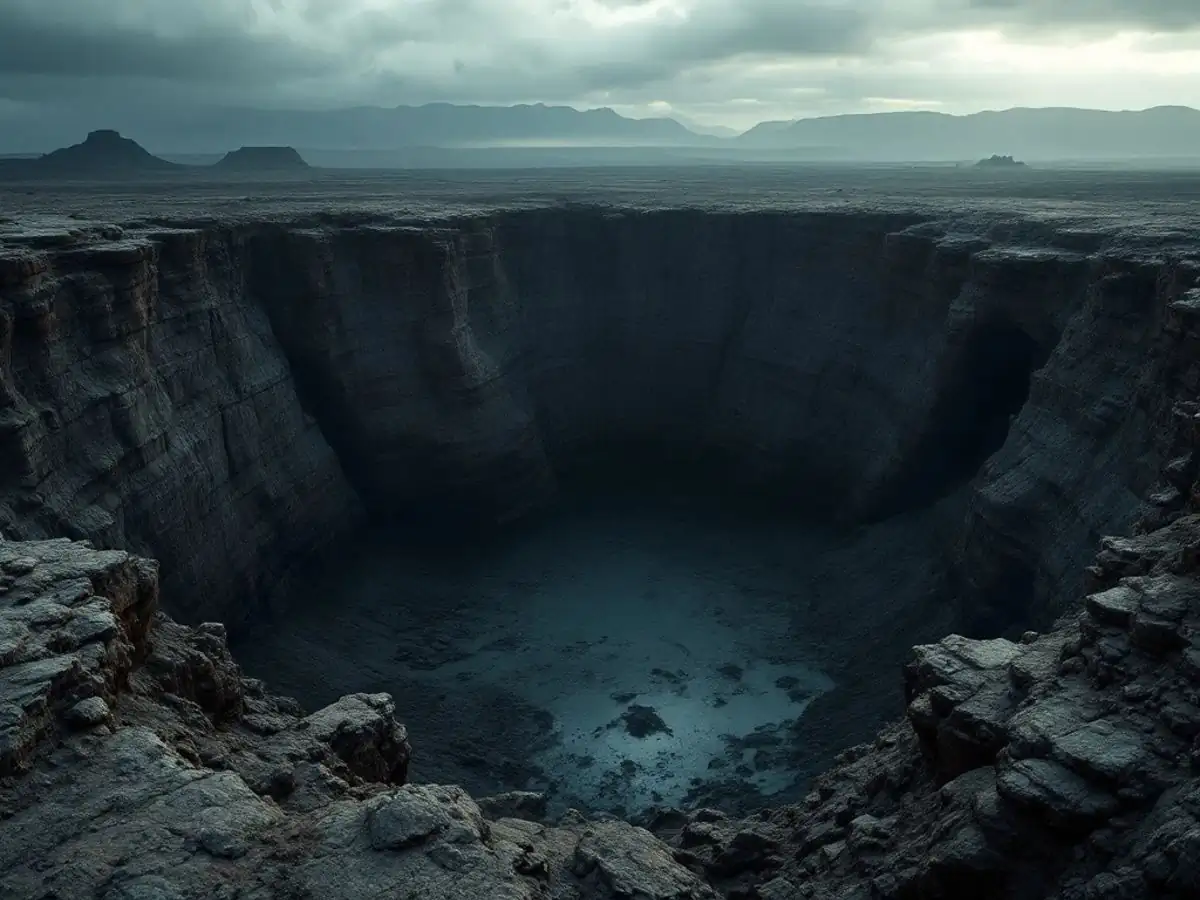
    Upon arrival, they learned that the crack, known as the Daboo Fissure, emerged during a volcanic eruption in 2005. This eruption was powerful enough to reshape the land and disrupt local life, swallowing hundreds of animals in flames and ash. Fortunately, no human lives were lost, although one person was injured.

    Understanding the Geological Context

    To grasp the significance of the Daboo Fissure, it’s essential to understand the geological history of the region. Millions of years ago, all land masses were united in a supercontinent called Pangaea. Over time, tectonic forces broke Pangaea apart, a process that continues to shape Earth’s surface today.

    Tectonic plates move at a slow pace, comparable to the growth of fingernails, but their effects are monumental. As these plates drift apart, the Earth’s crust thins and eventually cracks, forming rift valleys and, eventually, new oceans.

    The East African Rift System

    The East African Rift System, where the Afar region lies, is an active continental rift zone stretching over 6,000 kilometers. It runs from the Red Sea through Ethiopia, splitting into eastern and western branches that extend southward through Kenya, Tanzania, and Mozambique. This rift is where the Arabian, Nubian, and Somali tectonic plates are pulling away from one another.

    Some scientists believe that a super plume of hot mantle material beneath Africa drives this movement, exerting enough pressure to split the continent apart over millions of years.

    The Harsh Environment of the Afar Region

    The Afar region is one of the hottest places on Earth, with summer temperatures exceeding 50°C (122°F). Despite its harsh environment, it is home to resilient nomadic communities known as the Afar people. These communities have adapted to thrive in this challenging landscape, relying on traditional practices such as pastoralism and salt trading.

    During their visit, researchers observed how locals utilize volcanic activity to their advantage, tapping geothermal vents for water. This resourcefulness highlights the enduring connection between the Afar people and their environment.

    The Future of the Daboo Fissure

    Standing at the edge of the Daboo Fissure, researchers could hear the Earth rumbling and feel vibrations underfoot. The fissure stretches 500 meters long, but it is only a small visible section of a much larger 60-kilometer crack formed by solidified magma. Scientists estimate that in 5 to 10 million years, the Afar region will transform into an ocean as tectonic plates continue to diverge.

    Countries like Uganda and Zambia, currently landlocked, might one day have coastlines. While this process will take millions of years, today’s geologists are witnessing the birth of this ocean—a phenomenon never before documented in human history.

    Conclusion

    The journey to Ethiopia’s Afar region revealed the awe-inspiring forces shaping our planet. The Daboo Fissure serves as a reminder of Earth’s dynamic nature and humanity’s resilience in the face of constant change. Although we may not live to see Africa split apart or a new ocean form, standing at the edge of this monumental transformation is a humbling and unforgettable experience.

    This story is not just about geology; it is also about the enduring connection between people and their environment. As we continue to explore and understand our planet, we uncover the fascinating stories that shape our world.

  • Baba Vanga’s Prediction For 2024 Has Begun & Terrifies Everyone!

    Baba Vanga’s Prediction For 2024 Has Begun & Terrifies Everyone!

    As 2024 approaches, the world is gripped by the chilling predictions of Baba Vanga, a blind Bulgarian mystic known for her eerie accuracy. Her prophecies, which have resonated globally, hint at a year filled with upheaval and disaster, leaving many anxious about what lies ahead.

    Key Takeaways

    • Baba Vanga’s predictions for 2024 include severe weather events and global political shifts.
    • Her life story is marked by tragedy and transformation, leading to her prophetic abilities.
    • Past predictions have shown a mix of accuracy and ambiguity, fueling ongoing fascination.
    • The implications of her 2024 predictions raise questions about humanity’s future and environmental stewardship.

    Early Life: The Making of a Mystic

    Baba Vanga, born Vangelia Pandeva Dimitrova on January 31, 1911, in Struma, Bulgaria, faced a challenging childhood. Growing up in a poor farming family, she experienced hardships that shaped her spiritual inclinations. A tragic accident at the age of 12 left her blind but heightened her other senses, leading to her remarkable ability to predict events.

    The Rise of Baba Vanga

    After her accident, locals began to notice her uncanny ability to foresee small events, such as finding lost animals. This marked the beginning of her reputation as a mystic. As word spread, people traveled from far and wide to seek her guidance and healing. Her home became a sanctuary for those in need, and she gained fame for her predictions and herbal remedies.

    Prophecies That Captivated the World

    Baba Vanga’s fame transcended borders, attracting politicians, dignitaries, and celebrities. Her predictions included significant global events, such as the dissolution of the Soviet Union and the Chernobyl disaster. Her method of divination involved entering a trance state, where she would receive fragmented visions that she interpreted for her visitors.

    Predictions for 2024: A Chilling Outlook

    As 2024 approaches, several of Baba Vanga’s prophecies have resurfaced, particularly concerning environmental catastrophes and geopolitical shifts. Notably, she predicted a “great shaking,” interpreted as either a significant earthquake or a metaphorical upheaval in global politics. This prophecy suggests a profound reevaluation of international relations.

    Analyzing Past Predictions

    The intrigue surrounding Baba Vanga largely stems from the perceived accuracy of her past predictions. While some supporters highlight her correct forecasts, skeptics point to the vague nature of many prophecies. An analysis reveals that her most accurate predictions often concern large-scale disasters or significant political changes, events that leave a lasting impact on history.

    The Terrifying Predictions of 2024

    Baba Vanga’s predictions for 2024 include severe weather events and natural disasters. Recent studies indicate a staggering increase in global heat waves, aligning with her ominous forecasts. The World Meteorological Organization has warned that 2024 could be another record-breaking hot year, raising concerns about the implications of climate change.

    Political Upheaval and Global Instability

    Among her most startling predictions is the potential assassination of Russian President Vladimir Putin, which could lead to further instability. Additionally, she foresees a rise in terrorist activities across Europe and the possibility of biological weapons being used by a major country. These predictions come at a time of escalating global conflicts, highlighting the urgency of her warnings.

    Health and Medical Insights

    Baba Vanga also made predictions related to health, foreseeing advances in medicine that could treat previously incurable diseases. Recent developments in cancer research echo her foresight, as scientists work towards breakthroughs that could transform treatment options. However, she also warned of new diseases and pandemics, emphasizing the need for preparedness in healthcare.

    What Lies Ahead Beyond 2024

    Baba Vanga’s visions extend far into the future, predicting significant transformations in global order and technology. She anticipated a world where humanity achieves immortality and even communicates with God. While her predictions are often dire, they also offer glimpses of hope and potential advancements.

    Conclusion: The Legacy of Baba Vanga

    Baba Vanga’s predictions for 2024 have begun to unfold, leaving many to ponder their implications. As we navigate through this year, her chilling foresight serves as a reminder of the potential consequences of our actions on the planet. Whether one views her prophecies as warnings or mere speculation, they undeniably provoke thought and dialogue about the future of humanity.

  • There’s a Mysterious Stone In London That Nobody Can Explain

    There’s a Mysterious Stone In London That Nobody Can Explain

    In the heart of London, amidst the hustle and bustle of Cannon Street, lies a peculiar artifact known as London Stone. This seemingly ordinary rock has a history steeped in mystery and significance, yet few people stop to ponder its existence as they rush by.

    Key Takeaways

    • London Stone’s original purpose remains unknown.
    • It has survived significant historical events, including the Great Fire of London and WWII.
    • The stone is believed to have mystical properties linked to the prosperity of London.

    The Enigmatic London Stone

    Every day, thousands of commuters pass through Cannon Street, the financial hub of London. Among the towering glass buildings, one might notice a small enclosure housing a rather unimpressive lump of rock. This is London Stone, a relic that has puzzled historians and locals alike for centuries.

    The stone is marked with the words “London Stone,” and a plaque nearby attempts to explain its significance. It states that the stone was once located in the middle of Cannon Street and may have Roman origins. Despite its historical importance, the plaque admits that its original purpose is unknown, leaving many questions unanswered.

    A Brief History

    • 12th Century: The stone was already referred to as London Stone.
    • 1450: Jack Cade, a rebel leader, struck the stone with his sword, claiming to be the Lord of London.
    • 1742: The stone was relocated to the north side of the street and later incorporated into St. Swithin’s Church.
    • 1961: After the church was bombed during WWII, the stone was moved to a new office building.

    The Stone’s Mystical Reputation

    Despite its mundane appearance, London Stone has been the subject of numerous legends and folklore. Some believe it to be the stone from which King Arthur pulled Excalibur, while others think it is part of an ancient network of ley lines connecting it to other historic sites like Stonehenge.

    One of the most enduring tales is that if London Stone were to fall, so too would London itself. This belief has led to the stone being treated with reverence throughout history. During the Middle Ages, an iron cage was placed over it to prevent theft, and it was carefully relocated whenever necessary.

    The Stone’s Material and Size

    Interestingly, London Stone is made of ulitic limestone, a material not found in London. This raises questions about its origins. The stone was once much larger, with historical accounts suggesting it stood three feet high, two feet wide, and one foot thick. Today, only a fragment remains.

    Theories About Its Origins

    Historians and archaeologists have proposed several theories regarding the stone’s origins:

    1. Roman Influence: Some believe the Romans brought the stone with them when they established Londinium.
    2. Ancient Significance: Others suggest it may have been a sacred site long before the Romans arrived, possibly used in ancient rituals.
    3. Milestone Theory: It is theorized that London Stone served as a central milestone for the Roman road network, marking the heart of their authority in Britain.

    The Modern Perception

    In recent years, London Stone has fallen into relative obscurity. Once a celebrated landmark, it now resides in a commercial building, overshadowed by the modernity surrounding it. However, its historical significance remains, and efforts have been made to restore its dignity.

    Conclusion

    London Stone may appear to be just a random chunk of rock, but it embodies centuries of history, folklore, and community spirit. It represents the resilience and continuity of London itself. While its true origins may remain a mystery, the stories and beliefs surrounding it continue to captivate the imagination of those who take a moment to stop and reflect.

    In a world driven by science and reason, the enduring allure of London Stone reminds us of the power of stories and the connections we forge with our past. Perhaps, in its own way, this unassuming stone holds a touch of magic after all.