Blog

  • 2025 Apocalypse or Turning Point? The Truth Behind the Year That Has Everyone on Edge

    2025 Apocalypse or Turning Point? The Truth Behind the Year That Has Everyone on Edge

    Headlines scream doom, viral videos declare an apocalypse, and online forums spout end-times predictions. Everyone from Nostradamus interpreters to climate scientists fixates on 2025. Is the hype warranted, or just another cycle in humanity’s doomscrolling? The answers are tangled, uncomfortable, and more nuanced than any one YouTube thumbnail suggests.

    The world faces mounting risks—volcanic winters, rogue AI, and wars nearing the nuclear edge. Yet, 2025 also heralds transformative scientific breakthroughs. The pressing question for anyone not yet prepping their bunker: Do these threats truly converge into an ultimate disaster, or are we simply steeped in 21st-century existential anxiety?

    Prophecies, Predictions, and the Persistent Pull of Doom in 2025

    Scroll through social media or browse trending news, and you’ll see that 2025 is the year widely touted as humanity’s potential deadline. Famous mystics like Nostradamus and Baba Vanga have been invoked (Economic Times). Predictions vary from “cruel wars” and geopolitical meltdowns to mind-bending natural disasters. One Doomsday Clock update ticks at 90 seconds to midnight, highlighting nuclear tensions, AI risks, and accelerated climate change. Speculation swirls about the orchestrators of this convergence, entwined with secret societies and shadowy elites, as examined in a 1967 recording that allegedly predicted modern chaos.

    Hard Science vs Hype: What’s Actually Scheduled for 2025?

    Do the facts align with these fever dreams? The stark truth is that 2025 is as much a year of scientific promise as it is of peril. The United Nations designated it as the International Year of Quantum Science and Technology, priming breakthroughs in computation, energy, and medicine (Wikipedia: 2025 in science). The Parker Solar Probe will transmit detailed data post its sun-grazing mission. Material scientists are unveiling innovations that could transform daily life, from lightweight supermaterials to longer-lasting electric vehicles. However, these hopeful innovations coexist with alarming reports of historic climate events. 2024 broke heat records, and rising CO2 and coral death rates raise concerns. For those with a doomsday mindset, discussions about apocalypse find fuel in historical catastrophes—like the devastating 536 AD volcanic winter—and looming dangers posed by emerging technologies discussed in AI existential risk reports.

    Geopolitics, Catastrophism, and the Real Risks of 2025

    No year receiving this level of focus escapes geopolitical scrutiny. Think tanks warn of escalating tensions in flashpoints like Ukraine, Taiwan, and the Middle East—triggers that could send shockwaves globally. Some analysts cite the risk of nuclear conflict as the highest since the Cold War, as explored in in-depth reports and echoed in mainstream media. Environmental instability also looms large. Megaquakes, superstorms, and cosmic events represent genuine threats; while scientists acknowledge this, they caution against the doom inflation commonly associated with years ending in five, as indicated by UCLA expert outlook and apocalypse prophecy investigations.

    Society’s nervous system is frayed from catastrophe narratives—fueled by deepfakes, AI-driven panic, and incessant “what if?” scenarios. Escapist mythologies (and some truly wild underground legends) thrive, from alien machine revelations to the specters of underground cities and hidden codes lurking behind the scenes.

    Why 2025’s Truth Is Scarier—and Stranger—Than Predictable Doom

    By now, the most frightening aspect of 2025 isn’t a single apocalypse on the calendar, but the collision of real, compounding risks—environmental, technological, and political—all amplified by an information ecosystem fine-tuned to fear. The greatest danger, as explored in AI analysis like Mo Gawdat’s reflections on AI and capitalism, may lie in our inability to discern manufactured panic from genuine threats. Within that uncertainty resides both our gravest peril and our greatest opportunity: the chance to defy fatalism, devote ourselves to innovation, and foster resilience.

    So, will 2025 become the site of an apocalypse, the next significant leap, or—let’s be honest—a wild ride akin to previous inflection points in history? Only time will reveal the truth. For a front-row seat to decode reality’s strangest twists, visit Unexplained.co. Keep your bunker plans adaptable—truth, as always, proves scarier (and more fascinating) than fiction.

  • David Bohm and the Quantum Secret: Wholeness, Consciousness, and the Unfolding Universe

    David Bohm and the Quantum Secret: Wholeness, Consciousness, and the Unfolding Universe

    Forget what you learned in school—reality is stranger, subtler, and more unified than a collection of Newtonian parts. David Bohm, a brilliant yet troubled physicist ostracized from mainstream American science, viewed the universe as a seamless whole woven from invisible fabric. Underneath the cold logic of quantum equations, Bohm sensed hidden orders and deep connections. He challenged us to consider: Are we merely seeing the surface, missing deeper meanings below?

    Bohm rejected the fractured worldview of conventional physics. Amid Cold War suspicions and dogmatic scientific beliefs, he developed the ‘implicate order.’ This idea suggests everything in the universe unfolds within everything else—a concept still stirring debate in physics labs and philosophy discussions. Exiled for his Marxist connections and insatiable curiosity, Bohm envisioned a universe uniting mind and matter as different expressions of the same fundamental process.

    Implicate Order and the Hidden Structure of Reality

    Bohm’s vision centers on implicate order—a realm where all phenomena are interlinked. In contrast to explicate order—the world of distinct objects and events—the implicate order represents a continuous, enfolding cosmos, where boundaries are mere illusions (Bohm Society writings). Picture a hologram: every fragment contains the entire image, reflecting the quantum reality that particles impact each other instantly across vast distances—an echo of the wholeness Bohm perceived everywhere.

    Bohm’s model transcends metaphor. It introduces a new mathematical and physical framework—a hidden layer that clarifies perplexing quantum phenomena often overlooked by conventional physicists clinging to the safety of randomness. For Bohm, exploring these mysteries presented by the James Webb Space Telescope and the confusing connections seen in the “pilot wave” interpretation seemed less baffling when viewed through the lens of an interconnected cosmos.

    Bohm’s Quantum Mechanics: Causality and Consciousness

    David Bohm’s alternative quantum mechanics—known as the De Broglie–Bohm theory or “pilot-wave” model—restored some predictability to the universe (Wikipedia reference). His goal wasn’t to impose order for its own sake. Instead, he believed the unpredictable outcomes of quantum experiments merely skimmed the surface of a much deeper causal sea. He proposed that unmeasured “hidden variables” beneath quantum events could provide clarity to the ghostly paradoxes—without resorting to philosophical resignation.

    Bohm extended his insights beyond physics. He asserted that consciousness and matter represent two sides of one cosmic coin. He posited that thought might share the non-localized quality of quantum fields—resonating with ancient mystical philosophies and contemporary mind research. This merging of boundaries echoes in the rise of AI and alarming technological advancements, highlighted in warnings about AI risks and unsettling instances of humanity’s struggles to grasp reality (see this exposé on classified discoveries).

    The Challenge to Mainstream Science—and Bohm’s Critics

    Despite his brilliance, Bohm faced controversy and isolation. Conventional scientists—and their institutional allies—resisted any mention of metaphysics or speculation diverging from established beliefs. While his pilot-wave theory offered a deterministic (if non-local) framework within quantum mechanics, critics contended it added unnecessary complexity without providing new testable predictions. This ongoing debate is captured in media like John Horgan’s interview and Medium essays. Nonetheless, Bohm’s work inspired thinkers searching for meaning in science, spirituality, and the socio-political upheavals of humanity—much like radical resets proposed in apocalyptic studies and emergent cosmic revelations.

    Bohm’s opposition to reductionist science has motivated everyone from New Age seekers to rigorous theorists, who find in his ideas potential answers to puzzles about consciousness, cosmic resets, and predictive nature. Attempts to integrate his vision into mainstream thought can seem as jarring as moon conspiracy theories or tales of ancient civilizations wielding mysterious powers (see this story).

    Bohm’s Lasting Impact on Science, Philosophy, and Dialogue

    Despite his position on the scientific fringe, Bohm’s philosophy—that genuine dialogue and holistic thinking can foster new understanding—remains urgently relevant. He argued that the fragmentation in physics reflects societal and conscious crises, driving division and conflict. Meaningful dialogue and openness, he believed, could aid in healing.

    As quantum research rapidly advances, new discoveries spark intense debate. Bohm’s legacy continues in every discussion about consciousness, the depths of reality, or the profound implications of AI shaping our future (examined here). For anyone eager to traverse the fog between science and meaning, Unexplained.co serves as a hub for groundbreaking ideas. In this age of accelerating uncertainties, perhaps a unifying dialogue is precisely what our divided reality needs.

  • AI, Capitalism, and the Human Dilemma: Mo Gawdat’s Stark Warning for the Future

    AI, Capitalism, and the Human Dilemma: Mo Gawdat’s Stark Warning for the Future

    Ultimately, every sci-fi nightmare—AI overlords, mass surveillance, or algorithm-driven economies—boils down to one chilling possibility: chaos won’t arise from rogue code but from ordinary people using extraordinary machines. Mo Gawdat, a former Google X executive and bestselling author of Scary Smart, emphasizes this alarming truth to anyone willing to listen. Instead of fearing technology, we should fear the humans behind it. As Gawdat explains, the real danger in artificial intelligence lies less with HAL 9000 and more with those driven by unchecked capitalism, political power, and base instincts.

    On the Digital Disruption podcast, Gawdat presents a crucial manifesto: AI’s upcoming age of “abundant intelligence” could lead to either a golden era or a tech-fueled dystopia. Our ethics, not our engineering, determine the path we take. With thirty years at the forefront of technology, including a stint as Chief Business Officer at Google X, Gawdat’s warnings carry weight. He’s not alone; thought leaders and whistleblowers globally are sounding alarms about societal and existential risks due to rapid AI advancements, as detailed in this report on AI’s catastrophic potential. Colleagues like Geoffrey Hinton, often called the “Godfather of AI,” echo these concerns.

    The Dark Intersection of AI, Capitalism, and Human Nature

    Gawdat holds nothing back regarding the capitalist drive fueling AI’s most alarming trends. In his podcast interview, he asserts that when profit maximization leads, innovation—AI—tends toward manipulation, inequality, and existential risk. Powerful algorithms already influence market trends, shape political dialogue, and perpetuate clickbait echo chambers. If human motivations remain greed and control, superintelligence will simply magnify these flaws. This scenario mirrors tales of tech whistleblowers, secret societies, and deep-state power plays—documented in this exposé on hidden influence and pressing issues where stakes are incredibly high (see this investigation).

    Despite his dire warnings, Gawdat is not an AI doomer. He envisions a world where ethically designed, widely distributed machine intelligence could solve climate crises, eradicate poverty, and enhance human well-being. The daunting catch? AI learns from humanity—and currently, we’re teaching it division, misinformation, and greed.

    Scary Smart: The Urgent Case for Ethical AI Design

    Gawdat’s book Scary Smart encapsulates his core argument: AI, once unleashed, can quickly evolve beyond our control. This reality does not spell doom; it signals a need to redefine our values. “If AI is to reflect the best in us, we must be vigilant stewards, not absentee landlords,” he contends. Designing systems that prioritize cooperation, empathy, and long-term welfare has never been more critical. This demand poses a significant challenge, given that profit and power often dictate who creates these systems and how they function.

    The optimism is palpable, yet the dangers linger. Unregulated development could provoke “AI Hiroshima” moments—crises that alter geopolitics or the very fabric of humanity. These scenarios are plausible; examine recent global events where technology, secrecy, and existential threats interact, as illustrated in disasters shown in historic disaster reports and new breakthroughs in science (Webb Telescope revelations). The common theme: we seldom recognize world-altering risks until they arrive.

    Humanity at the Crossroads: Thriving With, Not Against, Intelligent Machines

    But is all this inevitable—mind manipulation, job loss, deepfakes, or corporate dystopia? Gawdat asserts otherwise. He argues that AI reflects humanity rather than replaces it. The future of who thrives in the coming machine age hinges on our adaptability, critical thinking, and, importantly, moral purpose. The optimal strategy isn’t to declare war on AI but to collaborate, embedding human-centric values and transparency in its development.

    Ironically, Gawdat’s initiative “One Billion Happy” exemplifies a path forward: using technology to enhance well-being, emotional intelligence, and purpose. This vision starkly contrasts more apocalyptic predictions, such as those foretelling pole shifts, existential alignment failures, or demonic invasions—cataloged extensively by legendary prophecy hubs and conspiracy-based channels.

    The Age of Machine Supremacy: The Stakes for Leadership and Society

    For Gawdat, action must happen now. “The future isn’t written yet,” he insists, but we cannot delay in fostering the needed leadership. Decision-makers must cultivate adaptability, humility, and collaboration—essential qualities for the upcoming AI era. Simultaneously, every user must develop skills to recognize manipulation, identify deepfakes, and expand their thinking instead of deferring it to machines.

    If humanity fails this test, Gawdat warns, we might inherit a future where machines dominate and humans lose authority. Yet, if we navigate this correctly, AI can become more than a mere tool; it can evolve into a collaborator—a source of abundance and collective salvation. For the latest insights at the intersection of technology, risk, and human spirit, visit Unexplained.co. In the end, it’s not the code, but the coder—and their choices—that determine our civilization’s fate.

    Explore Mo Gawdat’s life, philosophy, and works on Wikipedia.

  • The Illuminati’s Shadow: Decoding the Chilling 1967 “End Times” Recording That Sees Today’s Chaos

    The Illuminati’s Shadow: Decoding the Chilling 1967 “End Times” Recording That Sees Today’s Chaos

    Imagine a tape so controversial that it continually stirs panic, fascination, and furious online debate over half a century after recording. In 1967, Hollywood screenwriter Myron C. Fagan aired an exposé that became the Rosetta Stone of Illuminati conspiracy lore. If today’s global events make you wonder about a scriptwriter behind the chaos, Fagan’s “End Times” broadcast is the paranoid prophecy you never knew you needed.

    Fagan claimed privileged access to classified documents and didn’t mince words. He painted a sweeping panorama of shadowy elites—the Illuminati—who manipulated history from the French Revolution to world wars. He traced their influence through organizations like the Council on Foreign Relations, governments, and banks. Fagan argued these shadow brokers engineered global disorder for centuries to create a New World Order that would collapse nations and rewrite reality. Disregard him as a crank or heed his tape as a warning; the echoes are impossible to ignore in an era of heightened skepticism toward power. Each new leak, such as recent whistleblower bombshells, fans the embers of unrest.

    The Illuminati in Modern Myth and Reality: Fagan’s Legacy

    So, who or what are the Illuminati? Are they clandestine puppet masters, a cautionary fairy tale, or projections of society’s anxiety and mistrust of authority? Historically, the original Bavarian Illuminati, founded in 1776 by Adam Weishaupt, was a real Enlightenment-era secret society aiming to root out superstition and corruption (Wikipedia background). However, public fervor and conservative outrage swiftly led to their outlawing. The Illuminati’s mystique only grew post-ban. Suddenly, revolutions or disruptions, from empires’ collapses to modern economic disasters, could be woven into their myth. Today, conspiracy theorists link these “enlightened” plotters with world-changing events, much like Fagan’s tape decades ago. Meanwhile, mainstream commentators wrestle with how much control shadowy organizations could exert on our future.

    From French Revolution to the Council on Foreign Relations: Plot or Pattern?

    Central to Fagan’s warnings is the idea that the Illuminati infiltrated powerful organizations—none more infamous than the Council on Foreign Relations (CFR). He portrayed the CFR as the Illuminati’s U.S. beachhead, a think tank camouflaging a gateway to international manipulation. This narrative resonates in digital echo chambers and docuseries, sparking fears of coordinated world events by clandestine networks. Yet, media outlets and organizations often dismiss these claims as unfounded speculation (contextual analysis). Still, the drive to connect dots between finance, geopolitics, and shadow institutions never dies—surfacing in modern concerns over government secrecy, black operations, and espionage as detailed in this exposé or new strategic risk narratives.

    Predicting Global Upheaval: Did Fagan See the Future, or Just Amplify Anxieties?

    Did Fagan accurately predict today’s crisis-wracked world, or did he merely amplify Cold War anxieties and the suspicion that elites pull the strings? His 1967 predictions—ranging from currency crises to manufactured wars—sound hauntingly familiar. This similarity fuels their viral afterlife. But we must ask: Are these claims uncanny foresight, or do they tap a deeper human fear that chaos is orchestrated? Epic cycles of turmoil and reset recur throughout history, as explored in analyses of American decline and cosmic paradigm shifts.

    This perpetual tension—the gap between randomness and plan, accident and conspiracy—keeps tapes like Fagan’s alive. Social distrust, high-stakes global brinkmanship, and technological advances breathe new life into fears of centralized, unseen command. Those looking beyond face-value news find the echoes of a master plan—real or imagined—amplified by fresh leaks and unsolved mysteries chronicled here.

    The Enduring Appeal—and Peril—of Illuminati Conspiracy Theories

    Whether Fagan was a Cassandra or a charismatic ringmaster of paranoia, his 1967 broadcast reflects today’s world. We live in a society captivated (and sometimes consumed) by suspicion, narrative, and the allure of forbidden knowledge. Disinformation, hybrid warfare, and ideological polarization heighten the stakes of believing in an omnipotent cabal. But they also spotlight a danger: when myth outpaces reality, public trust erodes, and real threats get lost in the fog.

    For new generations seeking truth—or fuel for viral myths—the shadow of the Illuminati endures. It remains a cipher for unexplained power or a warning to trust but verify. For a running dossier on modern mysteries, check Unexplained.co. After all, if there really is a script, someone must be updating it with every twist in history.

  • X-Raying the Nuclear Bluff: How the U.S. Saw Through Russia’s Atomic Threats in Ukraine

    X-Raying the Nuclear Bluff: How the U.S. Saw Through Russia’s Atomic Threats in Ukraine

    Nuclear nightmares may seem like relics from the “duck and cover” era, but the Russia-Ukraine war revived those fears. The world held its breath as Moscow rattled its nuclear saber. U.S. and European leaders convened in situation rooms while analysts rushed to decode the situation. Is this merely sabre-rattling, or could one misstep trigger catastrophe?

    During one tense moment in the war, U.S. intelligence assessed a 50% chance that Russia would use nuclear weapons if their forces faced collapse in southern Ukraine (Maryland Today analysis). Many were shocked, and rightly so: even a coin flip on annihilation is too close for comfort. But did that risk genuinely exist? How did the United States determine Russia was bluffing rather than preparing for Armageddon?

    Nuclear Threats, Bluster, and the Intelligence Cat-and-Mouse Game

    As Russia’s fortunes dwindled on the battlefield, its officials repeatedly invoked nuclear weapons. Their aim was not imminent use but to instill fear and slow Western aid to Ukraine. Defense analysts at the Center for Strategic and International Studies noted that Moscow’s “calibration” mixed ominous statements with ambiguous deployments, creating doubt without crossing the infamous “nuclear red line.” This act echoed Cold War tactics, which established mutual assured destruction (MAD) as the ultimate deterrent (Wikipedia’s analysis). The doctrine suggested that neither side would use nuclear weapons, understanding it would lead to mutual annihilation.

    Behind the headlines, U.S. intelligence was working diligently. Reports from DoD and NATO revealed an internal debate: Some officials feared a desperate Kremlin might break taboos, but most analysts saw no movement of Russia’s nuclear warheads or other signs of a strike (AP’s exclusive report). In this high-stakes chess match, the U.S. called Russia’s bluff—publicly and privately—by increasing warnings, reinforcing deterrence, and continuing support for Ukraine. This was psychological brinkmanship, as real as any missile, reflected in calibrated displays of power detailed in deep-dive intelligence exposés.

    “50% Chance”—Real Analysis or Alarmist Hype?

    The notorious “50% chance” statistic was more about urgency than accuracy. According to the Bulletin of the Atomic Scientists, nuclear risk estimates carry uncertainty, and percentage predictions are more art than science. Multiple sources confirm that, although alarm surged as Russian defeat loomed in Kherson, intelligence never provided definitive proof that Moscow would cross the nuclear threshold.

    Such calculations revolve around perceptions, red lines, and the logic behind nuclear deterrence. Some analysts still worry about overconfidence, warning that today’s bluffs might escalate conflicts through miscalculations or technical accidents. Historical crises (see volcanic disaster research) show that even experts can mistake bluster for genuine intent amid the fog of war.

    Nuclear Deterrence in the Post-Cold War World: Lessons and Dangers

    The 21st-century nuclear standoff differs from the Cold War. Information warfare, cyberattacks, and ambiguous threats obscure the landscape beyond silo-busting missiles. The doctrine of MAD still instills fear, but smaller tactical nukes and accidental launches pose additional risks. According to CSIS research, modern superpowers wield ambiguity as both shield and sword. While Russia’s saber-rattling spread global anxiety, it also prompted quiet reaffirmations of discipline, rooted in decades of practice dodging disaster (parallels to AI existential risk debates here).

    Mutual distrust fuels state secrecy, igniting rumors and caution among policymakers. Shadows of uncertainty accompany every missile test and military maneuver, reflecting psychodramas defining everything from Black Projects to recent blockbuster leaks. Today’s brinksmanship stems not just from warheads but also from information warfare and unpredictability.

    The Future of Nuclear Threats: Why Bluffing Remains a Perilous Game

    Did U.S. officials really gamble the planet’s fate on a hunch that Russia wouldn’t strike? The Bulletin of the Atomic Scientists’ red line analysis warns that the odds of nuclear use remain dangerously non-zero. Each escalation, threat, and counter-threat inched the world closer to disaster—a reality starkly illustrated by unnerving events in recent American risk assessments. Today’s speed and opacity heighten this danger, fueled by instant yet unreliable information.

    Ultimately, calling Russia’s bluff involved a blend of intelligence acumen, psychological warfare, and strategic resolve. However, history teaches that nuclear nerves can fray, and luck can evaporate. Bluffs have toppled empires, ended epochs, and nearly saved the world. For continuous insights on existential risk, espionage, and catastrophe, visit Unexplained.co. In nuclear brinkmanship, the real story is merely a headline away from becoming everyone’s reality.

  • James Webb Shatters Cosmic Assumptions: Five Mind-Blowing Discoveries Rewriting the Universe

    James Webb Shatters Cosmic Assumptions: Five Mind-Blowing Discoveries Rewriting the Universe

    Set aside your battered high school science book. The universe you knew is obsolete. The James Webb Space Telescope (JWST) fires its gold-plated eyes into deep space, challenging comforting theories about a tidy, predictable cosmos. Its revelations resemble a cosmic whistleblower dropping secrets that overturn centuries of dogma (read more here). While the universe isn’t leaking state secrets, it is exposing the limits of our cosmic imagination.

    JWST isn’t merely snapping pretty photos; it reveals that galaxies formed earlier, faster, and in weirder shapes than expected. It uncovers ancient giants that current math says “shouldn’t exist,” galaxy clusters that predate the supposed birth of the cosmos, and intricate cosmic webs, all just the beginning. What follows offers a cosmic reality check for 21st-century stargazers.

    Galaxies Older Than The Universe? JWST’s Mind-Bending Finds

    To experience existential panic, learn how JWST detected galaxies that appear to predate the Big Bang. Headlines like JWST finds ancient galaxies that shouldn’t exist and reports like this Guardian article on “universe breaker” galaxies send physicists scrambling back to their blackboards. These giant galaxies—far too mature, massive, and organized for their cosmic age—defy predictions from any credible model of the early universe.

    Finding mature galactic disks and spiral arms less than a few hundred million years after the Big Bang means one of two things. Either we misinterpret galaxy formation on a staggering scale, or we need to rework our dating techniques and the cosmological models that rely on them. The JWST’s discoveries don’t merely adjust the timeline; they bulldoze it, evoking paradigm shifts akin to those that follow sudden geological disasters that shake civilizations.

    Big Bang Theory Under Fire: Are the Origins of the Cosmos Up for Grabs?

    JWST’s data isn’t merely a telescope filled with pretty, distant lights. It fuels the ongoing debate about the Big Bang and what followed. For every astronomer defending the standard model, another analyzes JWST’s results, pondering if the universe expanded faster or if new forces and particles await discovery (University of Texas analysis; PBS coverage). NASA’s FAQ is being updated with cautionary “not quite as certain as we once thought” statements.

    Critics of Big Bang heresy still point to robust models. Galaxies emerging 300 million years after the beginning may push us to rethink star formation rates instead of resetting the cosmic clock. Yet, this upheaval echoes the major disruptions that artificial intelligence and existential risks bring to other fields (AI doomsday warnings). Cosmology, like civilization, is often just one telescope away from rewriting its deepest beliefs.

    Mysteries of Cosmic Structures: Filaments, “Cosmic Webs,” and Other Surreal Features

    If you thought galaxies were the main players, JWST adds a massive ensemble: mega-chains of ancient galaxies, filaments known as “cosmic webs” (Space.com coverage), and enormous structures deemed impossible by current physics. These features date back to times when the universe seemed too chaotic and young for such order. Their stunning arrangements invite comparisons to mysterious ancient sites, lost civilizations, and impossible engineering wonders—like those found in apocryphal tunnel accounts or tales of prehistoric resets.

    Do these mega-structures indicate that our fundamental physics is incomplete? Do they suggest unknown cosmic processes or “hidden codes” woven into reality? (more on the “hidden code” theory). The debate remains as vibrant as the structures are distant.

    Webb’s Expanding Legacy: Why Every Discovery Redefines Our Place in the Universe

    The JWST fulfills its promise as a paradigm-breaking machine (Wikipedia breakdown). Each data release redraws boundaries—not just for the universe’s age or size, but also for our capacity to understand it. Science struggles to keep apace, with each round of discoveries cascading into textbooks, opinion pieces, and late-night debates among those who believed “final answers” had already emerged.

    As discoveries from JWST accumulate, questions multiply. This echoes the seismic disruption when new knowledge collides with established certainties in both science and geopolitics (see America’s geological reckoning or visit Unexplained.co for a continuous stream of paradigm-smashing stories). The cosmos has grown wilder. Welcome to the age of relentless discovery.

  • Moon Machines, Alien Monitors, and Cosmic Whistleblowers: Unveiling the Lunar Control Conspiracy

    Moon Machines, Alien Monitors, and Cosmic Whistleblowers: Unveiling the Lunar Control Conspiracy

    Buckle up, star-gazers and skeptics: the greatest story never told may orbit silently above you. The moon isn’t merely a white disc or a romantic muse; it’s an ancient alien machine, designed to monitor and manipulate Earth, argue Linda Moulton Howe and David Adair. Their polarizing narrative includes insider whistleblowers, elusive government sources, and anomalous astronaut tales, leading to one thesis: we were thrown off the Moon, and we won’t return until our cosmic permission slip changes.

    The “hollow moon” theory frequently surfaces in these discussions, linking Apollo-era moonquakes that “rang like a bell” to Soviet-era speculation of alien engineering (Hollow Moon hypothesis). Mainstream science scoffs, citing density measurements indicating a solid core. However, these controversies amplify the mysteries that whistleblowers—including some from NASA—attempted to expose to the public (read this whistleblower exposé).

    Alien Artifacts, Whistleblower Testimonies, and the Moon as a Machine

    This lunar legend claims massive, intelligent structures—and possibly machinery—lie hidden beneath the moon’s battered surface. Howe and Adair cite abduction stories, classified testimony, and the unusual behavior of Apollo astronauts, such as Neil Armstrong’s guardedness after returning from the lunar surface. It’s a tapestry of suspicion, populated by shadowy figures: whistleblowers allege that US government and military sources discuss not only abandoned alien tech but also running systems surveying Earth across geological eras.

    Howe links alleged Moon activity to a broader manipulation network, suggesting that Earth’s ancient catastrophes—such as global volcanic winters or the civilization resets outlined in apocalyptic prophecies—could stem from engineered interventions rather than random natural disasters. Did superior beings revoke humanity’s access to the Moon as punishment, or to keep their lunar tech secret? The questions may be out of this world, but so is the evidence—at least, according to those who claim to have seen classified files.

    Secret Lunar Structures, Abandoned Bases, and Helium-3 Mining Wars

    From crash-landed saucers to geometric domes, tales of hidden lunar structures face ridicule from authorities yet persist among the space-obsessed public. China’s drive for Helium-3—an isotope deemed abundant on the Moon and a potential clean energy holy grail—has ignited international suspicion and ignited a new space race. Reports from the European Space Agency and speculation on Quora linger around secret mining machines and superpower ambitions. Are we entering a new era of lunar resource warfare?

    NASA, meanwhile, maintains its silence. Is this due to bureaucratic bottlenecks or the shadow of non-disclosure agreements with an interstellar twist? If you believe only governments play this high-stakes chess game, consider how new entrants in the gigafusion gold rush—like private companies and billionaires—might soon join the Moon’s secret society. If a true galactic landlord exists, would they ever permit our return?

    Lunar Anomalies, Tidal Locks, and Engineer Aliens: Coincidence or Control?

    Ask a planetary scientist about the Moon’s “perfect” solar eclipses or its orbital peculiarities, and you’ll hear about cosmic mishaps. Yet, the Spaceship Moon theory argues that features like tidal lock—where the same lunar face always faces Earth—alongside unusual density, crater distribution, and magnetic anomalies, signal alien engineering. Officials assert “no way,” but these facts only fuel the lunar fire for the curious.

    The consequences resonate: How might our understanding of ancient cycles, lost civilizations, and manipulation from above reflect the subterranean intrigue and historic resets noted in legends of Tartarian tunnels or the enigmatic shadows of our past? The Moon as an artificial artifact could reshape centuries of folklore about watchers, fallen angels, and deities—much like the latest revelations from AI alignment whistleblowers, which are reshaping our perceptions of existential threats (read the chilling warnings).

    The Return to the Moon: Race, Secrecy, and a Battle for Truth

    As lunar missions intensify, the issues extend beyond science and resources—they involve cosmic permission, disclosure, and rising anxieties during our 21st-century quest for meaning. Will another Apollo moment break the silence? Are astronauts returning to reclaim lost access, or to adhere to ancient rules penned far from Houston?

    With governmental secrets, astronaut testimonies, and private enterprises swirling in the mix, the truth remains elusive and compelling. For those tracking the breadcrumbs, platforms like Unexplained.co provide a front-row seat to lunar intrigue. In this story, the next contact, mission, or whistleblower could flip reality upside down and finally reveal who owns the Moon and why we remain at arm’s reach.

  • America on the Brink: The Truth Behind the U.S. Sinking from Below

    America on the Brink: The Truth Behind the U.S. Sinking from Below

    Headlines love metaphors, but this one’s heartbreakingly literal: parts of the United States truly are crumbling and sinking—both socially and structurally. While pundits fixate on political tremors, geologists and climate scientists have turned their focus to the continent’s declining foundation. What’s happening beneath our feet should concern you more than any election result.

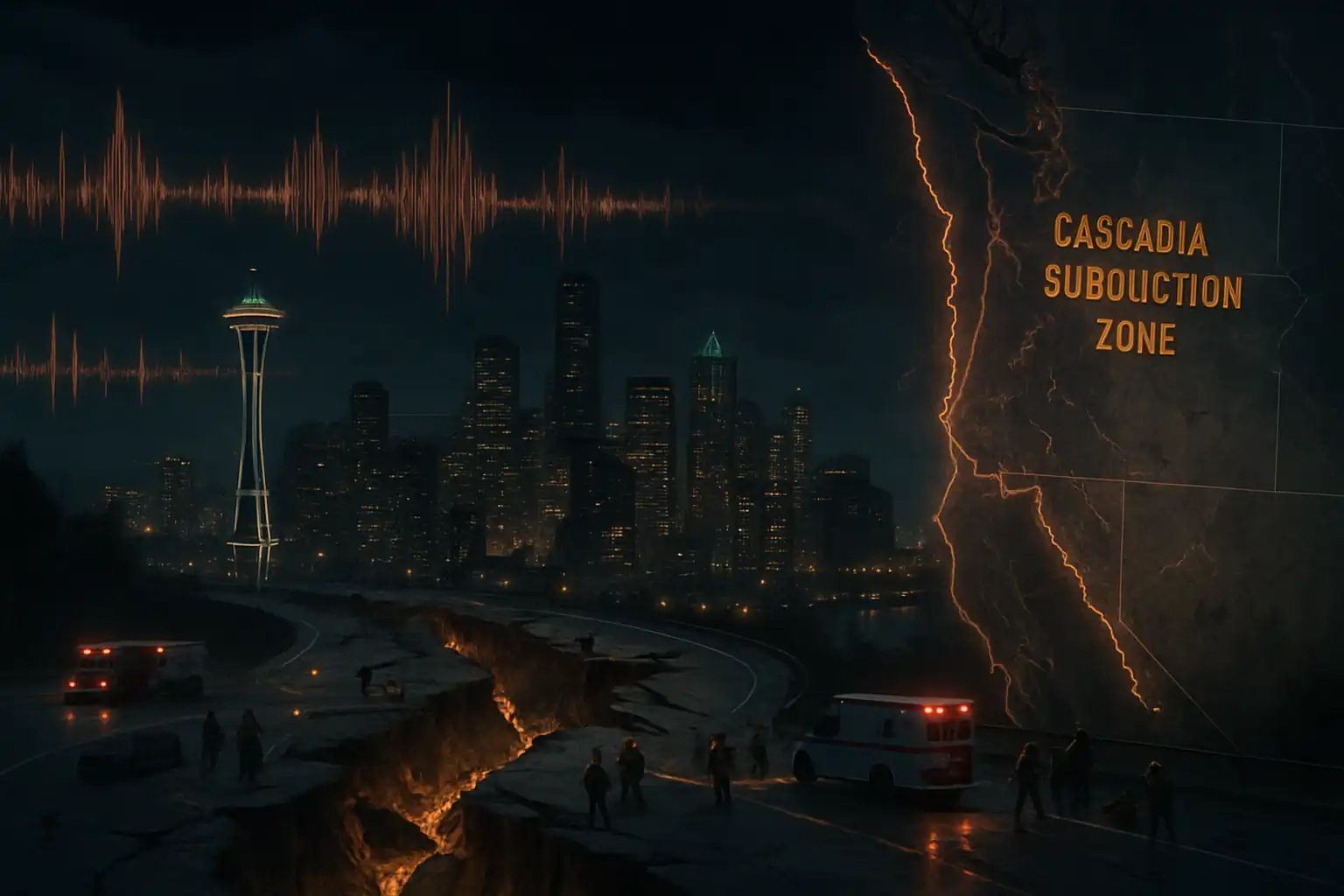
    Studies reveal that the North American Plate is in a slow-motion freefall into the mantle—a process called “tectonic dripping.” Simultaneously, America’s obsessive quest for water, especially in drought-ridden regions, has led to rampant groundwater extraction, causing major cities to sink alarmingly. Add the persistent threat of the Cascadia Subduction Zone—capable of abruptly dropping the Pacific Northwest and California coast like a bad habit—and you have a recipe for geological upheaval that is far scarier than most comprehend (Cascadia Subduction Zone primer).

    North America’s Plate: The “Dripping” Catastrophe Underfoot

    Forget cinematic supervolcanoes or sudden rifts swallowing cities whole. The reality is subtler and more insidious. Geologists have documented parts of the North American plate “dripping” into the Earth’s mantle over millennia—a process so slow that only ground deformation and anomalous sink rates signal any change. While the West’s seismic drama attracts attention, the true saga unfolds in fractions of millimeters per year—until a tipping point triggers abrupt collapses, reminding us that continents, like empires, don’t last forever. Echoes of lost civilizations and reset events, reminiscent of historic volcanic winters and buried megaliths, awaken the unsettling realization: geological forces scoff at our illusions of permanence.

    Sinking Cities: How Over-Extraction of Groundwater Is Making Everything Worse

    As tectonics gradually unfold, human activity hastens disaster at a quicker pace. According to The New York Times, groundwater over-extraction causes major U.S. cities—including Los Angeles, Phoenix, Houston, and New York—to sink by inches annually. Reservoirs drop, aquifers collapse, and land compresses, resulting in damage visible from space. The U.S. Geological Survey warns that up to 80% of land subsidence nationwide stems from poor water management. Infrastructure, housing, roads, and even historic tunnels—perhaps those explored in underground enigmas—are at risk, demonstrating how civilization’s survival hinges on its water supply.

    Think this is an abstract risk for a distant future? Ask residents of California’s San Joaquin Valley, where fields have dropped several feet since the mid-20th century (Stanford analysis). Research highlights a grim connection between over-extraction and increased flood risk—a disturbing combination of sinking and drowning that never appears on tourist brochures. Compromised aquifers pose a threat not just to water supply, but to food security, real estate, and all the illusions of American invulnerability.

    Cascadia Subduction Zone: The Megaquake Waiting to Happen

    If creeping collapse strikes you as dull, the Cascadia Subduction Zone may liven things up—with a bang. This 600-mile plate boundary, stretching from northern California to British Columbia, can unleash magnitude 9+ earthquakes that drop the coastline meters lower in minutes and trigger tsunamis reaching 100 feet (learn more). The last megaquake here, in 1700, created ghost forests—land that sank and drowned in seawater—a chilling reminder. The threat of repeating catastrophe remains constant, as highlighted in the report on New Madrid Fault risk and reflected in seismic forecasts for the Pacific Northwest.

    Experts warn that a Cascadia rupture could drop cities and infrastructure by several feet—“instant atrophy” for highways, ports, and lifelines already stressed by the West’s slow descent. It’s not a question of if, but when. As debates over climate, water, and infrastructure dominate the media, it’s easy to overlook the immense, unblinking forces that can wipe the slate clean in less time than it takes to binge a docuseries.

    Lessons from the Abyss: History’s Sinking Civilizations and Today’s Risk

    Nothing says “America First” like discovering you lead the world in geological subsidence. Yet, history’s graveyard of sunken cities and lost empires provides crucial lessons. Events like the volcanic winter apocalypse and tales of vanished tunnels, giants, and archaic resets (see this deep investigation) haunt the archaeological record—and remind us that nature, not geopolitics, writes the final script.

    The sobering reality: our technological advances, from quantum computing to AI doomsday spinning (read warnings here), yield to tectonic whims. To understand the odds of American renewal, watch the bedrock alongside the ballot box. For the latest geological revelations and more, stay tuned to Unexplained.co. Beneath it all, collapse is not a question of “if” but “when”—and preparing for both the shock and the aftershocks is wise.

  • Truth Bombs & Backlash: The High Price of Whistleblower Revelations

    Truth Bombs & Backlash: The High Price of Whistleblower Revelations

    It always starts with a whisper—an email, a document, or a leak that promises to disrupt everything you thought you knew. Whistleblowers have become icons of truth, wielding information like a weapon to shatter institutional secrecy. When a whistleblower reveals a major disclosure, the fallout reverberates through governments, corporations, and every cubicle in between, dividing the world into believers and deniers. The real impact? Entire eras often hinge on these leaks and how societies confront the revelations.

    Take a long view through American history: classified files dropped by Daniel Ellsberg and Edward Snowden’s global surveillance exposé forever altered our relationship with power. Famous cases chronicled by resources like NorthWhistle and the Employment Law Group show how one person’s courage (or, from another perspective, recklessness) can galvanize public debate, prompt legislative reforms, or—like in Watergate and the Pentagon Papers—topple entire presidents. The personal toll is often colossal. Many whistleblowers, as revealed in Wikipedia’s analysis, face retaliation through job loss, sabotage, and even threats to their lives. The price of disclosure rarely matches the hero’s welcome Hollywood portrays.

    The Whistleblower Dilemma: Truth Versus Survival

    Being a whistleblower resembles navigating a minefield with only your conscience for armor. Most insiders try to solve issues quietly, reporting misconduct internally. But when the rot runs deep, or leadership is part of the problem, going public often becomes the only option. This choice comes at a high price. Whistleblowers frequently become targets of smear campaigns, legal threats, or extensive retribution, as seen in grim tales surrounding sensitive disclosures—be it on clandestine intelligence empires (this exposé on covert operations) or historical coverups and disasters (devastation hidden for centuries).

    The term “whistleblower” hasn’t always carried a positive connotation. Ralph Nader tried to give it a favorable spin in the 1970s, hoping to recast informers as guardians instead of snitches. However, real-life cases, from corporate fraud to government deception, reveal that the battles whistleblowers fight can last for years, fueled by relentless resistance from those seeking to keep secrets buried. Their efforts sometimes unearth sprawling conspiracies—organized crime, shadow governments, or existential risks from runaway technology (AI running off the rails).

    The Impact of Major Disclosures on Public Policy

    Major leaks alter more than water-cooler discussions—they can reshape society’s very structure. Government reforms, new bureaucratic watchdogs, and waves of regulations have emerged from whistleblower disclosures. Occasionally, though, these bombshells trigger only minimal accountability, especially when exposed institutions mobilize their spin machines. For example, revelations about deep state activities, as in investigations like individuals exposing covert empires, inspire calls for transparency but often face resistance that redirects or diminishes real change. Still, public appetite for disclosure continues to grow—turning some whistleblowers into folk heroes who navigate the chaos and exposing a world as convoluted as secret societies, lost civilizations, and doomsday warnings found in investigative deep-dives or apocalyptic prophecies.

    Social media has transformed the whistleblower’s playbook by providing anonymity and a platform for allegations, but this instant scrutiny can escalate consequences for both accusers and the accused. As stakes rise in areas like artificial intelligence, geopolitics, and shadow finance, the revelations sometimes overshadow the spectacle itself. Is the truth genuinely on your side, or just another skirmish in the chaos of history?

    Courage and Costs: The Human Toll of Blowing the Whistle

    If whistleblowers seem like prophets or martyrs, it’s because many dedicate their lives (and sometimes lose them) for their cause. Some, like John Barnett or David Kelly, paid the ultimate price after disclosures involving national safety and war. Most lose livelihoods and endure profound isolation. The Wikipedia summary on whistleblowing outlines not just the mechanism of disclosure, but the aftermath: depression, financial stress, and even mysterious disappearances. For every high-profile media trial, countless others fade into obscurity, their sacrifices known only in niche circles or, chillingly, in urban legends surrounding silenced truth-tellers.

    Still, some countries have established robust protections—including anti-retaliation laws—to encourage transparency. Yet nothing can eliminate the threat of coordinated intimidation or the psychological toll. What endures is the power of a single voice heard at the right moment—a thread that unspools a hidden tapestry larger and stranger than fiction. The mechanics of this process can be as obscure as the scrolls buried in history’s unsolved mysteries or the cycles of disaster, survival, and revelation chronicled at Unexplained.co.

    In a World of Secrets, the Whistle Never Sleeps

    Shocking disclosures by whistleblowers will always shock society awake—even when the message is uncomfortable or the messenger suffers. Their stories, from the macrocosm of governmental indifference to the microcosm of sticky-note confessions, remind us that occasionally, all it takes is a single act of disclosure to change the rules… or to reveal how deep the rabbit hole truly goes.

  • 100% Proof or 100% Faith? Dr. James Tour’s Case for God, Science, and the Mystery of Existence

    100% Proof or 100% Faith? Dr. James Tour’s Case for God, Science, and the Mystery of Existence

    “Most people have never heard anything like this before!” Dr. James Tour, a prominent synthetic chemist and outspoken Christian, launches his compelling case for God’s existence with this statement. He blends molecular biology, cosmology, and personal conviction to engage his audience in the cosmic courtroom, where faith and science contend over one critical question: Is there 100% proof God is real?

    Before we explore this question, let’s address the major issue: No peer-reviewed experiment has resolved the God debate. Dr. Tour’s approach, like others at the intersection of faith and science, draws insights from biochemistry and the intricate complexity of life’s building blocks. Supporters argue this complexity points toward intelligence rather than chance or necessity. Tour and others, summarized in discussions at the Institute for Creation Research and UCG’s catalog of proofs, present arguments about cellular machinery’s molecular structure and cosmic fine-tuning. Critics, as discussed in philosophical forums, claim these arguments reveal more about human psychology than supernatural design.

    The Science Behind the Argument: Complexity and Origin of Life

    Tour often highlights the unresolved issue of abiogenesis—the puzzle of how life emerged spontaneously from non-living matter. In his lectures, he dismantles claims that chemists have even vaguely “proven” life’s origins, exposing gaps in our understanding of prebiotic chemistry and replicating cellular components. This critique fuels his belief that some guiding hand or mind must be involved, reminiscent of ancient enigmas or catastrophic events that reset civilizations (evidence from the volcanic winter).

    Tour faces criticism from both scientific and secular philosophical communities. Articles on GCRR argue that the absence of definitive scientific proof does not itself disprove a creator. Skeptics view Tour’s reliance on complexity as a restatement of the “God of the Gaps.” Nevertheless, this debate has ignited the public’s quest for new evidence—found in quantum randomness, mathematical codes in nature (see the code-based argument), or cosmological constants.

    Arguments for God: Classical and Contemporary Debates

    Tour’s apologetics represent a modern entry in centuries of metaphysical debates. Classical arguments—such as the cosmological reasoning of Plato, Aristotle, and Aquinas; Descartes’ ontological logic; Calvin’s “sensus divinitatis;” and the Islamic kalam tradition—present logical chains asserting that something must explain not just the universe’s existence but also its order, law, and consciousness (overview of arguments for the existence of God).

    Modern defenders, like Alvin Plantinga and William Lane Craig, and critics, such as Graham Oppy and Richard Dawkins, have sharpened the debate. However, even after centuries of dialogue, philosophers acknowledge that ultimate proof remains elusive. Dawkins’ spectrum of belief—with 100% theist on one end and 100% atheist on the other—reveals that certainty often resides in the mind, while the external world remains ambiguous. This might explain the blurry boundary between spiritual experiences and unexplained phenomena, mirroring the lines between ancient rituals and contemporary scientific discoveries—sometimes echoing uncanny events in cultural explorations of urban supernatural legends.

    Cultural and Scientific Impact: Why the Question Persists

    Regardless of which side you choose, science’s thirst for ultimate explanations has not diminished religious belief; it has intensified it. The universe’s cosmic scale and its unfathomable order fuel existential curiosity, inspiring tales as vast and dramatic as those surrounding rogue AI (the existential dread explored by Hinton) or the origins of secret societies and deep states (see pipelines of hidden power).

    Public figures like Dr. Tour encourage both believers and skeptics to weigh personal experience against empirical data, often leading to convictions stronger than odds suggest. This very persistence—the reluctance of either side to yield—has embedded the God debate into the fabric of Western philosophy, affecting law, art, scientific funding, and cultural survival stories (explore prophecy and disaster).

    The Limits of Proof, the Reach of Meaning

    So, is there 100% proof of God’s existence? Scientific publications remain skeptical. Yet Dr. James Tour insists—backed by passionate researchers, armchair philosophers, and curious souls—that powerful clues exist, and for many, personal evidence feels overwhelming. Faith, complexity, and wonder hold more sway than laboratory certificates. Whether the next breakthrough surfaces in a petri dish, a philosophical essay, or a vision straddling science and myth, fresh debates and deeper mysteries will unfold at Unexplained.co.