Blog

  • Scole Unleashed: The Otherworldly Séance Enigma

    Scole Unleashed: The Otherworldly Séance Enigma

    The Mysterious Scole Experiments: Prelude to the Unseen

    Greetings, ye seekers of spectral silliness and aficionados of the arcane! Welcome to the netherworldly delve that is the Scole Experiments. Imagined as an ordinary evening gathering, four intrepid wayfarers found themselves at the vortex of paranormal possibilities in a snug little basement somewhere in Scole, England. But this wasn’t your typical tea party—it was the prelude to a five-year cosmic concert of unexplained phenomena, bringing modern science face to wraith-like face with the unknown.

    For those of you unfazed by ghostly get-togethers, let’s set the scene. Imagine spirits reportedly materializing through thin air, photogenic apparitions capturing themselves on sealed film. A paranormal masquerade ball, but with plenty more mystique and a tad less masquerade (source).

    The Séance That Wouldn’t Quit

    Scole’s paranormal soirées consisted of over 500 séances, each one swelling with whisperings and flickering lights. Talk about low-budget pyrotechnics! But it wasn’t just a roundtable of local clairvoyants huddled over a crystal ball. Esteemed scientists and professional skeptics alike descended into the dim-lit basement, hoping to debunk these spiritual escapades, only to emerge—in some eerie cases—awash with more questions than answers.

    Scientific Perspectives: A Study of Spook

    Esteemed researchers including skeptics and physicists took seat at the spectral vigil, ready to dismantle this ghostly grandeur with the razor of rationality. However, such inquiries found themselves entangled in ectoplasmic intrigue. As science grappled with séances, one must ponder: was this revelation or ruse?

    These scientific escapades echo through time akin to other grandiose chronicles of Canterbury Cross esoterica, or perhaps NASA’s Hollow Earth foray—both marked by ambitions that fevered history’s hauntings.

    Medium or Magician? Unraveling True Intentions

    What truly tickles the funny bone of this cosmic ensemble is the debate: was it mysticism or mere magic? And therein lies the punchline—one person’s supernatural sacred thanksgiving was another’s debunkable dinner party. Like a metaphysical whodunit, suspicions linger like stale apparitions on the autumn air.

    If the Scole endeavors coined a narrative for paranormal persuasions, are we to find echoes of this tale in once faithful yet fraud-flushed churches and their prophetic sects?

    The Final Frontier: Legacy of the Séance

    It’s worth pondering, dear subjects of supernatural circus, whether the Scole Experiments opened a legitimate peek into the interdimensional ether or merely added another chapter to the chronicles of canny conjuring? The spirits, as it were, laid the groundwork for multi-dimensional hotlines predicting seismic shifts in humanity’s existential spectrum.

    This is more than a tip of the hat to occult history—it’s an homage to human curiosity that has prophesied glory and apocalyptic doom, too.

    So, dear listener, if you feel the chill of questions unanswered, venture with us into the ether of possibility at Unexplained.co, because sometimes, the truth is more spectral than fiction.

  • The Prophecy of the Popes and the End of Days

    The Prophecy of the Popes and the End of Days

    Historical Background of the Prophecy

    The Prophecy of the Popes is a famous set of predictions credited to Saint Malachy, though its true origins are much later. It consists of 112 short, cryptic Latin phrases that purportedly describe each successive Roman Catholic pope, beginning with Celestine II in 1143 (Prophecy of the Popes – Wikipedia). The prophecy was first published in 1595 by Benedictine monk Arnold Wion (also de Wyon) in his book Lignum Vitæ, and Wion claimed to be reproducing a prophecy Malachy wrote in the 12th century (Prophecy of the Popes – Wikipedia). According to Wion, he discovered the manuscript in the Vatican archives and it had never been printed before (Prophecy of the Popes – Wikipedia) (Petrus Romanus Prophecy; Will The Next Pope Lead To The Apocalypse? | IBTimes). He published the Latin mottoes along with explanatory notes linking each phrase to specific popes up to Urban VII (who died in 1590), citing a scholar named Alphonsus Ciacconius as the source of those interpretations (Prophecy of the Popes – Wikipedia).

    Legend has it that Malachy experienced a vision in 1139 while visiting Rome. In this vision he foresaw all future pontiffs and recorded the revelation as a list of cryptic phrases (Prophecy of the Popes – Wikipedia). The story goes that this manuscript was then placed in the Vatican Secret Archives and “forgotten” until it was supposedly rediscovered in 1590, just in time for a papal conclave that year (Prophecy of the Popes – Wikipedia). In reality, there is no record of this prophecy before the late 16th century. St. Bernard of Clairvaux, who wrote an extensive biography of Malachy and praised his holy life, never mentions any prophecy of future popes (Prophecy of the Popes – Wikipedia). The earliest known reference to the prophecy only dates to around 1587, strongly suggesting it was not an authentic 12th-century document but rather appeared in the late 1500s (Prophecy of the Popes – Wikipedia). Many historians believe the list was actually concocted around 1590 – possibly to influence the 1590 conclave by legitimizing a particular cardinal. Indeed, one theory holds that supporters of Cardinal Girolamo Simoncelli introduced the “prophecy” to boost his papal candidacy, since one of the mottos around that time (“Ex antiquitate Urbis” or “From the old city”) could be applied to Simoncelli’s hometown of Orvieto (Urbs vetus in Latin) (Prophecy of the Popes – Wikipedia). Whether or not it was created for that specific political motive, scholars overwhelmingly consider the work a pseudepigraphic forgery – a prophecy falsely attributed to Malachy long after his death (Prophecy of the Popes – Wikipedia). By all accounts, Malachy himself had nothing to do with the list, which only gained notoriety centuries later when Wion published it.

    Overview of the List of Popes and the Final Entries

    The prophecy’s content is a list of 112 mottoes, each a brief Latin phrase meant to represent a pope (or occasionally an antipope) in chronological order (Prophecy of the Popes – Wikipedia). These mottos are often metaphorical or allegorical. For example, the very first phrase is “Ex castro Tiberis” (“From a castle of the Tiber”), which matches Pope Celestine II — born Guido di Castello in a town on the Tiber River (Prophecy of the Popes – Wikipedia) (New Liturgical Movement: The “Prophecies” of St Malachy). In the portion of the list covering popes before 1590, the connections between the mottoes and the popes are usually clear and literal, often referencing a pope’s family name, coat of arms, birthplace, or title (Prophecy of the Popes – Wikipedia) (New Liturgical Movement: The “Prophecies” of St Malachy). However, for popes after the prophecy’s 1595 publication, the phrases become much more obscure and open to interpretation, similar to the cryptic style of Nostradamus (New Liturgical Movement: The “Prophecies” of St Malachy). In many cases, writers have had to stretch to find meanings: for instance, Pope Clement XIII (1758–1769) was a Venetian nobleman matched with “Rosa Umbriae” (“Rose of Umbria”), which clearly does not fit literally – one explanation offered was that he honored a few Franciscan saints from Umbria, a rather convoluted connection (New Liturgical Movement: The “Prophecies” of St Malachy). By contrast, some later phrases do seem to coincide by chance. Pope Leo XIII’s coat of arms featured a comet (a light in the sky), which corresponds to “Lumen in coelo” (“Light in Heaven”), and Pope Paul VI’s arms included three fleur-de-lis, fitting “Flos florum” (“Flower of flowers”) (New Liturgical Movement: The “Prophecies” of St Malachy). Such examples are often cited by enthusiasts, but given the vagueness of the Latin clues, any resemblance is usually coincidental or achieved via creative interpretation (New Liturgical Movement: The “Prophecies” of St Malachy) (New Liturgical Movement: The “Prophecies” of St Malachy).

    ([image]()) Facsimile of the final lines of Wion’s 1595 publication, showing the last mottos “Gloria olivae” and “Petrus Romanus” in the Prophecy of the Popes (Prophecy of the Popes – Wikipedia).
    The last few entries of the list have attracted intense interest, as they ostensibly predict the final popes leading to the end of the Church (and the world). The 111th motto on the list is “Gloria olivae” (“Glory of the Olive”), which has been interpreted as referring to Pope Benedict XVI (2005–2013) (Prophecy of the Popes – Wikipedia). Some speculated this could connect to the Olivetan order (an offshoot of the Benedictines) or to Benedict XVI’s efforts for peace (the olive branch being a symbol of peace), but in truth the link is tenuous (Petrus Romanus Prophecy; Will The Next Pope Lead To The Apocalypse? | IBTimes). Just before Benedict, the 110th phrase “De labore Solis” (“From the labor of the sun”) was retrospectively applied to Pope John Paul II. Supporters of the prophecy note that John Paul II was born during a solar eclipse in 1920 and entombed during another eclipse in 2005 (Petrus Romanus Prophecy; Will The Next Pope Lead To The Apocalypse? | IBTimes) – an intriguing coincidence used to claim this motto was a “hit.” Finally, the list ends with an especially dramatic entry: “Petrus Romanus” – Latin for “Peter the Roman.” Unlike the preceding entries, this last one is given not as a brief epithet but as a full sentence of prophecy: “In persecutione extrema S.R.E. sedebit Petrus Romanus, qui pascet oves in multis tribulationibus; quibus transactis civitas septicollis diruetur, & judex tremendus judicabit populum suum. Finis.” In English, this proclaims: “In the final persecution of the Holy Roman Church, there will sit Peter the Roman, who will pasture his sheep through many tribulations, at the end of which the city of seven hills (Rome) will be destroyed, and the dreadful Judge will judge his people. The End.” (Prophecy of the Popes – Wikipedia) (Petrus Romanus Prophecy; Will The Next Pope Lead To The Apocalypse? | IBTimes). In other words, the last pope (symbolically named Peter II of Rome) is foretold to lead the Church amid great calamities until Rome itself is destroyed and the Last Judgment occurs.

    It’s important to note an ambiguity in how the prophecy’s final entries are recorded. In Wion’s original 1595 text, the line “In persecutione extrema S.R.E. sedebit.” (“He will reign in the final persecution of the Holy Roman Church”) appears as a separate sentence, before “Petrus Romanus” (Prophecy of the Popes – Wikipedia). This has led some interpreters to suggest that the phrase “In extreme persecution…” might signify one or more popes in between “Glory of the Olive” (Benedict XVI) and “Peter the Roman.” In other words, the prophecy could allow for an unnumbered pope (or popes) reigning during a period of persecution, prior to the final Pope Peter (Prophecy of the Popes – Wikipedia). Under this interpretation, the list of 112 mottos would not strictly end with the very last Pope, but rather the last numbered motto (Gloria olivae) is followed by an indeterminate gap, and “Peter the Roman” comes at the very end of the age. However, most popular readings merge the persecution phrase with the Petrus Romanus entry as one continuous prophecy about the final Pope (Prophecy of the Popes – Wikipedia). In that common interpretation, the 112th figure on the list is indeed the last Pope, Peter the Roman, after whom comes doomsday. Either way, the prophecy clearly paints the idea of an ultimate pontiff whose reign coincides with extreme tribulations and the end of the Church’s earthly journey.

    Interpretations and Applications Over Time

    Ever since its publication, the Prophecy of the Popes has invited efforts to match each cryptic motto to a particular pope’s life or reign. Early commentators in the 17th and 18th centuries did not universally accept the prophecy at face value – in fact, skeptics emerged almost immediately – but many readers were fascinated by how neatly the pre-1590 predictions appeared to line up with history. For the period up to 1590, Wion’s interpretive notes and other writers pointed out the obvious correspondences (family names, heraldry, etc.), reinforcing the impression that the prophecy had uncanny accuracy. After 1590, however, fulfilling the prophecy required more creative hindsight. In each era, as new popes took the throne, clergy and laity who knew of the prophecy tried to fit the latest pope to his Malachian motto, often retroactively. Some matches seemed plausible, others were strained. For example, in the 19th century Pope Pius IX was given the motto “Crux de cruce” (“Cross from a cross”), which was interpreted as him being a pope who bore a cross of suffering following the cross-shaped legacy of a predecessor (Prophecy of the Popes – Wikipedia). Pope Leo XIII’s motto “Lumen in coelo” (“Light in the sky/heaven”) was linked to the comet emblem on his coat of arms, as noted above (New Liturgical Movement: The “Prophecies” of St Malachy). In the 20th century, some interpretations took on a prophetic tone: Benedict XV (reigned 1914–1922) had the motto “Religio depopulata” (“Religion depopulated”), which people later saw as eerily fitting for the period of World War I and the 1917 Communist revolution – events that devastated many Christian populations and institutions. Likewise, Pius XII (1939–1958) was tagged “Pastor angelicus” (“Angelic Shepherd”); admirers of Pius XII noted his lofty, spiritual bearing and even titled a 1942 film about him Pastor Angelicus in reference to the prophecy (Papal Prophecies, Saint Malachy, The End of Religion – Crystalinks). By mid-20th century, as the list drew closer to its end, Catholic writers increasingly commented on the prophecy. Some treated it as a curious legend, while others cautiously wondered if it might indeed culminate in their own lifetime.

    As the list approached the final entries, each new papal conclave spurred renewed public interest in St. Malachy’s prophecy. This was especially true in 1978, the “year of three Popes,” and then again in 2005 upon the death of John Paul II. When Cardinal Joseph Ratzinger became Pope Benedict XVI in 2005, prophecy-watchers noted he corresponded to the penultimate motto (“Glory of the Olive”) (Prophecy of the Popes – Wikipedia). Because only one entry remained after him, some wondered if his successor would be the last Pope. Indeed, during Benedict’s reign and especially when he announced his resignation in February 2013, global media outlets revisited the prophecy and questioned what a new pope might mean in this apocalyptic framework. The idea of the “final pope” made headlines. For instance, an International Business Times article in 2013—with the dramatic title “Will The Next Pope Lead To The Apocalypse?”—explained the prophecy’s claim that the pope elected after Benedict XVI “will be the last and will bring the destruction of Rome as well as the apocalypse.” (Petrus Romanus Prophecy; Will The Next Pope Lead To The Apocalypse? | IBTimes). Around the same time, books and websites by prophecy enthusiasts proliferated, some arguing that the prophecy was unfolding in real-time. One sensational book titled Petrus Romanus: The Final Pope is Here (2012) proposed that the 112th pope would herald the End Times. In the popular imagination, Malachy’s list became entwined with other end-of-the-world narratives (even the 2012 Mayan calendar hype), fueling conspiracy theories and doomsday speculation (Petrus Romanus Prophecy; Will The Next Pope Lead To The Apocalypse? | IBTimes) (Saint Malachy | Biography, Armagh, Ireland, & Prophecy | Britannica). However, interpretations have varied: while many assumed the list straightforwardly implies the next pope after Benedict would be Peter the Roman, others, as noted, pointed out the ambiguity in the text that could allow another pope in between. This debate became very pointed in March 2013 when Pope Francis was elected. Francis is technically the 112th pope from Celestine II if one counts the prophecy’s list one-to-one. Yet he chose the name Francis, not Peter, and he was a Jesuit from Argentina – not obviously “Roman” by name or origin (though of Italian descent). Some prophecy adherents immediately tried to reconcile this: for example, they noted that St. Francis of Assisi, from whom the Pope took his name, was born Giovanni di Pietro (John son of Peter) and his father’s name was Pietro, which could symbolically link Pope Francis to “Peter” (Pope died – What the prophecy says about the end of the world | RBC-Ukraine). They also observed that as Bishop of Rome, any pope can be considered ‘a Roman’. Such arguments illustrate how interpreters bent details to make Francis fit the Petrus Romanus title. Other speculators contended that Francis is actually the pope of the “final persecution” (the incomplete line) and that the next pope after Francis would be the true Peter the Roman. In sum, ever since the prophecy neared its end, people have actively reinterpreted it to suit unfolding events, showing a remarkable flexibility in analysis.

    Authenticity, Accuracy, and Controversies

    From a scholarly and Catholic perspective, the Prophecy of the Popes has long been viewed with skepticism. Key reasons include its late appearance, historical anachronisms, and the pattern of accuracy only before 1590. Modern analyses underscore that the prophecy’s track record is too good to be true up to the point of publication, and then remarkably poor afterward. For example, Catholic author Jimmy Akin reviewed each motto and found that for popes before 1590 about 95% of the mottos were direct “hits” (clear matches), whereas for popes after 1590 less than 10% were clear hits – the rest were either so vague they could fit anything or outright misses (How Reliable Is the St. Malachy Prophecy? – Jimmy Akin) (How Reliable Is the St. Malachy Prophecy? – Jimmy Akin). This stark divide strongly suggests someone fabricated the list around 1590, matching all the predecessors perfectly (with the help of history books) and leaving the future entries general enough to be interpreted later (How Reliable Is the St. Malachy Prophecy? – Jimmy Akin). In fact, detailed research shows that many of the pre-1590 descriptions seem to be lifted from a 16th-century history by Onofrio Panvinio, even repeating some of its errors (Prophecy of the Popes – Wikipedia). This indicates the author was not Malachy in the 1100s but a scholar (or someone with sources) in the late 1500s. The likely motive was to impress or sway contemporaries. As noted, one theory posits the prophecy was circulated to influence the 1590 conclave in favor of a certain candidate (Prophecy of the Popes – Wikipedia). Whether or not it affected that conclave, by the time Wion published the text in 1595 the prophecy had taken on a life of its own.

    Critics throughout history have voiced doubts. In 1694, French Jesuit Claude-François Menestrier argued that the interpretive notes in the 1595 publication (attributed to Ciacconius) were likely not actually written by that scholar, since none of his genuine works ever mention this prophecy (Prophecy of the Popes – Wikipedia). In the 18th century, Spanish scholar Benito Jerónimo Feijóo pointed out the convenient fact that the prophecy was extremely accurate up until its publication, and then “a high level of inaccuracy” thereafter – a pattern best explained by fraudulent authorship in the time of publication (Prophecy of the Popes – Wikipedia). In 1880, M.J. O’Brien published a thorough debunking, tracing the historical context and concluding the Prophecy of the Popes was a forgery with no legitimate provenance in Malachy’s time (Prophecy of the Popes – Wikipedia) (Prophecy of the Popes – Wikipedia). The Catholic Church, for its part, has never endorsed the prophecy. It holds no official status in Catholic teaching, and many theologians over the years have dismissed it as false or irrelevant (Prophecy of the Popes – Wikipedia). The Encyclopaedia Britannica plainly labels it a “16th-century forgery” falsely ascribed to Malachy, noting that it has routinely been a source of wild theories about the Church and end-times (Saint Malachy | Biography, Armagh, Ireland, & Prophecy | Britannica). Even many who find the prophecy intriguing concede that it does not carry the weight of authentic private revelation or Church-recognized prophecy. In short, there is a strong consensus among historians that the Prophecy of the Popes is a pseudepigraphon – a work deliberately published under a famous name to give it authority – rather than a genuine medieval vision (Prophecy of the Popes – Wikipedia).

    Another point of controversy is the prophecy’s interpretation and possible impact on the faithful. Some worry that believers might take it too seriously and fall into fatalism or apocalyptic panic, especially when a pope’s reign coincides with turmoil. However, others note that because the Church does not confirm the prophecy, it remains in the realm of speculation and folklore. When Pope Francis was elected and the prophecy’s supposed final phase began, Vatican officials and Catholic commentators typically downplayed or ignored the prophecy altogether, reinforcing that it should not guide any official outlook. In fact, some Catholic apologists argue the prophecy has no spiritual value – unlike biblical prophecies, it gives no call to repentance or prayer, only a cryptic list that seems designed to intrigue rather than edify (How Reliable Is the St. Malachy Prophecy? – Jimmy Akin) (How Reliable Is the St. Malachy Prophecy? – Jimmy Akin). This lack of a clear religious purpose is another clue that its origin was more likely human trickery than divine revelation (How Reliable Is the St. Malachy Prophecy? – Jimmy Akin) (How Reliable Is the St. Malachy Prophecy? – Jimmy Akin).

    Modern Interpretations: Pope Francis and the Idea of the ‘Final Pope’

    In today’s context, discussion of Malachy’s prophecy often centers on whether Pope Francis is the last pope of the list – and by extension, whether we are near the End Times. When Francis (formerly Cardinal Jorge Mario Bergoglio) was elected in March 2013, he became the fulfillment of the 112th entry if one reads the prophecy straightforwardly. He did not take the name “Peter II,” which would have been an overt match to “Petrus Romanus” (indeed, no pope in history has dared to take the name Peter out of respect for the first pope, and a pious legend holds that no pope will ever name himself Peter (New Liturgical Movement: The “Prophecies” of St Malachy) (New Liturgical Movement: The “Prophecies” of St Malachy)). Nevertheless, some prophecy believers quickly found ways to connect Francis to the prophecy. One angle, as mentioned, was that St. Francis of Assisi – from whom Pope Francis took his papal name – was originally named Francesco di Pietro, the son of a man named Peter, thereby inserting a “Peter” into Francis’s lineage symbolically. Another observation was that Pope Francis, coming from a family of Italian (Roman) immigrants in Argentina, could be seen as a “Roman” by blood. While these connections are certainly speculative, they illustrate the popular desire to see the prophecy come true, even if it requires stretching the details. On the other hand, many argue Francis does not fit “Peter the Roman” at all, and thus conclude that if the prophecy were true, Francis must actually be an interim figure (perhaps the one who rules during the “extreme persecution” mentioned) and that a future pope – possibly to be elected after Francis – would take the name Peter and definitively be the last. It is here that the prophecy dovetails with various apocalyptic narratives. Some fringe interpreters claim that after Francis’s pontificate, the next pope will be a usurper or an Anti-Christ figure using the name Peter, leading to the ultimate collapse. These theories remain firmly in the realm of speculation and are not supported by evidence.

    In mainstream Catholic discourse, Pope Francis’s role is viewed through the lens of tangible issues (church reforms, geopolitical influence, etc.) rather than any medieval prophecy. However, the Malachy prophecy does occasionally surface in media commentary and public imagination, especially during health scares or crises involving Francis. For example, rumors or fake news of Pope Francis’s death or resignation often trigger a flare-up of “final pope” talk on social media (Pope died – What the prophecy says about the end of the world | RBC-Ukraine) (Pope died – What the prophecy says about the end of the world | RBC-Ukraine). In 2020–2022, during the COVID-19 pandemic and Francis’s health surgeries, internet conspiracy forums revisited St. Malachy’s vision, some wondering if the end of Francis’s tenure (and thus the end of the papal line in prophecy) was imminent. Such discussions, while not taken seriously by scholars, show that the prophecy continues to live on as a popular myth, influencing how some people frame current events.

    Influence on Popular Culture and Apocalyptic Thought

    Despite its dubious authenticity, the Prophecy of the Popes has seeped into popular culture, fiction, and prophecy lore, especially regarding doomsday scenarios. Over the years it has been featured in numerous books and novels, often as a dramatic plot device whenever a story involves the papacy or the end of the world. For instance, thriller novels have been inspired by the mystique of the prophecy: Steve Berry’s The Third Secret (2005) imagines a modern conclave and a Pope Peter II, reflecting the Malachian final pope motif (Prophecy of the Popes – Wikipedia). Similarly, James Rollins’ novel The Doomsday Key (2009) incorporates Saint Malachy’s “doomsday prophecy” into a storyline of global conspiracies and ancient secrets (Prophecy of the Popes – Wikipedia). Such fictional treatments often portray a newly elected pope taking the name Peter or secretly fulfilling the prophecy, thereby unleashing apocalyptic events – a clear testament to how the legend of the “last Pope” captivates writers and audiences.

    Beyond literature, the prophecy frequently emerges in media articles and documentaries whenever there is a papal transition or a significant event concerning the Vatican. Television specials about papal history sometimes mention St. Malachy’s list as a curious footnote. Around 2013, numerous news outlets – from serious newspapers to tabloids – ran stories on the prophecy in light of Benedict’s resignation. Headlines mused on whether Pope Francis was “The Last Pope?”, blending factual reporting with a touch of sensationalism. This shows how the prophecy has become part of the modern apocalyptic narrative toolkit, much like the predictions of Nostradamus or the Mayan calendar were. It is invoked during times of uncertainty to add a dramatic, fateful angle to current events. Especially in our era of rapid information (and misinformation), the myth of the final pope gets recycled on blogs, YouTube channels, and even in some church circles, despite official disavowals. The prophecy’s appeal lies in its mystery and the notion that history has a pre-written endpoint. In a way, it serves as a cultural reference point whenever people speculate about the end of the Catholic Church or try to tie current crises to End Times scenarios.

    In conclusion, the Prophecy of the Popes attributed to St. Malachy remains a fascinating historical curio. Its historical background reveals it as a likely forgery from a tumultuous time in Church history, and its list of popes, while intriguing, has required generous interpretation to fit reality. Over the centuries, it has been alternately believed, debunked, and reinterpreted, reflecting the hopes and anxieties of those reading it. The prophecy has faced significant criticism and controversy regarding its authenticity, and scholarly consensus holds that it is not a genuine predictive prophecy. Yet, the legend lives on in popular imagination. Today, with Pope Francis’s reign ongoing, the prophecy is frequently referenced in discussions about the “final pope,” illustrating how a 16th-century fabrication can evolve into a modern myth. As a fixture in apocalyptic lore and fiction, the Prophecy of the Popes continues to influence how some envision the future of the papacy and the end of the world, even as the Catholic Church itself approaches such claims with caution and skepticism (Saint Malachy | Biography, Armagh, Ireland, & Prophecy | Britannica).

    Sources: The above report draws on historical analyses, including scholarly critiques from the Catholic Encyclopedia and historians (Prophecy of the Popes – Wikipedia) (Prophecy of the Popes – Wikipedia), contemporary news articles (Petrus Romanus Prophecy; Will The Next Pope Lead To The Apocalypse? | IBTimes) (Petrus Romanus Prophecy; Will The Next Pope Lead To The Apocalypse? | IBTimes), and reputable references such as Encyclopaedia Britannica (Saint Malachy | Biography, Armagh, Ireland, & Prophecy | Britannica). These sources document the origins of the prophecy, its chronological list of papal mottos, and the varying interpretations and debates it has sparked up to the present day.
  • China’s Grand Design: The Looming Displacement of the US Dollar

    China’s Grand Design: The Looming Displacement of the US Dollar

    The Rising Dragon: China’s Silent Financial Warfare

    I invite you to put on your spectacles, sit back with a glass of fermented cynicism, and join me as we unravel the financial enigma of our modern era. With hushed whispers and not-so-subtle hints, China has been laying the groundwork for what might very well be the economic coup of the century. The US Dollar, long-standing aristocrat of global currencies, faces its calculated competition in the form of the cunning Chinese yuan (source).

    This century’s tale woven by Beijing isn’t just one of economic growth but a maneuvering masterpiece threatening to culminate in shifting the world’s financial gravity east. But how, you wonder, is the yuan gearing to unseat the cushy US dollar as the global reserve currency?

    The Great Replacement: From Greenback to Yuan

    The tale begins with China’s strategic and understated push, aligning with initiatives like ‘Made in China 2025’. This bold plan to upgrade from factory floors to tech titans comes wrapped in a blueprint of widespread economic reforms and currency confidence schemes.

    By championing high-tech innovations and fostering dependency on yuan-denominated trade, China is not just playing the game but potentially rewriting its rules. It’s a multi-pronged effort—less of a direct assault and more like a cerebral game of chess against the Western financial hegemony.

    The Unseen Threads: Who Holds the Real Power?

    Now, truly, the beauty of this financial tale is how the illusion of power appears as potent as power itself. The once quietly insurgent yuan is now a contender, juiced up with structured strategies that would make Machiavelli proud (source).

    As conspiracy theorists lean into their mics, the world watches this simmering narrative with bated breath.

    The Shadow Dance: Dollars and Dynasties

    In the shadows of economic summit rooms, the real action unfolds. Modern titans—China leveraging political capital, the US clinging to its historic dominance—each dance a precarious ballet on a global stage replete with economic tension. It’s a saga resurrecting fears not just of financial transitions but entire paradigm shifts.

    At Unexplained Radio, we audaciously play the tune of chaos theory—a song reminding us that within disruption lies formidable transformation. But beneath this spectral playlist, isn’t there intrigue? The lingering question: Will the yuan indeed unseemingly nudge the dollar aside?

    Wake Up Call: The Inevitable Financial Reformation?

    How prepared are we to embrace this change? More importantly, how ready is the world to witness the concept of monetized power shift beneath its economic feet, as might be showcased in our latest broadcasted tales at Unexplained News.

    Join me, dear listeners, in pondering these escapades through the currency kaleidoscope—where hubris meets humility, and the world spins on an axis we never fully comprehend but ever wish to explore. Could mere currency orchestration ignite a revolution? Time, unerringly, will tell.

    Visit Unexplained.co for more of these delightful excursions into the unknown, as we stride gallantly toward international uncertainty.

  • Dawn of Dispensation: The Prophetic Last Days of Pope Francis

    Dawn of Dispensation: The Prophetic Last Days of Pope Francis

    The Final Footnote in the Papal Saga?

    Buckle up, truth-seekers and prophecy ponderers, for our little blue planet has spun into a new chapter, courtesy of Pope Francis bowing out of this cosmic show. Gone is the man of robes and wisdom, leaving us in the hands of cryptic verses and doomsday vibes—all courtesy of medieval horror stories like The Prophecy of the Popes. Is it truly curtains for the papacy, or merely another plot twist in Rome’s ever-dramatic narrative?

    Pope Francis’s departure has sparked a cacophonous resurgence in old predictions suggesting he may just be the last occupant of the Holy See before foretold chaos. The descriptions hinting at “Peter the Roman,” set to face Rome’s ruin, sound like twisted Shakespeare—yet here we are, pondering it all.

    The Whispered Oracle: Saint Malachy’s Vision

    Enter Saint Malachy, a 12th-century Irish bishop who, on a Roman sabbatical, penned a series of mystifying Latin verses claiming to name each pope leading up to doomsday (Euronews source). Imagine the Vatican response: polite communion chuckles at the bishop’s premonitions, now silent murmurs as Francis checks out at the grand age of 88.

    Of course, reality insists on reminders that these verses were likely retro-fitted by creative clerical scribes in the 16th century to lend an air of inevitability to what was, frankly, a papal job application in poetic form.

    Nostradamus’ Nod: Another Tick on the Apocalypse Clock?

    Not to be outdone, our beloved Nostradamus purportedly threw his hat into the grim predictive ring, with astrological footnotes linked to Francis’s passing adding chapters to the ever-growing “End Times” library (Times of India source). The question isn’t whether Nostradamus predicted an upheaval post-Francis but whether his predictions pass muster outside academic and mystic circles.

    Hopefully, his musings merge seamlessly with those at Unexplained Shows, where unfurling the mystique of these grim revelations might just signal the curtain-raiser of a cosmic reappraisal.

    A Pope and His Prophecies: The Ultimate Endgame?

    Still, even amidst the giggles and decipherings of centuries-old ominous bulletins, the mundane world marches on—crisis-laden and conspiratorial as always. As the media hone in on a prophetic crescendo in Catholic broadcasts, there lurks the query: Are we really witnessing the ultimate unraveling of Rome’s papal tapestry? Perhaps.

    Yet with each major transition, our world reveals its cyclical nature—a new pope will arise, bathed in the narrative of inevitable change. Talk radio waits to welcome the next chapter while we, sitting cozy in our chaos bunkers, chime in from Unexplained.co for the ride’s continuation.

    The Verdict: In Wait of Revelation or Rapture?

    While art reflects life and life feeds on prophecy, the uncertainty and allure of these tales illuminate the paths we reluctantly or eagerly tread. Welcome to reality’s carnival! So, sit back and revel in curiosity’s playground, where prophecy and irony intermingle like stars in the night sky.

    For those lured further, tune into our dissertations of doomsday and more on Unexplained News, concocting cavalcades of intrigue for all speculative spirits who venture beyond known certainty.

  • Unmasking the Shadows: An FBI Agent Spills Society’s Hidden Secrets

    Unmasking the Shadows: An FBI Agent Spills Society’s Hidden Secrets

    The Whistleblower’s Whisper: Decoding Secrets

    Gather ’round truth seekers and doubters alike! Imagine, if you will, a former FBI agent—suit slightly rumpled, eyes twinkling with the wisdom (or weariness) of ages—leaning forward to reveal the hidden machinations of society. This clandestine exposé might weave together elements as tantalizing as they are terrifying. But fear not! Here in the echoing halls of Unexplained Radio we’re always ready to tackle one more perplexing narrative.

    The FBI, according to our handy Wikipedia source, regularly finds itself at the center of secrecy and intrigue, thanks to its vast reach over domestic intelligence and security.

    Secret Societies: Fact or Fable?

    It’s no surprise that in a world burgeoning with mistrust and mystery, whispers of secret societies flutter like capes on a shadowy night. More than fiction, these tales flirt dangerously with our desire for discovery. Take, for instance, the concept of the FBI’s supposed secret society—yes, a league of seemingly ordinary agents pulling the strings of political puppets.

    A broadcasting beacon through Washington’s stormy skies, Unexplained Radio frequently ponders these webs of conspiracy and secrecy. Do they signal a sophisticated attempt to influence governance, or are they simply specters conjured by speculation?

    The Skeptic’s Script: Untangling Tall Tales

    What shrouds these supposed truths in humor, irony, and a touch of implausibility, is the reality of human frailty. Perhaps these tales are simply the products of idle minds and fertile imaginations—a more romantic explanation, surely, than simple bureaucratic machinations.

    Even the esteemed enclosure of secrecy, the FBI’s own Vault, offers no definitive glimpse into shadowy plots, but rather a collection reflecting the whimsical variety of speculation. With each page turned, do we move closer to revelation or merely the uncovering of another layer of an endless enigma?

    As the earnest voice of reason clashes with conspiracy-laden whispers, channels like Unexplained Shows continue to captivate with stories both credible and cunning, allowing listeners to play detective from the comfort of their own homes.

    Conclusion: Truth, Fiction, and the Folly Between

    What do we draw from these anecdotes of secrecy—or entertainment—as they unravel before our eyes? The blurred lines divide truth from fable, illustrating that sometimes the show is as satisfying as any concrete proof.

    So as you mull over these whispered stark secrets of society, consider tuning into Unexplained.co—your ticket to a universe where lines of logic and laughter intersect. Inside such venues, we skirt the glowingly tangled webs we once feared—but now find strangely welcoming.

  • Unveiling the Abyss: NASA’s Hollow Earth Conspiracy

    Unveiling the Abyss: NASA’s Hollow Earth Conspiracy

    The Theoretical Tunnel: A Passage to Inner Earth?

    Imagine for a moment, dear conspiracy lovers, that below our feet lies not simply rock and magma, but a whole world waiting to be discovered. Yes, you heard right: we’re venturing into Hollow Earth, the granddaddy of all theories, that alternative reality straight from the fanciful minds of speculative zealots.

    Back in the day, well-dressed gentlemen like Edmond Halley and even John Cleves Symmes Jr. dared propose this audacious theory (source). But as technology advanced and geographical science evolved, the theory crumbled like a cookie…or did it?

    NASA’s Alleged Cover-Up: The Plot Thickens

    Now here’s where it gets juicy: word on the cyberspace is that our beloved NASA, keeper of cosmic truths, is supposedly sitting on this colossal secret like a dragon hoarding its stash (source). Perhaps they’re saving it for the next blockbuster announcement, sandwiched somewhere between “Moon Cheese Really Exists” and “Stars Are Conscious!”

    Flamboyant narratives suggest hidden entrances to this inner realm exist near the poles, cunningly concealed from prying eyes. Of course, the scientific community dismisses this, offering solidly grounded counterarguments, but who listens to those party poopers?

    The Wizards of Speculation

    Leading the charge into this abyss of unorthodoxy are the unsung heroes and spin-masters of the digital and analog worlds. Behold, the tireless keyboard warriors spinning tapestries of intrigue from their high-backed chairs and the radio hosts who amplify these melodies of madness with a twist of fact and fiction. They question whether the government wields these theories like swords of misdirection, steering us clear of the real conspiracies simmering beneath.

    For it truly is an amusement park of possibilities if we imagine a civilization of enlightened beings residing beneath us, or better yet, a colony of long-lost adventurers, shielded from the surface madness.

    Science’s Stern Gaze: Looking into the Void

    Tempering exuberant madness with reason, realism advocates point to overwhelming evidence of Earth’s dense core, proven by unimaginably boring things like physics and seismology (source). These aren’t just killjoy scientists—they have a point; the math folks are quite convincing with their facts.

    Still, despite these debunkings, such legends refuse extinction, illuminating our cultural halls as reminders that few resist a juicy tale—especially when cloaked in mystery.

    The Takeaway: A Fantasy’s Fate

    When one tugs on the threads of thought spun around Hollow Earth, there are vast narratives to appreciate, twist, and turn around our curious fingers. So keep your eyes peeled and remain open-ended in mind; scrutinize the skies, but do peek occasionally beneath your own feet.

    Discover more about this and other tales of the unknown at Unexplained.co, where reality seems less rigid, more fluid, and wholly open to interpretation. We leave you with this: ponder, explore, indulge the oddness of existence without donning any certainties like a bear’s winter coat.

  • The Great Frequency Conundrum: A Chilling Broadcast from the North

    The Great Frequency Conundrum: A Chilling Broadcast from the North

    The Frequency Finale: What in the World is Happening?

    Listeners, gather your tinfoil hats and settle into your bunker recliners: the enigmatic world of radio frequencies has just had a seismic moment. According to recent reports, Russian radio frequencies have been buzzing—not in the reassuring way a happy bee hums about its day—but rather in a cacophony that spells the eerie notes of impending doom.

    For more than 40 years, an equally enigmatic signal known as UVB-76, also popularly dubbed “The Buzzer,” has occupied a chunk of the airwaves—a lonely monotone buzz, speckled with sporadic encrypted messages. Revving up the antenna, we find this modern relic originating from the ever-mysterious heart of Mother Russia.

    Dangerous Decibels: Noise or Naval Nastiness?

    As the rumblings persist, the natural inclination of any self-respecting conspiracy enthusiast is to latch onto the more sinister possibilities. What indeed could be the reason behind these frequency discharges? A renewed Cold War cacophony? Or, perhaps more whimsically, a Soviet-era experiment that refuses to shuffle off its mortal coil?

    The Kremlin’s signal, specifically suspected to be an echo of nuclear broadcast parameters, suggests an archaic system reminding us that old ghosts sometimes wear the skins of seemingly benign technology.

    One school of thought suggests these broadcasts are a relic of the Cold War communications system known as the “Dead Hand,” designed to authorize an automatic Russian nuclear strike in the face of a decapitation strike.

    Theatre of the Absurd: Dancing to Russia’s Wavelength

    In this ever-evolving saga, the stakes climb ultrahigh. The U.S., finding itself in this intricate dance with shadowy players, reportedly evacuates military installations as the situation escalates. Israel, poised on its own strategic precipice, contemplates a preemptive strike—a tempest of tension narrating global journal pages filled with incessant buzz (when the buzz of bees pales next to Russia’s radio dance).

    News outlets whirl in the face of chaos—countries watch, wary, as their allies retreat into strategic silence. Critical frequencies stutter and spark conversation: the whispers of the Perimeter haunt the air, reminding all the potentiality of grim endings in even grimmer resonances.

    Conclusion: A Grand Crescendo of Cosmic Countdowns

    As of this moment, we remain poised on the precipice of a new age—one colored by cryptic radios and cloaked transmissions. For now, listen close, and question everything. Within this great, buzzing entanglement, might we find instead the jolt to transform humanity’s flavor of frequency—and with it, the tides of history?

    Dare to dwell in the unknown by visiting Unexplained.co. Tune your dials, steel your nerves, and join us in answering the buzzer’s call. In the flaky rapport between frequencies and finality, listeners, discover what echoes from the gloom.

  • The Cosmic Red Alert: Aliens Among Us?

    The Cosmic Red Alert: Aliens Among Us?

    Welcome to the Galactic Parade: Are We Alone?

    Sound the alarms, my intrepid truth-seekers, for it seems the universe is handing us yet another mystery wrapped in a cloak of the unknown. With a startling discovery announced, we find ourselves tiptoeing the precipice between solemn wonder and playful skepticism: extraterrestrial life might finally be on the RSVP list to Earth’s grand party!

    The Wikipedia source succinctly unravels the intrigue and speculation around alien life forms, peppered with generous doses of historical and scientific conjectures. From the Drake Equation to recent astrobiological advancements, it’s clear our cosmic dance might just have new partners joining in.

    A Glance Beyond: Telescope’s Tango with the Cosmos

    Leading this unfurling narrative is none other than the James Webb Space Telescope, Earth’s eye in the sky, detecting alien chemical signatures drifting through space. Imagine a cosmic game of hide-and-seek—only, we’re the bumbling newcomers!

    Reports have surfaced that exoplanetary atmospheres are dancing with dimethyl sulfide—a chemical, on Earth, produced by quaint living beings. Could it be that life, rather than fizzling in solitude, thrives 120 light-years from us on the enigmatic K2-18b?

    At Unexplained.co, we’ve scratched our heads at the stars, pondering whether these are mere cosmic pranks or revelations altering humanity’s discursions forevermore.

    Alien Invitation or Cosmic Jest?

    This revelation could mark the beginning of a dazzling new chapter in our collective saga. But pause, dear readers—put down those intergalactic welcome banners. The cosmic wind whispers reminders of past false alarms, cautions against wallpapering the nursery before confirming the pregnancy.

    Nonetheless, this one hints at a spring of thrilling possibilities. What interactions might thrive between two intelligent life forms suspended vast millennia apart? Are these imminent ambassadors en route to share wisdom, or rather, their preference for quietly usurping naïve civilizations such as ours?

    Debunkers and Think Tanks: The Flip Side

    Before we redesign our maps of the cosmos, let’s indulge our skeptical selves. Forward-thinkers at the College of Natural & Agricultural Sciences press a gentle finger to the hype balloon in debunking myths. Not all cosmic phenomena promise a grand revelation.

    But what would our discussions be without the complex dance of doubt and belief? It’s the tête-à-tête that lent volume to radio waves and crafted the tapestry of Peter Pan tales. So stay tuned, keep watching those interstellar playbooks, and join Unexplained Radio to keep a finger on the universe’s erratic pulse.

    Conclusion: Awaiting the Cosmic Clarion Call

    And so, the cosmic courtroom stands silent, the jury still out on our intergalactic neighbors. Cling to your popcorn as we perch upon the brink of our ever-expanding universe’s narrative and await the verdict with bated breath, and a hint of humor.

    Whether this remarkable discussion spirals into groundwork revelations or the whispered jeers of the cosmos, join us at Unexplained.co, your portal of cosmic capers and terrestrial tales. For now, we peer into the heavens, prepared either for an embrace or a galactic punchline.

  • Number Stations are back – Spring 2025 update

    Number Stations are back – Spring 2025 update

    Introduction

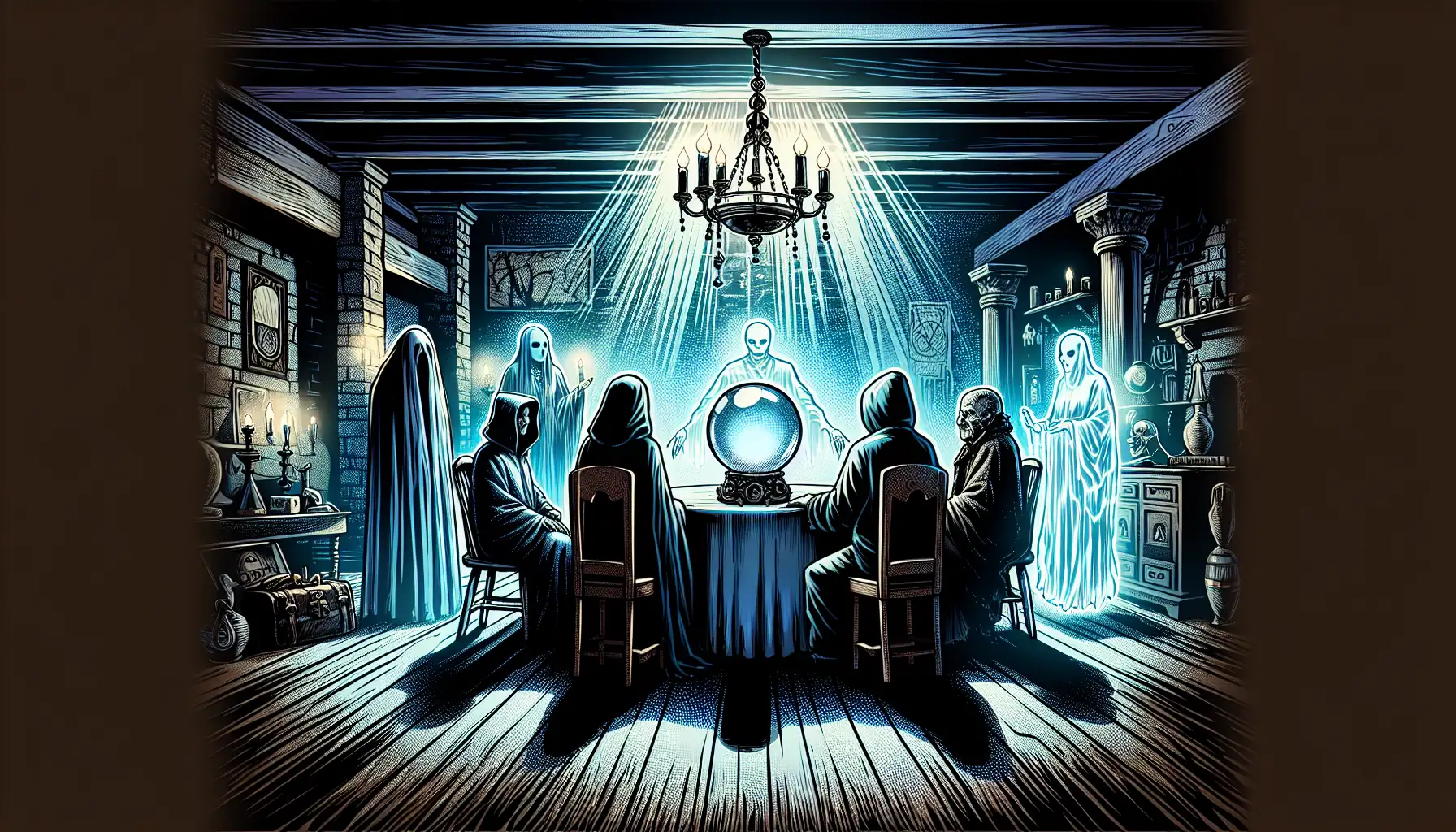
    Number stations are clandestine radio broadcasts made up of seemingly random numbers, letters, or Morse‑code groups transmitted on short‑wave frequencies. First employed widely during the Cold War, these one‑way broadcasts enabled intelligence services to communicate securely with operatives in the field. Recent open‑source evidence (2024–2025) indicates that number stations are active once again, deployed by Russia, China, and even NATO‑aligned countries. This report explains how number stations operate, their Cold‑War history, and the renewed activity observed in the past two years.

    (more…)

  • Lakes of Terror: When Sharks Invade Tranquil Waters

    Lakes of Terror: When Sharks Invade Tranquil Waters

    The Unlikely Sleuths of Freshwater: Sharks in Lakes

    The idea seems as plausible as a fair-weather politician: sharks, those fearsome denizens of the deep, suddenly appearing in the tranquil embrace of our local lakes. Yet here we are, contemplating this bizarre phenomenon with eyebrows raised and binoculars at the ready to spot that telltale fin.

    While bull sharks are infamous for their jaunts into freshwater for a little R&R, recent whispers across the aquatic grapevine hint at more unconventional species getting in on the action. Yes, it appears the aquatic ecosystem is upping its game, raising critical questions and a few laughs along the way.

    Hammerhead in a Pond? Stranger Things Have Happened

    Will it surprise you to learn that certain members of the hammerhead family have occasionally flirted with freshwater environments? Nature’s own hammer-wielding engineers, they often dwell in coastal regions, but some intrepid individuals have been reported exploring new territories. Could this mean an era of freshwater hammerhead colonies? Probably not—but it gives us an opportunity to imagine the absurd.

    According to a recent article, these instances remain rare and baffling, pushing the boundaries of what we believe possible. For all the schadenfreude aficionados out there, know that the ocean remains primarily the dominion of these finned builders, only occasionally encroaching upon freshwater promenades.

    Tall Fins and Tidal Waves: The Great White Theory

    But wait, it gets more peculiar! Great whites, the titans of the blue, entering lakes? Surely you jest! Yet as ludicrous as it sounds, there’s always a marine scientist or two eager to test the stoic predictability of nature by tossing new variables into the mix.

    Theories abound explaining these aquatic migrations: climate change? Escaping predators? Could it be that great whites are just rallying their brethren for a serene inland getaway? As we laugh off these theories, recall that truth occasionally laps its shores within an envelope of the fantastical.

    Why Do Sharks Dare to Dream?

    Do these predators know something we don’t? Might their late-foray jaunts presage the final plans of the environment’s grand architector? As sharks explore freshwater, could it hint at deeper concerns about oceanic health affecting these mystical behemoths? Our planet’s shifting climatic puzzle offers motives aplenty. Peruse concerns voiced through the climate-curious unravelings.

    This conundrum stirs our imaginations, sparking speculation and a general sense of “what if?” as eerie prophecies sometimes roll through the air. In tandem with solar flares or undersea whispers, aquatic intrusion floats its way into our tales of humor and caution.

    Conclusion: Treading Lightly on the Shores of the Uncharted

    Whether born of aquatic chronicles or forged in the fires of the absurd, the idea of sharks hastening inland is rich material for any yarn-spinner’s tale. Perhaps they are the harbingers of changing tides—or simply cosmic comedians encouraging us to question what we presume, cackling humorously as we try to decipher.

    For those eager to navigate this intersection of speculation and reality, swim on over to Unexplained.co, where the tenacity of curiosity holds court with the ambiguity of the unknown. Remember, it’s the journey—not the destination—that holds the adventure.