Blog

  • Venturing Beyond: The Space Ambitions of Entrepreneur Robert Bigelow

    Venturing Beyond: The Space Ambitions of Entrepreneur Robert Bigelow

    Entrepreneur Robert Bigelow’s journey from hotel magnate to space industry pioneer is a tale of ambition, innovation, and the quest to expand human presence beyond Earth. His company, Bigelow Aerospace, has been at the forefront of developing expandable space habitats, and his partnerships with NASA have marked significant milestones in private space exploration. Bigelow’s interests also extend into the enigmatic world of UFO research, where his funding and investigations have stirred both curiosity and controversy. As we look to the future, Bigelow’s vision for space colonization and his competitive edge in the commercial space race continue to shape his legacy in space exploration and cultural impact.

    Key Takeaways

    • Robert Bigelow transitioned from the hospitality industry to space technology, creating Bigelow Aerospace to develop expandable space habitats.
    • Bigelow Aerospace has formed significant partnerships with NASA, contributing to advancements in space exploration infrastructure.
    • Beyond space technology, Bigelow has invested in UFO research, including funding for the search for extraterrestrial life and paranormal phenomena investigations.
    • Through innovative designs and challenging the status quo, Bigelow has positioned himself as a key player in the burgeoning commercial space industry.
    • Bigelow’s legacy is marked by his impact on space exploration, his role in inspiring future space entrepreneurs, and his influence on cultural perceptions of space travel.

    The Maverick Mogul: Robert Bigelow’s Quest for the Stars

    The Maverick Mogul: Robert Bigelow's Quest for the Stars

    From Budget Suites to Space Suites: The Bigelow Business Evolution

    Robert Bigelow’s journey from hospitality to the cosmos is a tale of ambition and innovation. Starting with the Budget Suites of America, Bigelow built a foundation in real estate before setting his sights skyward. His transition from earthly accommodations to pioneering space habitats marks a bold leap from the comfort of hotel entrepreneurship to the uncharted territory of aerospace.

    Ground Zero with Clyde Lewis became an unexpected chapter in Bigelow’s story, intertwining the entrepreneur with the enigmatic world of the paranormal and UFO research. This curious intersection highlights the breadth of Bigelow’s interests and his willingness to explore the unknown.

    • Budget Suites of America: A launchpad for Bigelow’s business ventures.
    • Bigelow Aerospace: Expanding the frontier with expandable space habitats.
    • The paranormal pivot: Funding research and seeking answers beyond our world.

    Bigelow’s audacious move from terrestrial tycoon to space pioneer encapsulates his relentless pursuit of progress and the extraordinary. His ventures serve as a testament to the power of visionary thinking and the courage to venture beyond conventional boundaries.

    Bigelow Aerospace: Pioneering Expandable Space Habitats

    Robert Bigelow’s vision for space habitation took a giant leap with Bigelow Aerospace. Expandable space habitats became the company’s hallmark, revolutionizing how we think about living off-Earth. These habitats, unlike traditional rigid modules, can be compacted for launch and then inflated in orbit, offering more living space with less payload.

    Innovation was key, and Bigelow Aerospace didn’t disappoint. The company’s BEAM module, a prototype expandable habitat, was successfully attached to the International Space Station in 2016. This milestone not only proved the technology’s viability but also its potential for future space stations, moon bases, and even interplanetary travel.

    Bigelow’s expandable habitats are not just concepts; they’re a reality that’s changing the game in space architecture.

    The implications are vast, and the industry is taking notice. Here’s a snapshot of Bigelow Aerospace’s achievements:

    • Launched Genesis I, the first expandable habitat prototype, in 2006.
    • Genesis II followed in 2007, further testing the expandable technology.
    • The BEAM module’s successful integration with the ISS in 2016.
    • Plans for the B330, an autonomous space station, showcasing a leap in habitat volume.

    Bigelow Aerospace’s journey is a testament to Robert Bigelow’s relentless pursuit of space innovation. The company’s progress has not only provided practical solutions to space living but has also inspired a new direction in the design of extraterrestrial structures.

    The NASA Partnerships: Collaborating with Titans

    Robert Bigelow’s space dreams took a giant leap through partnerships with NASA. His company, Bigelow Aerospace, developed the BEAM (Bigelow Expandable Activity Module), which was successfully attached to the International Space Station (ISS) in 2016. This collaboration marked a new era for space habitats, showcasing the potential of expandable modules in space.

    Expandable technology is not just a buzzword; it’s a game-changer. Bigelow’s habitats promise more room and flexibility for astronauts, all while cutting down on launch costs. The BEAM’s success has paved the way for future endeavors, and Bigelow Aerospace continues to work closely with NASA on advancing space living quarters.

    Bigelow’s vision extends beyond the ISS. His ambitions hint at moon bases and even Martian outposts, all utilizing his expandable habitat technology.

    The partnership with NASA is a testament to Bigelow’s innovative spirit and his company’s capabilities. Here’s a quick look at the milestones:

    • 2006: Bigelow Aerospace launches Genesis I, its first expandable habitat prototype.
    • 2007: Genesis II follows, further validating the technology.
    • 2016: BEAM is launched and attached to the ISS.
    • Ongoing: Development of the B330, an expandable module designed for deep space missions.

    The journey with NASA is far from over. Bigelow’s drive and NASA’s expertise could redefine how humanity lives and works in the final frontier.

    Unraveling the Mysteries: Bigelow’s Involvement in UFO Research

    Unraveling the Mysteries: Bigelow's Involvement in UFO Research

    Funding the Search for Extraterrestrial Life

    Robert Bigelow’s fascination with the unknown extends beyond the stars. He’s bankrolling the quest for alien life. His investments aren’t just about science fiction; they’re about science fact. Bigelow’s money fuels research that could change our place in the universe.

    • Bigelow Aerospace invested in advanced technologies to detect extraterrestrial life.
    • The company supported projects scanning the cosmos for signals.
    • Bigelow’s funding also went into studying unexplained aerial phenomena.

    Bigelow’s commitment to uncovering the truth about alien life is unwavering.

    His approach is unorthodox, but it’s driven by a passion for discovery. Critics may scoff, but Bigelow’s investments could lead to groundbreaking findings. The search for extraterrestrial life is a gamble, and Bigelow is all in.

    Skinwalker Ranch: Investigating Paranormal Phenomena

    Robert Bigelow’s fascination with the unknown led him to Skinwalker Ranch, a hotbed of unexplained activity. The ranch became a living lab for paranormal research. Reports of UFO sightings, cryptid encounters, and poltergeist activity drew Bigelow’s attention. His team of scientists and researchers worked to peel back the layers of mystery shrouding the property.

    Skinwalker Ranch has become synonymous with the paranormal. Bigelow’s investment in the ranch underscores his commitment to exploring the fringes of science. The research conducted there has yet to provide definitive answers, but it has fueled a cultural phenomenon. Various podcasts and radio shows explore paranormal, conspiracy, and supernatural topics, challenging conventional beliefs and inviting listeners to delve into the unknown.

    The pursuit of truth at Skinwalker Ranch continues to captivate the imagination of many, offering a glimpse into the potential realities that lie just beyond our current understanding.

    While skeptics dismiss the findings, the allure of Skinwalker Ranch remains. It’s a beacon for those who believe that there’s more to our world than meets the eye.

    The Pentagon’s AATIP Program and Bigelow’s Role

    Robert Bigelow’s interest in the unknown led him to a pivotal role in the Advanced Aerospace Threat Identification Program (AATIP), a secretive Pentagon effort investigating unidentified aerial phenomena (UAP). Bigelow’s company was contracted to store materials and data related to UAPs, a testament to his unique position at the crossroads of entrepreneurship and the search for extraterrestrial intelligence.

    Into the Parabnormal with Jeremy Scott became an unexpected nexus for discussing Bigelow’s ventures into the unknown. The program often delved into the mysteries that AATIP sought to unravel, with Bigelow’s work providing a rich backdrop for speculation and debate.

    Bigelow’s involvement with AATIP wasn’t just business; it was a confluence of his lifelong curiosity and his resources to explore the fringes of science and understanding.

    While the details of AATIP’s findings remain mostly classified, Bigelow’s participation has sparked both intrigue and skepticism. His willingness to venture where others might not has cemented his reputation as a maverick in both aerospace and the investigation of the paranormal.

    Innovation and Controversy: The Bigelow Way

    Innovation and Controversy: The Bigelow Way

    Challenging the Status Quo: Bigelow’s Disruptive Technologies

    Robert Bigelow never shied away from shaking up the aerospace industry. His company, Bigelow Aerospace, turned heads with its expandable space habitats. These innovative structures promised more room and flexibility than traditional rigid modules. Bigelow’s vision was clear: to revolutionize how we live and work in space.

    • The B330 module, offering 330 cubic meters of space.
    • BEAM (Bigelow Expandable Activity Module), tested on the ISS.
    • Plans for lunar bases and Martian outposts using expandable tech.

    Critics questioned the practicality, but Bigelow pressed on, driven by the belief that space was humanity’s next frontier. His tech was not just a concept; it was a tangible leap towards a future among the stars.

    Bigelow’s habitats could be the key to sustainable space living, providing the comforts of Earth in the void of space.

    Legal Battles and Business Risks: The Price of Ambition

    Robert Bigelow’s journey hasn’t been without turbulence. Legal skirmishes and financial gambles are part of the territory when pushing the envelope in space technology. Bigelow Aerospace faced its share of challenges, from intellectual property disputes to contractual disagreements. Each lawsuit, a potential setback; every risk, a step closer to innovation.

    Ambition comes at a cost. Bigelow’s ventures have seen the courtroom more than once, reflecting the high-stakes nature of the aerospace industry. Here’s a snapshot of the risks involved:

    • Intellectual property battles
    • Contract disputes with partners
    • Financial risks in cutting-edge technology

    Bigelow’s resilience in the face of adversity is a testament to his commitment to space exploration.

    Despite the hurdles, Bigelow’s determination remains unshaken. His willingness to confront the risks head-on has paved the way for groundbreaking advancements in space habitation. The legal battles, while daunting, underscore the disruptive impact of Bigelow’s work—a price he seems willing to pay for the stars.

    Public Perception: Eccentric Genius or Fringe Figure?

    Robert Bigelow’s space endeavors have always sparked a spectrum of opinions. Is he a visionary or a mere eccentric? The public’s view is polarized. Some see him as a maverick pushing the boundaries of space exploration, while others dismiss him as a fringe figure, too entangled in the world of UFOs and the paranormal.

    • Visionary: Expanding human presence in space
    • Eccentric: UFO research and paranormal interests
    • Fringe Figure: Controversial pursuits and claims

    Bigelow’s work with expandable space habitats is groundbreaking, yet his foray into UFO research invites skepticism. The entrepreneur’s actions often leave the public oscillating between admiration and doubt. His ventures, though unconventional, have undeniably stirred the pot of space exploration discourse.

    Bigelow’s legacy will be as multifaceted as the man himself, with achievements and controversies intertwined.

    The Future According to Bigelow: Space Habitats and Beyond

    The Future According to Bigelow: Space Habitats and Beyond

    The Vision for Space Colonization

    Robert Bigelow’s vision for space colonization transcends the bounds of Earth, aiming to establish humanity as a multi-planetary species. His dream is to create a future where living and working in space is as commonplace as flying to another country. Bigelow Aerospace’s expandable habitats are the building blocks for this bold endeavor, offering more living space per launch than traditional rigid modules.

    The Secret Teachings with Ryan Gable has delved into the implications of such ventures, exploring how they could reshape our understanding of life and our place in the cosmos. Bigelow’s aspirations are not just about technological achievement; they’re about the survival and evolution of human civilization.

    Bigelow’s habitats could be the first step in a new era of space exploration, where the stars are not just points of light in the sky, but destinations.

    The commercial space race is heating up, and Bigelow’s competitive edge lies in his innovative designs and relentless pursuit of the extraordinary. Here’s a quick look at what sets Bigelow Aerospace apart:

    • Expandable habitat technology
    • Partnership with NASA
    • Visionary leadership
    • Commitment to safety and sustainability
    • Active involvement in UFO research

    As we stand on the cusp of a new age, Bigelow’s legacy may well be defined by his contributions to space colonization, forever altering the trajectory of human history.

    Bigelow’s Next-Generation Spacecraft Designs

    Robert Bigelow’s vision for the future of space travel is not just about getting there, it’s about staying there. His next-generation spacecraft designs are a testament to this enduring ambition. Bigelow’s designs go beyond mere transportation; they are habitats for the long haul. These structures are not just built to withstand the rigors of space but to provide the comforts of home in the void.

    Innovation is at the core of Bigelow’s philosophy. His spacecraft are modular, expandable, and reusable. They represent a shift from the traditional, rigid constructs of early space exploration to a more dynamic and sustainable approach. Here’s a glimpse into the features of Bigelow’s futuristic vessels:

    • Modularity: Allowing for customizable space configurations.
    • Expandability: Maximizing space efficiency and adaptability.
    • Reusability: Reducing costs and waste, promoting sustainable space travel.

    Bigelow’s designs are not just a leap forward in space technology; they are a giant stride for mankind’s permanence in the cosmos.

    With Bigelow’s designs, the dream of a spacefaring civilization is inching closer to reality. His work challenges the boundaries of what’s possible, inviting us to imagine a life among the stars. As we venture beyond, Bigelow’s contributions will undoubtedly be a cornerstone of humanity’s space legacy.

    The Commercial Space Race: Bigelow’s Competitive Edge

    In the high-stakes arena of the commercial space race, Robert Bigelow’s ventures stand out with a unique blend of innovation and audacity. Bigelow Aerospace has carved a niche with its expandable space habitats, a game-changer in the industry. These habitats, known as BEAM (Bigelow Expandable Activity Module), offer increased volume and reduced launch costs, giving Bigelow a competitive edge.

    • BEAM Specifications:
      • Launched: 2016
      • Partnered with: NASA
      • Purpose: Testing expandability and long-term space viability

    Bigelow’s approach is not just about getting ahead; it’s about changing the trajectory of space habitation.

    While competitors focus on rockets and rovers, Bigelow’s eye is on the cosmic real estate market. His vision extends to lunar bases and Martian outposts, where his expandable modules could provide the first extraterrestrial addresses for humanity. The race is not just to space, but to make it a place we can call home.

    Robert Bigelow’s Legacy: Impact on Space Exploration and Culture

    Robert Bigelow's Legacy: Impact on Space Exploration and Culture

    Inspiring a New Generation of Space Entrepreneurs

    Robert Bigelow’s space endeavors have sparked a new wave of entrepreneurial spirit. His bold ventures serve as a beacon, guiding aspiring space entrepreneurs towards the stars. Bigelow’s success demonstrates that with innovation and determination, the cosmos is not just a realm for governmental giants, but a playground for private pioneers.

    Space entrepreneurship is no longer a distant dream but a tangible goal for many. Programs like the Youth Co:Lab, co-led by the United Nations Development Programme and Citi Foundation, are empowering young founders to reach for the skies. These initiatives provide mentorship, funding, and networking opportunities, creating a fertile ground for the next generation of space innovators.

    The commercial space race is heating up, and thanks to visionaries like Bigelow, the barrier to entry is lower than ever.

    Here’s a glimpse at the impact of such programs:

    • Coaching and mentorship to refine business ideas
    • Seed funding opportunities to kickstart ventures
    • Networking events to connect with investors and industry leaders

    The ripple effect of Bigelow’s achievements is evident. A new cohort of space entrepreneurs is rising, ready to tackle global challenges and push the boundaries of human potential. The future of space exploration is bright, and it’s being shaped by the hands of those inspired by Robert Bigelow’s trailblazing path.

    The Cultural Impact of Bigelow’s Space Ambitions

    Robert Bigelow’s space endeavors have not only pushed the boundaries of aerospace technology but have also left an indelible mark on popular culture. His contributions have paved the way for advancements in space habitats and expanded our understanding of consciousness and the unexplained. The public’s fascination with the cosmos has been reignited, with Bigelow’s projects often likened to scenes straight out of 2001: A Space Odyssey.

    • Bigelow’s influence extends to the entertainment industry, inspiring storylines in films and TV shows.
    • Discussions about extraterrestrial life and UFOs have gained legitimacy, partly thanks to Bigelow’s research funding.
    • The entrepreneur’s unique approach to space exploration has become a topic of intrigue and debate among enthusiasts and skeptics alike.

    Bigelow’s ventures have challenged us to dream bigger and look further, making the idea of space travel and habitation more tangible to the average person.

    As we continue to explore the unknown, Bigelow’s cultural footprint will undoubtedly grow, encouraging future generations to look up at the stars and wonder, ‘What if?’

    Preserving Bigelow’s Innovations for Posterity

    Robert Bigelow’s legacy is not just about the space habitats that orbit our planet or the UFO research that has intrigued many. It’s about ensuring that his groundbreaking work continues to inspire and serve future generations. Preservation is key. Just as the Bigelow Laboratory for Ocean Sciences has its Fabrication Lab, a hub for innovation, Bigelow’s contributions need a dedicated space for research and development.

    • Research & Development: A dedicated R&D hub akin to Bigelow Laboratory’s Fabrication Lab.
    • Education & Outreach: Programs to inspire future space entrepreneurs.
    • Archiving Achievements: Documenting Bigelow’s work for historical significance.

    Ensuring Bigelow’s work is not lost to time involves more than just archiving his achievements; it’s about creating a living legacy that continues to evolve and push boundaries.

    The challenge lies not only in safeguarding the physical artifacts of his ventures but also in capturing the spirit of innovation that drove him. This means establishing educational programs that ignite the same passion in young minds and outreach initiatives that keep the public engaged and informed. Bigelow’s story is one of audacity and vision—a narrative that must be told and retold.

    Robert Bigelow’s contributions to space exploration and cultural discourse have been nothing short of revolutionary. From his advancements in expandable spacecraft to his support for research into the extraterrestrial, Bigelow’s legacy continues to inspire and provoke thought across the globe. To delve deeper into the world of the unknown and explore the impact of visionaries like Bigelow, visit our website. Discover a treasure trove of information in our Ground Zero and The Secret Teachings podcast archives, and immerse yourself in over 200 documentaries that challenge the conventional. Don’t just stand on the sidelines of history—become a part of the conversation.

    Conclusion

    In the vast expanse of the cosmos, Robert Bigelow’s ambitions stand as a testament to human curiosity and entrepreneurial spirit. His journey, from the inception of Bigelow Aerospace to the pursuit of answers in the unknown, encapsulates a modern tale of exploration that rivals the fables of old. Bigelow’s ventures remind us that the stars are not merely points of light in the night sky, but destinations for our species’ boundless aspirations. As we look to the future, his contributions to space habitation and the search for extraterrestrial life will undoubtedly be remembered as stepping stones that helped humanity leap towards the final frontier. Whether we find ourselves living among the stars or uncovering otherworldly neighbors, it is the daring vision of individuals like Bigelow that fuel our collective drive to venture beyond.

    Frequently Asked Questions

    Who is Robert Bigelow and what is he known for?

    Robert Bigelow is an American entrepreneur and the founder of Bigelow Aerospace. He is known for his pioneering work in developing expandable space habitat technology and his involvement in UFO research.

    What are expandable space habitats and how has Bigelow Aerospace contributed to this field?

    Expandable space habitats are structures that can be compactly launched and then inflated to provide greater volume in space. Bigelow Aerospace has been a leader in this technology, having developed the BEAM module attached to the International Space Station.

    How has Robert Bigelow been involved with NASA?

    Robert Bigelow’s company, Bigelow Aerospace, has partnered with NASA on several projects, including the BEAM module for the ISS, and has received funding to develop expandable habitat technology.

    What is Skinwalker Ranch and Robert Bigelow’s connection to it?

    Skinwalker Ranch is a property in Utah known for reports of paranormal and UFO-related phenomena. Robert Bigelow owned the ranch and conducted research there through his now-defunct organization, the National Institute for Discovery Science.

    What is AATIP and what role did Robert Bigelow play in it?

    AATIP, or the Advanced Aerospace Threat Identification Program, was a secretive Pentagon program investigating UFOs. Robert Bigelow’s company was reported to have received a contract to store materials and conduct research for AATIP.

    What is Robert Bigelow’s vision for the future of space colonization?

    Robert Bigelow envisions a future where expandable habitats can be used to create space stations and bases on other celestial bodies, potentially facilitating long-term human colonization of space.

  • Mystic Beings Through the Ages: A Glimpse into Otherworldly Entities

    Mystic Beings Through the Ages: A Glimpse into Otherworldly Entities

    Throughout history, mystic beings have captivated the human imagination, appearing in countless tales and legends that span cultures and eras. These otherworldly entities, from the fearsome Baba Yaga to the elusive cryptids, have been a source of fascination, fear, and intrigue. In this article, we explore the rich tapestry of the supernatural, delving into the evolution of these beings in folklore, their representation in modern media, and the intersection of science and the paranormal. We also touch upon personal experiences with the paranormal, offering a glimpse into the enduring allure of the mystic and the unknown.

    Key Takeaways

    • Mystic beings like Baba Yaga have been an integral part of cultural folklore, often serving as cautionary figures in moral tales.
    • Cryptids represent humanity’s enduring fascination with the mysterious and unexplained phenomena in the natural world.
    • The portrayal of mystic beings has evolved in folklore, reflecting changing societal norms and values over time.
    • Modern media continues to explore and reinvent the concept of the supernatural, keeping the interest in otherworldly beings alive.
    • Personal encounters with the paranormal are deeply influenced by cultural background and personal beliefs, shaping individual perceptions of the mystic.

    Enigmatic Entities and Where to Find Them

    Enigmatic Entities and Where to Find Them

    Baba Yaga: The Slavic Witch of the Woods

    Lurking in the dense forests of Slavic folklore, Baba Yaga stands as a figure shrouded in mystery. This enigmatic witch, dwelling in her peculiar hut on chicken legs, has captivated imaginations for centuries. Her tales are a complex web of fear and fascination, often serving as cautionary fables to admonish the unwary.

    Baba Yaga’s character oscillates between malevolence and benevolence, making her unpredictable and, thus, all the more intriguing. She is not just a simple hag but a representation of the wild and untamed aspects of nature. Her interactions with protagonists often hinge on their manners and morality, rewarding the virtuous and punishing the wayward.

    Baba Yaga’s hut, an architectural marvel in itself, is as alive as its inhabitant. It moves on its own, turning away unwanted guests and opening its doors to those who know the secret words.

    The witch’s presence in stories serves as a bridge between the mundane and the supernatural, challenging the protagonists to outwit or appease her to achieve their quests. Baba Yaga’s legacy continues to evolve, inspiring various adaptations in literature and media, proving that her mystique remains as potent as ever.

    Cryptids and the Allure of the Unknown

    The quest for the unknown has always captivated human imagination. Cryptids, creatures of folklore and legend, stand at the forefront of this enigmatic allure. From the depths of the ocean to the heart of dense forests, tales of these elusive beings have sparked curiosity and debate.

    Cryptozoology, the study of such hidden creatures, is a field rife with mystery. It beckons the brave and the curious to explore nature’s uncharted territories. Consider the thrill of chasing shadows, the adrenaline of a possible discovery, and the eternal question: What if?

    • Bigfoot, the Yeti, the Loch Ness Monster—names known worldwide.
    • Sightings, footprints, blurry photographs—evidence that tantalizes.
    • Skeptics and believers alike—drawn into the debate.

    The allure of cryptids lies not just in their potential existence, but in the human desire to believe in the extraordinary.

    The journey into the unknown is as much about the cryptids as it is about us. It’s a reflection of our yearning for adventure, for stories that defy the mundane. As we delve into the shadows, we’re reminded that the world is still full of wonders, waiting to be uncovered.

    Paranormal Encounters: Ghosts and Hauntings

    Whispers in the night, shadows in the corner of your eye—ghosts and hauntings have chilled spines for centuries. Every culture has its specters, and the tales are as varied as they are chilling. From the wailing banshees of Irish lore to the restless spirits of the Eastern tombs, the paranormal refuses to be ignored.

    Hauntings are not just stories; they’re experiences that defy explanation. Podcasts like ‘The Confessionals’ delve into personal accounts, with episodes like ‘Miami Mall Monsters’ and ‘Hauntings In The Bronx’ captivating listeners. Ground Zero Radio also explores the enigmatic, with hosts like David Masters and Vinny Eastwood guiding us through the unknown.

    The allure of the paranormal is undeniable. It taps into our deepest fears and curiosities, beckoning us to explore further.

    In the search for the supernatural, many turn to technology. EVP recorders, spirit boxes, and infrared cameras are just some tools used by modern ghost hunters. These devices aim to bridge the gap between our world and the one that whispers from beyond.

    • Podcast Highlights:
      • ‘The Confessionals’ explores omens and cryptids.
      • Ground Zero Radio discusses conspiracy theories and paranormal events.
      • Personal stories of encounters with the other side.

    Whether you’re a skeptic or a believer, the stories of hauntings and ghostly encounters continue to intrigue and terrify. They remind us that, perhaps, we are not alone—and that the past may linger much closer than we think.

    The Evolution of Mystic Beings in Folklore

    The Evolution of Mystic Beings in Folklore

    From Fearsome to Friendly: Changing Perceptions

    Once the stuff of nightmares, many mystical beings have undergone a remarkable image makeover. Dragons, once symbols of terror and destruction, now play friendly roles in children’s cartoons. This shift isn’t just in the realm of fire-breathers; it’s a trend seen across the board with otherworldly entities.

    Folklore has always been a reflection of societal norms and fears. As our world becomes less mysterious, so too do the creatures that inhabit our stories. They’ve evolved from harbingers of doom to misunderstood beings yearning for connection. Consider the transformation of witches in popular culture: from the wicked crones of old to the empowered figures in modern narratives.

    • The Slavic Baba Yaga, once a fearsome witch, now often appears as a quirky guide.
    • Cryptids, like Bigfoot, have moved from elusive monsters to subjects of fascination and empathy.
    • Ghosts have transitioned from haunting specters to poignant reminders of the past.

    Our changing relationship with these beings speaks volumes about our collective psyche. We’re less inclined to fear the unknown and more open to embracing it.

    This evolution is not just a testament to our growing understanding but also to the power of storytelling. It shapes our perceptions, turning the once terrifying into the familiar and even endearing.

    The Role of Storytelling in Mythical Creature Lore

    Storytelling is the lifeblood of mythical lore. It’s how Baba Yaga danced from Slavic whispers into the global consciousness. It’s not just about the creatures themselves, but how they’re woven into narratives that capture our imagination. Take The X-Files, for example, which masterfully balanced ‘mythology episodes’ with ‘monster of the week’ stories, keeping viewers hooked with a mix of overarching alien conspiracy and standalone paranormal encounters.

    The power of storytelling is evident in how it shapes our perception of mystic beings. A Sleestak, for instance, can be a guardian of an ancient prophecy or a relic of a lost civilization, depending on the tale spun around it. The narrative flexibility allows these creatures to remain enigmatic, fueling our fascination.

    The villain’s reputation and the fear they instill can be as impactful as any supernatural ability.

    This is true for characters like Blue Duck, whose terror stemmed not from otherworldly powers but from sheer malevolence. It’s a lesson in the potency of psychological storytelling within the realm of the supernatural.

    Our engagement with these beings often reflects our own cultural narratives and personal experiences. Whether it’s a child witnessing ghostly figures at midnight or an adult grappling with the allure of tarot cards, these stories resonate on a deeply personal level. They are not just tales of fantasy but reflections of our own realities, fears, and curiosities.

    Witches and Warlocks: The Shifting Image Through Time

    The image of witches and warlocks has undergone a dramatic transformation over the centuries. Once feared and persecuted, these mystical figures are now celebrated in various forms of media. From the wicked crones of fairy tales to the wise sages of modern fantasy, the evolution is undeniable.

    Folklore and fiction have played pivotal roles in reshaping our perception of these enigmatic characters. Here’s a quick look at the journey:

    • Dark Ages: Witches were seen as servants of evil, in league with the devil.
    • Renaissance: The witch-hunt era, where thousands were executed.
    • 19th Century: Romanticism sparked a shift, witches began to be seen as misunderstood.
    • 20th Century: Pop culture embraced witches as symbols of empowerment and rebellion.
    • 21st Century: Witches are now often protagonists, complex and relatable.

    The witch’s broomstick has been swapped for a wand of wisdom, as society rewrites the narrative from malevolent to benevolent.

    The modern witch reflects our changing values and the power of storytelling to alter perceptions. With various podcasts exploring paranormal, supernatural, and conspiracy topics, the conversation continues, offering engaging discussions and insights into these mysterious phenomena.

    Mystic Beings in Modern Media and Pop Culture

    Mystic Beings in Modern Media and Pop Culture

    Cinematic Specters: Ghosts on the Big Screen

    The allure of the paranormal has long captivated audiences, and nowhere is this more evident than in the realm of cinema. Ghosts, spirits, and otherworldly apparitions have been a mainstay of the film industry, providing thrills and chills to viewers of all ages. From the silent specters of early film to the high-tech hauntings of modern blockbusters, the evolution of cinematic ghosts mirrors our own fascination with the unknown.

    The Secret Teachings with Ryan Gable explores this phenomenon, delving into the cultural impact of these ethereal entities. The show highlights how ghostly figures in movies often reflect societal fears and desires, becoming a canvas for exploring deeper human emotions.

    • Iconic Films Featuring Ghosts:
      • “The Sixth Sense” – Revealing the unseen.
      • “Ghostbusters” – Comedy meets the supernatural.
      • “Poltergeist” – Family terrorized by spirits.

    The silver screen serves as a portal, inviting us to confront our own beliefs about the afterlife and the supernatural. It’s a space where the intangible becomes tangible, if only for a couple of hours.

    As technology advances, so too does the portrayal of ghosts in cinema. Special effects and CGI have transformed the way storytellers convey the ethereal, making the impossible seem possible. Yet, despite the digital wizardry, it’s the stories that resonate with our core that leave a lasting impression. The best ghost stories are those that not only scare us but also make us ponder the mysteries that lie beyond.

    Literature’s Love Affair with the Supernatural

    The written word has long been a conduit for the supernatural, weaving tales that suspend disbelief and transport readers to other realms. Literature has embraced the ethereal, with authors like Edgar Allan Poe and H.P. Lovecraft becoming synonymous with the genre. Their stories of the macabre and otherworldly have captivated audiences for generations.

    The supernatural in literature often reflects societal fears and desires. Gothic novels of the 18th century, for instance, explored the dark edges of the human psyche, while modern fantasy offers escapism from the mundane. Characters like vampires, ghosts, and witches serve as metaphors for deeper human experiences, from unrequited love to the fear of death.

    The allure of the supernatural in literature lies in its ability to challenge our perceptions of reality.

    Here’s a glimpse at how supernatural themes have evolved in literature over time:

    • 18th Century: Gothic novels introduce the supernatural as a source of terror.
    • 19th Century: Romanticism infuses the supernatural with emotion and individualism.
    • 20th Century: Horror fiction explores the limits of human endurance in the face of the unknown.
    • 21st Century: Urban fantasy and paranormal romance blend the supernatural with contemporary settings.

    The supernatural remains a beloved trope, continually reinvented to reflect the zeitgeist. It’s a testament to our enduring fascination with the unknown and the unexplainable.

    Video Games: Interactive Encounters with Otherworldliness

    Video games have become a portal to the mystical, where players can interact with otherworldly beings in a digital landscape. The allure of the unknown beckons gamers to explore realms where cryptids roam and witches cast spells. Titles like ‘Dragon Age’ introduce mythological figures, while ‘The Witcher’ series brings to life a powerful creature from higher dimensions, Gaunter O’Dimm.

    • ‘Dragon Age’: Encounter mythological beings
    • ‘The Witcher’: Face Gaunter O’Dimm, a being from another realm

    These games offer more than just entertainment; they provide a space for players to experience the paranormal without leaving their couch. The line between reality and fantasy blurs as gamers delve into stories that have been told for centuries, now reimagined in virtual worlds.

    The digital age has not diminished the fascination with the supernatural; it has transformed it into an interactive experience.

    Whether it’s uncovering ancient technology in ‘Expedition to the Barrier Peaks’ or facing the consequences of one’s actions in a future world, video games challenge our perceptions of the paranormal. They invite us to consider what lies beyond the veil of our reality, and in doing so, they continue the legacy of mystic beings through the ages.

    The Intersection of Science and the Supernatural

    The Intersection of Science and the Supernatural

    Quantum Mysticism: When Science Meets Spirituality

    The fusion of quantum physics and spirituality has given rise to a fascinating concept: quantum mysticism. This intriguing blend suggests that the universe is not just a mechanical system but also has a mysterious, interconnected nature. Quantum mysticism explores the idea that consciousness and reality are intertwined in ways that traditional science has yet to fully understand.

    • Quantum entanglement hints at a universe where distance may not limit connection.
    • The ‘observer effect’ in quantum mechanics implies that the act of observation can alter the outcome of an experiment.
    • Some believe that these principles could explain psychic phenomena or the power of intention.

    The search for a scientific basis for spiritual experiences is not new. Quantum mysticism is just the latest chapter in this age-old quest.

    While skeptics dismiss quantum mysticism as pseudoscience, proponents argue that it could bridge the gap between the physical and the metaphysical. The debate continues, with each side presenting compelling arguments. What is clear, however, is that the allure of the unknown keeps the conversation going.

    Psychic Phenomena and the Search for Evidence

    The quest for evidence of psychic phenomena is as elusive as the phenomena themselves. Skeptics demand proof, while believers hold fast to personal experiences. The scientific community often finds itself at an impasse, caught between anecdotal accounts and the stringent requirements of empirical evidence. Yet, the search continues, with researchers employing a variety of methods to capture the intangible.

    Psychic abilities, ranging from telepathy to clairvoyance, have been reported throughout history. But how does one measure the immeasurable? Experiments are designed with controls and variables, but the results are frequently inconclusive or contested. Some argue that the very nature of psychic phenomena defies conventional scientific testing.

    • Controlled Experiments: Laboratory settings with strict protocols.
    • Case Studies: In-depth analysis of individual psychic experiences.
    • Meta-Analyses: Statistical approaches to combine results from multiple studies.
    • Field Research: Observations and recordings in natural settings.

    The pursuit of evidence is not just about proving or disproving the existence of psychic abilities. It’s about understanding the human experience and the potential of the mind.

    Despite the challenges, the allure of the unknown keeps the flame of inquiry burning. Ground Zero Radio, an online platform, delves into the paranormal with a fervor that mirrors the public’s enduring fascination. The journey for truth marches on, with each step taken in the dark a testament to our desire to comprehend the incomprehensible.

    Technology and the Paranormal: Tools for Exploration

    The quest to understand the paranormal has always pushed the boundaries of technology. Today, we have an arsenal of gadgets and apps at our disposal. Ghost hunting apps have become particularly popular, transforming smartphones into EMF detectors or EVP recorders. One such app, the Ground Zero Radio app, offers live show streaming, podcasts, and news on mysteries, conspiracies, and current affairs. It’s a hub for those eager to delve into the unknown.

    But it’s not just about apps. Paranormal investigators also rely on more tangible tech. Infrared cameras capture images unseen by the naked eye, while digital voice recorders pick up sounds beyond our hearing. Here’s a quick rundown of common tools:

    • EMF Detectors: Sense electromagnetic fields
    • EVP Recorders: Capture electronic voice phenomena
    • Infrared Cameras: Detect heat signatures
    • Spirit Boxes: Scan radio frequencies for voices

    The right tool can mean the difference between a night of wild goose chases and a groundbreaking discovery.

    Whether it’s a mysterious pylon with arcane machinery or a floating island with a dormant device, the allure of the unknown beckons. Technology is the key that unlocks these secrets, allowing us to explore ancient structures and forgotten knowledge. It’s a journey of discovery, where each piece of tech adds a layer to the unfolding mystery.

    Personal Experiences with the Paranormal

    Personal Experiences with the Paranormal

    Firsthand Accounts of Mystic Encounters

    The veil between our world and the mystical often seems impenetrable, yet some individuals claim to have pierced it. Personal encounters with the paranormal are as varied as they are chilling. From spectral figures glimpsed in the dead of night to inexplicable phenomena, these stories captivate and terrify in equal measure.

    Personal beliefs shape perception. Many who share their experiences believe that a deeper connection or sensitivity allows them to perceive what others cannot. Whether it’s a sixth sense or simply being in the right place at the right time, these encounters leave a lasting impact.

    The clock strikes midnight, and the apparitions begin their march down the long hallway…

    Cultural backgrounds also play a significant role. A Slavic tale of Baba Yaga may invoke fear in one, while another finds comfort in the witch’s ambiguous nature. The same entity can be a harbinger of doom or a quirky guide, depending on who you ask.

    Here’s a snapshot of various encounters shared online:

    • Seeing shadowy figures at the stroke of midnight
    • Feeling an ‘airy’ presence in a new home
    • Witnessing objects move without explanation
    • Experiencing a profound connection during tarot readings

    These anecdotes, while anecdotal, are a testament to the human fascination with the unknown. They remind us that sometimes, the most extraordinary adventures occur not in distant lands, but within the confines of our own minds and homes.

    The Impact of Personal Beliefs on Paranormal Perception

    Our beliefs are the lenses through which we view the world, and this is especially true when it comes to the paranormal. Belief systems can either open doors to otherworldly experiences or shut them tightly. For some, a staunch skeptic’s stance may never waver, even in the face of the unexplainable. Others, steeped in cultural lore or personal convictions, may find themselves more receptive to encounters with the mystic.

    • Skeptics may rationalize away the paranormal.
    • Believers are more likely to report supernatural experiences.
    • Cultural background can influence perception of mystic events.

    Personal beliefs shape not only what we perceive but also how we interpret those perceptions. A ghostly apparition to one might be a mere trick of the light to another.

    The power of belief is so strong that it can even color our memories. Recollections of events are often influenced by what we believe to have happened, rather than what actually did. This is why two people can experience the same event and come away with vastly different stories.

    Support more articles like this by considering how your own beliefs might shape your perception of the paranormal. Are you a skeptic or a believer? Your answer could change the way you see the world around you.

    Cultural Differences in Paranormal Experiences

    Paranormal experiences are not a one-size-fits-all. Cultural context shapes the supernatural. In some cultures, spirits are ancestors offering guidance; in others, they’re malevolent entities to be feared. The Slavic Baba Yaga may be a witch with a chicken-legged hut to some, while to others, she’s a complex figure of folklore, capable of both harm and help.

    Beliefs influence perception. A ghostly encounter in one country might be a spiritual visitation in another. The same apparition could be a source of comfort or a cause for alarm, depending on cultural upbringing.

    Personal experiences with the paranormal are deeply subjective, often intertwined with the cultural fabric of one’s life.

    Here’s a quick look at how different cultures interpret similar paranormal phenomena:

    • Japan: Yūrei are spirits bound by unresolved emotions.
    • Mexico: La Llorona is a warning tale to children.
    • India: Bhoots are spirits of the dead causing mischief or harm.

    Understanding these differences is key to a richer grasp of the world’s paranormal tapestry. It’s not just about the entities themselves, but the stories we tell about them.

    Have you ever felt a chill down your spine, heard a whisper with no source, or seen a shadow dart just out of sight? You’re not alone. Our ‘Personal Experiences with the Paranormal’ section is a treasure trove of spine-tingling tales and eerie encounters. Connect with others who’ve walked on the supernatural side and share your own stories. Don’t let your experiences linger in the shadows; bring them into the light at our website. Visit the Ground Zero podcast archives and The Secret Teachings archives for more thrilling content. Your journey into the unknown awaits!

    Conclusion

    As we close the pages of our exploration into the mystical and the macabre, we are reminded that the allure of otherworldly entities is as timeless as the tales themselves. From the enigmatic Baba Yaga with her ambivalent nature and chicken-legged hut, to the chilling accounts of personal paranormal encounters, these stories resonate with our deepest curiosities and fears. The cryptic nature of unknown technologies and the echoes of futures past serve as a testament to humanity’s eternal quest to understand the unknown. Whether through the lens of folklore, personal anecdotes, or the thrill of the unexplained, the fascination with mystic beings continues to captivate and inspire us. As we ponder the lessons and mysteries they hold, we are left with a sense of wonder—and perhaps a cautious reminder to tread lightly on the thin veil that separates our world from the extraordinary realms beyond.

    Frequently Asked Questions

    Who is Baba Yaga and what role does she play in Slavic folklore?

    Baba Yaga is a figure from Slavic folklore often depicted as a witch living in a hut standing on chicken legs. She is known for her ambiguous nature, sometimes helping and sometimes hindering those who encounter her. Her stories are rich in moral lessons, typically aimed at teaching children the values of good behavior and caution.

    What are cryptids and why do they fascinate us?

    Cryptids are creatures or entities that are rumored or believed to exist but whose existence has not been scientifically proven. The allure of cryptids lies in the mystery and excitement of the unknown, as well as the possibility of discovering new species or understanding unexplained phenomena.

    How have witches and warlocks evolved in popular folklore?

    Witches and warlocks have undergone a transformation from feared and malevolent figures in early folklore to more nuanced characters in modern tales. Their portrayal has shifted over time, reflecting societal changes and attitudes towards magic and the supernatural.

    What impact has modern media had on the perception of mystic beings?

    Modern media, including movies, literature, and video games, has greatly influenced the perception of mystic beings, often romanticizing or sensationalizing them. This has led to a broader acceptance and fascination with the supernatural in pop culture.

    How does personal belief affect experiences with the paranormal?

    Personal beliefs can significantly influence how individuals perceive and interpret paranormal experiences. Cultural backgrounds and personal convictions can shape whether one views such encounters as spiritual, psychological, or purely fictional.

    Can science and the supernatural coexist in our understanding of the world?

    The intersection of science and the supernatural is a topic of debate and interest. While science relies on empirical evidence and rational explanations, the supernatural often deals with the unexplained. Some believe in the possibility of a middle ground where scientific inquiry can explore and potentially explain paranormal phenomena.

  • Cosmic Visitor: The Exciting Find of an Arkansas Meteorite

    Cosmic Visitor: The Exciting Find of an Arkansas Meteorite

    The discovery of the Arkansas meteorite has captivated both the scientific community and the public imagination. This celestial visitor, having traveled vast distances through space, offers a unique opportunity to study the composition and history of our solar system. The event has not only sparked scientific inquiry but has also become a source of local pride and a point of interest in the broader cultural landscape. As the meteorite’s secrets are unraveled, its impact extends far beyond the initial spectacle, influencing education, conservation, and our understanding of the cosmos.

    Key Takeaways

    • The Arkansas meteorite provides valuable scientific data that can enhance our knowledge of the solar system.
    • Local communities have embraced the meteorite, highlighting its importance as a cultural and educational asset.
    • Studying the meteorite’s composition and origins offers insights into the building blocks of planets and the history of celestial bodies.
    • Meteorites have a significant presence in popular culture, influencing movies, literature, and inspiring future generations of scientists.
    • Conservation efforts are crucial to preserving the integrity of meteorites, ensuring they remain available for future research and public display.

    A Celestial Surprise: Unveiling the Arkansas Meteorite

    A Celestial Surprise: Unveiling the Arkansas Meteorite

    The Discovery: A Nighttime Spectacle

    The night sky over Arkansas was ablaze with a celestial dance as a fiery meteorite made its grand entrance. Residents were treated to an unexpected light show that turned the ordinary into the extraordinary. This wasn’t just any shooting star; it was a rare visitor from the depths of space, now nestled in the local terrain.

    Into the Parabnormal with Jeremy Scott became an impromptu forum for excited chatter as the community buzzed with speculation and awe. The event quickly captured the imagination of both amateur stargazers and professional astronomers alike.

    The meteorite’s arrival has sparked a flurry of activity, with scientists eager to unlock its secrets.

    Here’s a quick rundown of what happened that fateful evening:

    • A brilliant streak across the sky
    • A loud sonic boom
    • The discovery of the space rock

    The Arkansas meteorite has not only lit up the sky but also the minds of many, promising a journey of discovery that extends far beyond our earthly bounds.

    Scientific Significance: A Treasure Trove of Data

    The Arkansas meteorite is more than just a space rock; it’s a scientific goldmine. Researchers are buzzing with excitement as they unravel the secrets locked within its cosmic form. This meteorite holds clues to the solar system’s past, offering a tangible piece of the puzzle in understanding our place in the universe.

    • Composition Analysis: What elements and minerals are present?
    • Isotopic Studies: What can isotopes tell us about the meteorite’s age and origin?
    • Magnetic Properties: How do they inform us about the meteorite’s journey through space?

    Each test, each measurement, brings us closer to answering age-old questions about the cosmos.

    The community is equally captivated, as the meteorite becomes a local legend. Schools, universities, and amateur astronomers are all eager to learn from this celestial visitor. Its discovery has sparked a renewed interest in space and science, bridging the gap between academic research and public curiosity.

    Local Impact: A Community’s Celestial Claim to Fame

    The Arkansas meteorite has not only sparked scientific curiosity but also ignited a sense of pride within the local community. Residents have embraced the meteorite as a symbol of their town, with some even incorporating it into their businesses and merchandise. The excitement is palpable, as the celestial event has put their small town on the map, drawing visitors and media attention alike.

    Local astronomy enthusiasts, like Marcy Curran, have found a new spark for their passion. Curran, a lifelong stargazer and contributor to local publications, has been particularly vocal about the meteorite’s significance. Her articles in the newspaper and discussions at the astronomy club have inspired many to look up and appreciate the night sky.

    The meteorite’s arrival has been a boon for local tourism, with businesses reporting an uptick in sales and interest. It’s a reminder that sometimes, the universe delivers unexpected gifts, and this one has certainly left a mark.

    The community’s engagement doesn’t stop at mere celebration. Educational programs and stargazing events are being organized to capitalize on the heightened interest. It’s a golden opportunity to educate and inspire, particularly the younger generation, about the wonders of space.

    • Local Businesses: Custom meteorite-themed products
    • Media Coverage: Increased national attention
    • Education: New astronomy-related programs

    The Arkansas meteorite has become more than just a space rock; it’s a catalyst for community growth and a beacon of inspiration for aspiring astronomers. Ground Zero Radio has even featured segments discussing the impact of such cosmic events, highlighting the widespread fascination they hold.

    From Sky to Science: Studying the Space Rock

    From Sky to Science: Studying the Space Rock

    Composition and Classification: What Makes It Unique

    The Arkansas meteorite is a cosmic puzzle piece, unlike any other found before. Its unique composition reveals secrets about our solar system’s history. Scientists are abuzz, analyzing its mineral makeup and isotopic signatures. This space rock is not just another pebble from the sky; it’s a time capsule from the void.

    • Mineral Content: A mix of common and rare minerals.
    • Isotopic Ratios: Clues to the solar system’s formation.
    • Magnetic Properties: Insights into the meteorite’s journey.

    The Arkansas meteorite’s composition is a window into the processes that shaped our planetary neighborhood.

    Each element and isotope within the meteorite tells a story of cosmic events that predate Earth itself. The presence of rare minerals may point to an origin in the asteroid belt, or perhaps even from a comet. Its classification, based on these findings, places it in a rare category of meteorites, making it a prized specimen for researchers and enthusiasts alike.

    Age and Origins: Tracing the Meteorite’s Cosmic Journey

    The Arkansas meteorite is not just a rock; it’s a time capsule from the cosmos. Scientists estimate its age to be millions of years old, a silent witness to the universe’s history. Its journey to Earth began in the asteroid belt, a tumultuous region between Mars and Jupiter where space rocks orbit the sun.

    By studying its isotopic composition, researchers can map out its trajectory and determine its original location in the solar system. This data is crucial for understanding the distribution of materials during the early formation of planets.

    The meteorite’s arrival on Earth is a rare opportunity for direct study of extraterrestrial material.

    Here’s a quick look at what makes this space traveler unique:

    • Isotopic signatures revealing solar system history
    • Rare minerals not found on Earth
    • Clues about the conditions of early planetary formation

    The Arkansas meteorite’s age and origins are more than scientific curiosities; they’re keys to unlocking the mysteries of our solar system.

    Comparative Analysis: How It Fits in the Bigger Picture

    The Arkansas meteorite is not just another space rock; it’s a puzzle piece in the vast cosmic picture. Scientists are buzzing with excitement as they compare it to other extraterrestrial finds. Each meteorite holds unique secrets about our solar system’s history and the building blocks of life.

    Composition and age are just the start. Researchers are delving into isotopic ratios and mineralogy to unravel the meteorite’s origins. It’s like a cosmic DNA test, revealing relationships to asteroids or comets and even hinting at the conditions of the early solar system.

    • Key Comparisons:
      • Isotopic signatures
      • Mineral content
      • Magnetic properties

    The Arkansas meteorite’s tale is one of interstellar travel and earthly discovery. Its study enriches our understanding of the universe and our place within it.

    The findings are not just for academic circles; they spark public imagination and drive educational initiatives. This meteorite is a celestial ambassador, bridging the gap between science and society.

    Public Fascination: Meteorites in Pop Culture and Education

    Public Fascination: Meteorites in Pop Culture and Education

    Meteorites in Movies and Literature: Fact vs. Fiction

    Meteorites have long captured the imagination of storytellers, often serving as pivotal plot points in movies and literature. Hollywood has a knack for sensationalizing these space rocks, turning them into catalysts for apocalyptic scenarios or the origins of superhuman powers. Yet, the reality is often less dramatic but no less fascinating.

    In literature, meteorites can symbolize change or portend doom, playing on our innate curiosity about the cosmos. From H.G. Wells’ The War of the Worlds to the recent surge in sci-fi novels, authors use meteorites to explore human reactions to the unknown.

    While films and books may exaggerate, they also inspire viewers and readers to learn more about these celestial visitors.

    Here’s a quick look at how meteorites are portrayed in pop culture:

    • Movies: Armageddon, Deep Impact—world-ending threats
    • Literature: The Martian Chronicles, Lucifer’s Hammer—harbingers of change
    • TV Shows: The Expanse, Meteor Garden—elements of drama and romance

    The blend of fact and fiction creates a gateway for education and interest in space science, proving that even when the portrayal is not accurate, the fascination is real and enduring.

    Educational Outreach: Inspiring the Next Generation of Astronomers

    The Arkansas meteorite has sparked a renaissance in educational outreach, inspiring young minds to explore the cosmos. Reach for the stars with programs like the Smithsonian Astrophysical Observatory’s free technology tool, which blends astronomy with art, engaging both budding astronomers and creative spirits.

    Local astronomy enthusiasts like Marcy Curran are also playing a pivotal role. With decades of stargazing experience, Marcy shares her passion through articles and newsletters, making the night sky accessible to her community. Her efforts, along with others, are demystifying astronomy and encouraging hands-on learning.

    • Subscribe to astronomy newsletters for monthly sky updates.
    • Attend local astronomical society meetings.
    • Explore educational resources from observatories and museums.

    The meteorite’s discovery is more than a scientific milestone; it’s a beacon for educational innovation and community involvement.

    By fostering a culture of curiosity and support, we ensure that the fascination with space continues to grow, lighting the path for future astronomers.

    Exhibitions and Displays: Where to See the Meteorite

    The Arkansas meteorite has become a celestial celebrity, and you won’t want to miss the chance to see it up close. Museums and science centers across the state are vying to display this cosmic treasure. Whether you’re a space enthusiast or just looking for an out-of-this-world experience, there’s a venue for you.

    • Museum of Natural Wonders: The first to exhibit the meteorite, complete with interactive displays.
    • Arkansas Space Center: Offers educational workshops alongside the meteorite exhibit.
    • Little Rock Planetarium: Features a special show that includes the meteorite as part of the narrative.

    Visiting these exhibits not only offers a glimpse into the vastness of space but also connects us to the universe in a tangible way.

    Each location provides a unique perspective on the meteorite’s journey from the stars to the soil of Arkansas. Check local listings for exhibit dates and times, and be sure to catch a glimpse of this cosmic visitor while it’s still on display.

    Protecting Our Cosmic Heritage: Conservation Efforts

    Protecting Our Cosmic Heritage: Conservation Efforts

    Legal and Ethical Considerations of Meteorite Recovery

    When a meteorite crashes to Earth, it’s not just a scientific marvel—it’s a legal puzzle. Who owns a piece of the cosmos? The answer isn’t always clear. Laws vary by country, and even within countries, ownership can be a contentious issue. In the United States, for example, meteorites belong to the landowner where they fall. But what if they land in public spaces or protected areas?

    Ethical considerations also come into play. Scientists urge that meteorites be preserved for study, not sold to the highest bidder. Yet, the allure of profit can tempt finders to sell these space treasures. Here’s where the tension between science and commerce bubbles to the surface.

    • Preservation vs. Profit: Balancing scientific value with potential earnings.
    • Cultural Heritage: Recognizing meteorites as part of our collective cosmic history.
    • Legal Ownership: Navigating the complex web of laws governing space objects.

    Meteorites are a shared heritage that tell the story of our universe. Their recovery should respect both legal frameworks and the pursuit of knowledge.

    The debate is ongoing, and with each new find, the community must grapple with these issues anew. It’s a cosmic conundrum that reflects our fascination with the stars and our responsibility to future generations.

    Preservation Techniques: Ensuring Longevity

    Ensuring the longevity of meteorites like the Arkansas find is crucial for ongoing scientific study and public education. Proper preservation is key to maintaining their integrity over time. Techniques vary, but some common methods include controlling environmental factors such as temperature and humidity, and using inert materials for storage and display.

    Italics for emphasis on a radio show like Ground Zero with Clyde Lewis can highlight the importance of preserving cosmic finds. Discussions on such platforms can raise awareness about the need for proper care of these celestial treasures.

    • Controlled Environment: Regulating temperature and humidity
    • Inert Materials: Utilizing non-reactive storage solutions
    • Regular Monitoring: Checking for signs of deterioration

    Preservation isn’t just about keeping a meteorite intact; it’s about safeguarding a piece of the cosmos for future generations to marvel at and learn from.

    The Role of Museums and Academic Institutions

    Museums and academic institutions are the guardians of our cosmic heritage. They play a pivotal role in preserving meteorites for future generations. By housing these celestial treasures, they provide a stable environment that protects against environmental and human threats. Education is another key mission. Through exhibits and research, they ignite curiosity and foster a deeper understanding of our universe.

    • Museums offer public displays, making science accessible to all.
    • Academic institutions conduct cutting-edge research.
    • Collaborations between the two enhance both preservation and education.

    Museums and academic institutions ensure that meteorites are more than just a momentary wonder; they become a lasting legacy of scientific discovery and public inspiration.

    As we delve into the mysteries of the universe and embrace our role as stewards of an extraordinary cosmic heritage, it’s crucial that we take action to preserve this legacy for future generations. Our website is a treasure trove of knowledge, featuring over a decade of discussions on current events, conspiracy theories, the paranormal, and in-depth analysis on a myriad of topics. We invite you to join our community, explore our archives, and contribute to the conservation efforts. Visit us now and become a part of the movement to protect our cosmic heritage.

    Conclusion: A Celestial Spectacle Over Arkansas

    The discovery of a meteorite in Arkansas has captivated the imaginations of both scientists and stargazers alike, reminding us of the dynamic and ever-changing universe we inhabit. As we marvel at the journey of this cosmic visitor, which has traversed the vastness of space to grace our skies, we are reminded of the countless celestial events that continue to unfold above us. From the Orionids meteor shower to the green fireball meteors that occasionally light up the night, each event offers a unique opportunity to connect with the cosmos. This Arkansas meteorite is not just a scientific curiosity; it’s a symbol of the awe-inspiring and mysterious nature of the cosmos that beckons us to keep looking up, to explore, and to appreciate the wonders of the night sky. As we continue to seek out the best places to stargaze and share our experiences with the EarthSky community, let’s cherish these moments of cosmic connection and the shared human pursuit of understanding our place in the universe.

    Frequently Asked Questions

    What is the Arkansas Meteorite?

    The Arkansas Meteorite refers to a space rock that was recently discovered in Arkansas, providing a rare opportunity for scientific study and public intrigue.

    How was the Arkansas Meteorite discovered?

    The meteorite was discovered following a nighttime event where it was seen streaking across the sky, leading to its eventual location and retrieval.

    Why is the Arkansas Meteorite significant to scientists?

    Scientists consider the meteorite a treasure trove of data that can provide insights into the composition of our solar system and the history of celestial objects.

    Can the public view the Arkansas Meteorite?

    Yes, the meteorite will likely be displayed in museums or exhibitions for public viewing and educational purposes.

    What makes the Arkansas Meteorite unique?

    Each meteorite has a unique composition and history. The Arkansas Meteorite’s distinct characteristics, such as its mineral content and isotopic ratios, will be studied to understand its origins and journey through space.

    Are there any conservation efforts for the Arkansas Meteorite?

    Yes, there are efforts to preserve the meteorite using specialized techniques to ensure its longevity for future study and public display, involving legal and ethical considerations for its recovery.

  • Uncovering the Divine: The Discovery of a Russian Angel Statue

    Uncovering the Divine: The Discovery of a Russian Angel Statue

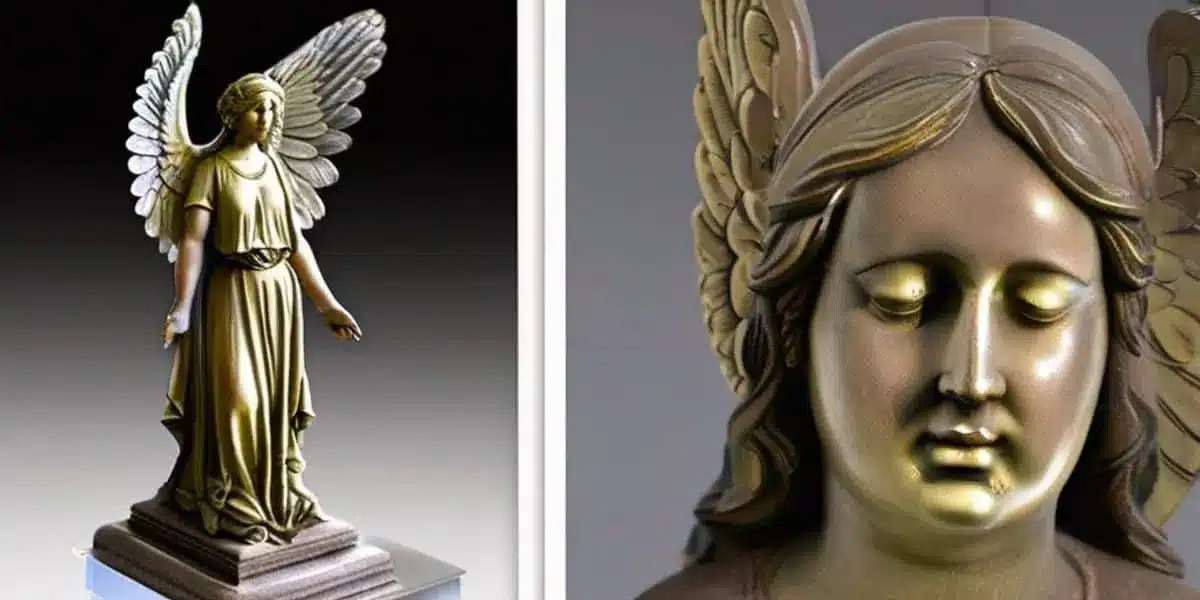
    The recent discovery of a Russian Angel statue has captivated the attention of historians, art enthusiasts, and the general public alike. This find not only sheds light on the rich tapestry of Russian religious art but also sparks conversations about the role of such artifacts in contemporary culture. The unearthed sculpture, with its intricate details and historical significance, offers a unique window into the past and its influence on the present.

    Key Takeaways

    • The Russian Angel statue represents a significant archaeological find, unveiling a piece of Russia’s angelic art legacy within a historical and cultural framework.
    • Experts have conducted extensive archaeological examinations, employing modern technology to date and preserve the statue, while exploring its religious and cultural symbolism.
    • The discovery has generated considerable media coverage and scholarly debate, particularly concerning the statue’s authenticity and its broader historical implications.
    • Conservation efforts are underway to restore and maintain the statue, with conservators facing unique challenges and sharing their triumphs in preserving this piece of history.
    • The statue’s discovery has far-reaching implications, influencing modern art and architecture, inspiring educational programs, and potentially impacting contemporary spiritual practices.

    The Enigmatic Emergence of the Russian Angel

    The Enigmatic Emergence of the Russian Angel

    The Initial Discovery: Unearthing the Statue

    In the quiet embrace of the Russian countryside, a discovery stirred the souls of historians and art lovers alike. A serendipitous find by a local farmer unearthed what would soon be recognized as a divine treasure: an angel statue, its wings enveloped in earth, its gaze frozen in time. The revelation was as unexpected as it was profound, echoing the mystique of the Statue of Jupiter from the Getty Museum, discovered centuries ago on imperial grounds.

    The excavation site quickly became a hive of activity, with archaeologists and curious onlookers converging to witness the emergence of the celestial figure. The statue’s extraction was methodical, each movement a delicate dance between reverence and scientific precision.

    The angel’s countenance, once liberated from its earthen shroud, seemed to whisper tales of a bygone era, its silent lips a gateway to the past.

    As the news spread, the air buzzed with questions. How old was this effigy? What secrets did it hold? The answers lay dormant, nestled within the craftsmanship of the sculpture, waiting to be awakened by the touch of modern inquiry.

    Historical Context: Russia’s Angelic Artifacts

    The discovery of the Russian angel statue is not an isolated event. Russia’s history is rich with angelic artifacts, each telling a story of faith and artistry. The Novgorod school of the fifteenth century is a prime example, where icons were crafted to convey messages of hope and divine presence.

    In the realm of religious art, conflict and creation often intertwine. The simultaneous rise of religious conflicts and the production of sacred art in Russia prompts a deeper look into the cultural significance of these artifacts. The angel statue, like many before it, may be a product of such historical complexities.

    The angel’s emergence is a window into the past, offering insights into the spiritual life of ancient Russia.

    While the statue’s style and craftsmanship draw attention, its true value lies in the connection to a tradition of religious expression. This tradition spans centuries, echoing the spiritual quests of generations. The angel’s silent testimony stands as a guardian of history, inviting us to explore the depths of Russia’s sacred art heritage.

    Artistic Significance: Analyzing the Sculpture’s Style

    The Russian Angel statue stands as a testament to the iconographic language of its era. Its style, reminiscent of Byzantine art, suggests a static, symbolic representation of the divine. The exaggerated and simplified facial features echo early icon painting manuals, hinting at a blend of realism and abstraction.

    • The use of color is bold, not mimicking nature but suggesting movement and rhythm.
    • Symbolism is personal, yet resonates with the illogical and fantastic.
    • The statue’s style reinforces its enigmatic presence, an undertone of yearning and loss palpable in its detached form.

    The sculpture’s style is not just a visual feast but a narrative woven in stone, capturing the essence of its time while inviting interpretation.

    The artistic significance of the Russian Angel statue is not merely in its form but in the cultural and historical narratives it embodies. It stands as a bridge between the past and the present, between the tangible and the ethereal.

    Deciphering the Divine: Insights into the Angel’s Origins

    Deciphering the Divine: Insights into the Angel's Origins

    Archaeological Investigations: Dating and Preservation

    The unveiling of the Russian Angel statue sparked a flurry of scientific inquiry. Archaeologists leaped into action, employing cutting-edge technology to unravel the statue’s age and origins. X-ray fluorescence and diffraction tests, akin to those used by the Kunsthistorisches Museum to date the Vienna lance, became pivotal in this pursuit. The statue’s composition whispered secrets of its past, suggesting a creation timeline that defied initial estimates.

    Italics were not merely for emphasis but a tool in the scientific arsenal, as metallurgical analysis revealed the intricate alloy used in the statue’s craftsmanship. This blend of metals, unique to a specific historical period, provided a chronological anchor for the artifact.

    Preservation efforts were equally meticulous. A bulleted list encapsulates the steps taken to safeguard the angel for posterity:

    • Stabilization of the statue’s structure to prevent further degradation
    • Careful cleaning of surface contaminants
    • Climate-controlled environments to halt the advance of time
    • Regular monitoring for signs of deterioration

    The interplay between science and history was never more poetic. In the hands of conservators, the angel was not just preserved but reborn, its legacy etched into the future.

    The Smithsonian Institution’s Human Origins Program underscores the importance of dating methods as a cornerstone of studying the past. This statue’s journey through time, now anchored in scientific evidence, continues to captivate and mystify.

    Cultural Connections: Religious Symbolism in Russian Lore

    The discovery of the Russian Angel statue has reignited interest in the nation’s rich tapestry of religious symbolism. Russian lore is steeped in the divine, with icons and artifacts that have carried spiritual significance through the centuries. The Novgorod school, for instance, is renowned for its 15th-century icons that emphasize light as a symbol of hope and the divine.

    The Secret Teachings with Ryan Gable often explores the mystical and esoteric aspects of such artifacts, delving into their hidden meanings and cultural importance. This statue, too, may hold secrets yet to be uncovered, resonating with the spiritual quests of seekers and scholars alike.

    The angel’s emergence prompts a re-examination of traditional narratives, inviting us to explore the interplay between art, religion, and history.

    Russian religious art is not just about aesthetics; it’s a dialogue with the divine. The statue’s style, possibly dating back to a significant period in Russian history, could offer insights into the spiritual life of the time. Here’s a glimpse into the symbolism often found in Russian religious art:

    • Light: Represents hope and the divine presence
    • Prophets: Symbolize the living and the dead
    • Forbidden thoughts: Reflect the struggle between conscience and temptation

    Each element tells a part of a larger story, one that the Russian Angel statue is now a part of. As we continue to unravel the statue’s origins, we may find that it speaks not only to the past but also to contemporary spiritual practices and beliefs.

    Comparative Analysis: Similar Finds Across the Globe

    The Russian Angel is not an isolated phenomenon. Statues with spiritual significance emerge worldwide, each telling a unique story. From the serene stone guardians of East Asia to the intricate wooden carvings of Africa, these artifacts resonate with local beliefs and customs.

    The global tapestry of divine sculptures is rich and varied. Here’s a snapshot:

    • Japan: Bosatsu figures, embodying compassion.
    • India: Exquisite depictions of deities like Vishnu.
    • Mexico: Majestic Mayan stelae, steeped in cosmology.

    These finds are not mere relics; they are a bridge to understanding ancient cultures and shared human experiences.

    The Russian Angel’s discovery prompts us to reflect on our own interpretations of the divine. It challenges us to consider the common threads that link disparate cultures. As we delve into the origins of these sacred objects, we uncover a universal narrative of faith and artistry that transcends borders and epochs.

    The Angel in the Public Eye: Reception and Controversies

    The Angel in the Public Eye: Reception and Controversies

    Media Frenzy: Coverage of the Angel Statue

    The discovery of the Russian Angel statue sparked a media storm. News outlets from around the globe were quick to pick up the story, each adding their own spin to the enigmatic find. Television specials, live broadcasts, and social media buzz turned the statue into an overnight sensation.

    The coverage ranged from factual reporting to wild speculation. Some sources questioned the authenticity of the find, while others delved into the potential supernatural implications. The public’s appetite for the mysterious was evident, as ratings and shares soared whenever the angel graced the screen.

    The angel’s emergence became a cultural phenomenon, transcending the usual archaeological circles and captivating the imagination of the masses.

    Amidst the frenzy, experts and enthusiasts alike scrambled to separate fact from fiction. The statue’s origins, age, and significance became topics of heated debate. Here’s a snapshot of the media impact:

    • Viral hashtags: #RussianAngelMystery, #HeavenlyFind
    • Top news features: CNN, BBC, The Guardian
    • Social media: Over 1 million mentions across platforms in the first 24 hours

    The statue’s discovery was not just a historical event; it was a media spectacle that highlighted society’s enduring fascination with the divine.

    Scholarly Debates: Authenticity and Historical Accuracy

    The discovery of the Russian Angel statue sparked a fiery debate among scholars. Is it a genuine relic or an elaborate hoax? This question has divided the academic community. On one side, historians argue for its authenticity based on stylistic comparisons with known artifacts. On the other, skeptics point to inconsistencies in the statue’s patina and carving techniques.

    Experts have scrutinized every detail, from the archaicism of its inscriptions to the mineral composition of the stone. The debate isn’t just academic; it touches on national pride and the integrity of historical narratives.

    • Historians’ Viewpoint: Authenticity
      • Stylistic similarities with other artifacts
      • Correlation with historical records
      • Support from local lore
    • Skeptics’ Perspective: Hoax
      • Inconsistencies in patina and carving
      • Lack of provenance documentation
      • Anomalies in material analysis

    The statue’s enigma continues to captivate the public imagination, challenging our understanding of the past.

    The controversy has even reached popular media, with shows like Ground Zero Radio discussing the statue alongside other mysteries. The outcome of this debate may forever change our perception of historical truth.

    Public Fascination: Exhibitions and Cultural Impact

    The unveiling of the Russian Angel statue sparked a cultural phenomenon. Museums clamored to display the celestial find, leading to a series of blockbuster exhibitions. The public couldn’t get enough, flocking to venues in droves, hungry for a glimpse of the divine.

    One standout event, GODDESSES, AMAZONS, and MOTHERS, showcased the statue alongside contemporary interpretations of femininity and strength. The exhibition offered the original perspectives of seven international artists, each weaving a tapestry of female identity.

    The angel’s presence transcended mere art, becoming a symbol of hope and resilience in modern times.

    The cultural impact was undeniable. Discussions about the angel permeated social media, academic circles, and coffee shop conversations alike. Here’s a snapshot of the statue’s journey:

    • Montr�al Museum of Fine Arts: Record-breaking attendance
    • Schirn Kunsthalle Frankfurt: Featured in ‘World in Turmoil’ exhibit
    • Sturm Gallery: A triumphant debut, praised by German critics

    The statue’s influence even reached the realm of pop culture, inspiring fashion, literature, and film. Its legacy, as both an artifact and an icon, continues to unfold.

    Behind the Scenes: The Conservation Efforts

    Behind the Scenes: The Conservation Efforts

    Restoration Techniques: Preserving the Past

    The meticulous process of restoring the Russian Angel statue is a dance between art and science. Conservators delicately balance traditional methods with modern innovations to ensure the Angel’s legacy endures. Techniques vary, from gentle cleaning to structural repairs, each tailored to the statue’s unique needs.

    • Preservation steps include:
      • Surface cleaning to remove centuries of grime
      • Stabilization of fragile areas
      • Inpainting to address areas of paint loss
      • Protective coatings to shield from environmental damage

    In the realm of conservation, every action is reversible, a principle that honors the artifact’s integrity. Support more articles like this by understanding the dedication behind each restored masterpiece.

    The Angel’s revival is not just about aesthetics; it’s about reconnecting with history and safeguarding it for future generations.

    The Role of Technology in Art Conservation

    Art conservation is entering a new era, thanks to cutting-edge technology. 3D imaging and printing are revolutionizing the way we preserve history. Conservators can now create precise replicas and restore damaged parts of artifacts with unprecedented accuracy.

    Ground Zero with Clyde Lewis discussed how digital tools are transforming the field. They enable detailed analysis and facilitate remote collaborations among experts worldwide. Here’s how technology is shaping the future of art conservation:

    • Digital Documentation: High-resolution scans create a digital archive for future generations.
    • Structural Analysis: Non-invasive techniques assess the internal condition of artifacts.
    • Restoration Simulation: Virtual models test restoration methods before physical work begins.
    • Environmental Monitoring: Sensors track conditions to prevent further degradation.

    Embracing technology does not mean abandoning traditional methods. It’s about enhancing them to ensure the longevity of cultural treasures.

    The synergy of old and new preserves our past for the future. As we continue to uncover the layers of history, technology stands as our steadfast ally in the quest to save art from the ravages of time.

    Challenges and Triumphs: Stories from the Conservators

    Conservators face a unique blend of challenges and triumphs. Each artifact whispers a different story, demanding a tailored approach. The Russian Angel statue was no exception. Its preservation required a delicate balance of science and artistry. Patience and precision were paramount.

    • Initial assessments revealed extensive damage.
    • Meticulous cleaning took countless hours.
    • Advanced techniques restored lost details.

    The journey from ruin to revival is a testament to the conservators’ dedication.

    Successes were celebrated with each layer of grime removed, each feature brought back to life. Yet, the work was fraught with setbacks. Unpredictable reactions to treatments, budget constraints, and the sheer scale of the project tested the team’s resolve. But their commitment never wavered, culminating in a restored masterpiece that bridged past and present.

    The Angel’s Legacy: Future Implications of the Discovery

    The Angel's Legacy: Future Implications of the Discovery

    Influence on Modern Art and Architecture

    The discovery of the Russian Angel statue has sent ripples through the realms of modern art and architecture. Artists and architects alike draw inspiration from its enigmatic beauty, incorporating elements of its design into contemporary works. The statue’s influence is evident in the resurgence of neoclassical motifs and the subtle infusion of spiritual symbolism in public spaces.

    • The Angel’s Echo in Modern Designs:
      • Revival of neoclassical aesthetics
      • Integration of spiritual motifs
      • Influence on public art installations

    The statue’s stylistic elements have become a touchstone for cultural expression, blending the ancient with the avant-garde. Its impact extends beyond visual arts, stirring a renewed interest in incorporating historical narratives into modern contexts.

    The Angel’s legacy challenges the boundaries of time, proving that art is a continuum that constantly evolves yet remains rooted in the past.

    As the statue garners attention, it also sparks debates on the authenticity of ‘inspired’ works. Yet, it is undeniable that the Russian Angel has carved its niche in the ever-changing landscape of art and architecture, promising to inspire future generations.

    Educational Outreach: Programs and Scholarships

    The discovery of the Russian Angel statue has sparked a wave of educational initiatives. Scholarships and programs are now emerging, aiming to inspire a new generation of historians, archaeologists, and artists. These opportunities are not just about financial aid; they’re gateways to hands-on experience with ancient artifacts and modern conservation techniques.

    Educational programs are taking shape in various forms:

    • Workshops on art history and archaeology
    • Internships at museums and dig sites
    • Lecture series by leading experts

    These programs are designed to ignite passion and provide practical skills, ensuring the Angel’s legacy educates and enriches.

    The scholarships, on the other hand, target students from diverse backgrounds, encouraging inclusivity in the field of historical studies. They are a testament to the belief that every curious mind deserves a chance to explore the mysteries of the past.

    The Statue’s Role in Contemporary Spiritual Practices

    The discovery of the Russian Angel statue has sparked a renaissance in spiritual practices. Modern seekers of the divine are turning to the statue as a symbol of inspiration and contemplation. In a world where the tangible and the mystical intertwine, the statue serves as a bridge to the transcendent.

    • Podcasts and online forums buzz with discussions about the statue’s impact on personal faith journeys.
    • Artisans craft replicas, infusing homes with a sense of the sacred.
    • Spiritual retreats incorporate the statue’s imagery, offering a focal point for meditation and prayer.

    The statue’s presence in contemporary spirituality is a testament to the enduring human quest for connection with the divine.

    The statue’s influence extends beyond traditional religious boundaries, inviting a diverse audience to explore the depths of their own spirituality. From the curious to the devout, the Russian Angel has become a beacon for those seeking to enrich their spiritual lives. As it stands, the statue is not just a relic of the past, but a living icon that continues to shape the spiritual landscape of today.

    The discovery of the Angel’s Legacy is a monumental event that has the potential to reshape our understanding of history and the cosmos. As we stand on the brink of new horizons, it’s crucial to delve deeper into the implications of this discovery. To join the conversation and explore the vast array of topics related to the Angel’s Legacy, we invite you to visit our website. Engage with our extensive archives, listen to thought-provoking podcasts, and watch enlightening documentaries. Don’t miss out on the opportunity to expand your knowledge and be part of this groundbreaking journey. Visit us now and become a part of the legacy!

    Embracing the Mystical: The Russian Angel Statue Unveiled

    In the journey to uncover the divine, the discovery of the Russian Angel Statue stands as a testament to the enduring allure of religious art and its capacity to inspire awe. This remarkable find not only enriches our understanding of Russian iconography but also ignites the imagination, inviting us to explore the depths of spirituality and history. As we reflect on the intricate craftsmanship and the profound symbolism embodied in this celestial figure, we are reminded of the universal quest for meaning and the transcendent beauty that connects us across time and cultures. The Russian Angel Statue, with its silent yet powerful presence, beckons us to pause and consider the ethereal aspects of our existence, offering a glimpse into the sacred that continues to enchant and enlighten seekers of the mystical.

    Frequently Asked Questions

    Where was the Russian Angel statue discovered?

    The exact location of the discovery has not been disclosed to the public to preserve the integrity of the archaeological site and to prevent any unauthorized disturbances.

    How old is the Russian Angel statue?

    Archaeological investigations are currently underway to accurately date the statue. Preliminary estimates suggest it could be several centuries old, but further analysis is required for a definitive age.

    What is the historical significance of the Russian Angel statue?

    The statue is believed to be an important artifact that could provide insights into the religious and artistic practices of the region during the time it was created. Its style and symbolism may offer new perspectives on the cultural and spiritual life of past societies.

    Has the statue been linked to any known myths or legends?

    While research is still ongoing, some scholars speculate that the statue may be connected to Slavic folklore or represent a figure from local religious narratives. More concrete connections will be established as the origins of the statue are further deciphered.

    What controversies have arisen since the discovery of the statue?

    Debate among historians and art experts has emerged regarding the authenticity of the statue, its historical context, and the implications of its style. Some controversies also revolve around the potential impact of the statue on contemporary spiritual practices and art.

    What are the future plans for the Russian Angel statue?

    The statue is slated for restoration and preservation, with plans to eventually display it in a museum where it can be studied and appreciated by the public. Educational programs and scholarly research are also anticipated to further explore its significance.

  • The Enigmatic World of Mark Allan Frost: Insights and Intrigue

    The Enigmatic World of Mark Allan Frost: Insights and Intrigue

    The prospect of a climate apocalypse has become a pressing concern in recent years, as scientific evidence increasingly points to the severe consequences of unchecked global warming. The potential for irreversible damage to our planet’s ecosystems and the well-being of future generations has sparked a sense of urgency among climate scientists, policymakers, and activists alike. This article delves into the critical thresholds of climate change, explores strategies for mitigation and adaptation, and discusses whether there is still room for optimism in the face of potential disaster.

    Key Takeaways

    • By 2035, we may reach a critical point of no return in climate action, after which limiting global warming to 1.5°C may no longer be possible.
    • Irreversible changes to the Earth’s climate system are being driven by human activities such as deforestation and fossil fuel consumption.
    • A paradigm shift towards ‘apocalyptic optimism’ may be necessary to foster progress and inspire collective action against climate change.

    The Tipping Point: Understanding the Critical Thresholds of Climate Change

    The 2035 Deadline: A Point of No Return?

    We’re on the brink, folks. Scientists have circled 2035 on the calendar as the year we might cross a critical threshold. After that, stopping a 2-degree Celsius rise in Earth’s temperature will become a pipe dream. This isn’t science fiction; it’s a countdown to potential disaster.

    The evidence couldn’t be clearer: act now or face irreversible consequences. We’re talking about a future where what seems ‘extremely unlikely’ turns into ‘impossible.’

    We’re not just up against the clock; we’re up against our own legacy of deforestation and fossil fuel addiction. It’s a legacy that’s pushing us closer to the edge.

    Here’s the kicker: it’s not just about the temperature. It’s the domino effect—one disaster triggering another. We can’t afford to ignore the warnings any longer.

    • Key Takeaways:
      • 2035: The potential point of no return.
      • 2-degree Celsius rise: The line we must not cross.
      • Action required: Urgent and decisive.

    We’ve got to flip the script. It’s time for bold moves and a new narrative. ‘Apocalyptic optimism’ might sound like an oxymoron, but it’s the mindset we need to adopt. We can change the ending of this story, but only if we start rewriting it now.

    Irreversible Changes and the 2-Degree Celsius Benchmark

    We’re standing on a precipice, folks. The 2-degree Celsius mark isn’t just a number; it’s a line in the sand that Mother Nature drew with a shaky hand. Cross it, and we’re not just talking about longer summers or milder winters. We’re talking about a domino effect of catastrophic events that could reshape our world as we know it.

    The principles of climate science have been clear: once we hit that 2-degree increase, we’re looking at irreversible changes. Coastal cities could become modern Atlantises, and extreme weather could go from headline news to just another Tuesday. The data doesn’t lie, and it’s begging us to pay attention.

    The Paradigm Shift we need is monumental. It’s not just about switching off lights or cycling to work. It’s about transforming how we live, how we consume, how we think about our place on this planet. Here’s a snapshot of what we’re up against:

    • Heatwaves: Multiplication factor of 5x or more
    • Floods: Coastal areas at severe risk
    • Storms: Increased intensity and frequency

    We can’t afford to be passive spectators in this unfolding drama. It’s time to take the stage and act.

    The study led by UK and Netherlands scientists rings an alarm for 2035, a year that could mark a point of no return. If we don’t pivot now, we might just find ourselves in a future where the term ‘natural disaster’ loses all meaning because there’s nothing ‘natural’ about the chaos we’ve unleashed.

    The Role of Deforestation and Fossil Fuels in Climate Dynamics

    We’ve got ourselves into a real pickle with deforestation and burning fossil fuels. It’s like we’re on a runaway train heading for a cliff, and the brakes are busted. Scientists are clear: we need to stop burning fossil fuels. The thickening blanket of greenhouse gases is our own doing, and it’s heating up our planet at an alarming rate.

    But here’s the kicker: even if we cut out the pollution, we’re still in for a rough ride. Gaseous sulfur dioxide, a major pollutant from fossil fuels, hangs around for just days. So, when we cut the pollution, the impact is almost immediate. Unlike carbon dioxide, which can last for centuries in our atmosphere, we can see quick changes if we act fast.

    Let’s talk numbers. Deforestation and fossil fuel emissions are the main culprits behind the rapid increase in greenhouse gases. And it’s not just about the air we breathe; it’s about the entire climate system. Here’s a snapshot of the problem:

    • Greenhouse Gas Emissions: Skyrocketing due to human activities.
    • Deforestation: Stripping away our planet’s lungs, contributing to CO2 levels.
    • Fossil Fuels: The addiction we need to kick for our climate’s sake.

    We’re at a crossroads. Every moment we delay, the closer we get to a climate point of no return. It’s time to take decisive action.

    We can’t afford to ignore the signs. The urgent discussions around apocalyptic disasters illustrate just how fragile our world is. We’re in this together, and it’s time to rally and turn the tide on climate change.

    Navigating the Climate Crisis: Strategies for Mitigation and Adaptation

    Economic Impacts: Weighing Costs Against Climate Action

    We’re at a crossroads, folks. The climate crisis isn’t just about polar bears and melting ice caps; it’s hitting our wallets hard. Economic impacts are real and escalating. But what’s the price tag on the end of the world? We can’t afford to ignore the costs of inaction.

    Let’s break it down. We’ve got floods wiping out crops, hurricanes demolishing homes, and wildfires torching timber. These aren’t just headlines; they’re invoices being billed to our future. And the longer we wait, the steeper the cost. Yet, some argue that the price of mitigation might be too high. Can we really put a price on a livable planet?

    Here’s the kicker: investing in climate action can actually save us money in the long run. Think about it. Renewable energy prices are dropping like leaves in autumn. Energy efficiency is the gift that keeps on giving, slashing bills left and right. And let’s not forget the green jobs bonanza. We’re talking about a whole new economy here, folks!

    • Renewable Energy: Cheaper than ever, and getting more affordable by the day.
    • Energy Efficiency: Cut costs and carbon footprints at the same time.
    • Green Jobs: A surge in employment opportunities in sustainable industries.

    We’re not just saving the planet; we’re investing in our own prosperity. It’s a win-win if we play our cards right.

    So, let’s roll up our sleeves and get to work. We can’t let the financial titans and media manipulation shape our future. It’s time to take control of our destiny and make smart, sustainable choices that will pay off for generations to come.

    Global Disasters and the Urgency of Decisive Measures

    We’re at a crossroads, folks. The planet’s sending SOS signals, and we’re the only ones who can answer the call. Climate change isn’t waiting around for us to get our act together. It’s here, it’s real, and it’s wreaking havoc. From wildfires to hurricanes, the evidence is undeniable. We’ve seen the studies, like the one from Earth System Dynamics on August 30, 2018, screaming for immediate action.

    Our response? It’s got to be swift, it’s got to be strong. We’re talking about a full-scale mobilization. We need to slash emissions, switch to renewables, and adapt our cities. And we can’t forget the economic angle. The cost of inaction? Catastrophic. The price of prevention? A bargain in comparison.

    • Cut emissions: Transition to clean energy.
    • Adapt infrastructure: Make cities resilient.
    • Economic overhaul: Invest in green tech.

    We’re in this together, and the time to act is slipping through our fingers like sand in an hourglass.

    Let’s not find ourselves looking back, wishing we’d done more. The future’s not set in stone, and we’ve got the chisel. Let’s carve out a path that leads to survival, not regret.

    ‘Apocalyptic Optimism’: A New Narrative for Climate Progress

    We’ve been down the doom-laden path, painting pictures of a world on fire, seas swallowing cities, and skies choked with smoke. But now, we’re flipping the script. We’re embracing ‘Apocalyptic Optimism’—the belief that, despite the dire forecasts, we have the power to pivot. It’s not just about survival; it’s about thriving in the face of adversity.

    Into the Parabnormal and Everything Out There—these aren’t just shows; they’re symbols of our insatiable curiosity and our refusal to accept a predetermined fate. We’re not just passive observers; we’re active participants in shaping our future.

    We’re crafting a new narrative, one where each action we take is a step towards a more hopeful horizon.

    Here’s the thing: optimism isn’t about ignoring the challenges. It’s about harnessing our collective energy to overcome them. We’re rolling up our sleeves, ready to tackle what comes our way. And yes, there’s a deadline. The 2035 marker looms, but it’s not a countdown to the end—it’s a call to action.

    • Embrace renewable energy
    • Innovate sustainable practices
    • Educate and empower communities

    These aren’t just bullet points; they’re our battle cry against the ticking clock. We’re not waiting for a hero to save us. We’re the heroes, each and every one of us, armed with the will to forge a better path. So let’s write this story together—one of resilience, innovation, and, above all, unwavering optimism.

    The Tipping Point: Understanding the Critical Thresholds of Climate Change

    The 2035 Deadline: A Point of No Return?

    We’re racing against a clock that’s ticking faster than ever. By 2035, scientists warn we could hit a climate point of no return. Imagine a world where the thermostat’s broken, and we can’t turn it back down. That’s the future we’re facing if we don’t act now.

    Irreversible changes are looming. Rising temperatures, melting ice caps, and extreme weather patterns could become our new normal. It’s not just about polar bears and icebergs; it’s about our homes, our food, and our very survival.

    We can’t afford to ignore the signs any longer.

    As we face the daunting challenges of the climate crisis, it’s crucial that we come together to explore effective strategies for mitigation and adaptation. Our platform at Unexplained.co offers a wealth of resources, including podcasts, documentaries, and expert discussions that empower you to take informed action. Join our community of proactive individuals by signing up for a free trial at Aftermath Media, and start making a difference today. Together, we can navigate this crisis and build a sustainable future for all.

    Frequently Asked Questions

    What is the 2035 deadline in the context of climate change?

    The 2035 deadline refers to a critical point identified by scientists, beyond which it may become extremely unlikely to prevent the Earth’s temperature from rising by 2 degrees Celsius. This threshold is significant because surpassing it could trigger catastrophic climate-related disasters globally.

    How can deforestation and fossil fuels affect climate change?

    Deforestation and the burning of fossil fuels are major contributors to climate change. They release large amounts of greenhouse gases, such as carbon dioxide, into the atmosphere, leading to a greenhouse effect that causes global temperatures to rise. This can result in severe environmental impacts, including extreme weather events and loss of biodiversity.

    What is ‘Apocalyptic Optimism’ in the context of climate change?

    ‘Apocalyptic Optimism’ is a narrative that acknowledges the grave potential outcomes of climate change but focuses on a positive and proactive approach. It emphasizes the possibility of avoiding disaster by taking decisive and effective actions to mitigate climate change and adapt to its impacts.

  • UFO Sightings 2023: Analyzing the Latest Reports from Around the Globe

    UFO Sightings 2023: Analyzing the Latest Reports from Around the Globe

    The fascination with Unidentified Flying Objects (UFOs) has continued into 2023, with numerous sightings reported from various corners of the globe. As speculation and interest grow, this article delves into the latest UFO reports, analyzing data, scrutinizing scientific perspectives, and exploring the cultural impact of these mysterious observations. We’ll look at hotspots for sightings, scientific skepticism, media influence, governmental responses, and the future trajectory of ufology, providing a comprehensive overview of the current state of UFO phenomena.

    Key Takeaways

    • The global distribution of UFO sightings reveals certain hotspots, suggesting environmental or socio-cultural factors may influence the frequency of reports.
    • Recent academic studies and advanced sensor technology have heightened scrutiny of UFO sightings, yet scientific skepticism remains prevalent.
    • Media portrayals, such as the ‘X-Files effect’, and the role of social media have significantly shaped public perception of UFO phenomena.
    • Governmental entities, including the Pentagon’s UAP Task Force, have increased transparency and policy engagement in response to UFO sightings.
    • Predictions for the future of ufology include the integration of emerging technologies and increased collaboration between scientists and enthusiasts.

    Global Hotspots of Unexplained Aerial Phenomena

    Global Hotspots of Unexplained Aerial Phenomena

    Geographical Patterns of Sightings

    UFO sightings aren’t just random; they follow intriguing patterns. A recent study by University of Utah geographers analyzed 98,000 reports over two decades, revealing hot spots in the West and Northeast of the U.S., and cold spots in the central plains and Southeast. These patterns aren’t just about where people are looking up, but also about the local environment—light pollution, cloud cover, and tree canopy all play a role.

    The sky’s clarity and our eagerness to gaze upon it might just be the key to these geographical mysteries.

    Cultural and temporal factors also influence sightings. A spike in reports often follows popular culture events or military exercises. It’s not just about the skies; it’s about the stories we share and the events that capture our collective attention. Here’s a quick look at the factors considered:

    • Sky view potential (light pollution, cloud cover, tree canopy)
    • Sociocultural triggers (media events, military exercises)

    Understanding these patterns helps us discern between explainable phenomena and the truly unexplained. It’s a blend of environmental science and social psychology, mapping the unknown against the canvas of our world.

    Cultural Influences on Reporting

    The skies are abuzz with more than just unidentified flying objects; they’re alive with tales shaped by culture and context. Sightings spike not just in the skies, but in conversation and media following certain events. After a high-profile SpaceX launch or a gripping congressional hearing, reports of UFOs surge. It’s as if our collective gaze is drawn upward, primed by the spectacle of human achievement or the drama of political discourse.

    But it’s not just events that steer our eyes skyward. Cultural narratives and folklore weave a rich tapestry of expectation and interpretation. In some cultures, a light in the sky is a spiritual harbinger; in others, a sign of extraterrestrial life. The X-Files may have been fiction, but its impact on UFO reporting was very real, embedding the idea of ‘The Truth Out There’ into the public psyche.

    Our beliefs and the stories we tell ourselves have power. They shape what we see, how we interpret it, and whether we choose to report it at all.

    Academic studies delve into these patterns, seeking to understand the geographical and cultural contours of UFO sightings. Simon Brewer’s research, for instance, explores the spatial distribution of reports, suggesting that our environment influences what we perceive as anomalous.

    Claims of reverse-engineering extraterrestrial technology often emerge from the shadows of these cultural narratives. Yet, despite the allure of such stories, investigations consistently find no empirical evidence to support them. The Pentagon’s recent clarification that many sightings were simply experimental aircraft underscores this point.

    • SpaceX Launches
    • Congressional Hearings
    • Cultural Beliefs
    • Media Narratives

    In the end, the UFO phenomenon is as much a reflection of our terrestrial preoccupations as it is a mystery of the cosmos.

    Impact of Military and Commercial Air Traffic

    The skies are busier than ever with military jets and commercial airliners crisscrossing the globe. This uptick in air traffic has a curious side effect: a surge in UFO sightings. Is there a connection, or is it mere coincidence? The answer isn’t straightforward, but patterns emerge.

    Military exercises often involve cutting-edge technology and unconventional flight patterns. These can easily be mistaken for UFOs by the untrained eye. Meanwhile, pilots and air traffic controllers are on the front lines, reporting sightings from positions of authority. Their accounts carry weight, stirring public interest and media coverage.

    Here’s a snapshot of recent reports:

    • Military Maneuvers: Unidentified objects near military zones.
    • Commercial Confusion: Pilots report fast-moving, unexplained phenomena.
    • Radar Riddles: Air traffic control tracks unknown blips that vanish.

    The increase in sightings around air traffic hubs isn’t just about more eyes on the sky; it’s about the types of eyes—trained professionals who know when something doesn’t belong.

    As we dissect these reports, we must ask: Are we witnessing a rise in extraterrestrial visits, or is our own advanced technology outpacing our ability to recognize it? One thing is certain: The conversation around UFOs is reaching new heights, fueled by the very traffic that might be causing the sightings.

    Scientific Scrutiny and Skepticism

    Scientific Scrutiny and Skepticism

    Recent Academic Studies

    The academic world has long shied away from UFO research, wary of its association with fringe science. But a groundbreaking study has cut through the stigma. Researchers are now mapping UAP sightings against environmental factors, seeking patterns that transcend anecdotal evidence. This pivot towards data-driven analysis marks a new era of scientific inquiry into the unexplained.

    Sky view potential and public sighting reports are at the forefront of this fresh approach. A recent publication by Medina, Brewer, and Kirkpatrick exemplifies this trend, offering insights that could reshape our understanding of UAPs.

    The quest for truth is no longer confined to the shadows. It steps boldly into the light of rigorous scrutiny.

    While the stigma persists, a few brave academics are charting a course for a future where UAP research is no longer the domain of conspiracy theorists and sci-fi enthusiasts, but a legitimate field of study. The table below highlights the shift in academic focus:

    Year Focus of Study
    Pre-2023 Cultural & Psychological
    2023 Environmental Analysis

    As we witness this transformation, one thing becomes clear: the search for answers is evolving, and academia is finally taking notice.

    Governmental Reports and Transparency

    The veil of secrecy is lifting. Governments are opening their files, revealing decades of UFO documentation. The 2023 National Defense Authorization Act mandated a comprehensive report on ‘unidentified anomalous phenomena’ (UAP), a bureaucratic term for UFOs. This transparency is unprecedented, sparking public intrigue and academic interest.

    Recent Governmental Disclosures:

    • 1945 to Present: UAP records released
    • Reverse-engineering claims: Dismissed for lack of evidence
    • AARO Report: Interviews with 30+ individuals

    The quest for truth doesn’t end with declassified documents. It’s fueled by them.

    While skeptics scrutinize, enthusiasts pore over pages, seeking patterns and proof. The AARO’s findings? No reverse-engineering of alien tech, despite the rumors. Yet, the conversation has shifted. Once taboo, UFOs are now a topic of serious inquiry. Support more articles like this to keep the dialogue alive and the information flowing.

    The Role of Advanced Sensor Technology

    In the quest to unravel the mysteries of UFO sightings, advanced sensor technology is a game-changer. High-definition cameras, infrared sensors, and radar systems are now capturing data with unprecedented detail. This surge in quality and quantity of UAP (Unidentified Aerial Phenomena) data is pushing the boundaries of what we can detect and analyze.

    Ubiquitous sensors and data availability mean that ‘unknowns’ are increasingly unacceptable. The scientific community is stepping up, leveraging these tools to sift fact from fiction. With better data, most UAP reports could be resolved as mundane phenomena. Yet, the truly anomalous objects that defy explanation remain a legitimate concern.

    The environmental context of sightings is crucial. Understanding it helps identify legitimate threats among the sea of explainable occurrences.

    Here’s a snapshot of how sensor technology is shaping our understanding:

    • Enhanced imaging captures UAPs in multiple spectrums.
    • Radar improvements lead to better tracking of aerial movements.
    • Data analytics allow for pattern recognition, separating outliers from identifiable objects.

    The future of Ufology hinges on these technological advancements. As we continue to improve our sensors and data processing capabilities, the veil over the UFO phenomenon may finally lift.

    Public Perception and Media Influence

    Public Perception and Media Influence

    The X-Files Effect

    The cultural phenomenon of The X-Files has left an indelible mark on the public’s imagination regarding UFOs and the paranormal. Its influence is so pervasive that researchers are investigating the ‘X-Files effect’—the idea that popular media can spike UFO sighting reports. Shows like ‘The X-Files’ shape our perception of what a UFO might look like, leading to a surge in sightings that mirror the show’s portrayal of extraterrestrial encounters.

    • After the revival of ‘The X-Files’ in 2016, sightings increased.
    • Academics are exploring the correlation between entertainment and sightings.
    • The ‘X-Files effect’ extends beyond TV to other media forms.

    It would seem that the public just can’t get enough of UFOs, with reports ebbing and flowing in tandem with cultural tides.

    The ‘X-Files effect’ isn’t just about increased reports; it’s about the shaping of narratives. When a show captures the zeitgeist, it doesn’t just entertain—it informs and sometimes even warns. The line between fiction and reality blurs as people look to the skies, half-expecting to see a flying saucer from their favorite episode. This cultural osmosis underscores the power of media in influencing public perception and, by extension, reported experiences of the unexplained.

    Social Media Buzz and Virality

    In 2023, UFO sightings have become a staple of social media chatter. Every new report sparks a wildfire of tweets, shares, and likes, as netizens dissect videos and images with fervor. Platforms like Twitter and Instagram are abuzz with hashtags and threads, turning the skies into a digital playground for speculation and debate.

    The virality of UFO content is undeniable. A sighting can go from a local whisper to a global shout in mere hours. Here’s a snapshot of the most talked-about sightings on social media this year:

    • #RoswellRedux: A nod to the infamous 1947 incident, this hashtag surged after a peculiar formation was spotted over New Mexico.
    • #LightsOverLondon: The UK capital was lit up with discussions when an unexplained array of lights danced over the Thames.
    • #SkylineAnomalies: Used to tag various urban sightings, from New York to Tokyo.

    UFO enthusiasts and skeptics alike flock to these digital arenas, each armed with theories and counterarguments. The discourse is relentless, often outpacing official explanations or scientific analysis.

    The impact of social media on UFO sightings is profound. It’s a feedback loop that amplifies not just the sightings themselves, but the public’s hunger for the unknown.

    As the line between fact and fiction blurs online, the role of credible sources becomes crucial. Yet, the allure of the unexplained often overshadows the quest for truth. In this modern age, the phenomenon of UFO sightings is as much about the mystery as it is about the medium that propels it.

    Documentaries and Whistleblowers

    The landscape of UFO discourse has been dramatically reshaped by documentaries and the revelations of whistleblowers. The public’s thirst for knowledge has been partly quenched by these sources, offering unprecedented insights into the enigmatic world of UFOs. Whistleblowers have come forward with bombshell claims, such as the discovery of ‘non-human biologics’ at crash sites, sparking a frenzy of speculation and debate.

    Ground Zero with Clyde Lewis has been at the forefront, dissecting whistleblower testimonies and government disclosures. The show’s deep dives into the UFO phenomenon have captivated audiences, contributing to a broader conversation about the existence and implications of extraterrestrial life.

    The influence of these narratives cannot be overstated. They have not only fueled public curiosity but also pressured governments to be more transparent.

    While some documentaries have been criticized for sensationalism, others have been lauded for their rigorous investigative approaches. Here’s a snapshot of the impact:

    • Increased public engagement
    • Renewed calls for governmental transparency
    • A surge in mainstream media coverage

    As we continue to explore the unknown, the role of media in shaping our understanding of UFOs remains pivotal. With each new release and revelation, the boundaries of ufology are expanded, and the collective imagination is ignited.

    Governmental Responses and Security Concerns

    Governmental Responses and Security Concerns

    Congressional Hearings and Policy Changes

    The corridors of power in Washington have been echoing with the buzz of UFOs. In a historic move, Congress held its first public hearing on UFOs in over 50 years. The hearing, which included testimonies from military personnel and experts, was a watershed moment for ufology. It signaled a shift from fringe conspiracy to a topic worthy of serious policy discussion.

    In response to growing concerns, lawmakers have pushed for greater transparency. A measure introduced by Senate Majority Leader Chuck Schumer and Sen. Mike Rounds would mandate the government to report and potentially declassify UFO sightings. This bipartisan effort underscores the unified concern across political lines.

    The Pentagon’s establishment of the AARO, following a series of military encounters with unexplained aerial phenomena, marks a pivotal step in addressing national security implications.

    The table below summarizes key developments in governmental response to UFO sightings:

    Year Event
    2019 Navy drafts new guidelines for UFO reporting
    2020 Pentagon releases classified Navy videos
    2022 First Congressional hearing on UFOs in decades
    2023 Schumer-Rounds measure for reporting and declassifying

    As the government grapples with the unknown, the public watches with a mix of skepticism and fascination. The unfolding narrative of UFOs continues to captivate and challenge our understanding of the skies above.

    The Pentagon’s UAP Task Force

    The Pentagon’s All-domain Anomaly Resolution Office (AARO) has taken the reins in the quest to demystify Unidentified Aerial Phenomena (UAP). More than 270 sightings have been reported in just 8 months, signaling a surge in encounters that demand attention. AARO’s mandate is clear: to streamline and synchronize the U.S. government’s approach to these enigmatic occurrences.

    Project BLUE BOOK, the predecessor to AARO, laid the groundwork with investigations dating back to 1947. However, AARO’s modern toolkit and government-wide coordination represent a significant evolution in the field. The recent 63-page report is a testament to their comprehensive review of nearly 80 years of UAP-related reports.

    The team’s findings suggest a mix of misidentified experimental technologies and the proliferation of drones, rather than extraterrestrial visitors.

    AARO’s transparency is pivotal, as it also debunks theories of secret government programs related to UAPs. This openness is a stride towards demystifying UAPs and ensuring that the truth is not shrouded in secrecy. Here’s a snapshot of AARO’s progress:

    • July 2022: AARO established
    • 270+ UAP sightings in 8 months
    • 63-page report released

    As AARO continues its work, the world watches with bated breath, eager for answers that could redefine our understanding of the skies above.

    National Security Implications of UFO Sightings

    The skies are no longer just a playground for birds and planes; they’ve become a canvas for the unexplained. UFO sightings are no longer dismissed as mere fantasy; they’ve escalated to a matter of national security. The Pentagon’s UAP Task Force is the government’s latest effort to grapple with these aerial enigmas. With advanced sensor technology, we’re spotting more UAPs than ever, but explanations remain as elusive as the phenomena themselves.

    The U.S. Department of Defense takes these incidents seriously, acknowledging that some sightings may be attributable to experimental tech or drones. Yet, the possibility of foreign surveillance crafts looms over every unexplained blip on the radar.

    In a world where the unknown flies above, transparency is key. The first Congressional hearing on UFOs in decades has opened the door to a new era of openness.

    Here’s a snapshot of the recent governmental focus on UFOs:

    • May 2022: First Congressional hearing on UFOs in decades
    • Establishment of the AARO (Anomaly Assessment and Resolution Office)
    • Release of previously classified Navy videos

    As we peer into the skies, the line between security and science fiction blurs. What was once a topic for tabloids is now a subject for serious policy discussion. The future of ufology is intertwined with our national defense, and the stakes are as high as the mysteries are deep.

    The Future of Ufology

    The Future of Ufology

    Emerging Technologies in UFO Research

    The quest to unravel the UFO enigma is getting a tech upgrade. Advanced sensors and AI are the new UFOlogists’ tools, sifting through data like never before. These technologies promise to filter out the noise, leaving us with clearer signals of potential extraterrestrial activity.

    Machine learning algorithms are now trained to distinguish between drones, weather balloons, and something… otherworldly. This isn’t science fiction; it’s the next frontier in UAP research. Here’s a snapshot of the tech in action:

    • AI Detection: Automated systems scan skies 24/7, flagging anomalies.
    • Data Analytics: Crunching numbers to spot patterns across global sightings.
    • Sensor Fusion: Combining radar, infrared, and optical data for a fuller picture.

    With more data comes better quality analysis. The goal? To move from speculation to scientific understanding.

    Skeptics may scoff, but the evidence is mounting. As we harness these emerging technologies, the line between science fiction and science fact blurs. The future of UFO research is not just about looking up; it’s about looking forward with a digital lens.

    Collaboration Between Scientists and Hobbyists

    The fusion of scientific rigor and amateur enthusiasm is reshaping UFO research. Scientists bring methodical analysis, while hobbyists contribute with relentless curiosity and on-the-ground observations. Together, they’re unlocking new insights into the UFO phenomenon.

    Collaboration is key. Online forums and citizen science projects are buzzing with joint efforts. Here’s a snapshot of how these partnerships are working:

    • Data Sharing: Amateurs share sightings and photos, which scientists analyze.
    • Technology Utilization: Hobbyists employ apps and tools developed by researchers.
    • Joint Publications: Studies co-authored by both groups increase credibility.

    The synergy between these two groups is creating a new era in ufology, one where the line between professional and amateur is increasingly blurred.

    The recent report by Congress underscores the importance of this partnership. It concluded that most sightings were misidentified ordinary objects. Yet, the collaboration continues to pursue those few truly unexplained cases. As Ground Zero Radio explores enigmatic topics, this alliance is at the forefront, sifting through the noise to find the signals of the unknown.

    Predictions for 2024 and Beyond

    As we peer into the crystal ball of ufology, the year 2024 looms with tantalizing mysteries. UFO enthusiasts and skeptics alike are on the edge of their seats, anticipating the next wave of unexplained aerial phenomena. With emerging technologies, the field is ripe for revolutionary discoveries. Here’s what to expect:

    • A surge in drone technology will blur the lines between unidentified flying objects and advanced human-made crafts.
    • Collaborative efforts between governments and independent researchers will likely increase, leading to more comprehensive data.
    • The stigma surrounding UFO reporting is expected to diminish, encouraging more pilots and military personnel to share their encounters.

    The future of ufology isn’t just about spotting flying saucers; it’s about understanding our place in the cosmos.

    As we move forward, the integration of AI and machine learning in analyzing UFO data will become standard practice. This will not only speed up the identification process but also filter out false positives. The global network of amateur ufologists, equipped with sophisticated tech, will play a pivotal role in data collection. Meanwhile, popular shows like Ground Zero Radio continue to fuel public interest, discussing the enigmatic and the unexplained with hosts like David Masters and Vinny Eastwood.

    As we stand on the brink of new discoveries in the realm of ufology, the quest for knowledge becomes ever more thrilling. Whether you’re a seasoned researcher or a curious newcomer, our extensive archives offer a treasure trove of insights into the unexplained. Dive into over a decade of riveting discussions, in-depth analysis, and captivating documentaries. Don’t let the future of ufology pass you by – join our community today and start your journey into the unknown. Visit our website and explore the ‘Ground Zero podcast archives‘ to begin unraveling the mysteries of the cosmos!

    Conclusion: The Enigma of the Skies

    As we wrap up our global tour of UFO sightings in 2023, it’s clear that the skies above us continue to be a source of mystery and fascination. Despite advancements in sensor technology and a surge in personal aircraft use, the increase in reported sightings has only deepened the enigma. The Pentagon’s acknowledgment of Unidentified Aerial Phenomena (UAP) as potential national security threats, alongside the release of their report citing over 270 sightings in just eight months, underscores the seriousness with which these incidents are now regarded. Moreover, studies like the one led by University of Utah geographers, which analyze environmental factors influencing sightings, and the temporal considerations linked to socio-cultural triggers, offer a glimpse into the complexity of this phenomenon. While the recent Pentagon report suggests most sightings are ‘ordinary objects’ and phenomena, the persistent allure of the unexplained ensures that our fascination with UFOs will continue to soar. As we look to the skies, the line between science and science fiction blurs, leaving us to ponder the age-old question: are we truly alone in the universe?

    Frequently Asked Questions

    What are the global hotspots for UFO sightings in 2023?

    The global hotspots for UFO sightings in 2023 include areas with high military and commercial air traffic, regions with cultural histories of unexplained phenomena, and places with increased public interest in UFOs due to media influence.

    How do scientific studies approach recent UFO sightings?

    Recent scientific studies analyze environmental factors, such as light pollution and cloud cover, and employ advanced sensor technology to differentiate between explainable objects and potentially legitimate threats.

    Has media portrayal of UFOs affected public perception?

    Yes, media portrayal, especially through shows like ‘The X-Files,’ social media buzz, and documentaries, has significantly shaped public perception and contributed to the virality of UFO sightings.

    What actions have governments taken in response to UFO sightings?

    Governments have conducted congressional hearings, established task forces like the Pentagon’s UAP Task Force, and implemented policy changes to address national security concerns related to UFO sightings.

    What advancements are expected in UFO research technology?

    Future advancements in UFO research technology may include more sophisticated sensors, AI-based analysis tools, and increased collaboration between scientists and hobbyists to better understand aerial phenomena.

    Have there been any confirmed extraterrestrial links to UFO sightings?

    As of the latest reports, U.S. officials have not identified any actual evidence of extraterrestrial life linked to UFO sightings, with most sightings being attributable to ‘ordinary objects’ and phenomena.

  • The Shadow Agenda: Uncovering Hidden Forces Behind Global Events

    The Shadow Agenda: Uncovering Hidden Forces Behind Global Events

    The article ‘The Shadow Agenda: Uncovering Hidden Forces Behind Global Events’ delves into the enigmatic world of espionage and psychological warfare, revealing the covert operations and mind games that shape global events. It examines the intricate art of intelligence gathering, the deceptive nature of diplomatic relations, and the digital battleground of cyber espionage. Additionally, it explores the psychological tactics used in propaganda, the manipulation of belief systems by cults, and the complex realm of conspiracy theories. Through these lenses, the article aims to shed light on the unseen forces that influence the world stage and the narratives that are woven into public consciousness.

    Key Takeaways

    • The intricate web of espionage activities plays a crucial role in shaping international relations and outcomes of global events.
    • Psychological manipulation through propaganda and belief systems is a powerful tool used to control public perception and societal norms.
    • Distinguishing between fact and fiction in conspiracy theories requires critical analysis and understanding of the underlying psychological and cultural factors.

    The Enigma of Espionage: Unveiling Covert Operations

    The Art of Intelligence Gathering

    We’ve all heard the tales, whispered in the dark corners of the internet and the back rooms of power. But what’s the truth behind the smokescreens? Intelligence gathering is an art form, as old as the hills and twice as shadowy. It’s not just about cloak-and-dagger antics; it’s a sophisticated dance of information, misinformation, and the perpetual quest for the upper hand.

    • The Players: Nations, organizations, lone wolves.
    • The Tools: Bugs, hacks, moles, and more.
    • The Stakes: Geopolitical dominance, corporate espionage, personal vendettas.

    We’re not just passive observers. We’re part of this narrative, our data and daily lives intertwined with the grand chessboard of global espionage.

    Take Michael Riconosciuto, a man whose life reads like a spy novel. From early genius to government projects, his story is a labyrinth of cryptography, espionage, and unconventional weapons. Tangled in intrigue and conspiracy theories, his journey is a testament to the murky waters of intelligence operations. And it’s not just individuals; entire nations engage in this silent war, their moves hidden from public view, their intentions obscured by layers of secrecy.

    Decoding Diplomatic Double-Dealing

    We’re peeling back the curtain on global diplomacy. It’s a shadow dance of promises and secrets. Every handshake hides a hidden agenda. Every smile, a potential stab in the back. We’ve seen it time and again, the public facade and the private scheming. It’s a world where Ground Zero with Clyde Lewis is just the tip of the iceberg.

    • The Art of Misdirection: Diplomats are masters of distraction, focusing attention away while the real deal is done in the shadows.
    • The Power Brokers: Behind closed doors, the true influencers emerge, shaping policies with whispers.
    • The Unseen Hand: Invisible to the public eye, decisions are made that steer the fate of nations.

    Diplomacy is not just about forging alliances; it’s about reading between the lines. The unspoken is often louder than the spoken.

    In this high-stakes game, information is currency, and intelligence agencies are the mint. They craft narratives, manipulate perceptions, and when necessary, rewrite the rules. It’s a digital chessboard, and we’re all pawns unless we learn to see the moves before they happen.

    Cyber Spies: The Digital Battlefield

    We’re in the thick of a new kind of warfare, where keyboards become weapons and screens are the battlegrounds. Cyber spies operate in the shadows, their fingers dancing across keys to infiltrate, disrupt, and steal. Information is the prize, and every byte can tip the scales of power.

    Ground Zero with Clyde Lewis isn’t just a show; it’s a beacon in the murky waters of the digital age. It’s where the unheard and unseen come to light, where the Everything Out There becomes tangible. We tune in, not just for entertainment, but for enlightenment, to grasp the ungraspable.

    • Cyber attacks are not a distant threat; they’re here, now, and personal.
    • Governments, corporations, and individuals are all targets.
    • The cost of cybercrime is not just monetary; it’s a matter of national security.

    In this digital chess game, we’re all pawns and kings at the same time. Every move we make online could be part of a larger strategy we’re not even aware of.

    The digital battlefield is vast and ever-changing. Staying informed is our only shield. We must be vigilant, always questioning, always learning. Because in the world of cyber spies, the only certainty is uncertainty.

    Mysteries of the Mind: Exploring Psychological Warfare

    Propaganda and Public Perception

    We’re all swimming in a sea of information, but how much of it is designed to steer our thoughts? Take Ground Zero Radio, for instance. It’s not just entertainment; it’s a masterclass in shaping narratives. And then there’s The Paradigm Shift, a concept that’s not just about changing views, but about the forces that nudge us to see the world differently.

    • The Art of Persuasion:

      • Crafting compelling stories
      • Emotional triggers
      • Repetition and reinforcement
    • The Tools of Influence:

      • Media platforms
      • Social networks
      • Memes and viral content

    We’re not just passive consumers; we’re active participants in the spread of ideas.

    The enigmatic Dr. John Philip Nichols is at the center of the Octopus Conspiracy, sparking debate over his role as a mastermind or pawn. Media, disinformation, and public perception blur reality in this complex web of intrigue.

    Cults and the Manipulation of Belief Systems

    We’ve all heard the whispers of The Secret Teachings and tuned into the eerie broadcasts of "Into the Parabnormal". But what’s the real deal with cults? They’re not just about cloaks and chants. Cults play a psychological game, twisting minds and warping reality.

    Cults may form around anything – a charismatic leader, an enigmatic object, or even an abstract concept. Members often ascribe magical powers to their focus of worship, creating a web of belief that’s hard to escape.

    • The allure of secret knowledge
    • The promise of a chosen family
    • The seduction of a new identity

    These are the hooks that snag the vulnerable, pulling them into a world where up is down, and truth is what the leader says it is. It’s a potent mix of psychological manipulation and fervent belief, and it can happen to anyone.

    We’re not just talking about a few fringe groups in the shadows. The impact of cults can ripple through society, leaving a trail of broken lives and shattered families.

    Conspiracy Theories: Separating Fact from Fiction

    We’ve all been there, scrolling through the web, and bam! A wild conspiracy theory appears. It’s easy to fall down the rabbit hole, but here’s the kicker: not all conspiracies are created equal. Some are grounded in truth, while others are as flimsy as a house of cards. We’re here to help you sift through the noise.

    Let’s break it down with a simple list:

    • Fact: Some theories have been proven true. Think Watergate or the NSA’s surveillance tactics.
    • Fiction: Others are pure fabrication, like the infamous ‘faked moon landing’.
    • Uncertain: And then there are those that live in the gray area, shrouded in mystery.

    Remember, critical thinking is your best tool. Don’t take anything at face value. Question, research, and question again.

    Conspiracy theories can be a labyrinth of misinformation. It’s our mission to arm you with the facts, so you can navigate the maze with confidence. Support more articles like this by staying informed and engaged. Together, we can shine a light on the truth.

    Dive into the ‘Mysteries of the Mind: Exploring Psychological Warfare’ and unravel the enigmatic tactics that influence human behavior and decision-making. Our extensive archives at Ground Zero: Aftermath offer a treasure trove of podcasts, radio shows, movies, and more, providing you with unparalleled insights into the world of psychological operations. Don’t miss out on the opportunity to expand your understanding—start your journey now with a FREE trial and gain unlimited access to a wealth of knowledge. Visit our website and embark on an intellectual adventure that promises to challenge and enlighten.

    Conclusion: The Veil Lifted

    As we draw the curtains on our exploration of the shadowy undercurrents shaping our world, it’s clear that the realm of the unexplained and the clandestine is not just the stuff of late-night radio banter. From the bizarre case of an exploding toilet to the enigmatic tales of Epstein Island, our journey has revealed a tapestry of hidden narratives that challenge our understanding of reality. Ground Zero Radio and its hosts, Wes Scott and Ron Patton, have taken us through a labyrinth of conspiracy theories and paranormal events, reminding us that truth can be stranger than fiction. Whether it’s the folklore surrounding Baba Yaga or the musings on life’s impermanence, these stories resonate with a universal curiosity about the unknown. As we ponder the implications of these hidden forces, we must do so with a critical eye, discerning fact from fiction, yet remaining open to the mysteries that elude our grasp. In the end, the shadow agenda may not be fully uncovered, but the quest for knowledge continues to ignite our collective imagination, urging us to question, to seek, and to wonder.

    Frequently Asked Questions

    What is the focus of ‘The Shadow Agenda’ article?

    The focus of ‘The Shadow Agenda’ article is to delve into the secretive and often undisclosed forces that influence global events. It explores topics such as espionage, covert operations, psychological warfare, and the manipulation of public perception through media and propaganda.

    Can you explain the concept of ‘psychological warfare’?

    Psychological warfare involves the use of psychological tactics to influence the attitudes and behaviors of individuals or groups, often in the context of war or political strategy. It can include propaganda, misinformation, and the manipulation of psychological biases to achieve a strategic advantage.

    What role does espionage play in global events?

    Espionage plays a crucial role in global events as it involves the gathering of intelligence and conducting covert operations that can impact diplomatic relations, national security, and the execution of military strategies. It often involves a complex web of spies, informants, and double agents working behind the scenes.

  • Exploring the End Times Theories of Steve Quayle

    Exploring the End Times Theories of Steve Quayle

    In the vast landscape of eschatological beliefs, the end times theories of Steve Quayle stand out for their unique blend of biblical prophecy, historical interpretation, and modern-day concerns. Quayle’s perspectives on the apocalypse have not only shaped his own following but have also influenced contemporary religious thought and culture. This article delves into the apocalyptic visions of Steve Quayle, examining the foundations of his theories, the debates they have sparked, and their impact on society and modern eschatology.

    Key Takeaways

    • Steve Quayle’s end times theories are a fusion of biblical prophecy, historical narratives, and current events.
    • Quayle’s interpretations often involve a mix of prophetic symbols and their meanings, drawing from a variety of sources.
    • His theories have been met with both criticism and support, leading to debates on their scientific and theological validity.
    • Quayle’s influence extends beyond his immediate followers, impacting broader discussions on eschatology and the interpretation of prophecy.
    • The cultural and social repercussions of Quayle’s theories highlight the intersection of religious beliefs with public life, politics, and individual psychology.

    Unveiling the Apocalyptic Visions of Steve Quayle

    Unveiling the Apocalyptic Visions of Steve Quayle

    A Synopsis of Quayle’s End Times Framework

    Steve Quayle’s apocalyptic vision is a complex tapestry of imminent doom, weaving together biblical prophecy, historical patterns, and contemporary signs. His framework suggests a near-future collapse, triggered by a series of catastrophic events. Quayle interprets modern-day occurrences as clear indicators of the approaching end times, often citing natural disasters, political turmoil, and technological dependencies as harbingers of a larger, divine plan.

    • Quayle’s interpretation of prophecy is literal and urgent.
    • He identifies specific signs that he believes signal the end is near.
    • His followers are urged to prepare both spiritually and physically.

    Quayle’s narrative is not just about fear; it’s a call to action. It’s a plea for awareness and readiness in the face of what he perceives as inevitable.

    Critics argue that Quayle’s theories are alarmist and lack scientific basis, while supporters find his arguments compelling and rooted in faith. The debate continues as Quayle’s voice echoes through the corridors of eschatological discourse, stirring both concern and conviction among those who listen.

    Historical and Biblical Foundations

    Steve Quayle’s end times theories are deeply rooted in historical and biblical narratives. He interprets ancient texts and prophecies through a modern lens, often drawing parallels between scriptural events and current global occurrences. Quayle’s work is a tapestry of old-world predictions and new-age interpretations.

    His approach to biblical prophecy is not without controversy. Critics argue that his interpretations are speculative, while supporters find them to be revelations of truth. Quayle often references Ground Zero with Clyde Lewis, a platform where he has discussed his theories, connecting them to a broader conversation on spirituality and conspiracy.

    • Quayle’s theories are influenced by a range of sources:
      • Biblical apocalyptic literature
      • Historical accounts of prophecy
      • Modern interpretations of ancient symbols

    Quayle’s narrative weaves together the threads of past prophecies with the fabric of contemporary society, suggesting a prophetic continuity that spans millennia.

    Key Prophetic Symbols and Their Interpretations

    Steve Quayle’s end times narrative is rich with prophetic symbols, each carrying deep significance. Dragons and beasts often appear, symbolizing overarching evil forces. The Rapture is a recurring theme, representing the ultimate salvation of believers. Quayle interprets modern events as fulfillments of ancient prophecies, weaving a tapestry of signs that many find compelling.

    In Quayle’s view, geopolitical tensions are not mere political struggles but manifestations of spiritual warfare.

    His interpretations extend to natural phenomena, where earthquakes and celestial events are seen as divine warnings. Quayle’s followers meticulously chart these occurrences, seeking patterns that align with biblical prophecy.

    • Dragons/Beasts: Evil empires/power structures
    • Rapture: Deliverance of the faithful
    • Earthquakes: Divine admonitions
    • Celestial Signs: Harbingers of the end

    Quayle’s approach to end times is not without its critics, who argue that his readings are too literal or overly imaginative. Yet, his ability to connect disparate historical and current events under the umbrella of prophecy is undeniably intriguing to many.

    The Controversial Theories: Debunking or Affirming?

    The Controversial Theories: Debunking or Affirming?

    Critics vs. Supporters: The Debate

    The debate over Steve Quayle’s end times theories is as heated as it is polarized. On one side, critics dismiss his apocalyptic visions as fear-mongering and lacking scientific basis. They argue that Quayle’s interpretations are a mishmash of historical and biblical references taken out of context. Supporters, however, see Quayle as a prophetic voice, revealing truths hidden in plain sight. They credit him with awakening the public to spiritual warfare and the signs of the times.

    Controversy is the keyword when it comes to Quayle’s work. His theories have sparked a wide range of reactions, from outright rejection to fervent belief. The following points encapsulate the core of the debate:

    • Critics point to a lack of empirical evidence supporting Quayle’s claims.
    • Supporters argue that faith and prophecy transcend empirical scrutiny.
    • The debate extends beyond facts, touching on personal beliefs and worldviews.

    The impact of Quayle’s theories on individual and collective thought cannot be overstated. They challenge the status quo and invite a re-examination of mainstream narratives.

    Ultimately, the divide between critics and supporters of Steve Quayle’s end times theories reflects a broader discourse on the nature of truth, belief, and evidence in our society.

    Scientific Scrutiny of Quayle’s Claims

    Steve Quayle’s apocalyptic theories have been met with both fervent support and staunch skepticism. Scientists have raised eyebrows, questioning the empirical evidence behind his claims. Theories once confined to the fringes now face the harsh light of scientific inquiry.

    Support more articles like this by delving into the facts. Here’s a snapshot of the scientific community’s response:

    • Lack of empirical evidence: Many of Quayle’s assertions lack the rigorous testing and validation that form the cornerstone of the scientific method.
    • Contradictions with established science: Some claims directly contradict well-established scientific facts and theories.
    • Alternative explanations: Often, phenomena Quayle attributes to supernatural or apocalyptic causes can be explained by existing scientific knowledge.

    While open-mindedness is a virtue in scientific exploration, the burden of proof lies heavily on extraordinary claims.

    The debate rages on, with the scientific community calling for clear, reproducible evidence. The scrutiny is not just a challenge; it’s an invitation to prove the validity of Quayle’s visions.

    The Impact on Contemporary Religious Thought

    Steve Quayle’s end times theories have stirred the pot in religious circles, sparking intense discussions about the future and salvation. His apocalyptic visions challenge the traditional views of many believers, prompting a reevaluation of eschatological beliefs. Critics argue that Quayle’s interpretations are fear-mongering, while supporters find them to be a wake-up call to spiritual readiness.

    The debate extends beyond mere opinion, influencing the fabric of contemporary religious thought. Quayle’s theories intersect with a broader discourse on the role of prophecy and revelation in modern faith practices. This has led to a diversification of perspectives within the religious community, as some embrace Quayle’s views, and others firmly reject them.

    The impact is not just theological; it’s deeply personal. Believers are compelled to confront their convictions about the end times, often leading to transformative spiritual journeys.

    Quayle’s influence is evident in the growing number of followers who align with his vision. This alignment has implications for how religious communities prepare for the future, both spiritually and practically. The table below illustrates the split in reception among different groups:

    Group Reception
    Traditionalists Skeptical
    Evangelicals Mixed
    Charismatics Supportive
    Non-religious Indifferent

    In conclusion, Steve Quayle’s end times theories have become a significant point of contention and contemplation in contemporary religious thought, shaping the discourse and actions of many within the faith community.

    Steve Quayle’s Influence on Modern Eschatology

    Steve Quayle's Influence on Modern Eschatology

    Quayle’s Followers and the Growth of a Movement

    Steve Quayle’s apocalyptic visions have not only stirred controversy but have also cultivated a dedicated following. His influence has permeated through various layers of society, attracting a diverse group of individuals who resonate with his end times narrative. The growth of this movement can be attributed to a combination of charismatic leadership, strategic use of media, and a message that taps into the zeitgeist of contemporary fears and uncertainties.

    • Charismatic Leadership: Quayle’s compelling storytelling and assertive presence have garnered him a loyal base.
    • Media Savvy: Utilizing books, radio, and online platforms, Quayle has expanded his reach beyond traditional pulpits.
    • Resonant Message: Aligning with current events, Quayle’s theories often reflect societal anxieties, drawing in those seeking answers.

    The movement’s expansion is not just about numbers; it’s about the intensity of belief and the commitment of its members to spread the word.

    The ripple effect of Quayle’s theories is evident as they echo through conversations in both religious and secular circles. His followers are not passive consumers; they are active participants, often engaging in debates and discussions, further amplifying Quayle’s apocalyptic message. The movement’s dynamics reflect a complex interplay between leader, message, and audience, each reinforcing the other in a powerful synergy.

    Comparative Analysis with Other End Times Theorists

    Steve Quayle’s apocalyptic narratives often draw comparisons to other end times theorists. Unlike the biblical literalism of Ken Ham or the calculated predictions of Harold Camping, Quayle weaves a tapestry of modern conspiracies with ancient prophecies. His unique blend of supernatural and geopolitical elements sets him apart.

    When placed side by side with peers like Tim LaHaye, known for the ‘Left Behind’ series, Quayle’s work is less about rapture sequences and more about the imminent collapse of societal norms. His focus on giants and fallen angels as harbingers of the end times is a stark contrast to LaHaye’s focus on the Antichrist and the Tribulation.

    Quayle’s theories resonate with a segment of the population that finds traditional eschatology lacking in explanations for contemporary global events.

    Here’s a quick rundown of how Quayle’s theories stack up against others:

    • Ken Ham: Emphasis on Creationism and a young Earth.
    • Harold Camping: Infamous for predicting the end of the world dates.
    • Tim LaHaye: Popularized a pre-tribulation rapture scenario.
    • Steve Quayle: Combines biblical prophecy with modern-day conspiracy theories.

    Quayle’s influence is undeniable, as he taps into the fears and uncertainties of our times, offering a narrative that is both compelling and unsettling. His ability to connect dots between disparate historical and current events keeps his followers hooked and his critics busy.

    Media and Literature: Quayle’s Reach Beyond the Pulpit

    Steve Quayle’s apocalyptic visions have not only echoed through the halls of churches but have also found a place in the vast expanse of media and literature. His narratives resonate with a diverse audience, spanning from the deeply religious to those simply intrigued by end times lore. Quayle’s theories are disseminated through various channels, including books, online forums, and radio shows.

    One such platform is Ground Zero Radio, which delves into a mix of conspiracies, paranormal events, and current affairs. It’s a space where listeners are invited to explore the complexities of our world, aligning well with Quayle’s penchant for the mysterious and the unexplained.

    • Books authored by Quayle
    • Interviews on religious and conspiracy podcasts
    • Appearances on alternative news outlets

    Quayle’s influence is not limited to his spoken word; his written works also contribute to the spread of his end times theories. The reach of his ideas extends beyond traditional religious circles, tapping into a broader cultural vein that is both fascinated and apprehensive about the future.

    Analyzing the Cultural and Social Repercussions

    Analyzing the Cultural and Social Repercussions

    End Times Theories in the Public Sphere

    Steve Quayle’s end times theories have seeped into the public sphere, sparking conversations and debates far beyond traditional religious settings. Podcasts like ‘Prophecy Watchers‘ delve into topics such as ‘The Tools of The Antichrist’, engaging audiences with a mix of biblical prophecy and current events. These discussions often blend historical, spiritual, and conspiratorial elements, creating a unique cultural phenomenon.

    End times narratives influence various aspects of life, from personal beliefs to collective behavior. Here’s how they manifest:

    • Media: Radio shows, podcasts, and online forums amplify these theories, reaching a global audience.
    • Literature: Books and articles dissect and expand upon Quayle’s visions, often becoming bestsellers.
    • Social Media: Hashtags and groups dedicated to end times discussions proliferate, shaping public opinion.

    The intersection of prophecy and real-world events leads to a potent mix of fear, hope, and speculation.

    The ripple effect of such theories can be profound, affecting not just individual worldviews but also societal norms and expectations. As these apocalyptic visions gain traction, they challenge traditional eschatological interpretations and invite a new wave of followers seeking answers in an uncertain world.

    Psychological Effects on Believers and Skeptics

    The end times theories of Steve Quayle don’t just stir debates; they evoke deep psychological responses. Believers may find solace or fear, while skeptics could dismiss or become unsettled. The impact is real, regardless of where you stand.

    Belief in apocalyptic visions can lead to a life lived in anticipation, affecting daily choices and long-term plans. Skeptics, on the other hand, might experience a range of emotions from amusement to concern over the influence these theories have on society.

    • For believers:
      • A sense of community with like-minded individuals.
      • Potential anxiety over impending doom.
      • Motivation to prepare for survival.
    • For skeptics:
      • Frustration with what they see as irrational beliefs.
      • Worry about the theories’ effects on vulnerable individuals.
      • Curiosity or entertainment in debunking the claims.

    The dichotomy of belief and skepticism creates a dynamic where both sides are deeply invested in their perspectives, often leading to a polarized environment.

    The psychological effects are not just individual but ripple through families and communities, influencing behavior and even policy. It’s a potent mix of fear, hope, and the human search for meaning in the face of the unknown.

    The Role of End Times Theories in Politics and Policy

    End Times theories, like those of Steve Quayle, often seep into the political arena, influencing policies and shaping the ideologies of leaders and voters alike. The intersection of eschatology and policy can lead to significant societal shifts, as decisions are made with an eye on prophetic outcomes rather than empirical evidence.

    Ground Zero Radio, a platform discussing various conspiracy theories and current affairs, exemplifies the reach of such apocalyptic narratives into the public consciousness. This infiltration into mainstream discourse can sway public opinion on critical issues, from environmental policies to international relations.

    • The influence on policy can be subtle or overt, depending on the political climate.
    • Leaders may use eschatological beliefs to justify actions or to rally support.
    • Voters may seek candidates who align with their apocalyptic expectations.

    The ripple effect of these theories on governance is profound, as they can dictate the urgency and direction of policy-making.

    Ultimately, the role of End Times theories in politics and policy is a testament to the power of belief over evidence. It raises questions about the responsibility of leaders to distinguish between personal convictions and the public good.

    The intricate tapestry of our society is woven with threads of cultural norms and social behaviors. As we delve into the ‘Analyzing the Cultural and Social Repercussions’ section, we invite you to join the conversation and deepen your understanding of these complex dynamics. Don’t miss out on the opportunity to explore thought-provoking discussions and unique perspectives. Visit our website to access a treasure trove of podcasts, documentaries, and exclusive content that will challenge your perceptions and enrich your knowledge. Engage with the greatest minds and unravel the secrets of our world today.

    Conclusion: The Enigmatic Tapestry of Steve Quayle’s End Times Theories

    Steve Quayle’s theories on the end times weave a complex and often controversial tapestry, drawing from a myriad of sources ranging from biblical prophecy to modern-day technological concerns. His perspectives, while unorthodox, challenge the conventional narratives and invite a deeper exploration into the mysteries of our existence and the signs of the times. Whether one views his theories as insightful or far-fetched, they undeniably contribute to the rich mosaic of eschatological discourse. As we stand at the crossroads of history and prophecy, it is the interplay of such diverse ideas that fuels our collective quest for understanding in these uncertain times.

    Frequently Asked Questions

    Who is Steve Quayle and what are his end times theories?

    Steve Quayle is an author and researcher known for his theories on end times prophecy, which are based on a combination of historical, biblical, and contemporary sources. He believes in an imminent apocalypse and interprets current events as signs of the approaching end times.

    What is the basis of Steve Quayle’s apocalyptic visions?

    Quayle’s apocalyptic visions are grounded in his interpretation of the Bible, historical texts, and his analysis of current events. He often discusses the convergence of prophecy and modern-day occurrences as indicators of the end times.

    How do critics and supporters view Steve Quayle’s theories?

    Critics often dismiss Quayle’s theories as unfounded and sensationalist, while supporters find his interpretations of prophecy and current events compelling and believe they offer insight into future events.

    Has Steve Quayle’s work had an impact on modern eschatology?

    Yes, Steve Quayle has influenced modern eschatology by contributing to the discourse on end times theories and gaining a following who resonate with his interpretations and predictions.

    What are some cultural and social repercussions of end times theories like Quayle’s?

    End times theories can influence public opinion, create a sense of urgency or fear, and sometimes impact political and social policies. They also have psychological effects on believers and skeptics alike, shaping their worldview and actions.

    Does Steve Quayle use any specific symbols or codes in his prophecies?

    Quayle often references biblical symbols, such as the Four Horsemen of the Apocalypse, and may use numerology or other forms of symbolism to interpret prophecy and link it to contemporary events.

  • Navigating the Paranormal: Real Ghost Stories from Listeners Like You

    Navigating the Paranormal: Real Ghost Stories from Listeners Like You

    Exploring the paranormal is an endless journey into the unknown, where personal experiences with the supernatural can both terrify and fascinate. ‘Navigating the Paranormal: Real Ghost Stories from Listeners Like You’ delves into the eerie world of ghostly encounters, sharing listener tales that blur the line between reality and the afterlife. This article offers a chilling look at how these stories not only captivate individuals but also influence cultural beliefs and fuel a collective fascination with the otherworldly.

    Key Takeaways

    • Personal ghost stories provide compelling evidence for believers and fuel the debate between skeptics and those convinced of the paranormal.
    • Cultural interest in the supernatural is shaped by media portrayals, historical narratives, and an intrinsic human attraction to the mysterious and unexplained.
    • Exploring ghost lore and personal accounts can impact individual belief systems and contribute to a broader understanding of the paranormal phenomenon.

    Eerie Experiences: Personal Accounts of Paranormal Activity

    First-Hand Ghostly Encounters

    We’ve all heard the tales, whispered in the dark, shared around campfires or posted on forums. Ghost stories that chill the spine and make us question what’s really out there. If you TRULY believe in ghosts, you probably have a creepy personal story that acts as your main reason for believing. And we’re no different. We’ve scoured the web, listened to your voicemails, and read your emails. The result? A collection of real ghost stories from listeners like you.

    Our fascination with the paranormal isn’t new. It’s been fueled by media, but it’s the personal experiences that really stick. Take Parker Myler, who, with lit candles and a Jenga tower, reached out to the other side. Or Kabella Riddle, who finds the hunt for ghostly proof fascinating. These stories aren’t just for thrills; they’re a part of our cultural tapestry.

    We’re drawn to these stories because they’re inherently human. They speak to our curiosity, our fear, and our desire to understand the unknown.

    Whether you’re a skeptic or a believer, the power of these stories is undeniable. They connect us, scare us, and sometimes, they even convert us. Here’s a quick rundown of what keeps us hooked:

    • The thrill of the unknown
    • A sense of connection to the past
    • The challenge of explaining the unexplainable
    • The communal bond of shared scares

    So, let’s dive into these eerie experiences together. Who knows? Maybe you’ll find a story that resonates with you, or better yet, maybe you’ll be inspired to share your own.

    The Impact of Shared Stories on Belief

    We’ve all felt that chill down our spine when someone shares a ghost story that’s just a little too real. It’s not just the tale itself, but the passion in the teller’s voice that makes us wonder, could this be true? Our beliefs are often shaped by the stories we hear, and when it comes to the paranormal, the power of a shared experience is undeniable.

    • Podcasts like Lore and shows like Ghost Files have turned skeptics into believers.
    • Personal encounters shared on social media can quickly become viral, spreading the belief in ghosts far and wide.
    • Even celebrities like Ariana Grande aren’t immune to the allure of a good ghost story, adding a touch of glamour to the ghoulish.

    We’re drawn to these stories, not just for the thrill, but because they connect us to a larger, mysterious world.

    Whether it’s a YouTube channel dedicated to ghost hunting or a family member recounting an eerie experience, these narratives have a way of creeping into our consciousness. And once they’re there, they’re hard to shake. It’s a collective curiosity that keeps us coming back for more, eager to explore the unknown.

    Analyzing the Authenticity: Skeptics vs. Believers

    We’re all drawn to the unknown, the unexplained, the supernatural. But when it comes to ghosts, opinions are as divided as ever. On one side, skeptics demand hard evidence, while believers trust in personal experiences. Podcasts like Into the Parabnormal with Jeremy Scott and shows like ‘Ghost Files’ fuel the debate, offering new tales and evidence for both camps to ponder.

    • Skeptics argue that without reproducible evidence, ghost stories remain just that – stories.
    • Believers counter with personal encounters that are too real to dismiss.

    The truth is, our fascination with the paranormal isn’t just about ghosts. It’s about the stories we share and the community we build around them. The show ‘Everything Out There’ taps into this collective curiosity, bringing together those who’ve witnessed the inexplicable.

    We may never fully understand the paranormal, but it’s the journey of exploration that captivates us.

    Whether you’re a skeptic or a believer, one thing is certain: the conversation around authenticity in the paranormal is as spirited as the ghosts themselves. And as we continue to listen, watch, and share, we keep the door open to the possibility that there’s more to this world than meets the eye.

    Cultural Fascination with the Supernatural

    The Role of Media in Shaping Ghost Lore

    We’ve all felt the chill down our spine as we tune into a ghost story on the radio or binge-watch a paranormal series. Shows like Ground Zero with Clyde Lewis have a knack for drawing us in with tales that blur the lines between reality and the supernatural. Media has the power to amplify our fascination with the paranormal, turning local legends into widespread specters that haunt our collective consciousness.

    • Ground Zero Radio taps into our deepest fears and curiosities, often leaving us questioning what’s just beyond the veil of our understanding.
    • Podcasts and YouTube channels dedicated to the paranormal serve as digital campfires where we gather to share and consume eerie tales.
    • The impact is undeniable; once a story hits the airwaves, it can transform into a cultural phenomenon.

    We’re not just passive listeners; we’re co-creators in the ghost lore that media disseminates. Our eagerness to engage, to share our own experiences, fuels the fire.

    Whether we’re skeptics or believers, we can’t deny the role of media in shaping our perceptions of the paranormal. It’s a symbiotic relationship where Ground Zero with Clyde Lewis and similar platforms offer stories, and we, the audience, give them life through our reactions and retellings.

    Historical Hauntings and Modern-Day Ghost Hunts

    We’ve always been fascinated by the whispers of the past, the stories that echo through time. Historical hauntings are not just tales; they’re a bridge to our ancestors, a glimpse into the lives they led. Modern-day ghost hunts are our way of reaching out, of trying to touch the intangible. We’re not just looking for scares; we’re searching for understanding, for connection.

    Support more articles like this by diving into the thrill of the hunt. Whether it’s a Victorian mansion or an abandoned hospital, every creak and shadow holds a story. Here’s why we can’t resist the call of the haunted:

    • The adrenaline rush of the unknown.
    • The hope of an encounter that defies explanation.
    • The chance to be part of a story that will be told for generations.

    We don’t just hunt ghosts. We chase the echoes of history, hoping to find our place in the story.

    Skeptics may scoff, but every shadowy corner offers a possibility. Every EVP recording, a whisper from the past. It’s not just about proving the existence of spirits; it’s about the experience, the journey through the darkened hallways of history. And who knows? Maybe we’ll find something that will make even the staunchest skeptic pause and wonder.

    The Psychology Behind Our Attraction to the Paranormal

    We’re all a bit fascinated by the spooky and unexplained, aren’t we? It’s like we’re wired to seek out the mysteries that lurk in the shadows. Why do some of us get chills down our spines at the mention of a ghost story, while others shrug it off? It’s a question that’s been explored in podcasts like The Secret Teachings and shows like The Paradigm Shift. Our brains are complex machines, and sometimes, they play tricks on us, making us see or hear things that aren’t there—especially when we’re primed by the eerie tales we consume.

    We crave the thrill, the adrenaline rush that comes with the fear of the unknown. It’s a dance with the dark side, a flirtation with the forbidden.

    The allure of the paranormal isn’t just about fear, though. It’s about the stories we share, the communal bond formed when we huddle together and whisper about the things that go bump in the night. Shows like Into the Parabnormal tap into this collective curiosity, spinning yarns that make our hearts beat faster. And let’s face it, who doesn’t love a good scare?

    • The thrill of the unknown
    • The bonding over shared stories
    • The challenge to our understanding of reality

    Whether it’s a psychological experience rooted in biological events or a genuine brush with the otherworldly, the paranormal has a grip on our imaginations. And maybe, just maybe, that’s exactly where it should stay.

    Humans have always been captivated by the mysterious and the unexplained, leading to a global cultural fascination with the supernatural. From ghostly encounters to cryptic conspiracies, the allure of the unknown beckons. If you’re one of those who seek to unravel the enigmas of the paranormal, look no further. Dive into the depths of the supernatural with our extensive collection of podcasts, radio shows, movies, and more. Embark on a journey through the Ground Zero podcast archives or explore the secrets of the world with The Secret Teachings. Don’t let curiosity wait—sign up today and start your FREE trial of Ground Zero: Aftermath to access over a decade of compelling content. Visit our website and join a community of like-minded individuals eager to explore the supernatural.

    Conclusion: The Ethereal Connection

    As we draw the curtains on these chilling accounts from Ground Zero Radio listeners and enthusiasts of the paranormal, it’s clear that the allure of the unknown continues to captivate and intrigue. From the eerie tales of Baba Yaga’s ambiguous nature to the unsettling experiences of those who have felt the presence of spectral figures, these stories serve as a testament to the human fascination with the supernatural. Whether it’s the thrill of a ghost hunt or the search for understanding beyond our physical realm, the narratives we’ve explored highlight a universal curiosity and, sometimes, a personal connection to the otherworldly. While skeptics may dismiss these encounters as mere figments of the imagination, for many, they represent a profound experience that defies explanation. As we ponder the mysteries of the paranormal, one thing remains certain: the stories shared by our listeners are as diverse as they are haunting, leaving us with more questions than answers and a yearning to delve deeper into the shadows of the unexplained.

    Frequently Asked Questions

    What inspired ‘Navigating the Paranormal: Real Ghost Stories from Listeners Like You’?

    The inspiration for ‘Navigating the Paranormal’ comes from a deep curiosity and fascination with the supernatural shared by many. Ground Zero Radio, known for exploring conspiracy theories and paranormal events, along with cultural tales like those of Baba Yaga, have influenced a collective interest in sharing and hearing real ghost stories from individuals around the world.

    How do personal ghost stories impact our belief in the paranormal?

    Personal ghost stories often serve as compelling evidence for many people, reinforcing their belief in the paranormal. Shared experiences, especially when they resonate with cultural folklore or align with others’ encounters, can significantly sway individuals towards belief in the supernatural.

    Are the stories featured in ‘Navigating the Paranormal’ verified or authenticated?

    The stories featured in ‘Navigating the Paranormal’ are personal accounts from listeners and are not necessarily verified. The focus is on the narrative and personal experience rather than empirical authentication, allowing for a range of stories from skeptics and believers alike.

  • Hidden in Plain Sight: Decoding The Freemason Secrets

    Hidden in Plain Sight: Decoding The Freemason Secrets

    Freemasonry, a fraternity shrouded in secrecy and rich with tradition, has captured the imaginations of many. From its obscure origins to its enduring presence in contemporary society, the Freemasons have long been the subject of intrigue and speculation. This article delves into the enigmatic world of Freemasonry, exploring its history, symbols, and the impact it has had on the world. We decode the secrets that have kept this society at the center of conspiracy theories and examine its role in modern times.

    Key Takeaways

    • Freemasonry evolved from medieval stonemasons to a society with intricate rituals and symbols, reflecting a complex moral and ethical philosophy.
    • Despite conspiracy theories, contemporary Freemasonry focuses on charitable work and community service, maintaining a significant social presence.
    • Freemasonry’s future hinges on its ability to adapt and remain relevant in a rapidly changing world, preserving its heritage while embracing new generations.

    The Enigmatic Origins and Evolution of Freemasonry

    From Stonemasons to Secret Society: The Birth of Freemasonry

    We’ve all heard whispers of secret societies and covert gatherings. But how did the Freemasons, once humble stonemasons, evolve into the enigmatic organization we speculate about today? Our journey begins in the shadows of history, where skilled masons formed guilds to protect their craft’s secrets. These guilds laid the foundation for what would become Freemasonry.

    As the guilds grew, so did their influence. They began to accept members not tied to the stonemason trade, expanding their reach and mystique. The transformation from a stonemason’s guild to a secret society wasn’t overnight. It was a gradual shift, shrouded in the very secrecy that now defines them.

    The Secret Teachings with Ryan Gable often explores the intricate tapestry of Freemasonry’s evolution. The show delves into the layers of symbolism and ritual that became the Masonic language. It’s a language that speaks in signs and symbols, not words—a language that we’re still trying to fully decipher.

    Our past is not just a timeline of events. It’s a map of symbols, each with a story waiting to be told.

    The allure of Freemasonry lies in its ability to remain hidden in plain sight. It’s a testament to the power of tradition and the human fascination with the unknown. As we decode the secrets of Freemasonry, we’re not just uncovering history; we’re unlocking a piece of ourselves.

    Symbols and Rituals: Unveiling the Masonic Language

    We’ve all heard whispers about the Freemasons, haven’t we? But let’s dive deeper into the heart of their enigma: the symbols and rituals. These aren’t just fancy handshakes and cryptic insignia; they’re the threads weaving the very fabric of The Secret Teachings. The Square and Compass, for instance, isn’t just a logo; it’s a complex symbol of morality and divine geometry.

    The Emerald Tablet, a symbol of alchemy and mysticism, holds ancient wisdom on transmutation and enlightenment.

    But it’s not all ancient history. The Freemasons have adapted over time, experiencing The Paradigm Shift from literal stone masonry to moral and spiritual edification. Here’s a quick rundown of some key Masonic symbols:

    • Square and Compass: Represents the convergence of matter and spirit.
    • All-Seeing Eye: Symbolizes the Great Architect’s omniscience.
    • Gavel: Embodies the power to shape one’s destiny.

    These symbols and their hidden meanings are passed down through generations, not just as relics, but as living lessons. They’re a language, a way to communicate ideals and values across the ages. And while some may see them as mere decoration, those in the know understand their profound significance.

    Influence and Intrigue: Freemasons in the Fabric of History

    We’ve seen them woven into the tapestry of history, their symbols etched in the cornerstones of monumental buildings. The Freemasons, often shrouded in mystery, have been influential players on the world’s stage. Their reach extends beyond architecture into the very halls of power. From the drafting of constitutions to the secret meetings that have shaped nations, their fingerprints are subtle but indelible.

    Elite circles hold hidden knowledge, some say, of ancient civilizations and Earth’s catastrophic past. Could this be the reason for their enduring influence? The Illuminati, a name that stirs the imagination, began as freethinkers and intellectuals. They infiltrated Masonic lodges, spreading ideas that were revolutionary at the time. The list of alleged members reads like a who’s who of history’s elite, fueling endless speculation and conspiracy theories.

    • The Illuminati’s beliefs in secularism and civil rights
    • Their rapid spread through Masonic lodges
    • Suppression by conservative forces

    We’re not just talking about a social club; we’re discussing a network that may have shaped the modern world.

    As we decode the secrets of Freemasonry, we must tread carefully between fact and fiction. The allure of the forbidden has always captivated us, but it’s the pursuit of truth that enlightens our path.

    Contemporary Freemasonry and Its Place in Modern Society

    The Public Face of Freemasonry: Charity and Community Service

    We Masons take pride in our philanthropic endeavors. Acts of charity, community service, and good deeds are not just about giving back; they’re about growing as individuals and strengthening our bonds with the community. It’s a reflection of our love for humanity and a path to self-improvement.

    Our lodges across the globe are beacons of support, often involved in local initiatives that make a real difference. Here’s a snapshot of the impact we’ve made:

    • Funding scholarships for deserving students
    • Supporting disaster relief efforts worldwide
    • Providing free child identification programs

    We don’t just build temples of stone; we strive to build a stronger society.

    The Grand Lodge of New York alone exemplifies this spirit, with countless hours and funds dedicated to uplifting those in need. It’s not about the recognition; it’s about the genuine desire to help. And while conspiracy theories may swirl around us, the truth is much simpler and far more benevolent.

    Conspiracy Theories and Pop Culture: Separating Fact from Fiction

    We’ve all heard the whispers of secret societies and their covert operations, echoing through the halls of history and into the chambers of our modern world. Conspiracy theories, like the Octopus Conspiracy, grip society with hidden narratives. They weave through the fabric of our reality, challenging us to discern the threads of truth from the tapestry of tall tales. Shows like Ground Zero Radio and podcasts such as "Ground Zero with Clyde Lewis" and "Into the Parabnormal" delve into these enigmas, offering a platform for discussion and debate. But it’s not just about the thrill of the unknown; it’s about understanding the impact these stories have on our collective psyche.

    We’re drawn to the mysterious, the unexplained, the ‘Everything Out There’ that defies our conventional wisdom. It’s a human trait, an innate curiosity that drives us to explore the edges of our knowledge.

    Yet, amidst this exploration, we must tread carefully. The allure of the forbidden, the seduction of the secret, can lead us down a rabbit hole of misinformation. It’s our responsibility to navigate these waters with a critical eye, separating the grains of truth from the chaff of fiction. Here’s a quick rundown of why these theories persist:

    • Human nature’s fascination with mystery
    • The simplicity of blaming a single entity for complex issues
    • The psychological comfort in ‘knowing’ the unknown

    Conspiracy theories will always be a part of our cultural landscape, but it’s up to us to approach them with skepticism and a demand for evidence. After all, the truth is out there, but it’s often hidden in plain sight.

    The Future of Freemasonry: Adapting to a Changing World

    We’re at a crossroads, fellow seekers. The world’s not what it used to be, and neither is Freemasonry. We’ve seen our fair share of conspiracy theories, some as wild as those on Ground Zero with Clyde Lewis. But we’re more than just whispers in the dark. We’re a brotherhood, evolving with the times.

    Our traditions are steeped in history, yet we’re not stuck in the past. We’re adapting, embracing the digital age while holding true to our core values. It’s a delicate balance, but one we’re navigating with care.

    • We’re modernizing our outreach, connecting with communities online.
    • Our charitable work continues, now amplified by social media’s reach.
    • Education and mentorship have gone virtual, breaking down barriers of distance.

    We’re not just building temples of stone; we’re building bridges to the future.

    The road ahead is uncharted, but we’re ready. With every step, we’re writing a new chapter in the grand tome of Freemasonry, ensuring our relevance in a world that’s constantly changing.

    Contemporary Freemasonry continues to intrigue and inspire individuals seeking a deeper understanding of its rich traditions and its role in today’s world. Whether you’re a long-time member or newly curious about the craft, our website offers an exclusive glimpse into the world of Freemasonry. Dive into our extensive archives, listen to thought-provoking podcasts, and watch enlightening documentaries. Ready to explore the secrets and teachings of Freemasonry? Visit our website now and start your journey with a FREE trial of Ground Zero: Aftermath!

    Conclusion: The Enigma of Freemasonry Unveiled

    As we draw the curtains on our exploration of Freemasonry’s veiled secrets, we are reminded of the human penchant for mystery and the allure of the unknown. Ground Zero Radio, with its penchant for delving into the arcane, has provided a backdrop for our journey into the heart of this enigmatic society. The Freemasons, much like the Illuminati, have captivated the imagination with their clandestine rituals and alleged influence on global affairs. While some view these societies with suspicion and fear, attributing to them a vast array of conspiracies, it’s crucial to approach such topics with a discerning mind. The allure of hidden knowledge and the simplification of complex issues into digestible narratives have a powerful grip on our collective consciousness. Yet, as we’ve seen, the truth is often more nuanced and multifaceted than the myths that surround it. Whether the Freemasons are simply a fraternal organization with a penchant for privacy or the keepers of profound secrets, their legacy continues to spark debate, inspire curiosity, and, perhaps most importantly, remind us of the enduring human desire to uncover what lies hidden in plain sight.

    Frequently Asked Questions

    What is the origin of Freemasonry?

    Freemasonry’s origins are shrouded in mystery, but it is generally believed to have evolved from medieval stonemason guilds into a fraternal organization with its own rituals and symbols. It became formally organized in the early 18th century with the establishment of the Grand Lodge of England.

    How does modern society perceive Freemasonry?

    In contemporary times, Freemasonry is often seen as a philanthropic and social organization. While some view it with suspicion due to its secretive nature, many recognize its contributions to charity and community service. Pop culture also reflects a fascination with Masonic rituals and conspiracy theories.

    What is the future of Freemasonry?

    The future of Freemasonry may involve adapting to societal changes, embracing transparency, and attracting younger members. While the organization faces challenges due to declining membership and misconceptions, it continues to focus on its core values of brotherhood, integrity, and personal growth.