
Category: Society & Culture

For cultural shifts, media narratives, social instability, psychological operations, trend anomalies.

  • Reuters Video: A Global Source of Trusted News Footage in the Modern Media Landscape

    Reuters Video: A Global Source of Trusted News Footage in the Modern Media Landscape

    In a media environment crowded with clips, reposts, and unverified visuals, Reuters Video stands out as a quiet reminder that source quality still matters. It is not a single viral moment or breaking-news update, but rather the infrastructure behind how trusted visual reporting moves from journalists in the field to audiences and publishers worldwide.

    Reuters Video is Reuters’ video news offering, built around footage captured by award-winning Reuters journalists working across the globe. The service operates as part of the broader news supply chain, helping move verified visual material from reporters to downstream publishers, broadcasters, and audiences seeking credible documentation of events. In practical terms, that makes it a key piece of the system that shapes how people encounter and understand news visually.

    The topic has surfaced in fresh high-trust news reporting and speaks to a broader shift in how news organizations compete on trust and reliability. As video has become central to contemporary news discovery, Reuters Video reflects the enduring importance of established news organizations in a fragmented information ecosystem—and raises important questions about what makes visual reporting credible.

    What Reuters Video Is

    Reuters Video is straightforward in concept but significant in scope: it is Reuters’ video news offering, centered on footage captured by Reuters journalists stationed around the world. Unlike a single clip or viral moment, it is a persistent service designed to provide verified visual coverage to a wide range of users—from individual news consumers to digital publishers, broadcasters, and other media organizations.

    The service draws on the reporting of Reuters’ journalist network, which includes award-winning reporters and camera operators working in different regions and covering a variety of beats. That global footprint means Reuters Video reflects events across multiple continents and stories, rather than focusing on a single region or topic. A user accessing the service might find footage of political developments in one region, weather events in another, and business or human-interest stories from elsewhere—all verified by Reuters’ reporting standards.

    For many people, Reuters Video may be encountered indirectly: a clip embedded in a news article, footage licensed by a broadcaster, or visual material that appeared in their social media feed and came from Reuters’ distribution. But the service itself operates as a formal offering, a video pipeline that organizations and individuals can access directly for news footage.

    Why Trusted Video Matters Now

    Video has become the primary way many people encounter news. Platforms prioritize visual content, algorithms amplify moving images, and audiences often make initial judgments about stories based on the footage they see. This shift has created both opportunity and risk: visual reporting can convey truth and context quickly, but it can also spread misinformation just as fast.

    In that environment, a trusted source becomes more valuable, not less. When audiences and publishers encounter a clip, knowing its origin matters. Did it come from a journalist on the scene, or is it a repost of uncertain origin? Was it contextualized by reporting, or is it floating without verification? These questions sound technical, but they shape what people believe and how they understand events.

    Reuters Video addresses this need by offering footage that carries the institution’s reputation for verification and accuracy. The footage is not pulled from social media or anonymous sources; it comes from Reuters’ own journalists. That provenance is not flashy or dramatic, but in an era of fragmented information, it is increasingly rare and valuable. The service reflects a broader principle: that credibility is a competitive advantage, and that audiences still care about knowing where their news comes from.

    How Reuters Video Fits Into the News Ecosystem

    Reuters Video does not operate in isolation. It is part of the broader Reuters news operation and also functions within a larger news ecosystem where multiple organizations, platforms, and audiences share and consume visual reporting.

    For downstream publishers—digital outlets, broadcasters, and websites—Reuters Video serves a practical purpose: it provides reliable footage for stories they are covering. Rather than relying on social media clips or unverified sources, publishers can license or embed footage they know has been verified by Reuters journalists. That reduces the risk of spreading misinformation and gives their audiences confidence in the visual reporting they are seeing.

    For newsrooms themselves, Reuters Video helps coordinate the flow of reporting. When a Reuters journalist captures footage in the field, that material becomes part of the broader newsroom’s resource library. Editors can access and publish it quickly, supporting multiple stories and platforms. In an environment where news breaks at scale and speed, that kind of internal distribution system matters enormously.

    At the audience level, Reuters Video represents a choice point. People encountering news have options: they can seek out verified sources like Reuters, or they can accept whatever clip appears in their feed. By maintaining a credible video offering, Reuters Video encourages the former choice. It also serves researchers, fact-checkers, and others who need reliable documentation of events for verification or analysis.

    The Global Reach Behind the Footage

    One of Reuters Video’s distinguishing features is its global scope. The footage does not come from a single bureau or region but from Reuters journalists stationed around the world. That geographic breadth is part of the service’s value proposition and reflects Reuters’ long history as a global news organization.

    Global coverage means that Reuters Video can provide documentation of events across different regions and time zones. When a story breaks in one part of the world, Reuters journalists on the ground can capture footage and feed it into the newsroom’s video system. Other newsrooms can then access that material for their own coverage. This real-time distribution of verified video from multiple locations strengthens the overall reliability and completeness of global news reporting.

    That global reach also helps Reuters Video serve diverse audiences and publishers. A local news outlet in one country might use Reuters Video footage to contextualize international stories. A broadcaster in another region might license material to cover news that happened far from its home base. A researcher might access footage to study how events were documented across different sources. The breadth of the offering reflects Reuters’ mission to provide comprehensive reporting, but applied to video specifically.

    What the Current Reporting Signals

    The topic of Reuters Video has surfaced in fresh high-trust news reporting, which signals its relevance to the current news cycle. However, it is important to note that this is not about a specific operational change, crisis, or breaking development within Reuters itself. Rather, the surfacing of the topic reflects broader interest in how news organizations deliver credible visual content and how audiences access trusted footage in an environment increasingly dominated by video.

    That timing matters because it speaks to deeper questions about media trust and information quality. As platforms continue to prioritize video, as misinformation spreads through visual clips, and as audiences struggle to assess the credibility of what they see, the infrastructure behind trusted video becomes more visible and more important. Reuters Video, in that context, is not a new phenomenon, but its relevance to current conversations about news credibility and global reporting is clear.

    The article framework here is not built on a single incident or announcement, but on the sustained importance of Reuters Video as a service and on the broader significance of trusted visual reporting in modern news cycles.

    Why This Matters Beyond the Headline

    Understanding Reuters Video matters because it reveals something important about how news actually works. News is not just words or even stories; it is also visual evidence and documentation. The way that evidence is gathered, verified, packaged, and distributed shapes what people know and believe about the world.

    Reuters Video is one piece of that infrastructure, but it is a significant one. It represents the continuing role of established news organizations in a fragmented media landscape. It demonstrates that credibility and verification still have value, even in an era when anyone can post a video online. And it shows how institutional reporting—the work of journalists on the ground, editors verifying material, newsrooms coordinating coverage—translates into the visual content that reaches audiences.

    For news consumers, Reuters Video is a way to access footage they can trust. For publishers, it is a source they can rely on without compromising their standards. For the news ecosystem as a whole, it is evidence that the traditional functions of journalism—verification, distribution, and credibility—remain essential even as formats and platforms change. The technology may shift, but the principle endures: audiences need sources they can trust, and Reuters Video is one way that trust is maintained and delivered.

    What to Watch Next

    As media continues to evolve, Reuters Video and similar trusted video offerings will likely play an increasingly visible role in how news is distributed and consumed. Several trends worth monitoring include the way global footage is cited in major news cycles, the continued emphasis on trusted visual reporting as platforms and publishers contend with misinformation, and how audiences discover and engage with verified video sources.

    Watch for cases where Reuters Video footage is directly credited or embedded in major news stories—those moments reveal how the service is being used in practice and how important trusted sources have become. Look for continued investment by news organizations in video verification and distribution, a sign that institutions recognize the competitive importance of credible visual reporting. And stay alert to how global footage shapes the news cycle itself, influencing which stories reach audiences and how those stories are understood.

    The broader question, ultimately, is whether audiences will continue to value verified sources in a media environment that offers unlimited free content. Reuters Video’s existence and use suggest the answer is yes—but that question will continue to be tested and refined as technology, platforms, and news consumption habits evolve.

    Frequently Asked Questions

    What is Reuters Video?

    Reuters Video is Reuters’ video news offering, featuring footage captured by Reuters journalists around the world. It serves as a source of verified visual news material for publishers, broadcasters, and audiences.

    Why does Reuters Video matter?

    It matters because trusted video plays a major role in how news is documented, verified, and distributed to audiences. In an environment full of unverified clips and misinformation, a credible source helps audiences and publishers understand what is happening and why.

    Who produces Reuters Video footage?

    The footage is captured by Reuters journalists, including award-winning reporters and camera operators working around the globe. These journalists produce the material that feeds into the broader Reuters Video offering.

    Is Reuters Video only for one region or topic?

    No. Reuters Video is described as global in scope, with footage captured from around the world covering a wide range of news topics and regions.

    Is this about a specific breaking news event?

    Not based on current reporting. The topic is Reuters Video itself and its role in the broader news ecosystem, rather than a specific breaking incident.

    Why is this relevant to readers who just want the news?

    Because Reuters Video is part of the system that helps deliver credible visual reporting, which shapes how many people encounter and understand news. Understanding where news comes from and how it is verified is part of being an informed news consumer.

    How can I access Reuters Video?

    You can view Reuters Video directly on Reuters’ platform, where footage is organized by topic and region. The service is also available to publishers and broadcasters who license footage for their own coverage.
  • Deutsche Bahn Gets More Investment and Bookings, But Can It Win Back Public Trust?

    Deutsche Bahn Gets More Investment and Bookings, But Can It Win Back Public Trust?

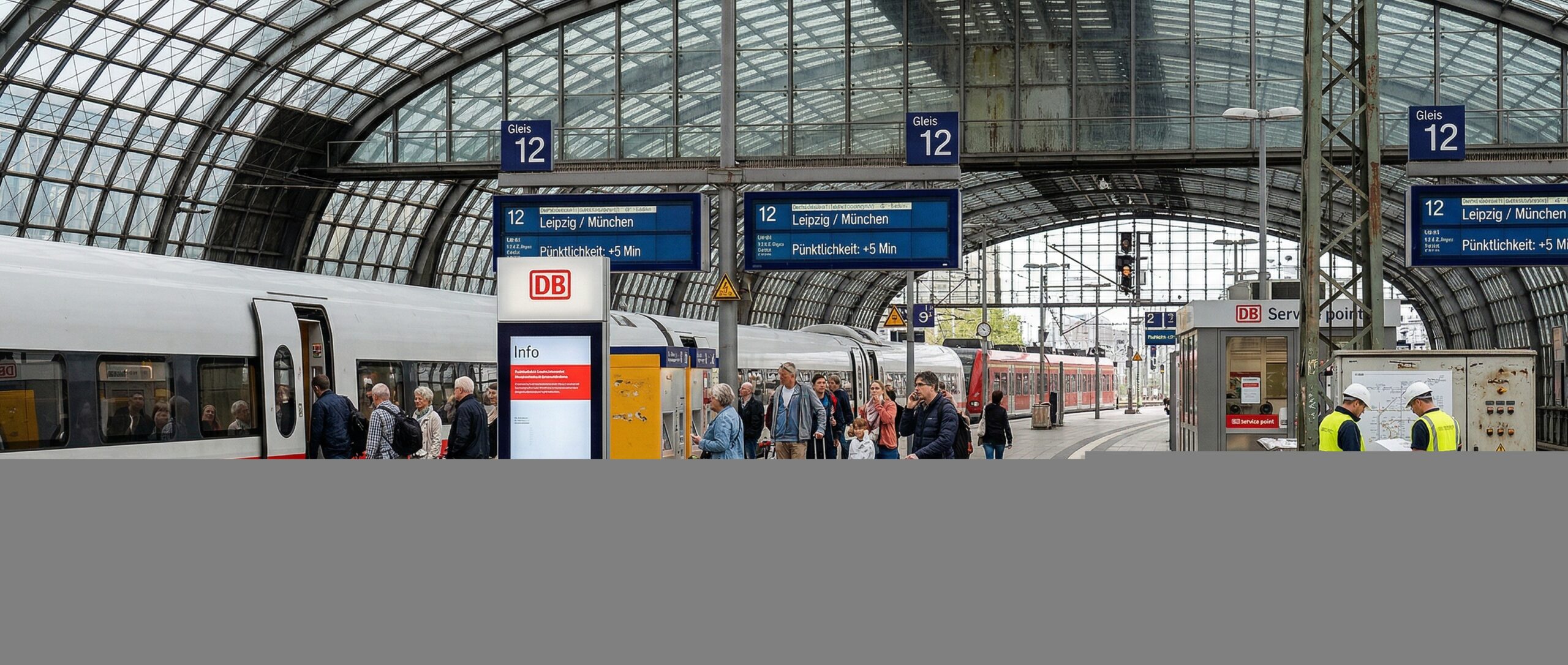
    Germany’s state-backed rail operator Deutsche Bahn is benefiting from a surge in bookings as the Easter holiday approaches, driven partly by rising fuel prices that are making trains more attractive to travelers. The development is encouraging on the surface, but it masks a much larger and more difficult challenge: restoring public trust in a rail system that has suffered years of decline and now requires deep infrastructure modernization.

    The immediate news is straightforward. According to recent reporting, Deutsche Bahn is receiving more investment even as bookings run higher than expected, suggesting that circumstances are aligning to create a moment of commercial opportunity for the company. Yet this moment reveals a tension that will define Deutsche Bahn’s future: a temporary uptick in demand does not solve the structural problems that have eroded passenger confidence over a long period.

    For readers paying attention to German public infrastructure, transport policy, or simply trying to understand whether their rail system is getting better, the Deutsche Bahn story offers an important lesson about the difference between funding announcements and actual service improvement. It is a story about investment, infrastructure, and public trust—and why all three must work together.

    The Short-Term Boost: Why Bookings Are Rising Now

    The timing of Deutsche Bahn’s stronger-than-expected bookings is not random. Easter travel is a traditional peak season for German rail, and this year the surge in demand appears particularly pronounced. More significantly, the price of fuel has risen, making alternative transport options like driving less economical or appealing. When the cost of filling a car’s tank climbs, the relative value of a train ticket improves, and some travelers switch modes accordingly.

    This is straightforward consumer behavior. Higher fuel prices shift the calculation for budget-conscious passengers, and Deutsche Bahn is the primary rail operator across Germany’s national network, so it benefits directly from this shift. The booking increase is real and measurable in immediate commercial terms.

    But here is where the story becomes more complex: a surge in bookings driven by fuel prices and seasonal travel patterns does not necessarily indicate that passengers have regained confidence in Deutsche Bahn as a service provider. Passengers are making a rational choice based on cost, not a vote of trust. That distinction matters enormously when considering what happens next.

    The Deeper Problem: An Aging Network and a Fractured Reputation

    Beneath the encouraging headline about more bookings lies the reality that Deutsche Bahn has been struggling for years. The company operates an aging rail network that reflects decades of underinvestment and deferred modernization. Tracks need replacement. Trains need updating. Stations need renovation. The infrastructure problem is both visible and felt by passengers on every journey.

    More important than the physical state of the network, however, is the damage to public perception. Deutsche Bahn’s long period of decline has created a deep well of skepticism among passengers and the German public. Delays are common. Service quality is inconsistent. Reliability—the single most important metric for a rail operator—has deteriorated to the point where many travelers simply do not expect their train to arrive on time or operate without problems.

    This erosion of trust did not happen overnight. It accumulated through repeated negative experiences. A passenger who has experienced multiple delays, overcrowded trains, poor communication, and deteriorating conditions is not reassured by news of investment. That passenger wants to see tangible improvement in everyday service, not promises about future modernization.

    This is the structural challenge Deutsche Bahn faces. It is not enough to attract passengers during a moment of high fuel prices. The company must prove that it can deliver reliable, punctual, comfortable service consistently. Until it does, public trust will remain fragile and conditional.

    Why Investment Matters—and Why It Is Not a Quick Fix

    More funding for Deutsche Bahn is important and necessary. Capital investment can support the modernization of aging infrastructure, the purchase of new trains, the upgrading of signals and safety systems, and the renovation of stations and platforms. Over time, well-directed investment can materially improve a rail network’s capacity, reliability, and passenger experience.

    But investment is not magic. Money alone does not instantly restore a damaged system or rebuild eroded trust. Between the decision to spend and the moment a passenger benefits from improved service, there is a long chain of execution: planning, procurement, construction, testing, and deployment. Projects run late. Costs exceed budgets. Technical challenges emerge. The timeline from investment commitment to visible passenger improvement can span years.

    Moreover, investment addresses the hardware of the rail system—the tracks, trains, and infrastructure. It is necessary but not sufficient. Passenger trust also depends on software: operational management, workforce training, customer service, communication during disruptions, and a demonstrated commitment to punctuality and reliability. An investor can buy new trains; only management and staff can ensure they run on time and carry passengers safely and comfortably.

    This complexity is why the current wave of bookings, while commercially welcome, may not be the turning point Deutsche Bahn’s defenders hope it represents. The test will come when passengers compare their experience over months and years to their expectations. If investment is beginning to produce visible, everyday improvements—fewer delays, better-maintained trains, more responsive customer service, more reliable information—then public trust may begin to recover. If the experience remains inconsistent or deteriorates further, investment will be seen as inadequate or poorly executed, and skepticism will deepen.

    Public Trust: The Real Measure of Recovery

    For Deutsche Bahn, public trust is not a soft metric or a matter of public relations. It is existential. A rail operator whose passengers do not believe it will deliver reliable service faces a vicious cycle: skeptical travelers choose alternatives when available, reducing revenue and capacity; reduced demand makes it harder to justify investment and operational improvements; service quality stagnates or worsens; trust erodes further.

    Conversely, a rail operator that demonstrates consistent reliability, responsiveness, and improvement can attract and retain passengers, generate revenue, justify further investment, and create a virtuous cycle of improvement. Deutsche Bahn is currently caught between these cycles, with the outcome still uncertain.

    The reporting on Deutsche Bahn’s current situation highlights the perspective of individual passengers who are making choices based on their experience and expectations. These travelers do not care primarily about investment announcements or corporate strategy. They care about whether their train arrives on time, whether the seats are clean, whether the staff is helpful, and whether they can rely on the service for their daily needs. If Deutsche Bahn can deliver on these basics consistently, trust will follow. If it cannot, no amount of investment will create the confidence the company needs.

    What This Means for Germany’s Transport System and Mobility

    The stakes in Deutsche Bahn’s recovery extend beyond the company itself. As Germany’s primary rail operator and a central pillar of the national transport system, Deutsche Bahn’s performance affects mobility across the entire country. If trains are reliable and attractive, more people will choose rail over personal vehicles. This has environmental benefits, reduces congestion on roads, and improves quality of life in cities and regions.

    Conversely, if rail remains unreliable and untrustworthy, passengers will continue to choose cars, further burdening road infrastructure and increasing emissions. The long-term sustainability of Germany’s transport system depends partly on whether its rail network can become a genuinely attractive alternative to private vehicle use.

    This is why Deutsche Bahn’s investment and its ability to restore public trust are not purely commercial matters. They are questions about the country’s transport future, environmental goals, and the quality of public service. A well-functioning rail system is a public good, and Deutsche Bahn is the institution responsible for delivering it.

    What to Watch in the Months Ahead

    The current surge in Deutsche Bahn bookings provides a natural starting point for monitoring whether the company is genuinely improving. Several key signals will indicate whether this is a temporary Easter bump or the beginning of a durable turnaround.

    First, will bookings remain strong beyond the Easter period and after fuel prices potentially moderate? Sustained demand would suggest that passengers are developing confidence in the service, not just responding to temporary price signals. A sharp drop in bookings after Easter would indicate that the surge was seasonal and circumstantial rather than reflective of improved service quality.

    Second, will investment translate into tangible, visible improvements in passenger experience? Fewer delays, better-maintained equipment, more reliable information, and clearer communication during disruptions are the kinds of changes passengers notice and judge. Conversely, continued deterioration or stagnation would signal that investment is not producing results.

    Third, how will public perception evolve? Will passengers who have experienced repeated poor service begin to see evidence of improvement? Will media coverage and public discourse shift from skepticism toward cautious optimism? These soft signals of trust are harder to measure than booking numbers, but they are crucial indicators of whether Deutsche Bahn is winning back the confidence it has lost.

    The immediate outlook remains uncertain. Deutsche Bahn has an opportunity to use this moment of increased ridership as a foundation for broader improvement. But opportunity is not the same as outcome. What matters now is execution: whether the company can convert investment into service improvements, whether management and staff can consistently deliver reliability, and whether passengers can begin to trust their railway again.

    Frequently Asked Questions

    Why is Deutsche Bahn getting more bookings now?

    The reporting indicates that bookings are stronger than expected as Easter approaches, and rising fuel prices are playing a significant role. When fuel costs climb, trains become a more economical choice for travelers, shifting demand toward rail transport. Additionally, Easter is traditionally a peak travel period in Germany.

    Does more investment mean Deutsche Bahn is fixed?

    No. While investment is important and necessary for modernizing the aging rail network, funding alone does not resolve Deutsche Bahn’s fundamental challenges. The company still faces significant structural problems, including aging infrastructure and a damaged reputation built up over years of unreliable service. Investment must be coupled with effective operational management and consistent service improvement to create lasting change.

    Why is public trust such a big issue for Deutsche Bahn?

    Deutsche Bahn has suffered a long decline in service quality and reliability, and passengers remember these experiences. Trust for a rail operator depends on delivering reliable, punctual, and comfortable service consistently. Without rebuilding that trust through demonstrated improvement, passengers will continue to view the company skeptically and seek alternatives when available. Public confidence is essential for the company’s commercial success and its role in Germany’s transport system.

    Is this story mainly about rail travel demand or infrastructure?

    It is both, but the deeper issue is infrastructure and service quality. The current surge in bookings is the immediate news event, but it highlights a larger structural challenge: whether Deutsche Bahn can modernize its aging network, improve daily service quality, and rebuild passenger trust. Demand is temporary; infrastructure and reliability are permanent concerns.

    What is making trains more attractive to German travelers right now?

    Rising fuel prices are a key factor. As the cost of driving increases, the relative value of train travel improves, encouraging some travelers to switch to rail. Additionally, Easter travel is a traditional peak season for rail journeys. These circumstances are creating temporary conditions favorable to rail demand, though they do not necessarily reflect underlying changes in passenger confidence.

    What would count as real progress for Deutsche Bahn?

    Real progress would be visible improvements in reliability, punctuality, service quality, and passenger experience. This includes fewer delays, better-maintained trains and stations, more responsive customer service, clearer communication during disruptions, and a measurable shift toward consistent performance. Only when passengers experience these improvements regularly will public trust begin to recover meaningfully.