Author: Art Grindstone

  • The Deep Sea Sphere: 1990s SCUBA Divers Filmed Something in the Bahamas That Still Defies Classification

    The Deep Sea Sphere: 1990s SCUBA Divers Filmed Something in the Bahamas That Still Defies Classification

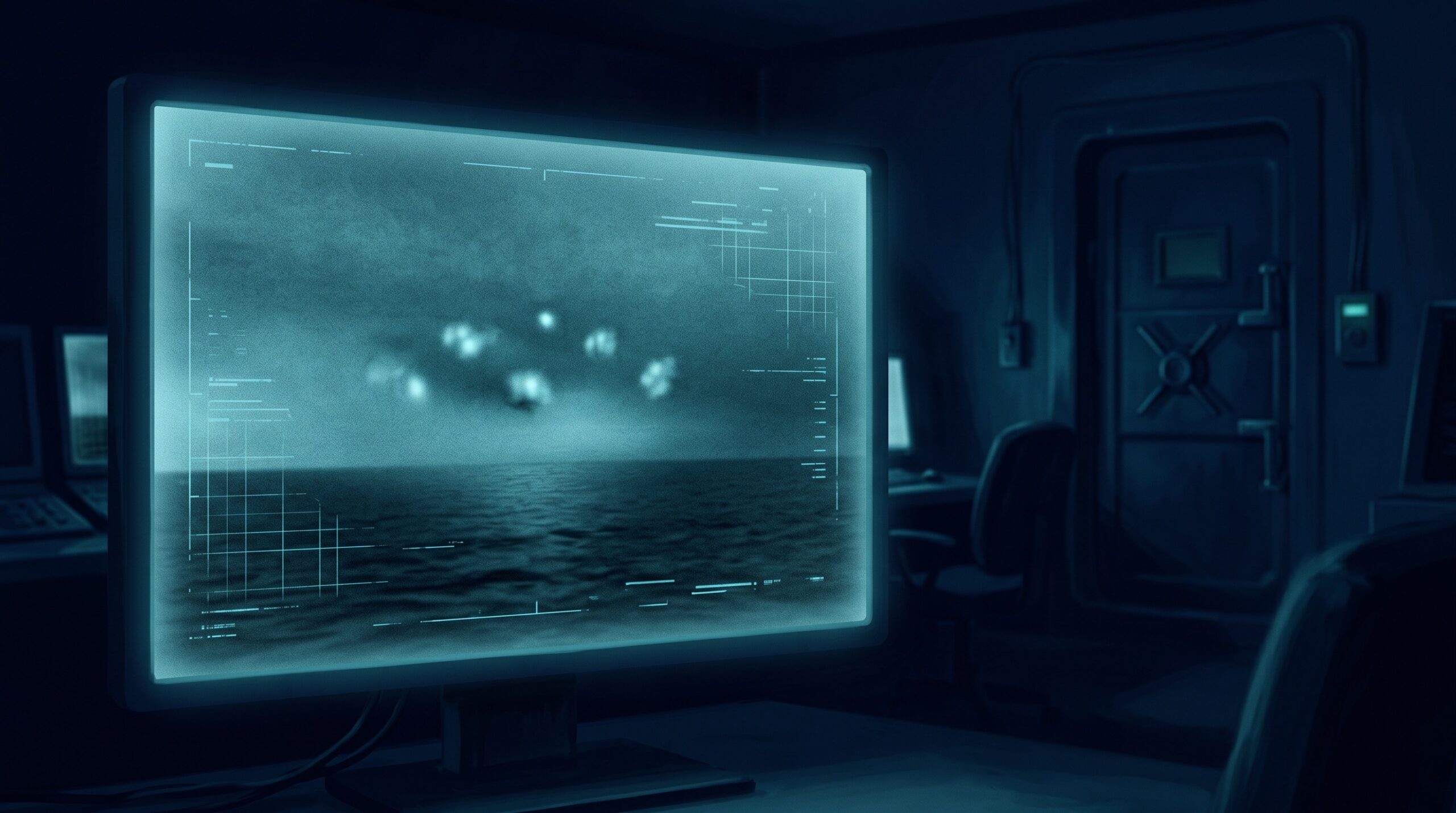
    The video is grainy, brief, and shot from the perspective of someone who was probably too surprised to remember they were filming. Below a SCUBA diver in blue-green water off the Bahamas, something moves into frame — a nearly perfect sphere, roughly the size of a large beach ball, drifting through the water column with a smoothness that doesn’t look like any familiar marine organism. No fins. No tentacles. No visible propulsion. Just a sphere, suspended in deep water, moving with an intentionality that makes the diver’s camera hold steady on it for a few crucial seconds before the clip cuts. The footage is from the 1990s. It has been circulating for years, but it surfaced again recently, pulled into the high-strangeness feeds alongside UFO videos, cryptid encounters, and everything else that people share when they believe they have filmed something that should not exist.

    What makes this particular clip compelling — and why it keeps returning after decades — is not just the shape of the object. It is the total absence of familiar anatomy. Every creature that a SCUBA diver might reasonably expect to encounter in Bahamian waters has a structure: a head, a tail, appendages, a body plan. Spherical organisms exist in the ocean, but they are microscopic — single-celled radiolarians, tiny planktonic colonies. A sphere of this size, moving independently in open water, with nothing protruding from its surface, is something that marine biologists struggle to classify and that cryptid watchers immediately file alongside the unknown.

    The Bahamian Context

    The waters around the Bahamas hold a reputation in marine and cryptozoological circles that is partly earned, partly mythic. The region is famous for the Lusca — a giant octopus-like creature that local legends say inhabits the blue holes and deep underwater caverns of the islands — and the recent HighStrangeness post about the sphere has reignited debate. Whether the Lusca is a folkloric embellishment of real deep-water encounters (giant squid, large octopuses, or other unclassified marine life) or something else is a debate that the Bahamian sphere video feeds into naturally. The ocean here is deep, the visibility is extraordinary, and the combination of shallow reef platforms dropping into abyssal trenches creates an environment where large organisms can approach divers from below, out of the shadows, with very little warning.

    This is the geographic context in which the spherical creature was filmed — not open pelagic water, but the layered, structurally complex reef-to-trench transition zone of the Bahamas, a place where encounters with unfamiliar life are rare enough to be notable and frequent enough to be believable.

    What Marine Biology Has to Say

    Biologists who have analyzed the footage (and there have been a few, pulled into the discussion by the viral nature of the clip) offer explanations that range from plausible to unsatisfying. The most common interpretation is that the object is a large jellyfish — specifically a barrel jellyfish or a similar medusa — filmed from below, where its bell shape appears as a sphere and its trailing oral arms are either not visible from that angle or have been retracted. Barrel jellyfish can reach significant sizes, and their movement pattern — undulating the bell to propel themselves forward — can look eerily mechanical when filmed from a distance.

    Another possibility is that the sphere is a marine snow colony — a loose aggregation of organic material held together by mucus — though these are typically amorphous rather than geometrically regular. A third option is that the object is not biological at all: a discarded piece of spherical debris, a sensor housing, or even the kind of underwater research equipment that occasionally surfaces in areas frequented by dive tourism.

    None of these explanations resolves the central visual weirdness of the clip. The object moves too smoothly for uncontrolled debris. It appears too structured for a marine snow aggregation. And the jellyfish explanation requires an angle and a lighting condition that, while possible, doesn’t perfectly match what the diver filmed.

    The UFO Connection Some People Make

    The reason this clip appears on UFO forums alongside UAP sightings is not because anyone claims the sphere is extraterrestrial. It is because the visual pattern — a structured object, suspended in a medium, moving without visible propulsion — echoes the same perceptual anomaly that people report in aerial UAP footage. An object that should not be able to move the way it is moving. A shape that doesn’t match the known inventory of craft, creature, or debris. A brief clip that offers just enough data to be intriguing and just too little to be conclusive.

    Some observers have drawn a line from this underwater sphere to other encounters with unclassified deep-sea organisms and the terrestrial cryptid encounters that share the same evidentiary structure: grainy footage, unfamiliar form, expert disagreement, and an audience that keeps the image alive because the alternative — admitting that nothing can be proved — feels like letting a genuine mystery evaporate.

    The Video That Keeps Returning

    There is a specific quality to the 1990s Bahamian sphere footage that explains its persistence. It is not the clearest cryptid video ever shot. It is not the longest. It is not accompanied by a detailed scientific analysis from a marine biologist who happened to be on the dive boat. What it has is the one quality that keeps any piece of unexplained media circulating: it shows something that looks like nothing the viewer has seen before, captured by someone who was clearly just as surprised.

    The diver did not stage the encounter. The footage was not produced for a documentary. It was a personal recording — the kind millions of recreational divers take every year — that happened to include an organism or object that doesn’t resolve into a familiar category. That authenticity is what makes it shareable. That ambiguity is what makes it unresolvable.

    And that is why, thirty years after it was filmed, the deep sea sphere is still moving through the internet — still stopping people mid-scroll, still prompting the same question it prompted the first time someone watched it: what is that thing?

    The answer, as it tends to be with the best of these encounters, is that nobody can say for certain. The ocean is vast, the Bahamas are weird in all the right ways, and something down there — whether known to science or not — drifted into frame and reminded a diver with a camera that there are still shapes in the water that don’t have names.

  • Japan Just Confirmed It Has UAP Footage, and Is Analyzing Pentagon Files Near Its Borders

    Japan Just Confirmed It Has UAP Footage, and Is Analyzing Pentagon Files Near Its Borders

    In the middle of this week’s Pentagon file release — a wave of declassified UAP documents from multiple federal agencies that has been dominating every disclosure feed — a quieter story emerged from across the Pacific. Japan confirmed, through its own channels, that it has reviewed Pentagon UAP footage containing events near Japanese territory and that the Japanese government possesses its own UAP recordings that are now being assessed. It’s the kind of confirmation that sounds bureaucratic until you understand what it signals: a second major government, an ally of the United States, is now independently acknowledging that unexplained aerial phenomena in its airspace warrant official review.

    This is not a rumor. The Japan Times reported that Tokyo is analyzing the Pentagon’s UAP file trove specifically for encounters documented near Japanese sovereign airspace and territorial waters. That confirmation came from sources briefed on the review, and it was paired with the acknowledgment that Japanese defense officials have footage of their own — recordings that have not yet been made public but are now under formal assessment. For a country whose defense posture has been tightening around UAP transparency alongside the Americans and the British, this is a significant institutional step.

    Why Japan’s Move Changes the Disclosure Equation

    Until now, the public UAP conversation has been dominated by three players: the United States (through AARO, congressional hearings, and the latest War.gov file releases), the United Kingdom (which has declassified batches of historic UFO documents), and a handful of independent journalist-investigators like Jeremy Corbell, whose documentaries have pushed classified claims into mainstream view. Japan’s entry as an institutional actor changes the geometry of the entire conversation.

    The country’s geographic position is not incidental. Japanese airspace and maritime approaches have been the scene of encounters with unidentified aerial objects for years — encounters documented by both civilian pilots and military radar. When Japan begins formally reviewing these cases in parallel with the Pentagon’s disclosures, the resulting data set no longer belongs to a single government’s classification decisions. It becomes a cross-referenced, multinational record, and that makes it much harder to dismiss or bury.

    The Japan Times coverage of the review process suggests that Tokyo is approaching the Pentagon files methodically — mapping individual encounter reports against known Japanese airspace incidents, looking for correlations, and cross-checking timelines. If that work yields results that connect U.S.-documented events to Japanese-observed phenomena, it would represent the strongest form of evidence that the UAP research community has been demanding: independent, multi-source corroboration.

    The Pentagon File Release That Triggered This

    Japan’s review was catalyzed by the largest single release of UAP documents to date from the U.S. government. The trove, published through the War.gov portal, includes decades of encounter reports, photographic evidence, and internal assessments from agencies that have not previously made their UAP records public. The release was described by multiple outlets as “highly anticipated” and represents what disclosure advocates have pushed for since at least 2017.

    What makes the files significant is not just their volume but their variety. Previous releases tended to focus on a single agency or a specific time period. This collection spans multiple departments and covers encounters from different eras, which means that any pattern-matching work — the kind that disclosure watchers have already begun — can operate on a much broader canvas. If an object documented by a U.S. military sensor in 1994 appears in a similar form over Japanese waters in the same era, that is a data point no single classification system can erase.

    What the Skeptical Reading Looks Like

    The cautious interpretation is that Japan’s confirmation amounts to a routine administrative procedure — the kind of document review that any defense ministry would conduct when another country declassifies files relevant to its own airspace. “Reviewing” is not “confirming existence.” “Possessing footage” is not “going public with footage.” Japan may be conducting an entirely internal assessment that produces no external disclosure whatsoever.

    That is a valid concern. Governments routinely review foreign intelligence material and choose to keep their own conclusions classified. Japan’s strategic position in the Pacific, its complex relationship with Beijing, and its security partnership with Washington all create reasons for Tokyo to be very careful about what it says publicly about unexplained aerial objects. Prudence would suggest that this confirmation, while real, may not lead to the kind of open disclosure that UAP researchers are hoping for.

    But the fact that the review was acknowledged at all — rather than conducted entirely in silence — suggests a different kind of institutional posture than we have seen from Japan before. The mere existence of an official acknowledgment creates a paper trail, and paper trails have a way of eventually producing results.

    The International Domino Effect

    Japan’s move points toward a broader pattern that is easy to miss if the conversation stays focused only on American disclosures. Congressional testimony on non-human craft recovery, the historic Rendlesham encounters that the UK has gradually declassified, and now Japan’s own review process — these are not isolated events. They are individual governments, operating independently, reaching toward the same set of phenomena from different angles at roughly the same time.

    If the Japanese review produces findings that connect U.S.-documented UAP encounters to events over Japanese territory, it would represent a new category of evidence: multinational, cross-referenced, and impossible to attribute to a single nation’s sensor malfunction or classified program. Whether that happens depends on what is actually in the Japanese footage — and whether Japan ever chooses to show it to the public.

    For now, the confirmation itself is the signal. The files are being reviewed. The footage exists. And once a government acknowledges that something needs looking at, the pressure to show what it found builds slowly, relentlessly, and usually outlasts the people who wanted it kept quiet.

  • Japan Just Confirmed It Has UAP Footage — and Is Analyzing Pentagon Files Near Its Borders

    Japan Just Confirmed It Has UAP Footage — and Is Analyzing Pentagon Files Near Its Borders

    In the middle of this week’s Pentagon file release — a wave of declassified UAP documents from multiple federal agencies that has been dominating every disclosure feed — a quieter story emerged from across the Pacific. Japan confirmed, through its own channels, that it has reviewed Pentagon UAP footage containing events near Japanese territory and that the Japanese government possesses its own UAP recordings that are now being assessed. It’s the kind of confirmation that sounds bureaucratic until you understand what it signals: a second major government, an ally of the United States, is now independently acknowledging that unexplained aerial phenomena in its airspace warrant official review.

    This is not a rumor. The Japan Times reported that Tokyo is analyzing the Pentagon’s UAP file trove specifically for encounters documented near Japanese sovereign airspace and territorial waters. That confirmation came from sources briefed on the review, and it was paired with the acknowledgment that Japanese defense officials have footage of their own — recordings that have not yet been made public but are now under formal assessment. For a country whose defense posture has been tightening around UAP transparency alongside the Americans and the British, this is a significant institutional step.

    Why Japan’s Move Changes the Disclosure Equation

    Until now, the public UAP conversation has been dominated by three players: the United States (through AARO, congressional hearings, and the latest War.gov file releases), the United Kingdom (which has declassified batches of historic UFO documents), and a handful of independent journalist-investigators like Jeremy Corbell, whose documentaries have pushed classified claims into mainstream view. Japan’s entry as an institutional actor changes the geometry of the entire conversation.

    The country’s geographic position is not incidental. Japanese airspace and maritime approaches have been the scene of encounters with unidentified aerial objects for years — encounters documented by both civilian pilots and military radar. When Japan begins formally reviewing these cases in parallel with the Pentagon’s disclosures, the resulting data set no longer belongs to a single government’s classification decisions. It becomes a cross-referenced, multinational record, and that makes it much harder to dismiss or bury.

    The Japan Times coverage of the review process suggests that Tokyo is approaching the Pentagon files methodically — mapping individual encounter reports against known Japanese airspace incidents, looking for correlations, and cross-checking timelines. If that work yields results that connect U.S.-documented events to Japanese-observed phenomena, it would represent the strongest form of evidence that the UAP research community has been demanding: independent, multi-source corroboration.

    The Pentagon File Release That Triggered This

    Japan’s review was catalyzed by the largest single release of UAP documents to date from the U.S. government. The trove, published through the War.gov portal, includes decades of encounter reports, photographic evidence, and internal assessments from agencies that have not previously made their UAP records public. The release was described by multiple outlets as “highly anticipated” and represents what disclosure advocates have pushed for since at least 2017.

    What makes the files significant is not just their volume but their variety. Previous releases tended to focus on a single agency or a specific time period. This collection spans multiple departments and covers encounters from different eras, which means that any pattern-matching work — the kind that disclosure watchers have already begun — can operate on a much broader canvas. If an object documented by a U.S. military sensor in 1994 appears in a similar form over Japanese waters in the same era, that is a data point no single classification system can erase.

    What the Skeptical Reading Looks Like

    The cautious interpretation is that Japan’s confirmation amounts to a routine administrative procedure — the kind of document review that any defense ministry would conduct when another country declassifies files relevant to its own airspace. “Reviewing” is not “confirming existence.” “Possessing footage” is not “going public with footage.” Japan may be conducting an entirely internal assessment that produces no external disclosure whatsoever.

    That is a valid concern. Governments routinely review foreign intelligence material and choose to keep their own conclusions classified. Japan’s strategic position in the Pacific, its complex relationship with Beijing, and its security partnership with Washington all create reasons for Tokyo to be very careful about what it says publicly about unexplained aerial objects. Prudence would suggest that this confirmation, while real, may not lead to the kind of open disclosure that UAP researchers are hoping for.

    But the fact that the review was acknowledged at all — rather than conducted entirely in silence — suggests a different kind of institutional posture than we have seen from Japan before. The mere existence of an official acknowledgment creates a paper trail, and paper trails have a way of eventually producing results.

    The International Domino Effect

    Japan’s move points toward a broader pattern that is easy to miss if the conversation stays focused only on American disclosures. Congressional testimony on non-human craft recovery, the historic Rendlesham encounters that the UK has gradually declassified, and now Japan’s own review process — these are not isolated events. They are individual governments, operating independently, reaching toward the same set of phenomena from different angles at roughly the same time.

    If the Japanese review produces findings that connect U.S.-documented UAP encounters to events over Japanese territory, it would represent a new category of evidence: multinational, cross-referenced, and impossible to attribute to a single nation’s sensor malfunction or classified program. Whether that happens depends on what is actually in the Japanese footage — and whether Japan ever chooses to show it to the public.

    For now, the confirmation itself is the signal. The files are being reviewed. The footage exists. And once a government acknowledges that something needs looking at, the pressure to show what it found builds slowly, relentlessly, and usually outlasts the people who wanted it kept quiet.

  • The Deep Sea Sphere: 1990s SCUBA Divers Filmed Something in the Bahamas That Still Defies Classification

    The Deep Sea Sphere: 1990s SCUBA Divers Filmed Something in the Bahamas That Still Defies Classification

    The video is grainy, brief, and shot from the perspective of someone who was probably too surprised to remember they were filming. Below a SCUBA diver in blue-green water off the Bahamas, something moves into frame — a nearly perfect sphere, roughly the size of a large beach ball, drifting through the water column with a smoothness that doesn’t look like any familiar marine organism. No fins. No tentacles. No visible propulsion. Just a sphere, suspended in deep water, moving with an intentionality that makes the diver’s camera hold steady on it for a few crucial seconds before the clip cuts. The footage is from the 1990s. It has been circulating for years, but it surfaced again recently, pulled into the high-strangeness feeds alongside UFO videos, cryptid encounters, and everything else that people share when they believe they have filmed something that should not exist.

    What makes this particular clip compelling — and why it keeps returning after decades — is not just the shape of the object. It is the total absence of familiar anatomy. Every creature that a SCUBA diver might reasonably expect to encounter in Bahamian waters has a structure: a head, a tail, appendages, a body plan. Spherical organisms exist in the ocean, but they are microscopic — single-celled radiolarians, tiny planktonic colonies. A sphere of this size, moving independently in open water, with nothing protruding from its surface, is something that marine biologists struggle to classify and that cryptid watchers immediately file alongside the unknown.

    The Bahamian Context

    The waters around the Bahamas hold a reputation in marine and cryptozoological circles that is partly earned, partly mythic. The region is famous for the Lusca — a giant octopus-like creature that local legends say inhabits the blue holes and deep underwater caverns of the islands — and the recent HighStrangeness post about the sphere has reignited debate. Whether the Lusca is a folkloric embellishment of real deep-water encounters (giant squid, large octopuses, or other unclassified marine life) or something else is a debate that the Bahamian sphere video feeds into naturally. The ocean here is deep, the visibility is extraordinary, and the combination of shallow reef platforms dropping into abyssal trenches creates an environment where large organisms can approach divers from below, out of the shadows, with very little warning.

    This is the geographic context in which the spherical creature was filmed — not open pelagic water, but the layered, structurally complex reef-to-trench transition zone of the Bahamas, a place where encounters with unfamiliar life are rare enough to be notable and frequent enough to be believable.

    What Marine Biology Has to Say

    Biologists who have analyzed the footage (and there have been a few, pulled into the discussion by the viral nature of the clip) offer explanations that range from plausible to unsatisfying. The most common interpretation is that the object is a large jellyfish — specifically a barrel jellyfish or a similar medusa — filmed from below, where its bell shape appears as a sphere and its trailing oral arms are either not visible from that angle or have been retracted. Barrel jellyfish can reach significant sizes, and their movement pattern — undulating the bell to propel themselves forward — can look eerily mechanical when filmed from a distance.

    Another possibility is that the sphere is a marine snow colony — a loose aggregation of organic material held together by mucus — though these are typically amorphous rather than geometrically regular. A third option is that the object is not biological at all: a discarded piece of spherical debris, a sensor housing, or even the kind of underwater research equipment that occasionally surfaces in areas frequented by dive tourism.

    None of these explanations resolves the central visual weirdness of the clip. The object moves too smoothly for uncontrolled debris. It appears too structured for a marine snow aggregation. And the jellyfish explanation requires an angle and a lighting condition that, while possible, doesn’t perfectly match what the diver filmed.

    The UFO Connection Some People Make

    The reason this clip appears on UFO forums alongside UAP sightings is not because anyone claims the sphere is extraterrestrial. It is because the visual pattern — a structured object, suspended in a medium, moving without visible propulsion — echoes the same perceptual anomaly that people report in aerial UAP footage. An object that should not be able to move the way it is moving. A shape that doesn’t match the known inventory of craft, creature, or debris. A brief clip that offers just enough data to be intriguing and just too little to be conclusive.

    Some observers have drawn a line from this underwater sphere to other encounters with unclassified deep-sea organisms and the terrestrial cryptid encounters that share the same evidentiary structure: grainy footage, unfamiliar form, expert disagreement, and an audience that keeps the image alive because the alternative — admitting that nothing can be proved — feels like letting a genuine mystery evaporate.

    The Video That Keeps Returning

    There is a specific quality to the 1990s Bahamian sphere footage that explains its persistence. It is not the clearest cryptid video ever shot. It is not the longest. It is not accompanied by a detailed scientific analysis from a marine biologist who happened to be on the dive boat. What it has is the one quality that keeps any piece of unexplained media circulating: it shows something that looks like nothing the viewer has seen before, captured by someone who was clearly just as surprised.

    The diver did not stage the encounter. The footage was not produced for a documentary. It was a personal recording — the kind millions of recreational divers take every year — that happened to include an organism or object that doesn’t resolve into a familiar category. That authenticity is what makes it shareable. That ambiguity is what makes it unresolvable.

    And that is why, thirty years after it was filmed, the deep sea sphere is still moving through the internet — still stopping people mid-scroll, still prompting the same question it prompted the first time someone watched it: what is that thing?

    The answer, as it tends to be with the best of these encounters, is that nobody can say for certain. The ocean is vast, the Bahamas are weird in all the right ways, and something down there — whether known to science or not — drifted into frame and reminded a diver with a camera that there are still shapes in the water that don’t have names.

  • The Ghost Village of Lübbey: Why a Forgotten Turkish Settlement Keeps Returning in Strangeness Feeds

    The Ghost Village of Lübbey: Why a Forgotten Turkish Settlement Keeps Returning in Strangeness Feeds

    There are hundreds of ghost towns on Earth, and most of them have a clear story. An earthquake leveled them. A mine closed. War drove the population out. But Lübbey, a village tucked into the hills of southwest Turkey, does not have one of those stories. The people left. They left behind their homes, their furniture, and the debris of daily life. And no single catastrophe explains why.

    That absence of explanation is exactly what has made the village a recurring subject on r/HighStrangeness, abandoned-places forums, and the growing online subculture that is fascinated by the geography of disappearance.

    What Lübbey Is

    Lübbey sits in the Muğla province of Turkey, near the tourist coastline that draws millions of visitors every year to resorts, boat tours, and archaeological sites. Step inland, past the beach roads, and you enter a different landscape: old stone houses, crumbling walls, and the kind of structural abandonment that happens when a whole community decides to walk away at once.

    The village is not completely empty. Some structures have collapsed entirely. Others stand with roofs caving in but walls still intact. Inside several of them, you can still see the traces of the people who lived there — broken windows, collapsed floors, and the skeletal remains of lives that ended without the ceremony of evacuation.

    Why It Feels Unsettling

    What draws people to the ghost-village category online is the gap between the physical evidence and the narrative. In most abandoned communities, you can point to a single cause and say, “That is what did it.” In Lübbey, the cause appears to be nothing more than a slow, collective decision that nobody remembers clearly. The younger generation moved toward the coast for work. The older generation followed. And at some point — nobody can say exactly when — the village became a place that people visited rather than lived in.

    But the unsettling quality of the images that circulate — the half-collapsed roofs, the empty stone rooms that still look like someone should be sitting in them — has a way of making the mundane feel like a mystery. There are photographs showing rooms with items still on shelves and walls that still carry wallpaper patterns. The village has not been stripped clean by scavengers. It has been left exactly as it was when the last person walked out. Lübbey sits in the Muğla province of Turkey, a region more famous for its resort towns but its forgotten interior draws its own kind of visitor.

    How It Became an Internet Subject

    Lübbey is not famous. It has no Wikipedia entry in English, no National Geographic feature, no documentary crew has set up inside one of the stone houses overnight. What it has is a post on r/HighStrangeness that described it as “a place the modern world literally bypassed” — and that framing struck a chord. The post earned hundreds of upvotes because the phrase captures something that resonates with people who are drawn to the edges of civilization.

    The idea that there are places where modernity stopped, that a village simply evaporated without a dramatic cause, is unsettling in a way that manufactured haunted houses are not. It is the quietness of the abandonment that makes it interesting. Nobody was driven out by ghosts or curses or chemical spills. They just left. And what they left behind still looks like life frozen mid-sentence.

    The Grounded View

    Here is what is almost certainly true: Lübbey’s abandonment was economic and demographic, not supernatural. Rural depopulation is a documented phenomenon across much of Turkey, particularly in coastal provinces where the tourism economy pulls people away from inland communities. The stone houses were built for a lifestyle that no longer exists. When the younger generation found work in Fethiye or Bodrum, the village lost its reason to exist.

    What this does not explain is the emotional weight of the photographs. Something about seeing the physical remains of a community that quietly dissolved, with its belongings still stacked on shelves and the walls still standing, produces a feeling that is hard to pin down. For people who are drawn to other abandoned places — like the $130 million UAE mansion left to the jinn, or the séance group that may have manufactured its own haunting — the quietness is the point. That feeling keeps the village appearing in strangeness feeds long after any conventional explanation has been offered.

    Whether you think the emotional pull of an abandoned place carries meaning is probably a question you already know the answer to.

    FAQ

    Where is the ghost village of Lübbey? Lübbey is located in Muğla province in southwest Turkey, inland from the Mediterranean coast near Fethiye.

    Why was Lübbey abandoned? The village was gradually depopulated as residents moved to nearby coastal cities for work and modern amenities. No single disaster caused the abandonment.

    Is the village dangerous to visit? Some structures have partially collapsed and the village is largely unmaintained. Visitors should exercise caution when exploring the ruins.

  • Silent Disc-Shaped Craft Over Germany: May 2026 Mass Sighting Has UAP Watchers Locked In

    Silent Disc-Shaped Craft Over Germany: May 2026 Mass Sighting Has UAP Watchers Locked In

    Dash-cam footage and handheld phone videos captured within minutes of each other are circulating across UAP forums, and they all appear to show the same thing — a flat, metallic object hovering over the tree line in southern Germany, then moving away at a speed that makes no sense for anything conventional. The first upload hit Reddit’s r/UFOs on May 8, 2026 and racked up over 2,300 upvotes in hours. But the engagement numbers are barely the most interesting part. What has people arguing is that the second video, uploaded to a completely different platform, was filmed from a town roughly 30 kilometers away — and shows the exact same object at the exact same timestamp.

    What the Footage Shows

    The original clip was recorded from a parked car on a two-lane road in Bavaria and was uploaded to Reddit’s r/UFOs where it drew more than 2,300 upvotes. In it, you can see the object suspended above the treeline on the left side of the frame. It is flat on the bottom, slightly domed on top, and it does not appear to have any visible propulsion system — no exhaust, no rotor wash, no sound picked up by the phone’s microphone. After holding position for roughly ten seconds, the object accelerates to the right and disappears from frame so fast that the camera operator’s arm doesn’t even track it in time.

    The second video, filmed from a residential neighborhood, captures the object from a different angle and confirms the timeline. The uploader stated the recording was timestamped at 4:42 PM local time, which matches the dash-cam metadata of the first clip. Both videos show a grey, disc-shaped silhouette against an overcast sky.

    Converging Witness Reports

    What elevates this from a single ambiguous clip to something harder to dismiss outright is the number of people who posted about seeing the same object around the same time. At least four separate social media posts from different southern German locations — including Augsburg, Stuttgart, and Ulm — reference an unusual aerial object visible in the mid-afternoon sky. None of these posts appear to be coordinated. They came from different accounts, different platforms, and different angles.

    Several of the witnesses described the same details independently: the object was silent, it did not move like an airplane, and it appeared to be metallic rather than reflective like a balloon or satellite.

    Why This One Stands Out

    Germany is a crowded airspace. It hosts multiple NATO military installations, civilian airports, and the kind of routine commercial traffic you would expect from a central European hub. Most aerial anomalies photographed over Germany resolve into drones, weather balloons, or military exercises with a paper trail. But in this case, no German aviation authority has issued a NOTAM covering the area and time window in question. No commercial flight paths pass through the coordinates at that altitude. And the movement profile — hovering, then snapping away — does not match the signature of any known fixed-wing or rotary aircraft.

    Believers in the UAP disclosure movement have already pointed out that this is exactly the kind of sighting the Pentagon’s disclosure push under Rep. Tim Burchett was meant to address — a well-documented, multi-witness event with timestamped video evidence from multiple angles. Others note the parallels to the UAP evidence Sabine Hossenfelder reported finding in old photographic plates: credible professionals documenting things they cannot easily identify.

    What Comes Next

    What comes next depends on what the German military chooses to say — or not say. The Bundeswehr operates several airbases in Bavaria and has a clear interest in explaining what moved through its airspace unnoticed. If the object turns out to be one of theirs, an explanation should follow. If it does not, the gap between what the kind of anomalous objects tracked by AARO in the United States and what NATO allies are experiencing becomes harder to explain away.

    FAQ

    What was the Germany UFO sighting in May 2026? Multiple witnesses across southern Germany captured footage of a silent, disc-shaped object hovering above the tree line. Timestamps from separate videos confirm they were filmed simultaneously from different locations.

    Has the German military responded? As of publication, neither the Bundeswehr nor German aviation authorities have issued a statement identifying the object.

    Is there verified footage of the Germany craft? Several videos are circulating online, including dash-cam and phone footage. Independent verification is ongoing.

  • Tim Burchett’s Sworn Testimony About Recovered Non-Human Bodies: What the Congressman Claims He Was Told

    Tim Burchett’s Sworn Testimony About Recovered Non-Human Bodies: What the Congressman Claims He Was Told

    Congressman Tim Burchett of Tennessee has been one of the most vocal members of Congress on the question of non-human intelligence. He has said he has seen too much in his government UAP briefings to dismiss the possibility of alien life. He has told interviewers that if the public could see what he has seen, they would not sleep at night. And in recent appearances, Burchett has gone further: he has suggested that he has been informed about recovered non-human bodies, based on sworn testimony from military and intelligence personnel. He will not share the details publicly — he says the people who told him explicitly asked that the information not be released — but the fact that a sitting member of Congress is willing to say even this much has electrified the UAP disclosure community. For people who have spent years demanding that the government acknowledge what it knows, Burchett’s comments read as the closest thing to a confirmation that they have ever heard from someone inside the system.

    What Burchett Has Actually Said

    Burchett’s claims have emerged across multiple interviews and platforms rather than in a single definitive statement. He has told Piers Morgan that he is convinced alien life exists, pointing to government briefings, pilot testimony, and video evidence that has been shown to classified audiences. He has discussed the topic with NewsNation, emphasizing that the evidence he has seen is not something that can be publicly shared under current classification rules but that it would keep an ordinary person awake at night.

    On Psicoactivo, a Spanish-language analysis program, Burchett’s comments about sworn testimony describing recovered alien bodies were featured and dissected. The framing is careful: Burchett is not claiming personal knowledge of the bodies. He is saying that people who have provided sworn testimony to congressional committees have told him about recovered non-human materials and remains. That distinction matters, but it does not diminish the impact of the claim coming from a congressman who sits on the oversight committees.

    Why Burchett’s Account Carries Weight

    Burchett’s position matters because of it. He is not a journalist or a podcaster. He is a member of Congress sitting on committees with direct oversight over the intelligence community and the Department of Defense. When a person in that position says he has been briefed on recovered non-human bodies, the claim carries an entirely different weight than the same statement from someone outside the system.

    Burchett has also been consistent across multiple appearances. He does not sensationalize the claim with specific details about where the bodies were recovered or what they looked like. He sticks to a broader framing: he has been briefed, the briefings have been disturbing, and the people who told him asked that he not share specifics. That restraint is exactly the kind of thing that makes the claim harder to dismiss as attention-seeking.

    The pattern of UFO whistleblowers being silenced has been one of the most persistent narratives in the disclosure community, and Burchett’s willingness to speak at all — even in these careful terms — stands in contrast to that pattern. He is using his congressional platform to amplify the issue without crossing the line into classified disclosure.

    What the Sworn Testimony Allegedly Covers

    According to accounts that have circulated in UAP communities, the sworn testimony Burchett referenced includes descriptions of recovered non-human materials and biological remains. The details are consistent with what David Grusch and other whistleblowers have alleged in congressional testimony: that the U.S. government has recovered non-human spacecraft and bodies from crash sites over the course of decades.

    The David Grusch’s reported advisory role with the Trump administration on UFO disclosure has given new life to these claims, and Burchett’s comments arrive in the same environment where the government’s own insiders are pushing for declassification from the inside.

    Another congressman, Eric Burlison, has made claims about mass-witness UAP encounters documented by military personnel, adding to the body of congressional-level reporting on the topic. The convergence of Burchett, Burlison, Grusch, and other sources pointing toward the same conclusion — that the government has recovered more than it has acknowledged — is what makes this moment in the disclosure debate feel different from past ones.

    What Cannot Yet Be Verified

    Burchett has not released the names of the witnesses who provided the sworn testimony, nor has he shared the content of those statements. The claims about recovered bodies remain at the level of reported congressional briefing rather than publicly documented fact. The Department of Defense has not confirmed the existence of recovered non-human bodies or materials. The testimony Burchett described has not been independently corroborated by other members of Congress or by publicly released documents.

    Until those details are released or confirmed, the claims remain in the same category as the broader UAP whistleblower allegations: too consistent to dismiss outright, too classified to verify.

    What Remains

    Tim Burchett’s comments are significant because of who he is, not because of what he has specifically revealed. He is a sitting member of Congress saying that he has been briefed on non-human bodies based on sworn testimony from military personnel. That claim alone is enough to shift the disclosure debate. It means the question is no longer whether anyone inside the government believes these things happened. It means someone with oversight authority has heard the testimony and decided that the public needs to know that it exists, even if he cannot share the details. The fact that he is choosing to speak at all — carefully, without naming names — suggests he believes the truth is closer to public acknowledgment than it ever has been.

  • Area 51 Earthquake Swarm 2026: 17 Quakes in 24 Hours Over Groom Lake

    Area 51 Earthquake Swarm 2026: 17 Quakes in 24 Hours Over Groom Lake

    The ground beneath Groom Lake shook seventeen times in twenty-four hours. Low magnitudes. Tight cluster. One of the most heavily guarded geographic points on the planet, and the earth itself was moving.

    For geologists in Nevada, this was a standard seismic event along the Bare Mountain fault. For the millions of people who have spent the last year watching the Area 51 earthquake swarm unfold in real time, something else entirely. The quakes hit during a period when Congress is actively demanding UFO file releases, when lawmakers say they have seen classified videos of objects that “defy physics,” and when the cultural energy around disclosure is at its highest point in modern memory.

    The timing is what matters here. Not the magnitudes. The timing.

    The Swarm in Numbers

    Newsweek and Popular Science both confirmed the seismic cluster near Area 51 — 17 registered events within approximately 24 hours, all within a tight radius of Groom Lake. Over one hundred people reported feeling the quakes. The USGS aftershock forecast put the probability of another magnitude 3.0 or higher earthquake at 54 percent in the same region.

    The magnitudes themselves were small. Most registered between 2.0 and 3.0 on the Richter scale. Earthquakes of that size would not cause structural damage. They would not be widely felt outside the immediate area. But a swarm — a cluster of tremors concentrated in one location over a compressed timeframe — is different from a single event. A swarm signals that the fault is actively adjusting, that the stress patterns beneath the surface are unsettled.

    The USGS mapped every event. Every coordinate is public. Every tremor sits squarely in the Nevada desert, within miles of the facility that has housed American aerospace testing for over seventy years.

    What the Science Says

    Nevada sits on a complex web of fault lines. The Bare Mountain fault runs through the region west of the Amargosa Valley, and it is known to produce seismic swarms. Seismologists will tell you that a swarm is normal fault behavior — stress accumulates, the rock fractures in multiple small events, the energy releases in a cluster rather than one large rupture.

    It happens throughout the Great Basin. It happens with no connection to human activity. It happens because the ground in that part of Nevada has been moving for millions of years and will continue to move.

    The USGS has a 54 percent forecast for a magnitude 3.0 or greater event in the same area. That means the fault is still adjusting — the swarm may not be over.

    Why the Area 51 Connection Captures People

    There is no geological reason to connect these earthquakes to what happens inside the perimeter fence. But there are a hundred other reasons why people will not treat this as just another fault-line adjustment.

    Area 51 is not a normal coordinate. It is the most famous restricted airspace in the world. It has housed experimental aircraft testing since the 1950s. It is where the U-2 spy plane was validated and where the F-117 Nighthawk was secretly engineered at night. It is the place people reference when they talk about recovered non-human technology — whether that claim is verified or not, the cultural weight of the name carries the story forward regardless.

    When the ground shakes there, the question that forms is not geological. It is narrative. What is happening underground? What testing is in progress? Did something trigger this, or is the earth simply doing what the earth does in Nevada?

    People who track disclosure narratives see another signal in the noise. The earthquakes hit at exactly the moment when congressional representatives are talking about UFO videos in SCIF briefings. When Trump is saying files are coming. When the entire energy around Area 51 and non-human disclosure has reached its highest temperature in years.

    Earthquakes and Military Secrets: A Long History

    The connection between seismic activity and underground military activity is not purely theoretical. The Nevada Test Site — which sits near the same geological region — was the location of hundreds of underground nuclear tests between 1951 and 1992. Each underground detonation registered on seismographs. Some induced their own minor seismic events. The geology of south-central Nevada has been shaped by human testing as much as by natural tectonics.

    There is no public record linking the current swarm to any specific underground activity. There is also no reason to assume the area beneath Groom Lake is geologically quiet. The Bare Mountain fault existed long before the fence went up around Area 51, and it will exist long after.

    The earthquakes have already been connected by conspiracy feeds to the April 2026 Nellis AFB sighting just a few days earlier, creating a narrative of heightened activity across military airspace in Nevada. Within hours, the seismic swarm had generated over 1,100 upvotes and 300 comments focused on what the earthquakes represented, not just where they happened. The conversation was never about the science. It was about the story the science was interrupting.

    The Story Inside the Swarm

    The earthquakes will fade from the news cycle. Like the Iran-Turkey drought weather weapon theory, this swarm will be read through the lens of secrecy. The USGS will publish its standard assessment. The fault will settle or continue settling, and nobody will think about it again until the next cluster.

    But inside the disclosure narrative, the swarm will take on a life of its own. It will become part of the larger story about what is happening at Area 51, about what the base contains, about whether the timing of seventeen earthquakes on one of the most active disclosure weekends of the decade is a coincidence or a surface-level signal of something that has been moving underground for a very long time.

    What Is Actually True

    Seventeen earthquakes occurred near Groom Lake in approximately 24 hours. The USGS confirmed and mapped them. They were low-magnitude events consistent with a seismic swarm on the Bare Mountain fault. Over one hundred people reported feeling them. The USGS forecasts a continued probability of further events in the region.

    None of these facts connect to anything happening inside the Area 51 perimeter. None of them confirm or contradict any claim about what the base contains. What they do represent is a moment when a piece of the earth moved at a moment when the cultural conversation about what is hidden beneath that earth was already at full intensity.

    Believers read it as a signal. Geologists read it as a fault adjustment. Both readings are internally consistent with the facts as they are publicly available. The question of which reading carries more weight depends entirely on how much faith you place in the idea that something important happens — and has always happened — in the closed airspace above Groom Lake.

  • NASA Engineer Bob Oechsler UFO Claims: 20 Sightings and the Money Behind Secrecy

    NASA Engineer Bob Oechsler UFO Claims: 20 Sightings and the Money Behind Secrecy

    In 1993, a former NASA mission specialist appeared on a morning television show and said something that almost nobody who heard it would ever forget. Bob Oechsler — a man with legitimate aerospace credentials and an Air Force background — told the host that he had personally seen over twenty UFOs that were “quite extraordinary” technology. Then he said something else: the government had recovered non-human craft, and the reason the truth was being suppressed had nothing to do with public safety and everything to do with budgets.

    “It’s not about aliens,” he said. “It’s about money.”

    The interview aired on live television. It was not a podcast. It was not a late-night internet broadcast. It was an actual morning TV show in 1993, decades before the disclosure conversation became acceptable even as fringe content. Oechsler appeared with his aerospace credentials fully visible, and he used them as the foundation for claims that went far beyond the typical UFO enthusiast’s anecdote.

    The clip sat dormant for thirty-plus years. Now it is resurfacing across Reddit and UFO forums in early 2026 with massive engagement, at a moment when Congress is holding SCIF briefings about UAP videos, when The Pentagon file releases Trump is now promising could change everything, and when the disclosure conversation is moving forward, and when the entire narrative around government recovery programs has shifted from the fringe into the legislative mainstream.

    The 1993 Interview

    The resurfaced Bob Oechsler clip on r/UFOs generated nearly 1,890 upvotes and 218 comments in a short window, making it one of the most engaged UFO history threads in recent Reddit memory. The numbers are driven by what Oechsler said and by who said it.

    He claimed to have seen over twenty UFOs. He did not say “lights in the sky” or “things I could not identify.” He said he had seen objects whose technology was extraordinary — meaning, in practical terms, that they demonstrated performance characteristics that no human aerospace program in 1993 could match. Instant acceleration. Sustained high-G maneuvers. Altitude and speed profiles that fall outside the envelope of any known aircraft.

    Then came the other claim: the government had recovered non-human craft. That is not a sighting. That is a recovery claim — the same category of claim that David Grusch would make thirty years later in a congressional hearing, the same claim that generates the kind of classified budget structures Oechsler was pointing at when he said it was about the money.

    The Money Thesis

    “It’s not about aliens, it’s about money.”

    That is the line that has people replaying the interview and wondering why it didn’t become a landmark moment when it aired in 1993. And the answer to that question — why the clip didn’t penetrate the mainstream, why it sat dormant for three decades — is actually the proof of Oechsler’s point.

    If a government program is recovering and studying technology that falls outside known human capability, the budget for that program would be enormous. The contractors involved would be defense-industrial companies with multibillion-dollar classified contracts. The people managing the program would have institutional incentives to keep it classified indefinitely — not because the public would panic, but because the money flow associated with the program is self-sustaining and extraordinarily lucrative.

    This is the argument that disclosure advocates have been making for years. What Oechsler added was that he was inside the system, he saw what the system was hiding, and he understood the economics of the secrecy, much like other insider testimonies about what the government actually knows.

    Oechsler Among the Aerospace Insiders

    Oechsler joins a very specific category of UFO claimants: the people with verifiable aerospace or military credentials who have made non-human technology claims in public media.

    The category is small and its members carry different levels of credibility. Bob Lazar claimed to work at a test site near Groom Lake and described the physics of recovered propulsion systems. His story has been contested for decades. Dan Burisch claimed involvement in biological research programs connected to non-human entities. His claims are even more controversial and remain essentially unverifiable.

    Oechsler’s claim is different in an important way. He did not claim to have worked on a recovery program. He claimed to have seen the objects — over twenty of them — and to have concluded, from his professional position inside aerospace operations, that they were not of human origin. He used his NASA background as the authority for the claim and pointed to the structural economics of secrecy as the reason it was hidden.

    Reddit r/aliens covered the Oechsler claim with the full context of his NASA and Air Force background, noting his work under NORAD as a mission specialist and suggesting this gave him access to tracking systems that a NASA engineer would have seen firsthand. If he had access to NORAD or Air Force tracking data, his sighting claim becomes less “I saw a light” and more “I saw tracked objects performing maneuvers that no known aircraft can perform.”

    The Timing: Why 2026 and Not 1993

    In 1993, the cultural infrastructure to amplify Oechsler’s claim did not exist. The internet was in its infancy. Social media did not exist. Disclosure was not a mainstream conversation. A morning TV interview with a former NASA engineer discussing UFOs and government money would have been treated as an eccentric moment in a morning show lineup — interesting enough for the segment, easy enough to archive and forget when the ratings returned to normal.

    In 2026, the infrastructure is completely different. The Grusch hearings created a reference point for understanding what an insider UFO claim looks like when it enters the public record. Congressional briefings about UAP videos are happening in real time. The Pentagon file releases Trump is now promising could change everything, and when the disclosure conversation is moving forward. The cultural conversation has moved in Oechsler’s direction, not away from it.

    So the clip that sat dormant in 1993 archives is now being watched by people who understand what it means when an aerospace engineer uses his credentials to describe non-human technology in public.

    The Case for Taking Oechsler Seriously

    The argument for taking Oechsler seriously is structural, not just biographical. He had credentials. He made the claim on television, not on a self-published website. He explained the mechanism of secrecy in terms that align with what later disclosure advocates have been saying. He was specific about the number of objects — over twenty — and about the conclusion he reached from watching them.

    The argument against taking Oechsler seriously is that the claim relies on his personal account and has not been corroborated by independent evidence. The television interview itself is real. What he said on the interview is real. Whether the twenty objects existed in the way he describes them — that is a claim that requires trust in the person making it, and nothing more.

    But trust is the only currency disclosure has ever traded in. Every insider claim, from Grusch to Oechsler to every air force pilot who has described flying toward objects that outrun jet aircraft, comes down to the same question: do I believe the person who is telling me what they experienced?

    What Is Actually Known

    Bob Oechsler appeared on a 1993 morning television program and stated that he had seen over twenty UFOs displaying technology he described as “extraordinary” and not of human origin. He claimed the US government had recovered non-human craft and said the reason for the secrecy was financial — classified programs generated enormous budgets that powerful interests wanted to protect. The interview is extant, viewable, and has been widely shared in early 2026. Oechsler was a former NASA mission specialist with an Air Force background.

    What is not known is whether the twenty objects Oechsler described were independently tracked or documented, whether anyone else in aerospace operations confirmed his account, or whether he elaborated on or modified his claims after the 1993 broadcast. The television record is real. The personal experience he describes cannot be independently verified. The money thesis he proposed — that recovery programs are protected because of their budgets, not because of national security — has become the default explanation for why disclosure has been delayed for most of the people following the story.

    That alone makes the thirty-year-old clip worth watching now.

  • ‘”The Ballroom” Is a Code Word for the Temple: Why This Cryptic Conspiracy Theory Has Millions Locked Into Decoding It’

    ‘”The Ballroom” Is a Code Word for the Temple: Why This Cryptic Conspiracy Theory Has Millions Locked Into Decoding It’

    You’re not supposed to notice. That’s the whole point. When you first hear someone whisper that “the ballroom” isn’t a place you can dance in — that it’s a code word hiding something far older and far more deliberate than anyone let on — something inside you either shuts down or wakes up. There’s no middle ground. For millions who’ve stumbled into this labyrinth over the last eighteen months, waking up felt like remembering something they’d always known. The ballroom isn’t a room. The ballroom is a veil. And behind it sits a structure that certain lineages have been protecting, renaming, and quietly renovating for longer than modern history wants to admit.

    It starts with a feeling — that prickling certainty that the word “ballroom” appears in places it has no business being. A leaked transcript here. An obfuscated memo there. A casual remark from a figure who should have been vetted, should have been scripted, should absolutely have stayed on message. Instead, they said it. The Ballroom. And then they moved on as though nothing had happened. But for the ones watching — the ones who’d already pieced together fragments from older threads about Milano Cortina Olympics occult symbolism debate — it was the same click you get when two puzzle pieces snap together. Not proof. Not yet. But a signal. A breadcrumb. And once you’ve seen one, you start seeing the trail.

    What the Ballroom theory claims

    At its core, the Ballroom theory proposes that “the ballroom” functions as a deliberately inserted substitute word across documents, broadcasts, architecture, and coded correspondence for what the theory calls “the Temple.” The Temple is intentionally kept vague in discussions, because precision would hand the conversation to people who only want to mock it. What the Temple represents, according to the most coherent versions of the theory, is a physical or organizational nexus: a location or network where symbolic rituals, initiatory practices, and structural power arrangements converge with deliberate intent. Not a single building with a plaque, but a system. A protocol. A grammar of control dressed up as tradition.

    The claim isn’t that everyone who says “ballroom” is winking at you. The claim is that at certain levels, in certain documents, the word is being used knowingly. It’s a shibboleth — if you recognize it, you’re already inside the conversation. If you don’t, it reads as mundane. And that’s exactly how a code word is supposed to function.

    What makes the theory so gripping is that it doesn’t ask you to accept a single explosive claim. It asks you to notice a pattern. The ballroom appears in planning documents adjacent to events that independent researchers have long flagged as symbolically loaded. It appears in architectural references that align with sacred geometry patterns people have been cataloging for decades — the same geometric alignment you’d expect in a space designed with intentional symbolism, not one built for social dancing.

    The people pushing the Ballroom argument don’t all agree on every detail, and that’s part of what makes the theory feel organic rather than manufactured. Some argue the Temple is purely metaphorical — a designation for a class of people operating under an older cosmology. Others point to satellite imagery, architectural plans, and declassified documents they say corroborate a physical reading. Still others think the Temple is both — a physical structure exists, but the word’s real power comes from functioning on two registers simultaneously: literal for the initiated, decorative for everyone else.

    What all versions agree on: the substitution isn’t accidental. And once you accept that substitution is happening, you face a follow-up question that changes everything.

    Why now?

    Why is the ballroom appearing more frequently in publicly accessible materials over the last several years than at any point in living memory? Why are people finding references in contexts that couldn’t have been planted, in documents predating the current discussion by decades? Why does the pattern hold up under scrutiny — not conclusively, but consistently enough that the people decoding it keep finding more, not less, the deeper they go?

    None of these questions have clean answers. That’s the nature of working with material someone deliberately obscured. But absence of clean answers isn’t the same as absence of a pattern. And the pattern is what has millions hooked.

    Where the idea first surfaced

    The Ballroom theory did not emerge from a single viral post or a famous whistleblower. It emerged slowly, in fragmented form, across communities that had been working on adjacent puzzles for years without realizing they were looking at different faces of the same structure.

    The earliest credible seed traces to discussions on imageboards and encrypted chat groups in late 2024, where users started cataloging instances of “ballroom” appearing in anomalous contexts. A municipal planning document for a building complex that didn’t match its stated function. A reference in a declassified intelligence document where the word appeared adjacent to organizational structure discussions rather than physical space. Individually, each could be chalked up to eccentric naming or poor drafting. Collectively, they started to look like something else entirely.

    The conversation caught fire when a viral Imgur album that sparked discussion across multiple platforms compiled over sixty instances of “ballroom” appearing in documents, transcripts, and architectural references spanning a forty-year period. The album didn’t argue — it displayed. It let the material speak for itself, and that restraint was its own kind of genius. When people are handed a finished argument, they resist. When they’re handed raw material and invited to look, they lean in. That album was the match.

    From there, the conversation migrated to a r/conspiracy thread with 5387 points that ballooned into thousands of comments, with users cross-referencing instances of the word against historical temple construction records, Masonic documentation, and organizational charts from institutions with known esoteric affiliations. The more people looked, the more they found.

    What surprised seasoned researchers was how quickly the Ballroom discussion connected to older threads of investigation that had gone dormant. People tracking MKUltra continuation claims found that vocabulary used in those older documents occasionally used “ballroom” in ways that mapped onto the theory’s framework. Others working on Credo Mutwa and the aliens noticed that certain African temple traditions described spatial arrangements mirroring what Ballroom documents seemed to reference. Even researchers exploring the Giant of Kandahar encounter reported finding the word “ballroom” in adjacent documents in ways too contextually strange to dismiss.

    None of these connections proved anything. But they did something more valuable for a conspiracy community: they created resonance. When a theory connects to other investigations people have already invested years into, it doesn’t feel like a new theory. It feels like a missing piece. And that feeling is enormously powerful. It creates movement. It creates the kind of distributed investigation that no single researcher could ever replicate.

    The Ballroom theory didn’t emerge as a polished product. It emerged as a question. And the right questions are far more durable than answers.

    Why people are finding the same symbols in different places

    Here is where the Ballroom theory stops being about a single code word and becomes about something much larger — the claim that a persistent symbolic architecture threads through institutions, media, and physical spaces that most people walk through without noticing. The ballroom is the entry point. What it opens onto is a conversation about why certain symbols, shapes, and organizational patterns keep showing up in places that should have nothing to do with each other.

    Inside the Ballroom community, you start recognizing what researchers themselves recognize: the theory is fundamentally about pattern persistence. Why does the same geometric ratio appear in the floor plan of a private club building in London and in a government-adjacent complex in the United States, both referencing a “ballroom” in documents describing internal functions? Why do ceremonial sequences documented in nineteenth-century temple records match the sequencing of events described in contemporary documents that use “the ballroom” as a descriptor? Why do the same symbolic motifs — compass-adjacent angles, tripartite spatial divisions, deliberate cardinal orientation — appear across institutions that officially have no relationship?

    The theory’s proponents don’t claim to have mapped the entire structure. What they claim is that they’ve identified enough of its grammar to suspect that the structure is intentional, persistent, and operating with continuity across decades — possibly centuries — of institutional development. The ballroom, in this reading, is one of the theory’s most valuable discoveries because it’s a word never meant to be found as a code word. It was meant to function as camouflage. A ballroom is harmless. A ballroom is socially acceptable. A ballroom raises no eyebrows.

    Which is exactly why it makes perfect sense as a designation for something not supposed to be discussed openly.

    The people working on this are cataloging architectural blueprints where ballroom floor dimensions match temple proportions from older traditions. They’re transcribing audio from events where the word is used with tonal emphasis that suggests referential loading — speakers stressing it in ways that feel deliberate, almost ritual. They’re building databases. They’re connecting instances. They’re doing the tedious, unglamorous work of pattern documentation that every credible investigation eventually requires.

    And the patterns don’t dissolve under scrutiny — they compound.

    It’s worth noting that this work intersects heavily with broader occult symbolism research that academics have conducted for over a century, though the academic and Ballroom communities operate in almost entirely separate spheres. Where academics study occult symbolism as a historical phenomenon, Ballroom researchers are investigating it as a living system. They’re not looking backward. They’re looking at the present and asking whether the symbolic architecture historians have documented is still actively being used — still hiding in plain sight.

    The answer, increasingly, seems to be yes. Once you accept that possibility, the ballroom stops being a mystery about a single word and becomes a doorway into a conversation about how power organizes itself, how institutions preserve internal culture across generations, and how carefully chosen language functions as both shield and signal for people who know exactly what they’re doing.

    What the academic and skeptical view says

    Any investigation that takes itself seriously has to face the strongest version of its own criticism. The skeptical and academic view of the Ballroom theory isn’t monolithic, but the most substantive objections cluster around two concerns.

    The first is patternicity — the well-documented cognitive tendency for humans to find meaningful patterns in random or unrelated data. Skeptics argue that the Ballroom theory is a textbook case: researchers start with a compelling premise, notice that “ballroom” appears in various documents, then retrospectively construct connections that weren’t intended by the documents’ authors. The fact that the connections feel revealing, critics say, is exactly what patternicity looks like from the inside.

    The second objection is more specific. Academics specializing in institutional linguistics point out that “ballroom” was historically a common descriptive term for any large multi-purpose gathering space in government, institutional, and organizational contexts from the mid-twentieth century onward. The word wasn’t chosen to encode anything. It was chosen because it was the most common, non-specific label for a space designed to hold large groups. Under this reading, the Ballroom theory is an elaborate over-reading of mundane naming conventions.

    The most generous skeptics acknowledge that some institutional documents do contain genuinely strange language. They accept that certain organizations have histories of esoteric symbolism. They even concede that the cross-referencing work being done by Ballroom researchers is impressive methodologically. What they resist is the conclusion that the code word is intentional. The patterns are real, they say, but the interpretation is backwards — the documents aren’t hiding a temple behind the word ballroom. The word is just a word, and the patterns are echoes of architectural and ceremonial traditions that influenced institutional design without functioning as active code.

    Where this leaves someone investigating the Ballroom theory depends entirely on what kind of evidence they find convincing. If you require a smoking gun — a document explicitly stating that “ballroom means temple” — the theory will never satisfy you. No investigation operating at this level of opacity will ever produce that kind of admission. The whole point of a functional code word is that it never explains itself. But if you’re comfortable with cumulative evidence — with the idea that enough converging indicators can build a plausible case even without a single definitive document — the Ballroom theory offers more material to work with than most conspiracy frameworks reaching similar levels of attention.

    What may be most remarkable about the Ballroom debate isn’t the theory itself, but what it reveals about how millions of people are choosing to engage with information in an era where nothing can be trusted at face value. Whether the ballroom is a temple or just a room, the fact that so many people are learning to read documents cross-referentially, to question institutional language, to trace symbolic patterns through architecture and media — that’s a cultural shift that’s going to outlast any single theory. The ballroom may or may not be hiding anything. But the people looking for it are learning to see in ways they didn’t know they could, and once you learn to see that way, you don’t go back to sleeping.