Author: Art Grindstone

  • The Philip Experiment: Did a 1970s Séance Group Create Its Own Haunting?

    The Philip Experiment: Did a 1970s Séance Group Create Its Own Haunting?

    Few paranormal stories hit harder than the ones that sound reproducible. That is why the Philip Experiment ghost story refuses to die. A group of ordinary people gathered in the 1970s, invented a fake dead man, sat around a table feeding him attention, and then claimed the room began to answer back.

    The quick answer is that the Philip Experiment was a Toronto-area psychical research project in which participants created a fictional 17th-century character named Philip Aylesford and then held séance-style sessions until knocks, table movement, and apparent responses seemed to appear. The broad outline preserved by the standard historical summary of the Philip Experiment, retellings such as the long-running “how to create a ghost” explainer, and new social-media fascination after a viral reel treating the case like a real-world tulpa event have made it feel uncannily modern again.

    What makes the case so unnerving is not that a haunting may have happened. It is that the haunting, if anything happened at all, seems to have been invited into being by design.

    Why the Philip Experiment still feels dangerous

    Most ghost stories begin with a place. A house, a hospital, a battlefield, a hallway where something lingers. The Philip Experiment begins with intention. That is the part that gets under the skin. The group did not stumble into a presence. They sat down and tried to manufacture one.

    That idea has only become more potent in the internet age. A story about collective attention shaping reality lands differently now than it did in the 1970s. People raised on tulpas, egregores, manifestation discourse, and memetic ritual do not hear the Philip case as a quaint paranormal curiosity. They hear it as a prototype.

    It sits naturally beside stories like Antoine’s ghost photo, the Riverview pentagram image, and modern jinn obsession narratives. In each case, the real hook is not only whether the phenomenon is objectively real. It is whether attention itself starts to behave like a door.

    What the group said happened in the room

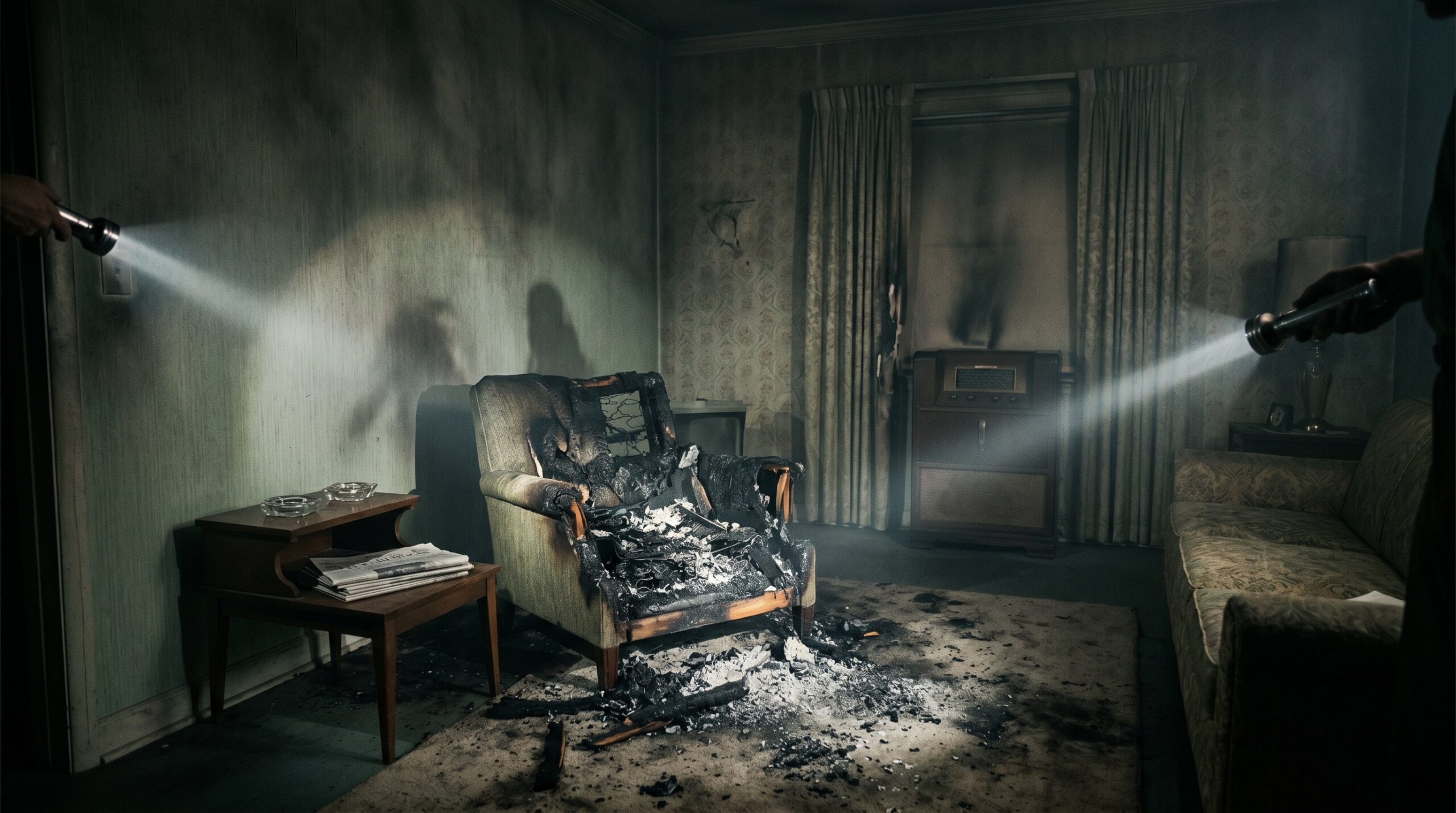
    The core setup is one of the strangest in paranormal history. Participants built out Philip Aylesford as a fully fictional biography — a man who never existed — and then focused on him through repeated group sessions. Later accounts say the group experienced raps, apparent yes-or-no responses, and table activity strong enough to turn a made-up ghost into a lasting legend.

    That structure is why believers remain fascinated. If a haunted house answers back, maybe the house was always carrying something. But if a nonexistent ghost begins producing effects, the implication feels darker. It suggests that concentrated belief, emotional energy, or some unknown group dynamic might be able to sculpt a presence where there was none before.

    Even readers who doubt every paranormal claim can feel why the story travels. It turns the séance from a method of contact into a method of construction. That is a much more unsettling possibility.

    Why tulpa culture keeps reviving the case

    The Philip Experiment has become internet-native because its logic matches the way online occult culture already thinks. Communities now talk casually about thoughtforms, entities fed by repetition, and symbols that gain force as more people participate in them. Philip sounds like a retro version of that entire worldview.

    Once framed that way, the old experiment stops looking dusty. It looks prophetic. A circle of people in a room rehearsing a fictional being into apparent existence feels like an analog ancestor of the modern belief that stories, symbols, and coordinated minds can thicken into something with agency.

    That is also why the case keeps pulling in readers who are not traditional ghost believers. It touches psychology, ritual, folklore, performance, and the uncomfortable suspicion that consciousness may be stranger in groups than it is alone.

    What the experiment can and cannot prove

    This is where the atmosphere gives way to limits.

    The Philip Experiment is a real story with real participants and documented claims. It is not, however, a settled proof that a ghost was literally created. Group expectation, unconscious movement, suggestibility, performance effects, selective memory, and the theatrical conditions of the séances all offer grounded ways to interpret what happened. The fictional nature of Philip makes the story more provocative, but not automatically more evidential.

    Still, that uncertainty is exactly why the case survives. It cannot be locked down cleanly either way. If nothing paranormal happened, the experiment still exposed how weird collective human behavior can become around ritual. If something did happen, then the implications are enormous. Either way, the room did not feel empty for long, and that is enough to keep Philip Aylesford wandering through the modern imagination like a ghost that may have been built rather than born.

  • Red Heifer Prophecy 2026: Why End-Times Watchers Think the Clock Is Moving Again

    Red Heifer Prophecy 2026: Why End-Times Watchers Think the Clock Is Moving Again

    Prophecy stories do not spread like normal news. They spread like pressure. That is the feeling around red heifer prophecy 2026 right now. One animal, one ritual requirement, one old script from sacred history — and suddenly end-times believers start speaking as if the gears under the age are beginning to move again.

    The immediate answer is simple enough: the red heifer matters because some prophecy-minded Christians and Jewish Temple-focused groups see it as tied to purification rites that sit inside larger Third Temple expectations. The story is hot again because basic explainer material on the red heifer’s biblical role keeps getting folded into more intense end-times interpretations, because the Texas ranch angle has given the story a vivid modern pipeline, and because prophecy media continue to frame the ritual as a clock-hand for biblical history. That still does not mean apocalyptic events are objectively underway. It does explain why the symbol is surging again across reels, prophecy tags, and anxious forums.

    What makes this story so potent is that it does not need a whole new theology to spread. It only needs one phrase — red heifer — to unlock an entire worldview already waiting in memory. Temple restoration. Purification. Israel. The end of one age and the beginning of another. For believers living in permanent alert, it feels less like a topic and more like a trigger.

    Why the red heifer has become a social-media prophecy detonator

    Modern prophecy culture loves objects that feel both ancient and immediate.

    The red heifer is perfect for that. It is scriptural enough to sound holy, rare enough to feel consequential, and specific enough to make the prophetic imagination feel measurable. People do not have to debate vague moral decline or abstract signs in the heavens. They can point to something tangible and say: this is either the condition being prepared for, or it is not.

    That clarity is catnip for algorithmic religion. It turns an enormous, frightening eschatology into a shareable symbol. One clip, one preacher, one prophecy account, one image of a red animal near the language of Temple rites, and thousands of viewers suddenly feel they are watching not commentary but countdown.

    That is why the story travels so well beside broader fear signals. In the same online world where people obsess over the Doomsday Clock, Schumann resonance panic, and cult leaders who promise privileged access to the end, the red heifer lands as a sacred mechanism rather than a metaphor. It feels operational.

    Why believers connect it to the Third Temple and the end times

    The red heifer matters in prophecy culture because it is not treated as a stray biblical curiosity. It is treated as infrastructure.

    For readers inside that framework, the logic runs like this: some ritual requirements connected to purification must be satisfied before larger Temple-centered expectations can move forward, and Temple-centered expectations are closely linked in many modern end-times systems to tribulation narratives, messianic expectation, and the final conflict of history. Once that chain is activated in the mind, the heifer stops being an animal and becomes a hinge.

    That is also why people who would normally never read Levitical ritual details suddenly care intensely about breeding lines, location rumors, and whether someone somewhere is saying the conditions are finally right. The ritual becomes cinematic. It feels like backstage movement before the curtain rises.

    The story also feeds a deeper psychological hunger. Prophecy believers often live with the sensation that history is thickening but still lacks the one unmistakable sign that proves the intuition was right all along. The red heifer offers exactly that kind of sign: obscure enough to feel hidden from the masses, specific enough to feel unmistakable once noticed.

    What the record actually says

    This is where the heat of the story has to meet the limits of the evidence.

    Yes, the red heifer is a real biblical category with a real ritual role in scripture and later religious discussion. Yes, modern religious and prophecy-minded communities have paid serious attention to whether qualifying animals exist and what that might mean for Temple-centered hopes. Yes, the subject has been amplified through media stories, ministries, and online prophecy culture.

    But the stronger claims people make from that base are not automatically established by the existence of interest or preparation. A qualifying red heifer, or a story about one, does not by itself prove that apocalyptic events are underway, that a Third Temple sequence is imminent, or that history has entered its final act. Those are interpretive leaps inside particular theological systems, not public facts that can simply be announced as fulfilled.

    Why the sign keeps returning whenever fear rises

    The red heifer prophecy survives because it is a symbol built for periods of dread.

    Whenever the world feels unstable — wars, institutional panic, economic anxiety, natural-sign discourse, social collapse talk — people go hunting for signs that transform chaos into pattern. The red heifer does that better than most. It gives spiritual anxiety a visible form. It turns sprawling fear into a scriptural object.

    That is the measured place to end. The red heifer is genuinely important within certain religious traditions and genuinely powerful inside modern prophecy culture. But its online resurgence tells us at least as much about the psychology of apocalyptic expectation as it does about the timetable of history itself. For end-times watchers, though, that distinction may not matter much. Once the symbol starts moving through the feed again, it feels less like commentary and more like the sound of an old door beginning to unlock.

  • Why Congress Is Suddenly Asking About the Missing Los Alamos Scientists

    Why Congress Is Suddenly Asking About the Missing Los Alamos Scientists

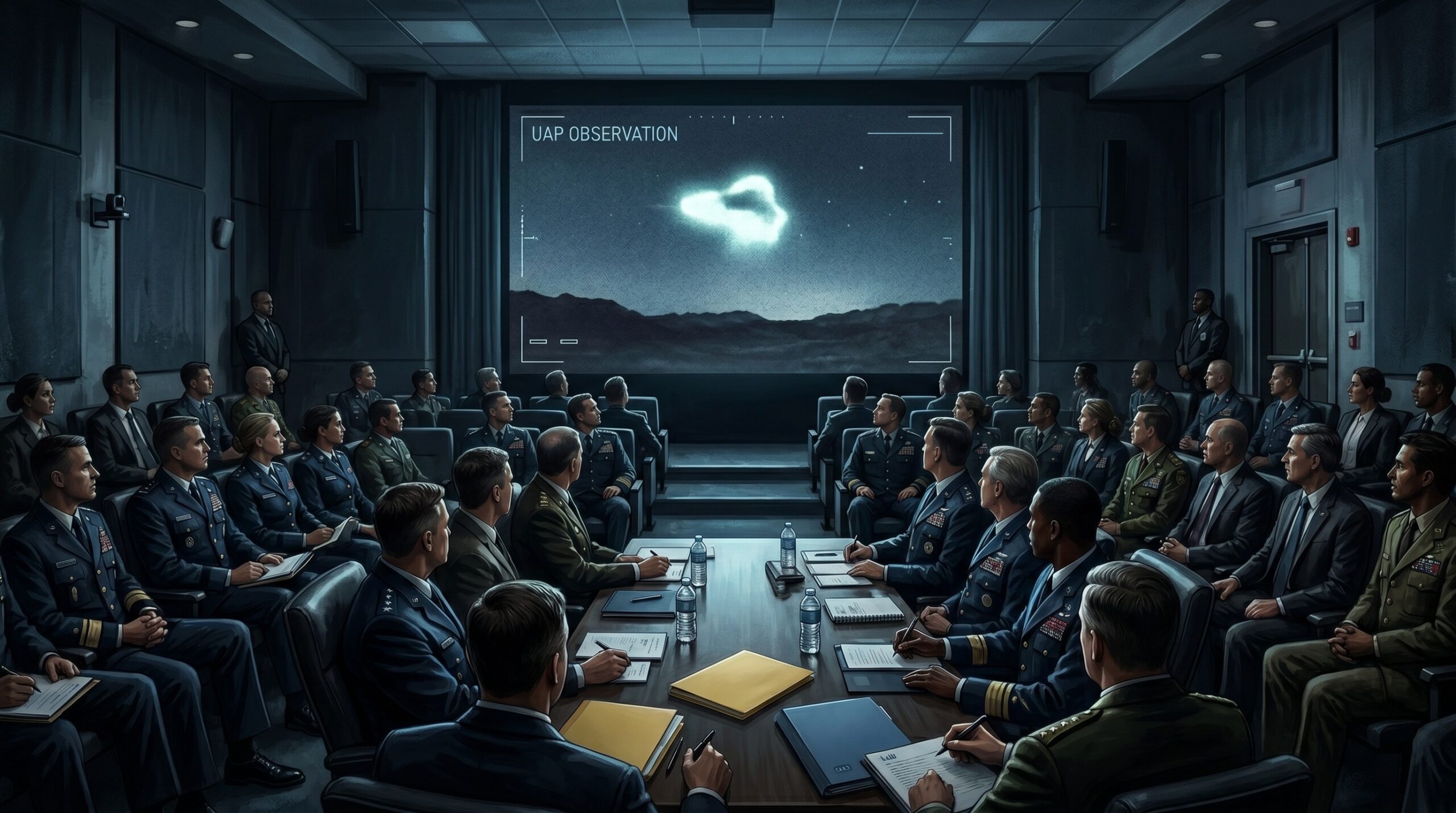
    The most unsettling stories are the ones that suddenly leave the forums and walk into the hearing room. That is the energy around the missing los alamos scientists story right now. For months it has lived in the same murky space as disclosure chatter, dead-researcher lists, and late-night pattern hunting. Now a congressional push is giving that anxiety a fresh pulse.

    The straight answer is this: lawmakers and commentators are publicly pressing for more answers about a cluster of dead or missing scientists with ties, real or alleged, to sensitive research, while the wider UFO disclosure fight is already boiling over. Modernity amplified the White House exchange that helped energize the rumor cycle, Raw Story covered the political combat around disclosure pressure, and alternative commentary turned the same moment into proof-of-pattern theater. That still does not prove a purge, cover-up, or coordinated cleanup. It does explain why believers think the walls are starting to crack in public.

    The reason this angle is so combustible is simple. Los Alamos is not a random place in the American imagination. It is where nuclear secrecy, defense mythology, and forbidden-science fantasies all bleed together. Add the words missing scientists and the story practically writes itself.

    Why the hearing push matters so much to disclosure culture

    The online believer world has been waiting for exactly this kind of moment.

    Not confirmation. Not even a document dump. Just a sign that somebody in elected office is willing to say the cluster out loud and force an institution to react. Once a member of Congress touches the subject, the story stops feeling like a rumor passed between obsessives and starts feeling like a live pressure point. That change in status matters even if the underlying evidence has not changed much at all.

    That is why the case is being folded into the same conversation as Immaculate Constellation UFO Leak, Pete Hegseth’s UFO-video deadline fight, and the older James Clapper retrieval-program allegations. In each case, the public does not have a complete body of evidence. What it has is official friction: things lawmakers ask for, agencies do not want to clarify, and internet communities instantly treat as proof that something deeper is being guarded.

    In other words, the hearing language is not powerful because it settles the mystery. It is powerful because it sanctifies the mystery. Once Washington acknowledges the question, believers feel they have moved one room closer to the vault.

    Why dead-scientist narratives spread so fast

    This is also one of the easiest narratives on earth to overheat.

    People do not need every case in a cluster to be connected in order to feel that the cluster itself is meaningful. Humans read repetition like design. If several researchers tied to national-security-adjacent worlds die, disappear, or become the subject of online speculation in the same season, the public instinct is to reach for a single hidden cause. The more secretive the institutions involved, the stronger that instinct becomes.

    Los Alamos gives that instinct a perfect backdrop. It is already a symbol of the sealed state. It already carries the aura of compartmentalized knowledge and history-changing research. So when names begin circulating beside it, believers do not imagine HR problems, personal crises, media distortion, or internet over-linking. They imagine containment. That is also why the story keeps getting pulled back toward Michael David Hicks and the so-called mysterious scientist network, where one suspicious case quickly becomes a map of many.

    That is also why the mysterious scientist network story has felt so sticky. Once readers have accepted even the possibility that one sensitive researcher died under troubling circumstances, every later case seems to arrive with shadow already attached. The pattern becomes self-feeding.

    What is actually being alleged

    The strongest careful version of the story is narrower than the online version.

    Public reporting and commentary are pointing to a cluster of scientists, contractors, or adjacent figures whose deaths or disappearances have become part of the UFO disclosure conversation. Some lawmakers and commentators are now saying the matter deserves formal attention. That is a real development. It means the rumor field has generated enough public heat to force a political response.

    What is not established by that development is that the cluster is coordinated, that every name on viral lists truly belongs on the same list, or that Los Alamos itself is the hidden center of a single operation being cleaned up. Those are stronger claims than the public evidence currently supports.

    But that distinction is exactly what makes the story such a magnet. The official world has offered too little clarity to drain the suspense, while the alternative world keeps producing enough fragments to prevent the suspense from collapsing. That is the sweet spot where a mystery metastasizes.

    What Congress may discover, and what it may not

    Even if hearings happen, they may not produce the kind of revelation believers are craving.

    Congress can ask for timelines, agency awareness, security relationships, and whether public rumor lists contain any cases already reviewed inside government. It can test whether institutions answer consistently or retreat into the usual mix of non-comment, classification, and procedural fog. That alone would matter. Sometimes the first useful sign in a secrecy story is not what gets disclosed. It is who refuses to speak plainly.

    Still, the end of the story may be less cinematic than the beginning feels. There may be no central conspiracy document. There may be no neat chamber where the dead-scientist map hangs on a wall. The public may be looking at a messier reality: some real tragedies, some sloppy aggregations, some political opportunism, and a disclosure culture that now reads every institutional silence as a signature.

    That is the grounded frame. The believer frame is harder to shake. Once Congress starts asking about missing Los Alamos scientists, the subject no longer feels like a rumor whispering in the dark. It feels like a locked door with new hands on the handle. And for the people who already think American secrecy has been hiding something stranger than weapons, that is enough to keep listening for movement on the other side.

  • Why Neo-Sannyasa Videos Still Look Like a Cult Nightmare to Outsiders

    Why Neo-Sannyasa Videos Still Look Like a Cult Nightmare to Outsiders

    The first time many people see old Neo-Sannyasa footage, they do not react as if they are watching a normal spiritual movement. They react as if they have stumbled into a dream where everyone is smiling too hard, moving too freely, and surrendering to something they cannot quite name.

    That reaction is why the phrase neo sannyasa osho cult keeps resurfacing in search, social clips, and comment threads. People are trying to understand why videos from the Rajneesh world still hit with such force decades later. The short answer hidden inside the atmosphere is simple enough: Neo-Sannyasa was Osho’s modern reworking of sannyas, but to outsiders the robes, ecstatic group practices, total devotion, and charismatic center of gravity still read like classic cult imagery almost instantly.

    And the footage really is hard to shake. Orange and maroon clothing. Tearful laughter. Mass meditation. Cathartic movement. Faces lifted toward a leader who is framed less like a lecturer than like a magnetic event. Even before anyone knows the timeline of Bhagwan Shree Rajneesh, the Oregon commune, or the internal politics of the movement, the visual code is already working. The body recognizes collective surrender faster than the intellect can label it.

    That is why these videos never stay buried for long. They return every few months in compilations, documentaries, YouTube rabbit holes, and TikTok reactions because they provoke the same uneasy question: where is the line between spiritual breakthrough, psychological theater, and a cult that knows exactly how to aestheticize devotion?

    What Neo-Sannyasa actually was

    To understand why outsiders call it a cult so quickly, you have to see what Neo-Sannyasa was trying to be.

    In the broadest terms, Neo-Sannyasa referred to the spiritual path built around Osho, also widely known earlier as Bhagwan Shree Rajneesh. Public summaries of the Rajneesh movement describe a global community that blended meditation, therapy culture, iconoclastic philosophy, and intense devotion around the guru himself. The movement’s own framing, including material from Osho Online on neo-sannyas, presents it less as a rigid religion than as an initiation into a transformed way of being.

    But this is exactly where the outsider unease begins. A movement can describe itself as liberation, awakening, or conscious experimentation and still look, from the outside, like highly stylized surrender to a charismatic center. Neo-Sannyasa footage carries all the visual markers that trigger modern cult alarms: uniform-like clothing, emotionally intense group ritual, confessional energy, separation from ordinary social expectations, and a leader whose presence appears to rearrange everyone else in the room.

    That does not prove every outsider reading is sufficient. It does explain why the reading appears so fast.

    Why the videos still feel so potent

    A lot of old spiritual footage looks dated. Neo-Sannyasa footage often looks dangerous.

    Part of that is the emotional temperature. These are not calm scenes of private contemplation. They are often scenes of release. Bodies shake. People cry, laugh, collapse, dance, scream, embrace, or move through guided emotional extremes. To committed participants, that can read as breakthrough. To everyone else, it can look like ritualized destabilization.

    That gap in interpretation is the whole story.

    What makes old Osho-era video so memorable is not just the doctrine behind it, but the choreography of consent it seems to display. The group is not merely assembled. It is tuned. You can feel the social voltage through the screen. People mirror each other. They amplify each other. They permit themselves things they might never do alone. That is one of the oldest engines of ecstatic religion and one of the oldest warning signs in cult history. The same mechanism can produce catharsis, transcendence, obedience, and dependence without announcing which one is taking over.

    It is the same reason internet audiences remain fascinated by belief systems that seem to continue glowing long after mainstream culture assumes they should have gone cold. The eerie persistence of the Heaven’s Gate website still being online works on people for a similar reason: it makes a supposedly finished movement feel present again, complete with its own sealed logic and emotional weather.

    The cult-coded visual language outsiders cannot ignore

    Neo-Sannyasa does not just survive as text. It survives as imagery.

    That matters because imagery is where cult suspicion usually hardens first. Outsiders do not begin by reading philosophical nuance. They begin by seeing rows of similarly dressed followers, choreographed vulnerability, public surrender, and a spiritual hierarchy so visible that it feels architectural. Once that impression lands, every additional detail is interpreted through it.

    Modern audiences are especially primed for this because they already know the aesthetics of manipulation. They have watched documentaries about closed groups, self-help empires, secretive wellness circles, and influencer-led spiritual communities. So when they encounter Rajneesh footage, they are not seeing it in historical innocence. They are seeing it through a visual library built from NXIVM, Scientology, megachurch spectacle, therapy abuse stories, and algorithmic charisma.

    That is why the comparison engine starts instantly. If a movement looks like it produces identity through devotion, costume, language, and emotional surrender, the cult label arrives before the details do. The social-media age only intensifies that reflex. A clip does not need a syllabus. It only needs enough evidence of total atmosphere.

    That is also why stories about modern influence systems, from Scientology’s strange relationship with TikTok to other belief ecosystems that spread through image management and repetition, feel so relevant here. The core anxiety is the same: when does a spiritual message stop looking like wisdom and start looking like an immersive system designed to absorb the self?

    Why the Rajneesh footage still travels so well online

    The internet rewards images that feel like recovered evidence from an alternate reality. Neo-Sannyasa footage has that quality in abundance.

    It looks too theatrical to be ordinary and too sincere to be simple parody. That combination is internet gold. Viewers can project almost anything onto it: liberation, mass hypnosis, eroticized devotion, communal healing, psychological experimentation, authoritarian soft power, utopian longing, or a live demonstration of how humans willingly dissolve into collective identity. It is not far from the reason strange institutional artifacts like the Great Seal Bug keep resurfacing too: once a symbol starts looking like a vessel for hidden power, people cannot stop staring at it.

    And the deeper you go, the stranger it gets. Reading beyond casual reaction clips quickly leads into the historical sprawl of Rajneesh as a figure, his teachings, his controversies, and the many national contexts in which Neo-Sannyasa took on a life of its own. Even a more specialized source like this academic discussion of the Neo-Sannyas tradition in modern Russian culture hints at how far the movement’s imagery and ideas traveled beyond the most infamous media snapshots.

    That breadth complicates the simple “cult nightmare” reading without erasing it. The movement was not merely a single viral image. It became a transnational spiritual style, a therapeutic experiment, a commercial ecosystem, a scandal magnet, and for many former insiders and critics, something much darker.

    Which is exactly why the footage keeps generating debate instead of settling into one clean interpretation.

    The magnetic center: Osho himself

    No discussion of the neo sannyasa osho cult question works without acknowledging the obvious center of gravity: Osho.

    The public history around Rajneesh/Osho is one reason outsiders distrust the movement on sight. Charismatic leaders do not have to shout to dominate a space. Sometimes the calm ones are more unnerving. Osho’s persona in surviving footage often feels controlled, amused, detached, and strangely absolute. He appears not merely to persuade but to authorize a new emotional climate around himself.

    That is cult-catnip in the most literal visual sense. Followers are not just listening to a teacher. They appear to be orienting their inner life around a figure whose approval, presence, and metaphysical authority carry extraordinary weight. Once a viewer senses that asymmetry, everything else in the footage sharpens: the robes become signs of identity transfer, the ecstatic exercises become signs of surrender, the smiles become harder to read.

    Even people who know very little about the movement can feel that structure intuitively. And once they feel it, they begin to watch the footage less like anthropology and more like evidence.

    The grounded view, and why it still leaves the imagery unsettling

    A grounded reading has to resist both lazy caricature and naive romanticism.

    Neo-Sannyasa was not simply an internet horror aesthetic accidentally captured on tape. It was a real spiritual movement with a genuine global following, distinct teachings, meditation practices, and participants who often described their experience as transformative rather than merely coercive. The Rajneesh movement also exists within a broader twentieth-century landscape of spiritual experimentation, therapy culture, anti-traditional religiosity, and cross-cultural reinvention.

    But the grounded view also cannot pretend the outsider reaction is baseless. The movement’s history, internal power structure, and unmistakably charismatic center give people plenty of reason to use cult language, especially when they are responding to footage designed around visible emotional intensity and collective devotion. In other words, the imagery does not just happen to look cult-like. It activates patterns audiences have learned, rightly or wrongly, to fear.

    That is why the videos still work. They capture a form of spiritual life that appears to promise freedom while looking, from the outside, like submission. Maybe some participants found awakening in that world. Maybe others found manipulation, dependency, or a social machine stronger than any private doubt. What remains on screen is the unresolved tension between ecstasy and control.

    And unresolved tension is exactly what keeps old movements alive online. The neo sannyasa osho cult conversation survives because the footage never settles down into a harmless archive. It still feels active. It still asks the viewer the same uncomfortable question: are you watching people break free of the ordinary self, or are you watching the ordinary self get replaced by a system with a smile on its face?

  • Why Samuel Bateman Still Haunts the FLDS Story

    Why Samuel Bateman Still Haunts the FLDS Story

    Some men do not enter a broken religious world like strangers. They enter like echoes. That is the feeling around the Samuel Bateman false prophet story, and it is why Netflix’s Trust Me: The False Prophet lands with such a cold aftertaste. Bateman does not feel like a random criminal who wandered into the FLDS orbit. He feels like the kind of figure that a splintered prophetic culture keeps generating when fear, authority, and apocalyptic certainty have already prepared the ground.

    That is the hook people cannot shake. In the public imagination, Samuel Bateman is not just another disgraced leader. He is a prophet after the prophets, a man who stepped into an already haunted succession crisis and claimed there was still one more hidden line of authority, one more chosen remnant, one more secret path to survival. In communities shaped by revelation, exile, and obedience, that claim can hit with the force of destiny.

    The reason the story is spreading again now is obvious enough. Netflix has put the case back into circulation through its Tudum feature on Trust Me: The False Prophet and a separate release-date and trailer page. But the deeper reason people keep falling down the rabbit hole is older than any streaming platform. Bateman touches a nerve that never really healed inside the FLDS story: if one prophet falls, how many more can rise from the debris and claim they alone still hold the keys?

    That is why this case feels bigger than one documentary. To believers, ex-believers, cult-watchers, and people drawn to high-control religious mysteries, Bateman represents a chilling possibility: maybe the most dangerous phase of a movement is not its peak under one famous leader, but its fragmented aftermath, when authority splinters into private revelations and nobody outside the inner circle can easily see where the new center of power has formed.

    Why Samuel Bateman hits an old FLDS nerve

    The FLDS world already carried the ingredients for a figure like Bateman to matter.

    This was not a blank landscape. It was a community tradition marked by prophetic succession, absolute obedience, family separation, spiritual ranking, and the belief that salvation could depend on staying loyal to the right man at the right moment. Once a movement is structured around divine authority embodied in a single leader, every rupture leaves behind both trauma and opportunity. The fall of one prophet does not necessarily kill the pattern. It can make the pattern more volatile.

    That is why Bateman is so disturbing. He appears in the public record not as a novelty, but as a continuation. The names change, the factions shift, and the geography moves, but the underlying script remains terrifyingly familiar: a man claims special revelation, casts himself as the vessel for God’s final instruction, and gathers the vulnerable by insisting that everyone else has already gone astray.

    In that sense, the story sits close to why readers remain fascinated by belief systems that continue recruiting through their afterimage. Even when the original center collapses, the emotional architecture can survive. A doctrine does not have to be healthy to stay alive. It only has to leave behind enough fear, longing, and sacred legitimacy for someone else to weaponize.

    Who Samuel Bateman is, and why “false prophet” stuck

    Samuel Bateman is a fundamentalist Mormon splinter leader whose name became nationally known through reporting on his claims of prophetic authority and the criminal allegations surrounding him. The phrase “false prophet” attached itself to Bateman so quickly because the word captures more than public scandal. It captures betrayal inside a system that already treats prophecy as the highest currency.

    When a secular politician lies, people call him corrupt. When a businessman lies, people call him fraudulent. But when a man claims divine authority over salvation, marriage, obedience, and destiny, and then that authority is exposed through coercion or abuse allegations, “false prophet” is the phrase that carries the right weight. It is theological and psychological at the same time.

    The documentary framing works because Bateman seems to embody the nightmare version of splinter revelation. According to mainstream reporting, including Rolling Stone’s feature on the case and the documentary, his rise is inseparable from the broader history of fundamentalist Mormon power struggles. He is not frightening because he invented charisma from nothing. He is frightening because he appears to have understood exactly how prophetic charisma survives collapse.

    How splinter prophecy becomes a hiding place for new authority

    This is the part outsiders often underestimate.

    People imagine that once a notorious sect leader is disgraced, followers simply wake up and leave. Real life is much darker and messier than that. Closed religious cultures do not just produce belief. They produce habits of belief. They produce reflexes of obedience, concepts of chosenness, and a worldview in which suffering can be reinterpreted as proof that one is on the right path.

    That makes splinter groups especially dangerous. A fragmented movement can feel more intimate, more purified, and more urgent than the larger body it broke away from. The leader no longer has to persuade the whole world. He only has to persuade a remnant that it has been specially selected to carry the final truth after everyone else failed.

    This is why the Bateman story unnerves people who study cults. It resembles the same mechanism that makes sealed, taboo institutions radiate power online, whether readers are obsessing over viral incursions into Scientology spaces or older cases where trust itself becomes the delivery system for hidden control, as in the Great Seal listening-device story. Once authority is wrapped in secrecy and sacred meaning, ordinary warning signs stop behaving like warning signs.

    Bateman’s power, in that sense, was never just personal. It was environmental. He emerged in a religious ecosystem where revelation had already been taught as real, hierarchy had already been sanctified, and obedience had already been bound to eternal stakes. That is what gives the case its larger horror.

    Why the Netflix documentary is reopening the rabbit hole now

    Netflix is not creating the mystery, but it is giving the mystery a new doorway.

    The streaming effect matters because it introduces Bateman to viewers who know only the broad outlines of FLDS history: Warren Jeffs, isolated compounds, prophetic power, child marriage allegations, and a world of rules enforced through fear and divine command. What Trust Me: The False Prophet appears to do, based on the Netflix materials and follow-on reporting, is show that the story did not simply end when the most famous names left the headlines.

    That is a powerful revelation for general audiences. It tells viewers that the FLDS saga is not a closed historical chapter. It is a live aftershock field. The old structures may fracture, but the hunger for revelation, the pressure of loyalty, and the authority of inherited fear can still create new centers of gravity.

    Reporting beyond the documentary also sharpens that sense. People’s coverage of details left out of the documentary gives the case an even more unsettling contour, because it suggests that no single film can capture the full texture of what such a group does to people from the inside. Every major cult story has this quality in the end: what shocks the public most is often only the visible edge.

    Why Bateman feels like a haunting, not just a headline

    The reason Samuel Bateman lingers is that he activates an old American fear: the fear that revelation can be privatized and turned into a weapon behind closed doors.

    The United States has always had a shadow tradition of self-anointed prophets, end-times visionaries, desert sects, hidden compounds, and leaders who promise a purified path through a corrupt age. Bateman slips naturally into that lineage. He does not just symbolize abuse allegations or prosecutorial records. He symbolizes the recurring possibility that a failed prophecy does not end the prophetic impulse. It scatters it.

    That makes his story feel almost spectral. He arrives after an earlier collapse, gathers a smaller chosen circle, and reactivates the same architecture of dread. To outsiders, that may seem irrational. To people who understand high-control belief worlds, it is almost grimly logical. Once sacred authority has been detached from accountability, it can migrate.

    There is also a visual and emotional layer here that matters. Fundamentalist prophetic culture often borrows legitimacy from signs, garments, language, ritual seriousness, and the aura of divine appointment. That is one reason stories of sacred authority objects, from relics to royal garments treated like vessels of heavenly protection, fascinate readers so deeply. The costume of legitimacy is never just aesthetic. It is part of the control system.

    What is documented, and what remains unresolved

    Here the grounded frame matters.

    The broad public record is not mysterious about the basic stakes. Samuel Bateman became the subject of national reporting and criminal proceedings tied to allegations involving underage girls and his claimed spiritual authority. Netflix, People, and Rolling Stone are not inventing a folklore figure; they are covering a documented modern case whose details intersect with the larger history of FLDS splinter leadership.

    What should be handled carefully is the temptation to inflate every cult story into a totalizing myth where every whisper is known, every inner teaching is mapped, and every follower’s psychology can be neatly summarized from the outside. The central facts are already disturbing enough. Bateman appears to have claimed prophetic legitimacy inside a vulnerable splinter environment and used that role in ways that led to grave allegations and public reckoning. That is the documented core.

    What remains unresolved is the deeper social wound the documentary is exposing. If Samuel Bateman still haunts the FLDS story, it is because he reveals how a shattered prophetic system can keep producing successors long after outsiders think the danger has passed. The names may change. The headlines may fade. But as long as revelation, fear, and total obedience remain available as tools, another voice can always step into the silence and claim it was chosen by God.

  • Unexplained History Featured by Million Podcasts Among the Best Historical Mysteries Podcasts

    Unexplained History Featured by Million Podcasts Among the Best Historical Mysteries Podcasts

    Some shows tell you what happened.  Unexplained History has always been more interested in the colder question that lingers after the record closes: what if the most important part of the story is the part history never managed to pin down?

    That is why this latest recognition matters. Million Podcasts has featured Unexplained History in its historical mysteries podcast rankings, putting the show in front of a wider audience of listeners who actively seek out vanished people, cursed objects, buried anomalies, lost evidence, and the strange corners where official history starts to fray.

    For listeners who already know the show, that recognition feels earned. Unexplained History was built for the exact kind of person who hears about a missing expedition, a forbidden relic, or a whisper-haunted archive and immediately wants to go deeper. It does not approach the past like a museum label. It approaches it like a sealed room.

    Why this recognition matters

    The historical mysteries space is crowded now. There are thousands of podcasts competing for attention, and most of them never break out beyond their existing audience. So when a discovery platform devoted to podcast rankings shines a light on a show, it matters for two reasons at once: it brings in new listeners, and it confirms that the show has built real authority inside its niche.

    That is the key part here. This is not random praise floating around social media. According to the outreach email sent to us by Million Podcasts founder Vineet Agarwal, Unexplained History was recognized by their panel as one of the standout historical mysteries podcasts on the web. For a show devoted to history’s eeriest unresolved questions, that is a meaningful signal that the work is landing exactly where it should.

    And if you have spent any time inside the wider Unexplained universe, that fit is obvious. The audience that reads pieces like The Great Seal Bug, disappears into old-world thresholds like Rome’s Porta Magica, or gets hooked by archival oddities such as the Texas poisonous meteorite story is the same audience that understands what Unexplained History does so well in audio form: it turns the past into an active rabbit hole.

    What Million Podcasts actually told us

    In the email we received, they wrote that Unexplained History had been recognized by the Million Podcasts panel as one of the Top 10 Historical Mysteries Podcasts on the web and invited us to share the news on our site.

    That message matters because it shows the recognition was not accidental or purely algorithmic. It was framed as a selection worth celebrating and sharing — a sign that the show is resonating beyond its own core audience.

    At the same time, it is worth being precise about what readers can see publicly right now. The current live Million Podcasts page is published here: Million Podcasts’ historical mysteries rankings. On the live page today, the list is presented as Best 30 Historical Mysteries Podcasts in the US, and Unexplained History currently appears in that broader ranking at No. 18.

    That discrepancy does not erase the recognition. If anything, it underlines the larger point: Unexplained History is being singled out by a dedicated podcast-ranking platform as one of the strongest shows in the historical mysteries space, whether you come to it through the outreach email or the public ranking page itself.

    Why Unexplained History fits this category so perfectly

    The category matters because Unexplained History has never just been a “history podcast” in the classroom sense. Its real territory is the haunted edge of the historical record — the point where documents exist, but certainty does not. That is where the show gets its power.

    Million Podcasts’ own page describes Unexplained History as a journey through “the shadows of the past,” uncovering the secrets behind history’s strangest events. That is exactly the right phrase. The show works because it understands that mystery is not something you bolt onto the past after the fact. Mystery is already there, waiting in the gaps.

    From baffling disappearances to enigmatic artifacts, from strange incidents buried in forgotten records to events that still seem to resist a clean explanation, the show speaks to listeners who do not want the past flattened into trivia. They want texture. They want tension. They want the unsettling feeling that the archive may be telling only half the story.

    That is also why the wider Unexplained ecosystem matters here. The same instinct that drives listeners toward Unexplained History is visible across the site itself — in stories about symbolic espionage, occult doorways, and impossible-looking historical anomalies, but also in bigger media reflections like our look at the history of mystery broadcasting and talk radio. The audience is not only looking for one spooky fact. It is looking for a worldview in which history still has hidden chambers.

    More than a ranking, a useful signal

    Rankings can be shallow. Anyone who spends enough time online knows that. But the useful part of a ranking is not the number alone. It is what the number tells new listeners to do next.

    In this case, the signal is clear: if you are the kind of listener drawn to historical mysteries podcasts, Unexplained History belongs on your radar.

    That matters because strong discovery still shapes what grows. A recommendation page can expose the show to listeners who might never have found it otherwise. It can also reaffirm something longtime listeners already sensed — that Unexplained History is not just another entry in a crowded feed. It occupies a very specific lane, one built around careful storytelling, mood, research, and the irresistible pull of unresolved historical questions.

    Million Podcasts says its rankings weigh factors including reviews, ratings, monthly listeners, activeness, subject expertise, and authority within the niche. Whether readers focus on the outreach language or the live page format, the takeaway is the same: Unexplained History is now being surfaced publicly as a serious name in this category.

    The bigger moment for the Unexplained brand

    This recognition also lands at the right time for the wider Unexplained world.

    The Unexplained audience does not stop at one format. It moves between podcasts, exclusive articles, deep-dive historical features, and the site’s expanding archive of mysteries, anomalies, and atmospheric investigations. That matters because the best kind of recognition is the kind that opens a door. Someone may discover Unexplained History through Million Podcasts, then end up deeper inside the Unexplained catalogue — following the thread from an episode into an article, from an article into another vanished case, and from there into a much larger obsession.

    That is exactly how mystery brands grow when they are healthy. Not through one viral hit, but through compounding trust. A listener hears one episode, feels the atmosphere, recognizes the care in the storytelling, and stays. Then they want more.

    Where to listen — and why we’re grateful

    If you want to see the ranking for yourself, you can visit Million Podcasts’ live historical mysteries list. And if you want to support the show directly, Million Podcasts’ listing also points listeners toward the official Unexplained History support page.

    However people arrive, we are grateful to everyone who has helped push Unexplained History outward — the listeners who keep returning each week, the people who share episodes, and the readers who turn one mystery into ten.

    Because in the end, that is what this recognition is really about. Not just a number on a page, but proof that stories about the strange, unresolved, and half-buried corners of the past still find their audience.

    And that audience is growing.

  • The Cláudio Case: Why Brazil’s 2008 UFO and Humanoid Encounter Still Feels Unfinished

    The Cláudio Case: Why Brazil’s 2008 UFO and Humanoid Encounter Still Feels Unfinished

    What if one of Brazil’s strangest modern UFO stories never broke wide for the same reason it still feels dangerous now: a police commander said too much, the claim was too specific to shrug off, and the public never got enough documentation to make the feeling go away? That is the pulse behind renewed interest in the so-called Cláudio Case, a story tied to Cláudio, in Brazil’s Minas Gerais region, where a Brazilian Military Police commander is said to have described a 2008 encounter involving officers, civilians, UFOs, and even nonhuman beings.

    For believers, that combination hits every nerve at once. This is not just another distant light in the sky or another recycled internet clip with no witness attached. It is a story that reportedly places trained police personnel and ordinary civilians inside the same zone of strangeness, in the same town, at the same time, with the added shock of humanoid or nonhuman-presence claims hanging over the whole thing. Once a case picks up those elements, it stops reading like a sighting report and starts feeling like the edge of a larger event the public was never meant to see in full.

    That is why the Cláudio story has begun circulating again through UFO channels. A Reddit post in r/UFOs pushed the claim back into view by centering the reported statement from a Brazilian Military Police commander. Search results have also been directing readers toward source trails such as UAP Brazil’s page on the case and a 2026 writeup from ovniologia. None of that alone settles the story. But it does explain why the case suddenly feels alive again: it has the exact shape of a rabbit hole believers cannot leave alone.

    What the Cláudio claim actually says

    At its core, the claim is simple and unnerving. The story circulating in UFO spaces is that a Brazilian Military Police commander said officers and civilians encountered UFOs and nonhuman beings in Cláudio in 2008. That is the center of gravity. Everything else around it depends on how much weight you give the statement, how directly it was recorded, and how much of the case survives through secondary retellings rather than a widely circulated primary dossier.

    Even stated cautiously, the claim is powerful. A police commander is not the kind of witness profile that people instinctively file under fantasy. Add civilians to the account and the case widens. Add beings, and the story crosses the line from “unidentified object” into the much more destabilizing territory of encounter narratives. That jump matters because many people can tolerate an unexplained light. Far fewer are comfortable with a report that suggests presence, intelligence, or interaction.

    This is also why the Cláudio Case feels larger than the currently visible record. Cases like this gain force from structure. There is a named town. There is a year. There is a rank-based source signal. There is a claim that multiple kinds of witnesses were involved. To a believer, those are not loose fragments. They are the outline of something that sounds like it should have produced a much bigger paper trail than the average internet story.

    Why Brazil gives the case extra weight

    If this exact same claim surfaced in a place with no deeper UFO lore attached to it, it would still be eerie. In Brazil, it lands harder.

    Brazil has long occupied a special place in global UFO culture because the country already carries a reputation for dramatic cases, military-linked rumors, humanoid encounter stories, and witness testimony that never quite leaves the public imagination. The moment a new or resurfaced Brazilian case enters the conversation, many readers connect it to that larger atmosphere automatically. The country’s history has taught believers to expect stories that are not merely about lights or radar returns, but about events that seem to spill over into direct human contact, institutional awareness, and long-running secrecy.

    That context gives Cláudio extra charge. The story does not arrive on blank ground. It arrives in a national mythology where people already suspect that some of the world’s most unsettling UFO episodes happened in places where official attention, witness fear, and local memory intersected. So when a case says police, civilians, UFOs, and beings in one Brazilian town, believers do not hear four disconnected details. They hear a pattern they think they already recognize.

    That does not prove the pattern is real. But it explains why the Cláudio Case moves so quickly from curiosity to obsession. Brazil is one of the few settings where even a thinly documented case can feel immediately connected to a larger archive of unresolved strangeness.

    The rabbit hole believers immediately fall into

    Once you accept the possibility that the commander’s reported statement reflects a real underlying event, the case becomes difficult to contain.

    Why were both officers and civilians allegedly involved? Were they seeing the same thing, or different parts of the same event? If nonhuman beings were part of the report, were they seen near a craft, on the ground, at a distance, briefly, or under conditions that made description difficult? If a commander was willing to speak at all, what had already circulated inside official channels before the public heard about it? And if the event was serious enough to be remembered and repeated years later, why does the accessible public record still feel so incomplete?

    Those questions are exactly why encounter cases outrun ordinary UFO sighting stories. Once beings enter the frame, people stop asking only what was in the sky. They start asking whether the event involved proximity, recovery, contact, containment, or suppression. A simple aerial mystery can remain airborne. An encounter narrative pulls the imagination to the ground, toward roads, fields, patrol routes, witness statements, and the uneasy suspicion that somebody local saw more than outsiders were ever told.

    For believers, the police angle deepens that pull. Uniformed witnesses are not automatically correct, but they do change the emotional geometry of a story. Police officers imply response. They imply procedure. They imply radios, chains of command, and at least the possibility that someone tried to document what happened. That is one reason the Cláudio Case feels unfinished instead of merely strange. It sounds like the kind of incident that should have left administrative footprints, whether or not those footprints are now public.

    Why the case is resurfacing now

    The modern UFO internet has a reliable way of reviving stories like this. A short, potent claim appears in a place like Reddit. Readers begin tracing references. Search engines elevate a handful of niche research pages. Older regional or specialist writeups get rediscovered. Then the case returns not as a solved event, but as an unresolved challenge: if this story is so wild, why have so few people heard of it?

    That appears to be what is happening here. The recent circulation path matters because it shows how belief ecosystems work now. A Reddit post does not need to prove the entire case. It only needs to introduce enough specificity to trigger a search. Once that happens, pages like UAP Brazil’s Cláudio entry or ovniologia’s 2026 revisit become part of the case’s new life online. Each source acts less like a final verdict and more like a doorway deeper into the same hall of mirrors.

    And there is something especially sticky about older cases re-emerging through modern feeds. They carry a built-in emotional suggestion that the internet missed them the first time, or that the story was once too local, too buried, or too uncomfortable to travel widely. That feeling gives a resurfaced case momentum. It makes discovery itself feel like evidence, even when what has really happened is a fresh cycle of circulation.

    What makes the Cláudio story genuinely compelling

    Even if you strip the case down to its most careful form, there is a reason it lingers.

    First, the witness profile is inherently strong in cultural terms. A reported statement from a Brazilian Military Police commander carries more weight than an anonymous repost or an unattributed legend. Second, the claim joins aerial anomaly language with humanoid language, which is rare enough to feel important whenever it appears. Third, the setting is specific. Cláudio is not being presented as a vague region or a mythic nowhere. It is a real place, which gives the case a concrete anchor that pure folklore often lacks.

    There is also the matter of scale. Stories that involve both civilians and officers suggest a wider disturbance, not just a private misperception. Even if the underlying event turned out to have a mundane explanation, the narrative survives because it implies collective witness pressure. Multiple people. Multiple roles. One shared episode. That structure is powerful even before anyone resolves the details.

    Most of all, the Cláudio Case taps into a deeper believer intuition: that the most significant UFO events are often not the best documented ones, but the ones that seem to exist partly inside official memory and partly outside public access. Those are the cases that develop an unfinished aura. People sense that something happened, but the surviving record is too narrow to let the story settle into either certainty or dismissal.

    What still remains frustratingly unclear

    This is where the case has to be handled carefully.

    The public-facing source signal, at least in the material pushing the story right now, appears to rest heavily on retellings and secondary summaries. That means readers should distinguish between a reported statement and a fully transparent evidentiary file. It is one thing to say a commander reportedly described officers and civilians encountering UFOs and nonhuman beings in Cláudio in 2008. It is another to claim that every detail of that event has been independently verified through documents, recordings, or multiple public primary sources.

    There are also basic questions that remain open from the outside. What exactly did the commander say, in what format, and how much of the original wording is available? How many officers were allegedly involved? What did the civilians report seeing? Were the beings described in consistent terms across accounts, or has that language hardened over time through retelling? And what portion of the case comes from later interpretation rather than contemporaneous documentation?

    Those gaps do not erase the mystery. They define it. In fact, they are probably part of why the story is spreading. The Cláudio Case is compelling because it feels like a real fragment of something larger, not because the public already has a finished dossier in hand.

    For now, the grounded view is this: there is clear online interest in a Brazilian case centered on the reported statement of a Military Police commander about a 2008 incident in Cláudio involving officers, civilians, UFOs, and nonhuman beings. There are source trails believers can follow, including the recent Reddit discussion, UAP Brazil’s case page, and ovniologia’s revisit. But based on the signals currently driving the story, the strongest public claim is still that this is an intriguing, specific, witness-centered case with an incomplete public record — not a fully documented event that has already crossed the line into proof.

    And that may be the real reason the Cláudio Case feels unfinished. It carries too much structure to dismiss as empty rumor, too much strangeness to absorb as ordinary noise, and too little transparent documentation to close the file. In UFO culture, that is exactly the combination that keeps a story alive for years.

  • Beatriz Villarroel’s 1950s UFO Flashes and the Pre-Satellite Mystery

    Beatriz Villarroel’s 1950s UFO Flashes and the Pre-Satellite Mystery

    What if some of the strangest UFO evidence on record was captured before satellites, before CGI, before internet hoaxes, and before modern governments learned how to bury weird things under a mountain of digital noise? That is the force behind the renewed obsession with astronomer Beatriz Villarroel’s 1950s sky flashes — a set of archival anomalies that believers see not as random defects, but as possible signs that something unexplained was moving through the skies long before the modern UFO era learned how to talk about itself.

    For believers, the pre-satellite part changes everything. It removes one of the easiest escape routes in modern UFO arguments. A strange light in today’s sky can always be blamed on orbital clutter, secret hardware, edited footage, or bad pixels. But when the anomaly comes from older photographic plates, from a sky that was not yet crowded with human-made objects, the mystery starts to feel harder, older, and far more dangerous to dismiss.

    That is why the story is catching fire again. Coverage from Sci.News on the 1950s sky flashes and nuclear-test correlations, the renewed discussion of possible nuclear-era timing, and the broader hunger for older “clean” UFO evidence have pushed Villarroel’s work back into circulation. In believer circles, this does not read like a technical astronomy debate. It reads like a buried file being reopened. Stories such as Palomar 1950 Sky Plate Mystery Revived already primed this audience to think the old sky may still contain overlooked traces of something extraordinary.

    Why the pre-satellite detail feels explosive

    The emotional power of this story is simple: if these anomalies happened before the satellite age, then one of the most common modern explanations gets stripped away before the argument even begins.

    That does not prove UFOs by itself, but it explains why believers are so energized by the case. In the current disclosure climate, old evidence feels more trustworthy than new evidence. Archival plates feel harder to fake, harder to stage, and less contaminated by the endless modern cycle of digital manipulation and instant debunk theater. If something truly odd was caught there, then believers think it may belong to a cleaner layer of the mystery.

    That is also why this story naturally connects with other unresolved cases involving historical sky anomalies and military secrecy. Once people suspect the past sky holds real clues, every forgotten archive starts to feel like a hidden vault. The idea fits neatly beside Immaculate Constellation UFO leak style suspicions: the belief that the most important UFO evidence may not be the newest, but the oldest material no one fully explained.

    The rabbit hole believers are following

    Once you lean into the believer reading, these flashes stop looking like isolated oddities and start looking like fragments of a longer surveillance story.

    Why were there multiple transients? Why do some discussions focus on alignments rather than a single stray point? Why does the nuclear-era angle keep surfacing around this material? And why do so many UFO researchers feel that every time evidence seems old enough to avoid the usual easy debunks, it suddenly becomes “complicated” in exactly the right way to prevent a clean conclusion?

    That is the rabbit hole. Believers do not just see mysterious flashes. They see the possibility of an older pattern — a time when something unusual may have been visible in the skies, possibly around periods of nuclear activity, before the public had a ready-made language for UAPs. The nuclear thread matters because it plugs into one of the oldest and most emotionally charged currents in UFO belief: that unidentified craft appear where human power becomes most dangerous. The archived background on aligned multiple-transient events in the first Palomar survey keeps getting pulled into that conversation for exactly that reason.

    That is why stories like Giant Fireballs Across the US and older nuclear-linked UFO lore never really die. They keep feeding the same intuition — that the sky reacts when human civilization crosses certain lines.

    Why the archival evidence feels more dangerous than modern video

    Modern UFO clips are easy to wave away because everyone expects digital trickery now. Archival astronomy feels different.

    Old plates carry weight. They come with dust, age, storage history, and the aura of something that was never meant for viral spectacle. That makes them psychologically powerful. Even when believers cannot prove exactly what they are seeing, they feel they are closer to a genuine trace of the unknown than they are with another shaky phone video.

    It also helps that Villarroel’s work comes wrapped in scientific language instead of pure witness testimony. In internet culture, that matters. A blurry witness account can be ignored. A scientific anomaly can be postponed, buried, argued over, or reframed, but it is harder to laugh off. That alone gives the story a more dangerous feel for people already convinced that meaningful evidence gets smothered under technical uncertainty.

    And once people hear the phrase “pre-satellite anomalies,” the imagination does the rest. It sounds like a category that should not exist if the world is ordinary. It sounds like a corner of history where something slipped onto the record before the cover stories were fully modernized.

    Why believers think the nuclear angle matters

    The nuclear layer is where this story stops being an astronomy puzzle and starts feeling like classic UFO mythos again.

    For decades, believers have argued that unidentified craft show up around nuclear tests, missile bases, strategic infrastructure, and moments when human technology becomes globally consequential. If archival 1950s flashes can even loosely be discussed in relation to that same timeline, then the case expands instantly. It is no longer just about old plates. It becomes part of a continuity — the possibility that something was present, watching, or interacting with a nuclearizing world during the Cold War.

    That is an intoxicating idea because it gives the anomalies a purpose. Random defects have no narrative gravity. But unexplained flashes that appear during a nuclear century, before satellites, inside old astronomical records? That sounds like the kind of clue believers have spent decades hoping would surface.

    What the credible facts actually support

    Here is what stands up cleanly. Beatriz Villarroel’s work involves archival sky anomalies in older astronomical material, including pre-satellite-era cases that appear unusual enough to keep attracting analysis and debate. The pre-satellite context is real, and it does make the cases more interesting because a common modern explanation is greatly reduced.

    What is not yet proven is the leap from “interesting archival anomalies” to “confirmed UFO craft.” Old photographic material can still contain defects, handling damage, processing irregularities, contamination, or other technical problems that become difficult to reconstruct decades later. The nuclear correlation angle is also still a correlation claim, not settled proof of common cause, even when Nuclear News summaries of the April 2026 study wave push that possibility back into public view. In other words, the mystery is real, but the strongest conclusion remains ahead of the evidence.

    That leaves the case exactly where it becomes most powerful for this audience. Believers can reasonably say the anomalies deserve serious attention, that the pre-satellite setting makes them harder to dismiss, and that the nuclear-era implications keep the story alive for good reason. Skeptics can still say archival weirdness is not the same as intelligent craft. For now, the paper trail supports a genuine historical mystery — and a very old one. Whether those flashes were only artifacts trapped in aging plates, or a glimpse of something stranger crossing the Cold War sky, is still the part readers must decide for themselves.

  • Pete Hegseth’s 46 Missing UFO Videos and the April Deadline

    Pete Hegseth’s 46 Missing UFO Videos and the April Deadline

    What if the videos everyone keeps hinting at are real, the people demanding them know exactly what they contain, and the silence after the deadline was never a glitch at all? That is the fear now running through disclosure circles after reports that Defense Secretary Pete Hegseth faced an April 14 deadline tied to 46 military UAP videos that still have not surfaced in public.

    For believers, this story does not feel like paperwork. It feels like a vault door slamming shut right when someone on the other side was finally supposed to open it. The number is too specific. The timing is too dramatic. The public frustration is too familiar. After years of hearings, whistleblower claims, redacted briefings, and half-glimpsed military footage, the idea that dozens more clips could still be sitting behind the wall lands exactly where modern UFO culture is most sensitive: the suspicion that disclosure is always almost here, until it suddenly is not.

    That is why this moment exploded. A Newsweek report on Pete Hegseth’s UFO deadline, an NBC report on Anna Paulina Luna’s request for UAP videos, and a viral Daily Mail piece framing the standoff as a cover-up fight hit the same pressure point at once. Online, the reaction was immediate: if Congress wanted 46 videos and the public still got nothing, then what exactly is being protected?

    Why the number 46 hit so hard

    In normal Washington language, a request for 46 videos might sound like an internal oversight dispute. In UFO culture, it sounds like a hidden archive.

    That is because believers are not hearing the number in a vacuum. They are hearing it after the Immaculate Constellation UFO leak, after repeated whispers that the government holds stronger evidence than it shows, and after years of public frustration over briefings that promise movement but rarely deliver closure. The bigger the number gets, the harder it is for people to believe all of it is routine, blurry, or boring.

    Forty-six clips suggests scale. It suggests pattern. It suggests a catalog, not a fluke. Even if only a handful of those videos were dramatic, believers argue that the public would still deserve to see them, especially if lawmakers are already fighting to get access. That is what makes the delay feel so combustible. The missing footage becomes a symbol for every previous claim that evidence exists just beyond the public line of sight.

    Why this instantly became a cover-up story

    The modern disclosure audience has been trained to read silence as a message.

    When a deadline passes in an ordinary political story, most people assume there was a delay, a negotiation, or a bureaucratic mess. When a deadline passes in a UFO story, a huge part of the audience assumes somebody panicked. That instinct did not come from nowhere. It was built over decades of sealed records, official reversals, strange military cases, and the constant feeling that every answer arrives already trimmed down.

    So once this April deadline started circulating, the script wrote itself. If the footage were harmless, why not release it? If lawmakers wanted it urgently, why was the public left staring at another blank wall? And if the Pentagon really has nothing extraordinary, why does every new fight over UAP evidence seem to produce the same combination of delay, secrecy, and procedural fog?

    That emotional logic is also why stories like Why Every New UFO Leak Becomes the Same Online Story keep resonating. The pattern is painfully familiar. A leak or demand appears. Hopes surge. A gatekeeper steps in. The release narrows, stalls, or disappears. Then believers are told, once again, that they are reading too much into it.

    The rabbit hole believers are following

    Once you step inside the believer version of this story, it stops being about Pete Hegseth alone.

    It becomes a story about who knows what, who is allowed to see it, and whether the public is being managed rather than informed. If Luna and other lawmakers were pushing for these videos, believers ask whether they were chasing footage tied to repeat incursions, hidden programs, or encounters more revealing than the clips already known to the public. The fact that the requested material is military in origin only sharpens the intrigue. Military footage carries weight because it implies trained observers, better sensors, and records that are harder to dismiss as random internet noise.

    That is where older allegations come rushing back into the conversation. Theories about retrieval programs, compartmented access, and parallel chains of secrecy do not stay in separate boxes online. They bleed together. People discussing this deadline are also thinking about stories such as James Clapper UFO Retrieval Program Allegations, recent congressional hearings, and the persistent suspicion that official disclosure is being staged in fragments while the most destabilizing material stays buried.

    For that audience, the absence of the videos becomes its own kind of evidence. Not proof, exactly, but pressure. Why ask for that much material if nothing in it matters? Why let the deadline turn public if the answer was always going to be silence? Why does every trail seem to end at the same locked door?

    What believers think the missing videos could show

    The most intense speculation online is not just that the videos exist, but that some of them may be the kind of footage that would force a public reset.

    Believers imagine a range of possibilities: repeated military encounters that show impossible movement, longer clips with clearer context than the short famous releases, multi-sensor footage that is harder to wave away, or recordings tied to incidents already known only in fragments. In that version of the story, the danger is not that the public would misunderstand the videos. The danger is that the public would understand them too well.

    That is why the phrase “46 videos” carries more force than “46 unresolved cases.” Cases can be buried in language. Video feels different. Video feels immediate. It feels like something ordinary people can judge for themselves. And in a distrust-heavy environment, the promise of direct visual evidence is irresistible.

    Of course, believers also know that not every clip needs to show a perfect metallic craft hanging in daylight to be explosive. Sometimes what matters is repetition. If multiple videos show the same class of anomaly, the same operational zone, or the same unexplained behavior, that can be enough to convince people that the pattern is real even if no single frame becomes the final smoking gun.

    Why this story has real staying power

    The bigger reason this story will not die is that it touches a live fault line in the culture.

    A huge part of the public no longer trusts institutions to tell the full truth about anything strange, militarized, or nationally sensitive. UFO stories thrive in that gap. They offer the possibility that the world is much stranger than official language admits, and they give people a narrative shape for their distrust. That is why a deadline like this can dominate conversation even before anyone sees a single new frame of footage.

    It also helps that the story contains everything disclosure culture feeds on: a named official, a concrete date, a large number of hidden videos, congressional pressure, tabloid amplification, and a clean emotional question at the center of it all. If they had to hand it over, why are we still waiting?

    That question is powerful because it is simple. It does not require technical knowledge. It does not require someone to understand classification law or committee procedure. It only requires the intuition that if something important was supposed to come out and did not, somebody probably wanted it that way.

    What the paper trail actually supports

    Here is the part at the bottom of the rabbit hole that is solid enough to stand on. Public reporting does show that Representative Anna Paulina Luna pushed for UAP-related video material and that April 14 became the key date people were watching. It is also true that no sweeping public dump of 46 military UFO videos appeared when believers expected it to. Those are the facts that lit this fire.

    What remains unproven is the leap from “videos were requested and not publicly released” to “the videos must contain undeniable proof of nonhuman craft.” The public still does not know exactly what all 46 videos allegedly show, whether they were meant for full public release or private congressional review, or whether some of the delay is tied to classification, procedure, or a narrower dispute over access. Believers may see a cover-up. Officials may call it process. Right now, the gap between those two explanations is the real story — and until the footage or fuller documentation emerges, people will keep deciding for themselves what is hiding inside that silence.

  • Antoine’s Restaurant Ghost Photo: What the Viral New Orleans Images Really Show

    Antoine’s Restaurant Ghost Photo: What the Viral New Orleans Images Really Show

    Antoine’s Restaurant is the kind of place that seems built to attract a ghost story even before anyone lifts a camera. It is one of New Orleans’ most famous old dining rooms, wrapped in the French Quarter’s atmosphere of age, ritual, and rumor. Now it has become the setting for a viral image sequence after a Reddit post shared three photos reportedly taken in succession at Antoine’s and asked whether one of them captured a ghostly figure.

    The honest answer is more restrained than the comment sections. The photo sequence is real in the basic sense that people are sharing an actual set of images from a recognizable place, and the middle of the claim is easy to understand: in one frame, some viewers believe they can make out a faint person-shaped form that seems absent, or at least far less obvious, in the others. But as evidence of an apparition, the case is disputed and weak. What the public version shows is an ambiguous visual anomaly in a dim historic interior, not proof that a spirit stepped into the room.

    People are talking about it now for obvious reasons. The Reddit thread gained strong traction, New Orleans already carries a global reputation for hauntings, and Antoine’s has exactly the right blend of elegance and age to make a strange image feel culturally preloaded. The available evidence, though, points in a more familiar direction. A human-like shape appears to emerge in one photo of a short sequence, and that is precisely the kind of circumstance where reflections, brief movement, low-light rendering, and plain old pattern recognition can do persuasive work.

    What is the Antoine’s ghost photo people are sharing?

    The viral claim centers on a short sequence of three photographs said to have been taken one after another inside Antoine’s Restaurant in New Orleans. In the online telling, two of the images appear ordinary while one seems to contain an extra figure or pale form standing in the scene. That is enough to trigger the classic ghost-photo reaction: zooming in, circling shadows, comparing frames, arguing over posture, clothing, and whether the “person” looks transparent.

    A sequence like that always gives a case a little extra dramatic force. One image can be dismissed as a blur or a trick of lighting. Three images, especially when presented as consecutive shots, suggest a before-and-after puzzle. If the figure only appears once, viewers naturally start asking what entered the frame and then vanished.

    But that same detail cuts both ways. A one-frame appearance is not what only a ghost would do. It is also what reflections do. It is what a passing diner or server can do in low light. It is what a phone camera can do when exposure shifts from one shot to the next. A sequence can make an image more interesting without making it much more conclusive.

    That is where this case seems to live. The appeal is immediate. The evidentiary value is limited.

    Why Antoine’s carries so much haunted weight

    To understand why this image spread so quickly, it helps to understand the setting. Antoine’s is not just a restaurant; it is one of those New Orleans institutions that feels stitched into the city’s self-mythology. Historic restaurants in the French Quarter are never just places to eat. They are memory theaters: rooms full of old mirrors, heavy drapery, polished surfaces, family history, formal service, and the sense that many lives have passed through before yours.

    New Orleans has spent generations turning that atmosphere into cultural language. Ghost tours, haunted-hotel lore, stories of old residences and courtyards, whispered accounts tied to bars and dining rooms—these are not fringe additions to the city’s image. They are part of how visitors and even many locals are taught to read the place. In New Orleans, a strange sound in a new building might be a plumbing issue. In an old French Quarter room, it arrives already dressed as a story.

    Restaurants carry a particular kind of supernatural charge because they are intimate public spaces. People linger in them. They celebrate in them. They return year after year. Staff and patrons build up layers of anecdote. Candlelight, mirrors, glassware, framed portraits, and low interior light all contribute to the sense that a room has depth beyond what the camera catches cleanly. Even without believing in ghosts, most people understand why a historic restaurant would feel more haunted than, say, a chain store parking lot.

    That matters here. Antoine’s did not become viral only because of what appears in the image. It became viral because of where the image was taken.

    What does the three-photo sequence actually show?

    Publicly, the claim is not especially complicated. Viewers compare the three shots and focus on a section of the room where one image seems to contain a human-shaped form. Depending on how the image is cropped, compressed, or brightened, the shape can read as a person in old-fashioned attire, a pale torso, someone standing half out of frame, or simply a patch of contrast that begins to resemble a body once the viewer is told what to look for.

    That last point is crucial. Human beings are astonishingly quick to identify bodies, faces, and posture. It is one of the brain’s great survival shortcuts. We do not wait for complete information if a scene offers even partial cues—a shoulder-like slope, the suggestion of a head, the contour of arms, a patch of darkness where legs should be. We assemble the rest almost instantly.

    This tendency, often discussed under the broad umbrella of pareidolia, does not mean people are foolish. It means people are normal. The same mental habit that lets us recognize a friend across a room from almost no detail can also convince us that random visual noise forms a person. In a haunted setting, with a caption already framing the image as possible evidence, that tendency becomes even stronger.

    So what does the sequence prove? Very little. It shows that one frame in a set looks odd enough to invite comparison. It does not show that the “figure” was an independent being in the room.

    Could a camera artifact create a ghostly person?

    Yes, and that is probably the most important thing to keep in mind.

    Historic restaurant interiors are unusually good at producing deceptive images. They tend to contain reflective surfaces, layered lighting, low ambient illumination, moving people, polished wood, glass, mirrors, metallic decor, and deep shadows. Modern phone cameras are powerful, but in exactly these conditions they also make interpretive choices on the fly—blending exposures, brightening darker regions, sharpening edges, suppressing noise, and sometimes turning a fleeting visual event into something stranger than the eye itself perceived.

    Several ordinary mechanisms could produce a one-frame “ghost” effect:

    • A person briefly crossing part of the scene. If someone moved just outside the photographer’s main awareness, the camera might capture only part of that body, softened by motion or dim light.
    • A reflection from glass or a mirror. Historic dining rooms often contain surfaces that bounce fragments of the room back into the image from angles the photographer is not consciously tracking.
    • Exposure differences between successive shots. In low light, small changes in camera settings can cause a shadowed area to open up or flatten, making a shape appear and disappear.
    • Image stacking and computational processing. Phone cameras often combine information rapidly, and those decisions are not always intuitive when people or reflective highlights are involved.
    • Compression and reposting artifacts. Once an image moves through social platforms, details can harden, smear, or block up in ways that make ambiguous forms look more distinct than they were in the original.

    None of these explanations is glamorous, but all of them are common. More importantly, they are common in exactly the kind of scene Antoine’s appears to provide.

    Why one strange frame can feel more persuasive than it is

    A ghost image only has to do one thing well: suggest a person without fully resolving into one. If it is too vague, it gets ignored. If it is too sharp, people start looking for signs of editing or staging. The most durable paranormal photos usually occupy the middle ground, where the shape is clear enough to feel intentional and unclear enough to resist being settled.

    For outside reporting and background, start with The Reddit thread sharing the Antoine’s photo sequence and NOLA.com on the city’s haunted restaurants.

    That is why sequences like this spread so effectively. They invite the viewer to become a detective. You compare the photos. You look for what changed. You start treating the anomaly as a clue rather than as a flaw in the image. And once that process begins, the room’s atmosphere does the rest.

    New Orleans gives such images an extra charge because the city is already culturally legible as haunted. A similar anomaly in a convention-center lobby might get shrugged off. At Antoine’s, it feels like confirmation of something the setting has been hinting all along. The location does narrative work before the evidence does factual work.

    This is also why haunted-venue images so often outlive stronger but duller explanations. People do not remember the histogram or the shutter behavior. They remember that it happened in New Orleans, in an old restaurant, in a room that looked like it had seen a century of toasts and farewells.

    Does Antoine’s history make the ghost claim stronger?

    Only in the loosest cultural sense.

    Antoine’s long history and New Orleans’ wider haunted reputation absolutely help explain why the images resonated. They provide context, mood, and symbolic weight. They also mean many viewers come to the photo already primed to accept the possibility that the room contains more than the living.

    But a location’s reputation does not authenticate a specific image. A building can have decades of ghost stories attached to it and still produce a completely mundane photograph. In fact, famous haunted locations often generate weaker evidence rather than stronger evidence because expectation shapes interpretation so aggressively. People notice every creak, every reflection, every odd shadow. Once a place is known for hauntings, ordinary anomalies stop arriving as ordinary anomalies.

    That does not make the lore irrelevant. The lore is part of the story. New Orleans’ haunted-restaurant culture has real cultural force. It affects tourism, memory, storytelling, and how people inhabit historic spaces. But it should be treated as context, not as proof.

    What would make this case more convincing?

    If someone wanted to move this from viral curiosity to something more substantial, the next steps would be technical, not mystical.

    The strongest upgrades would include the original image files, not screenshots or compressed reposts; metadata showing exact timestamps and device details; a clear reconstruction of where the photographer stood for each shot; documentation of mirrors, windows, reflective frames, or glass in the room; and testimony from anyone else present about whether another diner or server briefly entered the scene.

    It would also help to know whether the figure-like shape appears only in one compressed version or also in the highest-quality original. Sometimes an anomaly grows more convincing as a picture degrades, which is the opposite of what you would want from real evidence.

    Without those details, outside viewers are left doing what internet viewers always do: interpreting from the copy of the copy. That can sustain fascination, but it cannot support much confidence.

    Why people keep staring at the image anyway

    Because it lands in the exact sweet spot where a ghost story becomes pleasurable to think about.

    The sequence does not look absurd. It does not collapse instantly into an obvious prank. It offers just enough shape, just enough place-specific mood, and just enough uncertainty to keep the mind circling. If you are inclined to believe, it feels like a fleeting capture of something that should not be there. If you are skeptical, it still presents a satisfying visual puzzle.

    And beneath both reactions is something older than internet virality. People have always been drawn to the idea that certain places store emotion, memory, or residue. Restaurants like Antoine’s intensify that intuition because they are built around repetition: the same rooms, the same rituals, generations of arrivals and departures. Even people who do not believe in spirits often speak as if old rooms absorb human presence.

    A photo like this hooks us because it seems to offer a tiny rupture in the ordinary record. The camera, that supposedly indifferent witness, appears to have caught more than the eye meant to. Whether the cause is paranormal or photographic, the emotional effect is the same for a moment: the room looks less empty than it should.

    So is it a ghost?

    Probably not in any evidentiary sense that would satisfy a careful observer.

    The most responsible conclusion is that the Antoine’s Restaurant sequence is an intriguing but unverified set of images from a location already famous for haunting lore. The “figure” could be a reflection, a transient person-shaped blur, a low-light artifact, or a case of viewers assembling a body out of incomplete visual information. Nothing publicly available rules those explanations out, and nothing publicly available pushes the image beyond them.

    A third useful reference is Antoine’s official history page.

    That is less dramatic than declaring the case solved either way. It is also more honest. The picture sequence is not worthless; it tells us something real about how haunted imagery works, why New Orleans remains such fertile ground for supernatural stories, and how quickly a single odd frame can become a collective experience online. What it does not tell us, at least not yet, is that a ghost at Antoine’s has been photographed.

    Readers who want to continue can also explore Heaven’s Gate Website Still Online? The 1997 Cult Site That Never Went Away.

    If the image endures, that will likely be the reason. Not because it proves the impossible, but because it captures the much more familiar moment when atmosphere, expectation, and ambiguity lock together perfectly. In a city like New Orleans, sometimes that is all a ghost story needs.