Category: Ancient Civilizations

  • Mystery Solved? Analyzing the Most Popular Urban Legends

    Mystery Solved? Analyzing the Most Popular Urban Legends

    Urban legends have always held a unique place in our cultural fabric. These stories, often passed down through generations, serve as both entertainment and cautionary tales. From the eerie tale of Bloody Mary to the mysterious Polybius arcade game, urban legends captivate our imagination and reflect our deepest fears and societal anxieties. In this article, we will delve into the origins, real-life counterparts, and cultural impact of some of the most popular urban legends.

    Key Takeaways

    • Urban legends often originate from folklore and oral traditions, evolving over time through retellings and cultural influences.
    • Many famous urban legends have real-life counterparts or events that inspired them, blurring the line between myth and reality.
    • The cultural impact of urban legends is significant, influencing literature, film, and reflecting societal fears and anxieties.

    The Origins of Urban Legends

    mysterious urban legend origins illustration

    Folklore and Oral Traditions

    Urban legends are a genre of folklore that have been passed down through generations. These stories often start as simple tales but evolve over time, much like a generational telephone game. They serve as riveting storytelling that teaches us about the human condition and attempts to explain the unexplainable. Urban legends hold powerful sway over our hearts and minds from a young age.

    The Role of Media in Shaping Legends

    Media plays a crucial role in the spread and evolution of urban legends. From books to movies, these stories are retooled and retold, often gaining new elements in the process. It’s fascinating how consistent these stories can remain, even when they originate from different regions of the world. The media ensures that these legends are regularly circulated, keeping them alive in our collective consciousness.

    Psychological Underpinnings of Urban Myths

    Urban legends often tap into our deepest fears and anxieties. They serve as a mirror reflecting societal fears and concerns. The psychological appeal of these stories lies in their ability to stick in our minds, ready to be passed on to the next unsuspecting listener. They are more than just stories; they are a way for us to process and understand the world around us.

    Urban legends are not just tales; they are windows into the culture and history of the times in which they were born.

    Famous Urban Legends and Their Real-Life Counterparts

    mysterious urban legends illustration

    The Legend of Bloody Mary

    We’ve all heard the story of Bloody Mary. Say her name three times in front of a mirror, and she’ll appear. But did you know this legend has roots in history? Some say it’s based on Queen Mary I of England, known for her bloody reign. Others think it’s just a spooky tale to scare kids. Either way, it’s a classic that still gives us chills.

    The True Story Behind Charlie No-Face

    Charlie No-Face sounds like a ghost story, but it’s based on a real person. Raymond Robinson was severely disfigured in an electrical accident. He walked at night to avoid stares, leading to stories of premonitions, cryptids, urban legends, and modern-day sightings. People who saw him at night thought he was a ghost, and thus, the legend was born.

    Polybius: The Arcade Game of Nightmares

    Polybius is an urban legend about a mysterious arcade game that supposedly caused seizures and hallucinations. While there’s no proof the game ever existed, it taps into our fascination with the unknown. Some believe it was a government experiment, while others think it’s just a myth. Either way, it’s a story that keeps gamers intrigued.

    Urban legends hold powerful sway over our hearts and minds from a young age. They’re a part of humanity’s long history of riveting storytelling; goosebump-inducing tales that teach us important lessons about the human condition and try to explain the unexplainable.

    Debunking Popular Urban Legends

    The Myth of Poisoned Halloween Candy

    Every Halloween, parents worry about their kids’ candy being poisoned. But guess what? It’s mostly a myth. There are very few verified cases of tampered Halloween candy. Most of the stories are just that—stories. This urban legend plays on our fears and pre-existing beliefs. It’s a classic example of how rumors can spread and take hold in our minds.

    The Vanishing Hitchhiker

    We’ve all heard the tale of the hitchhiker who disappears without a trace. This story has been around for decades, but there’s no solid evidence to back it up. It’s a great ghost story, but that’s all it is. Shows like Ground Zero with Clyde Lewis and Into the Parabnormal have discussed this legend extensively, but even they haven’t found any real proof.

    The Killer in the Backseat

    This one is a real nail-biter. A driver is warned by a mysterious figure that there’s a killer hiding in their backseat. While it’s a terrifying thought, there’s no substantial evidence to support this legend. It’s another case of a story that preys on our deepest fears. Websites like snopes.com have debunked this myth multiple times, showing that it’s more fiction than fact.

    Urban legends hold powerful sway over our hearts and minds from a young age. They’re a part of humanity’s long history of riveting storytelling.

    So next time you hear one of these tales, remember: it’s probably just a story. For more fact-checking, you can always turn to sources like snopes.com, the definitive fact-checking site and reference for urban legends, folklore, myths, rumors, and misinformation.

    The Cultural Impact of Urban Legends

    mysterious urban legend scene with cultural elements

    Urban Legends in Literature and Film

    Urban legends have a knack for creeping into our favorite books and movies. Think about it: how many horror films have you seen that are based on these eerie tales? Authors and filmmakers love to retool these stories, giving them new life and a fresh audience. Stephen King’s ‘It’ is a prime example, drawing on the fear of clowns that many urban legends exploit. Even podcasts like Into the Parabnormal with Jeremy Scott dive deep into these myths, exploring their origins and impact.

    How Urban Legends Reflect Societal Fears

    Urban legends are more than just spooky stories; they are a mirror reflecting our deepest societal fears. Whether it’s the fear of strangers, the unknown, or even technology, these tales encapsulate what we dread most. For instance, the legend of the

    Urban legends have a profound impact on our culture, shaping our fears, beliefs, and even our behaviors. These stories, often passed down through generations, offer a fascinating glimpse into the collective psyche of society. To delve deeper into the intriguing world of urban legends and uncover the hidden truths behind them, visit our website and explore our exclusive content. Start your journey of discovery today!

    Conclusion

    Urban legends have a unique way of captivating our imaginations, blending elements of truth, fear, and cultural storytelling. From the eerie tales of Bloody Mary to the mysterious sightings of cryptids like Spring-Heeled Jack, these legends serve as a mirror reflecting our deepest anxieties and curiosities. Ground Zero Radio and other platforms dedicated to the unexplained continue to fuel our fascination, offering a space where the line between myth and reality blurs. Whether it’s through the chilling recounts of paranormal encounters or the intriguing folklore of figures like Baba Yaga, urban legends remain an integral part of our collective consciousness. They remind us that, despite the advances in science and technology, there are still mysteries that elude explanation, keeping the spirit of wonder and inquiry alive in all of us.

    Frequently Asked Questions

    What are urban legends?

    Urban legends are modern folklore, consisting of fictional stories that are often presented as true and passed down through generations. They typically reflect societal fears and can vary widely in their themes and origins.

    Why do urban legends persist over time?

    Urban legends persist because they tap into common human emotions and fears, and are often spread through compelling storytelling. They are also frequently adapted to fit contemporary contexts, which helps them remain relevant across different generations.

    How do urban legends impact culture?

    Urban legends impact culture by reflecting societal fears, values, and norms. They often influence literature, film, and other forms of media, and can even affect behavior and public perceptions on various issues.

  • Unveiling the Secrets of Government Cover-Ups

    Unveiling the Secrets of Government Cover-Ups

    Government cover-ups have long fascinated the public, fueling countless conspiracy theories and debates. From the mysterious events at Area 51 to the assassination of JFK, the idea that governments conceal critical information from their citizens is both intriguing and unsettling. This article delves into the anatomy of government cover-ups, examines famous conspiracy theories, and explores the psychological impact of government secrecy.

    Key Takeaways

    • Government cover-ups employ a variety of mechanisms and tactics to conceal information, often involving complex layers of secrecy and misinformation.
    • Famous conspiracy theories like those surrounding Area 51, the JFK assassination, and Epstein Island continue to captivate the public, blurring the lines between fact and fiction.
    • The psychological impact of government secrecy can lead to public distrust, the proliferation of conspiracy theories, and a significant influence from media in shaping public perceptions.

    The Anatomy of a Cover-Up: How Governments Conceal the Truth

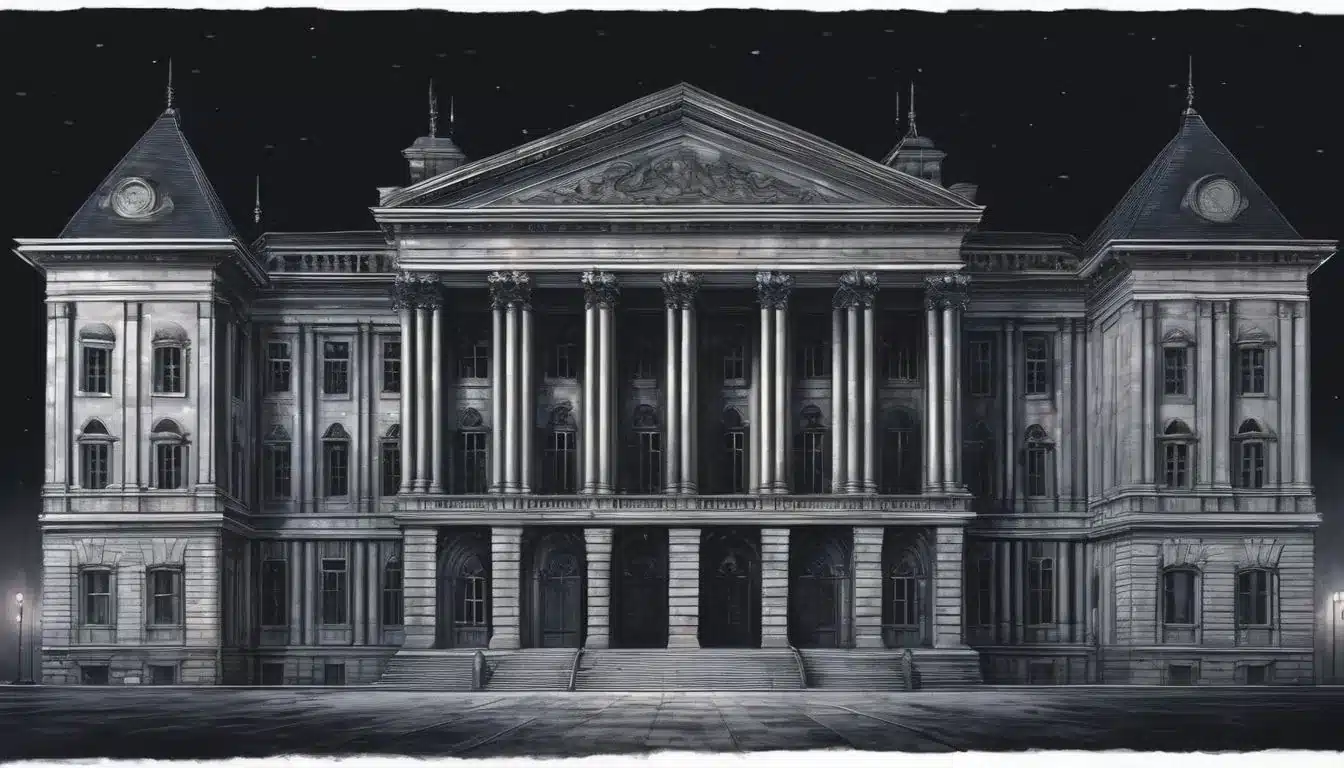
    shadowy government building with hidden files and secret documents

    Historical Examples of Government Cover-Ups

    We’ve all heard the stories, right? From the UFO cover-up to the Watergate scandal, history is littered with examples of governments hiding the truth. It’s not just about state secrets; sometimes, it’s about concealing embarrassing revelations. The default position of many governments is to stonewall, especially when they don’t know much themselves. This uneasiness over sheer ignorance often drives secrecy.

    Mechanisms and Tactics Used to Hide Information

    Governments have a toolkit for hiding information. They use:

    • Disinformation campaigns to spread false narratives.
    • Classification of documents to keep them out of public reach.
    • Legal barriers like non-disclosure agreements.
    • Intimidation tactics to silence whistleblowers.

    These methods are designed to keep the public in the dark and maintain control over sensitive information.

    The Role of Whistleblowers in Exposing Secrets

    Whistleblowers are the unsung heroes in the fight against government secrecy. They risk everything to bring the truth to light. Think of Edward Snowden or Chelsea Manning. Their revelations have exposed the extent to which governments will go to hide the truth. But it’s not just about the big names; countless others work behind the scenes, driven by a sense of duty to the public.

    The truth is often stranger than fiction, and it’s the whistleblowers who help us see through the fog of disinformation.

    In the end, it’s a constant battle between those who want to keep secrets and those who strive to reveal them. And as we’ve seen, the stakes are incredibly high.

    Famous Conspiracy Theories: Separating Fact from Fiction

    mysterious government building with hidden files and conspiracy symbols

    The Mystery of Area 51 and UFOs

    Area 51 has long been the epicenter of UFO conspiracy theories. Many believe that the government is hiding evidence of extraterrestrial life there. The secrecy surrounding the base fuels these theories. But what do we really know? Declassified documents reveal that Area 51 was a testing ground for spy planes like the U-2 and SR-71. While this doesn’t rule out otherworldly activities, it does provide a more grounded explanation.

    The Secrets of the JFK Assassination

    The assassination of President John F. Kennedy is perhaps the most famous conspiracy theory in American history. Was it a lone gunman or a coordinated effort? The Warren Commission concluded that Lee Harvey Oswald acted alone, but many remain skeptical. Over the years, various theories have emerged, implicating everyone from the CIA to the Mafia. Despite numerous investigations, the full truth remains elusive, keeping the public’s imagination alive.

    Epstein Island: What We Know and What We Don’t

    Jeffrey Epstein’s private island has become synonymous with scandal and conspiracy. High-profile figures are rumored to have visited, leading to wild speculations. While some claims are baseless, others have been substantiated through legal documents and witness testimonies. The island’s true purpose and the extent of its activities are still shrouded in mystery, making it a hot topic on shows like Ground Zero Radio and Into the Parabnormal.

    The allure of conspiracy theories lies in their ability to fill the gaps in our understanding, often blending fact with fiction. Whether it’s Area 51, the JFK assassination, or Epstein Island, these stories captivate us because they challenge the official narratives and invite us to question what we think we know.

    The Psychological Impact of Government Secrecy

    mysterious government building with shadows and a person looking anxious

    Public Distrust and Its Consequences

    When governments keep secrets, it breeds public distrust. We start to question everything. Are they hiding something important? This constant doubt can erode our trust in institutions. And when trust is gone, society pays the price. We see increased polarization and a breakdown in social cohesion. It’s a heavy toll for everyone.

    The Role of Media in Shaping Perceptions

    Media plays a crucial role in how we perceive government secrecy. They can either fuel the fire or help us understand the truth. Sensational headlines grab attention but often distort reality. On the flip side, investigative journalism can uncover hidden truths. It’s a double-edged sword. We need to be critical consumers of media to navigate this complex landscape.

    How Conspiracy Theories Gain Traction

    Secrecy creates a fertile ground for conspiracy theories. When information is scarce, people fill in the gaps with their own narratives. Some theories are harmless, but others can be dangerous. They can lead to real-world consequences, like violence or widespread panic. It’s essential to approach these theories with a critical mind and seek out credible sources.

    The Paradigm Shift in how we consume information has made it easier for conspiracy theories to spread. Social media amplifies these ideas, making it harder to distinguish fact from fiction.

    In the end, government secrecy affects us all. It shapes our perceptions, influences our behavior, and can even impact our mental health. We need transparency to build a healthier, more informed society.

    The psychological impact of government secrecy can be profound, affecting trust, mental health, and societal cohesion. To delve deeper into this critical issue and explore a wealth of exclusive content, visit our website. Join us at Aftermath Media and unlock a world of intriguing insights that you won’t find elsewhere.

    Conclusion

    In unraveling the intricate web of government cover-ups, it becomes evident that the truth is often more elusive than we might hope. From the shadowy dealings surrounding Epstein Island to the eerie phenomena of electromagnetic hypersensitivity, the spectrum of concealed information is vast and varied. Ground Zero Radio, with its dedication to exploring the unexplained, serves as a beacon for those eager to delve deeper into these mysteries. As we peel back the layers of secrecy, it is crucial to remain vigilant and discerning, understanding that not all that is hidden is nefarious, but much of it is shrouded in a veil of ambiguity. The quest for truth is a continuous journey, one that requires both skepticism and open-mindedness. By staying informed and questioning the narratives presented to us, we can hope to uncover the realities that lie beneath the surface. The world of government cover-ups is a testament to the complexities of power and the lengths to which authorities will go to maintain control. As we continue to investigate and expose these secrets, we contribute to a more transparent and accountable society.

    Frequently Asked Questions

    What are some historical examples of government cover-ups?

    Historical examples of government cover-ups include the Watergate scandal, the Tuskegee Syphilis Study, and the Iran-Contra affair. These incidents involved the concealment of information from the public and, in some cases, illegal activities by government officials.

    How do governments typically hide information from the public?

    Governments use a variety of mechanisms and tactics to hide information from the public, including classification of documents, non-disclosure agreements, misinformation campaigns, and legal actions to suppress information. These methods are designed to prevent sensitive or potentially damaging information from becoming public knowledge.

    What role do whistleblowers play in exposing government secrets?

    Whistleblowers play a crucial role in exposing government secrets by bringing hidden information to light. They often face significant risks, including legal repercussions and personal threats, but their actions can lead to greater transparency and accountability within government institutions.

  • Exploring Shamanism: Ancient Wisdom for Modern Times

    Exploring Shamanism: Ancient Wisdom for Modern Times

    Shamanism, an ancient spiritual practice, has been a cornerstone of various cultures around the world for thousands of years. It involves connecting with the spirit world to gain wisdom, healing, and guidance. In modern times, shamanism offers valuable insights and practices that can help individuals navigate the complexities of contemporary life, fostering personal growth, healing, and a deeper connection with nature.

    Key Takeaways

    • Shamanism is a time-honored spiritual tradition that connects practitioners with the spirit world for guidance and healing.
    • The core beliefs and practices of shamanism include a shamanic worldview, rituals, ceremonies, and the use of specific tools.
    • Shamanic healing techniques, such as energy healing, soul retrieval, and the use of plant medicine, offer profound benefits for well-being.
    • Modern shamanism adapts ancient practices to fit contemporary lifestyles, making it accessible to urban dwellers and integrating it into daily life.
    • Ethical considerations are crucial in shamanic practice, including respecting cultural origins, responsible use of plant medicines, and maintaining authenticity.

    The Roots of Shamanism: A Historical Perspective

    Origins in Ancient Cultures

    Shamanism is an ancient spiritual and healing practice that dates back thousands of years. It has roots in indigenous cultures around the world, including Native American, South American, Siberian, and African tribes. Shamans, revered as spiritual leaders and healers within their communities, possess profound knowledge of plant medicine and the ability to connect with the spirit world.

    Evolution Through the Ages

    Over the millennia, shamanism has evolved, adapting to the changing needs of societies. Despite these changes, the core principles have remained intact. Shamans have always been the bridge between the physical and spiritual realms, guiding their communities through rituals and ceremonies.

    Shamanism Across Continents

    Shamanism is not confined to one region; it has been practiced across continents. From the icy tundras of Siberia to the dense jungles of the Amazon, each culture has its unique take on shamanic practices. This global presence underscores the universal appeal and effectiveness of shamanic wisdom. For a deeper dive into these practices, check out “The Secret Teachings with Ryan Gable.”

    Shamanism’s enduring presence across diverse cultures highlights its profound impact on human spirituality and healing.

    Core Beliefs and Practices in Shamanism

    The Shamanic Worldview

    In shamanism, everything is interconnected. We believe that all living beings have a spiritual essence. This worldview emphasizes that everything has a spirit or energy, creating a profound sense of unity with the universe. Shamans act as intermediaries between the physical and spiritual worlds, helping to maintain balance and harmony.

    Rituals and Ceremonies

    Rituals are central to shamanic practice. They help align the shaman’s mind, body, and spirit with their intended goal. Common rituals include fasting, meditating, and performing specific ceremonies to cleanse and protect oneself. These practices are not just traditional formalities but necessary steps to ensure the shaman’s efficacy and safety during their spiritual endeavors.

    Tools of the Shaman

    Shamans use various tools to aid in their practices. Drums and rattles are often used to enter altered states of consciousness. Other tools include feathers, crystals, and sacred plants. Each tool has its unique purpose and significance, helping the shaman connect with the spirit world and facilitate healing.

    The path of the shaman is ultimately a path of spiritual transformation. Through practices like shamanic journeying and plant medicine, we can explore the depths of our consciousness, heal old wounds, and awaken to our true nature.

    Shamanic Healing: Techniques and Benefits

    Energy Healing and Balancing

    In shamanic healing, energy is everything. We work to balance the body’s energy fields, often referred to as the aura or spirit. Shamans believe that illness can stem from imbalances or blockages in these energy fields. Techniques like energy extraction and aura cleansing are used to remove negative energies and restore harmony. This process can be incredibly rejuvenating, leaving us feeling lighter and more vibrant.

    Soul Retrieval

    Soul retrieval is a profound practice aimed at healing trauma. When we experience severe emotional or physical pain, a part of our soul may fragment and become lost. Shamans journey into the spirit world to retrieve these lost soul parts, bringing them back to us. This can lead to significant emotional healing and a sense of wholeness. It’s like finding a missing piece of ourselves that we didn’t even know was gone.

    Plant Medicine and Its Uses

    Shamans have a sacred relationship with plant spirits. They use plant medicines like ayahuasca, peyote, and others to facilitate healing and spiritual awakening. These plants are believed to possess unique healing properties and intelligence. Through rituals and ceremonies, we can connect with these plant allies for guidance and healing. The experience can be transformative, offering deep insights and a renewed sense of purpose.

    The ancient wisdom of shamanic healing traditions offers a profound and holistic approach to well-being and personal transformation. By connecting with the spirits of sacred plants and engaging in time-honored practices, we can embark on a transformative journey of self-discovery, healing, and spiritual awakening.

    Modern Shamanism: Adapting Ancient Practices

    Shamanism continues to evolve and adapt, reflecting humanity’s ongoing quest for understanding and connection in a rapidly changing world. Let’s dive into how ancient shamanic practices are being integrated into our modern lives.

    Urban Shamanism

    In the hustle and bustle of city life, urban shamanism has emerged as a way to bring ancient wisdom into our daily routines. We don’t need to be in the wilderness to connect with the spirit world. Urban shamans use meditation, visualization, and even technology to create sacred spaces in their homes or offices. This adaptation helps us stay aligned with our true selves amidst the chaos of modern life.

    Integration into Daily Life

    Shamanic practices can be seamlessly woven into our everyday activities. Simple rituals like morning meditations, gratitude practices, and mindful walking can help us stay grounded. We can also use shamanic tools like crystals and smudging to cleanse our spaces and energies. By integrating these practices, we can navigate the challenges of modern life with greater ease and balance.

    Contemporary Shamanic Practitioners

    Today’s shamanic practitioners come from diverse backgrounds and bring unique perspectives to the practice. They offer workshops, online courses, and one-on-one sessions to help others connect with their inner wisdom. These modern shamans are bridging the gap between ancient traditions and contemporary needs, making shamanism accessible to everyone.

    Shamanism continues to evolve and adapt, reflecting humanity’s ongoing quest for understanding and connection in a rapidly changing world.

    Shamanic Journeying: Exploring the Spirit World

    The Purpose of Journeying

    Shamanic journeying is a meditative practice that allows us to explore our inner consciousness and connect with spiritual guides. This practice can lead to profound personal insights and transformative experiences. The wisdom of the shaman can provide guidance for those seeking to navigate the challenges of modern life. It can help us access our inner wisdom and find solutions to personal challenges. This deeper connection with the self and the universe often leads to a greater sense of peace and purpose.

    Methods and Techniques

    Shamans often undertake visionary journeys or vision quests to access altered states of consciousness. Through rhythmic drumming, chanting, or other techniques, they enter trance-like states where they can commune with the spirit world and receive guidance, healing, and insight. Here are some common methods:

    • Rhythmic Drumming: The steady beat helps to alter consciousness.
    • Chanting: Vocal sounds that resonate with spiritual energies.
    • Meditation: Deep focus and relaxation to connect with the spirit world.

    Interpreting Shamanic Visions

    Interpreting the visions and messages received during shamanic journeying is crucial. These visions can be symbolic and require a deep understanding of shamanic traditions. We might see spirit animals, ancestors, or other symbolic imagery. It’s essential to approach these visions with an open mind and heart, allowing the messages to unfold naturally. Everything Out There in the spirit world has a purpose and meaning, guiding us on our path.

    Shamanic journeying is not just about exploring the spirit world; it’s about exploring our own inner landscapes. By connecting with our spiritual guides, we can gain insights that help us navigate the complexities of modern life.

    Highlights

    • The wisdom of the shaman can provide guidance for those seeking to navigate the challenges of modern life.
    • Everything Out There in the spirit world has a purpose and meaning, guiding us on our path.

    The Role of Nature in Shamanism

    Sacred Plants and Animals

    In shamanic traditions, symbols such as the circle represent life’s continuity, while animals serve as totems or spiritual guides. Natural landmarks like mountains and rivers are considered sacred. Shamans believe that every element of nature holds a spirit. This deep connection with nature allows shamans to draw energy and wisdom from their surroundings.

    Environmental Stewardship

    Shamans have a deep respect for the natural world and believe that everything in the universe is interconnected. This worldview can lead to a deeper understanding of our place in the world and our relationship with nature and each other. By embracing shamanic principles, we can promote environmentalism and sustainability. It’s about living in harmony with Mother Earth and ensuring her well-being for future generations.

    Connecting with Natural Energies

    The teachings of shamanism focus on our connection to nature and promote the well-being of all creation. Essential aspects of shamanic life include journeying, ceremony, sacred dance, and pilgrimages to places of power in nature. Through these techniques, the shamanic circle embraces us, unifying our lives with strength, healing, and love.

    In shamanic traditions, the vital connection between Mother Earth and shamanism is undeniable. By tuning into the natural energies around us, we can find balance and harmony in our lives.

    Shamanism and Personal Transformation

    Shamanism offers a profound path for personal transformation. Through various practices, we can heal, grow, and connect with our true selves. Let’s dive into how shamanism can change our lives.

    Healing Trauma and Emotional Wounds

    Shamanic practices are powerful tools for healing trauma and emotional wounds. By connecting with the spirit world, we can uncover and address deep-seated issues. Energy healing and soul retrieval are common methods used to restore balance and harmony. These practices help us release past pain and move forward with a lighter heart.

    Spiritual Growth and Enlightenment

    The journey of spiritual growth is central to shamanism. Through rituals, ceremonies, and shamanic journeying, we can gain insights into our lives and the universe. This path leads to enlightenment and a deeper understanding of our purpose. The ancient wisdom of shamanism guides us towards a more conscious and connected existence.

    Building Resilience and Inner Strength

    Shamanism teaches us to build resilience and inner strength. By facing our fears and challenges, we grow stronger and more capable. The practices of shamanism empower us to navigate life’s difficulties with grace and confidence. This inner strength is essential for personal transformation and living a fulfilling life.

    The path of the shaman is ultimately a path of spiritual transformation. Through practices like shamanic journeying and plant medicine, individuals can explore the depths of their consciousness, heal old wounds, and awaken to their true nature.

    As we embrace the wisdom of shamanism, we embark on a transformative journey that not only changes us but also has the potential to create a more compassionate and sustainable world.

    Community and Shamanism: Building Connections

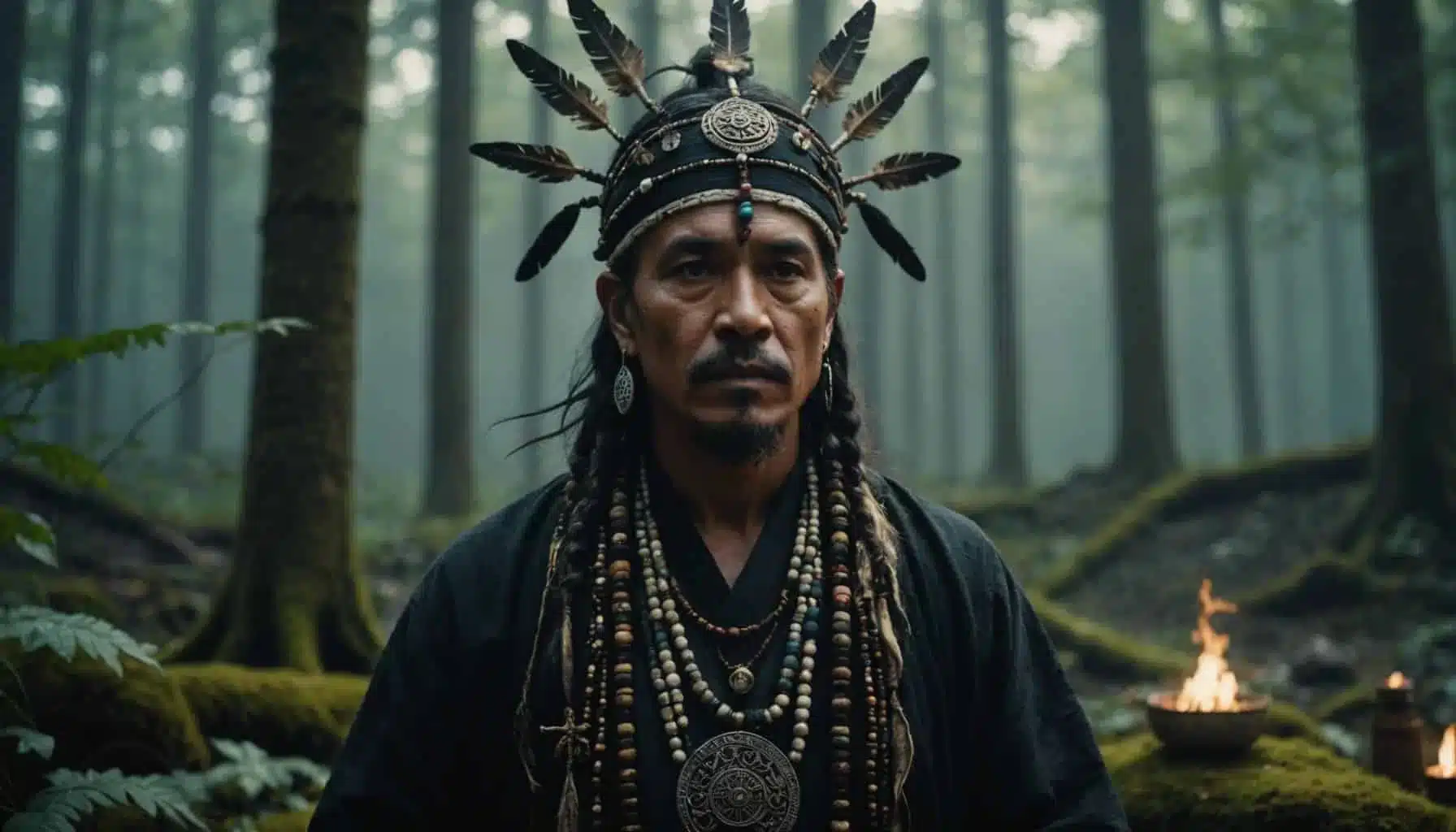
    Shaman in traditional attire leading a community ritual in a serene forest, symbolizing ancient wisdom and connection.

    Shamanic Circles and Gatherings

    In the world of shamanism, community is everything. Shamanic circles and gatherings bring people together from all walks of life. These events are a chance to share experiences, learn from one another, and participate in group ceremonies. Being part of a shamanic community can provide a sense of belonging and mutual support. Whether it’s a local meetup or an online group, these circles are vital for maintaining motivation and enthusiasm in our practices.

    The Role of the Shaman in Society

    Shamans have always played a crucial role in their communities. They act as healers, guides, and mediators between the physical and spiritual worlds. In modern times, this role has evolved but remains just as important. Shamans help us navigate life’s challenges, offering wisdom and support. They remind us of our connection to the earth and each other, fostering a sense of unity and purpose.

    Collaborative Healing Practices

    Healing in shamanism is often a collaborative effort. Group ceremonies and rituals can amplify the healing process, making it more powerful and effective. Energy healing, soul retrieval, and plant medicine are just a few of the practices that benefit from a communal approach. By working together, we can achieve deeper levels of healing and transformation.

    The shamanic worldview, with its emphasis on interconnectedness and respect for all life, offers a much-needed perspective in our increasingly fragmented world.

    For those interested in exploring these topics further, shows like “Into the Parabnormal with Jeremy Scott” and “Ground Zero with Clyde Lewis” offer fascinating insights into the world of shamanism and beyond.

    Ethical Considerations in Shamanic Practice

    Cultural Appropriation and Respect

    We must tread carefully when engaging with shamanic practices from cultures that are not our own. Respecting the origins and traditions of these practices is crucial. It’s not just about using the tools and rituals; it’s about understanding their significance and the context in which they were developed. Let’s honor the wisdom of indigenous cultures by giving credit where it’s due and avoiding the commercialization of sacred traditions.

    Responsible Use of Plant Medicines

    Plant medicines like ayahuasca and peyote have profound effects and should be used responsibly. This means understanding their origins, traditional uses, and potential risks. Always seek guidance from experienced practitioners and never use these substances recreationally. Remember, these plants are considered sacred and should be treated with the utmost respect.

    Maintaining Integrity and Authenticity

    In our shamanic journey, maintaining integrity and authenticity is key. This means being honest about our experiences and qualifications. Avoid claiming expertise without proper training and experience. Authenticity also involves being true to ourselves and our spiritual path, rather than mimicking others. Let’s build a supportive community where we can share our journeys and grow together.

    By approaching shamanic practices with respect, responsibility, and authenticity, we can ensure that we honor the ancient wisdom while adapting it for modern times. Support more articles like this to continue exploring these profound traditions.

    Shamanic Tools and Symbols: Their Meanings and Uses

    Drums and Rattles

    Drums and rattles are essential tools in shamanic practices. They help us enter altered states of consciousness and connect with the spirit world. The rhythmic beats of the drum can induce a trance state, making it easier to journey into the spiritual realm. Rattles, often made from natural materials like gourds or animal hide, are used to call upon spirits and dispel negative energies.

    Totems and Spirit Animals

    Totems and spirit animals serve as powerful symbols in shamanism. They represent our connection to the animal kingdom and the natural world. Each totem or spirit animal carries unique qualities and lessons. By understanding these symbols, we can gain insight into our own lives and the challenges we face. For example, a bear totem might symbolize strength and courage, while an owl could represent wisdom and intuition.

    Sacred Symbols and Their Significance

    Sacred symbols are used in various shamanic rituals and ceremonies. These symbols can be drawn, carved, or visualized to invoke specific energies or deities. Common symbols include the spiral, which represents the journey of life, and the circle, symbolizing unity and wholeness. By incorporating these symbols into our practices, we can enhance our spiritual experiences and deepen our connection to the universe.

    Understanding the meanings behind these tools and symbols can greatly enhance our shamanic practices, allowing us to unlock deeper levels of healing and insight.

    Discover the fascinating world of shamanic tools and symbols, and learn about their profound meanings and uses. Dive deeper into these mystical practices and uncover hidden truths by exploring our exclusive content. Join us at Aftermath Media and unlock a world of intriguing insights today!

    Conclusion

    In conclusion, shamanism offers a timeless reservoir of wisdom that continues to resonate in our modern world. By embracing shamanic practices, we open ourselves to profound healing, spiritual growth, and a deeper connection with the natural world. This ancient tradition, with its rich tapestry of rituals and teachings, provides valuable insights and tools for navigating the complexities of contemporary life. As we integrate these practices into our daily lives, we not only honor the legacy of ancient cultures but also enrich our own journey towards wholeness and well-being. Let us approach shamanism with respect, curiosity, and an open heart, allowing its ancient wisdom to guide us towards a more balanced and harmonious existence.

    Frequently Asked Questions

    What is shamanism?

    Shamanism is an ancient spiritual practice that involves connecting with the spirit world for healing, guidance, and wisdom. It has been practiced by various cultures around the world for thousands of years.

    What are the core beliefs of shamanism?

    Core beliefs of shamanism include the interconnectedness of all things, the existence of a spirit world, and the ability of shamans to journey into this world to gain insights and healing.

    How do shamans perform healing?

    Shamans perform healing through various techniques such as energy healing, soul retrieval, and the use of plant medicines. These practices aim to restore balance and harmony within an individual.

    What is a shamanic journey?

    A shamanic journey is a method used by shamans to enter an altered state of consciousness in order to connect with the spirit world. This journey often involves drumming, chanting, or other rhythmic techniques.

    Can anyone become a shaman?

    While anyone can learn shamanic practices, becoming a shaman often involves a calling, extensive training, and guidance from experienced shamans. It is a lifelong path of learning and dedication.

    What is the role of nature in shamanism?

    Nature plays a central role in shamanism. Shamans believe in the sacredness of all natural elements, including plants, animals, and landscapes. They often work with these natural energies for healing and guidance.

    Is shamanism relevant in modern times?

    Yes, shamanism is considered relevant in modern times as it offers valuable insights into personal growth, healing, and spiritual connection. Many people find that shamanic practices help them navigate the complexities of contemporary life.

    What are some common tools used by shamans?

    Common tools used by shamans include drums, rattles, feathers, crystals, and sacred plants. These tools help shamans enter altered states of consciousness and connect with the spirit world.

  • Decoding the Past with Graham Hancock: A Journey Through Ancient Mysteries

    Decoding the Past with Graham Hancock: A Journey Through Ancient Mysteries

    In ‘Decoding the Past with Graham Hancock: A Journey Through Ancient Mysteries,’ we explore the captivating work of Graham Hancock, a journalist and author who traverses the globe in search of evidence that uncovers the enigmatic histories of lost civilizations. Hancock’s unconventional methods and controversial theories have stirred significant debate, challenging conventional academic perspectives on human history. This article delves into Hancock’s hypotheses regarding ancient monuments, the influence of psychedelics on consciousness expansion, and the technological advancements that could reshape our understanding of the past.

    Key Takeaways

    • Graham Hancock’s work focuses on uncovering evidence of advanced ancient civilizations that predate widely accepted historical timelines.
    • His research into monuments like the Sphinx, Gobekli Tepe, and Baalbek suggests that humanity’s architectural capabilities were sophisticated much earlier than mainstream history acknowledges.
    • Hancock posits that psychedelics played a significant role in the expansion of consciousness and the acquisition of ancient wisdom, drawing from his personal experiences with substances like Ayahuasca.
    • Despite facing academic backlash and controversies, such as the debate over his Netflix series ‘Ancient Apocalypse,’ Hancock remains steadfast in his quest to uncover the truth.
    • The future of past explorations is bright, with technological advancements in archaeology promising to unveil new discoveries and emphasizing the importance of maintaining an open-minded approach to historical inquiry.

    Unveiling Ancient Civilizations

    Unveiling Ancient Civilizations

    Graham Hancock’s Methodology

    Graham Hancock is not your typical archaeologist. By engaging in independent research, he steps beyond mainstream narratives. Hancock’s approach is hands-on; he travels the globe, examining ancient sites firsthand. His methodology is a blend of intuition and evidence, often connecting dots that others overlook.

    • Exploration: Hancock visits remote locations, seeking clues left by ancient civilizations.
    • Cultural Understanding: He immerses himself in local traditions to gain insights into past practices.
    • Construction Techniques: Studying ancient engineering reveals how monuments were built.
    • Critical Thinking: Hancock challenges established theories, proposing alternative histories.

    Hancock’s work encourages us to question the established timeline of human history.

    His work has sparked debates, with some viewing it as a breath of fresh air in a field that can be resistant to new ideas. Others, however, criticize his theories for lacking scientific rigor. Regardless, Hancock’s influence on the public’s interest in ancient mysteries is undeniable.

    Controversial Theories and Debates

    Graham Hancock’s work often treads the fine line between groundbreaking and contentious. His theories, while captivating, stir heated debates among scholars and enthusiasts alike. Hancock’s exploration of ancient civilizations challenges the conventional timeline of human history. He posits that a sophisticated civilization existed during the last Ice Age, a claim that, if true, would turn our understanding of history on its head.

    One of Hancock’s most debated ideas is the theory of a cataclysmic event that wiped out this advanced civilization. This theory aligns with the cataclysmic cycles discussed on platforms like Ground Zero Radio, which also touches on topics like AI secrets and ancient mysteries. Hancock’s assertions are not just about the past; they suggest a cyclical nature of human history that could have implications for our future.

    Hancock’s work invites us to question the narratives we’ve been taught and to consider the possibility of lost knowledge and technologies.

    Critics argue that Hancock’s theories lack sufficient empirical evidence and accuse him of cherry-picking data to fit his narrative. Despite this, his work has inspired a generation to look beyond the accepted historical accounts and to seek truth in the enigmatic remnants of the past.

    Impact on Modern Understanding

    Graham Hancock’s work has stirred the pot of historical consensus, challenging the status quo with a spade of alternative theories. His influence extends beyond the academic, reaching into the public sphere where his ideas have sparked both curiosity and skepticism. Hancock’s approach to ancient history has encouraged a broader audience to question the established narratives and to consider the possibility of advanced prehistoric civilizations.

    • Hancock posits that ancient myths may be more than just stories; they could be records of real events.
    • His exploration of megalithic structures suggests that our ancestors were far more sophisticated than previously thought.
    • The idea that a global cataclysm wiped out a great civilization is gaining traction, thanks in part to Hancock’s work.

    Hancock’s theories have nudged the public towards a more critical examination of history, urging us to look deeper into our past.

    While his theories are often met with resistance from mainstream scholars, the conversation Hancock has ignited is invaluable. It’s a reminder that history is not static but a living, breathing field open to reinterpretation and discovery. The ripple effect of his work is evident, as more people tune into discussions about our ancient past, such as those featured on Ground Zero Radio, where mysteries and historical revelations are a staple.

    Mysteries of the Monuments

    Mysteries of the Monuments

    Deciphering the Sphinx

    The Sphinx, an enigmatic guardian of ancient secrets, has long captivated the imagination of explorers and scholars alike. Graham Hancock’s quest to decode the Sphinx has led to a deeper understanding of its astronomical significance and symbolic role in ancient civilizations.

    Mythology intertwines with history as the Sphinx’s riddles echo the human search for meaning. Hancock suggests that the Sphinx is not just a monument but a profound marker of cosmic events, a sentinel in stone overseeing the passage of celestial cycles.

    • The Sphinx as a symbol of guardianship
    • Its role in the narrative of Thebes
    • The Sphinx’s depiction during the Renaissance

    Hancock’s work peels back the layers of time, revealing a connection between the Sphinx and the heavens that may unlock further mysteries of our past.

    The debates surrounding the Sphinx’s origins and purpose are as complex as the riddles it represents. Hancock’s interpretations challenge conventional timelines and invite us to consider the possibility of a lost chapter in human history.

    Secrets of Gobekli Tepe

    Gobekli Tepe challenges everything we thought we knew about the dawn of civilization. Carved from the bedrock of the earth over 10,000 years ago, this site predates Stonehenge by 6,000 years. Its massive stone pillars, arranged in circles, whisper of a time when hunter-gatherers supposedly lacked the ability to construct such wonders.

    The Secret Teachings with Ryan Gable often delves into the mysteries that Gobekli Tepe presents. Was it a temple, an astronomical observatory, or something else entirely? Theories abound, but concrete answers remain elusive.

    The intricate carvings and reliefs on the pillars suggest a sophisticated understanding of the natural world.

    Archaeologists continue to unearth new findings at the site, which could rewrite human history. Here’s a snapshot of what has been discovered so far:

    • T-shaped pillars towering up to 20 feet high
    • Animal reliefs that may have held symbolic significance
    • Evidence of possible ritualistic practices

    As we peel back the layers of time, Gobekli Tepe remains a testament to the ingenuity of our ancestors, beckoning us to reconsider our past.

    The Enigma of Baalbek

    The ancient city of Baalbek, located in modern-day Lebanon, is home to some of the most colossal and enigmatic stone structures ever crafted by human hands. The sheer size of the Baalbek stones challenges our understanding of ancient engineering. How were these massive blocks, weighing over 1,000 tons, transported and placed with such precision? Theories abound, from conventional to extraterrestrial.

    • The Trilithon, a set of three stones, each over 19 meters long and weighing approximately 800 tons.
    • The Stone of the Pregnant Woman, estimated to weigh 1,000 tons, lies in a nearby quarry, aligned with the site.
    • The Temple of Jupiter, once boasting 54 massive columns, now stands as a testament to Roman grandeur and mystery.

    The purpose and methods behind these megalithic marvels remain a puzzle, sparking debate among historians, archaeologists, and alternative theorists alike.

    While mainstream scholars attribute the construction to Roman engineering prowess, alternative voices like Hancock suggest a much older origin, possibly dating back to a lost civilization with forgotten technologies. The debate over Baalbek is a microcosm of the larger struggle between established academic views and the controversial perspectives that challenge them. As we continue to peel back the layers of history, Baalbek stands as a silent witness to human capability and the enigmas of our past.

    Psychedelics and Consciousness Expansion

    Psychedelics and Consciousness Expansion

    Altered States and Ancient Wisdom

    Graham Hancock’s exploration of ancient wisdom is not just about ruins and carvings; it’s about the mindscapes of our ancestors. Altered states of consciousness were not mere escapism, but a gateway to understanding the universe and one’s place within it. Hancock suggests that psychedelics were the catalyst for profound insights and the birth of civilizations.

    Ground Zero with Clyde Lewis has featured discussions that resonate with Hancock’s views. The show delves into the mysterious and often taboo, echoing Hancock’s interest in the altered states that shaped our past. Here, the ancient wisdom is not lost but waiting to be rediscovered through the lens of modern experiences.

    Hancock’s work invites us to consider the possibility that our ancestors were not just primitive beings, but people with a deep understanding of life’s complexities, achieved through means we are only beginning to grasp again.

    The use of psychedelics in ancient times was not for the faint of heart. It required guidance, ritual, and respect. The following list outlines the key elements involved in such practices:

    • A knowledgeable shaman or guide
    • Sacred plants or substances
    • Ritualistic preparation and setting
    • An intention or purpose for the journey
    • Integration of the experience into one’s life

    Hancock’s personal experiences with ayahuasca, detailed in his writings, offer a firsthand account of these transformative journeys. His accounts serve as a bridge between the past and present, urging us to keep an open mind about the wisdom of ancient cultures.

    The Role of Ayahuasca

    Ayahuasca, a brew with deep roots in Amazonian spiritual traditions, has gained global attention. Graham Hancock has delved into its role in expanding consciousness. This potent mixture of the Banisteriopsis caapi vine and other plants is not for the faint-hearted. Its psychoactive properties have been said to unlock parts of the mind that are usually inaccessible.

    Hancock’s experiences with ayahuasca are well-documented, including in his book Visionary: The Mysterious Origins of Human Consciousness. He describes encounters with otherworldly entities and profound insights into the nature of reality. These experiences have shaped his views on ancient civilizations and their knowledge.

    Ayahuasca’s influence extends beyond individual enlightenment. It challenges our understanding of reality and history.

    While some remain skeptical, others see ayahuasca as a key to unlocking human potential. Hancock’s advocacy for ayahuasca has sparked both interest and controversy, but one thing is clear: its impact on the quest for knowledge is undeniable.

    Hancock’s Personal Experiences

    Graham Hancock’s explorations are not just academic; they are deeply personal. His own encounters with altered states of consciousness have provided him with unique insights into the ancient world. Hancock’s use of ayahuasca, a powerful psychedelic brew, has been a cornerstone of his research into the shamanic traditions of the Amazon. These experiences, he argues, connect him to the wisdom of our ancestors and offer a glimpse into the spiritual practices of bygone eras.

    Through his journeys, Hancock has encountered visions that echo the symbolism found in ancient texts and artifacts. He posits that such experiences are not mere hallucinations but rather a form of communication with the same ‘otherworld’ that our ancestors described.

    • Personal encounters with altered states
    • Insights into shamanic traditions
    • Visions echoing ancient symbolism

    Hancock’s work suggests that the key to understanding our past may lie within our own consciousness.

    His willingness to embrace these experiences has not been without controversy. Critics argue that personal anecdotes cannot substitute for scientific evidence. Yet, Hancock maintains that these experiences are vital to decoding the past, a past that may be more intertwined with the mystical than we have been led to believe.

    Criticisms and Controversies

    Criticisms and Controversies

    Academic Backlash

    Graham Hancock’s work has stirred a tempest in the academic teapot. Mainstream scholars bristle at his alternative theories, often dismissing them as pseudoscience. Hancock’s claims—ranging from a lost advanced civilization to the rewriting of human history—clash with established narratives. This has led to a chorus of criticism from the academic community, who defend traditional timelines and methodologies.

    • Critics’ Main Points:
      • Lack of empirical evidence
      • Disregard for peer-reviewed research
      • Sensationalism over scholarly rigor

    Yet, Hancock’s popularity endures. His books sell in the millions, and his documentaries captivate a global audience. Supporters argue that his work challenges the status quo and sparks curiosity. Hancock himself remains undeterred, continuing to explore the fringes of our past.

    Hancock’s approach to history is not just about the past; it’s a call to view our origins—and ourselves—in a new light.

    The debate rages on, but one thing is clear: the conversation about our ancient past is far from over. Support more articles like this to keep the dialogue alive and the mysteries of history unfolding.

    The Netflix Series Debate

    The release of Graham Hancock’s Netflix series Ancient Apocalypse sparked a fiery debate. Critics argue it’s pseudoscience, while fans applaud its fresh perspectives. Hancock’s response? A detailed rebuttal to the Society for American Archaeology’s open letter. The clash highlights a divide between mainstream academia and alternative history enthusiasts.

    • Hancock’s presentation at Logan Hall, London, delved deeper into the series’ themes.
    • The series challenges conventional views on ancient civilizations.
    • Hancock’s blog offers a platform for ongoing discussion and defense of his work.

    The debate underscores the tension between traditional scholarship and new interpretations of the past.

    Ground Zero Radio, known for exploring the unconventional, echoes this sentiment. The show delves into mysteries and the paranormal, often questioning established narratives. Hancock’s series, in a similar vein, invites viewers to reconsider history’s enigmas.

    Hancock’s Response to Critics

    Graham Hancock has faced his fair share of criticism, but he doesn’t shy away from the challenge. In a bold rebuttal to the Society for American Archaeology’s open letter to Netflix, Hancock defended his Ancient Apocalypse series. He argues that mainstream archaeology often dismisses new evidence too quickly, and that his work invites a re-examination of history. Hancock’s response is not just a defense, it’s a call to action for more open-minded research.

    Hancock’s stance is clear: the past is not as set in stone as we might think.

    Despite academic backlash, Hancock remains steadfast in his pursuit of alternative historical narratives. He emphasizes the importance of considering all evidence, even when it challenges established views. His response to critics is not just words; it’s reflected in his extensive fieldwork and research.

    Hancock’s dialogue with critics is ongoing. He continues to engage in debates, presentations, and even a collection of podcasts exploring the fringes of history and science. His commitment to uncovering the truth about our past is unwavering, and he encourages others to join him in this quest.

    The Future of Past Explorations

    The Future of Past Explorations

    Technological Advancements in Archaeology

    The past is getting a high-tech makeover. Artificial Intelligence (AI) is revolutionizing the field of archaeology, turning centuries-old notes into digital data and predicting excavation outcomes with stunning accuracy. AI in Archaeology is not just a buzzword; it’s a game-changer, enabling us to uncover secrets that have been buried for millennia.

    • Laser Scanning: Captures precise measurements of ancient structures.
    • Remote Sensing: Detects buried features without the need for excavation.
    • 3D Modeling: Reconstructs ruins and artifacts for deeper analysis.

    The Role of AI in Archaeology: CAN AI UNLOCK THE MYSTERIES …

    The integration of technology in archaeology is not without its critics. Some purists argue that machines lack the human touch necessary for true understanding. Yet, the results speak for themselves. With each technological stride, we peel back another layer of our history, revealing the rich tapestry of human civilization.

    Predictions for New Discoveries

    The future of archaeology brims with potential, as new technologies promise to peel back layers of history yet untouched. Graham Hancock’s foresight in predicting the discovery of Gobekli Tepe has emboldened enthusiasts and researchers alike. Could this be a prelude to more groundbreaking finds? Hancock’s work suggests that we may be on the cusp of uncovering further evidence of lost civilizations.

    • Nassim Haremin’s work on the Tetragrammaton
    • Advances in AI and machine learning
    • The enigmatic tales of ancient humans beneath the Alps

    These snippets of information hint at a treasure trove of hidden knowledge, waiting to be unearthed. As we stand at the threshold of discovery, the question remains: what secrets will the next excavation reveal? Hancock’s controversial theories may yet find validation in the soil of our ancestors.

    The past is not silent; it whispers to those who listen. The echoes of ancient wisdom are poised to resound once more.

    The Importance of Open-Mindedness in Historical Inquiry

    In the quest to decode the past, open-mindedness is our most valuable tool. It’s the key that unlocks the mysteries of ancient civilizations and allows us to consider possibilities beyond the mainstream narrative. The willingness to entertain new ideas, even when they challenge long-held beliefs, can lead to groundbreaking discoveries and a richer understanding of our history.

    Curiosity drives us to explore the unknown, to ask the ‘what ifs’ and ‘whys’ that push the boundaries of conventional wisdom. It’s not just about accepting every alternative theory at face value, but about giving them the scrutiny they deserve. This approach doesn’t just apply to historians and archaeologists; it’s a call to action for anyone with a passion for the past.

    • Embrace the unconventional
    • Question the status quo
    • Seek out diverse perspectives

    By fostering an environment where inquiry is encouraged and no question is off-limits, we pave the way for a more nuanced and comprehensive understanding of our origins.

    As we stand on the brink of new discoveries, it’s crucial to remember that today’s fringe theory could be tomorrow’s accepted fact. The annals of history are replete with ideas once dismissed that are now integral to our knowledge. Let’s not repeat the mistakes of the past by closing our minds to the potential revelations that await us.

    Embark on a journey through the annals of the unexplained and the realms of the extraordinary with our extensive collection at the Ground Zero and The Secret Teachings archives. Dive into over a decade of riveting discussions, in-depth analysis, and a treasure trove of over 200 documentaries that challenge the conventional. Don’t let history’s mysteries slip away—visit our website now to unlock the secrets of the past and reshape your understanding of the future. Your adventure into the unknown awaits!

    Unraveling the Threads of History

    In our exploration with Graham Hancock, we’ve journeyed through the labyrinth of ancient mysteries, unearthing the enigmatic remnants of civilizations long past. Hancock’s work challenges the conventional narrative of history, inviting us to consider the possibility of advanced prehistoric cultures and the cataclysms that may have erased them from memory. His presentations, from the Sphinx temples to Gobleki Tepe, and his engagement with controversial topics like the materialist paradigm, have sparked both intrigue and debate. As we close this chapter, we are reminded that history is not a static record but a dynamic tapestry, woven with the threads of evidence, interpretation, and the enduring human quest for understanding. Hancock’s pursuit of Earth’s lost civilizations is more than a scholarly endeavor; it is a call to expand our consciousness and acknowledge the profound mysteries that still elude our grasp.

    Frequently Asked Questions

    What is Graham Hancock’s methodology in exploring ancient civilizations?

    Graham Hancock uses a multi-disciplinary approach, combining archaeology, mythology, linguistics, and astronomy to investigate ancient mysteries and civilizations. He often explores sites and examines artifacts firsthand, while also delving into historical records and indigenous traditions.

    Why are Graham Hancock’s theories considered controversial?

    Hancock’s theories often challenge the mainstream historical narrative by suggesting advanced prehistoric civilizations existed and were lost to cataclysmic events. His ideas on the antiquity of certain monuments and the possibility of global ancient cultures are at odds with conventional archaeological consensus.

    How has Graham Hancock impacted modern understanding of history?

    Hancock has popularized alternative views of ancient history, encouraging people to consider the possibility of lost advanced civilizations and to question the established timeline of human development. His work has sparked debate and interest in reexamining historical evidence and orthodoxies.

    What is the significance of Göbekli Tepe according to Hancock?

    Graham Hancock believes Göbekli Tepe is a crucial site that predates Stonehenge by thousands of years, challenging the conventional timeline of civilization. He suggests it could be evidence of a sophisticated, lost civilization that existed at the end of the last Ice Age.

    What role do psychedelics play in Graham Hancock’s research?

    Hancock explores the use of psychedelics in ancient cultures as a means of consciousness expansion and accessing higher knowledge. He considers them integral to understanding the spiritual and shamanic practices that may have influenced the construction of ancient monuments and the development of early religions.

    How has Graham Hancock responded to academic criticism?

    Hancock has often addressed academic criticism by defending the validity of his research and sources, and by promoting open-mindedness and interdisciplinary study in archaeology. He emphasizes the importance of considering alternative hypotheses and evidence that might not fit into established academic frameworks.
  • The Paranormal Files: Real-Life Ghost Stories

    The Paranormal Files: Real-Life Ghost Stories

    The realm of the paranormal has always fascinated humanity, with ghost stories and supernatural encounters captivating our imaginations for centuries. In this article, we delve into some of the most spine-chilling real-life ghost stories, exploring haunted locations, personal encounters, cultural perspectives on ghosts, and the methods used to investigate the unseen. Join us as we uncover the eerie and mysterious world of the paranormal.

    Key Takeaways

    • Haunted locations like the Tower of London, Winchester Mystery House, and Paris Catacombs have a rich history of ghostly encounters.
    • Personal stories of paranormal experiences often begin in childhood and can include sightings, sounds, and other unexplained phenomena.
    • Different cultures have unique perspectives on ghosts, such as the vengeful Japanese Yūrei and the multifaceted Slavic witch, Baba Yaga.

    Haunted Locations Around the World

    haunted castle at night

    The Tower of London: A History of Hauntings

    The Tower of London is one of the most infamous haunted locations in the world. With a history steeped in executions, imprisonments, and royal intrigue, it’s no wonder that many believe the spirits of the past still linger here. Visitors often report seeing the ghost of Anne Boleyn, one of Henry VIII’s wives, who was executed on the Tower Green. Her headless apparition is said to wander the corridors, adding a chilling layer to the already eerie atmosphere.

    The Winchester Mystery House: A Labyrinth of Spirits

    Located in San Jose, California, the Winchester Mystery House is a sprawling mansion with a bizarre architectural design. Built by Sarah Winchester, the widow of the inventor of the famous rifle, the house is said to be haunted by the spirits of those killed by Winchester rifles. The mansion’s confusing layout, with staircases leading to nowhere and doors opening into walls, was supposedly designed to confuse these restless spirits. It’s a must-visit for any ghost hunting enthusiast.

    The Catacombs of Paris: Echoes of the Past

    Beneath the bustling streets of Paris lies a network of tunnels and chambers known as the Catacombs. These underground ossuaries hold the remains of over six million people. The atmosphere is undeniably eerie, with walls lined with bones and skulls. Many visitors have reported hearing whispers and footsteps in the dark, empty corridors. The Catacombs are a stark reminder of Paris’s past and a hotspot for paranormal activity.

    If you’re fascinated by haunted locations, you might enjoy listening to “Into the Parabnormal with Jeremy Scott” for more spine-tingling tales and investigations.

    Personal Encounters with the Paranormal

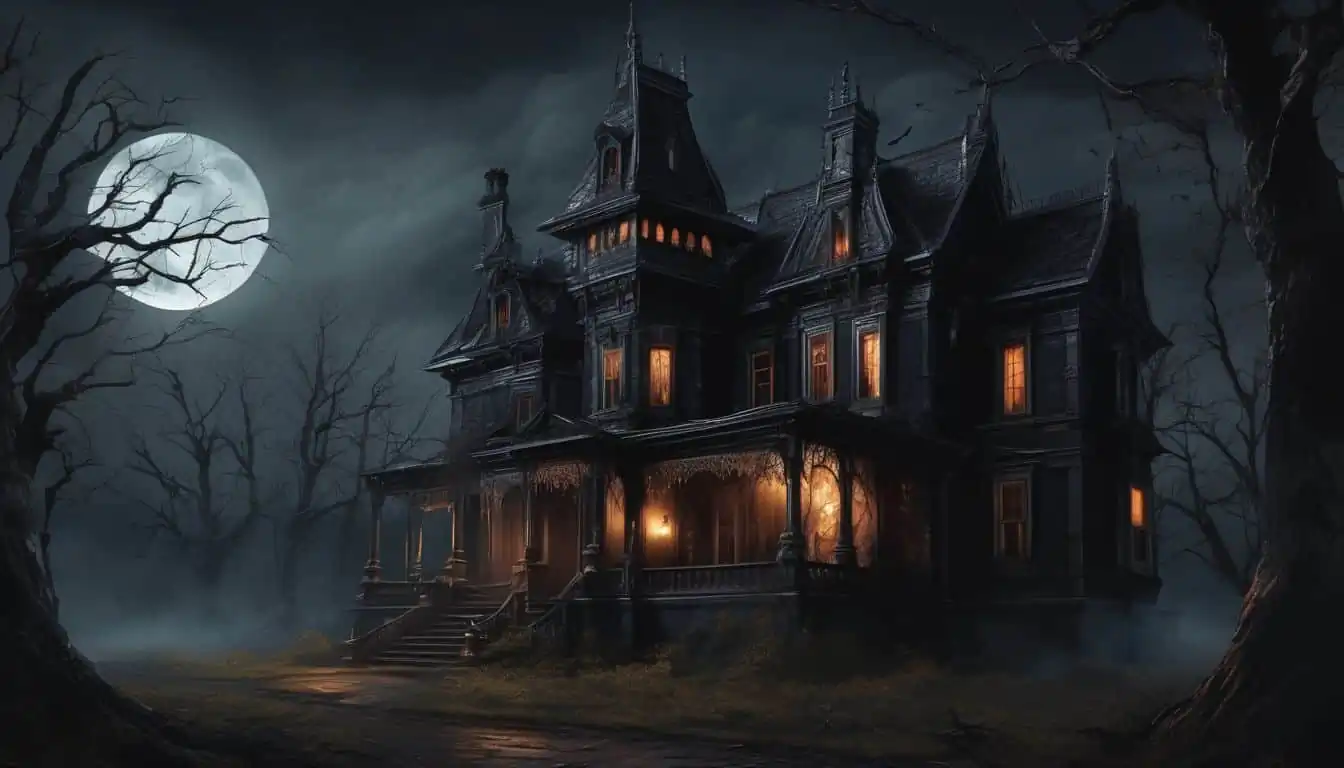
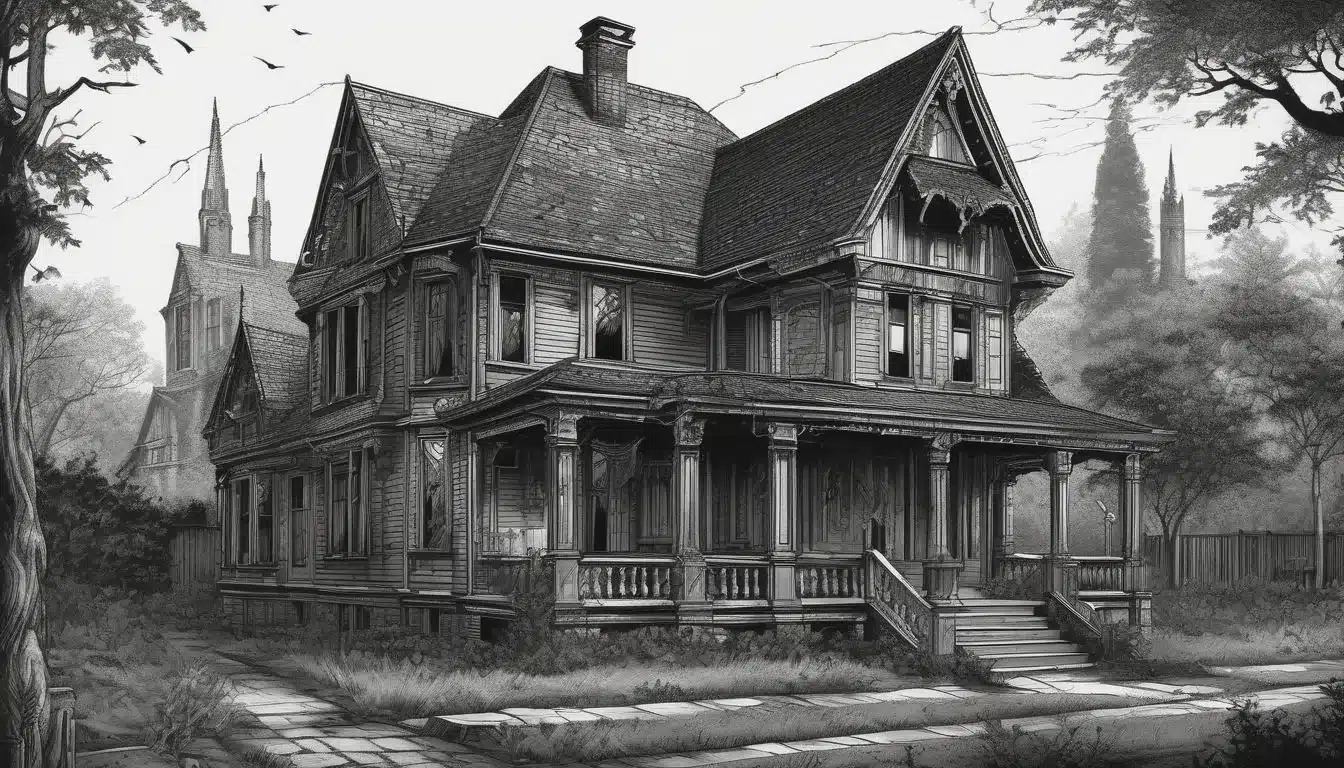
    haunted house at night

    A Childhood in a Haunted House

    We’ve all heard stories about haunted houses, but living in one is a different experience altogether. Imagine growing up in a place where every creak and groan could be a ghostly whisper. People share their own ‘ghost stories’ that made them believe in the paranormal. From footsteps echoing in empty hallways to objects moving on their own, these experiences can be both thrilling and terrifying. It’s a paradigm shift when you realize you’re not alone in your own home.

    The Midnight Apparition: A True Story

    One of the most chilling experiences we’ve come across is the story of the midnight apparition. Picture this: you’re lying in bed, and suddenly, you feel a presence in the room. You open your eyes, and there it is—a ghostly figure standing at the foot of your bed. This isn’t just a scene from a horror movie; it’s a real-life encounter that has left many people questioning their reality. These stories are not just spooky entertainment; they are a glimpse into the unknown.

    Voices from Beyond: Real-Life Experiences

    Hearing voices when no one is around can be unsettling, to say the least. Many people have reported hearing whispers, cries, or even conversations that seem to come from another dimension. These paranormal experiences often leave a lasting impact, making believers out of skeptics. Whether it’s a loved one trying to communicate or a restless spirit, these voices from beyond are a fascinating aspect of the supernatural world.

    The paranormal isn’t just about ghost stories; it’s about understanding the unseen forces that share our world. From haunted houses to midnight apparitions, these experiences make us question what we know about reality. It’s a journey into the parabnormal, where the line between the living and the dead blurs, and anything is possible.

    Cultural Perspectives on Ghosts

    Baba Yaga: The Slavic Witch

    Baba Yaga is one of the most intriguing figures in Slavic folklore. She lives in a hut that stands on chicken legs and can be both a benevolent helper and a malevolent force. Her stories often teach children about the importance of being good and the dangers of talking to strangers. Baba Yaga’s dual nature makes her a fascinating subject in the realm of mythology and ghost stories.

    Japanese Yūrei: Spirits of Vengeance

    In Japan, Yūrei are spirits that have not found peace due to violent deaths or unresolved issues. These spirits are often depicted in white funeral garments with long, unkempt hair. They are known for their vengeful nature and are a staple in Japanese horror films and literature. The cultural significance of Yūrei highlights the deep connection between traditional beliefs and modern media.

    The American South: Tales of Hoodoo and Hauntings

    The American South is rich with ghost stories and tales of Hoodoo. From sorrowful widows to vengeful spirits, the South’s haunted history is deeply intertwined with its cultural heritage. Hoodoo practices often involve spirit communication and rituals to ward off evil. These stories not only entertain but also offer a glimpse into the region’s complex history and beliefs.

    When it comes to ghosts, truth is as elusive as the spirits themselves.

    Exploring these cultural perspectives allows us to understand the diverse ways in which societies interpret and interact with the paranormal.

    Investigating the Unseen

    haunted house at night

    Modern Ghost Hunting Techniques

    Ever wondered how ghost hunters do their thing? We dive into the latest gadgets and methods. From EMF meters to thermal cameras, the tech is getting more advanced. We even have apps now! It’s like something out of The Secret Teachings. But remember, it’s not just about the tools; it’s about the approach. Patience and skepticism are key.

    The Role of Psychics in Paranormal Investigations

    Psychics can be controversial, but they bring a unique perspective. They claim to sense energies and communicate with spirits. Shows like Ground Zero with Clyde Lewis often feature psychics sharing their experiences. Whether you believe in their abilities or not, they add an intriguing layer to investigations. It’s all part of exploring everything out there.

    Skepticism and Belief: A Balanced Approach

    Balancing skepticism and belief is crucial. We can’t just accept every spooky story at face value. Critical thinking is essential. But keeping an open mind is equally important. After all, some of the most compelling evidence comes from the most unexpected places. Just ask the folks at Ground Zero Radio. They explore ghostly encounters, cryptid sightings, and more. The key is to stay curious and keep questioning.

    In the end, investigating the unseen is about more than just finding ghosts. It’s about understanding the unknown and pushing the boundaries of what we think is possible.

    In our latest section, “Investigating the Unseen,” we delve into the mysteries that lie beneath the surface, bringing hidden truths to the forefront. Our team of experts provides exclusive content, educational resources, and VIP access to seminars and live events. Don’t miss out on these intriguing insights—visit our website and start your free trial today!

    Conclusion

    In the end, whether you are a staunch skeptic or a firm believer in the paranormal, the stories shared in “The Paranormal Files: Real-Life Ghost Stories” offer a fascinating glimpse into the unknown. From eerie encounters in haunted houses to inexplicable phenomena captured on camera, these tales challenge our understanding of reality and invite us to ponder the mysteries that lie beyond the veil. Ground Zero Radio and other platforms dedicated to the unexplained continue to captivate audiences with their deep dives into these supernatural events, reminding us that the world is full of wonders yet to be fully understood. So, keep an open mind and perhaps, one day, you might find yourself experiencing a ghostly encounter of your own.

    Frequently Asked Questions

    What is Ground Zero Radio?

    Ground Zero Radio is an online radio station focusing on conspiracy theories, paranormal events, and current affairs. Known for its deep dives into the unexplained, it captivates those intrigued by the world’s mysteries.

    Who is Baba Yaga in Slavic folklore?

    Baba Yaga is a prominent figure in Slavic folklore, often depicted as a witch who lives in a hut that stands on chicken legs. She can be both good and bad, and many of her stories serve as moral lessons for children.

    What are some common ghost hunting techniques?

    Modern ghost hunting techniques often include the use of EMF meters, digital voice recorders, infrared cameras, and motion detectors. Some investigators also use psychics or mediums to communicate with spirits.

  • Behind the Headlines: Current Affairs Shrouded in Mystery

    Behind the Headlines: Current Affairs Shrouded in Mystery

    In a world filled with information, some stories remain cloaked in mystery, intriguing the curious minds and inspiring countless theories. From secretive military bases to ancient religious artifacts, and the dark side of technological advancements, these enigmatic topics continue to captivate and baffle. This article delves into some of the most perplexing current affairs, exploring the secrets behind Area 51, the Shroud of Turin, the phenomenon of Cyber Psychosis, and Kazakhstan’s nuclear legacy.

    Key Takeaways

    • Area 51 has long been a focal point of conspiracy theories and public fascination, fueled by a mix of declassified documents, speculative sightings, and government secrecy.
    • The Shroud of Turin remains one of the most controversial and studied religious artifacts, blending faith with forensic science, and continues to draw significant public interest and debate.
    • Cyber Psychosis highlights the potential psychological risks of transhumanism, raising important questions about the future integration of human and machine, and the ethical considerations that come with it.

    The Enigma of Area 51

    Aerial view of Area 51 at night, with shadowy buildings and desert, evoking secrecy and intrigue.

    Historical Background and Public Fascination

    Area 51 has been shrouded in mystery for decades. The public’s fascination with this remote desert site began in the 1950s when the military started testing U-2 CIA spy planes. Reports of UFO sightings soon followed, fueling speculation and conspiracy theories. The secrecy surrounding Area 51 has only added to its allure, making it a hot topic on shows like “Ground Zero with Clyde Lewis” and “Into the Parabnormal with Jeremy Scott“.

    Declassified Documents and Theories

    In 2013, the CIA officially acknowledged the existence of Area 51, thanks to a Freedom of Information Act request. Declassified documents revealed that the site was used for testing spy planes, but this did little to quell the more outlandish theories. Some believe the government is hiding evidence of extraterrestrial life, while others think it’s a hub for advanced technology. Shows like “The Secret Teachings” delve into these theories, keeping the public’s curiosity alive.

    Modern-Day Speculations and Sightings

    Today, Area 51 continues to be a focal point for modern-day speculations. Social media has given rise to events like the proposed “raid” in 2019, where over a million people expressed interest in storming the site to “see them aliens.” Sightings and theories are frequently discussed on platforms like “Ground Zero Radio” and “Everything Out There.” The mystery endures, captivating our imaginations and keeping us questioning what’s really going on behind those heavily guarded gates.

    The enigma of Area 51 isn’t just about what’s hidden there; it’s about our collective fascination with the unknown. The more we learn, the more questions we have.

    The Shroud of Turin: Faith and Forensics

    The Shroud of Turin has captivated believers and skeptics alike for centuries. Many consider it to be the burial cloth of Jesus, making it a distinguished relic. Pope John Paul II once called it “the mirror of the gospel.” This piece of fabric has inspired countless pilgrimages and remains a focal point of religious devotion.

    Since 1969, the Shroud has undergone numerous scientific tests. The most notable was the 1978 Shroud of Turin Research Project, which suggested it was a medieval creation. Findings have gone back and forth, with some claiming it was debunked decades ago as a 14th-century forgery. Despite this, the debate rages on, with new theories and counter-theories emerging regularly.

    The Shroud is not just a religious artifact; it’s a cultural phenomenon. Exhibitions, like the one at the Museum of the Bible, draw thousands of visitors. These displays are often high-tech and interactive, allowing people to engage with the Shroud in new ways. The fascination with this relic shows no signs of waning, proving its enduring impact on both faith and culture.

    The Shroud of Turin continues to be a subject of intense debate and fascination, blending faith, science, and history in a way few artifacts can.

    Cyber Psychosis: The Dark Side of Transhumanism

    Understanding Cyber Psychosis

    We’ve all heard about the wonders of transhumanism, right? But what about its dark side? Cyber psychosis is a term that’s been floating around, and it’s as eerie as it sounds. Imagine losing touch with reality because of too much tech integration. It’s like living in a sci-fi horror movie. The Paradigm Shift towards merging humans with machines is exciting, but it comes with risks. We need to be aware of the potential mental health impacts.

    Case Studies and Real-World Implications

    There are real stories out there that make you question if we’re diving too deep, too fast. Take the case of a man who couldn’t distinguish between his virtual and real life. He was so immersed in his augmented reality that he started seeing glitches in the real world. Scary, right? These stories are not just from the Into the Parabnormal podcast; they are happening in real life. The implications are vast, affecting not just individuals but society as a whole.

    Future of Human-Machine Integration

    So, what does the future hold? Are we heading towards a utopia or a dystopia? The truth is, it could go either way. The key is to balance innovation with caution. We need more research, ethical guidelines, and public awareness. Only then can we ensure that the benefits of transhumanism outweigh the risks. Let’s not forget, the future is in our hands, and we have the power to shape it wisely.

    As we embrace the future, let’s not lose sight of the present. The choices we make today will define the world of tomorrow.

    The Mystery of Kazakhstan’s Nuclear Past

    Historical Context and Nuclear Tests

    Kazakhstan’s nuclear history is a tale of secrecy and power. During the Cold War, the Soviet Union conducted numerous nuclear tests in the region, particularly at the Semipalatinsk Test Site. This site, often shrouded in mystery, was where Russia became a nuclear power. The sheer scale of these tests is mind-boggling, with over 450 nuclear explosions carried out between 1949 and 1989.

    Environmental and Health Impacts

    The aftermath of these tests has left a lasting scar on the environment and the health of the local population. Radiation exposure has led to increased rates of cancer, birth defects, and other serious health issues. The land, once fertile, is now a hazardous zone. Generations have suffered, and the full extent of the damage is still being uncovered.

    Current Efforts for Remediation and Reconciliation

    Today, Kazakhstan is making strides to address this dark chapter. Efforts are underway to remediate the contaminated land and provide healthcare to affected communities. International cooperation has been crucial in these efforts. There’s a long road ahead, but the commitment to healing and reconciliation is strong.

    We must remember this history to ensure it is never repeated. Support more articles like this to keep these important stories alive.

    Delve into the enigmatic history of Kazakhstan’s nuclear past and uncover secrets that have been hidden for decades. Our comprehensive research and exclusive content will provide you with unparalleled insights into this mysterious chapter of history. Don’t miss out on the full story—visit our website and start your free trial today!

    Conclusion

    In a world where the line between fact and fiction often blurs, the stories that captivate us the most are those shrouded in mystery. From the eerie broadcasts of Ground Zero Radio to the bizarre incidents that make headlines, these tales challenge our understanding and invite us to question the reality we live in. Whether it’s the unexplained phenomena, the forbidden thoughts that intrigue us, or the strange legal battles that leave us bewildered, the allure of the unknown remains ever-present. As we navigate through these enigmatic events, it’s essential to remain both curious and critical, seeking the truth while appreciating the mysteries that make our world so fascinating. Stay tuned, stay informed, and never stop questioning.

    Frequently Asked Questions

    What is the significance of Area 51 in popular culture?

    Area 51 has long been a focal point for conspiracy theories and public fascination due to its secretive nature and alleged connections to extraterrestrial activities. Its historical background, declassified documents, and modern-day speculations continue to intrigue people worldwide.

    Why is the Shroud of Turin considered important?

    The Shroud of Turin is believed by many to be the burial cloth of Jesus Christ, making it a significant religious artifact. Its historical significance, religious impact, and the controversies surrounding scientific investigations make it a subject of ongoing interest.

    What is Cyber Psychosis and why is it relevant today?

    Cyber Psychosis refers to a mental disorder associated with the integration of human minds with machines, often resulting from extensive body augmentation. As technology advances, understanding Cyber Psychosis becomes crucial for addressing the real-world implications and future challenges of human-machine integration.

  • Mystery Solved? Analyzing Historical Events That Still Baffle Experts

    Mystery Solved? Analyzing Historical Events That Still Baffle Experts

    Throughout history, certain events and artifacts have puzzled experts and captivated the public’s imagination. Despite advancements in technology and scientific understanding, many of these mysteries remain unresolved, leaving us to ponder the limits of our knowledge and the possibility of the unknown. This article delves into some of the most perplexing historical enigmas that continue to baffle experts to this day.

    Key Takeaways

    • The Antikythera Mechanism, discovered over a century ago, showcases advanced engineering capabilities far beyond its time, yet its exact purpose and origins remain a mystery.
    • The disappearance of Flight MH370 is one of the most baffling aviation mysteries, with extensive search efforts yielding few concrete answers and impacting aviation safety protocols worldwide.
    • The Voynich Manuscript, an undeciphered text filled with unknown symbols and illustrations, continues to elude linguists and cryptographers, sparking numerous theories and speculations about its origins and meaning.

    The Enigma of the Antikythera Mechanism

    Discovery and Initial Theories

    In 1901, divers exploring a shipwreck off the coast of the Greek island of Antikythera stumbled upon an ancient enigma: the Antikythera Mechanism. This intricate device, dating back to around 100 BCE, left experts scratching their heads. Was it an astronomical calendar? A mechanical calculator? Despite extensive study, its exact purpose remains a mystery. Some theories suggest it was used for astronomical and astrological purposes, while others believe it tracked the cycles of the Olympic games. No definitive explanation has been agreed upon by scientists.

    Advanced Engineering Capabilities

    What makes the Antikythera Mechanism so astonishing is its level of technological sophistication. The device contains over 30 bronze gears, finely crafted to interlock and move with astonishing precision. It could model the motion of the Sun and Moon, the phases of the Moon, and possibly the positions of the planets. This suggests a profound understanding of astronomy and mechanical engineering by its creators. The mechanism stands as a testament to the unsolved mysteries of the past, challenging our understanding of ancient Greek technology and the limits of their scientific knowledge.

    Unresolved Questions and Theories

    Despite extensive research and analysis, many aspects of the Antikythera Mechanism’s design, purpose, and origins remain a mystery. Scholars continue to ponder the advanced engineering capabilities that were required to create this ancient astronomical computer, as well as the broader implications of its existence. The Antikythera Mechanism stands as a testament to the unsolved mysteries of the past, challenging our understanding of ancient Greek technology and the limits of their scientific knowledge. The discovery of this device has led to a paradigm shift in how we view ancient technological capabilities. The Antikythera Mechanism remains an ancient enigma, a puzzle that continues to baffle experts and ignite curiosity.

    The Disappearance of Flight MH370

    Timeline of Events

    On March 8, 2014, Malaysia Airlines Flight MH370 vanished while en route from Kuala Lumpur to Beijing. The aircraft lost contact with air traffic control and disappeared from radar screens. The sudden change in course and communication shutdown left everyone puzzled. Decoding the unknown has never been more challenging.

    Search Efforts and Theories

    The search for MH370 became one of the largest in aviation history. Despite extensive efforts, only a few pieces of debris were found. Theories range from mechanical failure to more sinister possibilities. Shows like “Ground Zero Radio” and “Ground Zero with Clyde Lewis” have discussed these theories extensively.

    Impact on Aviation Safety

    The disappearance of MH370 had a profound impact on aviation safety. New protocols were introduced to improve aircraft tracking and communication. The mystery remains, but the quest for answers continues, much like other unresolved mysteries of our time.

    The enigma of MH370 reminds us that even in our modern world, some mysteries remain unsolved. The quest for answers continues.

    The Voynich Manuscript: A Code Yet to Be Cracked

    History and Discovery

    The Voynich Manuscript is an illustrated codex, hand-written in an unknown script referred to as ‘Voynichese.’ This medieval manuscript stands as one of the world’s greatest linguistic and historical puzzles. Originating in the 15th century, the Voynich Manuscript is an enigmatic book filled with indecipherable text and bizarre illustrations. Despite centuries of scrutiny by linguists and cryptographers, its code remains unbroken. Named after rare book dealer Wilfrid Voynich, who acquired it in 1912, the manuscript’s purpose, origin, and meaning remain unknown.

    Attempts at Decipherment

    Numerous theories have been proposed to explain the Voynich Manuscript, ranging from it being a lost language, an elaborate hoax, or even a complex cipher. Over the years, countless scholars and enthusiasts have attempted to decipher the text and unravel the mystery of the illustrations, but the indecipherable text and mysterious illustrations have stubbornly resisted all efforts to uncover their secrets. The undecoded language of the Voynich Manuscript continues to be one of the most perplexing unsolved historical mysteries in the world, captivating the imagination of researchers and the public alike.

    Current Theories and Speculations

    The Voynich Manuscript is a unique and enigmatic work, with its pages covered in an undecoded language and a diverse array of illustrations depicting everything from strange botanical specimens to intricate astrological diagrams. Despite the manuscript’s seemingly scientific or scholarly nature, the meaning and significance of these elements have remained elusive, leaving researchers to ponder the true nature of this unexplained artifact. Some believe it could be a medical text, while others think it might be a pharmacopoeia or even a guide to Into the Parabnormal realms. The debate continues, and the mystery endures.

    The Mystery of Stonehenge

    Stonehenge at sunset with ancient stones casting long shadows and a colorful sky in the background.

    Construction and Purpose

    Stonehenge, located on Salisbury Plain in England, is a prehistoric monument that has puzzled researchers for centuries. Constructed around 3000 BCE, its purpose, builders, and the methods used to transport its massive stones remain unclear. The arrangement of standing stones in a circular pattern suggests astronomical significance, possibly aligning with celestial events. The mystery deepens with the origins of the bluestones, transported from Wales over 150 miles away. The spiritual and ritualistic aspects of Stonehenge add layers to its allure.

    Archaeological Discoveries

    Over the years, numerous archaeological discoveries have been made at Stonehenge. Excavations have revealed human remains, tools, and other artifacts that provide insights into the lives of those who built and used the site. Despite these findings, many questions remain unanswered. How were the stones transported and erected? What was the exact purpose of the site? These questions continue to baffle experts and fuel ongoing research.

    Modern Interpretations and Theories

    Many theories have been proposed to explain Stonehenge’s purpose, from an astronomical observatory to a religious site or burial ground. Some even speculate that the stones possess mystical or healing properties. Despite the many attempts to solve the mystery, none have been completely verified. Some have even suggested that extraterrestrial beings constructed the site and that the stones possess otherworldly powers. While these theories may seem far-fetched, they add to the intrigue surrounding one of human history’s most enigmatic and perplexing monuments.

    The allure of Stonehenge lies in its enduring mystery. Each new discovery adds a piece to the puzzle, but the complete picture remains elusive. The Secret Teachings and Everything Out There continue to captivate our imaginations.

    Support more articles like this to keep exploring the mysteries of our past.

    The Mystery of Stonehenge has baffled historians and archaeologists for centuries. What secrets does this ancient monument hold? Dive deeper into the enigma and uncover hidden truths with our exclusive content. Join us at Aftermath Media and gain unlimited access to our library of in-depth articles, podcasts, and videos. Start your journey of discovery today!

    Conclusion

    The mysteries of history continue to captivate and baffle us, serving as a reminder of the limits of our knowledge and the endless possibilities that lie beyond our understanding. From the Bermuda Triangle to the Voynich Manuscript, these enigmas challenge our perceptions and invite us to explore the unknown. As we delve into these historical puzzles, we not only uncover fascinating stories but also ignite our curiosity and drive for discovery. Ground Zero Radio, with its deep dives into the unexplained, exemplifies the enduring human fascination with the mysterious. Whether through scholarly research or casual curiosity, the quest to solve these mysteries keeps our minds sharp and our imaginations alive. So, as we continue to investigate and ponder these historical conundrums, let us embrace the journey of discovery and the thrill of the unknown.

    Frequently Asked Questions

    What is the Antikythera Mechanism?

    The Antikythera Mechanism is an ancient Greek device believed to be the world’s first analog computer. It was discovered in a shipwreck off the coast of the Greek island Antikythera and is thought to have been used to predict astronomical positions and eclipses.

    What happened to Malaysia Airlines Flight MH370?

    Malaysia Airlines Flight MH370 disappeared on March 8, 2014, while flying from Kuala Lumpur to Beijing. Despite extensive search efforts, the main wreckage has never been found, and the exact cause of its disappearance remains unknown.

    Why is the Voynich Manuscript considered a mystery?

    The Voynich Manuscript is a medieval manuscript written in an unknown script and language. Despite numerous attempts by cryptographers and linguists to decipher it, the manuscript’s content and purpose remain a mystery.

  • Paranormal Encounters: Real-Life Stories That Will Give You Chills

    Paranormal Encounters: Real-Life Stories That Will Give You Chills

    Are you ready to explore the eerie and unexplained? From haunted houses to ghostly apparitions on the road, and from historical hauntings to personal paranormal experiences, this article delves into real-life stories that will give you chills. Whether you are a skeptic or a believer, these tales of terror are sure to captivate your imagination and perhaps even make you question the world around you.

    Key Takeaways

    • Real-life paranormal encounters can be found across various settings, from homes and roads to historical sites and personal experiences.
    • These stories often blur the line between fact and fiction, leaving readers to ponder the existence of the supernatural.
    • Whether you believe in ghosts or not, the impact of these stories on those who experience them is undeniable and often life-changing.

    Haunted Houses: Tales of Terror from the Home Front

    Haunted house with broken windows, overgrown weeds, and a ghostly figure in one window under a full moon.

    The Amityville Horror: Fact or Fiction?

    We’ve all heard of the Amityville Horror, but is it fact or fiction? The Lutz family claimed their house was haunted by malevolent spirits. Their story became a media sensation, spawning books and movies. But skeptics argue it was all a hoax. Whether you believe it or not, the tale of Amityville continues to captivate and terrify. For more spine-chilling discussions, check out Ground Zero Radio and Into the Parabnormal with Jeremy Scott.

    The Enfield Poltergeist: A Family’s Nightmare

    In the late 1970s, the Hodgson family in Enfield, London, experienced what they described as a poltergeist. Furniture moved on its own, and strange voices echoed through the house. Paranormal investigators Ed and Lorraine Warren even got involved. Was it a genuine haunting or just a case of mass hysteria? Tune into Ground Zero with Clyde Lewis for more eerie tales.

    The Winchester Mystery House: A Labyrinth of Spirits

    Sarah Winchester built a sprawling mansion in San Jose, California, to appease the spirits of those killed by her husband’s invention—the Winchester rifle. The house is a maze of rooms, staircases leading to nowhere, and doors that open into walls. It’s said that Sarah never stopped building because she believed it would keep the spirits at bay. Whether you think it’s haunted or just an architectural oddity, the Winchester Mystery House is a must-see for any ghost enthusiast.

    Encounters on the Road: Ghostly Apparitions and Phantom Vehicles

    The Vanishing Hitchhiker: Urban Legend or Reality?

    We’ve all heard the tale of the vanishing hitchhiker. You pick up a stranger on a lonely road, only for them to disappear without a trace. Is it just an urban legend, or is there some truth to it? Many drivers have shared their eerie experiences, swearing they saw someone in their rearview mirror one moment and an empty seat the next. These stories often leave us questioning the fabric of reality.

    Resurrection Mary: Chicago’s Famous Ghost

    Resurrection Mary is one of Chicago’s most famous ghosts. This spectral figure is said to haunt the roads near Resurrection Cemetery. Drivers have reported picking up a young woman in a white dress, only for her to vanish as they approach the cemetery gates. The chilling cold spots and flickering lights that accompany her appearances make this tale even more spine-tingling.

    The Ghostly Truck of Route 666

    Route 666, also known as the “Devil’s Highway,” is infamous for its paranormal activity. One of the most terrifying legends is that of the ghostly truck. Many travelers have reported seeing a large truck barreling down the road, only for it to disappear into thin air. The sudden drops in temperature and the feeling of an unseen presence add to the eerie atmosphere of this haunted highway.

    Exploring personal paranormal encounters shared by listeners on Ground Zero Radio, revealing eerie phenomena and questioning the fabric of reality. Haunting tales from Bridge Street and mysterious visitor encounters.

    Historical Hauntings: Spirits from the Past

    The Tower of London is infamous for its dark history and the spirits that are said to haunt its grounds. Anne Boleyn, one of the most famous ghosts, is often seen wandering near the site of her execution. Visitors have reported seeing her headless body roaming the tower, a chilling reminder of her tragic end. The Secret Teachings with Ryan Gable has delved into these eerie tales, exploring the tower’s haunted past.

    Gettysburg is a hotspot for paranormal activity, with countless reports of ghostly soldiers still fighting their final battle. The fields where the Civil War raged are said to be haunted by the spirits of those who perished. Witnesses have heard the sounds of gunfire and seen apparitions of soldiers in uniform. The Secret Teachings with Ryan Gable has featured stories from Gettysburg, highlighting the lingering presence of these restless spirits.

    The Myrtles Plantation is one of America’s most haunted homes. The ghost of Chloe, a former slave, is said to roam the grounds, her presence often felt by visitors. The plantation’s history is filled with tales of murder and mystery, contributing to its eerie atmosphere. The Secret Teachings with Ryan Gable has covered the haunting stories of the Myrtles Plantation, offering a glimpse into its haunted past.

    Personal Paranormal Experiences: Eyewitness Accounts

    A Childhood in a Haunted House

    Hauntings were part of our childhood experience. My siblings and I all had our own individual encounters. My very first memory was when I was around six, and my bed started to shake, really bad. It happened regularly. I usually hid, very still and very quiet, under the heavy wool blankets of my bed. This time was too much, and instead of hiding I just started to scream as I laid there.

    The Unseen Roommate: College Dorm Hauntings

    Another time, I had something grab me by the leg and try to pull me out of bed. My husband was next to me, but I was frozen with fear and nothing would come out of my mouth. I’ve experienced the bed shaking and unexplained breezes around my bed in a closed room. Things have calmed down since the kids grew up and moved but I have taken videos in the house and seen orbs floating around.

    Messages from Beyond: Stories of Afterlife Communication

    I’ve had several paranormal experiences, but one really stands out. In 2012, I was finishing my senior year of high school. My bedroom was in the basement of our house. I woke up one night because a voice in my head was telling me I was being watched. Standing at the foot of my bed was a man. He had smoke coming off him, looked kind of like he was charred, and was wearing a long coat.

    Years later, I was talking to my brother about paranormal experiences and told him that one. My brother was living in Georgia in 2012. When I told him that story, my badass West Point grad, Army Ranger brother got tears in his eyes and told me he saw the exact same apparition in the same year. Except his walls bled. That’s one of the weirder ones.

    Delve into real-life paranormal encounters, blending historical context with personal accounts, challenging our perception of reality. Shows like The Secret Teachings, The Paradigm Shift, and Into the Parabnormal often explore these chilling tales. For more spine-tingling stories, tune into Everything Out There.

    Have you ever encountered something that defies explanation? Our ‘Personal Paranormal Experiences: Eyewitness Accounts’ section is filled with real stories from people just like you. Dive into these intriguing tales and uncover the mysteries that lie beyond our understanding. For more exclusive content and in-depth research, visit Aftermath Media and start your journey today!

    Conclusion

    In the end, whether you are a skeptic or a believer, the stories of paranormal encounters shared in this article serve as a reminder of the mysteries that still elude our understanding. From ghostly apparitions to unexplained phenomena, these tales captivate our imagination and challenge our perception of reality. Ground Zero Radio, with its deep dives into the unexplained, continues to be a beacon for those intrigued by the world’s mysteries. As you ponder these chilling accounts, remember that the line between the known and the unknown is often thinner than we think. So, the next time you hear a bump in the night or feel a sudden chill, you might just wonder if there’s more to this world than meets the eye.

    Frequently Asked Questions

    What is Ground Zero Radio?

    Ground Zero Radio is an online radio station focusing on conspiracy theories, paranormal events, and current affairs. Known for its deep dives into the unexplained, it captivates those intrigued by the world’s mysteries.

    What age do people typically have their first paranormal experience?

    Many people report having their first paranormal experience around the age of four. This age is often mentioned as a time when individuals are more open and sensitive to supernatural occurrences.

    Are all witches in folklore depicted as evil?

    No, not all witches in folklore are depicted as evil. For example, in Slavic folklore, Baba Yaga can be both good or bad, depending on how she is approached. She serves as a complex character who teaches lessons about morality and behavior.

  • Uncovering the Mysteries of the Emerald Tablets: Ancient Wisdom and Modern Discoveries

    Uncovering the Mysteries of the Emerald Tablets: Ancient Wisdom and Modern Discoveries

    The Emerald Tablets have long fascinated scholars, mystics, and seekers of wisdom. These ancient texts, attributed to the enigmatic figure Hermes Trismegistus, are said to contain profound philosophical and spiritual teachings. While their origins remain shrouded in mystery, the tablets’ influence spans across various fields, from alchemy to modern science. In this article, we delve into the rich history, intricate translations, and enduring legacy of the Emerald Tablets.

    Key Takeaways

    • The Emerald Tablets are attributed to Hermes Trismegistus, a legendary figure often associated with wisdom and esoteric knowledge.
    • The texts have significantly influenced various fields, including alchemy, philosophy, and modern scientific thought.
    • Despite debates over their authenticity, the teachings of the Emerald Tablets continue to inspire and guide spiritual seekers.
    • The principle of correspondence, the law of cause and effect, and the concept of mentalism are some of the core teachings found within the tablets.
    • The Emerald Tablets have left a lasting impact on both Eastern and Western spiritual traditions, and their legacy continues to be explored and studied today.

    The Origins of the Emerald Tablets

    Historical Context and Discovery

    The origins of the Emerald Tablets are shrouded in both myth and historical speculation. At the center of their narrative is Thoth the Atlantean, often depicted as a deity with the head of an ibis or a baboon. Thoth holds a significant place in ancient Egyptian mythology and is associated with wisdom, writing, magic, and the arts. The discovery of the Emerald Tablets and their subsequent translation has further added to the allure surrounding these mystical artifacts. While their precise origin and authorship remain shrouded in mystery, their profound message and philosophical insights continue to captivate the hearts and minds of those who encounter them.

    Legends and Myths Surrounding the Tablets

    The Emerald Tablets are surrounded by numerous legends and myths. One popular legend suggests that the tablets were created by Thoth himself and contain the secrets of the universe. Another myth claims that the tablets were discovered in the Great Pyramid of Giza. These stories, while unverified, add to the mystique and allure of the tablets. The Secret Teachings with Ryan Gable often explores these myths, delving into the esoteric and mystical aspects of the tablets.

    The Enigmatic Author: Hermes Trismegistus

    The authorship of the Emerald Tablets is often attributed to Hermes Trismegistus, a syncretic combination of the Greek god Hermes and the Egyptian god Thoth. Hermes Trismegistus is considered a legendary figure in both Greek and Egyptian mythology, known for his wisdom and knowledge. The association with Hermes Trismegistus further enhances the tablets’ reputation as a source of ancient wisdom and esoteric knowledge.

    As we embark on this journey of exploration, let us open our hearts and minds to the profound teachings of the Emerald Tablets and embrace the transformative potential they hold.

    Deciphering the Ancient Texts

    Translation Efforts Through the Ages

    The Emerald Tablets have fascinated scholars for centuries. From the early Arabic translations to the more recent English versions, each attempt has brought us closer to unlocking the truth. The rhythmic verses of Thoth, as translated by Doreal in 1925, retain much of the original’s powerful essence. Yet, the journey to fully understand these texts is ongoing.

    Key Scholars and Their Contributions

    Many brilliant minds have dedicated their lives to deciphering the Emerald Tablets. Doreal, an occultist and master of time and space, was one of the first to translate the tablets into English. His work has been a cornerstone for modern interpretations. Other scholars have also made significant contributions, each adding a piece to the puzzle.

    Challenges in Interpretation

    Interpreting the Emerald Tablets is no easy feat. The ancient language, filled with enigmatic symbols and metaphors, poses a significant challenge. Scholars often find themselves decoding symbols and exploring hidden languages to grasp the deeper meanings. Despite these hurdles, the quest to understand the tablets continues, driven by the promise of ancient wisdom.

    Philosophical Insights and Teachings

    The Principle of Correspondence

    The Emerald Tablets teach us about the interconnectedness of all things. This principle, often summarized as “As above, so below,” suggests that what happens on one level of reality mirrors what happens on another. It’s a profound way to understand the universe and our place within it. By recognizing these patterns, we can gain deeper insights into both the cosmos and our personal lives.

    The Law of Cause and Effect

    Every action has a reaction. This timeless wisdom from the Emerald Tablets reminds us that our actions have consequences, both seen and unseen. By understanding this law, we can make more mindful choices and take responsibility for our lives. It’s a powerful reminder that we are the architects of our destiny.

    The Concept of Mentalism

    The idea that “The All is Mind” is central to the teachings of the Emerald Tablets. This concept suggests that the universe is a mental creation, and our thoughts shape our reality. By mastering our thoughts, we can influence our experiences and manifest our desires. It’s a paradigm shift that empowers us to take control of our lives and align with our highest potential.

    The Emerald Tablet remains a beacon of enigmatic wisdom, its teachings resonating through centuries of philosophical, spiritual, and scientific exploration.

    The Secret Teachings of the Emerald Tablets offer us a roadmap for personal and spiritual development. As we integrate these teachings into our lives, we embark on a transformative journey of self-discovery, inner harmony, and connection with the greater cosmic tapestry.

    The Influence of the Emerald Tablets on Alchemy

    Ancient Emerald Tablet with glowing green inscriptions and alchemical symbols, representing ancient wisdom and modern discoveries.

    Alchemy in Ancient Civilizations

    The Emerald Tablets have left an indelible mark on ancient alchemical practices. From Egypt to Greece, the principles outlined in these texts were foundational. They provided a framework for understanding the transformation of matter, which was central to alchemy. The idea of turning base metals into gold wasn’t just a literal pursuit but also a metaphor for personal transformation.

    The Tablets’ Role in Alchemical Practices

    The teachings of the Emerald Tablets were incorporated into various alchemical traditions. They emphasized the unity of the material and spiritual worlds, a concept that resonated deeply with alchemists. This unity was often explored through rituals and symbolic acts, aiming to achieve both physical and spiritual purification.

    Famous Alchemists Inspired by the Tablets

    Many renowned alchemists, such as Paracelsus and Isaac Newton, drew inspiration from the Emerald Tablets. Their works often referenced the tablets’ principles, blending them with their own discoveries. These alchemists saw the tablets as a source of ancient wisdom that could unlock new scientific and spiritual insights.

    Despite the controversies surrounding their authenticity, the Emerald Tablets continue to captivate our imagination and inspire modern thinkers. As discussed on “Into the Parabnormal with Jeremy Scott,” their influence extends beyond alchemy, touching various aspects of contemporary thought and spirituality.

    Modern Scientific Discoveries and the Emerald Tablets

    Quantum Physics and Ancient Wisdom

    Let’s dive into the fascinating intersection of quantum physics and the Emerald Tablets. Quantum physics has opened up new ways of understanding the universe, and some of these ideas seem to echo the ancient wisdom found in the Tablets. For instance, the concept of entanglement—where particles remain connected across vast distances—parallels the Tablets’ teachings on the interconnectedness of all things. It’s almost like the Tablets were hinting at these cosmic mysteries long before modern science caught up.

    Parallels with Modern Psychology

    The Emerald Tablets also offer insights that resonate with modern psychology. The idea that our thoughts shape our reality is a cornerstone of both the Tablets and contemporary psychological theories. Cognitive-behavioral therapy (CBT), for example, emphasizes changing thought patterns to alter behavior and emotional states. This mirrors the Tablets’ principle of mentalism, which suggests that the mind is the ultimate creator of our experiences.

    Influence on Contemporary Thought

    The influence of the Emerald Tablets extends beyond science and psychology into broader contemporary thought. Their teachings on balance, harmony, and the nature of existence have inspired various modern philosophies and spiritual movements. Whether we’re talking about holistic health, mindfulness practices, or even the law of attraction, the Tablets’ wisdom continues to find new applications in our quest for understanding and improving our lives.

    The discovery of the Emerald Tablets and their subsequent translation has further added to the allure surrounding these mystical artifacts. While their precise origin and authorship remain shrouded in mystery, their profound message and philosophical insights continue to captivate the hearts and minds of those who encounter them.

    The Tablets’ Impact on Spirituality and Religion

    The Emerald Tablets have left an indelible mark on Western esoteric traditions. From the Hermetic Order of the Golden Dawn to modern-day occult practices, the teachings of the Tablets have been a cornerstone. Their principles have guided countless seekers on their spiritual journeys, offering a framework for understanding the universe and our place within it.

    Interestingly, the wisdom of the Emerald Tablets resonates with many Eastern philosophies. Concepts like the unity of all things and the power of the mind are echoed in traditions such as Hinduism and Buddhism. This cross-cultural connection highlights the universal nature of the Tablets’ teachings, bridging gaps between diverse spiritual paths.

    In today’s world, the Emerald Tablets continue to inspire. New Age movements and contemporary spiritual practices often draw upon their ancient wisdom. Whether it’s through meditation, energy work, or personal development, the Tablets provide timeless guidance. They remind us to seek balance, love, and personal responsibility in our spiritual growth.

    Despite the controversies surrounding their authenticity and interpretations, the enduring legacy of the Emerald Tablets is undeniable. They have influenced occult practices, inspired artistic expressions, and sparked ongoing exploration into the mysteries of the cosmos.

    Support more articles like this to delve deeper into the fascinating impact of the Emerald Tablets on spirituality and religion.

    Controversies and Debates

    In the following sections, we will explore controversies and different interpretations surrounding the Emerald Tablets, acknowledging the diverse perspectives that have emerged from the study of these ancient texts.

    The study of the Emerald Tablets has not been without controversy and differing interpretations. As with many ancient texts and mystical teachings, debates and skepticism surround their authenticity, authorship, and translations. It is important to acknowledge these controversies and explore the various perspectives that have emerged within the scholarly and spiritual communities.

    It is important to note that interpretations of the Emerald Tablets may vary, and controversies surrounding their authenticity persist. We will address these controversies and examine the different perspectives and insights that have emerged from the study of these ancient texts.

    Exploring current affairs through a conspiratorial lens, connecting world events to occult theories. Ground Zero Radio delves deep into high-profile connections and secret societies, questioning the mechanisms of power.

    The Tablets in Popular Culture

    Appearances in Literature and Media

    The Emerald Tablets have made their way into various forms of literature and media. From ancient texts to modern novels, these mystical artifacts have captured the imagination of many. Authors and filmmakers often use the tablets as a source of mystical wisdom or hidden knowledge. This has led to their appearance in everything from fantasy novels to science fiction films. Podcasts like Into the Parabnormal and Everything Out There frequently discuss the tablets, adding to their allure.

    Influence on Modern Fiction

    Modern fiction has been significantly influenced by the Emerald Tablets. Writers often incorporate the tablets into their stories as a plot device or a source of ancient wisdom. This has helped to keep the legend of the tablets alive in contemporary culture. Whether it’s in the form of a mysterious artifact in a thriller or a source of magical power in a fantasy novel, the tablets continue to inspire creativity.

    Cultural References and Symbolism

    The symbolism of the Emerald Tablets extends beyond literature and media. They have become a part of popular culture, symbolizing ancient wisdom and esoteric knowledge. The tablets are often referenced in discussions about spirituality, alchemy, and the occult. Their influence can be seen in various cultural artifacts, from art to fashion. Get a Hoodie or T-Shirt and support us! The tablets’ enduring appeal lies in their ability to captivate the imagination and inspire a sense of wonder.

    Practical Applications of the Emerald Tablets’ Teachings

    The wisdom contained within the Emerald Tablets is not meant to be purely theoretical but holds practical applications that can be integrated into our daily lives. By embracing and applying the teachings, we can enhance our personal growth, deepen our spiritual practices, and expand our understanding of the world. Let’s explore some practical applications of the Emerald Tablets’ teachings:

    The Legacy of the Emerald Tablets

    Enduring Fascination and Continued Study

    The legacy of the Emerald Tablets continues to thrive as their teachings resonate with those who seek profound insights and spiritual illumination. They serve as a reminder of the enduring quest for wisdom, the exploration of the mysteries of the universe, and the limitless potential of human consciousness.

    Influence on Modern Esoteric Practices

    In tracing the legacy and influence of the Emerald Tablets, we uncover their profound impact on esoteric traditions, spiritual seekers, and the broader scope of human consciousness. From occult practices to artistic endeavors, the enduring fascination with Thoth and the Emerald Tablets is a testament to their timeless wisdom and universal appeal.

    Future Prospects for Research and Exploration

    Despite the controversies surrounding their authenticity and interpretations, the enduring legacy of the Emerald Tablets is undeniable. They have influenced occult practices, inspired artistic expressions, and sparked ongoing exploration into the mysteries of the cosmos. As a source of spiritual guidance and a reminder of our collective heritage, the tablets continue to resonate with individuals seeking wisdom, enlightenment, and a deeper understanding of the universe.

    Despite the controversies and diverse interpretations, the enduring appeal of the Emerald Tablets lies in the timeless wisdom they impart and the transformative impact they have had on countless individuals. Whether viewed as historical artifacts, symbolic metaphors, or profound spiritual teachings, the tablets continue to inspire seekers on their quest for knowledge and enlightenment.

    Ground Zero with Clyde Lewis has also explored the impact of the Emerald Tablets, highlighting their influence on modern esoteric practices and their continued relevance in contemporary thought. The discussions on Ground Zero Radio emphasize the tablets’ role in bridging ancient wisdom with modern discoveries, making them a subject of ongoing fascination and study.

    The Legacy of the Emerald Tablets is a fascinating journey into ancient wisdom and esoteric knowledge. Dive deep into the mysteries that have intrigued scholars for centuries. For an in-depth exploration and exclusive content, visit our website and unlock a world of intriguing insights.

    Conclusion

    The Emerald Tablets, with their ancient wisdom and profound teachings, continue to captivate the minds and hearts of seekers across the globe. Although their origins and translations may be the subject of controversy and differing interpretations, the essence of their message remains a source of inspiration and guidance for those on a spiritual journey. By embracing the timeless wisdom contained within these mystical artifacts, we embark on a transformative journey of self-discovery, personal growth, and spiritual awakening. The Emerald Tablets remind us of our inherent connection to the divine and the infinite possibilities that lie within us, offering a beacon of light in a world filled with uncertainty and complexity.

    Frequently Asked Questions

    What are the Emerald Tablets?

    The Emerald Tablets are ancient texts attributed to Hermes Trismegistus, containing profound philosophical and spiritual teachings.

    Who is Hermes Trismegistus?

    Hermes Trismegistus is a legendary Hellenistic figure believed to be a combination of the Greek god Hermes and the Egyptian god Thoth, often credited as the author of the Emerald Tablets.

    When were the Emerald Tablets discovered?

    The exact date of the discovery of the Emerald Tablets is unknown, but they are believed to have been unearthed during the early Middle Ages.

    What is the main message of the Emerald Tablets?

    The main message of the Emerald Tablets revolves around the principles of alchemy, the interconnectedness of all things, and the pursuit of spiritual enlightenment.

    How have the Emerald Tablets influenced modern thought?

    The Emerald Tablets have influenced various fields such as alchemy, philosophy, and modern science, particularly through parallels drawn with concepts in quantum physics and psychology.

    Are the Emerald Tablets considered authentic?

    The authenticity of the Emerald Tablets is a subject of debate among scholars, with some viewing them as genuine ancient texts and others considering them symbolic or allegorical.

    What challenges exist in interpreting the Emerald Tablets?

    Interpreting the Emerald Tablets is challenging due to their esoteric language, symbolic content, and the various translations that have been made over the centuries.

    How can the teachings of the Emerald Tablets be applied in daily life?

    The teachings of the Emerald Tablets can be applied in daily life through practices such as meditation, mindfulness, and personal development, encouraging a deeper connection with the self and the universe.

  • The Science of the Supernatural: Can We Prove Paranormal Events?

    The Science of the Supernatural: Can We Prove Paranormal Events?

    The allure of the supernatural has fascinated humanity for centuries. From ghost stories whispered around campfires to modern-day paranormal investigations, the quest to prove the existence of the supernatural has been relentless. But can science, with its rigorous methodologies and demand for empirical evidence, truly validate these paranormal claims? This article dives into the historical and modern scientific approaches to studying the supernatural, explores the psychological underpinnings of paranormal experiences, and examines whether it’s possible to prove the existence of paranormal events.

    Key Takeaways

    • Historical attempts to prove the supernatural have evolved significantly with advancements in technology, yet controversies and skepticism persist.
    • Modern scientific approaches, including projects like the Global Consciousness Project and studies in quantum physics, offer new avenues for exploring paranormal phenomena.
    • Psychological factors, such as cognitive biases, the power of suggestion, and cultural influences, play a crucial role in shaping individuals’ beliefs and experiences related to the paranormal.

    Historical Attempts to Prove the Supernatural

    historical scientist in a dark laboratory with ghostly apparitions

    Early Scientific Investigations

    Science has long been used to investigate seemingly supernatural phenomena. From Harry Price and his National Laboratory of Psychical Research to the infamous case of the Cottingley Fairies, early scientific investigations were both fascinating and controversial. These efforts often involved scientific instruments, methods, and technologies to test (or debunk) spiritualist mediums, fairy apparitions, and ghostly visions. Establishing empirical ‘proof’ or ‘disproof’ of psychical phenomena was never as straightforward as it seemed.

    Famous Cases and Controversies

    The history of psychical investigation is filled with famous cases and controversies. Margery, a well-known medium, was ‘debunked’ by some but not all investigators, and continued to perform into the late 1930s. This kind of debate surrounding proof, trustworthiness, and evidence is common in the history of psychical investigation. It shows that establishing empirical proof of psychical phenomena was never as straightforward as it seemed.

    The Role of Technology in Paranormal Research

    Technology has always played a crucial role in paranormal research. From early tools like the Ouija board to modern-day EMF meters and thermal cameras, technology has evolved to help us explore the unknown. The advancements in technology have allowed us to capture more data and analyze it in ways that were previously impossible. However, the question remains: can technology truly prove the existence of the supernatural?

    The science of the unexplained: experts weigh in on paranormal events. Explore psychological, scientific, and cultural perspectives on paranormal phenomena.

    Modern Scientific Approaches to Paranormal Phenomena

    scientist investigating paranormal activity in a haunted house

    The Global Consciousness Project

    Ever heard of the Global Consciousness Project? It’s like the Ground Zero Radio for paranormal research. This project uses random number generators placed around the world to detect changes in the global consciousness. When major global events happen, these devices often show deviations from randomness. It’s a fascinating attempt to measure the collective human experience.

    Quantum Physics and the Paranormal

    Quantum physics is the new frontier in understanding the paranormal. Some researchers believe that quantum mechanics could explain phenomena like telepathy and ghosts. The idea is that particles can be in multiple states at once, which might allow for Everything Out There to be interconnected in ways we don’t yet understand. It’s a real Paradigm Shift in how we think about reality.

    Skepticism and Peer Review in Paranormal Research

    Skepticism is crucial in paranormal research. We need to question and test every claim rigorously. Peer review helps ensure that findings are credible and not just wishful thinking. Shows like Ground Zero with Clyde Lewis often discuss these topics, emphasizing the importance of scientific rigor in exploring the unknown.

    The science of weird shit is all about making sense of the inexplicable. We must resist the temptation to jump to conclusions and instead rely on solid evidence and critical thinking.

    The Psychology Behind Paranormal Experiences

    haunted house with ghostly figures and psychological elements

    Cognitive Biases and Perception

    We all have cognitive biases that shape our perception of the world. These biases can make us see patterns where none exist, leading to paranormal interpretations. For instance, pareidolia is the tendency to see familiar shapes in random objects, like seeing faces in clouds. Our brains are wired to find meaning, even when there is none. This can explain many ghost sightings and other supernatural experiences.

    The Power of Suggestion

    The power of suggestion is incredibly strong. If someone tells us a place is haunted, we’re more likely to notice and interpret any odd occurrences as paranormal. Shows like Into the Parabnormal with Jeremy Scott often discuss how suggestion can influence our experiences. It’s a fascinating look into how our minds can be tricked.

    Cultural Influences on Paranormal Beliefs

    Cultural background plays a significant role in shaping our beliefs about the supernatural. Different cultures have different ghost stories, myths, and legends. These stories influence how we interpret strange events. For example, in some cultures, seeing a shadowy figure might be considered a ghost, while in others, it could be seen as a sign from a deity. Podcasts like “The Secret Teachings” delve into these cultural differences and how they shape our understanding of the paranormal.

    Understanding the psychology behind paranormal experiences helps us see that many supernatural events have natural explanations. It’s not about debunking beliefs but about understanding why we believe what we do.

    The human mind is a complex and fascinating entity, often leading us to perceive experiences that defy logical explanation. Dive deeper into the psychological factors that contribute to paranormal experiences and uncover the hidden truths that shape our understanding of the unknown. For exclusive content and in-depth research, visit our website and start your journey today.

    Conclusion

    The exploration of the supernatural and paranormal remains a captivating yet controversial field. Despite numerous anecdotes, documentaries, and investigations, definitive scientific proof of paranormal phenomena continues to elude us. Ground Zero Radio, among other platforms, keeps the conversation alive, delving into the mysteries that fascinate many. However, the scientific community remains skeptical, emphasizing the need for rigorous, unbiased research and reproducible evidence. Until such evidence is found, the supernatural will continue to straddle the line between belief and skepticism, captivating our imaginations and fueling endless debates.

    Frequently Asked Questions

    What are some historical attempts to prove the supernatural?

    Historical attempts to prove the supernatural include early scientific investigations, famous cases and controversies, and the role of technology in paranormal research. These efforts have ranged from the use of spiritualist mediums and seances to modern-day ghost hunting equipment.

    How do modern scientific approaches study paranormal phenomena?

    Modern scientific approaches to studying paranormal phenomena involve projects like the Global Consciousness Project, the application of quantum physics, and rigorous skepticism and peer review. These methods aim to bring empirical scrutiny and scientific rigor to the investigation of paranormal claims.

    What psychological factors contribute to paranormal experiences?

    Psychological factors that contribute to paranormal experiences include cognitive biases and perception, the power of suggestion, and cultural influences on paranormal beliefs. These factors can shape how individuals interpret and experience seemingly supernatural events.