Category: Ancient Civilizations

  • Unveiling the Mystical World of Babylonian Magic: A Journey Through Ancient Rituals and Beliefs

    Unveiling the Mystical World of Babylonian Magic: A Journey Through Ancient Rituals and Beliefs

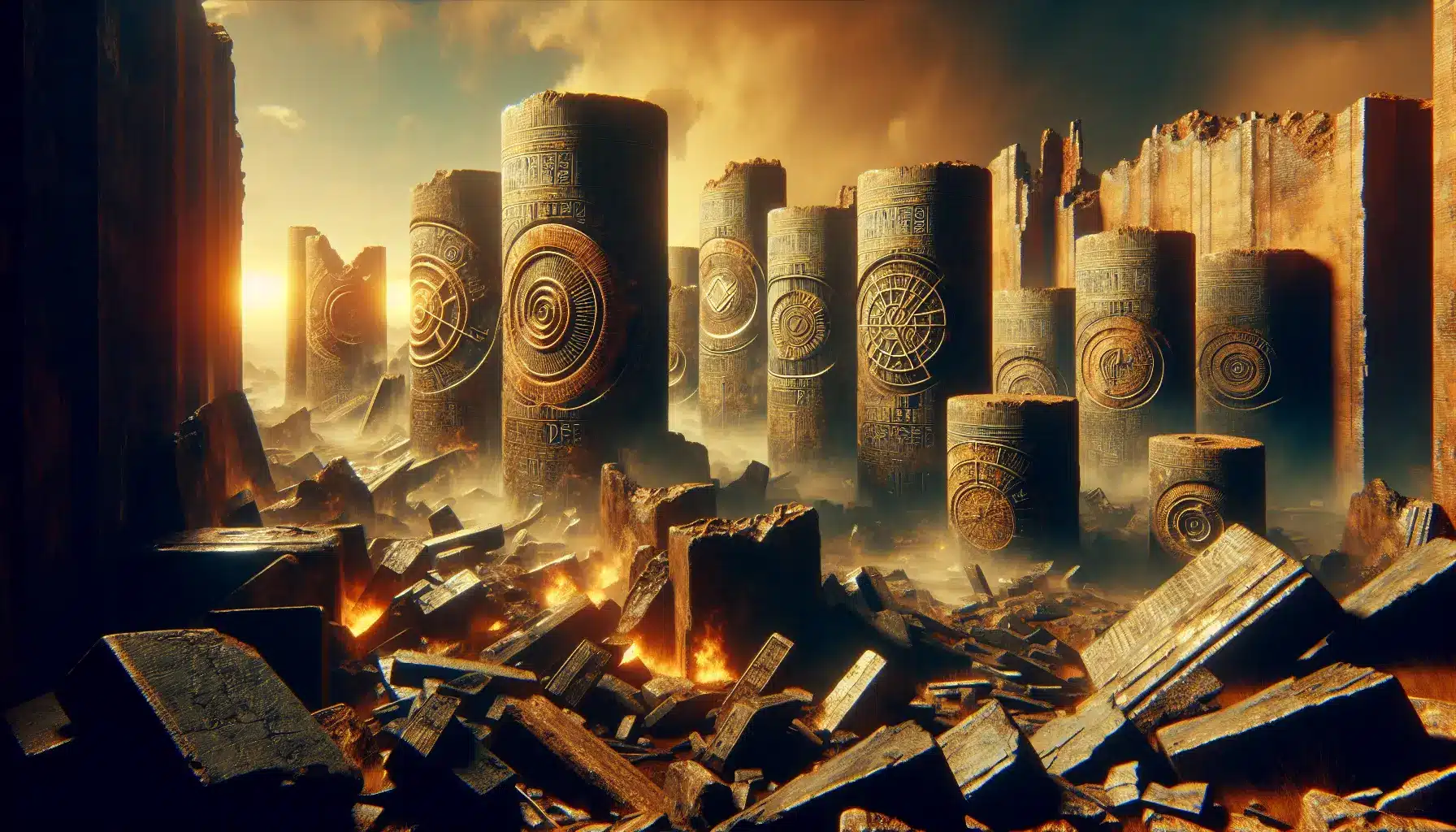
    The Babylonian magical records offer the most comprehensive insight into the magic practiced in the ancient world. These ancient texts, inscribed on bricks and cylinders of stamped clay, reveal the early attempts of civilized man to understand and manipulate the forces around him. This article delves into the fascinating world of Babylonian magic, exploring its rituals, beliefs, and the supernatural entities that populated their world.

    Key Takeaways

    • Babylonian magical records provide a detailed picture of ancient magic.
    • Magic was seen as a precursor to science, with rituals believed to produce consistent results.
    • The Babylonians believed in a multitude of spirits and supernatural beings.
    • Necromancers and priests played a significant role in exorcising these entities.
    • Unofficial practitioners of magic were often viewed with suspicion.

    The Roots of Babylonian Magic

    In the ancient world, magic was deeply intertwined with the early stages of scientific thought. Primitive man believed implicitly in the efficacy of magical rituals. If a ritual could produce a certain effect once, it was believed it could do so again under the right conditions. This belief system provided a sense of certainty similar to that of modern scientific processes.

    The Role of Invocational Magic

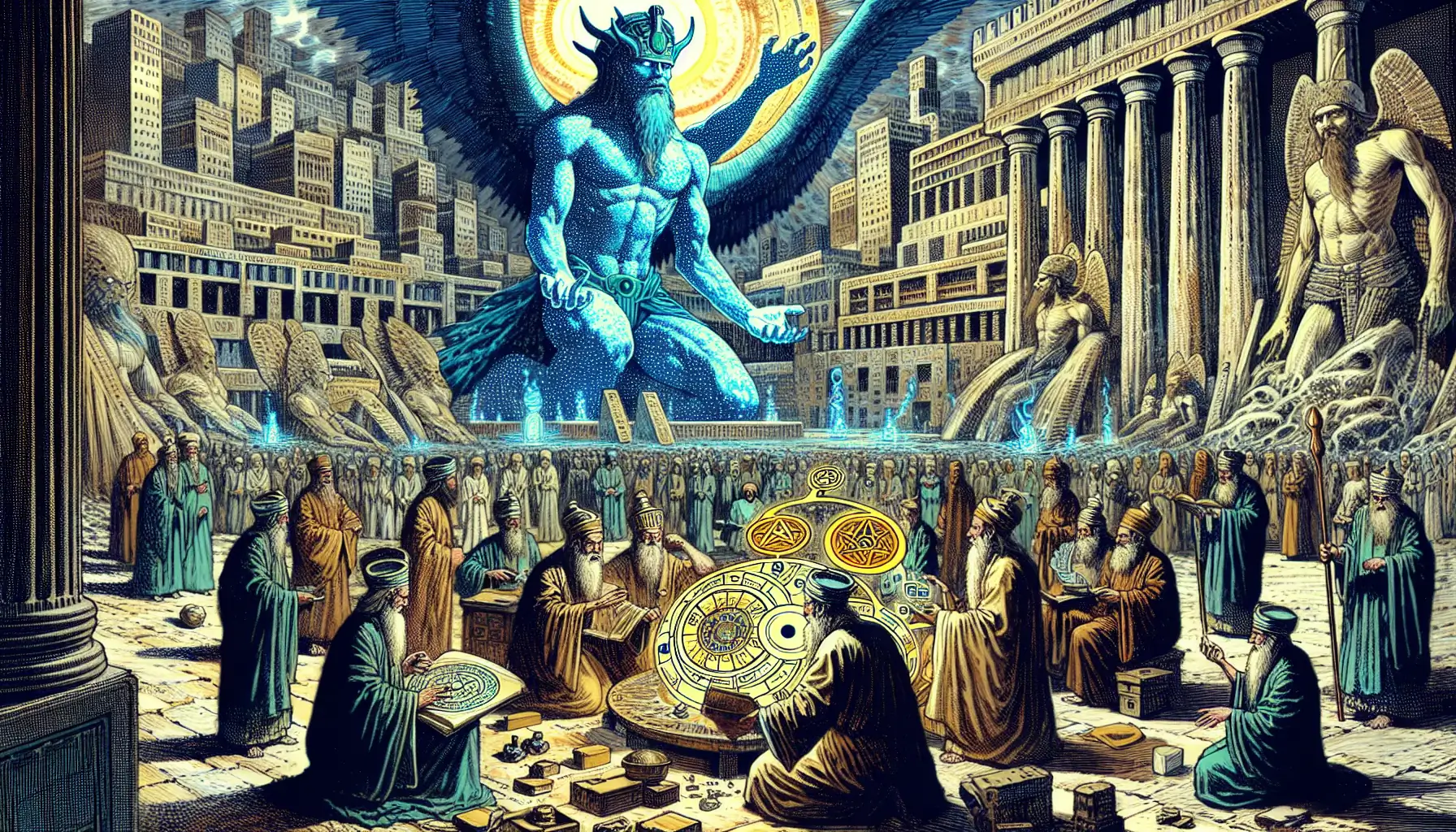
    Invocational magic, where specific spells and rituals were used to invoke supernatural forces, was a cornerstone of Babylonian belief. The Babylonians believed that their mighty sanctuaries and sky-aspiring towers were founded on the power of the spoken spell and reiterated invocation. Thousands of spirits, both grotesque and varied, were thought to haunt the surroundings of these temples.

    The Supernatural Entities of Babylon

    The Babylonian world was teeming with supernatural entities. These included demons with claws and talons, vampires, ghouls, and spirits both blessed and unblessed. The Babylonians believed in a wide array of supernatural beings, such as:

    • Jinn: Spirits that could be either good or evil.
    • Hags: Malevolent female spirits.
    • Lemu: Spirits of the dead who had not been properly buried.
    • Sorrowing Ghosts: Spirits of those who had died in sorrow or without proper rites.

    The Role of Necromancers and Priests

    In such a world, the role of the necromancer and priest was crucial. These individuals were responsible for exorcising or placating the myriad of supernatural beings that plagued the people. The trade of the necromancer flourished exceedingly in these circumstances.

    Suspicion Towards Unofficial Practitioners

    While priests and official necromancers held significant power, unofficial practitioners of magic, such as witches and wizards, were often viewed with suspicion. If someone fell ill with a strange disease, the nearest sorcerer, whether real or imagined, was likely to be blamed and brought to account.

    The Babylonian magical records provide a fascinating glimpse into the early attempts of mankind to understand and control the world around them. Through their rituals and beliefs, we see the roots of both science and religion, intertwined in a complex web of magic and superstition.

  • Unveiling the Mysteries of the Anunaki and Babylonian Healing Rituals

    Unveiling the Mysteries of the Anunaki and Babylonian Healing Rituals

    In ancient Babylon, the Anunaki and their priest-magicians played a crucial role in the spiritual and physical well-being of the people. The esoteric practices of these healers, shrouded in mystery and fear, offer a fascinating glimpse into the past. This article delves into the rituals and beliefs surrounding the Anunaki and Babylonian physicians, revealing a world where magic and medicine intertwined seamlessly.

    Key Takeaways

    • The Anunaki were considered possessing spirits, and their priests performed complex healing rituals.
    • Babylonian physicians used a combination of spells, prayers, and chemical compounds to treat ailments.
    • The fear of witches and demons was pervasive, influencing both medical practices and daily life.

    The Chamber of the Sage

    The chamber of the sage, akin to the position of the Anunaki idols within the home, was likely situated in a secluded nook of the grand temples that resembled cities. Upon entering this dimly lit room, one would be greeted by the pungent smell of chemical odors. Shelves lined the tiled walls, holding numerous jars filled with fearsome compounds used to alleviate the sufferings of Babylonian humanity.

    The a shipu, a shaven and strict figure, would inquire about the visitor’s needs. As Babylonian citizens, we might inform him of the misfortunes brought upon us by a witch. The a shipu, in his role as a physician and exorcist, would examine our feverish and exhausted bodies, prescribing compounds that he mixed with his own hands. This purification process, or basting ritual, was believed to rid us of the possessing spirits.

    The Role of the Anunaki

    The Anunaki were considered possessing spirits, and their priests performed rituals to appease these entities. The purification substance, known as KN melum, was thought to be the radiance of the gods. The a shipu would mix various ingredients in a stone mortar, whispering spells and offering prayers to Ea, the beneficent, and Merodac, the all-powerful, to restore health.

    Merodac, symbolizing death and resurrection, was invoked to bring the dead back to life. The ghost needed a host, and the a shipu promised to visit our dwelling, hoping for a contribution to the house of religion.

    Daily Life and Superstitions

    Leaving the darkened chamber for the bright Babylonian afternoon, one might momentarily forget their fears. However, as night approached, the fear of witches and demons would resurface. Families would crouch in the darkest corners of their clay brick dwellings, fearing the Alo demon or the Latu hag demon. The ghosts of the dead were believed to gibber at the threshold, and even Yi Uni, the Lord of Disease, might glance through a tiny window with ghastly countenance and eager red eyes.

    The pains of rheumatism were attributed to the evil witch, who was thought to be sticking thorns into waxen images made in the sufferer’s shape. This sympathetic magic was believed to cause torment, rather than the more mundane explanation of living near a river swamp.

    The Final Ordeal

    A loud knocking at the door would send tremors of fear through the household. The children would scream, and the adults would brace themselves for the final ordeal. The dread powers of evil were believed to have come to summon them, or perhaps the witch herself had come to wreak fresh vengeance.

    In conclusion, the world of the Anunaki and Babylonian healing rituals was one of deep superstition and fear. The intricate blend of magic and medicine, along with the pervasive belief in witches and demons, shaped the daily lives of the people. Understanding these ancient practices offers a window into the complex and fascinating culture of ancient Babylon.

  • Mystery At The Great Pyramid Complex

    Mystery At The Great Pyramid Complex

    The Nebon Pyramid: An Enigmatic Substructure of the Giza Plateau

    While studying the Giza Plateau, I stumbled upon an unusual and lesser-known structure related to the Great Pyramid of Egypt. This substructure, referred to as the Nebon Pyramid, is cut into the bedrock near the southeastern corner of the Great Pyramid. Despite its obscurity, it has intrigued researchers for years.

    Key Takeaways

    • The Nebon Pyramid is a substructure near the Great Pyramid of Egypt.
    • It was discovered by Dr. Herman Junker and is mentioned in various scholarly works.
    • The structure’s purpose remains a mystery, with theories ranging from an unfinished tomb to a cult satellite pyramid.

    Discovery and Location

    The Nebon Pyramid was discovered by Dr. Herman Junker during his excavations in the Great Pyramid complex’s southern cemetery. It is situated approximately 21.5 meters south of the Great Pyramid’s base and 42 meters from its southeastern corner. The structure begins at the enclosing wall of the pyramid courtyard, opposite the northwest corner of Musta h.

    Cut directly into the Giza bedrock, the Nebon Pyramid features smoothed walls and floors. It consists of a 4.3-meter-long passage that descends at an angle to the south, ending in a small room measuring 1.5 meters by 1.2 meters by 0.8 meters in height. The passage is 0.9 meters wide, with a step formed in the bedrock about 1 meter before the tunnel starts.

    Theories and Speculations

    Despite its discovery, the purpose of the Nebon Pyramid remains a subject of debate among experts. Some researchers believe it could have been intended for a small pyramid, either a queen’s pyramid or a cult satellite pyramid. However, this theory seems unlikely due to the structure’s proximity to the Great Pyramid and the small size of the room at the end of the passageway.

    Another theory suggests that the Nebon Pyramid could be a tomb that predates the Great Pyramid, abandoned when the Great Pyramid project began. However, the interior seems too small for a human burial, although not impossible.

    Comparative Structures

    There are similarities between the Nebon Pyramid and other structures, such as the satellite pyramid of Khafre. A second descending passage was found on the western side of Khafre’s satellite pyramid, leading to a small niche containing a wooden box. This box likely held a dismantled divine booth, thought to have once contained Khafre’s Ka statue.

    This comparison raises the possibility that the Nebon Pyramid passageway was an original feature of Khufu’s complex or added later to store something sacred and important, hidden from grave robbers.

    An Earlier Blueprint?

    Another intriguing possibility is that the Nebon Pyramid substructure relates to an earlier version of the Great Pyramid’s plan. If the original plan was for a smaller pyramid, the Nebon Pyramid passages might have been intended for a cult satellite pyramid. However, the plan changed, and the passages were disregarded and forgotten.

    Conclusion

    The Nebon Pyramid remains an enigma, with no definitive explanation for its purpose. Whether it was intended as a tomb, a cult satellite pyramid, or part of an earlier blueprint, it adds another layer of mystery to the Giza Plateau. As researchers continue to study this obscure feature, we may one day uncover the secrets it holds.

    Thank you for reading this exploration of the Nebon Pyramid. If you enjoyed this article, please subscribe to our channel, like the video, and leave a comment below.

  • The Enigmatic 1979 Time Slip: A Journey Through Time or Just a Strange Hotel?

    The Enigmatic 1979 Time Slip: A Journey Through Time or Just a Strange Hotel?

    Despite appearing relatively straightforward, time is one of the biggest mysteries to scientists today. While we understand some characteristics of it, such as time passing more slowly the stronger the gravity is, the fact is we are still learning much about this phenomenon. Throughout history, there have been numerous stories of people mysteriously traveling through decades or even centuries. Known as Time Slips, these events occur when a person or persons instantaneously travel through time. In this episode, we will examine a fascinating time slip story that occurred in 1979 that has come to be known as The Gisbey-Simpson Time Slip Incident.

    Key Takeaways

    • Time Slips are mysterious events where individuals reportedly travel through time instantaneously.
    • The Gisbey-Simpson Time Slip Incident occurred in 1979 during a trip through France and Spain.
    • The couples experienced an old-fashioned hotel with peculiar characteristics and later found it had vanished.
    • Theories range from actual time travel to simple misunderstandings and even fabrication.

    The Journey Begins

    In the fall of 1979, Jeff and Pauline Simpson, along with Len and Cynthia Gisbey, embarked on a trip traveling through France and Spain. The two married couples arrived in France on October 3, 1979, ready to embark on a two-week vacation. After renting a car, the couples began driving through France. That night, around 9:30 p.m., they decided to start looking for a hotel. Driving on the autoroute in Montélimar Nord, the couples spotted a motel and pulled over. Len went inside and spoke to a hotel attendant who said there was no vacancy but a small hotel down the road should have rooms. The man gave Len directions, and the four were on their way.

    The Mysterious Hotel

    They were directed to go down a desolate side road. As they drove, they soon noticed the road became more narrow and cobbled. The road was eerily quiet, and the group spotted an old circus advertisement. Continuing on, they spotted a long building down the road. The car pulled over on the shoulder on the opposite side of the road and parked. Len, who spoke little French, went inside and discovered the building was actually a restaurant. He still asked if there were any rooms, and luckily, they had a few. The rooms were located over the restaurant.

    Pauline Simpson would later recall how strange it was. She stated, “The sheets were bleached white; they didn’t have pillows, just a round bolster that went right across the top of the bed. There was a dim light in the room and no electrical switches. Even getting up the stairs was weird; they were given candles as it was so dark.” The bathroom was odd as well. It was at the end of a long corridor and huge. It had an antique bath that was sunk into the floor, and the soap was stuck on a metal spike on the wall. There were no glass windows in the rooms, but the windows were covered by wooden shutters. The rooms had no locks on the doors. The hotel was very old-fashioned with no electricity or elevators.

    A Night to Remember

    After dropping off their luggage, the couples ate in the dining room. The women had eggs, and the men ate steak. The silverware was very heavy and looked rustic. In the next room, they spotted more people wearing old-fashioned French clothing. At this point, the couples enjoyed the experience of this odd, old-fashioned hotel and wondered why it wasn’t recommended to them. Being exhausted, the couples went to sleep and didn’t think too much of any of the strange things they saw.

    The Morning After

    As they woke up the next day, the couples noticed a man mopping the floor outside their rooms. While he finished up, they decided to take some photos of the women. Both men took photos with their cameras of the women in front of the wooden shutters. Once the floor dried, they went to eat breakfast. There, the four spotted two police officers come into the dining room. It was odd to the group because they had seen police officers before in other parts of the country, and these men were dressed nothing like them. The group believed this uniform might have been specific to the area. In the dining room, a woman extremely well-dressed approached their table. Her dress reached her ankles, and the woman looked like she had come from a ball. They thought it was very peculiar how dressed up she was.

    As they were getting ready to leave, Len asked the police officers about the best way to get back on the autoroute. The officers were perplexed and didn’t understand Len. They went to settle the bill and were astonished to see they were only being charged 19 francs. Len asked if it was correct, and the attendant assured him that it was. Len paid, and quickly they left the hotel.

    The Search for the Hotel

    The couple left and, two weeks later, after visiting Spain, they backtracked through the country. They decided to look for the cheap hotel once again since they liked it so much. At this point, they believed it was a theme hotel and were attracted to the ultra-cheap prices. The night they looked for it, it was raining outside, and they couldn’t locate it. After some time, they stopped at the big hotel that had told them about it. They asked to speak with the hotel attendant from two weeks ago. However, even after describing him, the hotel staff said no one fitting the description had ever worked there.

    After this, they decided to press on and keep looking for it. However, the group still couldn’t find the hotel. They drove up and down the road and were thoroughly confused. Jeff was driving and believed Len had gotten them lost. However, later they would realize this was impossible as the road only had one way in and one way out. On the road once again, they saw the red wall with posters on it. However, it seemed much different this time. Also, before, many of the trees were small, but now all the trees were much larger. The couple found the spot where they had parked two weeks earlier. Astonishingly, though, the hotel, which was across the street, was no longer there.

    The Unbelievable Discovery

    That night, the four stayed in a different hotel and soon returned to England. Even after not being able to find the hotel, neither couple believed anything supernatural had occurred. That would soon change, though. As soon as they got back, they developed the camera film. Shockingly, none of the pictures from the hotel were there. It was as if they had imagined it. On Len’s camera, he remembered taking three photos at the hotel. He switched film as the group went into Spain. That roll, though, had nothing from the hotel. He got all the numbered prints, and both he and the man who developed the photos couldn’t find them. There were no blanks, and they double-checked all the numbers. Jeff’s camera had similar strange results. He got 12 photos from his roll but none from the hotel. Both couples became scared at this point but eventually, years later, decided to tell their story to a local newspaper. Once published, the story exploded in popularity and raised many questions and theories as to what happened to the couples.

    Theories and Speculations

    The first theory says the couples experienced a time slip. As mentioned, time is not well understood, and many speculate that somehow people step through portals and instantaneously travel forward or back in time. There are certainly other strange reports of time slips occurring, with many questions around how they are possible. Some speculate that intense gravity can warp the space-time continuum and open a hole where a person enters. This raises questions, though, around how someone is able to return to the exact same time and place. Modern science acknowledges that time can move differently. For example, we know astronauts in space experience time slower than individuals on the ground. Much of what happened in this case seems to support this unbelievable theory.

    The second theory about what happened to these couples states the events were explainable. Proponents of the theory state they didn’t time travel but simply went to an old-fashioned hotel. Then, in a foreign land, the couples got lost driving and had issues communicating. The hotel wasn’t from the past but a rural hotel that lacked technology and even electricity. This seems like the most logical theory on the surface. However, it really doesn’t answer the question of how they went back to the shoulder and the hotel across the street had vanished completely. It could be the case they went to a different spot, but then again, only two weeks had passed, and surely one of them would have noticed they were in a different location.

    Many who have critiqued this time slip theory have pointed out several inconsistencies. One is around the money paid to the hotel. The hotel didn’t question the coinage even though Len paid with modern money. This is a valid point but depends on how Len paid. Did Len pay with one-franc coins or a higher denomination? One-franc coins used in 1979 had the same design as those used from 1898 to 1920. They were a little larger and made of nickel instead of silver but had the same color. Nevertheless, critics point out people in the hotel would have noticed their automobile. Still, they could have just assumed the auto was an English car and one they weren’t familiar with. It’s important to point out automobiles were pretty rare in rural France then, and models varied considerably in design and appearance.

    One other critique from skeptics is around the clothes. With regard to clothes, it’s reasonable to assume that the locals would never have met British people, so they might just think that their 1970s clothes were just strange.

    One final theory states that the couple actually created the entire story. It seems unlikely, though, that two couples would do this and be able to keep their stories in sync. Years later, the four went back and tried to find the mysterious hotel again. They contacted locals in the area in an effort to help them. Once more, though, they found nothing adjacent to the area they had parked years earlier.

  • Yellowstone Geyser Eruption: A Sudden Spectacle

    Yellowstone Geyser Eruption: A Sudden Spectacle

    A sudden geyser eruption at Yellowstone’s Biscuit Basin sent boiling water and rocks raining down, damaging a pedestrian boardwalk. The event occurred around 10:00 a.m. local time, but fortunately, no one was hurt. The area is now temporarily closed for investigation.

    Key Takeaways

    • A geyser at Yellowstone’s Biscuit Basin erupted unexpectedly.
    • Boiling water and rocks damaged a pedestrian boardwalk.
    • No injuries were reported.
    • The area is temporarily closed for investigation.

    The Eruption Event

    The unexpected eruption took place at Yellowstone’s Biscuit Basin geyser around 10:00 a.m. local time. Visitors on the boardwalk witnessed the sudden explosion of boiling water and rocks. Despite the dramatic scene, no injuries were reported, which is a relief given the potential danger of such an event.

    Immediate Aftermath

    The eruption caused significant damage to a portion of the pedestrian boardwalk. The US Geological Survey (USGS) has since closed the Biscuit Basin parking lot and the boardwalks temporarily. This closure is necessary to ensure the safety of visitors while geologists investigate the cause of the eruption.

    Investigation and Safety Measures

    Geologists are currently investigating the cause of the eruption. According to the scientist in charge at the Yellowstone Volcano Observatory, this event is not connected to volcanic activity, which is often associated with Yellowstone. The park is known for its geothermal features, and such eruptions, while rare, are part of the natural dynamics of the area.

    Yellowstone’s Geothermal Activity

    Yellowstone National Park is a hotspot for geothermal activity, featuring some of the most remarkable natural phenomena in the United States. The park’s geothermal features include geysers, hot springs, mud pots, and fumaroles. These features are a result of the volcanic activity beneath the park, making it a unique and fascinating destination for visitors.

    Conclusion

    The sudden eruption at Biscuit Basin serves as a reminder of the dynamic and sometimes unpredictable nature of Yellowstone’s geothermal features. While the event caused damage to the boardwalk, the lack of injuries is a fortunate outcome. As investigations continue, the temporary closure of the area ensures visitor safety and allows for a thorough understanding of the event.

  • The Smithsonian’s Hidden Secrets: Giants, Crystal Skulls, and Ancient Mysteries

    The Smithsonian’s Hidden Secrets: Giants, Crystal Skulls, and Ancient Mysteries

    The Smithsonian Institution, established in 1846, is a vast network of museums and research centers funded by the U.S. government. Known as the nation’s attic, it houses over 154 million historically valuable items. With an annual budget of around $1.2 billion, the Smithsonian has the resources to potentially hide significant discoveries. This article delves into some of the most intriguing allegations and mysteries surrounding the institution, from ancient giants to crystal skulls and beyond.

    Key Takeaways

    • The Smithsonian has been accused of hiding evidence of ancient giants and other historical anomalies.
    • The institution’s involvement in controversial discoveries has been both elusive and condemning.
    • Modern technology and increased public interest make it harder to cover up such findings today.

    The Smithsonian’s Alleged Hidden Agenda

    The Smithsonian Institution, often referred to as the nation’s attic, is a colossal repository of American history and culture. With 19 museums, nine research centers, and a zoo, it holds over 154 million items. Funded primarily by federal appropriations, the institution has the financial clout to potentially hide significant discoveries. Over the years, there have been numerous reports and allegations suggesting that the Smithsonian has been involved in covering up controversial historical findings. These reports, although less frequent in mainstream media today, still exist in newspaper archives and other sources.

    The Case of the Ancient Giants

    One of the most persistent allegations against the Smithsonian is its supposed cover-up of the remains of ancient giants. In 2014, a Freedom of Information Act claim suggested that the Smithsonian had hidden the remains of thousands of giants. Although this claim was debunked, it brought significant attention to the topic. Richard J. Dewhurst’s book, “The Ancient Giants Who Ruled America,” is a comprehensive resource on this subject. The book details 400 years of excavations, newspaper articles, and first-person accounts, revealing that North America was once ruled by an advanced race of giants. Dewhurst argues that the Smithsonian has been actively suppressing this evidence for nearly 150 years.

    The Crystal Skulls Mystery

    The crystal skulls are another set of artifacts shrouded in mystery and controversy. These skulls are believed by some to possess mystical powers and even possible alien origins. Jane McLaren Walsh, an anthropologist at the Smithsonian, has examined numerous crystal skulls and is a leading skeptic on the subject. One of the most famous skulls is the Mitchell-Hedges skull, which was initially claimed to have been found in a ruined temple in Belize. However, investigations revealed that it was purchased at an auction in London in 1943. Despite this, Walsh’s examination confirmed it as an authentic pre-Columbian artifact, made using unknown technology.

    Modern Discoveries and Cover-Ups

    In recent years, the power of modern technology and increased public interest have made it more challenging to cover up significant discoveries. One notable example is the supposed tomb of Osiris in Egypt. When media was initially banned from the site, it led to widespread speculation. Upon their return, the tomb was found empty, allegedly looted. This incident highlights the difficulties in maintaining secrecy in the age of instant communication and digital preservation.

    Theories and Speculations

    Theories about ancient giants and other anomalies often intersect with other historical mysteries. For instance, the enormous size of certain ancient tombs and statues could be explained by the existence of giants. William R. Corliss, in his book “Strange Artifacts,” mentions various accounts of gigantic statues and structures that suggest a past inhabited by giants. Pliny the Elder, a Roman author and naturalist, also wrote about the discovery of a giant’s remains, further fueling these theories.

    Conclusion

    The Smithsonian Institution, with its vast resources and historical significance, remains a focal point for numerous allegations and mysteries. From ancient giants to crystal skulls, the institution’s involvement in controversial discoveries continues to intrigue and perplex. While some claims have been debunked, others remain subjects of intense speculation and research. As modern technology advances, the ability to uncover and share hidden truths becomes increasingly possible, challenging the Smithsonian’s role as the guardian of America’s historical secrets.

  • The Hidden Dangers Beneath: Hutchinson’s Explosive Mystery

    The Hidden Dangers Beneath: Hutchinson’s Explosive Mystery

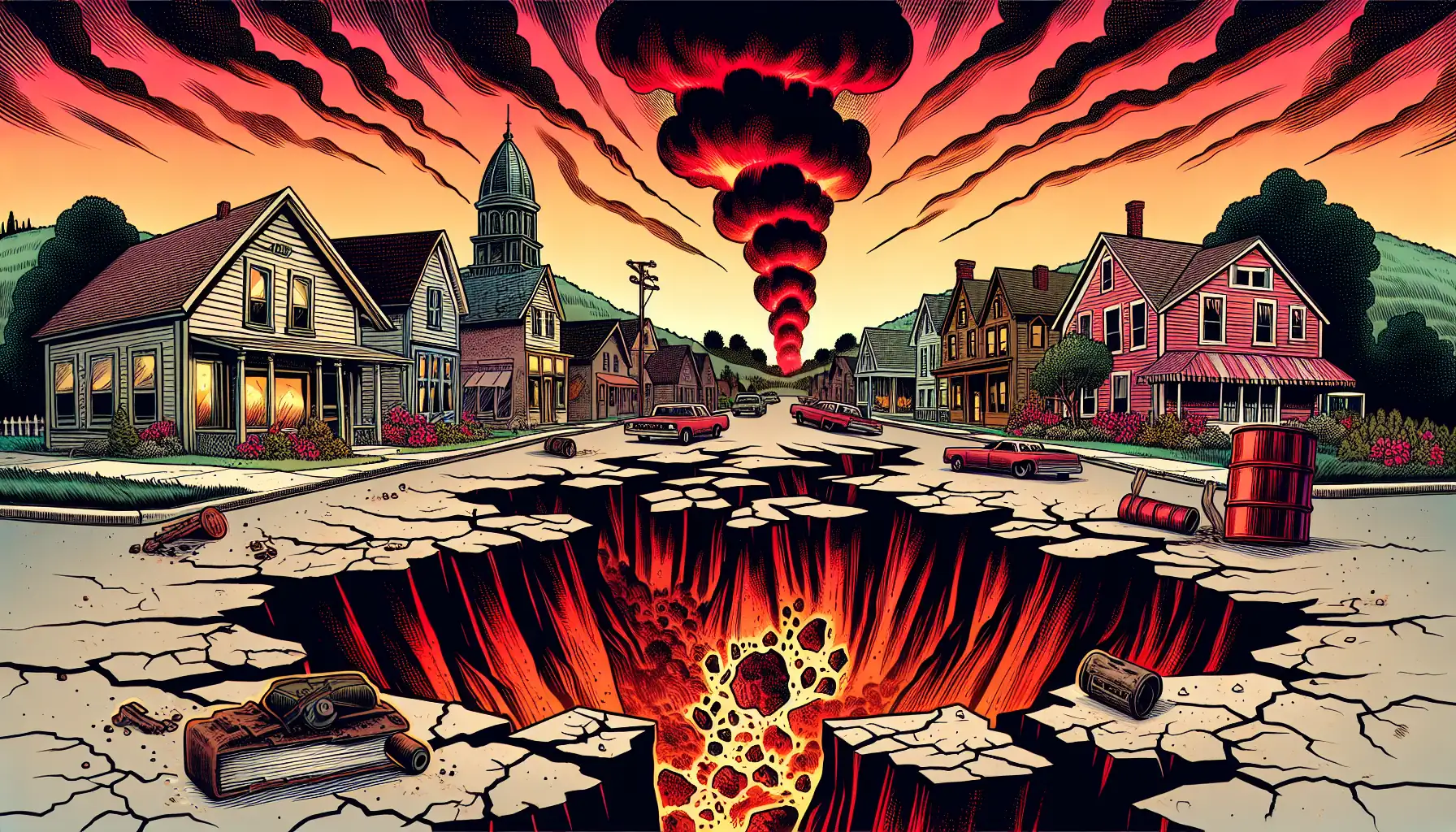
    As the clock strikes 10:45 a.m., a typical morning shatters into pandemonium. A violent explosion tears through a downtown shop, its force so powerful that it destroys about half a block of businesses, shattering glass and debris on unsuspecting pedestrians. But this is only the beginning. Just moments later, a second blast erupts at Woody’s Appliance Store, not far from the original explosion. Flames and fear spread across the small town, making everyone, including NASA, curious to solve the mystery of the explosions’ cause.

    Key Takeaways

    • A series of explosions rocked Hutchinson, Kansas, causing widespread panic and destruction.
    • The explosions were traced back to a leaking natural gas storage facility.
    • Emergency teams and experts, including NASA, were called in to investigate and contain the situation.
    • The disaster led to significant changes in safety regulations and long-term health risks for residents.

    The Initial Explosion

    Hutchinson, Kansas, a town nestled along the Arkansas River, is known as Salt City due to its historic salt mines. With a population of just over 40,000, Hutch thrives on rich natural resources, including hard wheat and oil. But beneath its charm lurks a hidden danger. On January 17th, a typical day like any other, people went about their morning routines until firefighters received a call about a devastating explosion downtown. The cause was unknown.

    As firefighters rushed to the scene, they were greeted by scenes of destruction. Fires raged, debris scattered everywhere, and panicked people ran for safety. Glass from shattered shopfront windows spread as far as the eye could see. One witness recalled, “The last thing I remember was like a rumble, like thunder, and I looked up and the ceiling tiles were all falling down.” Smoke and flames poured from the back of the decor shop building, darkening the sky with billowing clouds.

    The Second Blast and Rising Panic

    Firefighters initially believed a broken gas line was the cause and promptly shut off the supply, but the fire stubbornly raged on. Emergency personnel realized that the gas source wasn’t local and, more worryingly, they had no control over it. Even though there was nothing but cinders left from the explosion site, firefighters had to admit defeat. Fortunately, the injuries were minor, but the property damage was extensive.

    As dusk set in, something even stranger happened. Geysers of natural gas and saltwater began erupting in various locations around Hutchinson, some as high as 30 feet. They were primarily on the east side of town, a few miles from the initial explosion. Two of these geysers were now on fire. Panic spread as city officials scrambled for answers.

    Tracing the Origins

    Contractors soon figured out the origins of these dangerous geysers, tracing them back to Hutchinson’s industrial past. In the 1800s, prospectors discovered vast salt deposits underground, paving the way for the region’s salt industry. Miners used solution mining to extract the salt by drilling deep wells. They then injected water into these wells to dissolve the salt. That brine solution was then pumped back to the surface and refined. As mining expanded, it created many large underground cavities. But as time passed and mining operations moved or ceased, many of these wells were simply abandoned.

    Since then, the hollowed-out salt formations have become some of the nation’s most secure storage facilities. It’s where Hollywood keeps its historic artifacts like the original films of Star Wars and The Wizard of Oz. But besides memorabilia, they are also storing something much more threatening: billions of cubic feet of natural gas.

    The Mobile Home Park Explosion

    As the city scrambled for answers on how to fight the gas leaks, disaster struck again the very next day. This time, an explosion rocked a mobile home park on the east side of town. The odorless gas had been seeping into one of the trailers, and the skirting meant to insulate the home had inadvertently trapped it inside. When someone started cooking, the gas ignited, resulting in a devastating blast that claimed the lives of an elderly couple.

    By evening, the town was plunged into full-blown crisis mode. It felt as though the very Earth had turned against Hutchinson, leaving everyone in a state of dread, not knowing where or when the next explosion might happen. Emergency teams evacuated nearly 200 homes and 40 businesses in the affected areas. Residents left their homes with little more than the clothes on their backs, unsure when or if they would return. But even fleeing was complicated. The explosion also created sinkholes throughout the area, and rail traffic was brought to a halt to avoid stirring up the gas.

    Identifying the Source

    Every moment felt like a ticking time bomb, especially to officials attempting to identify the source of the gas leaks. Investigators soon zeroed in on an area 7 miles northwest of Hutchinson: the Yaggy storage field. It was originally opened in the 1980s to store propane gas in deep steel-lined wells. When financial issues led to its closure, the wells were partially sealed with concrete to prevent leaks. Then, in the early ’90s, the Kansas Gas Service took over the facility. They reopened the caverns and converted them from storing propane to storing natural gas. Since then, the facility has grown substantially; it could hold enough natural gas to heat 50,000 homes a year.

    But this sophisticated operation came with a risk. On the day of the disaster, roughly 15 minutes after the first explosion happened, technicians at Yaggy noticed a dramatic drop in pressure in one of the storage wells. As they looked into the pressure records, they made a concerning discovery: the well had been leaking on a low level for at least the past three days. When refilling the cavern on January 14th, technicians had noticed a minor pressure drop but treated it as just a routine issue with the gas cooling and condensing. So they kept pumping in more gas—about 80 million cubic feet over the next two days. That’s equal to the capacity of about 12 large gas carriers.

    The Investigation and Response

    A day after the explosions, the owners, KGas, told city officials about the leak, realizing it coincided with the timing of the explosions and fires in Hutchinson. In the immediate response, the company deployed over 100 workers to search the city for gas leaks. They went door-to-door, street by street, using handheld and truck-mounted sniffer devices to detect gas traces. Meanwhile, excavations in the basement ruins at Woody’s Appliance Shop uncovered a forgotten brine well. This well had originally been drilled for a hotel spa to pump out hot, mineral-rich saltwater known for its therapeutic benefits.

    As the crisis unfolded, the Kansas Geological Survey was called in to assist with the investigation. They immediately started taking soil samples, conducting surveys, and measuring gas emissions. Their main goal was to find the source of the leak and understand how the gas traveled so far. It took them back to the Yaggy storage field. They used tools like thermal imaging to detect heat from escaping gas and ground-penetrating radar to map underground features. Also known as Thumper trucks, vibrating plates sent seismic waves into the ground, creating images of the rocks below, similar to a medical ultrasound. The method helped reveal possible paths for gas migration.

    NASA’s Involvement

    Recognizing the complexity of the situation, NASA was called in to help. Using its thermal imaging capabilities, NASA conducted aerial surveys over Hutchinson and the surrounding regions. The high-resolution images showed hotspots as well as gas leaks that could not be seen from the ground. But NASA didn’t stop there. It also used radar from planes and satellites to monitor ground movement and detect sinkholes. Sensors were also deployed to locate trace amounts of methane.

    The two agencies’ findings were both enlightening and alarming. Gas was moving through underground layers, old salt mines, and wells. It was this network of pathways to the surface that made the leaks so hard to contain. The best solution was found to be vent wells to provide a controlled escape route for the gas. So, in a race against time, workers drilled a series of wells at strategic points along the gas leak. They then controlled the gas at the surface by burning it off. This was much safer than letting the gas accumulate and risk further explosions.

    The Aftermath and Lessons Learned

    As the investigation unfolded, it became clear how the gas could escape in the first place. When KGas took over the Yaggy facility, they had to reopen the caverns, which meant drilling out the concrete plugs that sealed the wells. During that process, the drill bit is believed to have hit a piece of metal, damaging the casing of well S1. When inspecting a video of the cavern’s inside, a geological consultant described it as looking like a kitchen knife cutting into a can. The escaping pressurized gas made its way to higher geological layers, where it spread in all directions and seeped into abandoned brine wells. That would explain the saltwater gas geysers around the city.

    It took more than a month for flares to burn off the estimated 143 million cubic feet of gas that escaped from storage. The explosions contaminated soil and groundwater, worsened by firefighting chemicals, and caused long-term health risks. Air pollution from burning gas released methane and smoke, affecting residents’ health for weeks. In response, safety measures were re-evaluated. Regular testing of water, soil, and air was also implemented for the affected residents.

    For the residents of Hutchinson, their battles were just beginning. The initial explosion had gutted two businesses and damaged 26 others. Several major lawsuits were filed against KGas’s parent, Oneok Incorporated, and its subsidiaries. The owners of the gutted businesses received $5.25 million. Then, $5 million was awarded to residents in a class-action lawsuit for damages, and the family of the couple who died at the mobile park also settled a multi-million dollar lawsuit out of court.

    Poor oversight and maintenance set the stage for disaster. Technicians noticed pressure drops before the explosions but didn’t investigate. This neglect, along with regulatory failures by the Kansas Department of Health and Environment, led to the catastrophe. In response, lawmakers pushed for stricter regulations on underground gas storage facilities.

    For the residents of Hutchinson, the road to recovery was long and tough. The downtown businesses were never rebuilt, the mobile home park was closed, and the Yaggy field was shut down, but not before drawing down all the residual gas still stored. The 2001 explosions in Hutchinson changed the town’s landscape forever, showing that sometimes the greatest threats are the ones we can’t see.

  • The Sun’s Magnetic Field Reversal: What It Means for Earth

    The Sun’s Magnetic Field Reversal: What It Means for Earth

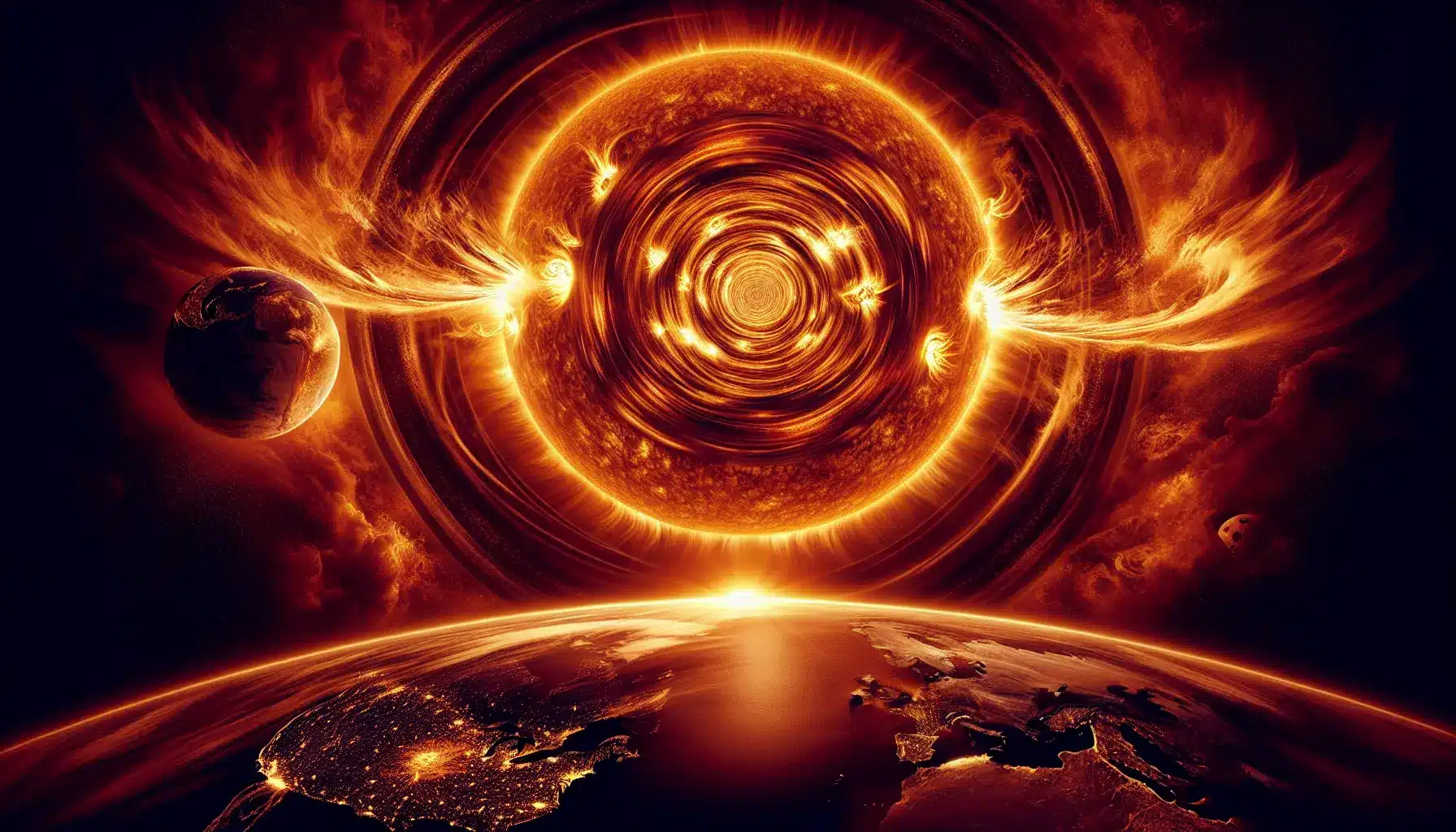
    The sun has been very active lately and is about to undergo a critical and fascinating change: the reversal of its magnetic field. This phenomenon occurs roughly every 11 years, marking the midpoint of the solar cycle, and it has far-reaching implications for us here on Earth. In fact, it’s possible that any day now, the sun could pose a serious risk that could result in complete chaos and disaster for everyone on the planet.

    As you’re about to discover, the sun’s magnetic field is generated by the movement of electrically charged gases in its interior, a process known as the solar dynamo. Over time, this magnetic field becomes increasingly complex and twisted due to the sun’s rotation and convective motions. Eventually, this process leads to a complete reversal of the magnetic polarity: the north magnetic pole becomes the south magnetic pole and vice versa.

    So let’s break down the whole process and get a closer look at the sun. The sun is composed primarily of hydrogen and helium in the form of plasma, a state of matter where electrons are not bound to atoms, resulting in a mixture of free electrons and ions. The sun’s interior is divided into several layers, with the core at the center surrounded by the radiative zone and the convective zone. The core is the sun’s innermost region where nuclear fusion occurs, converting hydrogen into helium and releasing vast amounts of energy. Above the core lies the radiative zone, where energy is transported outward through radiation. In this region, energy moves slowly outward as photons are repeatedly absorbed and reemitted by the solar plasma.

    The outermost layer of the sun’s interior is the convective zone, where energy is transported by convection. Hot plasma rises towards the surface, cools, and then sinks back down, creating convective currents. The solar dynamo mechanism operates primarily in the convective zone and the tachocline, a thin layer that lies between the radiative zone and the convective zone. The tachocline is crucial because it’s where the sun’s differential rotation and shear flows play a significant role in generating the magnetic field.

    Now here’s something interesting that you might not have known: the sun does not rotate as a solid body. Instead, different parts of the sun rotate at different rates. The equator rotates faster than the poles, a phenomenon known as differential rotation. This differential rotation stretches and twists the magnetic field lines, amplifying the magnetic field.

    The solar cycle is an approximately 11-year cycle during which the sun’s magnetic field goes through a series of changes, culminating in a reversal of its polarity. This cycle is driven by the solar dynamo and involves several stages. At the beginning of the solar cycle, the sun is in a state of solar minimum, characterized by a low number of sunspots and minimal solar activity. The magnetic field is relatively simple and bipolar, with a clear north and south magnetic pole.

    As the cycle progresses, the number of sunspots increases. Sunspots are regions of intense magnetic activity and are associated with the emergence of magnetic flux from the sun’s interior. These sunspots appear in pairs with opposite magnetic polarity and migrate towards the equator over time. Around the midpoint of the solar cycle, the sun reaches solar maximum, a period of peak activity with the highest number of sunspots, solar flares, and coronal mass ejections (CMEs). The magnetic field becomes highly complex and tangled due to the continuous twisting and shearing by differential rotation and convection.

    As solar maximum wanes, the magnetic field begins to reorganize itself. The twisted and tangled magnetic field lines reconnect, and the global magnetic field gradually reverses its polarity. The north magnetic pole becomes the south magnetic pole and vice versa. This process is facilitated by the migration and cancellation of opposite magnetic flux regions. After the polarity reversal, the sun enters a period of declining activity, leading back to solar minimum. The magnetic field simplifies again, and the cycle is ready to start anew.

    Currently, we’re in the solar maximum stage, and the sun’s magnetic field is going to flip. During this stage, we can expect to see some incredible activity from the sun that could be as deadly as it is fascinating. However, the sun’s magnetic field reversal is not a sudden flip but rather a gradual process. As the solar cycle progresses, the sun’s magnetic field undergoes a series of changes. When the magnetic field is at its most twisted and tangled state, it reaches a tipping point and begins to reorganize itself, resulting in a flip.

    So do we know when the sun’s magnetic field is about to reverse? Scientists monitor the sun’s magnetic activity using a variety of tools and techniques. Observatories equipped with powerful telescopes, both on Earth and in space, provide detailed images of the sun’s surface and its sunspots. Instruments like the Solar and Heliospheric Observatory and the Solar Dynamics Observatory measure the sun’s magnetic field and track changes over time.

    One key indicator of an impending magnetic reversal is the behavior of sunspots. During the solar maximum, sunspots appear more frequently and are more pronounced. As these sunspots migrate towards the sun’s equator, they signal that the magnetic field is becoming more unstable and is preparing to flip.

    While we’re on the topic, let’s dive a little deeper into sunspots. Sunspots form when the sun’s magnetic field lines become twisted and tangled due to differential rotation. Since the sun is a giant ball of gas and plasma, the equator of the sun rotates faster than its poles, as we previously explained, and causes the magnetic lines to stretch and warp. When these lines loop above the sun’s surface, they inhibit the convective flow of hot plasma from the sun’s interior. This results in the cooler, darker patches that you see in sunspot images. They kind of look like big holes in the sun.

    Sunspots are not just fascinating solar features; they can sometimes produce very powerful solar flares and coronal mass ejections. These phenomena release vast amounts of energy and charged particles into space. When directed towards Earth, they can interfere with satellite communications, disrupt power grids, and pose risks to astronauts in space. Additionally, the increased solar activity can enhance the auroras but also increase the radiation levels in the Earth’s upper atmosphere.

    So while we’re on the subject, let’s dive a little deeper into the difference between solar flares and coronal mass ejections. While solar flares and CMEs are both powerful bursts of energy from the sun, it’s important to understand that they differ significantly. Solar flares are sudden, intense bursts of radiation caused by the release of magnetic energy associated with sunspots. They emit a lot of energy and light, often in the form of X-rays and ultraviolet radiation. Think of them as a flash of bright light and heat on the sun’s surface, similar to a huge explosion.

    On the other hand, CMEs are massive ejections of solar wind and magnetic fields from the solar corona. Think of them as giant bubbles of gas and magnetic fields that get hurled into space. When a coronal mass ejection occurs, it sends billions of tons of solar particles into space at very high speeds.

    That said, you can see that solar flares and CMEs are related, but they’re not the same. A solar flare can happen independently, but sometimes a particularly powerful solar flare can be accompanied by a CME. So while a solar flare doesn’t always cause a CME, they can be linked. When it comes to danger, it depends on what we’re talking about. Solar flares can disrupt radio communications, navigation signals, and pose a serious risk to astronauts in space due to the intense radiation. CMEs, however, can have a more widespread effect. They can cause geomagnetic storms that disrupt power grids, satellite operation, and those beautiful auroras can increase the radiation in the Earth’s atmosphere. So while solar flares are intense and potentially harmful, CMEs tend to be more dangerous on a broader scale because of their ability to affect Earth’s magnetic field and, in turn, become a serious threat to Earth’s technology and infrastructure.

    Something else to consider is that during periods of high solar activity, the amount of cosmic radiation reaching Earth also increases. Satellites and other spacecraft are particularly vulnerable to increased solar activity. The charged particles from the sun can cause damage to electronic components, interfere with communication signals, and even alter satellite orbits.

    But aside from causing damage to technology and infrastructure, what else can happen to the planet? While the sun’s magnetic field reversal does not directly affect Earth’s climate, the associated changes in solar activity can have an impact. Some studies suggest that variations in solar radiation can influence weather patterns and climate dynamics. For example, increased solar activity can lead to slight warming of the Earth’s atmosphere, which could worsen existing climate change trends.

    It could be said that auroras are probably the only positive thing we experience here on Earth, and one of the most spectacular effects of increased solar activity is the intensification of these ghostly lights. These natural light displays, known as the northern and southern lights, occur when charged particles from the sun interact with Earth’s magnetic field and atmosphere. We hear a lot about the northern lights, but these lights can also be seen in places around the South Pole as well. During periods of high solar activity, auroras become more frequent and can be seen at lower latitudes, providing breathtaking night sky shows.

    But aside from

    the beautiful auroras, there are more negative things about the sun’s magnetic reversal that could occur, and if we’re not prepared, something might happen resulting in chaos around the globe. One of the most significant risks associated with a magnetic field reversal is the increased likelihood of geomagnetic storms. These storms occur when solar wind filled with charged particles interacts with Earth’s magnetic field. In extreme cases, they can cause widespread blackouts and damage to infrastructure. One such event has happened before.

    On the morning of September 1, 1859, astronomer Richard Carrington was observing the sun through his telescope as he had done countless times before. However, what he witnessed on this particular day would go down in history as the most significant solar storm ever recorded. At 11:18 a.m., Carrington observed a brilliant flash of white light emanating from a cluster of sunspots. This event, now known as the Carrington Event, marked the beginning of the largest geomagnetic storm ever documented.

    The white light Carrington observed was a huge solar flare, an intense burst of radiation resulting from the release of magnetic energy stored in the sun’s atmosphere. This flare was so powerful that it unleashed a massive coronal mass ejection directly towards Earth, traveling at an astonishing speed of over 4 million mph. The CME reached Earth in just 17.6 hours, a remarkably short time considering the sun is 93 million miles away from us. When the CME collided with Earth’s magnetosphere, it triggered a geomagnetic storm of unprecedented intensity. The impact was immediate and far-reaching, disrupting the planet’s magnetic field and inducing currents in the ground and in telegraph lines.

    Telegraph systems, which were the backbone of global communication at the time, experienced severe malfunctions. Sparks flew from telegraph machines, operators received electric shocks, and some telegraph stations even caught fire. In some cases, the induced currents were so strong that telegraph operators were able to send and receive messages with their telegraph keys even after disconnecting the batteries.

    One of the most striking and memorable results of the Carrington Event was the spectacular display of auroras. During the Carrington Event, the auroras were so bright and widespread that they were visible far beyond the usual polar regions. People as far south as the Caribbean, Mexico, and Hawaii reported seeing the skies light up with vivid colors. The auroras were so intense that they illuminated the night sky to the point where people in the northeastern United States could read newspapers by their light. In the Rocky Mountains, gold miners were reportedly woken up by their brightness and, thinking it was morning, began preparing breakfast. People described the sky as having glowing red, green, and purple curtains of light dancing and shimmering across the horizon.

    Now just imagine if a solar storm of the magnitude of the Carrington Event were to hit Earth today. The consequences would be nothing short of catastrophic. The most immediate effect would be on our power grids. The intense geomagnetic currents from such a solar storm could overload transformers and critical infrastructure, causing massive and prolonged blackouts. Entire cities could be plunged into darkness for days, weeks, or even months. Imagine the chaos of losing power on such a scale: hospitals, homes, and businesses all suddenly going dark.

    In a world where constant connectivity is a given, the disruption of communication systems would be devastating. High-frequency radio communications, crucial for aviation and emergency services, would be severely impacted. Internet and cellular networks would go down, isolating us from instant communication and the global information network we rely on daily. The silence of these networks would create confusion and hinder our ability to coordinate responses to the crisis.

    Satellites orbiting Earth would be at huge risk. Increased radiation levels and energetic particles could damage their electronic components, degrade solar panels, and disrupt critical communication and navigation signals. GPS systems, which we depend on for everything from aviation to personal navigation, could fail, leading to widespread disorientation. The potential loss of weather satellites would leave us blind to impending natural disasters.

    With GPS systems compromised, navigation would become a perilous endeavor. Flights would be grounded or rerouted, maritime navigation would face increased risks of collisions and accidents, and everyday activities that depend on GPS would be thrown into disarray. The reliability of our transportation networks, both on land and at sea, would be severely undermined.

    The increased radiation from such a solar storm would pose a direct threat to public health, particularly for those on high-altitude flights near the poles. Passengers and crew could be exposed to harmful radiation levels, necessitating emergency rerouting of flights. Emergency services, already strained by power and communication outages, would struggle to respond effectively to the growing crisis, impacting everything from medical care to disaster response.

    The economic fallout from such an event would be staggering. Power outages, communication disruptions, and damage to infrastructure would lead to significant financial losses across multiple sectors. The social fabric could be strained as access to essential services like banking, fuel, and food supplies becomes limited, leading to shortages, price hikes, and potential civil unrest.

    And now that you’ve seen what could happen, the scariest thing is that we might have recently been spared such an event. On May 10, 2024, a sunspot named AR 3664 appeared on the sun. Impressively large and visually comparable to the sunspot observed during the Carrington Event of 1859, AR 3664 spanned nearly 125,000 miles across, which is about 15 times the width of Earth. This makes it similar in size to the Carrington sunspot. While the size of AR 3664 brought concerns about a potential repeat of the Carrington Event, it appears that we may have avoided such a catastrophic outcome. Despite AR 3664’s size and its production of powerful solar flares and CMEs, the resulting solar storms have not matched the severity of the Carrington Event’s impacts on Earth’s technology and infrastructure.

    But that doesn’t mean it can’t happen. Given the potential risks and benefits associated with the sun’s magnetic field reversal, it’s essential to be prepared. Governments, space agencies, and private companies are actively working to mitigate the negative impacts that such an event would cause. That said, it would also be good for people to be personally prepared with emergency supplies. So to all our viewers, make sure you’re prepared for the worst. It never hurts to be ready just in case.

    That said, it’s all the time we have for now. We hope you enjoyed the video. If you did, click the like button to show your appreciation. It really helps us so we can create more videos for you. And be sure to subscribe to stay up to date on all the amazing things happening on Earth and in the universe. Thanks for watching.
  • Pompeii’s Double Calamity: New Research Unveils Earthquake Devastation

    Pompeii’s Double Calamity: New Research Unveils Earthquake Devastation

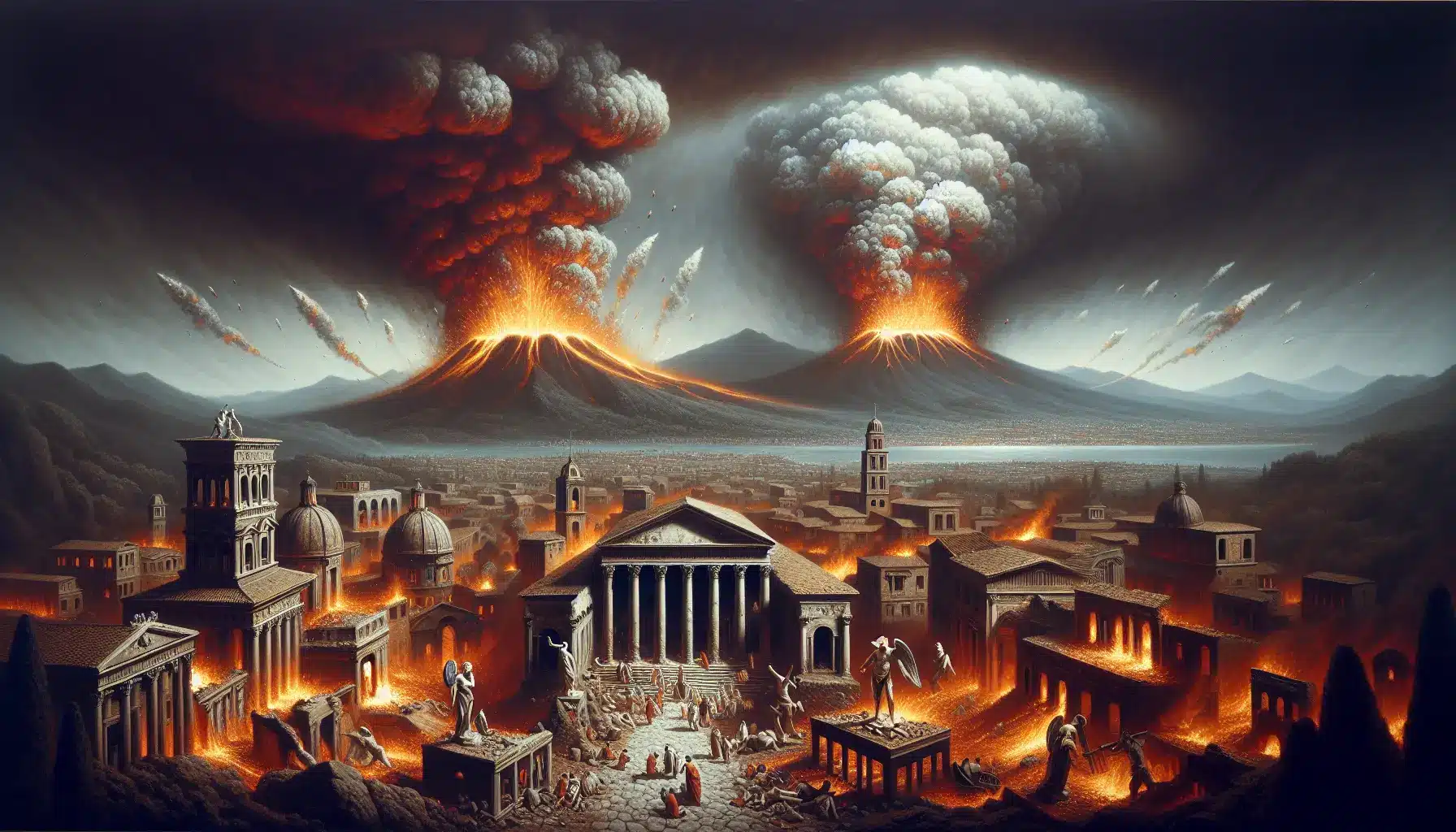
    Until now, the victims of Pompeii were primarily thought to have perished due to the volcanic eruption of Mount Vesuvius. However, a new study has revealed a more complex and harrowing narrative of the ancient city’s destruction. It appears that Pompeii suffered a double calamity: not only did its inhabitants face the fury of Vesuvius, but they also endured powerful earthquakes that contributed significantly to the devastation. This new research was conducted by a team of geologists and archaeologists from the INGV and the University of Naples Federico II.

    Key Takeaways

    • Pompeii’s destruction involved both volcanic eruptions and powerful earthquakes.
    • New evidence suggests that some victims died due to earthquake-induced building collapses.
    • Recent excavations have uncovered insights into daily life and economic activities in Pompeii.

    The Double Calamity of Pompeii

    The study’s findings are based on excavations and examinations of preserved buildings and human remains. In one particular structure, researchers discovered two bodies that exhibited injuries consistent with those typically observed in earthquake victims. This discovery prompted the team to reconsider the established narrative of Pompeii’s demise.

    The researchers noted that the damage patterns observed were inconsistent with the effects of volcanic phenomena previously documented in Pompeii. This inconsistency led the researchers to explore alternative explanations for the destruction they witnessed.

    The Sequence of Events

    The sequence of events on that fateful day in 79 AD is now believed to have unfolded as follows:

    1. Mount Vesuvius erupted around 1:00 PM, showering Pompeii with pumice rocks and ash for approximately 18 hours.
    2. Many inhabitants sought shelter during this initial phase.
    3. When the eruption temporarily subsided, some survivors may have believed the worst was over.
    4. However, their relief was short-lived as powerful earthquakes began to shake the already weakened structures of the city.

    The researchers suggest that those who remained in their shelters likely met their end due to earthquake-induced collapses of buildings already burdened by volcanic debris. This appears to be the fate of the two individuals whose remains were recovered during the study.

    The Final Moments of the Victims

    The researchers found compelling evidence that these two victims did not succumb to ash inhalation or extreme heat from pyroclastic surges, which were previously thought to be the primary causes of death for most Pompeiians. Instead, their final moments tell a different story.

    Both skeletons were found resting on a layer of volcanic deposits, indicating that they had survived the initial phase of the eruption. The first individual, a man around 50 years old at the time of his death, appears to have been suddenly crushed by a large wall fragment that collapsed during the seismic activity. His remains show severe trauma and broken bones consistent with such an event.

    The second victim, also a man of similar age, seems to have been aware of the impending danger. In a scene frozen in time, he appears to have sought protection by crouching in a corner of the room and attempting to shield himself with a round wooden object. Tragically, his efforts were in vain as he too was crushed to death.

    Insights into Daily Life and Burial Practices

    While the recent discoveries about earthquake-related deaths provide new insights into the city’s final moments, ongoing excavations are also shedding light on the daily lives and burial practices of Pompeii’s inhabitants. During routine work to create an air chamber for moisture control in the new library of the Pompeii Archaeological Park, archaeologists stumbled upon a remarkable find: a semicircular tomb known as a schola tomb.

    This type of funerary monument, while not uncommon in Pompeii, immediately caught the attention of researchers due to its location and the promise of information it might hold. The decision to expand the excavation proved fruitful as the tomb revealed an inscription that has excited historians and classicists alike.

    The Story of Numerius Augustinus

    The epitaph etched into the back of the bench tells the story of a man named Numerius Augustinus, son of Numerius. It’s not just the name that’s important; it’s the titles and honors bestowed upon this Roman citizen that paint a more vivid picture of his life and the interconnected world of the early Roman Empire.

    Numerius Augustinus, we learn, was a just knight, a military tribune, and twice held the position of duumvir in Pompeii, the highest magistracy in the city. These titles alone would mark him as a man of considerable importance in Pompeian society. However, it’s another title that has truly captured the imagination of researchers: praefectus fabrum, or prefect of the craftsmen.

    Economic and Artisanal Activities

    As our exploration of Pompeii continues, we uncover yet another fascinating aspect of daily life in this ancient Roman city. Recent excavations have revealed evidence of a thriving mat-making industry alongside the remnants of a restaurant. The POMPEII 114 Project, a collaborative effort between the University of Naples Federico II and the Parco Archeologico di Pompei, has been excavating the building complex known as Insula 1 of 14 since 2022.

    In zones D and E of the complex, archaeologists made a remarkable discovery: well-preserved remains of reed mats. Alongside the mats, researchers found facilities related to their production, including a large shallow vat and a drainage system.

    These findings suggest that in the years leading up to the catastrophic eruption of Vesuvius in 79 AD, part of this building was dedicated to the craft of mat-making. Meanwhile, the evidence of the restaurant paints a picture of Pompeian culinary life. Remnants of olives, figs, and poultry bones hint at the menu that might have been offered to diners. A particularly intriguing find is a collection of small round cakes baked with poppy seeds that show the desserts enjoyed by ancient Pompeians.

    These findings show the diversity of economic and artisanal activities that took place in Pompeii just before its tragic end. They remind us that Pompeii was not just a city frozen in its final moments but a living, breathing urban center with a complex economic life. The inhabitants of this building complex were not just passive victims of the volcano’s fury but active participants in a vibrant commercial ecosystem.

    As researchers continue to study these findings, we can expect to gain even more insights into the economic life of Pompeii. The close relationship between this building and the known mat-making workshop next door suggests a level of economic specialization and possibly even cooperation between neighboring businesses.

  • Decrypting the Unexplained: A Journey into the World’s Greatest Mysteries

    Decrypting the Unexplained: A Journey into the World’s Greatest Mysteries

    The world is full of mysteries that have puzzled people for centuries. From ancient manuscripts to lost cities, these enigmas continue to spark curiosity and debate. In this article, we will explore some of the most intriguing mysteries that have yet to be fully explained. Join us as we delve into the unknown and attempt to shed light on these fascinating puzzles.

    Key Takeaways

    • The Voynich Manuscript remains one of the most mysterious books, with no one able to decode its strange language and drawings.
    • The Bermuda Triangle is famous for the mysterious disappearances of ships and planes, with theories ranging from natural phenomena to alien activity.
    • The construction of the Great Pyramids continues to baffle experts, with many questions about the techniques used by the ancient Egyptians.
    • The legend of Atlantis, a city said to have sunk into the sea, has fascinated people for ages, with debates on whether it was real or just a myth.
    • The Knights Templar, a medieval Christian military order, is surrounded by legends of hidden treasures and secret rituals that continue to intrigue historians.

    The Enigma of the Voynich Manuscript

    Historical Context and Discovery

    Tucked away in Yale University’s Beinecke Rare Book & Manuscript Library, the Voynich Manuscript is a true enigma. This ancient book, discovered by Polish book dealer Wilfrid Voynich in 1912, is filled with strange, indecipherable text and intricate illustrations. Carbon dating places its creation in the 15th century, but its origin and purpose remain a mystery.

    Attempts at Deciphering

    Over the years, many talented cryptographers and linguists have tried to crack the code of the Voynich Manuscript. Despite their efforts, the text remains an uncrackable code, frustrating even the most brilliant minds. The manuscript’s unique script, often called Voynichese, continues to baffle experts.

    Modern Theories and Speculations

    Modern theories about the Voynich Manuscript range from it being a medieval medical text to an elaborate hoax. Some believe it could be an ancient herbal guide, while others think it might be a coded alchemical work. The mystery endures, capturing the imagination of scholars and enthusiasts alike.

    The Voynich Manuscript stands as a testament to the limits of human knowledge and the enduring allure of unsolved mysteries.

    The Bermuda Triangle: Legends and Realities

    Famous Disappearances

    We’ve all heard the spooky tales of ships and planes vanishing without a trace in the Bermuda Triangle. One of the most famous cases is Flight 19, a group of five U.S. Navy bombers that disappeared during a training mission in 1945. The rescue plane sent to find them also vanished! Other notable disappearances include the USS Cyclops in 1918 and the SS Marine Sulphur Queen in 1963. These stories have fueled countless theories and speculations.

    Scientific Explanations

    Scientists have tried to demystify the Bermuda Triangle with various explanations. Some suggest that methane hydrates on the ocean floor could create massive bubbles, sinking ships. Others point to the area’s unpredictable weather, with sudden storms and rogue waves. Electromagnetic interference is another theory, which could mess with navigation instruments. While these explanations are logical, they don’t cover all the strange occurrences.

    Cultural Impact

    The Bermuda Triangle has seeped into our culture, inspiring books, movies, and even radio shows like “Ground Zero with Clyde Lewis” and “Into the Parabnormal”. It’s a hot topic on podcasts like The Secret Teachings with Ryan Gable and “Ground Zero Radio”. The mystery has also sparked a paradigm shift in how we view unexplained phenomena. Whether you believe in the legends or not, the Bermuda Triangle continues to captivate our imaginations.

    The Mysteries of the Great Pyramids

    Great Pyramids illuminated under a starry night sky.

    How did the ancient Egyptians build the Great Pyramids? This question has puzzled us for ages. Some theories suggest they used ramps, while others believe they had advanced tools. The truth remains hidden in the sands of time.

    Why were the pyramids built? Were they just tombs for pharaohs, or did they serve a greater purpose? Some think they were giant power plants or even alien landing sites. The mystery deepens as we explore these ideas.

    Despite all our research, many questions about the pyramids remain unanswered. How did they achieve such precise alignments? What secrets lie within the undiscovered chambers? The Great Pyramids continue to be a source of endless fascination.

    The Great Pyramids are more than just ancient structures; they are a testament to human ingenuity and the mysteries of our past. Let’s support more articles like this to keep the curiosity alive.

    The Lost City of Atlantis: Myth or Reality?

    Plato’s story of Atlantis has fascinated us for centuries. He described it as a rich island west of the Strait of Gibraltar. According to him, it was a powerful kingdom that conquered many lands. But, in a single day and night, it vanished into the ocean. Was it real or just a tale?

    Many have tried to find Atlantis. Some believe it’s in the Mediterranean, while others think it’s in the Atlantic Ocean. There are even theories about it being in Antarctica! Despite all efforts, no solid evidence has been found. The search continues, fueled by our curiosity and the hope of uncovering ancient secrets.

    Today, some see Atlantis as a warning. A tale of a great civilization that fell due to its own hubris. Others think it might be based on real events, like the eruption of Thera. Whether myth or reality, Atlantis remains a symbol of mystery and wonder.

    Atlantis, a legendary island in the Atlantic Ocean, lying west of the Strait of Gibraltar. It was a rich island whose powerful princes conquered many of the surrounding lands.

    The Secrets of the Knights Templar

    Origins and Rise

    The Knights Templar started as a small group of knights in the early 12th century. They were tasked with protecting Christian pilgrims traveling to the Holy Land. Over time, they grew in power and wealth, becoming one of the most influential military orders of the Middle Ages. Their rise was nothing short of meteoric.

    Hidden Treasures

    One of the most intriguing aspects of the Templars is the legend of their hidden treasures. Some believe they found the Holy Grail or other sacred relics. Others think they amassed vast amounts of gold and silver. The truth remains a mystery, fueling countless theories and speculations.

    Modern-Day Influence

    Even today, the Knights Templar continue to captivate our imagination. They appear in books, movies, and even conspiracy theories. Their legacy lives on, influencing modern secret societies and organizations. It’s fascinating how a medieval order still holds such sway in our culture.

    The Knights Templar’s story is a blend of history, legend, and mystery. Their influence stretches from the past into the present, making them a subject of endless fascination.

    The Disappearance of the Roanoke Colony

    In 1587, over 100 settlers landed on Roanoke Island, led by John White. They aimed to establish a permanent English colony. White returned to England for supplies, but when he came back in 1590, the colony was deserted. The only clue was the word “CROATOAN” carved into a post.

    Many theories try to explain the disappearance. Some suggest the settlers integrated with local tribes. Others believe they were killed by hostile forces or starved. Archaeological finds have provided some clues but no definitive answers. The mystery remains a hot topic on shows like Into the Parabnormal with Jeremy Scott.

    New digs and advanced technology have brought fresh insights. Artifacts found miles away suggest the colonists might have split up and moved inland. Despite these findings, the full story is still elusive. For more on this, check out “Everything Out There” for the latest updates.

    The Roanoke Colony remains one of America’s oldest unsolved mysteries, capturing our imagination and fueling endless speculation.

    The Nazca Lines: Messages from the Past

    Discovery and Significance

    The Nazca Lines are one of the world’s most intriguing mysteries. Discovered in the Peruvian desert, these massive geoglyphs have puzzled scientists and historians alike. Why were they created? Some believe they were astronomical calendars, while others think they had religious significance. The sheer scale and precision of these lines are mind-blowing. They stretch over miles and depict various shapes, from simple lines to complex animal figures. It’s like a giant art gallery in the middle of nowhere!

    Theories of Creation

    How did the ancient Nazca people create these enormous designs without modern tools? One theory suggests they used simple tools and ropes to map out the lines. Another idea is that they had some form of aerial technology, like hot air balloons, to guide their work. The mystery deepens when we consider the purpose behind these creations. Were they meant to be seen by gods in the sky, or were they a way to communicate with extraterrestrial beings? The theories are endless and fascinating.

    Modern Research

    Modern technology has allowed us to study the Nazca Lines in greater detail. Satellite imagery and drones have provided new perspectives, revealing even more lines and shapes previously hidden. Researchers are also using ground-penetrating radar to understand the construction techniques better. Despite all this, the true purpose of the Nazca Lines remains elusive. But that’s what makes them so captivating, right? The more we learn, the more questions we have.

    The Nazca Lines are a testament to human ingenuity and the enduring power of mystery. They remind us that some secrets are worth preserving.

    Feeling inspired? Get a Hoodie or T-Shirt and support us!

    The Nazca Lines are one of the world’s greatest mysteries. These huge drawings in the Peruvian desert have puzzled scientists for years. What do they mean? Who made them? If you’re curious to learn more about these ancient wonders, visit our website. We have a treasure trove of articles, videos, and podcasts that dive deep into the secrets of the past.

    Conclusion

    As we wrap up our journey into the world’s greatest mysteries, it’s clear that the unknown continues to captivate our imaginations. From ancient artifacts to modern enigmas, these puzzles remind us of the vastness of our history and the endless possibilities for discovery. Whether you’re a seasoned investigator or a curious mind, the quest for answers is a never-ending adventure. Keep exploring, questioning, and uncovering the secrets that lie just beneath the surface. The world is full of mysteries waiting to be solved, and who knows? You might be the one to crack the next big one.

    Frequently Asked Questions

    What is the Voynich Manuscript?

    The Voynich Manuscript is an old book written in a language or code that no one has been able to understand. It has lots of pictures of plants, people, and strange symbols.

    Why is the Bermuda Triangle famous?

    The Bermuda Triangle is known for the mysterious disappearances of ships and airplanes. Many people have tried to explain these disappearances, but no one knows for sure what happens there.

    How were the Great Pyramids built?

    The Great Pyramids were built by ancient Egyptians using large stones. They used simple tools and a lot of workers, but exactly how they did it is still a mystery.

    Is Atlantis a real place?

    Atlantis is a legendary city mentioned by the ancient philosopher Plato. Some people believe it was a real place that sank into the ocean, but no one has found any proof yet.

    Who were the Knights Templar?

    The Knights Templar were a group of knights during the medieval times. They were very powerful and rich, and many legends say they had hidden treasures and secrets.

    What happened to the Roanoke Colony?

    The Roanoke Colony was an early settlement in America that mysteriously disappeared. When people came to check on them, they found the place empty with no sign of what happened to the settlers.