Category: Ancient Civilizations

  • NASA Warns: Voyager 1 Has Made an Impossible Discovery After 45 Years!

    NASA Warns: Voyager 1 Has Made an Impossible Discovery After 45 Years!

    In an astonishing journey that began in 1977, the Voyager probes have been exploring the depths of space for over 45 years. Their mission, initially expected to last just five years, has turned into one of the most significant achievements in space exploration, revealing mysteries that continue to baffle scientists today.

    Key Takeaways

    • Voyager 1 and 2 have traveled beyond the solar system, uncovering new cosmic phenomena.
    • Voyager 1 detected the most powerful gamma-ray burst ever recorded in October 2022.
    • The probes have provided insights into the structure of the heliosphere and interstellar space.
    • New findings challenge existing models of cosmic events and require further investigation.

    Voyager 1 and Voyager 2 were launched on August 20 and September 5, 1977, respectively. At that time, no one could have predicted the monumental success these probes would achieve. Their original mission was to gather data about the outer planets, but after capturing stunning images of Jupiter, Saturn, Uranus, and Neptune, NASA decided to extend their mission.

    By 2012, Voyager 1 crossed into interstellar space, followed by Voyager 2 six years later. This marked a historic moment as these spacecraft became the first human-made objects to venture so far from Earth, now sitting approximately 24.8 billion and 20.7 billion kilometers from the sun.

    The Heliopause and Its Mysteries

    The heliopause is the boundary where the solar wind from the sun meets the interstellar medium. Voyager 1 and 2 provided unique data about this region. Interestingly, while Voyager 1 encountered a turbulent boundary, Voyager 2 experienced a more stable crossing. This difference raised questions about the heliosphere’s structure, suggesting it might be more symmetrical than previously thought.

    • Voyager 1: Detected strong plasma decay and turbulence at the heliopause.
    • Voyager 2: Crossed the heliopause smoothly, indicating a stable boundary.

    Researchers believe that solar activity influences these crossings. Voyager 1’s passage occurred during a solar minimum, allowing cosmic radiation to penetrate deeper, while Voyager 2 crossed during a solar maximum, which may have stabilized the boundary.

    The Discovery of the Magnetic Wall

    One of the most exciting findings from Voyager 2 was the detection of a magnetic wall beyond the heliopause. This wall acts as a protective barrier against cosmic radiation, with a magnetic field stronger than any previously measured in the heliosphere. The dynamics of this wall are fascinating, as it changes with the solar activity cycle, creating a complex interaction between solar and interstellar magnetic fields.

    The Gamma-Ray Burst

    In October 2022, Voyager 1 made headlines when it detected the most powerful gamma-ray burst ever recorded. This event, known as GRB 221009A, was so intense that it overwhelmed many observatories on Earth. The burst raised fundamental questions about its origin, as it was 70 times brighter than any previous gamma-ray eruption.

    • Key Facts About GRB 221009A:
      • Energy: 18 Tera electron volts
      • Brightness: 70 times brighter than previous records
      • Origin: Initially thought to be a supernova, but further studies suggested a more complex scenario.

    Astronomers are still trying to understand how such a normal supernova could trigger an event of this magnitude. Theories suggest that rapidly rotating massive stars might produce concentrated jets of energy, leading to these extraordinary gamma-ray bursts.

    The Future of Voyager Missions

    Despite the incredible data collected, scientists emphasize that we are only beginning to understand the complexities of the heliopause and interstellar space. Follow-up missions are essential to gain a clearer picture of these cosmic phenomena. However, with the technology of the 1970s, the Voyager probes are reaching their limits. NASA has implemented power-saving measures to extend their operational life, but contact interruptions are becoming more frequent.

    In conclusion, the Voyager missions have not only expanded our knowledge of the solar system but have also opened up new questions about the universe. As we look back at their journey, it’s remarkable to think about the technology that has allowed these probes to achieve such milestones. The discoveries made by Voyager 1 and 2 continue to inspire and challenge our understanding of space, reminding us that there is still so much more to explore beyond our home planet.
  • Uplift and Earthquake Activity Accelerates In-Between Two Volcanoes in Ethiopia

    Uplift and Earthquake Activity Accelerates In-Between Two Volcanoes in Ethiopia

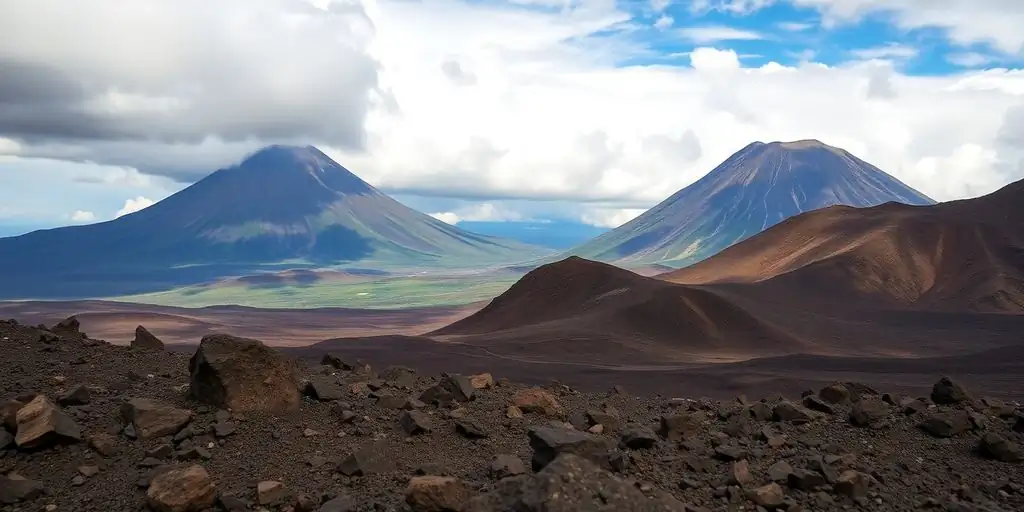
    In recent weeks, Ethiopia has been experiencing a significant increase in earthquake activity, particularly around the Fantale and Dofen volcanoes. This surge is linked to magma movements beneath the surface, raising concerns about potential volcanic eruptions in the near future.

    Key Takeaways

    • Increased Earthquake Activity: A notable rise in earthquakes, including several over magnitude 5, has been recorded since mid-September.
    • Ground Uplift: There has been nearly half a meter of uplift along a 40 km dike in just a few weeks.
    • Geological Context: The activity is driven by a massive super plume beneath the East African Rift Zone.
    • Potential Eruption: Experts suggest that an eruption could be imminent, though the exact timing remains uncertain.

    Overview Of The Situation

    Since mid-September, the area between Fantale and Dofen volcanoes has seen a dramatic increase in seismic activity. This uptick has been particularly pronounced since the start of 2025, with multiple earthquakes registering at magnitude 5 or higher. The ground is shifting, and many are concerned about what this could mean for the region.

    Understanding The Earthquake Activity

    The earthquakes occurring in this region are not typical aftershocks from a larger quake. Instead, they are caused by volcanic intrusions—magma pushing its way through the earth, breaking apart rocks and moving closer to the surface. This is a clear sign of geological unrest, and it’s happening right next to Ethiopia’s capital, Addis Ababa.

    • Recent Earthquakes:
      • January 4: Magnitude 5.7
      • January 8: Magnitude 5.3

    These events indicate that the area is still very active, and the seismic activity is likely to continue.

    The Geologic Context

    Ethiopia is part of the East African Rift Zone, where the African continent is slowly splitting apart. This rifting is driven by a super plume of low-density material rising from deep within the Earth. As this plume rises, it causes the crust to thin and creates conditions for volcanic activity.

    • Rifting Process: The Horn of Africa is moving away from the mainland at about 5 mm per year, which could eventually lead to the formation of a new ocean.
    • Seismic Activity: A review of earthquake data shows that most significant seismic events in this area have occurred since late September 2024, with many registering above magnitude 4.5.

    The Role Of The African Super Plume

    The African super plume is a massive geological feature that plays a crucial role in the region’s volcanic activity. It is believed to originate from the deep mantle or even the core-mantle boundary. This plume is responsible for the high levels of helium-3 found in the area, which indicates a deep source of volcanic activity.

    • Helium Isotope Ratios: Elevated helium-3 levels suggest that the magma is coming from deep within the Earth, possibly from a georeactor at the planet’s core.
    • Comparison With Other Regions: Similar geological features can be found in places like Hawaii and Iceland, where deep mantle plumes are also present.

    Recent Uplift Observations

    Recent satellite data has shown significant uplift in the area between the two volcanoes. From December 17 to 19, there was about 40 cm of uplift recorded along a narrow feature between Fantale and Dofen. This rapid change suggests that magma is moving closer to the surface, increasing the likelihood of an eruption.

    • Potential Eruption Zone: The uplift is concentrated along a 40 km dike, indicating that if an eruption occurs, it could be substantial.
    • Hydrothermal Activity: Increased hydrothermal activity, including mud geysers, has been observed, further indicating that magma is nearing the surface.

    Conclusion

    The situation in Ethiopia is evolving rapidly, and the potential for a volcanic eruption is a serious concern. With the ground shifting and seismic activity increasing, experts are closely monitoring the area. The combination of geological factors, including the African super plume and recent uplift, suggests that we may be on the brink of a significant volcanic event.

    As we watch this situation unfold, it’s essential to stay informed and prepared. The geological activity in this region is a reminder of the dynamic nature of our planet and the forces that shape it.

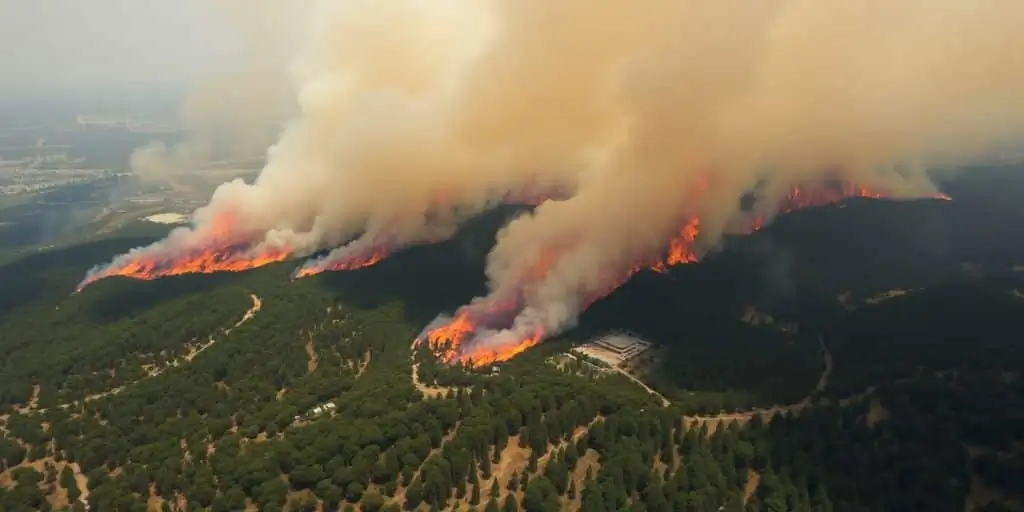
  • Why Battling LA’s Wildfires Is Like ‘Trying to Stop a Typhoon’

    Why Battling LA’s Wildfires Is Like ‘Trying to Stop a Typhoon’

    In the wake of devastating wildfires in Los Angeles, the city faces a dire situation. With Santa Ana winds expected to return, the threat remains high. The fires have sparked political debates, with accusations flying between leaders about responsibility and preparedness.

    Key Takeaways

    • Southern California has a long history of wildfires, influenced by geography and climate.
    • The region has been experiencing a prolonged drought, worsening fire conditions.
    • Urban development in high-risk areas complicates firefighting efforts.
    • Political blame often overshadows the natural factors contributing to wildfires.

    A Brief History Of Fires In Los Angeles

    Los Angeles has seen its fair share of wildfires, and it’s not just a recent phenomenon. The history of fires in this region dates back to the arrival of the first settlers. They brought fire with them, and since then, the area has been shaped by it. While Northern California also experiences significant fires, Southern California’s unique geography and climate create a different fire dynamic.

    Climatic Factors At Play

    The current situation is influenced by both long-term and short-term climatic factors. Over the past 40 years, Southern California has been drying out, according to the Environmental Protection Agency. This trend is expected to continue, leading to more severe drought conditions.

    • Long-Term Drought: The region has seen a significant decrease in rainfall, with only a fraction of the expected precipitation this year.
    • Santa Ana Winds: These strong winds exacerbate fire conditions, making it nearly impossible to control fires once they start.
    • Urban Expansion: Many residents have moved into the foothills, increasing the risk of fires in these areas.

    Infrastructure Issues And Blame Game

    When fires rage, there’s often a lot of finger-pointing. Aging infrastructure and water shortages are frequently blamed for the inability to control wildfires. However, Professor Char Miller argues that these factors are minimal in the face of extreme weather conditions.

    • Wind Speeds: At wind speeds of 100 miles per hour, firefighting becomes nearly impossible. Firefighters can only observe and manage the situation from the edges.
    • Natural Forces: The focus should be on understanding the natural forces at play rather than placing blame on infrastructure.

    Urban Development In High-Risk Zones

    One of the significant issues contributing to the wildfire crisis is urban development in high-risk areas. Over the last decade, there has been an increase in subdivisions being built in these zones, despite the known dangers.

    • City Planning: Local planning commissions and zoning boards are responsible for approving these developments. The push for housing and economic growth often overshadows safety concerns.
    • Political Will: There seems to be a lack of political will to change policies that would prevent further development in high-risk areas.

    Political Tensions And Accountability

    The wildfires have also ignited political tensions, particularly between President Trump and California Governor Gavin Newsom. Trump has accused Newsom of incompetence, claiming that the governor is responsible for the destruction caused by the fires.

    • Local vs. Federal Responsibility: The real issues often lie at the local level, where dense populations and rapid urbanization complicate firefighting efforts.
    • Community Impact: The fires have moved quickly through neighborhoods, highlighting the need for better planning and community resilience.

    Conclusion

    The wildfires in Los Angeles are a complex issue, influenced by a mix of natural and human factors. As the city grapples with the immediate threat of fire, it’s essential to address the underlying issues that contribute to these disasters. From climate change to urban planning, a multifaceted approach is needed to protect communities and prevent future tragedies.

    In the end, battling these wildfires is like trying to stop a typhoon—an almost impossible task without addressing the root causes.

  • Ancient Humans Hunted Unbelievable Prey

    Ancient Humans Hunted Unbelievable Prey

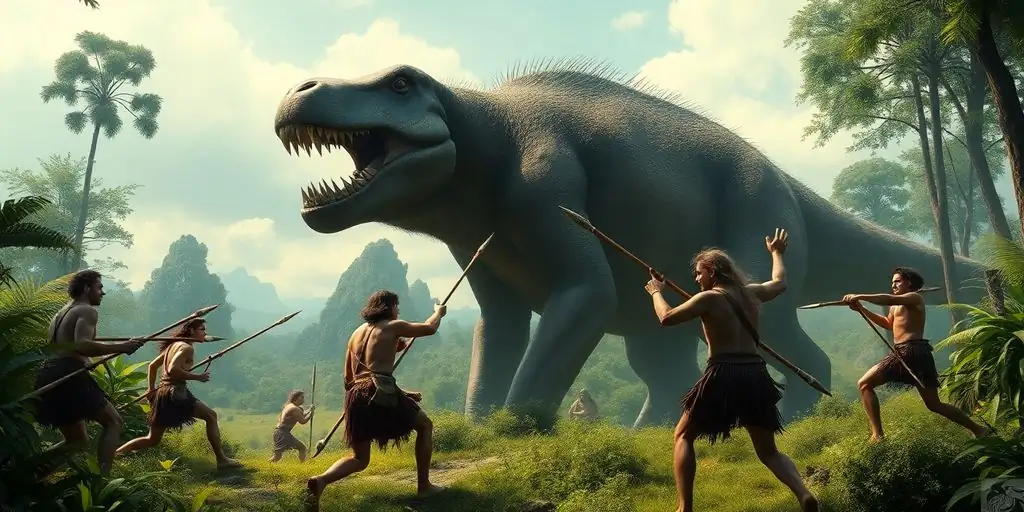
    In the heart of East Africa lies Olorgesailie, a site that reveals the incredible story of our ancestors, Homo erectus, who lived between 1 million and 300,000 years ago. This location, rich in archaeological finds, showcases the remarkable hunting strategies employed by these early humans against formidable prey.

    Key Takeaways

    • Location: Olorgesailie, Southern Kenya, near ancient Lake shores.
    • Hominin: Homo erectus, known for their advanced tools and social strategies.
    • Prey: Theropithecus oswaldi, a giant baboon-like primate, was hunted by early humans.
    • Hunting Techniques: Evidence suggests cooperative hunting and the use of tools like handaxes and wooden spears.

    The site of Olorgesailie is not just another archaeological dig; it’s a window into the past. Here, our ancestors faced off against Theropithecus oswaldi, a creature that was three times the size of a modern baboon, equipped with sharp canines and living in tight-knit social groups. So, why would Homo erectus take such a risk? What tools and tactics did they use? Let’s explore this fascinating story.

    The Setting of Olorgesailie

    Olorgesailie is located in the Eastern Rift Valley of Kenya. Hundreds of thousands of years ago, it was near the shores of an ancient lake, providing water and attracting various animals like hippos, zebras, and elephants. The earliest human remains found here date back nearly a million years, with abundant handaxes discovered, indicating that this site was a hub of activity for Homo erectus.

    Tools of the Trade

    Homo erectus is credited with creating the Acheulean handaxes, which were used for butchering animals and possibly as weapons. These tools were essential for survival, allowing them to process meat and defend themselves. The layers of Olorgesailie that interest us date between 400,000 to 700,000 years ago, a time when Homo erectus had spread across much of the world.

    Evidence of Hunting

    At Olorgesailie, researchers found butchered remains of various animals, including hippopotamus, elephant, zebra, giraffe, and, notably, Theropithecus oswaldi. The evidence suggests that these hominins were skilled hunters, likely using wooden spears to ambush their prey. They may have also practiced persistence hunting, chasing animals until they were exhausted.

    The Mighty Theropithecus Oswaldi

    Theropithecus oswaldi was no ordinary primate. Weighing up to 160 pounds, it was a powerful animal with sharp canines. Modern relatives, like the gelada, give us clues about their behavior. Geladas live in social groups and can be quite aggressive, especially among competing males. Imagine early humans facing off against such a creature—it’s a terrifying thought.

    The Evidence of Butchery

    At Olorgesailie, researchers discovered 4,700 stone artifacts alongside the remains of 90 Theropithecus individuals. Most of these bones were broken, suggesting systematic butchery. The absence of cut marks indicates that the bones were likely smashed to access the muscle attachments, pointing to a methodical approach to hunting and processing.

    Hunting Strategies

    The hunting strategies of Homo erectus may have been similar to those of modern hunter-gatherer tribes. For instance, the Hadza tribe in Tanzania encircles baboons to hunt them. This method could have been adapted by early humans to target Theropithecus, waiting for younger individuals to break away from the group before launching their attack.

    Why Hunt Such Dangerous Prey?

    With plenty of other food sources available, why would Homo erectus risk hunting such a dangerous animal? One theory is that hunting Theropithecus may have been a rite of passage, enhancing social status within the group. Successful hunts could elevate a hunter’s reputation, similar to practices observed in some modern cultures.

    Conclusion

    The story of Olorgesailie and its ancient inhabitants offers a glimpse into the lives of our ancestors. Their courage in hunting such formidable prey reveals much about their social structures and survival strategies. As we continue to uncover more evidence from sites like Olorgesailie, we piece together the complex narrative of human evolution and our relationship with the natural world.

    This exploration of our past not only informs us about who we are but also invites us to reflect on the significance of hunting in human history. What do you think about the role of hunting in our development? Let’s discuss in the comments!

  • Strange Finds Beneath Siberia’s Permafrost

    Strange Finds Beneath Siberia’s Permafrost

    More than 10% of our planet is covered by permanent ice, with Antarctica alone holding an area of 14 million square kilometers. This ice is not just frozen water; it acts as a time capsule, preserving stories from thousands of years ago. But what happens when this ice melts? What secrets lie beneath? Today, we explore ten fascinating finds in permafrost that have changed our understanding of Earth’s history.

    Key Takeaways

    • Permafrost acts as a time capsule, preserving ancient life.
    • Significant archaeological discoveries have been made in Siberia.
    • The potential for cloning ancient species raises ethical questions.
    • Ancient pathogens may pose risks as permafrost melts.

    The Siberian Ice Maiden

    In 1993, a remarkable discovery was made in the Alai Republic of Russia. Known as the Siberian Ice Maiden, this mummified body of an ancient woman was found in a burial mound. The details of her burial were astonishing. She was laid to rest in a coffin carved from a single tree trunk, adorned with intricate decorations and surrounded by offerings for the afterlife, including food and drink.

    The woman, believed to be a priestess or ruler, was buried with six horses, suggesting she held a high status in her society. Her tattoos, remarkably preserved, depicted fantastical creatures, showcasing the artistry of her time. Scientists later determined she died young, likely from breast cancer, but the exact circumstances of her death remain a mystery.

    The Woolly Mammoth Calf

    Fast forward to 2010, when a well-preserved woolly mammoth calf was discovered in Yakutia, Russia. Named Yuka, this calf had been frozen for nearly 400,000 years. Scientists were amazed by the preservation of her fur and soft tissues. Yuka’s tragic story unfolded as researchers found evidence of her struggle against cave lions before her untimely death.

    The possibility of extracting DNA from Yuka raised hopes of cloning, but attempts to bring her back to life have so far been unsuccessful. Still, her discovery has provided invaluable insights into the life of mammoths and their environment.

    The Cave Lion Cubs

    In 2017 and 2018, two cave lion cubs, named Boris and Sparta, were found in Yakutia. These cubs were so well-preserved that they looked as if they had just passed away. Boris was around 43,000 years old, while Sparta was about 28,000 years old. Their remains revealed much about their lives and the conditions they faced during the Ice Age.

    Blue Babe: The Step Bison

    In 1979, gold miners in Alaska stumbled upon the frozen carcass of a step bison, nicknamed Blue Babe. This bison had been preserved for approximately 36,000 years. The unique blue tint of its body was due to a chemical reaction in the soil. Researchers even cooked a stew from Blue Babe’s meat, which surprisingly turned out to be edible, though not particularly tasty.

    The Saber-Toothed Cat Kitten

    In 2020, a remarkable find was made when a saber-toothed cat kitten was discovered in Yakutia. This tiny predator, estimated to be around 35,000 years old, provided new insights into the evolution of these fearsome creatures. The kitten’s well-preserved state allowed scientists to study its anatomy and understand how it adapted to its environment.

    The Lena Horse

    In 2018, scientists uncovered the carcass of an ancient step horse, later named the Lena Horse. This foal, about 42,000 years old, was found in a state of remarkable preservation, with liquid blood and urine still intact. This discovery has opened the door to the possibility of cloning the Lena horse, a significant step in de-extinction efforts.

    Zohur: The Ancient Wolf Pup

    In 2016, an ancient wolf pup named Zohur was found in Canada. This pup lived only 6 to 8 weeks before being trapped in ice for 57,000 years. Zohur’s well-preserved remains provided insights into the diet and lifestyle of ancient wolves, revealing that they primarily ate fish.

    The Resurrection of Ancient Nematodes

    In 2018, scientists revived ancient nematodes, roundworms frozen for tens of thousands of years. This marked the first successful revival of a multicellular organism from such a long frozen state, raising questions about the limits of biological survival.

    The Pithovirus Discovery

    In 2014, researchers discovered an ancient virus, Pithovirus sibericum, in Siberian permafrost. This virus, over 30,000 years old, was successfully revived in a lab, raising concerns about the potential dangers of ancient pathogens re-emerging as permafrost melts.

    Conclusion

    The discoveries beneath Siberia’s permafrost have not only fascinated scientists but also raised ethical questions about cloning and the risks of ancient pathogens. As the ice continues to melt, who knows what other secrets will be revealed? The past is not just a memory; it’s a living archive waiting to tell its story.

  • The Forbidden Pyramids of China

    The Forbidden Pyramids of China

    Hidden in the misty landscapes of China are ancient mausoleums that hold secrets of emperors from millennia ago. This blog post explores the mysterious pyramids of China, their history, and the reasons behind their unexcavated status.

    Key Takeaways

    • The pyramids of China are largely unexcavated, raising questions about their history and purpose.
    • The mausoleums of Qin Shihuang, Han Jingdi, and Han Wudi are significant sites that reflect China’s imperial past.
    • Archaeological work is ongoing, but many tombs remain untouched due to concerns over preservation and safety.

    The Mysterious Pyramids

    The pyramids of China, often overshadowed by their Egyptian counterparts, are fascinating structures that have remained largely buried. There are about 38 structures around Xi’an that could be classified as pyramids, many of which are under mounds that have yet to be excavated. The question remains: why are these monumental tombs still hidden?

    The Mausoleum of Qin Shihuang

    Our journey begins at the mausoleum of Qin Shihuang, the first emperor of China. This site is famous for the Terracotta Army, discovered accidentally by farmers in 1974. The army consists of thousands of life-sized figures meant to protect the emperor in the afterlife. The site is divided into three main pits:

    1. Pit One: The largest, housing around 6,000 warriors.
    2. Pit Two: Partially excavated, revealing over 1,300 figures.
    3. Pit Three: A command hub with 68 warriors and a war chariot.

    Each figure is unique, crafted with incredible detail, showcasing the skills of ancient artisans. The warriors were arranged in military formation, facing east, possibly towards lands the emperor wished to conquer or where he believed immortality lay.

    The Mausoleum of Han Jingdi

    Next, we visit the mausoleum of Han Jingdi, located about 20 km north of Xi’an. This site is known as Hanyang Ling and is the best-preserved imperial mausoleum of the Han Dynasty. It features:

    • The emperor’s tomb and that of his wife, Empress Wang.
    • Burial pits for officials and a ceremonial site.
    • A human sacrifice graveyard, reflecting ancient customs.

    The tomb of Han Jingdi is surrounded by 81 burial pits, many of which have not been excavated. The artifacts found here, including pottery figures, provide insight into the daily life and beliefs of the time.

    The Grand Mausoleum of Han Wudi

    Finally, we explore the grand mausoleum of Han Wudi, known for its impressive size and the vast number of burial pits surrounding it. This site reflects the zenith of the Han Dynasty, showcasing the emperor’s military triumphs and ambitions. The tomb itself is a truncated pyramid, surrounded by numerous burial pits for nobles and officials.

    Why Are These Tombs Unexcavated?

    Despite the rich history and potential discoveries, many of these tombs remain unexcavated. The Chinese government has placed restrictions on excavating imperial tombs due to concerns about preservation and the safety of workers. They are waiting for improved technology to ensure that these ancient sites can be excavated without damage.

    Conclusion

    The pyramids of China, with their hidden treasures and untold stories, continue to intrigue historians and archaeologists alike. As we await advancements in excavation technology, the mysteries of these ancient mausoleums remain, inviting future generations to explore and uncover the secrets of China’s imperial past.

  • Ghosts and Hauntings: The Truth They Don’t Want You to Know

    Ghosts and Hauntings: The Truth They Don’t Want You to Know

    Every town has a dark side, and the world of ghosts and hauntings is no exception. Today, we’re diving into the intriguing possibilities of what lies beyond our understanding. Are ghosts real? Let’s explore the evidence and experiences that have captivated cultures throughout history.

    Key Takeaways

    • Ghosts are a universal belief across cultures.
    • Many ghost sightings can be explained by science.
    • Emotional trauma may leave a lasting imprint on locations.
    • The line between the emotional and physical worlds is blurred.

    When you think about a haunted place, what comes to mind? Maybe it’s an old stone castle in the UK or a creepy motel that’s been abandoned for years. The truth is, every culture has its own stories of spirits and supernatural encounters. From the ancient Epic of Gilgamesh, which tells of a ghost visiting a friend, to modern ghost-hunting shows, the fascination with the supernatural is timeless.

    Despite advancements in science, nearly half of Americans believe in ghosts, with 20% claiming to have encountered one. This raises questions: Why do so many people believe in something that can’t be definitively proven?

    What Are Ghosts?

    Ghosts are known by many names across cultures. The ancient Egyptians called them Ak, while in Japan, they are referred to as Yuri. In the West, we often think of ghosts as shadowy figures or whispers in the dark. But what if these beliefs stem from something deeper?

    1. Cultural Beliefs: Different cultures have unique interpretations of ghosts, but they all share a common thread: the belief that some part of us survives death.
    2. Common Experiences: Many people report similar ghostly experiences, like feeling watched or hearing unexplained noises.

    Science and Ghosts

    Science has attempted to explain many ghostly experiences. For instance, sleep paralysis can create terrifying sensations of an evil presence. This occurs when the brain is awake, but the body remains in a sleep state, leading to vivid hallucinations.

    However, not all ghost sightings can be explained away. What about those moments when people see figures during the day? Our brains are wired to find patterns, which can lead to misinterpretations of what we see. This phenomenon, known as pareidolia, explains why we might see faces in clouds or shadows in our homes.

    The Haunting of Mrs. H

    In 1921, a family reported a haunting that turned out to be caused by carbon monoxide poisoning. Mrs. H heard footsteps and felt a presence, but it was the gas from a malfunctioning furnace that caused their symptoms. This case highlights how easily our minds can jump to supernatural conclusions when faced with fear and confusion.

    Emotional Energy and Hauntings

    While science can explain some ghostly encounters, there’s a fascinating connection between hauntings and emotional trauma. Many famous hauntings are linked to traumatic events. For example:

    • The White House: Haunted by the ghost of Abraham Lincoln, often seen during national crises.
    • The RMS Queen Mary: Known for hauntings tied to deaths during its service in WWII.
    • The Chelsea Hotel: A hotspot for artists and musicians who have died there.

    Could it be that these locations hold onto the emotional energy of past events? Some researchers suggest that certain materials, like limestone and quartz, might act as natural recorders of emotional experiences.

    The Blurry Line Between Worlds

    As we explore these ideas, it becomes clear that the line between the emotional and physical worlds is not as distinct as we once thought. Ghosts may not be spirits of the dead but rather echoes of intense emotional experiences. This perspective allows us to see haunted locations as records of human emotion, where the past lingers in the present.

    In conclusion, the world of ghosts and hauntings is complex and deeply rooted in human experience. Whether you believe in the supernatural or not, the stories and feelings associated with hauntings are undeniably real. As we continue to explore these mysteries, we may find that understanding our emotional connections to these places is just as important as seeking out the truth behind the ghosts themselves.

    So, what do you think? Are ghosts real, or are they simply reflections of our emotional past? Join us next week for more strange and mysterious stories, because you never know—maybe your town will be next!

  • New Discoveries Completely Transform Our Understanding of Human Evolution

    New Discoveries Completely Transform Our Understanding of Human Evolution

    In recent years, significant discoveries in the field of anthropology have reshaped our understanding of human evolution. The Omo 2 skull from Ethiopia and the Solo skulls from Java, Indonesia, are two such finds that challenge previous classifications and assumptions about our ancient ancestors.

    Key Takeaways

    • Omo 2 skull is dated to around 233,000 years ago, showing a mix of archaic and modern features.
    • Solo skulls, believed to be between 117,000 to 108,000 years old, were previously classified as Homo erectus.
    • Both skulls exhibit similarities that suggest a complex evolutionary relationship.
    • The findings hint at early human migrations and interactions between different hominin species.

    The Omo 2 skull, discovered in Ethiopia, has been a topic of debate regarding its age and classification. Initially thought to be closer to Homo erectus, it is now considered an archaic Homo sapiens. This skull displays a fascinating blend of features, including a rounded cranial shape and reduced facial prognathism, indicating it may represent a transitional form between earlier Homo populations and later Homo sapiens.

    On the other side of the world, the Solo skulls from Java have long puzzled researchers. These fossils, attributed to late Homo erectus, show robust features like thick cranial walls and pronounced brow ridges. However, their classification as Homo erectus is increasingly questioned, as comparative analyses reveal notable similarities with the Omo 2 skull.

    Similarities Between Omo 2 and Solo Skulls

    • Pronounced Brow Ridges: Both skulls exhibit pronounced brow ridges, a characteristic typical of Homo erectus.
    • Low Cranial Vault: The low cranial vault is another shared trait, suggesting a connection between these two finds.
    • Occipital Region: The angled occipital region of Omo 2 is also observed in the Solo specimens, reinforcing the idea of shared ancestry.

    These shared traits suggest that Omo 2 retains several archaic features reminiscent of Homo erectus, while also presenting characteristics aligning it with anatomically modern humans. This combination indicates that Omo 2 may bridge the gap between earlier Homo populations and later Homo sapiens.

    The Solo skulls, meanwhile, are believed to bear the hallmark traits of late Homo erectus populations while still retaining features reminiscent of archaic humans. This evolutionary snapshot aligns with the broader narrative of early Homo sapiens venturing into new territories, armed with increasing cognitive sophistication and technological advancements.

    Migration and Interaction

    The archaeological record hints at periods of conflict and replacement as modern humans outcompeted and replaced their archaic counterparts. If the Solo skulls had been found in Africa, they would likely be classified as early Homo sapiens, highlighting the importance of geographical context in these discoveries.

    The resemblances between the Omo 2 and Solo skulls suggest complex evolutionary relationships among hominin species during the Middle Pleistocene. This raises questions about early out-of-Africa events or gene flow from Asia to Africa. Were these skulls part of the same population, examples of convergent evolution, or the product of gene flow between Africa and Asia?

    The Eman Interglacial Period

    Evidence suggests an early out-of-Africa migration around 12,000 years ago during the Eman interglacial period. This migration potentially brought early modern humans into Southeast Asia, raising compelling questions about interspecies interactions. The warm climate and rising sea levels during this period provided favorable conditions for human dispersal.

    Fossil and genetic evidence indicate that Homo sapiens began expanding out of Africa much earlier than previously thought, long before the major dispersal events around 60,000 years ago. The Omo 2 and Solo skulls offer a crucial window into this process, showcasing a blend of modern and archaic features that point to a transitional phase in human evolution.

    The Solo River Site

    The Solo skulls, discovered along the banks of the Solo River in Central Java, have led to speculation about their origins and purpose. One intriguing hypothesis is that these skulls were deliberately collected and possibly used as headhunting trophies by early modern humans arriving in the region. The idea of interspecies conflict on Java during this period is supported by several lines of evidence, including major traumatic injuries found in some skulls.

    Researchers have proposed that the Solo skulls were victims of cannibalism or ritualistic behavior, as indicated by patterns of damage and modifications. This raises the tantalizing possibility that early Homo sapiens viewed encounters with Homo erectus not merely as competition but as deeply symbolic.

    Conclusion

    The story of the Omo 2 and Solo skulls exemplifies the dynamic interplay of migration, interaction, and adaptation in human evolution. The similarities between these skulls, despite their geographical and temporal distance, highlight the shared challenges faced by human populations during this pivotal period. As researchers continue to uncover new evidence, the Omo 2 and Solo skulls will remain central to our understanding of this critical chapter in the story of humanity.

    These findings challenge the traditional view of human evolution as a linear progression, revealing a more complex narrative where competition, conflict, and cultural innovation coexisted, driving the development of human societies in all their complexity.

  • Why The US Is Struggling To Return To The Moon

    Why The US Is Struggling To Return To The Moon

    Landing on the moon is a complex challenge, and recent attempts by American companies have shown just how difficult it can be. This year, two lunar landing missions failed, highlighting the hurdles that still exist in returning to the moon.

    Key Takeaways

    • Recent lunar landing attempts by American companies have failed.
    • NASA is focusing on developing reliable lunar landing technologies.
    • The cost of sending humans to the moon is currently prohibitive.
    • New technologies and strategies are being developed to improve lunar landings.

    Landing on the moon is not easy. Just this year, the first two American lunar landing attempts since Apollo 17 in 1972 failed. First, Astrobotic’s Peregrine lander couldn’t reach the moon due to a propellant leak. Then, Intuitive Machines’ lunar lander tipped over during its final descent after hitting a rock. Despite this unfortunate collision, IM-2 still managed to return valuable data back to Earth, but losing a $120 million lunar lander was a significant setback.

    NASA needs to relearn how to land on the moon and develop the technologies needed to do it reliably. So, why is landing on the moon so difficult, even with decades of technological advancements?

    Firefly’s Blue Ghost mission is the next lunar landing attempt scheduled to launch soon. I visited their Austin, Texas headquarters to learn how they are preparing for success and making lunar landings easier for future missions.

    The Challenges of Lunar Landings

    In the past, communication was a major issue. During the Apollo missions, astronauts had a command module to relay messages to Earth. Today, there’s no command module, and sending humans on early exploratory missions doesn’t make financial sense.

    NASA’s Commercial Lunar Payload Services initiative, a $2.6 billion fund, aims to support private companies like Intuitive Machines, Astrobotic, and Firefly. Each mission receives around $100 million in funding. However, it costs about $1 million per kilogram to reach the moon. For example, the two space suits worn by Apollo 11 astronauts weighed 160 kilograms. Launching humans, along with the life support needed to keep them alive, is not feasible within NASA’s current budget.

    The Importance of Testing

    About 50% of all moon landings across all space-faring nations fail. This is an unacceptable safety margin for human missions. These missions are crucial for developing the expertise needed to land on the moon reliably, even without skilled human pilots. They also help test and develop the technologies needed for future crewed missions, like NASA’s Artemis program.

    Technology has improved some aspects of lunar landings. For instance, the Lunar Reconnaissance Orbiter has created a detailed 3D map of the moon, allowing for better navigation. This map helps avoid unexpected obstacles, unlike during the Apollo 11 landing when Neil Armstrong had to make multiple course corrections due to unforeseen boulders and craters.

    Innovations in Lunar Navigation

    Will Coogan, Firefly’s Chief Engineer for Blue Ghost, explained their vision navigation system. It uses two cameras: one pointed straight down and another pointed straight ahead. This setup helps the lander navigate the lunar surface accurately. The cameras compare what they see to the known map of the moon, allowing for precise navigation.

    However, as the lander descends, it faces challenges. At lower altitudes, dust from the thrusters can obscure the view, similar to what happened during Apollo 11. Below a certain altitude, the visual navigation system may not work effectively, requiring the lander to rely on other systems.

    The Role of Communication

    One major improvement needed is in communication and navigation systems. The U.S. and Europe currently lack the capabilities that China has developed, such as a lunar relay satellite that provides consistent communication with the far side of the moon. Blue Ghost aims to evaluate using global navigation system signals from American and European satellites for better navigation.

    NASA plans to build a network of nodes and satellites for future moon missions called Luna Net. This system will provide critical navigation information, similar to a lighthouse guiding ships to shore.

    Conclusion

    Despite the setbacks, it’s important to remember that Apollo hardware faced its share of failures before achieving success. The current CLPS missions are a modern reincarnation of the early Apollo program, but at a fraction of the cost. As we look to the future, these missions will gradually build up the technology and infrastructure needed to make moon landings safer and more reliable.

    In the end, the journey back to the moon is not just about landing; it’s about learning, innovating, and preparing for the next giant leap for mankind.

  • Who Were The Luddites? Understanding Their Fight Against Industrialization

    Who Were The Luddites? Understanding Their Fight Against Industrialization

    In the early 19th century, a group of skilled workers in England rose up against the rapid changes brought by the Industrial Revolution. Known as the Luddites, they protested against the machines that threatened their livelihoods. This article explores their motivations, actions, and the legacy they left behind.

    Key Takeaways

    • The Luddites were skilled textile workers who protested against industrialization.
    • They aimed to protect their jobs and wages, not to eliminate technology.
    • The movement was met with severe government crackdowns.
    • The term “Luddite” now often refers to resistance to technological change.

    The Rise Of The Luddites

    The Luddite movement began in the late 18th century, fueled by the socioeconomic changes that came with industrialization. As factories emerged, many skilled workers found themselves at risk of losing their jobs to machines. The introduction of new technologies, like the spinning jenny, allowed one worker to do the work of several, leading to widespread unemployment.

    Who Was Ned Ludd?

    The name “Luddite” is believed to come from a figure named Ned Ludd, who supposedly destroyed machinery in protest. While the existence of Ludd is debated, his story became a symbol for the movement. By the early 1800s, groups of workers began to organize, vandalizing machines and protesting against the factories that employed them.

    The Pentrich Riots

    One of the most notable events in Luddite history was the Pentrich Riots in June 1817. Led by Jeremiah Brandreth, a group of unemployed workers marched to confront local authorities. They were armed with makeshift weapons and sought to overthrow the government. The situation escalated, leading to violence and arrests. This event marked a significant moment in the Luddite struggle, showcasing their desperation and determination.

    Government Response

    The British government responded harshly to the Luddite protests. Laws were enacted to increase penalties for destroying machinery, and military forces were deployed to suppress the riots. By 1813, mass trials were held, resulting in many Luddites being convicted and sent to penal colonies. The government’s crackdown effectively dismantled the movement, but the underlying issues remained.

    Economic Changes And Decline Of The Movement

    Several factors contributed to the decline of the Luddite movement:

    1. Government Crackdown: The introduction of strict laws against machine destruction and the military’s intervention stifled the protests.
    2. Economic Recovery: After the Napoleonic Wars, the economy began to improve, leading to a rise in trade and job opportunities.
    3. Generational Shift: As older workers who remembered a time before industrialization passed away, younger generations adapted to the new economic landscape, accepting the changes that came with it.

    The Legacy Of The Luddites

    Though the Luddite movement faded, its impact is still felt today. The term “Luddite” has evolved to describe anyone resistant to technological change. As we face new challenges with automation and artificial intelligence, the lessons from the Luddites remind us of the importance of balancing innovation with the needs of workers.

    In conclusion, the Luddites were not simply anti-technology; they were fighting for their livelihoods in a rapidly changing world. Their story is a powerful reminder of the struggles workers face in the face of progress. As we continue to navigate the complexities of modern technology, we should reflect on the lessons of the past and strive for a future that values both innovation and the dignity of work.