Category: Articles

  • Two New Loch Ness Reports Bring 2026 Sightings to 13—But What Was Actually Seen?

    Two New Loch Ness Reports Bring 2026 Sightings to 13—But What Was Actually Seen?

    Two more reported encounters have pushed the number of Loch Ness monster sightings recorded in 2026 to 13, according to a new report from the Inverness Courier. The number sounds dramatic. The evidence, however, remains much narrower: witness reports of something seen on or near the loch, not a photograph, recovered specimen, or independently verified creature.

    That tension is the real story. Nessie reports persist because the loch is enormous, visually deceptive, and culturally primed for interpretation. A wake, bird, boat, wave, seal, or floating debris can become a “monster” in seconds when the observer is looking across dark water and expecting the unexpected. Yet dismissing every report also goes beyond the evidence. The careful conclusion is that two people, or two groups, reported unusual observations; the identity of what they saw is unresolved.

    ## What the new reports add

    The current report identifies two further encounters and places them within the 2026 count. It does not turn the sightings into a confirmed biological discovery. Counts maintained by Nessie researchers are useful records of the legend’s continuing life, but they are not the same as a scientific census. Each entry reflects a report, and the quality of entries can vary from detailed imagery to a brief account made after the event.

    This is why the number 13 should be read as a reporting statistic. It tells us that interest and observation claims have continued through the year. It does not tell us that thirteen separate animals were present, or even that thirteen separate physical events have been independently established. A single disturbance can generate multiple accounts, while a genuine unusual sighting may leave no usable record at all.

    The distinction matters especially because the loch is a working, changing environment. Wind alters the surface. Light changes quickly. Boat wakes travel and intersect. Waterfowl and seals can appear and disappear in a way that seems impossible at distance. A witness can be sincere and still misidentify an ordinary cause. Sincerity is evidence that an experience occurred; it is not proof of the explanation attached to it.

    ## Why Loch Ness remains so difficult to read

    Loch Ness is long, deep, and often dark even in daylight. Its geography creates long sightlines broken by shoreline, weather, and reflections. The observer may see only a few seconds of movement before the surface closes. That gives a possible animal—or an ordinary object—just enough time to become a story without leaving enough information to settle the story.

    The psychology of ambiguous sightings is part of the mystery. Human perception is not a camera recording every detail equally. It is an active process that uses expectation, memory, and context to interpret incomplete signals. That does not mean witnesses are lying. It means two honest observers can describe the same vague shape differently, especially after the event has been discussed online or in news coverage.

    A related problem is retrospective sharpening. A person may initially report a wake or dark shape, then later remember a hump, neck, or body as the account is retold. The added details may feel like recovered memory, but they can also reflect the mind’s attempt to make an uncertain event coherent. Any responsible account should preserve what was reported without quietly upgrading uncertainty into anatomy.

    ## The difference between a report and evidence

    The earlier first reported Loch Ness sighting of 2026 shows how quickly a seasonal report can become part of a larger narrative. The new entries belong to that same tradition. They are evidence that someone made a claim about an observation. They are not yet evidence that a large unknown animal lives in the loch.

    Stronger evidence would require more than a rising count. Useful material might include original, time-stamped video; continuous footage showing the object’s scale and movement; multiple independent observers who recorded accounts before comparing them; environmental data; and a chain of custody for any physical sample. Even then, interpretation would remain necessary. A clear image can identify an object, but it cannot by itself establish a breeding population or a prehistoric survivor.

    This standard is not anti-mystery. It protects the mystery from being inflated beyond what the record can support. As with reports of sensed presences in extreme conditions, the experience can be meaningful and frightening while the external explanation remains open. The question is not whether a witness felt certain. It is what the available evidence can distinguish.

    ## What could explain the 13 reports?

    Several explanations can coexist. Some reports may involve ordinary wildlife, surface effects, boats, or floating material. Some may be mistakes produced by distance and poor visibility. Some may be embellished as they move through the media ecosystem. It is also possible that a small number describe observations that remain genuinely unidentified because the available information is too limited. “Unidentified” is a category of knowledge, not a species.

    That last possibility is often lost in the argument. A sighting can remain unresolved without being paranormal. The unresolved label simply means the report does not contain enough information to select confidently among competing explanations. It is the same discipline that keeps a blurry object from being called extraterrestrial merely because no one has identified it yet—a distinction explored in the wider problem of how ambiguous evidence becomes a UFO story.

    ## Why the count still matters

    The 13-report tally is still worth following because it documents a living folklore and a continuing observational challenge. Every new report offers an opportunity to ask better questions: Where exactly was the observer? How long did the event last? Was the water calm? Were boats nearby? Was the account recorded immediately? Is there original imagery rather than a repost? Those details can improve the record even when they do not reveal a monster.

    For readers, the most useful response is neither instant belief nor reflexive ridicule. Read the original report. Separate what the witness said from what later headlines imply. Look for scale, duration, distance, weather, and corroboration. If those details are missing, keep the conclusion proportional. The loch can remain strange without requiring a conclusion the evidence has not earned.

    The two new reports therefore deepen the cultural mystery more clearly than the biological one. They show that people are still watching the water and still encountering moments they cannot immediately explain. Whether those moments point to an animal, a misperception, a surface effect, or several different causes is still open.

    The next compelling development would not be sighting number 14. It would be a well-documented observation that preserves enough context for independent reviewers to test what happened.

    The accounts discussed here are unconfirmed witness reports, and the available evidence does not establish that the Loch Ness monster exists; readers should consider the evidence for themselves.
  • Two New Loch Ness Reports Bring 2026 Sightings to 13: But What Was Actually Seen?

    Two New Loch Ness Reports Bring 2026 Sightings to 13: But What Was Actually Seen?

    Two more reported encounters have pushed the number of Loch Ness monster sightings recorded in 2026 to 13, according to a new report from the Inverness Courier. The number sounds dramatic. The evidence, however, remains much narrower: witness reports of something seen on or near the loch, not a photograph, recovered specimen, or independently verified creature.

    That tension is the real story. Nessie reports persist because the loch is enormous, visually deceptive, and culturally primed for interpretation. A wake, bird, boat, wave, seal, or floating debris can become a “monster” in seconds when the observer is looking across dark water and expecting the unexpected. Yet dismissing every report also goes beyond the evidence. The careful conclusion is that two people, or two groups, reported unusual observations, the identity of what they saw is unresolved.

    What the new reports add

    The current report identifies two further encounters and places them within the 2026 count. It does not turn the sightings into a confirmed biological discovery. Counts maintained by Nessie researchers are useful records of the legend’s continuing life, but they are not the same as a scientific census. Each entry reflects a report, and the quality of entries can vary from detailed imagery to a brief account made after the event.

    This is why the number 13 should be read as a reporting statistic. It tells us that interest and observation claims have continued through the year. It does not tell us that thirteen separate animals were present, or even that thirteen separate physical events have been independently established. A single disturbance can generate multiple accounts, while a genuine unusual sighting may leave no usable record at all.

    The distinction matters especially because the loch is a working, changing environment. Wind alters the surface. Light changes quickly. Boat wakes travel and intersect. Waterfowl and seals can appear and disappear in a way that seems impossible at distance. A witness can be sincere and still misidentify an ordinary cause. Sincerity is evidence that an experience occurred, it is not proof of the explanation attached to it.

    Why Loch Ness remains so difficult to read

    Loch Ness is long, deep, and often dark even in daylight. Its geography creates long sightlines broken by shoreline, weather, and reflections. The observer may see only a few seconds of movement before the surface closes. That gives a possible animal:or an ordinary object:just enough time to become a story without leaving enough information to settle the story.

    The psychology of ambiguous sightings is part of the mystery. Human perception is not a camera recording every detail equally. It is an active process that uses expectation, memory, and context to interpret incomplete signals. That does not mean witnesses are lying. It means two honest observers can describe the same vague shape differently, especially after the event has been discussed online or in news coverage.

    A related problem is retrospective sharpening. A person may initially report a wake or dark shape, then later remember a hump, neck, or body as the account is retold. The added details may feel like recovered memory, but they can also reflect the mind’s attempt to make an uncertain event coherent. Any responsible account should preserve what was reported without quietly upgrading uncertainty into anatomy.

    The difference between a report and evidence

    The earlier first reported Loch Ness sighting of 2026 shows how quickly a seasonal report can become part of a larger narrative. The new entries belong to that same tradition. They are evidence that someone made a claim about an observation. They are not yet evidence that a large unknown animal lives in the loch.

    Stronger evidence would require more than a rising count. Useful material might include original, time-stamped video, continuous footage showing the object’s scale and movement, multiple independent observers who recorded accounts before comparing them, environmental data, and a chain of custody for any physical sample. Even then, interpretation would remain necessary. A clear image can identify an object, but it cannot by itself establish a breeding population or a prehistoric survivor.

    This standard is not anti-mystery. It protects the mystery from being inflated beyond what the record can support. As with reports of sensed presences in extreme conditions, the experience can be meaningful and frightening while the external explanation remains open. The question is not whether a witness felt certain. It is what the available evidence can distinguish.

    What could explain the 13 reports?

    Several explanations can coexist. Some reports may involve ordinary wildlife, surface effects, boats, or floating material. Some may be mistakes produced by distance and poor visibility. Some may be embellished as they move through the media ecosystem. It is also possible that a small number describe observations that remain genuinely unidentified because the available information is too limited. “Unidentified” is a category of knowledge, not a species.

    That last possibility is often lost in the argument. A sighting can remain unresolved without being paranormal. The unresolved label simply means the report does not contain enough information to select confidently among competing explanations. It is the same discipline that keeps a blurry object from being called extraterrestrial merely because no one has identified it yet:a distinction explored in the wider problem of how ambiguous evidence becomes a UFO story.

    Why the count still matters

    The 13-report tally is still worth following because it documents a living folklore and a continuing observational challenge. Every new report offers an opportunity to ask better questions: Where exactly was the observer? How long did the event last? Was the water calm? Were boats nearby? Was the account recorded immediately? Is there original imagery rather than a repost? Those details can improve the record even when they do not reveal a monster.

    For readers, the most useful response is neither instant belief nor reflexive ridicule. Read the original report. Separate what the witness said from what later headlines imply. Look for scale, duration, distance, weather, and corroboration. If those details are missing, keep the conclusion proportional. The loch can remain strange without requiring a conclusion the evidence has not earned.

    The two new reports therefore deepen the cultural mystery more clearly than the biological one. They show that people are still watching the water and still encountering moments they cannot immediately explain. Whether those moments point to an animal, a misperception, a surface effect, or several different causes is still open.

    The next compelling development would not be sighting number 14. It would be a well-documented observation that preserves enough context for independent reviewers to test what happened.

    The accounts discussed here are unconfirmed witness reports, and the available evidence does not establish that the Loch Ness monster exists, readers should consider the evidence for themselves.
  • Hidden in Every Human Genome: Two ‘Ghost’ Ancestors Science Has Never Found

    Hidden in Every Human Genome: Two ‘Ghost’ Ancestors Science Has Never Found

    # Hidden in Every Human Genome: Two ‘Ghost’ Ancestors Science Has Never Found

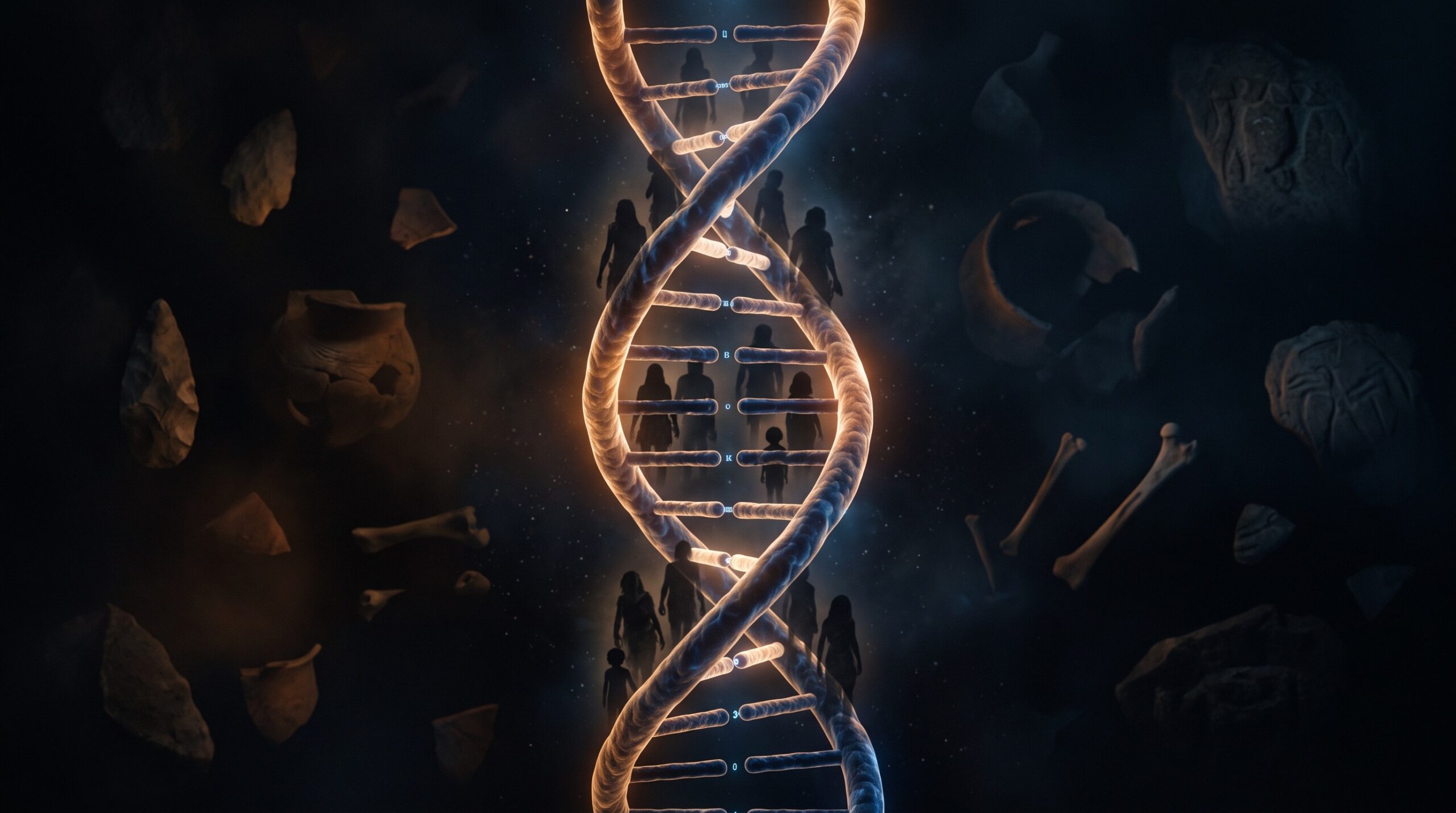
    You have never seen a photograph of them. No museum displays their bones, and no textbook names them. Yet according to a study published in Science at the end of July 2026, DNA from at least one—and likely two—unknown human relatives is living quietly inside the genome of every person reading this sentence.

    The ancestors are not Neanderthals. They are not Denisovans. They are not any species for which a fossil has been found and sequenced. For the researchers behind the new work, that is precisely what makes them worth naming: “ghost lineages,” populations whose existence can be inferred from mathematics and living genomes, but whose physical remains have never been recovered—an approach that stands in notable contrast to what scientists have learned by sequencing Neanderthal DNA directly from recovered bones.

    The finding lands at a moment when human evolution has stopped looking like a straight line and has become more like an overgrown family album. Interbreeding with Neanderthals, Denisovans, and now unidentified populations was not a footnote. It was, the evidence increasingly suggests, a central part of becoming human.

    ## A tool that does not need bones

    The difficulty of finding ghost ancestors has always been practical. High-quality ancient DNA degrades in hot environments. Africa, where some of the most important archaic populations almost certainly lived, has yielded only a handful of usable sequences older than a few thousand years. Archaeologists cannot sequence a fossil they do not have.

    The new technique, developed by a team centered at the University of California, Berkeley, sidesteps the problem entirely. Called TRACE—short for Tracking Archaic Contributions via ARG Estimation—it works by reconstructing “ancestral recombination graphs,” enormous tree-like structures that map how pieces of DNA have been inherited over hundreds of thousands of years.

    When deeply divergent populations interbreed, the event leaves a distinctive signature: unusually long genetic branches and patterns that persist for far longer than would be expected in a single, isolated group. The Debrief’s report on the study explains that TRACE searches for exactly those signatures, and it does so without needing a reference genome from a known archaic population. If a ghost left its mark, TRACE can in principle detect it.

    The team first tested the approach on simulated populations, where they knew the true history, and found it achieved high accuracy with very low false-positive rates. Then they applied it to data from the 1000 Genomes Project, which spans hundreds of individuals from populations across Africa, Europe, Asia, and beyond.

    TRACE successfully recovered the well-established signals of Neanderthal ancestry in Europeans and Asians, and Denisovan ancestry predominantly in Asian and Oceanian groups. That was expected. What it found next was not.

    ## Ghost ancestry in every population tested

    The program identified segments of DNA that matched neither Neanderthals nor Denisovans, appearing in roughly 0.5 to 1.1 percent of the genome across every modern population the researchers examined. The signal was not confined to Africans, as some earlier hypotheses had predicted. It appeared at remarkably similar levels in both Africans and non-Africans.

    That distribution matters. It suggests the interbreeding event happened before the great out-of-Africa dispersal roughly 50,000 to 70,000 years ago, meaning the ghost lineage contributed DNA to the common ancestors of all living humans.

    The Live Science report notes that the ghost population diverged from our lineage approximately 830,000 years ago—deep in the Middle Pleistocene, a period from which the human fossil record in Africa remains frustratingly incomplete. The identity of this population is unknown, but candidates include African populations of Homo heidelbergensis or other Middle Pleistocene groups that the ancestors of modern humans encountered before leaving the continent.

    Perhaps most provocative is where the ghost DNA persists. Some of it sits inside genomic regions long described as “Neanderthal and Denisovan ancestry deserts”—stretches of the modern genome that appeared to contain unusually little archaic material. Scientists had interpreted those deserts as evidence that natural selection actively removed archaic variants because the modern human versions offered some advantage.

    The TRACE results complicate that story. Ghost ancestry survives inside many of the same regions, which means natural selection did not purge all archaic DNA equally. It may have treated genetic contributions from different lineages in very different ways.

    ## A second, older ghost in Oceania

    The study did not stop at one unknown population. When the researchers looked specifically at genomes from Papua New Guinea, Vanuatu, and the Santa Cruz Islands, TRACE detected something even older—genetic segments so deeply divergent that the team calls them “super-archaic.”

    These sequences were not directly inherited from the super-archaic population by modern humans. Instead, they appear to have entered the human gene pool through an intermediate: Denisovans themselves, who—as the growing body of Denisovan research shows—the evidence now suggests interbred with an extremely ancient lineage before later intermixing with modern humans.

    The super-archaic population diverged from the human line approximately 1.77 million years ago, according to the team’s estimates. For context, that predates the split between modern humans and Neanderthals by more than a million years. The UC Berkeley press release points to Homo erectus as one plausible candidate, given its deep divergence time and wide geographic distribution across both Africa and Eurasia.

    This layered pattern—modern humans inheriting DNA directly from one ghost lineage and indirectly from a much older one through Denisovan interbreeding—means the simplest available diagrams of human evolution are not just oversimplified. They are missing entire branches.

    ## What is confirmed, what is suggested, and what is still unknown

    Separating evidence tiers matters with a story this dramatic. The confirmed elements are substantial: a method called TRACE was tested in simulations and applied to real human genomic data; it recovered known Neanderthal and Denisovan signals as expected; and it identified additional genetic material that cannot be explained by either known group. The paper appeared in Science, a peer-reviewed journal, with 102 cited references.

    The leading interpretation—that this material represents genuine archaic admixture from at least two unknown populations—fits the data well. The researchers argue for a ghost lineage that interbred with the common ancestors of all modern humans before the out-of-Africa migration, and a super-archaic lineage whose DNA reached us via Denisovans. This is the best-fitting model, not the only possible one.

    What remains unproven is the specific identity of either population. TRACE can detect that introgression happened; it cannot yet assign those signals to Homo heidelbergensis, Homo erectus, or any other named species without an accompanying fossil genome. The dating and divergence estimates carry genuine uncertainty. And while ghost ancestry appears to persist in ancestry deserts, the functional consequences—whether those ghost variants do anything to immune function or metabolism, for example—are early-stage observations that need far more work.

    ## A mystery that rewrites the question

    The study is part of a wider transformation in how human origins are understood. Not long ago, the story was relatively simple: modern humans evolved in Africa and spread, replacing earlier groups without much contact. Then Neanderthal DNA was found in non-Africans. Then Denisovan DNA turned up in Asia and Oceania. Now ghost lineages are turning up everywhere.

    Readers familiar with the Denisovan mystery and its reach into human ancestry will recognise the pattern. Each new method for reading old DNA makes the family tree more tangled, not less. Far from replacing earlier groups, our ancestors appear to have repeatedly encountered, intermixed with, and absorbed parts of populations whose bones may never be found.

    That pattern also gives the ghost story a deeper resonance. It means we are not the product of a single lineage that triumphed over its rivals. We are partly the product of populations that no longer exist independently, but whose genetic material persists inside people alive today. The ghosts are not gone. They are inside us, hidden in stretches of DNA that were once considered purely modern.

    The parallel with other revolutions in human evolution science is instructive. Each major discovery has not answered the big question—where did we come from?—so much as it has shown that the question itself was too narrow. Humanity is not a single origin story. It is a fabric woven from multiple ancestries, some of which remain invisible except for the faint, persistent signal they left behind in our genome.

    ## The missing bones and the next search

    TRACE cannot find the fossils, but it can narrow the search. If the ghost lineage contributed DNA before the out-of-Africa migration, its remains should be sought in African Middle Pleistocene contexts—and the search has only barely begun in many of the regions where such populations would have lived. The super-archaic lineage, mediated through Denisovans, opens a different set of possibilities across Asia.

    The computational approach also means that genomic datasets from understudied populations, especially in Africa and Oceania, may hold additional ghost lineages that have not yet been detected because no one has applied TRACE to their genomes. The method is freely described in the publication, and the 1000 Genomes data is publicly available, so independent replication should be possible relatively quickly.

    For now, the defensible conclusion is already strange enough. Everyone you have ever met carries DNA from a human relative whose name science does not know, whose face no artist has reconstructed, and whose bones may be buried somewhere no one has thought to dig. Next to that, the search for the fossils that might finally give a face to the ghost looks less like an ending and more like the beginning of a much older mystery.

    ### Sources and further reading

    Science: Recovering signatures of archaic hominin introgression using ancestral recombination graphs (Zhang et al., 2026); The Debrief: Mysterious ‘Ghost’ Human Ancestor Hidden in Our DNA; Live Science: Scientists discover 2 new ghost lineages in modern humans; Nature human evolution archive.

  • The Sunken Basilica of Iznik: Did a Lake Hide the Council of Nicaea?

    The Sunken Basilica of Iznik: Did a Lake Hide the Council of Nicaea?

    # The Sunken Basilica of Iznik: Did a Lake Hide the Council of Nicaea?

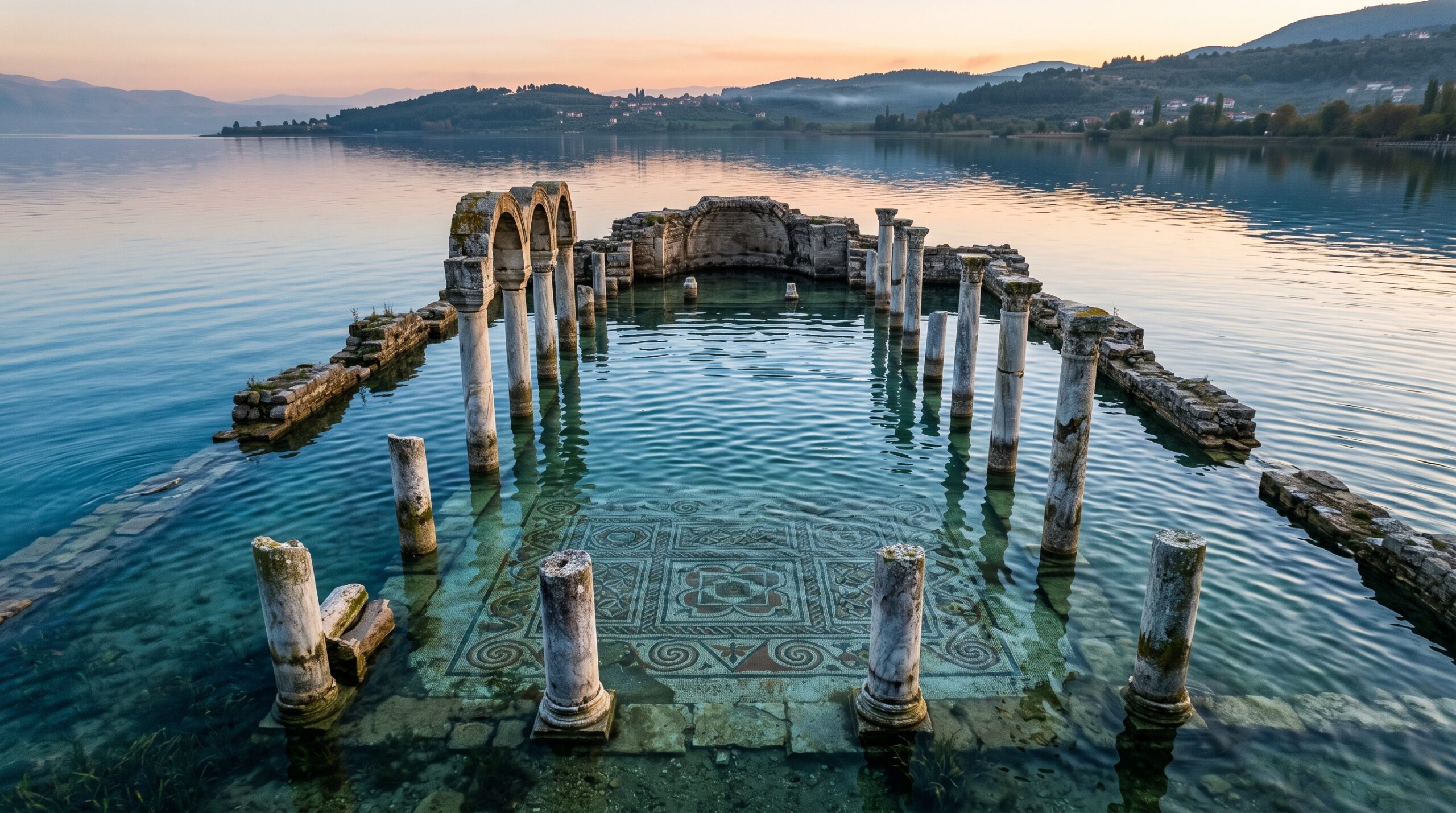
    Beneath the water of Lake Iznik, the outline of a fourth-century basilica has turned a familiar chapter of Christian history into a physical mystery. The structure is real. The more dramatic claim—that it was the church where the First Council of Nicaea met in A.D. 325—remains possible, disputed, and not yet proven.

    That distinction matters. The submerged ruins are not a fantasy, but the identity of the building depends on reconstructing a vanished shoreline, a changing city, and a council whose surviving historical record does not hand archaeologists a simple address.

    ## What is beneath Lake Iznik?

    The basilica lies offshore from İznik, the modern Turkish town built over ancient Nicaea. Archaeologists identified the submerged remains after aerial photography and later underwater investigation revealed walls, columns, and a church plan beneath the lake. Live Science’s archaeological report describes a fourth-century structure that appears to have been built near the ancient shoreline before later earthquakes and changes in water level altered the setting.

    The site is therefore more than a picturesque “sunken church.” Its date and location place it inside the right historical world: Nicaea was an important Roman and early Christian center, and the region experienced seismic and environmental changes capable of reshaping the waterfront.

    The first information gain is the separation of three claims that are often compressed into one headline: the basilica exists; it dates to the relevant broad period; and it hosted the council. The first two are archaeological propositions. The third is an identification argument.

    ## Why the Council of Nicaea connection is so powerful

    The First Council of Nicaea was convened under Constantine I to address a major dispute over Christian doctrine, especially the relationship between God the Father and Christ. Its decisions helped produce the Nicene Creed and gave the gathering an importance far beyond the walls of one ancient city. The historical outline from Britannica places the council in Nicaea in 325, but does not identify a surviving basilica as its meeting hall.

    That missing address is the opening through which the mystery enters. If the council met in a building now below the lake, the ruins could connect a famous theological turning point to a concrete landscape. If not, the basilica still reveals how early Christian architecture occupied a city later transformed by disaster, rebuilding, and rising water.

    Supporters of the identification point to proximity, chronology, and the church’s prominence. A large basilica near Nicaea’s ancient shore would be an intuitively plausible setting for an imperial-era gathering. But plausibility is not the same as proof, especially when the literary sources do not provide a definitive architectural match.

    ## The archaeological argument—and its limits

    The strongest evidence is physical: the submerged church, its construction period, and its position relative to ancient Nicaea. Archaeology Magazine’s coverage of the Iznik basilica provides wider context for the discovery and the continuing work around the site.

    The weaker link is the leap from “important fourth-century church” to “the council church.” Many early Christian buildings were rebuilt, expanded, or assigned new functions. A basilica’s size can suggest status, but it cannot by itself identify a specific meeting. Archaeologists would need a denser chain of evidence: inscriptions, construction phases, artifact patterns, or a spatial relationship that can be matched to ancient descriptions.

    A second insight is that the lake may be as important to the story as the council. Water does not merely conceal ruins; it changes the conditions under which they survive. Walls, foundations, and shoreline relationships may preserve information that a later urban landscape erased, while also making excavation slower and interpretation more difficult.

    ## What happened to the church?

    The basilica appears to have stood in a landscape vulnerable to earthquakes and shifts in the lake. Over centuries, the shoreline changed and the building passed out of ordinary view. That does not require a single catastrophic “sinking” event. Ancient waterfronts can disappear gradually through subsidence, sediment, reconstruction, and changing water levels.

    This is where the story resists the cleanest version of the legend. The ruins may have been submerged through a combination of natural processes rather than one dramatic night. Yet gradual disappearance can be more revealing than a catastrophe: it shows how a functioning sacred landscape can become invisible without anyone needing to erase it.

    For comparison, the discovery also echoes a broader archaeological pattern in which a small clue opens a much larger landscape. As with the 3,700-year-old ritual site found after a student noticed one lonely rock, the decisive evidence was not a ready-made monument with an explanation attached. It was a surviving feature that forced researchers to ask what the surrounding terrain once meant.

    ## Confirmed, plausible, and unknown

    **Confirmed:** a substantial basilica lies beneath Lake Iznik; it belongs broadly to the early Christian period; and it sits near the ancient city of Nicaea.

    **Plausible:** the church may have been important enough to connect with elite or imperial Christian activity, and its location makes the council theory understandable.

    **Unproven:** that the First Council of Nicaea actually met inside this specific structure. The identification remains an interpretation rather than a settled archaeological fact.

    That uncertainty should not flatten the story. It sharpens it. The ruins give us a rare physical encounter with the world around one of late antiquity’s most consequential gatherings, even if they cannot yet answer the most seductive question.

    ## The mystery beneath the mystery

    The real enigma is not simply whether a famous council met in a sunken church. It is how much of history depends on places whose names survived while their physical settings vanished. Nicaea remains on the map, but the shoreline has moved, the buildings have changed, and the old city now has to be read through water.

    Further underwater excavation, dating, and comparison with historical descriptions may strengthen—or weaken—the basilica’s proposed identity. Until that work is complete, the responsible conclusion is neither “this is definitely the council church” nor “the theory is meaningless.” It is a documented ancient building carrying a plausible historical possibility that still needs decisive evidence.

    Would finding an inscription beneath Lake Iznik change how you imagine the First Council of Nicaea—or would the unanswered question be part of what makes the ruins so compelling?

  • The Lonely Rock That Led Archaeologists to a 3,700-Year-Old Ritual Site

    The Lonely Rock That Led Archaeologists to a 3,700-Year-Old Ritual Site

    # The Lonely Rock That Led Archaeologists to a 3,700-Year-Old Ritual Site

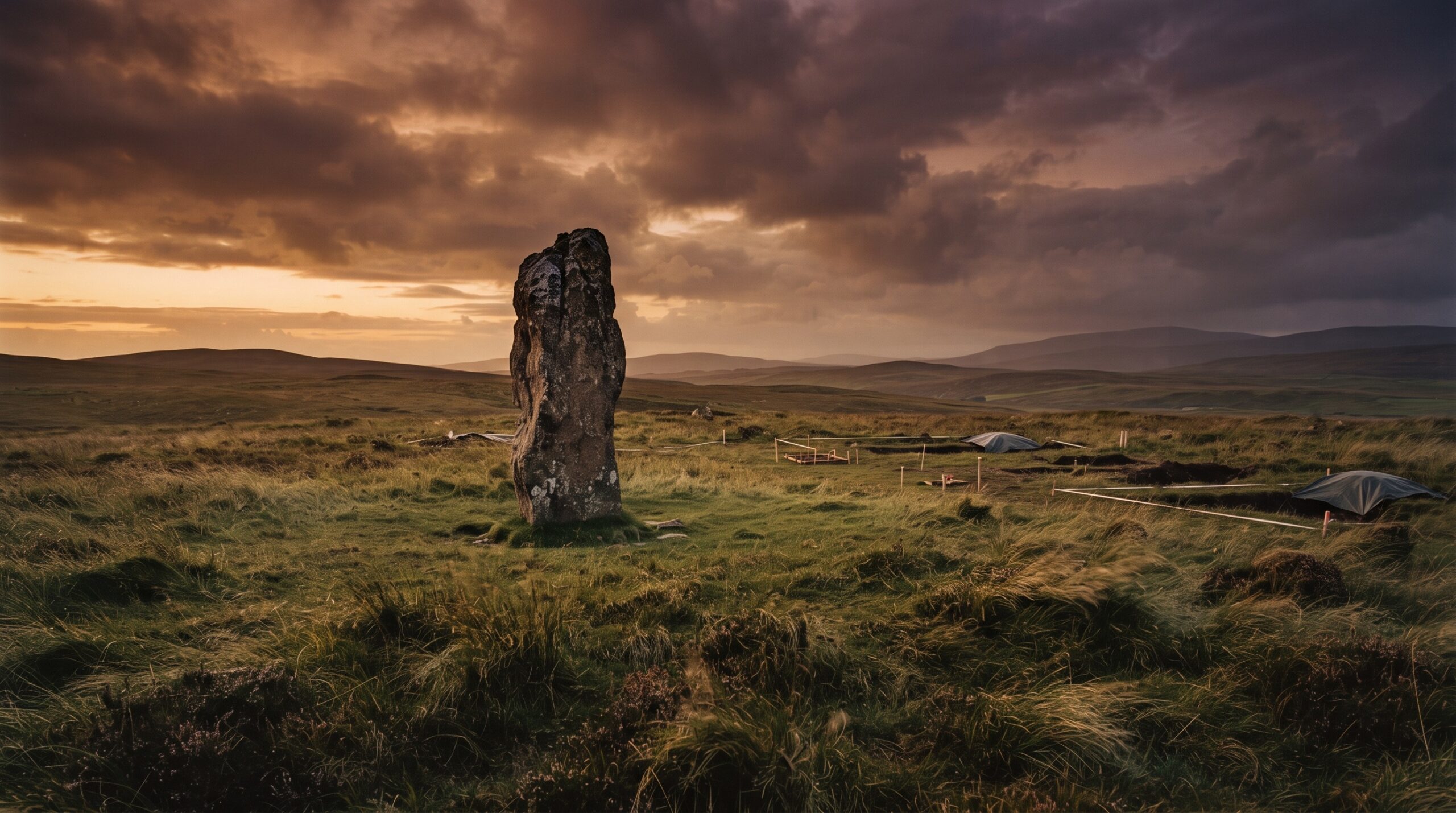
    The clue looked almost insultingly ordinary: one lonely rock sitting where no lone rock should have been. But when a student stopped to look more closely, the stone became the first visible thread in a buried landscape—one that archaeologists now date to roughly 3,700 years ago.

    The discovery matters because it is not simply a story about an old object. It is a reminder that ancient ritual places were often designed to disappear into the terrain. The site’s meaning is not written in a surviving inscription. It has to be reconstructed from position, material, and the strange persistence of a single stone.

    ## What the discovery reveals

    According to the report in Popular Mechanics, the student’s observation prompted archaeologists to investigate the surrounding area. Their work identified evidence of a Bronze Age ritual site, dating to a period when communities across Britain and Europe were building, reusing, and reinterpreting ceremonial landscapes.

    That sequence is the first important insight: the site was not found because a spectacular monument was sticking out of the ground. It was found because an apparently unremarkable feature did not fit its surroundings. Archaeology often advances through such mismatches—the detail that looks wrong until someone asks why it is there.

    A second insight is that “ritual site” does not necessarily mean a temple in the modern sense. Prehistoric ceremonial places could include settings for burial, seasonal gatherings, processions, offerings, feasting, or acts whose significance is now lost. The label describes a pattern of evidence, not a surviving explanation for every action performed there.

    ## Why one rock could matter so much

    A lone stone can be a remnant, a boundary marker, a deliberately placed object, or the surviving part of a structure whose other elements have vanished. Its importance comes from context. In a landscape repeatedly reshaped by farming, construction, erosion, and modern roads, the stone may preserve a relationship that is no longer obvious at ground level.

    This is why archaeologists compare a new find with the wider history of prehistoric monuments rather than treating it as an isolated curiosity. Historic England’s research on prehistoric monuments shows how much interpretation depends on landscape relationships, preservation, and the difference between what survives physically and what once mattered socially.

    The discovery also complicates the popular image of ancient people building only enormous, unmistakable monuments. Some ritual activity may have depended on controlled access, repeated memory, or subtle markers known to local communities. A place could be important without looking dramatic to an outsider thousands of years later.

    ## Confirmed, suggested, and still unknown

    What is strongest here is the physical discovery and its archaeological dating. The existence of a prehistoric ritual context is an evidence-based conclusion reported from the investigation. What remains less certain is the exact ceremony, belief, or community story connected to it.

    There is no responsible reason to turn the site into proof of lost technology, visitors from elsewhere, or a civilization more advanced than the evidence allows. But uncertainty does not make the discovery less mysterious. It makes the mystery more precise. We know a place was used in a particular period; we know a surviving feature helped reveal it; we do not know what participants believed they were doing there.

    That gap is where the human story becomes most haunting. A monument can survive while its instructions disappear. The stone remains, but the agreement that gave it meaning is gone.

    ## The larger mystery is the landscape itself

    The most useful way to understand the find is as a connection between attention and deep time. A student noticed something that routine movement through a landscape might have ignored. Archaeologists then read the surrounding ground as a record rather than scenery.

    That method offers a broader lesson for unexplained history: the past is not always hidden behind a dramatic revelation. Sometimes it is hiding in plain sight, compressed into a feature that seems too small to matter. The information gain is not merely that a new ancient site exists. It is that the site shows how fragile our assumptions about “empty” landscapes can be.

    Further excavation, dating, and comparison with nearby sites may clarify whether the location belonged to a larger ceremonial network. Until then, the lonely rock is both evidence and question—an object that points toward a vanished ritual without telling us what the ritual meant.

    If you encountered a stone that seemed completely out of place, would you assume it was natural—or stop to ask who might have put it there, and why?

  • Multiple Pastors Say They Were Secretly Briefed to Prepare Churches for UFO Disclosure

    Multiple Pastors Say They Were Secretly Briefed to Prepare Churches for UFO Disclosure

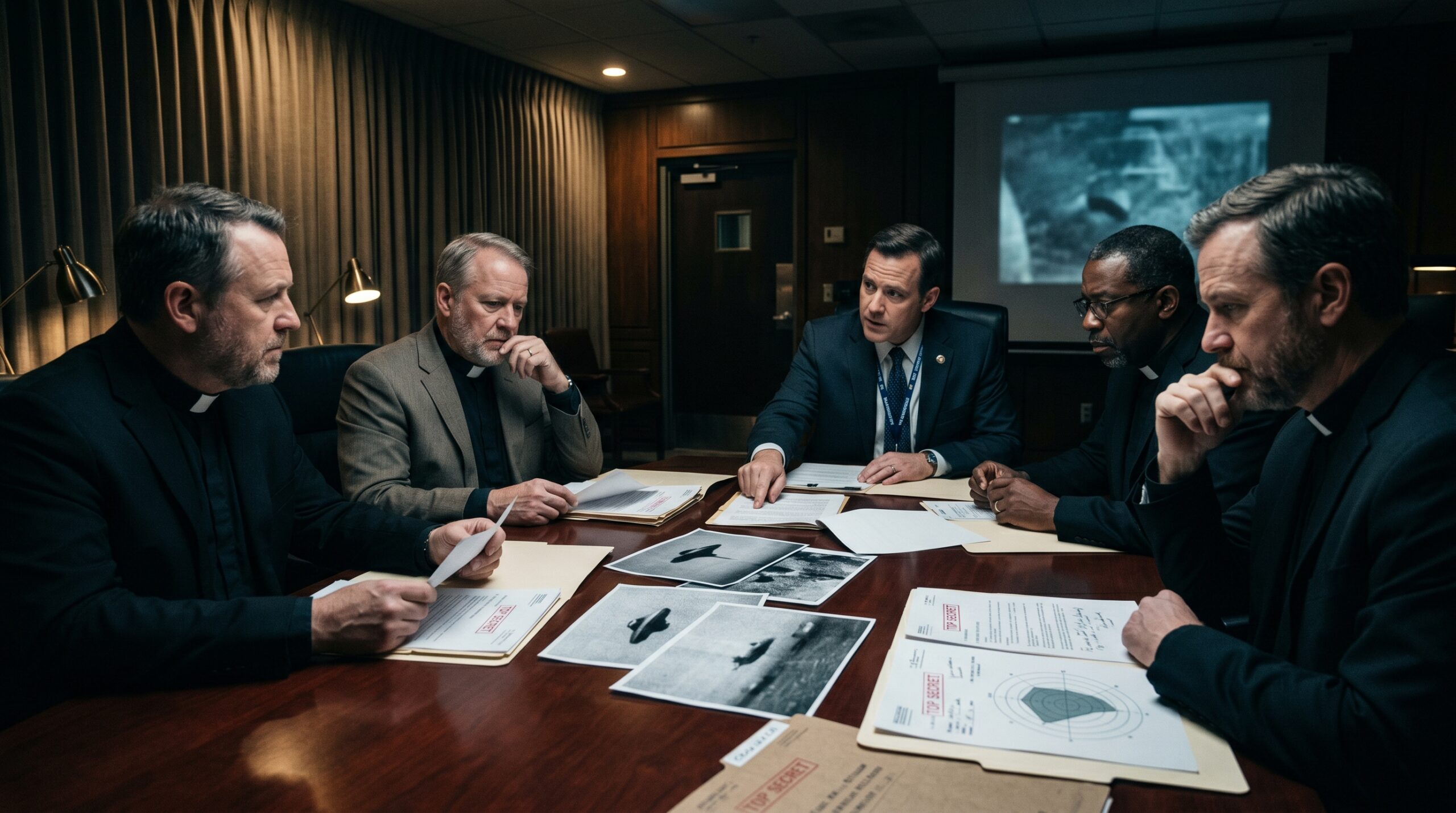
    The UFO disclosure narrative has been circling government hearings, congressional deadlines, and military whistleblowers for years. But in late April 2026, the conversation shifted into a territory that few people inside the movement expected: evangelical pulpits. Evangelist Perry Stone went public with a claim that U.S. officials have been privately briefing pastors, warning them to prepare their congregations for the disclosure of non-human entities. Stone was not alone in making the claim. Pastor Greg Locke and commentator Tony Merkel have reported similar briefings, each describing conversations with people they identified as Christians working inside military intelligence operations. Taken individually, each account is easy to write off as coincidence. Taken together, they paint a picture of something far more organized — and far more difficult to dismiss.

    What the Briefings Purportedly Covered

    According to the accounts that have surfaced, the briefings went beyond a simple heads-up about upcoming government releases. Perry Stone described discussions about reptilian entities and non-human materials. Tony Merkel corroborated the general framework, saying he was contacted by the same network of Christians inside the intelligence community with the explicit mission of preparing the broader church. Greg Locke, who commands a massive online following, amplified the message and pushed the conversation into mainstream discourse.

    The discussion of jinn and non-human entities in Islamic tradition has always run parallel to Western UFO narratives, with striking overlaps in how these beings are described. What the pastors are describing — entities that are not human, intelligence operations that have known about them, and a coordinated effort to prepare religious communities — echoes the kind of cross-cultural patterns that people in this space have been tracking for decades.

    Why Pastors Are Being Briefed Specifically

    The theological implications of non-human intelligence disclosure are enormous. If the government is about to reveal the existence of non-human entities — whether they are extraterrestrial, interdimensional, or something else entirely — the people most responsible for helping communities process that reality will be religious leaders. It makes strategic sense that any coordinated disclosure effort would involve pastoral preparation beforehand.

    But the more unsettling question is why the briefings came from military intelligence insiders rather than from civilian or religious authorities directly. If the network doing the briefing truly consists of Christians embedded in intelligence operations, the arrangement suggests something closer to an internal awakening than a public relations strategy. People inside the system who hold religious convictions may be trying to ensure that when the truth comes out, the faith community is not blindsided by it.

    The prophecy community has been watching end-times markers closely throughout 2026, and the convergence of UFO disclosure talk with religious preparation has only deepened the sense that something unprecedented is approaching.

    The spiritual turn within the UFO disclosure community did not happen overnight. The intersection of faith and government insider claims has been building for years, and the pastor briefing claims are a continuation of that trajectory.

    The Cross-Platform Corroboration

    What makes these claims harder to ignore is that they did not come from a single source. Perry Stone shared his account on his podcast. Greg Locke amplified it on social media, where his audience responded with immediate intensity. Tony Merkel corroborated the account independently. Multiple religious leaders across different platforms and different audiences began saying the same thing: they had been contacted by government-adjacent insiders to prepare their people.

    The pattern of religious leaders being briefed for disclosure matches what earlier claims about the spiritual dimension of the UAP insider community predicted. If the intelligence community itself contains people with deep religious convictions, they would naturally reach out to religious leaders rather than wait for a formal press release.

    What This Means for the Disclosure Conversation

    For people who have been tracking the UFO disclosure narrative through congressional hearings and military whistleblowers, the pastoral briefing angle adds an entirely new dimension. It suggests that preparation for disclosure is not happening only in political and military channels but also in religious ones. It suggests that whoever is pushing disclosure from inside the system understands the theological earthquake it could produce, and that they are actively working to soften the shock.

    What Cannot Yet Be Verified

    None of these claims come with independently verifiable documentation. The briefings were described as private, off-the-record conversations. The identities of the military intelligence insiders have not been confirmed. The specific claims about reptilian entities and non-human materials remain at the level of reported conversation rather than demonstrated fact.

    The Trump administration has promised UFO document releases, but no official briefing schedule for religious leaders has been made public. Until that changes, the pastor briefing claims sit in the same territory as a thousand other insider accounts: too consistent to dismiss, too unverified to accept.

    What Remains

    The claims made by Perry Stone, Greg Locke, and Tony Merkel represent something unusual in the disclosure conversation — a coordinated narrative crossing religious and intelligence boundaries. Whether those briefings actually happened as described, or whether they are part of a broader information strategy, the fact that the conversation has reached this point at all reveals how much the disclosure movement has expanded. It is no longer just about government documents and congressional hearings. It is about what happens to human belief systems when they encounter something that does not fit inside the boxes we built to contain reality.

  • Yusuff Shakur’s Viral Near-Death Drawing: What His Cosmic Map Claims to Show

    Yusuff Shakur’s Viral Near-Death Drawing: What His Cosmic Map Claims to Show

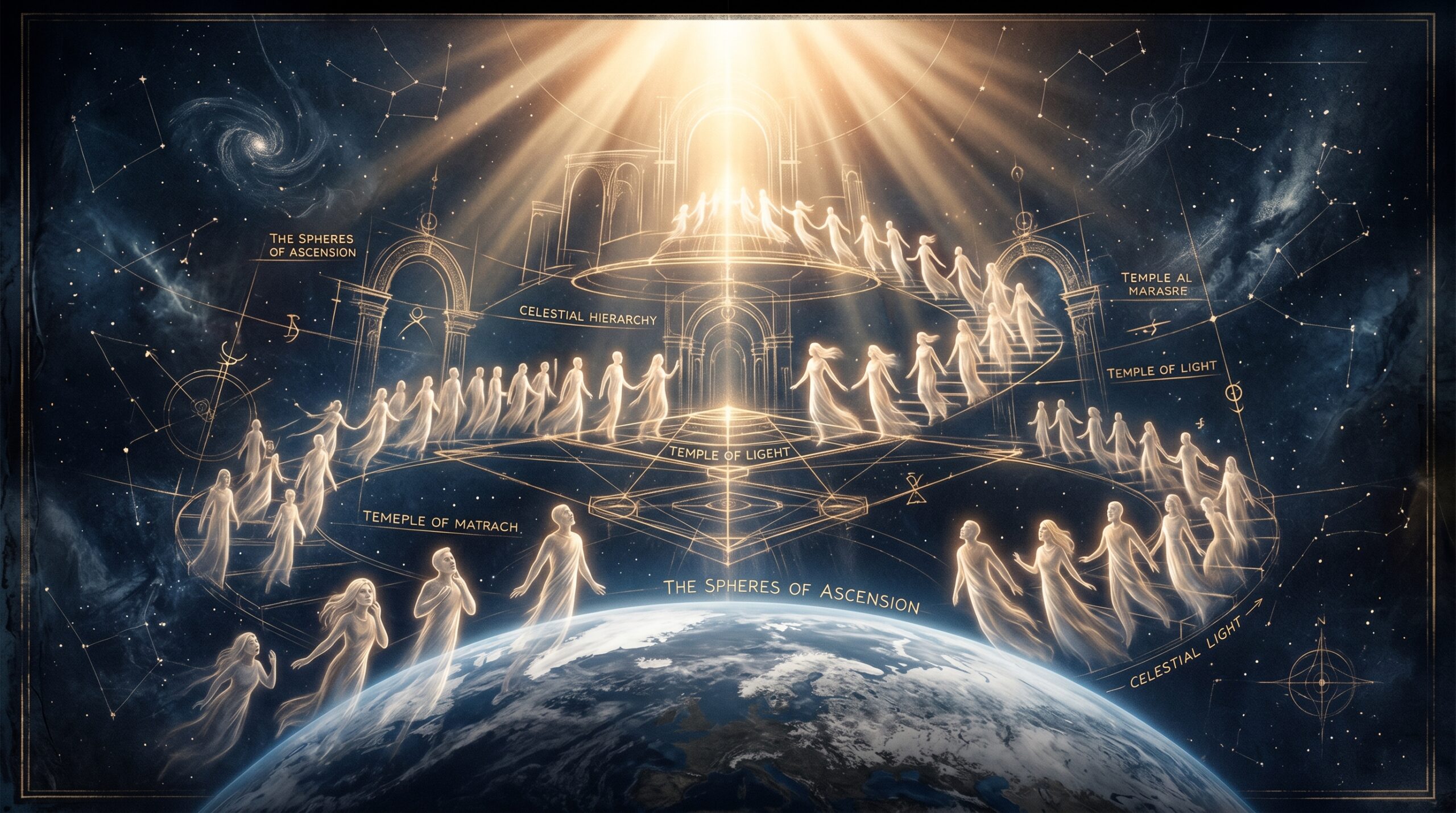
    A single hand-drawn sketch, shared on social media by a man named Yusuff Shakur, has spread across Reddit, X, and news outlets faster than almost any recent paranormal or near-death account. The drawing allegedly captures what Shakur saw during a near-death experience — a layered architecture above Earth, with figures positioned at different levels — and it has ignited a firestorm of debate. For people who have spent years following NDE research and consciousness studies, the image reads like a visual echo of claims that have surfaced for decades: that there is a structured reality waiting just beyond the visible world. For skeptics, it is an imaginative exercise that went viral because the internet rewards striking images over cautious ones. Either way, the drawing is now everywhere, and the people who argue about it are not backing down.

    What the Drawing Actually Shows

    The sketch depicts a vertically stacked structure with Earth positioned at the base. Above it, Shakur drew multiple tiers or layers — each one populated with human-like figures. The arrangement suggests a kind of cosmic geography, where different levels of reality or consciousness coexist above the physical world. Shakur reportedly said he drew the image because words were not enough to describe what he experienced. Instead of narrating his account, he put pencil to paper and tried to recreate the architecture of what he witnessed.

    The raw simplicity of the sketch is part of why it has resonated. It does not look like a polished piece of art or a diagram produced by a graphic designer. It looks like someone trying to communicate something they genuinely struggled to articulate — the kind of thing people expect to see from an authentic experience, not a calculated fabrication.

    Why Believers Think This Matches Something Old

    People who study near-death experiences and altered states of consciousness have noticed that Shakur’s drawing is not entirely new in its shape. The idea of layered realities stacked above the physical world appears in dozens of traditions. Dante’s cosmology placed multiple spheres above Earth. Kabbalistic trees of life map different levels of existence. Vedic and Buddhist cosmologies describe planes of being that interpenetrate the one we inhabit. Even modern NDE accounts frequently mention encountering structured realms — some describe cities of light, others describe tiered landscapes or ascending corridors.

    What makes Shakur’s sketch notable is that it appeared not from a scholar or a historian but from someone who says he was pulled beyond ordinary perception and tried to draw what he found. The parallels to older cosmologies do not prove anything. But for people inside the consciousness and NDE communities, those parallels feel like a pattern that is hard to dismiss.

    The third-man phenomenon, where isolated explorers encounter a guiding presence, shares a similar energy. In those accounts too, people report perceptions that ordinary explanations struggle to address — and the more stories accumulate, the harder it becomes to write them all off as coincidence.

    Why the Sketch Went Viral Now

    The post exploded on r/HighStrangeness, where it earned more than 5,192 points and nearly 800 comments. From there it spread to r/StrangeEarth and r/Christianity, where the reactions split sharply. Some readers found the drawing unsettling, even ominous. Others saw it as confirmation of what they had suspected all along — that consciousness survives death and that the structure of reality looks nothing like what science currently maps.

    Mainstream outlets picked it up quickly. Complex ran the story on X (formerly Twitter). The Times of India published a feature. Multiple Reddit communities debated it in real time. The speed of this spread owes a lot to the algorithm-friendly nature of a striking image, but it also reflects a broader cultural moment. In April and May 2026, multiple pastors reported being privately briefed by military intelligence to prepare congregations for UFO disclosure, and the line between spiritual and non-human realities has never felt more blurred. People are already asking big questions about the nature of existence, and a drawing that claims to map the structure of the afterlife lands in the middle of that conversation.

    The spiritual dimension of the government insider UFO community has been moving toward exactly this kind of territory for years. The idea that non-human intelligences exist has always carried theological baggage, and Shakur’s sketch feeds directly into that undercurrent.

    What the Drawing Does Not Prove

    The sketch is striking, but it is not evidence in any scientific sense. There is no way to verify what Shakur experienced, and there is no way to confirm that the drawing corresponds to any objective structure beyond ordinary perception. The parallels to older cosmologies could reflect Shakur’s own exposure to those ideas, consciously or unconsciously. Near-death experiences are notoriously difficult to study, and researchers remain divided over what they actually reveal about consciousness.

    An Oxford physicist has recently argued that consciousness might perceive hidden dimensions, a claim that adds academic credibility to the conversation without confirming any particular account. The broader conversation about whether consciousness is more than brain chemistry remains open, with serious researchers working on both sides.

    What Remains Open

    Yusuff Shakur’s drawing is not proof of anything. But it is also not meaningless. It entered the cultural conversation at a moment when people are already questioning the nature of reality, and it struck a nerve precisely because it visualized something that thousands of people feel but cannot articulate. Whether it represents a genuine glimpse of a structured afterlife, an unconscious synthesis of ideas Shakur absorbed over time, or simply a compelling piece of art that captured the public imagination at the right moment — the drawing refuses to be ignored. And for a community that has built its worldview on claims that defy easy explanation, that refusal is exactly the point.

  • Tim Burchett’s Sworn Testimony About Recovered Non-Human Bodies: What the Congressman Claims He Was Told

    Tim Burchett’s Sworn Testimony About Recovered Non-Human Bodies: What the Congressman Claims He Was Told

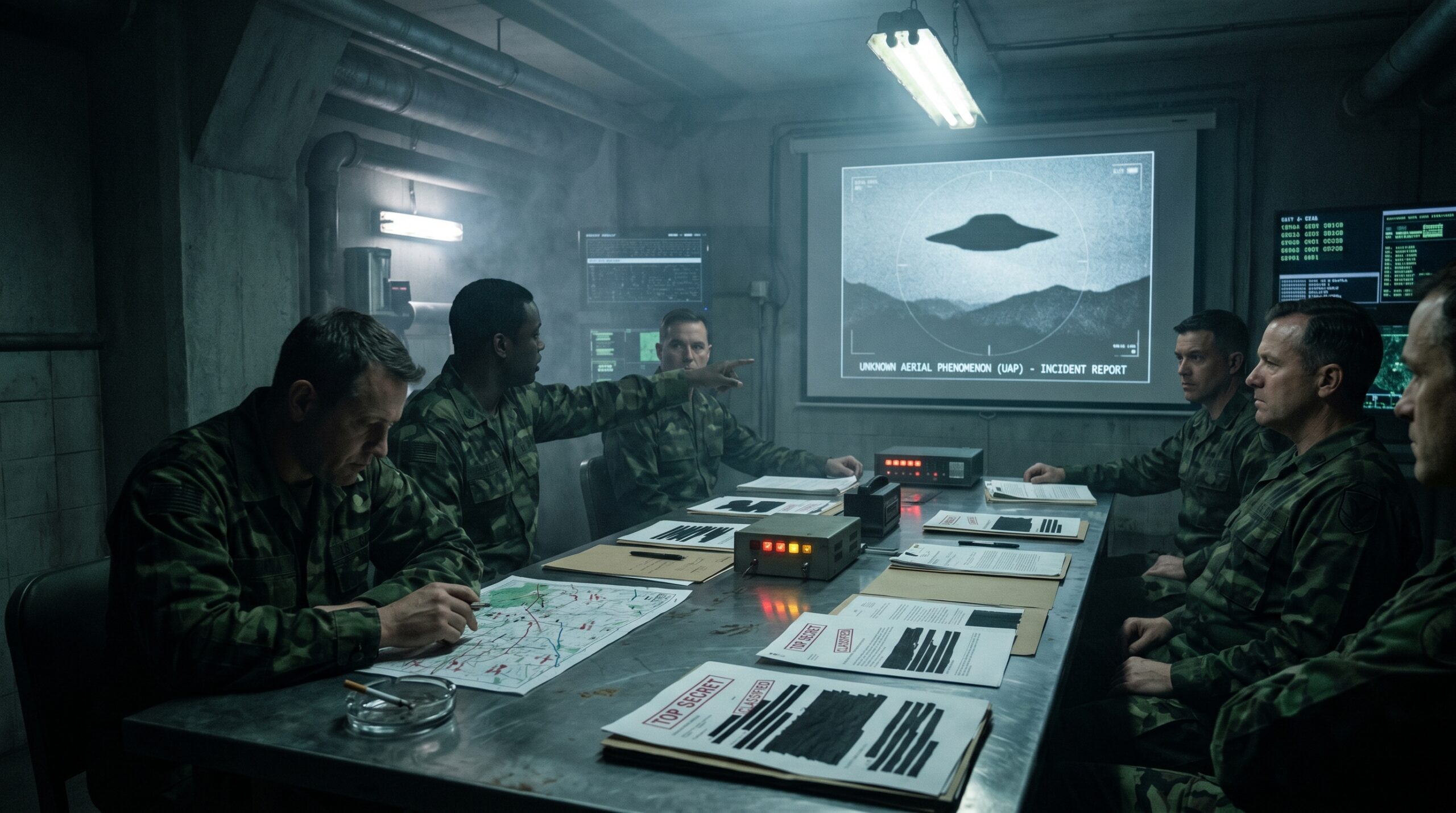
    Congressman Tim Burchett of Tennessee has been one of the most vocal members of Congress on the question of non-human intelligence. He has said he has seen too much in his government UAP briefings to dismiss the possibility of alien life. He has told interviewers that if the public could see what he has seen, they would not sleep at night. And in recent appearances, Burchett has gone further: he has suggested that he has been informed about recovered non-human bodies, based on sworn testimony from military and intelligence personnel. He will not share the details publicly — he says the people who told him explicitly asked that the information not be released — but the fact that a sitting member of Congress is willing to say even this much has electrified the UAP disclosure community. For people who have spent years demanding that the government acknowledge what it knows, Burchett’s comments read as the closest thing to a confirmation that they have ever heard from someone inside the system.

    What Burchett Has Actually Said

    Burchett’s claims have emerged across multiple interviews and platforms rather than in a single definitive statement. He has told Piers Morgan that he is convinced alien life exists, pointing to government briefings, pilot testimony, and video evidence that has been shown to classified audiences. He has discussed the topic with NewsNation, emphasizing that the evidence he has seen is not something that can be publicly shared under current classification rules but that it would keep an ordinary person awake at night.

    On Psicoactivo, a Spanish-language analysis program, Burchett’s comments about sworn testimony describing recovered alien bodies were featured and dissected. The framing is careful: Burchett is not claiming personal knowledge of the bodies. He is saying that people who have provided sworn testimony to congressional committees have told him about recovered non-human materials and remains. That distinction matters, but it does not diminish the impact of the claim coming from a congressman who sits on the oversight committees.

    Why Burchett’s Account Carries Weight

    Burchett’s position matters because of it. He is not a journalist or a podcaster. He is a member of Congress sitting on committees with direct oversight over the intelligence community and the Department of Defense. When a person in that position says he has been briefed on recovered non-human bodies, the claim carries an entirely different weight than the same statement from someone outside the system.

    Burchett has also been consistent across multiple appearances. He does not sensationalize the claim with specific details about where the bodies were recovered or what they looked like. He sticks to a broader framing: he has been briefed, the briefings have been disturbing, and the people who told him asked that he not share specifics. That restraint is exactly the kind of thing that makes the claim harder to dismiss as attention-seeking.

    The pattern of UFO whistleblowers being silenced has been one of the most persistent narratives in the disclosure community, and Burchett’s willingness to speak at all — even in these careful terms — stands in contrast to that pattern. He is using his congressional platform to amplify the issue without crossing the line into classified disclosure.

    What the Sworn Testimony Allegedly Covers

    According to accounts that have circulated in UAP communities, the sworn testimony Burchett referenced includes descriptions of recovered non-human materials and biological remains. The details are consistent with what David Grusch and other whistleblowers have alleged in congressional testimony: that the U.S. government has recovered non-human spacecraft and bodies from crash sites over the course of decades.

    The David Grusch’s reported advisory role with the Trump administration on UFO disclosure has given new life to these claims, and Burchett’s comments arrive in the same environment where the government’s own insiders are pushing for declassification from the inside.

    Another congressman, Eric Burlison, has made claims about mass-witness UAP encounters documented by military personnel, adding to the body of congressional-level reporting on the topic. The convergence of Burchett, Burlison, Grusch, and other sources pointing toward the same conclusion — that the government has recovered more than it has acknowledged — is what makes this moment in the disclosure debate feel different from past ones.

    What Cannot Yet Be Verified

    Burchett has not released the names of the witnesses who provided the sworn testimony, nor has he shared the content of those statements. The claims about recovered bodies remain at the level of reported congressional briefing rather than publicly documented fact. The Department of Defense has not confirmed the existence of recovered non-human bodies or materials. The testimony Burchett described has not been independently corroborated by other members of Congress or by publicly released documents.

    Until those details are released or confirmed, the claims remain in the same category as the broader UAP whistleblower allegations: too consistent to dismiss outright, too classified to verify.

    What Remains

    Tim Burchett’s comments are significant because of who he is, not because of what he has specifically revealed. He is a sitting member of Congress saying that he has been briefed on non-human bodies based on sworn testimony from military personnel. That claim alone is enough to shift the disclosure debate. It means the question is no longer whether anyone inside the government believes these things happened. It means someone with oversight authority has heard the testimony and decided that the public needs to know that it exists, even if he cannot share the details. The fact that he is choosing to speak at all — carefully, without naming names — suggests he believes the truth is closer to public acknowledgment than it ever has been.

  • James Hampton’s Throne of Third Heaven: The Secret Installation and the Undeciphered Book

    James Hampton’s Throne of Third Heaven: The Secret Installation and the Undeciphered Book

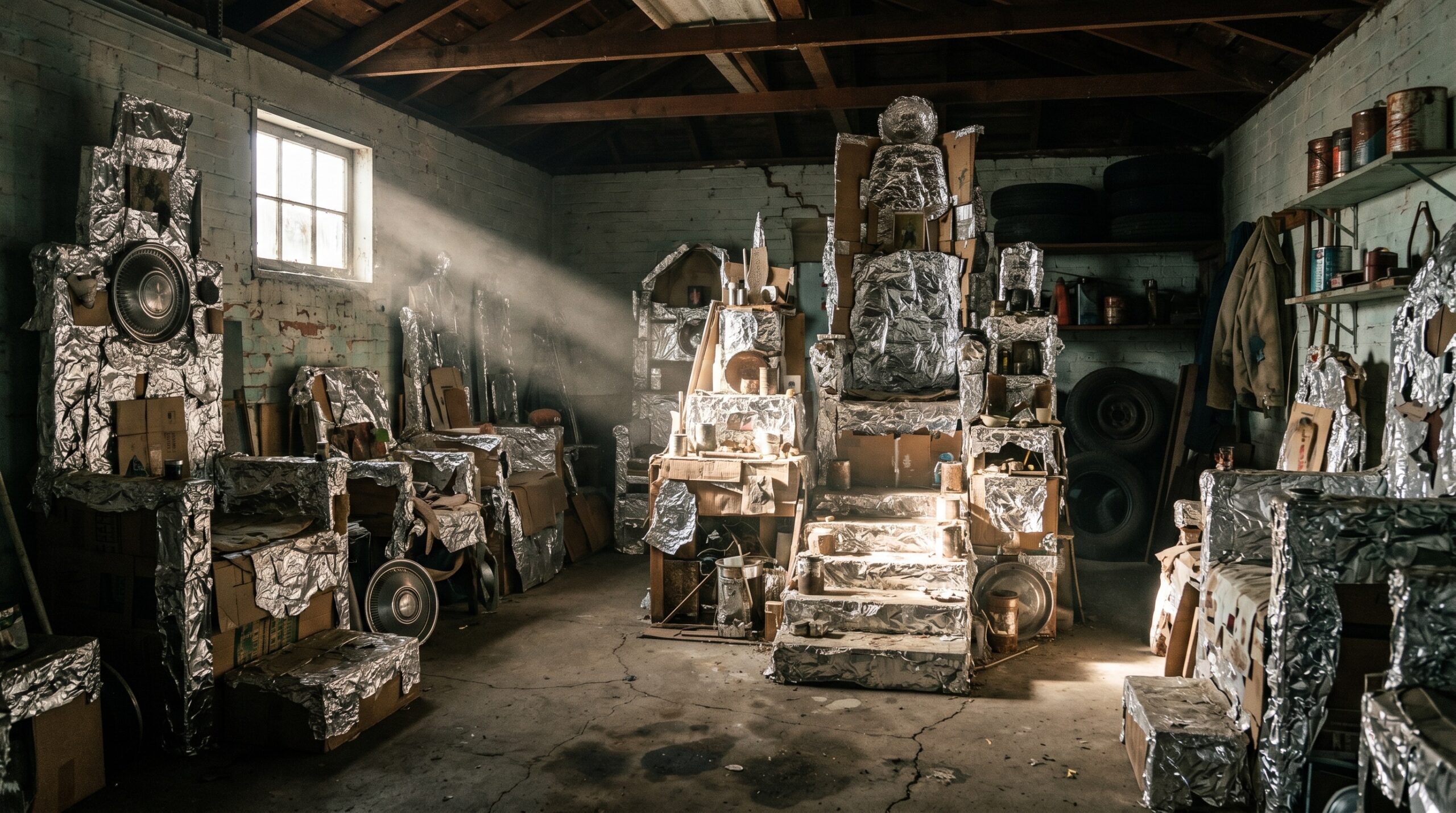
    A janitor rented a garage on a side street in Washington, DC, and for sixteen years he went there every night after his shift and built something in complete silence. When he died in November 1964, the landlord broke into the room and found it packed from floor to ceiling with 177 objects — thrones, altars, and ritual structures assembled from cardboard, tin foil, broken glass, and light bulbs — arranged into the most ambitious, most mysterious folk-art installation in American history.

    Hampton called it “The Throne of the Third Heaven of the Nations’ Millennium General Assembly.” The name itself is a sentence that sounds like it was delivered rather than composed. The objects are covered in gold and silver foil, built around salvaged furniture and crowned with improvised halos and spires. They read like sacred architecture constructed from a city’s discarded refuse, and they were made by a man who nobody — family, friends, coworkers — had any idea was doing this work.

    The objects are extraordinary. The book Hampton left behind — 104 pages of handwritten text using a partially invented script that linguists have never fully decoded — is what makes people unable to close the case.

    The Discovery

    James Hampton was a 50-year-old World War II veteran who worked as a night janitor for a law firm in Washington. He showed up for his shifts. He cleaned. He was quiet and polite and unremarkable in all the ways a person can be unremarkable during the hours when they are doing their assigned job.

    Nobody knew about the garage on 1413 W Street NW. Nobody knew about the work inside it. Hampton had been visiting that room every night after clocking out and building objects that would take the Smithsonian decades to fully catalog and that scholars still debate today.

    When Hampton died in 1964, the landlord discovered the room during a routine check and found it literally packed with things. The Smithsonian acquired the full collection and it remains one of the landmark works in their permanent collection. The installation was so dense and so extensive that the landlord could barely enter the space. Hampton had transformed an ordinary rented garage into a cathedral of improvised sacred objects.

    The 177 Objects

    The inventory numbers are what make the project feel unreal. Not twelve. Not thirty. One hundred and seventy-seven objects, each constructed with a consistency of vision and a level of ambition that has no parallel in American outsider art.

    The materials are what you find in a city that discards things: cardboard, aluminum foil, broken glass, light bulbs, wire, old wood, fabric scraps, tin cans. Hampton assembled these materials into throne-like structures, altars, crowns, and standing forms that resemble architectural fragments of a civilization that never existed. Each piece is wrapped in foil, creating a metallic surface that catches light in a way that makes the crude materials look precious.

    The craftsmanship is not polished. It is obsessive. Hampton did not build one impressive piece and stop — he built a hundred and seventy-seven of them and arranged them into a complete environment. The level of sustained vision required to do that over sixteen years, in a rented garage, in total secrecy, is what moves the story out of the art category and into the mystery category.

    The Book Nobody Can Read

    Hampton left behind a 104-page book that he called “The Book of the Unknown.” It is written in a mix of recognizable English and symbols, abbreviations, and structural patterns that nobody has fully decoded. The text appears to be Hampton’s own system — a hybrid of conventional spelling and an invented linguistic structure that reflects his personal theology and cosmology.

    Scholars who have worked with the collection have managed to extract some meaning from the text. Passages reference biblical concepts. Fragments of English words appear alongside compressed abbreviations and what look like personal notations that only Hampton would understand. But the full text has never been translated because the full system has never been cracked.

    What makes the script mysterious is not that it is impossible to read — pieces of it are legible — but that its internal logic reflects a framework of thought that was entirely Hampton’s creation. He built a language system to describe a universe that he saw and that no one else had access to, and the system died with him in the sense that no one else has the key to fill in the gaps between the parts everyone can read.

    The story resurfaced on r/HighStrangeness where it generated engaged discussion about the “Director of Special Projects for the State of Eternity” and drew attention back to the Hampton collection among people who study coded texts and hidden messages and drew attention back to the Hampton collection among people who study coded texts, insider language, and the intersection of personal theology and creative output.

    The Religious Vision

    Hampton’s theology — as far as it can be extracted from the surviving text and the installation itself — centers on millennial prophecy and the concept of a “Third Heaven.” In Christian eschatology, the third heaven is a real concept: the highest heaven, the dwelling place of God, described by Paul in 2 Corinthians 12:2. Hampton appears to have constructed his entire installation as a staging area for a future divine assembly — the “Nations’ Millennium General Assembly.”

    The apocalyptic scale of the project was not accidental. Hampton was building for an event he believed would happen. The throne, the altars, the ritual objects, the 104-page book — all of it was designed for a future gathering that only Hampton could see coming.

    This was not the work of someone who believed they were creating art for gallery display. It was the work of someone who believed they were building architecture for an event that would happen after their lifetime, on a timeline they understood and nobody else shared.

    The Mystery That Remains

    The Smithsonian acquired the collection and displays portions of it as a landmark of American self-taught art. Scholars have cataloged the objects. Conservators have preserved them. But the questions that matter are the ones the Smithsonian cannot answer.

    Why did Hampton keep the work completely secret? Sixteen years is an enormous commitment to sustain in isolation. If his goal was recognition, there were easier ways to achieve it. The secrecy suggests that Hampton was not building for an audience. He was building for the event — the assembly — and the act of building itself was the meaningful part, echoing cases where personal belief shapes reality, regardless of who saw it.

    How did a janitor with no formal theological education develop a cosmology elaborate enough to fill a garage with 177 objects and a 104-page theological manuscript? Where did the iconography come from? Where did the script come from?

    The most unsettling question is the simplest: how many people are doing something extraordinary in a room nobody else will enter for the rest of their lives?

    What Is Actually Known

    James Hampton was a night janitor in Washington, DC who died in 1964 at age 50. The Smithsonian Institution acquired his garage installation — 177 objects built from scavenged materials over approximately sixteen years — and it remains one of the largest and most coherent outsider-art collections in a major American museum. Hampton left behind a 104-page handwritten book using a hybrid script combining English fragments with an undeciphered personal code. The “Throne of the Third Heaven of the Nations’ Millennium General Assembly” is the title Hampton gave to the project.

    What is not known is the full content of Hampton’s book, the source of his theological framework, or the complete meaning of the symbols and script he used to encode his private cosmology. The collection is documented. The mystery is the document he left inside it.

  • Rendlesham Forest Binary Code 2026: “We Returned to Warn” and What It Might Mean

    Rendlesham Forest Binary Code 2026: “We Returned to Warn” and What It Might Mean

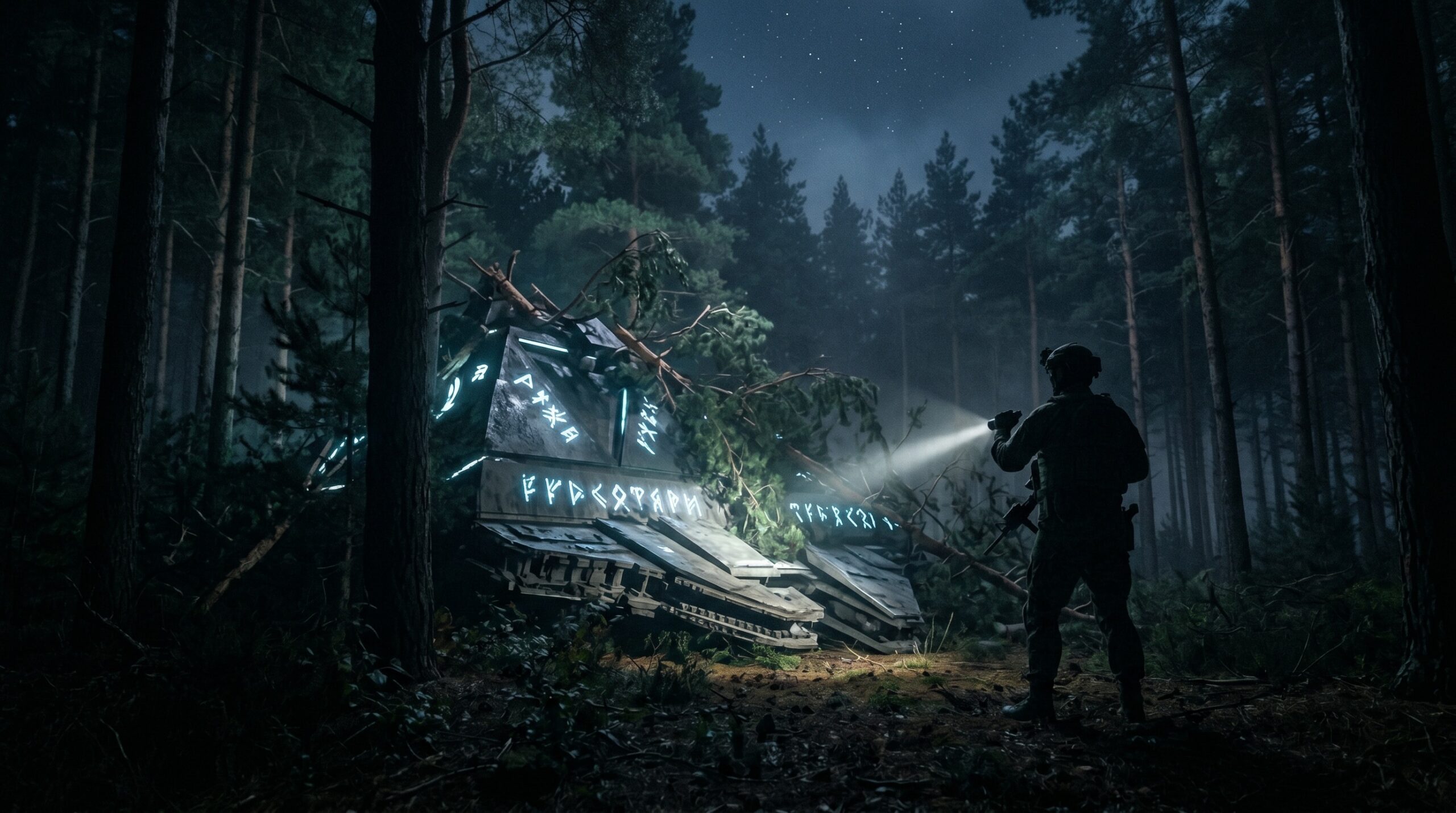
    The night watch stepped into Rendlesham Forest expecting a downed aircraft. What Sergeant Jim Penniston encountered instead was a triangular craft resting between the pines, its metallic surface inscribed with geometric symbols that pulsed in low light. He walked up to it. He placed his hand on its surface. And then, he says, binary code began pouring into his mind — not through his eyes or ears but through something else entirely, something that felt like knowing without being told.

    That was December 27, 1980. Three nights of the Rendlesham Forest incident had already placed it among the most rigorously documented UFO encounters in military history. Multiple witnesses. Cross-base corroboration. Physical evidence. An official memo filed by the deputy base security chief on the ground with a tape recorder running. But Penniston’s claim — the telepathic binary download — carried the incident into a territory that made even the skeptics pause.

    Because he wrote the code down. He decoded it. And the message was this: “EXPLORATION OF HUMANITY CONTINUOUS BEYOND 8100.” And beneath that: “WE RETURNED TO WARN.”

    The Three Nights of Rendlesham

    The incident began on December 26, 1980, at RAF Bentwaters and RAF Woodbridge — twin Air Force bases in Suffolk, England. Security personnel reported unusual lights descending into the forest adjacent to the base perimeter. What followed was a three-night sequence of sightings, sounds, and physical phenomena that generated the most substantial official documentation of any UFO encounter involving US military personnel on allied soil.

    Multiple airmen saw the lights. Different people, different positions, different vantage points. On the second night, Penniston and others entered the forest to investigate. Penniston claimed to have encountered a landed craft — triangular, dark metallic, roughly three meters across at its base — resting on three legs among the trees.

    WION described the decoded message and Penniston’s account of the binary transmission. The Rendlesham encounter shares DNA with other military UFO files that surfaced over the decades as one of the most extraordinary claims in the entire Rendlesham case file.

    The third night — December 28 — produced the most famous surviving evidence. Deputy Base Security Chief Lt. Col. Charles Halt grabbed a tape recorder and led a patrol into the forest. The recording captured his real-time observations of the lights moving through the canopy and above the bases. The Halt memo was eventually released through FOIA and it remains one of the most compelling official documents in UAP history because it was filed by a career Air Force officer, not a civilian enthusiast.

    The Binary Code

    Penniston’s claim is separate from Halt’s memo but equally compelling for those who study the case. He said that during his close contact with the landed craft, he experienced a telepathic data transmission — sequences of ones and zeros that he later transcribed, decoded into ASCII, and published.

    The decoded text reads, in part:

    • “EXPLORATION OF HUMANITY CONTINUOUS BEYOND 8100”
    • “WE RETURNED TO WARN”

    The second phrase is the one that has people unable to stop thinking about the case 45 years later.

    What warning? Warning about what? And who is “we”?

    Penniston interpreted the message as a warning about humanity’s trajectory — that the intelligence behind the craft had revisited Earth multiple times and was delivering an urgent, if cryptic, caution about the direction the species was heading. The “beyond 8100” fragment is deliberately vague — it could reference a date, a coordinate, a cycle, or a classification. Nobody has produced a definitive reading of it.

    The binary code has been analyzed by people who are not Penniston. Some confirm the ASCII decoding produces the quoted text. Others argue that the binary sequences are flexible enough to produce meaningful text through selective interpretation patterns. The debate itself is part of what keeps the case alive.

    Why This Is Resurging in 2026

    The Rendlesham Forest binary code hit r/HighStrangeness in early 2026 and immediately captured 773 engaged upvotes across a thread that dove deep into the decoded message and its implications. A new generation of UAP-curious readers discovered the case at precisely the moment when the broader disclosure conversation is reaching its highest energy.

    The case resonates for reasons that go beyond the binary. Rendlesham is one of the few military encounters with on-the-ground documentation. It is not a single blurry photo or a cockpit video — it is multiple witnesses, a taped recording, an official memo, physical marks on trees and soil, and now, a message. Whether you accept every element of the case at face value or not, it occupies a space that is difficult for skeptics to dismiss wholesale and impossible for believers to ignore.

    The warning message lands differently in 2026 than it did in 1980. In the 1980s, it was a Cold War curiosity. Today — with Congress discussing classified UAP videos, with Trump promising UFO file releases, with the disclosure conversation moving from congressional hearings to mainstream television — a warning from a non-human intelligence about humanity’s trajectory sounds less like folklore and more like something that people are actually preparing to hear.

    What the Files Actually Confirm

    The Halt memo is real. It is dated January 13, 1981. It was filed through official Air Force channels. It describes lights over the base, radiation readings elevated at the alleged landing site, and physical impressions in the ground. It was declassified through FOIA in the 1990s and remains a publicly accessible document.

    Multiple witnesses corroborated seeing the lights. The witnesses had different roles, different locations, and different reasons to be in the forest on those nights. Their accounts are not identical — which makes them more credible, not less, since genuine independent observations rarely align perfectly.

    Radiation readings at the alleged landing site showed levels approximately one-tenth of a milliroentgen above background. That is a tiny elevation. It is measurable. It is also small enough that environmental variation could account for it. But it was measured by base personnel at the specific location where a craft allegedly rested.

    What cannot be independently verified from the public record is Penniston’s binary code. Nobody else claimed to receive a telepathic data transmission that night. The binary exists because Penniston wrote it down and shared it later. His credibility as the primary close-contact witness in the case is solid. The binary message alone is the part of the case that pushes beyond documented evidence into personal testimony.

    The Warning Within the Narrative

    “We returned to warn” works on two levels. On the surface, it is a dramatic phrase from an unverified personal account — the kind of thing that could be confabulated after decades of thinking about a strange encounter. But embedded inside it is something that resonates with the current disclosure moment in a way that is hard to separate from the substance of the case itself.

    If the entities behind the Rendlesham encounter were delivering a warning — much like the questions raised by the Bluegill Triple Prime UFO shootdown — about nuclear escalation — about nuclear escalation in 1980, about environmental collapse, about military readiness and non-human technology and the direction human civilization is heading — then the warning is still active. It is still relevant. It still has not been received by the people it was presumably meant for.

    Whether you view the binary code as a genuine transmission, an artifact of a psychologically intense experience, or a later construction built from memory and imagination, the question it poses survives every level of analysis: what would it mean if the warning was real?

    What Is Actually Known

    The Rendlesham Forest incident of December 1980 involved multiple witnesses from two US Air Force bases in England. Lt. Col. Charles Halt recorded his observations on tape and filed an official memo describing lights, radiation, and ground impressions at the alleged contact site. Sgt. Jim Penniston claims close contact with a landed triangular craft and a telepathic binary message that decoded to “EXPLORATION OF HUMANITY CONTINUOUS BEYOND 8100” and “WE RETURNED TO WARN.” The Halt memo is an official government document. The binary code is personal testimony.

    What is not known is whether Penniston’s binary download was a genuine non-human communication, a psychological response to an extraordinary nighttime encounter, or a reconstruction built years after the event. What is known is that the incident happened, and what the witnesses saw and heard and recorded is documented well enough that no official explanation has ever fully accounted for it.

    The message — if it is a message — waits for the people who are ready to hear it.