Category: Articles

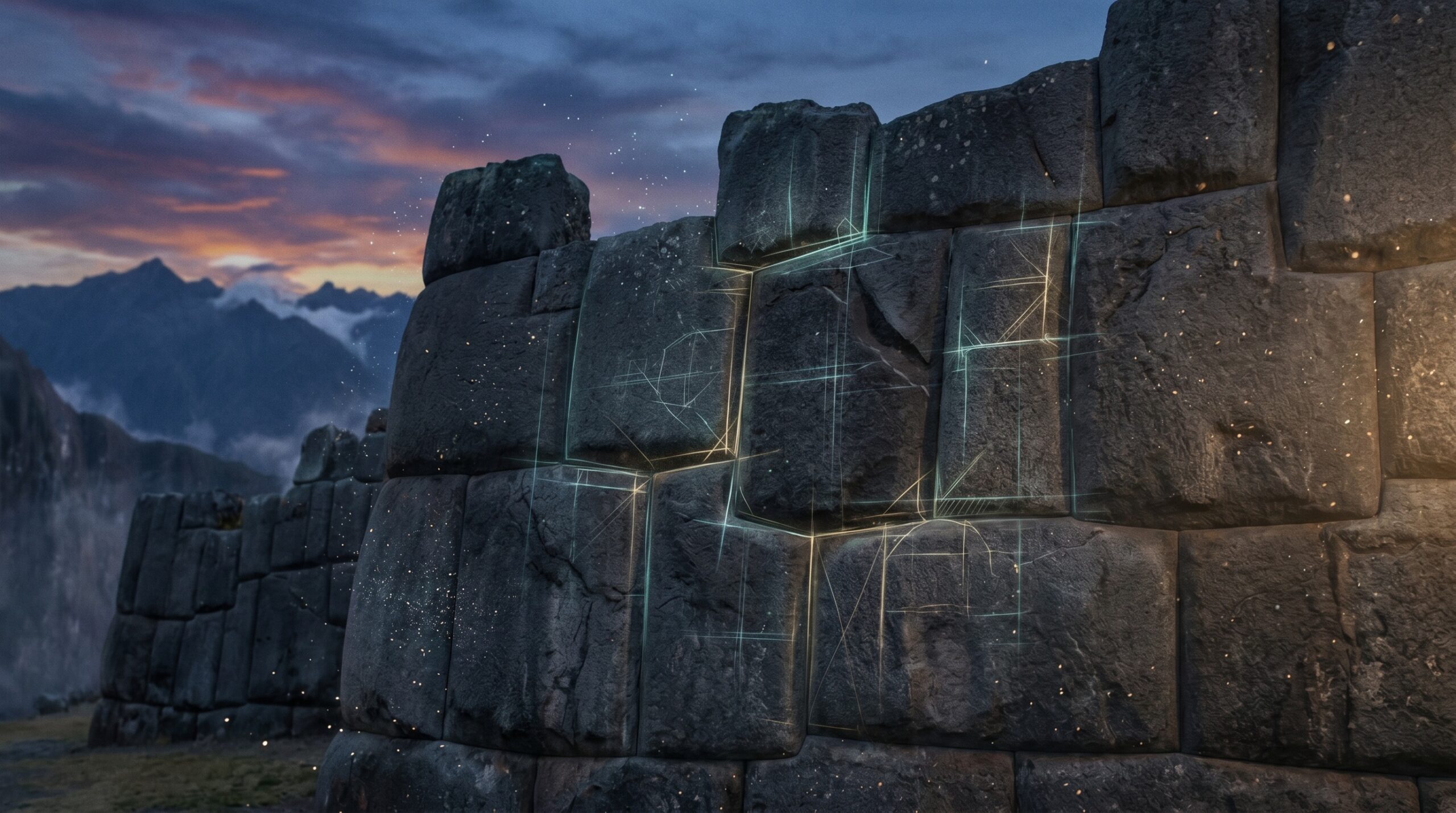
  • Peru Old Stonework Theory: Are the Andes Hiding a Lost Cast-Stone Technology?

    Peru Old Stonework Theory: Are the Andes Hiding a Lost Cast-Stone Technology?

    Some stories do not arrive like normal news. They crawl in through a grainy clip, a half-panicked Reddit post, a search result that feels too fresh to be folklore, and suddenly Peru old stonework theory is not just a phrase on a screen — it is a door cracked open in the wall of ordinary reality.

    That is why this story is moving now. The fresh signal is not a laboratory announcement or a police file; it is the collision of social chatter, search interest, and a believer community already trained to notice patterns before institutions acknowledge them. A current source trail includes the r/AlternativeHistory thread claiming Peru’s old stonework is older, corroborating search visibility through a current YouTube discussion titled “There’s Proof the Old Stonework is Older”, and wider background from Wikipedia background on Sacsayhuamán. None of that proves the strangest version of the claim. It explains why people are leaning closer.

    For Unexplained readers, Peru old stonework theory also fits a larger map: Giant of Baalbek, Serapeum of Saqqara mystery, Sabu Disk mystery. The details change — a creature, a stone, a church warning, a forest road — but the emotional charge is the same. Something old seems to be pushing through a modern feed.

    The stones that make modern tools feel inadequate

    The first thing believers notice is not the evidence package. It is the atmosphere. Peru old stonework theory carries the feeling of a message received from the edge: a report that sounds small until you imagine being there, alone, when the ordinary world stops behaving normally.

    That is the reason the story survives the first skeptical shrug. A strange post can be dismissed in seconds, but a vivid image keeps working on the mind after the tab closes. The shape in the yard, the sound in the trees, the stone that should not fit, the prophecy language that suddenly feels public — these are not just claims. They are scenes.

    Why cast-stone theories refuse to disappear

    What makes the current wave sticky is specificity. The internet is full of generic mystery bait, but concrete details give believers something to hold: a place, a date, a witness, a source, a visual, a named tradition. Those details become hooks. People argue over them, remix them, search for them, and compare them against older cases.

    A good unexplained story does not need everyone to believe. It only needs enough people to feel that the official category is too small. Once that happens, the story starts behaving less like content and more like a signal flare.

    What the Andean sites actually show

    Skeptics have a simpler framework. They see social traction, old folklore, misread context, suggestive imagery, and the human hunger for patterns. In many cases, that caution is warranted. Viral mystery culture rewards speed, emotion, and repetition long before it rewards verification.

    But skepticism does not erase the cultural question. Why this story, and why now? Why does Peru old stonework theory keep finding an audience at the exact moment people feel that institutions, science, churches, and media are all leaving something unsaid? That is the layer where the mystery keeps breathing.

    Where lost technology ends and archaeology begins

    The most grounded reading is this: the current discussion around Peru old stonework theory is real, the sources show a live curiosity signal, and the strongest versions of the claim remain unconfirmed. The available material supports an article about why the story is spreading, what believers think they see in it, and why the unresolved pieces keep pulling people back.

    That may sound like a narrow conclusion, but it is exactly where many unexplained stories live. Not proven, not empty, not finished. The facts set the boundary. The feeling presses against it. Whether Peru old stonework theory becomes another internet flare-up or a lasting chapter in the unexplained archive depends on what surfaces next — and on whether readers decide the official explanation is large enough to hold what they sense in the dark.

    FAQ

    What is Peru old stonework theory?

    Peru old stonework theory is the search phrase now gathering attention around this specific unexplained topic, combining a fresh online signal with an older mystery tradition or belief system.

    Why are people talking about it now?

    People are talking because Reddit, search results, and adjacent Instagram mystery tags are all feeding attention into the same lane. That is a trend signal, not proof.

    Is Peru old stonework theory confirmed?

    No public source trail confirms the most dramatic interpretation. The story is best read as a believer-first mystery with an evidence gap that still matters.

    Why does it fit Unexplained.co?

    It sits at the crossroads of folklore, internet signal, spiritual anxiety, and unresolved evidence — exactly where modern unexplained culture keeps producing its most persistent stories.

  • Calvary Chapel End-Times Prophecy Debate: Why Apocalypse Talk Feels Mainstream Again

    Calvary Chapel End-Times Prophecy Debate: Why Apocalypse Talk Feels Mainstream Again

    Some stories do not arrive like normal news. They crawl in through a grainy clip, a half-panicked Reddit post, a search result that feels too fresh to be folklore, and suddenly Calvary Chapel end times prophecy is not just a phrase on a screen — it is a door cracked open in the wall of ordinary reality.

    That is why this story is moving now. The fresh signal is not a laboratory announcement or a police file; it is the collision of social chatter, search interest, and a believer community already trained to notice patterns before institutions acknowledge them. A current source trail includes the r/Reformed discussion of Calvary Chapel and recent end-times emphasis, corroborating search visibility through Salon on far-right Christian apocalypse politics around Iran war talk, and wider background from Wikipedia’s list of predicted apocalyptic dates. None of that proves the strangest version of the claim. It explains why people are leaning closer.

    For Unexplained readers, Calvary Chapel end times prophecy also fits a larger map: red heifer prophecy 2026, Kim Clement’s Iran prophecy, Doomsday Clock at 85 seconds. The details change — a creature, a stone, a church warning, a forest road — but the emotional charge is the same. Something old seems to be pushing through a modern feed.

    Why rapture language is lighting up again

    The first thing believers notice is not the evidence package. It is the atmosphere. Calvary Chapel end times prophecy carries the feeling of a message received from the edge: a report that sounds small until you imagine being there, alone, when the ordinary world stops behaving normally.

    That is the reason the story survives the first skeptical shrug. A strange post can be dismissed in seconds, but a vivid image keeps working on the mind after the tab closes. The shape in the yard, the sound in the trees, the stone that should not fit, the prophecy language that suddenly feels public — these are not just claims. They are scenes.

    The church debate beneath the internet panic

    What makes the current wave sticky is specificity. The internet is full of generic mystery bait, but concrete details give believers something to hold: a place, a date, a witness, a source, a visual, a named tradition. Those details become hooks. People argue over them, remix them, search for them, and compare them against older cases.

    A good unexplained story does not need everyone to believe. It only needs enough people to feel that the official category is too small. Once that happens, the story starts behaving less like content and more like a signal flare.

    How war, Israel, and countdown theology merge online

    Skeptics have a simpler framework. They see social traction, old folklore, misread context, suggestive imagery, and the human hunger for patterns. In many cases, that caution is warranted. Viral mystery culture rewards speed, emotion, and repetition long before it rewards verification.

    But skepticism does not erase the cultural question. Why this story, and why now? Why does Calvary Chapel end times prophecy keep finding an audience at the exact moment people feel that institutions, science, churches, and media are all leaving something unsaid? That is the layer where the mystery keeps breathing.

    What is belief, what is politics, and what remains unresolved

    The most grounded reading is this: the current discussion around Calvary Chapel end times prophecy is real, the sources show a live curiosity signal, and the strongest versions of the claim remain unconfirmed. The available material supports an article about why the story is spreading, what believers think they see in it, and why the unresolved pieces keep pulling people back.

    That may sound like a narrow conclusion, but it is exactly where many unexplained stories live. Not proven, not empty, not finished. The facts set the boundary. The feeling presses against it. Whether Calvary Chapel end times prophecy becomes another internet flare-up or a lasting chapter in the unexplained archive depends on what surfaces next — and on whether readers decide the official explanation is large enough to hold what they sense in the dark.

    FAQ

    What is Calvary Chapel end times prophecy?

    Calvary Chapel end times prophecy is the search phrase now gathering attention around this specific unexplained topic, combining a fresh online signal with an older mystery tradition or belief system.

    Why are people talking about it now?

    People are talking because Reddit, search results, and adjacent Instagram mystery tags are all feeding attention into the same lane. That is a trend signal, not proof.

    Is Calvary Chapel end times prophecy confirmed?

    No public source trail confirms the most dramatic interpretation. The story is best read as a believer-first mystery with an evidence gap that still matters.

    Why does it fit Unexplained.co?

    It sits at the crossroads of folklore, internet signal, spiritual anxiety, and unresolved evidence — exactly where modern unexplained culture keeps producing its most persistent stories.

  • UFO Program and the Laptops of Security Contractors

    UFO Program and the Laptops of Security Contractors

    Most UFO stories on Reddit read the same way: vague claims about what someone heard from someone else, wrapped in the kind of language that could mean anything. The post that appeared in r/UFOs in late April 2026 was not like that. It read like a debrief.

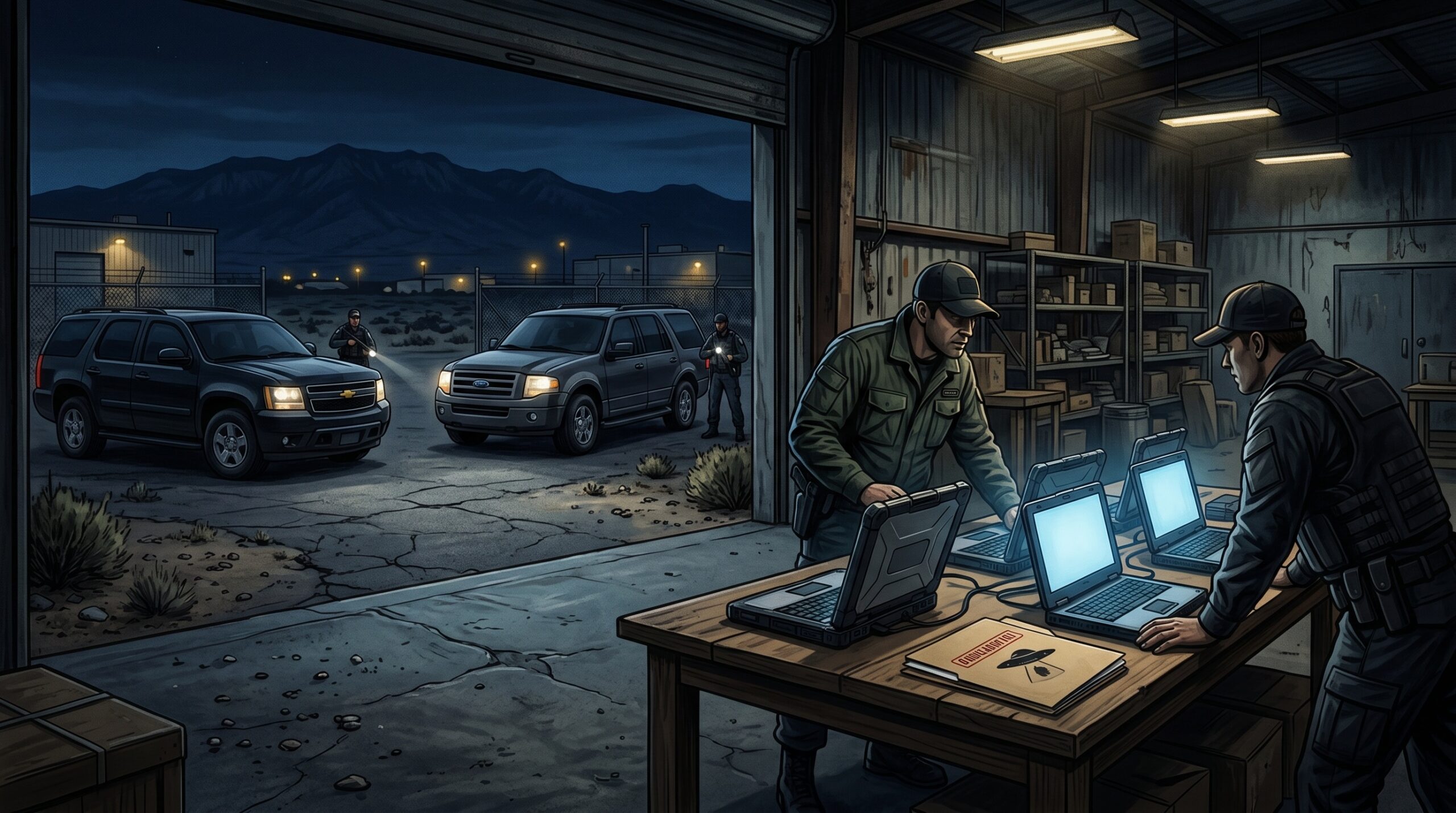
    “Two seemingly adversarial parties — at least one of which was a private aerospace company — had hired private security contractors to retrieve six laptops containing highly sensitive information possibly related to the UFO Program,” the post began. “When we got there… it was clear that shots had been fired.” Sources: Pentagon UFO Files Leak claims non-human craft in secret programme Defense Act loophole forcing Pentagon UFO revelations.

    That is a sentence designed to make every UFO researcher in the world stop scrolling.

    The Post That Dropped Like a Bomb

    The r/UFOs post gathered nearly 600 upvotes and 60 comments in less than 24 hours — a fast burn for a community that processes UFO claims by the dozen. What distinguished it from the typical UFO Reddit post was not just the level of operational detail but the specificity of the scenario: six laptops, two adversarial parties, private security contractors, and evidence that shots had been fired at the retrieval site. These are the kind of details that come from people who were actually in the room, or who have access to people who were.

    The post did not come from an anonymous account. The user who posted it had been active in the UFO disclosure community for years, with a track record that other regulars in the subreddit recognized and vouched for in the comments. Whether that vouching means anything in a community that is, by definition, willing to believe extraordinary things is a fair question. But the operational specificity of the post was immediately noted by experienced UFO researchers who follow these communities closely.

    What the Story Claims Happened

    The basic structure of the story is straightforward enough that it could be a plot summary from a low-budget spy thriller. At least two organizations — one described as a private aerospace company, the other unspecified — had independently determined that six laptops in a specific location contained material related to the UFO Program. Both organizations hired private security contractors to retrieve the laptops. The two teams arrived at the location at roughly the same time, creating a confrontation that, as the poster described it, “clearly involved shots fired.”

    What is notable about this scenario is not just the adversarial retrieval dynamic but the implication that the same information was considered worth retrieving by multiple parties — at least one of which was in the private aerospace sector. That implies a market for UFO program information that extends beyond government circles, and that the retrieval programs may have left behind physical records that are now moving through non-governmental channels.

    James Clapper’s Congressional testimony described a multi-decade program operating outside standard intelligence community oversight. The laptops story, if accurate, would suggest that the program’s physical records — the actual data, devices, and documents produced by those programs — have not been secured in any centralized way. They are scattered, and the competition to retrieve them is already underway.

    Why the Specificity Hit Different

    UFO Reddit has a reputation for generating claims that are unfalsifiable by design — statements that cannot be verified because they rely on anonymous sourcing or classified information that can never be produced. The laptops story was different precisely because it generated verifiable implications: if two organizations both sent security teams to retrieve the same six laptops, and if at least one of those organizations is identifiable, the story should leave traces.

    The private aerospace company reference was enough to trigger speculation in the comments about which companies might be involved. Several commenters noted that the private space and defense sector has been expanding rapidly, and that companies in that sector would have both the motivation and the technical capability to run recovery operations. A few noted that David Grusch’s testimony mentioned private sector involvement in the retrieval ecosystem — a detail that makes the laptops story feel more consistent with existing accounts than most new UFO posts manage.

    The Pentagon Leak and the ‘Non-Human Craft’ Language

    The story landed in the same week that The Guardian published details from a Pentagon UFO files leak that described a secret programme containing what the documents called “non-human craft.” The language in those documents — specifically the phrase “non-human craft” — was immediately noted as significant because it matched the kind of terminology that Eric Davis has used in describing the craft allegedly recovered from ocean retrieval programs. The consistency of language across independent sources has long been one of the strongest corroborating signals in the UFO disclosure community, and the Pentagon leak appeared to add another data point to an emerging pattern.

    The Defense Act loophole referenced in related reporting — a legal provision requiring programs dealing with UAPs to report to the Congressional “Gang of Eight” — is significant because it suggests the framework for disclosure already exists in law. What has been missing is not the legal mechanism but the political will to use it. The combination of a new administration, a new leak, and a contested retrieval operation involving private security contractors has created the sense that something is moving in ways that it has not moved before.

    Believers Point to the Operational Detail

    For longtime UFO researchers, the laptops story was significant less because of what it claimed happened than because of the kind of claim it was. Operational details — specific numbers, specific organizations, specific locations — are the kind of evidence that can be investigated, cross-referenced, and eventually either confirmed or ruled out. The fact that the poster included specific detail about the number of laptops and the nature of the confrontation suggests either that the story is fabricated with unusual sophistication, or that it comes from someone with genuine operational knowledge of a retrieval scenario.

    The adversarial retrieval dynamic is particularly noteworthy. In the world of defense and intelligence contracting, competition between firms and organizations over classified programs is common — but it typically happens at the level of lobbying, procurement, and bureaucratic maneuvering, not at the level of physical retrieval teams converging on the same location at the same time. If the story is accurate, it describes a world in which the UFO program information has become valuable enough to warrant a kind of operational competition that intelligence professionals would recognize as a real and significant development.

    What Skeptics Say

    The skeptical response centers on the sourcing problem. A Reddit post, however specific, is still a Reddit post. The poster’s track record in the community provides some grounds for taking the story seriously, but track records in communities that are predisposed to believe extraordinary claims are not the same thing as verified credentials. The absence of any physical evidence — no photos of the laptops, no documentation of the confrontation, no verifiable identity for the poster — means the story remains in the same epistemic category as the dozens of other UFO-related claims that circulate in online communities every week.

    The “shots fired” detail has been noted as potentially a dramatic embellishment. Confrontations between private security firms over sensitive materials do occur in the world of defense contracting, but they rarely involve gunfire, and when they do, they generate official reports, police involvement, and paper trails. The fact that nothing of the kind has surfaced in connection with the story is consistent with either a cover-up — which believers would argue is exactly what you would expect — or with a story that did not happen.

    Where the Story Goes From Here

    What UFO researchers in the disclosure community are watching for now is whether the operational details generate any corroborating signals: whether any of the organizations referenced in the story have made any observable moves in the relevant timeframe, whether the “private aerospace company” reference can be narrowed down, whether any official record surfaces from the confrontation site.

    For believers, the story is significant primarily as confirmation of what they have long believed: that the UFO program information is real, that it is valuable, and that the competition to control it has become intense enough to generate the kind of physical confrontation that the Reddit post describes. Whether that reading of the story is accurate is something only time and further evidence will determine.

    But the story itself — six laptops, two teams, shots fired — has the quality of the best UFO disclosures: specific enough to investigate, dramatic enough to remember, and just connected enough to the broader pattern of UFO program reporting that it does not feel like an isolated fabrication.

    Sources: r/UFOs community posting (April 2026); The Guardian reporting on Pentagon UFO files leak (April 2026); Defense Act loophole reporting (The Guardian, April 2026); Wikipedia: Advanced Aerospace Threat Identification Program.

  • Giant of Kandahar: The Military Encoutner

    Giant of Kandahar: The Military Encoutner

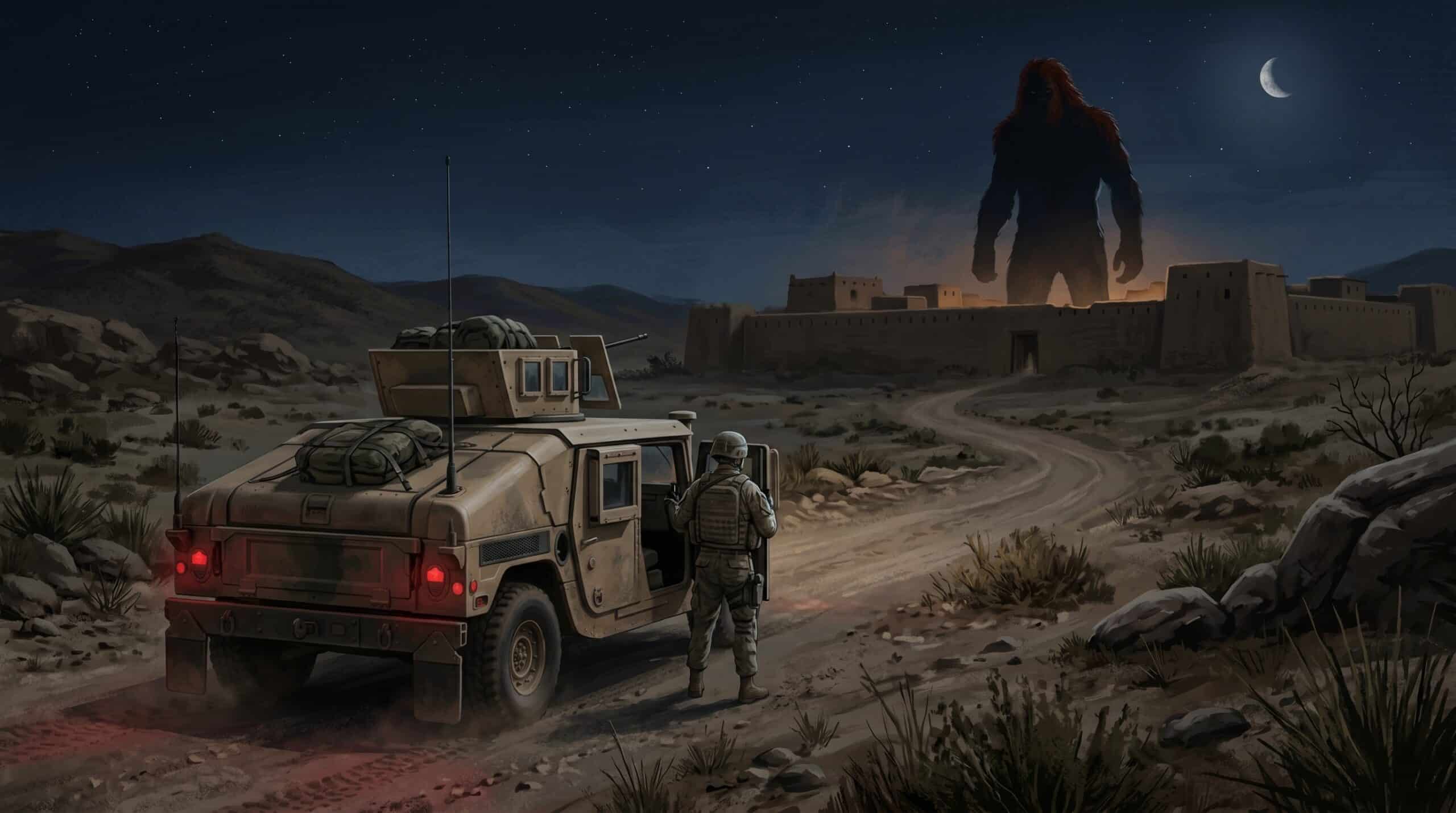
    In 2003, US Marines stationed near Kandahar, Afghanistan, reportedly encountered something that did not fit any category in their training. Near a cluster of remote farms on the edge of the desert, a patrol reported a figure standing upright — roughly 13 feet tall, with red hair, moving in a way that did not look human. The encounter lasted less than a minute. By the time the Marines regrouped and returned to the location, the figure was gone.

    Twenty-three years later, the story is still circulating. And in 2026, it’s getting fresh attention on TikTok and YouTube in a way that suggests the Giant of Kandahar has become, once again, exactly the kind of story the algorithm loves to push. Sources: TikTok search: Giant of Kandahar YouTube: Soldiers vs Giants – The Shocking 13-Foot Encounter in Kandahar.

    The Shape of the Story

    The Kandahar Giant story belongs to a family of military encounter reports that share a rough structure: American troops in a remote location encounter a humanoid figure that is too large, moves too fast, or behaves in ways that don’t match any known animal. The figure vanishes before a full investigation can be mounted. Official records, if they exist at all, are never made public. The story survives through secondhand accounts, forum posts, and periodic waves of social media attention.

    The specific Kandahar version adds a detail that has kept it in rotation for more than two decades: the red hair. Most giant humanoid encounter stories describe figures that are either hairless or covered in dark hair. The red hair in the Kandahar account is unusual enough that researchers who track these stories note it as a distinguishing feature — one that places the report closer to certain religious and mythological traditions than to the typical cryptid sighting pattern.

    Ancient traditions around the world describe tall, powerful beings that were sometimes characterized as protective and sometimes as hostile. The Mesopotamian incantation bowl tradition — in which households placed specially inscribed ceramic bowls beneath doorways to entrap malevolent spiritual entities — speaks to a belief system in which the boundary between the physical and spiritual was permeable, and in which large, hairy humanoid figures could move between them.

    Whether anyone who encountered the Kandahar Giant was thinking in those terms is, of course, impossible to know. What the record shows is that at least one military patrol in Afghanistan in 2003 believed they saw something large enough and strange enough to remember for more than two decades.

    The 2003 Encounter: What the Reports Say

    The story has circulated primarily through military forums and high-strangeness communities since at least the mid-2000s. Details vary somewhat between versions — exactly how many Marines were present, how long the encounter lasted, whether the figure made any sound — but the core elements are consistent across tellings: a very tall figure, a remote location, a brief and confusing interaction, and no physical evidence that anyone has ever been able to produce.

    The red hair has remained the detail that keeps the story distinctive. Military personnel are trained observers. They are not, as a rule, the kind of witnesses who would mistake a large animal for a human figure. The fact that multiple accounts describe the figure as both large and red-haired suggests either that the details are consistent because they come from a shared actual experience, or that the story has been refined over years of retelling to produce the most memorable version of itself.

    The counter-explanation, offered by skeptics and mainstream military analysts, is straightforward: remote duty in a combat zone generates enormous psychological pressure, and unusual perceptual experiences are a documented consequence of sustained stress, sleep deprivation, and hypervigilance. Soldiers in Afghanistan reported seeing things that were not there with enough regularity that the US military eventually issued guidance on what was sometimes called “battlefield stress perceptual phenomena.” The Kandahar Giant, on this reading, is a misidentified stress response, not a genuine encounter.

    Why the Story Has Endured

    For the communities that track these reports seriously, the Kandahar story has persisted because it has structural features that distinguish it from the typical cryptid sighting. The military context provides a built-in credibility boost — soldiers are trained to observe, and their reports carry an institutional weight that anonymous civilian sightings do not. The specific location — Afghanistan, a country with a rich tradition of mythological and folkloric beings — creates an associative field that makes the story feel less random than it might otherwise. And the red hair gives it a distinctive character that keeps it from being confused with other tall humanoid reports.

    Ancient civilizations around the world have built monumental structures, left behind technological artifacts, and developed spiritual frameworks for understanding beings that move between the seen and unseen worlds. The Giant of Kandahar fits into a tradition that includes the Nephilim of the Hebrew Bible, the beings described in the Book of Enoch, and dozens of similar accounts from cultures across the Middle East, Central Asia, and the Mediterranean. Whether those traditions describe literal beings or something more metaphorical is, of course, a matter of deep disagreement. But their existence as a cultural framework means that any encounter with a very tall, unusual-looking figure in this part of the world is going to be interpreted through a rich set of associations.

    TikTok, YouTube, and the 2026 Resurgence

    The Kandahar Giant story has surfaced in 2026 in two distinct formats: short-form video on TikTok and long-form commentary on YouTube. The TikTok versions are typically quick-hit retellings with AI-generated or stylized imagery — the kind of content that lives and dies by its ability to create a visceral first impression in under 60 seconds. The YouTube versions are more detailed, typically featuring someone walking through the evidence as they understand it, with varying degrees of analytical rigor.

    The algorithm has been good to the story. High-strangeness content performs well in the recommendation pipelines of viewers who watch UFO videos, cryptid content, and ancient mystery material. Once a viewer watches one Kandahar Giant video, the platform begins suggesting similar content, creating a feedback loop that keeps the story in rotation even when no genuinely new information has emerged.

    What is new in 2026 is the volume of fresh content being produced. Multiple TikTok creators have generated thousands of views with their own retellings of the encounter, each adding small variations that the algorithm rewards for novelty. The effect is not that the underlying story has changed — it has not — but that the story feels newly present in the information environment in a way it has not felt for several years.

    What Skeptics Say

    The skeptical case against the Kandahar Giant is straightforward: there is no physical evidence. No hair sample, no footprint cast, no photograph, no official record of any kind. What exists is a set of oral accounts that have circulated through forums and social media for more than twenty years, and which have never been attached to any verifiable identity or verified document.

    The military context, which believers cite as a credibility marker, cuts the other way for skeptics: military personnel in combat zones operate under enormous stress, and perceptual disturbances in those conditions are common enough to have generated their own institutional guidance from the US Army. The fact that no physical evidence has ever been produced is consistent with a stress-related misperception, not with an actual encounter with an unknown being.

    The red hair detail has also been noted as a potential indicator of story refinement over time. Oral accounts that circulate for years tend to accumulate distinctive details — details that help distinguish the story from similar ones, and that make it more memorable and more shareable. Whether the red hair was part of the original account or was added during the story’s circulation is not recoverable from the available record.

    What Remains Unknown

    What is genuinely unknown is what, if anything, was seen near Kandahar in 2003. The US military does not typically publish records of anomalous encounter reports of this kind, even when those reports are documented internally. The combination of a remote location, a brief and confusing interaction, and the passage of more than two decades means that the factual record of what happened may be permanently inaccessible — visible only through the stories that have survived in civilian circulation.

    What is clear is that the story continues to find new audiences, and that those audiences bring to it the same mix of fascination and unease that the story has always generated. Whether that says more about what was seen in Afghanistan or more about what human beings need stories to be is a question the evidence available cannot answer.

    Sources: US military encounter reporting (internal records unverified); r/HighStrangeness community discussion; r/cryptids community discussion; TikTok and YouTube content analysis. No verified official documentation of the Kandahar Giant encounter has been publicly released.

  • The Mongolian Death Worm: Why the Gobi’s Most Famous Cryptid Still Refuses to Die

    The Mongolian Death Worm: Why the Gobi’s Most Famous Cryptid Still Refuses to Die

    There are cryptids you can imagine spotting at the edge of a forest. Then there is the Mongolian death worm, a thing people describe as if the desert itself grew fangs. Thick, red, subterranean, and supposedly capable of killing from a distance, the creature survives in the imagination because it does not feel like an animal story. It feels like a punishment story tied to a landscape so empty that anything hidden beneath it starts to feel plausible.

    The direct answer is that the Mongolian death worm, often linked to the name olgoi-khorkhoi, is a famous cryptid from the Gobi Desert said to live under the sand and kill animals or people with venom, electricity, or both depending on the telling. The legend is circulating again because cryptid audiences on Reddit are actively re-arguing the case in threads like this recent Cryptozoology debate, reference sources such as updated death-worm case files, and broader explainers like the modern history of the hunt for the creature keep bringing it back for new readers. That is not proof of an undiscovered predator. It is proof that the legend still has bite.

    What gives the creature such staying power is that it is not majestic. It is ugly, buried, and close to the ground. That makes it feel older than myth and meaner than folklore.

    Why the death worm still crawls through modern cryptid culture

    The death worm has everything a durable cryptid needs: a vivid local name, a merciless environment, horrifying powers, and just enough expedition lore to keep the story half-attached to investigation. Unlike Bigfoot, it does not need charisma. Unlike lake monsters, it does not need spectacle. It only needs the suspicion that the desert is large enough to keep one brutal secret.

    That suspicion fits neatly beside stories readers already know, like the Alberta Bigfoot Mystcam video, the sea-serpent theories built around oarfish, and viral skinwalker sightings. In each case the landscape does half the storytelling. Mystery clings harder in places that already feel too large to fully search.

    What the legend says the creature can do

    Descriptions vary, but the death worm is usually imagined as a thick, red, wormlike or sausage-shaped animal living beneath desert sand. Some accounts say it can spit venom. Others say it kills through electrical discharge. In the most memorable versions, the attack happens so fast the victim barely has time to understand what rose beneath the surface.

    That elasticity has helped the legend survive. If the details never harden completely, the creature can keep evolving with each new retelling. A nomadic terror becomes a pulp-monster. A pulp-monster becomes a cryptozoology obsession. The emotional core stays the same: something hostile moves under the sand where human eyes fail.

    Why the Gobi makes believers hesitate before dismissing it

    The Gobi does important work for the legend. A story like this set in suburbia would collapse instantly. Set in one of the world’s harshest and most sparsely populated regions, it gains room to breathe. Believers do not need to prove the worm. They only need to point to distance, difficulty, and how little of any desert is truly watched.

    That is why the death worm remains irresistible to a certain type of reader. It turns geography into an accomplice. The desert does not just host the creature. It protects the idea of it.

    What the evidence still does not give us

    For all its power as legend, the Mongolian death worm remains unverified. No accepted specimen, no confirmed footage, and no scientific documentation have closed the case in favor of a real unknown species. Investigators and writers have collected anecdotes, but anecdotes are not zoology.

    Still, the legend is not nothing. It preserves how a region imagines danger, concealment, and what the land might still withhold. Maybe the death worm is only folklore sharpened by desert fear. Maybe it is a cryptid that modern evidence has never caught. Either way, a creature said to wait beneath the Gobi like a buried weapon is never going to vanish completely. Some stories are too well adapted to the terrain.

  • The Kuwait White Orb Ocean UFO: Why the Clip Will Not Stay Buried

    The Kuwait White Orb Ocean UFO: Why the Clip Will Not Stay Buried

    Some UFO stories hover in the sky. The unnerving ones go into the water. That is why the Kuwait white orb ocean UFO story keeps resurfacing. A bright object over dark sea, a descent into the water, a reappearance, and the old suspicion that whatever is watching this planet may be using the oceans as cover.

    The direct answer is that the Kuwait white orb story revolves around claims that lawmakers or witnesses were shown footage of a white orb moving into and back out of the ocean off Kuwait, and the case keeps regaining traction whenever underwater UAP talk surges. The story’s modern life is being sustained by reports such as Sky News on the orb discussed in a congressional context, broader framing from Popular Mechanics on underwater UFO concerns, and ongoing rediscovery through community threads like the recurring Reddit debate about the alleged clip. That still leaves major gaps in what the public can independently verify. It also explains why the story will not die.

    The ocean changes everything. A light in the sky suggests distance. A light going into the sea suggests infrastructure, concealment, and somewhere to disappear to.

    Why the Kuwait orb keeps coming back

    Ocean-UFO stories carry a heavier charge than ordinary sightings because they imply durability. If something can move through the air and then treat the sea like an open doorway, believers do not imagine a random anomaly. They imagine a system.

    That is the emotional engine driving the Kuwait story. It is not just a clip of a strange light. It is a myth of access. The orb appears to slip between domains most of us already treat as sealed off from ordinary human scrutiny. That instantly makes it feel more advanced, more secretive, and more threatening than a conventional light-in-the-sky report.

    It also plugs naturally into the same disclosure mood that powers stories like Eric Davis and the alleged recovered craft from the oceans, the Immaculate Constellation leak, and video-heavy sightings from remote work sites. Once the believer feed starts talking about oceans, bases, retrievals, and withheld video, the Kuwait orb becomes less like a single report and more like one tile in a giant hidden map.

    What the congressional story actually says

    The strongest reason the Kuwait case has lasted is that it is not merely a random social clip. It became attached to the more serious language of hearings, briefings, and official awareness. Once a story crosses into that territory, even indirectly, it gains a different sort of gravity online.

    For believers, congressional mention acts like a credibility amplifier even when the public still lacks the full underlying evidence. The phrase “shown to Congress” has enormous myth-making power. It implies there is always one more room, one more screen, one more closed briefing where the real version of the story lives.

    That dynamic helps explain why the alleged Kuwait footage never really disappears. Every new round of disclosure talk brings it back because it sits at the intersection of two irresistible ideas: secret video and underwater access.

    Why ocean UFO stories hit harder than sky sightings

    People already accept that the oceans are one of the last places on Earth where enormous things can remain hidden. Add the UFO question to that landscape and the imagination runs almost automatically. Deep water means darkness, military traffic, incomplete mapping, and long traditions of sailors and pilots reporting things that do not behave correctly.

    So when a story like Kuwait enters the feed, believers do not hear it as one weird object. They hear it as confirmation that the real mystery was always below the surface. The orb is fascinating, but what it implies is the real hook: if something can enter the ocean cleanly and leave it again, then the water itself stops being background and becomes possible territory.

    What remains missing from the case

    The Kuwait white orb story is emotionally powerful, but the public record is still thin. There is no universally accepted, high-resolution, independently authenticated release that settles the footage once and for all. Much of the story’s force comes from secondhand description, fragmented circulation, and the prestige effect of congressional association rather than from a fully open evidentiary file.

    That does not erase the case. It simply defines its current status. The orb remains one of those disclosure-era stories that lives in the gap between rumor and proof. For believers, that gap is not a weakness. It is part of the fascination. An object dropping into black water and rising out again is already the kind of image that colonizes the imagination. Add secrecy, officials, and ocean depth to it, and the clip becomes almost impossible for the modern UFO culture to let go of.

  • The Philip Experiment: Did a 1970s Séance Group Create Its Own Haunting?

    The Philip Experiment: Did a 1970s Séance Group Create Its Own Haunting?

    Few paranormal stories hit harder than the ones that sound reproducible. That is why the Philip Experiment ghost story refuses to die. A group of ordinary people gathered in the 1970s, invented a fake dead man, sat around a table feeding him attention, and then claimed the room began to answer back.

    The quick answer is that the Philip Experiment was a Toronto-area psychical research project in which participants created a fictional 17th-century character named Philip Aylesford and then held séance-style sessions until knocks, table movement, and apparent responses seemed to appear. The broad outline preserved by the standard historical summary of the Philip Experiment, retellings such as the long-running “how to create a ghost” explainer, and new social-media fascination after a viral reel treating the case like a real-world tulpa event have made it feel uncannily modern again.

    What makes the case so unnerving is not that a haunting may have happened. It is that the haunting, if anything happened at all, seems to have been invited into being by design.

    Why the Philip Experiment still feels dangerous

    Most ghost stories begin with a place. A house, a hospital, a battlefield, a hallway where something lingers. The Philip Experiment begins with intention. That is the part that gets under the skin. The group did not stumble into a presence. They sat down and tried to manufacture one.

    That idea has only become more potent in the internet age. A story about collective attention shaping reality lands differently now than it did in the 1970s. People raised on tulpas, egregores, manifestation discourse, and memetic ritual do not hear the Philip case as a quaint paranormal curiosity. They hear it as a prototype.

    It sits naturally beside stories like Antoine’s ghost photo, the Riverview pentagram image, and modern jinn obsession narratives. In each case, the real hook is not only whether the phenomenon is objectively real. It is whether attention itself starts to behave like a door.

    What the group said happened in the room

    The core setup is one of the strangest in paranormal history. Participants built out Philip Aylesford as a fully fictional biography — a man who never existed — and then focused on him through repeated group sessions. Later accounts say the group experienced raps, apparent yes-or-no responses, and table activity strong enough to turn a made-up ghost into a lasting legend.

    That structure is why believers remain fascinated. If a haunted house answers back, maybe the house was always carrying something. But if a nonexistent ghost begins producing effects, the implication feels darker. It suggests that concentrated belief, emotional energy, or some unknown group dynamic might be able to sculpt a presence where there was none before.

    Even readers who doubt every paranormal claim can feel why the story travels. It turns the séance from a method of contact into a method of construction. That is a much more unsettling possibility.

    Why tulpa culture keeps reviving the case

    The Philip Experiment has become internet-native because its logic matches the way online occult culture already thinks. Communities now talk casually about thoughtforms, entities fed by repetition, and symbols that gain force as more people participate in them. Philip sounds like a retro version of that entire worldview.

    Once framed that way, the old experiment stops looking dusty. It looks prophetic. A circle of people in a room rehearsing a fictional being into apparent existence feels like an analog ancestor of the modern belief that stories, symbols, and coordinated minds can thicken into something with agency.

    That is also why the case keeps pulling in readers who are not traditional ghost believers. It touches psychology, ritual, folklore, performance, and the uncomfortable suspicion that consciousness may be stranger in groups than it is alone.

    What the experiment can and cannot prove

    This is where the atmosphere gives way to limits.

    The Philip Experiment is a real story with real participants and documented claims. It is not, however, a settled proof that a ghost was literally created. Group expectation, unconscious movement, suggestibility, performance effects, selective memory, and the theatrical conditions of the séances all offer grounded ways to interpret what happened. The fictional nature of Philip makes the story more provocative, but not automatically more evidential.

    Still, that uncertainty is exactly why the case survives. It cannot be locked down cleanly either way. If nothing paranormal happened, the experiment still exposed how weird collective human behavior can become around ritual. If something did happen, then the implications are enormous. Either way, the room did not feel empty for long, and that is enough to keep Philip Aylesford wandering through the modern imagination like a ghost that may have been built rather than born.

  • Red Heifer Prophecy 2026: Why End-Times Watchers Think the Clock Is Moving Again

    Red Heifer Prophecy 2026: Why End-Times Watchers Think the Clock Is Moving Again

    Prophecy stories do not spread like normal news. They spread like pressure. That is the feeling around red heifer prophecy 2026 right now. One animal, one ritual requirement, one old script from sacred history — and suddenly end-times believers start speaking as if the gears under the age are beginning to move again.

    The immediate answer is simple enough: the red heifer matters because some prophecy-minded Christians and Jewish Temple-focused groups see it as tied to purification rites that sit inside larger Third Temple expectations. The story is hot again because basic explainer material on the red heifer’s biblical role keeps getting folded into more intense end-times interpretations, because the Texas ranch angle has given the story a vivid modern pipeline, and because prophecy media continue to frame the ritual as a clock-hand for biblical history. That still does not mean apocalyptic events are objectively underway. It does explain why the symbol is surging again across reels, prophecy tags, and anxious forums.

    What makes this story so potent is that it does not need a whole new theology to spread. It only needs one phrase — red heifer — to unlock an entire worldview already waiting in memory. Temple restoration. Purification. Israel. The end of one age and the beginning of another. For believers living in permanent alert, it feels less like a topic and more like a trigger.

    Why the red heifer has become a social-media prophecy detonator

    Modern prophecy culture loves objects that feel both ancient and immediate.

    The red heifer is perfect for that. It is scriptural enough to sound holy, rare enough to feel consequential, and specific enough to make the prophetic imagination feel measurable. People do not have to debate vague moral decline or abstract signs in the heavens. They can point to something tangible and say: this is either the condition being prepared for, or it is not.

    That clarity is catnip for algorithmic religion. It turns an enormous, frightening eschatology into a shareable symbol. One clip, one preacher, one prophecy account, one image of a red animal near the language of Temple rites, and thousands of viewers suddenly feel they are watching not commentary but countdown.

    That is why the story travels so well beside broader fear signals. In the same online world where people obsess over the Doomsday Clock, Schumann resonance panic, and cult leaders who promise privileged access to the end, the red heifer lands as a sacred mechanism rather than a metaphor. It feels operational.

    Why believers connect it to the Third Temple and the end times

    The red heifer matters in prophecy culture because it is not treated as a stray biblical curiosity. It is treated as infrastructure.

    For readers inside that framework, the logic runs like this: some ritual requirements connected to purification must be satisfied before larger Temple-centered expectations can move forward, and Temple-centered expectations are closely linked in many modern end-times systems to tribulation narratives, messianic expectation, and the final conflict of history. Once that chain is activated in the mind, the heifer stops being an animal and becomes a hinge.

    That is also why people who would normally never read Levitical ritual details suddenly care intensely about breeding lines, location rumors, and whether someone somewhere is saying the conditions are finally right. The ritual becomes cinematic. It feels like backstage movement before the curtain rises.

    The story also feeds a deeper psychological hunger. Prophecy believers often live with the sensation that history is thickening but still lacks the one unmistakable sign that proves the intuition was right all along. The red heifer offers exactly that kind of sign: obscure enough to feel hidden from the masses, specific enough to feel unmistakable once noticed.

    What the record actually says

    This is where the heat of the story has to meet the limits of the evidence.

    Yes, the red heifer is a real biblical category with a real ritual role in scripture and later religious discussion. Yes, modern religious and prophecy-minded communities have paid serious attention to whether qualifying animals exist and what that might mean for Temple-centered hopes. Yes, the subject has been amplified through media stories, ministries, and online prophecy culture.

    But the stronger claims people make from that base are not automatically established by the existence of interest or preparation. A qualifying red heifer, or a story about one, does not by itself prove that apocalyptic events are underway, that a Third Temple sequence is imminent, or that history has entered its final act. Those are interpretive leaps inside particular theological systems, not public facts that can simply be announced as fulfilled.

    Why the sign keeps returning whenever fear rises

    The red heifer prophecy survives because it is a symbol built for periods of dread.

    Whenever the world feels unstable — wars, institutional panic, economic anxiety, natural-sign discourse, social collapse talk — people go hunting for signs that transform chaos into pattern. The red heifer does that better than most. It gives spiritual anxiety a visible form. It turns sprawling fear into a scriptural object.

    That is the measured place to end. The red heifer is genuinely important within certain religious traditions and genuinely powerful inside modern prophecy culture. But its online resurgence tells us at least as much about the psychology of apocalyptic expectation as it does about the timetable of history itself. For end-times watchers, though, that distinction may not matter much. Once the symbol starts moving through the feed again, it feels less like commentary and more like the sound of an old door beginning to unlock.

  • Why Congress Is Suddenly Asking About the Missing Los Alamos Scientists

    Why Congress Is Suddenly Asking About the Missing Los Alamos Scientists

    The most unsettling stories are the ones that suddenly leave the forums and walk into the hearing room. That is the energy around the missing los alamos scientists story right now. For months it has lived in the same murky space as disclosure chatter, dead-researcher lists, and late-night pattern hunting. Now a congressional push is giving that anxiety a fresh pulse.

    The straight answer is this: lawmakers and commentators are publicly pressing for more answers about a cluster of dead or missing scientists with ties, real or alleged, to sensitive research, while the wider UFO disclosure fight is already boiling over. Modernity amplified the White House exchange that helped energize the rumor cycle, Raw Story covered the political combat around disclosure pressure, and alternative commentary turned the same moment into proof-of-pattern theater. That still does not prove a purge, cover-up, or coordinated cleanup. It does explain why believers think the walls are starting to crack in public.

    The reason this angle is so combustible is simple. Los Alamos is not a random place in the American imagination. It is where nuclear secrecy, defense mythology, and forbidden-science fantasies all bleed together. Add the words missing scientists and the story practically writes itself.

    Why the hearing push matters so much to disclosure culture

    The online believer world has been waiting for exactly this kind of moment.

    Not confirmation. Not even a document dump. Just a sign that somebody in elected office is willing to say the cluster out loud and force an institution to react. Once a member of Congress touches the subject, the story stops feeling like a rumor passed between obsessives and starts feeling like a live pressure point. That change in status matters even if the underlying evidence has not changed much at all.

    That is why the case is being folded into the same conversation as Immaculate Constellation UFO Leak, Pete Hegseth’s UFO-video deadline fight, and the older James Clapper retrieval-program allegations. In each case, the public does not have a complete body of evidence. What it has is official friction: things lawmakers ask for, agencies do not want to clarify, and internet communities instantly treat as proof that something deeper is being guarded.

    In other words, the hearing language is not powerful because it settles the mystery. It is powerful because it sanctifies the mystery. Once Washington acknowledges the question, believers feel they have moved one room closer to the vault.

    Why dead-scientist narratives spread so fast

    This is also one of the easiest narratives on earth to overheat.

    People do not need every case in a cluster to be connected in order to feel that the cluster itself is meaningful. Humans read repetition like design. If several researchers tied to national-security-adjacent worlds die, disappear, or become the subject of online speculation in the same season, the public instinct is to reach for a single hidden cause. The more secretive the institutions involved, the stronger that instinct becomes.

    Los Alamos gives that instinct a perfect backdrop. It is already a symbol of the sealed state. It already carries the aura of compartmentalized knowledge and history-changing research. So when names begin circulating beside it, believers do not imagine HR problems, personal crises, media distortion, or internet over-linking. They imagine containment. That is also why the story keeps getting pulled back toward Michael David Hicks and the so-called mysterious scientist network, where one suspicious case quickly becomes a map of many.

    That is also why the mysterious scientist network story has felt so sticky. Once readers have accepted even the possibility that one sensitive researcher died under troubling circumstances, every later case seems to arrive with shadow already attached. The pattern becomes self-feeding.

    What is actually being alleged

    The strongest careful version of the story is narrower than the online version.

    Public reporting and commentary are pointing to a cluster of scientists, contractors, or adjacent figures whose deaths or disappearances have become part of the UFO disclosure conversation. Some lawmakers and commentators are now saying the matter deserves formal attention. That is a real development. It means the rumor field has generated enough public heat to force a political response.

    What is not established by that development is that the cluster is coordinated, that every name on viral lists truly belongs on the same list, or that Los Alamos itself is the hidden center of a single operation being cleaned up. Those are stronger claims than the public evidence currently supports.

    But that distinction is exactly what makes the story such a magnet. The official world has offered too little clarity to drain the suspense, while the alternative world keeps producing enough fragments to prevent the suspense from collapsing. That is the sweet spot where a mystery metastasizes.

    What Congress may discover, and what it may not

    Even if hearings happen, they may not produce the kind of revelation believers are craving.

    Congress can ask for timelines, agency awareness, security relationships, and whether public rumor lists contain any cases already reviewed inside government. It can test whether institutions answer consistently or retreat into the usual mix of non-comment, classification, and procedural fog. That alone would matter. Sometimes the first useful sign in a secrecy story is not what gets disclosed. It is who refuses to speak plainly.

    Still, the end of the story may be less cinematic than the beginning feels. There may be no central conspiracy document. There may be no neat chamber where the dead-scientist map hangs on a wall. The public may be looking at a messier reality: some real tragedies, some sloppy aggregations, some political opportunism, and a disclosure culture that now reads every institutional silence as a signature.

    That is the grounded frame. The believer frame is harder to shake. Once Congress starts asking about missing Los Alamos scientists, the subject no longer feels like a rumor whispering in the dark. It feels like a locked door with new hands on the handle. And for the people who already think American secrecy has been hiding something stranger than weapons, that is enough to keep listening for movement on the other side.

  • Musallat and the Jinn Obsession Story Spreading Across the Internet

    Musallat and the Jinn Obsession Story Spreading Across the Internet

    Some hauntings are frightening because something appears in the room. The musallat jinn phenomenon is frightening because it suggests something has chosen the room, chosen the body, and may not be leaving.

    That is why the word musallat lands so hard online. Across TikTok clips, horror explainers, possession threads, and comment sections full of people swapping family warnings, the term is used to describe a jinn attachment defined not by one sudden shock but by obsession, oppression, and relentless proximity. In plain search terms, the musallat jinn phenomenon is the internet’s name for stories in which a jinn is believed to latch onto a person, household, or sleep state in a way that feels invasive, personal, and spiritually dangerous.

    And once you step into that rabbit hole, the story escalates fast. The fear is not just that a jinn exists. It is that it can fix its attention on someone. That it can follow. That what begins as dread, nightmares, paralysis, whispers, sexual menace, or irrational panic might not be random at all, but the first sign that the boundary has already been crossed.

    This is the part believers and doom-scrollers alike find hard to shake. A ghost story can feel local. A demon story can feel theatrical. Musallat stories feel intimate. They are about being singled out. They carry the ancient horror of possession but filter it through modern habits of isolation: the sleepless bedroom, the phone screen glowing at 3 a.m., the viral clip with thousands of comments insisting, with unnerving certainty, that they have seen this pattern before.

    What people mean when they say musallat

    The term does not circulate online as a tidy academic category. It circulates as a warning.

    When people invoke musallat in internet discussion, they usually mean a hostile or obsessive spiritual attachment, often involving a jinn understood to be pressing in on a person’s life, mind, sleep, relationships, or body. The emphasis is not merely “there is a jinn.” The emphasis is “this presence is targeting someone and wearing them down.” That distinction matters, because it explains why the phrase carries more panic than ordinary supernatural talk.

    Within wider jinn lore, the category of dangerous or rebellious entities is already familiar. Readers trying to map the older cosmology often end up at references on figures like the ifrit in Britannica, where the jinn world appears not as a single flat concept but as a layered field of volatile beings, moral ambiguity, and spiritual threat. Musallat stories plug directly into that worldview. They are rarely told as neutral encounters. They are told as escalating pressure.

    That is one reason the phenomenon thrives online. The internet loves labels that feel both ancient and freshly dangerous. “Musallat” sounds specific, heavy, and inherited. It arrives with the authority of tradition, but it also behaves perfectly in a short-form horror ecosystem where people want a word that instantly turns vague terror into a named pattern.

    Why the internet cannot stop spreading it

    The musallat jinn phenomenon was almost built for algorithmic fear.

    A short clip can do the first half of the job. Someone whispers that they woke unable to move. Someone else shows a hallway, a dark doorway, a distorted face, or a half-heard sound from another room. Then the comments take over: This is jinn. This is attachment. This is musallat. Do not answer if it calls your name. Do not sleep without protection. The result is a folklore engine that runs in real time.

    TikTok’s own explainer-style content on what a jinn entity is helps show how the concept gets flattened and recirculated for mass audiences, while viral fear clips like “it’s a jinn guys run” demonstrate the much rougher version: panic first, lore second, certainty everywhere. Together they create the modern life of the story.

    That online life is not trivial. It changes the emotional scale. In a village, a possession rumor might belong to one family line, one healer, one local event. Online, the same pattern appears global. A teenager in London, a student in Karachi, a horror fan in Texas, and an insomniac in Jakarta can all stare at the same clip and feel they are looking at the same invisible category. The internet turns regional spiritual language into shared nocturnal infrastructure.

    The effect resembles what happens with old protective traditions and occult objects that survive because people still want a barrier between themselves and unseen attack. That instinct is why stories about ancient demon traps in Mesopotamia or the charged symbolism of Ottoman talismanic shirts still resonate now. Different cultures, different artifacts, same stubborn human impulse: if the unseen can reach in, then surely some ritual can push back.

    Why musallat feels worse than a normal haunting

    Most modern paranormal content teaches viewers to fear the moment of manifestation: the shadow in the corner, the door moving, the figure caught on camera. Musallat stories push the terror deeper. They are about occupation.

    That shift is everything.

    An ordinary ghost tale gives the listener distance. The entity may appear, but it is still “over there.” Musallat narratives close that distance until the horror becomes bodily and routine. The signs people list are often intensely personal: pressure on the chest, erotic dreams, compulsive fear, hearing a name called, a crushing sense of being watched while half-awake, sudden aversion to prayer, fractured sleep, or the feeling that one’s will is being eroded by repetition. Whether those experiences are interpreted as spiritual, neurological, psychological, or all three at once, the narrative form is stronger because it invades the private mechanics of selfhood.

    This is also why musallat stories merge so easily with sleep-paralysis lore. Few experiences feel more like supernatural assault than waking inside your own body and finding it unresponsive. A piece like this discussion of jinn imagery during sleep paralysis and REM states shows how readily these experiences are framed through spiritual language when the event itself already feels invasive, hyper-real, and impossible to dismiss in the moment. The body freezes; the imagination does not.

    For believer-first audiences, that overlap does not reduce the fear. It can intensify it. The possibility that certain altered states are precisely where a hostile presence presses closest only makes the old warnings feel more relevant.

    The occult aesthetic of being singled out

    There is another reason the musallat jinn phenomenon keeps growing: it offers an explanation for dread that feels larger than stress but more personal than abstract evil.

    A lot of online horror now is about systems — simulations, liminal spaces, cursed media, surveillance, hidden programs. Musallat is more primitive and more intimate than that. It says the danger is not in the system. The danger is in the attention. Something has noticed you.

    That is why the stories often blur into rules, cautions, and tiny domestic rituals. Keep certain verses close. Avoid certain places. Do not sleep in a state of spiritual neglect. Do not respond to voices in empty rooms. Do not treat recurring dreams as meaningless. Even for people who do not fully believe, these story-fragments have force because they offer a script for moments that otherwise feel shapeless.

    The same emotional architecture appears in older magical spaces like Rome’s alchemical Porta Magica, where symbols seem to promise access and protection at once. What makes musallat different is that it strips away the monument and leaves only the exposed person. The battlefield is the bedroom, the mirror, the night terror, the marriage, the mind.

    That is modern enough to go viral and old enough to feel inherited.

    Why these stories spread even among people who are not sure they believe

    The internet is full of people who say they are skeptical right before admitting they still will not watch certain clips alone.

    Musallat survives in that territory because it is emotionally legible even to outsiders. You do not need to know the full theology of jinn to understand the dread of persistent unseen attention. You do not need a formal doctrine of possession to understand why repeated sleep terror, sexual menace in dreams, abrupt personality change, or a house soaked in tension can start to feel narratively connected.

    In that sense, musallat functions less like a niche term and more like a sticky interpretive frame. It gathers scattered experiences under one name. Once a name exists, more people notice the pattern. Once more people notice the pattern, the name acquires even more authority. That is how internet folklore hardens.

    It also helps that the story lives at the intersection of ancient cosmology and digital intimacy. The same feeds that deliver beauty tutorials and football clips also deliver whispered exorcism stories and midnight testimonies. That collision makes the old fear feel current. The musallat jinn phenomenon is not archived belief. It is live belief, performed and reinforced in public.

    Even communities centered on totally different mysteries understand the attraction of that kind of ongoing, immersive narrative. The appeal is not far from why the still-active spectacle of the Heaven’s Gate website remaining online continues to disturb people: the feeling that a belief system did not end when modernity told it to end.

    The grounded view, and why it still does not fully kill the story

    A grounded reading of the musallat jinn phenomenon has to admit several layers at once.

    First, jinn belief is part of a serious and long-standing religious and cultural framework, not just a meme factory for internet horror. Second, many of the experiences now folded into musallat talk — especially night terror, chest pressure, sensed presence, and waking immobilization — overlap strongly with known sleep phenomena, stress states, trauma responses, and the frightening cognitive spillover of REM disturbance. Third, once a person is immersed in a spiritually charged interpretive community, ambiguous experiences can become easier to read as attachment, obsession, or attack.

    None of that erases the force of the phenomenon. It explains why the stories remain persuasive.

    The musallat jinn phenomenon spreads because it gives terrifying experiences a shape, a villain, and a logic. For some people, that logic feels spiritually true. For others, it is a folklore vessel carrying sleep terror, grief, anxiety, and inherited fear in a language vivid enough to survive translation onto social media. Either way, the pattern is real in the only sense viral mysteries need in order to endure: people keep experiencing something, naming it, and warning each other.

    And that may be why musallat stories remain harder to dismiss than generic internet horror. They do not just offer a jump scare. They offer an interpretation of vulnerability itself. Maybe the source is spiritual. Maybe it is neurological. Maybe the most disturbing cases live in the unstable territory where belief, bodily experience, and old warnings overlap. What keeps the story alive is that, in the dark hours when people feel watched, chosen, or pinned in place, that distinction can stop feeling theoretical very quickly.