Category: Prophecy

  • 2025: THE LAST DAYS ARE HERE!!!

    2025: THE LAST DAYS ARE HERE!!!

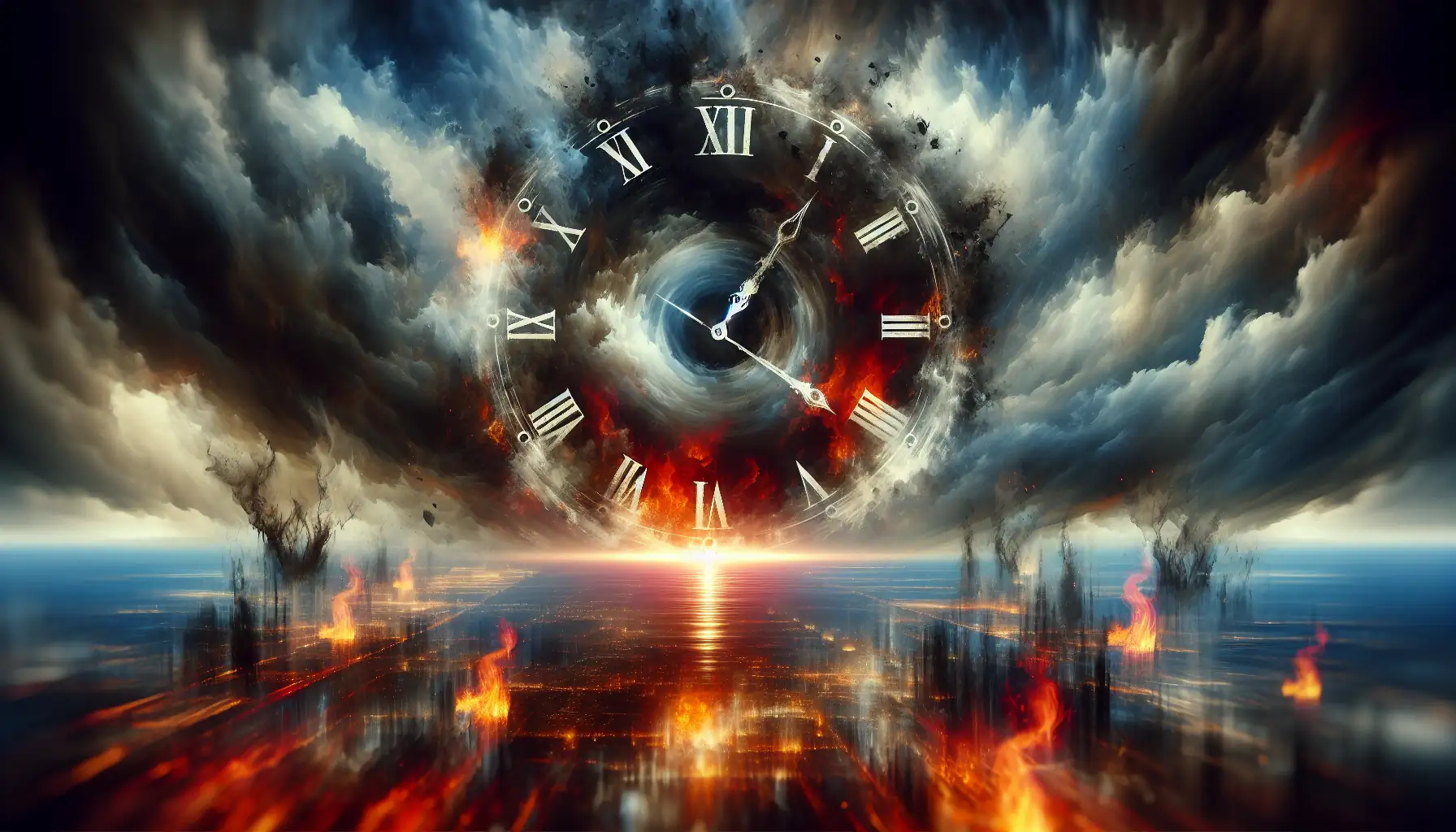
    The Doomsday Clock: A Symbol of Our Times

    The Doomsday Clock has long served as a metaphorical reminder of how close humanity is to self-induced catastrophe. Established by the Bulletin of Atomic Scientists, this clock reflects global issues such as nuclear risk, climate change, and disruptive technology. Recently, the clock advanced to 89 seconds to midnight, the closest it has ever been. Learn more about the Doomsday Clock.

    This unsettling adjustment points to the escalating tensions in geopolitical landscapes, particularly the Russian-Ukrainian conflict and persistent unrest in the Middle East. The Science and Security Board underlines the urgent need for effective global cooperation to avoid the brink of disaster.

    Factors Contributing to the Countdown

    One primary concern contributing to the advancement of the Doomsday Clock is the renewed focus on nuclear arsenals. Countries are expanding their nuclear capabilities, investing vast sums in weapons that hold the potential for large-scale devastation. This is compounded by the crumbling state of arms control treaties and the persistent threat of conflict among nuclear powers.

    The looming threat of climate change adds an ominous layer to the crisis. Recent years, especially 2023 and 2024, have recorded unprecedented global temperatures, indicating that environmental policies are failing to curb global warming. You can explore further about environmental crises that are shaping our world today.

    Technological Disruption and Misinformation

    The unchecked development in fields such as biotechnology, artificial intelligence, and space exploration outpaces regulatory scrutiny. These rapid advancements could lead to unexpected, potentially destructive, consequences. As recent studies show, understanding and regulating technological impacts is crucial.

    Misinformation proliferation represents a ‘threat multiplier’, amplifying fears and misconceptions. In an increasingly polarized world, misinformation obscures the truth, blurring the line between reality and fiction.

    Historical Context and Future Implications

    Delving into historical prophecies like those in the Bible’s Book of Daniel, some interpretations suggest that the world faces a final empire emerging from ancient Rome. This notion parallels modern concerns about consolidating global power and authoritarian rule, resonating with the present-day climate of fear around conspiracy theories and perceived global governance.

    As we stand on the precipice of profound change, reflecting on historical patterns may offer insights into potential futures, highlighting the importance of adapting our strategies to tackle these existential threats.

    Moving Forward: A Collective Call to Action

    This grave reality necessitates bold leadership and unified global action. The proverbial ticking of the clock is an urgent call for all sectors of society—political, civic, and cultural—to join forces against these mounting threats. As suggested by former leaders and scientists alike, the most pressing need is to ‘sit down and talk’, ideally turning back the hands of the Doomsday Clock.

    For more in-depth analysis and related discussions, visit our detailed page on unexplained historical events. Further adventures into supernatural phenomena and unexplained mysteries await those seeking to understand the complexities of our world.

  • End Times Prophecies: What Ancient Texts Say About Our Future

    End Times Prophecies: What Ancient Texts Say About Our Future

    Throughout history, people have been fascinated by the idea of the end times. Ancient texts from various cultures have tried to predict what will happen in the future. These prophecies come from different parts of the world and offer unique perspectives on how the world might end. From the ancient Babylonians to modern-day predictions, these prophecies continue to capture our imagination and influence our beliefs.

    Key Takeaways

    • Ancient texts from different cultures offer unique perspectives on the end times.
    • Babylonian prophecies have influenced modern beliefs about the future.
    • The Book of Revelation is filled with symbolism that has been interpreted in many ways.
    • Nostradamus’s predictions are both famous and controversial.
    • Scientific perspectives provide a different take on how the world might end.

    Ancient Babylonian Prophecies and Their Influence on Modern Beliefs

    The Role of Babylonian Astrology

    Ancient Babylonian astrology played a significant role in shaping their prophecies. The Babylonians believed that the positions of celestial bodies could predict future events. Astrologers were highly respected and their interpretations influenced both personal and state decisions. This practice has echoes in modern astrology, which continues to captivate many people today.

    Interpretations of the Enuma Elish

    The Enuma Elish, an ancient Babylonian creation myth, also contains elements of prophecy. This text describes the battle between the god Marduk and the chaos monster Tiamat, symbolizing the struggle between order and chaos. Some scholars suggest that the Enuma Elish influenced later apocalyptic literature, including parts of the Bible.

    Babylonian End Times Myths

    Babylonian myths about the end times often involved great floods or other natural disasters. These stories were not just tales of destruction but also of renewal and rebirth. The idea that the world would end in a cataclysmic event and then be reborn is a theme that appears in many cultures’ eschatological beliefs.

    The ancient Babylonian narrative serves as a powerful reminder of how fear can distort reality and lead to tragic outcomes. The interplay of witchcraft, societal norms, and the role of the priest highlights the complexities of human behavior in the face of the unknown.

    Ground Zero Radio often explores these ancient prophecies, drawing connections between past beliefs and modern interpretations. Their deep dives into the unexplained captivate those intrigued by the world’s mysteries.

    The Book of Revelation: Symbolism and Interpretations

    The Four Horsemen of the Apocalypse

    The Four Horsemen of the Apocalypse are among the most well-known symbols in the Book of Revelation. They represent conquest, war, famine, and death. Each horseman rides a different colored horse, symbolizing their unique roles in the end times. The imagery of the horsemen has been interpreted both literally and symbolically, with some seeing them as actual future events and others as representations of ongoing spiritual battles.

    The Mark of the Beast

    The Mark of the Beast is another significant symbol in Revelation. It is described as a mark that people will receive on their right hand or forehead, allowing them to buy and sell. The number associated with this mark is 666, which has led to much speculation and fear. Some interpret the mark as a literal future event, while others see it as a symbol of allegiance to evil forces.

    The New Jerusalem

    The New Jerusalem is depicted as a glorious city that will descend from heaven at the end of times. It represents the ultimate fulfillment of God’s promise to His people. The city is described in great detail, with streets of gold and gates made of pearls. This vision of the New Jerusalem offers hope and a promise of eternal peace for believers.

    The Book of Revelation uses symbolic language to unveil deeper spiritual realities, helping readers perceive the unseen world.

    The Book of Revelation is filled with vivid imagery and complex symbols that have fascinated and puzzled readers for centuries. Whether interpreted literally or symbolically, its messages continue to resonate with people today.

    Nostradamus: Predictions and Controversies

    Key Predictions and Their Fulfillment

    Nostradamus, a 16th-century French astrologer, is famous for his book Les Prophéties, a collection of 942 poetic quatrains. These quatrains are said to predict future events. Some of his most notable predictions include the rise of Napoleon, the Great Fire of London, and the French Revolution. Many believe his quatrains also foretold the 9/11 attacks, often citing the phrase ‘Ground Zero: Aftermath‘. However, the vague and symbolic nature of his writings makes it easy to interpret them in various ways.

    Skepticism and Criticism

    Despite his popularity, Nostradamus has faced significant skepticism. Critics argue that his quatrains are so ambiguous that they can be applied to almost any event. This phenomenon, known as the Texas Sharpshooter Fallacy, involves cherry-picking data to fit a specific narrative. Additionally, some scholars suggest that translations and interpretations of his work have been manipulated to make them appear more accurate.

    Nostradamus in Popular Culture

    Nostradamus’s influence extends beyond academic circles into popular culture. His predictions have been featured in movies, TV shows, and books. For instance, the 2009 film "2012" references his prophecies about the end of the world. His name has become synonymous with the idea of prophecy, often invoked in discussions about future events. Nostradamus’s legacy continues to captivate the public imagination, blending historical intrigue with modern-day speculation.

    Nostradamus’s quatrains, filled with cryptic language and symbolism, serve as a reminder of humanity’s enduring fascination with the unknown and the future.

    Mayan Calendar and the 2012 Phenomenon

    Understanding the Mayan Long Count

    The Mayan Long Count calendar is a complex system that tracks longer periods of time. It is composed of cycles called baktuns, each lasting about 394 years. The calendar’s end date, December 21, 2012, marked the completion of the 13th baktun, which some interpreted as a prediction of the end of the world.

    Debunking the 2012 Doomsday

    Despite widespread fears, the world did not end on December 21, 2012. Scholars and scientists clarified that the date simply represented the end of a cycle, not an apocalyptic event. Experts emphasized that the Mayans viewed time as cyclical, meaning the end of one cycle would naturally lead to the beginning of another.

    Cultural Impact of the 2012 Prophecy

    The 2012 phenomenon had a significant cultural impact, influencing movies, books, and media. Shows like Ground Zero with Clyde Lewis discussed various theories and interpretations, fueling public interest and debate. The event highlighted how ancient prophecies can capture modern imagination, even when misunderstood.

    Islamic Eschatology: Signs of the Day of Judgment

    Major and Minor Signs

    In Islamic eschatology, the signs of the Day of Judgment are divided into major and minor signs. Minor signs include everyday events and moral decay, while major signs are extraordinary events that signal the end times. Some of the major signs are:

    1. A huge black cloud of smoke covering the earth.
    2. Three major sinkings of the earth: one in the East, one in the West, and one in Arabia.
    3. The appearance of the false messiah, known as the Dajjal.
    4. The return of Isa (Jesus) to defeat the Dajjal.
    5. The release of Ya’jooj and Ma’jooj (Gog and Magog), who will cause widespread destruction.
    6. The sun rising from the West.
    7. The emergence of the Beast of the Earth to speak to people.
    8. The blowing of the trumpet, signaling the resurrection of the dead.

    The Role of the Mahdi

    The Mahdi is a significant figure in Islamic eschatology. He is believed to be a leader who will appear before the Day of Judgment to restore justice and faith. The Mahdi will work alongside Isa (Jesus) to defeat the Dajjal and bring peace to the world. His arrival is one of the major signs that the end times are near.

    Comparisons with Christian Eschatology

    Islamic and Christian eschatologies share some similarities, such as the belief in a false messiah and the return of Jesus. However, there are also differences. For instance, in Islam, the Mahdi plays a crucial role, whereas in Christianity, the focus is more on the second coming of Christ. Both religions emphasize the importance of moral conduct and faith in the face of the end times.

    The eventual release of Ya’jooj and Ma’jooj is one of the major signs of the approaching Day of Judgment, a time when they will surge forth in overwhelming numbers, causing chaos and destruction.

    Hindu End Times: The Kali Yuga

    Ancient symbols representing Hindu Kali Yuga end times prophecy.

    Characteristics of the Kali Yuga

    In Hindu beliefs, time is seen as a cycle made up of four ages, or Yugas. The last of these ages is the Kali Yuga, which many Hindus believe we are living in now. This age is marked by quarrel, hypocrisy, and decay. The four pillars of dharma, which are duty, truth, purity, and compassion, are said to be reduced to just one: truth. This means that during the Kali Yuga, people will mostly lose their sense of duty, purity, and compassion, holding on only to truth.

    Predictions from the Puranas

    The Puranas, ancient Hindu texts, provide detailed descriptions of the Kali Yuga. They predict that during this time, rulers will become unreasonable and will levy taxes unfairly. People will start lying and cheating, and there will be a general decline in morality. The environment will also suffer, with natural resources becoming scarce. One key prediction is the arrival of Kalki, the final avatar of Vishnu, who will come to restore righteousness.

    The Role of Kalki Avatar

    Kalki is believed to be the final avatar of the god Vishnu. He will appear on a white horse, wielding a sword, to end the Kali Yuga and bring in a new age of truth and righteousness. Kalki will defeat the forces of evil and restore balance to the world. This event will mark the end of the current cycle and the beginning of a new one, starting with the Satya Yuga, an age of purity and truth.

    The belief in Kalki’s arrival gives hope to many Hindus that even in times of great trouble, righteousness will eventually be restored.

    For more in-depth discussions on such topics, you can tune into shows like Ground Zero Radio, which often explore ancient prophecies and their relevance today.

    Jewish Eschatology: The Messianic Age

    Ancient scrolls with symbols and a glowing horizon

    The Coming of the Messiah

    In Jewish eschatology, the arrival of the Messiah is a central theme. This future leader, from the House of David, is expected to bring an era of peace and divine wisdom. The world will be filled with the knowledge of God, as waters cover the sea. This vision is deeply rooted in the Hebrew scriptures and has been a source of hope for generations.

    The Battle of Gog and Magog

    The end times also include a great battle known as the Battle of Gog and Magog. This conflict is seen as a final showdown between good and evil. According to the prophecies, God will intervene to protect Israel and bring about a new era of peace. This battle is mentioned in the Book of Ezekiel and has been interpreted in various ways over the centuries.

    The Resurrection of the Dead

    Another significant aspect of Jewish eschatology is the belief in the resurrection of the dead. In the Messianic Age, the righteous will be brought back to life to enjoy the blessings of the new world. This belief underscores the idea of divine justice and the ultimate reward for a life well-lived.

    The Messianic Age promises a future where peace and knowledge reign supreme, offering hope and inspiration to many.

    The themes of the Messianic Age have also been explored in modern media, including shows like Ground Zero with Clyde Lewis, which delve into various eschatological beliefs and their implications for our world today.

    Scientific Perspectives on the End of the World

    Ancient texts and scientific symbols predicting the end times

    Astrophysical Predictions

    Scientists have long pondered the ultimate fate of our universe. Theories such as the Big Rip, Big Crunch, Big Bounce, and Big Freeze (heat death) offer different scenarios for how the cosmos might end. In approximately 6 billion years, the Sun will turn into a red giant, making life on Earth impossible. Long before that, rising temperatures will render our planet uninhabitable. Eventually, the Sun will become a white dwarf, leaving Earth either swallowed up or charred.

    Global Catastrophic Risks

    Global catastrophic risks are events that could cause significant harm to human civilization. These include natural disasters like supervolcanoes and asteroid impacts, as well as human-made threats such as nuclear war and climate change. Here are some key risks:

    • Supervolcanoes: Massive eruptions could block sunlight, leading to a volcanic winter.
    • Asteroid Impacts: Large asteroids could cause widespread destruction and climate shifts.
    • Nuclear War: A large-scale nuclear conflict could result in a nuclear winter, drastically affecting global temperatures and agriculture.
    • Climate Change: Rising temperatures and sea levels could lead to severe weather events, loss of biodiversity, and displacement of populations.

    The Role of Human Activity

    Human activity plays a significant role in shaping the future of our planet. From deforestation to pollution, our actions have far-reaching consequences. The concept of Ground Zero: Aftermath explores the impact of human activities on the environment and the potential for recovery. Efforts to mitigate these effects include renewable energy, conservation, and sustainable practices.

    The future of our world depends on the choices we make today. By understanding the scientific perspectives on the end of the world, we can better prepare for and possibly prevent catastrophic outcomes.

    Modern Prophecies and Their Cultural Impact

    Predictions from Contemporary Figures

    In recent times, various figures have made bold predictions about the future. Some of these predictions have gained significant attention, influencing public opinion and even policy decisions. For instance, Edgar Whisenant’s book, "88 Reasons Why the Rapture is in 1988," became a bestseller, despite the event not occurring. This highlights how prophecy and history can sometimes blur, as people look for signs and patterns in current events.

    The Influence of Media

    Media plays a crucial role in shaping how modern prophecies are perceived. Television shows, movies, and books often dramatize these predictions, making them more accessible and engaging to the public. This can lead to a heightened sense of urgency or fear, as seen with the 2012 Mayan calendar phenomenon. The media’s portrayal of these events can sometimes overshadow scientific explanations, leading to widespread belief in the prophecy.

    Public Perception and Skepticism

    Public perception of modern prophecies varies widely. While some people take these predictions seriously, others view them with skepticism. The "Texas Sharpshooter Fallacy" is a common criticism, where people find patterns and connections in random data to support their beliefs. This skepticism is essential in maintaining a balanced view and preventing the spread of misinformation.

    Modern prophecies often reflect our deepest hopes and fears, acting as a mirror to our collective psyche. They challenge us to think critically about the future and our place in it.

    In conclusion, modern prophecies continue to captivate the public’s imagination, influenced by media and shaped by individual perceptions. Whether viewed as credible predictions or mere speculation, they play a significant role in our cultural landscape.

    Comparative Analysis of End Times Prophecies

    Common Themes Across Cultures

    End times prophecies, or eschatology, often share common themes across different cultures. Many prophecies predict a period of great turmoil followed by a renewal or rebirth. For instance, the Christian Book of Revelation speaks of the apocalypse and the subsequent establishment of a new heaven and earth. Similarly, Hindu beliefs describe the end of the Kali Yuga, a time of darkness, followed by a new age of truth and righteousness.

    Differences in Eschatological Views

    While there are common themes, the specifics of end times prophecies can vary widely. In Christianity, the focus is on the return of Jesus Christ and the final judgment. In contrast, Islamic eschatology emphasizes the coming of the Mahdi and the return of Jesus to defeat the false messiah. Meanwhile, Mayan prophecies, which gained widespread attention in 2012, are based on the cycles of their long count calendar and do not necessarily predict an apocalyptic end but rather a significant transformation.

    The Psychological Impact of Doomsday Beliefs

    Belief in end times prophecies can have a profound psychological impact. For some, these beliefs provide a sense of purpose and hope, especially in times of crisis. However, they can also lead to fear and anxiety. The idea that the world could end at any moment can be both motivating and paralyzing. Understanding these psychological effects is crucial for comprehending the full impact of eschatological beliefs on individuals and societies.

    The study of end times prophecies reveals much about human nature, our fears, and our hopes for the future. It challenges us to reflect on our place in the world and our responsibilities to one another.

    Summary Table of Key Differences

    Culture/Religion Key Figure(s) Main Event(s) Outcome
    Christianity Jesus Christ Apocalypse, Final Judgment New Heaven and Earth
    Islam Mahdi, Jesus Defeat of the false messiah Establishment of justice
    Hinduism Kalki Avatar End of Kali Yuga New Age of Truth
    Mayan None specific End of calendar cycle Transformation

    The comparative study of these prophecies highlights both the diversity and the commonality in human eschatological thought.

    Conclusion

    As we wrap up our exploration of end times prophecies, it’s clear that ancient texts offer a mix of hope, fear, and mystery about our future. These prophecies, whether from religious scriptures or ancient civilizations, reflect humanity’s deep-seated curiosity and concern about what lies ahead. While some predictions are dire, others promise renewal and salvation. Ultimately, these ancient visions remind us to reflect on our present actions and their impact on the future. Whether or not these prophecies come true, they encourage us to live thoughtfully and responsibly, cherishing the time we have and striving to make the world a better place for generations to come.

    Frequently Asked Questions

    What are some ancient Babylonian prophecies?

    Ancient Babylonian prophecies often involved astrology and myths like the Enuma Elish. These prophecies influenced later beliefs and practices.

    What is the Book of Revelation about?

    The Book of Revelation is a part of the Bible that talks about the end times using symbols like the Four Horsemen, the Mark of the Beast, and the New Jerusalem.

    Who was Nostradamus?

    Nostradamus was a French astrologer and seer who made many predictions about the future. Some people believe his prophecies have come true.

    What was the 2012 Mayan prophecy?

    The 2012 Mayan prophecy was based on the Mayan Long Count calendar, which ended a cycle in 2012. Some thought it predicted the end of the world, but this was debunked.

    What are the signs of the Day of Judgment in Islam?

    In Islamic belief, the Day of Judgment will be preceded by major and minor signs, including the appearance of the Mahdi and comparisons to Christian eschatology.

    What is the Kali Yuga in Hinduism?

    The Kali Yuga is the last of the four stages the world goes through in Hindu belief. It is characterized by strife and decay, and will end with the arrival of the Kalki Avatar.

    What does Jewish eschatology say about the end times?

    Jewish eschatology includes beliefs about the coming of the Messiah, the battle of Gog and Magog, and the resurrection of the dead.

    What do scientists say about the end of the world?

    Scientists talk about various end-of-world scenarios, including astrophysical events, global catastrophic risks, and the impact of human activity.
  • Was YHWH Really the Devil? – History is a Lie

    Was YHWH Really the Devil? – History is a Lie

    The world often feels chaotic and devoid of compassion. Many believe that evil prevails, and the systems in place protect the wicked while exploiting the vulnerable. This perspective isn’t new; it has been a part of human history for ages. In this exploration, we delve into the contradictions within religious texts, particularly the Bible, and question the nature of YHWH and Jesus.

    Key Takeaways

    • YHWH’s character in the Old Testament contrasts sharply with Jesus’ portrayal in the New Testament.
    • The concept of Satan has evolved, and its interpretation varies across cultures.
    • Monotheism introduced complexities in understanding good and evil.
    • Jesus’ actions challenge the morality of YHWH, suggesting a different divine nature.

    The Nature of YHWH

    YHWH, as depicted in the Torah, is often seen as a terrifying figure. He punishes followers for minor infractions and exhibits traits that many would consider evil. In contrast, Jesus embodies love, compassion, and forgiveness. This stark difference raises questions about the true nature of these figures.

    Contradictions in the Bible

    The Bible is rife with contradictions. For instance, while YHWH is quick to punish, Jesus promotes love and understanding. This leads to the question: What if Jesus intentionally contradicted YHWH? What if he referenced YHWH’s actions as those of the devil?

    The Evolution of Deities

    Throughout history, various cultures have worshipped a pantheon of gods, often with a sky god at the helm. This sky god, present in many religions, shares characteristics with YHWH. However, the portrayal of YHWH diverges significantly from other deities, leading to confusion about his true nature.

    The Role of Satan

    The term "Satan" originally meant the adversary. In the Old Testament, Satan is depicted in various roles, often as a challenger to YHWH. However, what if the traditional understanding of Satan is flawed? What if the true adversary is YHWH himself?

    Monotheism and Its Dilemmas

    The rise of monotheism, particularly through Zoroastrianism, introduced a dualistic belief system. This system posits a good god in opposition to an evil one. However, this simplification often fails to capture the complexities of ancient beliefs, leading to a distorted understanding of morality.

    Jesus vs. YHWH

    Jesus’ actions starkly contrast with YHWH’s. For example, while YHWH punishes the Israelites for their complaints, Jesus teaches compassion and understanding. He challenges the very nature of YHWH by promoting love over punishment. This raises the question: Is YHWH truly the benevolent creator?

    The Book of Job

    In the Book of Job, YHWH engages in a wager with Satan, allowing Job to suffer to prove a point. This raises ethical concerns about YHWH’s character. Why would a loving god allow such suffering? This narrative suggests a troubling relationship between YHWH and the concept of evil.

    The Nature of Evil

    YHWH’s actions throughout the Old Testament often appear more malevolent than those attributed to Satan. From the destruction of Sodom and Gomorrah to the Great Flood, YHWH’s actions raise questions about his morality. In contrast, Jesus promotes healing and compassion, suggesting a different divine nature.

    The True Character of God

    Jesus’ teachings emphasize love and forgiveness, directly contradicting YHWH’s punitive nature. He challenges the notion that YHWH is the ultimate good, suggesting instead that YHWH embodies the characteristics of the devil. This perspective invites a reevaluation of traditional beliefs about divinity.

    Conclusion

    The exploration of YHWH and Jesus reveals a complex interplay of good and evil within religious texts. By examining their actions and teachings, we can better understand the nature of divinity and the moral implications of these ancient narratives. The question remains: Who is the true god? Is it the vengeful YHWH or the compassionate Jesus? The answer may lie in our interpretation of their actions and the lessons they impart.

    This inquiry into the nature of YHWH and Jesus challenges us to reconsider our understanding of good and evil, urging us to seek a deeper truth in the narratives that have shaped our beliefs for centuries.

  • Exploring the Intersection of Conspiracy Theories and Religion: Belief, Faith, and the Quest for Truth

    Exploring the Intersection of Conspiracy Theories and Religion: Belief, Faith, and the Quest for Truth

    In this article, we will explore the intriguing connections between conspiracy theories and religion. Both of these subjects delve into the human desire to find hidden truths and understand our place in the universe. They often intersect in profound ways, influencing beliefs and shaping cultural narratives. This exploration will shed light on how these two realms interact and the implications they have on our understanding of faith, belief, and the quest for truth.

    Key Takeaways

    • Conspiracy theories and religion both seek to explain complex phenomena and provide narratives that help us make sense of the world.
    • Belief systems, whether religious or conspiratorial, can create a sense of community and belonging among followers.
    • Psychological factors, such as the allure of the unknown and cognitive biases, play a significant role in why people subscribe to these beliefs.
    • Cultural narratives, including media portrayals, shape our understanding of conspiracy theories and their connection to religion.
    • The impact of technology and social media is changing how conspiracy theories and religious beliefs evolve in the modern world.

    The Enigmatic Dance of Conspiracy Theories and Religion

    A figure in a dim room with religious artifacts.

    Unveiling Hidden Truths

    In the shadows of belief, conspiracy theories often emerge as unexplained narratives that seek to unveil hidden truths. They intertwine with religious ideologies, creating a complex tapestry where faith and skepticism coexist. This dance between the two can lead to a profound sense of understanding or a deepening of doubt.

    The Power of Belief Systems

    Belief systems shape our perceptions of reality. They can be both a source of comfort and a breeding ground for suspicion. Here are some key points to consider:

    • Faith can provide a sense of purpose.
    • Conspiracy theories often exploit fears and uncertainties.
    • Both can lead to a community of like-minded individuals.

    Faith in the Unseen

    Faith often requires a leap into the unknown, much like the belief in conspiracy theories. Both realms challenge our understanding of the world.

    In a world filled with unexplained phenomena, the quest for truth can lead us down paths of both enlightenment and confusion.

    As we explore these intersections, we uncover the intricate ways in which our beliefs shape our understanding of reality, often blurring the lines between what is seen and what is believed.

    Historical Entanglements of Faith and Conspiracy

    Ancient Myths and Modern Narratives

    The stories we tell shape our understanding of the world. Ancient myths often serve as the foundation for modern conspiracy theories. They provide a framework for interpreting events that seem beyond our control. For instance, many ancient cultures believed in hidden forces influencing their lives, a theme echoed in today’s conspiratorial narratives.

    Religious Movements and Conspiratorial Thought

    Throughout history, various religious movements have intertwined with conspiracy theories. These movements often arise during times of social upheaval, where followers seek explanations for their suffering. The belief in a hidden agenda can provide a sense of purpose and community, drawing parallels between faith and conspiracy.

    The Role of Prophecy in Conspiracy

    Prophecy has always played a significant role in religion, often predicting events that seem to validate conspiratorial beliefs. Many adherents find comfort in the idea that a greater plan is at work, even if it involves unseen forces. This intertwining of prophecy and conspiracy can lead to a powerful narrative that shapes collective beliefs and actions.

    The past is a tapestry woven with threads of belief and suspicion, where every shadow holds a story waiting to be uncovered.

    In summary, the historical entanglements of faith and conspiracy reveal a complex relationship that continues to evolve. As we explore these connections, we uncover the layers of meaning that shape our understanding of truth and belief.

    Psychological Underpinnings of Belief

    Person in thought with religious and conspiracy imagery background.

    Cognitive Biases and Faith

    In the realm of belief, our minds often play tricks on us. Cognitive biases can lead us to see patterns where none exist, making us more susceptible to conspiracy theories. For instance:

    • Confirmation Bias: We tend to favor information that supports our existing beliefs.
    • Availability Heuristic: We judge the likelihood of events based on how easily examples come to mind.
    • Illusory Correlation: We perceive a relationship between two unrelated events.

    These biases can create a fertile ground for conspiratorial thinking, as individuals seek to make sense of a chaotic world.

    The Allure of the Unknown

    The unknown has a magnetic pull on human curiosity. Many are drawn to conspiracy theories because they offer explanations for complex events that seem beyond comprehension. This allure can be broken down into:

    1. Mystery: The thrill of uncovering hidden truths.
    2. Control: A belief that understanding these theories gives us power over our environment.
    3. Community: Finding like-minded individuals who share similar beliefs can provide a sense of belonging.

    Fear, Control, and the Human Psyche

    Fear is a powerful motivator. When faced with uncertainty, people often turn to conspiracy theories as a way to regain a sense of control. This is particularly evident in times of crisis, such as during the COVID-19 pandemic, where beliefs in conspiracies about the virus’s origins surged.

    In the quest for understanding, many find solace in the idea that there are hidden forces at play, shaping their destinies.

    Understanding these psychological underpinnings can shed light on why conspiracy theories resonate so deeply within certain belief systems. The interplay of fear, the desire for control, and the allure of the unknown creates a complex web that entangles faith and skepticism in a dance as old as humanity itself.

    Cultural Narratives and the Quest for Truth

    Religious symbols and shadows merging in a mysterious scene.

    Media’s Role in Shaping Belief

    In our modern world, media plays a crucial role in shaping how we perceive reality. From news outlets to social media, the stories we consume can influence our beliefs about the unexplained. Here are some key points:

    • Sensationalism often drives headlines, making ordinary events seem extraordinary.
    • Viral stories can turn local legends into global phenomena overnight.
    • The portrayal of conspiracies can either enlighten or mislead the public.

    The Intersection of Science Fiction and Reality

    Science fiction has a unique way of blending imagination with reality. It often explores themes that resonate with our fears and hopes. Consider these aspects:

    1. UFOs and extraterrestrial life are common themes that spark curiosity.
    2. Many sci-fi narratives reflect societal anxieties about technology and control.
    3. These stories can blur the lines between fact and fiction, leading to real-world beliefs.

    Symbolism and Allegory in Conspiracy

    Conspiracy theories often use symbolism to convey deeper meanings. They can serve as allegories for societal fears or injustices. Here are some examples:

    • Secret societies often symbolize the fear of the unknown.
    • Hidden truths can represent the struggle against perceived oppression.
    • Mythical narratives can provide a framework for understanding complex events.

    The quest for truth is often shrouded in mystery, where narratives intertwine with our deepest beliefs and fears.

    In this intricate dance of culture and belief, we find ourselves navigating a landscape filled with shadows and light, where the search for understanding continues to unfold.

    The Sociopolitical Impact of Conspiratorial Faith

    Person at a crossroads with shadowy figures and symbols.

    Power Structures and Religious Authority

    In the shadows of society, power structures often intertwine with religious authority, creating a complex web of influence. Conspiracy theories can serve as a lens through which individuals view these power dynamics. They often suggest that unseen forces manipulate events, leading to a distrust of established institutions. This distrust can empower alternative belief systems, where followers seek hidden truths that challenge mainstream narratives.

    The Influence of Secret Societies

    Secret societies have long been a source of fascination and fear. These groups, often shrouded in mystery, are believed to hold hidden knowledge that can sway political and social outcomes. The allure of these societies can lead to a sense of belonging among their members, as they feel they are part of an exclusive group privy to secrets that the general public cannot access. This can create a divide, fostering an environment where conspiracy theories thrive.

    Conspiracy as a Tool for Social Cohesion

    Conspiracy theories can act as a glue that binds certain communities together. They provide a shared narrative that reinforces group identity. This can be particularly powerful in times of crisis, where individuals seek explanations for their fears and uncertainties. By believing in a common conspiracy, members can find comfort and solidarity in their shared beliefs, even if those beliefs are based on unfounded claims.

    In a world filled with uncertainty, the search for truth can lead us down dark paths. The narratives we choose to believe shape our reality and influence our actions.

    Summary

    The sociopolitical impact of conspiratorial faith is profound. It shapes our understanding of authority, influences group dynamics, and can either unite or divide communities. As we navigate this complex landscape, it is essential to remain vigilant and critical of the narratives we embrace, for they hold the power to shape our world.

    The Future of Conspiracy Theories and Religion

    Evolving Beliefs in a Digital Age

    In our fast-paced world, the digital age is reshaping how we perceive truth. Information spreads like wildfire, and with it, conspiracy theories gain traction. Social media platforms amplify voices, allowing ideas to flourish, whether they are grounded in fact or fiction. This evolution raises questions about the nature of belief and the quest for truth.

    The Role of Technology in Faith

    Technology is not just a tool; it’s becoming a new form of faith. Many people find solace in online communities that share their beliefs, whether they are religious or conspiratorial. This shift can lead to:

    • Increased isolation from traditional institutions.
    • A sense of belonging in niche groups.
    • The potential for radicalization as echo chambers form.

    A New Era of Spirituality and Skepticism

    As we navigate this complex landscape, a new era emerges where spirituality and skepticism coexist. People are questioning established narratives, seeking deeper meanings in their experiences. This duality can manifest in:

    1. A rise in alternative spiritual practices that blend technology and tradition.
    2. Skepticism towards mainstream narratives, leading to a search for hidden truths.
    3. A blending of science and spirituality, where individuals seek answers beyond the physical realm.

    In this age of uncertainty, the quest for truth becomes a personal journey, often influenced by the digital narratives we consume.

    As we look to the future, the interplay between conspiracy theories and religion will continue to evolve, reflecting our deepest fears and hopes in a world filled with mystery and intrigue.

    As we look ahead, the intersection of conspiracy theories and religion is becoming more complex and intriguing. With the rise of digital platforms, these ideas are spreading faster than ever. To explore this fascinating topic further, visit our website for exclusive insights and resources that can deepen your understanding. Don’t miss out on the chance to uncover hidden truths!

    Conclusion

    As we reach the end of our journey into the mysterious world where conspiracy theories and religion meet, we find ourselves surrounded by shadows of doubt and wonder. The stories we’ve explored reveal a complex web of beliefs that challenge our understanding of truth. Some see these theories as mere fabrications, while others view them as glimpses into a hidden reality that lies just beyond our grasp. In this ever-changing landscape, it’s essential to keep an open mind and question everything, as we seek to uncover the deeper meanings behind these beliefs. Whether you stand as a skeptic or a believer, the quest for understanding in this enigmatic realm is a captivating adventure that invites us all to ponder the unknown.

    Frequently Asked Questions

    What are conspiracy theories?

    Conspiracy theories are ideas that suggest events or situations are secretly controlled by a group, often without proof. They usually involve the belief that powerful people or organizations are hiding the truth.

    How do conspiracy theories relate to religion?

    Conspiracy theories and religion can overlap because both can provide answers to big questions and give people a sense of community. Some people may turn to conspiracy theories when they feel uncertain about their beliefs.

    Why do people believe in conspiracy theories?

    People may believe in conspiracy theories because they want to make sense of confusing events. They might also feel a need for control or security in a world that seems chaotic.

    Can conspiracy theories influence religious beliefs?

    Yes, conspiracy theories can influence religious beliefs by blending ideas from both. Some new religious movements have adopted conspiracy theories, mixing them with traditional beliefs.

    What role does media play in spreading conspiracy theories?

    Media, especially social media, plays a big role in spreading conspiracy theories. It allows for quick sharing of ideas, which can lead to more people believing in these theories.

    Are conspiracy theories harmful?

    Conspiracy theories can be harmful because they can create distrust in institutions and promote fear. They can also lead to violence or discrimination against certain groups.