Category: Prophecy

  • Baba Vanga’s 2026 Alien Prophecy: The Blind Mystic Who Predicted Mass Alien Contact and Why People Are Taking It Seriously Again

    Baba Vanga’s 2026 Alien Prophecy: The Blind Mystic Who Predicted Mass Alien Contact and Why People Are Taking It Seriously Again

    Blind Bulgarian mystic Vangelia Gushterova, better known as Baba Vanga, died in 1996. But she has never stopped making new predictions. Every January, social media fills with a fresh list of “Baba Vanga’s predictions for [current year]” — and for 2026, the one that keeps surfacing is this: “Massive contact with non-human intelligence will occur.” Whether she actually said it, exactly that way, is one question. Why so many people are suddenly repeating it is another.

    What the Prophecy Claims

    The 2026 alien prophecy attributed to Baba Vanga is short and specific: humanity will make contact with non-human intelligence in 2026. Some versions of the claim add that the contact will be peaceful. Others say it will come through a government announcement rather than a direct encounter. The details vary depending on who is sharing it, which is typical of predictions that have been translated, retold, and reinterpreted across decades.

    The prophecy has been circulating alongside an unusual backdrop: an actual, ongoing UAP disclosure movement inside the United States government. Multiple pastors have claimed they were briefed by military intelligence that disclosure is imminent. Congressman Tim Burchett has said in sworn testimony that he has been briefed on recovered non-human bodies and the information he cannot share publicly is explosive. Representative Eric Burlison has made claims about mass-witness UAP events documented by military personnel. The congressional pressure around the phenomenon has never been louder.

    So when Baba Vanga’s 2026 alien prophecy resurfaces alongside real disclosure claims from real government officials, the synchronicity is hard to ignore.

    The Woman Who Died Before She Finished Speaking

    Vangelia Gushterova was a Bulgarian mystic who claimed to have developed clairvoyant abilities after losing her sight in a storm at age 12. She lived through the 20th century and, by some accounts, predicted events including the 9/11 attacks, the 2004 Indian Ocean tsunami, the Brexit vote, and the rise of ISIS. Her supporters treat these as hits. Her skeptics point out that she also allegedly predicted a nuclear World War III in 2010, the end of European civilization in 2016, and several other events that simply did not happen.

    The problem with evaluating Baba Vanga’s track record is that her predictions were rarely recorded by her directly. They were transcribed, translated from Bulgarian, and passed through oral tradition for decades. By the time a prediction shows up on the internet in 2024 or 2025, it has been shaped by the person sharing it into something that can sound either remarkably accurate or obviously wrong depending on how generously you read the original text.

    Why This Prophecy Is Spreading Now

    The reason the 2026 alien prophecy matters right now is not that Baba Vanga somehow knew what would happen. It is that her timeline intersects with a real-world window that UAP researchers have been anticipating for years. The 2026 National Defense Authorization Act includes provisions mandating the Pentagon’s All-domain Anomaly Resolution Office to declassify and release UAP records. Trump has hinted at additional file releases. Congressional hearings have featured testimony from people claiming direct knowledge of non-human craft.

    When a decades-old prophecy intersects with an active political disclosure timeline, the coincidence feels deliberate. It feels like a pattern. And for people who have spent years following the UAP movement, patterns are what it is all about.

    The Skeptical View

    The skeptical framing is straightforward. Baba Vanga’s predictions are so vague and so numerous that some of them will inevitably align with real events by chance. The alien prophecy for 2026, if it exists in its current form at all, is a retroactive construction — a prediction shaped after the fact to match what people are already expecting. The fact that it is being shared alongside real UAP disclosure developments does not make it prescient. It makes it topical. You can read the Wikipedia page on Baba Vanga for documented predictions, but the 2026 alien contact claim does not appear in any primary source — it circulates through tabloid prophecy roundups like the Daily Express and social media chains.

    There is also the question of provenance. No verified audio, video, or written record of Baba Vanga making this specific prediction has been produced. The claim survives through social media chains and second-hand retellings, which is the same mechanism that produces thousands of fake predictions every year.

    What Remains Uncertain

    Whether Baba Vanga actually predicted alien contact in 2026 is a question that nobody with access to primary evidence has the tools to answer. What is not in question is that the prophecy has found a receptive audience in a year when the UAP disclosure movement is generating real headlines from real government buildings. The alignment between prophecy and politics is either a bizarre coincidence or evidence that something is moving in the direction that mystics and lawmakers have independently pointed at.

    Which of those is true may become clearer before the year is out.

    FAQ

    What did Baba Vanga predict about aliens in 2026? According to widely shared accounts, Baba Vanga predicted that humanity would make massive contact with non-human intelligence in 2026. The exact wording and provenance of this prediction are disputed.

    How accurate are Baba Vanga’s predictions? Baba Vanga’s supporters credit her with predicting numerous major events. Skeptics note that many of her predictions failed, that her record is difficult to verify, and that her predictions have been reshaped over time.

    Is the 2026 alien prophecy connected to actual UAP events? The prophecy aligns with an active congressional and executive push for UFO transparency, including claims of recovered non-human technology and scheduled government file releases. The timing is coincidental.

  • Multiple Pastors Say They Were Secretly Briefed to Prepare Churches for UFO Disclosure

    Multiple Pastors Say They Were Secretly Briefed to Prepare Churches for UFO Disclosure

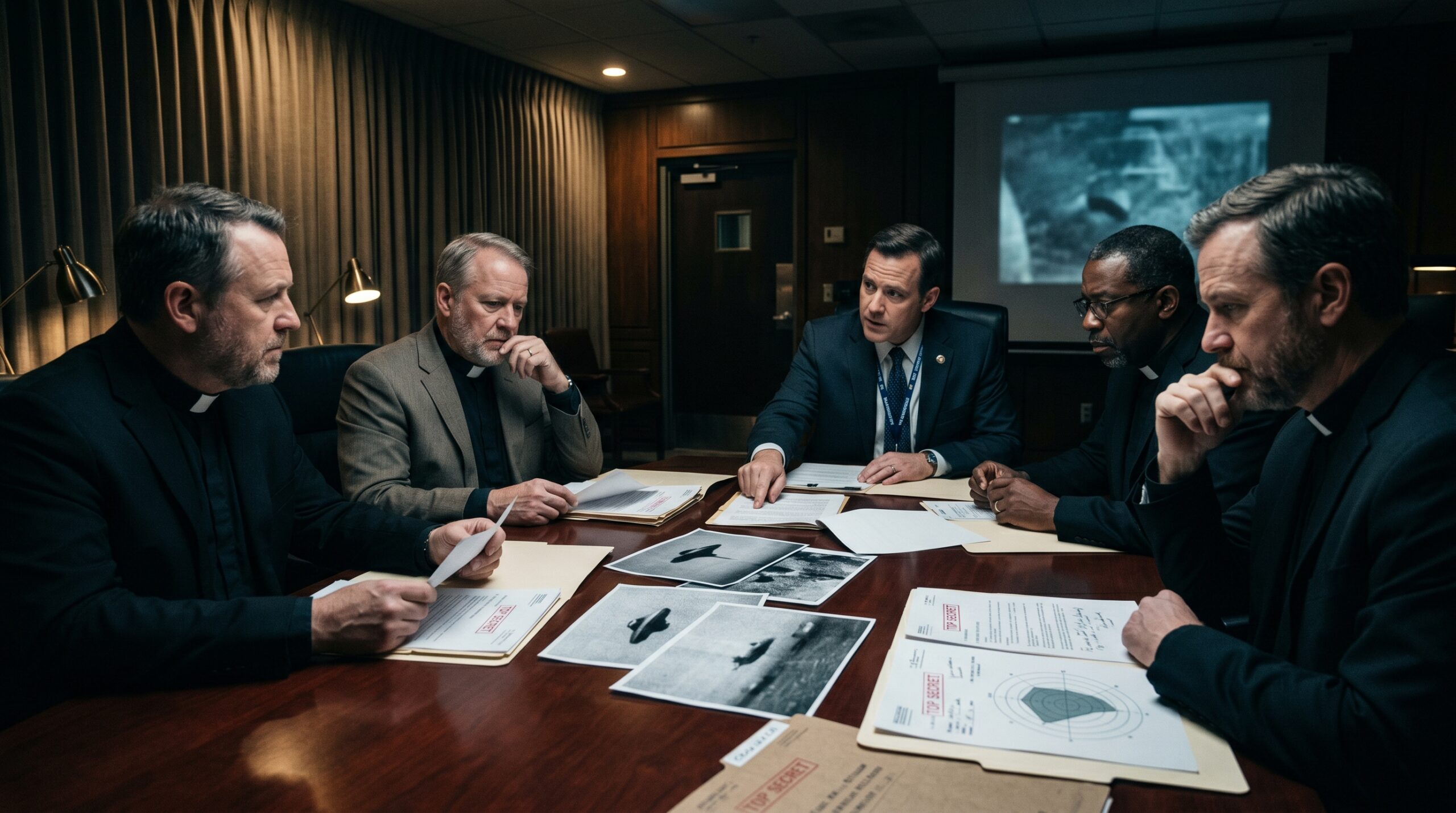
    The UFO disclosure narrative has been circling government hearings, congressional deadlines, and military whistleblowers for years. But in late April 2026, the conversation shifted into a territory that few people inside the movement expected: evangelical pulpits. Evangelist Perry Stone went public with a claim that U.S. officials have been privately briefing pastors, warning them to prepare their congregations for the disclosure of non-human entities. Stone was not alone in making the claim. Pastor Greg Locke and commentator Tony Merkel have reported similar briefings, each describing conversations with people they identified as Christians working inside military intelligence operations. Taken individually, each account is easy to write off as coincidence. Taken together, they paint a picture of something far more organized — and far more difficult to dismiss.

    What the Briefings Purportedly Covered

    According to the accounts that have surfaced, the briefings went beyond a simple heads-up about upcoming government releases. Perry Stone described discussions about reptilian entities and non-human materials. Tony Merkel corroborated the general framework, saying he was contacted by the same network of Christians inside the intelligence community with the explicit mission of preparing the broader church. Greg Locke, who commands a massive online following, amplified the message and pushed the conversation into mainstream discourse.

    The discussion of jinn and non-human entities in Islamic tradition has always run parallel to Western UFO narratives, with striking overlaps in how these beings are described. What the pastors are describing — entities that are not human, intelligence operations that have known about them, and a coordinated effort to prepare religious communities — echoes the kind of cross-cultural patterns that people in this space have been tracking for decades.

    Why Pastors Are Being Briefed Specifically

    The theological implications of non-human intelligence disclosure are enormous. If the government is about to reveal the existence of non-human entities — whether they are extraterrestrial, interdimensional, or something else entirely — the people most responsible for helping communities process that reality will be religious leaders. It makes strategic sense that any coordinated disclosure effort would involve pastoral preparation beforehand.

    But the more unsettling question is why the briefings came from military intelligence insiders rather than from civilian or religious authorities directly. If the network doing the briefing truly consists of Christians embedded in intelligence operations, the arrangement suggests something closer to an internal awakening than a public relations strategy. People inside the system who hold religious convictions may be trying to ensure that when the truth comes out, the faith community is not blindsided by it.

    The prophecy community has been watching end-times markers closely throughout 2026, and the convergence of UFO disclosure talk with religious preparation has only deepened the sense that something unprecedented is approaching.

    The spiritual turn within the UFO disclosure community did not happen overnight. The intersection of faith and government insider claims has been building for years, and the pastor briefing claims are a continuation of that trajectory.

    The Cross-Platform Corroboration

    What makes these claims harder to ignore is that they did not come from a single source. Perry Stone shared his account on his podcast. Greg Locke amplified it on social media, where his audience responded with immediate intensity. Tony Merkel corroborated the account independently. Multiple religious leaders across different platforms and different audiences began saying the same thing: they had been contacted by government-adjacent insiders to prepare their people.

    The pattern of religious leaders being briefed for disclosure matches what earlier claims about the spiritual dimension of the UAP insider community predicted. If the intelligence community itself contains people with deep religious convictions, they would naturally reach out to religious leaders rather than wait for a formal press release.

    What This Means for the Disclosure Conversation

    For people who have been tracking the UFO disclosure narrative through congressional hearings and military whistleblowers, the pastoral briefing angle adds an entirely new dimension. It suggests that preparation for disclosure is not happening only in political and military channels but also in religious ones. It suggests that whoever is pushing disclosure from inside the system understands the theological earthquake it could produce, and that they are actively working to soften the shock.

    What Cannot Yet Be Verified

    None of these claims come with independently verifiable documentation. The briefings were described as private, off-the-record conversations. The identities of the military intelligence insiders have not been confirmed. The specific claims about reptilian entities and non-human materials remain at the level of reported conversation rather than demonstrated fact.

    The Trump administration has promised UFO document releases, but no official briefing schedule for religious leaders has been made public. Until that changes, the pastor briefing claims sit in the same territory as a thousand other insider accounts: too consistent to dismiss, too unverified to accept.

    What Remains

    The claims made by Perry Stone, Greg Locke, and Tony Merkel represent something unusual in the disclosure conversation — a coordinated narrative crossing religious and intelligence boundaries. Whether those briefings actually happened as described, or whether they are part of a broader information strategy, the fact that the conversation has reached this point at all reveals how much the disclosure movement has expanded. It is no longer just about government documents and congressional hearings. It is about what happens to human belief systems when they encounter something that does not fit inside the boxes we built to contain reality.

  • Calvary Chapel End-Times Prophecy Debate: Why Apocalypse Talk Feels Mainstream Again

    Calvary Chapel End-Times Prophecy Debate: Why Apocalypse Talk Feels Mainstream Again

    Some stories do not arrive like normal news. They crawl in through a grainy clip, a half-panicked Reddit post, a search result that feels too fresh to be folklore, and suddenly Calvary Chapel end times prophecy is not just a phrase on a screen — it is a door cracked open in the wall of ordinary reality.

    That is why this story is moving now. The fresh signal is not a laboratory announcement or a police file; it is the collision of social chatter, search interest, and a believer community already trained to notice patterns before institutions acknowledge them. A current source trail includes the r/Reformed discussion of Calvary Chapel and recent end-times emphasis, corroborating search visibility through Salon on far-right Christian apocalypse politics around Iran war talk, and wider background from Wikipedia’s list of predicted apocalyptic dates. None of that proves the strangest version of the claim. It explains why people are leaning closer.

    For Unexplained readers, Calvary Chapel end times prophecy also fits a larger map: red heifer prophecy 2026, Kim Clement’s Iran prophecy, Doomsday Clock at 85 seconds. The details change — a creature, a stone, a church warning, a forest road — but the emotional charge is the same. Something old seems to be pushing through a modern feed.

    Why rapture language is lighting up again

    The first thing believers notice is not the evidence package. It is the atmosphere. Calvary Chapel end times prophecy carries the feeling of a message received from the edge: a report that sounds small until you imagine being there, alone, when the ordinary world stops behaving normally.

    That is the reason the story survives the first skeptical shrug. A strange post can be dismissed in seconds, but a vivid image keeps working on the mind after the tab closes. The shape in the yard, the sound in the trees, the stone that should not fit, the prophecy language that suddenly feels public — these are not just claims. They are scenes.

    The church debate beneath the internet panic

    What makes the current wave sticky is specificity. The internet is full of generic mystery bait, but concrete details give believers something to hold: a place, a date, a witness, a source, a visual, a named tradition. Those details become hooks. People argue over them, remix them, search for them, and compare them against older cases.

    A good unexplained story does not need everyone to believe. It only needs enough people to feel that the official category is too small. Once that happens, the story starts behaving less like content and more like a signal flare.

    How war, Israel, and countdown theology merge online

    Skeptics have a simpler framework. They see social traction, old folklore, misread context, suggestive imagery, and the human hunger for patterns. In many cases, that caution is warranted. Viral mystery culture rewards speed, emotion, and repetition long before it rewards verification.

    But skepticism does not erase the cultural question. Why this story, and why now? Why does Calvary Chapel end times prophecy keep finding an audience at the exact moment people feel that institutions, science, churches, and media are all leaving something unsaid? That is the layer where the mystery keeps breathing.

    What is belief, what is politics, and what remains unresolved

    The most grounded reading is this: the current discussion around Calvary Chapel end times prophecy is real, the sources show a live curiosity signal, and the strongest versions of the claim remain unconfirmed. The available material supports an article about why the story is spreading, what believers think they see in it, and why the unresolved pieces keep pulling people back.

    That may sound like a narrow conclusion, but it is exactly where many unexplained stories live. Not proven, not empty, not finished. The facts set the boundary. The feeling presses against it. Whether Calvary Chapel end times prophecy becomes another internet flare-up or a lasting chapter in the unexplained archive depends on what surfaces next — and on whether readers decide the official explanation is large enough to hold what they sense in the dark.

    FAQ

    What is Calvary Chapel end times prophecy?

    Calvary Chapel end times prophecy is the search phrase now gathering attention around this specific unexplained topic, combining a fresh online signal with an older mystery tradition or belief system.

    Why are people talking about it now?

    People are talking because Reddit, search results, and adjacent Instagram mystery tags are all feeding attention into the same lane. That is a trend signal, not proof.

    Is Calvary Chapel end times prophecy confirmed?

    No public source trail confirms the most dramatic interpretation. The story is best read as a believer-first mystery with an evidence gap that still matters.

    Why does it fit Unexplained.co?

    It sits at the crossroads of folklore, internet signal, spiritual anxiety, and unresolved evidence — exactly where modern unexplained culture keeps producing its most persistent stories.

  • Red Heifer Prophecy 2026: Why End-Times Watchers Think the Clock Is Moving Again

    Red Heifer Prophecy 2026: Why End-Times Watchers Think the Clock Is Moving Again

    Prophecy stories do not spread like normal news. They spread like pressure. That is the feeling around red heifer prophecy 2026 right now. One animal, one ritual requirement, one old script from sacred history — and suddenly end-times believers start speaking as if the gears under the age are beginning to move again.

    The immediate answer is simple enough: the red heifer matters because some prophecy-minded Christians and Jewish Temple-focused groups see it as tied to purification rites that sit inside larger Third Temple expectations. The story is hot again because basic explainer material on the red heifer’s biblical role keeps getting folded into more intense end-times interpretations, because the Texas ranch angle has given the story a vivid modern pipeline, and because prophecy media continue to frame the ritual as a clock-hand for biblical history. That still does not mean apocalyptic events are objectively underway. It does explain why the symbol is surging again across reels, prophecy tags, and anxious forums.

    What makes this story so potent is that it does not need a whole new theology to spread. It only needs one phrase — red heifer — to unlock an entire worldview already waiting in memory. Temple restoration. Purification. Israel. The end of one age and the beginning of another. For believers living in permanent alert, it feels less like a topic and more like a trigger.

    Why the red heifer has become a social-media prophecy detonator

    Modern prophecy culture loves objects that feel both ancient and immediate.

    The red heifer is perfect for that. It is scriptural enough to sound holy, rare enough to feel consequential, and specific enough to make the prophetic imagination feel measurable. People do not have to debate vague moral decline or abstract signs in the heavens. They can point to something tangible and say: this is either the condition being prepared for, or it is not.

    That clarity is catnip for algorithmic religion. It turns an enormous, frightening eschatology into a shareable symbol. One clip, one preacher, one prophecy account, one image of a red animal near the language of Temple rites, and thousands of viewers suddenly feel they are watching not commentary but countdown.

    That is why the story travels so well beside broader fear signals. In the same online world where people obsess over the Doomsday Clock, Schumann resonance panic, and cult leaders who promise privileged access to the end, the red heifer lands as a sacred mechanism rather than a metaphor. It feels operational.

    Why believers connect it to the Third Temple and the end times

    The red heifer matters in prophecy culture because it is not treated as a stray biblical curiosity. It is treated as infrastructure.

    For readers inside that framework, the logic runs like this: some ritual requirements connected to purification must be satisfied before larger Temple-centered expectations can move forward, and Temple-centered expectations are closely linked in many modern end-times systems to tribulation narratives, messianic expectation, and the final conflict of history. Once that chain is activated in the mind, the heifer stops being an animal and becomes a hinge.

    That is also why people who would normally never read Levitical ritual details suddenly care intensely about breeding lines, location rumors, and whether someone somewhere is saying the conditions are finally right. The ritual becomes cinematic. It feels like backstage movement before the curtain rises.

    The story also feeds a deeper psychological hunger. Prophecy believers often live with the sensation that history is thickening but still lacks the one unmistakable sign that proves the intuition was right all along. The red heifer offers exactly that kind of sign: obscure enough to feel hidden from the masses, specific enough to feel unmistakable once noticed.

    What the record actually says

    This is where the heat of the story has to meet the limits of the evidence.

    Yes, the red heifer is a real biblical category with a real ritual role in scripture and later religious discussion. Yes, modern religious and prophecy-minded communities have paid serious attention to whether qualifying animals exist and what that might mean for Temple-centered hopes. Yes, the subject has been amplified through media stories, ministries, and online prophecy culture.

    But the stronger claims people make from that base are not automatically established by the existence of interest or preparation. A qualifying red heifer, or a story about one, does not by itself prove that apocalyptic events are underway, that a Third Temple sequence is imminent, or that history has entered its final act. Those are interpretive leaps inside particular theological systems, not public facts that can simply be announced as fulfilled.

    Why the sign keeps returning whenever fear rises

    The red heifer prophecy survives because it is a symbol built for periods of dread.

    Whenever the world feels unstable — wars, institutional panic, economic anxiety, natural-sign discourse, social collapse talk — people go hunting for signs that transform chaos into pattern. The red heifer does that better than most. It gives spiritual anxiety a visible form. It turns sprawling fear into a scriptural object.

    That is the measured place to end. The red heifer is genuinely important within certain religious traditions and genuinely powerful inside modern prophecy culture. But its online resurgence tells us at least as much about the psychology of apocalyptic expectation as it does about the timetable of history itself. For end-times watchers, though, that distinction may not matter much. Once the symbol starts moving through the feed again, it feels less like commentary and more like the sound of an old door beginning to unlock.

  • Doomsday Clock at 85 Seconds to Midnight: What the Warning Really Means

    Doomsday Clock at 85 Seconds to Midnight: What the Warning Really Means

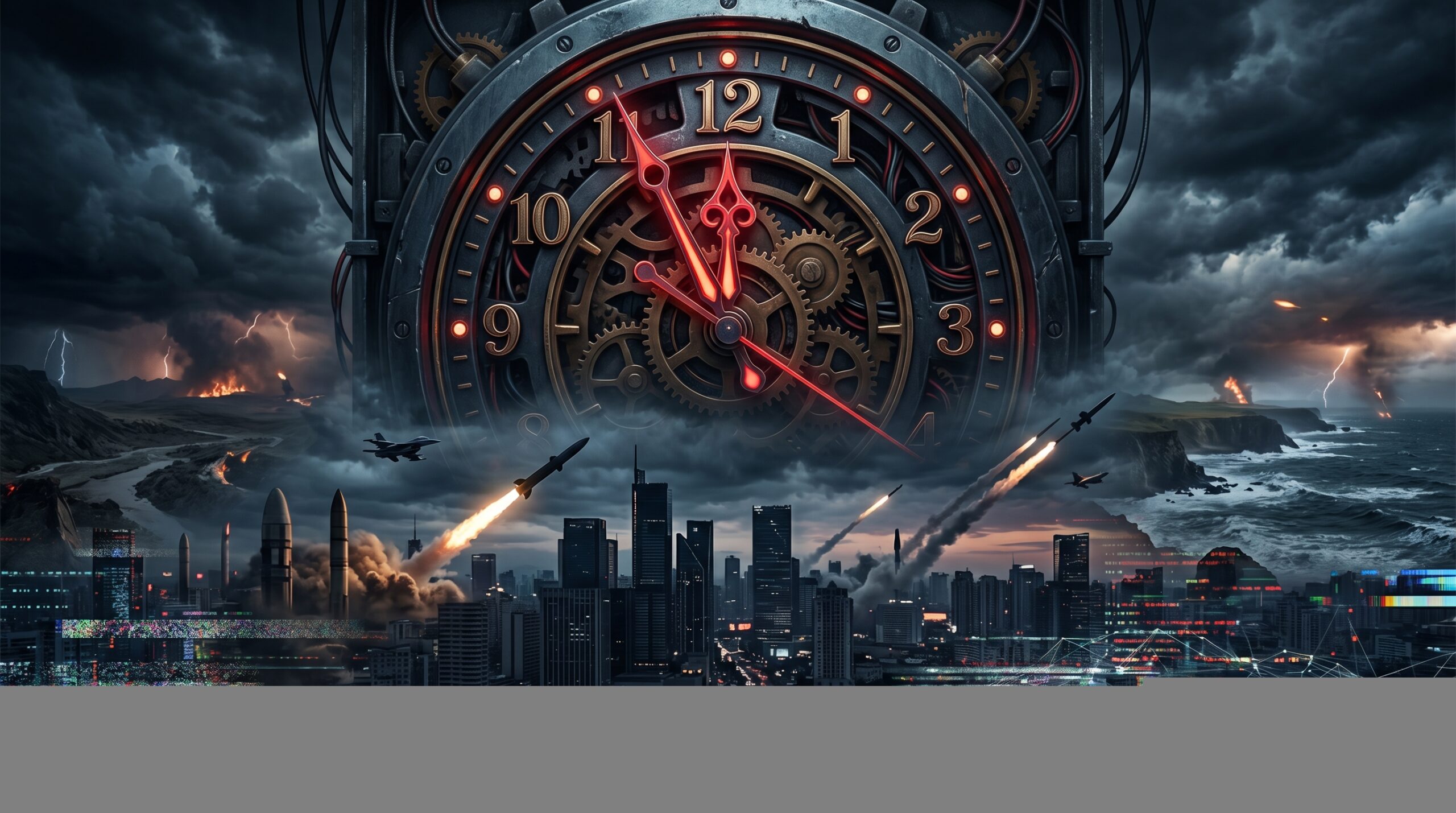
    Eighty-five seconds to midnight does not mean the world has 85 literal seconds left. The Doomsday Clock is a symbol, created by the Bulletin of the Atomic Scientists to express how dangerously close humanity appears, in its judgment, to catastrophic human-made disaster. Midnight stands for global catastrophe. The shrinking distance to it is meant to feel alarming, because alarm is the point.

    That is why the Clock still lands with such force. In a single image, it condenses nuclear danger, geopolitical instability, climate stress, technological risk, and failures of international cooperation into something instantly legible. Supporters see that as one of the most effective warning devices in public life. Critics see a theatrical metaphor that can make complicated policy questions sound like a cosmic countdown. Both views capture something true about why the Clock keeps returning to public conversation.

    For more context on the broader mystery, see Heaven’s Gate Website Still Online? The 1997 Cult Site That Never Went Away and Second Sphinx Under Giza? What the Claim Says, What the Scans Show, and What Remains Unproven.

    What the Doomsday Clock is

    The Doomsday Clock was introduced in 1947 by the Bulletin of the Atomic Scientists, an organization founded by scientists connected to the Manhattan Project who later became deeply concerned about the dangers created by nuclear weapons. The Clock was never intended as a scientific instrument. It was designed as a public symbol—a way to translate abstract existential danger into an image almost anyone could understand at a glance.

    Midnight represents civilization-ending catastrophe. When the hands move closer to midnight, the Bulletin is signaling that the international situation has become more dangerous. When they move farther away, it is signaling relative improvement. Although the Clock began in the shadow of nuclear war, the factors considered over time have broadened to include climate change, emerging technologies, misinformation, biological threats, and the weakening of the political systems needed to manage them.

    So when people say the Clock stands at 85 seconds to midnight, what they really mean is this: the Bulletin believes the world is in an exceptionally dangerous moment, and it wants that warning to be difficult to ignore.

    Why use a clock at all?

    Because symbols move faster than reports.

    Few people will sit down with a technical assessment of arms control, biosafety, climate feedback loops, or global information disorder. A clock hand edging toward midnight needs no glossary. It communicates urgency, proximity, and consequence in a single glance.

    That simplicity is the source of the Clock’s power, and also the source of its limitations. It makes sprawling issues legible. It can also make them seem more unified and measurable than they truly are. Nuclear war, climate disruption, and technology-related dangers do not run on one shared schedule. They are different problems with different pathways and timelines. The Clock folds them into one image because its purpose is communication, not precision.

    What 85 seconds to midnight actually means

    It means the Bulletin’s leaders and advisers believe humanity remains perilously close to self-inflicted catastrophe. It does not mean disaster is mathematically due, prophetically fixed, or literally timed.

    The number is best understood as a judgment rendered in symbolic form. It says that a cluster of major risks is being managed badly enough that the margin for safety has become frighteningly thin. The closer the Clock moves to midnight, the more urgently the organization is arguing that present conditions are unacceptable.

    That can make the Clock sound almost mystical to people encountering it for the first time. But the Clock is not an oracle. It is an argument, compressed into a picture.

    Why the warning feels so powerful

    The image works because it turns sprawling danger into story. A list of risks can remain abstract no matter how grave it is. A countdown does not. Midnight carries emotional weight even before anyone explains it. It suggests endings, finality, and the moment after which there is no easy return.

    That is why the Clock travels far beyond science and policy circles. It appears in conversations about apocalypse, civilizational collapse, end-times anxiety, and the broader modern feeling that history has begun to accelerate. The institution behind it is secular, but the metaphor brushes against very old human instincts. People are drawn to symbols that seem to sum up the age they are living through.

    Why the Clock moves

    The Bulletin adjusts the Clock when it believes the balance of global risk has shifted in a meaningful way. Historically, nuclear danger has remained central: arms races, deteriorating diplomacy, weakened treaties, and new weapons systems can all push the hands forward. In more recent decades, the organization has also emphasized climate change, biological threats, disruptive technologies, and information disorder.

    The specific mix varies from year to year, but the larger message is usually consistent. The danger is not just that catastrophic threats exist. It is that the institutions capable of reducing them often appear unable or unwilling to act with enough speed, clarity, or cooperation.

    That is one reason the warning can feel so bleak. It is not merely describing a hazardous world. It is describing a world in which hazards are being handled poorly.

    Is the Doomsday Clock scientifically objective?

    Not in the narrow sense.

    The Clock is informed by expertise, but it is not the reading of a device. There is no machine that measures “seconds to midnight.” The setting reflects deliberation by scientists, policy experts, and other advisers associated with the Bulletin, who review current conditions and issue a symbolic judgment.

    That does not make the Clock meaningless or arbitrary. It means it should be understood for what it is: an expert communication tool, not an empirical meter. This distinction matters because public arguments about the Clock often go wrong in opposite directions. Admirers sometimes talk about it as though it carries near-prophetic authority. Detractors sometimes ridicule it for lacking a mechanical precision it never claimed to possess.

    The fairest reading is simpler than either extreme. The Clock is a serious symbolic warning, not a scientific instrument.

    Why supporters defend it

    Supporters argue that the Clock remains useful for several reasons.

    First, it keeps existential risk visible. The gravest threats in modern life often become background noise precisely because they are slow-moving, technical, or politically exhausting. The Clock cuts through that haze.

    Readers who want to compare this story with outside reporting can start with The Bulletin of the Atomic Scientists on the Doomsday Clock and Wikipedia on the Doomsday Clock.

    Second, it encourages people to think about interconnected danger. Nuclear war, climate instability, disinformation, and emerging technologies may not share one timetable, but they can compound one another in a world already under strain.

    Third, its long history gives it resonance. Because the Clock has been part of public life for generations, each movement invites comparison with earlier eras of fear, brinkmanship, diplomacy, and uneasy reprieve.

    In that view, the drama is not a flaw but a function. A warning nobody notices is not much use as a warning.

    What critics object to

    Critics are not all making the same complaint. Some argue that the Clock is too theatrical, turning difficult policy debates into a press-ready image. Others worry that it can create fatalism, as though the world were trapped in an almost completed countdown. Still others say that combining very different threats under one symbol can blur more than it clarifies.

    Those objections are serious. A person who hears “85 seconds to midnight” may come away with a strong feeling of dread but only a weak sense of what changed, why it changed, or what actions might reduce the danger. A symbol can concentrate emotion more efficiently than it builds understanding.

    There is also the risk of repetition. If the Clock remains near midnight year after year, some audiences may grow numb to the warning. Emergency language can lose force when it becomes familiar.

    Why people connect it to apocalyptic thinking

    Even though the Clock comes from scientists and policy advocates, its imagery carries a mythic charge. Midnight is not merely a point on a dial. In literature, folklore, and popular imagination, it is the hour of endings, thresholds, and irreversible turns. When the public hears that humanity is seconds from midnight, the metaphor can slip easily into older patterns of thought: omens, reckonings, final warnings, and the sense that history is nearing a break point.

    That does not make the Clock mystical or religious. It means symbols carry emotional cargo whether institutions intend them to or not. The image is secular. The reaction to it may be cultural, psychological, or even spiritual.

    This helps explain why the Clock travels so widely. Few modern public symbols can speak at once to policy experts, casual news readers, and people already primed to interpret the moment as a sign of the end.

    Does the Clock predict the future?

    No. It warns; it does not predict.

    That distinction is everything. Prediction suggests certainty. Warning suggests contingency. The Doomsday Clock is not saying catastrophe will arrive on schedule. It is saying that the conditions under which catastrophe becomes more likely are dangerously present.

    The argument behind the image is that human choices still matter. The future is not fixed. The warning is urgent precisely because the trajectory can still, in principle, be changed.

    Why the Clock keeps coming back

    The Doomsday Clock endures because every era wants a symbol that can gather its anxieties into one frame. During the Cold War, the threat it evoked was stark and immediate. In the twenty-first century, the danger is broader and messier, which arguably makes the Clock more useful as a cultural shorthand and less satisfying as a precise explanation.

    It also persists because the conditions that gave rise to it never truly disappeared. Nuclear arsenals remain. Climate pressures deepen. Trust in institutions frays. Powerful technologies spread faster than governance. One danger may recede for a time, only for another to sharpen into view.

    The Clock returns, then, not because it is magical, but because the world keeps producing the kind of peril it was built to represent.

    What a reader should take from 85 seconds to midnight

    Neither panic nor contempt is especially useful.

    Panic mistakes the symbol for fate. Contempt misses why the symbol exists. The more reasonable response is to treat the number as a concentrated warning from people who believe current global risk is unacceptably high. You do not need to agree with every element of the Bulletin’s framing to understand the core message.

    The Clock does not tell you the exact future. It tries to make the present harder to ignore.

    The meaning of the metaphor

    At 85 seconds to midnight, the Doomsday Clock is doing exactly what it was designed to do: turning diffuse human-made danger into an image sharp enough to lodge in the public mind. Whether you see that as a necessary civic alarm or an imperfect piece of public theater, the symbol endures because people keep reaching for it when they want to describe a world that feels precarious.

    If you want to keep going, Ancient Demon Traps in Mesopotamia? The Bowls Buried Beneath the House expands the picture from another angle.

    That is the Clock’s real force. It is not a prophecy machine and not a literal timer. It is a human warning about human danger. The number is symbolic. The risks behind it are not.

  • Why the Black Monk and Barney and Betty Hill Still Haunt Us

    Why the Black Monk and Barney and Betty Hill Still Haunt Us

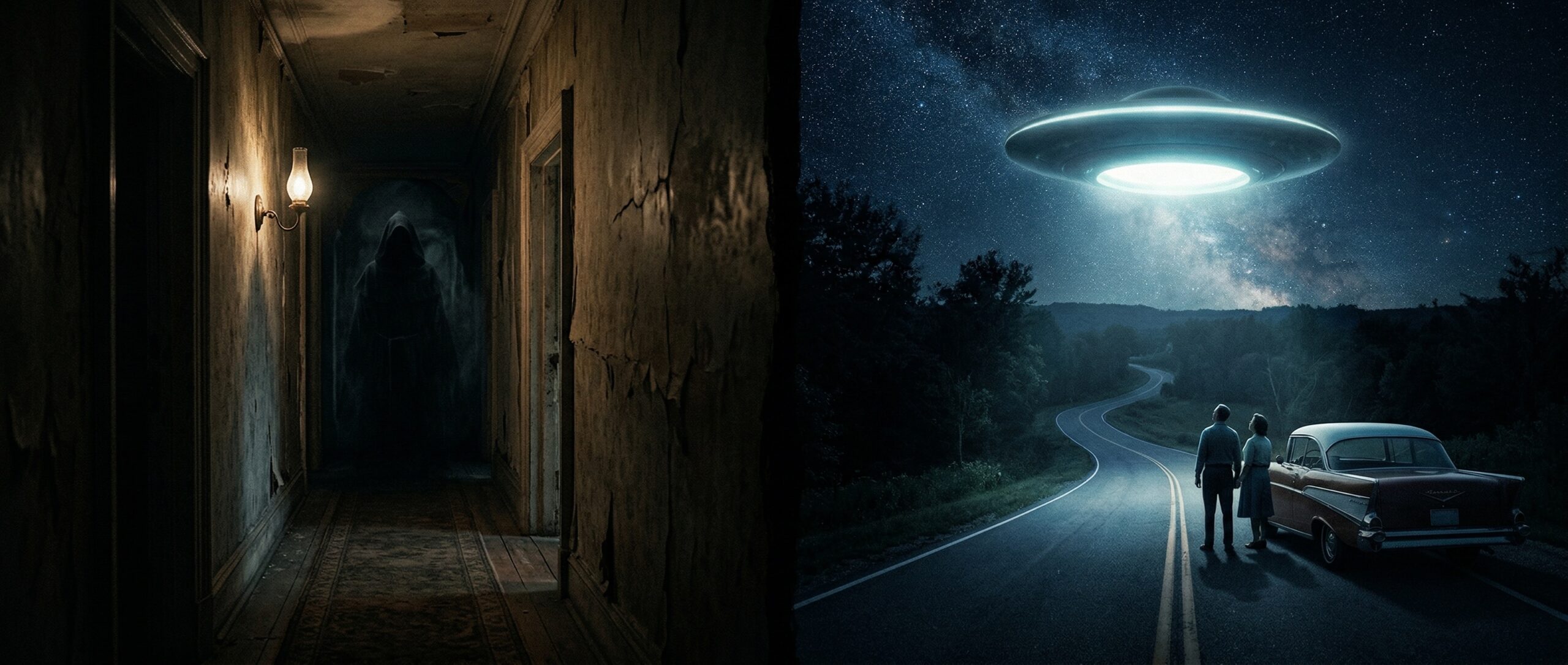
    Paranormal culture has a memory problem, but it also has an immortality problem. New videos, fresh sightings, viral ghost clips, and rapidly spreading conspiracy threads appear every week, yet most of them vanish almost as fast as they arrive. Then there are the cases that do not die. They survive format changes, skeptical reappraisal, media cycles, and generational turnover. They keep resurfacing as if they were never fully finished with us. The Black Monk of Pontefract is one of those cases. So is the Barney and Betty Hill abduction story. Both remain active in public imagination not because they are the newest mysteries, but because they satisfy something deeper than novelty ever can.

    That is why renewed 2026 interest in classic paranormal cold cases matters. This is not just another nostalgia wave. It is evidence that some unexplained stories become permanent cultural property. They move beyond their original witnesses and become frameworks through which later audiences understand haunting, abduction, terror, testimony, and the possibility that a single case can define an entire subgenre. Modern paranormal media keeps rediscovering these stories because they still outperform plenty of newer material on the level that matters most, symbolic durability.

    This is the real pillar angle. The question is not merely why these two cases are famous. It is why certain paranormal cold cases become immortal while others collapse into footnotes. Readers who have followed how the Westall UFO mystery still shapes witness culture or seen why Borley Rectory remains the template for haunted-house myth will recognize the pattern. The strongest paranormal cases do not survive because they are solved, but because they remain useful to the imagination. They survive because they are narratively complete enough to feel real and unresolved enough to stay alive.

    Classic paranormal cold cases survive because they become story engines, not just old reports

    Most unexplained stories flare and disappear because they never achieve full narrative architecture. They may be creepy, strange, even briefly viral, but they do not generate enough enduring structure to support endless retelling. The cases that last do something different. They become story engines. They offer memorable witnesses, emotionally charged details, symbolic settings, escalating strange events, unresolved interpretation, and enough documentation to keep both believers and skeptics engaged without closing the case.

    That is what separates a durable paranormal cold case from a passing weird headline. A durable case has shapes people can remember. A room, a road, a family, a night drive, a monk, missing time, poltergeist violence, fear on the faces of witnesses, official uncertainty, and just enough evidence to argue over forever. These elements make a story portable. They allow it to live in books, television, podcasts, YouTube explainers, TikTok summaries, and campfire-style retellings without losing coherence.

    In that sense, the best paranormal cold cases operate like folklore with documentation attached. They are modern legends that retain the persuasive force of named people, specific places, and archived accounts. That combination is rare, and it is one reason only a small number of old mysteries become permanently renewable.

    The Black Monk of Pontefract still represents the ideal haunted-house case

    The Black Monk of Pontefract remains one of Britain’s most persistent haunting legends because it contains nearly every element a classic ghost case needs. A family home. Repeated disturbances. object movement. Physical attacks. witness fear. Apparitions. A historical backstory involving a monk. Investigators. Religious framing. Media circulation. Whether one treats the events as supernatural, psychological, exaggerated, socially contagious, or some unstable combination of all four, the case is narratively rich in a way that very few haunting stories are.

    Its power comes partly from the domestic scale of the fear. A haunting works best when it invades the place that should be safe. Pontefract’s endurance has less to do with a single spectacular piece of evidence than with the layered way the case accumulated menace. The reports do not feel like one odd moment. They feel like an environment turning hostile. That kind of escalation allows audiences to imagine themselves into the story very easily.

    It also helps that the Black Monk story sits comfortably between folklore and case file. The image is unforgettable, but so is the setting. The story remains vivid because it compresses haunting into a symbolic form almost anyone can grasp: the home is breached, the unseen has presence, and the past refuses to stay buried. That formula still works because it touches something older than modern paranormal branding.

    Barney and Betty Hill became the template for modern alien abduction narrative

    If Pontefract helped define the haunted-house cold case, Barney and Betty Hill helped define the abduction case in its modern form. Their 1961 experience in New Hampshire became one of the most influential UFO contact stories ever told, not only because of what they claimed happened but because of how the case was narrated, recorded, investigated, and culturally processed afterward. Missing time, hypnosis, recurring memory fragments, emotional trauma, road-based encounter structure, and the possibility of nonhuman contact all converged into a template that later abduction stories would echo for decades.

    The Hill case remains so powerful because it feels transitional. It belongs to an older UFO era while also prefiguring the psychologically intimate abduction accounts that would dominate later discourse. It is not simply a story about lights in the sky. It is a story about what happens when witness experience becomes uncertain even to the witnesses themselves. That makes it especially durable. A case survives longer when it contains not only external mystery, but interior fracture.

    It also matters that Barney and Betty Hill were real people whose testimony carried emotional complexity. Their story was never purely cinematic. It felt disorienting, human, and difficult. That quality has helped keep the case alive across generations, especially as disclosure culture and alien-contact media continue to reframe older abduction narratives as foundational texts rather than quaint early episodes.

    These cases endure because they sit at the intersection of testimony, atmosphere, and cultural timing

    The Black Monk and the Hill abduction look like very different paranormal stories, but they survive for related reasons. Each case offers strong atmosphere, emotionally memorable witnesses, a symbolic setting, and enough ambiguity to remain arguable. Each also emerged at a time when the surrounding culture was ready to absorb and amplify its meaning. A haunting case thrives in a culture still attuned to domestic spiritual fear. An abduction case thrives in a culture already primed by space-age anxiety, technological futurity, and the possibility of cosmic intrusion.

    That balance matters. A case that is too evidentially thin will not last. A case that is too conclusively resolved also tends to lose long-term force. The immortal cases sit in a middle zone where details are strong enough to support retelling but uncertain enough to resist closure. They invite perpetual reinterpretation. That is exactly what contemporary media wants from legacy mystery content.

    This is also why audiences keep comparing old cases to newer ones. The older stories feel denser. They carry accumulated interpretation. They have had time to become myth without losing their documentary traces. Newer cases often arrive raw and scattered. The classics arrive already shaped.

    Modern podcasts, documentaries, and social clips keep reanimating legacy mysteries

    One reason classic paranormal cold cases are surging again is structural. Modern media formats are unusually well suited to reviving them. Podcasts reward layered storytelling and witness reconstruction. YouTube essays reward archival collage and theory comparison. Short-form clips reward a single unforgettable image or detail. Streaming documentaries reward atmosphere, reenactment, and open-ended interpretation. A good old case can now be redistributed across every format at once.

    This gives legacy mysteries a major advantage over newer reports that may lack narrative density. An older case comes preloaded with chronology, context, secondary commentary, and decades of accumulated cultural residue. Creators do not have to invent the gravity. They inherit it. That is why a story like the Black Monk or the Hill abduction can be repackaged endlessly without feeling exhausted. Each retelling borrows prestige from every previous retelling.

    This same engine helps explain the continued success of other legacy mysteries on unexplained.co, from Westall to long-lived haunting narratives and revived sky anomalies. Old cases scale well because they already know how to survive interpretation.

    Believers and skeptics both help keep the best cold cases alive

    One of the least appreciated truths about paranormal survival is that skeptical attention can be as important as believing attention. A case that only believers discuss may remain within a subculture. A case that skeptics, historians, psychologists, folklorists, and debunkers keep revisiting becomes harder to bury. Every argument extends the shelf life. Every attempted explanation becomes another chapter in the case’s afterlife.

    The Black Monk benefits from this dynamic because haunting cases invite questions about suggestion, fraud, family stress, religious imagination, and mass influence. The Hill case benefits because abduction narratives raise issues of memory, hypnosis, trauma, cultural contamination, and UFO belief formation. In both cases, skepticism does not erase the story. It thickens it. It gives it more layers to survive on.

    That is why true cold-case durability often depends on interpretive conflict. If everyone agreed entirely, the case would settle. The immortal paranormal case remains alive because it never stops producing productive disagreement.

    Many newer paranormal stories fail because they produce reaction without mythic structure

    Modern internet culture can make almost any unexplained clip feel huge for 48 hours. But virality is not the same as mythic staying power. Many newer cases fail because they generate immediate reaction without building durable symbolic structure. There may be a strange video, a dramatic caption, a wave of commentary, and then nothing to hold onto. No strong witness arc. No layered setting. No emotional core. No room for long-term reinterpretation.

    By contrast, the classic cold cases keep offering more than one thing at once. They provide incident, atmosphere, testimony, historical context, interpretive conflict, and iconic imagery. They become reusable narrative skeletons. This is why the classics keep outperforming new material. They are not simply older. They are more complete.

    That completeness is not always about better evidence. Sometimes it is about better storytelling conditions. A case becomes immortal when it fuses event and myth before anyone realizes it has done so.

    Immortal cases become containers for fear, belief, and identity across generations

    Over time, the strongest paranormal cold cases stop functioning as isolated events and start functioning as cultural containers. People use them to think with. A haunting case becomes a way of imagining what a home means under threat. An abduction case becomes a way of imagining helplessness, contact, violation, or revelation. A witness story becomes a proxy for larger fears about authority, reality, and what kinds of experiences polite society will permit as real.

    This is why such cases survive generational turnover. Younger audiences may not approach them in the same way earlier audiences did, but they still find use in them. The Black Monk can be read as folklore, trauma narrative, media artifact, or genuine haunting. The Hill case can be read as UFO history, psychological puzzle, race-era witness testimony, or foundational mythology of alien contact. The stories remain alive because they can do new work without losing their old force.

    That flexibility is one of the clearest markers of paranormal immortality. A dead case cannot be repurposed. A living cold case can keep absorbing new anxieties and new interpretive styles indefinitely.

    The return of classic cases says something important about the state of paranormal culture now

    If classic cold cases are surging again, it may be because paranormal culture is growing more archival, not less. Audiences are no longer satisfied only by raw novelty. They want depth, lineage, and stories with enough texture to reward long attention. They want cases that feel like they matter because they have already survived scrutiny, retelling, and disagreement. In that environment, legacy mysteries become premium material.

    This also suggests a broader fatigue with disposable weirdness. Endless minor anomalies can create temporary buzz, but they rarely build collective memory. The return to classic cases indicates that people still hunger for stories with weight. Not necessarily stories with answers, but stories with enough structure to support obsession.

    That is why the current resurgence is more than content recycling. It is a sign that paranormal audiences still recognize the difference between a passing oddity and a case that has earned its place in the canon of the unexplained.

    The paranormal cold case revival belongs to a wider hunger for durable mystery

    Seen from a wider angle, the renewed fascination with classic cases belongs to a larger cultural pattern. People are gravitating toward mysteries that come with history attached, whether in UFOs, hauntings, occult revivals, or unsolved disappearances. A durable case offers continuity. It lets audiences step into a long conversation rather than consuming a single disposable moment. That continuity is valuable in an overstimulated media environment.

    The Black Monk and Barney and Betty Hill continue to haunt us because they are not merely famous. They are structurally alive. They still offer fear, wonder, ambiguity, and interpretive space in proportions that newer stories rarely achieve. They remain arguable without becoming empty. They remain iconic without becoming inert.

    That is the real answer to why old paranormal mysteries keep outperforming new ones. The strongest cases do not fade because they never stop functioning. They still help us rehearse the oldest questions: what happened, who can be believed, what entered the room, what crossed the road, and why some stories refuse to let the living move on.

    Frequently Asked Questions

    Why do classic paranormal cold cases keep returning?

    Because the strongest old cases combine memorable witnesses, symbolic settings, unresolved interpretation, and enough documentation to support endless retelling across new media formats.

    Why is the Black Monk of Pontefract still so famous?

    It remains one of the most effective haunted-house cases ever told, combining domestic terror, repeated disturbances, apparition lore, and a setting that makes the fear feel intimate and believable.

    Why does the Barney and Betty Hill case still matter?

    Because it helped define the modern alien abduction narrative, especially the themes of missing time, psychological disruption, and intimate witness testimony that later cases would build on.

    Do skeptics help old paranormal cases survive?

    Yes. Ongoing skeptical debate adds layers to a case and keeps it active in public conversation, rather than allowing it to settle into a closed belief-only niche.

    Why do many newer paranormal stories fade so quickly?

    Because many generate short-term reaction without the deeper narrative structure, witness texture, and interpretive richness that allow a mystery to survive for decades.

  • Her 2026 Predictions Came True — Now She Has 5 New Warnings

    Her 2026 Predictions Came True — Now She Has 5 New Warnings

    An award-winning psychic whose earlier 2026 predictions allegedly came true has issued five new premonitions for the rest of the year, according to Express.co.uk. She is far from alone — 2026 has become the biggest psychic prediction cycle in recent memory, driven by Baba Vanga forecasts, a viral Nostradamus TikTok baby, and a wave of online seers claiming vindication.

    Predictive claims are nothing new. But the 2026 cycle is different in scale, speed, and cultural saturation. Multiple psychics, remote viewers, and prophecy channels are competing for attention in a media environment where algorithmic distribution rewards fear, urgency, and the promise of hidden knowledge. The result is a self-reinforcing loop: predictions go viral, events happen that can be retrofitted to match, the psychic claims vindication, and the next round of predictions arrives with even more authority. Psychic predictions 2026 content is now among the highest-engagement material in the entire unexplained niche.

    What This Story Actually Says

    Express.co.uk reported that the psychic — whose name has been withheld in some coverage — made a series of predictions earlier in 2026 that she now claims have been confirmed by unfolding events. These reportedly include geopolitical tensions, extreme weather events, and celebrity-related occurrences. She has followed up with five new premonitions covering the remainder of the year, though specific details vary across outlets reporting the same story.

    This fits a well-established media pattern. Express.co.uk and similar outlets regularly cover psychic predictions because they generate enormous reader engagement. The format is proven: a psychic makes claims, the claims are vague enough to match multiple outcomes, events occur that loosely fit, and the psychic is presented as having been “right.”

    Why This Topic Spreads So Easily

    Psychic prediction content has a structural advantage over almost every other content type in the unexplained space: it’s unfalsifiable at the moment of publication. A prediction about “tensions in the East” or “a surprise in the entertainment world” can match dozens of real events. By the time the prediction can be checked, the audience has moved on — but the memory of “she predicted this” persists.

    It also connects to genuine anxiety. In a year marked by geopolitical instability, economic uncertainty, and rapid technological change, audiences are actively looking for someone who appears to know what’s coming. Psychics fill that role whether or not their track record holds up to scrutiny. Pew Research has documented consistently that a significant minority of Americans believe in psychic abilities — a stable base of potential engagement that platforms are happy to serve.

    What the Evidence Actually Supports

    No psychic has ever demonstrated predictive ability under controlled laboratory conditions that meets the standards of mainstream science. The Skeptical Inquirer has documented decades of failed tests, including the famous Randi Foundation challenge, which offered one million dollars to anyone who could demonstrate psychic powers under agreed-upon conditions. No one ever claimed the prize.

    What the evidence does support is that confirmation bias is extraordinarily powerful in this context. When a psychic makes twenty vague predictions and two of them loosely match real events, audiences remember the two hits and forget the eighteen misses. This isn’t deception — it’s a genuine feature of human cognition that prediction content exploits by design.

    What Skeptics Say

    Skeptics argue that the entire psychic prediction ecosystem functions as a confirmation bias delivery machine. Predictions are framed broadly enough to be unfalsifiable, published in high-volume formats where individual misses are forgotten, and retroactively connected to events through narrative framing rather than precise dates, names, or details. The cycle repeats because it works — not because predictions come true, but because the human brain is wired to find patterns even where none exist.

    Why It Matters

    This isn’t just about one psychic or one set of predictions. The 2026 prediction cycle matters because it shapes real behavior. Audiences don’t consume these passively — they make financial, social, and emotional decisions based on what they think is coming. Doomscrolling, panic buying, relationship decisions driven by “signs” — these are real consequences of a prediction culture that incentivizes alarm over accuracy.

    The Bigger Pattern

    The psychic predictions 2026 cycle connects directly to the broader phenomenon of prophetic content merging with UFO disclosure culture, conspiracy communities, and mainstream anxiety. Baba Vanga’s prophecies, Nostradamus interpretations, remote viewing communities, and political prophecy channels are converging into a single narrative ecosystem where every global event is a “sign” and every psychic is a potential oracle. That convergence is what makes 2026 feel different from previous prediction years — the ecosystem is bigger, faster, and more interconnected than ever.

    Final Assessment

    The award-winning psychic’s new predictions will likely generate massive engagement, some loose matches with future events, and a fresh round of vindication claims. That is how prediction culture works. Whether any individual prediction “comes true” is almost beside the point — the system rewards the appearance of accuracy, not accuracy itself. The smartest approach is to track predictions against outcomes with specificity and dates, and to remember that the eighteen misses matter as much as the two hits.

    Frequently Asked Questions

    Has any psychic ever proven their predictions under scientific testing?

    No. Decades of controlled testing, including the James Randi Foundation’s million-dollar challenge, have failed to produce a single verified case of psychic prediction ability under agreed-upon scientific conditions.

    Why do people believe psychic predictions?

    Confirmation bias plays a major role — people remember hits and forget misses. Additionally, psychic predictions provide a sense of control and certainty in uncertain times, which is psychologically appealing regardless of accuracy.

    What makes 2026 different from other prediction years?

    The convergence of multiple prediction traditions (Baba Vanga, Nostradamus, remote viewing, political prophecy), combined with social media amplification and geopolitical anxiety, has created a larger and more interconnected prediction ecosystem than in previous years.

    Related Articles

    This article was created using Media Blaster – Your content production specialist. Visit www.mediablaster.io for more information.
  • April 2026 Prophecy Claims Are Everywhere: How Prediction Culture Turns Anxiety Into Authority

    April 2026 Prophecy Claims Are Everywhere: How Prediction Culture Turns Anxiety Into Authority

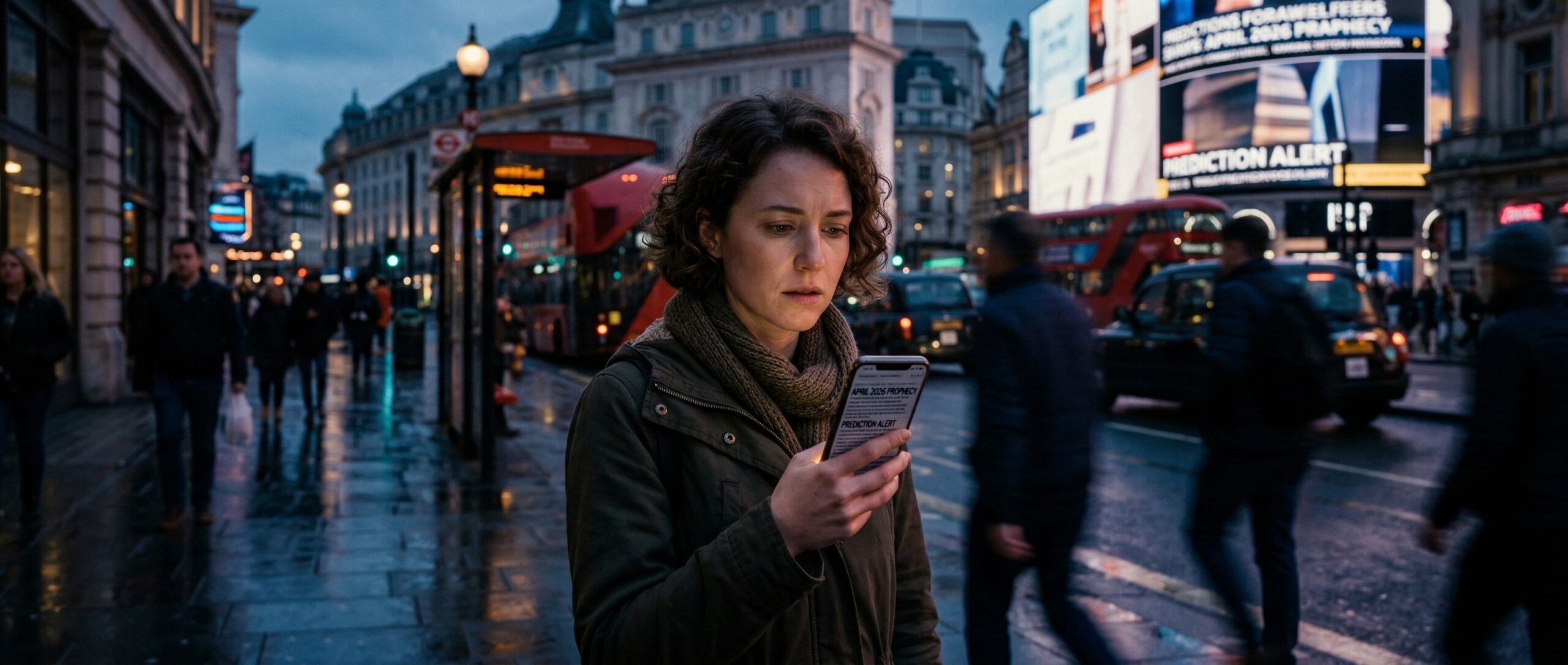
    April 2026 prophecy chatter is spreading for the same reason prophecy waves always spread: a volatile news cycle, a ready-made online belief community, and creators who know how to frame uncertainty as confirmation. What looks like a sudden eruption of psychic forecasts is really a feedback loop where fear, algorithms, and monetized certainty all reinforce one another.

    Here is the core answer. There is no verified evidence that April 2026 is uniquely destined for cosmic or geopolitical upheaval. What exists is a surge of prediction content from psychics, remote viewers, and prophecy channels tying current anxieties to older narratives, then presenting those narratives as if unfolding events are validating them in real time.

    That distinction matters because prophecy culture rarely succeeds by being precise. It succeeds by being adaptable. A vague forecast can be stretched around almost any development, and once audiences begin watching current events through that lens, nearly every headline starts to feel like evidence. Broader reporting on online extremity and belief dynamics from outlets like Pew Research Center and analysis of digital amplification patterns at Brookings help explain why these narratives find such fertile ground.

    What This Story Actually Says

    Across fringe forums, prophecy channels, and social media communities, creators have been circulating claims that April 2026 would bring major world events, spiritual turning points, or disclosure-level revelations. Some of these claims are being connected to UFO narratives, while others are framed through broader religious, psychic, or end-times language.

    What makes this surge notable is not one single prophecy, but the way multiple subcultures are converging around the same month. Remote-viewing communities, online psychics, and apocalypse-focused creators are all packaging contemporary uncertainty as if it were foreseen. That creates the impression of confirmation even when the actual predictions are broad, recycled, or contradictory.

    This also helps explain why familiar names and older claims keep getting pulled back into circulation. Once an audience believes a forecaster was “right once,” later statements are treated as heightened warning signals rather than as new claims that still need evidence.

    Why Prophecy Content Spreads So Easily

    Prediction content thrives when the audience already feels unstable. Political turbulence, disclosure chatter, economic stress, and online fear loops create exactly the emotional environment in which prophecy narratives gain traction. People do not just want information in those moments. They want orientation.

    Prophecy creators offer something mainstream reporting cannot: certainty. Even when that certainty is artificial, it feels useful. It turns a messy present into a pattern and gives followers the sense that someone is already reading the map.

    Algorithms amplify this dynamic because emotionally charged, high-stakes content outperforms calm analysis. A claim that a psychic foresaw upheaval or that a remote viewer predicted major events in April is inherently more clickable than a measured explanation of coincidence, selective memory, or narrative reframing.

    What the Evidence Actually Supports

    The evidence here supports the existence of a powerful online prediction culture, not the truth of any specific prophecy. What can be observed directly is the distribution mechanism: repeated posting, mutual amplification between creators, audience reinforcement, and strategic linking of broad predictions to unfolding events.

    In practice, most viral prophecy claims are difficult to falsify because they are framed elastically. They use emotionally loaded but open-ended language, and they often gain strength after events occur, when followers retrospectively fit headlines into an earlier statement.

    That is why the key evidence question is not “did someone make a prediction?” but “was the prediction specific, dated, testable, and documented before the event?” Without those standards, prophecy culture becomes a machine for generating perceived hits while quietly discarding misses. Media literacy work from groups like The News Literacy Project and broader misinformation research at First Draft remain useful frameworks for judging these claims more critically.

    What Skeptics and Former Believers Would Say

    Skeptics would argue that prophecy communities are often better at narrative maintenance than prediction. They reinterpret misses, narrow their claims after the fact, and borrow significance from unrelated events. Former believers often describe the same dynamic more personally: they were drawn in by certainty, then kept in place by community pressure and the emotional cost of admitting a prediction failed.

    There is also a monetization layer that deserves attention. Paid memberships, donation funnels, private groups, and exclusive briefings can all turn prophecy into a business model. When attention becomes income, there is a built-in incentive to keep the next warning cycle alive.

    That does not mean every person sharing predictions is acting cynically. But it does mean audiences should distinguish between spiritual expression, speculative interpretation, and a system that rewards escalating fear.

    Why This Story Matters Right Now

    The April 2026 prophecy wave matters because these narratives can affect real behavior. People do not consume them passively. They make emotional, social, and sometimes financial decisions based on what they think is coming. In extreme cases, prophecy ecosystems can fuel panic, isolation, compulsive doomscrolling, or harmful group dynamics.

    It also matters because prophecy content increasingly overlaps with UFO and disclosure culture. Once those worlds merge, political developments, government secrecy, spiritual warfare, and cosmic expectation all get folded into the same story universe. That makes the content feel larger, more urgent, and harder for followers to step back from critically.

    The Bigger Pattern Behind Prediction Surges

    The deeper pattern here is that prophecy communities are highly adaptive. They do not need certainty to function. They need momentum. A predicted month, a symbolic date, or a charged news event can provide enough narrative fuel to restart the cycle again and again.

    That is why the most important question is not whether one forecast comes true. It is why broad, emotionally resonant prediction systems remain so persuasive when precise accuracy is so rare. The answer usually lies in psychology, community identity, and the comfort of feeling that chaos is secretly organized.

    Final Assessment

    The April 2026 prophecy surge is best understood as a media and belief phenomenon rather than as evidence of verified foresight. It shows how quickly uncertainty can be reframed as validation when audiences, creators, and algorithms are all pointing in the same direction. The real story is not that prophecy has been proven. It is that in anxious moments, prediction culture can make itself feel uncannily right even when the underlying evidence stays weak.

    Frequently Asked Questions

    Are April 2026 prophecy claims verified?

    No. What is verifiable is the spread of prediction content and the way online communities are amplifying it, not proof that any specific prophecy is true.

    Why do prediction channels gain traction during tense periods?

    Because they offer certainty, meaning, and emotional orientation when mainstream events feel chaotic or difficult to interpret.

    How can readers judge a prophecy claim fairly?

    Check whether it was clearly documented before the event, whether it was specific and testable, and whether failed predictions are being ignored or reinterpreted.

    Why does this overlap with UFO culture?

    Because both spaces are drawn to hidden meaning, elite secrecy, revelation narratives, and the idea that major truth is about to break into public view.

    Related Articles

    This article was created using Media Blaster – Your content production specialist. Visit www.mediablaster.io for more information.
  • April Prophecy Panic: Why Psychic Predictions Are Spreading So Fast in 2026

    April Prophecy Panic: Why Psychic Predictions Are Spreading So Fast in 2026

    A new wave of April Prophecy content is spreading across social media after tabloid coverage amplified psychic Jill M. Jackson’s latest warnings for April 2026. The predictions touch nearly every high-anxiety trigger modern audiences are primed to fear: political instability, attacks on U.S. infrastructure, airline disasters, food shortages, and the early signs of banking collapse. On the surface, it looks like another monthly psychic cycle. Underneath, it is a much bigger media story about how prophecy, panic, and pattern-matching now merge online.

    Here is the clearest answer: the current April Prophecy wave matters not because any prediction has been verified in advance, but because these stories spread most effectively when real-world uncertainty is already high. A prophecy list becomes a container for fear. Once people are anxious enough, almost any headline can be folded into it as proof.

    What Is the April Prophecy Story?

    The latest April Prophecy surge appears to have been accelerated by a Daily Star article published on April 1, 2026, summarizing psychic Jill M. Jackson’s warnings for the month ahead. According to that reporting, Jackson predicted a possible attempt on Donald Trump, conflict involving Iran, Israel, and the United States, pressure on food supplies, more airline disasters, attacks involving the power grid or water systems, and the beginning of a banking-collapse sequence.

    That combination is exactly why the story took off. It does not focus on one event. It offers a whole package of crisis possibilities. That makes it ideal for algorithmic anxiety culture, where people are already scanning the news for signs that systems are fraying.

    This is one reason prophecy content survives so well online. It does not need to be precise to feel relevant. It only needs to sound broad enough that later events can be interpreted as confirmation.

    Why April Prophecy Content Goes Viral

    Stories like this travel fast because they intersect with several communities at once:

    • prophecy and apocalypse audiences looking for signs of historic turning points
    • prepper and collapse communities focused on grid failure, shortages, and instability
    • political content creators who frame world events as part of a larger hidden script
    • spiritual and wellness spaces that elevate intuitive authority over institutional analysis
    • general doomscrolling audiences already primed for fear-based headlines

    That convergence matters. Prophecy stories are no longer siloed inside paranormal subcultures. They now plug directly into geopolitics, economics, survivalism, aviation fear, and online outrage. A modern April Prophecy cycle is not just mysticism. It is cross-platform anxiety content.

    Why One Claimed “Hit” Can Change Everything

    One of the most important parts of this story is the claim that Jackson supposedly called elevated earthquake activity earlier in the year. Whether that earlier forecast was actually specific enough to count as a serious prediction is a separate question. In prophecy culture, what matters is not always precision. What matters is perceived legitimacy.

    Once a psychic is believed to have been right once, even loosely, audiences often begin treating later warnings as upgraded intelligence. A single “hit” becomes reputational fuel. It gives the next round of predictions more emotional authority, even when the new claims are far broader or less verifiable.

    This is how monthly psychic media often scales. One apparent success becomes the marketing engine for a longer chain of future warnings.

    Prediction or Pattern-Matching?

    This is the core question at the center of any April Prophecy wave. Are people watching a genuine forecasting phenomenon — or are they watching a large-scale pattern-matching machine in action?

    Skeptics would argue that broad psychic predictions function less like precise forecasts and more like narrative frameworks. If a politician faces turmoil, believers say the prophecy landed. If a market dips, the banking-warning narrative is activated. If a power outage happens anywhere, it can be folded into infrastructure fear. If none of it happens cleanly, the timeline can be stretched or the symbolism reinterpreted.

    That is why these stories are so durable. They are built to absorb ambiguity.

    Why April 2026 Feels Especially Fertile for Prophecy Culture

    The current media environment is unusually favorable to prophecy content. Economic uncertainty, geopolitical tension, polarization, viral fear loops, and declining trust in institutions all create ideal conditions for psychic narratives to flourish. People do not just want information in times like these. They want orientation. They want a frame that makes chaos feel connected.

    That is where an April Prophecy story becomes useful to believers. It does not reduce fear. It organizes fear.

    This is one reason similar stories keep appearing across unexplained and conspiratorial media. Readers looking at this cycle may also want to compare it with our investigation into the March 22, 2026 rapture panic, our feature on prophecy convergence around war and instability, and our article on Baba Vanga and Chris Bledsoe timeline overlap. In each case, the mechanism is similar: fear, symbolism, and uncertainty get fused into a larger predictive narrative.

    The Business of Being Right Once

    There is also a media-economics angle here. Prophecy content is highly clickable because it offers urgency, mystery, and emotional stakes. A psychic who appears to have predicted one event gains a stronger hook for every story that follows. Tabs, clips, reaction videos, and repost chains all benefit from that dynamic.

    That means April Prophecy stories are not just belief objects. They are content products.

    For publishers, influencers, and creators, a fear-based prediction list is extremely efficient. It is specific enough to grab attention but broad enough to remain reusable. If one item seems to line up with the news, the whole package gets renewed.

    What Responsible Readers Should Watch For

    Readers should pay attention to several things when evaluating a story like this:

    • Was the prediction specific before events happened, or only persuasive after reinterpretation?
    • Are followers crediting the psychic for things that were already widely feared in public discourse?
    • Is the prediction being repeated by outlets that benefit from panic-driven engagement?
    • Are unrelated headlines being stitched together into one prophecy narrative after the fact?

    These questions matter because prophecy stories often feel strongest when anxiety is already elevated. In those moments, the human brain becomes more willing to perceive pattern, destiny, and hidden warning structures.

    Final Assessment

    The April Prophecy panic now circulating around Jill M. Jackson’s predictions is important not because it proves clairvoyance, but because it shows how modern fear ecosystems work. A psychic warning list becomes viral when it aligns with the emotions audiences are already carrying: instability, scarcity, violence, collapse, and uncertainty about who to trust.

    That is why April Prophecy content keeps spreading. It offers not verified foresight, but a dramatic framework for interpreting unstable times. And in the attention economy, that can be more powerful than proof.

    Frequently Asked Questions

    What is the April Prophecy story about?

    It refers to a wave of viral coverage around psychic Jill M. Jackson’s April 2026 predictions, which include warnings about political turmoil, infrastructure attacks, shortages, airline incidents, and banking instability.

    Why is April Prophecy content spreading so fast?

    Because it overlaps with existing fear communities including prophecy audiences, preppers, political influencers, spiritual communities, and general doomscrolling users.

    Did the psychic already predict something correctly?

    Believers say Jill M. Jackson accurately warned about increased earthquake activity earlier in the year. Whether that counts as a precise predictive hit depends on how specific the original claim was.

    What do skeptics say about April Prophecy claims?

    Skeptics argue that broad psychic predictions are easily reinterpreted after the fact, allowing followers to connect unrelated events and treat them as confirmation.

    Related Articles:

    This article was created using Media Blaster – Your content production specialist. Visit www.mediablaster.io for more information.
  • Baba Vanga 2026 Prophecy and the Chris Bledsoe Timeline: Why These Two End-Times Narratives Keep Converging

    Baba Vanga 2026 Prophecy and the Chris Bledsoe Timeline: Why These Two End-Times Narratives Keep Converging

    The Baba Vanga 2026 prophecy and the Chris Bledsoe prophecy timeline are beginning to merge in the minds of prophecy watchers, UFO believers, and spiritually conspiratorial audiences for one simple reason: both are increasingly being interpreted as signals that humanity is approaching a visible turning point. The details are not identical, the source traditions are completely different, and there is no evidence that one directly validates the other. But in the online prophecy ecosystem, overlap matters more than authorship. If two separate visionary traditions seem to point toward the same decade, many audiences treat that as confirmation.

    This is what makes the comparison worth serious attention. Baba Vanga remains one of the most circulated prophetic figures in modern popular culture, with annual lists of alleged predictions repeatedly resurfacing in tabloids, social feeds, and apocalypse forums. Chris Bledsoe, by contrast, sits at the intersection of UFO contact narratives, religious symbolism, and modern American disclosure culture. One comes from the mythology of the Eastern European seer. The other emerges from a contactee-style experience wrapped in visions, celestial signs, and claims of a coming feminine divine presence. Yet by 2026, they are being drawn into the same speculative orbit.

    Here is the clearest answer: there is no verified prophetic mechanism linking Baba Vanga and Chris Bledsoe. The connection is interpretive, not evidentiary. But it is culturally significant because it reveals how modern prophecy culture works. Separate symbolic systems get braided together into one meta-narrative about upheaval, revelation, and historical transition.

    Who Was Baba Vanga, and Why Does 2026 Matter in Her Mythology?

    Baba Vanga, the blind Bulgarian mystic often compared to Nostradamus in popular media, has become one of the internet’s most reusable prophetic figures. Her reputation rests on a combination of folklore, retrospective attribution, tabloid repetition, and the strange durability of lists claiming she predicted major events far into the future. Whether those lists are authentic, distorted, or partly fabricated is a constant subject of debate.

    That uncertainty has not weakened her influence. If anything, it has helped. A prophetic tradition with fuzzy sourcing is easier to repurpose than one tied to a rigid text.

    The 2026 material attributed to Baba Vanga varies depending on the source, but it is often folded into a larger timeline of coming global instability, major shifts in human civilization, and episodes of fear, conflict, or transformation. Some retellings emphasize disaster. Others emphasize revelation or epochal change. As with many prophecy cycles, the exact wording is less important than the emotional impression it creates: something big is supposed to be approaching.

    That impression is why Baba Vanga keeps getting pulled back into annual prophecy coverage by outlets that know her name still generates attention. A reader does not have to fully believe the prophecy to feel compelled by it.

    For broader context on how prophecy stories resurface and mutate, mainstream explainers from sources like Britannica and recurring prophecy-cycle coverage in outlets such as Newsweek help show how these mythic figures remain active in public discourse even when their documented record is murky.

    What Is the Chris Bledsoe Prophecy Timeline?

    Chris Bledsoe’s prophetic significance comes from a very different place. He is not primarily discussed as a classic end-times seer. Instead, his reputation comes from a long-running UFO and contact narrative in which spiritual encounters, glowing orbs, religious symbolism, and apocalyptic or transformational expectations all begin to blur together.

    Bledsoe has described experiences involving a feminine presence often referred to by followers as “The Lady,” and many who study his case believe his visions point toward a major turning point in the mid-2020s. In online communities, that timeline has become especially associated with 2026 and 2027, with some readers interpreting his story as a prophecy of disclosure, spiritual awakening, celestial signs, or a civilizational threshold event.

    What makes Bledsoe unusual is that his case does not fit neatly inside one category. It is not purely religious, not purely ufological, and not purely apocalyptic. It occupies a hybrid zone where Marian symbolism, UFO experiencer language, divine feminine themes, and disclosure-era anxiety all coexist.

    This hybrid quality is a major reason his timeline keeps being pulled into wider prophecy discourse. He offers a bridge figure between communities that normally would not fully overlap.

    We have already explored this more deeply in our Chris Bledsoe prophecy investigation, which lays out why his timeline has become so magnetic for both spiritual audiences and UFO-followers looking for a date-based turning point.

    Why People Are Linking Baba Vanga and Chris Bledsoe

    The most important thing to understand is that prophecy culture is comparative by nature. Once people believe one visionary tradition might be pointing toward upheaval, they begin scanning other traditions for alignment. If another seer, contactee, mystic, or fringe religious figure appears to point toward the same era, the overlap gets treated as corroboration.

    That is exactly what is happening here.

    Believers are linking Baba Vanga and Chris Bledsoe because both can be interpreted as pointing toward:

    • a near-future turning point
    • global instability or civilizational stress
    • spiritual or cosmic significance
    • a change in what humanity understands about itself

    Notice what is missing from that list: precision. The convergence is not based on exact matching phrases or provable shared origin. It is based on thematic resonance.

    In prophecy discourse, resonance is often enough.

    The Role of 2026 in Modern Prophecy Culture

    The year 2026 has become a strangely crowded symbolic point across conspiracy spirituality, disclosure speculation, and apocalypse-adjacent online culture. That does not mean something will happen in that year. It means the year has accumulated enough expectation to function as a narrative magnet.

    Once that happens, many unrelated predictions begin getting pulled toward it. Old prophecies are reinterpreted. New theories are timed to it. Social-media creators build countdown cultures around it. A year becomes less a calendar marker than a stage set.

    That is one reason the Baba Vanga and Bledsoe timelines now get discussed together. The internet does not just preserve prophecies. It synchronizes them.

    This same pattern appeared in our investigation into the March 22, 2026 rapture panic and in our featured article on World War 3, Iran, and prophecy convergence. In both cases, multiple symbolic systems began collapsing into one looming future timeline, not because they were truly the same, but because audiences wanted a coherent map.

    Where the Narratives Overlap — and Where They Don’t

    The strongest overlap between Baba Vanga and Chris Bledsoe is emotional rather than textual. Both can be read as warning that humanity is approaching a threshold. Both are interpreted through language of disruption, transformation, and revelation. Both attract followers who feel mainstream institutions are missing the deeper significance of current events.

    But the differences matter.

    Baba Vanga’s mythology is built around broad future prediction, retrospective attribution, and the authority of the mysterious seer. Chris Bledsoe’s authority comes from personal encounter, testimony, spiritual imagery, and a disclosure-era audience already primed for the fusion of UFOs and religion.

    That means the connection between them is real only at the level of interpretive culture. One does not prove the other. They simply become more powerful when placed side by side.

    What Skeptics Would Say About the Connection

    Skeptics would argue that this is a classic case of pattern stitching. When prophecies are vague, symbolic, and open to reinterpretation, people naturally find overlap after the fact or build convergence around broad themes that could fit almost any anxious era.

    They would also point out that Baba Vanga prediction lists are notoriously unstable, with many claims about her future prophecies circulating without strong documentation. Likewise, Bledsoe’s prophetic significance depends heavily on follower interpretation rather than a single universally agreed prophetic text.

    That skeptical critique is important because it reminds us that narrative convergence is not the same as predictive validation.

    At the same time, skepticism alone does not explain why these stories matter so much to their audiences. For many believers, the point is not statistical precision. The point is symbolic recognition. They feel the world is entering a strange phase, and these figures help them name it.

    Why This Convergence Matters in the Disclosure Era

    The Baba Vanga/Bledsoe overlap matters because it reveals how prophecy has changed in the age of disclosure, algorithmic media, and conspiratorial spirituality. Older prophecy culture often revolved around religion, war, and end-times reading. Newer prophecy culture increasingly mixes those with UFOs, contact experiences, divine feminine symbolism, hidden knowledge, and the suspicion that reality itself is becoming less stable.

    This is where Bledsoe becomes especially important. He is one of the few modern figures whose narrative can connect UFO discourse to religious expectation without fully belonging to either. That makes him an ideal convergence point for audiences who want to synthesize Marian visions, prophecy lists, disclosure rumors, and cosmic awakening narratives into one framework.

    And once that synthesis starts, Baba Vanga naturally gets pulled in too, because her name already carries apocalyptic authority in mass culture.

    For a related example of how spiritual and conspiratorial language are increasingly merging, see our analysis of starseeds and conspiratorial spirituality, which shows how metaphysical belief systems now frequently blend with world-event anxiety and prophetic expectation.

    The Most Plausible Interpretation

    The most plausible interpretation is not that Baba Vanga and Chris Bledsoe independently confirmed the same literal 2026 event. It is that audiences are constructing a meta-prophecy out of fragments that feel symbolically aligned. That process says less about supernatural verification and more about the psychology of expectation.

    When times feel unstable, people search for pattern. When one prophecy tradition is not enough, they stack several together. When dates begin to overlap, those dates harden into cultural countdowns.

    That is what seems to be happening here.

    The convergence is real as a social phenomenon. Whether it is real as prophecy is another question entirely.

    Why the Story Still Fascinates People

    The reason this story has traction is not hard to understand. It offers a complete package for modern mystery audiences: ancient-seer mythology, contemporary contact narrative, near-future date fixation, spiritual symbolism, disclosure energy, and the intoxicating possibility that seemingly separate signs are actually pointing toward one hidden design.

    That is exactly the kind of narrative the internet amplifies best. It is expansive, interpretable, and emotionally high-voltage.

    Even readers who remain skeptical often find themselves drawn in because the story is not really just asking, “Did these prophecies match?” It is asking a bigger and more personal question: “Are we living through the beginning of something that older symbolic systems tried to warn us about?”

    That is a much harder question to dismiss casually, even when the evidence remains ambiguous.

    Final Assessment

    The Baba Vanga 2026 prophecy and the Chris Bledsoe prophecy timeline do not form a proven prophetic pair. There is no solid documented chain linking the two, no verified shared mechanism, and no reason to treat overlap alone as evidence that a specific event is coming.

    But the convergence still matters. It tells us how prophecy belief evolves in the modern age. Instead of following one source tradition at a time, audiences now assemble sprawling symbolic frameworks from mystics, UFO experiencers, spiritual influencers, apocalyptic rumors, and viral media fragments. The result is not one prophecy. It is a prophecy ecosystem.

    And right now, 2026 sits near the center of it.

    Frequently Asked Questions

    What is the Baba Vanga 2026 prophecy?

    The phrase refers to modern retellings of future predictions attributed to Baba Vanga, often framed around a major turning point, instability, or transformative events associated with the mid-2020s. The exact wording varies widely depending on the source.

    What is the Chris Bledsoe prophecy timeline?

    It refers to the interpretation of Chris Bledsoe’s visions, encounters, and symbolic experiences as pointing toward a major spiritual or disclosure-related shift around 2026 or 2027.

    Are Baba Vanga and Chris Bledsoe predicting the same thing?

    Not in any direct, documented sense. The connection is interpretive. Believers link them because both can be read as pointing toward a near-future period of upheaval or transformation.

    Why are prophecy audiences combining these narratives now?

    Because modern prophecy culture thrives on convergence. If different seers or experiencers seem to point toward the same era, audiences often treat that overlap as a stronger sign.

    What would skeptics say about the 2026 overlap?

    Skeptics would say this is pattern stitching: vague or symbolic predictions are being grouped together after the fact because people want a coherent future narrative.

    Why does this story matter even if the prophecies are not literally true?

    It matters because it shows how modern audiences use prophecy, UFO belief, spiritual symbolism, and conspiracy culture to make sense of uncertainty and historical anxiety.

    Related Articles:

    This article was created using Media Blaster – Your content production specialist. Visit www.mediablaster.io for more information.