Category: Strange History

  • 1957 Electrogravitics Secret: The Classified Research Program Whose Watchers Have All ‘Gone’

    1957 Electrogravitics Secret: The Classified Research Program Whose Watchers Have All ‘Gone’

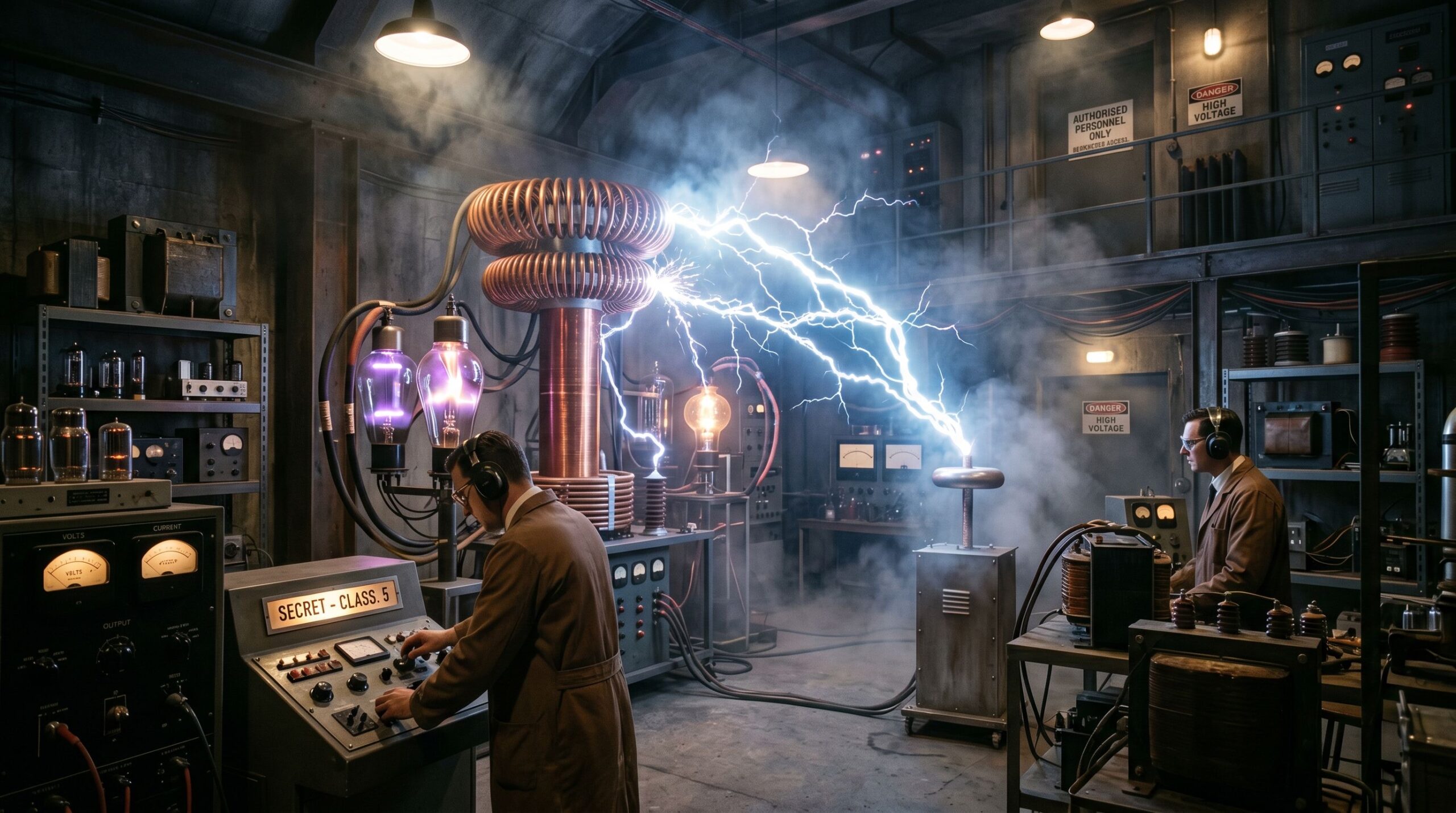
    A piece with the title “They Knew in 1957. And Now the Watchers Are Gone” has been circulating through the stranger corners of the internet — shared across Reddit forums, amplified by independent researchers, and pulled into the broader UAP disclosure conversation by people who see it as a missing chapter in the story of anti-gravity technology, classified military research, and the kind of scientific progress that governments can decide to keep forever. The essay’s claim is simple and explosive: a classified electrogravitics program produced real, usable results in the mid-to-late 1950s, and the researchers who understood what had been achieved are no longer around to confirm or deny it. They have all “gone” — retired, deceased, vanished into the silence that surrounds any project the U.S. military decided to wall off from the rest of the scientific community.

    The essay lives on Fear and Wine, a platform that has built itself around these exact intersections of classified history, fringe science, and the people who try to piece together what the record shows versus what the record was allowed to show. The title alone — “And Now the Watchers Are Gone” — carries the emotional weight of an entire genre of high-strangeness writing: the sense that the truth was real, was documented, was understood by a small group of people, and that time itself has been the ultimate classification mechanism because the last person who held those secrets has since died.

    What Electrogravitics Is and Why It Matters

    Electrogravitics is the term applied to technologies that use high-voltage electrical fields to produce a propulsion effect — the idea that electricity, applied in a specific configuration, can generate lift or thrust without combustion, without propellant, and without the conventional mechanisms that power every known aircraft. If the concept works at the scale the 1950s researchers allegedly achieved, it would explain decades of reports describing craft that appear instantaneously, change direction without deceleration, and move in ways that no aerodynamic profile could account for.

    The physics of electrogravitics remains contested. Mainstream physics does not recognize a mechanism by which electrostatic fields can produce significant thrust in free space. But the Wikipedia entry on anti-gravity research documents a long history of military and private-sector interest, the kind of investment that suggests at least someone, at some point, saw something worth pursuing. The gap between what physics textbooks say and what classified programs actually explore has been the subject of debate since the Manhattan Project.

    The 1957 Timeline

    The specific year — 1957 — is not arbitrary. The late 1950s were a period of intense aerospace experimentation, from the X-15 program to the earliest U-2 reconnaissance flights. The United States was building its first practical spy satellites, racing against the Soviet Union, and investing enormous sums into propulsion technologies that could give American aircraft capabilities beyond what was publicly known. In that context, a classified electrogravitics program would not have been an anomaly — it would have been one of many dark projects funded by a government that had just created NASA and was preparing for decades of aerospace dominance.

    What the viral essay claims is that within that broader wave of experimentation, a subset of researchers achieved something that never appeared in any open publication, any patent filing, or any declassified document. They built or observed a propulsion effect that looked like electrogravitics, and they understood its parameters well enough to recognize what it meant. Then the project was sealed, the researchers were reassigned or retired, and the knowledge was compartmentalized into a classification system that outlived the people who held it.

    That is the “watchers are gone” thesis: not that the information was destroyed, but that it was placed into hands and into a bureaucratic structure that no longer includes anyone alive who can speak to it with the specificity that the original researchers could.

    The Connections to Other Classified Science Stories

    Electrogravitics does not exist in isolation. The viral essay appeared at the same moment that the Pentagon was releasing its own trove of previously classified UAP files, and it is being read by researchers who see it as part of the same historical current. Free energy claims from researchers like Tariel Kapanadze, Eric Davis’s testimony about recovered non-human craft, and the long history of mind-control programs that continued decades after their supposed termination — all of these form a constellation of claims about what the government has known, classified, and let die with the people who carried the knowledge.

    The pattern is consistent: a classified program produces results. The results are too sensitive for public scientific discourse. The program is sealed. The researchers age and die. And the evidence degrades from physical documentation into oral history, rumor, and the kind of essay that circulates on platforms outside the mainstream.

    Why the Essay Resonates Now

    The timing is part of the answer. As the U.S. government begins releasing UAP files that it has held for decades, people are looking backward — not just at the encounters documented in those files, but at the history of classified aerospace research that predates the UAP conversation entirely. Electrogravitics, in this reading, is not a fringe theory about alien technology. It is a theory about human technology that was classified so effectively that it now looks alien because no one can talk about it.

    The essay’s emotional power comes from the loss it describes. “The watchers are gone” is not an accusation. It is an obituary — for people who saw something remarkable, who understood it, and who were bound by classification systems that followed them to their graves. The truth they carried died with them, not because it was false, but because it was never meant to survive the people who held it.

    The Gaps in the Story

    The skeptical reading begins where all high-strangeness claims must begin: with documentation. Where is the evidence? Where are the lab notes, the patents filed in classified channels, the photographs? The essay describes a program with real results but produces no primary documents that prove those results occurred. If electrogravitics was achieved in 1957, the physics should be reconstructable — even in principle — and the historical record should contain something more than absence and implication.

    The “watchers are gone” argument is, in part, an admission that the evidence is gone too. That is a coherent position for a conspiracy theorist. It is a harder position for a historian. Absence of evidence is not evidence of absence, but without at least some fragment of corroboration, the claim remains an interpretation of a silence — and silence can mean many things: that something was hidden, that something never existed, or that something existed but was far less remarkable than the story suggests.

    What Remains

    What the 1957 electrogravitics story offers, at minimum, is a framework for thinking about classified research that the public will never see. If the story is true, there was a propulsion technology that could explain some of the UAP encounters that still resist classification today. If the story is false, it is a remarkable piece of mythology — one that emerged organically from the intersection of declassification timing, the history of aerospace experimentation, and the genuine mystery of what happens to classified science when the researchers who created it leave the building for the last time.

    Either way, the story isn’t going away. The watchers may be gone. But the pattern they represent — a government building things in secret that the public is never told about — is the oldest and most verified pattern in American classified research. The question is whether electrogravitics is one more entry in that catalog, or a ghost story that grew because the people who could have disproved it are no longer around to do so.

  • The Deep Sea Sphere: 1990s SCUBA Divers Filmed Something in the Bahamas That Still Defies Classification

    The Deep Sea Sphere: 1990s SCUBA Divers Filmed Something in the Bahamas That Still Defies Classification

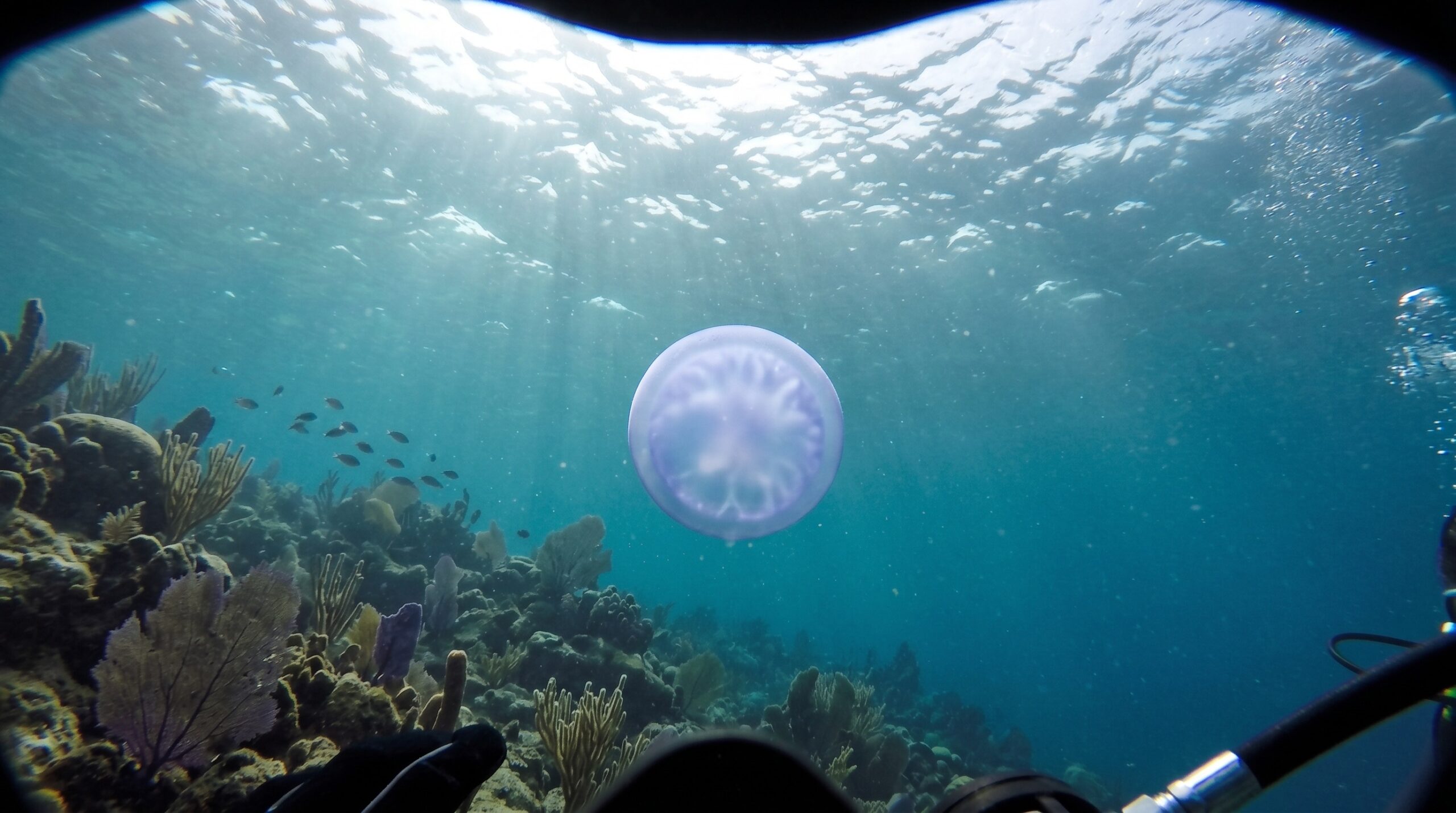
    The video is grainy, brief, and shot from the perspective of someone who was probably too surprised to remember they were filming. Below a SCUBA diver in blue-green water off the Bahamas, something moves into frame — a nearly perfect sphere, roughly the size of a large beach ball, drifting through the water column with a smoothness that doesn’t look like any familiar marine organism. No fins. No tentacles. No visible propulsion. Just a sphere, suspended in deep water, moving with an intentionality that makes the diver’s camera hold steady on it for a few crucial seconds before the clip cuts. The footage is from the 1990s. It has been circulating for years, but it surfaced again recently, pulled into the high-strangeness feeds alongside UFO videos, cryptid encounters, and everything else that people share when they believe they have filmed something that should not exist.

    What makes this particular clip compelling — and why it keeps returning after decades — is not just the shape of the object. It is the total absence of familiar anatomy. Every creature that a SCUBA diver might reasonably expect to encounter in Bahamian waters has a structure: a head, a tail, appendages, a body plan. Spherical organisms exist in the ocean, but they are microscopic — single-celled radiolarians, tiny planktonic colonies. A sphere of this size, moving independently in open water, with nothing protruding from its surface, is something that marine biologists struggle to classify and that cryptid watchers immediately file alongside the unknown.

    The Bahamian Context

    The waters around the Bahamas hold a reputation in marine and cryptozoological circles that is partly earned, partly mythic. The region is famous for the Lusca — a giant octopus-like creature that local legends say inhabits the blue holes and deep underwater caverns of the islands — and the recent HighStrangeness post about the sphere has reignited debate. Whether the Lusca is a folkloric embellishment of real deep-water encounters (giant squid, large octopuses, or other unclassified marine life) or something else is a debate that the Bahamian sphere video feeds into naturally. The ocean here is deep, the visibility is extraordinary, and the combination of shallow reef platforms dropping into abyssal trenches creates an environment where large organisms can approach divers from below, out of the shadows, with very little warning.

    This is the geographic context in which the spherical creature was filmed — not open pelagic water, but the layered, structurally complex reef-to-trench transition zone of the Bahamas, a place where encounters with unfamiliar life are rare enough to be notable and frequent enough to be believable.

    What Marine Biology Has to Say

    Biologists who have analyzed the footage (and there have been a few, pulled into the discussion by the viral nature of the clip) offer explanations that range from plausible to unsatisfying. The most common interpretation is that the object is a large jellyfish — specifically a barrel jellyfish or a similar medusa — filmed from below, where its bell shape appears as a sphere and its trailing oral arms are either not visible from that angle or have been retracted. Barrel jellyfish can reach significant sizes, and their movement pattern — undulating the bell to propel themselves forward — can look eerily mechanical when filmed from a distance.

    Another possibility is that the sphere is a marine snow colony — a loose aggregation of organic material held together by mucus — though these are typically amorphous rather than geometrically regular. A third option is that the object is not biological at all: a discarded piece of spherical debris, a sensor housing, or even the kind of underwater research equipment that occasionally surfaces in areas frequented by dive tourism.

    None of these explanations resolves the central visual weirdness of the clip. The object moves too smoothly for uncontrolled debris. It appears too structured for a marine snow aggregation. And the jellyfish explanation requires an angle and a lighting condition that, while possible, doesn’t perfectly match what the diver filmed.

    The UFO Connection Some People Make

    The reason this clip appears on UFO forums alongside UAP sightings is not because anyone claims the sphere is extraterrestrial. It is because the visual pattern — a structured object, suspended in a medium, moving without visible propulsion — echoes the same perceptual anomaly that people report in aerial UAP footage. An object that should not be able to move the way it is moving. A shape that doesn’t match the known inventory of craft, creature, or debris. A brief clip that offers just enough data to be intriguing and just too little to be conclusive.

    Some observers have drawn a line from this underwater sphere to other encounters with unclassified deep-sea organisms and the terrestrial cryptid encounters that share the same evidentiary structure: grainy footage, unfamiliar form, expert disagreement, and an audience that keeps the image alive because the alternative — admitting that nothing can be proved — feels like letting a genuine mystery evaporate.

    The Video That Keeps Returning

    There is a specific quality to the 1990s Bahamian sphere footage that explains its persistence. It is not the clearest cryptid video ever shot. It is not the longest. It is not accompanied by a detailed scientific analysis from a marine biologist who happened to be on the dive boat. What it has is the one quality that keeps any piece of unexplained media circulating: it shows something that looks like nothing the viewer has seen before, captured by someone who was clearly just as surprised.

    The diver did not stage the encounter. The footage was not produced for a documentary. It was a personal recording — the kind millions of recreational divers take every year — that happened to include an organism or object that doesn’t resolve into a familiar category. That authenticity is what makes it shareable. That ambiguity is what makes it unresolvable.

    And that is why, thirty years after it was filmed, the deep sea sphere is still moving through the internet — still stopping people mid-scroll, still prompting the same question it prompted the first time someone watched it: what is that thing?

    The answer, as it tends to be with the best of these encounters, is that nobody can say for certain. The ocean is vast, the Bahamas are weird in all the right ways, and something down there — whether known to science or not — drifted into frame and reminded a diver with a camera that there are still shapes in the water that don’t have names.

  • The Sandia Quantum Scientist Who Vanished: Ingrid Lane’s Double Life and the Mystery No One Solves

    The Sandia Quantum Scientist Who Vanished: Ingrid Lane’s Double Life and the Mystery No One Solves

    On the surface, she was a musician — brilliant, intense, carrying a diagnosis that made the people around her shake their heads whenever her name came up. Bipolar. Erratic. Unraveling. That was the story her friends, family, and acquaintances knew. But Ingrid Lane had a second identity that almost none of them could have imagined: she was a scientist at Sandia National Laboratories, working on quantum computing systems at one of the most heavily secured research installations in the United States. Then she vanished. No body. No clear trail. Just two completely different versions of the same person, both erased at once.

    The story first surfaced in long-form pieces on high-strangeness platforms, where it quickly became the kind of case that refuses to stop circulating. A quantum researcher at one of America’s most classified facilities — a woman living what appeared to be a double life — disappears under circumstances that don’t resolve into a neat narrative. Was she ill? Did she choose to leave? Was something else happening beneath the surface of both identities she carried? The questions multiply the longer you look.

    Two Lives, One Person

    The gap between the public persona and the classified reality is what makes the case feel like a piece of fiction that someone forgot to label as such. On one side, there was the musician — the person who performed, who struggled publicly with mental health, who lived in plain sight and was seen as someone whose life was spiraling in ways everyone around her understood, or thought they understood. On the other side was the quantum computing scientist, an identity that required the highest levels of security clearance, daily access to restricted facilities, and technical expertise that places her among a very small population of people in the world.

    These two versions of Ingrid Lane do not naturally overlap. The people in her music community had no idea she worked at Sandia. The people at Sandia may not have fully understood the intensity of her public-facing life. In between those two circles sat a woman who navigated both, and the question that the case poses is whether that navigation itself was meaningful — or whether she simply found two outlets for the same restless mind and kept them separated for the same reason most people keep their professional and personal lives apart.

    The fact that the case has become a fixation in high-strangeness communities says something about the era we are living in. After years of disappearing UAP insiders, whistleblowers who died under suspicious circumstances, and astronomers whose deaths became investigations, the pattern of scientists connected to sensitive work vanishing or dying has become something that people actively watch for. Whether Lane’s case fits that pattern or whether it is simply a tragic personal story that happened to occur at the intersection of quantum research and public mental health is the unresolved tension at the center of everything written about her.

    The Fear and Wine Breakdown

    The most thorough account of Lane’s case came from Fear and Wine, a platform that has built a reputation for deep-dive investigations into high-strangeness cases. The piece documents the contradiction at the heart of the story: a quantum computing researcher with clearance at Sandia National Laboratories, a woman whose technical credentials suggest someone operating at the highest levels of American scientific infrastructure, was simultaneously living a public life that was marked by mental health struggles and instability.

    What makes the breakdown difficult to resolve is that neither version of the story contradicts the other. A person can be a brilliant scientist and also struggle with bipolar disorder. A person can hold a security clearance at a classified facility and also maintain a creative outlet that looks nothing like their day job. The case becomes strange not because any individual claim is impossible but because the totality — both lives, the disappearance, the silence — creates a picture that no single explanation satisfies.

    The Government Connection That Makes People Nervous

    Sandia National Laboratories is not just another research institution. It is a Department of Energy facility, managed primarily through contracts with the federal government, with a research portfolio that includes nuclear weapons systems, national security technologies, and — increasingly — quantum computing applications that have direct implications for cryptography, surveillance, and intelligence. A person who works at Sandia in quantum computing, with the associated clearances, has access to information that most citizens will never encounter.

    This is where the case crosses from personal mystery into the territory that high-strangeness communities monitor closely. Congress has recently been asking questions about missing scientists at national laboratories. The disappearance of a quantum researcher at a DOE facility, regardless of the circumstances, feeds into a broader narrative that has been building for months: that the people closest to the technologies that matter most to national security are finding themselves in situations that ordinary news cycles don’t explain away easily.

    None of this means Ingrid Lane’s case is connected to anything classified or conspiratorial. It means the context in which her disappearance occurred makes a simple explanation feel insufficient, and that insufficiency is what keeps the story alive.

    What Could Explain This Entirely Without Conspiracy

    The skeptical reading is straightforward and humane. Ingrid Lane was a person dealing with a serious mental health condition while operating under the demands of one of the most pressure-intensive jobs that exists in science. The combination of bipolar disorder and the cognitive demands of quantum research is not something anyone outside that intersection should claim to understand. People in crisis make decisions that their colleagues and families cannot predict. The disappearance may have nothing to do with her professional work at all — it may simply be the kind of vanishing that happens when a brilliant, struggling person reaches a breaking point that no one saw coming.

    That explanation is emotionally coherent and does not require any classified narrative. It is also, frustratingly for everyone who has followed the case, impossible to confirm or refute without information that has not been made public.

    The Pattern People See Anyway

    What keeps this case circulating is its resonance with a pattern that has grown louder over the past year. Scientists connected to sensitive programs, insiders who vanish, whistleblowers whose deaths arrive at inconvenient times — each case is different, each explanation is different, but the aggregate of them creates a feeling that people who work at the intersection of frontier technology and national secrecy are living in a world that the rest of us cannot fully see.

    Ingrid Lane’s case may be a personal tragedy that happened to intersect with that world. Or it may be another thread in something larger. The only honest answer is that nobody outside the people who knew her, who worked with her, or who hold whatever information Sandia and the DOE have kept to themselves will ever know for certain. And that absence of certainty is why the story keeps returning to feeds that cover the strange, the classified, and the unresolved.

    Because when a quantum researcher at one of America’s most classified facilities drops out of sight, and the two lives she was living were as separated as an open-mic stage from a Sandia security gate, the question isn’t whether something strange is going on. The question is whether the strangeness is something we are invited to understand.

  • The Sandia Quantum Scientist Who Vanished: Ingrid Lane’s Double Life and the Mystery No One Solves

    The Sandia Quantum Scientist Who Vanished: Ingrid Lane’s Double Life and the Mystery No One Solves

    On the surface, she was a musician — brilliant, intense, carrying a diagnosis that made the people around her shake their heads whenever her name came up. Bipolar. Erratic. Unraveling. That was the story her friends, family, and acquaintances knew. But Ingrid Lane had a second identity that almost none of them could have imagined: she was a scientist at Sandia National Laboratories, working on quantum computing systems at one of the most heavily secured research installations in the United States. Then she vanished. No body. No clear trail. Just two completely different versions of the same person, both erased at once.

    The story first surfaced in long-form pieces on high-strangeness platforms, where it quickly became the kind of case that refuses to stop circulating. A quantum researcher at one of America’s most classified facilities — a woman living what appeared to be a double life — disappears under circumstances that don’t resolve into a neat narrative. Was she ill? Did she choose to leave? Was something else happening beneath the surface of both identities she carried? The questions multiply the longer you look.

    Two Lives, One Person

    The gap between the public persona and the classified reality is what makes the case feel like a piece of fiction that someone forgot to label as such. On one side, there was the musician — the person who performed, who struggled publicly with mental health, who lived in plain sight and was seen as someone whose life was spiraling in ways everyone around her understood, or thought they understood. On the other side was the quantum computing scientist, an identity that required the highest levels of security clearance, daily access to restricted facilities, and technical expertise that places her among a very small population of people in the world.

    These two versions of Ingrid Lane do not naturally overlap. The people in her music community had no idea she worked at Sandia. The people at Sandia may not have fully understood the intensity of her public-facing life. In between those two circles sat a woman who navigated both, and the question that the case poses is whether that navigation itself was meaningful — or whether she simply found two outlets for the same restless mind and kept them separated for the same reason most people keep their professional and personal lives apart.

    The fact that the case has become a fixation in high-strangeness communities says something about the era we are living in. After years of disappearing UAP insiders, whistleblowers who died under suspicious circumstances, and astronomers whose deaths became investigations, the pattern of scientists connected to sensitive work vanishing or dying has become something that people actively watch for. Whether Lane’s case fits that pattern or whether it is simply a tragic personal story that happened to occur at the intersection of quantum research and public mental health is the unresolved tension at the center of everything written about her.

    The Fear and Wine Breakdown

    The most thorough account of Lane’s case came from Fear and Wine, a platform that has built a reputation for deep-dive investigations into high-strangeness cases. The piece documents the contradiction at the heart of the story: a quantum computing researcher with clearance at Sandia National Laboratories, a woman whose technical credentials suggest someone operating at the highest levels of American scientific infrastructure, was simultaneously living a public life that was marked by mental health struggles and instability.

    What makes the breakdown difficult to resolve is that neither version of the story contradicts the other. A person can be a brilliant scientist and also struggle with bipolar disorder. A person can hold a security clearance at a classified facility and also maintain a creative outlet that looks nothing like their day job. The case becomes strange not because any individual claim is impossible but because the totality — both lives, the disappearance, the silence — creates a picture that no single explanation satisfies.

    The Government Connection That Makes People Nervous

    Sandia National Laboratories is not just another research institution. It is a Department of Energy facility, managed primarily through contracts with the federal government, with a research portfolio that includes nuclear weapons systems, national security technologies, and — increasingly — quantum computing applications that have direct implications for cryptography, surveillance, and intelligence. A person who works at Sandia in quantum computing, with the associated clearances, has access to information that most citizens will never encounter.

    This is where the case crosses from personal mystery into the territory that high-strangeness communities monitor closely. Congress has recently been asking questions about missing scientists at national laboratories. The disappearance of a quantum researcher at a DOE facility, regardless of the circumstances, feeds into a broader narrative that has been building for months: that the people closest to the technologies that matter most to national security are finding themselves in situations that ordinary news cycles don’t explain away easily.

    None of this means Ingrid Lane’s case is connected to anything classified or conspiratorial. It means the context in which her disappearance occurred makes a simple explanation feel insufficient, and that insufficiency is what keeps the story alive.

    What Could Explain This Entirely Without Conspiracy

    The skeptical reading is straightforward and humane. Ingrid Lane was a person dealing with a serious mental health condition while operating under the demands of one of the most pressure-intensive jobs that exists in science. The combination of bipolar disorder and the cognitive demands of quantum research is not something anyone outside that intersection should claim to understand. People in crisis make decisions that their colleagues and families cannot predict. The disappearance may have nothing to do with her professional work at all — it may simply be the kind of vanishing that happens when a brilliant, struggling person reaches a breaking point that no one saw coming.

    That explanation is emotionally coherent and does not require any classified narrative. It is also, frustratingly for everyone who has followed the case, impossible to confirm or refute without information that has not been made public.

    The Pattern People See Anyway

    What keeps this case circulating is its resonance with a pattern that has grown louder over the past year. Scientists connected to sensitive programs, insiders who vanish, whistleblowers whose deaths arrive at inconvenient times — each case is different, each explanation is different, but the aggregate of them creates a feeling that people who work at the intersection of frontier technology and national secrecy are living in a world that the rest of us cannot fully see.

    Ingrid Lane’s case may be a personal tragedy that happened to intersect with that world. Or it may be another thread in something larger. The only honest answer is that nobody outside the people who knew her, who worked with her, or who hold whatever information Sandia and the DOE have kept to themselves will ever know for certain. And that absence of certainty is why the story keeps returning to feeds that cover the strange, the classified, and the unresolved.

    Because when a quantum researcher at one of America’s most classified facilities drops out of sight, and the two lives she was living were as separated as an open-mic stage from a Sandia security gate, the question isn’t whether something strange is going on. The question is whether the strangeness is something we are invited to understand.

  • 1957 Electrogravitics Secret: The Classified Research Program Whose Watchers Have All ‘Gone’

    1957 Electrogravitics Secret: The Classified Research Program Whose Watchers Have All ‘Gone’

    A piece with the title “They Knew in 1957. And Now the Watchers Are Gone” has been circulating through the stranger corners of the internet — shared across Reddit forums, amplified by independent researchers, and pulled into the broader UAP disclosure conversation by people who see it as a missing chapter in the story of anti-gravity technology, classified military research, and the kind of scientific progress that governments can decide to keep forever. The essay’s claim is simple and explosive: a classified electrogravitics program produced real, usable results in the mid-to-late 1950s, and the researchers who understood what had been achieved are no longer around to confirm or deny it. They have all “gone” — retired, deceased, vanished into the silence that surrounds any project the U.S. military decided to wall off from the rest of the scientific community.

    The essay lives on Fear and Wine, a platform that has built itself around these exact intersections of classified history, fringe science, and the people who try to piece together what the record shows versus what the record was allowed to show. The title alone — “And Now the Watchers Are Gone” — carries the emotional weight of an entire genre of high-strangeness writing: the sense that the truth was real, was documented, was understood by a small group of people, and that time itself has been the ultimate classification mechanism because the last person who held those secrets has since died.

    What Electrogravitics Is and Why It Matters

    Electrogravitics is the term applied to technologies that use high-voltage electrical fields to produce a propulsion effect — the idea that electricity, applied in a specific configuration, can generate lift or thrust without combustion, without propellant, and without the conventional mechanisms that power every known aircraft. If the concept works at the scale the 1950s researchers allegedly achieved, it would explain decades of reports describing craft that appear instantaneously, change direction without deceleration, and move in ways that no aerodynamic profile could account for.

    The physics of electrogravitics remains contested. Mainstream physics does not recognize a mechanism by which electrostatic fields can produce significant thrust in free space. But the Wikipedia entry on anti-gravity research documents a long history of military and private-sector interest, the kind of investment that suggests at least someone, at some point, saw something worth pursuing. The gap between what physics textbooks say and what classified programs actually explore has been the subject of debate since the Manhattan Project.

    The 1957 Timeline

    The specific year — 1957 — is not arbitrary. The late 1950s were a period of intense aerospace experimentation, from the X-15 program to the earliest U-2 reconnaissance flights. The United States was building its first practical spy satellites, racing against the Soviet Union, and investing enormous sums into propulsion technologies that could give American aircraft capabilities beyond what was publicly known. In that context, a classified electrogravitics program would not have been an anomaly — it would have been one of many dark projects funded by a government that had just created NASA and was preparing for decades of aerospace dominance.

    What the viral essay claims is that within that broader wave of experimentation, a subset of researchers achieved something that never appeared in any open publication, any patent filing, or any declassified document. They built or observed a propulsion effect that looked like electrogravitics, and they understood its parameters well enough to recognize what it meant. Then the project was sealed, the researchers were reassigned or retired, and the knowledge was compartmentalized into a classification system that outlived the people who held it.

    That is the “watchers are gone” thesis: not that the information was destroyed, but that it was placed into hands and into a bureaucratic structure that no longer includes anyone alive who can speak to it with the specificity that the original researchers could.

    The Connections to Other Classified Science Stories

    Electrogravitics does not exist in isolation. The viral essay appeared at the same moment that the Pentagon was releasing its own trove of previously classified UAP files, and it is being read by researchers who see it as part of the same historical current. Free energy claims from researchers like Tariel Kapanadze, Eric Davis’s testimony about recovered non-human craft, and the long history of mind-control programs that continued decades after their supposed termination — all of these form a constellation of claims about what the government has known, classified, and let die with the people who carried the knowledge.

    The pattern is consistent: a classified program produces results. The results are too sensitive for public scientific discourse. The program is sealed. The researchers age and die. And the evidence degrades from physical documentation into oral history, rumor, and the kind of essay that circulates on platforms outside the mainstream.

    Why the Essay Resonates Now

    The timing is part of the answer. As the U.S. government begins releasing UAP files that it has held for decades, people are looking backward — not just at the encounters documented in those files, but at the history of classified aerospace research that predates the UAP conversation entirely. Electrogravitics, in this reading, is not a fringe theory about alien technology. It is a theory about human technology that was classified so effectively that it now looks alien because no one can talk about it.

    The essay’s emotional power comes from the loss it describes. “The watchers are gone” is not an accusation. It is an obituary — for people who saw something remarkable, who understood it, and who were bound by classification systems that followed them to their graves. The truth they carried died with them, not because it was false, but because it was never meant to survive the people who held it.

    The Gaps in the Story

    The skeptical reading begins where all high-strangeness claims must begin: with documentation. Where is the evidence? Where are the lab notes, the patents filed in classified channels, the photographs? The essay describes a program with real results but produces no primary documents that prove those results occurred. If electrogravitics was achieved in 1957, the physics should be reconstructable — even in principle — and the historical record should contain something more than absence and implication.

    The “watchers are gone” argument is, in part, an admission that the evidence is gone too. That is a coherent position for a conspiracy theorist. It is a harder position for a historian. Absence of evidence is not evidence of absence, but without at least some fragment of corroboration, the claim remains an interpretation of a silence — and silence can mean many things: that something was hidden, that something never existed, or that something existed but was far less remarkable than the story suggests.

    What Remains

    What the 1957 electrogravitics story offers, at minimum, is a framework for thinking about classified research that the public will never see. If the story is true, there was a propulsion technology that could explain some of the UAP encounters that still resist classification today. If the story is false, it is a remarkable piece of mythology — one that emerged organically from the intersection of declassification timing, the history of aerospace experimentation, and the genuine mystery of what happens to classified science when the researchers who created it leave the building for the last time.

    Either way, the story isn’t going away. The watchers may be gone. But the pattern they represent — a government building things in secret that the public is never told about — is the oldest and most verified pattern in American classified research. The question is whether electrogravitics is one more entry in that catalog, or a ghost story that grew because the people who could have disproved it are no longer around to do so.

  • The Deep Sea Sphere: 1990s SCUBA Divers Filmed Something in the Bahamas That Still Defies Classification

    The Deep Sea Sphere: 1990s SCUBA Divers Filmed Something in the Bahamas That Still Defies Classification

    The video is grainy, brief, and shot from the perspective of someone who was probably too surprised to remember they were filming. Below a SCUBA diver in blue-green water off the Bahamas, something moves into frame — a nearly perfect sphere, roughly the size of a large beach ball, drifting through the water column with a smoothness that doesn’t look like any familiar marine organism. No fins. No tentacles. No visible propulsion. Just a sphere, suspended in deep water, moving with an intentionality that makes the diver’s camera hold steady on it for a few crucial seconds before the clip cuts. The footage is from the 1990s. It has been circulating for years, but it surfaced again recently, pulled into the high-strangeness feeds alongside UFO videos, cryptid encounters, and everything else that people share when they believe they have filmed something that should not exist.

    What makes this particular clip compelling — and why it keeps returning after decades — is not just the shape of the object. It is the total absence of familiar anatomy. Every creature that a SCUBA diver might reasonably expect to encounter in Bahamian waters has a structure: a head, a tail, appendages, a body plan. Spherical organisms exist in the ocean, but they are microscopic — single-celled radiolarians, tiny planktonic colonies. A sphere of this size, moving independently in open water, with nothing protruding from its surface, is something that marine biologists struggle to classify and that cryptid watchers immediately file alongside the unknown.

    The Bahamian Context

    The waters around the Bahamas hold a reputation in marine and cryptozoological circles that is partly earned, partly mythic. The region is famous for the Lusca — a giant octopus-like creature that local legends say inhabits the blue holes and deep underwater caverns of the islands — and the recent HighStrangeness post about the sphere has reignited debate. Whether the Lusca is a folkloric embellishment of real deep-water encounters (giant squid, large octopuses, or other unclassified marine life) or something else is a debate that the Bahamian sphere video feeds into naturally. The ocean here is deep, the visibility is extraordinary, and the combination of shallow reef platforms dropping into abyssal trenches creates an environment where large organisms can approach divers from below, out of the shadows, with very little warning.

    This is the geographic context in which the spherical creature was filmed — not open pelagic water, but the layered, structurally complex reef-to-trench transition zone of the Bahamas, a place where encounters with unfamiliar life are rare enough to be notable and frequent enough to be believable.

    What Marine Biology Has to Say

    Biologists who have analyzed the footage (and there have been a few, pulled into the discussion by the viral nature of the clip) offer explanations that range from plausible to unsatisfying. The most common interpretation is that the object is a large jellyfish — specifically a barrel jellyfish or a similar medusa — filmed from below, where its bell shape appears as a sphere and its trailing oral arms are either not visible from that angle or have been retracted. Barrel jellyfish can reach significant sizes, and their movement pattern — undulating the bell to propel themselves forward — can look eerily mechanical when filmed from a distance.

    Another possibility is that the sphere is a marine snow colony — a loose aggregation of organic material held together by mucus — though these are typically amorphous rather than geometrically regular. A third option is that the object is not biological at all: a discarded piece of spherical debris, a sensor housing, or even the kind of underwater research equipment that occasionally surfaces in areas frequented by dive tourism.

    None of these explanations resolves the central visual weirdness of the clip. The object moves too smoothly for uncontrolled debris. It appears too structured for a marine snow aggregation. And the jellyfish explanation requires an angle and a lighting condition that, while possible, doesn’t perfectly match what the diver filmed.

    The UFO Connection Some People Make

    The reason this clip appears on UFO forums alongside UAP sightings is not because anyone claims the sphere is extraterrestrial. It is because the visual pattern — a structured object, suspended in a medium, moving without visible propulsion — echoes the same perceptual anomaly that people report in aerial UAP footage. An object that should not be able to move the way it is moving. A shape that doesn’t match the known inventory of craft, creature, or debris. A brief clip that offers just enough data to be intriguing and just too little to be conclusive.

    Some observers have drawn a line from this underwater sphere to other encounters with unclassified deep-sea organisms and the terrestrial cryptid encounters that share the same evidentiary structure: grainy footage, unfamiliar form, expert disagreement, and an audience that keeps the image alive because the alternative — admitting that nothing can be proved — feels like letting a genuine mystery evaporate.

    The Video That Keeps Returning

    There is a specific quality to the 1990s Bahamian sphere footage that explains its persistence. It is not the clearest cryptid video ever shot. It is not the longest. It is not accompanied by a detailed scientific analysis from a marine biologist who happened to be on the dive boat. What it has is the one quality that keeps any piece of unexplained media circulating: it shows something that looks like nothing the viewer has seen before, captured by someone who was clearly just as surprised.

    The diver did not stage the encounter. The footage was not produced for a documentary. It was a personal recording — the kind millions of recreational divers take every year — that happened to include an organism or object that doesn’t resolve into a familiar category. That authenticity is what makes it shareable. That ambiguity is what makes it unresolvable.

    And that is why, thirty years after it was filmed, the deep sea sphere is still moving through the internet — still stopping people mid-scroll, still prompting the same question it prompted the first time someone watched it: what is that thing?

    The answer, as it tends to be with the best of these encounters, is that nobody can say for certain. The ocean is vast, the Bahamas are weird in all the right ways, and something down there — whether known to science or not — drifted into frame and reminded a diver with a camera that there are still shapes in the water that don’t have names.

  • The Ghost Village of Lübbey: Why a Forgotten Turkish Settlement Keeps Returning in Strangeness Feeds

    The Ghost Village of Lübbey: Why a Forgotten Turkish Settlement Keeps Returning in Strangeness Feeds

    There are hundreds of ghost towns on Earth, and most of them have a clear story. An earthquake leveled them. A mine closed. War drove the population out. But Lübbey, a village tucked into the hills of southwest Turkey, does not have one of those stories. The people left. They left behind their homes, their furniture, and the debris of daily life. And no single catastrophe explains why.

    That absence of explanation is exactly what has made the village a recurring subject on r/HighStrangeness, abandoned-places forums, and the growing online subculture that is fascinated by the geography of disappearance.

    What Lübbey Is

    Lübbey sits in the Muğla province of Turkey, near the tourist coastline that draws millions of visitors every year to resorts, boat tours, and archaeological sites. Step inland, past the beach roads, and you enter a different landscape: old stone houses, crumbling walls, and the kind of structural abandonment that happens when a whole community decides to walk away at once.

    The village is not completely empty. Some structures have collapsed entirely. Others stand with roofs caving in but walls still intact. Inside several of them, you can still see the traces of the people who lived there — broken windows, collapsed floors, and the skeletal remains of lives that ended without the ceremony of evacuation.

    Why It Feels Unsettling

    What draws people to the ghost-village category online is the gap between the physical evidence and the narrative. In most abandoned communities, you can point to a single cause and say, “That is what did it.” In Lübbey, the cause appears to be nothing more than a slow, collective decision that nobody remembers clearly. The younger generation moved toward the coast for work. The older generation followed. And at some point — nobody can say exactly when — the village became a place that people visited rather than lived in.

    But the unsettling quality of the images that circulate — the half-collapsed roofs, the empty stone rooms that still look like someone should be sitting in them — has a way of making the mundane feel like a mystery. There are photographs showing rooms with items still on shelves and walls that still carry wallpaper patterns. The village has not been stripped clean by scavengers. It has been left exactly as it was when the last person walked out. Lübbey sits in the Muğla province of Turkey, a region more famous for its resort towns but its forgotten interior draws its own kind of visitor.

    How It Became an Internet Subject

    Lübbey is not famous. It has no Wikipedia entry in English, no National Geographic feature, no documentary crew has set up inside one of the stone houses overnight. What it has is a post on r/HighStrangeness that described it as “a place the modern world literally bypassed” — and that framing struck a chord. The post earned hundreds of upvotes because the phrase captures something that resonates with people who are drawn to the edges of civilization.

    The idea that there are places where modernity stopped, that a village simply evaporated without a dramatic cause, is unsettling in a way that manufactured haunted houses are not. It is the quietness of the abandonment that makes it interesting. Nobody was driven out by ghosts or curses or chemical spills. They just left. And what they left behind still looks like life frozen mid-sentence.

    The Grounded View

    Here is what is almost certainly true: Lübbey’s abandonment was economic and demographic, not supernatural. Rural depopulation is a documented phenomenon across much of Turkey, particularly in coastal provinces where the tourism economy pulls people away from inland communities. The stone houses were built for a lifestyle that no longer exists. When the younger generation found work in Fethiye or Bodrum, the village lost its reason to exist.

    What this does not explain is the emotional weight of the photographs. Something about seeing the physical remains of a community that quietly dissolved, with its belongings still stacked on shelves and the walls still standing, produces a feeling that is hard to pin down. For people who are drawn to other abandoned places — like the $130 million UAE mansion left to the jinn, or the séance group that may have manufactured its own haunting — the quietness is the point. That feeling keeps the village appearing in strangeness feeds long after any conventional explanation has been offered.

    Whether you think the emotional pull of an abandoned place carries meaning is probably a question you already know the answer to.

    FAQ

    Where is the ghost village of Lübbey? Lübbey is located in Muğla province in southwest Turkey, inland from the Mediterranean coast near Fethiye.

    Why was Lübbey abandoned? The village was gradually depopulated as residents moved to nearby coastal cities for work and modern amenities. No single disaster caused the abandonment.

    Is the village dangerous to visit? Some structures have partially collapsed and the village is largely unmaintained. Visitors should exercise caution when exploring the ruins.

  • Yusuff Shakur’s Viral Near-Death Drawing: What His Cosmic Map Claims to Show

    Yusuff Shakur’s Viral Near-Death Drawing: What His Cosmic Map Claims to Show

    A single hand-drawn sketch, shared on social media by a man named Yusuff Shakur, has spread across Reddit, X, and news outlets faster than almost any recent paranormal or near-death account. The drawing allegedly captures what Shakur saw during a near-death experience — a layered architecture above Earth, with figures positioned at different levels — and it has ignited a firestorm of debate. For people who have spent years following NDE research and consciousness studies, the image reads like a visual echo of claims that have surfaced for decades: that there is a structured reality waiting just beyond the visible world. For skeptics, it is an imaginative exercise that went viral because the internet rewards striking images over cautious ones. Either way, the drawing is now everywhere, and the people who argue about it are not backing down.

    What the Drawing Actually Shows

    The sketch depicts a vertically stacked structure with Earth positioned at the base. Above it, Shakur drew multiple tiers or layers — each one populated with human-like figures. The arrangement suggests a kind of cosmic geography, where different levels of reality or consciousness coexist above the physical world. Shakur reportedly said he drew the image because words were not enough to describe what he experienced. Instead of narrating his account, he put pencil to paper and tried to recreate the architecture of what he witnessed.

    The raw simplicity of the sketch is part of why it has resonated. It does not look like a polished piece of art or a diagram produced by a graphic designer. It looks like someone trying to communicate something they genuinely struggled to articulate — the kind of thing people expect to see from an authentic experience, not a calculated fabrication.

    Why Believers Think This Matches Something Old

    People who study near-death experiences and altered states of consciousness have noticed that Shakur’s drawing is not entirely new in its shape. The idea of layered realities stacked above the physical world appears in dozens of traditions. Dante’s cosmology placed multiple spheres above Earth. Kabbalistic trees of life map different levels of existence. Vedic and Buddhist cosmologies describe planes of being that interpenetrate the one we inhabit. Even modern NDE accounts frequently mention encountering structured realms — some describe cities of light, others describe tiered landscapes or ascending corridors.

    What makes Shakur’s sketch notable is that it appeared not from a scholar or a historian but from someone who says he was pulled beyond ordinary perception and tried to draw what he found. The parallels to older cosmologies do not prove anything. But for people inside the consciousness and NDE communities, those parallels feel like a pattern that is hard to dismiss.

    The third-man phenomenon, where isolated explorers encounter a guiding presence, shares a similar energy. In those accounts too, people report perceptions that ordinary explanations struggle to address — and the more stories accumulate, the harder it becomes to write them all off as coincidence.

    Why the Sketch Went Viral Now

    The post exploded on r/HighStrangeness, where it earned more than 5,192 points and nearly 800 comments. From there it spread to r/StrangeEarth and r/Christianity, where the reactions split sharply. Some readers found the drawing unsettling, even ominous. Others saw it as confirmation of what they had suspected all along — that consciousness survives death and that the structure of reality looks nothing like what science currently maps.

    Mainstream outlets picked it up quickly. Complex ran the story on X (formerly Twitter). The Times of India published a feature. Multiple Reddit communities debated it in real time. The speed of this spread owes a lot to the algorithm-friendly nature of a striking image, but it also reflects a broader cultural moment. In April and May 2026, multiple pastors reported being privately briefed by military intelligence to prepare congregations for UFO disclosure, and the line between spiritual and non-human realities has never felt more blurred. People are already asking big questions about the nature of existence, and a drawing that claims to map the structure of the afterlife lands in the middle of that conversation.

    The spiritual dimension of the government insider UFO community has been moving toward exactly this kind of territory for years. The idea that non-human intelligences exist has always carried theological baggage, and Shakur’s sketch feeds directly into that undercurrent.

    What the Drawing Does Not Prove

    The sketch is striking, but it is not evidence in any scientific sense. There is no way to verify what Shakur experienced, and there is no way to confirm that the drawing corresponds to any objective structure beyond ordinary perception. The parallels to older cosmologies could reflect Shakur’s own exposure to those ideas, consciously or unconsciously. Near-death experiences are notoriously difficult to study, and researchers remain divided over what they actually reveal about consciousness.

    An Oxford physicist has recently argued that consciousness might perceive hidden dimensions, a claim that adds academic credibility to the conversation without confirming any particular account. The broader conversation about whether consciousness is more than brain chemistry remains open, with serious researchers working on both sides.

    What Remains Open

    Yusuff Shakur’s drawing is not proof of anything. But it is also not meaningless. It entered the cultural conversation at a moment when people are already questioning the nature of reality, and it struck a nerve precisely because it visualized something that thousands of people feel but cannot articulate. Whether it represents a genuine glimpse of a structured afterlife, an unconscious synthesis of ideas Shakur absorbed over time, or simply a compelling piece of art that captured the public imagination at the right moment — the drawing refuses to be ignored. And for a community that has built its worldview on claims that defy easy explanation, that refusal is exactly the point.

  • NASA Project Anchor: The Viral Conspiracy Claiming Earth Will Lose Gravity in August 2026

    NASA Project Anchor: The Viral Conspiracy Claiming Earth Will Lose Gravity in August 2026

    A viral claim has been spreading across TikTok, Telegram, and conspiracy forums with a simple, terrifying premise: on August 12, 2026, Earth will lose its gravity for seven seconds, causing catastrophic damage that could kill millions. The theory goes further than a simple doomsday prediction — it names a specific, supposedly secret NASA program called “Project Anchor” that is allegedly preparing for the event. The claimant says they have seen proof of an $89 million budget allocation to the project, suggesting NASA already knows the event is coming and is working behind closed doors to prepare. The post has racked up over 4,700 points on r/conspiracy alone. It has been picked up by the Daily Express, IBTimes, and OregonLive. NASA has publicly responded that the claim is not true. But the fact that NASA felt compelled to address a TikTok conspiracy at all only deepened one of the core anxieties driving the theory in the first place: that something is actually happening, and the official response is designed to make people feel safe rather than to tell the truth.

    What the Theory Claims

    The central claim is that Earth will experience a temporary but catastrophic loss of gravitational force on August 12, 2026. For seven seconds, gravity will effectively switch off. During that window, the theory goes, the atmosphere, bodies of water, and anything not physically secured will be pulled into space, while the Earth itself could undergo violent tectonic and atmospheric disruption. Some versions of the claim raise this to 60 million deaths.

    The theory gets its name from “Project Anchor,” a supposed NASA initiative designed to mitigate or prepare for the gravity-loss event. The claimant asserts that they have seen evidence of an $89 million budget line linked to the project, suggesting that money is being spent behind closed doors to address a phenomenon that NASA publicly denies exists.

    Why This Went Viral Now

    The theory has spread at an alarming rate because it combines three elements that accelerate conspiratorial content online: a specific date, a named government program, and an institutional response that sounds too categorical to be reassuring. When NASA responded with denials, the conspiracy community did not see confirmation that the claim was baseless. It saw an institution responding to a specific allegation with the same kind of language used to dismiss other classified information that later turned out to be true.

    The viral Facebook photo deletion conspiracy that swept through Messenger in 2026 followed the same pattern: a specific claim about institutional action, official denial, and the community deciding that denial was itself evidence that something was being concealed.

    NASA’s own social media presence has contributed to the acceleration. Multiple posts described by conspiracy observers as “trolling” have included cryptic references to gravitational anomalies and unexplained phenomena that the agency has documented but not fully explained. When an agency responsible for studying the physical universe begins posting content that can be read as hinting at the very things it officially denies, the boundary between disclosure and concealment starts to blur.

    The Physics of the Claim

    The physics involved in a seven-second gravity loss are, to put it plainly, catastrophic. Gravity is not a switch that can be turned off and on. It is the result of Earth’s mass curving spacetime. If gravity somehow paused, the atmosphere would drift. The oceans would destabilize. Every structure on the surface would be affected. The idea that an $89 million NASA program could meaningfully prepare for such an event is inconsistent with the scale of what the claim describes.

    But the physics argument does not address the real reason the theory is spreading. The gravity-loss claim is not actually about physics — it is about power, institutional access, and the growing belief among conspiracy communities that NASA is withholding information about anomalies that it monitors routinely.

    The Broader Pattern of NASA Anomaly Theories

    The Project Anchor theory sits within a larger family of claims alleging that NASA monitors unusual physical phenomena and does not share those observations with the public. The agency’s own social media behavior has been read by conspiracy communities as tacit acknowledgment of phenomena the agency’s official communications will not address directly.

    In the same window where the gravity-loss theory spread, multiple government insiders have begun framing UAP disclosure in spiritual terms, suggesting that the institutions responsible for monitoring the sky may be dealing with phenomena that defy conventional physical explanation altogether. When a gravity-loss theory and a UFO disclosure theory start circulating in the same communities at the same time, they reinforce each other.

    What Cannot Be Verified

    There is no independent verification of the Project Anchor claim. The $89 million budget line cited by the original poster has not been confirmed through any publicly accessible government financial database. NASA has denied the claim entirely. The August 12, 2026 date has no scientific basis — no astronomical or physical model predicts a gravity-loss event on any date, and the mechanism by which such a thing could occur is not described by any recognized framework in physics.

    What Remains

    The NASA Project Anchor theory will not convince anyone who trusts official statements and established science. But it has already convinced the people who do not, and the pattern of institutional response — rapid denial, continued social media posts that fuel the theory, and the inability of official language to reach communities that no longer trust the speaker — mirrors the same dynamic that drives the UFO disclosure debate. Whether Earth loses gravity on August 12, 2026, is a claim that will be answered by the date itself. But the social and institutional conditions that allowed this theory to spread so fast in the first place will not disappear when the date passes.

  • James Hampton’s Throne of Third Heaven: The Secret Installation and the Undeciphered Book

    James Hampton’s Throne of Third Heaven: The Secret Installation and the Undeciphered Book

    A janitor rented a garage on a side street in Washington, DC, and for sixteen years he went there every night after his shift and built something in complete silence. When he died in November 1964, the landlord broke into the room and found it packed from floor to ceiling with 177 objects — thrones, altars, and ritual structures assembled from cardboard, tin foil, broken glass, and light bulbs — arranged into the most ambitious, most mysterious folk-art installation in American history.

    Hampton called it “The Throne of the Third Heaven of the Nations’ Millennium General Assembly.” The name itself is a sentence that sounds like it was delivered rather than composed. The objects are covered in gold and silver foil, built around salvaged furniture and crowned with improvised halos and spires. They read like sacred architecture constructed from a city’s discarded refuse, and they were made by a man who nobody — family, friends, coworkers — had any idea was doing this work.

    The objects are extraordinary. The book Hampton left behind — 104 pages of handwritten text using a partially invented script that linguists have never fully decoded — is what makes people unable to close the case.

    The Discovery

    James Hampton was a 50-year-old World War II veteran who worked as a night janitor for a law firm in Washington. He showed up for his shifts. He cleaned. He was quiet and polite and unremarkable in all the ways a person can be unremarkable during the hours when they are doing their assigned job.

    Nobody knew about the garage on 1413 W Street NW. Nobody knew about the work inside it. Hampton had been visiting that room every night after clocking out and building objects that would take the Smithsonian decades to fully catalog and that scholars still debate today.

    When Hampton died in 1964, the landlord discovered the room during a routine check and found it literally packed with things. The Smithsonian acquired the full collection and it remains one of the landmark works in their permanent collection. The installation was so dense and so extensive that the landlord could barely enter the space. Hampton had transformed an ordinary rented garage into a cathedral of improvised sacred objects.

    The 177 Objects

    The inventory numbers are what make the project feel unreal. Not twelve. Not thirty. One hundred and seventy-seven objects, each constructed with a consistency of vision and a level of ambition that has no parallel in American outsider art.

    The materials are what you find in a city that discards things: cardboard, aluminum foil, broken glass, light bulbs, wire, old wood, fabric scraps, tin cans. Hampton assembled these materials into throne-like structures, altars, crowns, and standing forms that resemble architectural fragments of a civilization that never existed. Each piece is wrapped in foil, creating a metallic surface that catches light in a way that makes the crude materials look precious.

    The craftsmanship is not polished. It is obsessive. Hampton did not build one impressive piece and stop — he built a hundred and seventy-seven of them and arranged them into a complete environment. The level of sustained vision required to do that over sixteen years, in a rented garage, in total secrecy, is what moves the story out of the art category and into the mystery category.

    The Book Nobody Can Read

    Hampton left behind a 104-page book that he called “The Book of the Unknown.” It is written in a mix of recognizable English and symbols, abbreviations, and structural patterns that nobody has fully decoded. The text appears to be Hampton’s own system — a hybrid of conventional spelling and an invented linguistic structure that reflects his personal theology and cosmology.

    Scholars who have worked with the collection have managed to extract some meaning from the text. Passages reference biblical concepts. Fragments of English words appear alongside compressed abbreviations and what look like personal notations that only Hampton would understand. But the full text has never been translated because the full system has never been cracked.

    What makes the script mysterious is not that it is impossible to read — pieces of it are legible — but that its internal logic reflects a framework of thought that was entirely Hampton’s creation. He built a language system to describe a universe that he saw and that no one else had access to, and the system died with him in the sense that no one else has the key to fill in the gaps between the parts everyone can read.

    The story resurfaced on r/HighStrangeness where it generated engaged discussion about the “Director of Special Projects for the State of Eternity” and drew attention back to the Hampton collection among people who study coded texts and hidden messages and drew attention back to the Hampton collection among people who study coded texts, insider language, and the intersection of personal theology and creative output.

    The Religious Vision

    Hampton’s theology — as far as it can be extracted from the surviving text and the installation itself — centers on millennial prophecy and the concept of a “Third Heaven.” In Christian eschatology, the third heaven is a real concept: the highest heaven, the dwelling place of God, described by Paul in 2 Corinthians 12:2. Hampton appears to have constructed his entire installation as a staging area for a future divine assembly — the “Nations’ Millennium General Assembly.”

    The apocalyptic scale of the project was not accidental. Hampton was building for an event he believed would happen. The throne, the altars, the ritual objects, the 104-page book — all of it was designed for a future gathering that only Hampton could see coming.

    This was not the work of someone who believed they were creating art for gallery display. It was the work of someone who believed they were building architecture for an event that would happen after their lifetime, on a timeline they understood and nobody else shared.

    The Mystery That Remains

    The Smithsonian acquired the collection and displays portions of it as a landmark of American self-taught art. Scholars have cataloged the objects. Conservators have preserved them. But the questions that matter are the ones the Smithsonian cannot answer.

    Why did Hampton keep the work completely secret? Sixteen years is an enormous commitment to sustain in isolation. If his goal was recognition, there were easier ways to achieve it. The secrecy suggests that Hampton was not building for an audience. He was building for the event — the assembly — and the act of building itself was the meaningful part, echoing cases where personal belief shapes reality, regardless of who saw it.

    How did a janitor with no formal theological education develop a cosmology elaborate enough to fill a garage with 177 objects and a 104-page theological manuscript? Where did the iconography come from? Where did the script come from?

    The most unsettling question is the simplest: how many people are doing something extraordinary in a room nobody else will enter for the rest of their lives?

    What Is Actually Known

    James Hampton was a night janitor in Washington, DC who died in 1964 at age 50. The Smithsonian Institution acquired his garage installation — 177 objects built from scavenged materials over approximately sixteen years — and it remains one of the largest and most coherent outsider-art collections in a major American museum. Hampton left behind a 104-page handwritten book using a hybrid script combining English fragments with an undeciphered personal code. The “Throne of the Third Heaven of the Nations’ Millennium General Assembly” is the title Hampton gave to the project.

    What is not known is the full content of Hampton’s book, the source of his theological framework, or the complete meaning of the symbols and script he used to encode his private cosmology. The collection is documented. The mystery is the document he left inside it.