Category: Strange Tales

  • The Texas Poisonous Meteorite of 1891: Why This Weird Newspaper Story Still Lingers

    The Texas Poisonous Meteorite of 1891: Why This Weird Newspaper Story Still Lingers

    Some old newspaper stories do not come back as history. They come back like contamination.

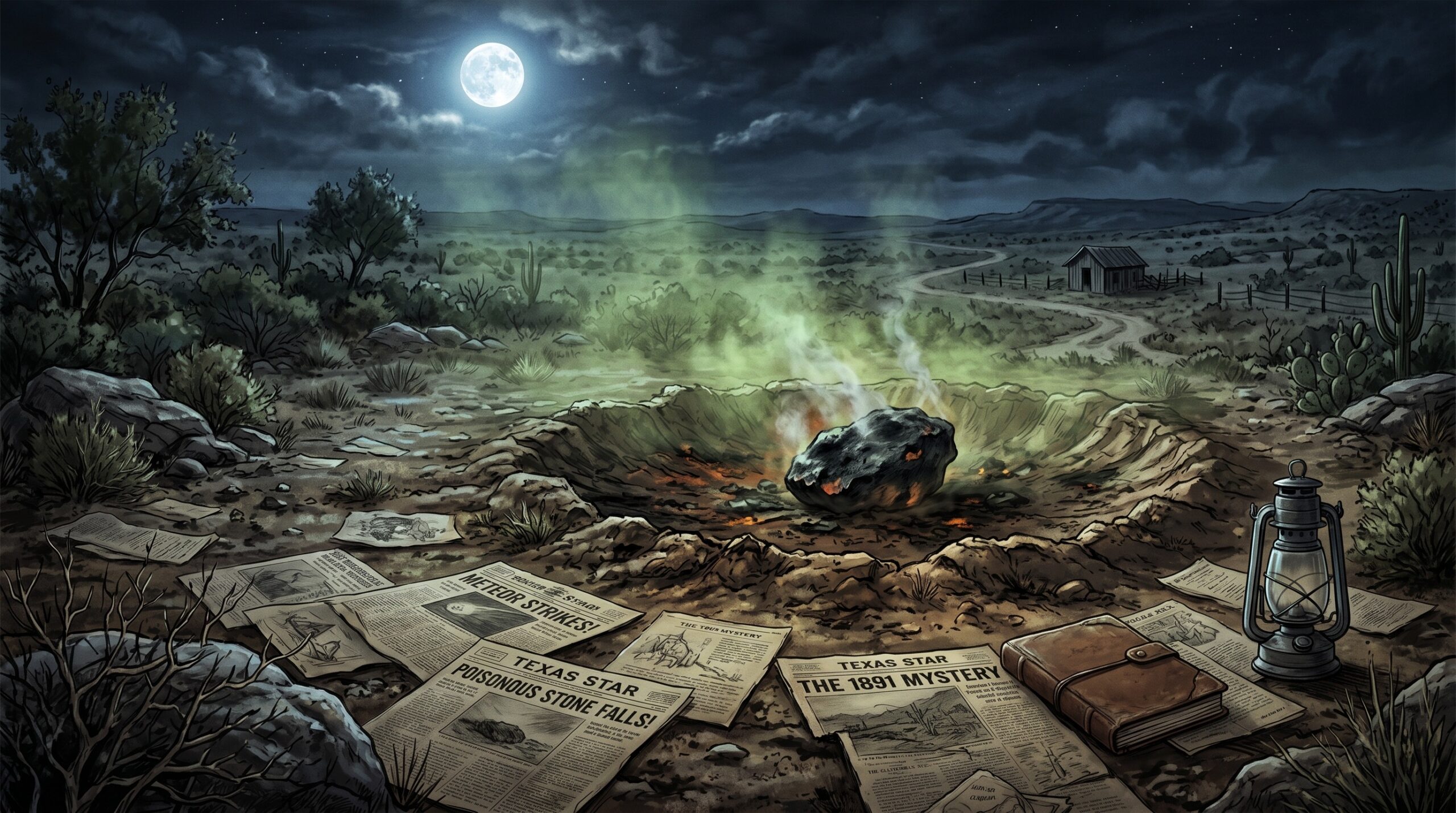
    That is the feeling around the Texas poisonous meteorite of 1891, a bizarre clipping-era story that still resurfaces in StrangeEarth threads, weird-history posts, and the parts of the internet that live for lost American anomalies. The hook is almost too perfect: somewhere in nineteenth-century Texas, according to the surviving report, a meteorite or fallen stone was said to have produced poisonous effects. Not merely a fiery object from the sky. Something worse. Something that seemed to make proximity itself feel dangerous.

    The phrase “poisonous meteorite” is exactly the kind of language that refuses to die. It compresses three fears into one image: the unknown sky, the strange stone, and the invisible threat. It sounds like frontier folklore, but it also sounds weirdly modern, as if the object were not just celestial but contaminated — a space-borne hazard dropped into the landscape before anyone had the tools to explain it cleanly.

    That is why the story keeps returning. It is not only the claim that attracts people. It is the texture of the claim. An old Texas newspaper tale. A fallen object from above. Illness, toxicity, or some noxious effect attached to it. Then the maddening afterimage familiar to anyone who chases archive-born mysteries: the story seems to survive mainly through newspaper circulation and later retellings rather than through a neat modern chain of evidence. In other words, the clipping is real enough to haunt people, but not clean enough to close.

    Why “poisonous meteorite” still sounds like buried American weirdness

    Meteorites already carry an old supernatural charge even when they are entirely real.

    A stone from the sky falls, burns, breaks, hisses, or lands hot and unfamiliar, and people immediately read more into it than geology alone. That reaction is ancient and understandable. Meteorites arrive as interruptions. They do not belong to the normal order of fields, roads, livestock, and weather. They arrive from elsewhere, often violently, and are discovered before anyone has fully decided what they mean. Modern context from the Texas State Historical Association’s meteorites overview and recent Live Science reporting on Texas meteor falls shows how easily a single sky-stone event can lodge itself in local memory even today.

    Now add the adjective poisonous.

    That one word turns a meteorite from a marvel into a threat. It suggests fumes, residue, hidden chemistry, or an object whose danger is not obvious at first touch. It makes the story feel less like a simple “stone from the sky” report and more like a close encounter with something physically wrong. For modern readers, that is irresistible. It feels like the kind of clipping that slipped through from a stranger version of America — one where cosmic debris did not just inspire awe, but left people genuinely afraid to go near it.

    That is also why the tale plays so well in Reddit and StrangeEarth-style circulation. A screenshot of an old report with a phrase like “poisonous meteorite” does half the work by itself. The story arrives already compressed into a shareable mystery: did a meteorite really poison people in Texas in 1891, and if so, why is no one talking about it now?

    What the 1891 Texas report actually claimed

    Here the distinction matters.

    What survives most clearly is not a modern scientific case file. It is the claim itself as preserved through newspaper-era circulation. The old story, in broad terms, describes a meteorite or fallen stone in Texas that was reportedly associated with poisonous or noxious effects. Depending on how later retellings paraphrase it, the emphasis falls on sickness, harmful emanations, or a dangerous reaction linked to the object.

    That much is the center of the mystery.

    What is harder to recover now is everything a modern reader immediately wants next: the exact specimen, the reliable witness chain, the medical descriptions, the chemical analysis, the later follow-up, the museum record, the settled historical verdict. Those are precisely the pieces that seem thin, scattered, or lost in the passage from original report to reprint culture to modern internet rediscovery.

    So the safest and most accurate way to hold the story is this: an 1891 Texas newspaper report said there was a poisonous meteorite. That is the claim. The claim itself is historically interesting. But the surviving evidentiary chain behind it appears much weaker than the phrase that made it memorable.

    That gap is not a disappointment. It is the whole atmosphere of the thing. The story survives in the form weird archive stories often do — vivid enough to circulate, incomplete enough to remain charged.

    Why a toxic space rock felt believable in the late nineteenth century

    To modern readers, the idea of a poisonous meteorite can sound either delightfully pulp-like or immediately suspect. But in the nineteenth century, the emotional conditions were different.

    Meteorites were already objects of fascination, fear, and scientific curiosity. A fresh fall could carry heat, unfamiliar smell, scorched earth, strange mineral appearance, and the raw theatrical fact that something had just crossed the sky and entered local reality. Even without any true toxic mechanism, that is exactly the kind of event that invites exaggerated descriptions. Witnesses are startled. Reporters sharpen the language. Communities add reaction and rumor almost instantly.

    Texas matters here too.

    The state already carries a deep imaginative association with open sky, distance, and frontier-scale oddity. In the newspaper age, Texas stories could travel with a built-in flavor of remoteness and rough immediacy. A bizarre local report did not need much embellishment to become national odd-news material once copy editors realized it had the right ingredients. A meteorite was already interesting. A poisonous meteorite was irresistible.

    There is also a broader historical point worth keeping in view. Nineteenth-century newspaper culture was fast, hungry, and often happy to pass along dramatic items before anyone had imposed modern standards of verification. That does not mean every strange report was false. It means strangeness itself had circulation value. A story could travel far because it sounded extraordinary, not because later investigators had locked every detail down.

    How the story actually survived: newspaper circulation more than evidence

    This is probably the most important part of the Texas poisonous meteorite story, because it explains why it still feels half-real and half-untouchable.

    Many old anomalies survive not through preserved specimens or careful scientific archiving, but through newspapers copying newspapers. One striking item appears in print, gets summarized elsewhere, is trimmed by another editor, reworded by a third, and then decades later is rediscovered as if it were a direct window into the event itself. Sometimes that chain preserves a real occurrence. Sometimes it preserves mostly the life of the story.

    The poisonous meteorite tale appears to belong to that difficult category.

    What keeps it alive is not a beautifully documented chain from 1891 Texas to a modern laboratory drawer. What keeps it alive is the persistence of the report. It remains visible because old newspaper weirdness is unusually hard to kill once it lodges in print. A clipping can outlive the witnesses, the stone, the local memory, and even the original context that would have told us how seriously to take it.

    That is one reason the story feels so potent in weird-history circles now. Readers are not just encountering an event. They are encountering an event already turned into relic-text. It comes to us with the compression, distortion, and haunted durability of archived newsprint.

    Why StrangeEarth and weird-history readers keep reviving it

    The modern internet did not create this story. It created the perfect habitat for it.

    A resurfaced newspaper oddity does especially well online when it offers one unforgettable phrase and a mystery that cannot be resolved in a single reply. “Poisonous meteorite” is almost engineered for that environment. It sounds scientific and folkloric at the same time. It invites instant speculation: radiation, toxins, sulfurous fumes, contaminated minerals, hoaxing, frontier hysteria, cosmic contamination. Everyone can project a theory onto it.

    That projection is part of the pleasure.

    For believer-first audiences, the story reads like evidence that older newspapers preserved a layer of reality later history flattened out. Maybe strange things really were reported more openly before institutions learned how to categorize them away. Maybe local papers captured moments that never made it into official science. Maybe the archive still contains thousands of similar anomalies waiting to be noticed.

    Even readers who stay cautious can feel the pull. The Texas poisonous meteorite of 1891 does not need to be fully proven to be fascinating. It only needs to suggest that the past was more disorderly, more porous, and more chemically or cosmically uncanny than the cleaned-up modern version.

    That is why it keeps resurfacing in StrangeEarth-style circulation rather than disappearing after one wave of attention. The story is short, memorable, and permanently unfinished. Online, unfinished stories age very well.

    What we can actually say with confidence now

    This is where the mood has to narrow.

    Texas absolutely belongs in real meteorite history. The state has a genuine connection to meteorite finds, falls, geological interest, and a long tradition of public fascination with stones from the sky. More broadly, meteorites themselves are of course real physical objects, and unusual public reactions to fresh falls are historically unsurprising. That wider context is solid.

    What is not solid in the same way is the strongest version of the 1891 poisonous meteorite claim.

    What we appear to have, based on the surviving signal that keeps resurfacing, is an old newspaper story and the afterlife of that story in retellings. What we do not appear to have is a clean, modern evidentiary package proving that a specific Texas meteorite in 1891 was documented, preserved, chemically verified as hazardous, and traced through a reliable chain of reporting and analysis. The article survives much more clearly than the case.

    That does not mean nothing happened. It means the recoverable record is narrower than the viral phrasing. The reported sickness could have been exaggerated, misunderstood, wrongly linked to the stone, caused by something mundane in the local environment, or amplified by the newspaper economy’s appetite for marvels. It could also reflect a genuine encounter with some unpleasant material or fumes that witnesses associated with the fall. The point is not to force an answer we do not have.

    The point is to distinguish the layers. There was a story. The story traveled. The clean proof did not travel with it.

    Why the Texas poisonous meteorite still lingers

    And yet it lingers because that missing proof does not weaken the atmosphere. It deepens it.

    The Texas poisonous meteorite of 1891 survives in the exact zone where unexplained history thrives: somewhere between report, folklore, and fragmentary reality. It is strange enough to feel worth remembering, but incomplete enough that no final authority has drained it of tension. Readers are left holding the same object the newspapers handed down — not the stone itself, but the charged idea of it.

    A meteorite is already a message from elsewhere. A poisonous meteorite is a message with menace attached.

    That is why the story still circulates. Not because we possess a perfect case, but because we possess a perfect relic of uncertainty: an old Texas claim that feels too weird to forget and too thinly documented to settle. More than a century later, the clipping still does what the best buried anomalies do. It makes the past feel unfinished, and it leaves just enough danger in the wording to suggest that whatever fell from the sky in 1891 may have left behind something more durable than evidence — a story no one has quite managed to neutralize.
  • 2007 Costa Rica UFO Sighting: Why the Motorola Razr Video Won’t Die

    2007 Costa Rica UFO Sighting: Why the Motorola Razr Video Won’t Die

    What if one of the most memorable UFO clips online survived this long for a simple reason: it was never truly explained, only endlessly talked around? That is the feeling pulling the 2007 Costa Rica UFO sighting back into circulation again — an old Motorola Razr video that still gives believers the same jolt it did years ago because the object looks structured enough to matter and ambiguous enough to escape a final burial.

    For believers, that combination is exactly what makes a case dangerous. Truly fake footage often collapses fast. Truly mundane footage fades away. But clips that live in the middle — convincing enough to stay alive, thin enough to stay unsettled — become almost mythic. The Costa Rica video has reached that level. It no longer feels like just a sighting. It feels like a surviving relic from an era before every strange object in the sky came prepackaged with AI suspicion, instant debunks, and algorithmic noise.

    That is why it keeps coming back. A named witness, a date, a place, an early phone camera, and an object that many viewers still swear looks mechanical rather than accidental is more than enough to restart the argument every time it gets reposted. The old Reddit debate over whether the Costa Rica sighting was ever debunked keeps resurfacing with it. Cases like Northwest Territories Drillers UFO Sighting and Kacey Musgraves UFO Sighting show how durable witness-driven UFO narratives can be, but the Costa Rica footage has an extra edge: it looks just old and raw enough to feel authentic.

    Why the video still hits believers so hard

    The key to this clip is that people do not feel like they are looking at a random light. They feel like they are almost looking at a craft.

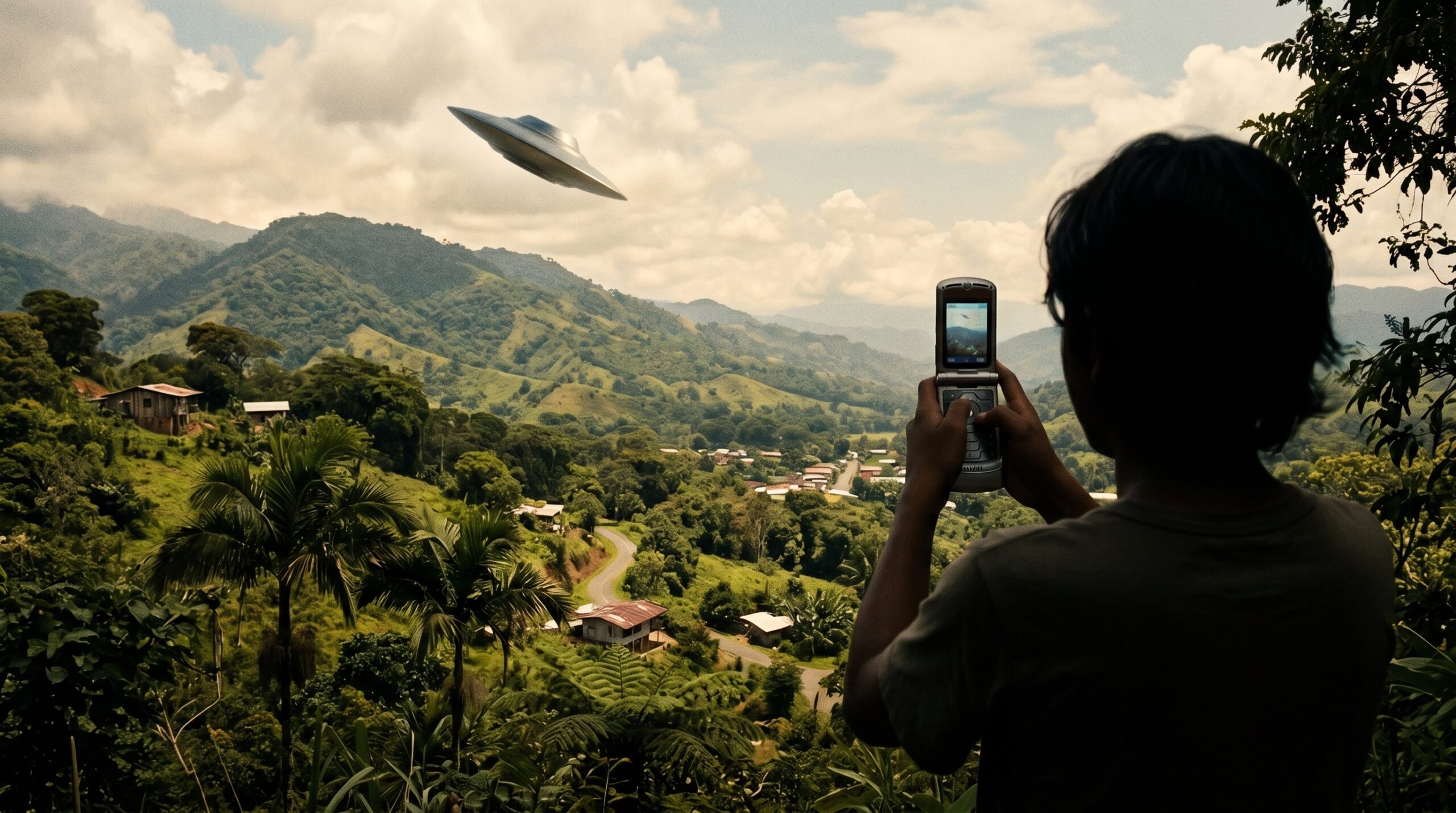
    That “almost” matters. The object appears compact, bright, oddly shaped, and at moments strangely tilted. Some people call it diamond-shaped. Others see a small disc or a faceted metallic form. The image is too weak to resolve cleanly, but that weakness is part of the power. The object never settles into something obvious. It remains in that highly charged visual zone where the mind keeps trying to finish the shape.

    For believers, that unfinished shape feels more persuasive than a perfect image would. Perfect footage triggers suspicion. Rough footage can feel honest. A shaky Razr-era recording suggests an ordinary witness caught something in real time, before modern editing paranoia swallowed every public sighting whole. That is the same instinct that helps older cases keep outrunning closure in the wider American UFO Saga: Reality and Fiction style conversation: the older the clip, the easier it is to imagine it slipped past the filters of the current era.

    The rabbit hole under the Costa Rica clip

    Once you lean into the believer reading, the video stops being a blurry object and becomes part of a larger pattern of half-glimpsed craft sightings that never fully resolve because they are always just beyond the edge of certainty.

    Why does the object seem to hold a strange attitude in the sky? Why do so many viewers insist it feels structured rather than organic? Why do old clips like this keep surviving while so many new ones burn out? And why does every skeptical explanation feel possible without ever becoming fully satisfying?

    That is the rabbit hole. The believer is not only asking what the object was. They are asking why certain cases seem designed to remain unresolved. Some connect the clip to the old suspicion that extraordinary craft are usually seen only in fragments — enough to be witnessed, never enough to force disclosure. Others think the persistence of these cases points to a deeper truth: that the public has already seen meaningful evidence many times, but the evidence is always distributed in a form that lets institutions and skeptics keep control of the final narrative.

    Why Bob Lazar keeps getting pulled into it

    The Bob Lazar connection tells you less about proof and more about how UFO mythology works.

    People keep bringing Lazar into the Costa Rica conversation because the object seems to resemble the kind of compact, smooth, strangely poised craft that UFO believers already associate with his descriptions. Old reposts such as this YouTube upload describing the Marvin Badilla clip help keep that comparison alive. Once that comparison appears, the clip gains a second life. It is no longer only a Costa Rica sighting. It becomes part of a visual canon.

    That matters because mythology stabilizes belief. A video that can be linked to a larger UFO story automatically feels more significant to the audience already living inside that story. Believers do not need the clip to confirm Lazar in a technical sense. They only need it to feel like it rhymes with what they think hidden craft are supposed to look like.

    And once a sighting gets absorbed into that mythology, it becomes much harder to kill. It stops functioning as isolated evidence and starts functioning as a recurring symbol.

    Why the low quality may actually help the mystery

    In ordinary reasoning, low quality should weaken a case. In UFO culture, it often gives the case endurance.

    A crisp image can be examined to death. A bad image leaves room for obsession. The Costa Rica footage survives because it does not surrender enough information to let either side finish the argument. Believers can keep seeing a structured object. Skeptics can keep proposing hoax, balloon, model, or perspective tricks. The visual uncertainty feeds both camps at once.

    That is why this video keeps resurfacing instead of fading. It is unresolved in a productive way. The object is not merely blurry — it is suggestively blurry. It encourages the viewer to participate, to interpret, to fill in the missing geometry. That turns the clip into an interactive mystery rather than a dead file.

    What the credible facts actually support

    Here is the solid part. Publicly circulated accounts do consistently identify the case as a 2007 sighting in Costa Rica, commonly attributed to Marvin Badilla, filmed on a Motorola Razr-era phone near Tarbaca. The video does appear to show a real recorded object in the sky, and it has not been publicly put to rest by a single universally accepted explanation. That much is true.

    What is still unproven is the stronger leap from “intriguing unresolved object” to “confirmed extraordinary craft.” The footage is low resolution, offers weak scale information, and leaves plenty of room for mundane explanations such as a hoax object, balloon-like target, perspective confusion, or distortion caused by early-phone limitations. Archived skeptical discussion such as the Metabunk thread on the 2007 Costa Rica UFO shows why the case remains open rather than settled. It also does not independently validate Bob Lazar’s claims or prove advanced propulsion. In short, the mystery is durable, but the conclusion is still open.

    That is exactly why the clip refuses to die. Believers can look at it and say the object still feels too shaped, too strange, and too persistent to dismiss. Skeptics can say the same limitations that keep it alive are the reason it proves so little. For now, the Costa Rica video remains what the internet seems to love most: an old UFO artifact that still feels one good frame away from changing everything, while never quite giving anyone that final frame.

  • Antoine’s Restaurant Ghost Photo: What the Viral New Orleans Images Really Show

    Antoine’s Restaurant Ghost Photo: What the Viral New Orleans Images Really Show

    Antoine’s Restaurant is the kind of place that seems built to attract a ghost story even before anyone lifts a camera. It is one of New Orleans’ most famous old dining rooms, wrapped in the French Quarter’s atmosphere of age, ritual, and rumor. Now it has become the setting for a viral image sequence after a Reddit post shared three photos reportedly taken in succession at Antoine’s and asked whether one of them captured a ghostly figure.

    The honest answer is more restrained than the comment sections. The photo sequence is real in the basic sense that people are sharing an actual set of images from a recognizable place, and the middle of the claim is easy to understand: in one frame, some viewers believe they can make out a faint person-shaped form that seems absent, or at least far less obvious, in the others. But as evidence of an apparition, the case is disputed and weak. What the public version shows is an ambiguous visual anomaly in a dim historic interior, not proof that a spirit stepped into the room.

    People are talking about it now for obvious reasons. The Reddit thread gained strong traction, New Orleans already carries a global reputation for hauntings, and Antoine’s has exactly the right blend of elegance and age to make a strange image feel culturally preloaded. The available evidence, though, points in a more familiar direction. A human-like shape appears to emerge in one photo of a short sequence, and that is precisely the kind of circumstance where reflections, brief movement, low-light rendering, and plain old pattern recognition can do persuasive work.

    What is the Antoine’s ghost photo people are sharing?

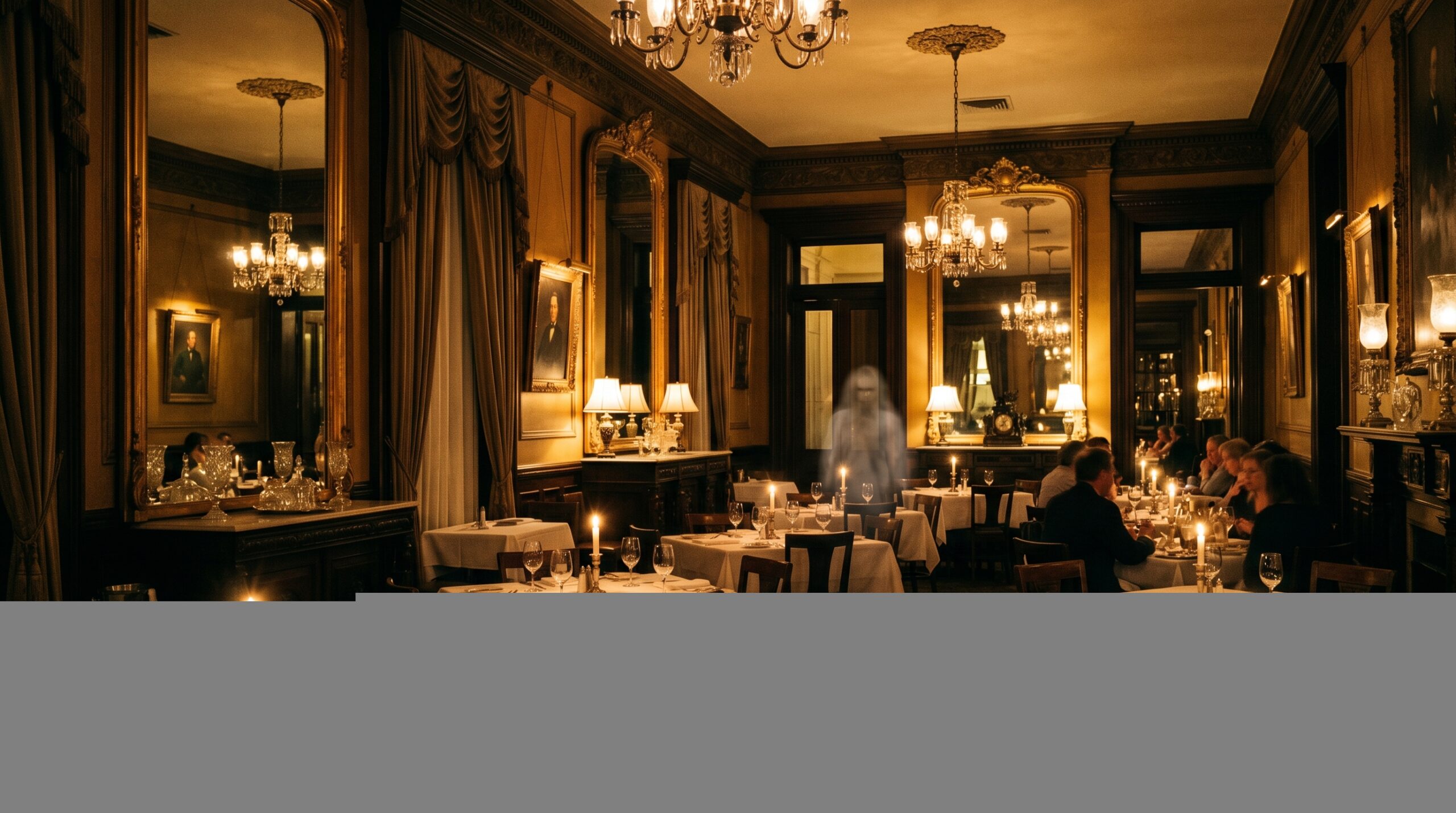
    The viral claim centers on a short sequence of three photographs said to have been taken one after another inside Antoine’s Restaurant in New Orleans. In the online telling, two of the images appear ordinary while one seems to contain an extra figure or pale form standing in the scene. That is enough to trigger the classic ghost-photo reaction: zooming in, circling shadows, comparing frames, arguing over posture, clothing, and whether the “person” looks transparent.

    A sequence like that always gives a case a little extra dramatic force. One image can be dismissed as a blur or a trick of lighting. Three images, especially when presented as consecutive shots, suggest a before-and-after puzzle. If the figure only appears once, viewers naturally start asking what entered the frame and then vanished.

    But that same detail cuts both ways. A one-frame appearance is not what only a ghost would do. It is also what reflections do. It is what a passing diner or server can do in low light. It is what a phone camera can do when exposure shifts from one shot to the next. A sequence can make an image more interesting without making it much more conclusive.

    That is where this case seems to live. The appeal is immediate. The evidentiary value is limited.

    Why Antoine’s carries so much haunted weight

    To understand why this image spread so quickly, it helps to understand the setting. Antoine’s is not just a restaurant; it is one of those New Orleans institutions that feels stitched into the city’s self-mythology. Historic restaurants in the French Quarter are never just places to eat. They are memory theaters: rooms full of old mirrors, heavy drapery, polished surfaces, family history, formal service, and the sense that many lives have passed through before yours.

    New Orleans has spent generations turning that atmosphere into cultural language. Ghost tours, haunted-hotel lore, stories of old residences and courtyards, whispered accounts tied to bars and dining rooms—these are not fringe additions to the city’s image. They are part of how visitors and even many locals are taught to read the place. In New Orleans, a strange sound in a new building might be a plumbing issue. In an old French Quarter room, it arrives already dressed as a story.

    Restaurants carry a particular kind of supernatural charge because they are intimate public spaces. People linger in them. They celebrate in them. They return year after year. Staff and patrons build up layers of anecdote. Candlelight, mirrors, glassware, framed portraits, and low interior light all contribute to the sense that a room has depth beyond what the camera catches cleanly. Even without believing in ghosts, most people understand why a historic restaurant would feel more haunted than, say, a chain store parking lot.

    That matters here. Antoine’s did not become viral only because of what appears in the image. It became viral because of where the image was taken.

    What does the three-photo sequence actually show?

    Publicly, the claim is not especially complicated. Viewers compare the three shots and focus on a section of the room where one image seems to contain a human-shaped form. Depending on how the image is cropped, compressed, or brightened, the shape can read as a person in old-fashioned attire, a pale torso, someone standing half out of frame, or simply a patch of contrast that begins to resemble a body once the viewer is told what to look for.

    That last point is crucial. Human beings are astonishingly quick to identify bodies, faces, and posture. It is one of the brain’s great survival shortcuts. We do not wait for complete information if a scene offers even partial cues—a shoulder-like slope, the suggestion of a head, the contour of arms, a patch of darkness where legs should be. We assemble the rest almost instantly.

    This tendency, often discussed under the broad umbrella of pareidolia, does not mean people are foolish. It means people are normal. The same mental habit that lets us recognize a friend across a room from almost no detail can also convince us that random visual noise forms a person. In a haunted setting, with a caption already framing the image as possible evidence, that tendency becomes even stronger.

    So what does the sequence prove? Very little. It shows that one frame in a set looks odd enough to invite comparison. It does not show that the “figure” was an independent being in the room.

    Could a camera artifact create a ghostly person?

    Yes, and that is probably the most important thing to keep in mind.

    Historic restaurant interiors are unusually good at producing deceptive images. They tend to contain reflective surfaces, layered lighting, low ambient illumination, moving people, polished wood, glass, mirrors, metallic decor, and deep shadows. Modern phone cameras are powerful, but in exactly these conditions they also make interpretive choices on the fly—blending exposures, brightening darker regions, sharpening edges, suppressing noise, and sometimes turning a fleeting visual event into something stranger than the eye itself perceived.

    Several ordinary mechanisms could produce a one-frame “ghost” effect:

    • A person briefly crossing part of the scene. If someone moved just outside the photographer’s main awareness, the camera might capture only part of that body, softened by motion or dim light.
    • A reflection from glass or a mirror. Historic dining rooms often contain surfaces that bounce fragments of the room back into the image from angles the photographer is not consciously tracking.
    • Exposure differences between successive shots. In low light, small changes in camera settings can cause a shadowed area to open up or flatten, making a shape appear and disappear.
    • Image stacking and computational processing. Phone cameras often combine information rapidly, and those decisions are not always intuitive when people or reflective highlights are involved.
    • Compression and reposting artifacts. Once an image moves through social platforms, details can harden, smear, or block up in ways that make ambiguous forms look more distinct than they were in the original.

    None of these explanations is glamorous, but all of them are common. More importantly, they are common in exactly the kind of scene Antoine’s appears to provide.

    Why one strange frame can feel more persuasive than it is

    A ghost image only has to do one thing well: suggest a person without fully resolving into one. If it is too vague, it gets ignored. If it is too sharp, people start looking for signs of editing or staging. The most durable paranormal photos usually occupy the middle ground, where the shape is clear enough to feel intentional and unclear enough to resist being settled.

    For outside reporting and background, start with The Reddit thread sharing the Antoine’s photo sequence and NOLA.com on the city’s haunted restaurants.

    That is why sequences like this spread so effectively. They invite the viewer to become a detective. You compare the photos. You look for what changed. You start treating the anomaly as a clue rather than as a flaw in the image. And once that process begins, the room’s atmosphere does the rest.

    New Orleans gives such images an extra charge because the city is already culturally legible as haunted. A similar anomaly in a convention-center lobby might get shrugged off. At Antoine’s, it feels like confirmation of something the setting has been hinting all along. The location does narrative work before the evidence does factual work.

    This is also why haunted-venue images so often outlive stronger but duller explanations. People do not remember the histogram or the shutter behavior. They remember that it happened in New Orleans, in an old restaurant, in a room that looked like it had seen a century of toasts and farewells.

    Does Antoine’s history make the ghost claim stronger?

    Only in the loosest cultural sense.

    Antoine’s long history and New Orleans’ wider haunted reputation absolutely help explain why the images resonated. They provide context, mood, and symbolic weight. They also mean many viewers come to the photo already primed to accept the possibility that the room contains more than the living.

    But a location’s reputation does not authenticate a specific image. A building can have decades of ghost stories attached to it and still produce a completely mundane photograph. In fact, famous haunted locations often generate weaker evidence rather than stronger evidence because expectation shapes interpretation so aggressively. People notice every creak, every reflection, every odd shadow. Once a place is known for hauntings, ordinary anomalies stop arriving as ordinary anomalies.

    That does not make the lore irrelevant. The lore is part of the story. New Orleans’ haunted-restaurant culture has real cultural force. It affects tourism, memory, storytelling, and how people inhabit historic spaces. But it should be treated as context, not as proof.

    What would make this case more convincing?

    If someone wanted to move this from viral curiosity to something more substantial, the next steps would be technical, not mystical.

    The strongest upgrades would include the original image files, not screenshots or compressed reposts; metadata showing exact timestamps and device details; a clear reconstruction of where the photographer stood for each shot; documentation of mirrors, windows, reflective frames, or glass in the room; and testimony from anyone else present about whether another diner or server briefly entered the scene.

    It would also help to know whether the figure-like shape appears only in one compressed version or also in the highest-quality original. Sometimes an anomaly grows more convincing as a picture degrades, which is the opposite of what you would want from real evidence.

    Without those details, outside viewers are left doing what internet viewers always do: interpreting from the copy of the copy. That can sustain fascination, but it cannot support much confidence.

    Why people keep staring at the image anyway

    Because it lands in the exact sweet spot where a ghost story becomes pleasurable to think about.

    The sequence does not look absurd. It does not collapse instantly into an obvious prank. It offers just enough shape, just enough place-specific mood, and just enough uncertainty to keep the mind circling. If you are inclined to believe, it feels like a fleeting capture of something that should not be there. If you are skeptical, it still presents a satisfying visual puzzle.

    And beneath both reactions is something older than internet virality. People have always been drawn to the idea that certain places store emotion, memory, or residue. Restaurants like Antoine’s intensify that intuition because they are built around repetition: the same rooms, the same rituals, generations of arrivals and departures. Even people who do not believe in spirits often speak as if old rooms absorb human presence.

    A photo like this hooks us because it seems to offer a tiny rupture in the ordinary record. The camera, that supposedly indifferent witness, appears to have caught more than the eye meant to. Whether the cause is paranormal or photographic, the emotional effect is the same for a moment: the room looks less empty than it should.

    So is it a ghost?

    Probably not in any evidentiary sense that would satisfy a careful observer.

    The most responsible conclusion is that the Antoine’s Restaurant sequence is an intriguing but unverified set of images from a location already famous for haunting lore. The “figure” could be a reflection, a transient person-shaped blur, a low-light artifact, or a case of viewers assembling a body out of incomplete visual information. Nothing publicly available rules those explanations out, and nothing publicly available pushes the image beyond them.

    A third useful reference is Antoine’s official history page.

    That is less dramatic than declaring the case solved either way. It is also more honest. The picture sequence is not worthless; it tells us something real about how haunted imagery works, why New Orleans remains such fertile ground for supernatural stories, and how quickly a single odd frame can become a collective experience online. What it does not tell us, at least not yet, is that a ghost at Antoine’s has been photographed.

    Readers who want to continue can also explore Heaven’s Gate Website Still Online? The 1997 Cult Site That Never Went Away.

    If the image endures, that will likely be the reason. Not because it proves the impossible, but because it captures the much more familiar moment when atmosphere, expectation, and ambiguity lock together perfectly. In a city like New Orleans, sometimes that is all a ghost story needs.

  • Kola Superdeep ‘Screams From Hell’: The Hoax and the Real Discoveries Beneath the Earth

    Kola Superdeep ‘Screams From Hell’: The Hoax and the Real Discoveries Beneath the Earth

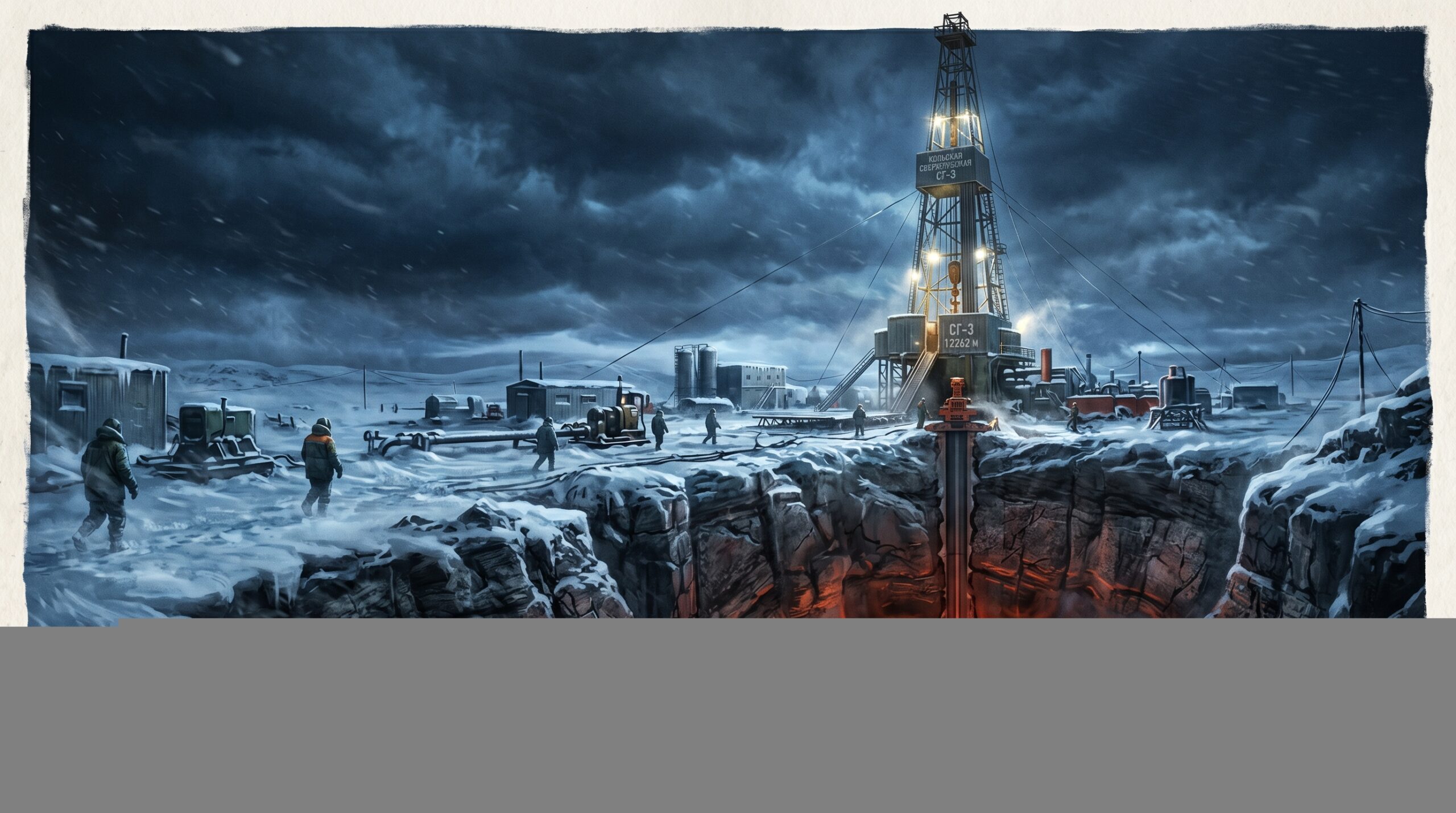
    No, the Kola Superdeep Borehole did not capture literal screams from hell. The famous story about Soviet scientists drilling so deep they recorded the cries of the damned is a hoax—or, at minimum, a legend built from invented details, theatrical audio, and years of sensational retelling rather than credible scientific evidence.

    What keeps the tale alive is that the real project was already dramatic before folklore ever touched it. On the Kola Peninsula in Russia, Soviet researchers spent years drilling deeper into Earth’s crust than anyone had before. They pushed past 12 kilometers into heat and pressure that strained both machinery and expectation. They found temperatures higher than predicted, deep rock behaving in surprising ways, and evidence that complicated older assumptions about the crust. The myth is false. The setting that produced it was extraordinary.

    For more context on the broader mystery, see Second Sphinx Under Giza? What the Claim Says, What the Scans Show, and What Remains Unproven and Ancient Demon Traps in Mesopotamia? The Bowls Buried Beneath the House.

    What the “screams from hell” story actually claims

    The familiar version has the shape of a campfire story told with laboratory equipment. Soviet scientists drill into the Earth, lower microphones or sensitive instruments into the shaft, and hear human screams rising from below. In some versions they have broken into a hidden chamber of torment. In others, the researchers panic, the project is shut down, and officials scramble to suppress the truth.

    The story spread through sermons, paranormal books, tabloids, radio shows, chain emails, and later online videos and social-media retellings. It was often paired with a supposed recording presented as proof.

    That recording is one of the clearest signs the tale is not real. Investigations and repeated debunkings have linked the audio to fabricated or repurposed sound material used for dramatic effect, not to a documented experiment at Kola. The legend survives because it is vivid and easy to repeat, not because the evidence behind it is strong.

    What the Kola Superdeep Borehole really was

    The Kola Superdeep Borehole was not a mining project and not a literal attempt to drill into hell or even into Earth’s mantle. It was a Soviet scientific drilling effort that began in 1970 near the border with Norway. Its purpose was to study the continental crust at depths no one had reached before.

    Instead of carving out a giant pit, researchers drilled a narrow borehole downward in stages, using specialized equipment to collect samples and data from an environment of extreme pressure and heat. The deepest branch, SG-3, reached 12,262 meters—about 40,230 feet—in 1989. That remains the depth record for a man-made borehole.

    The number sounds almost unreal, but on a planetary scale it is still tiny: a deep scratch in the crust, not a breach into some hidden underworld. That contrast helps explain why the project has been so widely misunderstood. “Deepest hole on Earth” sounds apocalyptic. The actual science was narrower, more technical, and no less impressive.

    Where the hell story came from

    The broad path of the hoax is fairly well known, even if individual versions differ. A major source was a sensational account that circulated in religious media in the late 1980s and early 1990s. The story often invoked unnamed Finnish or Norwegian sources, vague Soviet testimony, and supposed confirmation of biblical imagery. None of it held up under scrutiny.

    The tale spread because it fused several powerful themes into one neat package: Cold War secrecy, fear of forbidden science, literalist religion, and the ancient image of a descent into the underworld. The details shifted from telling to telling, which is usually a sign of folklore rather than reporting. Depth measurements changed. Scientists’ reactions changed. In some versions there were demons; in others, only the voices.

    There was no stable, well-documented incident at the center. There was a rumor designed—almost perfectly—to travel.

    What scientists really found underground

    If the hoax promised horror, the actual findings offered something stranger and more enduring: a glimpse of how unfamiliar the deep crust becomes once ordinary human intuition gives out.

    One of the biggest surprises was temperature. Scientists expected intense heat at great depth, but the borehole became even hotter than many had predicted. By around 12 kilometers down, temperatures reached roughly 180 degrees Celsius. That was far beyond what the team had hoped to manage easily with the drilling technology of the time. At those temperatures, rock became harder to handle and drilling became far more difficult, helping bring the project to an end.

    Researchers also found that the deep crust did not behave exactly as some standard models had suggested. Rather than presenting itself as a cleanly layered, easily predictable structure, the rock environment proved more fractured and complex, shaped by pressure, fluids, and heat over immense spans of time.

    Another striking finding involved water. Scientists found evidence of water deep in the crust—not as underground caverns full of free-flowing liquid, but as water bound within minerals and released under extreme conditions. That challenged simpler ideas about how dry the deep crust should be.

    They also identified microscopic fossils of ancient marine plankton in rocks several kilometers down. That did not mean life was somehow thriving at those depths. It meant rocks formed from ancient seabed sediments had, over geologic time, been buried far deeper than many people would intuitively imagine. Even so, it is easy to see why the detail felt uncanny to the public. Fossils buried miles beneath the surface sound almost mythic, even when the explanation is entirely geological.

    Readers who want to compare this story with outside reporting can start with Wikipedia on the Kola Superdeep Borehole and Britannica on the Kola Peninsula.

    Why the real discoveries still felt eerie

    The Kola project has always carried an uncanny edge because deep drilling lies far outside normal human experience. We know what caves feel like. We know what mountains look like. Very few people can picture a narrow shaft dropping more than 12 kilometers through hot, compressed rock in complete darkness.

    That imaginative gap leaves room for older language to rush in: abyss, underworld, forbidden depth, gates of hell. Those metaphors are ancient. Kola simply gave them a modern industrial setting of steel, cables, drilling mud, and Soviet machinery.

    This is why saying “the story is false” never quite kills it. The project still feels as if it touched a zone beyond ordinary human belonging—not because it found the supernatural, but because it revealed how alien the deep Earth already is.

    Why the project actually stopped

    The end of the borehole did not require a paranormal explanation. The real reasons were technical, environmental, and political.

    As temperatures climbed and the rock became more difficult to manage, drilling grew increasingly punishing. At the same time, the Soviet Union was nearing collapse, and economic support for expensive research projects was eroding. Work slowed, and the site was eventually abandoned in the 1990s.

    So there was no dramatic cover-up needed. The project stopped because the drilling conditions were brutal and the state that funded the effort was coming apart.

    What scholars and skeptics say about the legend

    Skeptics have been blunt for years: there is no credible evidence that the Kola project recorded screams from hell. The story fails basic tests of sourcing, consistency, and documentation. It rests on anecdote, recycled rumor, and theatrical audio—not on published scientific records or trustworthy eyewitness reporting.

    From the perspective of folklore and media history, the tale behaves exactly like a modern legend. It takes a real place, adds supernatural stakes, and compresses the result into something that can be retold in a single breath. It also flatters the audience with the feeling of access to forbidden knowledge supposedly hidden by authorities.

    That does not mean the people who repeat it are foolish. It means the story is effective. Durable myths usually survive because they express deeper anxieties and desires: fear of punishment, fear of scientific arrogance, fascination with what lies beneath us, and the hope that modern technology might accidentally confirm ancient beliefs.

    What remains uncertain

    There is still room for uncertainty in the Kola story, but not in the supernatural sense. Geologists continue to debate details of deep crustal interpretation, and the Kola data remains part of a larger effort to understand how Earth’s outer layers behave under extreme conditions. Deep geology is technically demanding, and not every implication is simple.

    But the central sensational claim is not genuinely open. There is no serious scientific uncertainty about whether Kola recorded hellish screams. No credible evidence supports that story.

    The real uncertainty lies in the Earth itself: how heat, fluids, stress, and mineral change interact over immense depths and timescales. Those questions are slower, harder, and less cinematic than the hoax. They are also real.

    The bottom line

    The “screams from hell” story keeps resurfacing because it attaches the supernatural to a genuine scientific landmark. If the borehole were fictional, the story would collapse much faster. Because the place is real, the myth has a permanent anchor.

    But the truth is more interesting than the legend gives it credit for. The Kola Superdeep Borehole did not uncover the voices of the damned. It revealed a planet hotter, wetter, and more geologically complicated than many earlier models had assumed.

    If you want to keep going, Doomsday Clock at 85 Seconds to Midnight: What the Warning Really Means expands the picture from another angle.

    That is why the real story deserves to outlast the hoax. It is a record of human curiosity pushed to an extreme: scientists drilling deeper than anyone had before, discovering that the crust was harsher and less predictable than expected, and finally running up against the limits of technology, money, and environment. In the end, Kola did not prove that hell is real. It showed how quickly the Earth itself becomes strange once we go deep enough.

  • Skinwalkers Caught on Camera? What Viral Videos Usually Show

    Skinwalkers Caught on Camera? What Viral Videos Usually Show

    The short answer is no: viral “skinwalkers caught on camera” clips almost never amount to credible proof that a supernatural shape-shifter has been filmed. Most are murky, unverified videos—something moving strangely at the edge of headlights, an animal glimpsed in bad light, a staged scare, an edited short, or footage too chaotic to assess with confidence. But that does not make the phenomenon uninteresting. What these clips reveal, more often than anything paranormal, is the collision between a real Indigenous tradition, internet horror culture, and the very human tendency to find certainty inside a blur.

    That tension is why the subject keeps resurfacing. A skinwalker, in its original cultural context, is not just another spooky creature from a comment section. The online version of the term has drifted into a catch-all label for anything in the dark that looks wrong. To understand why these videos spread so quickly—and why they feel persuasive in the moment—you have to separate the folklore, the internet mythology, and the evidence.

    For more context on the broader mystery, see Heaven’s Gate Website Still Online? The 1997 Cult Site That Never Went Away and Ancient Demon Traps in Mesopotamia? The Bowls Buried Beneath the House.

    What a skinwalker means in traditional belief

    When people online say “skinwalker,” they are usually borrowing a term from Navajo tradition. In that context, it refers to a malevolent witch associated with taboo acts, harmful power, and transformation. It is not a generic monster category, and many Navajo people have made clear that outsiders often sensationalize the idea, strip it from its cultural meaning, and turn it into entertainment.

    That distinction matters. Much of what circulates online under the skinwalker label has only a loose connection, if any, to the original belief. On social media, the word now gets applied to almost anything uncanny: a deer moving strangely, a figure crouched beside a road, an animal with mange, a face warped by headlights, or a prank video with distorted audio and a hard cut at exactly the right moment. In practice, “skinwalker” has become shorthand for a particular feeling—something almost familiar, and therefore deeply unsettling.

    So if the question is whether skinwalkers are really being caught on camera, the first honest answer is this: the traditional belief is real as a matter of culture and spiritual tradition. The viral video category is something else entirely, shaped far more by modern folklore than by documented supernatural evidence.

    Why so many videos get labeled that way

    The phrase “caught on camera” sounds decisive before a viewer has seen a single frame. It suggests proof, or at least a breakthrough. Then the footage begins: night woods, a shaky beam of light, someone breathing too hard behind the phone. By the time the clip ends, the label has already done half the work.

    Most videos described as skinwalker footage share the same anatomy:

    • poor lighting or night filming
    • sudden zooms and shaky camera movement
    • a subject visible only briefly
    • distorted, amplified, or emotionally charged audio
    • an isolated setting such as a roadside, field, or tree line
    • an abrupt ending before the viewer can fully orient themselves

    Those details are not just common; they are ideal conditions for mythmaking. Ambiguity invites interpretation. A deer moving awkwardly because it is startled, injured, or caught mid-turn can look eerily wrong for a split second. A person crawling, twitching, or framed from an odd angle can seem inhuman with very little encouragement. Once viewers enter the clip expecting horror, their minds begin filling in the missing pieces.

    Why Appalachia keeps getting pulled into the story

    Appalachia is not the traditional home of skinwalker belief, yet it has become one of the internet’s favorite backdrops for skinwalker stories. That says less about Navajo tradition than it does about the way online horror works.

    In the popular imagination, Appalachia already carries a heavy atmosphere: narrow roads, deep woods, old mountains, isolated homes, inherited lore, and the feeling that some places are best left alone. Social media has exaggerated those qualities into a ready-made stage set. Once that happened, videos from the region began attracting imported labels, including “skinwalker,” even when the original folklore behind the term had nothing to do with Appalachia.

    This blending reflects a broader internet habit. Regional ghost stories, cryptid legends, witch beliefs, and Indigenous traditions get folded together into one giant supernatural mood board. The result is a flood of “Appalachian skinwalker” stories that may feel vivid and persuasive while remaining culturally imprecise. Often, they tell you more about how digital folklore spreads than about any one tradition on its own terms.

    What skeptics usually think they are seeing

    For all the dread these clips can generate, the skeptical explanations are often strikingly ordinary.

    Common explanations include:

    • ordinary animals filmed from poor angles
    • deer, coyotes, dogs, or bears affected by disease or injury
    • low-light distortion and phone-camera compression
    • staged or edited clips designed to go viral
    • people performing for the camera
    • misidentified sounds, especially foxes, bobcats, deer, and owls

    The sound element matters more than many viewers realize. A scream in the woods can feel like instant proof that something unnatural is nearby, but several common animals produce calls that sound almost absurdly eerie. Foxes can sound uncannily human. Deer can make harsh, explosive noises. Owls and other night birds can create calls that, stripped of context, feel tailor-made for a horror soundtrack.

    The same goes for the visuals. A mangy coyote in poor light, a deer half-turned in headlights, or a person lit by one moving flashlight can look grotesque on a phone screen. Add compression artifacts, a caption that frames the scene as forbidden evidence, and a few panicked reactions in the comments, and the mundane explanation can lose the race almost immediately.

    Why the footage still feels convincing

    Even when a rational explanation is available, these videos often land with a real jolt.

    Part of the reaction is biological. Human beings are wired to detect threat quickly, especially in low visibility. If something in the dark moves in a way that seems off, the brain reacts before it analyzes. Better to overread danger than miss it.

    Part of it is cultural. Horror films, creepypasta, paranormal television, and short-form video have taught viewers a recognizable visual language of dread: jerky movement, too-still faces, limbs that seem too long, animal behavior that reads as strangely deliberate, a sudden cry from just beyond the frame. Phone footage can reproduce those cues by accident. Once it does, viewers are already halfway into the story.

    And then there is the crowd effect. People rarely watch these clips alone anymore. They watch with captions, reposts, stitched reactions, and comment sections full of certainty. Once thousands of viewers insist a video shows a skinwalker, the label becomes sticky. The clip stops being raw footage and starts becoming collective narrative.

    Readers who want to compare this story with outside reporting can start with Wikipedia on the skin-walker tradition and Britannica on the Navajo people.

    How much of this is modern folklore?

    A great deal of it.

    Folklore is not only the old stories passed down around fires or preserved in archives. It is also what people repeat, reshape, and invest with meaning in the present. By that standard, “skinwalkers caught on camera” is one of the internet’s most efficient folklore machines.

    A clip appears. Someone supplies the label. Others add warnings, secondhand accounts, and bits of supposed local knowledge. Soon the video is no longer just a fragment of unclear footage. It becomes part of a shared story world, with its own familiar beats: the lonely road, the bad signal, the headlights, the thing that looks almost human, the terrified whisper, the cut to black.

    That does not make the phenomenon false in a cultural sense. On the contrary, it shows how myths are still being built in public, one upload at a time. The supernatural claim may be weak, but the folklore is very real.

    The trouble with using one word for every eerie sighting

    There is also a cost to how casually the term gets used. Treating every unsettling video as a “skinwalker” sighting erases the specificity of the Navajo concept and flattens other local traditions as well. Appalachia has its own body of ghost stories, strange-animal tales, death omens, and haunted-place lore. Rural America more broadly is full of stories about shapeshifters, witches, mimic voices, and unnamed things in the woods. Those traditions may share a mood, but they are not interchangeable.

    The internet tends to collapse them anyway because shorthand spreads faster than nuance. One familiar label can travel across platforms in minutes. A careful explanation rarely does. But if the goal is understanding rather than just a thrill, that shortcut leaves too much out.

    Has any skinwalker video been proven authentic?

    No widely circulated skinwalker video has emerged as clear, independently verified proof of a supernatural shape-shifter. That is the simplest and most accurate answer.

    Some clips remain unresolved in the weaker sense that no one can say with certainty what appears in them. But unresolved is not the same as paranormal. In many cases, the footage is simply too poor to analyze well. And when that happens, uncertainty tends to benefit the most dramatic explanation, because mystery is shareable in a way ordinary answers are not.

    That pattern shows up across paranormal media. Lack of closure is often treated as evidence, when it usually means the evidence is not strong enough to support a conclusion at all.

    Why people keep looking anyway

    Because the fear at the center of these clips is an old one.

    A creature that imitates the natural world while getting something subtly wrong is one of horror’s most durable ideas. It touches a deep unease: that the familiar can be worn like a disguise. The skinwalker label intensifies that fear because it implies intention. Not just a shadow in the woods, but something watching, choosing, and presenting itself in the wrong shape.

    That is part of why these videos thrive in short-form feeds. They do not have to hold up under careful scrutiny. They only have to trigger recognition, dread, and curiosity for a few seconds. For that brief window, they can feel overwhelmingly persuasive.

    What remains uncertain

    What is not uncertain is that social media holds a vast archive of eerie, low-quality footage. It does. What remains uncertain is whether any particular clip captures something beyond misidentification, performance, editing, or visual distortion. So far, the public evidence does not support that conclusion.

    There is also a more cultural kind of uncertainty worth acknowledging. In communities shaped by strong local traditions, some people do not treat these subjects as entertainment at all. They may not want to debate them, document them, or define them neatly. They may simply avoid certain stories, certain places, or certain names. That does not validate the viral videos, but it does help explain why dismissive coverage can miss the seriousness folklore still carries for the people closest to it.

    What to believe when a clip goes viral

    Start with caution. Ask what the video actually shows before accepting the caption that arrived with it. Look at the lighting, distance, movement, sound, possible edit points, and whether the source can be traced. Be especially skeptical of footage presented as instant proof.

    It also helps to notice what the clip is doing psychologically. Most viral skinwalker videos spread not because they establish facts, but because they combine old fears, cultural shorthand, and digital ambiguity into a format built to travel.

    If you want to keep going, Oarfish Sea Serpent Theory: Could This Deep-Sea Fish Explain the Legend? expands the picture from another angle.

    So no: there is no solid body of footage proving that skinwalkers have been caught on camera. What exists instead is a growing archive of modern legend-making—real tradition at the root, internet distortion layered over it, and a very old fear lingering at the center of the frame. That may be less sensational than the caption promises, but it is the more honest story.

  • Heaven’s Gate Website Still Online? The 1997 Cult Site That Never Went Away

    Heaven’s Gate Website Still Online? The 1997 Cult Site That Never Went Away

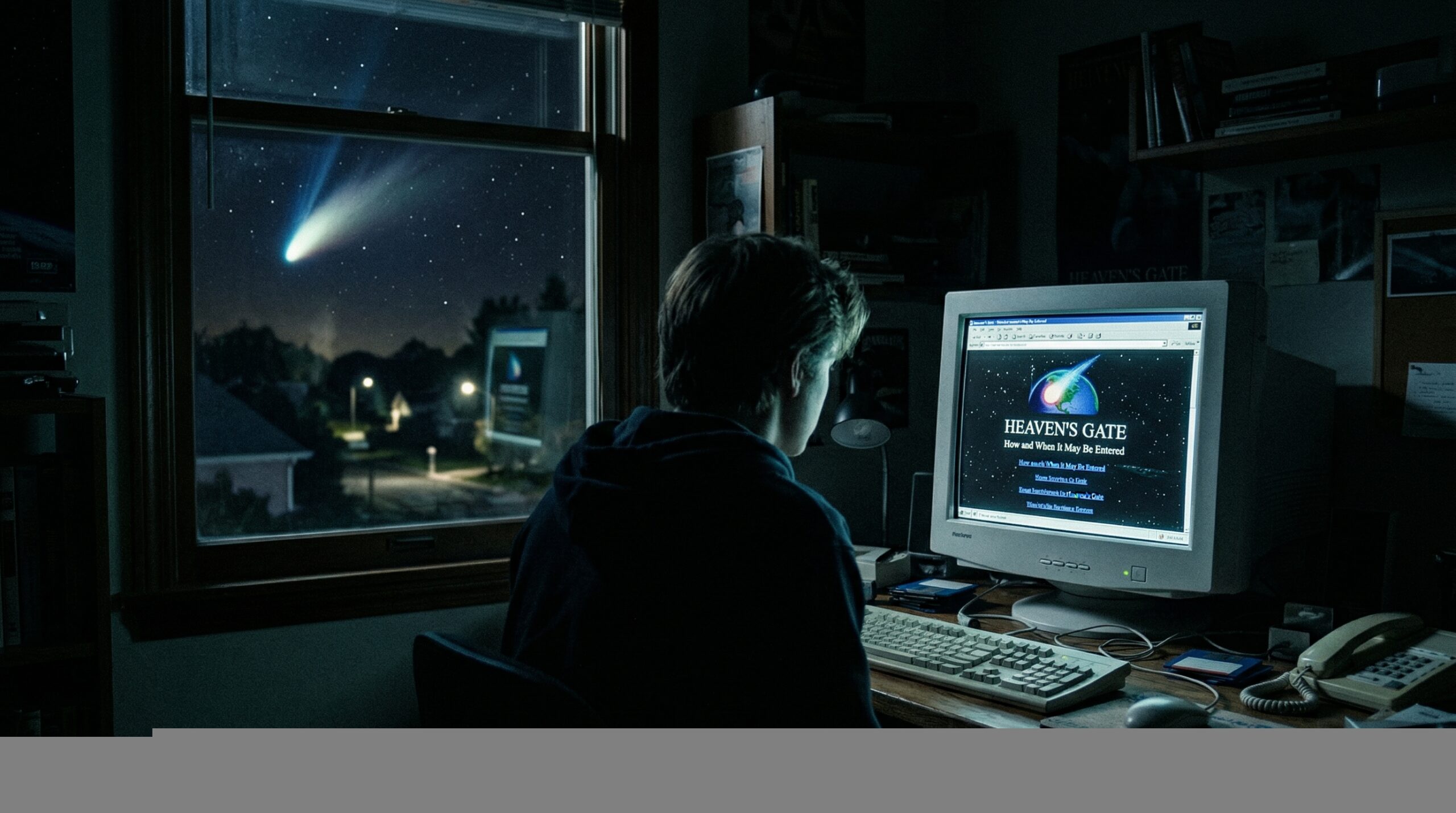
    Yes, the Heaven’s Gate website is still online, and that fact still lands with a jolt. People expect a broken link, a memorial page, or a museum-style archive. Instead they find a living fragment of the 1990s web: plain HTML, simple navigation, long blocks of text, and the undisturbed voice of one of America’s most infamous apocalyptic groups.

    That does not mean Heaven’s Gate survived as an active movement in any ordinary sense. The group is remembered above all for the March 1997 mass suicide in Rancho Santa Fe, California, when 39 members died believing they were leaving their human “vehicles” to join a higher extraterrestrial existence associated with the Hale-Bopp comet. But the website built around that worldview did not disappear with them. It remained.

    For more context on the broader mystery, see Doomsday Clock at 85 Seconds to Midnight: What the Warning Really Means and Ancient Demon Traps in Mesopotamia? The Bowls Buried Beneath the House.

    That is what makes the site so unsettling. It is not merely about Heaven’s Gate. It is Heaven’s Gate, still speaking in its own words. For historians of religion, researchers of cult dynamics, archivists of the early internet, and curious readers who stumble across it years later, the site offers something rare and uncomfortable at once: a primary-source artifact that feels less preserved than suspended.

    What was Heaven’s Gate?

    Heaven’s Gate was a religious movement founded in the 1970s by Marshall Applewhite and Bonnie Nettles, known within the group as “Do” and “Ti.” Their teachings fused Christian themes, apocalyptic expectation, New Age ideas, and UFO belief into a worldview that cast Earth as a temporary station and ordinary human life as something followers were meant to outgrow.

    Members were taught that the body was only a “vehicle” and that true identity belonged to a higher order of existence often called the “Next Level.” In the group’s theology, advanced beings could move between worlds, and disciplined adherents might eventually join them. That promised ascent required extreme detachment: separation from family life, suppression of sexuality, rejection of mainstream society, and obedience to the group’s spiritual framework.

    By the time the public internet opened up in the 1990s, Heaven’s Gate already had a polished internal language—part sermon, part system manual. The web turned out to be a natural home for it. The group’s site did not read like sensational press coverage of a doomsday cult. It read like a calm invitation to consider a set of teachings the group believed explained reality.

    Why is the website still online?

    The plain answer is that someone kept it online.

    For years after the 1997 deaths, reporting indicated that a small number of people associated with the group—often described as former members who left before the final event or supporters committed to preserving its teachings—continued to maintain the site and respond to inquiries. Two individuals in particular have been frequently mentioned in coverage as connected to that long-term preservation effort.

    Not every detail of the site’s upkeep has been transparent to the public, and that uncertainty has helped give the page an almost ghost-story aura. But there is nothing supernatural about its survival. Domains are renewed. Hosting is paid for. Files remain available because someone makes sure they do.

    What is unusual is not the mechanism but the intention. If the site existed only as a capture in the Internet Archive, it would feel historical in a familiar, buffered way. Because it remains accessible on the live web, it carries the strange sensation of an ending that never quite sealed shut.

    What do you see when you visit it?

    First comes the visual shock of recognition. The site looks unmistakably old: sparse pages, basic links, minimal graphics, and the hand-built feel of an internet that once seemed smaller and far less polished. It resembles the kind of page many people associate with the web’s early years, before design became sleek and standardized.

    Then comes the more unsettling part. The writing is steady, explanatory, almost gentle. It does not sound like the lurid mythology that later attached itself to the group in documentaries and headlines. It sounds like believers laying out a worldview they regarded as lucid and urgent.

    That directness is what gives the site its power. It bypasses decades of framing and returns visitors to the group’s own rhetoric: how members understood the human condition, why they believed Earth was nearing a decisive transition, and why choices that now read as catastrophic seemed meaningful from the inside.

    For some readers, that makes the site historically valuable. For others, it is precisely what makes the page hard to shake.

    Why do people find it so eerie?

    Most abandoned websites feel harmless. They suggest neglect, not menace. The Heaven’s Gate site feels different because it is attached to one of the most recognizable cult tragedies in modern American history.

    Part of the unease comes from the collision of eras. The design belongs to the bright, experimental early web. The message belongs to a closed belief system that ended in mass death. Yet the site remains only a click away, with no narrator standing beside it to interpret, soften, or condemn. Visitors are left alone with the material.

    There is also a deeper human reason the page lingers in memory. It turns a familiar media story back into a community of voices. The robes, headlines, and archival footage recede. In their place are people trying, in plain language, to explain what they believed reality was. That is often more disturbing than the spectacle that made the group famous.

    Is it a historical document, a memorial, or something more troubling?

    The answer depends on what you think preservation does.

    Some readers see the site primarily as a historical document. In that view, keeping it online preserves an unusually important primary source for studying new religious movements, coercive belief systems, and the culture of the early internet. If the site vanished, something essential about how the group represented itself would vanish with it.

    Readers who want to compare this story with outside reporting can start with The original Heaven’s Gate website and Wikipedia background on Heaven’s Gate.

    Others see the page less as an archive than as a continued transmission. Because the material still presents the group’s teachings in its own voice, without being reframed into retrospective commentary, the site can feel uncomfortably close to advocacy. That does not mean it carries the reach or force it once might have had, but it does explain why some visitors react with alarm rather than curiosity.

    The most balanced view may be that the site is both: a historical artifact and a troubling one. Its value lies partly in the fact that it was not rewritten into safer language. Its discomfort lies in exactly the same place.

    What the evidence actually shows

    The site’s continued existence is not an internet rumor. It has been noted for decades in reporting, documentaries, and discussions of digital culture. Journalists have also long pointed out that Heaven’s Gate was unusually fluent in the online world for a fringe religious movement of its era. Members had marketable technical skills and operated a web-design business, which helped support the group financially.

    That context matters. Heaven’s Gate was not accidentally frozen online. It was already using the internet intentionally as part of how it presented itself to the world.

    At the same time, the site’s endurance has attracted mythmaking. Some descriptions make it sound as if it survives by mysterious means. Others hint at hidden networks or secret ongoing activity without evidence. The simpler explanation is the stronger one: a website stays up when people preserve it, and preserved ideology can be more unnerving than ideology that disappears.

    Why Heaven’s Gate fit the internet so well

    In retrospect, the group’s online presence seems oddly ahead of its time. Heaven’s Gate offered a complete explanatory system. It used specialized language that separated insiders from outsiders. It treated mainstream culture as blind to a larger truth. And it invited people who felt alienated from ordinary life to imagine that alienation as evidence of a higher calling.

    Those features were not unique to Heaven’s Gate, but the web amplified them in important ways. A person could encounter the teachings privately, absorb them at length, and engage with a coherent worldview outside the checks of family, community, or public debate. The internet did not create the movement, which long predated the website, but it gave the group a new kind of stage.

    That is part of why the surviving site continues to matter to researchers. It shows how the early web functioned not just as a marketplace or communications tool, but as a habitat for belief, identity, and isolation.

    Why are people still talking about it now?

    Part of the answer is nostalgia. The internet has reached an age where old websites have become artifacts in their own right, and many people feel a strange fondness for the crude, handmade look of the 1990s web. At first glance, the Heaven’s Gate site seems to belong to that category.

    Then the second realization arrives. This is not an old fan page or forgotten startup. It is the preserved public face of a group associated with mass death. That sudden turn—from retro curiosity to dread—is part of what keeps the page circulating in documentaries, social media posts, and word-of-mouth recommendations.

    There is a broader reason, too. The site has become a stark example of how the internet preserves belief long after events are supposed to have passed into history. Pages remain reachable. Ideas remain searchable. A movement that feels sealed off in the past can still be entered through a URL.

    What scholars and skeptics would caution against

    The easiest mistake is to turn the site into a spooky internet legend. That framing gives it atmosphere, but it can flatten what it really represents. Scholars of religion and experts on cult dynamics would be more likely to treat it as evidence of a real movement with real victims, not merely a piece of eerie digital ephemera.

    Skeptics would also caution against overstating the unknowns. The site’s survival does not require paranormal explanation, secret technological infrastructure, or a hidden resurgence of the group. It requires maintenance and intent, both of which are entirely plausible.

    The grounded interpretation is the most revealing one: the page is unsettling not because it is supernatural, but because it is real.

    What remains uncertain

    Some details of the site’s maintenance remain hazy to the broader public, and the line between archival preservation and continued promotion can be uncomfortable to define. That ambiguity is part of why the page still inspires such strong reactions.

    But the core facts are not especially mysterious. The website’s survival is real, its historical significance is real, and its eerie quality comes from direct exposure to the group’s own words rather than from any paranormal element attached to the site itself.

    The bottom line

    At the most basic level, the Heaven’s Gate website is still online because someone has continued to preserve it. The deeper reason it continues to fascinate people is that it preserves conviction with unusual force. Printed pamphlets fade. Television footage gets edited and narrated. A live website can preserve tone, structure, and self-presentation in a far more immediate way.

    If you want to keep going, Skinwalkers Caught on Camera? What Viral Videos Usually Show expands the picture from another angle.

    Culturally, the site endures because it sits at the crossroads of several modern obsessions: cult history, digital archaeology, and the uneasy recognition that dangerous ideas do not disappear simply because the people who advanced them are gone. It does not prove anything paranormal, and it does not mean Heaven’s Gate survives in its original form. What it offers instead is more unsettling: an intact record of belief, still public, still reachable, still waiting behind a link.

  • Oarfish Sea Serpent Theory: Could This Deep-Sea Fish Explain the Legend?

    Oarfish Sea Serpent Theory: Could This Deep-Sea Fish Explain the Legend?

    Yes, at least in part. The giant oarfish is one of the most plausible real animals ever linked to sea serpent lore: long, silvery, rarely seen, and strange enough to look almost invented when it appears near the surface. But it is not a tidy answer to every old monster story. Some reports describe features an oarfish simply does not have, while others were likely shaped by distance, bad weather, fear, and the habit of turning a startling sight into a better tale.

    That tension is exactly why the theory endures. The oarfish occupies a fascinating borderland between folklore and zoology. It is not a mythical beast dredged up from legend, but a real deep-sea fish so unfamiliar that even confirmed specimens can seem unreal. When people look for the flesh-and-blood creature that may have helped give sea serpents their shape, the oarfish is hard to ignore.

    For more context on the broader mystery, see Skinwalkers Caught on Camera? What Viral Videos Usually Show and Second Sphinx Under Giza? What the Claim Says, What the Scans Show, and What Remains Unproven.

    What kind of animal an oarfish is

    The giant oarfish (Regalecus glesne) is among the longest bony fish in the world. Most people will never see one alive. It spends its life in deep ocean waters and usually comes to human attention only when injured, dying, or washed ashore.

    Seen up close, it does not resemble the standard idea of a fish so much as a strip of metal brought to life. Its body is long and ribbon-like, its skin reflective silver, and its head topped with a vivid red crest. From some angles, it can look almost impossibly thin. In open water, especially if glimpsed only briefly, that shape would be easy to misread.

    Stories about exceptional size are often repeated with more confidence than documentation allows, so the most dramatic length claims should be treated carefully. Even without exaggeration, though, confirmed oarfish are large enough to leave a lasting impression. A many-meter-long creature twisting near the surface, catching the light in flashes of silver and red, hardly needs embellishment to feel uncanny.

    Why people connect oarfish to sea serpents

    Because the resemblance is strong enough to be convincing, especially under the conditions in which many old sea mysteries were reported.

    Traditional sea serpent stories often center on a few recurring elements: an elongated body, unusual movement, and a sighting so partial or fleeting that the witness never gets a clean, stable view. Oarfish line up with several of those features surprisingly well.

    • Extreme length: Their bodies are far longer and narrower than most fish people expect to encounter near the surface.
    • Serpentine motion: A distressed or surfacing oarfish can create an undulating, snake-like impression.
    • Strange silhouette: At a distance, a ribbon-shaped fish may register less as a fish than as a continuous marine serpent.
    • Rarity: The less often an animal is seen, the easier it is for sightings to harden into legend.

    In fact, the theory works best when the view is incomplete. A head breaking the water, a flash of silver body, a few seconds of movement beside a rolling ship—those fragments are exactly the sort of raw material from which sea-serpent stories grow.

    What old sea serpent reports actually describe

    The phrase “sea serpent” sounds specific, but historically it covered a jumble of very different reports. Some witnesses described a horse-like or dragon-like head. Some spoke of coils lifting above the water. Others saw a series of humps, as if a train of arches were moving across the sea. Still others likely caught bad glimpses of whales, eels, floating debris, or ordinary marine life distorted by poor conditions.

    That matters because there was never one clearly defined monster to explain. “Sea serpent” often served as a catchall label for anything at sea that seemed large, unfamiliar, and unsettling.

    This is one reason the oarfish theory is persuasive without being complete. It does not need to solve every serpent story ever told. It only needs to explain how some sightings may have begun with a real but unfamiliar animal. On that narrower point, the case is strong.

    Where the theory makes the most sense

    The theory is most convincing when a report emphasizes length, a narrow body, strange movement at the surface, and uncertainty about what the witness actually saw.

    Imagine the conditions that produced so many maritime mysteries in the first place: dim light, rough water, a moving deck, a distant object appearing and disappearing behind waves. Under those circumstances, even a familiar animal can seem transformed. An oarfish—already unusual in form, already associated with deep water—would be even easier to misread.

    That deep-sea connection matters as much psychologically as biologically. Creatures from the ocean’s depths arrive wrapped in mystery before anyone describes them at all. People do not simply report what they see; they report what they think they are seeing. A rare animal from a hidden part of the world is exactly the kind of thing that can accumulate mythic weight.

    Where the theory falls short

    Still, the oarfish cannot explain everything.

    Some sea serpent accounts describe a thick-bodied animal with a distinct neck or a heavy head raised well above the water. Others mention multiple humps, broad backs, or movements that sound more like whales, seals, or several animals traveling together. An oarfish also does not behave like the giant marine reptile of adventure fiction, and plenty of famous sea monsters were shaped as much by imagination as by observation.

    Readers who want to compare this story with outside reporting can start with Wikipedia on the oarfish and NOAA on the oarfish.

    There is also the larger problem of eyewitness testimony at sea. Distance distorts scale. Weather wipes away detail. Waves hide parts of an animal’s body and can create the illusion of separate humps or segments. A known creature seen badly can become an unknown creature in seconds.

    So the most defensible version of the theory is also the most modest. Sea serpents were not secretly “just” oarfish. Rather, oarfish are one credible source behind some serpent imagery and perhaps some individual sightings.

    Why deep-sea animals so often become monsters

    The deep ocean has always been fertile ground for myth because it keeps so much of its life out of view. When something strange rises from that hidden world, people see it abruptly, usually under poor conditions, and reach for the nearest language they have: serpent, dragon, monster, omen.

    The oarfish is not unique in that respect. Giant squid spent generations lingering at the edge of legend before they were firmly documented. Strange fish, decomposing carcasses, unusual whale behavior, floating kelp, and wave effects have all fed the long history of sea-monster stories.

    What sets the oarfish apart is how little interpretive effort it requires. Its body plan almost invites serpent comparisons. With many proposed explanations, the link feels stretched. With an oarfish, the connection feels immediate.

    Why the real animal does not erase the mystery

    Explaining the legend does not make the creature ordinary.

    Part of the oarfish theory’s appeal is that it preserves wonder instead of flattening it. If a sea-serpent story can, in some cases, be traced to a real deep-sea fish, the result is not a dull debunking. If anything, it sharpens the mystery. The ocean turns out to contain something nearly as strange as the legend itself.

    That is often the most satisfying middle ground. Many readers are not looking for total disbelief or total supernatural certainty. They want the more complicated truth: that a real animal can help give rise to a legendary image, and that the legend still reveals something about how humans confront the unknown.

    What skeptics and historians would caution

    Historians and skeptics usually add two important notes of caution.

    First, folklore grows by accumulation. A dramatic sighting may begin with a real animal, then gather exaggeration through retellings, newspaper embellishment, local pride, and the very human tendency to improve a good story. Once a coastline or region becomes known for a monster, later witnesses may interpret ambiguous sights through that existing legend.

    Second, single-cause explanations are usually too neat for messy historical material. Sea serpent reports likely arose from many different sources: whales, sharks, seals, giant fish, floating objects, wave patterns, hoaxes, and honest mistakes. The oarfish belongs on that list, but it should not replace the whole list.

    That skeptical framing does not really weaken the oarfish theory. It refines it. The strongest claim is not that the case is closed, but that one remarkable species probably helped shape part of the tradition.

    So could the oarfish be the real animal behind the legend?

    In some cases, very possibly.

    If the question is whether a long, rarely seen deep-sea fish could have contributed to sea serpent stories, the evidence points strongly toward yes. If the question is whether every famous sea-serpent encounter can be reduced to an oarfish, the answer is no. The descriptions are too inconsistent, and the historical record is too mixed.

    If you want to keep going, Kola Superdeep ‘Screams From Hell’: The Hoax and the Real Discoveries Beneath the Earth expands the picture from another angle.

    That middle ground is not a disappointment. It is where many enduring mysteries actually live: part reality, part error, part imagination. The giant oarfish may not be the answer to every serpent tale, but it remains one of the most compelling real animals ever proposed as the legend’s living source.

  • The Dyatlov Pass Mystery: Nine Hikers, One Impossible Night

    The Dyatlov Pass Mystery: Nine Hikers, One Impossible Night

    The dyatlov pass mystery remains one of the most chilling unsolved cases of the twentieth century: in February 1959, nine experienced Soviet ski hikers died in the Ural Mountains under circumstances so bizarre that official investigators could only conclude a “compelling natural force” was responsible. Decades later, declassified documents, competing theories, and a persistent cryptid hypothesis keep this case alive for a new generation of researchers.

    What happened on the slopes of Kholat Syakhl — a name that translates roughly to “Dead Mountain” in the local Mansi language — has never been fully explained. The Dyatlov Pass incident sits at the intersection of Cold War secrecy, wilderness horror, and the kind of evidence that refuses to fit any single explanation. That’s exactly why it won’t go away.

    What This Story Actually Says About the Dyatlov Pass Mystery

    On the night of February 1–2, 1959, the nine hikers — led by Igor Dyatlov, all experienced mountaineers — abandoned their tent in temperatures reaching -30°C. They were barefoot or wearing only socks. The tent had been cut open from the inside, suggesting something drove them out in a frantic rush.

    Their bodies were found scattered across the slope over the following weeks. Some showed signs of extreme trauma: crushed ribs, a fractured skull, one victim missing her tongue. Yet there were no external wounds consistent with a physical assault. Two bodies showed radiation traces. Soviet investigators closed the case with a verdict of “unknown natural forces” — a phrase that has haunted researchers ever since.

    In 2019, declassified documents revealed that investigator Lev Ivanov had observed luminous spheres in the sky above the pass on the night in question — information suppressed at the time. His private notes described these orbs with visible unease. The full Wikipedia overview of the Dyatlov Pass incident documents the timeline in detail, though it cannot resolve the central mystery.

    Why This Topic Spreads So Easily

    The Dyatlov Pass mystery has every element that makes a story go viral before “going viral” was even a concept. It involves real people with names and faces. It happened behind the Iron Curtain, where secrecy was default and truth was rationed. The physical evidence is genuinely strange — the injuries, the radiation, the missing tongue, the luminous spheres. And crucially, every mainstream explanation leaves something unexplained.

    When an avalanche theory feels insufficient, people reach for infrasound. When infrasound doesn’t explain the radiation, the military weapons theory steps in. When no theory fits perfectly, the human mind does what it always does: it looks for an agent. Something with intent. Something watching from the dark. That’s where the cryptid theory enters.

    What the Evidence Actually Supports

    The cryptid theory — specifically, the idea that a Russian Yeti or Menk encountered the group — is popular but faces a fundamental problem: no animal tracks were found near the tent or the bodies. The Soviet investigators, whatever they were hiding, did conduct a physical search of the area. According to dyatlovpass.com, the most comprehensive English-language archive on the case, no evidence of large animal activity was recorded.

    What the evidence does support: the tent was cut from inside, not outside. The hikers fled deliberately rather than stumbling out in confusion. The fatal injuries on some victims were consistent with extreme compression — the kind produced by mechanical force or an explosion at distance — not with animal attack. The radiation traces on two items of clothing remain unexplained.

    The 2019 Russian reinvestigation concluded avalanche was the most likely cause, but acknowledged it could not account for all the anomalies. Researchers affiliated with the United States Holocaust Memorial Museum’s work on Soviet-era secrecy have noted that the systematic suppression of inconvenient evidence was standard practice — meaning what the official record says and what happened may diverge significantly.

    What Skeptics or Mainstream Experts Would Say

    The dominant scientific position is that an avalanche or slab of wind-compacted snow struck the tent, causing the group to flee in panic. The unusual injuries could result from being struck by dense snow while sheltering in a ravine. The radiation, in this view, may be a red herring — some of the hikers worked in facilities where low-level radiation exposure was common.

    The luminous spheres reported by Ivanov? Skeptics point to military flares, rocket tests from the Kapustin Yar facility, or even natural atmospheric phenomena like plasma vortices. The suppression of Ivanov’s notes is explained as standard Soviet-era censorship of anything that might raise uncomfortable questions about military activity — not evidence of a paranormal cover-up.

    Why This Story Still Matters

    The Dyatlov Pass mystery matters because it is, at its core, a story about the limits of institutional honesty. The Soviet government knew something it didn’t tell the families. Whether that something was a weapons test, a classified aerial program, or something stranger, the deliberate opacity transformed a tragedy into a mystery that has now outlasted the government responsible for the cover-up.

    It also matters because the nine hikers were real. Lyudmila Dubinina. Semyon Zolotaryov. Yuri Doroshenko. The tendency to treat this case as a puzzle can obscure the fact that nine young people died in terrible circumstances, and their families never received a satisfactory answer.

    The Bigger Unexplained Pattern

    Dyatlov Pass sits within a long tradition of wilderness encounters that defy easy explanation — from the Bennington Triangle disappearances in Vermont to the mysterious deaths in the forests of Japan’s Aokigahara. What unites these cases is not necessarily the paranormal, but the consistent failure of official investigation to fully account for the evidence. The cryptid angle is the loudest part of the Dyatlov story, but the deeper mystery is institutional: what did the Soviet government know, and why did it matter enough to suppress?

    Final Assessment

    The Dyatlov Pass mystery is unlikely to be solved definitively. Too much time has passed, too many documents remain classified or destroyed, and the physical site has changed. What we can say is that the cryptid theory, while compelling as narrative, lacks the physical evidence to be considered seriously alongside the military, infrasound, and avalanche hypotheses. The luminous spheres reported by Lev Ivanov are the most genuinely unexplained element — and they point not toward a creature in the snow, but toward something in the sky above it. Whatever it was, nine people paid for the encounter with their lives, and Russia has never fully explained why.

    Frequently Asked Questions

    Was the Dyatlov Pass mystery ever officially solved?

    No. A 2019 Russian reinvestigation concluded that an avalanche was the most likely explanation, but acknowledged it could not account for all the physical evidence — including the radiation traces, the unusual injuries, and the luminous spheres reported by investigator Lev Ivanov.

    Is the Russian Yeti theory taken seriously by researchers?

    Mainstream researchers consider it unlikely. The absence of animal tracks near the tent or bodies is a significant problem for the cryptid hypothesis. Most serious researchers focus on military, atmospheric, or geological explanations.

    What were the luminous spheres seen at Dyatlov Pass?

    Investigator Lev Ivanov reported seeing glowing orbs in the sky over the pass on the night of the deaths. His notes were classified and only released in 2019. Explanations range from military flares and rocket tests to natural plasma phenomena — none has been confirmed.

    Why was the Soviet investigation kept secret?

    Historians believe the secrecy was connected to nearby military testing programs. The Kapustin Yar rocket facility was active in the region, and Soviet policy routinely suppressed information that might draw attention to classified military activity.

    Related Articles

    This article was created using Media Blaster – Your content production specialist. Visit www.mediablaster.io for more information.

  • The Devonshire Night Thing: A 1970s Paranormal Story That Just Went Viral on Reddit

    The Devonshire Night Thing: A 1970s Paranormal Story That Just Went Viral on Reddit

    A terrifying entity encounter originally documented in a 1970s unexplained mysteries book has resurfaced on Reddit and gone viral — proving that genuinely frightening accounts don’t have expiry dates. The Devonshire Night Thing is the latest case in a growing trend of old paranormal stories being rediscovered by new audiences.

    In a digital landscape saturated with content designed for instant consumption and instant forgetting, few things cut through like a well-documented paranormal encounter from a pre-internet era. The Devonshire Night Thing — an entity encounter originally recorded in a now-obscure unexplained mysteries anthology from the 1970s — was posted to Reddit’s r/Paranormal community and within days had accumulated thousands of comments, cross-posts, and genuine expressions of fear from readers who’d never encountered it before.

    What This Story Actually Says

    The original account, as preserved in the 1970s anthology, describes a rural encounter in Devonshire, England — a county with deep roots in English folklore, moorland legend, and documented paranormal history. The witness reported encountering an entity outside their rural property on multiple consecutive nights. The creature — if creature is even the right word — was described as tall and thin to the point of physical impossibility, with movement that was deeply wrong in ways the witness struggled to articulate. It didn’t walk so much as it redistributed itself through space. It was aware of being observed. And it returned.

    The account is distinguished from typical ghost stories by its specificity and tone. The witness didn’t describe a shape or a feeling — they described a presence that made the surrounding environment feel hostile. The original text has been condensed from a four-page account, and users on Reddit have been debating whether the abbreviations lost crucial details.

    Why This Topic Spreads So Easily

    Pre-internet paranormal accounts carry built-in authenticity signals that modern reports simply cannot replicate. The Devonshire Night Thing was written in an era when there was no social media incentive, no algorithm to game, no audience to perform for. It was a book. Someone experienced something terrible. They wrote it down. That economy of motive is deeply persuasive in an era drowning in engagement farming.

    Reddit’s format is also uniquely suited to this kind of content. The upvote system surfaces the most detailed, most engaging responses. The comment thread format allows collaborative investigation — someone finds the book, someone else locates Devonshire folklore parallels, a third person maps the described location. Within 48 hours, a single post becomes a crowd-sourced research project.

    What the Evidence Actually Supports

    No physical evidence supports the existence of the entity described. What the evidence does support is that this type of encounter report is remarkably consistent across cultures and centuries. Tall, thin, silent figures at the edge of visibility appear in British folklore stretching back to pre-Christian times. Whether that consistency reflects a real phenomenon, a shared psychological response to isolation and darkness, or cultural inheritance is genuinely contested.

    Devon and Cornwall have among the highest per-capita paranormal report rates in England — a fact documented by the British Paranormal Association and regional folklore societies. The county’s moorland landscape, sparse population, and long winter nights create conditions where the boundary between known and unknown feels thinner than in urban settings.

    What Skeptics Say

    Skeptics make two strong points. First, the original text is difficult to verify — the specific book cited in the Reddit thread has not been definitively identified, raising questions about whether the “1970s source” is itself a modern fabrication given a vintage coat of paint. Second, tall thin entity encounters spike sharply after viral exposure: the more people hear the description, the more people report seeing exactly that. Suggestion is a powerful mechanism, especially in low-light, high-stress conditions like driving alone at night on rural roads.

    Why It Matters

    Stories like the Devonshire Night Thing matter because they reveal how folklore actually travels. This wasn’t preserved by academics — it survived in a paperback book, got scanned, made it onto Reddit, and reignited in a new generation. The mechanism of cultural transmission has changed completely, but the content hasn’t. That continuity is worth examining regardless of whether you believe in tall figures on dark roads.

    The Bigger Pattern

    We are living through a golden age of paranormal archaeology. Researchers are digitising old books, scanning crumbling local newspapers, and posting forgotten accounts to communities hungry for authenticity. The Devonshire Night Thing is one of dozens of pre-internet cases that have found new audiences this way. From the Black Monk of Pontefract to Dyatlov Pass, old mysteries are finding new believers — and that pattern tells us something about the current appetite for genuine, unresolved strangeness.

    Final Assessment

    The Devonshire Night Thing is unlikely to be proven real or definitively debunked. The source text is obscure, the witness is anonymous, and the location is vague. But that is precisely what makes it effective as folklore: it resists resolution. It asks you to sit with uncertainty. And in 2026, when every mystery has been solved by algorithm or explained away by content farm, sitting with uncertainty might be the most valuable thing a story can offer.

    Frequently Asked Questions

    Is the Devonshire Night Thing a real case?

    It originated in a 1970s unexplained mysteries book. Whether the original witness account was genuine or literary invention is unknown. The Reddit thread has not definitively identified the source text.

    Why do old paranormal stories go viral?

    Pre-internet accounts carry perceived authenticity because they weren’t written for engagement or profit. When they resurface, they feel more trustworthy than modern reports.

    Are there other similar entity reports from Devon?

    Yes. Devon and Cornwall have rich traditions of tall figure, shadow person, and “night walker” reports spanning centuries. These are documented in regional folklore collections.

    Related Articles

    This article was created using Media Blaster – Your content production specialist. Visit www.mediablaster.io for more information.

  • Vatican Exorcist Surge

    Vatican Exorcist Surge

    A March Vatican meeting between Pope Leo XIV and representatives of the International Association of Exorcists has triggered a fresh wave of interest in demonic-possession narratives, occult panic, and institutional religion’s response to spiritual warfare claims. The group reportedly urged the pope to ensure every Catholic diocese has one or more properly trained exorcists, citing what they describe as rising cases linked to occultism, esotericism, Satanism, and spiritual distress. According to EWTN News, this story is drawing attention well beyond its original niche.

    For unexplained audiences, this lands right in the sweet spot where official religion overlaps with the paranormal. It’s not a random exorcist podcast or fringe testimony; it’s the Vatican-adjacent infrastructure treating exorcism as an active pastoral issue.

    What Happened

    This story works because it sounds like a horror movie headline but is rooted in real Church bureaucracy and doctrine. Reporting from AL.com summary adds context to how the story is being framed.

    • On March 13, 2026, Pope Leo XIV met privately with leaders of the International Association of Exorcists.
    • EWTN and follow-on reporting say the exorcists asked for every diocese worldwide to have trained practitioners.
    • The group described a rise in people harmed through involvement with occult practices and asked for more formal Church-level training and oversight.
    • Coverage also emphasized exorcism formation for priests and bishops, meaning this is being framed as a structural issue, not just sensational anecdote.
    • The timing is notable because mainstream and tabloid media have been primed by ongoing pop-culture fascination with exorcism, demonology, and “real life” possession accounts.

    What Evidence Exists

    Here’s what is known: A March Vatican meeting between Pope Leo XIV and representatives of the International Association of Exorcists has triggered a fresh wave of interest in demonic-possession narratives, occult panic, and institutional religion’s response to spiritual warfare claims. The group reportedly urged the pope to ensure every Catholic diocese has one or more properly trained exorcists, citing what they describe as rising cases linked to occultism, esotericism, Satanism, and spiritual distress.

    The strongest evidence in stories like this is often not a final proof object, but a mixture of witness accounts, media framing, prior folklore, and the cultural weight of the subject itself. That is why separating verified facts from interpretation matters.

    Authoritative coverage and primary reporting should stay central to the analysis, including sources such as:

    What Skeptics or Investigators Say

    Researchers and skeptics have argued that unexplained stories often grow fastest when the emotional framing is stronger than the evidentiary record. That does not mean the story is meaningless. It means the burden of proof and the burden of interpretation are not the same thing.

    The most widely cited explanation is usually the least exotic one that still fits the known facts. But unresolved cases persist because the simplest explanation does not always feel emotionally complete to the audience following them.

    Why It Matters

    It legitimizes paranormal-adjacent belief inside a major institution
    When exorcists meet the pope and ask for expanded training, it gives spiritual warfare narratives renewed credibility for believers.

    It merges religion, occult panic, and modern anxiety
    Stories about rising Satanism or occult practice often function as cultural mirrors for broader fears about moral decline, social fragmentation, and loss of spiritual grounding.

    It’s a rare case where the unexplained comes with organizational receipts
    This isn’t just “someone claims possession.” It’s a coordinated request from a formal association seeking wider infrastructure.

    The story invites both belief and skepticism
    Believers will see confirmation that dark spiritual forces are increasing. Skeptics will see moral panic packaged in ecclesiastical language. That tension is fertile content territory.

    It can travel across formats
    This works as a quick news hit, a deeper religious-paranormal analysis, or a cultural piece on why exorcism keeps resurging in public imagination.

    The Bigger Unexplained Angle

    What gives this topic staying power is not just the headline claim, but the way it plugs into deeper themes: secrecy, folklore, institutional mistrust, symbolic fear, wonder, and the human tendency to keep revisiting mysteries that never fully resolve.

    That is exactly why the unexplained-wordpress standard requires more than a quick summary. Strong articles need context, internal discovery, authoritative links, explicit uncertainty, and sections that can stand on their own for readers and AI systems alike.

    Readers interested in the broader pattern should also see The Pentagon UFO Report and What It Still Can’t Explain, which connects this story to a larger unexplained.co theme.

    Frequently Asked Questions

    What is this story about?

    A March Vatican meeting between Pope Leo XIV and representatives of the International Association of Exorcists has triggered a fresh wave of interest in demonic-possession narratives, occult panic, and institutional religion’s response to spiritual warfare claims. The group reportedly urged the pope to ensure every Catholic diocese has one or more properly trained exorcists, citing what they describe as rising cases linked to occultism, esotericism, Satanism, and spiritual distress.

    Why is this getting attention now?

    It legitimizes paranormal-adjacent belief inside a major institution. When exorcists meet the pope and ask for expanded training, it gives spiritual warfare narratives renewed credibility for believers.

    Is Vatican Exorcist Surge proven?

    No. These articles are written to separate what is verified, what is claimed, and what remains uncertain. Mystery does not automatically equal proof.

    What should readers focus on?

    Focus on the evidence, the source quality, the skeptical or conventional explanations, and why the story still resonates even when certainty is missing.

    Related Articles

    This article was created using Media Blaster – Your content production specialist. Visit www.mediablaster.io for more information.