Category: The Occult

  • Baba Vanga’s 2026 Alien Prophecy: The Blind Mystic Who Predicted Mass Alien Contact and Why People Are Taking It Seriously Again

    Baba Vanga’s 2026 Alien Prophecy: The Blind Mystic Who Predicted Mass Alien Contact and Why People Are Taking It Seriously Again

    Blind Bulgarian mystic Vangelia Gushterova, better known as Baba Vanga, died in 1996. But she has never stopped making new predictions. Every January, social media fills with a fresh list of “Baba Vanga’s predictions for [current year]” — and for 2026, the one that keeps surfacing is this: “Massive contact with non-human intelligence will occur.” Whether she actually said it, exactly that way, is one question. Why so many people are suddenly repeating it is another.

    What the Prophecy Claims

    The 2026 alien prophecy attributed to Baba Vanga is short and specific: humanity will make contact with non-human intelligence in 2026. Some versions of the claim add that the contact will be peaceful. Others say it will come through a government announcement rather than a direct encounter. The details vary depending on who is sharing it, which is typical of predictions that have been translated, retold, and reinterpreted across decades.

    The prophecy has been circulating alongside an unusual backdrop: an actual, ongoing UAP disclosure movement inside the United States government. Multiple pastors have claimed they were briefed by military intelligence that disclosure is imminent. Congressman Tim Burchett has said in sworn testimony that he has been briefed on recovered non-human bodies and the information he cannot share publicly is explosive. Representative Eric Burlison has made claims about mass-witness UAP events documented by military personnel. The congressional pressure around the phenomenon has never been louder.

    So when Baba Vanga’s 2026 alien prophecy resurfaces alongside real disclosure claims from real government officials, the synchronicity is hard to ignore.

    The Woman Who Died Before She Finished Speaking

    Vangelia Gushterova was a Bulgarian mystic who claimed to have developed clairvoyant abilities after losing her sight in a storm at age 12. She lived through the 20th century and, by some accounts, predicted events including the 9/11 attacks, the 2004 Indian Ocean tsunami, the Brexit vote, and the rise of ISIS. Her supporters treat these as hits. Her skeptics point out that she also allegedly predicted a nuclear World War III in 2010, the end of European civilization in 2016, and several other events that simply did not happen.

    The problem with evaluating Baba Vanga’s track record is that her predictions were rarely recorded by her directly. They were transcribed, translated from Bulgarian, and passed through oral tradition for decades. By the time a prediction shows up on the internet in 2024 or 2025, it has been shaped by the person sharing it into something that can sound either remarkably accurate or obviously wrong depending on how generously you read the original text.

    Why This Prophecy Is Spreading Now

    The reason the 2026 alien prophecy matters right now is not that Baba Vanga somehow knew what would happen. It is that her timeline intersects with a real-world window that UAP researchers have been anticipating for years. The 2026 National Defense Authorization Act includes provisions mandating the Pentagon’s All-domain Anomaly Resolution Office to declassify and release UAP records. Trump has hinted at additional file releases. Congressional hearings have featured testimony from people claiming direct knowledge of non-human craft.

    When a decades-old prophecy intersects with an active political disclosure timeline, the coincidence feels deliberate. It feels like a pattern. And for people who have spent years following the UAP movement, patterns are what it is all about.

    The Skeptical View

    The skeptical framing is straightforward. Baba Vanga’s predictions are so vague and so numerous that some of them will inevitably align with real events by chance. The alien prophecy for 2026, if it exists in its current form at all, is a retroactive construction — a prediction shaped after the fact to match what people are already expecting. The fact that it is being shared alongside real UAP disclosure developments does not make it prescient. It makes it topical. You can read the Wikipedia page on Baba Vanga for documented predictions, but the 2026 alien contact claim does not appear in any primary source — it circulates through tabloid prophecy roundups like the Daily Express and social media chains.

    There is also the question of provenance. No verified audio, video, or written record of Baba Vanga making this specific prediction has been produced. The claim survives through social media chains and second-hand retellings, which is the same mechanism that produces thousands of fake predictions every year.

    What Remains Uncertain

    Whether Baba Vanga actually predicted alien contact in 2026 is a question that nobody with access to primary evidence has the tools to answer. What is not in question is that the prophecy has found a receptive audience in a year when the UAP disclosure movement is generating real headlines from real government buildings. The alignment between prophecy and politics is either a bizarre coincidence or evidence that something is moving in the direction that mystics and lawmakers have independently pointed at.

    Which of those is true may become clearer before the year is out.

    FAQ

    What did Baba Vanga predict about aliens in 2026? According to widely shared accounts, Baba Vanga predicted that humanity would make massive contact with non-human intelligence in 2026. The exact wording and provenance of this prediction are disputed.

    How accurate are Baba Vanga’s predictions? Baba Vanga’s supporters credit her with predicting numerous major events. Skeptics note that many of her predictions failed, that her record is difficult to verify, and that her predictions have been reshaped over time.

    Is the 2026 alien prophecy connected to actual UAP events? The prophecy aligns with an active congressional and executive push for UFO transparency, including claims of recovered non-human technology and scheduled government file releases. The timing is coincidental.

  • James Hampton’s Throne of Third Heaven: The Secret Installation and the Undeciphered Book

    James Hampton’s Throne of Third Heaven: The Secret Installation and the Undeciphered Book

    A janitor rented a garage on a side street in Washington, DC, and for sixteen years he went there every night after his shift and built something in complete silence. When he died in November 1964, the landlord broke into the room and found it packed from floor to ceiling with 177 objects — thrones, altars, and ritual structures assembled from cardboard, tin foil, broken glass, and light bulbs — arranged into the most ambitious, most mysterious folk-art installation in American history.

    Hampton called it “The Throne of the Third Heaven of the Nations’ Millennium General Assembly.” The name itself is a sentence that sounds like it was delivered rather than composed. The objects are covered in gold and silver foil, built around salvaged furniture and crowned with improvised halos and spires. They read like sacred architecture constructed from a city’s discarded refuse, and they were made by a man who nobody — family, friends, coworkers — had any idea was doing this work.

    The objects are extraordinary. The book Hampton left behind — 104 pages of handwritten text using a partially invented script that linguists have never fully decoded — is what makes people unable to close the case.

    The Discovery

    James Hampton was a 50-year-old World War II veteran who worked as a night janitor for a law firm in Washington. He showed up for his shifts. He cleaned. He was quiet and polite and unremarkable in all the ways a person can be unremarkable during the hours when they are doing their assigned job.

    Nobody knew about the garage on 1413 W Street NW. Nobody knew about the work inside it. Hampton had been visiting that room every night after clocking out and building objects that would take the Smithsonian decades to fully catalog and that scholars still debate today.

    When Hampton died in 1964, the landlord discovered the room during a routine check and found it literally packed with things. The Smithsonian acquired the full collection and it remains one of the landmark works in their permanent collection. The installation was so dense and so extensive that the landlord could barely enter the space. Hampton had transformed an ordinary rented garage into a cathedral of improvised sacred objects.

    The 177 Objects

    The inventory numbers are what make the project feel unreal. Not twelve. Not thirty. One hundred and seventy-seven objects, each constructed with a consistency of vision and a level of ambition that has no parallel in American outsider art.

    The materials are what you find in a city that discards things: cardboard, aluminum foil, broken glass, light bulbs, wire, old wood, fabric scraps, tin cans. Hampton assembled these materials into throne-like structures, altars, crowns, and standing forms that resemble architectural fragments of a civilization that never existed. Each piece is wrapped in foil, creating a metallic surface that catches light in a way that makes the crude materials look precious.

    The craftsmanship is not polished. It is obsessive. Hampton did not build one impressive piece and stop — he built a hundred and seventy-seven of them and arranged them into a complete environment. The level of sustained vision required to do that over sixteen years, in a rented garage, in total secrecy, is what moves the story out of the art category and into the mystery category.

    The Book Nobody Can Read

    Hampton left behind a 104-page book that he called “The Book of the Unknown.” It is written in a mix of recognizable English and symbols, abbreviations, and structural patterns that nobody has fully decoded. The text appears to be Hampton’s own system — a hybrid of conventional spelling and an invented linguistic structure that reflects his personal theology and cosmology.

    Scholars who have worked with the collection have managed to extract some meaning from the text. Passages reference biblical concepts. Fragments of English words appear alongside compressed abbreviations and what look like personal notations that only Hampton would understand. But the full text has never been translated because the full system has never been cracked.

    What makes the script mysterious is not that it is impossible to read — pieces of it are legible — but that its internal logic reflects a framework of thought that was entirely Hampton’s creation. He built a language system to describe a universe that he saw and that no one else had access to, and the system died with him in the sense that no one else has the key to fill in the gaps between the parts everyone can read.

    The story resurfaced on r/HighStrangeness where it generated engaged discussion about the “Director of Special Projects for the State of Eternity” and drew attention back to the Hampton collection among people who study coded texts and hidden messages and drew attention back to the Hampton collection among people who study coded texts, insider language, and the intersection of personal theology and creative output.

    The Religious Vision

    Hampton’s theology — as far as it can be extracted from the surviving text and the installation itself — centers on millennial prophecy and the concept of a “Third Heaven.” In Christian eschatology, the third heaven is a real concept: the highest heaven, the dwelling place of God, described by Paul in 2 Corinthians 12:2. Hampton appears to have constructed his entire installation as a staging area for a future divine assembly — the “Nations’ Millennium General Assembly.”

    The apocalyptic scale of the project was not accidental. Hampton was building for an event he believed would happen. The throne, the altars, the ritual objects, the 104-page book — all of it was designed for a future gathering that only Hampton could see coming.

    This was not the work of someone who believed they were creating art for gallery display. It was the work of someone who believed they were building architecture for an event that would happen after their lifetime, on a timeline they understood and nobody else shared.

    The Mystery That Remains

    The Smithsonian acquired the collection and displays portions of it as a landmark of American self-taught art. Scholars have cataloged the objects. Conservators have preserved them. But the questions that matter are the ones the Smithsonian cannot answer.

    Why did Hampton keep the work completely secret? Sixteen years is an enormous commitment to sustain in isolation. If his goal was recognition, there were easier ways to achieve it. The secrecy suggests that Hampton was not building for an audience. He was building for the event — the assembly — and the act of building itself was the meaningful part, echoing cases where personal belief shapes reality, regardless of who saw it.

    How did a janitor with no formal theological education develop a cosmology elaborate enough to fill a garage with 177 objects and a 104-page theological manuscript? Where did the iconography come from? Where did the script come from?

    The most unsettling question is the simplest: how many people are doing something extraordinary in a room nobody else will enter for the rest of their lives?

    What Is Actually Known

    James Hampton was a night janitor in Washington, DC who died in 1964 at age 50. The Smithsonian Institution acquired his garage installation — 177 objects built from scavenged materials over approximately sixteen years — and it remains one of the largest and most coherent outsider-art collections in a major American museum. Hampton left behind a 104-page handwritten book using a hybrid script combining English fragments with an undeciphered personal code. The “Throne of the Third Heaven of the Nations’ Millennium General Assembly” is the title Hampton gave to the project.

    What is not known is the full content of Hampton’s book, the source of his theological framework, or the complete meaning of the symbols and script he used to encode his private cosmology. The collection is documented. The mystery is the document he left inside it.

  • ‘”The Ballroom” Is a Code Word for the Temple: Why This Cryptic Conspiracy Theory Has Millions Locked Into Decoding It’

    ‘”The Ballroom” Is a Code Word for the Temple: Why This Cryptic Conspiracy Theory Has Millions Locked Into Decoding It’

    You’re not supposed to notice. That’s the whole point. When you first hear someone whisper that “the ballroom” isn’t a place you can dance in — that it’s a code word hiding something far older and far more deliberate than anyone let on — something inside you either shuts down or wakes up. There’s no middle ground. For millions who’ve stumbled into this labyrinth over the last eighteen months, waking up felt like remembering something they’d always known. The ballroom isn’t a room. The ballroom is a veil. And behind it sits a structure that certain lineages have been protecting, renaming, and quietly renovating for longer than modern history wants to admit.

    It starts with a feeling — that prickling certainty that the word “ballroom” appears in places it has no business being. A leaked transcript here. An obfuscated memo there. A casual remark from a figure who should have been vetted, should have been scripted, should absolutely have stayed on message. Instead, they said it. The Ballroom. And then they moved on as though nothing had happened. But for the ones watching — the ones who’d already pieced together fragments from older threads about Milano Cortina Olympics occult symbolism debate — it was the same click you get when two puzzle pieces snap together. Not proof. Not yet. But a signal. A breadcrumb. And once you’ve seen one, you start seeing the trail.

    What the Ballroom theory claims

    At its core, the Ballroom theory proposes that “the ballroom” functions as a deliberately inserted substitute word across documents, broadcasts, architecture, and coded correspondence for what the theory calls “the Temple.” The Temple is intentionally kept vague in discussions, because precision would hand the conversation to people who only want to mock it. What the Temple represents, according to the most coherent versions of the theory, is a physical or organizational nexus: a location or network where symbolic rituals, initiatory practices, and structural power arrangements converge with deliberate intent. Not a single building with a plaque, but a system. A protocol. A grammar of control dressed up as tradition.

    The claim isn’t that everyone who says “ballroom” is winking at you. The claim is that at certain levels, in certain documents, the word is being used knowingly. It’s a shibboleth — if you recognize it, you’re already inside the conversation. If you don’t, it reads as mundane. And that’s exactly how a code word is supposed to function.

    What makes the theory so gripping is that it doesn’t ask you to accept a single explosive claim. It asks you to notice a pattern. The ballroom appears in planning documents adjacent to events that independent researchers have long flagged as symbolically loaded. It appears in architectural references that align with sacred geometry patterns people have been cataloging for decades — the same geometric alignment you’d expect in a space designed with intentional symbolism, not one built for social dancing.

    The people pushing the Ballroom argument don’t all agree on every detail, and that’s part of what makes the theory feel organic rather than manufactured. Some argue the Temple is purely metaphorical — a designation for a class of people operating under an older cosmology. Others point to satellite imagery, architectural plans, and declassified documents they say corroborate a physical reading. Still others think the Temple is both — a physical structure exists, but the word’s real power comes from functioning on two registers simultaneously: literal for the initiated, decorative for everyone else.

    What all versions agree on: the substitution isn’t accidental. And once you accept that substitution is happening, you face a follow-up question that changes everything.

    Why now?

    Why is the ballroom appearing more frequently in publicly accessible materials over the last several years than at any point in living memory? Why are people finding references in contexts that couldn’t have been planted, in documents predating the current discussion by decades? Why does the pattern hold up under scrutiny — not conclusively, but consistently enough that the people decoding it keep finding more, not less, the deeper they go?

    None of these questions have clean answers. That’s the nature of working with material someone deliberately obscured. But absence of clean answers isn’t the same as absence of a pattern. And the pattern is what has millions hooked.

    Where the idea first surfaced

    The Ballroom theory did not emerge from a single viral post or a famous whistleblower. It emerged slowly, in fragmented form, across communities that had been working on adjacent puzzles for years without realizing they were looking at different faces of the same structure.

    The earliest credible seed traces to discussions on imageboards and encrypted chat groups in late 2024, where users started cataloging instances of “ballroom” appearing in anomalous contexts. A municipal planning document for a building complex that didn’t match its stated function. A reference in a declassified intelligence document where the word appeared adjacent to organizational structure discussions rather than physical space. Individually, each could be chalked up to eccentric naming or poor drafting. Collectively, they started to look like something else entirely.

    The conversation caught fire when a viral Imgur album that sparked discussion across multiple platforms compiled over sixty instances of “ballroom” appearing in documents, transcripts, and architectural references spanning a forty-year period. The album didn’t argue — it displayed. It let the material speak for itself, and that restraint was its own kind of genius. When people are handed a finished argument, they resist. When they’re handed raw material and invited to look, they lean in. That album was the match.

    From there, the conversation migrated to a r/conspiracy thread with 5387 points that ballooned into thousands of comments, with users cross-referencing instances of the word against historical temple construction records, Masonic documentation, and organizational charts from institutions with known esoteric affiliations. The more people looked, the more they found.

    What surprised seasoned researchers was how quickly the Ballroom discussion connected to older threads of investigation that had gone dormant. People tracking MKUltra continuation claims found that vocabulary used in those older documents occasionally used “ballroom” in ways that mapped onto the theory’s framework. Others working on Credo Mutwa and the aliens noticed that certain African temple traditions described spatial arrangements mirroring what Ballroom documents seemed to reference. Even researchers exploring the Giant of Kandahar encounter reported finding the word “ballroom” in adjacent documents in ways too contextually strange to dismiss.

    None of these connections proved anything. But they did something more valuable for a conspiracy community: they created resonance. When a theory connects to other investigations people have already invested years into, it doesn’t feel like a new theory. It feels like a missing piece. And that feeling is enormously powerful. It creates movement. It creates the kind of distributed investigation that no single researcher could ever replicate.

    The Ballroom theory didn’t emerge as a polished product. It emerged as a question. And the right questions are far more durable than answers.

    Why people are finding the same symbols in different places

    Here is where the Ballroom theory stops being about a single code word and becomes about something much larger — the claim that a persistent symbolic architecture threads through institutions, media, and physical spaces that most people walk through without noticing. The ballroom is the entry point. What it opens onto is a conversation about why certain symbols, shapes, and organizational patterns keep showing up in places that should have nothing to do with each other.

    Inside the Ballroom community, you start recognizing what researchers themselves recognize: the theory is fundamentally about pattern persistence. Why does the same geometric ratio appear in the floor plan of a private club building in London and in a government-adjacent complex in the United States, both referencing a “ballroom” in documents describing internal functions? Why do ceremonial sequences documented in nineteenth-century temple records match the sequencing of events described in contemporary documents that use “the ballroom” as a descriptor? Why do the same symbolic motifs — compass-adjacent angles, tripartite spatial divisions, deliberate cardinal orientation — appear across institutions that officially have no relationship?

    The theory’s proponents don’t claim to have mapped the entire structure. What they claim is that they’ve identified enough of its grammar to suspect that the structure is intentional, persistent, and operating with continuity across decades — possibly centuries — of institutional development. The ballroom, in this reading, is one of the theory’s most valuable discoveries because it’s a word never meant to be found as a code word. It was meant to function as camouflage. A ballroom is harmless. A ballroom is socially acceptable. A ballroom raises no eyebrows.

    Which is exactly why it makes perfect sense as a designation for something not supposed to be discussed openly.

    The people working on this are cataloging architectural blueprints where ballroom floor dimensions match temple proportions from older traditions. They’re transcribing audio from events where the word is used with tonal emphasis that suggests referential loading — speakers stressing it in ways that feel deliberate, almost ritual. They’re building databases. They’re connecting instances. They’re doing the tedious, unglamorous work of pattern documentation that every credible investigation eventually requires.

    And the patterns don’t dissolve under scrutiny — they compound.

    It’s worth noting that this work intersects heavily with broader occult symbolism research that academics have conducted for over a century, though the academic and Ballroom communities operate in almost entirely separate spheres. Where academics study occult symbolism as a historical phenomenon, Ballroom researchers are investigating it as a living system. They’re not looking backward. They’re looking at the present and asking whether the symbolic architecture historians have documented is still actively being used — still hiding in plain sight.

    The answer, increasingly, seems to be yes. Once you accept that possibility, the ballroom stops being a mystery about a single word and becomes a doorway into a conversation about how power organizes itself, how institutions preserve internal culture across generations, and how carefully chosen language functions as both shield and signal for people who know exactly what they’re doing.

    What the academic and skeptical view says

    Any investigation that takes itself seriously has to face the strongest version of its own criticism. The skeptical and academic view of the Ballroom theory isn’t monolithic, but the most substantive objections cluster around two concerns.

    The first is patternicity — the well-documented cognitive tendency for humans to find meaningful patterns in random or unrelated data. Skeptics argue that the Ballroom theory is a textbook case: researchers start with a compelling premise, notice that “ballroom” appears in various documents, then retrospectively construct connections that weren’t intended by the documents’ authors. The fact that the connections feel revealing, critics say, is exactly what patternicity looks like from the inside.

    The second objection is more specific. Academics specializing in institutional linguistics point out that “ballroom” was historically a common descriptive term for any large multi-purpose gathering space in government, institutional, and organizational contexts from the mid-twentieth century onward. The word wasn’t chosen to encode anything. It was chosen because it was the most common, non-specific label for a space designed to hold large groups. Under this reading, the Ballroom theory is an elaborate over-reading of mundane naming conventions.

    The most generous skeptics acknowledge that some institutional documents do contain genuinely strange language. They accept that certain organizations have histories of esoteric symbolism. They even concede that the cross-referencing work being done by Ballroom researchers is impressive methodologically. What they resist is the conclusion that the code word is intentional. The patterns are real, they say, but the interpretation is backwards — the documents aren’t hiding a temple behind the word ballroom. The word is just a word, and the patterns are echoes of architectural and ceremonial traditions that influenced institutional design without functioning as active code.

    Where this leaves someone investigating the Ballroom theory depends entirely on what kind of evidence they find convincing. If you require a smoking gun — a document explicitly stating that “ballroom means temple” — the theory will never satisfy you. No investigation operating at this level of opacity will ever produce that kind of admission. The whole point of a functional code word is that it never explains itself. But if you’re comfortable with cumulative evidence — with the idea that enough converging indicators can build a plausible case even without a single definitive document — the Ballroom theory offers more material to work with than most conspiracy frameworks reaching similar levels of attention.

    What may be most remarkable about the Ballroom debate isn’t the theory itself, but what it reveals about how millions of people are choosing to engage with information in an era where nothing can be trusted at face value. Whether the ballroom is a temple or just a room, the fact that so many people are learning to read documents cross-referentially, to question institutional language, to trace symbolic patterns through architecture and media — that’s a cultural shift that’s going to outlast any single theory. The ballroom may or may not be hiding anything. But the people looking for it are learning to see in ways they didn’t know they could, and once you learn to see that way, you don’t go back to sleeping.

  • The Milano Cortina Olympics Cauldron and the Viral ‘Satanic Symbolism’ Debate That Won’t Stop

    The Milano Cortina Olympics Cauldron and the Viral ‘Satanic Symbolism’ Debate That Won’t Stop

    When the Milano Cortina 2026 Winter Olympics cauldron was unveiled, critics were quick to identify what they described as unmistakable occult symbolism embedded within its design — including an “eye” at the flame’s center, numerologically significant ring counts, and alleged astrological referencing. The International Olympic Committee and the design team insist the cauldron represents Italian craftsmanship and the duality of the two host cities. But for a growing community of researchers, believers, and pattern-seekers, the IOC’s explanation only deepens the mystery. The question of intentionality — whether the designers knowingly embedded esoteric symbols or whether observers are seeing patterns where none exist — remains unanswered.

    BBC on Olympics cauldron controversy is one of the main outside reports driving that part of the discussion.

    When the Olympic cauldron for the Milano Cortina 2026 Winter Games was unveiled, it was supposed to be a moment of civic pride — a gleaming symbol of unity, athletic excellence, and Italian engineering. Instead, within hours of the reveal, social media erupted with accusations that the cauldron’s intricate ring-and-flame design contained unmistakable references to satanic symbology, astrological motifs, and occult geometry. What looked like a modern artistic achievement to some looked like a ritual invitation to others. And the IOC says it was all just design. But to the thousands who shared their concerns online, the story isn’t that simple. This is the controversy that refuses to die. BBC on Olympics cauldron controversy is one of the main outside reports driving that part of the discussion.

    The Unveiling That Started It All

    A Modern Olympic Torch Takes Shape

    The cauldron was revealed during a carefully choreographed ceremony in Milan’s Piazza del Duomo, attended by Italian dignitaries, Olympic officials, and members of the design team behind the project. Created by a consortium led by a renowned Italian industrial design studio — whose previous work spans automotive aesthetics to architectural installations — the cauldron immediately drew attention for its unconventional form. Rather than the classic torch-and-bowl silhouette that has defined Olympic cauldrons for decades, the Milano Cortina design featured a complex arrangement of interlocking metallic rings converging toward a central flame, with an unusual “eye” — a circular aperture — at the flame’s heart. The dual-flame concept was explicitly framed as a tribute to Italy’s two host cities, Milano and Cortina d’Ampezzo, linked visually by the geometric lattice that suspended the flames.

    The craftsmanship was undeniable. The rings were machined to micron precision, their surfaces catching light in ways that seemed to animate the structure as observers moved around it. But it was precisely this geometric precision — the flawless ratios, the calculated angles — that would soon become the source of the controversy.

    Immediate Social Media Reaction

    Within forty-eight hours of the unveiling, the design had been dissected, annotated, and debated across social media platforms. The first viral threads appeared on X (formerly Twitter), where users overlayed the cauldron image with geometric guides and symbol charts. “Look at the proportions,” wrote one early poster, screenshotting the central aperture alongside comparative imagery from occult literature. “This isn’t coincidence. This is calculation.”

    Reddit communities were particularly active. Threads on r/conspiracy and r/UnexplainedMysteries accumulated thousands of comments within the first week, with users cataloguing what they believed were specific symbolic elements. The central flame’s resemblance to an eye or pupil generated some of the earliest concern — a comparison that would only intensify as more observers added their interpretations. By the end of the first week, the Milano Cortina cauldron had become one of the most debated Olympic design reveals in the Games’ modern history.

    From Niche Forums to Mainstream Headlines

    What began in conspiracy communities did not stay there. Italian mainstream media picked up the story within days — first tabloids, then cable news segments, then full op-ed spreads in publications like Corriere della Sera and La Repubblica. The framing varied: some outlets treated the concerns with outright derision, while others approached the controversy as a genuine cultural phenomenon worth documenting. Politicians from center-right parties made public comments about the design, suggesting it reflected poorly on the institutions that had approved it. A prominent cardinal at the Vatican declined to comment directly but was reported by sources close to the Holy See as having viewed imagery of the cauldron with evident concern.

    The speed of escalation stunned even veteran observers of Olympic politics. The Milano Cortina cauldron had become a fault line — and the earthquake was only beginning.

    What Critics Say They Found

    The Central Flame and the “Occult Eye”

    The most persistent criticism centers on the cauldron’s central aperture, which critics describe as resembling nothing so much as an eye — specifically, an all-seeing eye positioned at the core of the Olympic flame. Detractors note that the “pupil” effect is enhanced by the way light passes through the structure, creating an iris-like ring around a dark center when viewed from certain angles. Comparisons immediately surfaced to the Eye of Providence, the Masonic Eye of Providence, and — in more extreme interpretations — to Luciferian iconography featuring the “light-bringer” at the center of fallen hierarchies.

    Supporters of the symbolic reading point to the geometric ratios governing the aperture’s placement. Critics argue that the mathematics are too precise, too deliberately calibrated, to represent an accident of engineering. “No designer makes an ‘oops’ at this scale,” one vocal analyst wrote in a widely-shared thread. “When every dimension lines up with symbolic tradition, you’re not looking at coincidence. You’re looking at intention.”

    Astrological Referencing in the Ring Structure

    Beyond the central eye, critics identified what they describe as zodiacal symbols embedded within the interlocking ring structure. Careful analysis — shared across multiple platforms — suggested that the lattice connecting the rings to the central flame contained angular relationships matching the twelve divisions of the zodiac. Some observers claimed to identify specific astrological glyphs within the metalwork, hidden in plain sight to anyone who knew how to look.

    The astrological angle proved particularly resonant given the longstanding relationship between Western esoteric traditions and astrological symbolism. Proponents of the symbolic reading note that the use of astrological motifs in high-profile institutional design is not unprecedented — a point they argue is itself evidence that such embedding can be deliberate. Historical analysis of how planetary and zodiacal references have appeared in everything from cathedral architecture to government iconography informs their contention that the Milano Cortina design follows an established esoteric tradition. The critics point to similar debates around the Ottoman sultans’ talismanic shirts as evidence that such questions about symbolic intent in design are not merely paranoid fantasies but legitimate areas of inquiry.

    The critics’ case draws on a rich vein of symbolic literacy that spans centuries. As one researcher noted in a widely-circulated essay, the question is not whether such symbols can appear accidentally, but whether this particular configuration represents their deliberate invocation. The precision of the Milano Cortina design, they argue, answers that question in the affirmative.

    The Number of Rings and Numerical Significance

    One of the most discussed aspects of the cauldron involves the number of rings — a detail that, for many critics, represents the smoking gun of the entire controversy. Observers noted that the design incorporated either five or seven interlocking rings (depending on how one counts the visible structural layers), a number that carries enormous significance in Western occult traditions. The number five is foundational to Pythagorean numerology, appears in ceremonial magic circles, and figures prominently in grimoire tradition. The number seven carries its own weight — seven classical planets, seven days of creation, seven deadly sins, seven sacraments.

    Critics also pointed to alleged Fibonacci sequences embedded in the ring diameters and spacing. The Fibonacci sequence — wherein each number is the sum of the two preceding it — has long been claimed by esoteric traditions as a key to understanding natural and cosmic order. Whether the Milano Cortina design’s proportions actually follow the Fibonacci sequence with any mathematical precision became a matter of heated debate, with analysts on both sides producing competing measurements and analyses.

    The bilateral symmetry of the design drew additional criticism, with some observers noting that perfectly symmetrical designs often carry ritualistic significance in magical traditions. “Symmetry is a language,” one commenter wrote. “When you speak it this fluently, people are going to ask what you’re saying.”

    Historical Precedent — Olympic Symbolism Through the Ages

    The controversy did not emerge in a vacuum. Observers were quick to note that the Olympic Games have long drawn from symbolic traditions that blur the line between civic celebration and ritual practice. The ancient Olympics were embedded in Greek religious life, dedicated to Zeus and intertwined with mystery traditions that persisted across the Mediterranean world. The modern Games, revived in 1896, inherited this sacred geography even as they transformed into a global sporting enterprise.

    Past Olympic symbols have attracted criticism before. The 1936 Berlin Games, designed by Werner March, incorporated architectural elements that critics later argued reflected Nazi esoteric interests. The 1972 Munich Olympics, tragically overshadowed by terrorist violence, also featured design elements that some researchers later argued contained coded symbolism. The torch relay itself — with its ancient fire carried across continents in ceremonial procession — carries inherently ritualistic connotations that the Olympics has never fully shed.

    The use of fire as a central Olympic symbol places the Milano Cortina controversy in a long tradition. Fire has always occupied a special place in human spiritual imagination — a transformative force that burns away the old and reveals the new. For those who take the critics’ concerns seriously, the choice of fire as the Olympics’ central element was never merely athletic or civic. It was always symbolic. And a symbol, once embedded, can carry meanings its institutional creators may not intend — or may intend all too well.

    The IOC Response

    Official Dismissal and Design Intent

    The International Olympic Committee moved quickly to address the controversy, releasing an official statement that emphasized the design’s artistic and civic intent. “The Milano Cortina cauldron is a celebration of Italian design excellence, reflecting the dynamism and duality of two extraordinary host cities,” the statement read. “The geometric elements were developed in collaboration with the design team to create a visually striking structure that honors both tradition and innovation.”

    The design team elaborated, describing the interlocking rings as a metaphor for connection — between athletes, nations, and the Italian landscape — and the central aperture as a practical consequence of engineering requirements related to airflow and flame stability. The “eye” effect, they maintained, was a coincidence of form following function. Italian officials echoed these points in subsequent press conferences, emphasizing the cauldron’s sustainable materials, its connection to Italian manufacturing heritage, and its role in what they described as a historic moment for Italian sport.

    The Problem With “It’s Just Art”

    For many critics, the official explanation only deepened the mystery. The problem, they argued, is not that the design lacks artistic merit — it obviously does not. The problem is that institutional framing cannot override visceral response. When thousands of observers independently arrive at similar symbolic interpretations, the dismissive response “it’s just art” fails to engage with what those observers actually see and feel.

    The gap between institutional language and public reception has proven consistently problematic in similar controversies. The IOC’s credibility has been battered by multiple scandals in recent decades — corruption allegations, doping institutionalization, human rights concerns surrounding host city selections — and many observers approach official IOC statements with inherent skepticism. When the organization that presided over a bidding process riddled with corruption allegations insists that a design controversy is “just art,” the explanation lands differently than it might have decades earlier.

    Silence and Escalation

    Compounding the controversy was what the IOC did not say. The official statement addressed the design’s intent and the aesthetics of the interlocking rings but did not directly engage with any of the specific symbols critics identified. The central aperture was explained only as an engineering necessity. The ring count was not addressed. Astrological references were not acknowledged or denied — simply ignored.

    For critics, this silence spoke volumes. Interpreting institutional silence as implicit confirmation is a well-established pattern in communities that track elite symbolism. When an institution refuses to address specific symbolic claims, the reasoning goes, it is either because the claims are too absurd to warrant response — or because addressing them would require acknowledging what they already know. The IOC’s failure to engage directly with the symbolism debate, critics argue, leaves the question permanently open.

    A History of Institutional Non-Denial

    The IOC is not the only institution to face questions about symbolism while responding with carefully worded non-denials. The parallels to other controversies are striking. When allegations about elite symbolism surface — whether involving architectural features, corporate logos, or cultural events — institutions consistently respond with emphasis on benign intent while declining to address specific symbolic elements. This pattern, observers note, has become a genre unto itself.

    The phenomenon recalls the Philip Experiment, an unsettling case study in how institutions and communities interact around questions of the paranormal. Just as researchers in that episode confronted an entity whose existence seemed to require institutional acknowledgment, so too do critics of the Milano Cortina design confront an institution whose silence may be more revealing than its words. When the official response to a pressing question is strategic absence, those asking the question are left to draw their own conclusions — and many are doing exactly that.

    Why This Story Resonates

    The Olympics as Cultural Battleground

    The Olympic Games have always been more than a sporting event. Since their modern revival, they have served as a canvas for national prestige, ideological competition, and cultural negotiation. Every four years — now every two, accounting for Summer, Winter, and Youth editions — the Games concentrate enormous global attention on a single host nation, a single city, and a set of symbols designed to represent universal ideals. This concentration of meaning makes the Olympics a natural battleground for larger cultural conflicts.

    The 2026 Winter Games arrive at a particularly fraught moment. Post-pandemic trust in institutions has eroded across Western societies. Economic anxiety, political polarization, and the rapid diffusion of information (and misformation) through algorithmic platforms have created an environment in which institutional claims face unprecedented skepticism. In this context, a controversy about Olympic symbolism was perhaps almost inevitable. The Milano Cortina design gave an already-distrustful public something to focus their concerns on — a concrete, visual target that could be analyzed, shared, and debated.

    Pattern Recognition in the Digital Age

    Humans are pattern-seeking creatures. This capacity for pattern recognition is what allowed our ancestors to survive in hostile environments, identifying predators by subtle signs of movement, predicting weather changes from cloud formations, and reading social cues in complex group dynamics. But the same capacity that serves us so well also leaves us vulnerable to false positives — seeing connections that do not exist, inferring intention where only randomness operates.

    In online communities dedicated to symbolic analysis, these pattern-recognition skills are cultivated and refined. Members learn to identify geometric relationships, numerological significance, and iconographic parallels across disparate sources. The resulting “symbolic literacy” is genuine in its own right — scholars of art history, religious studies, and esotericism employ similar analytical tools. But when applied to ambiguous stimuli — and the Milano Cortina cauldron is deliberately complex — pattern recognition can generate compelling interpretations that rest on foundations of sand.

    The viral spread of the cauldron controversy was in part a product of this cultivated pattern recognition. Observers who had spent years learning to decode symbols approached the design with a knowledge base that made certain readings inevitable. Whether those readings reflect the design’s intent or the observers’ preparation remains the central unresolved question.

    Faith, Ritual, and the Olympics

    The Olympic Games are, at their foundation, a ritual. The torch relay, the opening ceremony, the cauldron lighting, the athlete’s oath — these are not merely theatrical elements but performative acts that constitute the Games as a meaningful event. The tradition of the Olympic flame stretches back to ancient Olympia, where a sacred fire burned in the temple of Hera. This fire was carried by priests who maintained strict ritual purity during the ceremony.

    When an event so saturated in ritual history hosts a design that critics claim contains esoteric symbolism, the reaction is not surprising. For those who take the sacred dimensions of the Olympics seriously — and many do, even if they would not use the word “sacred” — the presence of occult elements would be troubling regardless of whether those elements were intentional. The boundary between “sacred” and “occult,” after all, is often a matter of institutional framing rather than inherent property. What one tradition venerates, another may consider forbidden.

    The critics’ position rests on a genuine symbolic logic. If the Olympics borrows from sacred tradition, the argument goes, it also opens itself to borrowing from traditions those sacred traditions consider transgressive. The design team may not have intended such borrowing — but the result, if the critics are right, is the same.

    The Mainstreaming of Occult Aesthetics

    The controversy reflects broader cultural currents that have accelerated in the twenty-first century. Occult and astrological imagery has migrated from fringe subcultures into mainstream fashion, music, technology design, and corporate branding. What was once hidden is now displayed openly. Astrology apps fill smartphone screens. Occult symbols decorate clothing lines. Esoteric geometry appears in corporate logos and architectural facades.

    For some, this normalization represents progress — a healthy reclaiming of suppressed traditions. For others, it represents a dangerous dilution of boundaries that were meant to keep certain knowledge contained. The Milano Cortina controversy sits at this crossroads. If occult symbolism can appear in an Olympic cauldron — arguably the most globally visible ritual object in contemporary civic life — then the question of what that symbolism means, and who put it there, becomes impossible to ignore.

    What Remains Unresolved

    The Designer’s Silence

    One of the most conspicuous aspects of the ongoing controversy is the relative silence from the design studio itself. Following the initial press conferences at the unveiling, the designers have not given extended interviews addressing the symbolic allegations. No follow-up statements have been issued. No representatives have appeared on podcasts or talk shows to walk through the design process in detail.

    Critics have noted this silence with suspicion. If the design is genuinely innocent, they ask, why not simply explain it? The engineering rationale for the central aperture could be demonstrated through wind tunnel tests. The ring proportions could be published as technical specifications. The absence of such explanation leaves room for speculation: non-disclosure agreements with the IOC, institutional pressure to avoid fueling controversy, or something else entirely. Until the designers speak in detail, the silence itself becomes a piece of evidence.

    The Question of Intentionality

    The dispute over intentionality may be the controversy’s most enduring dimension. Was the Milano Cortina cauldron designed with deliberate reference to occult symbolism? Or does it merely happen to contain elements that can be read symbolically by observers primed to see them?

    The evidence on both sides is incomplete. Geometric analysis has produced results that both support and undermine the claim of deliberate embedding. The design team’s history does not clearly indicate prior interest in esoteric traditions, nor does it rule such interest out. The IOC’s carefully worded statement suggests awareness of the controversy without acknowledging its substance.

    Intentionality is notoriously difficult to prove or disprove in matters of symbolic design. The history of art is full of works whose meanings were transformed by their audiences — sometimes with the complicity of their creators, sometimes without. The Milano Cortina cauldron may join this history as another case where meaning escaped the artist’s intention and lodged itself in the public imagination. Or it may be remembered as a rare documented instance of deliberate esoteric embedding in a major institutional symbol. The evidence, for now, permits both conclusions.

    Will the Cauldron Be Changed?

    As of this writing, no official process to alter or replace the cauldron has been announced. The Milano Cortina Games are scheduled to proceed with the current design, and the cauldron has been installed at its intended location in the Olympic Park. Official statements have maintained that the design will proceed unchanged, barring any unforeseen technical issues.

    Historical precedent for Olympic symbol changes due to public controversy is sparse. While individual elements have been modified over the years for practical reasons, no Olympic cauldron has been retired specifically because of symbolic controversy. The Milano Cortina cauldron would set a new precedent if that changes — and the absence of any such change suggests that, for better or worse, the current design will stand.

    For those who view the cauldron as tainted, this permanence is itself significant. It signals that the concerns raised by critics have not been deemed sufficient to warrant action. It also means the symbol will remain present throughout the Games, a focus for continued controversy among those who cannot separate the sporting event from its most contested piece of material culture.

    The Ongoing Conversation

    The communities that sparked the controversy have not dispersed. Discord servers and Telegram channels dedicated to analyzing the Milano Cortina design remain active, with new members joining regularly and veteran analysts continuing to post updated interpretations. The conversation has evolved beyond the initial viral moment into something more sustained — a research community maintaining attention on a symbol they believe the world should understand differently.

    For these communities, the Milano Cortina controversy is not an isolated incident but one data point in a larger pattern. They see elite symbolism everywhere — in corporate branding, in political iconography, in the built environment. The cauldron fits a framework they have been developing for years, a way of reading the world that treats visible symbols as surface indices of hidden power structures. Whether that framework is correct is, again, a question of intentionality that may never be definitively resolved.

    What seems certain is that the Milano Cortina Games themselves will unfold under the shadow of this controversy. For athletes who have trained for years to compete on this stage, for organizers who have worked to deliver a celebration of human athletic achievement, and for the millions who will watch from around the world, the question of what the cauldron really means will linger — unanswered, unanswerable, and impossible to ignore.

    Frequently Asked Questions

    Was the Milano Cortina cauldron deliberately designed with occult symbols?

    The International Olympic Committee and the design team maintain that the cauldron’s geometric elements are artistic choices representing Italian craftsmanship and the duality of the host cities. Critics argue that the precision of the design, including the central “eye” aperture, specific ring counts, and alleged zodiacal references, point to deliberate symbolic embedding. The question of intentionality remains unresolved.

    What symbols did critics identify in the cauldron design?

    Critics identified several elements they consider significant: a central aperture resembling an “eye” reminiscent of the Eye of Providence and Masonic symbolism; a ring structure with alleged astrological and zodiacal references; and ring counts of five or seven, numbers considered numerologically significant in occult traditions. Some observers also claim to identify Fibonacci sequences and sacred geometry in the design’s proportions.

    Has the IOC responded to the symbolic allegations?

    The IOC released a statement emphasizing the design’s artistic intent and connection to Italian craftsmanship but did not directly address specific symbolic claims. Critics note that the statement’s silence on particular elements — the central aperture, the ring count, the alleged astrological references — leaves the symbolic interpretation permanently open.

    Could the cauldron be changed before the 2026 Games?

    As of this writing, no changes to the cauldron design have been announced, and the structure has been installed at the Olympic Park. Historical precedent for altering Olympic symbols due to symbolic controversy is virtually non-existent, making a last-minute redesign unlikely.

    Why did this controversy spread so quickly?

    The controversy spread rapidly due to the combination of the Olympics’ global visibility, the design’s geometric complexity (which invited detailed analysis), and the existing online communities dedicated to symbolic decoding. Post-pandemic institutional distrust and algorithmic amplification on social media platforms also accelerated the debate’s spread from niche forums to mainstream headlines.

    Are there historical precedents for Olympic symbols drawing occult symbolism accusations?

    Yes. Previous Olympic designs — including architectural elements from the 1936 Berlin Games and ceremonial designs from the 1972 Munich Olympics — have attracted similar criticism over the years. The Olympics’ roots in ancient Greek religious tradition, combined with the inherently ritualistic nature of the torch relay and cauldron lighting, have made it a consistent target for symbolic analysis.

    If you found this investigation compelling, explore more stories where hidden symbolism meets institutional design: the Philip Experiment, when researchers tried to create a ghost and ended up confronting questions about the nature of belief itself, and the Celtic carnyx, an ancient war trumpet whose sound was said to terrify enemies and whose modern revival raises fascinating questions about how ancient symbols return to modern life.


  • MKUltra Didn’t Stop: The Claim That CIA Mind Control Programs Just Got More Advanced

    MKUltra Didn’t Stop: The Claim That CIA Mind Control Programs Just Got More Advanced

    The CIA’s own internal documents describe experiments that read like the plot of a dystopian novel. LSD administered to unsuspecting subjects. Hypnotic conditioning under interrogation. Drug combinations designed to produce amnesia and behavioral compliance. The program’s name was MKUltra, and it ran from the early 1950s until its apparent cancellation in 1973 — or so the official history says. A persistent community of researchers, declassified document analysts, and people who say they were subjects inside the program have long argued that the cancellation was administrative cover for a program that simply went deeper underground and became more sophisticated. The documents that keep emerging from archives suggest they may not be wrong.

    The latest development is HBO’s announced limited series on MKUltra, which is bringing renewed attention to a story that has oscillated between dismissed conspiracy theory and documented historical atrocity. What the series will dramatize is already well-established in declassified form: the CIA conducted illegal human experiments on a massive scale, using civilians, military personnel, and inmates as test subjects, with the goal of developing techniques for controlling human behavior. What is less clear — and what the HBO project may or may not address — is whether the program continued after 1973 under a different structure, with more advanced tools, and with the same fundamental goals.

    What the documents show

    The declassified MKUltra files are fragmentary by design. CIA director Richard Helms ordered the program’s records destroyed in 1973, apparently to protect its details from the Church Committee investigation that was already examining CIA abuses. What survived was a partial paper trail — enough to establish the scope of the program, the range of techniques it explored, and the identity of some of the researchers and institutions involved.

    The surviving documents show experiments with LSD, hypnosis, sensory deprivation, electromagnetic stimulation, and various drug combinations. They show that the program operated with the involvement of academic institutions, hospitals, and private research firms — many of whom did not fully understand that their work was part of a CIA operation. They show that the program’s goals included not just behavioral modification but the development of techniques for extracting information, implanting suggestions, and creating subjects who could be activated or deactivated without their awareness.

    What the documents do not clearly show — because they were destroyed or never recorded in accessible form — is whether the program achieved its goals, and what happened to the techniques that were developed. That is the space where the conspiracy theory and the documented history overlap. The absence of evidence is not evidence of absence. And the nature of the program — covert, illegal, designed to be undetectable — means that the absence of a complete paper trail is exactly what you would expect even if the program had continued indefinitely.

    The continuation argument

    Researchers who argue that MKUltra continued after 1973 make several interconnected claims. First, they note that the program’s stated goals — behavioral control, information extraction, the development of compliant subjects — are goals that intelligence agencies do not simply abandon because a congressional investigation makes them uncomfortable. Second, they point to documented cases of apparent behavioral modification technology appearing in the decades after 1973, including cases involving public figures whose behavior changed dramatically under unexplained circumstances. Third, they argue that the sophistication of hospice nurses who report visions at the threshold of death, modern surveillance and neurotechnology has created capabilities that the original MKUltra researchers could only have dreamed of — capabilities that would be difficult to justify deploying openly, and therefore would be ideally suited to continuation under covert operational parameters.

    The HBO series is reportedly focused on the historical program rather than contemporary continuation claims. But the attention the project is generating has re-energized the broader community of researchers who argue that the real story of MKUltra is not what happened in the 1950s and 1960s, but what has been happening since — with tools that are exponentially more powerful than the ones the original program used.

    What modern tools change

    The original MKUltra experiments were crude by contemporary standards. LSD was administered in laboratory settings. Hypnosis was attempted with mixed results. Drug combinations produced unpredictable effects. The program was essentially running experiments with the basic science of neurochemistry before the field had developed the tools to understand what it was actually doing.

    Modern neuroscience has those tools now. fMRI allows researchers to observe brain activity in real time with unprecedented precision. Targeted pharmacological agents can modulate neurotransmitter systems with a specificity that 1950s researchers could not have imagined. Optogenetics allows the activation or suppression of specific neural circuits. Brain-computer interfaces are developing rapidly enough that DARPA has an entire program dedicated to neural enhancement and control technologies.

    Each of these capabilities was on the theoretical horizon of MKUltra researchers. Each of them is now a working technology. And each of them, in the hands of a covert program with the same goals as the original MKUltra, would represent an advance that the 1973 investigators could not have anticipated. That is the argument that continuation advocates are making: not that the program definitely continued, but that the capabilities it was trying to develop now exist, and that their existence makes the question of whether they were developed under covert continuation more urgent to answer.

    Why this story persists

    MKUltra occupies a particular place in American conspiracy culture precisely because it is both documented and incomplete. The documented part — that the CIA conducted illegal human experiments on a massive scale — is settled history. The incomplete part — what exactly was done, to whom, with what effects, and whether it continued — is what keeps the story alive. Every new document that surfaces, every new researcher who connects MKUltra to contemporary surveillance capabilities, every HBO project that brings the basic story to a new audience, reinforces the sense that the official history is not the full history. The Great Seal Bug — a Soviet listening device hidden inside a wooden plaque presented to the US Embassy — demonstrates how far intelligence agencies will go to maintain covert access.

    That sense has a specific weight in the UFO and disclosure community, where the question of government capabilities and hidden programs has always been live. People who are already inclined to believe that the government has hidden information about non-human technology are not inclined to believe that it stopped experimenting with human consciousness once the MKUltra files were partially destroyed. The Philip Experiment and other historical attempts to create paranormal phenomena also documented: if the government can hide recovered spacecraft, it can certainly hide a behavioral modification program.

    Whether that reasoning is sound is a separate question from whether the continuation claims are correct. But the persistence of the MKUltra story — and the renewed attention generated by the HBO series — reflects a genuine uncertainty about what the government’s behavioral modification capabilities actually are, and what they have actually been used for, that the declassified archives have not yet resolved.

  • The Philip Experiment: Did a 1970s Séance Group Create Its Own Haunting?

    The Philip Experiment: Did a 1970s Séance Group Create Its Own Haunting?

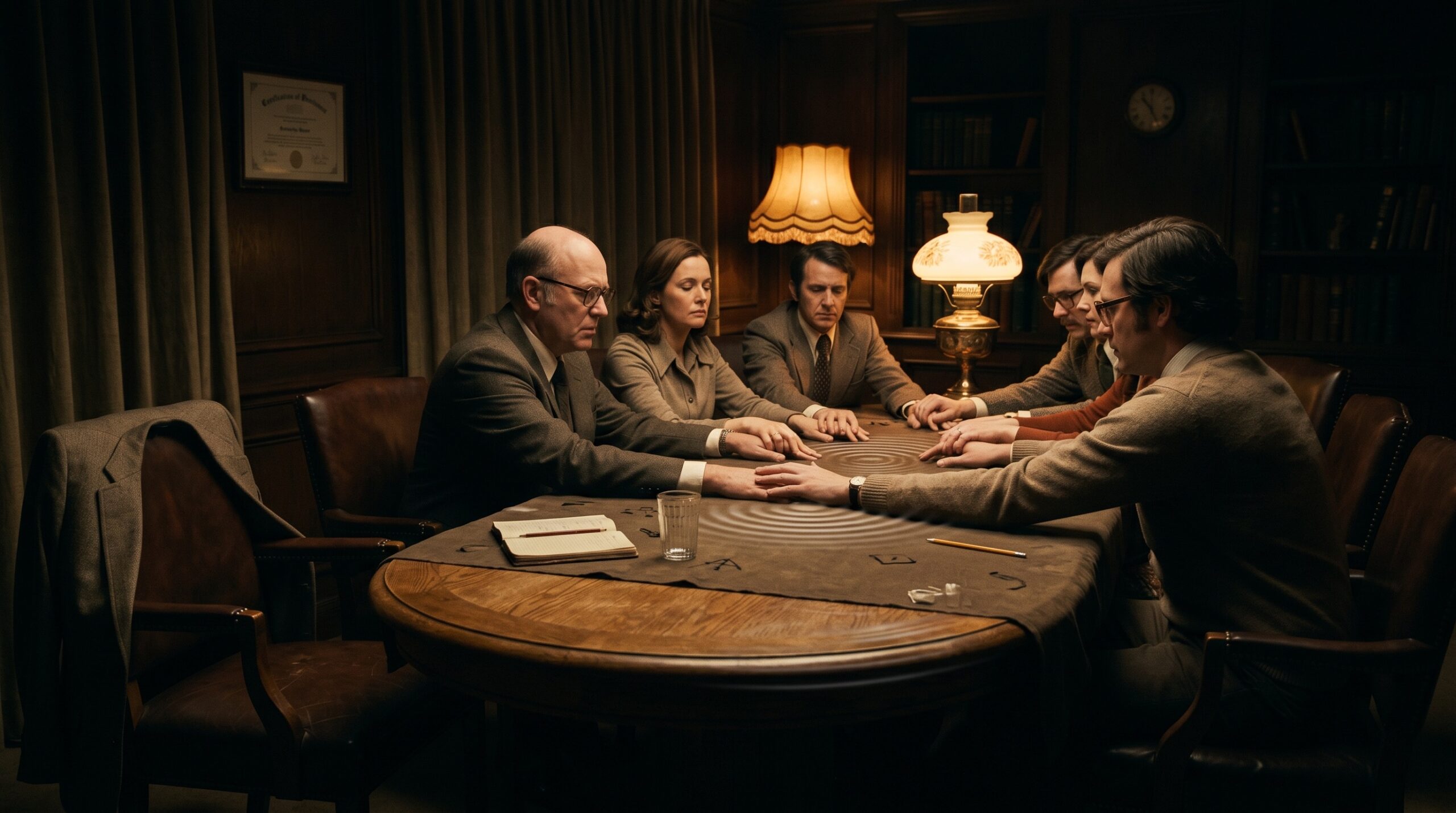
    Few paranormal stories hit harder than the ones that sound reproducible. That is why the Philip Experiment ghost story refuses to die. A group of ordinary people gathered in the 1970s, invented a fake dead man, sat around a table feeding him attention, and then claimed the room began to answer back.

    The quick answer is that the Philip Experiment was a Toronto-area psychical research project in which participants created a fictional 17th-century character named Philip Aylesford and then held séance-style sessions until knocks, table movement, and apparent responses seemed to appear. The broad outline preserved by the standard historical summary of the Philip Experiment, retellings such as the long-running “how to create a ghost” explainer, and new social-media fascination after a viral reel treating the case like a real-world tulpa event have made it feel uncannily modern again.

    What makes the case so unnerving is not that a haunting may have happened. It is that the haunting, if anything happened at all, seems to have been invited into being by design.

    Why the Philip Experiment still feels dangerous

    Most ghost stories begin with a place. A house, a hospital, a battlefield, a hallway where something lingers. The Philip Experiment begins with intention. That is the part that gets under the skin. The group did not stumble into a presence. They sat down and tried to manufacture one.

    That idea has only become more potent in the internet age. A story about collective attention shaping reality lands differently now than it did in the 1970s. People raised on tulpas, egregores, manifestation discourse, and memetic ritual do not hear the Philip case as a quaint paranormal curiosity. They hear it as a prototype.

    It sits naturally beside stories like Antoine’s ghost photo, the Riverview pentagram image, and modern jinn obsession narratives. In each case, the real hook is not only whether the phenomenon is objectively real. It is whether attention itself starts to behave like a door.

    What the group said happened in the room

    The core setup is one of the strangest in paranormal history. Participants built out Philip Aylesford as a fully fictional biography — a man who never existed — and then focused on him through repeated group sessions. Later accounts say the group experienced raps, apparent yes-or-no responses, and table activity strong enough to turn a made-up ghost into a lasting legend.

    That structure is why believers remain fascinated. If a haunted house answers back, maybe the house was always carrying something. But if a nonexistent ghost begins producing effects, the implication feels darker. It suggests that concentrated belief, emotional energy, or some unknown group dynamic might be able to sculpt a presence where there was none before.

    Even readers who doubt every paranormal claim can feel why the story travels. It turns the séance from a method of contact into a method of construction. That is a much more unsettling possibility.

    Why tulpa culture keeps reviving the case

    The Philip Experiment has become internet-native because its logic matches the way online occult culture already thinks. Communities now talk casually about thoughtforms, entities fed by repetition, and symbols that gain force as more people participate in them. Philip sounds like a retro version of that entire worldview.

    Once framed that way, the old experiment stops looking dusty. It looks prophetic. A circle of people in a room rehearsing a fictional being into apparent existence feels like an analog ancestor of the modern belief that stories, symbols, and coordinated minds can thicken into something with agency.

    That is also why the case keeps pulling in readers who are not traditional ghost believers. It touches psychology, ritual, folklore, performance, and the uncomfortable suspicion that consciousness may be stranger in groups than it is alone.

    What the experiment can and cannot prove

    This is where the atmosphere gives way to limits.

    The Philip Experiment is a real story with real participants and documented claims. It is not, however, a settled proof that a ghost was literally created. Group expectation, unconscious movement, suggestibility, performance effects, selective memory, and the theatrical conditions of the séances all offer grounded ways to interpret what happened. The fictional nature of Philip makes the story more provocative, but not automatically more evidential.

    Still, that uncertainty is exactly why the case survives. It cannot be locked down cleanly either way. If nothing paranormal happened, the experiment still exposed how weird collective human behavior can become around ritual. If something did happen, then the implications are enormous. Either way, the room did not feel empty for long, and that is enough to keep Philip Aylesford wandering through the modern imagination like a ghost that may have been built rather than born.

  • Musallat and the Jinn Obsession Story Spreading Across the Internet

    Musallat and the Jinn Obsession Story Spreading Across the Internet

    Some hauntings are frightening because something appears in the room. The musallat jinn phenomenon is frightening because it suggests something has chosen the room, chosen the body, and may not be leaving.

    That is why the word musallat lands so hard online. Across TikTok clips, horror explainers, possession threads, and comment sections full of people swapping family warnings, the term is used to describe a jinn attachment defined not by one sudden shock but by obsession, oppression, and relentless proximity. In plain search terms, the musallat jinn phenomenon is the internet’s name for stories in which a jinn is believed to latch onto a person, household, or sleep state in a way that feels invasive, personal, and spiritually dangerous.

    And once you step into that rabbit hole, the story escalates fast. The fear is not just that a jinn exists. It is that it can fix its attention on someone. That it can follow. That what begins as dread, nightmares, paralysis, whispers, sexual menace, or irrational panic might not be random at all, but the first sign that the boundary has already been crossed.

    This is the part believers and doom-scrollers alike find hard to shake. A ghost story can feel local. A demon story can feel theatrical. Musallat stories feel intimate. They are about being singled out. They carry the ancient horror of possession but filter it through modern habits of isolation: the sleepless bedroom, the phone screen glowing at 3 a.m., the viral clip with thousands of comments insisting, with unnerving certainty, that they have seen this pattern before.

    What people mean when they say musallat

    The term does not circulate online as a tidy academic category. It circulates as a warning.

    When people invoke musallat in internet discussion, they usually mean a hostile or obsessive spiritual attachment, often involving a jinn understood to be pressing in on a person’s life, mind, sleep, relationships, or body. The emphasis is not merely “there is a jinn.” The emphasis is “this presence is targeting someone and wearing them down.” That distinction matters, because it explains why the phrase carries more panic than ordinary supernatural talk.

    Within wider jinn lore, the category of dangerous or rebellious entities is already familiar. Readers trying to map the older cosmology often end up at references on figures like the ifrit in Britannica, where the jinn world appears not as a single flat concept but as a layered field of volatile beings, moral ambiguity, and spiritual threat. Musallat stories plug directly into that worldview. They are rarely told as neutral encounters. They are told as escalating pressure.

    That is one reason the phenomenon thrives online. The internet loves labels that feel both ancient and freshly dangerous. “Musallat” sounds specific, heavy, and inherited. It arrives with the authority of tradition, but it also behaves perfectly in a short-form horror ecosystem where people want a word that instantly turns vague terror into a named pattern.

    Why the internet cannot stop spreading it

    The musallat jinn phenomenon was almost built for algorithmic fear.

    A short clip can do the first half of the job. Someone whispers that they woke unable to move. Someone else shows a hallway, a dark doorway, a distorted face, or a half-heard sound from another room. Then the comments take over: This is jinn. This is attachment. This is musallat. Do not answer if it calls your name. Do not sleep without protection. The result is a folklore engine that runs in real time.

    TikTok’s own explainer-style content on what a jinn entity is helps show how the concept gets flattened and recirculated for mass audiences, while viral fear clips like “it’s a jinn guys run” demonstrate the much rougher version: panic first, lore second, certainty everywhere. Together they create the modern life of the story.

    That online life is not trivial. It changes the emotional scale. In a village, a possession rumor might belong to one family line, one healer, one local event. Online, the same pattern appears global. A teenager in London, a student in Karachi, a horror fan in Texas, and an insomniac in Jakarta can all stare at the same clip and feel they are looking at the same invisible category. The internet turns regional spiritual language into shared nocturnal infrastructure.

    The effect resembles what happens with old protective traditions and occult objects that survive because people still want a barrier between themselves and unseen attack. That instinct is why stories about ancient demon traps in Mesopotamia or the charged symbolism of Ottoman talismanic shirts still resonate now. Different cultures, different artifacts, same stubborn human impulse: if the unseen can reach in, then surely some ritual can push back.

    Why musallat feels worse than a normal haunting

    Most modern paranormal content teaches viewers to fear the moment of manifestation: the shadow in the corner, the door moving, the figure caught on camera. Musallat stories push the terror deeper. They are about occupation.

    That shift is everything.

    An ordinary ghost tale gives the listener distance. The entity may appear, but it is still “over there.” Musallat narratives close that distance until the horror becomes bodily and routine. The signs people list are often intensely personal: pressure on the chest, erotic dreams, compulsive fear, hearing a name called, a crushing sense of being watched while half-awake, sudden aversion to prayer, fractured sleep, or the feeling that one’s will is being eroded by repetition. Whether those experiences are interpreted as spiritual, neurological, psychological, or all three at once, the narrative form is stronger because it invades the private mechanics of selfhood.

    This is also why musallat stories merge so easily with sleep-paralysis lore. Few experiences feel more like supernatural assault than waking inside your own body and finding it unresponsive. A piece like this discussion of jinn imagery during sleep paralysis and REM states shows how readily these experiences are framed through spiritual language when the event itself already feels invasive, hyper-real, and impossible to dismiss in the moment. The body freezes; the imagination does not.

    For believer-first audiences, that overlap does not reduce the fear. It can intensify it. The possibility that certain altered states are precisely where a hostile presence presses closest only makes the old warnings feel more relevant.

    The occult aesthetic of being singled out

    There is another reason the musallat jinn phenomenon keeps growing: it offers an explanation for dread that feels larger than stress but more personal than abstract evil.

    A lot of online horror now is about systems — simulations, liminal spaces, cursed media, surveillance, hidden programs. Musallat is more primitive and more intimate than that. It says the danger is not in the system. The danger is in the attention. Something has noticed you.

    That is why the stories often blur into rules, cautions, and tiny domestic rituals. Keep certain verses close. Avoid certain places. Do not sleep in a state of spiritual neglect. Do not respond to voices in empty rooms. Do not treat recurring dreams as meaningless. Even for people who do not fully believe, these story-fragments have force because they offer a script for moments that otherwise feel shapeless.

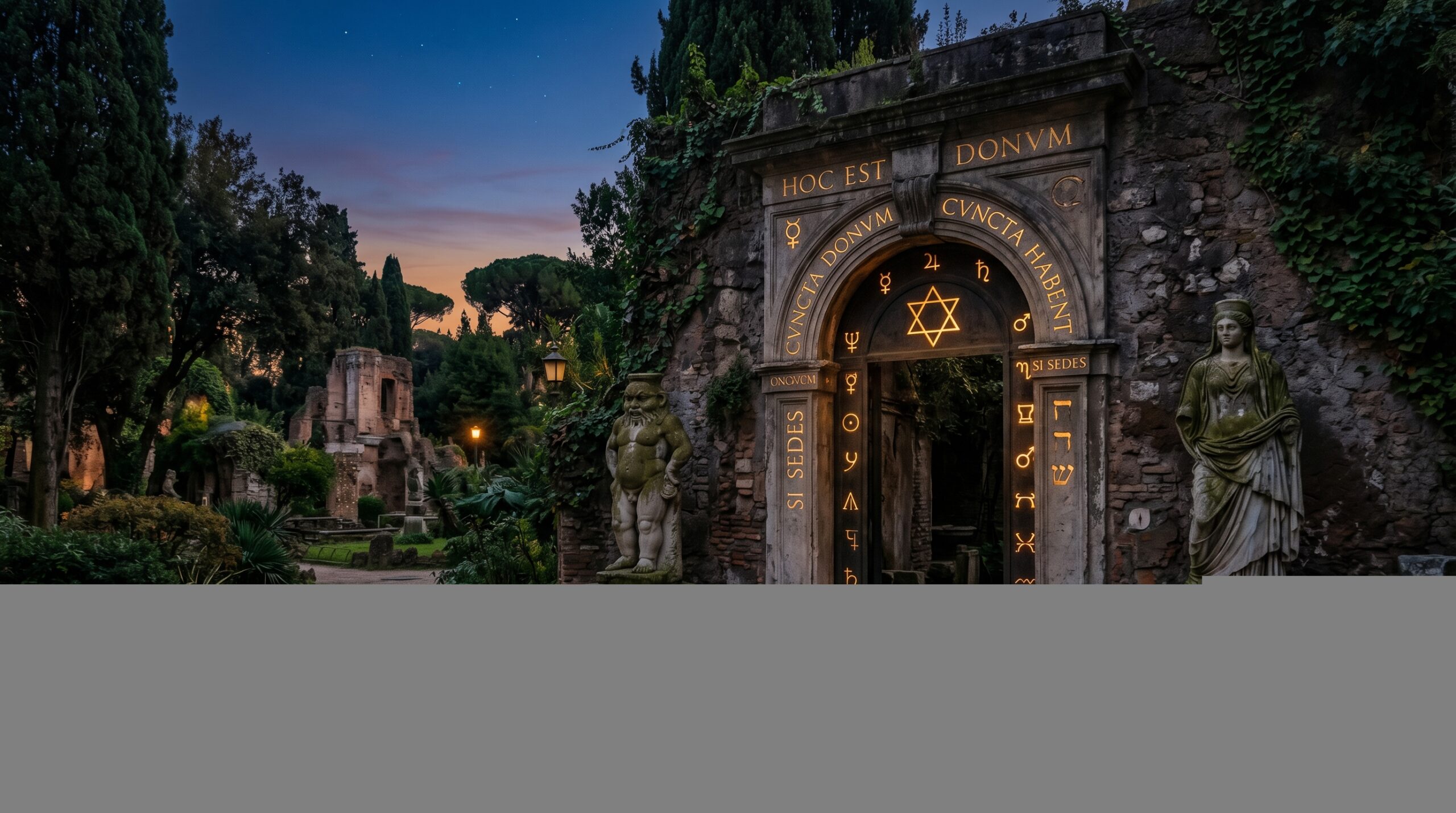
    The same emotional architecture appears in older magical spaces like Rome’s alchemical Porta Magica, where symbols seem to promise access and protection at once. What makes musallat different is that it strips away the monument and leaves only the exposed person. The battlefield is the bedroom, the mirror, the night terror, the marriage, the mind.

    That is modern enough to go viral and old enough to feel inherited.

    Why these stories spread even among people who are not sure they believe

    The internet is full of people who say they are skeptical right before admitting they still will not watch certain clips alone.

    Musallat survives in that territory because it is emotionally legible even to outsiders. You do not need to know the full theology of jinn to understand the dread of persistent unseen attention. You do not need a formal doctrine of possession to understand why repeated sleep terror, sexual menace in dreams, abrupt personality change, or a house soaked in tension can start to feel narratively connected.

    In that sense, musallat functions less like a niche term and more like a sticky interpretive frame. It gathers scattered experiences under one name. Once a name exists, more people notice the pattern. Once more people notice the pattern, the name acquires even more authority. That is how internet folklore hardens.

    It also helps that the story lives at the intersection of ancient cosmology and digital intimacy. The same feeds that deliver beauty tutorials and football clips also deliver whispered exorcism stories and midnight testimonies. That collision makes the old fear feel current. The musallat jinn phenomenon is not archived belief. It is live belief, performed and reinforced in public.

    Even communities centered on totally different mysteries understand the attraction of that kind of ongoing, immersive narrative. The appeal is not far from why the still-active spectacle of the Heaven’s Gate website remaining online continues to disturb people: the feeling that a belief system did not end when modernity told it to end.

    The grounded view, and why it still does not fully kill the story

    A grounded reading of the musallat jinn phenomenon has to admit several layers at once.

    First, jinn belief is part of a serious and long-standing religious and cultural framework, not just a meme factory for internet horror. Second, many of the experiences now folded into musallat talk — especially night terror, chest pressure, sensed presence, and waking immobilization — overlap strongly with known sleep phenomena, stress states, trauma responses, and the frightening cognitive spillover of REM disturbance. Third, once a person is immersed in a spiritually charged interpretive community, ambiguous experiences can become easier to read as attachment, obsession, or attack.

    None of that erases the force of the phenomenon. It explains why the stories remain persuasive.

    The musallat jinn phenomenon spreads because it gives terrifying experiences a shape, a villain, and a logic. For some people, that logic feels spiritually true. For others, it is a folklore vessel carrying sleep terror, grief, anxiety, and inherited fear in a language vivid enough to survive translation onto social media. Either way, the pattern is real in the only sense viral mysteries need in order to endure: people keep experiencing something, naming it, and warning each other.

    And that may be why musallat stories remain harder to dismiss than generic internet horror. They do not just offer a jump scare. They offer an interpretation of vulnerability itself. Maybe the source is spiritual. Maybe it is neurological. Maybe the most disturbing cases live in the unstable territory where belief, bodily experience, and old warnings overlap. What keeps the story alive is that, in the dark hours when people feel watched, chosen, or pinned in place, that distinction can stop feeling theoretical very quickly.

  • Why Neo-Sannyasa Videos Still Look Like a Cult Nightmare to Outsiders

    Why Neo-Sannyasa Videos Still Look Like a Cult Nightmare to Outsiders

    The first time many people see old Neo-Sannyasa footage, they do not react as if they are watching a normal spiritual movement. They react as if they have stumbled into a dream where everyone is smiling too hard, moving too freely, and surrendering to something they cannot quite name.

    That reaction is why the phrase neo sannyasa osho cult keeps resurfacing in search, social clips, and comment threads. People are trying to understand why videos from the Rajneesh world still hit with such force decades later. The short answer hidden inside the atmosphere is simple enough: Neo-Sannyasa was Osho’s modern reworking of sannyas, but to outsiders the robes, ecstatic group practices, total devotion, and charismatic center of gravity still read like classic cult imagery almost instantly.

    And the footage really is hard to shake. Orange and maroon clothing. Tearful laughter. Mass meditation. Cathartic movement. Faces lifted toward a leader who is framed less like a lecturer than like a magnetic event. Even before anyone knows the timeline of Bhagwan Shree Rajneesh, the Oregon commune, or the internal politics of the movement, the visual code is already working. The body recognizes collective surrender faster than the intellect can label it.

    That is why these videos never stay buried for long. They return every few months in compilations, documentaries, YouTube rabbit holes, and TikTok reactions because they provoke the same uneasy question: where is the line between spiritual breakthrough, psychological theater, and a cult that knows exactly how to aestheticize devotion?

    What Neo-Sannyasa actually was

    To understand why outsiders call it a cult so quickly, you have to see what Neo-Sannyasa was trying to be.

    In the broadest terms, Neo-Sannyasa referred to the spiritual path built around Osho, also widely known earlier as Bhagwan Shree Rajneesh. Public summaries of the Rajneesh movement describe a global community that blended meditation, therapy culture, iconoclastic philosophy, and intense devotion around the guru himself. The movement’s own framing, including material from Osho Online on neo-sannyas, presents it less as a rigid religion than as an initiation into a transformed way of being.

    But this is exactly where the outsider unease begins. A movement can describe itself as liberation, awakening, or conscious experimentation and still look, from the outside, like highly stylized surrender to a charismatic center. Neo-Sannyasa footage carries all the visual markers that trigger modern cult alarms: uniform-like clothing, emotionally intense group ritual, confessional energy, separation from ordinary social expectations, and a leader whose presence appears to rearrange everyone else in the room.

    That does not prove every outsider reading is sufficient. It does explain why the reading appears so fast.

    Why the videos still feel so potent

    A lot of old spiritual footage looks dated. Neo-Sannyasa footage often looks dangerous.

    Part of that is the emotional temperature. These are not calm scenes of private contemplation. They are often scenes of release. Bodies shake. People cry, laugh, collapse, dance, scream, embrace, or move through guided emotional extremes. To committed participants, that can read as breakthrough. To everyone else, it can look like ritualized destabilization.

    That gap in interpretation is the whole story.

    What makes old Osho-era video so memorable is not just the doctrine behind it, but the choreography of consent it seems to display. The group is not merely assembled. It is tuned. You can feel the social voltage through the screen. People mirror each other. They amplify each other. They permit themselves things they might never do alone. That is one of the oldest engines of ecstatic religion and one of the oldest warning signs in cult history. The same mechanism can produce catharsis, transcendence, obedience, and dependence without announcing which one is taking over.

    It is the same reason internet audiences remain fascinated by belief systems that seem to continue glowing long after mainstream culture assumes they should have gone cold. The eerie persistence of the Heaven’s Gate website still being online works on people for a similar reason: it makes a supposedly finished movement feel present again, complete with its own sealed logic and emotional weather.

    The cult-coded visual language outsiders cannot ignore

    Neo-Sannyasa does not just survive as text. It survives as imagery.

    That matters because imagery is where cult suspicion usually hardens first. Outsiders do not begin by reading philosophical nuance. They begin by seeing rows of similarly dressed followers, choreographed vulnerability, public surrender, and a spiritual hierarchy so visible that it feels architectural. Once that impression lands, every additional detail is interpreted through it.

    Modern audiences are especially primed for this because they already know the aesthetics of manipulation. They have watched documentaries about closed groups, self-help empires, secretive wellness circles, and influencer-led spiritual communities. So when they encounter Rajneesh footage, they are not seeing it in historical innocence. They are seeing it through a visual library built from NXIVM, Scientology, megachurch spectacle, therapy abuse stories, and algorithmic charisma.

    That is why the comparison engine starts instantly. If a movement looks like it produces identity through devotion, costume, language, and emotional surrender, the cult label arrives before the details do. The social-media age only intensifies that reflex. A clip does not need a syllabus. It only needs enough evidence of total atmosphere.

    That is also why stories about modern influence systems, from Scientology’s strange relationship with TikTok to other belief ecosystems that spread through image management and repetition, feel so relevant here. The core anxiety is the same: when does a spiritual message stop looking like wisdom and start looking like an immersive system designed to absorb the self?

    Why the Rajneesh footage still travels so well online

    The internet rewards images that feel like recovered evidence from an alternate reality. Neo-Sannyasa footage has that quality in abundance.

    It looks too theatrical to be ordinary and too sincere to be simple parody. That combination is internet gold. Viewers can project almost anything onto it: liberation, mass hypnosis, eroticized devotion, communal healing, psychological experimentation, authoritarian soft power, utopian longing, or a live demonstration of how humans willingly dissolve into collective identity. It is not far from the reason strange institutional artifacts like the Great Seal Bug keep resurfacing too: once a symbol starts looking like a vessel for hidden power, people cannot stop staring at it.

    And the deeper you go, the stranger it gets. Reading beyond casual reaction clips quickly leads into the historical sprawl of Rajneesh as a figure, his teachings, his controversies, and the many national contexts in which Neo-Sannyasa took on a life of its own. Even a more specialized source like this academic discussion of the Neo-Sannyas tradition in modern Russian culture hints at how far the movement’s imagery and ideas traveled beyond the most infamous media snapshots.

    That breadth complicates the simple “cult nightmare” reading without erasing it. The movement was not merely a single viral image. It became a transnational spiritual style, a therapeutic experiment, a commercial ecosystem, a scandal magnet, and for many former insiders and critics, something much darker.

    Which is exactly why the footage keeps generating debate instead of settling into one clean interpretation.

    The magnetic center: Osho himself

    No discussion of the neo sannyasa osho cult question works without acknowledging the obvious center of gravity: Osho.

    The public history around Rajneesh/Osho is one reason outsiders distrust the movement on sight. Charismatic leaders do not have to shout to dominate a space. Sometimes the calm ones are more unnerving. Osho’s persona in surviving footage often feels controlled, amused, detached, and strangely absolute. He appears not merely to persuade but to authorize a new emotional climate around himself.

    That is cult-catnip in the most literal visual sense. Followers are not just listening to a teacher. They appear to be orienting their inner life around a figure whose approval, presence, and metaphysical authority carry extraordinary weight. Once a viewer senses that asymmetry, everything else in the footage sharpens: the robes become signs of identity transfer, the ecstatic exercises become signs of surrender, the smiles become harder to read.

    Even people who know very little about the movement can feel that structure intuitively. And once they feel it, they begin to watch the footage less like anthropology and more like evidence.

    The grounded view, and why it still leaves the imagery unsettling

    A grounded reading has to resist both lazy caricature and naive romanticism.

    Neo-Sannyasa was not simply an internet horror aesthetic accidentally captured on tape. It was a real spiritual movement with a genuine global following, distinct teachings, meditation practices, and participants who often described their experience as transformative rather than merely coercive. The Rajneesh movement also exists within a broader twentieth-century landscape of spiritual experimentation, therapy culture, anti-traditional religiosity, and cross-cultural reinvention.

    But the grounded view also cannot pretend the outsider reaction is baseless. The movement’s history, internal power structure, and unmistakably charismatic center give people plenty of reason to use cult language, especially when they are responding to footage designed around visible emotional intensity and collective devotion. In other words, the imagery does not just happen to look cult-like. It activates patterns audiences have learned, rightly or wrongly, to fear.

    That is why the videos still work. They capture a form of spiritual life that appears to promise freedom while looking, from the outside, like submission. Maybe some participants found awakening in that world. Maybe others found manipulation, dependency, or a social machine stronger than any private doubt. What remains on screen is the unresolved tension between ecstasy and control.

    And unresolved tension is exactly what keeps old movements alive online. The neo sannyasa osho cult conversation survives because the footage never settles down into a harmless archive. It still feels active. It still asks the viewer the same uncomfortable question: are you watching people break free of the ordinary self, or are you watching the ordinary self get replaced by a system with a smile on its face?

  • Why the Riverview Hospital Pentagram Photo Feels Like the Start of a Haunting

    Why the Riverview Hospital Pentagram Photo Feels Like the Start of a Haunting

    Some places look haunted even before anyone tells you the stories. Then there are places like Riverview Hospital, where one strange image can make the whole building feel newly dangerous. That is why the riverview hospital pentagram photo lingers in people’s minds: it appears to show a large star-shaped symbol marked outside a hospital already wrapped in whispers, and the combination feels less like random decay than the opening scene of something ritualistic.

    The direct answer is simple enough to say early: the image that keeps circulating from Riverview seems to show a prominent geometric symbol on the ground outside the property, and viewers cannot agree whether it is a pentagram, a Star of David, or some rough hybrid created by angle, weathering, and expectation. But that uncertainty is exactly what gives the photo its charge. If it were clearly one thing, the mystery would shrink. Instead, it sits in that unnerving zone where a haunted location and a loaded symbol begin amplifying each other.

    The central image, preserved in this widely shared Flickr photo, does not need motion, witnesses, or a full occult backstory to hit hard. It only needs the right setting. A symbol in a parking lot means one thing outside a strip mall. Outside an institution associated with confinement, suffering, rumor, and ghost stories, it feels like a message. Believers do not look at it and see simple geometry. They see intent.

    That is how the rabbit hole opens so fast. Was it drawn as part of a ritual? Was it a dare, a prank, a piece of trespasser folklore, or a deliberate attempt to make an already notorious site feel even more cursed? And if the symbol was placed there by someone who wanted attention, why does the image still feel unsettling long after the act itself would have been finished? Riverview does what the best haunted places always do: it turns a static object into a story engine.

    Why Riverview makes the symbol feel bigger than it is

    Abandoned hospitals carry a special kind of dread. They are not just ruined buildings. They are spaces people instinctively associate with restraint, diagnosis, sedation, grief, and the possibility that terrible things happened behind locked doors. Once a location has that emotional charge, every stain, broken window, and scrap of graffiti starts to look like evidence of something continuing after the institution itself died.

    That atmosphere matters here. Riverview has been described in haunted-travel coverage such as this piece on the former Virginia psychiatric hospital’s reputation, and whether readers take every haunting claim literally is almost secondary. The reputation does the work. The site arrives preloaded with dread, so a symbol on the pavement does not stay a symbol for long. It becomes a clue.

    This is why believers respond so strongly to images like this. A haunting is rarely built from one airtight piece of evidence. It is built from accumulation: a place with a dark backstory, a photo with visual tension, a symbol with old spiritual associations, and a public already primed to imagine that certain buildings hold onto what happened inside them. The same emotional logic is what gives pieces like Antoine’s Restaurant ghost photo their staying power. One image can become an entire atmosphere if the setting is right.

    Pentagram or Star of David?

    The argument over what the Riverview marking actually is may be the most important part of the whole story.

    Call it a pentagram and the image immediately tilts toward the occult. Pentagrams are so deeply embedded in horror culture that many people react before they even count the points. They do not just see a star. They see summoning, ritual, protection circles gone wrong, teenage occult experiments, black candles, whispers in condemned corridors. That reaction is emotional, cultural, and automatic.

    But many viewers do not see a five-pointed figure at all. They see a six-pointed star or an overlapping-triangle design more consistent with a Star of David. That matters because the Star of David has a long and distinct history that is not reducible to horror-movie symbolism. It can be religious, cultural, historical, and identity-based. The second someone says, “Wait, that may not be a pentagram,” the story changes. The image stops being only ominous and becomes contested.

    And contested symbols are often more potent than obvious ones. Once the internet starts arguing over shape and meaning, the photo becomes harder to file away. The mystery gains layers. Was the mark misread because people expected occult imagery at a haunted hospital? Was a six-pointed design turned into a pentagram in retellings because “pentagram outside haunted asylum” sounds like instant folklore? Or does the roughness of the symbol invite projection from both sides?

    That tension is what links the Riverview image to other symbol-heavy mysteries. In stories like Porta Magica, Rome’s alchemical door, symbols feel powerful because they suggest hidden intent even when the full meaning remains out of reach. People do not just want to know what a sign is. They want to know who put it there, what they believed, and what they were trying to open.

    The real rabbit hole is intent

    A star on the ground is not automatically supernatural. But a star on the ground at a haunted hospital instantly raises the question of purpose.

    That is where the Riverview photo becomes sticky in the believer imagination. If the mark was casual graffiti, why choose that form? If it was ritual theater, why choose that location? If it was meant as a joke, why does the joke still land with such force years later? People are drawn less to the geometry itself than to the possibility that somebody wanted the site to feel activated.

    This is also why occult language enters the conversation so quickly. A shape associated with ritual, laid against a site associated with trauma, creates the sense that old energy is being invited, channeled, mocked, or awakened. Even readers who do not fully buy that idea understand its dramatic logic. Haunted architecture plus deliberate symbol equals a story people cannot resist finishing in their heads.

    There is a deeper cultural habit at work too. We tend to treat old institutions as containers. We imagine they hold memory, suffering, and residue. Add a symbol and suddenly the place does not just contain the past; it appears to have been addressed. That leap from “abandoned” to “engaged” is where folklore catches fire. It is the same instinct that drives fascination with protective signs, seals, and charged markings in stories about ancient demon traps in Mesopotamia or hidden symbolic intent in the Great Seal bug Soviet listening device. A symbol can make people feel that a surface has become an interface.

    Why images like this survive online

    Most eerie photos die quickly because they give away too much or too little. The Riverview symbol image survives because it gives viewers just enough to argue over.

    It is clear enough to provoke a strong first impression and unclear enough to support multiple readings. That balance is perfect for haunted-internet longevity. One person sees proof of trespasser occultism. Another sees misidentified geometry. Another sees the entire thing as emotionally charged but mundane. The debate keeps the image alive because every interpretation makes the hospital itself feel more legendary.

    There is also something primal about symbols in ruined places. They suggest that even after institutions fail, people keep coming back to mark the ground, leave warnings, test boundaries, or rehearse old fears. Some symbols are widely read as signs of unity or connection, as broad guides such as this explainer on symbol meanings and unity note, but once those shapes appear in abandoned spaces, their emotional register changes. Context bends meaning. A figure associated with harmony in one setting can feel ominous in another.

    That may be the cleanest way to understand why the riverview hospital pentagram photo keeps pulling readers in. It may not be terrifying because of what the symbol objectively is. It may be terrifying because of where it appears and what kind of place Riverview has become in the public imagination.

    What can actually be said about the photo

    Grounding the story at the end does not make it less interesting. It just narrows what the photo can honestly carry. The available image does appear to show a large star-like marking outside Riverview Hospital, but from the photo alone, there is no public chain of evidence that establishes who made it, when it was made, or what the maker intended. The strongest supported claim is also the one that explains the image’s durability: people are reacting to a real symbol at a real site with a haunted reputation, not to a fully documented occult incident.

    That also means the meaning of the mark remains open. Depending on how a viewer reads the geometry, it may resemble a pentagram, a Star of David, or an imprecise star drawn without any consistent symbolic program behind it. Riverview’s reputation as a haunted former hospital makes the darker interpretation feel immediate, and that is why the image keeps circulating. But the photo does not settle ritual intent, supernatural activity, or a single agreed symbol. It leaves the hospital where the most memorable haunted places always seem to live: in the space between what is visible on the ground and what people feel when they look at it.

  • Rome’s Porta Magica: The Alchemical Door That Still Stands

    Rome’s Porta Magica: The Alchemical Door That Still Stands

    Rome’s Porta Magica is real. You can point to it, photograph it, and study the inscriptions carved into its stone. What is less certain is the larger legend that has grown around it: that this doorway preserves the secret of alchemical transmutation, or that it was created after a mysterious adept vanished from a Roman villa leaving behind gold and a coded manuscript.

    That mixture of hard fact and unstable story is exactly why people keep returning to it. Right now the Porta Magica is circulating again through occult-focused Reddit posts and the wider social-media ecosystem that loves objects balancing history, secrecy, and visual strangeness. The doorway offers all three at once. It is not an invented internet myth. It is a surviving 17th-century monument. But the strongest claims attached to it remain disputed, symbolic, or impossible to verify cleanly from the historical record.

    For related context, see Antoine’s Restaurant Ghost Photo: What the Viral New Orleans Images Really Show and Ancient Demon Traps in Mesopotamia? The Bowls Buried Beneath the House.

    What the evidence shows is compelling enough on its own: the Porta Magica, also called the Magic Portal or Alchemical Door, is the best-known surviving remnant of the Villa Palombara in Rome, a property associated with the nobleman Massimiliano Palombara and with the serious alchemical culture of baroque Europe. Its inscriptions are real. Its symbolism is deliberate. Its reputation as a threshold to hidden knowledge is historical. Whether it ever encoded a practical secret for making gold is another matter entirely.

    What exactly is the Porta Magica?

    The Porta Magica is a stone doorway from the former Villa Palombara, once located on Rome’s Esquiline Hill. The villa itself is gone. The portal survived, was preserved, and today stands as one of the strangest small monuments in the city: not a grand church façade or triumphal arch, but a single doorframe covered with inscriptions, symbols, and the lingering suggestion that it once guarded more than a garden wall.

    That matters because modern retellings often make the object sound older, vaguer, or more fantastical than it really is. The Porta Magica is not an ancient Roman ruin from imperial antiquity, and it is not some unexplained monolith of unknown origin. It belongs to the late 17th century, usually dated to around 1680, and to a very specific intellectual world: one in which aristocrats, experimenters, mystics, and learned eccentrics could pursue alchemy as a serious mix of natural philosophy, spiritual metaphor, and elite obsession.

    Even without the legend, the portal is unusual. A doorway is normally one of the most functional things in architecture. This one seems designed to advertise secrecy. Its surface is dense with inscriptions and esoteric signs. It looks less like a decorative feature than like a statement: entry here is not merely physical. Something about this threshold concerns transformation.

    Why people are talking about it again now

    The Porta Magica has the exact shape of a modern viral mystery. It is visually striking, easy to summarize in a sentence, and attached to a promise of hidden knowledge. Recent attention has been driven by strong engagement in occult-focused online spaces, including Reddit discussion that treated the “Magic Portal” as one of those rare cases where the eerie object in the image is not fictional but undeniably there.

    The broader social context helps too. Occult imagery travels easily now, especially when it crosses over with historical travel imagery and short-form video culture. A ruined abbey can feel atmospheric. A skull-lined church can feel macabre. But a real Roman doorway allegedly tied to alchemists and secret formulas has a sharper hook. It invites viewers to imagine that the code is still waiting in plain sight.

    That does not mean anything new has been discovered. The current wave is better understood as renewed attention, not new evidence. The monument is old. The fascination is contemporary.

    Who built it, and why?

    The portal is tied to Massimiliano Palombara, Marquis of Pietraforte, the owner of Villa Palombara. He is the central historical figure behind the site’s reputation. Palombara is generally remembered not simply as a Roman nobleman, but as one with serious interests in alchemy and related esoteric ideas. In other words, the alchemical association is not a modern fantasy pasted onto an ordinary building after the fact. It belongs to the monument’s historical setting.

    That said, historians are firmer on some points than others. Palombara’s interest in alchemical thought is well established in broad terms. The exact motive behind the portal’s inscriptions is less certain. Was it a personal statement of belief? A monument to a particular alchemical event or text? A kind of encoded philosophical program? Possibly some combination of all three.

    The broader context matters here. In the 17th century, alchemy was not merely the laughable pursuit that later caricatures make it seem. It sat at the edge of several serious pursuits at once: chemistry before modern chemistry, spiritual speculation before modern psychology, and elite intellectual networking before scientific disciplines hardened into their present forms. An educated nobleman could take alchemical symbolism seriously without imagining himself to be living in pure fantasy.

    That is one reason the portal still resonates. It comes from a period when matter and meaning had not yet fully split apart. To study metals, planets, sacred names, and hidden correspondences could still feel like part of the same search.

    The vanished alchemist legend

    The most famous story attached to the Porta Magica is also the hardest to verify. In later retellings, a mysterious alchemist or adept came to Villa Palombara, often described as a stranger with unusual knowledge. He wandered the grounds in search of a special herb or substance, succeeded in performing some kind of transmutation, and then vanished—sometimes overnight, sometimes under suspiciously miraculous circumstances. What he left behind, according to the legend, was a trace of gold and a cryptic set of notes or formulas. Those formulas, unable to be fully understood, were carved into the portal.

    It is an almost perfect legend because it solves several emotional needs at once. It explains why the inscriptions exist. It flatters the idea that the secret was once genuinely within reach. And it preserves the mystery by ensuring the final key is missing.

    Some later traditions identify the mysterious figure with Francesco Giuseppe Borri, an adventurer, healer, and occult claimant whose life was dramatic enough to attract legend on its own. Borri is often drawn into discussions of the portal because he fits the role so well: learned, controversial, mobile, and immersed in the same world of alchemical aspiration. But “fits the role” is not the same thing as “historically proven.” The connection is widely repeated, not equally secure in every detail.

    This is the point where many modern tellings stop being careful. The legend may preserve echoes of real relationships, real conversations, or real texts circulating in Palombara’s milieu. It may also have been expanded and polished by later writers who understood exactly how irresistible the story was. Historians can describe the tradition. They cannot simply certify the vanished alchemist episode as straightforward fact.

    What historians can actually verify

    Several things about the Porta Magica are solid.

    First, the monument itself is genuine. There is no question that the doorway exists, belongs to the late 17th century, and is tied to the former Villa Palombara.

    Second, its association with alchemical culture is real. This is not an arbitrary modern label based on a spooky appearance. The inscriptions and symbols are part of a recognizable esoteric and alchemical vocabulary.

    Third, Massimiliano Palombara’s interest in these matters is historically plausible and central, not incidental. The site makes sense within his known intellectual reputation.

    Beyond that, certainty begins to thin out. Historians cannot verify that anyone at the villa successfully made gold. They cannot prove that the portal records a single dramatic night of revelation. They cannot offer one universally accepted translation that unlocks the doorway like a solved puzzle box.

    That is frustrating if you want a clean verdict. It is also what makes the object unusually honest as a historical mystery. There is enough evidence to anchor the story firmly in reality, but not enough to flatten every symbol into certainty.

    For outside reporting and background, start with Wanted in Rome on the Magic Door of Piazza Vittorio and Wikipedia overview of Porta Alchemica.

    What the symbols are believed to say

    The portal’s inscriptions are one reason it has never faded into being merely a curious old doorway. They invite reading, but not easy reading. Scholars and enthusiasts have long linked them to alchemical formulas, hermetic thought, and the symbolic language of transformation. The monument includes esoteric phrases and signs that seem to point toward the purification of matter, the union of opposites, and the progression through the classic alchemical stages or correspondences.

    One frequently noted feature is the use of symbols associated with the seven planetary metals: the old system that linked metals, planets, and cosmic order in a single symbolic framework. That alone places the doorway inside a worldview where matter was not inert stuff but part of a larger web of correspondences. Lead, gold, Mercury, Saturn, the sun, the moon: these were not isolated categories. They were pieces of a meaningful pattern.

    Another commonly mentioned feature is the presence of Hebrew elements and cryptic formulas, which lend the portal part of its charged atmosphere. To a modern viewer, this can look like random occult decoration. It is more accurate to say the monument appears to gather several respected languages of hidden wisdom into one stone surface: Latinized maxims, alchemical ciphers, planetary signs, and sacred-script prestige.

    But caution matters. The internet loves monuments that can be presented as “still undeciphered,” as if experts have no idea what they are looking at. That is too simple. Parts of the portal’s symbolism are interpretable. Its broad alchemical context is well understood. What remains difficult is not whether the symbols mean anything, but whether they amount to one practical recipe, one philosophical statement, one commemorative gesture, or several layers at once.

    In other words, the portal is not unreadable. It is overread.

    Why alchemy matters here

    To understand why the Porta Magica still feels powerful, it helps to set aside the cartoon version of alchemy. Yes, alchemists sought transmutation. Yes, the dream of turning lesser metals into gold was part of the tradition. But alchemy was also a language for purification, perfection, hidden order, and the possibility that nature concealed processes not yet understood.

    That makes a doorway an almost ideal alchemical monument. A threshold is where one state becomes another: outside to inside, ignorance to knowledge, impurity to refinement, seeker to initiate. The portal does not merely display alchemical ideas. It performs them architecturally. It asks the viewer to stand before a boundary and imagine that crossing it might alter what one is.

    This is part of what separates the Porta Magica from many other occult-adjacent artifacts. It is not just inscribed. It is a threshold. The symbolism does not float abstractly. It is attached to the physical act of passage.

    Whether Palombara intended that effect in a philosophical sense, a ritual one, or simply as a cultivated expression of elite esoteric identity, the result is the same: the monument feels like condensed alchemy, a whole worldview narrowed into a frame of stone.

    Why the doorway still feels uncanny

    The Porta Magica remains uncanny because it resists two flattening moves at once.

    The first is skepticism’s easy move: to dismiss it as nothing more than decorative eccentricity. That does not work, because the monument is too specific, too intentional, and too rooted in a real culture of alchemical thought.

    The second is credulity’s easy move: to declare it proof that a secret order cracked the code of nature and left the answer in public view. That does not work either, because the historical record is too fragmentary and the symbolism too layered for such certainty.

    So the portal lives in a narrow, durable space between those extremes. It is not fake. It is not solved. It is not an ordinary ruin. It is not evidence of supernatural power. It is a real artifact from a moment in history when people of status and education could dedicate serious attention to hidden correspondences in matter, language, and the cosmos.

    It also carries the melancholy of survival. The villa is gone. The world that produced the door has largely vanished with it. What remains is a stone threshold detached from its original setting, still dense with signs that imply a system larger than what we can now reconstruct. There is something inherently eerie about an object that survives more completely than the worldview required to read it.

    Are modern retellings exaggerating the story?

    Often, yes. The most common exaggerations are familiar.

    One is to describe the Porta Magica as if it were an ancient Roman portal from classical antiquity. It is not. Its strangeness belongs to baroque Rome, not imperial Rome.

    Another is to present the vanished-alchemist story as cleanly documented fact. It is not. It is best understood as a persistent legend attached to a historical site and a historically plausible alchemical circle.

    A third is to imply that the doorway proves alchemists succeeded in producing gold. That goes well beyond the evidence.

    And yet reducing the portal to “just a legend” misses the point too. The monument matters precisely because it shows that alchemy was not a fringe fantasy happening nowhere. It left marks in stone. It shaped patronage, architecture, symbolism, and reputation. The object is evidence of belief, ambition, and intellectual seriousness, even if it is not evidence that lead ever became gold.

    The real threshold

    The Porta Magica does not need to be a supernatural portal to be one of the most suggestive unexplained monuments in Rome. Its mystery is stronger than that. It stands at the threshold between what history can document and what human beings are always tempted to imagine beyond the document: the missing recipe, the vanished teacher, the night when the experiment worked.

    A third useful reference is NanoInnovation feature on Porta Magica’s alchemical history.

    The safest conclusion is also the most interesting one. Rome’s Alchemical Door is a real 17th-century monument, almost certainly created within a serious culture of alchemical and hermetic thought. The legend of the stranger who left behind gold and coded wisdom may preserve something of that world, but it cannot be verified in the dramatic form now repeated online. The inscriptions are meaningful, though not neatly reducible to a single solved message.

    Readers who want to continue can also explore Do Ancient Stone Chambers in the British Isles Really Resonate at 110 Hz?.

    That is why the monument still exerts such force. It offers a physical object where modern people expect only rumor. A real doorway survives. Real symbols remain on its surface. The promise attached to it—that nature has a hidden grammar, that transformation has a key, that a threshold can still separate the initiated from everyone else—has never entirely disappeared. The Porta Magica keeps that promise suspended in stone: visible, historical, and just out of reach.