Category: The Occult

  • Ancient Demon Traps in Mesopotamia? The Bowls Buried Beneath the House

    Ancient Demon Traps in Mesopotamia? The Bowls Buried Beneath the House

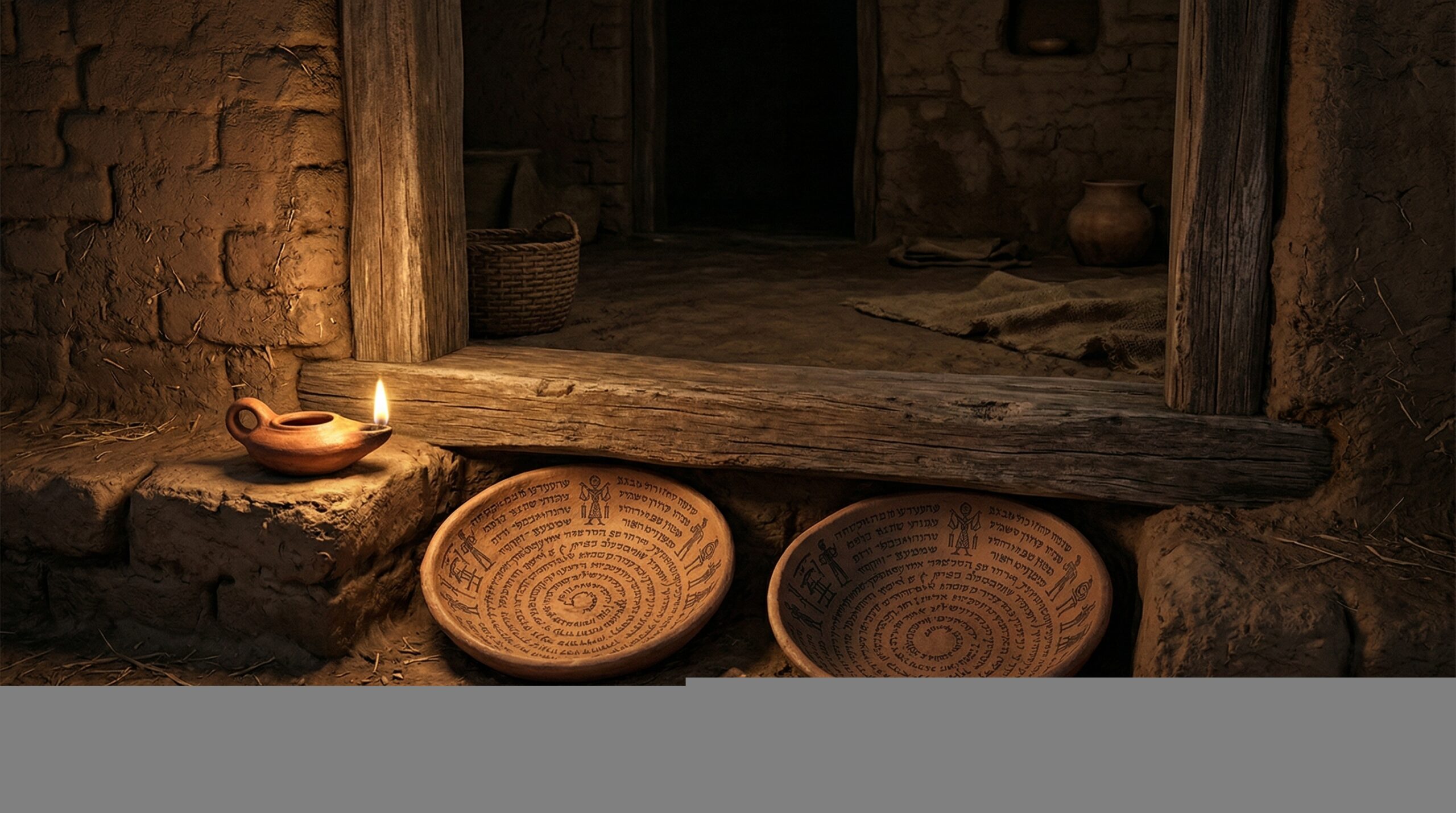
    The short answer is yes: the objects sometimes described as ancient “demon traps” were real, and archaeologists have recovered them in large numbers from late antique Mesopotamia. But the phrase is a modern dramatic gloss. These were not mechanical traps waiting to snap shut on some lurking creature. They were clay incantation bowls—ordinary-looking vessels covered in spiraling texts and buried beneath floors, near thresholds, and around homes to ward off curses, illness, misfortune, and hostile spirits.

    That tension between the sensational label and the documented reality is exactly what makes the subject so compelling. The image is vivid enough to feel cinematic: a household eating, sleeping, and raising children above a hidden bowl inscribed against demons. Yet the evidence itself is solid. These bowls belonged to real domestic ritual life. What remains less certain is how each household imagined the unseen dangers it feared, how literally those beings were understood, and how the objects functioned in day-to-day practice.

    For more context on the broader mystery, see Second Sphinx Under Giza? What the Claim Says, What the Scans Show, and What Remains Unproven and Heaven’s Gate Website Still Online? The 1997 Cult Site That Never Went Away.

    What these bowls were

    Scholars usually call them incantation bowls or magic bowls. Most surviving examples date not to the earliest ages of Babylon and Assyria, but to late antiquity—especially the Sasanian and early Islamic periods in what is now Iraq and nearby regions. They were typically made from plain clay and shaped like everyday bowls, then inscribed on the inside with text that coils inward from the rim toward the center.

    The languages matter. Many bowls are written in Aramaic dialects, including Jewish Babylonian Aramaic, Syriac, and Mandaic. That tells us this was not one isolated custom practiced by a single sect. Jewish, Christian, Mandaean, and other communities in the region seem to have used related forms of household protection, sometimes with overlapping formulas and shared ritual logic.

    The writing was the heart of the object. These bowls were not ornamental. Their force was believed to lie in the words themselves: prayers, adjurations, divine names, legal-style commands, warnings to harmful beings, and protections for named individuals. Some identify the person under threat. Some describe the affliction. Some read almost like buried injunctions, written into the fabric of the home.

    Why they were buried under houses

    A house in late antique Mesopotamia was more than shelter. It was where children were born, food was stored, bodies were tended through illness, and family life unfolded in a world where disease, infant mortality, jealousy, and sudden reversal were common facts of life. If danger could come from outside—or seep in through unseen means—then the threshold, floor, and courtyard became natural places to defend.

    Burying a bowl beneath the house did several things at once. It marked the dwelling as protected. It placed ritual power where a hostile force might be imagined to cross. And because the bowl was hidden, it may also have carried the force of secrecy: protection working silently, continuously, and out of sight.

    Some bowls were buried upside down, which is one reason modern writers so often reach for the word “trap.” The image is irresistible: the demon enters and is pinned beneath the overturned vessel. That interpretation may sometimes fit. But scholars tend to be more careful. In some cases the inverted placement may indeed have suggested confinement; in others, it may simply have been part of ritual convention. The evidence clearly shows protective use. It does not always reveal the precise picture users held in their minds.

    What people were trying to keep out

    The inscriptions reveal a world in which spiritual danger, bodily suffering, and domestic anxiety overlapped. Bowls were used against:

    • demons and malevolent spirits
    • curses sent by enemies
    • illness and wasting conditions
    • misfortune in the household
    • threats to mothers, infants, and fertility
    • harmful supernatural forces recognized in local belief

    In that sense, these bowls were not just about monsters. They addressed ordinary crises of life. A sudden fever, a dead child, a failing marriage, unexplained weakness, mounting bad luck—these were not always separated into neat modern categories of medical, emotional, and supernatural. For many ancient households, those realms bled into one another. A demon might be imagined not simply as a creature with a body and face, but as the unseen agency behind suffering.

    That is part of why the bowls still feel close to us. Their makers were trying to answer a question that has never really gone away: how do you protect a home from dangers you cannot see?

    Did people in Mesopotamia really believe in demons?

    Yes, though the answer is more layered than the modern word suggests. Ancient Mesopotamian religious life included many kinds of supernatural beings, and ideas shifted over long stretches of time. The bowl traditions emerged within a world shaped by multiple religious communities, inherited Near Eastern concepts, and local ritual practices. Demons belonged to that world, but so did angels, sacred names, exorcistic formulas, and appeals to divine authority.

    Modern retellings often flatten this into a simple contest between evil spirits and frightened believers. The historical picture is more textured. Some beings were considered actively hostile. Some were linked to specific forms of harm. Some bowl texts are less interested in narrative mythology than in immediate defense: protect this household, remove this affliction, silence this curse, keep this danger away.

    A useful comparison is the amulet, the protective prayer, or the blessed object in later traditions. The forms differ, but the impulse is familiar. People invoke sacred power to guard the threshold where ordinary life feels most vulnerable.

    What the inscriptions actually say

    Many bowl inscriptions have a strikingly formal tone. They often sound like a blend of prayer, legal decree, and curse reversal. A text may name the person to be protected, identify the spirit or threat, call upon God or angelic powers, and command the hostile force to depart. Some use the language of banishment, divorce, or binding, as though words written in clay could establish a line the enemy had no right to cross.

    Others are stranger. Some include rough drawings or bound figures at the center. Some refer to female demons associated in later discussion with sexuality, childbirth, or attacks on infants. Lilith often appears in modern summaries of the subject, but this is one area where caution matters. Certain bowls and related traditions do invoke figures associated with night danger and child-threatening harm, yet popular accounts often tidy a messier body of evidence into a single, neatly packaged demonology.

    That messiness matters. The bowls are real artifacts, but each one belongs to a particular linguistic and religious setting. There was no universal Mesopotamian handbook for trapping demons beneath the floor. There were many local practices sharing a recognizable family resemblance.

    Were they really meant to trap demons?

    Sometimes perhaps in a symbolic sense. Always, they were meant to protect.

    Readers who want to compare this story with outside reporting can start with The Met on Mesopotamian magic and Wikipedia on incantation bowls.

    The phrase “demon trap” captures part of the idea because some bowls do seem intended to bind or restrain a harmful presence. But the phrase also distorts the practice if it makes the object sound like a physical snare. These bowls worked through ritual language, sacred authority, and symbolic placement. They belong to the broader world of apotropaic magic—acts meant to turn away harm.

    That distinction does not make the history less eerie. If anything, it makes it stranger. These households were not building devices in the modern sense. They were creating a buried perimeter of written protection, a legal-spiritual barrier pressed into the earth beneath domestic life. The bowl was less a cage than a command: you may not enter here.

    What scholars are sure about

    On the central points, the evidence is strong.

    Scholars are confident that:

    • incantation bowls are genuine archaeological artifacts
    • many were placed in domestic settings
    • their inscriptions were intended to protect named people or households
    • they belong to a wider tradition of ritual defense against unseen harm
    • the practice appears across multiple religious communities in late antique Mesopotamia

    Museums and academic collections preserve many examples, and specialists have spent decades translating and comparing them. The core story is not speculative. People really did bury inscribed protective bowls in and around the places they lived.

    What remains uncertain

    The uncertainties begin when historians move from identifying the objects to reconstructing lived experience.

    Researchers still debate questions such as:

    • who wrote the bowls—trained scribes, ritual specialists, or semi-literate practitioners working from familiar formulas
    • how standardized the texts were
    • whether all inverted bowls were intended as symbolic imprisonment
    • how widespread bowl use was across different social classes
    • how closely these practices were tied to official religion versus local custom

    Archaeology also has its limits. Many bowls survive only in fragments. Some were recovered from disturbed contexts or removed long ago from their original settings. The result is a field where the broad outlines are clear, but the most vivid interpretations are not always the most secure.

    Why the bowls still feel eerie

    Part of it is visual. A clay bowl covered in spiraling script already carries the aura of a secret. Learn that it was buried beneath a floor to ward off demons, and the object begins to feel like something lifted from fiction.

    But the deeper unease comes from what the bowls record about ordinary fear. They were made in response to miscarriage, fever, envy, bad luck, sleeplessness, domestic strain, and the steady vulnerability of life before modern medicine. Their makers answered those pressures by placing protection directly into the structure of the house itself.

    For all the historical distance, that impulse is not alien. People still hang blessed objects by the door, recite prayers over children, carry charms, avoid places thought to hold bad energy, or mark a home against harm in whatever language their culture provides. The forms change. The need does not.

    Are modern retellings exaggerating the story?

    Often, yes.

    Online retellings tend to compress centuries of history into one sharp, spooky claim: ancient Mesopotamians buried bowls under their doorsteps to trap demons. There is truth in that sentence, but it strips away the context that makes the practice intelligible. These objects belonged to literate ritual cultures, not just to a ready-made horror image. They were used by Jewish, Christian, and Mandaean communities, along with others shaped by older Near Eastern traditions. They were tied to childbirth, illness, curses, household danger, and spiritual defense—not only to dramatic battles with monsters.

    Timelines are often blurred too. The phrase “ancient Mesopotamia” can make readers picture the deepest antiquity, the age of Gilgamesh or imperial Assyria. Most surviving incantation bowls are later than that. They remain fascinating, but they belong more accurately to late antique Mesopotamia.

    The real story beneath the floor

    The buried bowls of Mesopotamia are not proof that demons were objectively captured beneath ancient houses. They are proof that people believed unseen harm could be resisted, and that writing itself could become a form of defense. That is historically grounded, culturally rich, and unsettling enough without embellishment.

    If you want to keep going, Skinwalkers Caught on Camera? What Viral Videos Usually Show expands the picture from another angle.

    So if the phrase “ancient demon traps” catches the eye, the truth is both plainer and more interesting than the myth. The bowls were real. The fears behind them were real. The ritual words pressed into their surfaces were real. What remains uncertain is the invisible world their users believed surrounded them. That borderland—between household routine and supernatural threat, between buried object and living fear—is what still gives these bowls their enduring power.
  • The History of the Occult, From Ancient Magic to Modern Esotericism

    The History of the Occult, From Ancient Magic to Modern Esotericism

    The history of the occult is not one straight line and it is not one single tradition. It is a tangled story made of ancient temple rituals, hidden books, mystical philosophy, forbidden experiments, visionary movements, and recurring waves of fear. Across thousands of years, ideas now grouped under the word occult have moved through Mesopotamia, Egypt, Greece, the Islamic world, medieval Europe, Renaissance courts, secret societies, séance parlors, modern witchcraft circles, and the internet. What changes from era to era is not just the practice itself, but the meaning people assign to hidden knowledge.

    At its core, the occult concerns what is concealed. The word comes from the Latin occultus, meaning hidden or secret. In practice, it usually refers to systems of knowledge and ritual that claim access to unseen forces, symbolic truths, spiritual realities, or techniques of transformation that are not obvious to ordinary perception. That broad umbrella can include astrology, alchemy, ceremonial magic, Kabbalah, divination, spirit communication, mysticism, talismanic practice, and later movements such as Rosicrucianism, Theosophy, the Golden Dawn, and Wicca.

    This history matters because occult ideas have never stayed neatly outside mainstream culture. They have influenced religion, medicine, art, literature, science, psychology, and politics, sometimes quietly and sometimes in ways that changed entire eras. Even during periods of persecution, occult traditions survived by adapting, disguising themselves, or passing through elite and underground networks. If you want to understand why the occult still grips modern audiences, you have to start with the long arc of hidden knowledge itself, and with the recurring human suspicion that reality is stranger than it first appears.

    What the occult actually means

    Today, many people hear the word occult and think only of black magic, demons, satanic imagery, or forbidden ritual. Historically, that is far too narrow. The occult has often referred to bodies of hidden knowledge about how the cosmos works and how the human soul fits into it. In some periods, occult practice was treated as sacred philosophy. In others, it was denounced as fraud, heresy, or dangerous superstition. The category keeps changing, which is part of why the subject is so difficult to pin down.

    Scholars of Western esotericism often group the occult under a broader family of traditions that emphasize symbolic correspondences, initiation, secrecy, spiritual transformation, and the idea that hidden truths lie beneath visible reality. That means occult history is not only about spell books or ritual circles. It is also about attempts to read the universe as a coded system, where planets, metals, angels, sacred letters, dreams, and natural forces all reflect one another.

    For readers coming to this topic fresh, the simplest working definition is this: the occult is the pursuit of hidden knowledge, hidden forces, or hidden methods of transformation. Sometimes that pursuit is mystical and contemplative. Sometimes it is practical and ritualized. Sometimes it leans toward religion, and sometimes toward proto-science. Often it blurs those boundaries entirely.

    Ancient occult practices began as attempts to read a living cosmos

    The earliest roots of occult history appear in ancient civilizations that treated the world as charged with signs. In Mesopotamia, priests developed highly structured systems of divination, including celestial omen reading and extispicy, the interpretation of animal livers. These were not fringe hobbies. They were state-level technologies of prediction and meaning. Kings wanted to know what the heavens were saying, whether war was favored, and how disaster might be prevented.

    In ancient Egypt, ritual and magic were woven deeply into religion and daily life. Protective amulets, funerary texts, temple invocations, and sacred names all belonged to a worldview in which words and symbols could shape reality. Texts now associated with the Egyptian Book of the Dead were not casual superstitions. They were carefully preserved instructions for navigating the afterlife, aligning with divine order, and surviving cosmic judgment.

    These ancient systems matter because they reveal a pattern that persists throughout occult history: hidden knowledge is often treated as power, and power belongs to those who know how to interpret the signs. The priest, astrologer, diviner, or initiate becomes important not because he or she invents a fantasy world, but because that person claims to read the deeper structure beneath ordinary events.

    At this stage, the occult was not yet a separate category. Divination, temple ritual, healing, and sacred cosmology were woven into public religion and governance. Only later would these practices be split into approved knowledge and forbidden knowledge, a division that would shape the rest of occult history.

    The classical and Hellenistic worlds turned hidden knowledge into philosophy

    The Greek and Hellenistic periods added an intellectual framework that changed occult history forever. Mystery cults such as the Eleusinian Mysteries offered initiation into sacred rites that promised revelation, transformation, and a deeper relationship to death and rebirth. These traditions emphasized secrecy, symbolic drama, and experiential knowledge. To know was not just to think. It was to be changed.

    Later, in the cosmopolitan atmosphere of Hellenistic Egypt, especially Alexandria, ideas from Greek, Egyptian, Persian, and Jewish traditions mixed in fertile and often unstable ways. This produced some of the most influential currents in occult history, including Hermeticism, Gnosticism, astrological synthesis, and magical papyri. The writings attributed to Hermes Trismegistus framed the universe as a spiritually layered reality in which humans could ascend through knowledge, discipline, and divine insight.

    Hermetic thought introduced a language that would echo for centuries: as above, so below; the human being as microcosm of the cosmos; spiritual ascent through hidden wisdom; and the belief that symbols, planets, numbers, and elements interlock in meaningful ways. These were not just mystical slogans. They became the backbone of later ceremonial magic, alchemy, and esoteric philosophy.

    At the same time, Jewish mystical traditions laid early foundations for what would later develop into Kabbalah. Sacred language, numerology, angelology, and the hidden dimensions of scripture all contributed to a view of reality as layered, encoded, and spiritually active. That idea, that letters and names carry metaphysical force, would become one of the most enduring themes in occult thought.

    Occult traditions survived the medieval world by moving through religion, scholarship, and secrecy

    The medieval period is often imagined as an age of pure suppression, but the actual history is more complicated. Hidden knowledge did not disappear. It moved. It was translated, commented on, condemned, adapted, and quietly preserved. One of the most important bridges came through the Islamic world, where scholars translated and developed Greek philosophical, astrological, and alchemical texts. Without this transmission, much of what later fueled the European occult revival might have vanished.

    Alchemy matured significantly in Arabic intellectual culture, where it became both an experimental and symbolic art. While many later myths exaggerate the search for literal gold, alchemy was also a theory of matter, transformation, purification, and hidden processes in nature. It influenced medicine, metallurgy, and early natural philosophy. Some of that legacy would eventually feed directly into the scientific tradition, even as alchemy itself was later dismissed.

    Meanwhile, Jewish Kabbalah developed more fully in medieval Spain and Provence. The emergence of texts such as the Zohar turned mystical interpretation, divine emanation, and sacred language into a profound symbolic system. Kabbalah would later be adapted into Christian and occult contexts, often in distorted ways, but its core importance in esoteric history is enormous.

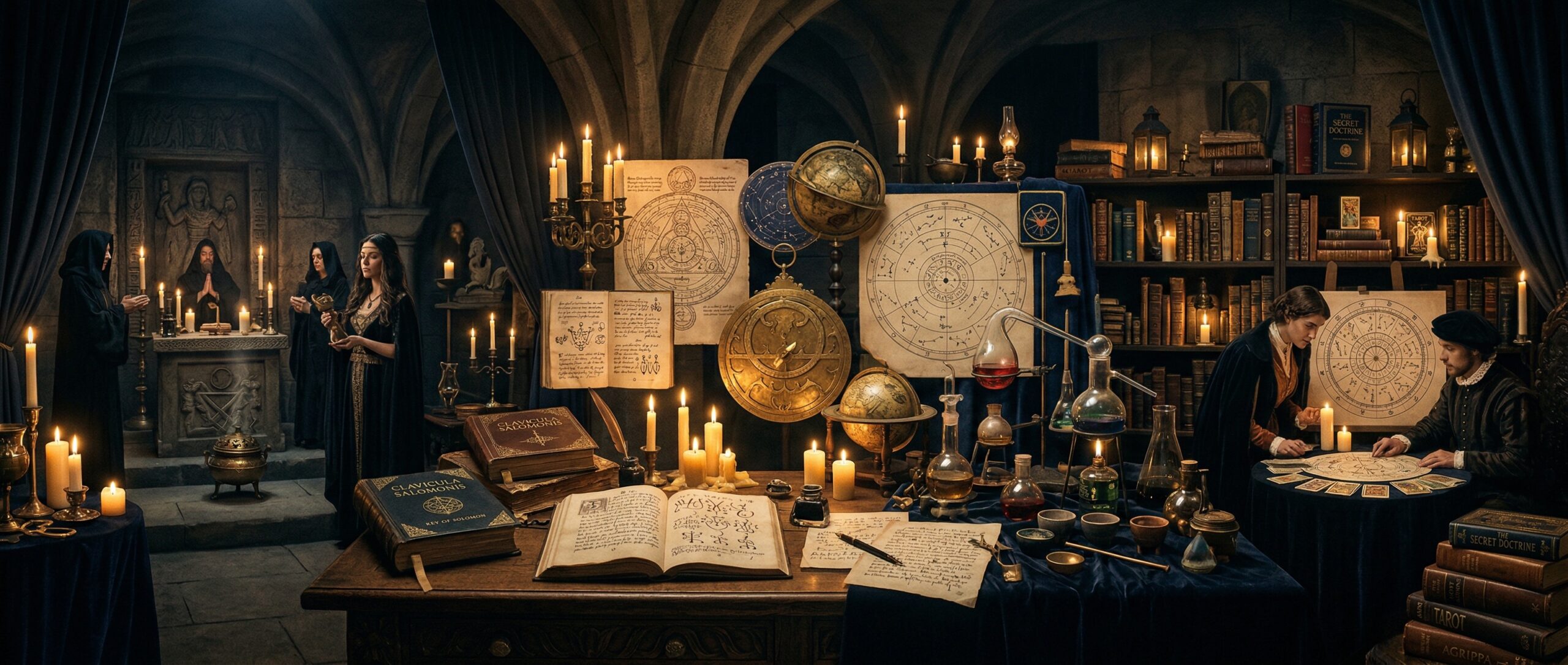
    Medieval Europe also saw the circulation of grimoires, manuals of ritual magic often attributed to ancient authorities. Texts associated with Solomon became especially influential. These works blended prayers, astrological timing, sacred names, talismans, spirits, and ritual procedures into systems that promised access to hidden powers. Some practitioners framed this as licit magic aligned with divine order. Others crossed into forms that church authorities considered illicit, dangerous, or demonic.

    This is where an important division hardens in occult history. Certain forms of hidden knowledge could be tolerated when framed as natural philosophy or sanctioned religious mysticism. The same ideas, placed in the wrong hands or stripped of orthodoxy, could be condemned as sorcery.

    The Renaissance made the occult look like a lost science of the soul

    The Renaissance revived interest in antiquity, but it also revived the dream that ancient wisdom contained forgotten truths about the structure of reality. Thinkers such as Marsilio Ficino, Giovanni Pico della Mirandola, and Heinrich Cornelius Agrippa helped transform occult currents into an ambitious intellectual project. Their work treated Hermetic writings, astrology, natural magic, Christian theology, and Kabbalah as parts of a deeper wisdom tradition that might reunite human beings with cosmic truth.

    In this period, occult philosophy often presented itself not as rebellion but as restoration. The idea was that hidden knowledge had once been known by sages, priests, prophets, and initiates, then fragmented or corrupted over time. To recover that wisdom was to restore a lost harmony between mind, nature, and the divine.

    Agrippa’s Three Books of Occult Philosophy became especially important because it tried to synthesize correspondences between the elemental, celestial, and divine worlds. This model suggested that the universe could be navigated through symbols, planetary influences, sacred names, and ritual techniques. The occult, in other words, became systematized.

    Paracelsus added another crucial strand by linking occult correspondences to healing and medicine. He challenged established medical orthodoxies and treated nature as filled with signatures, hidden properties, and spiritual forces. That approach now looks alien to modern medicine, but in its time it blurred the boundary between mystical speculation and empirical curiosity. Even figures later remembered as pillars of science, including Isaac Newton, spent substantial energy on alchemy and biblical chronology. The line between occult inquiry and scientific inquiry was not yet cleanly drawn.

    Fear, heresy, and witch hunts transformed the occult into a zone of suspicion

    From the late medieval period into the early modern era, Europe entered one of the darkest chapters in occult history. Between roughly 1450 and 1750, tens of thousands of people were prosecuted and executed in witch trials, with the peak occurring between about 1580 and 1650. These persecutions were not a simple response to occult practice as such. They emerged from a volatile mix of religious conflict, local panic, legal change, misogyny, political instability, and demonological imagination.

    The rise of witch-hunting changed the emotional meaning of hidden practice. What had once been framed as natural magic, folk healing, blessing, cunning craft, or mystical knowledge could now be recoded as satanic conspiracy. Manuals such as the Malleus Maleficarum helped build a worldview in which secret ritual was not merely suspect but existentially dangerous.

    This legacy still shapes modern perceptions. Many contemporary fears about the occult, especially in popular media, descend less from actual occult traditions than from the propaganda of demonology and panic. The witch hunts did not just kill people. They rewired the cultural imagination, making hidden knowledge seem inseparable from threat.

    And yet, even under that pressure, occult traditions did not vanish. Folk magic persisted. Grimoires circulated. Astrologers still advised clients. Alchemical laboratories continued to operate. The occult survived not because persecution was weak, but because the appetite for hidden explanation remained stronger than official attempts to erase it.

    Secret societies helped keep esoteric ideas alive in the age of reason

    The Enlightenment is often framed as the triumph of rationality over magic, but the historical reality is more paradoxical. While skepticism and scientific method gained authority, esoteric traditions reorganized themselves through new networks. Rosicrucian manifestos, published in the early 17th century, presented the image of a hidden brotherhood guarding transformative wisdom. Whether the group existed exactly as claimed mattered less than the power of the idea. Secret initiates, hidden masters, and encoded truth became enduring features of occult imagination.

    Freemasonry, formally organized in the early 18th century, was not simply an occult order, but it became deeply entangled with esoteric symbolism, ritual initiation, sacred geometry, temple imagery, and the language of hidden enlightenment. For many later movements, Masonry provided a structure, a symbolic grammar, and a social model for how secret knowledge could be transmitted in modernity.

    At the same time, underground and elite circles alike continued exploring astrology, ceremonial practice, Christian mysticism, alchemy, and speculative correspondences. The occult no longer occupied the center of learned culture, but neither had it been fully expelled. Instead, it adapted to a world increasingly divided between public rationality and private initiation.

    The 19th century occult revival brought hidden knowledge back into public life

    If the Renaissance intellectualized the occult, the 19th century democratized and sensationalized it. Industrial modernity created enormous spiritual anxiety. Scientific progress, urbanization, mass media, colonial contact, and religious doubt all pushed people to seek alternative frameworks. The occult revival answered that need by offering mystery, meaning, and access to realities beyond mechanistic materialism.

    Spiritualism exploded after 1848, when the Fox sisters became associated with spirit communication in the United States. Séances, table-rapping, trance mediumship, and ghost photography all helped turn contact with the dead into a mass phenomenon. What made Spiritualism so powerful was its hybrid nature. It looked emotional and supernatural, but it also borrowed the language of experiment, evidence, and investigation. The séance room became a strange cousin to the laboratory.

    At the same time, the Theosophical Society, founded in 1875 by Helena Petrovna Blavatsky and others, fused esoteric philosophy with global religious synthesis. Theosophy drew on Hindu, Buddhist, Hermetic, Kabbalistic, and occult concepts to construct a grand narrative of hidden masters, spiritual evolution, and lost wisdom traditions. Many later New Age and occult currents owe an enormous debt to that framework.

    The Hermetic Order of the Golden Dawn, founded in 1888, brought another major shift. It systematized ritual magic with a level of structure and symbolic integration that still influences modern practitioners. Drawing from Kabbalah, tarot, astrology, alchemy, Enochian systems, and ceremonial liturgy, the Golden Dawn turned occult initiation into a highly articulated spiritual technology. From this world emerged figures such as Aleister Crowley, one of the most famous and controversial occultists of the 20th century.

    The 20th century turned the occult into a modern spiritual marketplace

    In the 20th century, occult traditions did not disappear into nostalgia. They diversified. Some movements became more formal and initiatory. Others became more personal, eclectic, and experimental. Crowley’s Thelema reframed occult work around will, ritual, and personal spiritual destiny. Dion Fortune brought psychology and esotericism into closer conversation. Later, Gerald Gardner helped launch modern Wicca, which would become one of the most influential forms of contemporary Pagan practice.

    Postwar occult culture also absorbed the language of therapy, self-development, altered consciousness, and liberation. Tarot moved beyond elite or clandestine circles into a broad symbolic tool for reflection and divination. Astrology returned in mass-market form through newspapers, magazines, and later digital platforms. New Age culture blended Eastern spirituality, channeling, crystal work, alternative healing, and esoteric symbolism into a looser but highly influential spiritual ecosystem.

    By the late 20th century, chaos magic pushed things even further. Instead of treating occult systems as fixed inheritances, chaos practitioners often treated belief itself as a tool. Symbols, sigils, ritual scripts, and identities could be adopted, discarded, and recombined according to results. This was a radical break from older lineage-based structures, and it anticipated the hyper-fluid, remix culture of the internet age.

    Meanwhile, academic scholarship became more serious about the subject. Historians of religion and specialists in esotericism increasingly treated occult traditions not as embarrassing leftovers, but as central threads in the history of ideas. That scholarly shift matters because it gave the occult a new kind of legitimacy: not spiritual legitimacy, but historical importance.

    The occult still matters because the hunger for hidden meaning never disappeared

    The modern revival of occult interest is not just a trend driven by aesthetics, though aesthetics certainly help. Social media has made tarot spreads, sigil magic, folk witchcraft, lunar rituals, and ceremonial symbolism more visible than ever. But visibility is only part of the story. The deeper reason the occult still matters is that modern life continues to generate the same anxieties that fueled earlier revivals: uncertainty, dislocation, institutional distrust, and the sense that official explanations are incomplete.

    For some people, the occult offers spiritual agency outside organized religion. For others, it offers symbolic tools for self-reflection, ritual structure, or a language for private transformation. For still others, it provides access to mystery in a world that often feels over-measured and under-explained. Even skeptics remain fascinated by it because occult history keeps colliding with questions about belief, power, secrecy, altered states of consciousness, and who gets to define what counts as legitimate knowledge.

    The occult also remains culturally influential because it has become a bridge subject. It connects to conspiracy culture, psychology, folklore, comparative religion, art history, UFO belief, hidden-history narratives, and the continuing public obsession with secret societies. Once you start tracing its history, you realize the occult is not a strange side corridor of civilization. It is one of the recurring languages people use to talk about forces they feel but cannot fully explain.

    That is why the history of the occult remains so enduring. It is not just the history of hidden rites. It is the history of a recurring human suspicion that visible reality is only the surface.

    Conclusion

    The history of the occult is really the history of hidden explanations. From Mesopotamian diviners and Egyptian funerary magic to Hermetic philosophy, medieval grimoires, Renaissance magi, Victorian séances, and modern occult revivalism, the same underlying pattern keeps returning. Human beings repeatedly imagine that the universe contains veiled structures, and that some combination of symbol, ritual, insight, and discipline can reveal them.

    What changes is the cultural frame. In one era, occult knowledge is priestly and sacred. In another, it is criminalized. In another, it becomes fashionable among intellectuals. In another, it is repackaged for mass media and digital culture. That flexibility explains why the occult has endured for so long. It is not one doctrine. It is a way of approaching mystery itself.

    If you want the shortest answer to why occult history still matters, it is this: the occult survives because people keep feeling that the official map of reality is incomplete. Whether that instinct leads to revelation, illusion, spiritual practice, philosophical insight, or cultural mythology depends on the era and the interpreter. But the instinct itself has never gone away.

    Frequently Asked Questions

    What does the word occult actually mean?

    The word occult comes from the Latin occultus, meaning hidden or concealed. It usually refers to traditions, practices, or systems of thought that claim access to hidden forces, hidden knowledge, or spiritual realities beyond ordinary perception.

    Is the occult the same thing as magic?

    Not exactly. Magic is one part of occult history, but the occult also includes alchemy, astrology, divination, mystical philosophy, sacred symbolism, Kabbalah, spirit communication, and esoteric religious systems. It is a broader category than spellwork alone.

    When did occult practices begin?

    Occult practices have roots in ancient civilizations, especially Mesopotamia and Egypt, where divination, ritual protection, sacred symbols, and hidden cosmological knowledge were part of religious and political life thousands of years ago.

    Why did the occult survive periods of persecution?

    Occult traditions survived by adapting to new cultural forms. Some were preserved in religious mysticism, some in scholarly translation, some in folk practice, and some in secretive or initiatory groups. The ideas kept resurfacing because the desire for hidden explanation never disappeared.

    How is the occult connected to science?

    Before the modern separation between science and spirituality became rigid, many figures explored both. Alchemy influenced early chemistry, astrology shaped early astronomy, and thinkers such as Isaac Newton studied both natural law and esoteric subjects. The relationship was once far more intertwined than modern readers often assume.

    Why is the occult popular again today?

    The occult has regained visibility because it offers meaning, symbolism, ritual, and alternative frameworks at a time when many people feel alienated from institutional religion and unconvinced by purely material explanations. Social media has amplified the aesthetics, but the deeper draw is existential and spiritual.

    Related Articles

    Related Articles

    Suggested SEO Title: The History of the Occult, From Ancient Magic to Modern Esotericism

    Suggested Meta Description: Explore the history of the occult from Mesopotamian divination and Egyptian ritual magic to Hermeticism, witch hunts, secret societies, Spiritualism, and modern esotericism.

    This article was created using Media Blaster – Your content production specialist. Visit www.mediablaster.io for more information.

  • Caxuulikom Investigation: Jack Parsons, the Collins Elite, and Contact With Entities Outside Our Dimension

    Caxuulikom Investigation: Jack Parsons, the Collins Elite, and Contact With Entities Outside Our Dimension

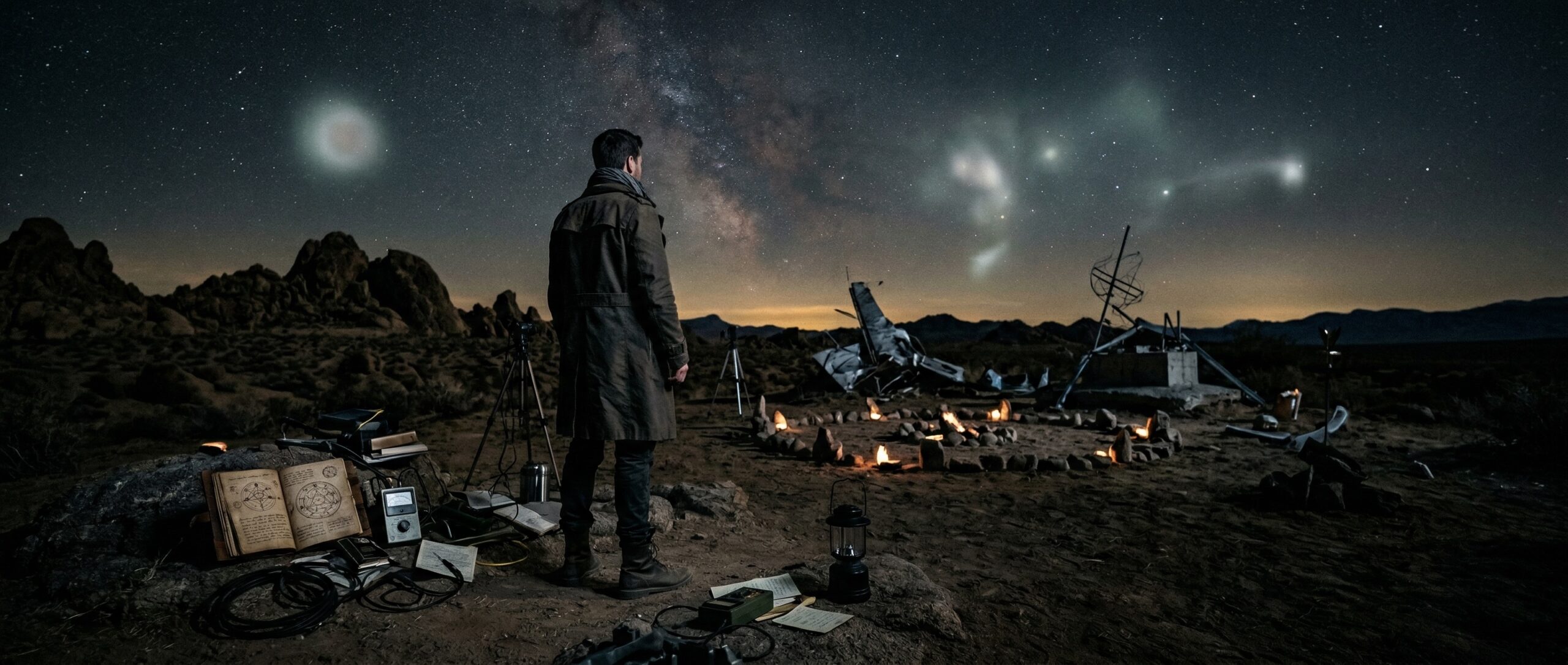
    Few threads in modern conspiracy culture are as explosive as the one that links Jack Parsons, the Collins Elite, occult ritual, UFO manifestations, and contact with entities from outside our dimension. It is a theory complex that refuses to stay in one category. It is not just UFO lore. It is not just occult history. It is not just a Cold War religious panic inside government. It is all of them at once — a sprawling underground narrative where rockets, ritual, intelligence, and nonhuman contact blur together.

    At the center of that tangle is a strange keyword that has started gaining traction among high-strangeness researchers: caxuulikom. Depending on who is using it, the term functions as a label for a larger theory cluster involving ritual contact, intelligence suppression, demon-or-alien ambiguity, and the possibility that some of history’s most important UFO-adjacent events were not technological at all, but interdimensional.

    This investigation pulls the strands together: Jack Parsons, the Babalon Working, the Collins Elite, the intelligence community’s fear of “demonic” UFOs, and the recurring belief that certain rituals or altered states can open contact with beings that do not come from another planet so much as from outside our visible dimensional frame.

    What Is Caxuulikom?

    The term caxuulikom is still niche, but in the context of modern conspiracy and occult-UFO discourse it is increasingly used as a shorthand for a connected body of ideas rather than a single neat doctrine. It points toward a worldview in which UFOs, psychic manifestations, ritual contact, and intelligence secrecy all belong to the same hidden architecture.

    In that framework, “caxuulikom” is not just about extraterrestrials. It is about contact phenomena — especially contact that appears to emerge through ritual, altered consciousness, or symbolic openings rather than through straightforward spacecraft encounters.

    That is why it naturally overlaps with two of the most combustible names in this world: Jack Parsons and the Collins Elite.

    Why Jack Parsons Keeps Returning in UFO Conspiracy Culture

    Jack Parsons is a uniquely dangerous figure in the mythology of the unexplained because he was real, brilliant, and already strange enough that almost any theory can attach itself to him without feeling forced. He helped pioneer American rocketry, worked in circles that eventually fed into the early U.S. aerospace establishment, and at the same time immersed himself in Aleister Crowley’s magical system.

    That alone would guarantee him an afterlife in conspiracy culture. But Parsons is not remembered simply as an eccentric scientist. He is remembered as a man who may have tried to ritually contact nonhuman forces — and whose actions, in the eyes of some believers, may have “opened” something.

    This is the heart of the Jack Parsons myth engine: the idea that the same man helping propel America into the age of rockets may also have been helping tear open a door between worlds.

    We have already covered part of this territory in Jack Parsons & Demons: Did Rockets Summon UAPs?, which explores how Parsons became central to later theories connecting occult ritual with anomalous aerial phenomena.

    The Babalon Working and the Theory of a Dimensional Opening

    No part of the Parsons story matters more to conspiracy audiences than the Babalon Working. Conducted in 1946 with L. Ron Hubbard in a ritual framework derived from Thelemic magic, the Working has been interpreted in wildly different ways — as ceremonial theater, sex magic, symbolic invocation, psychological drama, or an attempt to anchor a feminine spiritual force into the world.

    But among conspiracy theorists, the most extreme interpretation is also the most enduring: that Parsons did not merely perform a ritual. He opened a channel.

    In this theory, the Babalon Working was not a metaphor but an operational event. It created a breach, weakened a barrier, or invited contact with intelligences that do not fit neatly into religious or extraterrestrial categories. This is where the language gets slippery: some call them demons, some ultraterrestrials, some interdimensionals, some entities. The labels change. The core claim does not.

    That claim is simple: after Parsons, something began to seep through.

    How the Collins Elite Fits Into the Same Story

    The Collins Elite appears in UFO conspiracy lore as a shadowy faction within or adjacent to the U.S. defense/intelligence apparatus that allegedly concluded UFOs were not alien spacecraft but demonic or deceptive entities. In that story, they are the internal opposition to the “nuts and bolts” UFO interpretation.

    For the Collins Elite worldview, the greatest danger was not invasion from space. It was spiritual contamination disguised as technology.

    That is why the Parsons connection is so volatile. If the Collins Elite theory is true, then occult contact attempts like Parsons’ rituals would not be fringe side stories. They would be central evidence that at least some modern UFO phenomena were invited into human experience through ritual and consciousness manipulation rather than discovered through radar and air defense.

    We explored this directly in Collins Elite & Demonic UFOs: The Hidden Cold War Timeline, which traces how this faction allegedly interpreted UFOs not as visitors from another planet, but as spiritually deceptive intelligences.

    Entities Outside Our Dimension: Alien, Demonic, or Both?

    This is where the caxuulikom framework becomes most useful. The old debate asks: are these beings aliens or demons? The newer and more sophisticated version asks whether that binary is itself too primitive.

    Many contemporary researchers in high-strangeness circles now lean toward a third option: that the phenomenon is interdimensional. In other words, these intelligences may not be “from space” in the ordinary sci-fi sense, and they may not fit traditional theological language either. They may instead emerge from some adjacent layer of reality that humans experience through ritual, altered consciousness, electromagnetic anomalies, symbolic triggers, and rare contact states.

    This is why the alien-vs-demon debate never resolves cleanly. Both interpretations may be attempts to describe the same category of encounter using different cultural vocabularies.

    For conspiracy audiences, this ambiguity is not a weakness. It is the hook.

    Why Intelligence and Aerospace Connections Make the Story Harder to Dismiss

    If this were only an occult-history story, it would remain niche. If it were only a UFO theory, it would be just another subgenre. What gives it unusual power is the overlap with aerospace, Cold War secrecy, and intelligence culture.

    Parsons was not a random occultist. He was entangled with the birth of modern American rocketry. The Collins Elite, if the lore around them is even partly grounded in reality, represents a faction inside the security state that believed the threat was not technological but metaphysical. Put those together and you get a terrifying implication: that the same institutions building advanced aerospace systems may also have been haunted by the fear that some phenomena cannot be understood as machinery at all.

    This is where caxuulikom becomes more than a keyword. It becomes a theory of hidden architecture — a way of naming the overlap between ritual contact, state secrecy, and the dimensional hypothesis.

    The Sybil Leek Thread and Ritual Intelligence Curiosity

    Another reason this framework keeps expanding is that Parsons is not the only figure who appears in these stories. Cases like the one we covered in CIA Séance with Sybil Leek: The Evidence They Hid? suggest that the intelligence world has long flirted with psi, ritual, séance culture, or at least the possibility that altered states could reveal actionable information.

    That does not prove intelligence agencies believed in literal demons. But it does show that segments of the security state were willing to investigate weird methodologies far beyond ordinary public assumptions.

    And once you accept that possibility, the Parsons-to-Collins line stops sounding like a purely fictional bridge. It starts sounding like the sort of hidden conceptual corridor a classified system might actually explore in secret while publicly denying it.

    Why This Theory Is So Addictive to Conspiracy Audiences

    The reason the Jack Parsons / Collins Elite / caxuulikom nexus is so effective is that it satisfies multiple conspiracy appetites at once:

    • It has a real historical anchor. Parsons existed, mattered, and was deeply involved in both science and occultism.
    • It offers hidden continuity. The story suggests a through-line from ritual magic to modern UFO secrecy.
    • It blurs categories. Demon, alien, interdimensional intelligence, psychic phenomenon, and occult entity all become overlapping interpretations.
    • It implicates institutions. If intelligence factions studied this seriously, then public explanations may have been incomplete from the start.
    • It never closes. Because the theory sits in ambiguity, it can survive debunking and continually absorb new anomalies.

    That last point matters. A closed conspiracy dies. An open-ended one mutates. This one has survived because it is less a claim than a framework for connecting claims.

    The Skeptical Counterpoint

    An honest investigation has to say this clearly: none of the above proves that Jack Parsons literally opened a portal, that the Collins Elite exists exactly as described in UFO lore, or that entities outside our dimension are contacting humanity through occult ritual.

    There is a lot of retrospective myth-building here. Conspiracy culture is extremely good at stitching together symbolic resonance after the fact. Parsons is an irresistible target for that process because he was already the perfect fusion of scientist, mystic, and historical lightning rod.

    Likewise, the Collins Elite story may contain exaggerations, distortions, or recycled rumor structures. It survives partly because it provides a theological explanation for UFO phenomena that many people find more emotionally satisfying than “advanced unknown craft.”

    But skepticism does not erase why the theory matters. It only changes the frame from “is this literally true?” to “why does this story keep returning with such force?”

    Our Investigation: What Caxuulikom Really Represents

    In practical terms, caxuulikom appears to represent a cluster of beliefs about hidden contact architectures. It is less about a single final answer and more about a way of reading the entire modern mystery landscape.

    In that reading:

    • Parsons represents the ritual opening
    • the Collins Elite represents the classified theological panic
    • UFO phenomena represent the public symptom
    • entities outside our dimension represent the hidden source

    That is the full theory structure. And once you see it, you understand why this topic is so fertile. It does not merely ask whether UFOs are real. It asks what kind of reality we are actually dealing with.

    FAQ

    Frequently Asked Questions

    What does caxuulikom mean in this context?

    In this context, caxuulikom refers to a cluster of theories linking occult contact, UFO phenomena, intelligence secrecy, and entities that may exist outside ordinary human dimensional perception.

    How is Jack Parsons connected to interdimensional entity theories?

    Parsons is connected through the Babalon Working and later interpretations that his rituals may have invited or opened contact with nonhuman intelligences, not necessarily extraterrestrial in the usual sense.

    What is the Collins Elite supposed to believe about UFOs?

    The Collins Elite theory claims a hidden faction inside or near U.S. intelligence concluded that UFOs were not alien spacecraft but deceptive spiritual or demonic intelligences.

    Are these entities supposed to be aliens or demons?

    That is the core dispute. Many modern researchers use an interdimensional model instead, arguing that both “alien” and “demon” may be cultural labels for the same class of nonhuman encounter.

    Why does this theory attract conspiracy fans so strongly?

    Because it combines real history, occult ritual, aerospace secrecy, intelligence mythology, and unresolved UFO questions into one narrative that feels both hidden and plausible within the broader conspiracy imagination.

    Related Articles:

    This article was created using Media Blaster – Your content production specialist. Visit www.mediablaster.io for more information.

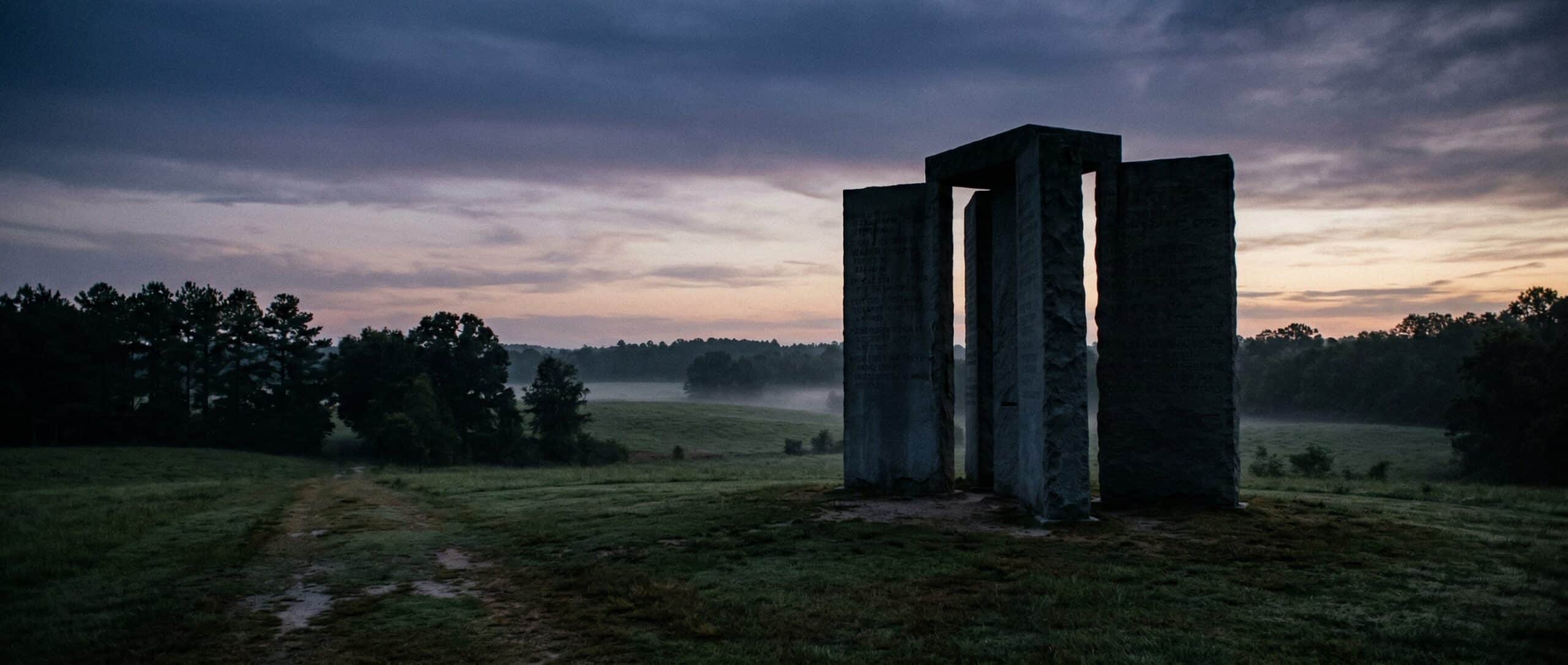
  • Did Conspiracy Theories Help Destroy America’s Strangest Monument?

    Did Conspiracy Theories Help Destroy America’s Strangest Monument?

    The Georgia Guidestones — often called “America’s Stonehenge” — are back in the conversation after renewed reporting and a podcast investigation revisited the still-unsolved 2022 bombing that destroyed the controversial monument. The fresh angle is not that the culprit has been publicly identified, but that new scrutiny is focusing on the decades-long conspiracy ecosystem that turned the stones from a weird roadside monument into a symbolic target.

    That ecosystem loaded the Guidestones with every anxiety the conspiracy world could imagine: global elites, depopulation agendas, occultism, satanic ritual, New World Order symbolism, and hidden underground structures. In the process, the monument became less a place than a projection screen.

    What Happened to the Georgia Guidestones?

    The known facts are stark. The Guidestones were damaged on July 6, 2022, after an explosive device detonated at around 4:30 a.m. Surveillance reportedly captured a vehicle leaving the scene. The remaining damaged slabs were later demolished for safety reasons. No arrests have been made.

    As summarized in recent coverage from the Daily Mail and tied to renewed attention around the Atlanta Journal-Constitution podcast Who Blew Up the Guidestones?, the mystery remains open — and because it is unsolved, the cultural story around it remains alive.

    Why the Guidestones Became a Target

    The monument was unusual from the beginning. Commissioned anonymously under the pseudonym R.C. Christian, the Georgia Guidestones featured inscriptions about population, governance, reason, nature, and world balance. To some viewers, they looked like philosophical instructions. To others, they looked like elite messaging carved into granite.

    That ambiguity made the stones vulnerable to endless reinterpretation. Over time, they absorbed layer after layer of fringe meaning:

    • New World Order symbolism
    • occult or satanic associations
    • global depopulation fears
    • anti-globalist panic
    • UFO and mystery-cult speculation

    The result was a monument that no longer existed primarily as stone. It existed as myth, outrage, and symbol.

    When Conspiracy Culture Escapes the Screen

    This is why the Georgia Guidestones story matters more than many conspiracy recirculation cycles. It may be one of those cases where conspiracy culture did not just reinterpret an object — it may have helped turn it into a real-world target.

    That makes the story valuable beyond the unsolved bombing itself. The real question is not only who planted the explosive device. It is how a granite monument became one of the most overinterpreted structures in America.

    This is also why the Guidestones remain so potent after destruction. Ruined monuments often become more mythic, not less. Once the physical structure is gone, the symbolic afterlife grows even larger.

    A Fossil Record of American Conspiracy Belief

    The Guidestones also bridge generations of fringe thought. They attracted pre-internet occult rumors, evangelical apocalypse rhetoric, anti-globalist panic, UFO speculation, and later digital-era conspiracy acceleration. In that sense, they function almost like a fossil record of American paranoia.

    Few monuments managed to collect so many contradictory stories while remaining so physically simple. That is part of what made them such effective conspiracy material: they were mysterious enough to invite projection, but concrete enough to anchor it.

    Why the Story Still Works Now

    The renewed interest in the Guidestones works because it combines three durable ingredients:

    • unsolved crime
    • conspiracy symbolism
    • retroactive myth-building

    Even if the bombing is eventually solved, the deeper mystery may remain: why did this particular monument become such a magnet for fear and obsession?

    For more conspiracy-culture analysis, read our coverage of the Black Knight satellite myth, the 7910 kHz spy radio mystery, and the Mellon leak and UFO evidence debate.

    This article was created using Media Blaster – Your content production specialist. Visit www.mediablaster.io for more information.

  • Undertone: The 2026 Horror Film Based on a Real Demon That’s Been Terrorizing People for Centuries

    Undertone: The 2026 Horror Film Based on a Real Demon That’s Been Terrorizing People for Centuries

    Undertone hailed as 2026 scariest movie so far is a found-audio horror film about a demon named Abyzou, a female demon from folklore who is said to possess mothers and kill their children. The film, from A24 and directed by Ian Tuason, is based on real paranormal encounters reported by a couple named Jessa and Mike.

    A24 has done it again. Undertone, described as 2026 scariest movie so far, brings a centuries-old demon from Jewish and Middle Eastern folklore into the mainstream consciousness.

    What Happening

    Film: Undertone

    Director: Ian Tuason

    Studio: A24

    Premiere: Montreal Fantasia International Film Festival (July 2025), Sundance (early 2026)

    Box Office: $500,000 budget, grossed $9 million theatrically

    Format: Found audio/podcast style horror

    The Plot

    The film follows Evy (Nina Kiri), who co-hosts a podcast called The Undertone with her best friend Justin (Adam DiMarco). When a fan sends them an email containing an eerie audio recording documenting a couple (Jessa and Mike) paranormal encounter with Abyzou, Evy becomes obsessed. She begins experiencing the same phenomena her comatose mother body moves inexplicably, lights flicker, and religious icons relocate themselves.

    As reported by Filmmaker Magazine, director Ian Tuason filmed in the house where his parents died, adding real emotional weight to the story.

    The Real Abyzou

    Abyzou (also called the Mother of Demons) is a figure from Jewish and Middle Eastern folklore:

    • Description: Often depicted as a female demon with long hair and disheveled appearance
    • Target: Mothers and their children
    • Method: Possession through envy of fertile women
    • History: References date back centuries, with the demon appearing in texts from the Talmud to medieval European folklore
    • Origin: Believed to have originated in Persia or Babylonia, spreading through Jewish diaspora into Europe

    Why It Matters

    1. Authentic Fear: Director Ian Tuason filmed in the house where his parents died, adding real emotional weight

    2. Found Audio Format: The film represents a new wave of horror using podcast/audio aesthetics

    3. Cultural Research: Tuason spent extensive time researching demonology and the occult

    4. Mainstream Recognition: A24 involvement brings folklore-based horror to wider audiences

    5. Personal Connection: The director experience caring for his dying parents mirrors the protagonist story

    As Tuason said: I kind of got desensitized after the whole caregiving experience how dark it was. I used to be really scared of ghosts. If I saw a ghost now, I would just go back to sleep.