Blog

  • Bigfooters and Scientific Inquiry

    Bigfooters and Scientific Inquiry

    A BBC feature spotlighting sociological research into Bigfoot hunters is giving the Sasquatch conversation a fresh 2026 angle. Instead of asking “Is Bigfoot real?” the story asks a more interesting question: what kind of people build their lives around searching for a creature science has never confirmed? According to BBC News, the story is gaining attention well beyond its original niche.

    Researchers interviewed more than 160 Bigfoot hunters over three years for the book *Bigfooters and Scientific Inquiry*. The result is a serious look at belief, fieldwork, masculinity, anti-elitism, technology, and the desire to “re-enchant” a disenchanted world.

    That is why this story matters. It is not just about the headline claim itself, but about the way uncertainty, symbolism, and public appetite for hidden meaning keep turning partial information into a larger mystery event.

    What This Story Actually Says

    What makes this trend notable is the shift from monster coverage to **belief-community coverage**. Media is increasingly treating Bigfoot less as a jump-scare topic and more as a living American folk ecosystem. Additional framing from BBC version helps explain why the claim is traveling.

    • BBC is amplifying the study as a human-interest and culture story.
    • The article describes a serious subculture of dedicated investigators using drones, infrared cameras, audio recorders, footprint casting tools, and homebrew DNA testing kits.
    • It outlines two broad Bigfoot belief camps:
    • **Apers**: Bigfoot is an unknown primate.
    • **Woo-Woos**: Bigfoot is interdimensional, paranormal, or alien-adjacent.

    Why This Topic Spreads So Easily

    Stories like this spread because they land at the intersection of real-world uncertainty and symbolic interpretation. Once a subject carries enough emotional charge, audiences do not just ask whether it is true. They ask what it means.

    A BBC feature spotlighting sociological research into Bigfoot hunters is giving the Sasquatch conversation a fresh 2026 angle. Instead of asking “Is Bigfoot real?” the story asks a more interesting question: what kind of people build their lives around searching for a creature science has never confirmed?

    What the Evidence Actually Supports

    The strongest evidence in stories like this is often narrower than the online reaction suggests. That is why it is important to separate direct reporting, contextual interpretation, speculation, and audience mythmaking rather than treating them as one unified thing.

    Coverage and reporting relevant to this topic include:

    What Skeptics or Mainstream Experts Would Say

    The strongest skeptical response is usually that ambiguity gets inflated faster than evidence does. That does not make the story worthless. It means the audience should be careful not to mistake symbolic power for proof.

    In many of these cases, the most likely explanation is still the least dramatic one that fits the known facts. But because emotionally satisfying explanations travel farther than cautious ones, the mystery version often spreads first and hardest.

    Why This Story Still Matters

    This matters because it reframes cryptid culture as a social force rather than just a curiosity. Bigfoot hunters are not just meme fodder in this telling; they are amateur researchers, pilgrims, hobbyists, and counter-establishment knowledge seekers.

    That framing opens up richer content territory:
    – Why are people still searching in an age of satellites and smartphones?
    – Why do ambiguous traces remain more compelling than conclusive proof?
    – Is Bigfoot belief a protest against expert culture, or a parallel form of grassroots inquiry?

    There is also a bigger unexplained-theme takeaway here: a lot of paranormal culture survives because it gives people meaning, community, and adventure. The hunt itself may be the real phenomenon.

    The Bigger Unexplained Pattern

    For unexplained coverage, the deeper value is often cultural rather than evidentiary. These stories reveal what people fear, what they hope, what they distrust, and how quickly they build meaning around incomplete information.

    That is exactly why the newer SEO/GEO standard works better than the old short-form template. It is designed to answer the headline question, ground the reader in what is actually known, include stronger context, and still explain why the story has such emotional force.

    Readers interested in the broader pattern should also see Nessie Returns: Fresh Sightings Revive the Loch Ness Monster Mystery, which connects this story to a larger unexplained.co theme.

    Final Assessment

    The real significance of stories like this is often not that they prove an extraordinary claim, but that they show how extraordinary interpretations take shape. In other words, the mystery is not only in the event. It is also in the reaction.

    Frequently Asked Questions

    What is this story about?

    A BBC feature spotlighting sociological research into Bigfoot hunters is giving the Sasquatch conversation a fresh 2026 angle. Instead of asking “Is Bigfoot real?” the story asks a more interesting question: what kind of people build their lives around searching for a creature science has never confirmed?

    Why is this getting attention now?

    This matters because it reframes cryptid culture as a social force rather than just a curiosity. Bigfoot hunters are not just meme fodder in this telling; they are amateur researchers, pilgrims, hobbyists, and counter-establishment knowledge seekers.

    Is Bigfooters and Scientific Inquiry proven?

    No. These articles are written to separate what is verified, what is claimed, and what remains uncertain. Mystery does not automatically equal proof.

    What should readers focus on?

    Focus on the evidence, the source quality, the skeptical or conventional explanations, and why the story still resonates even when certainty is missing.

    Related Articles

    This article was created using Media Blaster – Your content production specialist. Visit www.mediablaster.io for more information.

  • Amy Bradley Mystery: New Leads Resurface

    Amy Bradley Mystery: New Leads Resurface

    The long-running disappearance of Amy Bradley is back in circulation after reports of new investigative movement tied to the 1998 cruise-ship case. Bradley, 23, vanished during a Royal Caribbean trip with her family while the ship was nearing Curaçao. Nearly three decades later, the case remains one of the most discussed disappearance mysteries on the internet. According to Fox News, the story is gaining attention well beyond its original niche.

    The new wave comes from comments by filmmaker Ari Mark, whose Netflix docuseries *Amy Bradley Is Missing* revived public attention in 2025. According to reports, two people with alleged trafficking ties have been questioned by the FBI, while additional leads include claims that Bradley may have given birth after her disappearance and that a 2023 website IP hit may have come from a public computer inside a Caribbean casino.

    That is why this story matters. It is not just about the headline claim itself, but about the way uncertainty, symbolism, and public appetite for hidden meaning keep turning partial information into a larger mystery event.

    What This Story Actually Says

    This is trending because unresolved disappearances sit right on the edge of true crime, conspiracy, and paranormal-style mystery culture. Amy Bradley is especially potent because the setting feels cinematic: a person vanishes from a cruise ship without a definitive explanation. Additional framing from Hollywood Reporter update referenced by Fox helps explain why the claim is traveling.

    • Fox News and other outlets are amplifying updates sourced from Ari Mark and *The Hollywood Reporter*.
    • The reported developments include:
    • FBI questioning of two people of interest tied to trafficking,
    • a lead suggesting Bradley may have had a child after vanishing,
    • follow-up around a 2023 website access originating from a Caribbean casino.

    Why This Topic Spreads So Easily

    Stories like this spread because they land at the intersection of real-world uncertainty and symbolic interpretation. Once a subject carries enough emotional charge, audiences do not just ask whether it is true. They ask what it means.

    The long-running disappearance of Amy Bradley is back in circulation after reports of new investigative movement tied to the 1998 cruise-ship case. Bradley, 23, vanished during a Royal Caribbean trip with her family while the ship was nearing Curaçao. Nearly three decades later, the case remains one of the most discussed disappearance mysteries on the internet.

    What the Evidence Actually Supports

    The strongest evidence in stories like this is often narrower than the online reaction suggests. That is why it is important to separate direct reporting, contextual interpretation, speculation, and audience mythmaking rather than treating them as one unified thing.

    Coverage and reporting relevant to this topic include:

    What Skeptics or Mainstream Experts Would Say

    The strongest skeptical response is usually that ambiguity gets inflated faster than evidence does. That does not make the story worthless. It means the audience should be careful not to mistake symbolic power for proof.

    In many of these cases, the most likely explanation is still the least dramatic one that fits the known facts. But because emotionally satisfying explanations travel farther than cautious ones, the mystery version often spreads first and hardest.

    Why This Story Still Matters

    For unexplained-content audiences, the Amy Bradley case behaves like a modern legend. There is no supernatural claim required. The mystery itself carries the same emotional mechanics:
    – isolation in a liminal setting,
    – fragmentary sightings,
    – suspicious leads,
    – a long trail of “what if” theories,
    – a family still searching.

    It matters editorially because this case shows how streaming documentaries can function like paranormal revivals: they resurrect cold mysteries, generate new witnesses and tips, and transform old cases into participatory internet investigations.

    There is also a cautionary angle. Cases like this attract speculation fast, and the newest leads are still unverified in any conclusive sense. That tension between hope and hype is part of the story.

    The Bigger Unexplained Pattern

    For unexplained coverage, the deeper value is often cultural rather than evidentiary. These stories reveal what people fear, what they hope, what they distrust, and how quickly they build meaning around incomplete information.

    That is exactly why the newer SEO/GEO standard works better than the old short-form template. It is designed to answer the headline question, ground the reader in what is actually known, include stronger context, and still explain why the story has such emotional force.

    Readers interested in the broader pattern should also see The Pentagon UFO Report and What It Still Can’t Explain, which connects this story to a larger unexplained.co theme.

    Final Assessment

    The real significance of stories like this is often not that they prove an extraordinary claim, but that they show how extraordinary interpretations take shape. In other words, the mystery is not only in the event. It is also in the reaction.

    Frequently Asked Questions

    What is this story about?

    The long-running disappearance of Amy Bradley is back in circulation after reports of new investigative movement tied to the 1998 cruise-ship case. Bradley, 23, vanished during a Royal Caribbean trip with her family while the ship was nearing Curaçao. Nearly three decades later, the case remains one of the most discussed disappearance mysteries on the internet.

    Why is this getting attention now?

    For unexplained-content audiences, the Amy Bradley case behaves like a modern legend. There is no supernatural claim required. The mystery itself carries the same emotional mechanics:
    – isolation in a liminal setting,
    – fragmentary sightings,
    – suspicious leads,
    – a long trail of “what if” theories,
    – a family still searching.

    Is Amy Bradley Mystery: New Leads Resurface proven?

    No. These articles are written to separate what is verified, what is claimed, and what remains uncertain. Mystery does not automatically equal proof.

    What should readers focus on?

    Focus on the evidence, the source quality, the skeptical or conventional explanations, and why the story still resonates even when certainty is missing.

    Related Articles

    This article was created using Media Blaster – Your content production specialist. Visit www.mediablaster.io for more information.
  • American UFO Saga: Reality and Fiction

    American UFO Saga: Reality and Fiction

    AP has published a timely explainer tracing nearly a century of UFO history across sightings, government investigations, military videos, congressional hearings, and pop culture. On paper, it is a straight timeline. In practice, it is a signal that UFOs have again become mainstream-news material rather than tabloid leftovers. According to AP News, the story is gaining attention well beyond its original niche.

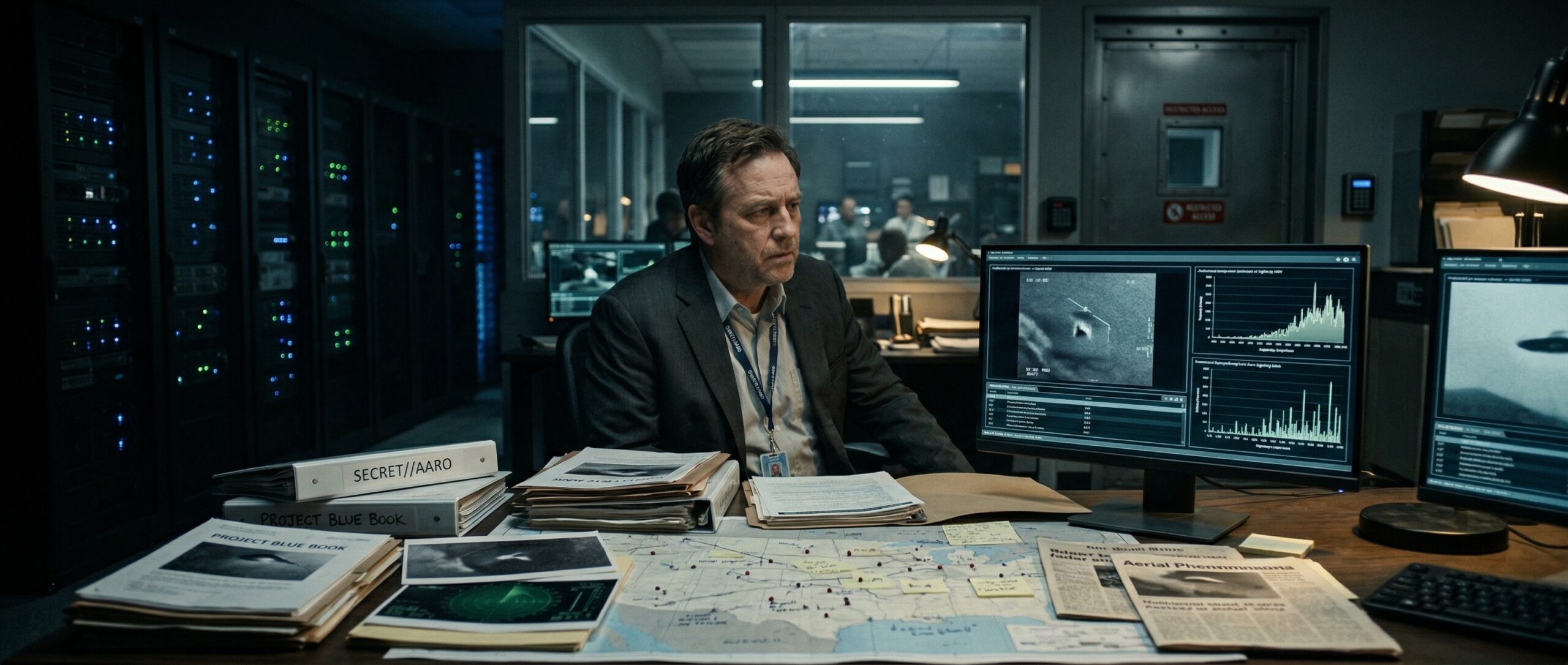
    The piece runs through the familiar canon: Kenneth Arnold in 1947, Roswell, Project Sign and Blue Book, the Washington D.C. flap, Area 51 mythology, the Phoenix Lights, leaked Navy videos, AARO, NASA’s UAP study, and David Grusch-style allegations of concealment. That timeline is now being reframed for a 2026 audience living through renewed official disclosure pressure.

    That is why this story matters. It is not just about the headline claim itself, but about the way uncertainty, symbolism, and public appetite for hidden meaning keep turning partial information into a larger mystery event.

    What This Story Actually Says

    The hidden story here is less about any single revelation and more about **institutional legitimization**. Once AP treats UFO history as a serious recurring American narrative, it signals that the topic is no longer confined to conspiracy culture. Additional framing from U.S. News reprint helps explain why the claim is traveling.

    • AP is packaging UFO history as a national cultural timeline, not a fringe sidebar.
    • The article connects older landmark cases to the modern UAP era, where military footage, congressional hearings, and Pentagon offices have normalized the subject.
    • This kind of wire-service summary tends to spread widely because local newsrooms, aggregators, and broadcasters can reuse the framing.

    Why This Topic Spreads So Easily

    Stories like this spread because they land at the intersection of real-world uncertainty and symbolic interpretation. Once a subject carries enough emotional charge, audiences do not just ask whether it is true. They ask what it means.

    AP has published a timely explainer tracing nearly a century of UFO history across sightings, government investigations, military videos, congressional hearings, and pop culture. On paper, it is a straight timeline. In practice, it is a signal that UFOs have again become mainstream-news material rather than tabloid leftovers.

    What the Evidence Actually Supports

    The strongest evidence in stories like this is often narrower than the online reaction suggests. That is why it is important to separate direct reporting, contextual interpretation, speculation, and audience mythmaking rather than treating them as one unified thing.

    Coverage and reporting relevant to this topic include:

    What Skeptics or Mainstream Experts Would Say

    The strongest skeptical response is usually that ambiguity gets inflated faster than evidence does. That does not make the story worthless. It means the audience should be careful not to mistake symbolic power for proof.

    In many of these cases, the most likely explanation is still the least dramatic one that fits the known facts. But because emotionally satisfying explanations travel farther than cautious ones, the mystery version often spreads first and hardest.

    Why This Story Still Matters

    This matters because the unexplained niche increasingly thrives on moments when the mainstream adopts its vocabulary. AP isn’t confirming aliens. But it is doing something almost as powerful for attention economics: placing UFOs inside official American history.

    That shift has downstream effects:
    – audiences who would ignore fringe blogs may now click a mainstream explainer;
    – creators get a peg for anniversary and reaction content;
    – disclosure advocates can argue the culture has moved from ridicule to normalization.

    It’s also an important editorial opportunity. The AP framework shows how UFO belief persists through a feedback loop of:
    1. genuine unexplained incidents,
    2. government secrecy,
    3. Hollywood imagery,
    4. public speculation,
    5. later recontextualization.

    That loop is arguably the real American UFO story.

    The Bigger Unexplained Pattern

    For unexplained coverage, the deeper value is often cultural rather than evidentiary. These stories reveal what people fear, what they hope, what they distrust, and how quickly they build meaning around incomplete information.

    That is exactly why the newer SEO/GEO standard works better than the old short-form template. It is designed to answer the headline question, ground the reader in what is actually known, include stronger context, and still explain why the story has such emotional force.

    Readers interested in the broader pattern should also see The Mellon Leak: High-Def Satellite UFO Images That Could Change Everything, which connects this story to a larger unexplained.co theme.

    Final Assessment

    The real significance of stories like this is often not that they prove an extraordinary claim, but that they show how extraordinary interpretations take shape. In other words, the mystery is not only in the event. It is also in the reaction.

    Frequently Asked Questions

    What is this story about?

    AP has published a timely explainer tracing nearly a century of UFO history across sightings, government investigations, military videos, congressional hearings, and pop culture. On paper, it is a straight timeline. In practice, it is a signal that UFOs have again become mainstream-news material rather than tabloid leftovers.

    Why is this getting attention now?

    This matters because the unexplained niche increasingly thrives on moments when the mainstream adopts its vocabulary. AP isn’t confirming aliens. But it is doing something almost as powerful for attention economics: placing UFOs inside official American history.

    Is American UFO Saga: Reality and Fiction proven?

    No. These articles are written to separate what is verified, what is claimed, and what remains uncertain. Mystery does not automatically equal proof.

    What should readers focus on?

    Focus on the evidence, the source quality, the skeptical or conventional explanations, and why the story still resonates even when certainty is missing.

    Related Articles

    This article was created using Media Blaster – Your content production specialist. Visit www.mediablaster.io for more information.
  • Menga Dolmen Medieval Reuse Mystery: Why Ancient Sacred Sites Keep Refusing to Stay in the Past

    Menga Dolmen Medieval Reuse Mystery: Why Ancient Sacred Sites Keep Refusing to Stay in the Past

    A new archaeology story out of southern Spain is drawing attention because it carries the precise kind of symbolic charge that mystery audiences instantly recognize: a 5,000-year-old megalithic monument appears to have been reused for burial in the medieval period. The site is the Menga dolmen in Antequera, one of Europe’s most significant prehistoric structures. What is newly energizing the story is the discovery that people were still placing bodies in relation to this monument thousands of years after its original construction.

    That matters because the Menga dolmen was never just an old tomb. It was a monumental sacred structure embedded in landscape, memory, and symbolism. When later communities deliberately reuse a place like that, the act raises a larger question: what kind of meaning can survive across millennia?

    What the Menga Dolmen Story Actually Says

    The current wave of coverage centers on research showing that two individuals were buried at the entrance of the Menga dolmen during the medieval era, long after the monument’s Neolithic origins. The burial positions reportedly align with the monument’s internal axis, which suggests intentionality rather than random intrusion or simple convenience.

    That detail is the key to why the story matters. It implies not merely that the monument remained physically accessible, but that it may still have carried symbolic or ritual significance many centuries after the culture that built it had vanished.

    This kind of long-duration sacred reuse is archaeologically fascinating because it reveals how monumental places can remain active in human imagination even when their original meanings are no longer fully known.

    Why Ancient Monuments Keep Being Reused

    There is a strong tendency in modern audiences to think of prehistoric monuments as sealed-off relics belonging entirely to the distant past. In reality, many ancient sites have long afterlives. They get revisited, repurposed, reinterpreted, Christianized, mythologized, feared, protected, or absorbed into later ritual systems.

    The Menga dolmen fits that wider pattern. A monument this large and symbolically charged does not simply disappear from cultural memory. Even if the original builders’ intentions are forgotten, the site itself keeps exerting gravity.

    That is one reason stories like this feel so potent. They hint that landscapes remember, even when societies change.

    Why the Medieval Burials Matter So Much

    The burials are important because they suggest a relationship rather than an accident. When bodies are placed in meaningful alignment with a monument’s architecture, archaeologists naturally begin asking whether the people involved saw the site as sacred, ancestral, protective, prestigious, or spiritually powerful in some transformed way.

    The answer may not be fully recoverable. But the act itself still tells us something profound: later communities did not treat the dolmen as irrelevant stone. They treated it as a place that still mattered.

    That is where mystery culture immediately leans in. If meaning survived, what kind of meaning was it?

    What the Genetic and Chronological Details Add

    Reporting around the new study also highlights radiocarbon dating that places the burials between roughly the 8th and 11th centuries CE, along with degraded DNA evidence from one individual suggesting a complex ancestry profile with European, North African, and Levantine connections.

    Those details matter because they anchor the story in the real historical complexity of medieval Iberia. This was not an isolated cultural zone. It was a region shaped by movement, layered identities, religious transitions, and political contestation. In that context, the reuse of a prehistoric monument becomes even more interesting, because it may reflect a society already comfortable inhabiting multiple historical and symbolic worlds at once.

    The monument’s second life, in other words, is happening inside a period of cultural mixing rather than cultural simplicity.

    What Skeptics and Archaeologists Would Say

    Serious archaeologists would caution against turning every act of monument reuse into mystical continuity. A later burial at an ancient site does not automatically prove that specific Neolithic beliefs survived intact into the medieval period. Symbolic reuse can happen for many reasons: territorial prestige, local legend, perceived sanctity, practical landmarking, social status, or transformed spiritual meaning.

    That caution matters. The most responsible interpretation is not that medieval people secretly preserved the exact original cult of the dolmen, but that they recognized the place as meaningful enough to reuse deliberately.

    Even that more restrained conclusion is still extraordinary in cultural terms.

    Why This Story Resonates Beyond Archaeology

    For The Unexplained Company, the power of the Menga dolmen story lies in what it reveals about sacred persistence. Some places do not stop mattering simply because the civilization that built them is gone. They remain active as containers for new meanings, new rites, and new identities.

    This is one of the deepest recurring themes in ancient-mystery culture. Monuments are not inert. They accumulate symbolic afterlives.

    That is also why stories like this spread beyond archaeology into hidden-history and mystery audiences. People are less interested in the technical fact of reuse than in the emotional implication that a place can stay spiritually alive across thousands of years.

    How This Fits the Larger Hidden-History Pattern

    The Menga dolmen story fits with the same wider pattern we have seen in our Great Pyramid corridor coverage, our article on the second Sphinx claim, and our feature on AI-discovered megalithic analogues. The common thread is not “ancient aliens” or easy conspiracy. It is the recognition that old monuments continue to generate new meaning because they were built to outlast ordinary historical scales.

    That durability changes how people relate to them. Each era does not encounter the monument fresh. It encounters it already heavy with previous interpretation.

    Final Assessment

    The Menga dolmen medieval reuse mystery is compelling because it shows how ancient monuments can remain culturally active long after their original builders are gone. The medieval burials do not prove supernatural continuity or preserved Neolithic doctrine, but they do suggest that the dolmen retained enough symbolic power to shape human behavior across an astonishing span of time.

    That is more than an archaeological footnote. It is a reminder that some places never fully become “the past.”

    Frequently Asked Questions

    What is the Menga dolmen?

    The Menga dolmen is a major Neolithic megalithic monument in Antequera, Spain, known for its size, age, and ritual significance.

    What is new about the current research?

    The key finding is that two medieval-era burials were placed at the monument in a way that appears deliberate, suggesting symbolic reuse of the site thousands of years after it was built.

    Does this prove ancient beliefs survived unchanged?

    No. It shows that the monument likely retained meaning, but it does not prove medieval communities preserved the exact original Neolithic religious system.

    Why does this story attract mystery audiences?

    Because it suggests that certain ancient monuments remain symbolically alive across vast stretches of time, which feeds questions about sacred continuity, memory, and lost meanings.

    Related Articles:

    This article was created using Media Blaster – Your content production specialist. Visit www.mediablaster.io for more information.
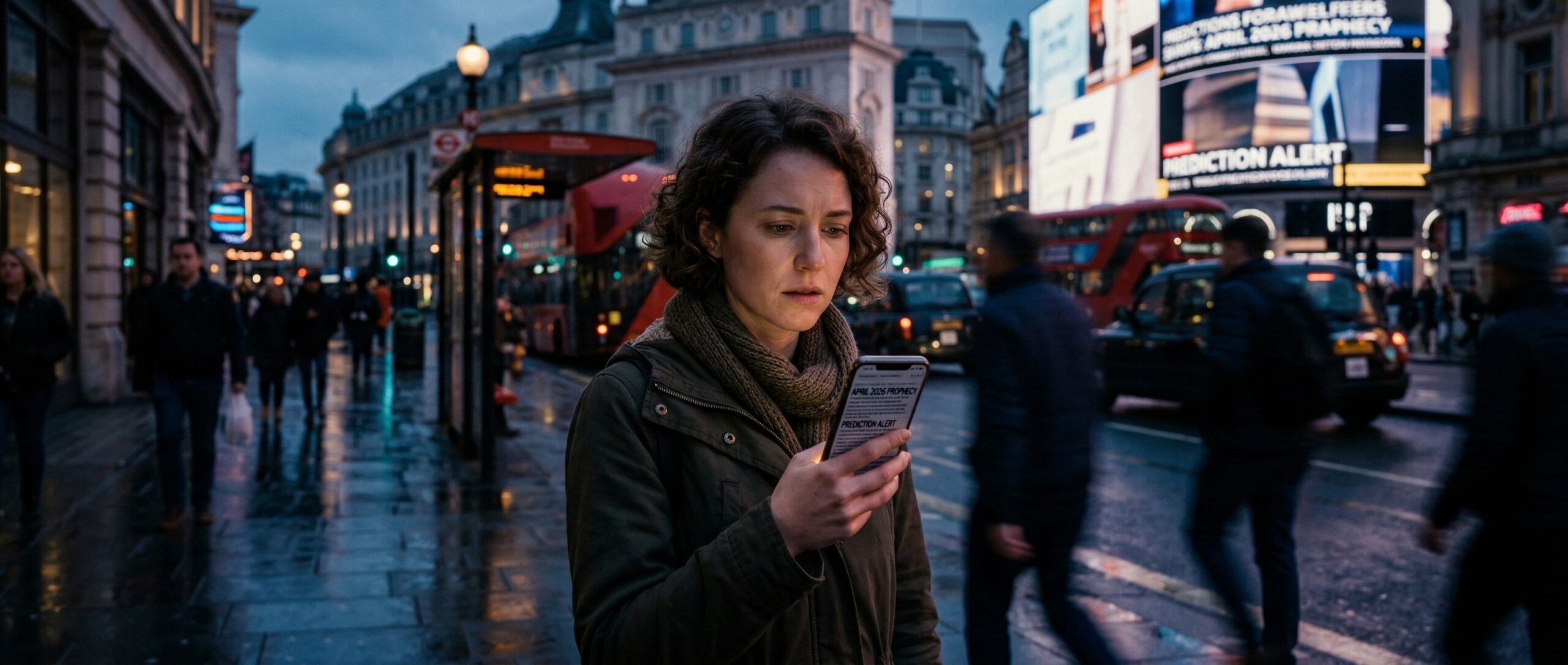
  • Comet MAPS April Omen Watch: Why Sungrazers Still Trigger Prophecy Culture in 2026

    Comet MAPS April Omen Watch: Why Sungrazers Still Trigger Prophecy Culture in 2026

    A newly discovered sungrazing comet, C/2026 A1 (MAPS), is drawing attention not just because of its close solar pass, but because celestial events like this almost instantly become omen stories online. The moment a comet is described as dramatic, uncertain, or potentially short-lived, prophecy communities, astrology circles, and collapse-minded audiences begin attaching symbolic meaning to it. That is exactly what is happening now as interest builds around April 4 and the question of whether the comet will survive its passage near the Sun.

    This is why the current buzz matters. Even before the observational outcome is settled, the comet has already entered a familiar cultural machine where astronomy and apocalyptic imagination overlap. In practical terms, the event is scientific. In online culture, it is rapidly becoming an omen test.

    What Is Happening With Comet C/2026 A1 (MAPS)?

    The core of the story is straightforward: C/2026 A1 (MAPS) is a sungrazing comet expected to pass extremely close to the Sun, with April 4 marked as the key moment for whether it survives, partially disintegrates, or breaks apart completely. Coverage has emphasized that the comet’s nucleus may be small, which makes breakup a real possibility.

    That uncertainty is a major reason the story has traction. A comet that either survives gloriously or dies dramatically is much more narratively potent than a routine sky event. It creates suspense, and suspense is exactly what prophecy and symbolism communities thrive on.

    Once an astronomical event becomes suspenseful, it stops being just observational. It becomes interpretable.

    Why Comets Turn Into Omen Stories So Easily

    Historically, comets have almost always been vulnerable to symbolic interpretation. Across cultures, they have been framed as warnings, royal omens, signs of war, signs of change, or cosmic disturbances connected to earthly instability. That symbolic legacy still lingers even in modern secular societies.

    The internet has simply accelerated the process. Today, the symbolic transformation happens in real time. A comet appears in headlines, social media clips spread, and then multiple interpretive communities begin layering meaning onto it at once. Astronomers may see orbital dynamics and material behavior. Others see a message.

    This does not mean those symbolic readings are valid. It means the cultural reflex remains deeply active.

    Why the Timing Matters So Much

    The April 4 timing gives the story extra power because date-based celestial events are especially easy to plug into prophecy culture. A specific date creates a countdown. A countdown creates anticipation. And anticipation invites narrative escalation.

    That is one reason a comet like this can get pulled so quickly into broader “sign in the heavens” discourse. If the object brightens dramatically, it will be called a sign. If it disintegrates, that too will be called a sign. If the visual outcome is ambiguous, that ambiguity itself will fuel interpretation.

    In other words, omen discourse is almost impossible to falsify once it starts.

    What the Scientific Story Actually Is

    From a scientific standpoint, the event is important because sungrazing comets are physically fragile and visually dramatic. Their behavior near the Sun can reveal a great deal about composition, structure, and survivability. That is the legitimate observational interest here.

    But the scientific story is not the same as the viral story. The scientific question is whether the comet survives perihelion and how it behaves under extreme solar stress. The viral question is what the comet means.

    That split matters because many readers encounter the symbolic layer first and the astronomical explanation second.

    Why This Story Fits the Current Prophecy Environment

    The current online environment is especially favorable to comet-omen narratives because audiences are already primed by overlapping fear systems: war anxiety, economic uncertainty, apocalyptic timelines, spiritual content, and constant algorithmic pressure toward dramatic interpretation. In that environment, a sungrazer is not just a comet. It is raw symbolic material.

    This is very similar to the dynamics we have tracked in our April Prophecy analysis, in our rapture-panic coverage, and in our Baba Vanga / Chris Bledsoe convergence feature. Different subjects, same mechanism: uncertainty becomes meaning almost instantly.

    What Skeptics Would Say

    Skeptics would argue that comet-omen thinking is one of the oldest and most durable forms of symbolic overreach. Celestial objects do not need to predict anything to become culturally magnetic. Humans are exceptionally good at projecting significance onto rare or visually dramatic sky events, especially during unstable historical moments.

    That skeptical reading is important because it reminds us that interpretive hunger often says more about the audience than about the object itself. A comet can be astronomically ordinary and still become culturally extraordinary.

    That does not make the reaction meaningless. It makes it revealing.

    Why This Story Still Matters

    For The Unexplained Company, the real significance of the Comet MAPS omen watch is not whether prophecy communities are “right.” It is that celestial events continue to act as psychological mirrors during tense times. People look up and see not just a physical object, but a reflection of the fears, expectations, and symbolic systems they are already carrying.

    That is why comet stories remain so durable. They let science and myth coexist in the same cultural moment without fully resolving into one another.

    Final Assessment

    The current C/2026 A1 (MAPS) surge is best understood as both an astronomy story and an omen story — not because the comet is objectively prophetic, but because human culture keeps making dramatic sky events prophetic whenever uncertainty is high enough.

    If the comet survives, the spectacle will feed the myth. If it breaks apart, the collapse will feed the myth. And if it does something in between, ambiguity will feed it anyway. That may be the most important takeaway of all: the comet’s trajectory matters, but so does the interpretive machinery waiting below it.

    Frequently Asked Questions

    What is Comet C/2026 A1 (MAPS)?

    It is a sungrazing comet expected to pass extremely close to the Sun, drawing attention because it may either survive dramatically or break apart during the event.

    Why are people calling it an omen?

    Because comets have long been interpreted as signs of change, disaster, or prophecy, and online communities still apply that symbolic framework to dramatic sky events.

    Is there any scientific reason to treat the comet as prophetic?

    No. Scientifically, it is an astronomical object undergoing a close solar pass. The omen framing is cultural and symbolic, not evidence-based.

    Why is the April 4 timing important?

    The date creates a clear countdown point, which makes it much easier for prophecy, astrology, and doom-oriented audiences to attach narrative significance to the event.

    Related Articles:

    This article was created using Media Blaster – Your content production specialist. Visit www.mediablaster.io for more information.
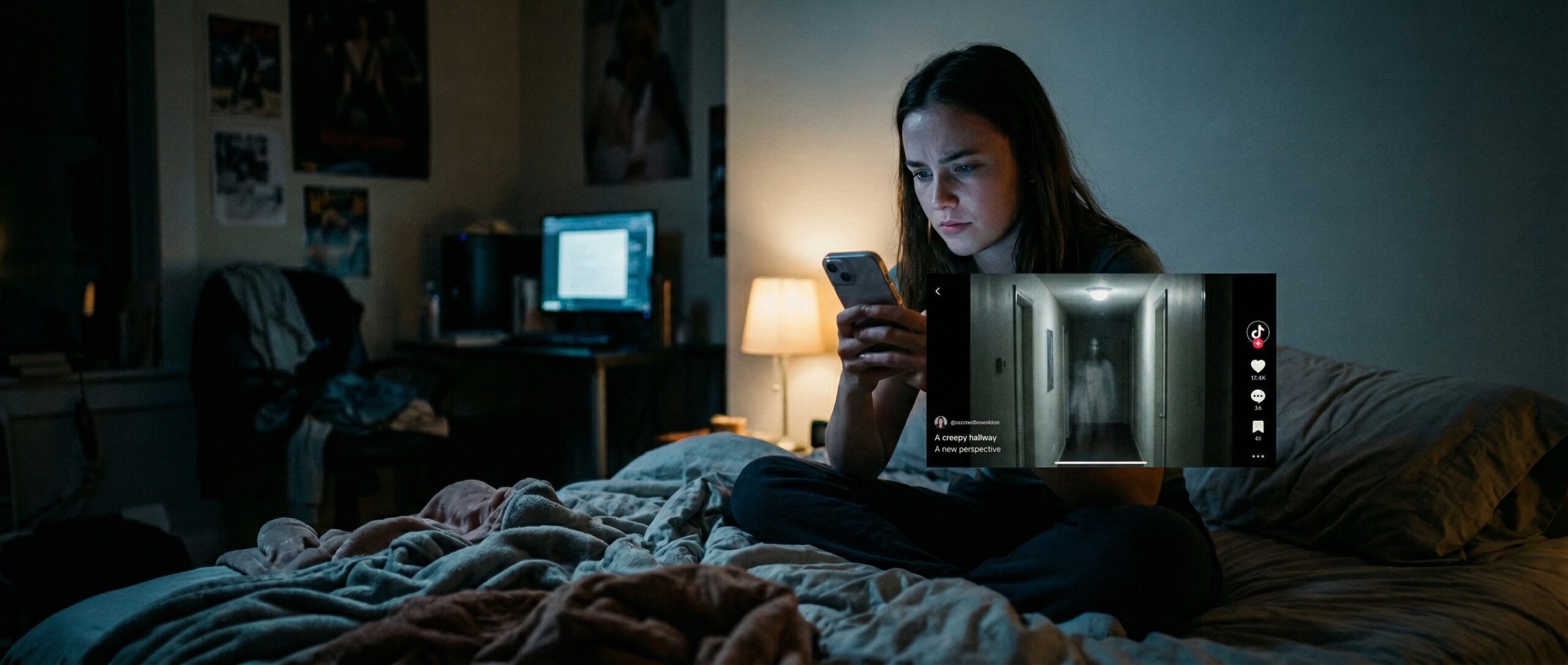
  • Mermaid Inn Haunted Hotel Buzz: Why Britain’s Most Famous Ghost Inn Never Stays Quiet for Long

    Mermaid Inn Haunted Hotel Buzz: Why Britain’s Most Famous Ghost Inn Never Stays Quiet for Long

    The Mermaid Inn in Rye, East Sussex is back in the headlines, and that alone is enough to reignite one of Britain’s most durable paranormal-travel stories. Fresh mainstream coverage has revived interest in the inn’s long-running haunted reputation, with familiar elements returning to center stage: Room 17, secret passages, a lady in white, moving furniture, and the lingering sense that this is one of those rare old buildings whose ghost stories feel inseparable from the walls themselves.

    That is why this story matters. The Mermaid Inn is not just another allegedly haunted hotel. It is one of the UK’s most mythologized paranormal hospitality sites, and every time a major outlet reintroduces it through a present-day stay or first-person feature, the legend gets refreshed for a new audience.

    Why the Mermaid Inn Keeps Coming Back

    One reason the Mermaid Inn stays culturally alive is that it sits at the perfect intersection of ghost lore, heritage tourism, and old-English atmosphere. Haunted-hotel stories do not spread only because people believe in ghosts. They spread because they offer a complete experience package: history, architecture, folklore, suspense, and the possibility that an overnight stay could turn an ordinary trip into a personal encounter with the unexplained.

    The Mermaid Inn has that formula in abundance. It is old, visually distinctive, tied to local smuggling mythology, and dense with retellable details. That makes it ideal for modern paranormal travel media.

    What the Current Mermaid Inn Buzz Is Based On

    The latest surge appears to come from a new mainstream feature revisiting the inn’s haunted reputation through a contemporary visitor experience. The shareable details are exactly the ones you would expect to perform well online: the supposedly active Room 17, a rocking chair said to move on its own, the recurring “lady in white” motif, and stories of ghostly figures connected to the building’s long history.

    None of these are truly new claims in the strict evidentiary sense. What is new is the media framing. When a legacy haunting is reintroduced through fresh travel coverage, it becomes newly searchable, newly clickable, and newly discussable.

    That matters because old hauntings often survive not through continuous evidence, but through periodic reinjection into public attention.

    Why Haunted Inns Work So Well in the Public Imagination

    Hotels and inns are especially powerful in paranormal culture because they combine transience with intimacy. Guests sleep there. They are physically vulnerable there. They spend the night in unfamiliar rooms and often in old buildings full of sound, shadow, and suggestive architecture.

    That makes haunted-inn narratives unusually sticky. A ghost story in an old field is one thing. A ghost story in a room where you can spend the night is another.

    The Mermaid Inn benefits from this perfectly. Its appeal is not just “there may be ghosts here.” It is “you can personally enter the setting of the legend.”

    The Smuggling-Lore Advantage

    Part of what makes the Mermaid Inn so enduring is that it is not built on ghost stories alone. It is also attached to criminal folklore, especially old smuggling narratives tied to the Hawkhurst Gang and the broader romance of hidden routes, secret dealings, and violent history along the English coast.

    That historical texture matters because it gives the haunting lore a stronger dramatic foundation. Ghost stories rooted in smuggling, betrayal, violence, and concealed passageways feel more narratively complete than generic haunting tales. The past already sounds dangerous, so the supernatural overlay feels easier to accept.

    This is one reason haunted heritage sites with criminal backstories tend to perform so well in media. They have built-in narrative scaffolding.

    What Skeptics Would Say About the Mermaid Inn

    Skeptics would point out that famous haunted hotels often become self-reinforcing suggestion environments. People arrive expecting to feel something. They notice creaks, shadows, old furniture movement, drafts, and sleep-disrupted sensations more intensely than they would in an ordinary building. Once a location’s reputation becomes fixed, every ambiguous moment starts arriving pre-interpreted.

    That does not mean guests are inventing what they experienced. It means expectation and environment can work together in powerful ways.

    Old inns are especially vulnerable to this because they naturally contain uneven floors, aged wood, shifting temperatures, odd acoustics, and architectural quirks that can feel uncanny even without any paranormal explanation.

    Why This Story Still Matters

    For The Unexplained Company, the Mermaid Inn story matters because it shows how paranormal tourism sustains itself in 2026. The strongest haunted-location stories are no longer only local folklore. They are media loops. A place becomes famous, gets periodically rediscovered by mainstream outlets, and then re-enters digital circulation as both a travel destination and a supernatural narrative object.

    That process keeps legacy hauntings alive far beyond their original context. It also means that haunted hospitality stories now function as both folklore and lifestyle content.

    This overlaps with the same event-and-experience culture we explored in our article on paranormal event culture, our piece on the Oregon ghost conference story, and our coverage of the Oregon Ghost Conference’s wider cultural significance. The form changes, but the mechanism is similar: people want to experience the unexplained, not just read about it.

    Why the Mermaid Inn Is More Than a Simple Ghost Story

    The most interesting thing about the Mermaid Inn is that it works on multiple levels at once. For believers, it is an active haunted location. For tourists, it is an atmospheric heritage destination. For skeptics, it is a fascinating example of how suggestion, architecture, folklore, and media reinforcement create an unusually durable legend.

    That layered quality is exactly why it keeps resurfacing. The inn can satisfy almost every audience without needing definitive proof.

    Final Assessment

    The latest Mermaid Inn haunted-hotel buzz is less about new evidence than about the enduring power of a near-perfect paranormal setting. An old inn, secret passages, smuggling lore, ghost stories, and a modern media revival are more than enough to keep the legend alive.

    Whether the Mermaid Inn is truly haunted or simply one of Britain’s most effective folklore environments, it remains one of the strongest examples of how paranormal myth and tourism continue to reinforce one another.

    Frequently Asked Questions

    Why is the Mermaid Inn famous in paranormal culture?

    Because it combines a long-standing haunted reputation with historic architecture, smuggling lore, and repeated ghost stories tied to specific rooms and apparitions.

    Is there new evidence the Mermaid Inn is haunted?

    Not in any strong evidentiary sense. The current buzz is driven more by renewed media coverage and first-person travel storytelling than by newly verified paranormal proof.

    Why do haunted hotels attract so much attention?

    Because they offer a direct experience. People can physically stay in the location, which makes the haunting feel more personal and more emotionally real.

    What would skeptics say about reports from the Mermaid Inn?

    Skeptics would say the inn’s age, atmosphere, architecture, and powerful reputation create a strong suggestion environment where normal sensations can feel paranormal.

    Related Articles:

    This article was created using Media Blaster – Your content production specialist. Visit www.mediablaster.io for more information.
  • Artemis II Live Feed UFO Chatter: Why NASA Glitches Keep Turning Into Conspiracy Stories

    Artemis II Live Feed UFO Chatter: Why NASA Glitches Keep Turning Into Conspiracy Stories

    The UFO chatter around NASA’s Artemis II live coverage is a perfect example of how modern anomaly culture works. A mission experiences routine communication issues, viewers clip an ambiguous moment, social platforms pull it out of context, and suddenly a technical hiccup begins mutating into a cover-up story. That is exactly what happened with the latest burst of claims around the Artemis II live feed UFO discussion now circulating across Reddit, YouTube, and conspiracy-leaning communities.

    Here is the clearest answer: there is currently no verified evidence that NASA captured a genuine UFO during the Artemis II live feed. What exists is a fast-moving online interpretation cycle built on partial clips, viewer suspicion, space-program mystique, and the long-standing belief that NASA is one of the institutions most likely to hide something extraordinary if it ever appeared on camera.

    What Happened on the Artemis II Live Feed?

    The current wave of discussion appears to have been sparked by online posts claiming that something strange showed up during Artemis II mission coverage. Some of the conversation has centered on short clips and archived references shared across Reddit and other social platforms, where viewers argued that a visual anomaly or awkward feed shift looked suspicious enough to deserve closer inspection.

    At the same time, separate mission reporting documented multiple real technical issues and troubleshooting moments during the early mission period. That matters because real technical disruptions create the perfect environment for conspiracy interpretation. If a feed stutters, a signal drops, audio changes, or the presentation shifts unexpectedly, some viewers immediately begin asking whether they just witnessed censorship rather than routine engineering friction.

    This is why the story spread so quickly. It wasn’t just “something odd in space.” It was “something odd in space during a stream people already half-expect NASA to sanitize.”

    Why NASA Live Feeds Always Attract UFO Claims

    NASA has occupied a special place in UFO culture for decades. To believers, it sits at the intersection of elite scientific authority, secretive space operations, classified aerospace history, and global public trust. That combination makes the agency a magnet for anomaly claims.

    Whenever something unusual appears in NASA footage — even briefly — the event tends to trigger a familiar script:

    • a visual ambiguity appears
    • someone clips it
    • the clip detaches from its original context
    • viewers begin narrating intent into technical changes
    • the absence of proof becomes proof of concealment

    That pattern is one reason Artemis II was almost guaranteed to generate at least one UFO rumor cycle. Space missions produce high attention, high uncertainty, and lots of technically confusing visuals. Those are ideal conditions for anomaly culture.

    What the Strongest Skeptical Explanation Looks Like

    The most grounded interpretation is that the Artemis II UFO chatter reflects a mix of ordinary live-feed ambiguity, mission troubleshooting, and pattern recognition amplified by social media. Space footage is notoriously easy to misread. Reflections, lens flares, signal artifacts, compression oddities, drifting debris, camera movement, lighting changes, and partial context can all create the impression of something more exotic than what is actually on screen.

    That does not mean every viewer is acting in bad faith. It means live technical environments naturally produce moments that look uncanny when isolated.

    And once those moments are clipped and stripped of surrounding mission context, they become much easier to mythologize.

    Why This Story Still Matters Even Without Proof

    For The Unexplained Company, the real value of this story is not whether a UFO was captured on camera. It is what the reaction tells us about the current state of public trust, media consumption, and conspiracy psychology.

    People increasingly do not wait for institutions to interpret events for them. They watch, clip, speculate, remix, and distribute their own competing realities in real time. That means a NASA live feed is no longer just a technical broadcast. It is a battlefield of interpretation the moment anything unclear appears on screen.

    This also helps explain why even weak anomaly stories can perform so well online. They let audiences feel participatory. Viewers are not just watching a mission. They are hunting for hidden truths inside it.

    The Artemis II UFO Story in the Bigger Disclosure Context

    Another reason this micro-story gained traction is that it landed inside a broader disclosure-era environment already shaped by Pentagon UAP stories, congressional testimony, and years of public debate over whether official institutions are withholding the best evidence.

    That wider climate changes how viewers process ambiguity. In another era, a glitchy moment on a live space feed might simply have been dismissed as noise. Now, many audiences interpret ambiguity through a secrecy lens first.

    This is the same pattern we explored in The Mellon Leak and in our article on Eric Burlison’s secret UFO video comments. The details differ, but the cultural mechanism is the same: once people suspect the strongest evidence is hidden, unclear material becomes more potent, not less.

    Why Space-Conspiracy Stories Are So Durable

    Space missions occupy a near-perfect symbolic zone. They involve advanced technology, restricted environments, difficult visuals, and institutions most people cannot independently check. Add the emotional weight of exploration and the mystery of the cosmos, and even a brief anomaly can feel loaded with cosmic significance.

    That is why stories like this linger even when no hard evidence appears. They live in a symbolic ecosystem where uncertainty already feels meaningful.

    For many viewers, the possibility matters more than the proof.

    What Responsible Readers Should Do With Stories Like This

    The best way to approach an Artemis II live feed UFO claim is to ask a few simple questions:

    • Is the clip complete, or was it extracted from a longer technical sequence?
    • Are there mission-log explanations for any feed changes or glitches?
    • Does the anomaly still look unusual when viewed in full context?
    • Is the claim being strengthened by evidence, or by audience suspicion alone?

    Those questions do not kill the mystery. They simply separate curiosity from automatic escalation.

    Final Assessment

    The current Artemis II live feed UFO chatter is best understood as a modern media event rather than a confirmed space anomaly. The story spread because it had everything UFO audiences respond to: NASA, live video, technical confusion, rapid clipping, and an institution already surrounded by secrecy narratives.

    That combination is enough to create a viral mystery even when the evidence remains weak. And in 2026, that may be the real story: not whether a UFO crossed the frame, but how quickly the public is now prepared to believe that it might have.

    Frequently Asked Questions

    Was a UFO confirmed on the Artemis II live feed?

    No. There is currently no verified evidence showing that a genuine UFO appeared on the Artemis II live feed.

    Why are people talking about an Artemis II live feed UFO?

    Because viewers circulated clips and claims suggesting something unusual appeared during mission coverage, and those claims were amplified by real technical issues and online speculation.

    Why do NASA streams attract so many anomaly claims?

    NASA footage combines difficult visuals, institutional mystique, and public suspicion, making it easy for ambiguous moments to be reinterpreted as possible cover-up material.

    What is the most likely explanation?

    The most likely explanation is a combination of normal live-feed ambiguity, technical hiccups, and social-media amplification rather than a confirmed extraterrestrial event.

    Related Articles:

    This article was created using Media Blaster – Your content production specialist. Visit www.mediablaster.io for more information.
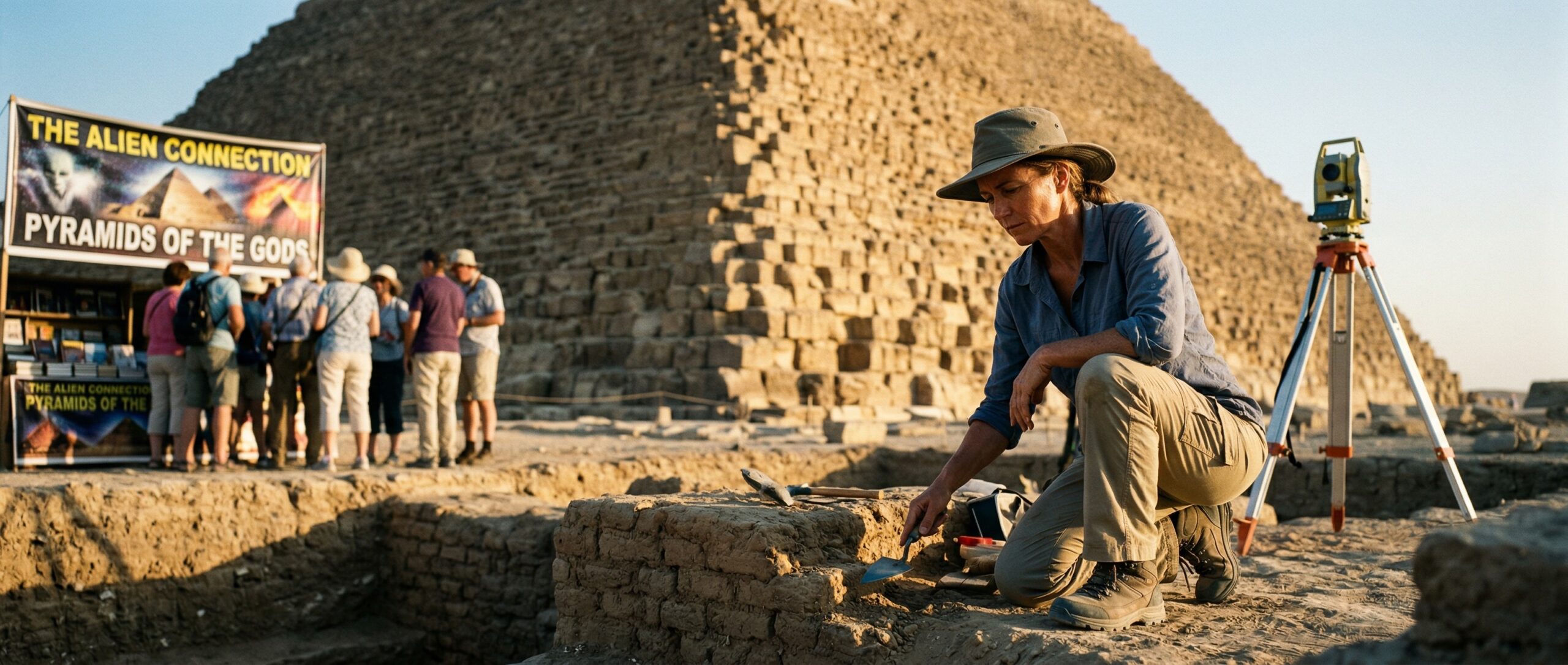
  • Great Pyramid Secret Corridor Speculation: Why One Sealed Space Can Reignite Every Hidden-Chamber Theory

    Great Pyramid Secret Corridor Speculation: Why One Sealed Space Can Reignite Every Hidden-Chamber Theory

    Fresh speculation is building around the Great Pyramid of Giza after renewed reporting on a narrow internal corridor and the possibility that it could lead to a hidden chamber connected to Khufu. Stories like this always spread fast, but this one is especially potent because it combines one of the world’s most iconic monuments with a near-perfect mystery trigger: a sealed space inside a structure many people already believe still contains undiscovered secrets.

    That is why the current wave of attention matters. Even before any new chamber is confirmed, the combination of robots, inaccessible passages, hidden voids, and sealed barriers is enough to reactivate the entire hidden-history imagination around Giza. In the modern media environment, that kind of setup does not stay archaeological for long. It becomes conspiracy content, mystery content, and symbolic-content bait all at once.

    What the Great Pyramid Corridor Story Actually Says

    The latest round of coverage centers on renewed reporting that a narrow corridor or internal passage in the Great Pyramid may extend toward a still-inaccessible area, and that specialized robotic equipment is being used to explore the structure more carefully. Some accounts frame the corridor as a possible route to a hidden chamber, with the strongest versions of the story implying that the sealed endpoint could conceal something historically significant.

    This is exactly the type of claim that travels well because it offers both a real archaeological hook and a mythic payoff. A corridor inside the Great Pyramid is already compelling. A corridor that may terminate in a still-hidden chamber instantly becomes global mystery fuel.

    Even cautious readers can understand why. Giza is one of the few sites on Earth where the public is always willing to believe one more astonishing discovery might still be waiting behind stone.

    Why Giza Keeps Producing Stories Like This

    The Great Pyramid exists in a unique symbolic category. It is simultaneously one of the most studied ancient structures in the world and one of the most mythologized. That dual status makes it unusually vulnerable to recurring waves of speculation.

    Every time researchers identify a new void, corridor, anomaly, shaft, or inaccessible architectural feature, the story enters a cultural machine much larger than archaeology itself. Some audiences see genuine scientific progress. Others see confirmation that major discoveries have long been hidden or ignored. Still others immediately leap toward alternative-history ideas involving lost civilizations, forbidden chambers, sacred technology, or suppressed knowledge.

    This does not mean the science is invalid. It means the setting is almost too symbolically loaded to stay contained within normal reporting.

    Why the “Sealed Barrier” Detail Is So Powerful

    The strongest viral element in the current story is not just the corridor — it is the idea of a sealed endpoint. The moment a report includes words like “sealed stone,” “blocked passage,” or “hidden chamber,” the narrative takes on a much larger mythic charge.

    That is because a sealed barrier suggests intentional concealment. And intentional concealment is where mystery culture thrives.

    In public imagination, a corridor without an endpoint is architecture. A corridor ending in a sealed barrier is a promise.

    It implies that something is being kept apart from the visible world. Whether that something is a structural dead end, a construction feature, a void, a ritual chamber, or nothing of dramatic importance at all becomes almost secondary. The symbolism does most of the work.

    What Archaeologists and Skeptics Would Say

    The strongest skeptical response is straightforward: unknown space inside a pyramid does not automatically imply hidden treasure, revolutionary knowledge, or suppressed history. Ancient monumental structures are complex. Voids, blocked passages, structural spaces, and inaccessible internal features can exist for many reasons, including engineering, staging, load management, construction sequence, or ritual design.

    That is why serious archaeological interpretation moves more slowly than viral speculation. The fact that a space is hidden does not tell us what it means.

    Skeptics would also point out that Giza’s most dramatic stories tend to escalate faster than the evidence warrants. Once a corridor is discussed publicly, the internet begins writing its ending before the science is finished.

    That pattern is familiar across multiple Egypt-related mystery cycles.

    Why This Story Still Matters

    For The Unexplained Company, the importance of this story is not just whether a new chamber is eventually confirmed. It is what the reaction reveals about the ongoing power of ancient-mystery culture. Giza remains one of the most effective story engines in the entire unexplained world because it sits at the crossroads of archaeology, myth, empire-scale symbolism, and public distrust of closure.

    People do not want the Great Pyramid to feel complete. They want it to remain partially unreadable.

    That desire matters because it keeps every new architectural discovery from being interpreted neutrally. The site is simply too mythic for that. A corridor is never just a corridor for long.

    How This Fits the Larger Hidden-History Pattern

    This corridor story fits neatly alongside other ancient-site narratives that gain intensity not because the evidence is overwhelming, but because the symbolic setting is so potent that even small discoveries feel world-changing. We have seen similar dynamics in our recent coverage of the second Sphinx claim, in our article on AI-discovered megalithic analogues in Israel, and in our coverage of the Nazca geoglyph discoveries.

    In each case, the pattern is the same: archaeological or quasi-archaeological discovery enters public discourse, uncertainty expands, and audiences begin layering symbolic meaning onto incomplete evidence.

    That does not make the stories worthless. It makes them culturally revealing.

    Final Assessment

    The current Great Pyramid corridor speculation is significant because it shows how quickly archaeological reporting can transform into a larger mystery event once the ingredients are right. A hidden passage, a robotic probe, a sealed barrier, and the Great Pyramid itself are enough to ignite enormous imagination before any final answer arrives.

    Maybe the corridor leads to something extraordinary. Maybe it leads to something architecturally important but far less cinematic. Either way, the deeper story is already unfolding in public: Giza remains one of the last places on Earth where even a narrow corridor can still feel like a doorway into the impossible.

    Frequently Asked Questions

    What is the Great Pyramid corridor story about?

    It centers on renewed speculation that a narrow internal corridor in the Great Pyramid may lead to a hidden chamber, with robotic tools reportedly being used to inspect inaccessible areas more closely.

    Has a hidden chamber actually been confirmed?

    Not at this stage. The current story is driven by speculation around internal architecture and the possibility of unexplored space, not by a fully confirmed public discovery of a major chamber.

    Why do stories like this spread so fast?

    Because the Great Pyramid is one of the world’s most symbolically loaded sites. Even small new discoveries there tend to get interpreted through mystery, conspiracy, and hidden-history frameworks.

    What is the skeptical view?

    Skeptics and archaeologists would stress that hidden spaces inside ancient monuments can have many ordinary explanations, and that a corridor or sealed barrier does not automatically imply treasure, secrets, or suppressed history.

    Related Articles:

    This article was created using Media Blaster – Your content production specialist. Visit www.mediablaster.io for more information.

  • Bob Lazar on Joe Rogan: What Luigi Vendittelli’s New Documentary Adds to the S4 Story

    Bob Lazar on Joe Rogan: What Luigi Vendittelli’s New Documentary Adds to the S4 Story

    The latest Bob Lazar on Joe Rogan conversation isn’t just another retelling of the Area 51 legend. This time, filmmaker Luigi Vendittelli brings a new angle: a documentary reconstruction of the alleged S4 facility built using mostly handmade CGI, detailed location research, and visual recreations designed to match Lazar’s decades-old account. For longtime UFO followers, that makes this appearance more than nostalgia. It reframes Bob Lazar’s story as something being actively re-investigated, re-visualized, and re-packaged for a modern audience that now expects both technical detail and cinematic proof.

    What makes this interview so compelling is the tension at its core. Bob Lazar still presents his story as an account of direct experience inside a compartmentalized black project studying non-human technology. Luigi Vendittelli, meanwhile, explains how his team tried to reconstruct that world visually and geographically. Together on Joe Rogan, they turn an old UFO case into a new media event.

    Why “Bob Lazar on Joe Rogan” Still Pulls So Much Attention

    Few names in UFO culture still generate as much immediate attention as Bob Lazar. Decades after first claiming he worked on reverse-engineering alien craft at a hidden site called S4 near Area 51, Lazar remains one of the most divisive and durable figures in the entire disclosure landscape.

    That is why every major appearance matters. The phrase Bob Lazar on Joe Rogan performs so well because it fuses two powerful audiences: long-time UFO believers and mass-culture podcast listeners. Rogan’s platform gives Lazar mainstream reach, while Lazar brings Rogan’s audience one of the most iconic hidden-tech stories in American conspiracy history.

    This newer appearance is especially interesting because it is not just Lazar telling the same story again. Vendittelli’s involvement changes the framing from pure testimony to visual reconstruction and documentary investigation.

    Luigi Vendittelli’s Documentary Approach Changes the Conversation

    One of the most important revelations from the interview is Vendittelli’s explanation of how the documentary was built. According to him, the production used roughly 90% handmade CGI in Blender and 10% AI to recreate the S4 facility and even generate a de-aged version of Lazar.

    That matters because UFO storytelling is entering a new era. It is no longer enough to simply recount extraordinary claims. Audiences now expect immersive visual reconstruction, simulated environments, and a more forensic style of presentation. Vendittelli’s process reflects that shift perfectly.

    In the interview, Lazar says seeing the facility recreated so closely felt almost like downloading old memories directly from his mind. That is a striking phrase, because it reveals how emotionally powerful visual reconstruction can be when tied to a long-running personal narrative. Whether you believe Lazar or not, the documentary’s imagery appears to have given the story a new psychological charge.

    What Bob Lazar Says About Working at S4

    A core part of the Bob Lazar on Joe Rogan discussion is Lazar’s continued description of the work environment at S4. He portrays it as intensely compartmentalized, high-pressure, and intentionally isolating. According to Lazar, scientific groups were separated, communication was restricted, and personnel were denied enough context to understand the full scope of the program.

    That level of compartmentalization has always been central to Lazar’s credibility with believers. To them, it sounds exactly like how a real black project involving advanced non-human technology would operate. To skeptics, it also conveniently explains why so much of the story cannot be independently verified.

    In the interview, Lazar again discusses specific craft design elements, including the waveguide and the alleged element 115 reactor. Those details are important because Lazar’s long-term reputation has always rested partly on the consistency of his technical language. Even critics often acknowledge that part of what makes his story so sticky is how confidently and repeatedly he returns to these same structural claims.

    Intimidation, Surveillance, and the Cost of Going Public

    Another major section of the interview focuses on the intimidation Lazar says he faced after going public. He reflects on decades of pressure, surveillance, and what he describes as unauthorized access to personal property.

    This theme is crucial because it is one of the main reasons Lazar remains so compelling to UFO audiences. For believers, the intimidation narrative functions as a kind of supporting evidence. If powerful people were trying to silence him, then the logic goes, he must have been close to something real.

    That does not prove the claims themselves. But it does explain why the emotional structure of Lazar’s story remains powerful. His narrative is not just about alien technology. It is about the cost of revealing it.

    The “Soul Catcher,” Zeta Reticuli, and Why UFO Lore Keeps Expanding

    Rogan and Lazar also move into broader UFO mythology during the conversation, including discussion of the so-called “soul catcher” concept and the recurring reference to the Zeta Reticuli star system. These are important moments because they show how Lazar’s story does not exist in isolation. It lives inside a much larger ecosystem of UFO lore, abduction theory, cosmic speculation, and spiritualized interpretations of non-human intelligence.

    This is one reason the interview resonates beyond pure nuts-and-bolts UFO fans. Lazar’s core story is about propulsion, secrecy, and reverse engineering, but the surrounding discourse increasingly includes consciousness, metaphysics, and interstellar mythology. Joe Rogan’s format encourages exactly that expansion, letting the discussion move fluidly between technical claims and much more speculative territory.

    For some listeners, that makes the story richer. For others, it makes it harder to separate strong claims from accumulating folklore.

    Vendittelli’s Investigative Research Gives the Story a New Layer

    One of the strongest contributions from Luigi Vendittelli is his explanation of the research process behind the documentary. He describes using Department of the Interior maps, outside researchers, and site-layout analysis — including work connected to researchers like Scott Mitchell — to locate the alleged hangar bay doors and match the layout of the facility to Lazar’s long-standing descriptions.

    This matters because it turns the documentary into more than pure dramatization. Even if the underlying claims remain disputed, the reconstruction effort is being presented as a kind of investigative visual journalism. That gives the material a stronger hook for modern viewers, especially those who are less interested in oral history and more interested in geospatial or architectural confirmation attempts.

    In practical terms, Vendittelli’s work does not prove Lazar’s story. But it does make the story feel more legible, more mappable, and more researchable than earlier retellings did.

    Why This Joe Rogan Appearance Matters More Than Older Lazar Interviews

    The reason this interview matters is not just because Lazar appeared on a huge platform. It matters because the story is being updated for a new media environment.

    In the past, Bob Lazar was mostly a testimony figure — someone you believed or rejected based on interviews, snippets, and decades of repeated claims. In this appearance, the story becomes a multi-layered media product:

    • Lazar provides continuity and emotional authenticity
    • Vendittelli provides cinematic reconstruction and research framing
    • Rogan provides cultural scale and a mass audience

    Together, that combination gives the Lazar myth fresh life.

    Watch the Interview

    If you want to watch the interview yourself, here is the episode discussed in this article:

    Final Assessment: What “Bob Lazar on Joe Rogan” Means in 2026

    The latest Bob Lazar on Joe Rogan appearance works because it gives audiences two things at once: the familiar weight of an iconic UFO testimony and the freshness of a technically ambitious documentary reconstruction. Lazar still tells the same essential story — secret work at S4, alien craft, element 115, intimidation, compartmentalized science. But Vendittelli adds a new layer by trying to visualize the world Lazar has described for decades.

    That does not settle the argument. Skeptics will still say the story remains unproven, and believers will still say the consistency itself is evidence. But this interview makes one thing clear: Bob Lazar’s story is not fading. It is evolving.

    And in a media culture increasingly obsessed with disclosure, reconstruction, and hidden-history narratives, that evolution may be exactly why Lazar still matters.

    Frequently Asked Questions

    Who was with Bob Lazar on Joe Rogan?

    Bob Lazar appeared with filmmaker Luigi Vendittelli, who discussed the documentary reconstruction of Lazar’s alleged S4 experiences.

    What did Luigi Vendittelli say about the documentary?

    Vendittelli explained that the film used mostly handmade CGI in Blender, plus a smaller amount of AI, to recreate the S4 facility and a younger version of Lazar.

    What does Bob Lazar say he worked on at S4?

    Lazar says he worked on reverse-engineering non-human craft at a secret facility near Area 51, including studying propulsion systems and a reactor tied to element 115.

    Why is Bob Lazar still controversial?

    Because his story remains one of the most famous and detailed UFO claims ever made, but it has never been definitively proven and is still heavily disputed by skeptics.

    Where can I watch Bob Lazar on Joe Rogan?

    You can watch the interview here: Bob Lazar and Luigi Vendittelli on Joe Rogan.

    Related Articles:

    This article was created using Media Blaster – Your content production specialist. Visit www.mediablaster.io for more information.

  • Best True Crime Podcasts of 2026: 10 Shows You Should Be Listening To Right Now

    Best True Crime Podcasts of 2026: 10 Shows You Should Be Listening To Right Now

    If you’re looking for the best true crime podcasts in 2026, the field is more crowded — and more competitive — than ever. The genre now stretches far beyond serial killer retrospectives and cold-case recaps. Today’s top shows mix investigative journalism, courtroom analysis, long-form storytelling, wrongful-conviction reporting, and documentary-level production. That’s great for listeners, but it also means finding the truly essential shows takes more work.

    This list is built to make that easier. Below, you’ll find the best true crime podcasts to listen to in 2026, including long-running staples, prestige investigative series, and one show that deserves much more attention from listeners who like dark cases handled with serious atmosphere: Dark Investigations.

    To keep this useful, every entry includes a direct link to the podcast’s official page or relevant home site.

    How We Chose the Best True Crime Podcasts of 2026

    There is no single perfect formula for ranking the best true crime podcasts, but the strongest shows usually stand out in a few key areas: storytelling quality, reporting depth, pacing, host credibility, production value, and whether the series leaves you feeling informed instead of merely manipulated.

    For this list, the focus is on shows that continue to matter in 2026 because they either define the genre, keep evolving, or offer something distinct enough to stand out in a crowded market.

    1. Dark Investigations

    Dark Investigations earns a place on this list because it sits in a compelling lane between narrative true crime and the darker edge of unexplained storytelling. If you like shows that do more than summarize cases — and instead build mood, tension, and a deeper sense of the mystery around them — this is one of the most interesting titles to watch in 2026.

    What makes it stand out is tonal control. Some true crime podcasts rely on speed, banter, or blunt shock value. Dark Investigations leans into atmosphere and sustained curiosity, which gives it a different feel from more mainstream network productions. For listeners who also enjoy paranormal-adjacent or high-strangeness storytelling, it offers a natural crossover entry point.

    2. Serial

    Serial remains one of the most important true crime podcasts ever made because it fundamentally reshaped the genre. Even in 2026, it still casts a long shadow over nearly every investigative audio series that followed it.

    The reason it endures is simple: it made long-form audio investigation feel urgent, intimate, and culturally central. For anyone exploring the best true crime podcasts, Serial is still required listening — both as a landmark and as a standard against which many later shows are judged.

    3. Criminal

    Criminal continues to be one of the smartest and most consistently rewarding true crime podcasts available. Hosted by Phoebe Judge, the show is less interested in lurid sensationalism than in the strange, human, and often morally complicated edges of crime.

    That approach is exactly why it remains essential. Criminal has range. One episode may focus on an infamous case, while another explores an overlooked legal issue, a bizarre historical crime, or a story about punishment, survival, or justice that most crime shows would never touch.

    4. Casefile True Crime

    Casefile True Crime is still one of the purest examples of high-discipline true crime audio. Its anonymous host, tightly structured scripts, and serious tone help the show maintain a clear identity in a genre where personality often overwhelms substance.

    For listeners who want immersive case breakdowns without excessive host chatter, Casefile remains one of the best true crime podcasts in 2026. It is especially strong when covering complex timelines, international cases, and crimes that demand careful narrative organization.

    5. Dateline NBC

    Dateline NBC continues to dominate because it combines broadcast-grade reporting with a massive archive of cases. It has reach, discipline, and the kind of established credibility that newer podcasts still struggle to match.

    There is a reason Dateline remains a default recommendation for true crime fans. The stories are polished, the reporting is familiar and reliable, and the format still works incredibly well in audio. If you want a dependable, high-volume entry in the genre, this is still one of the easiest recommendations to make.

    6. Bear Brook

    Bear Brook remains one of the strongest examples of what true crime podcasting can do at its best. The show’s first season became a benchmark because it combined deeply unsettling storytelling with real investigative progress and a sense of widening mystery that few podcasts have matched.

    What makes Bear Brook so powerful is that it does not just recount a crime. It maps the human damage around it, follows the evolving investigation, and lets the scale of the case reveal itself in layers. For many listeners, it is still one of the highest-quality limited true crime series ever released.

    7. Someone Knows Something

    Someone Knows Something remains essential for listeners who prefer empathetic, patient, deeply reported true crime storytelling. Hosted by David Ridgen, the podcast has always excelled at centering people rather than spectacle.

    That matters in 2026, when true crime audiences are increasingly more sensitive to exploitation, tone, and victim treatment. Someone Knows Something proves that a show can be compelling without becoming exploitative, and that alone makes it one of the best true crime podcasts still working at a high level.

    8. In the Dark

    In the Dark remains one of the most respected titles in investigative true crime because it repeatedly demonstrated that podcasting can do more than entertain — it can materially affect public understanding of a case.

    That gives it a different kind of authority. While many crime podcasts are content products, In the Dark often feels like actual reporting first and audio second. If you want the investigative end of the genre, rather than just suspense and structure, this is still one of the strongest recommendations available.

    9. Your Own Backyard

    Your Own Backyard became one of the most talked-about true crime podcasts of the modern era for good reason. It showed how focused, persistent, case-driven audio reporting could galvanize public attention and become central to ongoing interest in a long-cold disappearance.

    Its reputation remains strong in 2026 because listeners still point to it as an example of immersive, emotionally intelligent crime storytelling that never loses sight of the victim at the center of the case.

    10. Anatomy of Murder

    Anatomy of Murder continues to earn a place on best true crime podcasts lists because it offers a highly accessible format backed by credible experience. Hosted by a former deputy sheriff and a former prosecutor, the series gives listeners a more procedural look at how murder cases unfold.

    That practical edge helps it stand out. Not every true crime listener wants a serialized prestige documentary. Sometimes they want a well-constructed case breakdown with professional insight, and Anatomy of Murder does that consistently.

    What Makes a True Crime Podcast Worth Listening to in 2026?

    The best true crime podcasts in 2026 tend to share a few traits. They respect victims, avoid unnecessary sensationalism, understand pacing, and give listeners more than just a stack of grim facts. Great shows build context. They tell you why the case matters, how it unfolded, what remains uncertain, and what larger questions it raises about justice, media, policing, or human behavior.

    That is why the genre is still thriving. Even after years of oversaturation, the strongest podcasts continue to evolve. The bad ones exploit attention. The best ones earn it.

    Final Verdict: Which Are the Best True Crime Podcasts Right Now?

    If you want the most influential starting point, go with Serial. If you want consistent excellence, Criminal and Casefile remain elite. If you want a broadcast powerhouse, Dateline NBC is still hard to beat. And if you want something darker, moodier, and more crossover-friendly for unexplained.co readers, Dark Investigations absolutely deserves a slot on your 2026 playlist.

    The real takeaway is that the best true crime podcasts are no longer one-size-fits-all. The right pick depends on whether you want investigation, atmosphere, procedural insight, emotional depth, or genre-defining storytelling. This list gives you strong entry points for all of the above.

    Frequently Asked Questions

    What are the best true crime podcasts in 2026?

    Some of the best true crime podcasts in 2026 include Dark Investigations, Serial, Criminal, Casefile True Crime, Dateline NBC, Bear Brook, Someone Knows Something, In the Dark, Your Own Backyard, and Anatomy of Murder.

    Why is Dark Investigations included on this list?

    Dark Investigations stands out for its atmosphere, case-focused storytelling, and strong crossover appeal for listeners who enjoy darker mystery and investigative content.

    Which true crime podcast is best for investigative journalism?

    Serial and In the Dark are two of the strongest picks if you want journalism-heavy true crime podcasting with deep reporting and long-form structure.

    Which true crime podcast is best for case-by-case listening?

    Dateline NBC, Criminal, and Anatomy of Murder are all strong choices if you prefer episodes you can listen to individually rather than serialized seasons.

    Related Articles:

    This article was created using Media Blaster – Your content production specialist. Visit www.mediablaster.io for more information.