Blog

  • Uncovering The Dark Web’s Deadliest Marketplace

    Uncovering The Dark Web’s Deadliest Marketplace

    In a chilling tale of ambition, addiction, and the dark web, we follow the story of Ellie Reid, a young model whose life spirals out of control after a violent encounter in New York City. This narrative explores the depths of human desperation and the consequences of a seemingly innocuous online marketplace.

    Key Takeaways

    • The rise of the dark web and its impact on vulnerable individuals.
    • The psychological effects of addiction and trauma.
    • The consequences of online anonymity and illegal marketplaces.

    Ellie Reid, a 21-year-old model, had just landed a lucrative contract with St. Laurent. As she walked the streets of New York City, dressed in a stunning white gown, her future seemed bright. But in a shocking turn of events, she was attacked by a homeless man who mistook her for his ex-wife. This incident would change her life forever.

    After the attack, Ellie was rushed to the hospital, where doctors treated her for severe injuries, including internal bleeding and nerve damage. The once-promising model found herself facing a grim reality: her modeling career was over before it even began. St. Laurent, despite their initial support, terminated her contract, leaving Ellie devastated.

    The Descent into Addiction

    In the aftermath of her trauma, Ellie turned to alcohol and drugs to cope with her pain. A friend introduced her to a dark web marketplace called White Whale, which offered a disturbing solution to her addiction. This site, created in response to the shutdown of Silk Road, allowed users to purchase illegal substances through a bizarre task system.

    • White Whale’s Task System: Users were required to complete strange and often dangerous tasks to earn their drugs. This system preyed on the vulnerable, creating a cycle of addiction and desperation.

    Ellie’s initial skepticism about White Whale quickly faded as her addiction deepened. She found herself engaging in increasingly risky behaviors to complete tasks, including self-harm and criminal activities. The allure of relief from her pain overshadowed her better judgment.

    The Dark Side of the Internet

    As White Whale gained popularity, it became a hub for those seeking to escape their realities. The site’s aesthetic and bizarre tasks drew in users, but it also masked a darker purpose. The manifesto of White Whale claimed to be a champion of free online marketplaces, but it was clear that it was exploiting the most vulnerable.

    Ellie’s mental health deteriorated as she became more entrenched in the world of White Whale. Her search history revealed a troubling pattern of self-destructive thoughts and actions. Despite her cries for help, she continued to spiral deeper into addiction.

    The Final Task

    In a tragic culmination of her journey, Ellie received a final task that would lead to her undoing. Tasked with confronting a stranger on the street, she was pushed to the brink. The consequences of her actions were dire, resulting in her arrest and the exposure of her dark journey to her family and friends.

    • The Aftermath: Following her arrest, White Whale went offline, leaving behind a trail of destruction. The site’s operators claimed to have cleansed the world of “biological waste,” but the reality was far more sinister. Over 400 videos of users’ tasks were leaked, leading to severe consequences for many involved.

    Conclusion

    Ellie Reid’s story serves as a cautionary tale about the dangers of the dark web and the impact of addiction. It highlights the vulnerabilities that can lead individuals down a path of destruction, fueled by the anonymity and allure of online marketplaces. As we navigate the complexities of the internet, it’s crucial to remain aware of the potential dangers lurking in the shadows.

    This narrative, while fictional, reflects real issues surrounding addiction, mental health, and the dark web. It reminds us to be vigilant and compassionate towards those who may be struggling in silence.

  • Children Who VANISHED and WHAT THEY ENCOUNTERED!

    Children Who VANISHED and WHAT THEY ENCOUNTERED!

    Every year, hundreds of people go missing in national parks and forests, with many of them being children. While most are eventually found, some cases remain unsolved. This article explores several remarkable stories of children who vanished and what they encountered during their mysterious disappearances.

    Key Takeaways

    • Many children go missing in national parks, often found later with strange stories.
    • Pets often play a crucial role in keeping children safe during their absence.
    • Each case highlights the resilience and survival instincts of young children.

    The Mysterious Disappearance of Abby Ladwig

    In August 2020, three-year-old Abby Ladwig went missing from her home in Winter, Wisconsin. She was last seen following her family dog, Peanut, into the woods. Abby’s mother made a heartfelt plea for help, emphasizing Abby’s shyness and the potential danger posed by Peanut, who could be aggressive.

    After a 14.5-hour search involving law enforcement and volunteers, Abby and Peanut were found walking out of the woods into a neighboring yard. Abby had minor scratches and was dehydrated but was otherwise unharmed. Remarkably, she had no memory of her time in the woods.

    Stratton Joshua Wright’s Night in the Woods

    Nine-year-old Stratton Joshua Wright went missing while hiking with his family in Iowa on July 1, 2020. After becoming separated, a massive search effort was launched, including ground and aerial searches. The next day, Stratton was found in an open field, having spent the night in the woods. He had no explanation for why he wandered off but was reunited with his father, who spotted him from a distance.

    Charlie Campbell’s Harrowing Experience

    On June 7, 2018, two-year-old Charlie Campbell disappeared from her grandparents’ home in Kentucky. After 35 hours, she was found alive but severely dehydrated and covered in ticks. Charlie had likely wandered out an unlocked door, accompanied by her protective family dog, Penny. Despite the ordeal, Charlie was found just 500 yards from home, and her story sparked legal issues for her grandmother, who faced charges related to neglect.

    Evelyn V. Sides and Her Loyal Dog

    Four-year-old Evelyn V. Sides went missing in Alabama on March 25, 2020, while walking her dog, Lucy. After a thorough search, Evelyn was found safe, with Lucy by her side. Authorities credited Lucy with keeping Evelyn safe during her time away from home, highlighting the bond between pets and children in times of crisis.

    William Callahan’s Unique Search

    William Callahan, a 14-year-old with non-verbal autism, went missing during a family walk in Victoria, Australia, on June 8, 2020. His family was concerned about his ability to communicate during the search. After nearly 48 hours, William was found near the peak of a mountain. Rescuers adapted their search strategies to meet his needs, even laying out food to attract him. Remarkably, William was in good condition and asked for McDonald’s after his rescue.

    Britain Kelsey’s Cold Night Alone

    Fifteen-year-old Britain Kelsey went missing in Utah on November 27, 2020, while hiking with family. After spending a night in freezing temperatures, he was found alive and responsive the next day. Search teams utilized helicopters and tracking techniques to locate him, and he was treated for mild hypothermia but otherwise unharmed.

    Conclusion

    These stories of children who vanished and their incredible encounters remind us of the resilience of youth and the importance of community in times of crisis. Each case is unique, showcasing the bond between children and their pets, the efforts of search teams, and the mysterious circumstances surrounding their disappearances. What do you think of these unusual almost disappearances? Share your thoughts respectfully in the comments below!

  • ChatGPT-Maker OpenAI Researcher-Turned-WhistleBlower Suchir Balaji Found Dead, Elon Musk Reacts

    ChatGPT-Maker OpenAI Researcher-Turned-WhistleBlower Suchir Balaji Found Dead, Elon Musk Reacts

    Suchir Balaji, a former researcher at OpenAI and a whistleblower, was found dead in his San Francisco apartment on November 26. His death has been ruled a suicide, raising significant concerns about the ethical implications of AI development and the pressures faced by those within the industry.

    Key Takeaways

    • Suchir Balaji was a vocal critic of AI ethics.
    • His death has sparked renewed discussions on copyright issues in AI.
    • Elon Musk has publicly reacted to the news, emphasizing the need for ethical considerations in AI.

    The Life of Suchir Balaji

    Suchir Balaji was a 26-year-old researcher who worked at OpenAI from 2020 to 2024. He left the company in August, citing concerns about the potential harm AI could inflict on society. His departure was not just a career move; it was a stand against what he perceived as unethical practices in AI development.

    Balaji’s work focused on the intersection of artificial intelligence and intellectual property. He raised alarms about how AI models, including ChatGPT, learn from copyrighted works. This learning process, he argued, could lead to significant copyright breaches, affecting creators and the economy at large.

    The Ethical Debate

    The ethical implications of AI are vast and complex. Balaji’s concerns highlight a critical issue: how AI technologies might infringe on copyright laws. Here are some key points to consider:

    1. Global Impact: Copyright laws are not just local; they are part of international treaties. Violating these laws could have far-reaching consequences for the global economy.
    2. Disruptive Innovation: AI tools can generate content at an unprecedented scale, potentially creating copyright issues by the millions daily.
    3. Creativity and Control: Copyright is essential for protecting creativity. If AI can replicate or generate creative works, it raises questions about ownership and profit.

    Elon Musk’s Reaction

    Billionaire entrepreneur Elon Musk reacted to Balaji’s death, emphasizing the need for a more ethical approach to AI development. Musk’s involvement in the AI space, particularly with OpenAI, adds weight to the conversation. His comments reflect a growing concern among tech leaders about the direction AI is heading.

    Conclusion

    The tragic death of Suchir Balaji serves as a stark reminder of the pressures faced by those in the tech industry, especially in fields as contentious as AI. As discussions around AI ethics and copyright continue, it is crucial to consider the implications of these technologies on society. Balaji’s legacy may very well be a catalyst for change in how we approach AI development and its ethical considerations.

  • The New Jersey Christmas Drone Mystery – The Most Logical Explanation

    The New Jersey Christmas Drone Mystery – The Most Logical Explanation

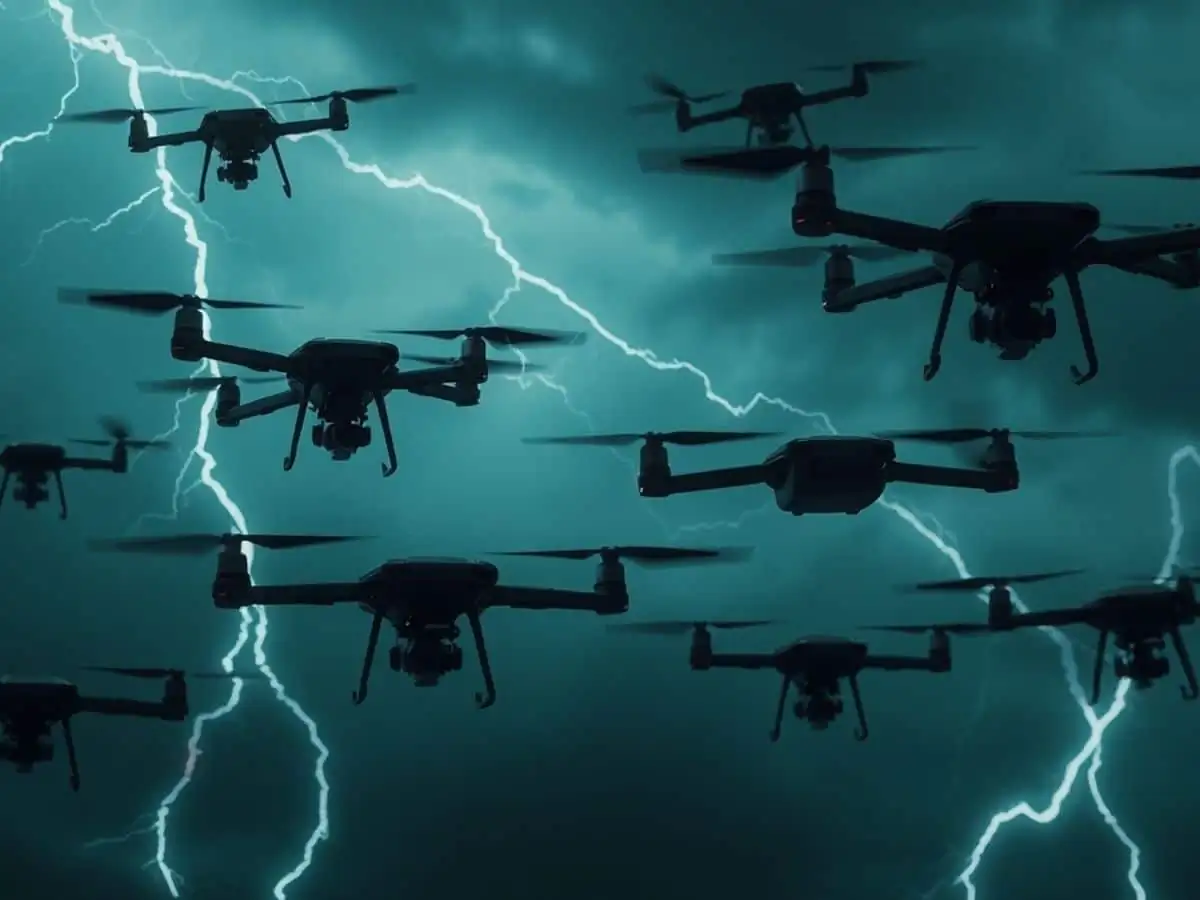
    Recently, New Jersey has been buzzing with reports of mysterious drone sightings. As excitement and concern grow, many are left wondering what’s really happening in the skies above. In this article, we’ll explore the various theories surrounding these sightings and provide a logical perspective on the situation.

    Key Takeaways

    • Many sightings are misidentified manned aircraft.
    • A significant number of drones are likely hobbyists flying at night.
    • Government actions may be influencing public perception of drones.

    Understanding The Drone Sightings

    The recent drone sightings in New Jersey have sparked a mix of curiosity and fear. With numerous videos and reports circulating, it’s essential to approach this situation with critical thinking. Many people are reacting emotionally, which can lead to mass hysteria. It’s crucial to analyze the facts before jumping to conclusions.

    Misidentification Of Aircraft

    A large percentage of the footage shared online shows what are clearly manned aircraft. It’s as if people are seeing planes for the first time. For instance, one viral video zoomed in on a glowing orb, which turned out to be Venus. This misidentification is common, especially at night when visibility is limited.

    The Role Of Drones

    While many sightings can be attributed to manned aircraft, there are indeed drones in the mix. These drones often have FAA-compliant navigation and anti-collision lights. The rise in drone popularity means more hobbyists are flying their devices, especially at night. This increase in drone activity coincides with the surge in reported sightings.

    The Parallax Effect

    One reason for the confusion surrounding these sightings is the Parallax effect. When observing objects in the sky, it’s challenging to determine their height and size. This can lead to incorrect assumptions about what people are seeing. As more individuals look up, they may notice the busy skies filled with both manned aircraft and drones.

    The Media’s Role

    The media has played a significant role in amplifying the hysteria. Some reports have inaccurately claimed that flying drones at night is illegal. In reality, it is legal to fly drones at night as long as FAA guidelines are followed. This misinformation can lead to unnecessary panic among the public.

    Government Involvement

    Concerns have also been raised about drone sightings near military installations. While this is indeed illegal, it’s essential to recognize that many drones are likely operated by hobbyists who are unaware of the regulations. The government has been trying to ban the use of Chinese-made drones, citing national security concerns. This effort has faced challenges, and the recent drone sightings may be a tactic to incite fear and push for stricter regulations.

    Conclusion

    In conclusion, the New Jersey drone mystery is a combination of misidentified aircraft, increased drone activity, and potential government influence. There’s no need to panic. The majority of these sightings can be explained logically. Instead of fearing drones, consider embracing the technology. If you’re curious about drones, why not buy one and experience the excitement for yourself?

    Stay informed, stay calm, and enjoy the skies!

  • The Lady Of Elce: Unraveling The Mysteries Of An Ancient Bust

    The Lady Of Elce: Unraveling The Mysteries Of An Ancient Bust

    The Lady of Elce is a captivating limestone bust discovered in 1897, located in an archaeological site near Elche, Spain. Currently housed in the National Archaeological Museum in Madrid, this artifact has sparked intense debate regarding its origins and significance.

    Key Takeaways

    • The Lady of Elce is linked to the goddess Tanet of Carthage.
    • The bust features unusual appendages that suggest advanced technology.
    • Scholars are divided on whether the bust is a genuine artifact or a hoax.
    • Recent archaeological discoveries in Spain hint at a lost civilization.

    The Discovery Of The Lady Of Elce

    The Lady of Elce was unearthed on a private estate just south of Elche. This limestone bust is notable for its striking features and the mysterious appendages that adorn her head. These decorations have led to various interpretations, with some suggesting they represent a complex headdress, while others propose they are remnants of lost technology from an advanced civilization.

    Artistic Influences And Theories

    The artistic influences behind the Lady of Elce are heavily debated. Some scholars argue that the bust is Iberian and associated with Tanet, the goddess of Carthage. Others suggest it may represent a long-lost Atlantean goddess. The elongated head and delicate features of the bust have led many independent researchers to suspect that it reflects a highly advanced civilization, possibly linked to Atlantis.

    Academic Controversy

    Despite compelling evidence of the bust’s antiquity, many academics dismiss it as an elaborate hoax. Art historian John F. Moffett and others argue that the delicate features could not have been carved in pre-Christian Spain. This dismissal raises questions about the motivations behind such conclusions. Why would scholars reject the possibility of an advanced civilization?

    The Return Petition

    In 1997, the mayor of Elche sought to have the Lady of Elce returned for a special exhibit during the city’s 2000th anniversary. However, the petition was denied. The director of Elche’s archaeological museum argued that the bust could survive the journey, suggesting that the refusal to return it may stem from a desire to retain a valuable artifact rather than a belief in its authenticity.

    The Search For Lost Civilizations

    Recent archaeological efforts in Spain have uncovered evidence of a massive ancient metropolis. Researchers from the University of Seville and the Andalusian Institute of Historical Heritage conducted a lidar survey in the coastal region between Capoto and Santi Petri. Instead of finding a temple, they discovered an extensive dwelling complex, indicating a highly organized society with advanced sanitation and food production systems.

    The Great Pyramids And The Sphinx

    The Lady of Elce is not the only ancient artifact shrouded in mystery. The Great Pyramids of Egypt and the Sphinx also raise questions about their origins. Scholars have proposed that the Sphinx may be over 12,000 years old, suggesting a civilization far more advanced than previously thought. Evidence of severe erosion on the Sphinx indicates it has been weathered long before the Sahara became a desert.

    Conclusion

    The Lady of Elce remains a fascinating enigma. Is she a representation of an ancient queen, a goddess, or perhaps an alien being? The ongoing debates and discoveries surrounding her and other ancient artifacts challenge our understanding of history. As researchers continue to explore these mysteries, the possibility of uncovering the truth about lost civilizations remains tantalizingly close.

  • Are Ancient Alien Bases Really Hidden All Around the World?

    Are Ancient Alien Bases Really Hidden All Around the World?

    Every day, it seems more likely that governments worldwide know more about UFOs, UAPs, and aliens than they let on. If this is true, they would need secret bases to keep everything under wraps. Fortunately, there are numerous claims of hidden alien bases scattered across the globe.

    Key Takeaways

    • Governments may be concealing knowledge about UFOs and aliens.
    • There are five notable secret bases rumored to exist worldwide.
    • Each base has its own unique history and reported phenomena.

    The Caves Of The Grand Canyon

    The Grand Canyon is a breathtaking natural wonder, carved by the Colorado River over millions of years. However, beneath its beauty lies a mystery. Some claim that hidden deep within its ancient rocks are secret bases and underground facilities engaged in strange activities.

    • Size and Accessibility: The Grand Canyon spans 277 miles long and up to 18 miles wide, covering over 1.2 million acres. Public access is limited to less than 1% of this vast area.
    • Cave Estimates: There are estimated to be between 1,000 to 2,500 caves, many of which remain unexplored.

    In 1909, an article in the Arizona Gazette described an expedition led by explorer G.E. Kincade, who allegedly discovered an underground city filled with artifacts and hieroglyphics resembling those from ancient Egypt. However, after this discovery, Kincade was never allowed back, and evidence was reportedly suppressed.

    Recent reports from hikers and tourists include sightings of mysterious lights and eerie sounds, suggesting that something unusual is happening within the canyon. Former military insiders claim that the Grand Canyon houses a hidden installation connected to a network of subterranean tunnels.

    Pine Gap: Australia’s Area 51

    Located in the heart of Australia, Pine Gap is a joint Australian-American facility often referred to as Australia’s Area 51. Officially, it serves as a satellite surveillance base, but many believe its true purpose is far more complex.

    • Strange Sightings: Locals have reported strange lights and UFO sightings over the base, particularly in the late 1980s.
    • Advanced Technology: Eyewitness accounts suggest that Pine Gap may house advanced radar systems capable of tracking unconventional aerial phenomena.

    Former employees have described restricted areas within the facility, rumored to contain technology brought from the United States. The Australian government has released documents detailing UFO sightings near Pine Gap, raising questions about the facility’s true nature.

    Hangar 18: The Alien Repository

    Hangar 18, part of Wright-Patterson Air Force Base in Ohio, is rumored to be a secret repository for extraterrestrial materials. The lore surrounding Hangar 18 dates back to the Roswell incident in 1947, where wreckage and alien bodies were allegedly transported to the base.

    • Witness Accounts: Numerous former military personnel have reported seeing strange objects and materials at the base, including metallic fragments and biological aliens.
    • Security and Secrecy: Despite official denials, the tight security and numerous eyewitness accounts suggest that Hangar 18 may hold secrets that could alter our understanding of humanity’s place in the cosmos.

    RAF Staffordshire: A Hotspot for UAP Activity

    RAF Staffordshire in the UK was primarily a military base, but it has become a focal point for UAP activity. A determined FOIA request revealed a pattern of sightings connected to the base.

    • Notable Incidents: Reports include a triangular craft observed by servicemen in 1995 and a glowing orb following a military convoy in 2003.
    • Declassified Files: Files revealed 78 incidents of unknown crafts and strange lights between 1990 and 2013, many marked as unexplained.

    UFO Complex in Newfoundland

    In Newfoundland, abandoned iron mines are believed to be part of an underground network of UFO complexes. Originally booming in the early 1900s, these mines have since been abandoned, but strange activity has been reported.

    • Local Reports: Fishermen and hikers have reported strange lights and mechanical noises coming from the mines.
    • Mysterious Encounters: Two brothers who explored the mines in 1993 claimed to have found a large, pristine metal door that seemed alive with energy, urging them to leave.

    In conclusion, the existence of these five secret alien bases raises more questions than answers. Are they merely the stuff of conspiracy theories, or is there a deeper truth waiting to be uncovered?

  • WARNING: You Won’t Believe What Happens in Bennington Triangle!

    WARNING: You Won’t Believe What Happens in Bennington Triangle!

    The Bennington Triangle, a mysterious area surrounding Glastonbury Mountain in Vermont, has long been a hotspot for bizarre occurrences and unexplained disappearances. From UFO sightings to eerie sounds, this region is steeped in legends and dark tales that continue to intrigue and terrify.

    Key Takeaways

    • The Bennington Triangle is known for its strange phenomena and unsolved disappearances.
    • Local legends warn of a curse on the area, believed to be avoided by Native American tribes.
    • Several mysterious disappearances occurred in the 1940s and 1950s, with no clear explanations.

    The Mysterious Origins of the Bennington Triangle

    The term “Bennington Triangle” was coined by author Joseph A. Citro in 1992 during a radio broadcast discussing paranormal activities in the area. This region, rich in folklore, is often compared to the Bridgewater Triangle in Massachusetts, known for its own share of strange happenings.

    Legends and Curses

    According to Native American lore, the area is cursed. The Algonquin tribe spoke of evil rocks in the mountains that could devour those who tread upon them. This ominous warning adds a layer of intrigue to the many disappearances that have occurred here.

    The Bennington Monster

    The area is also home to tales of the Bennington Monster, a creature described as a large, hairy being over six feet tall. The first recorded sighting dates back to the early 1800s when a stagecoach driver encountered enormous footprints and was subsequently attacked by a mysterious creature.

    Unexplained Disappearances

    The Bennington Triangle is infamous for a series of unexplained disappearances, particularly during the 1940s and 1950s. Here are some notable cases:

    1. Carol Herrick (1943): Disappeared while hunting near Glastonbury. His body was found days later, surrounded by unusually large footprints.
    2. Mitty Rivers (1945): A seasoned hunting guide who vanished while leading a group in Hell Hollow. Despite extensive searches, no trace of him was ever found.
    3. Paula Weldon (1946): An 18-year-old college student who disappeared while hiking. Despite a massive search effort, her fate remains unknown.
    4. James Tedford (1949): A military veteran who vanished from a bus, leaving his belongings behind. His disappearance remains a mystery, especially since his wife had also disappeared years earlier.
    5. Paul Jepson (1950): An eight-year-old boy who disappeared while playing near his mother’s truck. Despite search efforts, he was never found.
    6. Freda Langer (1950): Disappeared while hiking with family. Her body was discovered months later in an area that had been previously searched, with no clear cause of death.

    Theories Behind the Disappearances

    The reasons behind these mysterious disappearances are hotly debated. Some theories include:

    • A Serial Killer: Speculation exists that a serial killer may be responsible for the string of disappearances.
    • Native American Curse: The belief in a curse from the Native American tribes adds a supernatural element to the mystery.
    • Paranormal Activity: Some suggest that the area may be a portal to the unknown, leading to strange occurrences.
    • Environmental Factors: The chaotic weather patterns in the mountains could disorient hikers, leading them to become lost.

    Conclusion

    The Bennington Triangle remains a captivating enigma, filled with tales of the unexplained and the supernatural. Whether it’s the legends of the Bennington Monster, the eerie disappearances, or the whispers of curses, this area continues to draw the curious and the brave. As we ponder these mysteries, we are reminded of the thin veil between our world and the unknown. If you have any thoughts or theories about the Bennington Triangle, feel free to share them in the comments below!

  • NASA Accidentally Detects an Abandoned Secret Military Base in Greenland

    NASA Accidentally Detects an Abandoned Secret Military Base in Greenland

    In a surprising turn of events, NASA scientists recently stumbled upon the remnants of a secret military base in Greenland, known as Camp Century. Originally built in the 1960s, this base was shrouded in mystery and its true purpose remained classified for decades. Now, buried under thick ice, it has become a focal point for climate research and historical inquiry.

    Key Takeaways

    • Camp Century was a secret military base built by the U.S. Army in Greenland during the 1960s.
    • The base was part of Project Iceworm, aimed at hiding nuclear missile launch sites under the ice.
    • NASA’s recent discovery using advanced radar technology has revealed the structure of the base, buried under 36 meters of ice.
    • The environmental impact of the abandoned base is a growing concern as Greenland’s ice sheets continue to shrink.

    The Origins of Camp Century

    In the late 1950s, the U.S. Army proposed the construction of a scientific research base in Greenland. Officially, it was presented as a project to explore the feasibility of a mobile base powered by a nuclear reactor. However, the reality was far more complex and secretive.

    The base was constructed as part of Project Iceworm, a covert initiative to establish mobile nuclear missile launch sites hidden beneath the Greenland ice. The goal was to protect these sites from a potential first strike by the Soviet Union during the Cold War.

    The Structure and Purpose of the Base

    Camp Century consisted of a network of tunnels and facilities designed to support up to 200 personnel. It included:

    • 21 tunnels spanning approximately 3 kilometers.
    • Living quarters for soldiers.
    • Storage for around 600 missiles.
    • A nuclear reactor for power.

    Despite its ambitious design, the base faced numerous challenges. The ice shelf’s instability led to significant issues, including sewage problems that made the camp uninhabitable. After just eight years of operation, the camp was abandoned in 1967.

    Environmental Concerns

    The abandonment of Camp Century left behind a significant amount of waste, including:

    • 200,000 liters of diesel fuel.
    • Various hazardous materials.
    • Thousands of liters of wastewater.

    Initially, researchers believed that the waste would be buried under the ice and pose no threat for thousands of years. However, recent studies indicate that Greenland’s ice sheets are shrinking rapidly, raising concerns about the potential release of these contaminants into the environment.

    NASA’s Accidental Discovery

    In April 2022, while testing new radar technology to study Greenland’s ice sheets, NASA scientists made an unexpected discovery. Using UAV synthetic aperture radar, they identified the structure of Camp Century beneath the ice. This groundbreaking finding allows researchers to:

    • Map the layout of the base in unprecedented detail.
    • Study the effects of climate change on the ice surrounding the base.
    • Assess the potential risks posed by the abandoned waste.

    The Future of Camp Century

    As climate change continues to impact Greenland, the fate of Camp Century remains uncertain. Current projections suggest that by the 2090s, the ice covering the base may begin to melt, potentially releasing the stored contaminants into the surrounding environment.

    Researchers are now tasked with monitoring the situation closely. The data collected from Camp Century could provide valuable insights into the effects of climate change and the stability of ice shelves.

    In conclusion, the rediscovery of Camp Century not only sheds light on a fascinating chapter of military history but also raises important questions about environmental stewardship and the long-term impacts of human activity on our planet. As we continue to study this unique site, we may uncover more about the past and its implications for the future.

  • Hijacked Space Threat Speeds Toward the Deadliest Zone in Orbit

    Hijacked Space Threat Speeds Toward the Deadliest Zone in Orbit

    High above Earth, something seemingly impossible has happened. The United Kingdom’s oldest satellite, Skynet-1A, is not where it should be. The half-ton military spacecraft, launched at the height of the Cold War in 1969, was originally positioned over the east coast of Africa, tasked with relaying critical communications for British forces. But today, it’s halfway around the planet – and nobody knows who moved it there or why.

    Key Takeaways

    • Skynet-1A was launched in 1969 and went silent after 18 months.
    • The satellite inexplicably drifted westward, defying orbital mechanics.
    • Its current position poses risks to modern satellites.
    • The mystery of its movement raises questions about Cold War operations.

    The story of Skynet-1A began near the dawn of the Space Age, just months after Neil Armstrong’s historic first steps on the moon in July 1969. Manufactured in America by the Filco Ford Aerospace company and launched on a US Air Force Delta rocket, this pioneering satellite represented Britain’s first venture into military space operations. From its strategic position above East Africa, it had a coverage footprint that stretched from Europe to the Far East, connecting London with forces as far away as Singapore. This revolutionized British military communications, transmitting critical orders, intelligence, and diplomatic traffic.

    However, Skynet-1A’s tenure would be short-lived. Just 18 months after its launch, the satellite suddenly went silent. All attempts to reestablish contact failed. It seems that Skynet-1A’s traveling wave tube amplifiers stopped working, likely due to a failure in its soldered high-voltage joints when moving between extreme temperatures. With its communication system out of action, the once groundbreaking spacecraft was transformed into another piece of space debris drifting through the void.

    Under normal circumstances, the laws of physics should have gradually pulled Skynet-1A eastward, dragging it closer to a position over the middle of the Indian Ocean. It moves in what is known as a geostationary orbit—a special path over 22,000 miles above Earth’s equator where a satellite takes around 24 hours to circle the planet, orbiting in sync with Earth’s own rotation. From the ground, a satellite in geostationary orbit appears motionless in the sky, always above the same spot on Earth, making it ideal for communications.

    But even in this seemingly stable orbit, small forces are at play. The Earth isn’t a perfect sphere; it bulges slightly at the equator, creating areas of higher and lower gravitational pull. Over time, without any intervention, these variations cause geostationary satellites to drift toward zones known as gravity wells—orbital sweet spots where a satellite naturally settles. For defunct satellites like Skynet-1A, this drift usually pulls them eastward.

    Yet, space consultant Dr. Stuart EES made a startling discovery: instead of floating east, Skynet-1A had traveled in the opposite direction, ending up more than 22,000 miles west—a journey that should have been impossible without deliberate intervention. It seems someone must have commanded Skynet-1A to fire its thrusters, sending it on a voyage across the Earth’s orbital sphere.

    The enigma deepens when we consider who was in control of Skynet-1A at the time of its unexplained maneuver. Historical records show that after its launch, the satellite was initially operated by American forces, who controlled it in orbit and tested its software before handing over control to the British Royal Air Force. However, control over Skynet-1A wasn’t always clear-cut. During maintenance periods at RAF Oak Hanger, the base from which the British Armed Forces supported worldwide satellite communications, the Skynet crew would sometimes travel to the US Air Force satellite control facility in Sunnyvale, California, colloquially known as the Blue Cube, to operate the satellite from there.

    Former Skynet engineer Graham Davidson recalls, “There was a dual control system, but when or why Skynet-1A might have been handed back to the Americans, which seems likely, I’m afraid I can’t remember.” Rachel Hill, a PhD candidate at University College London, believes the move could have occurred during one of these outages. The last confirmed command of Skynet-1A from the UK was in June 1977, when Oak Hanger lost contact with the satellite. After that point, it appears control was fully in American hands.

    But why the US would have moved the satellite to such a peculiar orbit remains unclear. Even in the 1970s, standard practice was to boost inoperative satellites into a so-called graveyard orbit, hundreds of miles above operational spacecraft, reducing the risk of collision. EES has been unable to come up with an answer as to why this was not done. He states, “The official records offer no explanation. I’ve searched through old satellite catalogs, the National Archives, and spoken with satellite experts worldwide. The end-of-life behavior of Britain’s oldest spacecraft remains a complete mystery.”

    Some have suggested that there could have been a disagreement between the UK and the US over the satellite’s movement or control that led to its movement being kept secret. Perhaps Skynet-1A was caught up in a behind-the-scenes tussle between allies, its fate a bargaining chip in some larger negotiation. Or maybe the truth is darker still. As the 1960s opened up a new battleground for the Cold War in space, the satellite’s unexplained drift could have been interpreted as a sign of Soviet meddling. With dark undercurrents of suspicion and secrecy flowing beneath the era’s Space Race, the possibility of a critical military asset like Skynet-1A being covertly interfered with or even hijacked by Britain and the United States’ communist rivals seems impossible to rule out.

    Whatever really happened may never come to light, but one thing is certain: Skynet-1A now finds itself in a crowded region of space, posing a hazard to other satellites. EES states, “It’s now in what we call a gravity well at 105° west longitude, wandering back and forth like a marble at the bottom of a bowl. Unfortunately, this brings it close to other satellite traffic on a regular basis. Because it’s dead, the risk is it might bump into something.”

    The dangers posed by its current orbit are far from trivial. In the 1970s, space was a considerably less crowded place. Today, reliance on satellite technology has filled Earth’s orbital pathways with critical infrastructure. A collision with even a small piece of space junk can be catastrophic. In Skynet-1A’s current location, operational satellites can expect to pass within around 30 miles of debris up to four times a day at orbital speeds. That’s far too close for comfort.

    Marie Baja, an aerospace engineer and space debris expert at the University of Texas in Austin, warns, “Pieces of space are like ticking time bombs. We need to avoid what I call super spreader events. When these things explode or something collides with them, it generates thousands of pieces of debris that often become a hazard to something else we care about.”

    The potential consequences of a collision in space were dramatically illustrated in October 2024 when a Boeing-built satellite owned by IntelSat suddenly disintegrated in geostationary orbit. The incident created a cloud of at least 500 pieces of debris, ranging in size from softballs to car doors. While the exact cause of the satellite’s demise remains under investigation, the resulting debris field highlights the precarious nature of operations in Earth’s increasingly crowded orbits. A collision involving Skynet-1A could trigger a similar cascade of debris, threatening other satellites and potentially setting off a catastrophic chain reaction known as Kessler syndrome.

    The British government, for its part, says it is closely monitoring the situation. The UK Space Agency has already funded several projects to develop technologies to remove orbital debris. Other nations are making strides too; both China and the US have demonstrated the capability to capture defunct satellites, even in the distant geostationary orbit where Skynet-1A resides.

    Yet, as the mystery of Skynet-1A’s movement illustrates, the challenge is not merely technological; it is also one of communication, coordination, and transparency between nations in space. EES suggests, “Ultimately, the UK government may need to take responsibility for moving Skynet-1A to a safer orbit. But this incident also highlights the need for better international collaboration in managing our shared orbital environment.”

    As the skies grow increasingly crowded and our dependence on satellite infrastructure deepens, solving the puzzle of Skynet-1A’s secret maneuvers may offer valuable lessons for the future of humanity’s cosmic endeavors. The security of our satellite networks and the sustainability of space itself could depend on it.

  • Ancient Egyptian Artefacts DISCOVERED in 1909: The Kincaid Cave in the Grand Canyon

    Ancient Egyptian Artefacts DISCOVERED in 1909: The Kincaid Cave in the Grand Canyon

    In 1909, a captivating tale emerged from the Grand Canyon, suggesting the discovery of ancient artifacts that could rewrite history. This story, filled with intrigue and mystery, revolves around claims of a hidden cave containing relics from lost civilizations, sparking debates about archaeology and historical narratives.

    Key Takeaways

    • Discovery of Kincaid Cave: Alleged findings of ancient artifacts in the Grand Canyon.
    • Suppression Claims: The Smithsonian Institution’s alleged role in covering up the discovery.
    • Cultural Connections: Possible links to ancient Egyptian and Asian civilizations.
    • Skepticism and Speculation: Lack of verifiable evidence raises doubts about the claims.

    The Mysterious Kincaid Cave

    The story begins with an explorer named G.E. Kincaid, who, in 1909, reportedly discovered a cavern in the Grand Canyon. According to an article in the Arizona Gazette, Kincaid was funded by the Smithsonian Institution. Inside the cave, he allegedly found large chambers filled with statues, copper tools, hieroglyphics, and even mummies. This discovery hinted at a long-lost civilization with advanced knowledge and extensive trade networks.

    The Arizona Gazette Article

    The Arizona Gazette article is often cited as evidence of Kincaid’s findings. However, researchers have struggled to locate a physical copy of this issue, leading many to question its authenticity. Furthermore, no formal records from the Smithsonian corroborate Kincaid’s expedition or the alleged artifacts.

    Alleged Artifacts and Their Significance

    Descriptions of the artifacts found in Kincaid Cave include:

    • Hieroglyphic Inscriptions: Walls covered in an unknown script, interpreted as ancient Egyptian or Asian.
    • Idols: Large statues resembling Buddhist or Hindu deities, suggesting cultural exchanges.
    • Copper Tools: Indications of advanced metallurgy.
    • Mummified Remains: Bodies laid to rest in elaborate burial chambers, hinting at complex social and religious systems.

    These artifacts suggest a civilization that may have predated Native American cultures in the region. However, no archaeological evidence has surfaced to substantiate these claims.

    The Suppression Theory

    Proponents of the Kincaid Cave story argue that the Smithsonian Institution played a key role in suppressing the discovery. They suggest that any artifacts challenging mainstream theories, such as pre-Columbian transoceanic contact, were deliberately hidden or destroyed. The Smithsonian has repeatedly denied any involvement in such a cover-up.

    Skepticism and Criticism

    Skeptics point out the lack of credible sources and verifiable evidence supporting the existence of Kincaid Cave or the described artifacts. Key criticisms include:

    1. Absence of Evidence: No independent expeditions have located the cave or its treasures.
    2. Cultural Misinterpretation: Descriptions of artifacts may be exaggerated or misattributed to existing Native American cultures.
    3. Lack of Documentation: No records exist in the Smithsonian’s archives regarding Kincaid’s discoveries.

    The Allure of Discovery

    Despite the skepticism, the legend of Kincaid Cave continues to captivate audiences. It raises important questions about our understanding of pre-Columbian civilizations and the possibility of forgotten chapters in human history. The story serves as a reminder of the allure of discovery and the human tendency to question accepted narratives.

    Conclusion

    The Kincaid Cave remains a fascinating topic, blurring the lines between historical fact and folklore. While the lack of evidence casts doubt on the claims, the narrative invites exploration into the unknown and challenges us to verify sources. What do you think about the Kincaid Cave and its alleged artifacts? The mystery endures, leaving us to ponder the hidden histories of our world.