Blog

  • U.S. and Iran’s Naval Tango: The Alborz Warship’s Red Sea Entry

    U.S. and Iran’s Naval Tango: The Alborz Warship’s Red Sea Entry

    The 1975 disappearance of Teamster boss Jimmy Hoffa remains one of the most perplexing mysteries in American history. Despite numerous theories and countless investigations, the truth about what happened to Hoffa is still shrouded in secrecy.

    Key Takeaways

    • Hoffa’s ties to organized crime made him a target.
    • His last known meeting was with two mob figures.
    • Multiple confessions have surfaced, but none are credible.
    • Hoffa was declared legally dead in 1982.
    • The search for his remains continues to this day.

    The Rise and Fall of Jimmy Hoffa

    Jimmy Hoffa was a powerful figure in the Teamsters union, known for his connections to organized crime. His influence grew during the 1960s, but his time in prison for corruption charges changed the landscape of his power.

    After President Nixon commuted his sentence in 1971, Hoffa sought to reclaim his former position. However, the mafia had moved on, and tensions began to rise.

    The Fateful Day

    On July 30, 1975, Hoffa was last seen at the Machus Red Fox restaurant in Michigan. He was supposed to meet with mobsters Anthony Provenzano and Anthony Giacalone to resolve their ongoing feud. However, neither of the mob figures showed up.

    • Hoffa waited for 15 minutes before calling his wife to express his frustration.
    • His car was found in the restaurant parking lot, but there was no sign of him.
    • A witness claimed to have seen Hoffa leave with three unidentified individuals.

    The Investigation

    The investigation into Hoffa’s disappearance involved over 200 FBI agents and generated more than 16,000 pages of material. Despite extensive efforts, Hoffa was never found.

    • Key evidence: Hoffa’s hair was identified years later, but it led to no new leads.
    • Chucky O’Brien, Hoffa’s alleged stepson, became a person of interest but denied involvement.

    Confessions and Theories

    Over the years, numerous individuals have claimed to know what happened to Hoffa, but most of these confessions lack credibility.

    • Frank Sheeran, a low-level Teamster, claimed he was involved in Hoffa’s murder. His story gained traction after the release of the film “The Irishman,” but many believe it to be fictional.
    • Michael Franzese, a former mobster, stated that Hoffa’s body was buried in various locations, including under the 10-yard line of Giants Stadium.

    The Ongoing Search

    Despite the passage of time, the search for Hoffa’s remains continues. Investigators have followed countless leads, including:

    • Concrete pours at a mobster’s home on the night of Hoffa’s disappearance.
    • Radar scans of properties linked to organized crime figures.
    • Anonymous tips leading to searches of farms and fields.

    Conclusion

    Jimmy Hoffa’s disappearance remains an unsolved mystery, with many theories but little evidence. The perfect crime may have been committed, leaving behind only speculation and intrigue. As time goes on, the hope of uncovering the truth fades, but the legend of Jimmy Hoffa endures, captivating the minds of true crime enthusiasts everywhere.

  • The Mysterious Temple of Prehistoric Ukraine

    The Mysterious Temple of Prehistoric Ukraine

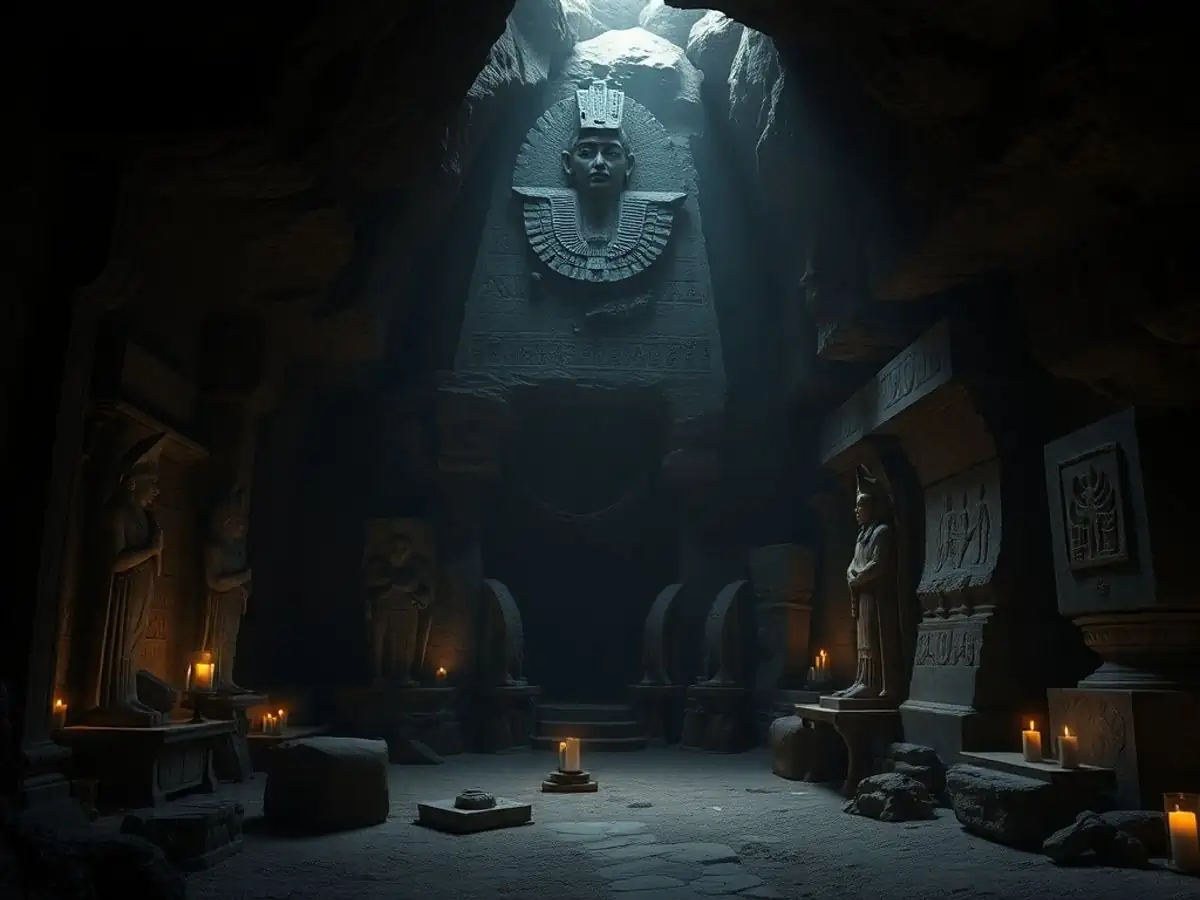
    On the Bronze Age steppe, over 4,000 years ago, the prehistoric Catacomb culture constructed a remarkable structure atop a high ridge overlooking a river flowing south toward the Black Sea. This site, often referred to as a temple or sanctuary, raises intriguing questions about the rituals and beliefs of its creators.

    Key Takeaways

    • The site is located about 40 km north of the Sea of Azov, near the town of Molans.
    • Archaeological excavations revealed a complex structure with multiple phases of construction.
    • The site likely served as a ritual center, possibly dedicated to a thunder god.
    • The Catacomb culture had complex burial practices and social hierarchies.
    • Many similar mounds exist in the region, suggesting a broader cultural significance.

    The Site’s Location

    The mysterious temple mound is situated approximately 40 km north of Melitopol, near the Mnaa River. This river flows into the Sea of Azov, and the mound itself stands at a remarkable height of 80 meters above the floodplain. Initially, it appeared to be just a large mound of earth, but extensive archaeological excavations revealed its true nature.

    Phases of Construction

    The site underwent several phases of construction, indicating its evolving significance over time. The earliest phase, dating back to around 2500 BC, featured 13 steep radial embankments made of large clay blocks, forming a circular platform about 20 meters in diameter. This platform was surrounded by paths, suggesting it was a place of gathering and ritual.

    1. First Phase: 13 steep embankments and a central altar.
    2. Second Phase: New ramps and paths were constructed, enhancing access to the altar.
    3. Third Phase: The mound was expanded, and a single wide ramp was created, indicating a shift in ritual practices.

    Ritual Significance

    The temple mound likely served as a significant ritual site for the Catacomb culture. Evidence suggests that animal sacrifices and offerings may have taken place here, as fragments of animal bones were found among the remains of reeds used in rituals. The presence of a unique altar and the layout of the site indicate that it was a focal point for communal gatherings.

    Worship and Beliefs

    Archaeologists speculate that the site may have been dedicated to a thunder god, possibly linked to the Indo-European deity known as Pinos. This interpretation is supported by the discovery of an axe-shaped stele, which may symbolize the god’s connection to storms and fertility. The elevated position of the mound above the river valley further reinforces this idea, as it would have been a prominent landmark in the landscape.

    Cultural Connections

    The Catacomb culture’s burial practices reveal a complex belief system regarding the afterlife. Burials often included grave goods that reflected the social status and occupation of the deceased. The presence of elite burials at the temple mound suggests that it was a site of significant social and religious importance.

    Similar Sites and Broader Implications

    The discovery of this temple mound raises questions about other similar sites in the region. Archaeologists have identified at least 46 mounds that share key features with the temple mound, suggesting a network of ritual sites across the landscape. These mounds may have served as territorial markers or gathering points for surrounding tribes.

    The Impact of Modern Development

    Unfortunately, many ancient burial mounds have been lost due to modern agricultural practices and urban development. An estimated 75% of these sites were destroyed in the 20th century, highlighting the importance of preserving what remains of this rich cultural heritage.

    Conclusion

    The mysterious temple mound of the prehistoric Catacomb culture offers a fascinating glimpse into the spiritual and social lives of its creators. As archaeologists continue to study this site and others like it, we gain a deeper understanding of the complex beliefs and practices that shaped the lives of these ancient peoples. The legacy of the Catacomb culture endures, inviting us to explore the mysteries of our shared human past.

  • Major FRB Updates: Possible Sources of Mystery Radio Signals

    Major FRB Updates: Possible Sources of Mystery Radio Signals

    In recent years, the astronomical community has been captivated by the enigma of Fast Radio Bursts (FRBs). These powerful flashes of radio light, first discovered in 2007, continue to baffle scientists as they originate from various locations across the universe. With over 800 confirmed FRBs, researchers are piecing together clues to understand their origins and implications.

    Key Takeaways

    • FRBs are powerful radio signals originating from distant galaxies.
    • The first FRB was discovered accidentally in 2007.
    • Recent studies suggest multiple potential sources for FRBs, including magnetars and neutron stars.
    • Some FRBs are associated with persistent radio sources, hinting at complex cosmic interactions.
    • New discoveries challenge existing theories about the environments in which FRBs occur.

    The Discovery of FRBs

    The journey into the world of FRBs began in 2007 when astronomers Duncan Lorimer and David Narchi stumbled upon an unusual radio burst. Initially thought to be a mere artifact, further investigations confirmed it as a genuine cosmic phenomenon. Over the years, the number of confirmed FRBs has skyrocketed, with researchers now identifying over 800 distinct signals.

    Understanding FRBs

    FRBs are characterized by their extreme power and unique properties. They emit various frequencies and are often highly polarized, suggesting a magnetic origin. Many of these signals are believed to come from billions of light-years away, indicating that they are produced by incredibly energetic cosmic events.

    The Role of Neutron Stars

    One of the leading hypotheses regarding the source of FRBs involves neutron stars, particularly magnetars. Magnetars are neutron stars with exceptionally strong magnetic fields, making them some of the most powerful magnets in the universe. Recent studies have shown that many FRBs are linked to regions of high star formation, where magnetars are likely to exist.

    Polarization Studies

    A recent study assessed 128 non-repeating FRBs, focusing on their polarization properties. The findings revealed significant differences in polarization, suggesting that not all FRBs originate from the same type of object. This variability raises questions about the mechanisms behind these signals and indicates that multiple sources may be at play.

    Persistent Radio Sources

    Some FRBs have been found to be associated with persistent radio sources. For instance, the FRB 2020 1124A, located 1.3 billion light-years away, was linked to a persistent radio source in its vicinity. This connection hints at complex interactions within cosmic environments, possibly involving large plasma clouds or nebulae.

    New Discoveries Challenge Existing Theories

    Recent papers have reported FRBs originating from elliptical galaxies, which traditionally do not exhibit high rates of star formation. This discovery challenges existing theories and suggests that FRBs may arise from different mechanisms than previously thought. The most massive and brightest FRB host identified to date is an ancient elliptical galaxy, raising further questions about the conditions necessary for FRB production.

    Potential Explanations for FRB Origins

    Several theories have emerged regarding the origins of FRBs:

    1. Magnetar Collisions: Collisions between neutron stars or white dwarfs could lead to the formation of magnetars, which may then produce FRBs.
    2. Planetary Impacts: Some researchers propose that impacts on the surface of magnetars by planets or large asteroids could generate powerful bursts of electromagnetic radiation.
    3. Supernova Events: The collapse of massive stars in star-forming galaxies may also contribute to the production of FRBs.

    The Future of FRB Research

    As the field of FRB research evolves, new data is expected to shed light on these cosmic mysteries. The upcoming catalog from CHIME, set to be released in 2025, will include approximately 4,200 detections collected over several years. This influx of data may provide crucial insights into the nature of FRBs and their origins.

    Conclusion

    The quest to understand Fast Radio Bursts is ongoing, with researchers exploring various hypotheses and gathering new evidence. While magnetars remain a leading candidate for the source of many FRBs, the diversity of signals suggests that the universe holds even more secrets waiting to be uncovered. As we continue to study these enigmatic bursts, we inch closer to unraveling the mysteries of the cosmos.

  • The CIA’s Scariest Cyberweapon

    The CIA’s Scariest Cyberweapon

    In a world where cyber warfare is becoming increasingly prevalent, the story of Stuxnet stands out as a groundbreaking event. This sophisticated computer worm was designed to sabotage Iran’s nuclear program, showcasing the power and potential dangers of digital weapons.

    Key Takeaways

    • Stuxnet was a highly sophisticated computer worm targeting Iran’s nuclear facilities.
    • It exploited multiple zero-day vulnerabilities, making it a unique threat.
    • The worm was part of a larger operation, known as Operation Olympic Games, orchestrated by the CIA and Israeli intelligence.
    • Stuxnet marked the first time a digital weapon caused physical damage to an industrial facility.

    The Secret Facility in Natanz

    Deep underground in Iran, a top-secret uranium enrichment facility lies shielded by thick concrete walls. This facility is home to numerous gas centrifuges, which are crucial for enriching uranium. The process involves spinning uranium gas at high speeds to separate isotopes, a key step in producing nuclear energy or weapons.

    However, something unusual was happening. Centrifuges were breaking down at an alarming rate, far beyond normal wear and tear. The Iranian scientists were baffled, as their systems were air-gapped, meaning they were isolated from the internet and secure from external attacks.

    Discovery of the Malware

    Meanwhile, in Belarus, cybersecurity experts Sergey Ulsan and Ole Capri were troubleshooting computers for an Iranian client. They stumbled upon a sophisticated malware that was unlike anything they had seen before. This malware was exploiting a zero-day vulnerability, a previously unknown flaw that could be used indefinitely until patched.

    The malware, later named Stuxnet, was a highly complex worm capable of replicating itself and remaining undetected. Alarmed, Ulsan and Capri reported their findings to Microsoft, but received no response. By the time they went public, Stuxnet had already spread to over 100,000 computers worldwide, with a significant concentration in Iran.

    The Anatomy of Stuxnet

    Stuxnet was not just any malware; it was a digital weapon. It utilized four different zero-day exploits and was unusually large for a worm, indicating its complexity. Once it infiltrated a system, it installed a rootkit, allowing it to conceal its presence while taking control of the infected computer.

    The worm specifically targeted systems running Siemens Step 7 software, which is used in industrial control systems. This targeting was crucial, as it allowed Stuxnet to disrupt the operations of Iran’s nuclear centrifuges.

    Operation Olympic Games

    The origins of Stuxnet can be traced back to a covert operation known as Operation Olympic Games, initiated by the CIA and Israeli intelligence. The goal was to sabotage Iran’s nuclear program without direct military intervention. In 2007, the CIA developed a plan to infiltrate the Natanz facility, which included creating a replica of the site in Tennessee for testing.

    The operation relied on a Dutch engineer, Eric Fonsaa, who was tasked with installing water pumps at the Natanz plant. These pumps contained the sophisticated malware that would later become Stuxnet. Fonsaa successfully smuggled the malware into the facility, setting the stage for the attack.

    The Attack Unfolds

    Once inside, Stuxnet began its work but initially did nothing. It observed the facility’s operations for weeks before launching its attack. When it was ready, Stuxnet sent fake signals to the control room, making everything appear normal while chaos ensued behind the scenes.

    The worm took control of the centrifuges’ frequency converters, causing them to spin at dangerous speeds. This manipulation led to the destruction of approximately 1,000 centrifuges, significantly delaying Iran’s nuclear program.

    The Aftermath

    Despite its success, Stuxnet had unintended consequences. A bug in the code allowed the worm to escape the confines of the Natanz facility, leading to a global outbreak. This revelation raised suspicions about state-sponsored cyber warfare, with many experts pointing fingers at the United States and Israel.

    Stuxnet marked a historic moment in cyber warfare, demonstrating that digital weapons could cause physical destruction. Since then, no attack of such scale has been repeated, likely due to the immense resources required and the unpredictable nature of such operations.

    Conclusion

    The story of Stuxnet serves as a cautionary tale about the potential of cyber weapons. As nations continue to develop their cyber capabilities, the line between digital and physical warfare blurs, raising questions about the future of international security. With Iran’s nuclear ambitions still a concern, the legacy of Stuxnet remains relevant in today’s geopolitical landscape.

  • Secret Hollywood History – The Doors, Stevie Nicks, Frank Zappa, Joni Mitchell and More

    Secret Hollywood History – The Doors, Stevie Nicks, Frank Zappa, Joni Mitchell and More

    In the heart of Los Angeles lies Laurel Canyon, a historic neighborhood that served as the epicenter of the music scene during the 1960s and 1970s. This area was home to legendary artists like The Doors, Stevie Nicks, Frank Zappa, and Joni Mitchell, each contributing to the rich tapestry of rock and folk music. Join us as we uncover some of the secrets and stories that make Laurel Canyon a fascinating part of Hollywood history.

    Key Takeaways

    • Laurel Canyon was a hub for iconic musicians in the 60s and 70s.
    • The Doors’ “Love Street” holds a significant place in rock history.
    • Frank Zappa’s creative legacy is intertwined with the canyon’s history.
    • Joni Mitchell’s home is a landmark of artistic inspiration.

    The Mecca of Music

    Laurel Canyon was not just a neighborhood; it was a mecca for musicians. Artists flocked here to live, create, and collaborate. The atmosphere was a blend of Bohemian charm and artistic energy, making it an ideal setting for creativity to flourish.

    The Doors and Love Street

    One of the most famous stories from Laurel Canyon is that of Jim Morrison and Pam Courson, who lived on Love Street. This location is iconic among Doors fans. The original house was lost to a fire, but the spirit of the place remains. Visitors can still find the site and capture the essence of rock and roll royalty.

    • Location: Corner of Laurel Canyon Drive and Kirkwood Drive.
    • Significance: The house was a backdrop for many of Morrison’s songs, including the hauntingly beautiful “Love Street.”

    The Morrison House

    The Morrison house, known for its tragic history, was rebuilt after a devastating fire. Despite the loss, remnants of its past still linger. The guitar that survived the fire is a testament to the enduring legacy of Jim Morrison. The house is a must-visit for fans wanting to connect with the history of The Doors.

    Mama Cass and the Country Store

    Just down the street, the Laurel Canyon Country Store has its own stories to tell. Legend has it that Mama Cass lived in the basement of this store. This hidden gem was a gathering place for musicians and locals alike. The store still stands, filled with memorabilia and a welcoming atmosphere.

    • Historical Note: Mama Cass would often sneak in through a side entrance to avoid the spotlight.
    • Current Use: The store now features a coffee shop and deli, making it a perfect stop for visitors.

    Jim Lad’s House and Stevie Nicks

    As we venture deeper into Laurel Canyon, we arrive at Oak Court, home to radio DJ Jim Lad. This house hosted many famous musicians, including Stevie Nicks. The unique tram that once transported guests to the house still exists, a relic of a bygone era.

    • Notable Guests: The Eagles, Tom Petty, and George Harrison were frequent visitors.
    • Photographic Legacy: Iconic photos of Stevie Nicks were taken here, capturing the essence of the 70s music scene.

    The Houdini Estate

    While exploring, we stumble upon the Houdini Estate, a beautiful property that adds a touch of magic to our journey. Although Houdini himself didn’t live here, the estate is a landmark in the canyon, often associated with his legacy.

    Frank Zappa’s Creative Hub

    Next, we visit the site where Frank Zappa once lived. Although the original log cabin is gone, the swimming pool remains, a reminder of the vibrant gatherings that took place here. Zappa’s influence on music and culture is still felt today.

    • Historical Significance: Zappa hosted many musicians at his home, fostering creativity and collaboration.
    • Current Status: The area is set to become a park, preserving its rich history.

    Joni Mitchell’s Iconic Home

    Finally, we arrive at Joni Mitchell’s former residence, where one of the most famous photographs of her was taken. The house, nestled among the trees, served as a sanctuary for her creativity.

    • Location: 8217 Lookout Mountain Road.
    • Cultural Impact: Joni’s music and artistry continue to inspire generations.

    Conclusion

    Laurel Canyon is more than just a neighborhood; it’s a living history of music and culture. The stories of The Doors, Stevie Nicks, Frank Zappa, and Joni Mitchell intertwine to create a rich tapestry that continues to captivate fans and visitors alike. As we explore these iconic locations, we are reminded of the magic that once filled the air in this legendary canyon. Until next time, keep the spirit of Laurel Canyon alive in your heart!

  • The True Story Behind Santa Claus: Unveiling Christmas Myths

    The True Story Behind Santa Claus: Unveiling Christmas Myths

    Christmas is a time of joy, celebration, and cherished traditions. However, many of the stories we hold dear may not be as accurate as we think. This article delves into the origins of Santa Claus, the myths surrounding the birth of Jesus, and how commercialism has altered our understanding of this sacred holiday.

    Key Takeaways

    • The real Santa Claus originated from St. Nicholas, a 4th-century bishop known for his generosity.
    • Many Christmas traditions have been commercialized, shifting focus from their original meanings.
    • The biblical account of Jesus’ birth is often misinterpreted, leading to widespread myths.

    The Origins Of Santa Claus

    Did you know that the beloved figure of Santa Claus has a much deeper and more mysterious origin? The Santa we know today, with his red suit and white beard, is a relatively recent invention. His true story begins with St. Nicholas, a bishop from the 4th century in Myra, now part of Turkey. Known for his deep faith and acts of generosity, St. Nicholas became a protector of children.

    One of his most famous stories involves a desperate father who could not afford the dowry for his three daughters. To save them from a life of slavery, Nicholas secretly threw bags of gold through their window, thus creating the tradition of gift-giving at Christmas.

    As time passed, St. Nicholas was venerated across Europe, with various cultures shaping his image. However, it was in the 19th century that the transformation into the modern Santa Claus began, particularly in the United States. Writers like Clement Clarke Moore reimagined him as a jolly, chubby man in colorful attire.

    The real turning point came in the 20th century when Coca-Cola hired artist Haddon Sundblom to create a Christmas advertising campaign. This campaign solidified the image of Santa Claus as a cheerful, red-suited figure, disconnecting him from his Christian roots and transforming him into a commercial icon.

    The Birth Of Jesus: Myths And Realities

    Mary, the mother of Jesus, is central to the Christmas narrative, yet her story is surrounded by mystery. One common belief is that Mary gave birth without pain, a notion that lacks strong biblical support. In fact, Genesis 3:16 suggests that childbirth would be painful for all women, including Mary.

    The idea of a painless birth seems to stem from later interpretations, particularly in Catholic tradition, which emphasizes Mary’s purity. However, the focus should be on her obedience and faith in accepting the monumental task of bearing the Son of God.

    The Angels And The Shepherds

    Another popular image is that of singing angels announcing Jesus’ birth. However, the biblical account in Luke 2:13-14 states that the angels were “praising God and saying” rather than singing. This distinction highlights how traditions can shape our understanding of biblical events.

    The shepherds, filled with awe and reverence, rushed to find the newborn Messiah, illustrating the extraordinary nature of that night.

    The Wise Men: How Many Were There?

    When we think of the wise men, we often picture three men riding camels. However, the Bible does not specify their number. The tradition likely arises from the three gifts they presented: gold, frankincense, and myrrh. The term Magi refers to wise men or scholars, not kings, and their visit symbolizes the recognition of Jesus’ significance.

    The Manger: A Humble Beginning

    The nativity scene often depicts Jesus in a stable surrounded by animals. However, Luke 2:7 mentions a manger but does not explicitly state that it was in a stable. The original Greek word for “inn” can refer to a room in a house, suggesting that Jesus may have been born in a humble space rather than a separate stable.

    The Climate Of Bethlehem

    Contrary to popular belief, the climate in Bethlehem during Jesus’ birth was likely milder than the snowy scenes depicted in Western traditions. The shepherds were in the fields, indicating that it was not an extremely cold night. This romanticized vision of a white Christmas is more reflective of European traditions than the reality of first-century Palestine.

    Celebrating Christmas Today

    Christmas has become a widely celebrated holiday, but its commercialization raises questions about its alignment with Christian values. Many focus on gifts and festivities rather than the birth of Jesus. Romans 12:2 reminds us to evaluate whether our celebrations honor God.

    As Christians, we can reclaim the true purpose of Christmas by emphasizing the birth of the Savior and the eternal impact of His coming into the world. Instead of getting lost in consumerism, we should reflect on the greatest gift: eternal life through Christ.

    Conclusion: The True Meaning Of Christmas

    The true message of Christmas lies not in the traditions or legends but in the opportunity to reflect on what Christ means in our lives. Is He merely a historical figure, or is He the Lord and Savior of your existence? This question invites deep reflection and can transform our understanding of Christmas and our faith journey.

    If this exploration has moved you, consider sharing your thoughts and reflections. Subscribe for more insights that will strengthen your faith and deepen your understanding of the Gospel.

  • Origins: Krampus – The Christmas Devil – Forgotten History

    Origins: Krampus – The Christmas Devil – Forgotten History

    Christmas is a time of joy, celebration, and giving. However, beneath the cheerful facade lies a darker figure known as Krampus, the Christmas devil. This blog post explores the origins, characteristics, and cultural significance of Krampus, a creature that has haunted the imaginations of many for centuries.

    Key Takeaways

    The Evolution Of Christmas

    For Christians, Christmas commemorates the birth of Jesus Christ, the Son of God. The term “Christmas” itself comes from the mass of Christ, a service where Christians remember Jesus’s sacrifice and resurrection. Over time, Christmas has transformed into a season filled with ornaments, stockings, and joyful music. However, it has also become a time of rampant consumerism.

    The Dark Counterpart Of Santa Claus

    While Santa Claus is a beloved figure known for his generosity, he has a dark counterpart: Krampus. Originating from Germanic folklore, Krampus is a horned demon who accompanies St. Nicholas during his visits to Alpine villages. While St. Nick rewards good children with gifts, Krampus punishes the naughty ones.

    Who Is Krampus?

    The name “Krampus” is believed to derive from the old high German word “krampen,” meaning claw. This monstrous figure is often depicted with:

    • Long curved horns
    • Glowing red eyes
    • Sharp fangs
    • A long, forked tongue
    • Clawed fingers
    • A muscular body covered in matted black hair

    Krampus is typically portrayed as towering over his victims, standing at about 7 feet tall. He often carries a large sack, similar to Santa’s, but his is used for capturing misbehaving children.

    The Punishments Of Krampus

    Krampus takes his role seriously. He knows which children have been naughty or nice. If a child has been mostly good but has a few naughty moments, they may face a rigorous test. If they fail, Krampus will:

    1. Beat them with birch twigs.
    2. Stuff them into his sack.
    3. Carry them off to his lair in the Black Forest.

    In his lair, Krampus inflicts further punishment until the children repent. If they are unlucky, they may face a far worse fate, including being devoured or dragged into Hell.

    The Origins Of Krampus

    The origins of Krampus are shrouded in mystery. Some theories suggest he is the son of Hel, the goddess of the dead in Norse mythology. Others link him to the German goddess Perchta, who punishes the lazy and rewards the diligent.

    As Christianity spread, many pagan traditions were demonized. Krampus, once a fertility god, became associated with evil and the devil during the Inquisition. Despite this, interest in Krampus surged in the 17th and 18th centuries, leading to the creation of Krampus cards that depicted him torturing children.

    Krampusnacht And The Krampuslauf

    Krampus has his own day, celebrated on December 5th, known as Krampusnacht. On this night, he accompanies St. Nicholas, rewarding good children and punishing the naughty. The following week, towns in the Alpine regions hold the Krampuslauf, where men dress as Krampus and roam the streets, scaring children and ensuring they behave.

    Krampus In Modern Culture

    In recent years, Krampus has gained popularity in popular culture, appearing in books, movies, and holiday decorations. He serves as a reminder that the holiday season is not just about joy and gifts but also about the consequences of one’s actions.

    Conclusion

    Krampus, the Christmas devil, embodies the darker side of the holiday season. His legend serves as a cautionary tale, reminding us to cherish kindness and spread joy. As we celebrate, let us remember to stay on the right side of Santa’s list. Happy holidays!

  • Father Christmas – The Origin Of An English Christmas Tradition

    Father Christmas – The Origin Of An English Christmas Tradition

    The creation of a mythical figure who embodies the spirit of Christmas has been a cherished tradition in Western culture. In England, this figure is known as Father Christmas, a character with roots tracing back to medieval times. Unlike the American Santa Claus, Father Christmas has a unique origin story that reflects the rich tapestry of English folklore.

    Key Takeaways

    • Father Christmas is distinct from Santa Claus, with origins in medieval England.
    • The festivities surrounding Christmas were much longer in the past, lasting from December 21 to January 6.
    • The character of Father Christmas evolved over centuries, influenced by various cultural traditions.

    The Medieval Celebration of Christmas

    In medieval England, Christmas was not just a day but a season. The festivities began on the Feast of St. Thomas on December 21 and continued until the Feast of the Epiphany on January 6. This period was marked by merrymaking, feasting, and idleness. People saved their food and drink for this time, and work was largely set aside.

    Music played a vital role in these celebrations. The figure of Father Christmas first appeared in songs and carols, often referred to as Sir Christmas. This character was seen as the spirit of the feast, bringing joy and merriment to homes.

    The First Appearances of Father Christmas

    The earliest references to Father Christmas can be found in 15th-century carols. One notable carol, found in the Seldon Carol Book, welcomes Sir Christmas as a ruler who brings joy to all. The lyrics celebrate the arrival of Christmas and the joy it brings to both young and old.

    The Influence of Local Traditions

    In addition to the carols, local traditions enriched the character of Father Christmas. In York, for example, the Yule Riding was a procession that marked the beginning of the festive season. A figure representing Yule would carry a leg of lamb and throw nuts to the crowd, embodying the spirit of the festival.

    The Impact of the Reformation

    The Protestant Reformation in the 16th century brought significant changes. Many traditional celebrations, including those surrounding Father Christmas, were deemed pagan and were suppressed. The Puritans, in particular, sought to eliminate Christmas festivities, viewing them as frivolous and sinful. In 1643, Parliament even passed an ordinance to tone down Christmas celebrations.

    The Transformation to Father Christmas

    Despite attempts to banish him, the spirit of Father Christmas could not be extinguished. The name Father Christmas first appeared in 1616 in a play by Ben Jonson. This character retained the same joyful essence as Sir Christmas but began to take on a more defined persona.

    By the mid-17th century, Father Christmas was depicted in various forms, often dressed in a fur-trimmed gown, symbolizing comfort and joy. A satirical pamphlet from 1658 humorously put Father Christmas on trial, showcasing the affection people still held for him despite the Puritanical backlash.

    The Return of Christmas Festivities

    With the restoration of Charles II in 1660, Christmas celebrations returned with vigor. Father Christmas became a symbol of merriment and joy, eventually influencing Charles Dickens’s portrayal of the Ghost of Christmas Present in A Christmas Carol. This character, like Father Christmas, was depicted in a fur-trimmed gown, bringing warmth and cheer to those around him.

    The Victorian Era and Beyond

    In the Victorian era, Father Christmas became a staple of Christmas cards and celebrations. He was often depicted as a jolly figure clad in green robes, embodying the spirit of Christmas. The introduction of Christmas trees from Germany further enriched the holiday’s imagery.

    The Modern-Day Father Christmas

    Today, the figure of Father Christmas has merged with the American Santa Claus, leading to some confusion about their distinct origins. However, the essence of Father Christmas as a bringer of joy and cheer remains a cherished part of English Christmas tradition.

    As we celebrate Christmas, it’s essential to remember the rich history behind Father Christmas. May your holiday season be filled with joy, warmth, and the spirit of giving, wherever you may be celebrating!

  • The Hidden History Of Christmas: Bible & Pagan Origins

    The Hidden History Of Christmas: Bible & Pagan Origins

    Christmas is a time of joy, celebration, and family gatherings. However, the origins of this beloved holiday are steeped in a fascinating blend of biblical and pagan traditions. This article explores the hidden history of Christmas, revealing how ancient customs shaped the way we celebrate today.

    Key Takeaways

    • Christmas has roots in ancient pagan festivals.
    • The Ule log and Saturnalia influenced modern Christmas traditions.
    • The church transformed pagan customs into Christian celebrations.
    • December 25th was chosen for practical reasons, not historical accuracy.

    The Ancient Roots Of Christmas

    To understand the origins of Christmas, we must travel back to ancient Europe. Life was harsh during the winter months, and people faced the daunting challenge of survival. Amidst this struggle, they held onto hope—the hope that the sun, their source of life, would return stronger.

    This hope gave rise to various traditions. In northern Europe, the celebration of Yule marked the winter solstice. Families lit massive bonfires to honor the sun and keep its memory alive. They brought home enormous logs, known as Yule logs, which symbolized light overcoming darkness.

    In southern Europe, the Romans celebrated Saturnalia, a grand festival dedicated to Saturn, the god of agriculture. This event marked the end of the harvest and the beginning of winter rest. Saturnalia was a time of revelry, where social norms were flipped upside down. Masters and slaves exchanged roles, and the streets were filled with laughter, singing, and feasting.

    Traditions That Shaped Christmas

    Many of the decorations and customs we associate with Christmas today have their roots in these ancient festivals:

    • Holly, mistletoe, and wreaths: These symbols of life and fertility were used during Saturnalia and Yule.
    • Feasting: The tradition of indulging in food and drink during the holidays can be traced back to these ancient celebrations.
    • Kissing under the mistletoe: This custom echoes ancient fertility rituals.

    As Christianity spread, these pagan celebrations did not disappear. Instead, they were transformed. The church faced a choice: reject these beloved traditions or give them new meaning.

    The Church’s Transformation

    In the early centuries, many Christians refused to celebrate these festivals, viewing them as pagan and contrary to the teachings of Christ. However, Pope Gregory in the 4th century recognized the challenge of converting people who were deeply attached to their midwinter celebrations. He advised his missionary, Augustine, to transform these festivals rather than eliminate them.

    Thus, December 25th was chosen as the official date to celebrate Jesus’s birth. This date was strategically selected to coincide with existing pagan festivals, allowing the church to introduce a Christian narrative without demanding an immediate abandonment of cherished traditions.

    The Significance Of December 25th

    The choice of December 25th was not based on historical accuracy. The Bible suggests that Jesus was likely born in the spring or fall, as shepherds would not have been in the fields during the cold of winter. Instead, the date was chosen for its practical implications, aligning with the Roman festival of Sol Invictus, which celebrated the return of longer days after the winter solstice.

    By choosing this date, the church sent a powerful message: Christ’s birth represents the light that overcomes darkness, paralleling the hope people felt during the solstice celebrations.

    The Ongoing Debate

    Despite the church’s efforts, the blending of pagan and Christian traditions was not without conflict. Some Christians believed it was wrong to incorporate pagan elements into the worship of Christ. Throughout history, certain groups, including the Puritans, rejected Christmas altogether, viewing it as an excuse for indulgence and distraction from true faith.

    This debate continues today. How much of Christmas is about Christ, and how much is cultural? These questions have been asked for centuries, reflecting the ongoing tension between the sacred and the secular.

    Conclusion

    The history of Christmas is a rich tapestry woven from both biblical and pagan threads. While the holiday has evolved over time, its roots remind us of the enduring human desire for hope, light, and community. As we celebrate Christmas today, we can honor its complex history while focusing on the true meaning of Christ’s birth. By understanding where our traditions come from, we can appreciate the holiday in a deeper way, blending joy with reverence for its origins.

  • How One Case Led To Nine Bodies Found!

    How One Case Led To Nine Bodies Found!

    In September 2021, the search for Gabby Petito captured national attention, but it also uncovered a tragic series of events that led to the discovery of nine additional bodies. This blog post explores the shocking connections and the broader implications of these findings.

    Key Takeaways

    • Gabby Petito’s case sparked a nationwide search that inadvertently led to the discovery of nine other victims.
    • The tragic stories of these victims highlight the dangers present in national parks and remote areas.
    • The investigation into these cases continues, with many questions still unanswered.

    The story began on September 11, 2021, when 23-year-old Gabby Petito was reported missing. Her disappearance triggered a massive search effort that gripped the nation. Gabby’s fiancé, Brian Laundrie, became a person of interest, and the search for him expanded across various states. While the focus was on Gabby and Brian, something else was happening in the background.

    As search teams combed through parks and forests, they stumbled upon the remains of nine other individuals. This was a shocking turn of events that many didn’t see coming. The first of these tragic discoveries was made shortly after Gabby’s remains were found on September 20, 2021.

    The Victims

    1. Emily Frazo: The most recent victim found was 22-year-old Emily Frazo. Her husband, Joseph, reported her missing, only to later confess to her murder. This case bore eerie similarities to Gabby’s.
    2. Lauren Cho: In California, the remains of Lauren Cho were found in a desert area. She had been missing since January 28, 2021, and her case is still under investigation.
    3. Sarah Beard: Discovered on October 9, Sarah Beard had been missing since July 4. Her remains were found in Douglas County, and the investigation into her death has stalled due to a lack of evidence.
    4. Josu Calderon: The body of Josu, a 30-year-old from Rhode Island, was found stabbed to death along the Appalachian Trail. His death raised questions about safety in these popular hiking areas.
    5. Mia Marano: A college student who went missing shortly after Gabby, Mia was found dead in a wooded area. The investigation pointed to a maintenance man as a suspect, who later died by suicide.
    6. Robert Bob Lowry: While searching for Gabby, authorities found Robert’s body in the Bridger Teton National Forest. He had been missing since August 20, and his death was ruled a suicide.
    7. Alen Schul and Crystal Turner: This newlywed couple was found dead in Moab, Utah, just days before Gabby was reported missing. Their case remains unsolved, but some speculate a connection to Gabby’s situation.
    8. Unnamed Homeless Man: In Alabama, a body was found in a dumpster, initially thought to be connected to Brian Laundrie. However, it was later identified as belonging to a homeless man.
    9. Three Other Bodies: On October 9, three unrelated bodies were discovered in different states, likely due to the increased public presence in the search areas.

    The Broader Implications

    The discovery of these bodies raises serious concerns about safety in national parks and remote areas. The attention brought by Gabby’s case inadvertently led to the uncovering of these tragic stories. It’s a stark reminder that while one case can dominate the headlines, many others are happening simultaneously, often unnoticed.

    Gabby’s parents have since founded the Gabby Petito Foundation, aiming to support organizations that help locate missing persons and assist victims of domestic violence. This initiative highlights the need for awareness and action in addressing these issues.

    Conclusion

    The intertwining of Gabby Petito’s case with the discovery of nine other bodies is a haunting reminder of the dangers that lurk in the shadows. As investigations continue, it’s crucial to remember the lives lost and the families affected. The search for answers is ongoing, and the hope is that these stories will lead to greater awareness and prevention in the future.

    Thank you for reading. Stay safe and be kind to one another.