Blog

  • Exploring the World of Mythical Creatures: Legends and Lore

    Exploring the World of Mythical Creatures: Legends and Lore

    Mythical creatures have always fascinated people around the world. From ancient times to modern stories, these creatures have captured our imagination. They come from different cultures and tell us a lot about the people who created them. In this article, we will explore the origins, stories, and meanings behind some of the most famous mythical creatures.

    Key Takeaways

    • Mythical creatures often reflect the values and fears of the cultures they come from.
    • Dragons are seen differently in Eastern and Western cultures, symbolizing water and fire respectively.
    • Hybrid creatures like griffins and chimeras combine features of different animals to symbolize various traits.
    • Sea monsters like the Kraken and Leviathan represent the dangers and mysteries of the ocean.
    • Modern media continues to evolve and popularize mythical creatures, keeping their stories alive.

    The Origins of Mythical Creatures in Ancient Civilizations

    From the mesmerizing sphinxes guarding the pyramids of Egypt to the majestic dragons soaring through the skies of China, mythical beasts have left an indelible mark on human imagination. But why did these creatures arise in the popular imagination of early civilizations?

    Egyptian Mythology: Gods and Monsters

    In Ancient Egypt, mythical beasts held profound significance. The Egyptians believed in divine creatures like the Sphinx, a being with the body of a lion and the head of a human. These monumental statues embodied power and wisdom, serving as guardians and protectors of sacred spaces.

    Sumerian Legends: The First Beasts

    In Sumer, one of the earliest civilizations in Mesopotamia, we encounter a fascinating array of mythical beings. The ancient Sumerians believed in creatures such as the Lamassu, winged beasts with the body of a bull or lion and the head of a human. These imposing figures were often placed at the entrances of important buildings, serving as both protectors and symbols of the divine.

    Greek Mythology: Heroes and Creatures

    As we move westward to Greece, we enter a world teeming with mythical creatures. From the majestic Pegasus, a winged horse, to the fearsome Chimera, a fire-breathing hybrid of lion, goat, and serpent, Greek mythology was filled with captivating beings that embodied both the beauty and the terror of the natural world.

    Chinese Mythology: Dragons and Spirits

    China, a civilization with an ancient and rich cultural heritage, is home to one of the most iconic mythical beasts—the dragon. Unlike the fierce and destructive dragons of Western folklore, the Chinese dragon was considered a symbol of good fortune, wisdom, and power. These benevolent creatures were revered as bringers of rain and represented the emperor’s divine authority.

    So, why did these mythical beasts emerge in the popular imagination of these ancient civilizations? One possible reason is that they provided a means to explain the unknown and the extraordinary. They offered a way for people to make sense of the world around them and the forces that governed their lives.

    Dragons Across Cultures: Symbols and Stories

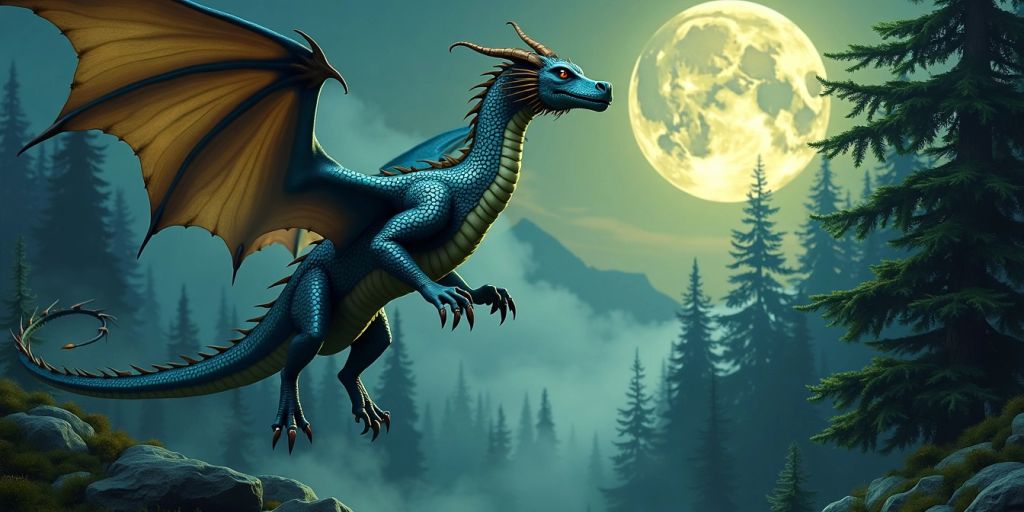
    Dragons are one of the most fascinating mythical creatures, appearing in legends from China to the Mediterranean and beyond. Their symbolism and stories vary greatly across different cultures, reflecting diverse beliefs and values.

    Hybrid Beasts: The Symbolism of Combined Creatures

    Griffin with eagle head and lion body on cliff.

    Griffins: Guardians of Treasure

    Griffins are mythical creatures with the body of a lion and the head and wings of an eagle. This combination symbolizes strength, courage, and keen vision. The lion represents bravery and royalty, while the eagle stands for power and vigilance. Together, the griffin embodies a powerful guardian, often seen protecting sacred treasures and divine spaces.

    Sphinxes: Riddles and Mysteries

    The sphinx, with the body of a lion and the head of a human or other animal, originated in ancient Egypt. It is depicted as a regal guardian and a symbol of mystery and wisdom. The Great Sphinx of Giza is a famous example. Sphinxes are often associated with riddles and tests of wisdom, as seen in the myth of Oedipus. This creature represents the duality of human nature and the complexity of the human condition.

    The sphinx serves as a reminder that wisdom and understanding require both intellectual and instinctual elements.

    Chimeras: The Power of Three

    Chimeras are fearsome creatures with the body and head of a lion, a goat’s head on its back, and a serpent’s tail. Originating in ancient Greece, the chimera symbolizes chaos and the unpredictable forces of nature. It represents the dangers of uncontrolled and destructive power. In Greek mythology, the hero Bellerophon was tasked with slaying the chimera, highlighting the triumph of human courage over formidable challenges.

    Sea Monsters: Legends from the Deep

    The sea, with its vastness and mysterious depths, has long captivated the human imagination. It is a realm of untamed power and unknown creatures, fueling our fascination and giving rise to tales of terrifying sea monsters that lurk beneath the waves.

    The Kraken: Terror of the Seas

    Let’s begin our exploration with the Kraken, a legendary sea monster from Scandinavian folklore. The Kraken was described as an enormous creature resembling a giant octopus or squid, capable of capsizing ships and dragging them to the depths of the ocean. The mythology surrounding the Kraken can be traced back to the accounts of ancient mariners who encountered giant squid or witnessed the destructive power of powerful storms at sea. These experiences, combined with the natural fear and awe of the deep ocean, gave rise to tales of a monstrous creature that embodied the fearsome power of the sea.

    Leviathan: Biblical Behemoth

    Now, let’s turn our attention to the Leviathan, a mythical sea monster mentioned in ancient texts such as the Bible and various ancient Near Eastern mythologies. The Leviathan was often described as a massive, multi-headed serpent or dragon-like creature, symbolizing chaos and the primordial forces of the sea. The Leviathan represented the untamed and uncontrollable nature of the ocean. It served as a reminder of the dangers that awaited sailors and the unpredictability of the deep. The Leviathan was also associated with cosmic and cosmic battles, representing the eternal struggle between order and chaos.

    Mermaids and Sirens: Luring Sailors to Doom

    Mermaids and sirens are mythical creatures that have been depicted in various cultures around the world. These beings are often portrayed as beautiful women with fish-like tails, who lure sailors to their doom with their enchanting songs. The stories of mermaids and sirens highlight the allure and danger of the sea, emphasizing the idea that the ocean is a place of both beauty and peril. Their tales serve as a warning to sailors to be cautious of the unknown dangers that lie beneath the surface.

    Mythical Birds: From Phoenix to Thunderbird

    Phoenix: The Cycle of Rebirth

    The Phoenix is a legendary bird from ancient Egyptian, Greek, and Persian stories. This fiery bird is known for its ability to rise from its own ashes, symbolizing renewal and immortality. The Phoenix’s tale speaks to the human desire for rebirth and the eternal nature of the soul. In modern times, it stands as a symbol of hope and strength.

    Thunderbird: Power of the Skies

    The Thunderbird is a mythological bird-like spirit in North American Indigenous peoples’ history and culture. It is considered a supernatural being of power. This colossal bird, found in the legends of tribes like the Ojibwe, Sioux, and Iroquois, is said to create thunder with its wings and lightning with its eyes. The Thunderbird represents power, protection, and the forces of nature, often associated with rain and storms.

    The Thunderbird’s wings are believed to create the sound of thunder, while its eyes flash lightning, symbolizing strength and guardianship.

    Roc: The Giant Bird of Prey

    The Roc is a mythical bird from Arabian and Persian folklore, described as a gigantic bird of prey capable of carrying off elephants. This bird symbolizes immense strength and grandeur. The Roc has appeared in many tales, including "One Thousand and One Nights," where it features in the adventures of Sinbad the Sailor. Its portrayal as a legendary creature has inspired awe and wonder for generations.

    Creatures of the Night: Vampires, Werewolves, and More

    Vampire and werewolf in a moonlit forest

    Vampires: Bloodsuckers of Legend

    Vampires are among the most famous creatures of the night. These beings, who feed on the life essence of the living, have roots in ancient Mesopotamia, Greece, and Eastern Europe. Vampires are often seen as immortal and seductive, embodying themes of desire and the fear of death. They are linked with darkness and the eternal struggle between good and evil.

    Werewolves: Humans Turned Beasts

    Werewolves are humans who transform into wolves or wolf-like creatures, usually during a full moon. This legend is found in Greek and Norse mythology and has spread worldwide. Werewolves symbolize the battle between human reason and primal instincts. Their transformation during the full moon represents losing control and giving in to wild desires.

    Banshees and Other Night Terrors

    Besides vampires and werewolves, other night creatures like banshees also haunt folklore. Banshees are spirits from Irish mythology known for their wailing, which is said to predict death. These beings, along with others like succubi and incubi, reflect our deepest fears and desires, serving as cautionary tales about the unknown and the dark parts of our minds.

    Modern Interpretations: Mythical Creatures in Pop Culture

    Mythical Beasts in Movies and TV

    Mythical creatures have always fascinated us, and in modern times, they continue to thrive in movies and TV shows. From the majestic dragons in "Game of Thrones" to the magical creatures in the "Harry Potter" series, these beings add depth and excitement to stories. They often symbolize themes like power, identity, and the human condition, making us think about complex questions.

    Video Games: Interactive Mythology

    Video games have taken mythical creatures to a new level. Games like "The Legend of Zelda," "World of Warcraft," and "God of War" let players interact with these beings in immersive worlds. These creatures are not just for show; they shape the game’s story and offer unique challenges and rewards. This interactive platform allows us to engage with mythical creatures like never before.

    Literature: New Takes on Old Legends

    Books have always been a home for mythical creatures. From classics like "Frankenstein" and "Dracula" to modern series like "Harry Potter" and "A Song of Ice and Fire," these beings are integral to the narratives. They evolve with the times, reflecting our changing cultural and social contexts. They invite us to explore themes of power, identity, and morality, making us question our own beliefs and values.

    Mythical creatures continue to captivate our imagination, inspiring us to dream beyond the boundaries of our reality.

    As we look to the future, it’s clear that mythical creatures will keep evolving. They will continue to reflect our hopes, fears, and aspirations, reminding us of the power of imagination and the enduring fascination with the unknown.

    In today’s world, mythical creatures are more than just legends; they are a big part of pop culture. From movies to video games, these fascinating beings capture our imagination. Want to dive deeper into the world of mythical creatures? Visit our website for exclusive content and insights!

    Conclusion

    In our journey through the world of mythical creatures, we’ve uncovered the rich tapestry of legends and lore that span cultures and centuries. From the depths of the oceans to the highest mountains, these creatures have sparked our imaginations and offered us a glimpse into the fears, hopes, and dreams of people from all walks of life. As we continue to explore and create, these mythical beings will undoubtedly evolve, reflecting our ever-changing world. They remind us of the power of storytelling and the endless possibilities that lie within our imagination. So, keep dreaming, keep exploring, and let the magic of mythical creatures inspire you.

    Frequently Asked Questions

    What are mythical creatures?

    Mythical creatures are imaginary beings from folklore, myths, and legends. They often have special powers or unique features.

    Why do different cultures have similar mythical creatures?

    Many cultures have similar mythical creatures because they share common themes, like explaining natural events or teaching moral lessons.

    What is the difference between Eastern and Western dragons?

    Eastern dragons are usually seen as wise and kind, often linked to water. Western dragons are often portrayed as fierce and fire-breathing.

    Why are hybrid creatures like griffins and chimeras important in mythology?

    Hybrid creatures often symbolize the combination of different qualities or powers, making them important symbols in myths.

    How have mythical creatures influenced modern pop culture?

    Mythical creatures appear in movies, TV shows, and video games, where they inspire new stories and characters.

    Are there any real animals that inspired mythical creatures?

    Yes, many mythical creatures are inspired by real animals. For example, narwhal tusks were once thought to be unicorn horns.

  • Exploring Time Travel Theories: What Science Says About Journeying Through Time

    Exploring Time Travel Theories: What Science Says About Journeying Through Time

    Time travel has always fascinated people, from the pages of old books to the screens of modern movies. But what does science really say about the possibility of journeying through time? In this article, we will explore various theories and concepts related to time travel, including Einstein’s theory of relativity, the grandfather paradox, wormholes, and quantum mechanics. We will also look at how time travel is portrayed in popular culture and what the future might hold for this intriguing idea.

    Key Takeaways

    • Einstein’s theory of relativity suggests that time is not absolute and can be affected by speed and gravity.
    • The grandfather paradox presents a major challenge to the concept of time travel, questioning the consistency of cause and effect.
    • Wormholes are theoretical passages through space-time that could potentially allow for time travel, but their existence remains speculative.
    • Quantum mechanics introduces new possibilities for time travel, but it also adds complexity to our understanding of time.
    • Popular culture often takes liberties with scientific principles, but it also inspires real scientific research into the possibilities of time travel.

    The Foundations of Time Travel Theories

    Einstein’s Theory of Relativity

    Time travel theories often start with Einstein’s theory of relativity. This theory suggests that time is not fixed but can change depending on how fast you are moving. For example, if you travel very fast, time will slow down for you. This idea is called time dilation.

    Time Dilation and Its Implications

    Time dilation means that if you travel close to the speed of light, you could age much slower than people who stay on Earth. This has been tested with atomic clocks on airplanes and satellites, showing that time can indeed be stretched.

    Experimental Evidence Supporting Time Travel

    Scientists have found some proof that time travel might be possible. For instance, atomic clocks on fast-moving planes show different times than those on the ground. This supports the idea that time can be bent or stretched, making time travel a fascinating topic in science.

    The Grandfather Paradox and Causality

    Understanding the Grandfather Paradox

    The Grandfather Paradox is a famous thought experiment in time travel. It asks: What happens if you go back in time and accidentally kill your grandfather before your parent is born? This would mean you were never born, so you couldn’t have traveled back in time to commit the act. This paradox challenges our understanding of reality and causality.

    Causality and Its Challenges

    Causality is the principle that cause comes before effect. Time travel complicates this because actions in the past could change the future. For example, if you prevent a major event, it could create a ripple effect, altering everything that follows. This makes it hard to predict outcomes and maintain a consistent timeline.

    Potential Resolutions to Time Travel Paradoxes

    Scientists have proposed several solutions to the Grandfather Paradox:

    1. Multiple Timelines: One idea is that traveling back in time creates a new, separate timeline. In this new timeline, your actions don’t affect the original timeline you came from.
    2. Chronology Protection Conjecture: Another theory suggests that the laws of physics prevent paradoxes from happening. This means backward time travel might be impossible.
    3. Self-Consistency Principle: This principle states that any actions taken by a time traveler were always part of history, so paradoxes can’t occur. For example, if you try to kill your grandfather, something will always stop you.

    The Grandfather Paradox and the broader concept of time travel continue to challenge our understanding of reality, causality, and existence. As we venture into these complex ideas, we must consider both scientific theories and philosophical implications.

    Wormholes: Gateways Through Time?

    Futuristic city with glowing wormhole in sky

    Theoretical Basis for Wormholes

    Wormholes, also known as Einstein-Rosen bridges, are fascinating theoretical constructs in physics. They are imagined as tunnels connecting two separate points in spacetime. This concept was first proposed by Einstein and his student Nathan Rosen in the 1930s. The idea is often visualized by folding a two-dimensional sheet of paper to bring two distant points together. If wormholes exist, they could potentially allow for instantaneous travel between these points, making them a key concept in time travel theories.

    Challenges in Creating Wormholes

    Creating a traversable wormhole is no small feat. It would require exotic matter with negative energy, something that has not been proven to exist. Even if such matter were found, maintaining a stable wormhole would be incredibly difficult due to extreme tidal forces and time dilation effects. These forces could easily destroy any matter attempting to pass through. Additionally, the creation of a wormhole would likely involve manipulating black holes and white holes, adding another layer of complexity.

    Potential Applications of Wormholes in Time Travel

    If we could overcome these challenges, wormholes could revolutionize our understanding of time and space. They could allow for instantaneous travel across vast distances, and potentially even time travel. For example, an astronaut entering a wormhole in one galaxy could emerge in another galaxy, possibly even in a different time period. However, this remains highly speculative and is far from being a practical reality.

    Quantum Mechanics and Time Travel

    Futuristic cityscape with vortex and spinning clock

    Quantum Entanglement and Time Travel

    Quantum entanglement is a phenomenon where particles become interconnected, such that the state of one particle instantly influences the state of another, no matter the distance between them. This has led some scientists to speculate about its potential for time travel. Could entanglement allow information to be sent back in time? While this idea is still theoretical, it opens up fascinating possibilities for future research.

    The Role of Quantum Gravity

    Quantum gravity aims to unify general relativity and quantum mechanics, two pillars of modern physics that currently don’t align. Some researchers believe that understanding quantum gravity could unlock the secrets of time travel. This field is still in its infancy, but it holds promise for revealing how time might be manipulated at the quantum level.

    Current Research in Quantum Time Travel

    Scientists are actively exploring the intersection of quantum mechanics and time travel. Experiments are being conducted to test the limits of quantum entanglement and other quantum phenomena. While we’re far from building a time machine, these studies are crucial for understanding the fundamental nature of time and space.

    The intersection of technology and paranormal research highlights the role of AI and multiverse theories in understanding unexplained phenomena. This emphasizes the importance of debunking myths and understanding the psychological and environmental factors that contribute to paranormal experiences.

    Time Travel in Popular Culture

    Movies and TV Shows Featuring Time Travel

    Time travel has been a staple of science fiction for decades. From the iconic DeLorean in Back to the Future to the magical time turner in Harry Potter, these stories captivate audiences with the idea of altering the past or exploring the future. Other notable mentions include Groundhog Day, where the protagonist experiences countless time loops, and 12 Monkeys, which explores the concept of a single timeline despite multiple journeys through time.

    Scientific Accuracy in Fictional Time Travel

    While these stories are entertaining, they often take liberties with scientific facts. For instance, Einstein’s theory of relativity suggests that time travel might be possible, but the energy required is enormous. Additionally, the concept of causality presents significant challenges, as seen in the famous Grandfather Paradox. Despite these hurdles, the portrayal of time travel in media continues to inspire curiosity and debate.

    Impact of Popular Culture on Scientific Research

    Popular culture plays a crucial role in shaping public interest in scientific concepts. The fascination with time travel in movies, television, and literature often leads to increased interest in the underlying science. This interplay between fiction and reality creates a continuous cycle of interest in the unknown, driving both personal fascination and scientific inquiry.

    Future Prospects of Time Travel

    Technological Advances Needed

    For time travel to become a reality, significant technological advances are required. Current technology is far from achieving the energy levels needed to manipulate time. Scientists believe that breakthroughs in quantum mechanics and general relativity could pave the way for future developments.

    Ethical and Philosophical Considerations

    Time travel raises numerous ethical and philosophical questions. For instance, if we could travel back in time, how would we handle the potential to alter past events? This could lead to unforeseen consequences, making it essential to establish guidelines for responsible engagement.

    The Role of Interdisciplinary Research

    Interdisciplinary research is crucial for advancing our understanding of time travel. Combining insights from physics, philosophy, and even popular culture can help us explore the possibilities and limitations of journeying through time. This collaborative approach could lead to innovative solutions and new perspectives on this fascinating topic.

    The future of time travel holds endless possibilities, from exploring ancient civilizations to witnessing future events firsthand. Imagine the knowledge and experiences waiting to be uncovered! To dive deeper into the fascinating world of time travel and other intriguing topics, visit our website. Join us on this exciting journey and unlock a world of insights and discoveries.

    Conclusion

    Time travel remains one of the most captivating ideas in both science and fiction. While Einstein’s theories suggest that time travel might be possible, the practical challenges are immense. We don’t yet have the technology or understanding to make it a reality. However, the concept continues to inspire scientists and storytellers alike. As we learn more about the universe, who knows what possibilities the future might hold? For now, time travel remains a fascinating topic that fuels our imagination and curiosity.

    Frequently Asked Questions

    What is time travel?

    Time travel is the idea of moving between different points in time, much like we move through space.

    Is time travel possible according to science?

    Scientists think time travel might be possible, especially with theories like Einstein’s relativity, but we don’t have the technology yet.

    What is the Grandfather Paradox?

    The Grandfather Paradox is a time travel puzzle where if you go back in time and stop your grandfather from having kids, you wouldn’t exist to go back in time.

    What are wormholes?

    Wormholes are theoretical tunnels in space-time that could connect different times and places, like shortcuts through the universe.

    How does popular culture depict time travel?

    Movies and TV shows often show time travel with cool gadgets and dramatic changes in history, but they take a lot of liberties with the science.

    What are the future prospects of time travel?

    Future time travel depends on new technology and better understanding of physics, but it also raises big ethical and philosophical questions.

  • Exploring Lost Civilizations: Unveiling the Secrets of Ancient Cultures

    Exploring Lost Civilizations: Unveiling the Secrets of Ancient Cultures

    Imagine walking through the ruins of ancient cities, each stone whispering tales of long-gone civilizations. From the towering structures of Machu Picchu to the mysterious legend of Atlantis, these lost worlds captivate our imagination. In this article, we’ll explore some of the most fascinating lost civilizations, uncovering their secrets and marveling at their achievements.

    Key Takeaways

    • Machu Picchu showcases the advanced engineering and architectural skills of the Inca civilization.
    • The legend of Atlantis continues to intrigue with various theories and expeditions seeking its location.
    • Pompeii offers a unique glimpse into daily Roman life, frozen in time by a volcanic eruption.
    • The Maya civilization is known for its impressive cities and astronomical knowledge, yet its sudden decline remains a mystery.
    • Ancient astronaut theory suggests that extraterrestrial beings may have influenced early human cultures, sparking much debate.

    Machu Picchu: The Lost City of the Incas

    Aerial view of Machu Picchu and surrounding mountains.

    Rediscovery and Exploration

    High in the Peruvian Andes, Machu Picchu remained hidden from the world until its rediscovery in 1911 by Hiram Bingham. This ancient Incan city, perched among the clouds, has since become a symbol of the enduring allure of ancient mysteries. Bingham’s expedition brought global attention to this remarkable site, sparking further exploration and study.

    Architectural and Engineering Marvels

    Machu Picchu showcases the architectural brilliance of the Inca civilization. The city features intricate stone structures, terraced fields, and advanced water management systems. The precision of the stonework, without the use of mortar, highlights the Incas’ engineering prowess. Visitors can marvel at the Temple of the Sun, the Intihuatana stone, and the Room of the Three Windows.

    Mysteries and Theories

    Despite extensive research, many aspects of Machu Picchu remain shrouded in mystery. Scholars debate its purpose, with theories ranging from a royal estate to a religious site. Some suggest it had astronomical alignments, adding to its enigmatic nature. The exact reason for its abandonment also continues to puzzle historians.

    Preservation Efforts

    Preserving Machu Picchu for future generations is a significant challenge. The site faces threats from natural erosion, tourism, and environmental changes. Efforts are ongoing to balance preservation with accessibility, ensuring that this iconic symbol of the Inca civilization remains intact for years to come.

    Machu Picchu stands as a testament to the ingenuity and resilience of the Inca civilization, captivating the imaginations of all who visit.

    The Enigma of Atlantis: From Myth to Reality?

    Historical Origins of the Atlantis Myth

    The legend of Atlantis has fascinated people for thousands of years. Plato described Atlantis as a powerful and advanced civilization that met a sudden, catastrophic end. This tale of grandeur and destruction has sparked countless debates and theories.

    Theories and Hypotheses

    Many theories have been proposed about the true nature of Atlantis. Some believe it was a real place, while others think it was purely a myth. Theories range from it being located in the Mediterranean to the Americas. Each theory tries to explain the mysteries and clues left behind.

    Clues and Expeditions

    Over the years, many explorers have searched for Atlantis. They have looked for evidence in various parts of the world, hoping to find the lost city. These expeditions have uncovered interesting clues, but the true location of Atlantis remains a mystery.

    Atlantis in Popular Culture

    Atlantis has also made a significant impact on popular culture. It has been featured in books, movies, and TV shows, capturing the imagination of people everywhere. The legend of Atlantis continues to inspire and intrigue, keeping the mystery alive.

    Pompeii: A Time Capsule of Ancient Roman Life

    The Eruption of Mount Vesuvius

    In 79 AD, Mount Vesuvius erupted, burying the bustling city of Pompeii under layers of volcanic ash and pumice. This catastrophic event preserved the city in a unique way, freezing a moment in time. The eruption’s suddenness left the city almost perfectly intact, providing a detailed snapshot of Roman life.

    Rediscovery and Excavation

    Pompeii lay hidden for centuries until its rediscovery in the 18th century. Archaeologists began to uncover its remarkably preserved streets, buildings, and even the remains of its inhabitants. The rediscovery offered an unprecedented look into ancient Roman society, revealing everything from grand villas to humble shops.

    Daily Life in Pompeii

    Walking through Pompeii’s ancient alleys, one can see the opulent villas, public baths, and bustling marketplaces that once thrived. The haunting plaster casts of residents caught in their final moments add a poignant touch to the city’s story. These casts provide a human connection to the tragedy, making the past feel incredibly real.

    Preservation and Challenges

    Preserving Pompeii is an ongoing effort. The site faces numerous challenges, including weathering, tourism, and natural decay. Modern preservation techniques are employed to protect this UNESCO World Heritage site for future generations. The meticulous work of archaeologists and conservators ensures that Pompeii remains a valuable window into the past.

    Pompeii’s rediscovery has allowed us to explore intriguing mysteries of ancient Roman life, offering insights that continue to captivate historians and visitors alike.

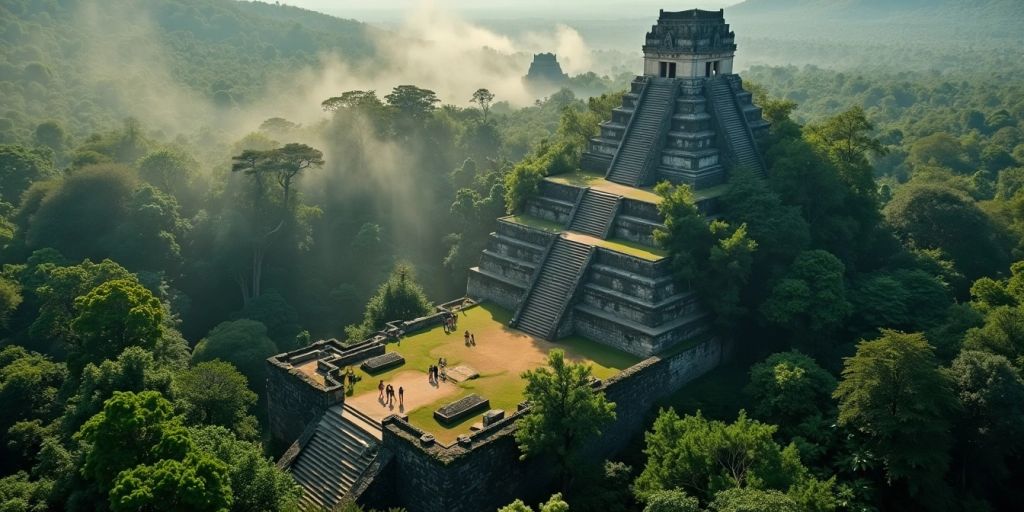
    Lost in the Jungle: Unraveling the Secrets of the Maya Civilization

    Hidden deep within the lush jungles of Mesoamerica, the Maya civilization thrived for centuries, leaving behind a legacy of architectural and astronomical wonders. The decline of the Maya remains one of history’s great mysteries, as many of their cities were mysteriously abandoned. Let’s explore the major Maya cities, their achievements, and the ongoing discoveries that continue to shed light on this fascinating civilization.

    Major Maya Cities

    The Maya civilization was home to several major cities, each with its own unique features and significance. Some of the most notable cities include:

    • Tikal: Located in present-day Guatemala, Tikal was one of the most powerful kingdoms of the ancient Maya.
    • Caracol: Situated in Belize, Caracol is known for its impressive architecture and large-scale construction projects.
    • Calakmul: Found in Mexico, Calakmul was a major rival to Tikal and played a crucial role in Maya politics.

    Astronomical and Architectural Achievements

    The Maya were renowned for their advanced understanding of astronomy and architecture. They built intricate temples and observatories that aligned with celestial events. Their calendar systems, including the famous Long Count calendar, were highly sophisticated and accurate.

    Theories on the Maya Collapse

    Numerous theories have been proposed to explain the mysterious collapse of the Maya civilization. Some of the most prominent theories include:

    1. Environmental Factors: Droughts and deforestation may have led to resource depletion and societal collapse.
    2. Warfare: Intense warfare between city-states could have weakened the civilization.
    3. Social Unrest: Internal strife and political instability may have contributed to the decline.

    Ongoing Discoveries

    Archaeologists continue to uncover new information about the Maya civilization. Recent discoveries, such as the use of LiDAR technology to reveal hidden structures beneath the jungle canopy, have provided valuable insights into the extent and complexity of Maya cities. These ongoing discoveries help us better understand the daily lives, culture, and eventual decline of the Maya people.

    "The Lost World of the Maya" is a comprehensive documentary that offers a detailed exploration of the ancient Maya civilization. Released in 2019, it provides an in-depth look at their achievements and mysteries.

    Petra: The Rose-Red City of the Desert

    Historical Significance

    Petra, located in southwest Jordan, was once a bustling hub for trade and commerce during the Nabatean era. The city was built on a terrace, pierced from east to west by the Wadi Musa (the Valley of Moses). Petra’s strategic location allowed it to thrive as a center for merchants and travelers.

    Architectural Wonders

    The most iconic structure in Petra is the Treasury (Al-Khazneh), which showcases the architectural brilliance of the Nabateans. Visitors can marvel at the intricate rock-cut facades and explore hidden tombs. The engineering marvels of Petra also include an advanced water management system that allowed water to flow through the arid landscape.

    Rediscovery in the 19th Century

    Petra was lost to the Western world for centuries until its rediscovery in 1812 by Swiss explorer Johann Ludwig Burckhardt. His findings brought global attention to the ancient city, sparking interest and further exploration.

    Modern-Day Preservation

    Today, Petra is a UNESCO World Heritage Site, and efforts are ongoing to preserve its unique structures and history. Preservation challenges include natural erosion and the impact of tourism. However, dedicated efforts continue to protect this rose-red city for future generations.

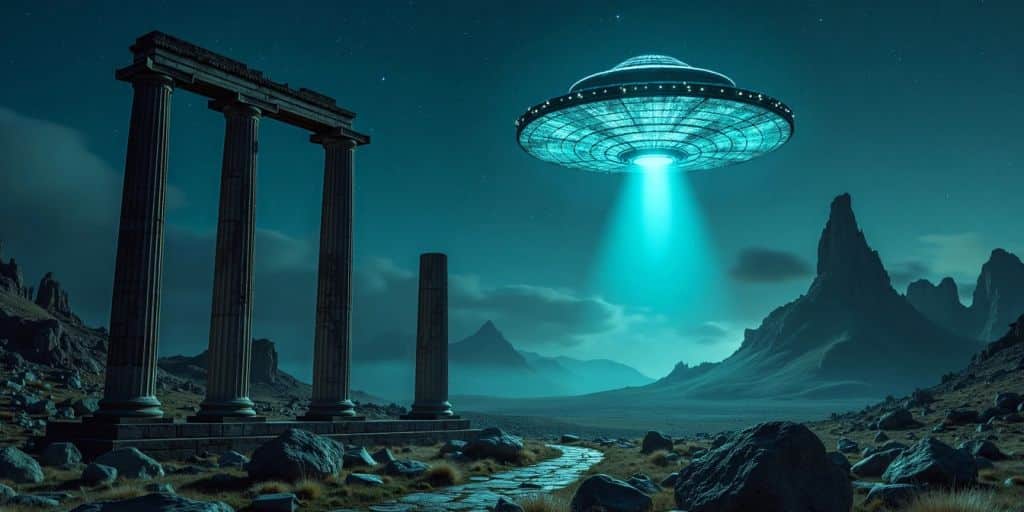
    Ancient Astronaut Theory: Visitors from the Stars

    Ancient temple in jungle under starry sky with comet.

    Evidence in Ancient Artworks and Texts

    The ancient astronaut theory suggests that extraterrestrial beings visited Earth in ancient times and influenced human civilizations. Proponents of this theory point to ancient artworks and texts as evidence. For example, petroglyphs from Val Camonica, Italy, are believed by some to resemble modern astronauts. These interpretations, however, are highly debated.

    Debates and Criticisms

    The theory has sparked numerous debates and criticisms. Skeptics argue that there is no concrete evidence to support the idea of ancient alien visitors. They believe that the interpretations of ancient artworks are often exaggerated or misrepresented. Despite the lack of solid proof, the theory continues to captivate the imagination of many.

    Influence on Popular Culture

    The ancient astronaut theory has had a significant impact on popular culture. It has inspired numerous books, movies, and TV shows. The idea of ancient aliens has become a popular theme in science fiction, further fueling public interest and belief in the theory.

    Impact on Understanding Ancient Mysteries

    While the theory remains controversial, it has encouraged people to look at ancient mysteries from new perspectives. By considering the possibility of otherworldly encounters, we open ourselves to new ways of thinking about the development of human civilizations. This belief in alien visitors continues to be a topic of fascination and debate.

    Have you ever wondered if ancient astronauts visited Earth? Dive into the fascinating world of the Ancient Astronaut Theory and explore the possibility of visitors from the stars. For more intriguing insights and exclusive content, visit our website and start your free trial today!

    Conclusion

    Exploring lost civilizations is like opening a time capsule that connects us to our distant past. From the towering pyramids of Egypt to the mysterious ruins of Machu Picchu, each ancient site tells a story of human ingenuity, culture, and life. These discoveries not only satisfy our curiosity but also teach us valuable lessons about our ancestors. As we continue to uncover these hidden gems, we gain a deeper understanding of where we come from and how past civilizations have shaped our world today. The journey of exploring these ancient wonders is ongoing, and with each new find, we get closer to piecing together the grand puzzle of human history.

    Frequently Asked Questions

    What is Machu Picchu and why is it important?

    Machu Picchu is an ancient Inca city located high in the Andes Mountains of Peru. It is important because it showcases the engineering skills and architectural genius of the Inca civilization. It was rediscovered in 1911 and is now a UNESCO World Heritage Site.

    Is Atlantis real or just a myth?

    Atlantis is a legendary island mentioned by the ancient Greek philosopher Plato. While many believe it to be a myth, some researchers and explorers have proposed various theories and locations for its existence. However, no concrete evidence has been found to prove Atlantis was real.

    What happened to Pompeii?

    Pompeii was an ancient Roman city that was buried under volcanic ash and pumice when Mount Vesuvius erupted in 79 AD. The city was lost for centuries until it was rediscovered in the 18th century. Its ruins provide a detailed look into Roman life.

    Who were the Maya, and what are they known for?

    The Maya were an ancient civilization that lived in what is now Mexico, Guatemala, Belize, Honduras, and El Salvador. They are known for their advanced knowledge of astronomy, impressive architectural structures, and complex calendar systems. The reason for their civilization’s decline remains a mystery.

    What makes Petra special?

    Petra, also known as the Rose-Red City, is an ancient city carved into the rock in present-day Jordan. It was the capital of the Nabataean Kingdom and is famous for its stunning architecture and water conduit system. It was rediscovered in 1812 and is now a UNESCO World Heritage Site.

    What is the Ancient Astronaut Theory?

    The Ancient Astronaut Theory suggests that extraterrestrial beings visited Earth in ancient times and influenced human civilizations. This theory is based on interpretations of ancient artworks and texts. While it has gained popularity in media, it is widely debated and criticized by scholars.

  • Unveiling the Secrets of Mystery Cults: A Journey into Ancient Beliefs

    Unveiling the Secrets of Mystery Cults: A Journey into Ancient Beliefs

    Mystery cults were secret religious groups that existed in ancient Greek and Roman times. They offered followers a chance to connect deeply with the divine and uncover hidden truths about life and the universe. Unlike regular religions, these cults had secret rituals and ceremonies that only initiates could participate in. As we explore the origins, rituals, and lasting impacts of these mystery cults, we uncover a world that sought to answer life’s biggest questions through hidden and sacred practices.

    Key Takeaways

    • Mystery cults began in ancient Greece and evolved significantly during the Roman Empire.
    • These cults incorporated secret initiation rites that were crucial for membership.
    • Prominent mystery cults included the Eleusinian Mysteries, the Cult of Dionysus, and the Mithraic Mysteries.
    • Mystery cults influenced art, literature, and even early Christian practices.
    • Various factors, including the rise of Christianity, led to the decline of these ancient cults.

    Origins and Evolution of Mystery Cults

    Early Beginnings in Ancient Greece

    Mystery cults began in Ancient Greece. They were secretive groups that performed special rituals. These cults were different from the public religion. They focused on personal experiences and hidden knowledge. People joined these cults to feel closer to the gods and to find answers to life’s big questions.

    Influence of Eastern Religions

    As time went on, mystery cults were influenced by religions from the East. For example, the worship of the Egyptian goddess Isis became popular. These new ideas mixed with Greek traditions, creating unique practices. This blending of cultures made the cults even more mysterious and appealing.

    Transformation During the Roman Empire

    During the Roman Empire, mystery cults changed a lot. They became more organized and widespread. The Romans adopted many gods from other cultures, like the Persian god Mithras. These cults offered a sense of community and belonging. People from all walks of life could join, making the cults very inclusive. However, the secrecy of their rituals often led to skepticism and criticism.

    Rituals and Ceremonies of Mystery Cults

    Ancient worshippers performing a ritual in a cave.

    Initiation Rites and Their Significance

    Initiation rites were the cornerstone of mystery cults. These ceremonies marked the beginning of a new spiritual journey for the initiates. The name ioulo (from ioulos, “grain sheaf”) has been regarded as identifying her with the sheaf and as proving that the cult of Demeter originated in the agricultural cycle. The rites often involved symbolic acts of death and rebirth, representing the cycle of life and the promise of a new beginning.

    Symbolism in Ritual Practices

    Symbolism played a crucial role in the rituals of mystery cults. Objects, gestures, and words were imbued with deep meanings, often related to nature, life, and death. For instance, the grain sheaf in the Eleusinian Mysteries symbolized the agricultural cycle and the renewal of life. These symbols helped initiates connect with the divine and understand the deeper truths of existence.

    Role of Music and Dance

    Music and dance were integral to the ceremonies of mystery cults. They were not just forms of entertainment but were believed to have spiritual significance. The rhythms and melodies were thought to facilitate a connection with the divine, while the dances often mimicked cosmic movements, symbolizing the harmony of the universe. The combination of music and dance created an immersive experience that helped initiates transcend the mundane and enter a state of spiritual ecstasy.

    Prominent Mystery Cults of the Ancient World

    The Eleusinian Mysteries

    The Eleusinian Mysteries were among the earliest and most famous mystery cults, dedicated to the goddesses Demeter and Persephone. Held at Eleusis near Athens, these rituals captivated many followers. The central theme was the cycle of nature, symbolized by Demeter’s grief for her daughter Persephone, representing the changing seasons and the cycle of life and death.

    The Cult of Dionysus

    The Cult of Dionysus, also known as the Dionysian Mysteries, focused on the god of wine, fertility, and theater. This cult’s rituals often involved ecstatic celebrations, symbolizing the god’s dual role as a deity of life and rebirth. The origins of this cult are believed to predate Greece, possibly originating from Crete or North Africa.

    The Mithraic Mysteries

    The Mithraic Mysteries revolved around the worship of Mithras, a deity of Persian origin. This cult was particularly popular among Roman soldiers. The rituals were conducted in secretive underground temples called Mithraea. Initiates underwent a series of seven grades of initiation, each with its own specific rites and symbols. The central myth involved Mithras slaying a sacred bull, symbolizing the struggle between good and evil.

    Social and Cultural Impact of Mystery Cults

    Inclusivity Across Social Strata

    Mystery cults were unique in their ability to unite people from all walks of life. Unlike other religious groups, these cults welcomed everyone, from lowly laborers to esteemed statesmen. This inclusivity fostered a sense of community and belonging among their followers. Members formed strong bonds, sharing experiences and insights that extended beyond the secret rituals.

    Influence on Art and Literature

    The rich symbolism and rituals of mystery cults left a lasting mark on ancient art and literature. Artists and writers drew inspiration from the mystical practices, creating works that reflected the profound spiritual experiences of the initiates. This influence can be seen in various forms of art, from intricate pottery designs to epic poems.

    Philosophical Contributions

    Mystery cults also contributed to the philosophical landscape of the ancient world. Their teachings on life after death, purification of the soul, and communion with the divine offered a sense of purpose and direction. These ideas resonated with many philosophers, who incorporated them into their own works, further enriching the intellectual fabric of the time.

    The enduring appeal of mystery cults lies in their capacity to address fundamental human concerns and desires. In a world fraught with uncertainty, these mystical practices offered solace and hope.

    Despite their popularity, mystery cults faced skepticism and criticism. The secrecy surrounding their practices often led to accusations of heresy and impiety. Early Christian writers viewed these cults as competitors to their own burgeoning faith and sought to undermine them. However, the allure of mystery cults endures, beckoning us to delve into their depths, seeking meaning and transcendence.

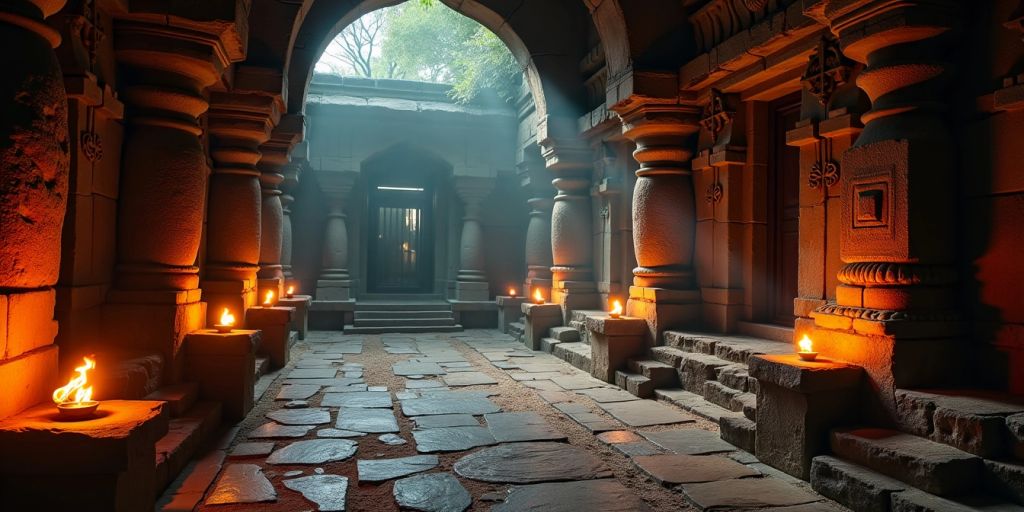
    Mystery Cults and Early Christianity

    Ancient temple with torches and stone statues

    Comparative Analysis of Rituals

    Early Christianity and mystery cults shared some similarities in their rituals. For instance, both had initiation rites, with baptism being a key ritual in Christianity. In contrast, in mystery religions like those of Isis or Mithras, baptism often served as a purification rite or initiation into the cult, without the same theological implications. This has led to debates about whether Christianity borrowed elements from these older traditions.

    Controversies and Debates

    The relationship between Christianity and mystery cults has been a topic of controversy for centuries. Early Christian writers often viewed these cults as competitors and sought to discredit them. Justin Martyr, a 2nd-century Christian apologist, referred to them as "demonic imitations" of the true faith. Despite these criticisms, some scholars argue that the secrecy and initiation rites of mystery cults influenced early Christian practices.

    Legacy in Christian Practices

    Some elements of mystery cults may have found their way into Christian practices. For example, the term mysterion, used in early Christianity to describe sacraments like baptism, was also a term for mystery rites. This suggests that early Christians adopted some of the aura of secrecy that surrounded mystery cults. While the exact influence remains debated, the similarities are hard to ignore.

    The Decline and Legacy of Mystery Cults

    Factors Leading to Their Decline

    Mystery cults, once thriving, began to wane due to several factors. One major reason was the rise of Christianity, which offered a more accessible and organized belief system. Early Christian writers often viewed these cults as competitors and sought to undermine them. Additionally, the secrecy surrounding their practices led to accusations of heresy and impiety, further diminishing their appeal.

    Surviving Elements in Modern Religions

    Despite their decline, some elements of mystery cults have survived in modern religions. For instance, the Christian sacrament of baptism shares similarities with initiation rites of ancient cults. The term mysterion, used by early Christians, reflects this connection. These surviving elements highlight the enduring influence of mystery cults on contemporary religious practices.

    Cultural and Historical Significance

    Mystery cults hold a significant place in history due to their unique approach to spirituality. They addressed fundamental human concerns, offering solace and hope in uncertain times. Their teachings on life after death and purification of the soul provided a sense of purpose. The allure of these cults endures, inviting us to explore their depths and seek meaning in their ancient practices.

    The enduring appeal of mystery cults lies in their capacity to address fundamental human concerns and desires. In a world fraught with uncertainty, these mystical practices offered solace and hope.

    Mystery cults, once vibrant and influential, have seen a significant decline over the centuries. Their legacy, however, continues to intrigue scholars and enthusiasts alike. If you’re fascinated by the hidden histories and want to dive deeper, visit our website for exclusive content and resources. Join us on this journey of discovery and uncover the secrets that history has left behind.

    Conclusion

    In wrapping up our journey into the ancient Mystery Cults, we uncover a world where secrets and rituals intertwined to offer a sense of belonging and deeper understanding. These cults welcomed everyone, regardless of their social status, and provided a space for spiritual growth and community. Despite facing criticism and skepticism, their teachings on life, death, and the divine continue to resonate. The allure of these ancient practices lies in their promise of enlightenment and the timeless human quest for meaning. As we look back, we see that the search for truth and connection is a journey that transcends time, reminding us of our shared human experience.

    Frequently Asked Questions

    What are mystery cults?

    Mystery cults were ancient religious groups with secret rituals and teachings. They promised special knowledge and a deeper connection to the divine for their members.

    Where did mystery cults originate?

    Mystery cults began in ancient Greece and later spread to the Roman Empire. They were influenced by various Eastern religions and local traditions.

    What kind of rituals did mystery cults perform?

    Mystery cults had secret initiation rites, symbolic ceremonies, and often included music and dance. These rituals aimed to purify and enlighten the participants.

    Who could join a mystery cult?

    Anyone could join a mystery cult, regardless of their social status. These groups were inclusive and welcomed people from all walks of life.

    How did mystery cults influence early Christianity?

    Mystery cults influenced early Christianity in various ways, including similar rituals and the idea of secret knowledge. However, there were also significant differences and debates between them.

    Why did mystery cults decline?

    Mystery cults declined due to several factors, including the rise of Christianity, changing social and political conditions, and the loss of interest in their secretive practices.

  • Exploring the Unknown: The Fascinating World of Ghost Hunters

    Exploring the Unknown: The Fascinating World of Ghost Hunters

    Ghost hunting has become more popular recently, partly due to TV shows and movies about paranormal investigations. These shows have made ghost hunting more mainstream and sparked new interest in the topic. However, it’s important to remember that these shows are often edited for entertainment and may not reflect the true nature of ghost hunting. It’s crucial to approach ghost hunting with an open mind and separate fact from fiction. Ghost hunting lets people explore the unknown and seek answers about the afterlife. Whether motivated by curiosity, belief in the supernatural, or a sense of adventure, ghost hunters find themselves in a mysterious and fascinating world. Despite ongoing debates about the existence of ghosts, the appeal of ghost hunting continues to capture the imagination of many.

    Key Takeaways

    • Ghost hunting has grown in popularity due to media influence, but shows may not always depict reality.
    • Modern ghost hunting blends old spiritual practices with scientific tools and methods.
    • Essential ghost hunting equipment includes EMF meters, thermal cameras, audio recorders, and night vision cameras.
    • Famous haunted spots like battlefields, asylums, and hotels are popular investigation sites.
    • Ethical ghost hunting involves respecting spirits and obtaining proper permissions.

    The Evolution of Ghost Hunting

    Ghost hunters exploring an abandoned building at night.

    From Spiritualism to Science

    Ghost hunting has a long history, dating back to the nineteenth century. Initially, it was closely tied to spiritualism, where mediums would hold seances to communicate with the dead. Over time, the approach has shifted from purely spiritual to more scientific methods. Today, ghost hunters use various tools and techniques to gather evidence of paranormal activity.

    Influence of Media on Ghost Hunting

    The popularity of ghost hunting has surged in recent years, largely due to television shows and movies. These programs have brought ghost hunting into the mainstream, sparking renewed interest. However, it’s important to remember that these shows are often edited for entertainment, and may not accurately represent the reality of ghost hunting.

    Modern Tools and Techniques

    Modern ghost hunters use a range of equipment to detect and record paranormal activity. Some of the most common tools include Electromagnetic Field (EMF) meters, thermal imaging cameras, and audio recorders. These tools help investigators gather data and analyze it critically, separating fact from fiction.

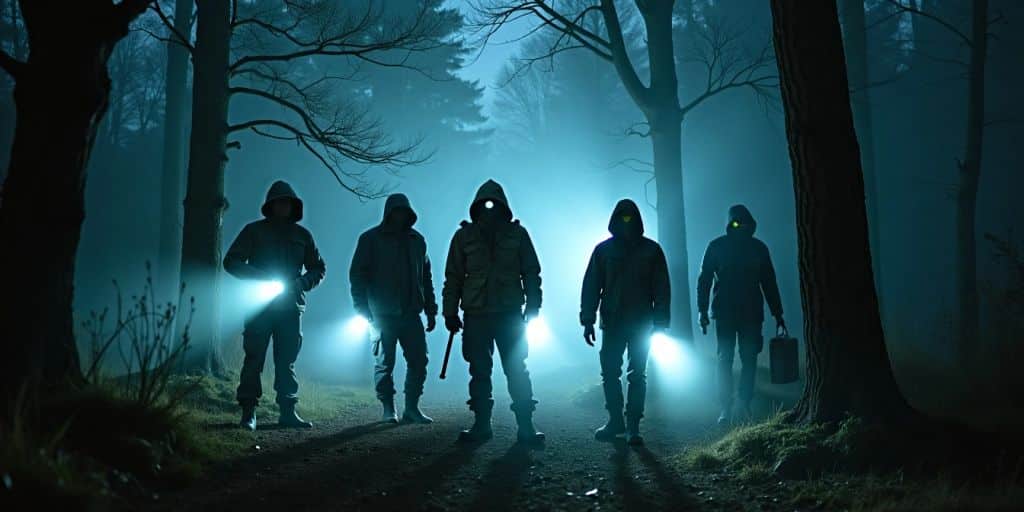
    Essential Equipment for Ghost Hunters

    Ghost hunters in dark forest with equipment

    Electromagnetic Field (EMF) Meters

    Ghost hunters often use EMF meters to detect changes in the electromagnetic field, which some believe indicate the presence of spirits. These devices are essential in any ghost hunting equipment kit. The KII EMF meter, for example, is popular for its simplicity and effectiveness, featuring LED lights that respond to electromagnetic fluctuations.

    Thermal Imaging Cameras

    Thermal imaging cameras help ghost hunters spot temperature changes that might suggest a paranormal presence. These cameras can capture heat signatures, making it easier to identify cold spots or unusual heat patterns that could indicate an entity.

    Audio Recorders and EVPs

    Audio recorders are crucial for capturing electronic voice phenomena (EVPs). These are sounds or voices that are believed to come from the spirit world. Investigators often review recordings to find any unexplained noises or voices.

    Night Vision Cameras and Motion Sensors

    Night vision cameras are vital for investigations in low-light conditions. They can capture visual evidence that might not be visible to the naked eye. Motion sensors, on the other hand, detect movement in an area, alerting investigators to potential paranormal activity.

    Famous Haunted Locations

    Historic Battlefields

    Historic battlefields are often considered some of the most haunted places. The intense emotions and tragic events that occurred on these grounds are believed to leave a lasting impression. Many ghost hunters report hearing the sounds of battle or seeing apparitions of soldiers.

    Abandoned Asylums

    Abandoned asylums are another popular destination for ghost hunters. These locations are often associated with suffering and despair, which some believe can attract paranormal activity. Visitors have reported seeing shadowy figures and hearing unexplained noises.

    Haunted Hotels

    Haunted hotels offer a unique experience for those looking to encounter the supernatural. Guests often share stories of strange occurrences, such as objects moving on their own or unexplained cold spots. Some hotels even embrace their haunted reputation, offering ghost tours and themed events.

    Notorious Prisons

    Notorious prisons are also hotspots for paranormal investigations. The harsh conditions and violent history of these places are thought to contribute to their haunted status. Ghost hunters have captured eerie EVPs and witnessed apparitions of former inmates.

    Exploring these famous haunted locations provides a thrilling opportunity to delve into the unknown and experience the mysteries of the paranormal firsthand.

    Ethics and Skepticism in Ghost Hunting

    Respecting the Spirits

    When investigating paranormal activity, it’s crucial to respect the spirits. Ghost hunters should always approach their work with sensitivity and care. This means avoiding any actions that might be seen as provoking or disrespecting the entities they are trying to communicate with. It’s important to remember that these spirits were once people too, and they deserve the same level of respect.

    Permission and Legal Considerations

    Before conducting any investigation, ghost hunters must obtain permission from property owners. This is not only a legal requirement but also a matter of respect for the living. Trespassing on private property can lead to legal consequences and damage the reputation of the ghost hunting community. Always ensure you have the necessary permissions and follow any rules set by the property owner.

    Analyzing Evidence Critically

    Skepticism is a vital part of ghost hunting. Investigators should approach each piece of evidence with a critical mindset. This means thoroughly analyzing any data collected and considering all possible natural explanations before concluding that something is paranormal. By doing so, ghost hunters can help distinguish between genuine paranormal phenomena and natural occurrences.

    The intersection of technology and ethics in paranormal research highlights the importance of a balanced approach. While modern tools can aid in investigations, ethical considerations and critical analysis are essential to maintain credibility in the field.

    Types of Hauntings

    Residual Hauntings

    Residual hauntings are like a replay of past events. These hauntings don’t interact with the living but instead, repeat the same actions over and over. It’s like watching a movie on loop. They might be triggered by a specific time of day or a particular sound.

    Intelligent Hauntings

    In intelligent hauntings, the spirits are believed to be aware of their surroundings and can interact with the living. These ghosts might respond to questions or try to communicate in other ways. They are considered sentient beings that can engage with the physical world.

    Poltergeists

    Poltergeists are known for causing physical disturbances. They might move objects, make loud noises, or even cause things to break. These hauntings can be quite frightening due to their physical manifestations.

    Apparitions

    Apparitions are ghosts that appear in a visible form. They might look like a human or a misty figure. Seeing an apparition can be a startling experience, as they often appear unexpectedly.

    The Community of Ghost Hunters

    Paranormal Investigation Teams

    Paranormal investigation teams are the backbone of the ghost hunting community. These groups often consist of individuals with diverse skills, from tech experts to historians. They work together to explore and document haunted locations, sharing their findings with the public. Many teams have gained popularity through TV shows and online platforms, bringing the world of ghost hunting into the mainstream.

    Public Ghost Hunting Events

    Public ghost hunting events offer enthusiasts a chance to participate in investigations. These events are often held at famous haunted locations and are led by experienced investigators. Participants get to use professional equipment and learn techniques for detecting paranormal activity. It’s a thrilling way to experience ghost hunting firsthand.

    Workshops and Training

    Workshops and training sessions are essential for those serious about ghost hunting. These programs teach the basics of paranormal investigation, including how to use equipment and analyze evidence. They also cover important topics like ethics and safety. Attending a workshop can be a great way to improve your skills and meet other like-minded individuals.

    The community of ghost hunters is a diverse and passionate group, united by their curiosity and desire to explore the unknown.

    The Community of Ghost Hunters is a place where enthusiasts and experts come together to explore the unknown. Whether you’re a seasoned investigator or just curious, our community offers something for everyone. Dive into our exclusive content, join live events, and connect with like-minded individuals. Ready to uncover the mysteries? Visit our website today!

    Conclusion

    Ghost hunting has become a popular activity, thanks to TV shows and movies that bring paranormal investigations into the spotlight. While these shows are entertaining, they often don’t show the real side of ghost hunting. It’s important to keep an open mind and separate fact from fiction. Ghost hunting lets people explore the unknown and the mysteries of the afterlife. Whether you’re curious, believe in the supernatural, or just want an adventure, ghost hunting offers a unique experience. Even though the existence of ghosts is still debated, the thrill of ghost hunting continues to attract many, making it a fascinating and lasting hobby.

    Frequently Asked Questions

    What is ghost hunting?

    Ghost hunting is the practice of investigating locations that are believed to be haunted by spirits. People use various tools and techniques to try and capture evidence of paranormal activity.

    What equipment do ghost hunters use?

    Ghost hunters often use tools like EMF meters, thermal imaging cameras, audio recorders for EVPs, night vision cameras, and motion sensors to detect and record paranormal activity.

    Are ghost hunting TV shows real?

    While ghost hunting TV shows can be entertaining, they are often edited for drama and may not accurately reflect real investigations. It’s important to approach them with a critical mind.

    Can anyone become a ghost hunter?

    Yes, anyone with an interest in the paranormal can become a ghost hunter. It’s important to do research, learn about the tools and techniques, and always respect the places and people involved.

    What are some famous haunted locations?

    Some famous haunted locations include historic battlefields, abandoned asylums, haunted hotels, and notorious prisons. These places are often visited by ghost hunters looking for paranormal activity.

    Is ghost hunting dangerous?

    Ghost hunting can be safe if done responsibly. However, it’s important to get permission to investigate, respect the property, and be aware of any physical dangers in old or abandoned places.

  • Unveiling the Truth: A Deep Dive into CIA Secrets

    Unveiling the Truth: A Deep Dive into CIA Secrets

    The Central Intelligence Agency, or CIA, has always been surrounded by an air of mystery and intrigue. From its early days during the Cold War to its current role in global intelligence, the CIA has been involved in numerous covert operations and has faced many controversies. This article takes a closer look at the agency’s history, its secret missions, ethical dilemmas, and its impact on world politics.

    Key Takeaways

    • The CIA was formed during the Cold War and has evolved significantly over the decades.
    • Covert operations and espionage tactics have been a cornerstone of the CIA’s activities.
    • The agency has faced numerous controversies, including accusations of torture and privacy violations.
    • The CIA has played a significant role in global politics, often intervening in foreign governments.
    • Technological advancements continue to shape the future of the CIA’s intelligence operations.

    The Origins and Evolution of the CIA

    Formation and Early Years

    The CIA was established in 1947, following the end of World War II. Its creation was part of the National Security Act, which aimed to reorganize the U.S. military and intelligence services. The agency’s primary goal was to gather and analyze foreign intelligence to assist in national security. Initially, the CIA focused on countering Soviet influence during the early stages of the Cold War.

    Cold War Expansion

    During the Cold War, the CIA expanded its operations significantly. The agency engaged in various covert missions to counter Soviet activities worldwide. This period saw the development of advanced espionage techniques and the use of technological innovations like the U-2 spy plane. The CIA’s role in political warfare, influenced by figures like George F. Kennan, became crucial in the global struggle against communism.

    Post-9/11 Transformations

    The events of September 11, 2001, marked a significant turning point for the CIA. The agency underwent major transformations to address the new threat of terrorism. This included the establishment of new counterterrorism units and the adoption of enhanced interrogation techniques. The CIA’s focus shifted towards preventing future terrorist attacks, leading to increased surveillance and intelligence-gathering efforts.

    The CIA’s evolution reflects the changing landscape of global politics and security. From its early days of countering Soviet influence to its current role in combating terrorism, the agency has continually adapted to meet new challenges.

    Covert Operations and Espionage Tactics

    Notable Covert Missions

    The CIA has been involved in numerous covert missions that have shaped global events. One such mission was the defection of a disillusioned Soviet colonel, which provided the CIA with invaluable intelligence. Another dramatic operation involved the exfiltration of Stalin’s daughter from India, showcasing the agency’s ability to execute complex rescues.

    Espionage Techniques

    Espionage techniques used by the CIA are diverse and sophisticated. They include the use of "dangles," where false information is intentionally leaked to track its movement. This method helps in identifying potential spies. Additionally, the CIA employs counterintelligence tactics to protect national secrets from unauthorized release or foreign espionage. These tactics can be defensive, offensive, passive, or active.

    Technological Innovations in Intelligence

    Technological advancements have significantly enhanced the CIA’s intelligence capabilities. The development of high-altitude spy planes like the SR-71 Blackbird, once a closely guarded secret, is a prime example. Today, cyber intelligence and cybersecurity are at the forefront of the agency’s efforts to stay ahead of potential threats. The integration of artificial intelligence in espionage is also opening new avenues for gathering and analyzing data.

    The world of espionage is a complex and shadowy realm, where truth is often stranger than fiction. The CIA’s covert operations and espionage tactics reveal a side of history that is rarely seen but profoundly impactful.

    Controversial Practices and Ethical Dilemmas

    Use of Torture and Enhanced Interrogation

    The CIA has faced significant criticism for its use of enhanced interrogation techniques. These methods, including waterboarding, have been widely condemned as forms of torture. The agency has admitted that Abu Zubaydah and two other prisoners were subjected to waterboarding, a practice where water is poured over the nose and mouth to create the sensation of drowning. This has sparked intense debates about human rights violations and the ethical boundaries of intelligence gathering.

    Surveillance and Privacy Concerns

    The CIA’s surveillance activities have raised serious privacy concerns. Programs like PRISM have allowed the agency to collect vast amounts of data from American citizens without their knowledge. This has led to a public outcry over the balance between national security and individual privacy. Critics argue that such surveillance practices infringe on civil liberties and lack adequate oversight.

    Alleged Misconduct and Scandals

    Over the years, the CIA has been embroiled in numerous scandals. Allegations of misconduct range from involvement in drug trafficking to unauthorized operations. These incidents have tarnished the agency’s reputation and led to calls for greater transparency and accountability. The public remains divided on whether the CIA’s actions are justified in the name of national security or if they represent a misuse of power.

    The ethical dilemmas faced by the CIA highlight the complex interplay between national security and human rights. Balancing these concerns remains a contentious issue that continues to evolve.

    Influence on Global Politics and Conflicts

    Shadowy figure in front of a world map

    Interventions in Foreign Governments

    The CIA has a long history of intervening in foreign governments. These interventions often aim to promote U.S. interests abroad. For example, the CIA played a crucial role in the 1953 coup in Iran, which led to the overthrow of Prime Minister Mohammad Mossadegh. Similarly, the agency was involved in the 1973 coup in Chile that ousted President Salvador Allende. These actions have had lasting impacts on the political landscapes of these countries.

    Role in Counterterrorism

    After the 9/11 attacks, the CIA’s focus shifted significantly towards counterterrorism. The agency has been instrumental in tracking and eliminating key terrorist figures. Operations like the raid that killed Osama bin Laden in 2011 highlight the CIA’s critical role in global counterterrorism efforts. The agency’s work in this area has been both praised for its effectiveness and criticized for its methods.

    Impact on International Relations

    The CIA’s activities have far-reaching effects on international relations. Covert operations and intelligence gathering can either strengthen or strain diplomatic ties. For instance, the revelation of CIA surveillance programs has led to tensions between the U.S. and its allies. On the other hand, successful intelligence sharing has bolstered alliances and improved global security.

    The CIA’s influence on global politics is profound, shaping the course of history through its covert and overt actions. Its role in international conflicts and political dynamics cannot be understated.

    Insider Perspectives and Whistleblower Accounts

    Shadowy figure with classified documents

    Testimonies from Former Agents

    Former CIA agents often provide unique insights into the agency’s inner workings. These testimonies can reveal the challenges and ethical dilemmas faced by those in the field. For instance, a memoir offers an insider’s perspective into the complexities of covert operations and the personal toll it takes on agents.

    Whistleblower Revelations

    Whistleblowers have played a crucial role in exposing controversial practices within the CIA. Their revelations have brought to light issues such as the use of enhanced interrogation techniques and unauthorized surveillance programs. These disclosures often lead to public outcry and demands for accountability.

    Impact of Insider Information on Public Perception

    The information shared by insiders and whistleblowers significantly impacts public perception of the CIA. While some view these revelations as necessary for transparency, others believe they compromise national security. The debate continues as more insiders come forward with their stories.

    The courage of whistleblowers and former agents in sharing their experiences helps the public understand the often hidden world of intelligence operations.

    The CIA in Popular Media and Culture

    Depictions in Films and TV Shows

    The CIA has been a popular subject in films and TV shows for decades. These portrayals range from action-packed thrillers to more nuanced dramas. Bold characters and high-stakes missions often dominate the screen, capturing the public’s imagination. Movies like "Argo" and TV series like "Homeland" offer a mix of fact and fiction, providing a glimpse into the agency’s operations while also entertaining audiences.

    Documentaries and Books

    Documentaries about the CIA offer viewers a rare glimpse into the clandestine operations and inner workings of one of the world’s most secretive organizations. Films like "Wormwood" and "Spymasters: CIA in the Crosshairs" provide deeper dives into specific cases and broader agency practices. These documentaries often feature interviews with former agents and experts, shedding light on the agency’s complex history and controversial methods. Books, too, have played a significant role in shaping public perception, with titles like "The Agency: A History of the CIA" offering detailed accounts of the agency’s evolution.

    Public Perception and Myths

    Public perception of the CIA is a mix of admiration, skepticism, and intrigue. The agency’s secretive nature fuels numerous myths and conspiracy theories. While some view the CIA as a necessary force for national security, others criticize its methods and ethical dilemmas. The media plays a crucial role in shaping these perceptions, often highlighting the agency’s successes and failures. The relationship between the media and the CIA has been a subject of debate, with some alleging collusion and others emphasizing journalistic integrity.

    The CIA’s portrayal in popular media reflects its complex role in global politics and national security. Whether through thrilling movies, insightful documentaries, or detailed books, the agency continues to captivate and provoke thought among audiences worldwide.

    Technological Advancements and Future Directions

    Cyber Intelligence and Cybersecurity

    The CIA has been at the forefront of cyber intelligence and cybersecurity. They have developed advanced methods to protect national security from cyber threats. These methods include monitoring and countering cyber-attacks from hostile nations and groups. The agency’s focus on cybersecurity ensures that sensitive information remains protected from unauthorized access.

    Artificial Intelligence in Espionage

    Artificial Intelligence (AI) is transforming the way the CIA conducts espionage. AI helps in analyzing vast amounts of data quickly, identifying patterns, and predicting potential threats. This technology is crucial for modernizing defense and enhancing homeland security. The use of AI in espionage allows the CIA to stay ahead of adversaries by providing timely and accurate intelligence.

    Future Challenges and Opportunities

    Looking ahead, the CIA faces several challenges and opportunities. One major challenge is keeping up with rapid technological advancements. As new technologies emerge, the agency must adapt and integrate these innovations into their operations. Opportunities include leveraging AI and other technologies to improve intelligence gathering and analysis. The future of the CIA will depend on its ability to embrace and utilize these technological advancements effectively.

    The path to 2050 will require the CIA to continuously evolve and innovate to ensure the health and security of the nation.

    Technology is moving fast, and the future looks even more exciting. From smart gadgets to advanced AI, the possibilities are endless. Want to stay ahead of the curve? Visit our website to explore more about the latest tech trends and what’s coming next. Don’t miss out on the future!

    Conclusion

    In conclusion, the world of the CIA is filled with secrets, mysteries, and complex stories that have shaped history. Through various documentaries, we get a rare look into the agency’s covert operations, ethical dilemmas, and significant impacts on global politics. These films help us understand the delicate balance between national security and transparency. They also remind us of the importance of questioning and critically analyzing the actions of powerful institutions. As we continue to uncover more about the CIA, it’s clear that its influence and operations will remain a topic of fascination and debate for years to come.

    Frequently Asked Questions

    When was the CIA formed?

    The CIA was created in 1947 after World War II to handle foreign intelligence and counterintelligence activities.

    What are some famous covert operations by the CIA?

    Some well-known covert missions include the Bay of Pigs invasion, Operation Ajax in Iran, and the hunt for Osama bin Laden.

    Has the CIA been involved in any controversies?

    Yes, the CIA has faced many controversies, including allegations of torture, surveillance without warrants, and involvement in coups.

    How does the CIA gather intelligence?

    The CIA uses various methods to gather intelligence, such as human spies, electronic surveillance, and satellite imagery.

    What role does the CIA play in counterterrorism?

    The CIA plays a key role in counterterrorism by gathering intelligence on terrorist groups and helping to plan operations against them.

    How is the CIA portrayed in movies and TV shows?

    The CIA is often depicted in films and TV shows as a secretive and powerful organization, sometimes heroically, and other times as morally ambiguous.

  • Unraveling the Mystery: A Deep Dive into Cold Case Investigations

    Unraveling the Mystery: A Deep Dive into Cold Case Investigations

    Cold case investigations have always fascinated the public. These unsolved mysteries, sometimes spanning decades, challenge detectives and captivate true crime enthusiasts. This article explores the evolution of cold case investigations, the techniques used to solve them, and the impact they have on families and communities.

    Key Takeaways

    • Cold case investigations have evolved significantly over the years, thanks to advancements in technology and forensic science.
    • Techniques like DNA analysis and psychological profiling play crucial roles in solving long-standing mysteries.
    • Notable cases such as the Zodiac Killer and the Golden State Killer highlight the public’s enduring interest in cold cases.
    • Challenges like lack of evidence and resource constraints often hinder the progress of cold case investigations.
    • Community involvement and media coverage can significantly impact the outcomes of these investigations.

    The Evolution of Cold Case Investigations

    Historical Overview

    Cold case investigations have come a long way since their early days. Initially, these cases were often left unresolved due to limited resources and lack of advanced technology. Investigators relied heavily on witness testimonies and physical evidence, which were not always reliable or available. Despite evolving forensic technology, traditional investigative methods are still proving valuable to revisiting unsolved cases.

    Technological Advancements

    The advent of new technologies has revolutionized cold case investigations. DNA analysis, fingerprint databases, and digital forensics have provided new avenues for solving old cases. These advancements have allowed investigators to re-examine evidence with fresh eyes, often leading to breakthroughs that were previously unimaginable.

    Impact on Law Enforcement

    The evolution of cold case investigations has significantly impacted law enforcement agencies. Specialized cold case units have been established, focusing solely on these long-forgotten cases. This shift has not only brought justice to many victims but also provided closure to families who have been waiting for answers for years. The dedication and persistence of these units highlight the importance of never giving up on seeking justice.

    Key Techniques Used in Solving Cold Cases

    Forensic Science

    Forensic science plays a crucial role in solving cold cases. By examining physical evidence from crime scenes, forensic experts can uncover details that were previously overlooked. Advancements in forensic technology have made it possible to re-examine old evidence with new methods, often leading to breakthroughs in long-unsolved cases.

    DNA Analysis

    DNA analysis has revolutionized the field of cold case investigations. With the ability to extract and analyze DNA from even the smallest samples, investigators can now link suspects to crimes with a high degree of certainty. This technique has been instrumental in solving many high-profile cases, including those that have baffled investigators for decades.

    Psychological Profiling

    Psychological profiling involves analyzing the behavior and characteristics of unknown offenders. By understanding the mindset and patterns of a criminal, profilers can provide valuable insights that help narrow down suspect lists. This method is particularly useful in cases involving serial killers and other repeat offenders.

    The combination of these techniques has significantly improved the success rate of solving cold cases, bringing closure to families and justice to victims.

    Notable Cold Case Investigations That Captivated the Public

    The Zodiac Killer

    The Zodiac Killer is one of the most infamous unsolved cases in American history. Operating in Northern California during the late 1960s and early 1970s, the killer is known for sending cryptic messages to the press. Despite numerous suspects and extensive investigations, the true identity of the Zodiac Killer remains a mystery. This case continues to baffle investigators and captivate the public.

    The JonBenét Ramsey Case

    The tragic murder of six-year-old JonBenét Ramsey in her family’s home in Boulder, Colorado, in 1996 shocked the nation. The case was marked by a controversial investigation, numerous theories, and intense media scrutiny. Despite advancements in forensic technology, the case remains unsolved, leaving the public and the family in search of answers.

    The Golden State Killer

    The Golden State Killer, also known as the East Area Rapist and the Original Night Stalker, terrorized California from the mid-1970s to the mid-1980s. The case went cold for decades until DNA evidence led to the arrest of Joseph James DeAngelo in 2018. This breakthrough highlighted the power of modern forensic science in solving cold cases and brought a sense of closure to the victims and their families.

    Challenges Faced in Cold Case Investigations

    Lack of Evidence

    One of the most significant challenges in cold case investigations is the lack of evidence. Over time, physical evidence can degrade, become lost, or be improperly stored. This makes it difficult for investigators to piece together what happened. Additionally, advances in forensic science may not be applicable to older evidence, further complicating the investigation.

    Witness Reluctance

    Witnesses who might have crucial information often become reluctant to come forward as time passes. They may fear retaliation, have moved away, or simply forgotten important details. This reluctance can severely hinder the progress of an investigation, leaving many questions unanswered.

    Resource Constraints

    Cold cases often suffer from limited resources. Law enforcement agencies may prioritize current cases over older ones, leading to fewer personnel and less funding dedicated to solving cold cases. This lack of resources can result in slower progress and fewer breakthroughs, making it even harder to bring closure to these long-standing mysteries.

    Cold cases remain unsolved for years or even decades due to challenges with investigation. Lack of evidence, limited manpower and resources, and witness reluctance are just a few of the hurdles that investigators face.

    Despite these challenges, the dedication of investigators and the support of the community can sometimes lead to breakthroughs, offering hope to those seeking justice.

    The Role of Media in Cold Case Investigations

    Raising Public Awareness

    Media plays a crucial role in bringing attention to cold cases. News outlets, documentaries, and podcasts can highlight unsolved mysteries, keeping them in the public eye. This constant exposure can lead to new tips and leads from the community, which might otherwise remain hidden.

    Media Trials

    Sometimes, the media can act as a double-edged sword. While it helps in raising awareness, it can also lead to media trials where suspects are judged in the court of public opinion before any legal proceedings. This can complicate investigations and affect the fairness of trials.

    Impact on Investigations

    The media’s involvement can significantly impact the direction and progress of investigations. Positive coverage can lead to increased resources and public interest, while negative or sensationalized reporting can hinder the process. It’s essential for law enforcement to manage media relations carefully to ensure that the investigation remains unbiased and effective.

    Community Involvement in Cold Case Investigations

    Community members discussing cold case evidence

    Public Tips and Leads

    Community members play a crucial role in solving cold cases by providing valuable tips and leads. Often, someone might have seen or heard something that can be the missing piece of the puzzle. Encouraging the public to come forward with any information, no matter how small, can significantly aid investigations.

    Volunteer Organizations

    Volunteer organizations, such as the Vidocq Society, are instrumental in assisting law enforcement with cold cases. Founded in 1990 in Philadelphia, PA, the society was created to help homicide investigators solve long-unsolved homicides. These groups bring together experts from various fields to review and analyze cases, offering fresh perspectives and expertise.

    Social Media Campaigns

    Social media has become a powerful tool in raising awareness and gathering information about cold cases. Campaigns on platforms like Facebook and Twitter can reach a wide audience quickly, spreading information and encouraging people to share what they know. This collective effort can lead to new leads and, ultimately, breakthroughs in cases.

    Community involvement is essential in keeping cold cases alive and pushing for justice. By working together, we can help bring closure to families and ensure that no case is forgotten.

    The Psychological Impact on Families and Investigators

    Detective examining case files in dimly lit room.

    Emotional Toll on Families

    The emotional toll on families involved in cold cases is immense. Families often live in a state of limbo, not knowing what happened to their loved ones. This uncertainty can lead to prolonged grief and mental health issues. Many families engage in awareness campaigns and social media initiatives to keep the memory of their loved ones alive and to seek justice.

    Burnout Among Investigators

    Investigators working on cold cases face their own set of challenges. The lack of new leads and the pressure to solve these cases can lead to burnout. They often work long hours, sifting through old evidence and following up on new tips, which can be mentally and physically exhausting.

    Coping Mechanisms

    Both families and investigators develop coping mechanisms to deal with the stress. Families may find solace in community support and advocacy work. Investigators often rely on peer support and professional counseling to manage the emotional strain. Despite the challenges, the drive to find answers keeps them going.

    The emotional and psychological impact of cold cases is profound, affecting both families and investigators deeply. The quest for justice and closure is a powerful motivator, even in the face of overwhelming odds.

    The emotional toll on families and investigators involved in intense cases can be overwhelming. It’s crucial to understand these impacts to provide better support and resources. For more insights and resources, visit our website and explore our extensive library.

    Conclusion

    Cold case investigations remind us of the many mysteries that remain unsolved in our world. They show us the importance of never giving up on finding the truth, no matter how much time has passed. Each case, like that of Charles Morgan, leaves a lasting impact on the community and the families involved. By keeping these stories alive and continuing to search for answers, we honor the memories of those who have been lost. Together, we can help bring justice and closure to those who need it most.

    Frequently Asked Questions

    What is a cold case?

    A cold case is a criminal investigation that has not been solved after a considerable amount of time and has no new leads or suspects.

    How do investigators reopen a cold case?

    Investigators can reopen a cold case when new evidence surfaces, such as DNA matches, new witness statements, or advancements in forensic technology.

    What role does DNA play in solving cold cases?

    DNA can be crucial in solving cold cases by matching crime scene evidence with suspects or identifying unknown victims.

    Why are some cases harder to solve than others?

    Some cases are harder to solve due to lack of evidence, uncooperative witnesses, or the time elapsed since the crime occurred.

    Can the public help in solving cold cases?

    Yes, the public can help by providing tips, sharing information on social media, or participating in community awareness events.

    What impact do cold cases have on the families involved?

    Cold cases can have a significant emotional toll on families, causing prolonged grief and a sense of unresolved loss.

  • The Truth Behind Alien Abductions: Unraveling the Mystery of Extraterrestrial Encounters

    The Truth Behind Alien Abductions: Unraveling the Mystery of Extraterrestrial Encounters

    Alien abductions have fascinated and puzzled people for decades. Stories of mysterious lights, strange beings, and unexplained experiences have sparked countless debates. Are these encounters real, or are they just products of overactive imaginations? This article dives deep into the history, psychology, and evidence surrounding alien abductions to uncover the truth behind these extraordinary claims.

    Key Takeaways

    • Alien abduction stories have been around for centuries, appearing in ancient, medieval, and modern times.
    • Psychological factors, such as sleep paralysis and hypnosis, may explain some abduction experiences.
    • Physical evidence, including unexplained marks and implants, adds to the mystery of these encounters.
    • Skeptics argue that cultural influences and media play a significant role in shaping abduction narratives.
    • The ongoing search for extraterrestrial life continues to drive scientific and public interest in these phenomena.

    Historical Accounts of Alien Abductions

    Ancient Civilizations and Extraterrestrial Encounters

    Throughout history, many cultures have stories of alien encounters. Ancient texts, like the Vedic texts from India, talk about meetings with celestial beings. These stories are not just from one place; they come from Native American tribes, Aboriginal cultures, and ancient Mesopotamia too.

    Medieval and Renaissance Abduction Narratives

    During the Medieval and Renaissance periods, people also reported strange encounters. These stories often involved mysterious beings and unexplained events. Some believe these tales might be early accounts of alien abductions.

    Modern-Day Abduction Reports

    In modern times, reports of alien abductions have become more common. One famous case is Walton’s alien abduction account, which inspired the book "The Walton Experience" and the movie "Fire in the Sky". These stories often include detailed descriptions of the aliens and their advanced technology.

    Psychological Perspectives on Abduction Experiences

    Common Psychological Explanations

    Researchers have found striking similarities in abduction stories from different cultures and places. Many people describe meeting strange beings with advanced technology. They often feel confused, lose track of time, and have vivid memories of the event. Some experts think these experiences might be due to sleep paralysis, where you can’t move or speak as you wake up. But sleep paralysis doesn’t explain the detailed and consistent stories people tell.

    The Role of Hypnosis in Recalling Abductions

    To understand abduction experiences better, researchers use methods like hypnosis and regression therapy. These techniques help people remember hidden details. However, hypnosis can sometimes create false memories, so it’s important to be careful. Despite this, many people recall similar procedures and sensations during their abductions, suggesting a pattern worth studying.

    Case Studies and Personal Testimonies

    Many people have shared their personal stories of being abducted. They often talk about being taken against their will and undergoing medical exams. Some even mention telepathic communication with their captors. While some dismiss these stories as imagination or psychological issues, it’s important to study them scientifically. By looking at these experiences closely, we can learn more about human consciousness and the possibility of extraterrestrial life.

    Physical Evidence and Scientific Investigations

    UFO hovering over a dark field at night.

    Unexplained Marks and Implants

    Physical evidence from alleged extraterrestrial encounters has been a hot topic for years. One of the most intriguing aspects is the presence of unidentified implants found in people who claim to have been abducted. These implants often defy conventional explanations and show extraordinary properties. Researchers have used advanced techniques like electron microscopy and spectroscopy to study these implants. Surprisingly, some implants consist of materials not typically found on Earth, raising questions about their origin.

    Additionally, strange marks and patterns on the bodies of abductees provide more physical evidence. Unexplained scars, scoop marks, or puncture wounds have been documented in many abduction cases. Detailed medical exams have shown peculiar characteristics of these marks, including their precise placement and lack of normal healing processes.

    Physiological Changes in Abductees

    Medical abduction cases involve people reporting medical procedures or exams conducted by extraterrestrial beings. These accounts often include detailed descriptions of advanced medical technologies that surpass our current understanding. Medical exams of abductees have revealed unusual physiological changes and anomalies. Some people report the sudden disappearance of physical ailments or the development of enhanced abilities after their encounters. While these claims need rigorous scientific investigation, they present intriguing possibilities about the potential influence of extraterrestrial beings on human physiology.

    Technological Analysis of Alleged Artifacts

    The scientific investigation of physical evidence and medical abduction cases faces significant challenges. Access to credible evidence is often limited, and the subjective nature of human perception adds complexity to the analysis. Furthermore, the stigma associated with these topics has hindered mainstream scientific engagement, leading to a scarcity of comprehensive studies. To overcome these challenges, interdisciplinary collaboration between ufologists, psychologists, medical professionals, and scientists is crucial. Rigorous methodologies, including controlled experiments, thorough medical examinations, and the application of advanced analytical techniques, can help shed light on the validity and nature of these phenomena.

    The consistency and similarity of medical abduction narratives across different individuals and geographical locations are striking. Despite varying cultural backgrounds and lack of prior knowledge about each other’s experiences, abductees often recount similar procedures, instruments, and sensations. This congruence suggests a pattern that warrants further scientific exploration.

    Skeptical Views and Alternative Theories

    Sleep Paralysis and Hallucinations

    Many skeptics argue that alien abductions can be explained by sleep paralysis and hallucinations. During sleep paralysis, individuals may experience vivid and terrifying visions while being unable to move. These experiences can feel incredibly real, leading some to believe they have been abducted by aliens.

    Cultural and Media Influences

    The role of cultural and media influences cannot be ignored. Movies, TV shows, and books often depict alien abductions, shaping public perception. This widespread portrayal can lead people to interpret their own experiences through the lens of popular culture.

    Debunking Popular Abduction Myths

    Skeptics also focus on debunking popular abduction myths. They argue that many stories of alien abductions are based on misunderstandings or hoaxes. By examining these claims critically, skeptics aim to separate fact from fiction.

    Theories claim that the governments are explicitly allowing alien abduction. Individuals who have suggested that UFO evidence is being suppressed include conspiracy theorists who believe in a cover-up.

    In summary, skeptics provide alternative explanations for alien abductions, ranging from psychological phenomena to cultural influences. They emphasize the importance of critical thinking and evidence-based analysis to understand these mysterious encounters.

    The Search for Extraterrestrial Life

    UFO hovering over a forest at night

    Advancements in Astrobiology

    Astrobiology, a term coined for the study of all life anywhere in the universe (including Earth), has made significant strides in recent years. Scientists are now exploring extreme environments on Earth to understand the conditions that might support life elsewhere. These studies help us identify biosignatures, or signs of life, on other planets. Researchers are particularly interested in extremophiles, organisms that thrive in harsh conditions, as they provide clues about the potential for life on other planets.

    SETI and the Quest for Alien Signals

    The Search for Extraterrestrial Intelligence (SETI) involves listening for signals from alien civilizations. Advanced telescopes and data analysis techniques have improved our ability to detect these signals. Projects like Breakthrough Listen and the Allen Telescope Array are at the forefront of this quest. Scientists analyze radio waves and other forms of electromagnetic radiation for patterns that might indicate intelligent life.

    Space Exploration and Future Missions

    Space missions play a crucial role in the search for extraterrestrial life. Rovers like Curiosity and Perseverance are exploring Mars for signs of past or present life. Future missions, such as the Europa Clipper, aim to investigate the icy moons of Jupiter and Saturn, which may harbor subsurface oceans. These missions are designed to collect samples, analyze them, and send data back to Earth for further study.

    The search for alien life is one of humanity’s most enduring quests. It requires international cooperation, advanced technology, and an open mind to the possibilities that lie beyond our current understanding.

    Implications of the Alien Hypothesis

    Impact on Science and Technology

    The acceptance of the alien hypothesis could lead to a major shift in scientific understanding. It would require us to rethink our theories of human evolution, which currently focus on natural processes on Earth. If extraterrestrial beings influenced our development, scientists would need to explore new ideas like directed panspermia or genetic engineering by aliens. This would involve collaboration between geneticists, archaeologists, and astrophysicists, expanding our knowledge of the universe and our place in it.

    Religious and Philosophical Considerations

    For centuries, religions and philosophies have explained human origins. The alien hypothesis challenges these stories, making us rethink our ideas about creation and our connection to the universe. It opens up new questions about the purpose of life and the possibility of cosmic beings guiding our evolution. Religious groups might face tough questions about the human soul and its link to extraterrestrial entities. This could lead to a broader spiritual awakening that connects all life forms in the universe.

    Societal Reactions and Cultural Shifts

    If we accept the alien hypothesis, it could change how we see ourselves and our place in the world. It might help us see humanity as a united species with extraterrestrial roots, breaking down national, ethnic, and cultural barriers. This new perspective could foster a sense of unity and shared purpose among people. However, it could also provoke fear and skepticism, as it challenges deeply held beliefs and societal norms. Addressing these challenges would require open dialogue, critical thinking, and a commitment to scientific inquiry.

    The Alien Hypothesis has far-reaching implications that could change how we see the universe. Imagine what we could learn if we truly understood extraterrestrial life! To dive deeper into this fascinating topic, visit our website and explore our extensive library of articles, videos, and podcasts. Don’t miss out on the chance to expand your knowledge and satisfy your curiosity.

    Conclusion

    In the end, the mystery of alien abductions and extraterrestrial encounters remains unsolved. While many people share similar stories of strange beings and advanced technology, we still lack solid proof. Scientists and researchers continue to study these accounts, looking for patterns and evidence. It’s important to keep an open mind and use scientific methods to explore these claims. As technology advances, we may one day find the answers we seek. Until then, the possibility of life beyond Earth continues to spark our curiosity and drive our quest for knowledge.

    Frequently Asked Questions

    What are some historical examples of alien abductions?

    Throughout history, there have been many reports of alien abductions. Ancient civilizations, like the Sumerians, have myths about beings from the sky. During the medieval period, some people claimed to have been taken by strange creatures. In modern times, there are numerous accounts of people being abducted by aliens.

    Why do some people believe they’ve been abducted by aliens?

    People who believe they’ve been abducted often have vivid memories of the event. Some psychologists think these experiences might be due to sleep paralysis or hallucinations. Others believe these memories could be real or a result of hypnosis.

    Is there any physical evidence of alien abductions?

    Some people who claim to have been abducted show unexplained marks or implants on their bodies. Scientists have studied these marks, but the evidence is still not conclusive. More research is needed to understand these phenomena.

    How do skeptics explain alien abduction stories?

    Skeptics often attribute alien abduction stories to sleep paralysis, cultural influences, or hoaxes. They argue that the mind can create vivid dreams or hallucinations that feel very real. Media and popular culture can also play a role in shaping these experiences.

    What is the scientific community’s stance on alien life?

    The scientific community is open to the possibility of alien life. Projects like SETI (Search for Extraterrestrial Intelligence) are actively looking for signals from other civilizations. Advances in astrobiology and space exploration are also helping us search for life beyond Earth.

    What would be the impact of proving the existence of aliens?

    Proving the existence of aliens would have a huge impact on science, religion, and society. It could lead to new technologies and change our understanding of our place in the universe. It might also challenge many of our beliefs and prompt us to rethink our place in the cosmos.

  • Unraveling the Mysteries of Ancient Aliens: Did Extraterrestrials Shape Our History?

    Unraveling the Mysteries of Ancient Aliens: Did Extraterrestrials Shape Our History?

    Have you ever looked at the great pyramids of Egypt or the mysterious Nazca Lines in Peru and wondered how ancient people could have built them? The idea that aliens visited Earth long ago and helped shape human history has fascinated many. This article explores ancient texts, strange archaeological finds, and modern science to see if there’s any truth to these claims.

    Key Takeaways

    • Ancient stories from different cultures talk about gods or beings from the sky that might be aliens.
    • Some old structures, like the pyramids, are so advanced that they make people think aliens helped build them.
    • Strange artifacts have been found that seem too advanced for their time, hinting at alien technology.
    • Some scientists think that odd markers in human DNA could be evidence of alien influence.
    • Personal stories of UFO sightings and abductions add to the mystery and keep the debate alive.

    Ancient Texts and Extraterrestrial Encounters

    Ancient temple with UFO in the night sky.

    Sumerian Anunnaki: Gods or Aliens?

    The Sumerian civilization, which thrived in Mesopotamia around 4500 to 1900 BCE, holds a significant place in the study of ancient history and its potential connection to extraterrestrial beings. Central to this discussion is the intriguing concept of the Anunnaki, a group of deities mentioned in Sumerian texts and mythologies. These texts, dating back over 5,000 years, mention the Anunnaki, a group of deities who were said to have visited Earth from the heavens. The tablets depict detailed genealogies, advanced astronomical knowledge, and the creation of humankind. These accounts raise intriguing questions about the possibility of extraterrestrial intervention in human affairs.

    Egyptian Pharaohs and Celestial Beings

    Similarly, the Egyptian Pharaohs were believed to have direct connections with celestial beings, often depicted in their art and revered as gods. The ancient Egyptians left behind a wealth of texts and artifacts that suggest a profound relationship with beings from the stars. These celestial beings were often depicted as guiding and influencing the Pharaohs, who were considered divine or semi-divine rulers. The consistency of these narratives, despite the geographical and cultural distances between these societies, suggests the existence of a shared cosmic experience or a common source of influence.

    Myths and Legends Across Cultures

    Moreover, cross-cultural comparisons of myths and legends from different civilizations across the globe exhibit astonishing similarities. Stories of gods descending from the skies, imparting wisdom, and influencing human development can be found in the folklore of ancient civilizations such as the Egyptians, Mayans, Greeks, and Norse. As researchers delve deeper into deciphering ancient scripts and languages, they have encountered puzzling references to celestial beings, gods, or messengers from the stars. These references often defy conventional interpretations and present enigmatic accounts that challenge our understanding of human history. The possibility of extraterrestrial contact and its influence on ancient cultures cannot be dismissed outright but demands further investigation and analysis.

    Archaeological Anomalies and Advanced Technologies

    Megalithic Structures: Engineering Marvels

    Ancient structures like the Great Pyramids of Giza and Machu Picchu are mind-blowing pre-flood ruins that challenge our understanding of ancient engineering. These massive stone blocks fit together perfectly without mortar, showcasing a level of precision that is perplexing even by modern standards. The exact methods used to construct these marvels remain a mystery, leading some to speculate about the influence of extraterrestrial beings or lost civilizations.

    Ancient Observatories and Celestial Alignments

    Many ancient sites, such as Stonehenge and the Nazca Lines, exhibit precise astronomical alignments. These structures were designed to track celestial events like solstices and equinoxes, indicating a sophisticated understanding of astronomy. The creation of these intricate designs required meticulous planning and advanced surveying methods, suggesting that ancient civilizations possessed knowledge far beyond what we previously believed.

    Out-of-Place Artifacts and Their Implications

    Artifacts like the Antikythera Mechanism and the Baghdad Battery are examples of ancient technologies that defy conventional explanations. The Antikythera Mechanism, an ancient analog computer, was capable of predicting astronomical positions and eclipses, demonstrating an astonishing level of technological advancement. Similarly, the Baghdad Battery suggests that ancient civilizations may have had knowledge of electricity long before it was officially discovered.

    The existence of these unexplained technologies challenges our conventional understanding of human history and the progression of technological advancements. It compels us to consider alternative possibilities, such as the influence of extraterrestrial beings or lost civilizations that possessed knowledge far beyond our own.

    To gain a deeper understanding of these unexplained technologies, researchers and scholars must employ interdisciplinary approaches. By combining traditional archaeological methods with modern scientific techniques, we can unlock the secrets behind these ancient marvels and gain insight into the sophisticated knowledge that may have shaped human history.

    Genetic Mysteries and the Alien Hypothesis

    Unexplained Genetic Markers in Human DNA

    Researchers have found strange genetic markers in human DNA that don’t seem to come from natural evolution. These markers, sometimes called "genetic orphans," don’t match any known ancestors. This makes some scientists think they might come from aliens. Some DNA sequences even look like those found in organisms from other planets or moons in our solar system. This idea is very interesting and makes us wonder about our true origins.

    The Human Genome Project: Discoveries and Questions

    The Human Genome Project helped us understand human DNA better. But it also brought up new questions. Some genetic markers found in humans are not in our closest relatives, like chimpanzees. This makes scientists wonder if these markers came from aliens. The study of mitochondrial DNA (mtDNA) also shows some unique variations in certain groups of people. These variations don’t seem to come from the human gene pool, leading to more questions about our origins.

    Theories of Extraterrestrial Genetic Manipulation

    There are several theories about how aliens might have changed human DNA:

    1. Panspermia: This idea says that life’s building blocks, like DNA, came to Earth from space on comets or meteorites.
    2. Alien Genetic Manipulation: Some think that advanced aliens changed human DNA on purpose, maybe to make us better.
    3. Ancient Genetic Engineering: Another theory is that ancient aliens changed our DNA to create or improve humans.

    These theories are exciting but need more research. Scientists must keep an open mind and study these ideas carefully to understand our true origins.

    Personal Testimonies and Close Encounters

    Compelling Abduction Stories

    Many people have shared stories of being taken by aliens. These abduction experiences often include being taken against their will, medical tests, and even talking with their captors through thoughts. While some think these stories are just made up, others believe they are real and need to be studied carefully.

    Physical Evidence and Medical Examinations

    Some people who say they were taken by aliens have strange marks or injuries on their bodies. Doctors sometimes find things in their bodies that they can’t explain. These pieces of physical evidence make the stories even more interesting and worth looking into.

    Skepticism and Credibility of Witnesses

    Not everyone believes these stories. Some think the people who tell them are just imagining things or making them up. But others think the stories are real and should be taken seriously. It’s important to listen to these eyewitness accounts and study them carefully to find out the truth.

    Challenging Conventional Views of Human History

    Reevaluating Human Evolution

    Scientific research and compelling evidence urge us to rethink our old ideas. Traditional models say Homo sapiens evolved naturally on Earth through genetic changes and natural selection. But the alien hypothesis suggests that intelligent beings from other worlds might have influenced our development. This idea makes us question what we know about the forces that shaped human history.

    Scientific and Societal Paradigm Shifts

    Exploring the alien hypothesis means facing resistance and stigma. Mainstream views often dismiss alternative theories without thorough examination. This dominance can create an environment that discourages new ideas. By embracing intellectual curiosity and encouraging interdisciplinary collaborations, we can foster a more inclusive scientific discourse.

    The Role of Open-Minded Inquiry

    To understand these unexplained technologies, researchers must use interdisciplinary approaches. Combining traditional archaeology with modern science can unlock the secrets behind ancient marvels. This open-minded inquiry helps us explore uncharted territories and unravel the mysteries of our human arrival from beyond the stars.

    The Influence of Ancient Aliens on Modern Culture

    UFO hovering over ancient pyramid at night

    Media and Popular Culture Representations

    The idea of ancient aliens has deeply influenced modern media and popular culture. From TV shows like Ancient Aliens to blockbuster movies like Indiana Jones and the Kingdom of the Crystal Skull, the concept of extraterrestrial beings shaping human history has captured the public’s imagination. These narratives shape public belief and fascination with extraterrestrial life, influencing personal experiences and reported sightings. The interplay between fiction and reality creates a continuous cycle of interest in the unknown.

    Impact on Science Fiction and Literature

    Science fiction and literature have also embraced the ancient alien hypothesis. Works like The Call of Cthulhu by H.P. Lovecraft and the Stargate series explore themes of ancient astronauts and advanced technologies. These stories often depict aliens as ancient beings who have guided or influenced human civilization. This genre not only entertains but also encourages readers to question conventional views of history and consider alternative possibilities.

    Public Perception and Skepticism

    Public perception of ancient aliens is a mix of fascination and skepticism. While some people are intrigued by the idea and believe in the possibility of extraterrestrial influence, others remain skeptical and demand concrete evidence. This skepticism is often fueled by the lack of scientific proof and the sensational nature of many claims. However, the ongoing debate keeps the topic alive in public discourse, ensuring that the mystery of ancient aliens continues to captivate and provoke thought.

    The fascination with ancient aliens reflects our innate curiosity about the unknown and our desire to understand our place in the universe.

    Have you ever wondered if ancient aliens have shaped our modern culture? Dive into this fascinating topic and uncover the mysteries that connect our past to the present. Visit our website to explore more intriguing insights and start your journey today!

    Conclusion

    In the end, the idea that ancient aliens might have played a role in shaping human history is both fascinating and controversial. While some believe that advanced beings from other worlds visited Earth and influenced early civilizations, others remain skeptical, pointing to the ingenuity of human ancestors. The mysteries of ancient structures, strange artifacts, and unexplained genetic markers continue to spark curiosity and debate. Whether or not extraterrestrials had a hand in our past, the quest to understand our origins pushes us to explore, question, and learn. Keeping an open mind and using scientific methods, we can keep unraveling the secrets of our history and perhaps one day, find the answers we seek.

    Frequently Asked Questions

    What is the Ancient Aliens theory?

    The Ancient Aliens theory suggests that extraterrestrial beings visited Earth in ancient times and influenced human civilization. Proponents believe these aliens helped build structures, shared advanced knowledge, and possibly even altered human genetics.

    What evidence supports the Ancient Aliens theory?

    Supporters point to ancient texts, myths, and legends that describe gods descending from the sky. They also highlight advanced engineering in ancient structures, unexplained artifacts, and genetic anomalies in human DNA as evidence.

    Who were the Anunnaki?

    The Anunnaki are deities mentioned in Sumerian texts. Some believe they were actually aliens who came to Earth and played a role in shaping early human civilizations.

    What are some famous archaeological sites linked to the Ancient Aliens theory?

    Sites like the Great Pyramids of Giza, Stonehenge, and the Nazca Lines are often cited. These structures exhibit advanced engineering and astronomical alignments that some say are beyond the capabilities of ancient humans.

    Are there any scientific studies on the Ancient Aliens theory?

    While mainstream science generally dismisses the theory, some researchers explore it through multidisciplinary approaches, including archaeology, genetics, and astronomy. However, it remains a controversial and fringe topic.

    Why do some people believe in Ancient Aliens?

    Many are fascinated by the idea because it offers alternative explanations for historical mysteries. The theory also captivates imaginations through media, books, and documentaries, making it a popular topic despite its controversial nature.

  • The Mystery Behind Unexplained Deaths: Unraveling the Causes and Theories

    The Mystery Behind Unexplained Deaths: Unraveling the Causes and Theories

    Unexplained deaths have always fascinated and puzzled people. From ancient times to the modern era, certain cases remain shrouded in mystery, defying logical explanations. This article dives into historical and modern cases of unexplained deaths, examines scientific investigations, explores various theories, and discusses the impact on society.

    Key Takeaways

    • Unexplained deaths spark curiosity and fear, leading to numerous theories and investigations.
    • Historical cases like the Dyatlov Pass Incident and the Hinterkaifeck Murders remain unsolved and continue to intrigue researchers.
    • Modern forensic science, including advancements in DNA analysis, plays a crucial role in investigating these mysterious deaths.
    • Theories about unexplained deaths range from paranormal explanations to conspiracy theories, reflecting human nature’s need to find answers.
    • The impact of these mysteries on society is profound, influencing media coverage, public perception, and legal implications.

    Historical Cases of Unexplained Deaths

    The Dyatlov Pass Incident

    In 1959, nine experienced hikers mysteriously died in the Ural Mountains of Russia. Their tent was found torn from the inside, and their bodies showed strange injuries, like skull fractures and missing eyes. What causes some deaths to remain a mystery for centuries? Theories range from avalanches to secret military tests, but the truth remains elusive.

    The Hinterkaifeck Murders

    In 1922, a family of six was brutally murdered on their farm in Germany. The killer lived in their house for days after the crime, eating their food and tending to their animals. Despite numerous investigations, the murderer was never found, leaving the case unsolved and chilling.

    The Death of Elisa Lam

    In 2013, Elisa Lam’s body was discovered in a water tank on top of a Los Angeles hotel. Security footage showed her acting erratically in an elevator before her death. The case sparked numerous theories, from mental illness to paranormal activity, but no definitive explanation has been confirmed.

    Scientific Investigations into Unexplained Deaths

    Forensic Techniques

    Forensic science plays a crucial role in solving unexplained deaths. Modern forensic techniques help investigators uncover hidden clues. These methods include:

    • Fingerprint analysis
    • Bloodstain pattern analysis
    • Ballistics

    These techniques help piece together the events leading to a person’s death.

    Role of Toxicology

    Toxicology is the study of poisons and their effects on the body. In cases of unexplained deaths, toxicologists look for harmful substances. They test blood, urine, and tissues to find traces of drugs, alcohol, or poisons. This helps determine if toxins played a role in the death.

    Advancements in DNA Analysis

    DNA analysis has revolutionized the way we investigate deaths. With advancements in DNA technology, even the smallest samples can provide vital information. DNA can identify victims, link suspects to crime scenes, and even solve cold cases. This powerful tool continues to evolve, offering new ways to solve mysteries.

    Theories Surrounding Unexplained Deaths

    Paranormal Explanations

    Some people believe that paranormal forces are behind unexplained deaths. These theories often involve ghosts, spirits, or other supernatural entities. For instance, some think that ghosts might be responsible for mysterious deaths in haunted locations. Others suggest that curses or hexes could be the cause.

    Conspiracy Theories

    Conspiracy theories are another common explanation for unexplained deaths. These theories propose that powerful groups or individuals are hiding the truth. For example, many believe that the government or secret organizations are involved in covering up the real causes of certain deaths. The assassination of John F. Kennedy is often cited as a case with numerous conspiracy theories.

    Psychological Factors

    Psychological factors can also play a role in unexplained deaths. Conditions like severe stress, depression, or other mental health issues might lead to situations where the cause of death is not immediately clear. In some cases, people might even fake their own deaths to escape difficult situations. This adds another layer of mystery and makes it hard to determine what really happened.

    Theories about unexplained deaths often reflect our deepest fears and uncertainties, making them a fascinating but complex topic to explore.

    Impact of Unexplained Deaths on Society

    Foggy graveyard at dusk with tombstones.

    Media Coverage

    Unexplained deaths often attract significant media attention. Bold headlines and sensational stories can shape public perception and influence the course of investigations. Media coverage can vary from factual reporting to speculative theories, impacting how the public views these events.

    Public Perception

    The way the public perceives unexplained deaths can be influenced by various factors, including media portrayal and personal beliefs. Public reactions can range from fear and curiosity to skepticism and conspiracy theories. These perceptions can affect the level of trust in authorities and the demand for further investigations.

    Legal Implications

    Unexplained deaths can lead to complex legal challenges. Families may seek further investigations, and disputes over autopsy reports can arise. Legal battles may include potential lawsuits against medical professionals and ethical considerations in forensic science. The legal implications can be far-reaching, affecting not only the families involved but also the broader legal and medical communities.

    The impact of unexplained deaths on society is profound, influencing media narratives, public trust, and legal proceedings. Understanding these effects is crucial for addressing the challenges they present.

    Modern Cases of Unexplained Deaths

    The Case of Kendrick Johnson

    Kendrick Johnson was a high school student found dead in a rolled-up gym mat in 2013. His death was initially ruled an accident, but his family and many others believe foul play was involved. The case remains unsolved, with numerous theories and speculations surrounding the circumstances of his death.

    The Mysterious Death of Rey Rivera

    Rey Rivera’s body was discovered in an abandoned conference room at the Belvedere Hotel in Baltimore in 2006. The circumstances of his death were strange, with many believing it was not a simple suicide. Theories range from foul play to more outlandish ideas, but the truth remains elusive.

    The Enigmatic Passing of Mitrice Richardson

    Mitrice Richardson disappeared after being released from a Los Angeles County Sheriff’s station in 2009. Her remains were found nearly a year later in a remote area. The cause of her death could not be determined, leading to widespread speculation and public perception of mishandling by authorities.

    Preventive Measures and Future Research

    Foggy forest path evoking mystery

    Improving Forensic Science

    To solve unexplained deaths, we need better forensic science. New tools and methods can help experts find out what happened. For example, advanced imaging and chemical tests can give more clues about a person’s death. Training for forensic teams is also important so they can use these new tools well.

    Public Awareness Campaigns

    Public awareness is key to preventing unexplained deaths. Campaigns can teach people how to stay safe and what to do in emergencies. Schools, community centers, and social media are great places to share this information. When people know more, they can help prevent accidents and crimes.

    International Collaboration

    Working together across countries can make a big difference. Sharing information and research helps everyone learn faster. International teams can also work on big problems that affect many places. This way, we can find solutions that work for everyone.

    The prevention of future deaths notice sent to public bodies and health authorities to guard against repeated failings might as well be thrown in the bin. They’re crucial for learning from past mistakes and improving safety measures.

    By focusing on these areas, we can make progress in understanding and preventing unexplained deaths. This will help keep people safer and give families the answers they need.

    To stay ahead in preventive measures and future research, it’s crucial to keep learning and exploring new ideas. Our website offers a treasure trove of resources that can help you stay informed and inspired. Don’t miss out on the latest insights and tools that can make a difference. Visit us today and take the first step towards a brighter future.

    Conclusion

    The mystery behind unexplained deaths, whether in the natural world or human society, continues to challenge our understanding and spark curiosity. These events remind us of the delicate balance within ecosystems and the complexities of life and death. By investigating these phenomena, scientists and researchers not only seek answers but also strive to protect and preserve the intricate web of life on our planet. As we uncover more about these mysteries, we gain a deeper respect for nature’s resilience and the importance of maintaining its harmony. Ultimately, these studies inspire us to be more mindful of our actions and their impact on the world around us.

    Frequently Asked Questions

    What are some famous historical cases of unexplained deaths?

    Some famous historical cases include the Dyatlov Pass Incident, the Hinterkaifeck Murders, and the death of Elisa Lam.

    How do scientists investigate unexplained deaths?

    Scientists use forensic techniques, toxicology tests, and advancements in DNA analysis to investigate unexplained deaths.

    What theories exist about unexplained deaths?

    Theories about unexplained deaths range from paranormal explanations and conspiracy theories to psychological factors.

    How do unexplained deaths affect society?

    Unexplained deaths impact society through media coverage, public perception, and legal implications.

    Can you name some modern cases of unexplained deaths?

    Modern cases include the death of Kendrick Johnson, the mysterious death of Rey Rivera, and the enigmatic passing of Mitrice Richardson.

    What measures can be taken to prevent unexplained deaths in the future?

    Preventive measures include improving forensic science, launching public awareness campaigns, and fostering international collaboration.