Blog

  • Real Underground Cities You Didn’t Know Exist

    Real Underground Cities You Didn’t Know Exist

    Underneath our feet lies a hidden world, teeming with life, history, and innovation. From ancient civilizations to modern urban planning, underground cities have served various purposes throughout human history. As climate change intensifies, these subterranean spaces may become more relevant than ever. Let’s explore the fascinating underground cities that exist today.

    Key Takeaways

    • Underground living has historical roots and modern applications.
    • Various types of underground spaces include ancient cities, homeless communities, and retail hubs.
    • Future urban planning may increasingly incorporate underground designs.

    Ancient Underground Cities

    Many ancient underground cities were built for protection and survival. They often served as shelters during times of war or persecution.

    1. Derinkuyu, Turkey
    2. Napoli Sotterranea, Italy
    3. Guanajuato, Mexico
    4. Moose Jaw, Canada

    Homeless Communities

    In modern times, underground spaces have become homes for those facing hardship.

    • Las Vegas: Approximately 1,500 people live in the 600 miles of tunnels beneath the city.
    • New York City: Over 2,000 individuals reside in forgotten subway sections, often facing challenges like addiction and mental illness.

    Retail and Workspace

    Not all underground spaces are grim. Some are vibrant hubs of commerce and entertainment.

    1. Shibuya Subnade, Tokyo
    2. Reso, Montreal
    3. Ainola, Helsinki

    Incorporated Underground Cities

    Some cities are entirely or predominantly underground, designed for long-term habitation.

    1. Coober Pedy, Australia
    2. Beijing Underground City

    Underground Cities of the Future

    As urban planners look to the future, underground designs are becoming more innovative.

    1. Earthscraper, Mexico City
    2. The Lowline, New York City
    3. Singapore’s Underground Science City

    Conclusion

    The underground world is rich with history, community, and potential. As we face increasing challenges from climate change and urbanization, these hidden spaces may offer solutions for sustainable living. Whether for shelter, commerce, or recreation, underground cities are a testament to human resilience and creativity.

    Explore these fascinating places and consider how they might shape our future.

  • The Life and Death of a Neanderthal: Unraveling the Story of Shanidar 1

    The Life and Death of a Neanderthal: Unraveling the Story of Shanidar 1

    Roughly 50,000 years ago, Shanidar 1, affectionately known as Nandy, walked the Earth. His life was marked by hardship, resilience, and a deep connection to his community. This blog post explores the fascinating details of his existence, from childhood struggles to the injuries he endured, and the possible circumstances surrounding his death.

    Key Takeaways

    • Nandy’s childhood was likely filled with challenges, including malnutrition and illness.
    • Evidence suggests Neanderthals practiced cannibalism during desperate times.
    • Nandy suffered multiple severe injuries but lived a long life, indicating strong community support.
    • Neanderthals had a diverse diet, including fruits and small game, and displayed advanced tool-making skills.
    • Shanidar cave burials suggest Neanderthals engaged in complex mortuary practices.

    The Challenges of Childhood

    For all great apes, including Neanderthals, childhood is a time of learning and exploration, but also vulnerability. Nandy’s early years were likely fraught with challenges. Living as a nomadic hunter-gatherer during the Pleistocene, he faced the harsh realities of food scarcity and environmental stress. Stress lines found in his teeth indicate periods of malnutrition or illness, possibly due to a particularly harsh winter.

    Cannibalism: A Grim Reality

    The remains of Neanderthals found at Moula-Guercy, dating back around 100,000 years, reveal a grim aspect of their existence. Evidence of cannibalism was clear, with bones showing signs of butchering and disarticulation. While cannibalism was not a daily occurrence, it raises the question: did Nandy ever face such dire circumstances?

    Family Life and Play

    Despite the hardships, life was not entirely bleak. Around 80,000 years ago, a Neanderthal family left behind footprints and tools on the beaches of Normandy. The majority of these prints belonged to children, suggesting a vibrant family life filled with play and exploration. These small traces of life give us a glimpse into the joys and challenges of Neanderthal childhood.

    Learning to Survive

    As Nandy grew, he had to learn essential survival skills. He would have practiced knapping to create stone tools and learned to process game and cook meat. Evidence from Cova Negra in Spain shows that Neanderthals were adept at catching small prey, indicating that children like Nandy may have been involved in these activities from a young age.

    A Life of Pain and Resilience

    Nandy’s life was marked by severe injuries. He suffered a debilitating injury to his right arm, which healed in a withered state, suggesting he lost his forearm. Additionally, he endured a skull fracture that likely left him blind in one eye, along with other injuries that caused him to walk with a limp. Despite these challenges, he survived into his 40s, indicating strong community support and care.

    The Role of Community

    Nandy’s survival through such injuries suggests that he was not alone. His community likely provided him with food and care, showcasing the Neanderthals’ capacity for compassion and support. This aspect of their society highlights their humanity, as they cared for one another in times of need.

    Diet and Resourcefulness

    Neanderthals were not picky eaters. They required a high caloric intake, possibly needing up to 7,000 calories a day in cold climates. Nandy’s diet likely included a mix of wild goats, fruits, and even insects. The discovery of plant remains in the teeth of another Neanderthal from Shanidar cave indicates that they gathered and consumed a variety of foods, showcasing their adaptability.

    Advanced Tool-Making Skills

    Neanderthals displayed remarkable ingenuity in tool-making. They used beeswax mixed with resin to create effective spear points and crafted various tools for hunting and gathering. Evidence of wooden artifacts, though rare, suggests they had a sophisticated understanding of their environment and the materials available to them.

    Mortuary Practices and Symbolism

    The burial practices of Neanderthals have sparked much debate. Shanidar cave is known for its burials, with evidence suggesting that Neanderthals engaged in complex mortuary behaviors. Recent discoveries indicate that they may have placed organic materials, possibly flowers, around the deceased, hinting at a level of symbolic thinking and care for their dead.

    The End of Nandy’s Journey

    Nandy’s life came to an unfortunate end, possibly due to a cave-in at Shanidar cave. Despite surviving numerous injuries, he may have been crushed by the very rocks that sheltered him. The evidence of burial practices suggests that his community likely honored him in death, just as they cared for him in life.

    Conclusion

    The story of Shanidar 1, or Nandy, offers a profound insight into the lives of Neanderthals. His experiences reflect the challenges, resilience, and humanity of a group often misunderstood. As we continue to uncover the past, we gain a deeper appreciation for these ancient relatives and their complex lives.

  • John Titor: Time Traveler, Soldier, Savior | Can He Save Us From Destruction?

    John Titor: Time Traveler, Soldier, Savior | Can He Save Us From Destruction?

    In a chilling vision of the future, John Titor, a self-proclaimed time traveler, emerges from the year 2036 with a dire warning. He claims that the United States will face a second Civil War, followed by a catastrophic World War, leading to the collapse of civilization as we know it. Titor’s mission? To change the course of history and prevent this dark future.

    Key Takeaways

    • John Titor claims to be a time traveler from 2036.
    • He warns of a second Civil War and a devastating World War.
    • Titor’s predictions include societal collapse and a return to a dark age.
    • He emphasizes the importance of changing past events to avoid disaster.

    The Birth of John Titor

    In 1998, John Titor was born in a small town in Florida. By 2036, he had become a temporal soldier, tasked with a mission to save humanity. His journey began when he sent a fax to Art Bell, the host of Coast to Coast AM, during a segment on time travelers. Titor’s message was unlike any other, detailing the mechanics of time travel and the dire consequences of future events.

    The Mechanics of Time Travel

    Titor explained that time travel was invented in 2034, thanks to advancements in fusion reactor research at CERN. He described a Singularity engine that allows for travel both forward and backward in time. The process involves rotating singularities within a magnetic field, creating new timelines with each journey.

    1. Traveling Back in Time: When you travel back, you create a new timeline.
    2. Altering History: Changes made in the new timeline can be subtle or significant.
    3. The Year 2564: Titor warned that anyone traveling forward from 2036 would hit a wall in 2564, with no apparent future beyond that year.

    The Predictions of John Titor

    Titor’s predictions were alarming. He claimed that:

    • A second Civil War would erupt in 2004, leading to widespread devastation.
    • A short World War III would follow, resulting in billions of deaths.
    • Society would collapse, leading to a return to simpler, community-focused living.

    He described a future where people would grow their own food, prioritize family and community, and live without the distractions of modern technology.

    The IBM 5100 and the 2038 Problem

    One of Titor’s most intriguing claims was the need for an IBM 5100 computer from 1975. He stated that this computer was essential for debugging legacy code in 2036 due to a looming crisis known as the 2038 problem. Unix systems, which measure time in seconds, would face catastrophic failures when they reached their maximum timestamp.

    • Unix Timestamp: The last date a 32-bit system can recognize is January 19, 2038.
    • Solution: Upgrading to 64-bit systems would prevent this disaster.

    The Many Worlds Interpretation

    Titor’s explanations often referenced complex scientific theories, including the Many Worlds Interpretation of quantum mechanics. He described timelines as cones, where the further you travel from your original timeline, the more divergent the outcomes become. This concept added a layer of credibility to his claims, as he demonstrated a grasp of advanced physics.

    The Skepticism and the Legend

    Despite the detailed nature of Titor’s posts, skepticism surrounded his claims. Many questioned the authenticity of his time machine and the accuracy of his predictions. Titor himself acknowledged this skepticism, stating that his goal was not to be believed but to share information that could help humanity.

    The Departure of John Titor

    On March 24, 2001, Titor made his final post, hinting at his imminent departure from this timeline. He expressed concern for humanity’s future and urged people to take action to prevent the dark path he described. After this post, he vanished from the internet, leaving behind a legacy that continues to intrigue and mystify.

    The Aftermath and Reflection

    Over two decades later, the John Titor story remains a topic of fascination. While many of his predictions did not come to pass, the societal divisions and tensions in contemporary America echo his warnings. The allure of Titor’s narrative lies in its potential to reflect on our present and inspire proactive measures to avoid a bleak future.

    Preparing for the Future

    Titor’s parting advice included practical steps for survival:

    • Avoid consuming products from animals fed with their own kind.
    • Learn basic sanitation and water purification.
    • Build a trusted community of five people.
    • Familiarize yourself with firearms and first aid.

    In conclusion, whether or not John Titor is a genuine time traveler, his story serves as a cautionary tale. It encourages us to reflect on our choices today to shape a better tomorrow. As we navigate an uncertain future, the lessons from Titor’s narrative may hold more relevance than ever.

  • Exploring Anti-Dark Matter And Quasi-Stars: The Universe’s Hidden Mysteries

    Exploring Anti-Dark Matter And Quasi-Stars: The Universe’s Hidden Mysteries

    The universe is a vast and complex place, filled with wonders and mysteries that continue to baffle scientists. In this exploration, we delve into the intriguing concepts of anti-dark matter and quasi-stars—objects that may have existed in the past or could emerge in the future. These ideas challenge our understanding of cosmic evolution and the fundamental nature of matter.

    Key Takeaways

    • Quasi-stars may have existed in the early universe, potentially leading to the formation of black holes.
    • Dark matter’s role in stellar evolution remains largely unknown, but it could influence the behavior of neutron stars.
    • Primordial black holes are candidates for dark matter and may leave unique geological evidence on celestial bodies like the moon.

    The Fate Of Stars

    The universe is comfortably familiar in many ways. We have our sun, a star that will eventually transition through various phases: from a red giant to a white dwarf, and ultimately to a black dwarf. This final stage, a permanent cinder with no residual heat, has never been observed because the universe isn’t old enough for any white dwarfs to have cooled down completely.

    The Concept Of Quasi-Stars

    One fascinating object that may have existed in the early universe is the quasi-star. These stars formed under conditions vastly different from today. When the first stars were born, a protostar could gain enough mass to collapse into a black hole. Unlike modern supernovae, the outer layers of these stars might have absorbed the shock of this collapse, allowing them to remain intact.

    • Formation Conditions: The early universe was primarily composed of hydrogen and helium, with no heavier elements. This lack of contamination is crucial for understanding the formation of quasi-stars.

    Population III Stars

    Quasi-stars may be examples of Population III stars, which are long extinct. These stars went supernova, enriching the universe with heavier elements. The James Webb Space Telescope aims to glimpse these ancient stars, potentially revealing insights into the universe’s early history.

    The Role Of Dark Matter

    Dark matter’s influence during the formation of quasi-stars is still a mystery. The early universe was compact, with significant gravitational forces at play. Dark matter, which exerts gravity, may have played a role in the formation of these unique stars. However, the exact nature of dark matter remains elusive.

    Neutron Stars And Dark Matter

    Neutron stars, often considered the remnants of massive stars, may also hold clues about dark matter. These incredibly dense objects could trap dark matter particles, leading to potential annihilation and heat production. This raises the question: Does dark matter interact with itself?

    • Key Considerations:
      • Neutron stars could act as laboratories for studying dark matter.
      • If dark matter is its own antiparticle, neutron stars might produce heat through annihilation processes.

    The Search For Primordial Black Holes

    Another intriguing possibility is the existence of primordial black holes formed in the early universe. These tiny black holes could account for dark matter and may have left unique geological signatures on celestial bodies like the moon.

    • Potential Evidence:
      • Researchers are looking for small craters on the moon that differ from typical asteroid impacts.
      • These craters could indicate past interactions with primordial black holes.

    Conclusion

    The exploration of anti-dark matter and quasi-stars opens up new avenues for understanding the universe. While many questions remain unanswered, ongoing research and advanced telescopes like the James Webb Space Telescope may soon provide the insights needed to unravel these cosmic mysteries. As we continue to study the universe, we may find that the answers to our questions are as fascinating as the questions themselves.

  • The SHOCKING Truth About the Dog Demons of the Anunnaki

    The SHOCKING Truth About the Dog Demons of the Anunnaki

    In ancient Babylon, dogs were viewed in a complex light, often classified as monsters to be avoided. This article delves into the mythology surrounding dogs in Mesopotamian civilization, exploring their roles, symbolism, and the intriguing legends that shaped their perception.

    Key Takeaways

    • Dogs were seen as monsters in ancient Babylon.
    • The Molossus breed was used for protection during battles.
    • Dogs were associated with the Hounds of Marduk and the Anunnaki.
    • Legends depict dogs in a negative light, often as demons.

    The Dog’s Role in Babylonian Society

    The Babylonians had a unique relationship with dogs. Despite having an excellent breed known as the Molossus, they were not fond of depicting them in art. Instead, dogs were often viewed with disdain, classified as creatures to be avoided. This perception is intriguing, especially considering their protective qualities.

    During battles, the Molossus breed was left behind to guard families. This practice highlights the duality of dogs in Babylonian culture: protectors at home but viewed as monsters in society.

    The Hounds of Marduk

    In Babylonian mythology, dogs were often linked to the Hounds of Marduk, a significant figure among the Anunnaki. These dogs were believed to have a deeper connection to the divine, serving as guardians against evil forces. However, the legends surrounding them often painted a darker picture.

    The Demonization of Dogs

    The negative portrayal of dogs can be traced back to various legends. One such story involves a shepherd tormented by dogs. In his desperation, he prayed to the god Aah for protection. The response was a command to overcome the dogs, suggesting that they were not merely companions but also threats.

    This narrative reflects a broader theme in Babylonian mythology, where dogs were often demonized. The demon Pazuzu, known as the king of the winds, further contributed to this negative image, associating dogs with chaos and destruction.

    The Language of Dogs

    Interestingly, the names given to dogs in Babylonian culture reveal much about their perception. Names like He Ran and Bared suggest mischievous and aggressive traits. These names were not just identifiers but also reflected the cultural attitudes towards dogs.

    The bilingual nature of Babylonian script, with its Samarian roots, adds another layer of complexity. The meanings behind these names often hinted at a darker side, reinforcing the idea that dogs were seen as more than just animals—they were symbols of chaos.

    Conclusion

    The mythology of dogs in ancient Babylon is a fascinating study of how culture shapes perception. While they served as protectors, their portrayal as monsters and demons reveals a complex relationship with humanity. The legacy of these beliefs continues to influence how we view dogs today, reminding us of the intricate tapestry of history and mythology that surrounds our four-legged companions.

  • The Mysterious Black Knight Satellite: A Journey Through Time and Space

    The Mysterious Black Knight Satellite: A Journey Through Time and Space

    In 1998, during the first Space Shuttle mission to the International Space Station, NASA captured a photograph of a strange black object orbiting Earth. This mysterious object, known as the Black Knight Satellite, has intrigued scientists and conspiracy theorists alike for decades. Its origins and purpose remain shrouded in mystery, making it one of the most captivating enigmas in space exploration.

    Key Takeaways

    • The Black Knight Satellite has been observed since 1899.
    • Nikola Tesla believed he received signals from it, thinking they were from aliens.
    • The object has been referenced multiple times throughout history.
    • NASA’s 1998 photo reignited public interest in the satellite.
    • Theories about its origin range from alien technology to space debris.

    The Origins of the Black Knight Satellite

    The story of the Black Knight Satellite begins with Nikola Tesla in 1899. While conducting radio experiments in Colorado Springs, Tesla reported receiving strange signals from space. He believed he was making contact with extraterrestrial beings. In an article for Collier’s Weekly, he expressed his conviction that he was the first to hear greetings from another planet.

    Echoes Through Time

    Fast forward to 1927, when civil engineer Jorgen Hals noticed peculiar radio signals echoing back to him shortly after transmission. This phenomenon, known as long delayed echoes (LDE), further fueled speculation about the existence of the Black Knight Satellite. In 2013, researcher Duncan Lunan suggested that these echoes might be linked to an object orbiting the moon, possibly dating back 13,000 years.

    The Space Race and Unidentified Objects

    By 1960, both the US and USSR were competing in the Space Race. On February 11, radar operators detected an unidentified dark object tumbling in orbit. This object was not linked to either superpower, raising eyebrows and sparking curiosity. The media reported on this anomaly, describing its unusual orbit and speed.

    Astronaut Sightings

    In 1963, astronaut Gordon Cooper claimed to have seen a greenish UFO during his Mercury 9 flight. Despite NASA’s insistence that Cooper’s electronics malfunctioned, his credibility as a seasoned astronaut made his claims hard to dismiss. The Black Knight Satellite’s presence seemed undeniable.

    The 1998 NASA Photo

    The intrigue surrounding the Black Knight Satellite reached new heights in 1998 when astronauts aboard the Space Shuttle Endeavor captured images of a mysterious object during their mission to the International Space Station. The object bore a striking resemblance to the Black Knight, reigniting public interest and speculation.

    Theories and Speculations

    Despite NASA’s claims that the object was merely a thermal blanket lost during the mission, many remain skeptical. The blanket was said to have a silver side and a black side, but the object’s trajectory and speed raised questions. How could such a fast-moving object be captured in high-quality photos?

    The Name That Haunts

    The name Black Knight has been associated with various projects and theories over the years. From the UK’s Black Knight rocket program to various conspiracy theories, the name has become synonymous with mystery. The multitude of stories surrounding the Black Knight only adds to its allure.

    Conclusion: What Was It?

    The Black Knight Satellite remains an enigma. Was it an alien spacecraft, a piece of space debris, or something else entirely? The truth may never be fully uncovered, but the fascination with this mysterious object continues to captivate minds around the world. As we explore the cosmos, the question lingers: what secrets does the Black Knight hold?

  • Archaeologists Uncover The Dark Truth Of Neanderthal Ancestry

    Archaeologists Uncover The Dark Truth Of Neanderthal Ancestry

    For much of the last century, Neanderthals were depicted as brutish, primitive beings. However, recent research reveals a more complex picture of these ancient humans, including their interactions with early Homo sapiens. This article delves into the fascinating findings about Neanderthal ancestry, interbreeding, and the implications for modern humans.

    Key Takeaways

    • Neanderthals were not the brutish creatures once thought; they had complex cultures and physical traits similar to modern humans.
    • Interbreeding between Neanderthals and Homo sapiens contributed to the genetic makeup of contemporary humans.
    • Environmental changes and volcanic eruptions played significant roles in the extinction of Neanderthals.

    The Misconception of Neanderthals

    For decades, Neanderthals were portrayed as knuckle-dragging brutes, living in caves and exhibiting savage behavior. This image was largely shaped by early reconstructions that depicted them as incomplete and primitive. However, recent 3D reconstructions of Neanderthal skeletons, particularly from La Chapelle-aux-Saints in France, show that they were fully erect and possessed a range of human-like traits.

    Neanderthal Ancestry

    Neanderthals, scientifically known as Homo neanderthalensis, diverged from modern humans around 500,000 years ago. They largely disappeared from Europe and Asia by 40,000 years ago. Today, many scientists classify them as a subspecies of modern humans, recognizing the overlap in morphology and genetics.

    Blood Type Discoveries

    Recent studies have revealed that Neanderthals had a full range of modern human blood types. For instance:

    • A Neanderthal woman from Siberia’s Denisova Cave had type A blood.
    • Another from Chagoskaya Cave had type A as well, while a third from Vindija Cave had type B.

    This challenges the previous assumption that all Neanderthals were type O, suggesting a more complex genetic background.

    Interbreeding: A Genetic Exchange

    The interbreeding between Neanderthals and early modern humans has left a lasting impact on our genetic makeup. Studies indicate that:

    • There was a significant gene flow between the two species, with Neanderthal Y chromosomes becoming extinct and replaced by those of modern humans.
    • Neanderthal mitochondrial DNA also suffered a similar fate, indicating that both male and female Neanderthals contributed to the gene pool of modern humans.

    The Hypothetical Encounter

    Imagine a Neanderthal woman, adapted to the cold, meeting a tall Homo sapiens man. Their differences were stark, yet they shared a primal connection. This encounter symbolizes the blending of two worlds, where curiosity and survival instincts led to interbreeding.

    Cultural Exchanges

    Cultural anthropology suggests that when two distinct populations meet, they often exchange women as a means of forging alliances. This practice likely occurred between Neanderthals and Homo sapiens, facilitating genetic exchange and cultural integration.

    The Role of Environmental Changes

    Neanderthals were resilient, having survived multiple ice ages. However, around 40,000 years ago, a series of volcanic eruptions in Europe may have drastically affected their populations. Research indicates:

    • The eruptions led to a significant reduction in plant life, impacting the food sources for Neanderthals.
    • The harsh environmental changes left little time for recovery, contributing to their eventual extinction.

    Conclusion

    The story of Neanderthals is one of complexity and interconnection. They were not merely primitive beings but rather a species that shared the Earth with early modern humans, contributing to our genetic legacy. As we continue to uncover the mysteries of our shared history, it becomes clear that the past is far richer than we once believed.

    Until next time, remain curious and keep questioning the narratives of our human ancestry.

  • Ancient Alien Ruin Exposed?

    Ancient Alien Ruin Exposed?

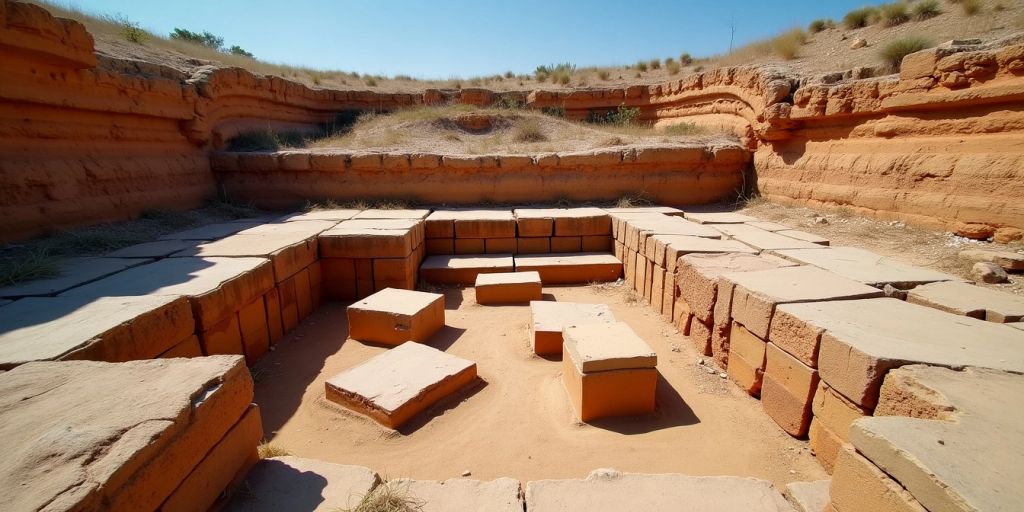
    Just over a year and a half ago, astonishing discoveries were made in Malta. A structure, believed to be created by beings of incredible intelligence, showcases remarkable features, including an Oracle room that amplifies sound. This ancient site raises questions about its origins and the mysterious remains found within.

    Key Takeaways

    • The Oracle room amplifies sound, suggesting advanced acoustic knowledge.
    • Thousands of headless corpses were found, with some resembling modern depictions of aliens.
    • Many ancient structures in Malta remain unexplained by modern academia.
    • The discovery of elongated skulls raises questions about the origins of the inhabitants.

    The Oracle Room: A Marvel of Acoustics

    The Oracle room within this ancient structure is a marvel. When one speaks at a normal volume, their voice resonates throughout the entire complex. This amplification is not just a coincidence; it suggests a deep understanding of acoustics by its builders. The room operates at a frequency of 111 Hertz, a number that has significant implications in various ancient texts and modern research.

    The Enigmatic Remains

    Among the many discoveries were thousands of remains, often headless. However, some bodies still had their heads, and intriguingly, they resembled what we now refer to as Grays—a supposed alien race. These remains have mysteriously vanished, leading to speculation about a cover-up. Why were these bodies hidden? What secrets did they hold?

    The Hal Tarjan Temple

    Malta is home to numerous ancient structures, including the Hal Tarjan Temple. This site features massive blocks weighing up to 50 tons and intricate carvings. The temple complex consists of three interconnected structures, with a modern entrance built in 1956. The decorated slabs found here were relocated to the Museum of Archaeology in Valletta for protection.

    Advanced Engineering or Alien Intervention?

    The engineering feats displayed in these ancient sites challenge our understanding of history. How did ancient people move such massive stones? Theories suggest the use of stone rollers, but this does not explain how they placed these stones with such precision. Were these structures built with the help of an advanced civilization or even extraterrestrial beings?

    The Hypogeum: A Hidden Treasure

    The Hypogeum in Malta is another site of interest. It is known for its 6,000 ancient burials, including elongated skulls that defy explanation. These skulls lack evidence of cranial binding, leading researchers to question their origins. The official narrative denies the existence of these remains, yet many researchers continue to seek the truth.

    The Connection to Ancient Knowledge

    The acoustic properties of the Oracle room and other structures suggest that ancient civilizations possessed knowledge we are only beginning to understand. The resonance at 111 Hertz has been linked to heightened states of consciousness and meditation. This raises the question: who possessed such advanced knowledge thousands of years ago?

    The Cover-Up

    The disappearance of the remains and the lack of public interest in these discoveries hint at a larger conspiracy. Why has the story of the 7,000 remains been buried? The implications of these findings could challenge our understanding of human history and our place in the universe.

    Conclusion

    The ancient ruins of Malta continue to captivate and mystify. With their advanced engineering, acoustic properties, and the enigmatic remains found within, these sites challenge our understanding of history. As we delve deeper into these mysteries, we may uncover truths that have long been hidden from us. The question remains: what secrets do these ancient structures hold?

  • MH370 Mystery Solved! The Shocking Evidence That Changes Everything We Were Told

    MH370 Mystery Solved! The Shocking Evidence That Changes Everything We Were Told

    On March 8, 2014, Malaysian Airlines Flight MH370 vanished from radar while en route from Kuala Lumpur to Beijing. Ten years later, new evidence has emerged, shedding light on this enduring mystery. Ashton Forbes, a dedicated investigative journalist, joins us to discuss the shocking revelations that could change everything we thought we knew about this tragic event.

    Key Takeaways

    • Disappearance Timeline: Flight MH370 disappeared shortly after takeoff, leading to a massive search operation.
    • Official Narrative: The prevailing theory suggests pilot suicide, but evidence contradicts this.
    • Espionage Angle: The presence of passengers with stolen identities raises questions about potential espionage.
    • Surveillance Capabilities: Advanced U.S. surveillance systems likely tracked the flight, contradicting official claims of ignorance.
    • New Videos: Recent videos suggest a different narrative, indicating possible advanced technology involvement.

    The Disappearance Of Flight MH370

    The disappearance of Flight MH370 is one of aviation’s greatest mysteries. With 227 passengers and 12 crew members on board, the plane vanished without a trace. Initial reports indicated that the aircraft had gone down in the South China Sea, but as days turned into weeks, the search expanded to the Indian Ocean.

    Ashton Forbes, who has spent years investigating this case, highlights the unusual circumstances surrounding the disappearance. The narrative quickly shifted from a simple crash to something more complex, raising suspicions about the information being withheld from the public.

    The Official Narrative: Pilot Suicide?

    The official story that emerged suggested that the pilot had committed suicide. However, Forbes argues that there is no concrete evidence supporting this claim. The narrative began to take shape days after the plane’s disappearance, but many experts and investigators have since ruled it out.

    • Lack of Evidence: No distress signals or indications of a suicidal act were found.
    • Flight Path Analysis: The plane’s flight path suggests an emergency situation rather than a deliberate act.

    The Espionage Angle

    One of the most intriguing aspects of the investigation is the presence of two passengers traveling on stolen passports. These individuals were later identified as Iranian nationals, raising questions about their intentions. Forbes suggests that this could indicate a potential espionage operation.

    • Freescale Semiconductor Employees: The flight also carried 20 employees from Freescale Semiconductor, a company involved in advanced technology. Their presence on the flight has led to speculation about the possibility of intellectual property theft.
    • Unusual Travel Patterns: The travel route of these individuals raises further questions about their true intentions.

    Surveillance Capabilities: What Did The U.S. Know?

    Forbes emphasizes that the United States has extensive surveillance capabilities, including advanced radar systems and satellites. Given the technology available, it seems implausible that the U.S. government was unaware of the plane’s fate.

    • Multiple Tracking Systems: Various countries, including Thailand and India, had radar systems that should have detected the flight.
    • Acoustic Detection: Systems in the Indian Ocean should have picked up any crash, yet no evidence was found.

    New Videos: A Different Narrative?

    Recent videos have surfaced that suggest a different story altogether. These videos show what appears to be the plane in distress, raising questions about the events leading up to its disappearance.

    • Drone Footage: The drone video captures the plane making unusual maneuvers, suggesting it was not simply lost.
    • Thermal Imaging: The videos indicate the presence of unidentified objects around the plane, leading to speculation about advanced technology.

    Conclusion: What Really Happened?

    The mystery of Flight MH370 remains unsolved, but the new evidence presented by Ashton Forbes raises more questions than answers. The combination of potential espionage, advanced surveillance capabilities, and the recent videos suggests that the truth may be far more complex than previously thought.

    As we reflect on this tragedy, it’s crucial to continue seeking the truth. The families of those lost deserve answers, and the world deserves to know what really happened to Flight MH370.

  • 🚨BREAKING: Feds Arrest Diddy in Massive Sex Trafficking Sting | ‘The Epstein of the Rap Industry’

    🚨BREAKING: Feds Arrest Diddy in Massive Sex Trafficking Sting | ‘The Epstein of the Rap Industry’

    In a shocking turn of events, music mogul Diddy has been arrested in connection with a federal investigation into serious allegations, including sex trafficking. This incident has sent ripples through the entertainment industry, raising questions about the darker side of fame and power.

    Key Takeaways

    • Diddy was arrested by federal agents in New York.
    • The arrest is linked to ongoing investigations into sex trafficking and other serious offenses.
    • Allegations against Diddy include soliciting minors for prostitution.
    • The case draws parallels to the infamous Jeffrey Epstein scandal.

    The Arrest: What Happened?

    Diddy was taken into custody by federal agents after a grand jury indictment. Reports indicate that Homeland Security swooped in on a Midtown hotel where he was staying. The arrest was part of a broader investigation into alleged sex trafficking and other criminal activities.

    • Location of Arrest: Midtown Hotel, New York
    • Involved Agencies: Homeland Security, FBI
    • Charges: Not fully disclosed yet, but serious in nature.

    The Allegations Against Diddy

    The allegations against Diddy are severe. He is accused of being involved in a network that solicits minors for prostitution. This has drawn comparisons to Jeffrey Epstein, a name synonymous with high-profile sex trafficking cases.

    • Key Allegations:
      • Soliciting minors for prostitution
      • Human trafficking
      • Sexual assault

    The Investigation’s Background

    The investigation has been ongoing for several months, with testimonies from various accusers. Diddy’s homes in Los Angeles and Miami were raided earlier this year as part of this investigation. The grand jury has been hearing evidence that paints a troubling picture of Diddy’s alleged activities.

    • Timeline of Events:
      1. March: Diddy’s homes raided.
      2. Recent Months: Grand jury hears testimonies.
      3. Arrest: Diddy taken into custody.

    Diddy’s Response

    Diddy’s legal team has expressed disappointment over the indictment, claiming it is an unjust prosecution. They argue that he is an imperfect person but not a criminal. However, the gravity of the allegations suggests otherwise.

    • Lawyer’s Statement: "He is an imperfect person but he is not a criminal."
    • Diddy’s Stance: He looks forward to clearing his name in court.

    The Broader Implications

    This arrest raises significant questions about the culture of silence surrounding powerful figures in the entertainment industry. Many insiders have hinted at Diddy’s alleged misconduct for years, suggesting that this was an open secret.

    • Cultural Impact: The case could lead to more revelations about other high-profile individuals in the industry.
    • Public Reaction: Many are calling for accountability and transparency.

    Conclusion

    Diddy’s arrest marks a pivotal moment in the ongoing battle against sexual exploitation and trafficking. As the case unfolds, it will be crucial to watch how the legal proceedings develop and what further revelations may come to light. The entertainment industry is on high alert, and many are wondering who else might be implicated in this scandal.

    This situation serves as a stark reminder that fame and power can often mask darker realities. The truth is beginning to surface, and it may lead to significant changes in how such allegations are handled in the future.