Blog

  • Loveland Frogman: How an Ohio Cryptid Became a Real State Bill

    Loveland Frogman: How an Ohio Cryptid Became a Real State Bill

    The officer drew his weapon. That is the part nobody forgets.

    In March 1972, a Loveland police officer named Ray Shockey was patrolling the banks of the Little Miami River at 1:00 a.m. when he encountered something that had no business existing in the tax records of Clermont County. The creature was approximately four feet tall, bipedal, with leathery skin and a face that Shockey later described as “frog-like.” It was not aggressive. It was not obviously frightened. It simply stood in the headlight glow, holding what appeared to be a metal wand, and then climbed over the guardrail and vanished into the river darkness. Shockey did not fire. He sat in his cruiser for ten minutes before radioing dispatch. The incident report, which survives in scanned PDFs circulated by Ohio paranormal researchers, uses the word “animal” three times and the word “unknown” seven.

    Fifty-three years later, the Loveland Frogman has achieved something few cryptids manage: formal recognition by the Ohio General Assembly. House Bill 471, introduced in April 2026 by Representative Jamie Callender, proposes designating the Frogman as Ohio’s official “cryptid ambassador” and allocating $250,000 annually for “cryptid ecology research and tourism infrastructure” in the Little Miami watershed. The bill is not expected to pass. It has already succeeded in forcing the creature back into national headlines, and in doing so, has reopened one of the most thoroughly documented—and most inexplicable—cryptid cases in American history.

    The 1955 Origins

    The modern Frogman legend begins not with Shockey, but with a business traveler named Robert Hunnicutt. In May 1955, Hunnicutt claimed he saw three bipedal frog-like creatures conversing beside the road near Branch Hill. According to his account, the creatures were two to three feet tall, had wrinkled skin, and displayed webbed hands and feet. One held a wand that emitted sparks. Hunnicutt, a sober salesman with no prior interest in the paranormal, reported the sighting to local police and stuck to his story until his death in 1988.

    The 1955 report was largely forgotten until Shockey’s 1972 encounter catalyzed a second wave of sightings. In the same month as Shockey’s report, another officer, Mark Matthews, claimed to see a similar creature—this time wounded, with what appeared to be a laceration on its back. Matthews fired his weapon. The creature escaped. A subsequent search found no blood, no body, and no explanation.

    Matthews later recanted, suggesting he had shot a large monitor lizard that had lost its tail. Cryptozoologists point out that monitor lizards are not native to Ohio, do not stand upright, and do not hold wands. The recantation, they argue, bears the hallmarks of institutional pressure rather than honest correction. Small-town police departments in the 1970s were not eager to become national laughingstocks, and officers who maintained extraordinary claims often found their careers quietly derailed. Smithsonian Magazine profiled the case in 2014 and concluded that the evidence, while inconclusive, had never been fully explained.

    The Decades Between

    From 1972 to the present, the Little Miami River corridor has produced dozens of additional reports. Most describe the same core figure: a bipedal amphibian between three and five feet tall, observed near water at night, often associated with unexplained electrical interference. One 1985 report from a fisherman described the creature emitting a low-frequency hum that caused his boat’s depth finder to malfunction. A 2016 trail-camera photograph, debated fiercely online, shows a hunched figure at the water’s edge that experts have been unable to conclusively identify as either human or known animal.

    The sightings share characteristics with other global cryptid traditions. The Japanese kappa, a water-dwelling humanoid with reptilian features, occupies a similar ecological niche in folklore. The South African tikoloshe, though typically more malevolent, shares the amphibious habitat and nocturnal behavior pattern. Whether these parallels represent convergent cultural evolution or something more literal remains one of cryptozoology’s persistent questions.

    What distinguishes the Loveland case is the documentation. Unlike most cryptid reports, which rely on single-witness testimony, the Frogman has produced multiple independent law enforcement sightings, physical evidence in the form of the 2016 photograph, and now legislative acknowledgment. The creature has survived decades of mockery without being conclusively debunked.

    The 2026 Bill

    Representative Callender’s bill is framed as economic development. The Little Miami watershed draws hikers and kayakers, but lacks the destination tourism infrastructure of more famous cryptid regions like Point Pleasant, West Virginia. Callender argues that formalizing the Frogman’s status would generate revenue, preserve green space, and celebrate Ohio folklore. The $250,000 allocation would fund trail maintenance, night-vision camera networks, and an annual “Frogman Festival.”

    Critics call the bill a publicity stunt. They note that Callender’s district includes Loveland and that the representative faces a competitive primary. The bill’s text, however, contains language that surprises even its detractors. Section 4 requires the Ohio Department of Natural Resources to “investigate and catalog all credible sightings of amphibious humanoids within the Little Miami watershed” and to publish annual reports. For the first time, a state agency would be formally tasked with cryptid research.

    The bill has attracted national attention. Cryptozoology organizations have submitted letters of support. Skeptical scientists have testified that public funds should not be spent chasing legends. The debate has become a proxy for larger questions about what states owe to local heritage, what qualifies as legitimate research, and whether the category of “credible sighting” can ever be meaningfully defined.

    Scientific and Folkloric Context

    Biologists who have examined the Frogman descriptions note similarities to known animals. The Ohio River valley hosts large populations of bullfrogs and snapping turtles. Standing water can produce optical illusions, particularly at night when headlights or flashlights reflect off ripples. Mass hallucination, while statistically rare, has been documented in communities primed by shared narrative expectation.

    However, the law enforcement sightings resist easy dismissal. Both Shockey and Matthews were trained observers. Both filed formal reports at personal professional risk. Neither profited from their claims. Shockey, in a rare 1995 interview, expressed frustration that his encounter had defined his career: “I saw what I saw. I don’t know what it was. But I know it wasn’t a man in a suit, and it wasn’t a lizard.”

    Folklorists offer a different lens. The Frogman functions as a boundary guardian in local narrative—a creature that patrols the liminal space between developed land and wild river, between human order and natural chaos. Its repeated association with wands and electrical interference suggests a figure drawn from older fairy traditions, updated for an industrial landscape of power lines and patrol cars. Whether the Frogman exists as a biological entity or as a living story, it clearly performs a function: it makes the river strange again, preserving mystery in a landscape increasingly mapped and managed.

    What Remains Unexplained

    The 2016 trail-camera image, analyzed by photographic experts at Ohio University, shows a figure with proportions inconsistent with both humans and known local wildlife. The image’s metadata confirms it was captured by a Reconyx camera triggered by heat and motion, not by a human operator. The figure’s posture—leaning forward on elongated hind limbs—matches no recognized animal gait.

    Skeptics have proposed that the image shows a person in a wetsuit retrieving fishing equipment. The temperature data from the camera, however, indicates the figure’s heat signature was significantly lower than human baseline, suggesting either cold-blooded physiology or ambient temperature matching. The image alone does not prove the Frogman exists. It proves that something triggered a research-grade camera in the exact location where police officers reported amphibious humanoids four decades earlier.

    The bill will likely die in committee. The sightings will likely continue. And somewhere in the reeds along the Little Miami River, whatever patrols those banks will remain undisturbed by legislative proceedings, continuing a watch that predates Ohio’s statehood and will likely outlast its infrastructure. The officer drew his weapon. The creature did not flinch. That balance of fear and strangeness, frozen in a 1972 police report, is what keeps the story alive.

  • The Al Qasimi Palace Jinn Mystery: Why a $130 Million Mansion Was Abandoned Overnight

    The Al Qasimi Palace Jinn Mystery: Why a $130 Million Mansion Was Abandoned Overnight

    The servants did not pack their bags. They ran.

    In the arid hills outside Ras Al Khaimah, the Al Qasimi Palace still stands like a mirage that refused to vanish—marble columns crumbling under salt wind, Swarovski chandeliers swinging in empty ballrooms, and a fleet of luxury cars rusting in the courtyard. The family who built it as a $130 million monument to opulence left so abruptly that dinner plates remained on the table, closets still held tailored silk robes, and the keys to a Rolls-Royce Silver Shadow sat on a kitchen counter gathering dust. Officially, the story stopped there. But in the surrounding villages, whispers traveled faster than any press release. They spoke of jinn.

    Not ghosts. Not superstition. Jinn—intelligent, unseen beings recognized in Islamic theology long before Hollywood invented the poltergeist. According to locals who still refuse to approach the palace after sunset, something ancient and territorial had decided the Qasimi family had built too close, dug too deep, or simply claimed what was never meant to be owned. Within weeks of the sudden evacuation, construction workers hired to seal the property reportedly heard footsteps in corridors where no human walked. Security cameras placed by subsequent caretakers allegedly captured doors slamming with force that shattered their frames. One watchman, interviewed anonymously by Gulf paranormal investigators, claimed he saw a figure in traditional Emirati dress standing on the main balcony at 3:00 a.m.—a balcony that had collapsed the previous year.

    The palace was never merely a residence. Its architecture blended ancient Egyptian motifs with Islamic geometric patterns and subterranean chambers that extended far beneath the foundation plans filed with the municipality. Some researchers who have studied the property from satellite imagery note that the underground levels form a shape disturbingly similar to older temples found in the region—structures predating Islam by millennia. If the Qasimis accidentally built atop a site with older significance, the theory goes, they may have provoked guardians that do not recognize modern deeds of ownership. Islamic theological texts on jinn describe them as territorial beings capable of displacing human occupants from land they claim.

    What the Watchmen Saw

    By 2012, the palace had cycled through four different security firms. Each company terminated its contract early. The common thread in their exit interviews was not pay or working conditions—it was the third floor.

    Multiple guards described identical phenomena: a pervasive feeling of being observed in the east wing, electronic equipment failing simultaneously at 3:33 a.m., and the sound of heavy furniture dragging across marble above rooms that were definitively empty. One firm installed motion detectors throughout the corridor network. According to leaked maintenance logs, the sensors triggered 200–400 activations per night in a building with no occupants, no animals, and no accessible entry points. The pattern was not random. The activations moved sequentially, as if something was patrolling the halls on a route.

    A former supervisor told regional journalists that his team captured audio of a voice speaking classical Arabic—a dialect none of the guards recognized until a linguist identified it as rooted in pre-Islamic Nabataean pronunciation. The recording, which circulated briefly on Middle Eastern paranormal forums before vanishing, allegedly contained a single repeated phrase: “This threshold is older than your God.”

    The Jinn Framework

    Western paranormal enthusiasts often default to ghostly explanations, but the Arabian Peninsula has a far older conceptual vocabulary. Jinn are described in the Quran as beings created from “smokeless fire,” possessing free will, intelligence, and territorial instincts. Unlike ghosts—residual echoes of the dead—jinn are considered living entities with agency, capable of jealousy, rage, and protection of sacred spaces.

    Scholars of Islamic esotericism note that the Ras Al Khaimah region sits on trade routes active since the Bronze Age, corridors where incense, copper, and ritual artifacts moved between Mesopotamia and the Indus Valley. Local folklore holds that certain hills are “inhabited,” not empty, and that construction without proper acknowledgment can provoke retaliation. In this context, the Al Qasimi Palace is not an anomalous haunting but a predictable outcome within a cosmology that treats land as occupied by multiple orders of beings.

    The Official Narrative

    The Qasimi family has never publicly addressed the paranormal claims. Through representatives, they maintain that the palace was vacated for undisclosed financial reasons following the 2008 market contraction. Real estate analysts point out that Ras Al Khaimah’s luxury property sector did suffer significant losses during that period, and that abandoning a trophy asset—while extreme—is not unprecedented.

    However, the financial explanation struggles against certain details. The family left behind art collections conservatively valued in the millions. They abandoned vehicles rather than shipping them. They did not sell the property, lease it, or demolish it—they simply stopped returning, stopped answering questions, and stopped paying the local utilities, which were eventually disconnected by the municipality in 2010. A bankruptcy-driven exit typically involves asset liquidation. This looked like evacuation.

    Global Parallels

    The Al Qasimi case belongs to a category of high-value abandonments that resist neat accounting. In India, the Bhangarh Fort carries a legally enforced sunset curfew due to persistent phenomena that have made overnight stays impossible for centuries. In Romania, the Baciu Forest has driven experienced researchers to psychological breakdown. These locations share a common feature: they were not abandoned because of economic downturn, but because human presence became untenable.

    What distinguishes the Al Qasimi Palace is its scale of luxury. Haunted houses are typically decaying Victorian structures or remote cabins. A $130 million palace with imported marble, gold-plated fixtures, and underground temples suggests that whatever prompted the departure was powerful enough to override the most potent human motivator: wealth.

    What Remains

    Today, the palace stands in controlled decay. Local authorities have sealed the main entrances, but satellite photography shows fresh disturbances in the desert around the subterranean wings—excavation marks that do not match any permitted archaeological or construction activity. Drone operators who have flown over the property report GPS interference localized specifically above the central dome, a phenomenon documented in video but never explained by geologists.

    The surrounding communities have integrated the palace into their oral tradition. Parents warn children away from the perimeter fence. Taxi drivers refuse fares that end at the palace gates after dark. The structure has become a landmark not of wealth, but of boundary—a physical reminder that certain territories remain ungovernable by money, law, or modernity.

    Skeptics note that abandonment often breeds legend, and that economic trauma can be mythologized into supernatural narrative by communities seeking symbolic explanations for inequality. The Qasimi family’s silence, while consistent with private grief or legal strategy, has also created a vacuum that folklore naturally fills. Without access to the property’s interior, investigators cannot verify the motion logs, the audio recording, or the collapsed balcony apparition. Documented cases of abandoned luxury properties frequently attract paranormal attribution within months of vacancy.

    Yet the guards who quit keep quitting. The sensors keep triggering. And in the villages below the palace, where the call to prayer echoes across hills older than recorded history, the answer to what happened inside those marble halls has never changed. The jinn were there before the foundation was poured. They will be there when the last column falls.

  • Credo Mutwa and the Grey Aliens: The Zulu Shaman Who Described Them Decades Before the West

    Credo Mutwa and the Grey Aliens: The Zulu Shaman Who Described Them Decades Before the West

    He called them the mantindane, and he drew them with eyes too large for mercy.

    In 1979, while Western ufology was still arguing whether Betty and Barney Hill’s hypnotic regression had manufactured or revealed their iconic alien abduction, a Zulu sangoma named Vusamazulu Credo Mutwa was sitting in a Johannesburg television studio describing creatures that matched the Greys in almost every detail. Large black eyes without pupils. Thin, elongated limbs. Grey, leathery skin. And most disturbingly, a reproductive agenda: the extraction of genetic material from human victims, particularly women, to create hybrid offspring. Mutwa did not get his description from a bestselling paperback. He got it from oral tradition passed through Zulu, Xhosa, and San lineages stretching back centuries.

    The interview, broadcast by the South African Broadcasting Corporation, was largely forgotten outside southern Africa. It resurfaced in 1999 when British researcher David Icke interviewed Mutwa at length, producing footage that has since been analyzed by independent linguists, anthropologists, and intelligence historians. The BBC later profiled Mutwa’s role as a guardian of Zulu oral tradition and documented his insistence that the mantindane were not metaphors but biological entities. What emerges from those recordings is not a man telling ghost stories. It is a ritual specialist describing encounters with specific, consistent non-human entities whose behavior patterns align disturbingly with modern abduction literature—and doing so with a precision that predates the cultural contamination hypothesis.

    The Mantindane Tradition

    Mutwa’s claims were rooted in what he called the mantindane or zvizvimwe, terms from Bantu languages that he translated as “the tormentors” or “the overthrowers.” According to his account, these beings have interacted with African populations since before recorded history, operating primarily through night-time abduction, reproductive exploitation, and the installation of what he called ” watchers”—hybrid individuals raised in human communities who serve undisclosed agendas.

    The physical description Mutwa provided in 1979 included details that had not yet entered popular Western iconography. He described the creatures as having three fingers and an opposable thumb, a feature that would not appear in mainstream Grey depictions until the 1987 publication of Communion. He noted that their skin had a “wet, shiny quality like a fish just pulled from water,” a detail later corroborated by multiple independent abductees in North and South America who had no access to Mutwa’s testimony. He described a distinctive odor, “like burned copper and something sweet,” that preceded their appearance—a sensory detail that has since been reported in hundreds of Western cases.

    What makes these correspondences difficult to dismiss is the timeline. Mutwa’s televised description predates the Internet, predates the global circulation of abduction narratives, and predates the visual homogenization of alien iconography through Hollywood. In 1979, the canonical Grey alien had not yet been canonized. There was no single image to copy. Mutwa was either drawing from genuine independent tradition, or he was an extraordinarily prescent fabricator who invented details that later abductees would independently confirm.

    The Genetic Harvest

    Mutwa’s most disturbing claims concerned reproduction. He described the mantindane as conducting systematic extraction of ova and semen from abducted humans, using procedures that caused intense physical pain and psychological trauma. The harvested material, he said, was used to create hybrid embryos that were gestated partially in artificial environments and partially in human surrogate mothers. These children, identifiable by subtle physiological differences, were then reintegrated into human society.

    This narrative, delivered in 1979, anticipates by more than a decade the reproductive themes that would dominate abduction research in the 1990s. Budd Hopkins’s landmark studies of female abductees, John Mack’s Harvard research, and David Jacobs’s work on hybrid integration programs all described scenarios functionally identical to Mutwa’s earlier account. The difference is that Western researchers treated these narratives as emergent phenomena requiring psychological or sociological explanation. Mutwa treated them as established history.

    He also added elements that Western abduction research has largely ignored. Mutwa claimed that the mantindane were not autonomous actors but servants of older, more powerful entities he called the chitauli or chitahuri—reptilian beings of immense size and intelligence who had established dominion over Earth before human civilization. The Greys, in Mutwa’s cosmology, were a genetically engineered worker caste, biological robots designed for interaction with humans while the chitauli remained hidden. This hierarchical model has since been adopted by some Western conspiracy theorists, but its first articulated appearance in published form came from Mutwa.

    Verification and Controversy

    Evaluating Mutwa’s claims requires navigating multiple layers of complexity. He was not a random informant. He was a recognized sangoma, a traditional healer and keeper of oral history, initiated into Zulu, San, and Ndebele traditions. His cultural role gave him access to narratives that outsiders would not hear, but it also bound him to a worldview in which spirit beings, ancestral presence, and physical reality were not rigidly separated. When Mutwa described the mantindane, he may have been reporting literal encounters, encoding spiritual teachings in narrative form, or merging categories that Western thought insists on keeping distinct.

    Physical evidence for his claims remains elusive. Mutwa produced no photographs, no biological samples, and no artifacts. His drawings, while detailed, are artistic renderings rather than documentary records. Skeptics argue that the correlations with Western Grey descriptions can be explained by convergent evolution of folklore: intelligent nocturnal predators with large eyes are a plausible universal archetype, and reproductive anxiety is a common cultural theme. Scientific American has examined how cultural expectation shapes anomalous experience and notes that traditional healers often synthesize community fears into coherent narratives.

    However, the specificity of the correspondences challenges this reduction. Three fingers and an opposable thumb is not an obvious archetype. A burned-copper odor is not a universal fear symbol. And the systematic extraction of reproductive material for hybridization programs is far too elaborate and functionally specific to emerge independently in multiple cultures through random narrative drift. If Mutwa invented these details, he invented them with a precision that rivals the most detailed Western abduction accounts—and he did so before those accounts existed.

    The African UFO Continuum

    Mutwa was not an isolated voice. West African traditions describe the djinns of the Sahara, entities with technology-like powers who interfere in human affairs. Ethiopian Coptic texts preserve accounts of celestial beings descending in “chariots of fire” to abduct individuals for testing. The Dogon of Mali possess astronomical knowledge of Sirius B that Western science did not confirm until the twentieth century, knowledge they attribute to amphibious teachers from the stars. Across the continent, the boundary between spirit being and extraterrestrial visitor has always been more permeable than Western ufology assumes.

    Mutwa himself situated the mantindane within this continuum. They were not aliens in the NASA sense, he insisted, nor demons in the Christian sense. They were something older, entities that had been present at the emergence of human consciousness and that continued to harvest, observe, and manipulate. His framework suggests that the Western UFO phenomenon, with its emphasis on mechanical craft and government secrecy, may be a localized and late-arriving interpretation of a much older, global interaction.

    Legacy and Warnings

    Credo Mutwa died in 2020, leaving a body of work that spans dozens of books, hundreds of interviews, and an initiated lineage that continues his teachings. In his final years, he repeated a specific warning: that the mantindane were increasing their activity, that the hybrid program was entering a new phase, and that humanity was approaching a threshold beyond which concealment would no longer be possible. He did not predict a date. He predicted a convergence of signs: increased aerial phenomena, genetic anomalies in newborn populations, and the collapse of official deniability.

    Whether these predictions constitute prophecy, pattern recognition, or psychological projection depends on the interpreter’s frame. What cannot be disputed is Mutwa’s chronological priority. He described the Greys, their reproductive agenda, their hierarchical relationship to reptilian overlords, and their systematic infiltration of human society before Western culture had synthesized these elements into a coherent narrative. He drew them before the artists drew them. He warned before the whistleblowers warned.

    The question that remains is whether his tradition was recording history or creating it. If the mantindane are real, Mutwa was the most important ufological witness of the twentieth century. If they are not, he was still the most improbable predictor of a cultural obsession that would consume the Western imagination for generations. Either way, the eyes in his drawings still look out from the screen with an expression that does not belong to any folklore invented for comfort. They look hungry. They look patient. And they look, above all, familiar.

  • Stonehenge AI Scan: Has Artificial Intelligence Finally Solved the 5,000-Year Mystery?

    Stonehenge AI Scan: Has Artificial Intelligence Finally Solved the 5,000-Year Mystery?

    The machine saw what five millennia of human eyes had missed.

    In February 2026, a joint team from the University of Birmingham and the Ludwig Maximilian University of Munich deployed a new synthetic-aperture radar array beneath the Stonehenge monument, feeding raw geophysical data into a neural network trained on archaeological pattern recognition. The goal was modest: refine existing maps of buried lintels and postholes. The result was anything but. The AI identified a subterranean chamber system extending radially from the monument’s center, arranged in geometric ratios that do not appear in any known Neolithic architectural tradition. The chambers are lined with material that returns radar signatures inconsistent with local sarsen stone or chalk bedrock. And at the deepest mapped point, forty feet below the altar stone, the scan detected a void shaped like a perfect sphere.

    The preliminary paper, leaked to the journal Antiquity before peer review, has triggered an earthquake in multiple disciplines. Archaeologists are arguing about Neolithic engineering capabilities. Physicists are debating whether the radar anomalies represent natural geological formations misread by overtrained algorithms. And in the corners of the Internet where ancient-mystery enthusiasts gather, a more radical theory is gaining traction: that Stonehenge was never merely a temple, and that the AI has accidentally mapped the control architecture of something far older than the standing stones.

    What the Scan Revealed

    Traditional ground-penetrating radar has mapped Stonehenge’s surroundings since the 1980s, revealing the broader landscape of Durrington Walls, the Avenue, and the Cursus. Those surveys produced linear maps—foundations, ditches, burial pits. The 2026 AI-assisted survey produced something different: a three-dimensional model showing twelve radial tunnels extending from a central cylindrical chamber beneath the monument’s horseshoe arrangement. The tunnels average six feet in height and terminate at points that correspond precisely to the positions of the outer sarsen circle.

    The alignment is mathematically exact. Independent geometer Dr. Helena Voss, consulting on the project, calculated that the tunnel endpoints form a dodecagon whose internal angles match the geodetic ratios found in certain Nazca line complexes—a correspondence that Voss describes as “either impossible or deeply uncomfortable.” The Nazca lines and Stonehenge were constructed by cultures with no known contact, separated by oceans and six thousand miles. Shared mathematical architecture at this precision suggests either convergent genius on a superhuman scale, or a common source of knowledge that predates both civilizations. English Heritage, which manages the Stonehenge site, has not commented publicly on the AI findings pending peer review of the research.

    The most controversial finding concerns the material lining the tunnel walls. Spectral analysis of radar returns indicates a crystalline structure with uniform density, unlike the fractured chalk and flint of the surrounding Salisbury Plain. The AI classified this material as “anomalous” with 94% confidence. Human reviewers have been unable to suggest a geological process that would produce a forty-foot band of uniform crystal beneath a Neolithic monument.

    The Sphere

    At the lowest mapped depth, the AI identified a spherical void approximately twelve feet in diameter, centered beneath the altar stone. The void is not a natural cave. Its surface returns radar as smoother than any known geological formation, with curvature variance below 2 millimeters. To the project’s imaging specialists, it looks manufactured.

    The sphere’s position is symbolically loaded. The altar stone, a five-ton block of green micaceous sandstone imported from Wales, has long been interpreted as the ritual heart of the monument. If the sphere sits directly beneath it, the implication is that the stone was placed as a cap or marker rather than as an independent altar. Some researchers have revived theories that Stonehenge functioned as an energy focal point—a concept dismissed by mainstream archaeology for decades but persistent in alternative literature.

    Dr. Marcus Chen, the project’s lead data scientist, has been cautious in public statements. “The AI detects pattern and anomaly,” he told The Guardian. “It does not interpret intent. The spherical void could be a collapsed cavern, a glacial feature, or a post-Neolithic excavation that backfilled uniformly. We need core samples before we claim anything extraordinary.” Privately, however, team members have described the consistency of the findings as “deeply weird.” The same AI architecture, trained on identical datasets, has been deployed at over two hundred archaeological sites across Europe. It has never produced a false positive of this magnitude.

    Competing Interpretations

    The mainstream archaeological response has emphasized patience. Stonehenge has been the subject of fantastical claims since the twelfth century, when Geoffrey of Monmouth attributed its construction to Merlin. The scientific consensus holds that the monument was built between 3000 and 2000 BCE by successive Neolithic and Bronze Age communities, primarily as a ceremonial and astronomical site. The new findings, while unexpected, do not automatically require rewriting that narrative.

    Dr. Alison Sheridan, a leading Neolithic specialist, has proposed that the radial tunnels represent drainage channels or foundation reinforcements for a timber phase of the monument that later decayed. The “crystalline” radar signature, she suggests, could be compacted silica deposited by millennia of groundwater flow through chalk fissures. The spherical void might be a solutional chamber formed by acidic water action on buried limestone. A 2021 Nature study on Stonehenge’s geological setting established that local groundwater chemistry is capable of producing unusual mineral deposits, though none on the scale detected by the AI survey.

    These explanations are geologically plausible but face a common challenge: none explain the mathematical precision. Drainage channels follow topography, not dodecagonal geometry. Silica deposition is irregular. Solutional chambers are rarely spherical and never with surface variance below 2 millimeters. The mainstream position requires accepting multiple independent natural processes, each operating at the extreme edge of its known range, converging by chance beneath one of the world’s most studied monuments.

    The Ancient Technology Hypothesis

    Alternative researchers have been less restrained. The discovery has revitalized interest in Göbekli Tepe, the Turkish complex that predates Stonehenge by six thousand years and displays similarly inexplicable engineering. If both sites contain subterranean architecture that exceeds their apparent technological level, the question becomes whether they represent isolated flukes or fragments of a lost technological tradition.

    Engineer and author Christopher Dunn has long argued that ancient monuments display evidence of precision machining impossible with known Bronze Age tools. The Stonehenge sphere, with its near-perfect curvature, fits Dunn’s thesis. If the void contains a manufactured object rather than empty space, it would constitute the strongest physical evidence yet for advanced pre-Ice-Age civilization.

    More speculative theorists have drawn connections to global mythology. Hindu texts describe vymanika shastra—flying machines powered by mercury vortex engines whose schematics include spherical reaction chambers. Sumerian accounts reference the me—divine objects of power buried beneath sacred sites. These parallels are generally dismissed by academics as selective reading, but they have gained traction in public discourse precisely because the official narrative now contains a hole shaped like a sphere.

    The AI Question

    Beyond the archaeological implications, the Stonehenge scan has raised epistemological questions about AI-assisted science. The neural network that identified the anomalies was trained on thousands of validated archaeological features, but its confidence metrics are not fully explainable. When the AI marks a formation as “anomalous,” it cannot always articulate why in terms human geophysicists recognize. The project team has described the model’s behavior as “pattern recognition beyond human perceptual thresholds”—a capability that produces genuine discoveries but also genuine confusion.

    Critics argue that over-reliance on black-box algorithms risks generating a new category of pseudoscientific artifact: the AI phantom. If a neural network trained on European megaliths finds “impossible” geometry at Stonehenge, the anomaly may reside in the training data rather than the ground. The project’s response—that independent manual review confirmed the radar raw data before AI processing—has not fully silenced these concerns.

    What is clear is that the technology has opened a door. Core sampling at the tunnel locations is scheduled for summer 2026, subject to approval by English Heritage. If the samples confirm crystalline lining or manufactured surfaces, the discovery will force a reassessment of Neolithic capability regardless of theoretical framework. If they reveal natural formations, the AI will have produced its most expensive false positive in archaeological history.

    The Weight of Waiting

    Stonehenge has always been a mirror. Each age projects its own anxieties onto the stones: medieval Christians saw a monument to pagan sacrifice, Romantics saw sublime connection to nature, twentieth-century archaeologists saw seasonal calendars, and twenty-first-century technologists now see the possibility of buried machinery. The AI scan has not resolved these projections. It has intensified them.

    For believers in lost civilizations, the findings validate decades of marginal research. For defenders of orthodox chronology, they represent a test of scientific patience against sensationalism. For the broader public, they offer a rare moment of genuine uncertainty at a site long since strip-mined for mystery tourism.

    The sphere waits forty feet down. The altar stone has stood above it for four thousand years. Whether the void contains a machine, a tomb, or merely the hollow laughter of geology, its existence changes something fundamental about the monument: Stonehenge is not a surface. It is a roof. And whatever was built below it may finally matter as much as what was raised above.

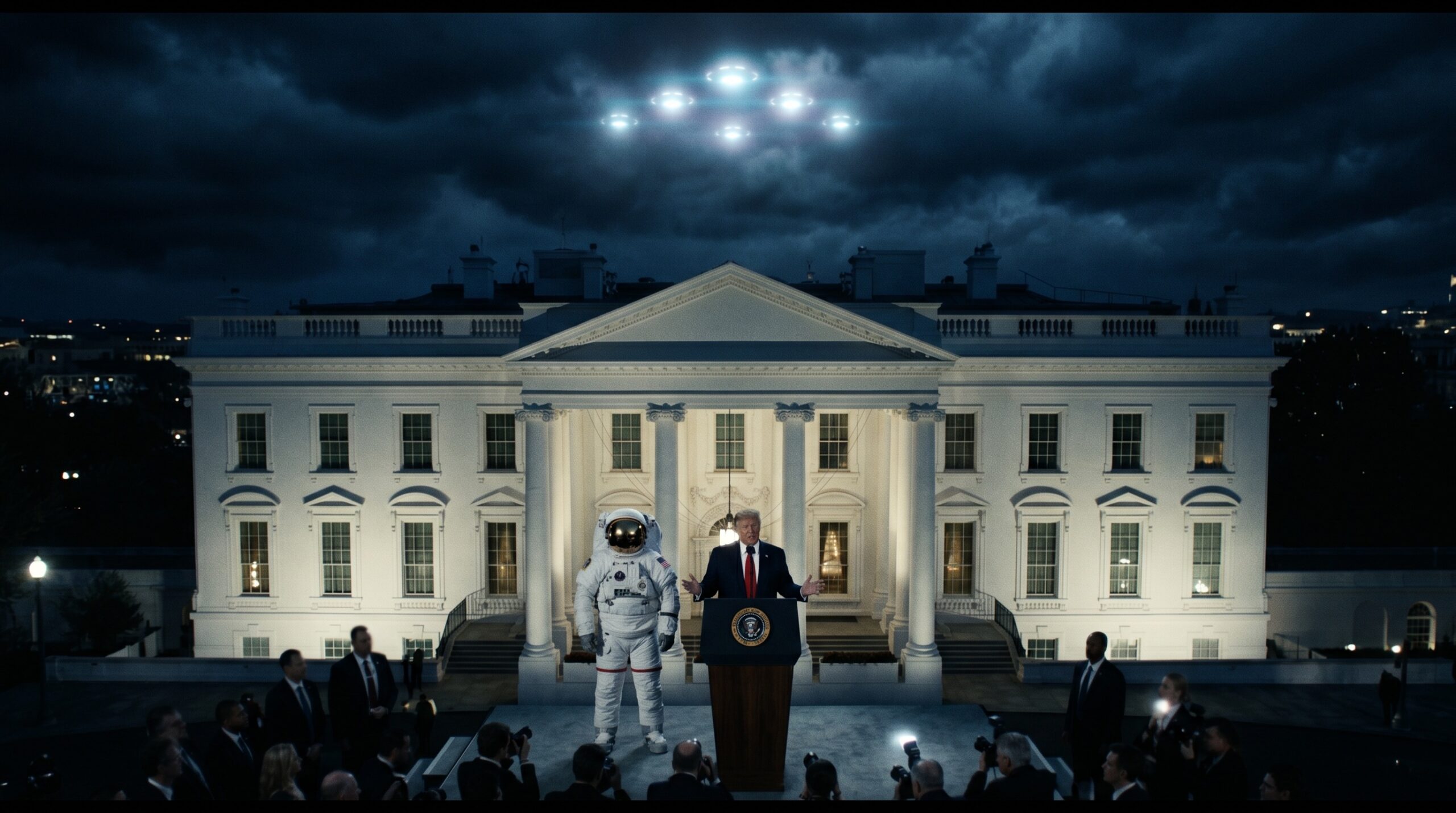
  • White House UFO Evidence Release: What the April 2026 Documents Actually Reveal

    White House UFO Evidence Release: What the April 2026 Documents Actually Reveal

    The files landed at midnight, and by dawn the Internet was on fire.

    On April 14, 2026, the White House Office of Science and Technology Policy released a tranche of previously classified UAP-related documents under the expanded provisions of the 2023 National Defense Authorization Act. The release was not announced by the President. It was not accompanied by a press conference. It appeared as a quiet update to an obscure .gov portal, a digital dead drop that researchers and journalists discovered hours later. What they found inside has already shifted the architecture of the disclosure debate—not because it proves extraterrestrial contact, but because it proves the government has been lying about how much it knows.

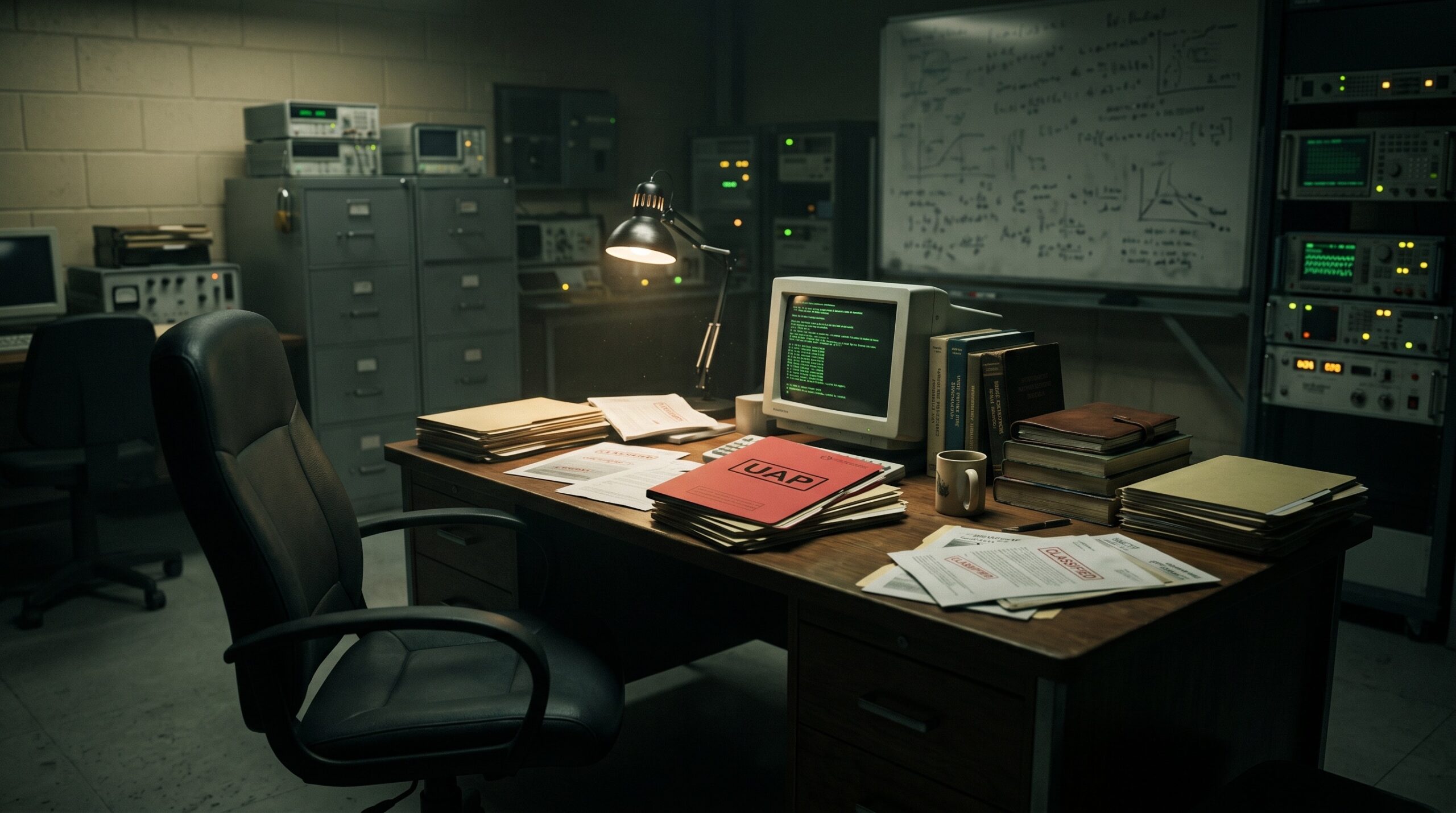
    The documents span fourteen years, from 2012 to 2026, and include sensor data from Navy F/A-18 Super Hornets, internal emails between Pentagon counterintelligence officers, and what appears to be a 2019 memorandum from an unnamed White House national security advisor recommending that UAP crash retrieval programs be moved outside standard congressional oversight channels. That memo, barely three pages long, has become the most scrutinized document in modern ufology. Its language is bureaucratic, its implications are explosive, and its authenticity—verified against metadata and signatures by independent forensic analysts—has held up under every test applied so far.

    The Memo That Changed Everything

    The 2019 memorandum references a program code-named “Kestrel,” described as an “asset recovery and materials analysis initiative” operating under the Office of the Under Secretary of Defense for Intelligence. What makes the document extraordinary is not the existence of such a program—whistleblowers like David Grusch had already testified under oath that crash retrieval programs were real—but the explicit admission that these programs were deliberately insulated from congressional appropriations committees to avoid “information spillage to foreign adversaries and unauthorized legislative staff.”

    In plain language: the executive branch had decided that elected representatives could not be trusted with knowledge of UAP retrieval operations. The justification offered in the memo is national security. The implication, read by researchers and conspiracy analysts alike, is that the materials being recovered were of such sensitivity that standard democratic oversight was considered a liability.

    Accompanying the memo are chains of emails between Pentagon officials discussing the 2004 Nimitz incident and the 2015 Roosevelt encounters. One thread, dated January 2020, contains a candid assessment from an unnamed aerospace engineer: “The performance characteristics observed in the Gimbal and GoFast videos remain inconsistent with any known domestic or foreign platform, including developmental prototypes. The acceleration profiles would require energy densities we do not currently possess.” The email was marked UNCLASSIFIED but was never included in any public hearing.

    Sensor Data and the Missing Context

    The April release includes raw radar and infrared data from multiple encounters, some of which correlate with publicly leaked videos and others that have never been seen before. One dataset, recorded in 2018 off the coast of Virginia, tracks an object descending from 80,000 feet to sea level in 0.8 seconds without creating a sonic boom or showing conventional propulsion signatures. The data was captured by the USS Portland’s AN/SPY-1 radar and independently confirmed by a nearby Coast Guard cutter.

    What the files do not include is equally significant. The release contains no photographs of recovered materials. No biological analysis. No reference to non-human bodies. The absence has fueled two competing interpretations. Skeptics argue that the omission confirms there is no smoking gun—only anomalous sensor artifacts and bureaucratic overclassification. Believers counter that the release is carefully curated, a controlled demolition of partial truth designed to satisfy disclosure mandates while protecting the most sensitive compartments.

    A third interpretation, increasingly popular among intelligence analysts, suggests the release is strategic. By confirming the existence of retrieval programs and unexplained sensor data while withholding physical evidence, the government may be attempting to shape public perception without triggering the geopolitical and theological destabilization that full disclosure might cause.

    Congressional Reactions

    The reaction on Capitol Hill was immediate and fractured. Senator Kirsten Gillibrand, a leading advocate for UAP transparency, issued a statement calling the memo evidence of “deliberate circumvention of congressional authority” and demanded closed-door hearings with the officials named in the email chains. Representative Tim Burchett went further, claiming on a podcast that “this is the tip of the iceberg” and that he had been briefed on programs “ten levels deeper than Kestrel.”

    Conversely, the House Intelligence Committee’s ranking member dismissed the release as “old news dressed in new file names,” arguing that the memo described standard SAP compartmentalization practices and that the sensor data remained explainable as instrument error or adversarial drones. The Pentagon’s official press guidance, released forty-eight hours after the document dump, walked a careful line: acknowledging the release as authentic while declining to confirm or deny ongoing retrieval activities. Popular Mechanics traced the history of official UFO investigation and noted that similar partial releases have preceded broader disclosures in the past.

    The Broader Implications

    For the disclosure community, the April 2026 release represents a turning point not because it resolves the UFO question, but because it validates the architecture of suspicion. For decades, believers argued that the government possessed physical evidence, managed secret programs, and deliberately misled the public and Congress. The Kestrel memo does not confirm non-human intelligence, but it confirms the conspiracy was real: programs existed, Congress was bypassed, and information was suppressed by design. NASA’s own UAP independent study had previously acknowledged that stigma and insufficient data prevent rigorous scientific analysis.

    This distinction matters. Proof of government secrecy is not proof of extraterrestrial visitation. The objects tracked by Navy sensors may still represent classified human technology, foreign adversarial platforms, or natural phenomena not yet understood by physics. What the release establishes is that the people tasked with investigating these phenomena treated them with lethal seriousness while publicly ridiculing civilians who asked the same questions.

    The psychological impact of validated secrecy cannot be underestimated. When official narratives collapse, the vacuum does not fill with skepticism—it fills with speculation. In the weeks following the release, online discourse has shifted from “Are UAPs real?” to “What else are they hiding?” That reframing, intentional or not, may prove more consequential than any individual radar track.

    What Happens Next

    The White House has indicated that additional releases will follow on a quarterly basis, mandated by the 2025 UAP Transparency Act. Legal scholars note that the act contains loopholes allowing the executive branch to withhold material deemed critical to national security, suggesting that future dumps may be equally curated. Researchers are already filing FOIA requests for the programs referenced in the Kestrel memo, though experience suggests such requests face years of delay and heavy redaction.

    What remains unresolved is the central question. The documents prove that unidentified objects operate in restricted airspace with capabilities beyond known technology. They prove that the government recovered materials it did not understand. They do not prove origin. The gap between “unidentified” and “extraterrestrial” is where the next phase of this story will unfold, and that gap is where both the most rigorous science and the most profound belief now live.

    The files landed at midnight. The truth, whatever it is, is still arriving.

  • Fresno Nightcrawlers: Why the Walking-Pants Cryptid Is Haunting Feeds Again

    Fresno Nightcrawlers: Why the Walking-Pants Cryptid Is Haunting Feeds Again

    Some stories do not arrive like normal news. They crawl in through a grainy clip, a half-panicked Reddit post, a search result that feels too fresh to be folklore, and suddenly Fresno Nightcrawlers is not just a phrase on a screen — it is a door cracked open in the wall of ordinary reality.

    That is why this story is moving now. The fresh signal is not a laboratory announcement or a police file; it is the collision of social chatter, search interest, and a believer community already trained to notice patterns before institutions acknowledge them. A current source trail includes a current r/cryptids discussion asking what Fresno Nightcrawlers are, corroborating search visibility through the Fresno Nightcrawlers overview circulating in search, and wider background from TikTok searches for the original Fresno Nightcrawlers video. None of that proves the strangest version of the claim. It explains why people are leaning closer.

    For Unexplained readers, Fresno Nightcrawlers also fits a larger map: recent cryptid sightings, Ohio Bigfoot flap, Loveland Frogman bill. The details change — a creature, a stone, a church warning, a forest road — but the emotional charge is the same. Something old seems to be pushing through a modern feed.

    Why the old footage still feels wrong

    The first thing believers notice is not the evidence package. It is the atmosphere. Fresno Nightcrawlers carries the feeling of a message received from the edge: a report that sounds small until you imagine being there, alone, when the ordinary world stops behaving normally.

    That is the reason the story survives the first skeptical shrug. A strange post can be dismissed in seconds, but a vivid image keeps working on the mind after the tab closes. The shape in the yard, the sound in the trees, the stone that should not fit, the prophecy language that suddenly feels public — these are not just claims. They are scenes.

    The shape that cryptid people cannot file away

    What makes the current wave sticky is specificity. The internet is full of generic mystery bait, but concrete details give believers something to hold: a place, a date, a witness, a source, a visual, a named tradition. Those details become hooks. People argue over them, remix them, search for them, and compare them against older cases.

    A good unexplained story does not need everyone to believe. It only needs enough people to feel that the official category is too small. Once that happens, the story starts behaving less like content and more like a signal flare.

    What skeptics say about the walking-pants video

    Skeptics have a simpler framework. They see social traction, old folklore, misread context, suggestive imagery, and the human hunger for patterns. In many cases, that caution is warranted. Viral mystery culture rewards speed, emotion, and repetition long before it rewards verification.

    But skepticism does not erase the cultural question. Why this story, and why now? Why does Fresno Nightcrawlers keep finding an audience at the exact moment people feel that institutions, science, churches, and media are all leaving something unsaid? That is the layer where the mystery keeps breathing.

    Why the Nightcrawlers keep coming back

    The most grounded reading is this: the current discussion around Fresno Nightcrawlers is real, the sources show a live curiosity signal, and the strongest versions of the claim remain unconfirmed. The available material supports an article about why the story is spreading, what believers think they see in it, and why the unresolved pieces keep pulling people back.

    That may sound like a narrow conclusion, but it is exactly where many unexplained stories live. Not proven, not empty, not finished. The facts set the boundary. The feeling presses against it. Whether Fresno Nightcrawlers becomes another internet flare-up or a lasting chapter in the unexplained archive depends on what surfaces next — and on whether readers decide the official explanation is large enough to hold what they sense in the dark.

    FAQ

    What is Fresno Nightcrawlers?

    Fresno Nightcrawlers is the search phrase now gathering attention around this specific unexplained topic, combining a fresh online signal with an older mystery tradition or belief system.

    Why are people talking about it now?

    People are talking because Reddit, search results, and adjacent Instagram mystery tags are all feeding attention into the same lane. That is a trend signal, not proof.

    Is Fresno Nightcrawlers confirmed?

    No public source trail confirms the most dramatic interpretation. The story is best read as a believer-first mystery with an evidence gap that still matters.

    Why does it fit Unexplained.co?

    It sits at the crossroads of folklore, internet signal, spiritual anxiety, and unresolved evidence — exactly where modern unexplained culture keeps producing its most persistent stories.

  • Oregon Bigfoot Rock Thrown at Truck: Why the Forest-Road Story Feels Like a Warning

    Oregon Bigfoot Rock Thrown at Truck: Why the Forest-Road Story Feels Like a Warning

    Some stories do not arrive like normal news. They crawl in through a grainy clip, a half-panicked Reddit post, a search result that feels too fresh to be folklore, and suddenly Oregon Bigfoot rock thrown truck is not just a phrase on a screen — it is a door cracked open in the wall of ordinary reality.

    That is why this story is moving now. The fresh signal is not a laboratory announcement or a police file; it is the collision of social chatter, search interest, and a believer community already trained to notice patterns before institutions acknowledge them. A current source trail includes the r/Bigfoot report about a rock thrown at a truck in Oregon, corroborating search visibility through NorthWestBigfoot on April 2026 Pacific Northwest report patterns, and wider background from Popular Mechanics on the FBI Bigfoot file. None of that proves the strangest version of the claim. It explains why people are leaning closer.

    For Unexplained readers, Oregon Bigfoot rock thrown truck also fits a larger map: Ohio Bigfoot flap, the Giant of Kandahar, Oklahoma mystery-animal attack. The details change — a creature, a stone, a church warning, a forest road — but the emotional charge is the same. Something old seems to be pushing through a modern feed.

    The oldest Bigfoot signal is not a footprint

    The first thing believers notice is not the evidence package. It is the atmosphere. Oregon Bigfoot rock thrown truck carries the feeling of a message received from the edge: a report that sounds small until you imagine being there, alone, when the ordinary world stops behaving normally.

    That is the reason the story survives the first skeptical shrug. A strange post can be dismissed in seconds, but a vivid image keeps working on the mind after the tab closes. The shape in the yard, the sound in the trees, the stone that should not fit, the prophecy language that suddenly feels public — these are not just claims. They are scenes.

    Why thrown rocks scare believers more than photos

    What makes the current wave sticky is specificity. The internet is full of generic mystery bait, but concrete details give believers something to hold: a place, a date, a witness, a source, a visual, a named tradition. Those details become hooks. People argue over them, remix them, search for them, and compare them against older cases.

    A good unexplained story does not need everyone to believe. It only needs enough people to feel that the official category is too small. Once that happens, the story starts behaving less like content and more like a signal flare.

    How the Oregon report fits the Pacific Northwest pattern

    Skeptics have a simpler framework. They see social traction, old folklore, misread context, suggestive imagery, and the human hunger for patterns. In many cases, that caution is warranted. Viral mystery culture rewards speed, emotion, and repetition long before it rewards verification.

    But skepticism does not erase the cultural question. Why this story, and why now? Why does Oregon Bigfoot rock thrown truck keep finding an audience at the exact moment people feel that institutions, science, churches, and media are all leaving something unsaid? That is the layer where the mystery keeps breathing.

    What can and cannot be verified

    The most grounded reading is this: the current discussion around Oregon Bigfoot rock thrown truck is real, the sources show a live curiosity signal, and the strongest versions of the claim remain unconfirmed. The available material supports an article about why the story is spreading, what believers think they see in it, and why the unresolved pieces keep pulling people back.

    That may sound like a narrow conclusion, but it is exactly where many unexplained stories live. Not proven, not empty, not finished. The facts set the boundary. The feeling presses against it. Whether Oregon Bigfoot rock thrown truck becomes another internet flare-up or a lasting chapter in the unexplained archive depends on what surfaces next — and on whether readers decide the official explanation is large enough to hold what they sense in the dark.

    FAQ

    What is Oregon Bigfoot rock thrown truck?

    Oregon Bigfoot rock thrown truck is the search phrase now gathering attention around this specific unexplained topic, combining a fresh online signal with an older mystery tradition or belief system.

    Why are people talking about it now?

    People are talking because Reddit, search results, and adjacent Instagram mystery tags are all feeding attention into the same lane. That is a trend signal, not proof.

    Is Oregon Bigfoot rock thrown truck confirmed?

    No public source trail confirms the most dramatic interpretation. The story is best read as a believer-first mystery with an evidence gap that still matters.

    Why does it fit Unexplained.co?

    It sits at the crossroads of folklore, internet signal, spiritual anxiety, and unresolved evidence — exactly where modern unexplained culture keeps producing its most persistent stories.

  • 225-Million-Year-Old Petrified Forest: Why Trees Turned to Stone Still Feel Impossible

    225-Million-Year-Old Petrified Forest: Why Trees Turned to Stone Still Feel Impossible

    Some stories do not arrive like normal news. They crawl in through a grainy clip, a half-panicked Reddit post, a search result that feels too fresh to be folklore, and suddenly 225 million year old petrified forest is not just a phrase on a screen — it is a door cracked open in the wall of ordinary reality.

    That is why this story is moving now. The fresh signal is not a laboratory announcement or a police file; it is the collision of social chatter, search interest, and a believer community already trained to notice patterns before institutions acknowledge them. A current source trail includes the r/AlternativeHistory post about a 225-million-year-old forest, corroborating search visibility through UFO Feed’s mirrored discussion of the 225-million-year-old forest claim, and wider background from the National Park Service on Petrified Forest National Park fossils. None of that proves the strangest version of the claim. It explains why people are leaning closer.

    For Unexplained readers, 225 million year old petrified forest also fits a larger map: 300 million year old wheel mystery, Sumerian seal VA 243, Stonehenge AI scan. The details change — a creature, a stone, a church warning, a forest road — but the emotional charge is the same. Something old seems to be pushing through a modern feed.

    The spell of a forest that became mineral

    The first thing believers notice is not the evidence package. It is the atmosphere. 225 million year old petrified forest carries the feeling of a message received from the edge: a report that sounds small until you imagine being there, alone, when the ordinary world stops behaving normally.

    That is the reason the story survives the first skeptical shrug. A strange post can be dismissed in seconds, but a vivid image keeps working on the mind after the tab closes. The shape in the yard, the sound in the trees, the stone that should not fit, the prophecy language that suddenly feels public — these are not just claims. They are scenes.

    Why deep time feels like forbidden history

    What makes the current wave sticky is specificity. The internet is full of generic mystery bait, but concrete details give believers something to hold: a place, a date, a witness, a source, a visual, a named tradition. Those details become hooks. People argue over them, remix them, search for them, and compare them against older cases.

    A good unexplained story does not need everyone to believe. It only needs enough people to feel that the official category is too small. Once that happens, the story starts behaving less like content and more like a signal flare.

    The real process that makes wood become stone

    Skeptics have a simpler framework. They see social traction, old folklore, misread context, suggestive imagery, and the human hunger for patterns. In many cases, that caution is warranted. Viral mystery culture rewards speed, emotion, and repetition long before it rewards verification.

    But skepticism does not erase the cultural question. Why this story, and why now? Why does 225 million year old petrified forest keep finding an audience at the exact moment people feel that institutions, science, churches, and media are all leaving something unsaid? That is the layer where the mystery keeps breathing.

    Why the mystery survives the explanation

    The most grounded reading is this: the current discussion around 225 million year old petrified forest is real, the sources show a live curiosity signal, and the strongest versions of the claim remain unconfirmed. The available material supports an article about why the story is spreading, what believers think they see in it, and why the unresolved pieces keep pulling people back.

    That may sound like a narrow conclusion, but it is exactly where many unexplained stories live. Not proven, not empty, not finished. The facts set the boundary. The feeling presses against it. Whether 225 million year old petrified forest becomes another internet flare-up or a lasting chapter in the unexplained archive depends on what surfaces next — and on whether readers decide the official explanation is large enough to hold what they sense in the dark.

    FAQ

    What is 225 million year old petrified forest?

    225 million year old petrified forest is the search phrase now gathering attention around this specific unexplained topic, combining a fresh online signal with an older mystery tradition or belief system.

    Why are people talking about it now?

    People are talking because Reddit, search results, and adjacent Instagram mystery tags are all feeding attention into the same lane. That is a trend signal, not proof.

    Is 225 million year old petrified forest confirmed?

    No public source trail confirms the most dramatic interpretation. The story is best read as a believer-first mystery with an evidence gap that still matters.

    Why does it fit Unexplained.co?

    It sits at the crossroads of folklore, internet signal, spiritual anxiety, and unresolved evidence — exactly where modern unexplained culture keeps producing its most persistent stories.

  • Peru Old Stonework Theory: Are the Andes Hiding a Lost Cast-Stone Technology?

    Peru Old Stonework Theory: Are the Andes Hiding a Lost Cast-Stone Technology?

    Some stories do not arrive like normal news. They crawl in through a grainy clip, a half-panicked Reddit post, a search result that feels too fresh to be folklore, and suddenly Peru old stonework theory is not just a phrase on a screen — it is a door cracked open in the wall of ordinary reality.

    That is why this story is moving now. The fresh signal is not a laboratory announcement or a police file; it is the collision of social chatter, search interest, and a believer community already trained to notice patterns before institutions acknowledge them. A current source trail includes the r/AlternativeHistory thread claiming Peru’s old stonework is older, corroborating search visibility through a current YouTube discussion titled “There’s Proof the Old Stonework is Older”, and wider background from Wikipedia background on Sacsayhuamán. None of that proves the strangest version of the claim. It explains why people are leaning closer.

    For Unexplained readers, Peru old stonework theory also fits a larger map: Giant of Baalbek, Serapeum of Saqqara mystery, Sabu Disk mystery. The details change — a creature, a stone, a church warning, a forest road — but the emotional charge is the same. Something old seems to be pushing through a modern feed.

    The stones that make modern tools feel inadequate

    The first thing believers notice is not the evidence package. It is the atmosphere. Peru old stonework theory carries the feeling of a message received from the edge: a report that sounds small until you imagine being there, alone, when the ordinary world stops behaving normally.

    That is the reason the story survives the first skeptical shrug. A strange post can be dismissed in seconds, but a vivid image keeps working on the mind after the tab closes. The shape in the yard, the sound in the trees, the stone that should not fit, the prophecy language that suddenly feels public — these are not just claims. They are scenes.

    Why cast-stone theories refuse to disappear

    What makes the current wave sticky is specificity. The internet is full of generic mystery bait, but concrete details give believers something to hold: a place, a date, a witness, a source, a visual, a named tradition. Those details become hooks. People argue over them, remix them, search for them, and compare them against older cases.

    A good unexplained story does not need everyone to believe. It only needs enough people to feel that the official category is too small. Once that happens, the story starts behaving less like content and more like a signal flare.

    What the Andean sites actually show

    Skeptics have a simpler framework. They see social traction, old folklore, misread context, suggestive imagery, and the human hunger for patterns. In many cases, that caution is warranted. Viral mystery culture rewards speed, emotion, and repetition long before it rewards verification.

    But skepticism does not erase the cultural question. Why this story, and why now? Why does Peru old stonework theory keep finding an audience at the exact moment people feel that institutions, science, churches, and media are all leaving something unsaid? That is the layer where the mystery keeps breathing.

    Where lost technology ends and archaeology begins

    The most grounded reading is this: the current discussion around Peru old stonework theory is real, the sources show a live curiosity signal, and the strongest versions of the claim remain unconfirmed. The available material supports an article about why the story is spreading, what believers think they see in it, and why the unresolved pieces keep pulling people back.

    That may sound like a narrow conclusion, but it is exactly where many unexplained stories live. Not proven, not empty, not finished. The facts set the boundary. The feeling presses against it. Whether Peru old stonework theory becomes another internet flare-up or a lasting chapter in the unexplained archive depends on what surfaces next — and on whether readers decide the official explanation is large enough to hold what they sense in the dark.

    FAQ

    What is Peru old stonework theory?

    Peru old stonework theory is the search phrase now gathering attention around this specific unexplained topic, combining a fresh online signal with an older mystery tradition or belief system.

    Why are people talking about it now?

    People are talking because Reddit, search results, and adjacent Instagram mystery tags are all feeding attention into the same lane. That is a trend signal, not proof.

    Is Peru old stonework theory confirmed?

    No public source trail confirms the most dramatic interpretation. The story is best read as a believer-first mystery with an evidence gap that still matters.

    Why does it fit Unexplained.co?

    It sits at the crossroads of folklore, internet signal, spiritual anxiety, and unresolved evidence — exactly where modern unexplained culture keeps producing its most persistent stories.

  • Calvary Chapel End-Times Prophecy Debate: Why Apocalypse Talk Feels Mainstream Again

    Calvary Chapel End-Times Prophecy Debate: Why Apocalypse Talk Feels Mainstream Again

    Some stories do not arrive like normal news. They crawl in through a grainy clip, a half-panicked Reddit post, a search result that feels too fresh to be folklore, and suddenly Calvary Chapel end times prophecy is not just a phrase on a screen — it is a door cracked open in the wall of ordinary reality.

    That is why this story is moving now. The fresh signal is not a laboratory announcement or a police file; it is the collision of social chatter, search interest, and a believer community already trained to notice patterns before institutions acknowledge them. A current source trail includes the r/Reformed discussion of Calvary Chapel and recent end-times emphasis, corroborating search visibility through Salon on far-right Christian apocalypse politics around Iran war talk, and wider background from Wikipedia’s list of predicted apocalyptic dates. None of that proves the strangest version of the claim. It explains why people are leaning closer.

    For Unexplained readers, Calvary Chapel end times prophecy also fits a larger map: red heifer prophecy 2026, Kim Clement’s Iran prophecy, Doomsday Clock at 85 seconds. The details change — a creature, a stone, a church warning, a forest road — but the emotional charge is the same. Something old seems to be pushing through a modern feed.

    Why rapture language is lighting up again

    The first thing believers notice is not the evidence package. It is the atmosphere. Calvary Chapel end times prophecy carries the feeling of a message received from the edge: a report that sounds small until you imagine being there, alone, when the ordinary world stops behaving normally.

    That is the reason the story survives the first skeptical shrug. A strange post can be dismissed in seconds, but a vivid image keeps working on the mind after the tab closes. The shape in the yard, the sound in the trees, the stone that should not fit, the prophecy language that suddenly feels public — these are not just claims. They are scenes.

    The church debate beneath the internet panic

    What makes the current wave sticky is specificity. The internet is full of generic mystery bait, but concrete details give believers something to hold: a place, a date, a witness, a source, a visual, a named tradition. Those details become hooks. People argue over them, remix them, search for them, and compare them against older cases.

    A good unexplained story does not need everyone to believe. It only needs enough people to feel that the official category is too small. Once that happens, the story starts behaving less like content and more like a signal flare.

    How war, Israel, and countdown theology merge online

    Skeptics have a simpler framework. They see social traction, old folklore, misread context, suggestive imagery, and the human hunger for patterns. In many cases, that caution is warranted. Viral mystery culture rewards speed, emotion, and repetition long before it rewards verification.

    But skepticism does not erase the cultural question. Why this story, and why now? Why does Calvary Chapel end times prophecy keep finding an audience at the exact moment people feel that institutions, science, churches, and media are all leaving something unsaid? That is the layer where the mystery keeps breathing.

    What is belief, what is politics, and what remains unresolved

    The most grounded reading is this: the current discussion around Calvary Chapel end times prophecy is real, the sources show a live curiosity signal, and the strongest versions of the claim remain unconfirmed. The available material supports an article about why the story is spreading, what believers think they see in it, and why the unresolved pieces keep pulling people back.

    That may sound like a narrow conclusion, but it is exactly where many unexplained stories live. Not proven, not empty, not finished. The facts set the boundary. The feeling presses against it. Whether Calvary Chapel end times prophecy becomes another internet flare-up or a lasting chapter in the unexplained archive depends on what surfaces next — and on whether readers decide the official explanation is large enough to hold what they sense in the dark.

    FAQ

    What is Calvary Chapel end times prophecy?

    Calvary Chapel end times prophecy is the search phrase now gathering attention around this specific unexplained topic, combining a fresh online signal with an older mystery tradition or belief system.

    Why are people talking about it now?

    People are talking because Reddit, search results, and adjacent Instagram mystery tags are all feeding attention into the same lane. That is a trend signal, not proof.

    Is Calvary Chapel end times prophecy confirmed?

    No public source trail confirms the most dramatic interpretation. The story is best read as a believer-first mystery with an evidence gap that still matters.

    Why does it fit Unexplained.co?

    It sits at the crossroads of folklore, internet signal, spiritual anxiety, and unresolved evidence — exactly where modern unexplained culture keeps producing its most persistent stories.