Blog

  • Giant of Kandahar: The Military Encoutner

    Giant of Kandahar: The Military Encoutner

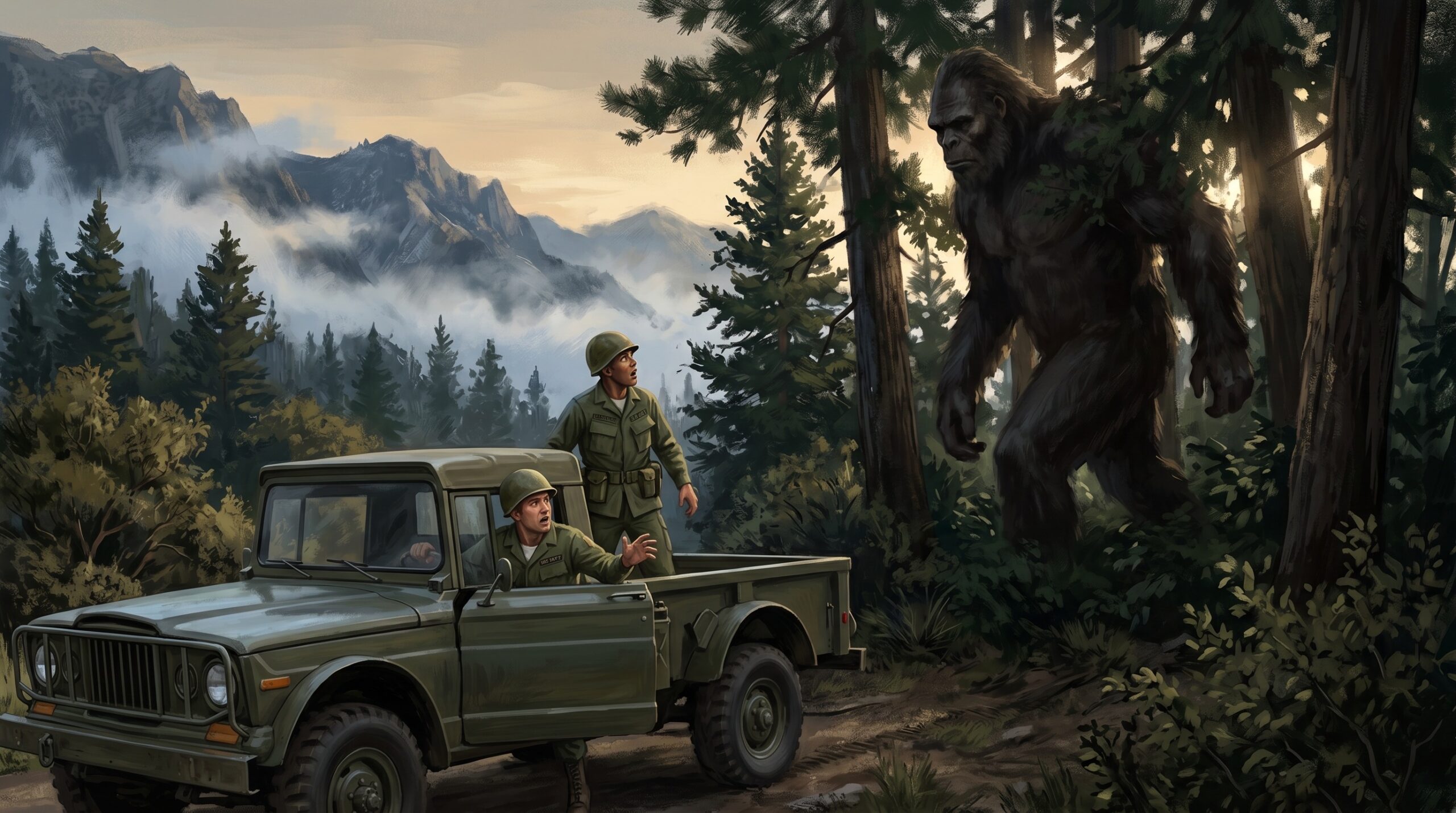
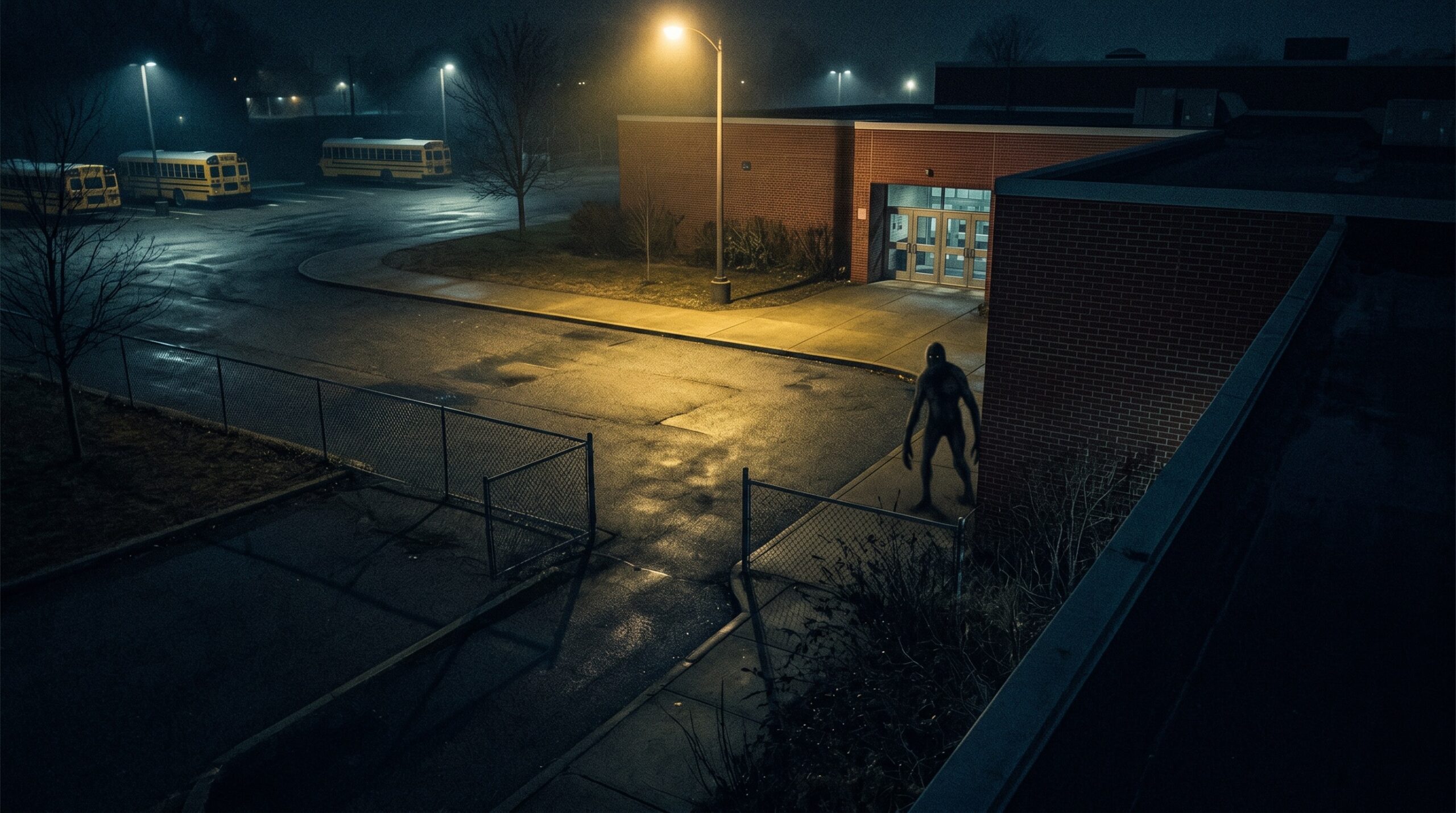
    In 2003, US Marines stationed near Kandahar, Afghanistan, reportedly encountered something that did not fit any category in their training. Near a cluster of remote farms on the edge of the desert, a patrol reported a figure standing upright — roughly 13 feet tall, with red hair, moving in a way that did not look human. The encounter lasted less than a minute. By the time the Marines regrouped and returned to the location, the figure was gone.

    Twenty-three years later, the story is still circulating. And in 2026, it’s getting fresh attention on TikTok and YouTube in a way that suggests the Giant of Kandahar has become, once again, exactly the kind of story the algorithm loves to push. Sources: TikTok search: Giant of Kandahar YouTube: Soldiers vs Giants – The Shocking 13-Foot Encounter in Kandahar.

    The Shape of the Story

    The Kandahar Giant story belongs to a family of military encounter reports that share a rough structure: American troops in a remote location encounter a humanoid figure that is too large, moves too fast, or behaves in ways that don’t match any known animal. The figure vanishes before a full investigation can be mounted. Official records, if they exist at all, are never made public. The story survives through secondhand accounts, forum posts, and periodic waves of social media attention.

    The specific Kandahar version adds a detail that has kept it in rotation for more than two decades: the red hair. Most giant humanoid encounter stories describe figures that are either hairless or covered in dark hair. The red hair in the Kandahar account is unusual enough that researchers who track these stories note it as a distinguishing feature — one that places the report closer to certain religious and mythological traditions than to the typical cryptid sighting pattern.

    Ancient traditions around the world describe tall, powerful beings that were sometimes characterized as protective and sometimes as hostile. The Mesopotamian incantation bowl tradition — in which households placed specially inscribed ceramic bowls beneath doorways to entrap malevolent spiritual entities — speaks to a belief system in which the boundary between the physical and spiritual was permeable, and in which large, hairy humanoid figures could move between them.

    Whether anyone who encountered the Kandahar Giant was thinking in those terms is, of course, impossible to know. What the record shows is that at least one military patrol in Afghanistan in 2003 believed they saw something large enough and strange enough to remember for more than two decades.

    The 2003 Encounter: What the Reports Say

    The story has circulated primarily through military forums and high-strangeness communities since at least the mid-2000s. Details vary somewhat between versions — exactly how many Marines were present, how long the encounter lasted, whether the figure made any sound — but the core elements are consistent across tellings: a very tall figure, a remote location, a brief and confusing interaction, and no physical evidence that anyone has ever been able to produce.

    The red hair has remained the detail that keeps the story distinctive. Military personnel are trained observers. They are not, as a rule, the kind of witnesses who would mistake a large animal for a human figure. The fact that multiple accounts describe the figure as both large and red-haired suggests either that the details are consistent because they come from a shared actual experience, or that the story has been refined over years of retelling to produce the most memorable version of itself.

    The counter-explanation, offered by skeptics and mainstream military analysts, is straightforward: remote duty in a combat zone generates enormous psychological pressure, and unusual perceptual experiences are a documented consequence of sustained stress, sleep deprivation, and hypervigilance. Soldiers in Afghanistan reported seeing things that were not there with enough regularity that the US military eventually issued guidance on what was sometimes called “battlefield stress perceptual phenomena.” The Kandahar Giant, on this reading, is a misidentified stress response, not a genuine encounter.

    Why the Story Has Endured

    For the communities that track these reports seriously, the Kandahar story has persisted because it has structural features that distinguish it from the typical cryptid sighting. The military context provides a built-in credibility boost — soldiers are trained to observe, and their reports carry an institutional weight that anonymous civilian sightings do not. The specific location — Afghanistan, a country with a rich tradition of mythological and folkloric beings — creates an associative field that makes the story feel less random than it might otherwise. And the red hair gives it a distinctive character that keeps it from being confused with other tall humanoid reports.

    Ancient civilizations around the world have built monumental structures, left behind technological artifacts, and developed spiritual frameworks for understanding beings that move between the seen and unseen worlds. The Giant of Kandahar fits into a tradition that includes the Nephilim of the Hebrew Bible, the beings described in the Book of Enoch, and dozens of similar accounts from cultures across the Middle East, Central Asia, and the Mediterranean. Whether those traditions describe literal beings or something more metaphorical is, of course, a matter of deep disagreement. But their existence as a cultural framework means that any encounter with a very tall, unusual-looking figure in this part of the world is going to be interpreted through a rich set of associations.

    TikTok, YouTube, and the 2026 Resurgence

    The Kandahar Giant story has surfaced in 2026 in two distinct formats: short-form video on TikTok and long-form commentary on YouTube. The TikTok versions are typically quick-hit retellings with AI-generated or stylized imagery — the kind of content that lives and dies by its ability to create a visceral first impression in under 60 seconds. The YouTube versions are more detailed, typically featuring someone walking through the evidence as they understand it, with varying degrees of analytical rigor.

    The algorithm has been good to the story. High-strangeness content performs well in the recommendation pipelines of viewers who watch UFO videos, cryptid content, and ancient mystery material. Once a viewer watches one Kandahar Giant video, the platform begins suggesting similar content, creating a feedback loop that keeps the story in rotation even when no genuinely new information has emerged.

    What is new in 2026 is the volume of fresh content being produced. Multiple TikTok creators have generated thousands of views with their own retellings of the encounter, each adding small variations that the algorithm rewards for novelty. The effect is not that the underlying story has changed — it has not — but that the story feels newly present in the information environment in a way it has not felt for several years.

    What Skeptics Say

    The skeptical case against the Kandahar Giant is straightforward: there is no physical evidence. No hair sample, no footprint cast, no photograph, no official record of any kind. What exists is a set of oral accounts that have circulated through forums and social media for more than twenty years, and which have never been attached to any verifiable identity or verified document.

    The military context, which believers cite as a credibility marker, cuts the other way for skeptics: military personnel in combat zones operate under enormous stress, and perceptual disturbances in those conditions are common enough to have generated their own institutional guidance from the US Army. The fact that no physical evidence has ever been produced is consistent with a stress-related misperception, not with an actual encounter with an unknown being.

    The red hair detail has also been noted as a potential indicator of story refinement over time. Oral accounts that circulate for years tend to accumulate distinctive details — details that help distinguish the story from similar ones, and that make it more memorable and more shareable. Whether the red hair was part of the original account or was added during the story’s circulation is not recoverable from the available record.

    What Remains Unknown

    What is genuinely unknown is what, if anything, was seen near Kandahar in 2003. The US military does not typically publish records of anomalous encounter reports of this kind, even when those reports are documented internally. The combination of a remote location, a brief and confusing interaction, and the passage of more than two decades means that the factual record of what happened may be permanently inaccessible — visible only through the stories that have survived in civilian circulation.

    What is clear is that the story continues to find new audiences, and that those audiences bring to it the same mix of fascination and unease that the story has always generated. Whether that says more about what was seen in Afghanistan or more about what human beings need stories to be is a question the evidence available cannot answer.

    Sources: US military encounter reporting (internal records unverified); r/HighStrangeness community discussion; r/cryptids community discussion; TikTok and YouTube content analysis. No verified official documentation of the Kandahar Giant encounter has been publicly released.

  • David Wilcock Death: Why the UFO Writer’s Final Hours Are Already Turning Into Myth

    David Wilcock Death: Why the UFO Writer’s Final Hours Are Already Turning Into Myth

    Some deaths hit the internet like news. Others arrive like an omen. That is what the David Wilcock death story felt like inside UFO and paranormal circles this week: not a quiet obituary, but a shockwave moving through livestreams, Telegram channels, grief posts, and the old half-spiritual, half-conspiratorial language Wilcock helped popularize for years.

    The immediate answer is that David Wilcock is being widely reported as dead, and the reason the story is spreading so fast is that he occupied a strange, powerful place in modern high-strangeness culture: part UFO commentator, part metaphysical performer, part end-times interpreter. A fast-moving Reddit thread announcing the report to UFO audiences, early mainstream pickup from Hindustan Times on the Boulder-area death probe, and even the bare-bones biographical record at Wikipedia’s profile of Wilcock have all fed the same reaction: believers are not just mourning a media figure, they are trying to decode the timing.

    That reaction makes sense once you understand what Wilcock represented. He belonged to the same ecosystem that keeps stories like Amy Eskridge’s last text messages, Jeremy Corbell’s “Sleeping Dog” trailer, and the Steven Garcia missing-person case circulating long after ordinary news cycles should have buried them. In that world, a death never stays only a death for very long.

    Why the news hit the UFO world like a ritual alarm

    Wilcock spent years speaking to audiences already primed to read hidden meaning into timing, symbols, institutions, and sudden reversals. When a figure like that dies, the community reaction follows an almost liturgical pattern: shock first, then tribute, then suspicion, then story-building. Every fragment gets treated like a shard from something bigger.

    That is why the first wave of posts did not sound like conventional celebrity mourning. They sounded feverish, almost apocalyptic. People were not only asking what happened. They were asking what it meant, who benefits from the timing, and whether the loss fits a darker pattern inside a culture already obsessed with suppression, disclosure, and spiritual warfare.

    Why Wilcock mattered to believers in hidden-history media

    For believers, Wilcock was never just another commentator. He was part of the bridge between old New Age metaphysics and modern disclosure culture. He talked like someone trying to weave ET contact, secret power structures, ascension language, and intelligence intrigue into one continuous fabric. You did not have to agree with him to feel the force of that role.

    That role matters now because it changes the emotional shape of the story. If an ordinary podcaster dies, the internet grieves and moves on. If someone long associated with prophecy-coded interpretations of current events dies suddenly, the reaction mutates. Followers start reading the event the same way they once read his broadcasts: as a signal wrapped inside a public incident.

    How online grief turned into suspicion within hours

    The suspicion arrived almost immediately because UFO culture has spent the last two weeks marinating in stories about dead scientists, missing insiders, unreleased videos, and names pulled from the shadows. In that atmosphere, even unrelated tragedies get absorbed into the same imaginative machinery.

    That does not make the suspicion factual. It explains why it was predictable. A community already living inside the emotional weather of hidden wars and suppressed truths was always going to interpret Wilcock’s reported death through that lens. The mood came preloaded.

    What is actually known so far

    This is where the fog has to thin.

    As of now, the strongest public point is that Wilcock’s death is being widely reported and actively discussed across both mainstream and fringe channels. Public reports have described an investigation, but they do not establish a broader conspiracy or prove the event belongs in the same category as the disclosure-linked cases believers keep invoking. The online reaction is real. The mythology forming around it is real. The leap from grief and timing to hidden-cause certainty is still a leap.

    That unresolved gap is why the story will keep growing. Wilcock spent years teaching audiences how to read events symbolically. In death, he is being read that way himself. Whether this becomes a memorial, a cautionary tale, or another sealed room in UFO culture will depend on what confirmed facts arrive next — and on how badly believers want the ending to mean more than the public record can yet support.

  • Joshua LeBlanc’s Tesla Death: A NASA Engineer Working on Nuclear Propulsion Found Burned in Alabama

    Joshua LeBlanc’s Tesla Death: A NASA Engineer Working on Nuclear Propulsion Found Burned in Alabama

    The last confirmed sign of Joshua LeBlanc was that he did not show up for work. A NASA electrical engineer based in Huntsville, Alabama, with a security clearance and a focus on nuclear propulsion projects, LeBlanc had vanished from his home without the usual signs of departure. When his Tesla was found days later on a rural road outside the city, it had burned to a condition that took investigators time to even identify it. What they found inside, once they could get close enough to examine, was LeBlanc’s body. And now his death is part of something larger: a federal review looking at whether there is a pattern connecting scientists connected to classified aerospace programs who have died or disappeared under unusual circumstances.

    Huntsville is not an ordinary city for aerospace research. The Marshall Space Flight Center, nearby classified facilities, and the concentration of contractors working on propulsion, aerospace, and advanced weapons programs have long made it a city where the normal rules of public information have always operated in tension with classified realities. A nuclear propulsion engineer from that world vanishing and then burning inside a Tesla is the kind of story that would generate rumors anywhere. In Huntsville, with its particular history and population of people who understand exactly what kinds of programs operate in the surrounding landscape, the rumors have an additional weight.

    An engineer at the edge of classified propulsion

    Joshua LeBlanc’s professional profile, as it has emerged through early reporting, describes a man working on projects that sit at the boundary between what is publicly acknowledged and what remains classified. Nuclear propulsion research for aerospace applications is not science fiction — it has been a persistent subject of classified development since the Cold War — but it is also precisely the kind of work that intersects with questions about what the government has learned from recovered technologies.

    The intersection is what keeps the conspiracy-adjacent research community focused on cases like this one. Propulsion systems that do not match known human engineering, or that seem to draw on principles not yet publicly understood, have been a persistent feature of the UFO retrieval and reverse-engineering narrative. Scientists working in propulsion research, especially in proximity to programs that are suspected of handling recovered technology, occupy a uniquely sensitive position. They know things that cannot be shared. And in the wrong circumstances, that knowledge becomes dangerous.

    The discovery of the Tesla

    What made LeBlanc’s case initially unusual was the gap between his disappearance and the discovery of his vehicle. He had been reported missing by his family after failing to appear for work — a breakdown in routine that drew immediate attention in a community where people with security clearances are trained to maintain strict schedules and accountability. When the Tesla was eventually located on a rural road, its condition immediately raised questions that investigators have been working to answer: how did it catch fire, what was the timeline, and was LeBlanc alive or dead when the fire started?

    Daily Mail coverage has not fully resolved the questions. The vehicle burned extensively enough that forensic reconstruction has taken time. The body inside was in a condition that required careful forensic work to identify and characterize. And the circumstances — a Tesla, a rural road, a nuclear propulsion engineer — have generated the kind of speculation that follows cases where the institutional context and the personal outcome feel deeply mismatched.

    This is the part of the story that people in the disclosure community keep returning to. A man working on one of the most sensitive categories of aerospace research, with access to classified programs, goes missing and is found dead in a burned vehicle. The official investigation is ongoing. The federal review of similar cases is looking at LeBlanc alongside other scientists. And the pattern that review is examining — multiple researchers with access to classified aerospace or UFO-adjacent programs, dying or vanishing in ways that resist easy explanation — is what keeps the story from settling into ordinary narrative.

    The federal inquiry and what it means

    The decision to review LeBlanc’s death alongside other similar cases — scientists connected to aerospace, propulsion, and UFO-adjacent research who have died or disappeared — represents a shift in how these patterns are being treated at official levels. For years, Orange County Register coverage of disclosure advocates argued that individual deaths were being dismissed individually, preventing anyone from seeing the larger picture. The current federal review is an acknowledgment that the picture may be worth looking at collectively.

    That shift does not prove anything about causation. Natural deaths, accidents, and unrelated circumstances can produce patterns that look significant when viewed selectively. But the fact that the review is happening at all — and that LeBlanc’s name has surfaced inside it alongside other cases that have drawn attention from Carl Grillmair and researchers like Jesse Michels — is what has generated the current intensity of interest in what actually happened in Huntsville.

    What is clear is that a NASA engineer with classified propulsion expertise is dead, that the circumstances do not match the ordinary expectations for how someone in his position and with his background would die, and that the federal review will eventually produce findings that either resolve or deepen the mystery surrounding his death.

  • The Alberta Bigfoot Mystcam Video: Why the Valley Figure Has Cryptid Watchers Locked In

    The Alberta Bigfoot Mystcam Video: Why the Valley Figure Has Cryptid Watchers Locked In

    Bigfoot believers are used to tree lines, blur, and excuses. That is why the new Alberta Bigfoot Mystcam video is hitting so hard. The figure in the viral clip is not hidden deep in branches or passing for half a second between leaves. It is out in the open, moving through a valley as if it does not care whether anyone believes what they are seeing.

    The immediate answer is that the Mystcam Alberta video is a viral cryptid clip showing what appears to be a tall upright figure crossing remote terrain in Alberta, Canada, and it has spread because daylight, distance, and open ground make the footage feel more dramatic than the average Bigfoot reel. The main traction is coming from the widely shared Instagram post describing the Alberta valley figure, supporting chatter in Reddit spaces like this Cryptozoology repost of the same description, and adjacent coverage such as recent reporting on Alberta Bigfoot-style sightings in Canada. None of that proves the clip is authentic. It does explain why believers are staring at it like a possible daylight gift.

    The strongest emotional hook is simple: the thing in the valley does not seem furtive. It seems present. And for anyone who has spent years consuming almost-sightings, that difference feels enormous.

    Why this Alberta clip feels different to believers

    Believers do not only want a creature. They want exposure. They want the kind of moment where the witness does not have the forest to hide behind and the figure does not have darkness to blame.

    That is exactly what the Alberta clip appears to offer. Open terrain changes the psychology of the footage. In the mind of a Sasquatch believer, a distant figure in dense trees can always be dismissed as a person, a stump, or a trick of branches. A distant figure moving with purpose across broad country feels much harder to file away.

    That is why the clip is already being folded into the same online appetite that keeps skinwalkers caught on camera, sea-serpent explanations through oarfish, and even remote-worker mysteries like the Northwest Territories drillers UFO sighting alive for weeks after first contact. Remote landscapes make mystery feel cleaner. The background itself seems to testify.

    What the Mystcam video appears to show

    The clip being circulated with the Mystcam label shows a dark upright form moving through an Alberta valley far from obvious roads or other people. The body language is what keeps believers engaged. The stride looks smooth. The figure does not appear to scramble or flail. It seems to cover ground with the kind of calm that makes viewers project confidence onto it.

    That projection matters. Bigfoot footage is often judged emotionally before it is judged analytically. If a clip feels too performative, audiences dismiss it as costume theater. If it feels detached, almost indifferent to the camera, believers read that as authenticity. The Alberta figure benefits from exactly that mood.

    It also fits an old Canadian Sasquatch fantasy: that the vastness of western wilderness still hides something bipedal, intelligent, and deeply adapted to terrain humans only visit. A figure crossing open ground in Alberta is not just a video. It is the cinematic version of an old frontier suspicion.

    Why Canada remains fertile ground for Sasquatch stories

    Canada’s role in Bigfoot lore is not an accident. Scale helps. So do forests, mountains, oil fields, logging routes, and immense areas where rumor can move faster than verification. Alberta in particular sits in the kind of mental geography cryptid culture loves: rugged enough to feel unknowable, documented enough to make any sighting sound consequential.

    That is why a single clip can explode even when provenance is thin. People already believe the landscape could hold the story. The video only has to feel like a glimpse rather than a case closed.

    What the footage does not settle

    The Alberta Mystcam video may be eerie, but eerie is not the same thing as authenticated. There is still no solid public chain of custody, no confirmed original uploader with verifiable context, and no independent evidence that the figure is anything more than a human, costume, or manipulated clip. Viral reach should not be mistaken for field documentation.

    But the absence of certainty is part of the engine here. The footage lives in that sweet spot where it is exposed enough to feel bold and vague enough to remain arguable. For cryptid watchers, that can be more addictive than proof. A fully solved clip dies fast. A figure walking calmly across an Alberta valley, too far away to pin down and too visible to ignore, can haunt a feed for a very long time.

  • MKUltra Didn’t Stop: The Claim That CIA Mind Control Programs Just Got More Advanced

    MKUltra Didn’t Stop: The Claim That CIA Mind Control Programs Just Got More Advanced

    The CIA’s own internal documents describe experiments that read like the plot of a dystopian novel. LSD administered to unsuspecting subjects. Hypnotic conditioning under interrogation. Drug combinations designed to produce amnesia and behavioral compliance. The program’s name was MKUltra, and it ran from the early 1950s until its apparent cancellation in 1973 — or so the official history says. A persistent community of researchers, declassified document analysts, and people who say they were subjects inside the program have long argued that the cancellation was administrative cover for a program that simply went deeper underground and became more sophisticated. The documents that keep emerging from archives suggest they may not be wrong.

    The latest development is HBO’s announced limited series on MKUltra, which is bringing renewed attention to a story that has oscillated between dismissed conspiracy theory and documented historical atrocity. What the series will dramatize is already well-established in declassified form: the CIA conducted illegal human experiments on a massive scale, using civilians, military personnel, and inmates as test subjects, with the goal of developing techniques for controlling human behavior. What is less clear — and what the HBO project may or may not address — is whether the program continued after 1973 under a different structure, with more advanced tools, and with the same fundamental goals.

    What the documents show

    The declassified MKUltra files are fragmentary by design. CIA director Richard Helms ordered the program’s records destroyed in 1973, apparently to protect its details from the Church Committee investigation that was already examining CIA abuses. What survived was a partial paper trail — enough to establish the scope of the program, the range of techniques it explored, and the identity of some of the researchers and institutions involved.

    The surviving documents show experiments with LSD, hypnosis, sensory deprivation, electromagnetic stimulation, and various drug combinations. They show that the program operated with the involvement of academic institutions, hospitals, and private research firms — many of whom did not fully understand that their work was part of a CIA operation. They show that the program’s goals included not just behavioral modification but the development of techniques for extracting information, implanting suggestions, and creating subjects who could be activated or deactivated without their awareness.

    What the documents do not clearly show — because they were destroyed or never recorded in accessible form — is whether the program achieved its goals, and what happened to the techniques that were developed. That is the space where the conspiracy theory and the documented history overlap. The absence of evidence is not evidence of absence. And the nature of the program — covert, illegal, designed to be undetectable — means that the absence of a complete paper trail is exactly what you would expect even if the program had continued indefinitely.

    The continuation argument

    Researchers who argue that MKUltra continued after 1973 make several interconnected claims. First, they note that the program’s stated goals — behavioral control, information extraction, the development of compliant subjects — are goals that intelligence agencies do not simply abandon because a congressional investigation makes them uncomfortable. Second, they point to documented cases of apparent behavioral modification technology appearing in the decades after 1973, including cases involving public figures whose behavior changed dramatically under unexplained circumstances. Third, they argue that the sophistication of hospice nurses who report visions at the threshold of death, modern surveillance and neurotechnology has created capabilities that the original MKUltra researchers could only have dreamed of — capabilities that would be difficult to justify deploying openly, and therefore would be ideally suited to continuation under covert operational parameters.

    The HBO series is reportedly focused on the historical program rather than contemporary continuation claims. But the attention the project is generating has re-energized the broader community of researchers who argue that the real story of MKUltra is not what happened in the 1950s and 1960s, but what has been happening since — with tools that are exponentially more powerful than the ones the original program used.

    What modern tools change

    The original MKUltra experiments were crude by contemporary standards. LSD was administered in laboratory settings. Hypnosis was attempted with mixed results. Drug combinations produced unpredictable effects. The program was essentially running experiments with the basic science of neurochemistry before the field had developed the tools to understand what it was actually doing.

    Modern neuroscience has those tools now. fMRI allows researchers to observe brain activity in real time with unprecedented precision. Targeted pharmacological agents can modulate neurotransmitter systems with a specificity that 1950s researchers could not have imagined. Optogenetics allows the activation or suppression of specific neural circuits. Brain-computer interfaces are developing rapidly enough that DARPA has an entire program dedicated to neural enhancement and control technologies.

    Each of these capabilities was on the theoretical horizon of MKUltra researchers. Each of them is now a working technology. And each of them, in the hands of a covert program with the same goals as the original MKUltra, would represent an advance that the 1973 investigators could not have anticipated. That is the argument that continuation advocates are making: not that the program definitely continued, but that the capabilities it was trying to develop now exist, and that their existence makes the question of whether they were developed under covert continuation more urgent to answer.

    Why this story persists

    MKUltra occupies a particular place in American conspiracy culture precisely because it is both documented and incomplete. The documented part — that the CIA conducted illegal human experiments on a massive scale — is settled history. The incomplete part — what exactly was done, to whom, with what effects, and whether it continued — is what keeps the story alive. Every new document that surfaces, every new researcher who connects MKUltra to contemporary surveillance capabilities, every HBO project that brings the basic story to a new audience, reinforces the sense that the official history is not the full history. The Great Seal Bug — a Soviet listening device hidden inside a wooden plaque presented to the US Embassy — demonstrates how far intelligence agencies will go to maintain covert access.

    That sense has a specific weight in the UFO and disclosure community, where the question of government capabilities and hidden programs has always been live. People who are already inclined to believe that the government has hidden information about non-human technology are not inclined to believe that it stopped experimenting with human consciousness once the MKUltra files were partially destroyed. The Philip Experiment and other historical attempts to create paranormal phenomena also documented: if the government can hide recovered spacecraft, it can certainly hide a behavioral modification program.

    Whether that reasoning is sound is a separate question from whether the continuation claims are correct. But the persistence of the MKUltra story — and the renewed attention generated by the HBO series — reflects a genuine uncertainty about what the government’s behavioral modification capabilities actually are, and what they have actually been used for, that the declassified archives have not yet resolved.

  • Bluegill Triple Prime UFO Shootdown: Why a 1962 Nuclear Test Is Back in the Retrieval Debate

    Bluegill Triple Prime UFO Shootdown: Why a 1962 Nuclear Test Is Back in the Retrieval Debate

    There is something about the words Bluegill Triple Prime that already sounds like a cover story. It was a real Cold War test, a real flash above the Pacific, a real moment when the United States hurled nuclear fire into the upper atmosphere. But in 2026, believers are dragging the name out of the archive for a different reason: they think the blast may have hidden something far stranger than weapons research.

    That is why the story has broken out of the usual history forums and into UFO feeds again. To the disclosure crowd, Bluegill Triple Prime does not feel like a dead chapter. It feels like one of those sealed rooms in the house — the one everyone passes, the one no one opens, the one that starts making sense only after you read too much about recovery programs, missing footage, and documents that never seem to arrive. The same mood that powers Pete Hegseth’s missing UFO videos deadline is now being projected backward into the Cold War itself.

    The latest push came from Reddit threads and UFO communities treating a revived Bluegill Triple Prime theory as the kind of clue that should never have survived this long. In that version of the story, a nuclear test was not just a test. It was a weaponized response to an object that should not have been there, followed by a recovery effort buried under the language of national defense. Once you are already primed by stories like the same online disclosure cycle repeating itself, the theory lands with real force.

    Why Bluegill Triple Prime suddenly feels important again

    Believers are not treating Bluegill Triple Prime as a random historical curiosity. They are treating it as an origin point — a place where the government may have learned that extreme force, secrecy, and scientific ambiguity could all be folded into one official event. In that frame, the story is not about whether a detonation happened. It is about what else might have been happening under that detonation’s glare.

    That is why the discussion keeps getting folded into larger retrieval lore. People connect it to the same paranoid architecture that fuels Ghost Murmur and other high-tech search mysteries: classified systems, compartmented knowledge, and a public explanation that sounds complete until you stare at it too long.

    Outside the believer ecosystem, the searchable record is still mostly the old Cold War material. Operation Fishbowl is laid out in broad strokes in the Operation Fishbowl overview, while the revived social conversation is easy to trace through the recent Reddit thread pushing the new-evidence angle. The gap between those two worlds — official history and fevered reinterpretation — is exactly where this story now lives.

    What Operation Fishbowl actually was

    Bluegill Triple Prime was one of the high-altitude nuclear shots in Operation Fishbowl, part of the larger Operation Dominic series in 1962. The point, in plain terms, was to understand what nuclear detonations did in the upper atmosphere and near space — how they affected missiles, electronics, communications, and the invisible architecture of modern war.

    That alone is enough to make the event feel uncanny. These were not ordinary tests on ordinary ground. They were experiments conducted in a zone that already lends itself to myth: edge-of-space darkness, military telemetry, radiation effects, interrupted instruments, and after-action reporting that almost nobody outside specialist circles ever reads. Even the broader historical write-up at IFLScience’s summary of Operation Fishbowl reads like the beginning of a conspiracy novel, because the underlying event really was that surreal.

    Add the name Starfish Prime, the electromagnetic effects, the atmosphere of Cold War brinkmanship, and the fact that these tests happened in a period already drenched in UFO rumor, and Bluegill Triple Prime stops feeling like dry archival material. It starts to feel like the kind of file believers assume is missing its most important page.

    Where the shootdown theory comes from

    The modern shootdown theory depends less on one smoking-gun document than on a pattern of interpretation. Believers look at the secrecy of the era, at the willingness to hide strategic programs in plain sight, and at the long afterlife of crash-retrieval claims. Then they ask a question that sounds outrageous until you remember the rest of the disclosure conversation: if officials were already operating in a culture of extreme secrecy, why would an anomalous target be documented plainly at all?

    In that version of events, the nuclear test becomes camouflage. The launch, the detonation, the instrumentation, the military traffic, and the sealed reporting structure all provide a perfect shell around a second story the public was never meant to hear. That is why people tie Bluegill to modern retrieval rhetoric rather than to ordinary historical skepticism. To them, the point is not that the archive is thin. The point is that the archive was built to be thin.

    The theory also survives because it lets believers retrofit meaning into a period already associated with murky state power. The United States was conducting extreme experiments in the sky at exactly the same moment that UFO reports, intelligence anxieties, and national-security secrecy were all swelling. Bluegill Triple Prime offers a stage dramatic enough to hold the theory, which is why the theory keeps returning.

    Why believers think the details do not sit right

    For believers, the strongest part of the story is emotional rather than technical. A classified operation in near space, during the peak years of nuclear and intelligence paranoia, simply feels like the kind of place where something nonhuman could have been engaged and then buried under procedure. It has the right texture. It has the right decade. It has the right official silence.

    The more the disclosure world talks about retrievals, reverse-engineering, and hidden materials programs, the more older events get reread through that lens. Bluegill Triple Prime is now being treated less like a standalone mystery and more like a lost prologue.

    What the record can and cannot support

    The grounded version is narrower. Bluegill Triple Prime was a documented high-altitude nuclear test inside a real military program. Publicly accessible material does support the existence of the test, its Cold War setting, and the broader strangeness of Operation Fishbowl. What it does not currently provide is direct evidence that the event was staged to shoot down a UFO or conceal a recovery operation.

    That does not mean the theory will disappear. Stories like this survive because they sit at the junction of real secrecy and unresolved suspicion. Bluegill Triple Prime belongs to that category now: a real historical event onto which a much bigger hidden-war narrative has been mapped. The official record gives us the blast, the program, and the atmosphere. The retrieval claim remains an interpretation built from implication, timing, and distrust.

    For believers, that will be enough to keep the rabbit hole open. For everyone else, it is enough to say the story is powerful because the setting is real, even if the shootdown claim remains unproven. And that may be why Bluegill Triple Prime refuses to stay buried: it still sounds like the name of something we were never supposed to understand all at once.

  • Mary Reeser and Spontaneous Human Combustion: Why the Ashes Still Disturb People

    Mary Reeser and Spontaneous Human Combustion: Why the Ashes Still Disturb People

    Most fires spread like panic. The Mary Reeser spontaneous human combustion case terrifies people because the fire scene looked selective, almost disciplined, as if the blaze knew exactly where to stay. A woman in a chair, a room not wholly consumed, and remains so reduced that the story immediately escaped ordinary language and entered the dark folklore of human bodies igniting from within.

    The direct answer is that Mary Reeser was a Florida woman whose 1951 death became one of the most famous spontaneous human combustion cases after investigators found her remains burned to an extreme degree inside her apartment. The case is resurfacing because discussion threads such as recent Reddit retellings of the scene, reference pages like the documented Mary Reeser case summary, and local-history reviews such as St. Petersburg’s revisit of the mystery keep introducing the file to people who cannot believe what the room looked like. The case does not prove bodies burst into flame by themselves. It does show why people keep wondering whether this one somehow did.

    The horror lies in the contrast. If the whole apartment had vanished, the story would feel tragic but ordinary. Instead, the fire seemed to choose its center and stop there.

    Why the Mary Reeser case still feels forbidden

    Certain mysteries feel like they are trespassing on rules we rely on to feel safe. Fire is supposed to spread outward. Bodies are supposed to burn the same way furniture burns. Rooms are supposed to tell one coherent story after disaster. Reeser’s apartment has always felt like it told two stories at once.

    That is why the case keeps resurfacing beside other unsettling investigations like the Philip Experiment, the Cincinnati magic mirror, and Antoine’s ghost photo. They all produce the same reader reaction: not simple belief, not simple skepticism, but a brief shiver that reality may have rules we only understand until something humiliates them.

    What was found in the apartment

    Mary Reeser was found in or near a chair inside her St. Petersburg apartment after a fire that seemed shockingly localized compared with the destruction of her body. Reports emphasized how little of the room appeared fully consumed compared with the condition of the remains. That imbalance became the myth engine. Once people heard “body turned to ash, room mostly still there,” the phrase spontaneous human combustion was practically unavoidable.

    Even stripped of exaggeration, the scene remains powerful. A domestic room is supposed to be intimate, even mundane. When that ordinary space becomes the stage for a death that looks chemically impossible to the casual eye, the mind rushes in to supply forbidden explanations.

    Why spontaneous human combustion became the story

    The label stuck because it compressed the nightmare into three words. It suggested the terror came from inside, not outside. That is what makes the case so enduring. A cigarette, a dropped match, or a nearby heat source is frightening. A body becoming its own ignition source is existentially worse.

    The Mary Reeser case arrived at exactly the kind of crossroads where rumor thrives: enough forensic strangeness to ignite the imagination, not enough immediate public clarity to calm it, and a visual aftermath dramatic enough to survive decades of retelling. Once a case enters that territory, it no longer belongs only to investigators. It belongs to culture.

    What investigators believed happened

    The leading grounded explanation has long centered on a more ordinary fire source combined with the so-called wick effect, in which clothing and body fat can allow a body to burn for a long period in a concentrated way while nearby surroundings escape the kind of full-room inferno people expect. That theory does not make the case pleasant. It makes it physically grim rather than supernatural.

    But it also explains why the Reeser file never truly closes in the public imagination. The scientific explanation is plausible, yet the scene remains deeply counterintuitive. Fire behaving in a concentrated, almost surgical way still feels uncanny even when physics is offered as the answer. Maybe this was a tragic, comprehensible combustion event made monstrous by appearances. Or maybe it endures because, even after the lab language arrives, the room still looks like something happened there that the human nervous system was never meant to see calmly.

  • Steven Garcia UFO Missing Person Case: Why the Insider Narrative Keeps Growing

    Steven Garcia UFO Missing Person Case: Why the Insider Narrative Keeps Growing

    The story hits with the same cold feeling every time: a man tied to sensitive work steps out of the ordinary world, then seems to dissolve into a larger pattern before the public even has time to understand his name. That is what is happening with Steven Garcia in UFO circles right now. He is no longer being discussed as just one missing contractor. He is being pulled into a narrative believers think is already crowded with dead scientists, vanished insiders, and people who got too close to a sealed door.

    That is why the case is spreading so quickly. In disclosure culture, a disappearance does not stay local for long if it can be attached to government work, security clearances, or nuclear infrastructure. Once Steven Garcia’s name entered that ecosystem, the mood shifted immediately from concern to pattern recognition. The same audience already primed by the sudden interest in missing Los Alamos-linked figures saw Garcia as another thread in the same dark fabric.

    For believers, the emotional logic is brutally simple: if even part of the wider insider narrative is real, then every unexplained disappearance starts looking less like a tragedy and more like a pressure point. That is also why Garcia’s name is now being spoken in the same breath as the broader dead-or-missing scientist pattern and the shadowy atmosphere around the so-called mysterious scientist network.

    Why Steven Garcia is suddenly everywhere in UFO circles

    The renewed attention comes from a set of reports claiming Garcia, a government contractor, disappeared after working around sensitive defense infrastructure. Once that frame took hold, the case moved beyond missing-person coverage and into a world where every silence means more than it should.

    The core reporting most often cited comes from NewsNation’s segment on Steven Garcia’s disappearance, echoed in local and digital coverage such as Fox 8’s summary of the same insider-mystery framing and Cybernews’ reconstruction of the timeline. On Reddit and adjacent UFO spaces, those reports are not being treated as isolated updates. They are being read like confirmations that the pattern is still expanding.

    What is being claimed about his work and disappearance

    The reporting most often repeated says Garcia was a contractor connected to sensitive government work and vanished in August 2025 after leaving home on foot. That is the factual skeleton the online narrative keeps building around. Some accounts emphasize his reported access to national-security infrastructure, while others focus on the timing — why his disappearance is only now being folded into the larger insider mystery.

    This is where the story becomes powerful for believers. They do not need a dramatic last sighting or a cinematic leak. They need only enough detail to connect Garcia to classified space, then enough silence afterward for suspicion to grow on its own.

    How the case merged with the missing-scientist narrative

    Steven Garcia did not become a disclosure topic because of one definitive revelation. He became one because the online UFO world already had a slot waiting for him. That slot was carved out by previous stories about dead researchers, missing insiders, and whistleblower-adjacent figures whose biographies now get scanned for overlap with defense work, aerospace programs, and compartmented access.

    Once people started placing Garcia inside that frame, the story transformed. A missing contractor became a possible node in a secrecy map. A local disappearance became a national-security mystery. And a name that most readers had never heard suddenly carried the same unease as cases already lodged in the disclosure imagination.

    Why believers think the pattern is too large to dismiss

    Believers argue that one case can be coincidence, two cases can be noise, but a recurring list starts to feel engineered. That is the emotional engine driving the Garcia conversation. Whether or not the underlying pattern is truly coherent, the feeling inside the community is unmistakable: too many names, too many gaps, too much overlap with sensitive work, too little confidence that the public is seeing the whole board.

    It is exactly the kind of story that grows in the space between verified reporting and institutional opacity. If agencies are secretive by design, then any disappearance near that world automatically becomes magnetized by suspicion.

    What is actually documented so far

    The grounded version is narrower than the viral version. Public reporting does support that Steven Garcia has been described as a missing government contractor and that his case has been folded into commentary about a wider cluster of dead or missing figures around secretive work. What has not been publicly demonstrated is a direct evidentiary link between Garcia’s disappearance and hidden UFO knowledge.

    That distinction matters. Right now, the strongest documented layer is the disappearance itself and the fact that commentators have linked it to a larger narrative. The leap from there to a coordinated secrecy operation remains exactly that — a leap.

    Still, stories like this do not spread because they are neat. They spread because they feel unfinished. Steven Garcia now occupies that dangerous territory where real absence and speculative meaning fuse together. Believers see another missing piece. Skeptics see another unproven layer added to a pattern-hungry story. Both sides are still staring at the same emptiness, trying to decide whether it is random, tragic, or the outline of something the public was never meant to track in one place.

  • 300 Million Year Old Wheel Mystery: Why the Ancient Wheel Claim Keeps Returning

    300 Million Year Old Wheel Mystery: Why the Ancient Wheel Claim Keeps Returning

    Some stories never really die because the image at their center is too good to let go. A wheel — or what looks like a wheel — trapped inside rock so old it should predate humanity by an absurd margin is exactly that kind of image. It turns the whole official story of civilization into a trembling wall for one dangerous second. If the wheel is real, then history is wrong. If it is only an imprint, then something still made a shape that should not be there. Either way, the mind does not let it go easily.

    That is why the 300 million year old wheel mystery keeps surging back through alternative-history feeds. It does not arrive as a dry claim. It arrives as an accusation. Look at this, it says. Tell me the timeline is settled. Tell me no one is hiding anything. It belongs to the same emotional universe as ancient artifacts that seem to challenge accepted history, the same whispering corridor where people revisit the giant stone boxes at Saqqara and wonder whether old stonework is really as explained as textbooks insist.

    Why the wheel claim keeps coming back

    The recent revival is mostly social, not archaeological. A large Reddit post pushed the old mystery back into circulation, and from there the claim started moving again through the usual channels: alternative-history pages, short-form video, and the endless out-of-place-artifact ecosystem. Even when mainstream search results are thin, the legend keeps feeding itself because the premise is perfect viral fuel.

    That recirculation matters. Out-of-place artifact stories survive because they are less about one discovery than about a permanent mood of suspicion. Every time one returns, it reactivates the same thought: what if the human story is not just older than we think, but deliberately edited? That is why the wheel claim sits comfortably beside questions raised by pieces like the supposed hidden structures under Giza. These stories do not need universal evidence to spread. They need a vivid image and a public already hungry for hidden history.

    What believers say was found

    The claim usually points to an apparent wheel-like imprint reportedly discovered in a coal seam near Donetsk. In believer retellings, the age of the surrounding material is what gives the story its force. Coal suggests extreme age, and extreme age makes the shape feel catastrophic for accepted history. The legend then expands from there: perhaps an ancient technological civilization existed long before ours, perhaps catastrophic resets wiped it out, perhaps only fragments remain, perhaps those fragments are still being quietly explained away.

    The out-of-place-artifact world gives the story a permanent home. Overviews like the general OOPArt tradition help keep it alive, while retellings such as HowandWhys’ explanation of the claim and MysteryLores’ summary of the phenomenon keep giving new audiences a way in.

    Why out-of-place artifacts grip people so hard

    Because they compress an entire worldview into one object. If a wheel exists where no wheel should exist, then maybe civilization has been reset before. Maybe technological cultures rose and vanished. Maybe the official timeline is not a timeline at all but a cleaned-up story told after the fire. That is the seduction.

    The wheel mystery also carries a special psychological punch because wheels are unmistakably human-coded. A strange stone shape is one thing. A near-mechanical circle hidden in deep geological time is another. It feels intentional. It feels manufactured. It feels like a message from a civilization buried so deep that only a trace remains.

    What critics and geologists point to instead

    The grounded response is less cinematic. Critics usually argue that the alleged wheel is poorly documented, repeatedly recycled through secondhand retellings, and vulnerable to pattern recognition. Geological formations can create striking shapes, photos can flatten context, and internet retellings tend to harden uncertainty into certainty very quickly.

    Just as importantly, the public record around the find is not strong enough to establish the claim at the level believers often imply. There is no widely accepted scientific confirmation showing a manufactured wheel embedded in 300-million-year-old rock. The story survives far better in retellings than in formal documentation.

    Why the story still feels immortal

    And yet it will not go away. That is because the wheel is not just a claim anymore. It is a symbol. It stands for the possibility that history is thinner than it looks and that deep time might still be holding evidence of something civilization is not ready to absorb. Even if the original evidence remains weak, the emotional architecture of the story is almost indestructible.

    The best grounded answer is simple: there is no established evidence that a real manufactured wheel from 300 million years ago has been verified by mainstream science. What exists is a durable and highly shareable out-of-place-artifact legend built around a wheel-like formation and a much larger hunger for suppressed antiquity.

    But that answer is not the end of the story. It is the reason the story keeps returning. If the evidence were airtight, the mystery would be settled. If it were laughably bad, the mystery would vanish. Instead it remains in the unstable middle ground where alternative history thrives — just plausible enough in image, just weak enough in proof, and just haunting enough to make people wonder whether deep time is hiding more than bones and stone.

  • Lafferty Brothers Mormon Cult Murders: Why the Case Still Feels Like Prophecy Gone Feral

    Lafferty Brothers Mormon Cult Murders: Why the Case Still Feels Like Prophecy Gone Feral

    Some cult stories disturb people because of what a leader did. The Lafferty brothers story is worse than that. It disturbs people because it feels like revelation itself turned rabid inside an ordinary family and walked straight into a house with a knife. There is no monster costume here, no desert compound mythology grand enough to create emotional distance. Just the terrifying idea that once private prophecy becomes absolute, blood can start to look like obedience.

    That is why the case is surging through cult-watch communities again. It is being revisited not just as true crime, but as a warning about what happens when certainty hardens into command. The same audiences that locked onto Samuel Bateman’s false-prophet world and still return to Heaven’s Gate as an afterlife cult relic are now dragging the Lafferty story back into daylight.

    What grips people is not merely the violence. It is the atmosphere around it — a world where religious language becomes private code, where family rebellion becomes cosmic war, and where a man can persuade himself that murder is not murder if heaven signed the order. That is also why the case sits so close to other cult nightmares, from charismatic spiritual movements that still unnerve outsiders to modern documentary-driven resurgences that turn old crimes into fresh acts of cultural panic.

    Why the Lafferty brothers are back in the feed

    The immediate trigger is social recirculation. Reddit cult communities and history accounts have been resurfacing the case, often presenting it as one of the bleakest examples of prophecy mutating into family annihilation. The algorithmic afterlife of the story is powerful because it already has everything the internet amplifies: religion, extremism, murder, secrecy, and a wider culture still trying to understand Mormon fundamentalist splinter worlds.

    Most readers who arrive through that route quickly hit the same reference points: the legal background in State v. Lafferty, the broader cultural framework around Under the Banner of Heaven, and the wider context of Mormon fundamentalism. Those sources do not make the case less chilling. They make it more legible.

    What happened in the murders

    The essential facts are horrifyingly clear. In 1984, brothers Dan and Ron Lafferty murdered Brenda Lafferty and her infant daughter, Erica, in Utah. The killings were tied to extremist religious beliefs and to the brothers’ conviction that they had received divine revelation demanding the deaths.

    That is the point where the story stops being merely bizarre and becomes spiritually radioactive. The murders were not framed by the perpetrators as ordinary revenge or rage. They were placed inside a private sacred logic. Once that happens, the crime becomes more frightening because it no longer obeys normal human restraint. It believes itself justified beyond appeal.

    How revelation language became a weapon

    This is why the Lafferty case still matters. It shows how violent certainty can hide inside language that sounds holy from the outside. The words revelation, commandment, purification, obedience — once detached from accountability — can become tools of psychological and moral isolation. The brothers did not need a giant organization around them in order to become dangerous. They needed a worldview in which contradiction itself looked evil.

    That is also why the case continues to fascinate cult-watchers. It sits at the edge between organized high-control religion and freelance apocalyptic certainty. It is not just about a church or a sect. It is about what happens when revelation becomes self-authenticating and no outside reality check is allowed to survive.

    Why the case still haunts cult-watchers

    Because it feels replicable. The details are specific, but the mechanism is universal: grievance, purity, cosmic mission, a shrinking circle of trusted voices, and then a moral inversion so severe that cruelty starts to feel like righteousness. That pattern is not ancient. It is not safely buried. It keeps reappearing in new forms, which is why old cases like this keep being rediscovered whenever modern cult anxiety spikes.

    The Lafferty story also lingers because it ruins the comforting idea that extremism always looks theatrical from the outside. Sometimes it looks domestic. Sometimes it uses scripture instead of slogans. Sometimes it grows inside a family before the wider world even realizes what it is becoming.

    What the historical record clearly establishes

    The grounded record is solid on the central facts. The Lafferty murders were real, the victims were Brenda Lafferty and her infant daughter, and the case involved extremist religious beliefs tied to Mormon fundamentalist ideology. The brothers’ acts were not part of the FLDS organization itself, though the story is often discussed alongside broader Mormon-fundamentalist and polygamist movements because of overlapping theological terrain and social atmosphere.

    What matters most is that the case does not need embellishment. The true record is already grim enough. The social-media revival is real, and the case continues to resonate because it captures something people fear but struggle to name: the moment belief stops being a guide and becomes a weapon.

    That is why the Lafferty brothers still feel dangerous in the cultural imagination. Not because the mystery is unresolved, but because the mechanism is painfully clear. Prophecy, once severed from reality and restraint, can become its own private permission slip to do the unthinkable — and that possibility never stays safely in the past for long.