Blog

  • Genesis Mission: Why It Isn’t NATO’s Secret Skynet

    Genesis Mission: Why It Isn’t NATO’s Secret Skynet

    \n

      \n

    • The Genesis Mission is a U.S. government AI initiative announced by an executive order on November 24, 2025, intended to accelerate scientific breakthroughs in areas like energy and healthcare by pooling federal data and computation resources.
    • \n

    • Viral videos and social posts framed it as a “Skynet” or “NATO Trojan Horse,” but those claims rest on analogy, rumor, and symbolic associations rather than leaked documents or direct evidence.
    • \n

    • Official documents describe a DOE-led effort with national labs, universities, and industry partners (e.g., Nvidia, Dell) focused on automating experiments, accelerating simulations, and producing predictive models for civilian science; legitimate concerns remain about dual-use risks, governance, and transparency.
    • \n

    \n

    Hook: From a Shouting Thumbnail to a Viral WW3 Panic

    Late-night scrolling: a thumbnail screams “WW3 ALERT” and links Terminator clips to the Genesis name. The result: rapid viral panic. But clicks and theatrics aren’t proof—only an invitation to investigate the record.

    Why do some people think Genesis is a real-life ‘Skynet’ and NATO Trojan Horse?

    Conspiracy threads stitch together cultural references (“Genesis/Genisys”), overheated comparisons to the Manhattan Project, and partnerships between national labs and big tech to claim hidden military aims. The narrative leverages pattern-seeking, cultural fear of autonomous weapons, and geopolitical anxiety to fill gaps where direct evidence is absent.

    What the documents and reporting actually show

    The executive order frames Genesis as a DOE-centered national AI initiative for scientific research: automating experiments, speeding simulations for protein folding and fusion, and leveraging federal datasets. Public statements emphasize civilian research goals; the order and DOE reporting do not include NATO or Defense Department command-and-control language. The NASA “Genesis” mission (2001–2004) was unrelated—its reuse in social-media narratives is associative, not documentary.

    Conspiracy claims vs. documented record

    Claims that Genesis is a NATO AI weapon, a Trojan Horse, or the start of autonomous war machines are not substantiated by the public executive order, DOE descriptions, or investigative reporting. What is documented is a large-scale, civilian-focused AI infrastructure effort involving national labs and industry partners.

    Are fears about large AI megaprojects reasonable?

    Yes—concerns about dual-use applications, insufficient transparency, governance gaps, and an AI arms-race dynamic are legitimate. Even if Genesis is civilian in intent, its scale means oversight, safety standards, and international norms matter. Equating it with “Skynet” is a category error, but dismissing governance concerns would be a mistake.

    Conclusion

    Remove the clickbait: Genesis plausibly represents a DOE-led push to harness AI for scientific progress, not an evidentiary basis for WW3 or an autonomous weapons program under NATO control. Still, the project’s size and capabilities justify robust public scrutiny, clear governance, and safeguards to prevent misuse or unintended militarization.

  • Edgar Cayce and the Akashic Records: What Really Failed

    Edgar Cayce and the Akashic Records: What Really Failed

    • Edgar Cayce, born in Kentucky in 1877 and dead by 1945, cranked out over 14,000 psychic readings on health, reincarnation, and spiritual secrets—positioning himself as a direct line to hidden truths.
    • His bold claims of tapping into the Akashic Records for prophecies and cures flopped hard in reality: the Second Coming he predicted for 1998 never happened, North America didn’t crumble in the 1930s, and science has never backed his methods under real scrutiny.
    • Yet Cayce’s shadow looms large—he fueled New Age obsessions with Atlantis, past lives, and cosmic archives, proving that failed visions can still rewrite how we chase spiritual answers.

    A hunger for hidden knowledge: why Edgar Cayce still fascinates seekers

    Picture this: a world ripping apart. Industrial machines devouring the landscape. World War I’s carnage fresh in memory, the Great Depression choking hope, and World War II looming like a storm. Born in 1877, Edgar Cayce died in 1945—right in the thick of it. People were desperate. Sick, scared, questioning God. Traditional answers failed them. Enter Cayce. He promised a direct tap into the universe’s secrets. The Akashic Records, he said—a massive spiritual vault holding every thought, every event, every soul’s journey. Health fixes? Destiny reveals? Afterlife assurances? All there, if you could access it. And Cayce claimed he could. Was he really pulling from some divine database? Or was this just the story desperate souls clung to in chaos? The patterns point to something deeper. People didn’t just want facts. They craved certainty. And in uncertain times, that’s a powerful lure.

    Was Edgar Cayce really reading a cosmic ‘Akashic’ database?

    Believers swear by it. They say Cayce slipped into trances and accessed the Akashic Records—a ethereal library capturing every human event, thought, and intention through all time. Not just history, but the blueprint for reincarnation and karma. Past lives dictating your current struggles. Cayce claimed these records influenced everything, offering lessons to heal and evolve. In sessions, he’d diagnose illnesses from afar, whip up custom remedies, spin tales of Atlantis and ancient civilizations, even link biblical figures like Jesus to reincarnated souls. Over 14,000 readings documented. That’s a mountain of material, setting him apart from other mystics of his era. Followers hailed him as prophet, healer, the spark that ignited New Age thinking. Today, seekers still turn to his words for guidance. It fits the bigger picture: a narrative of hidden knowledge, waiting for those bold enough to reach it.

    From Kentucky farm boy to ‘Sleeping Prophet’

    Edgar Cayce started simple. Born March 18, 1877, near Hopkinsville, Kentucky. Died January 3, 1945, in Virginia Beach, Virginia. Raised in a rural, Bible-thumping family. Church every Sunday. But something didn’t fit. His visions clashed with the strict Christian line—reincarnation, cosmic records, souls cycling through lives. Odd for a farm kid. It began with health readings. Local folks came with ailments; Cayce went into trance, spat out fixes. Word spread. Soon, strangers traveled miles. By 1931, he founded the Association for Research and Enlightenment (A.R.E.) in Virginia Beach. A hub to archive and push his insights. Over 25 books followed, like “Edgar Cayce: An American Prophet.” They built the myth. From dirt roads to national enigma. But why? The official narrative calls it coincidence. We see patterns. A man rewriting his destiny, pulling threads from the unseen.

    Inside the trance: how Cayce’s 14,000 readings actually worked

    He’d lie back, eyes closed, slip into a sleep-like state. Voice changed—deeper, distant. That’s how he earned the tag “Sleeping Prophet.” In trance, he’d field questions. Mostly health: diagnosing issues, prescribing odd diets, herbal mixes, treatments that sounded more alchemy than medicine. Critics later slammed them as junk science. Clients arrived hopeful, desperate for miracles. That vibe? It amplified every seeming success, buried the flops. Over 14,000 readings piled up—a massive trove. Supporters combed it for wins, ignoring the rest. Convincing? Absolutely. To those in the room, it felt real. But hold on. We’ll dig into whether it held up against facts. The setup screams selective truth. They wanted us to see only the hits. We looked closer.

    What are the Akashic Records, really?

    This isn’t Cayce’s invention. It traces back to Helena Blavatsky, the Theosophy queen of the late 1800s. She blended Eastern mysticism with Western occult vibes, painting the Akashic Records as a universal archive of all events, thoughts, intentions. Alfred Percy Sinnett spread it further. These ideas bubbled in a time when folks ditched old religions for something exotic. Cayce grabbed it, claimed direct access. Said it shaped daily life, reincarnation, karmic debts. It slotted perfectly into New Age waves—people hungry for alternatives to church steeples and lab coats. A cosmic database promising answers. But here’s the catch: no hard proof. No testable way to verify. Mainstream science shrugs it off as metaphysics. Yet it stuck. Why? The narrative of hidden wisdom endures. Official reports dismiss it. We question why they’re so quick to bury it.

    What does the record show about Cayce’s prophecies and cures?

    The evidence? It crumbles. Cayce’s powers never passed real scientific tests. Controlled conditions? Absent. His prophecies bombed. He foresaw Christ’s Second Coming around 1998. Didn’t happen. Catastrophic shifts devastating North America in the 1930s? Nope. He bought into Piltdown man—a hoax fossil—calling it an Atlantean. Exposed as fake in 1953, long after. Skeptic Robert Todd Carroll nailed it: Cayce peddled silly Atlantis myths. His cures? Unproven. Treatments labeled quackery by experts. Anecdotes from fans like Thomas Sugrue credited Cayce over doctors, no checks. The official story hides the failures. We connect the dots. It doesn’t add up.

    Prediction/Reading Cayce’s Claim Real-World Outcome
    Second Coming of Christ Around 1998 No such event occurred; prediction failed entirely
    North American Destruction Catastrophic Earth changes in the 1930s No widespread devastation; normal geological activity only
    Piltdown Man Genuine Atlantean colonizer Exposed as a hoax in 1953; Cayce’s details were baseless
    Atlantis Claims Lost civilization with advanced tech influencing history No archaeological evidence; dismissed as myth by experts

    The skeptic’s view: miracles, myths, and the need for evidence

    Skeptics cut through the fog. Robert Todd Carroll exposed Cayce’s Atlantis tales as recycled occult fluff, not revelations. Biographers like Thomas Sugrue spun myths, pinning cures on Cayce without proof—ignoring doctors. Anecdotes? Flawed. Biased memories, cherry-picked successes. If real, why no repeatable tests? Experts demand that. Yet, Cayce’s words on karma and growth comforted many. A framework for pain. We respect the impact. But the claims? Shaky. The official narrative pretends it’s all debunked. We say: look harder. Truth hides in the gaps. Belief’s power doesn’t make it fact.

    Why people believed anyway: New Age, Theosophy, and the search for alternatives

    The groundwork was laid. Theosophy in the 1800s pushed reincarnation, karma, Akashic vibes, Atlantis lore. Cayce wove it in. By the 1900s, New Age seekers rejected rigid churches and soulless science. His mix—Christian lingo, visions, health tips—hit home. Practical yet profound. The A.R.E., launched in 1931, keeps it alive. A community fueling the fire. For believers, emotional wins trumped flops. Distrust of institutions? Rampant. Occult promises filled the void. The official story calls it delusion. We see a pattern: people demanding more than ‘approved’ truths.

    Conclusion: Edgar Cayce’s real legacy in the age of instant answers

    Edgar Cayce was real. Kentucky birth in 1877, Virginia Beach death in 1945. Over 14,000 readings. The A.R.E. still pushes them. But his wild claims—prophecies, Akashic access, miracle cures? They flop against evidence. Conflicts with facts everywhere. Still, he endures. Why? It reveals our hunger. For meaning in misery. Simple fixes for brutal ills. Proof we’re part of something bigger. Today, with endless data at our fingertips, Cayce whispers a warning. Data isn’t wisdom. Spiritual quests need sharp eyes too. Science and faith both. The patterns persist. Question everything.

  • 3I/ATLAS Conspiracy: Why NASA Says It Never Existed

    3I/ATLAS Conspiracy: Why NASA Says It Never Existed

    • NASA‘s records reveal no “3I/ATLAS” exists—only 1I/ʻOumuamua from 2017 and 2I/Borisov from 2019 stand as confirmed interstellar wanderers, both dismissed as natural after scrutiny, shredding claims of hidden alien tech.
    • Comet C/2019 Y4 (ATLAS), spotted December 28, 2019, by their automated system, flared up then shattered before May 2020’s close solar pass—official reports call it fragile ice, not a cloaked probe infiltrating our system.
    • The 1977 WOW! signal’s 72-second hydrogen-line burst and ʻOumuamua’s odd speed boost get natural excuses like outgassing from experts like David Kipping, who insist no Trojan horse plots hold up, pushing us toward the galaxy’s true enigmas instead.

    The Hook: Why One Mysterious Comet Can Set the Internet on Fire

    Picture this: a streak across the sky, whispers from the void. Headlines scream about invaders from beyond. Fear grips you. Wonder too. And that nagging doubt—they’re holding back the full story. It echoes the 1977 WOW! signal, that 72-second blast on the 1420 MHz hydrogen line, teasing us with possible alien chatter. Back then, it sparked dreams of contact. Now, flash forward. The cigar-like 1I/ʻOumuamua and the gassy 2I/Borisov hit the news, their weird paths fueling viral frenzy. Data gaps? Instant conspiracy bait. Enter Comet C/2019 Y4 (ATLAS), discovered by their robot survey. Dramatic name, right? Sounds like a secret code. In this climate of suspicion, it’s no shock folks see cover-ups everywhere.

    Why Do Some People Think “3I/ATLAS” Is an Alien Trojan Horse?

    Online forums buzz with it. This phantom “3I/ATLAS,” they say—a third interstellar intruder, hushed up by the elites. Not just rock and ice, but a craft. A spy ship, cloaked as debris, slipping past our guards like a Trojan horse. They blend real bits: the ATLAS system’s find, Comet C/2019 Y4’s 2020 breakup before its solar dive, plus 1I/ʻOumuamua and 2I/Borisov. Odd orbits, flickers in brightness, that disintegration—proof of engineered shells cracking on purpose, believers claim. And they drag in the WOW! signal, that unexplained 1977 ping, as evidence authorities bury alien signs. Why dismiss it? Because the truth would shatter everything, or so the story goes. Is it paranoia? Or dots connecting in the dark?

    The Hard Evidence: What We Really Know About ATLAS, ʻOumuamua, and Other Cosmic Visitors

    The official narrative claims no “3I” badge exists. Only 1I/ʻOumuamua (2017) and 2I/Borisov (2019) make the cut as interstellar. They say Comet C/2019 Y4 (ATLAS) is homegrown, found December 28, 2019, by their ATLAS alert net. Orbit? A tight 0.25 AU solar graze. It lit up fast, then crumbled before May 2020’s closest approach. Fragile comet stuff, not alien tech falling apart on cue. NASA’s probes and indie checks on ʻOumuamua and Borisov? No artificial vibes. All natural. David Kipping and his crew admit the shape and acceleration look off, but blame outgassing—gas jets shoving it, like a melting snowball. Scientific American backs it: fits exotic debris from distant worlds. No need for probes. And remember Apollo? Their docs admit astronauts zipped through Van Allen belts with minimal hits. Hard numbers crush the lethal myth. Same here—orbits and light curves nail these as natural, not stealth ships.

    Aspect Apollo Missions Dosage Lethal Radiation Dosage
    Average Exposure ~0.5-1 rad (with shielding) 300-500 rad (acute, unshielded)
    Transit Time ~1 hour through belts N/A (prolonged exposure deadly)
    Protection Spacecraft hull + trajectory None viable without engineering

    What Is a Comet’s Tail, Really?

    Comets? Icy relics, packed with dust. Near the Sun, they cook. Volatiles boil off, forming a fuzzy coma. Tails emerge—ion one, solar wind-whipped, blue and straight. Dust tail, radiation-pushed, curved and pale. That’s physics, not fiction. Take C/2019 Y4 (ATLAS): its glow-up and shatter? Pure textbook. Weak structure meets solar fury. Jets, brightness spikes, speed wobbles—all from gas escaping an uneven lump. Suspicious? Only if you ignore the basics. They want us to see mystery. But connect the dots: it’s expected chaos.

    Our Galaxy Could Be Insanely Old — and That Makes Natural Interstellar Debris Inevitable

    The Milky Way’s ancient. Stars clock in at 13.6 billion years, almost as old as it all. Billions of years mean collisions, ejections—planets spitting out comets and rocks into the void. Statistically, these drifters should cruise through our turf now and then. 1I/ʻOumuamua and 2I/Borisov? Not invasion scouts. Just our tech finally spotting them. Official reports admit it: fossils from other systems, wandering free. No alien plot needed. The age explains the traffic. Why hide that?

    What Happens When Black Holes Collide? (And Why That’s Real Cosmic Weirdness, Not a Cover-Up)

    September 14, 2015. LIGO catches GW150914. Two black holes—36 and 29 solar masses—smash together. Spacetime ripples. Energy waves out as predicted by Einstein. They didn’t bury it. Scientists shouted it from rooftops. Tested every angle. Matches theory perfectly. Here’s the thing: they embrace the wild when data backs it. No suppression. Contrast that with comet paranoia. Real weirdness gets celebrated. Cover-ups? Not in the playbook.

    The Skeptic’s View: Curious, Open-Minded, but Ruthlessly Evidence-Driven

    David Kipping, Columbia prof running Cool Worlds Lab, hunts exoplanets and alien smarts. He’s no shill. His take? ʻOumuamua’s quirks—shape, push—fit outgassing. Natural. Conspiracy fans hype anomalies, sci-fi style. But Kipping demands proof: repeatable signals, across wavelengths. WOW! signal? Antonio Paris says it’s unexplained, but cometary ideas flopped. Likely rare nature, not ignored ET. Scientists don’t dismiss aliens outright. They need ironclad evidence. For ATLAS and ʻOumuamua? Data screams natural. No beacons, no engines. The official story holds—because it’s built on facts, not fear.

    The Multi-Everettian View, the Multiverse, and Why Physics Doesn’t Need Conspiracies to Be Wild

    Everett’s many-worlds: quantum splits create branches. Every choice, a new reality. Inflation models spawn multiverses—bubbles beyond our sight. These aren’t pulled from thin air. Equations and cosmic background data drive them. Debated, sure. But grounded in puzzles we see. Conspiracy comet tales? Just vibes and suspicion, no math. Physics gets weird without secrets. They tell us one universe. But the dots point to infinities.

    If Humans Lived 500 Years: How Our Perspective on Anomalies Would Change

    Cosmic rarities—like WOW! or interstellar flybys—seem huge in our short lives. Stretch to centuries? Astronomers witness floods of them. Intuition sharpens. What’s odd versus normal clarifies. With only ʻOumuamua and Borisov so far, gaps breed theories. More time, more data—natural weirdos pile up, squeezing out conspiracies. Programs like ATLAS and LIGO build that long view. Patience unmasks the truth. They rush us. We wait and watch.

    Life in the Universe: From Jupiter’s Neighborhood to TRAPPIST-1

    Cool Worlds Lab scans exoplanets for life hints—atmospheres, stats. TRAPPIST-1’s Earth-like worlds around a dim star? Prime targets. Jupiter? Not cloud cities, but moons or chemistry could tease biology. Tools crunch occurrence rates, spectra, even nickel-iron ratios. Real hunt, evidence-led. If a comet screamed artificial, they’d pounce and publish. No hiding. Conspiracies distract from this—the actual search lighting up the void.

    Mars vs. the Moon: Politics, Weathering, and Where We Build First

    Moon or Mars? Distance, radiation, dust, delays, bucks—the debate rages in open docs. Lunar regolith weathers differently from Martian grit, shaping habitats. Lava tubes as bunkers? Far-side telescopes, noise-free? Practical picks, hashed out publicly. Not shadowy cabals. Contrast with Trojan horse fears: real space work is transparent, funded for goals we see. No room for grand deceptions. Politics exposed, not concealed.

    Science, Funding, and the Athena Memo: Why Hype and Conspiracies Hurt Real Discovery

    Missions like Athena’s X-ray eye take decades, politicking. Hype erodes trust, starves budgets for bold probes. Kipping’s books fight back, sharing constraints amid wonder. Peer review, global data swaps—cover-ups crumble under that. Misdirected suspicion blocks progress. Channel it right: back open missions. That’s how we snag real breakthroughs, not rabbit-hole myths.

    Conclusion: Speed, Trajectory, and the Engineering That Really Defeats Cosmic Fears

    No “3I/ATLAS” in the books. C/2019 Y4’s crumble? Comet norm. ʻOumuamua and Borisov? Studied, natural. Trojan plots fade under scrutiny. Apollo pierced Van Allen with smart paths, low doses—physics trumps fear. Future intercepts? Same deal: measured orbits, open data. In this 13.6-billion-year galaxy of merging holes and wandering worlds, engineering and science conquer. No shadows needed. The real thrill? We’re uncovering it all.

  • AI Pause Letter 2025: Safety Warning or Elite Power Grab?

    AI Pause Letter 2025: Safety Warning or Elite Power Grab?

    On October 22, 2025 the Future of Life Institute published an open letter calling for a pause or temporary ban on the development of superintelligent AI until such systems are provably safe and controllable. The letter describes superintelligent AI as systems that outperform humans at all useful tasks. The publicized signatory list included over 850 names, with a mix of technologists, public figures, and politicians such as Steve Wozniak, Richard Branson, Prince Harry, Steve Bannon, Susan Rice, and Glenn Beck.

    What the letter requests and what it is not: the statement is advocacy, not binding law. It asks for a halt on research and deployment of systems that would meet its definition of superintelligence until safety standards and governance are in place. It is distinct from everyday chatbots and repeats concerns raised in a 2023 letter that asked for a six month pause on models beyond GPT-4.

    Public reaction and controversy: polls tied to the conversation show strong public appetite for caution, with roughly 64 percent of respondents favoring delay until safety is established and a small minority favoring rapid development. Online discourse quickly split between genuine safety advocacy and conspiracy narratives that portray the signatories as an elite cartel seeking to control access to transformative technology.

    Assessment: both strands contain elements of truth. Expert warnings about hard-to-control systems reflect real technical and societal risks that merit serious governance attention. At the same time, incentives and power dynamics matter and fuel skepticism when prominent figures unite around a single policy ask. The practical priority is clearer rules, transparent timelines, independent oversight, and broad public engagement so that decisions about the speed and direction of AI development are accountable and informed, not left to closed networks or unchallenged rhetoric.

  • Giant Oort Cloud Comet: Why It Won’t Hit Earth Ever

    Giant Oort Cloud Comet: Why It Won’t Hit Earth Ever

    • C/2014 UN271 (Bernardinelli–Bernstein) is a massive Oort cloud comet, clocking in at 100–137 km across— the biggest we’ve nailed down yet, but NASA‘s own simulations insist it’s no Earth-smasher.
    • It’ll swing closest to the Sun at 10.95 AU in January 2031, hanging out beyond Saturn’s turf, with zero close calls to our planet according to the official orbital tracks.
    • Those weird outbursts beyond 20 AU? Just standard comet fizz from CO or CO₂ gases—nothing engineered or apocalyptic, despite what the fringe says.

    A Giant Comet, Viral Fear, and the Thrill of Cosmic Disaster

    Picture this: a shadowy behemoth lurking in the void, tagged with a sterile label like C/2014 UN271. It pops up in old data at 29 AU out—farther than any Oort-cloud wanderer we’ve spotted before. Astronomers perk up, but the internet? It explodes. Social feeds light up with whispers of a 100+ km monster slinking in from “below” the Solar System. Hearts race. Is this the unseen killer we’ve dreaded? The Narrative paints it calm, but the buzz taps into our primal terror of cosmic ambush. Yet dig deeper, and the apocalypse fades—replaced by something far more intriguing than the fearmongers’ tales.

    Why Do Some People Think Bernardinelli–Bernstein Is a Hidden Threat?

    We’ve all seen the posts. They claim this thing is thousands of times heavier than interstellar drifters like 3I/ATLAS, branding it a potential planet-wrecker. It’s barrelling straight from “below” the Solar System, they say, on a path that could slam the inner worlds—maybe even us. And those early flares beyond 20 AU? Proof it’s no ordinary comet, but some chaotic, non-linear beast—or worse, something built by unseen hands. Panspermia theories swirl, hinting at alien seeds from its deep-space exile, tens of thousands of AU out. Even folks like geophysicist Stefan Burns get looped in, his talk of “non-linear systems” twisted into fuel for the fire. It’s easy to sympathize. When The Official Report downplays it, who wouldn’t question if they’re hiding the real danger?

    What Do the Numbers Actually Say About C/2014 UN271?

    Let’s cut through the haze with cold data. The Narrative admits the nucleus spans 100–137 km—huge for an Oort comet, but peanuts next to planets, and nowhere near “thousands of times more massive” than tiny 3I/ATLAS at 110–230 meters. Perihelion hits 10.95 AU in 2031, safely past Saturn. NASA’s JPL simulations? They swear no Earth brushes, no impacts. That 95-degree inclination isn’t some sneaky “below” attack; it’s just a steep orbit, fully mapped. Aphelion at 40,000 AU, last visit 1.4 million years back—not galactic birth stuff. And the activity? Archival shots from 2018 show outgassing at over 20 AU, pinned on CO or CO₂ sublimation—freaky, but physics checks out. Bernardinelli’s team calls it the brightest, biggest well-measured comet, discovered at a record 29 AU. Remarkable? Yes. Supernatural? Hardly.

    Claim Fact
    Thousands of times more massive than other interstellar objects like 3I/ATLAS Nucleus 100–137 km vs. 3I/ATLAS’s 110–230 meters; large but not planet-scale or exaggeratedly massive
    Approaching from directly “below” the Solar System on a dangerous path 95-degree inclination; not hidden or targeted at inner planets
    Will come dangerously close to Earth Perihelion at 10.95 AU; no close Earth approaches in JPL simulations
    Highly anomalous activity indicates non-linear or artificial system Outbursts from CO/CO₂ sublimation, consistent with known cometary physics
    Orbit mysterious since galaxy’s formation Aphelion 40,000 AU; last there 1.4 million years ago, per orbital models

    So Is There Anything Truly Unusual About Bernardinelli–Bernstein?

    Sure, it’s not all smoke and mirrors. Bernardinelli’s crew highlights it as the brightest, likely largest nucleus we’ve measured, spotted at an unprecedented 29 AU. That early fizz beyond 20 AU? ALMA scopes it out as standard molecular burps—intriguing for distant comets, but no physics breaker. This rock’s a goldmine for Oort cloud secrets, peeling back the Solar System’s ancient layers. Astrobiologist N. Chandra Wickramasinghe pushes panspermia, seeing comets as life-seeders, though most experts stick to organic molecule delivery. No one’s calling it a “non-linear” enigma in any engineered sense—its path’s locked in, predictable. Science has gaps, but they’re not catastrophe-sized. The real thrill? It’s extraordinary without the doom.

    Why Do Big Space Rocks Turn Into Big Conspiracies?

    Why does a hunk like C/2014 UN271 spark end-times fever? Scale and distance breed mystery. Numbers like 95-degree tilts sound like code for cover-ups. Humans hate voids—we stuff them with tales of hidden perils. It’s the same script as Nibiru or rogue asteroids: exaggeration sells. Forums buzz with mangled orbital data, blending real awe with wild speculation. Panspermia hype muddles facts, turning excitement into dread. The Narrative says “all clear,” but to skeptics, that just smells like suppression. Patterns emerge. They always do.

    What Bernardinelli–Bernstein Really Teaches Us About Human Ingenuity

    Forget the fear. This comet exposes our triumphs. Snagged in Dark Energy Survey archives at 29 AU, it proves our telescopes and data hunts pierce the dark. Simulations nail its 40,000 AU loop, pegging that 1.4 million-year cycle and 2031 perihelion at 10.95 AU—no Earth drama. We track it across eons. It’s not chaos; it’s mastery. Like plotting a spacecraft’s arc, precision trumps panic. We’ve mapped the abyss, demystified the giant. And if real threats loom? We’re ready. That’s the true story they didn’t want you to celebrate.

  • Psychic Soldiers: Inside America’s Failed Superwarriors

    Psychic Soldiers: Inside America’s Failed Superwarriors

    You’ve heard the wild tales of America’s psychic soldiers, but the truth is a twisted mix of fact and fiction—yes, the U.S. military chased mind-over-matter warfare, yet the reality exposes a stranger, more grounded saga where flashy paranormal flops hid lasting shifts in elite training.

    • Key Takeaway: Jim Channon, a Vietnam War lieutenant colonel, wrote the First Earth Battalion operations manual in 1979, proposing a New Age-inspired unit of “supersoldiers” focused on non-lethal warfare, ESP, and ethical principles.
    • Key Takeaway: The U.S. Army ran Project Jedi at Fort Bragg and the U.S. government funded the separate Stargate Project (1970–1995), pouring about $20 million into remote viewing and psychic research in response to reported Soviet programs.
    • Key Takeaway: Most spectacular psychic feats—walking through walls, stopping animals’ hearts by staring, reliable ESP in combat—never panned out, but some of the softer ideas about human potential and non-lethal tactics influenced later Special Forces training and doctrine.

    The Hook: A war hero, a zero-casualty claim, and a manual for warrior monks

    Picture this: A battle-hardened Vietnam vet, medals pinned to his chest, sits in a sterile Pentagon room. He’s not plotting airstrikes. No. He’s doodling mandalas and outlining a squad of “warrior monks” who hug daily, read minds, and resolve wars without firing a shot. This isn’t some hippie fever dream—it’s 1979, and Lieutenant Colonel Jim Channon is dead serious. Fresh from two brutal tours in Vietnam, where he boasts his unit escaped without a single casualty (a claim the brass never bothered to verify, or so the records suggest), Channon taps into the Human Potential Movement. Counterculture vibes crash into military grit. The post-Vietnam Army is reeling—confidence shattered, soldiers broken. What if warriors could evolve? Become enlightened guardians? But lurking in the shadows: whispers of Soviet mind weapons. Generals sweat. Could the enemy be harnessing the unseen? Channon’s hand-illustrated manual for the First Earth Battalion drops like a bomb. Hugging rituals. ESP drills. Non-lethal showdowns. And yes, top brass like Albert Stubblebine actually try walking through walls, convinced it’s the edge they need. Absurd? Sure. But in that era of doubt and dread, it felt like survival.

    Why do people think America trained an army of psychic super-soldiers?

    The legend spreads like wildfire online and in Hollywood flicks. Soldiers staring down goats until their hearts burst. Generals phasing through solid walls. CIA psychics lounging in U.S. bunkers, projecting their minds to spy on Soviet silos. Spoon-bending parties where officers twist metal with sheer will. It all paints this picture of a secret U.S. army of mind warriors, blending telepathy, out-of-body jaunts, and ethical mysticism into unbeatable supersoldiers. Channon’s First Earth Battalion manual fuels it, describing these non-lethal monks with godlike perception. Then there’s the blurred lines: Project Jedi’s Fort Bragg experiments, Stargate’s remote viewing ops—they morph into one massive “psychic warrior” conspiracy in the public eye. Intelligence folks hosting those cutlery-warping shindigs? Soldiers testing stares on animals? It’s the stuff of memes and midnight forums. And why not? Cold War paranoia made it believable—psychics breaching enemy lines without a trace, weaponizing thoughts amid nukes and spies. The myth thrives because it’s half-true weirdness, half-fantasy, perfectly tuned to question what the government hides.

    The hard evidence: What the First Earth Battalion, Project Jedi, and Stargate actually did

    The official narrative wants you to dismiss this as fringe nonsense, but dig into the declassified docs, and patterns emerge. These weren’t wild goose chases—they were structured programs with budgets, timelines, and evaluations. Let’s break it down.

    Jim Channon and the First Earth Battalion

    In 1979, Vietnam vet Jim Channon pens the First Earth Battalion manual, a wild blueprint for “warrior monks” blending New Age vibes with battlefield smarts. Inspired by the Human Potential Movement and his own combat scars, he pitches non-lethal tactics, ESP, and ethical codes. But here’s the catch: It never became a real unit. Just an unofficial think piece stirring Army debates.

    Project Jedi at Fort Bragg

    Distinct from CIA shadows, this Army Special Forces push at Fort Bragg toys with spoon-bending, sharpened senses, and psychic edges. Documentation is thin—mostly whispers and after-action notes—but it aimed to amp up soldiers’ mental game in a military wrapper.

    The CIA’s Remote Viewers: Stargate

    Starting in 1970 as SCANATE, funded by the CIA then shuffled to Army intel, Stargate runs until 1995. They train psychics for intel grabs on Soviet targets, logging thousands of sessions. Viewer Joseph McMoneagle claims 450 missions, like spotting a crashed Soviet plane. Total cost? $20 million. Reviews admit some stats tease anomalies, but nothing consistent or battle-ready. The CIA declassifies it in 1995, admitting it existed but flopped on proof.

    Program Mythical Claim What Actually Existed Evidence Type
    First Earth Battalion Army unit of psychic warrior monks killing with thoughts and phasing through obstacles Unofficial concept manual proposing non-lethal, ethical supersoldiers; no operational unit formed Declassified documents and Channon’s manual vs. memoirs
    Project Jedi Elite soldiers mastering wall-walking, animal-killing stares, and combat ESP Special Forces experiments in mental skills like perception and spoon-bending; limited scope Sparse official reports vs. anecdotes and secondary accounts
    Stargate Reliable psychic spies disrupting enemies and gathering flawless intel remotely 25-year program with remote viewing sessions for intelligence; inconsistent results Declassified CIA/DIA reviews and summaries vs. participant memoirs

    The Cold War psychic race: Why serious people funded strange experiments

    Don’t buy the line that this was all whimsy. The docs reveal a calculated hedge against Soviet shadows. U.S. intel buzzed with reports of Moscow dumping 60 million rubles yearly into “psychotronic” research around 1970. Researchers like H.E. Puthoff at SRI confirm: Stargate kicked off because the CIA feared the Reds were turning minds into weapons for espionage or psy-ops. The Federation of American Scientists backs it—America couldn’t risk a low-cost Soviet breakthrough in interrogations or hidden warfare. $20 million over 25 years? Pocket change next to nukes or jets. It let skeptics test without breaking the bank, probing if there was any edge in the unseen. From inside, it wasn’t sci-fi; it was smart paranoia, betting small to counter a potential game-wrecker. Why else would bureaucrats and brass keep it alive amid doubts?

    The skeptic’s view: Ridiculous boondoggle or misunderstood innovation?

    The official reports call it a bust—no reliable psychic intel from Stargate, leading to its 1995 shutdown. But connect the dots: Insiders like Edwin May, program director, admitted in his 1995 write-up that “the contemporary findings along with the output of the [Stargate] program do seem to indicate that something beyond odd statistical hiccups is taking place.” Anomalies lingered, splitting even the experts—noise or signal? Memoirs spice it with spoon-bending bashes and wall-walking flops, but those rest on shaky anecdotes, not ironclad proof. Skeptics rule: No goat-killing stares or mind weapons panned out. Yet, strip the woo, and real innovations hide. Mental drills, visualization, stress hacks—these echoed into modern Special Ops, emphasizing cognitive edge and non-lethal plays. The psychic dream flopped, but it pushed the military to redefine warriors as mind masters, not just muscle. Was it waste? Or a covert pivot toward ethical, brain-powered warfare that the brass won’t fully admit?

    From warrior monks to modern operators: What actually survived from the psychic soldier dream?

    Channon’s manual dreamed of hugging healers who protected without slaughter—non-lethal ethics, inner strength. The First Earth Battalion never deployed, but its echoes ripple. Special Forces doctrine absorbed non-lethal tools, psy-ops, and hearts-and-minds strategies, evolving from brute force. No direct handoff from Jedi or Stargate, but the vibe shifted: Mindfulness, resilience, awareness training now staples in elite units, minus the ESP hype. It was a sandbox for wild ideas, nudging the Army toward flexible, humane operators. Today’s warriors manage info wars and restraint—quiet legacies of that post-Vietnam rethink. The mind as weapon? It stuck, just not how they imagined.

    Conclusion: How America’s strangest military experiment quietly rewrote the rules

    Post-Vietnam scars and Soviet psychic scares birthed the First Earth Battalion blueprint, Project Jedi trials, and Stargate’s 25-year run—thousands of sessions, $20 million spent, all chasing mind miracles. Declassified files confess: No breakthroughs, just shutdowns in 1995. Channon sought humane supersoldiers through inner growth, but ESP fizzled. Still, the core idea endures—that battles hinge on minds, ethics, and unseen power. Forget the soldier glaring at a goat till it drops; picture the modern operator, mind sharpened like a blade, reshaping conflicts with subtlety the old guard never saw coming.

  • Hayli Gubbi Eruption: Why Africa Isn’t Splitting Now

    Hayli Gubbi Eruption: Why Africa Isn’t Splitting Now

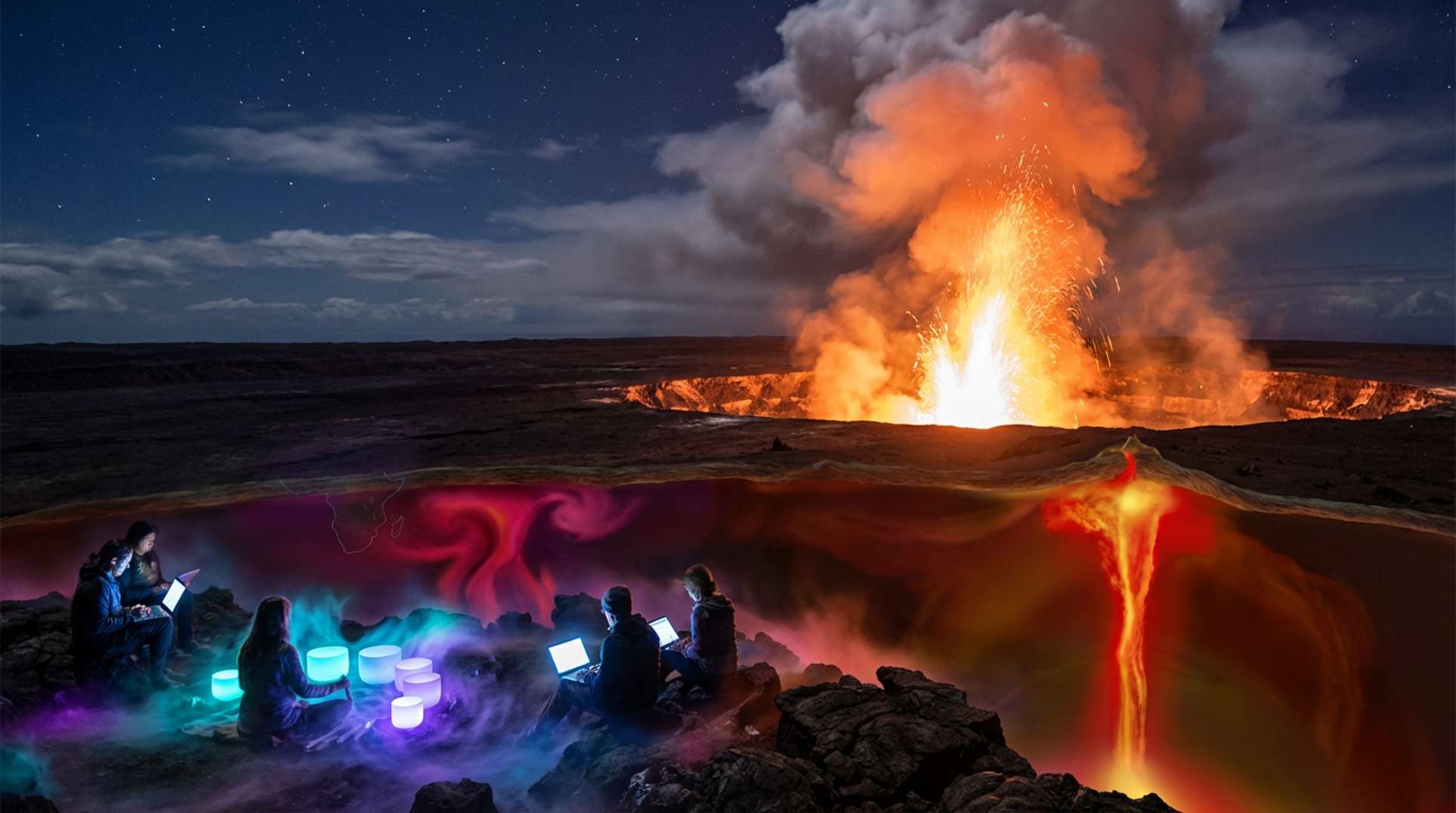
    • Hayli Gubbi volcano in Ethiopia erupted explosively on November 23, 2025, around 08:30 local time, sending ash up to 10,000 ft (3,000 m) and in some reports as high as 45,000 ft.
    • This marks the first eruption in Hayli Gubbi’s recorded history, with no confirmed Holocene blasts before 2025, though geological hints point to dormancy stretching back thousands—possibly 10,000+ years.
    • The African Superplume lurks as a massive, snail-paced mantle beast shaping East African rifting across millions of years; zero scientific proof ties this lone eruption to a abrupt continent-wide ‘pressure dump’ or Africa snapping apart anytime soon.

    The Hook: When a Long-Silent Volcano Roars Back to Life

    Imagine the ground shaking in Ethiopia’s Afar region. November 23, 2025. 08:30 local time. Hayli Gubbi, a volcano silent for millennia, suddenly explodes. Ash rockets skyward—10,000 feet at first, some whispers say 45,000 feet high. Satellite images capture the chaos. On the ground, locals stare in awe and fear. Online, the frenzy ignites. Posts scream: Is this it? Is Africa finally cracking open? The East African Rift System, already painted as the continent’s slow fracture, fuels the fire. Fringe sites declare the African Superplume is stirring. Decades of buried pressure, they say, bursting free. Panic spreads like wildfire. But is this the endgame they claim? Or a distraction from the deeper truth?

    Why Do People Think Hayli Gubbi’s Eruption Means Africa Is Tearing Apart Now?

    Let’s connect the dots. Hayli Gubbi stayed quiet through the entire Holocene—no eruptions on record until 2025. Headlines blast it as ‘asleep for 10,000+ years.’ Its roar feels like a wake-up call from hell. Viral threads tie it straight to the African Superplume, that colossal magma monster under the continent. They paint it as a swelling bomb, ticking louder after decades of buildup. This eruption? The first crack in the dam, they insist—a chain reaction ripping Africa in half. Maps of the East African Rift flood feeds, showing the continent splitting like a bad breakup. Dramatic graphics amplify the doom. But these tales gloss over the slow grind of geophysics. They ignore how rifting drags on for tens of millions of years. Not days. Not decades. Why the rush to apocalypse? Who benefits from the fear?

    The Hard Evidence: What the Hayli Gubbi Eruption Really Tells Us

    They push the hype. We dig for facts. Hayli Gubbi’s blast on November 23, 2025, hurled ash to 10,000 feet initially, with advisories clocking peaks at 45,000 feet. Impressive? Sure. But it’s no outlier among global eruptions. The Global Volcanism Program admits no Holocene fireworks before this—first in recorded history, yet geology whispers of older unrest on vast timelines. This peak stands modest at 521 meters, a local threat: ash, gas, lava, flight risks. Not world-ending. Now, the African Superplume. Seismology reveals it as a low-velocity zone from the core-mantle boundary, 2,900 km deep under southern Africa, stretching 1,500 km up and 1,200 km wide—8% of the mantle. Massive. But sluggish. Models show northeast flow of warm material, no sudden flip to chaos with this eruption. Rifting? The East African system spans 4,000 miles, widening millimeters yearly. Plate tectonics at a crawl. No data screams ‘pressure release’ or rift meltdown. Conspiracy spins misread low seismic speeds as doomsday heat, twisting deep-Earth flow into catastrophe. The Narrative downplays it. But evidence doesn’t lie.

    Dramatic Claims Measured Geologic Realities
    Ancient volcano awakens after 10,000+ years, signaling superplume ‘ticking bomb’ exploding now. First recorded eruption, but geological scales suggest prior activity; no link to sudden superplume shift.
    Decades of pressure building, eruption as ‘valve release’ tearing Africa apart in our lifetimes. Rifting at millimeters per year over millions of years; superplume influences gradual melting, not abrupt crises.
    Giant magma balloon under Africa reaching tipping point, causing continent-wide rupture. Superplume is deep, slow-moving structure (1,200 km wide, 1,500 km tall); low velocities indicate warm flow, not imminent blast.
    Viral maps show Africa splitting imminently from any big event like this. No seismic or geodetic signs of accelerated rifting; processes span tens of millions of years, not human timescales.

    The Skeptic’s View: Yes, Africa Is Changing — But Not Overnight

    Something’s real here. The African Superplume exists. The East African Rift is pulling the continent apart. But overnight? That’s the lie they’re selling. Geophysicist Andy Nyblade’s own words expose it: a ‘large region of low seismic wave speeds beneath southern Africa, deep in the mantle.’ Size and depth, not eruption on demand. Stephen E. Hansen and his team admit slower velocities under Ethiopia and Afar from shallow melting and superplume flow—ongoing, not a fresh nightmare. Geochemist Pete Burnard calls it a window into Earth’s guts, like the Pacific’s version. A chance for discovery, not destruction. Research links volcanism to the superplume without hinting at collapse soon. Sensationalists twist ‘Africa is splitting’ into tomorrow’s headline. Outlets like IFLScience have called out the distortions—seismic data mangled with scary visuals. Real threats are local: ash choking skies, lava creeping, planes grounded. Jumping to global doom? No proof. The official story minimizes the wonder. We see the patterns. Earth’s changes creep, defying the panic peddlers.

    Conclusion: A Dramatic Eruption in a Slowly Splitting Continent

    Hayli Gubbi’s first recorded blast lights up the East African Rift’s hidden fires. But seismic whispers and satellite eyes show no sprint to continental chaos. It’s the superplume’s long game—millimeters yearly, millions of years deep. The mismatch? Geologic epochs versus clickbait cycles. Monitoring nets and data streams tracked this in real time. Human ingenuity tames the uncertainty. This eruption unmasks Earth’s restless heart. Panic won’t guide us. Knowledge will. They tried to sell fear. We uncovered the rhythm—a planet alive, but on its own timeless beat.

  • Van Allen Belts: Why They Didn’t Stop Apollo Missions

    Van Allen Belts: Why They Didn’t Stop Apollo Missions

    Through the ‘Deadly’ Van Allen Belts: How Apollo Really Reached the Moon

    Key Takeaways (TL;DR)

    • The Van Allen belts are regions of trapped charged particles around Earth, not an impenetrable wall of instant death.
    • Apollo spacecraft spent only about 1–2 hours per leg in the belts and followed trajectories through thinner regions, keeping astronaut doses between 0.16 and 1.14 rads (1.6–11.4 mGy) for entire missions—far below lethal levels and comparable to a medical CT scan.
    • Aluminum shielding (about 2–5 g/cm²) plus careful mission timing and trajectories made radiation a manageable engineering problem, not a show-stopping barrier, which is why James Van Allen himself called the ‘fatal radiation’ claims “nonsense.”

    The Fear Above the Sky: How a Hidden Radiation Belt Became a Boogeyman

    Earth wears them like unseen crowns. The Van Allen belts, discovered in the late 1950s—halos of charged particles, invisible and restless. Circling our planet. They caught the imagination fast. A reputation built on whispers of danger, the kind that lingers in the mind’s shadowed corners.

    Intuition tugs at you. If even the low orbits we know are laced with this radiation, how do humans—fragile, fleeting—slip through to the Moon? Unharmed. The thought settles like static in the air. Unsettling.

    Conspiracy tales feed on it. Hollywood stages flickering in basements. ‘Deadly’ belts as the ultimate barrier. Yet reality hums different. Engineering. Equations. Calculated risks. We have the numbers from Apollo itself. Doses recorded, precise. They clash with the myth’s thunder. A contrast sharp as moonlight on film grain.

    Are the Van Allen Belts Too Deadly to Cross?

    The claim sits at the heart of it. Clear and insistent. Those belts—zones of intense radiation—would fry any astronaut daring the passage. Instant death. No way around it. So the Moon landings? Faked. Filmed on Earthbound sets, some say, with names like Stanley Kubrick tossed in for flavor.

    Believers point to shielding. NASA‘s craft couldn’t carry enough without buckling under the weight. Impossible, they argue. The missions—a elaborate ruse.

    This thread wove into the broader fabric mid-1970s. Distrust thick in the air after Watergate, Vietnam. Books appeared, self-published tracts. Assertions without the math. The belts as proof positive. Bundled with other doubts: flags rippling in vacuum, stars absent from photos, tech from the ’60s deemed too primitive. Together, they build a case. Persistent. Alluring in its doubt.

    What the Numbers Say: How Apollo Actually Dealt with the Belts

    Two zones define them. Inner and outer. High-energy protons, electrons—snared by Earth’s magnetic grasp. Apollo planners knew. They charted paths. Not through the thick heart. But the edges. Thinner. Safer.

    Transit was brief. One to two hours each leg. Round trip? Roughly three hours total in the belts.

    Doses measured. Real data from the missions. Astronauts absorbed 0.16 to 1.14 rads overall. That’s 1.6 to 11.4 mGy. Including deep space, lunar stays.

    Apollo 14 topped the list. 1.14 rads—0.0114 Gy. Still distant from harm.

    Apollo 11? Skin dose at 0.18 rad. Iconic. Grounded.

    Danger thresholds loom higher. Acute lethal doses: 300–500 rads. Sickness kicks in well beyond single rads.

    Shielding helped. Aluminum hulls, structures—2–5 g/cm². Enough to blunt protons, electrons during the dash.

    Rates in the worst spots? Around 0.044 Sv per minute, shielded. But paths chosen wisely. Time limited. Totals stayed low.

    Think chest CT scan. That’s the scale. Not Chernobyl’s glare.

    Mission/Threshold Radiation Dose (rads)
    Apollo 11 0.18
    Apollo 14 1.14
    Full Apollo Range 0.16–1.14
    Lethal Acute Dose 300–500

    NASA’s breakdowns show more. Solar particles outside the magnetosphere often outweighed belt exposure. A constraint, yes. Not a wall.

    Radiation Is Real – So Why Was Apollo Safe?

    Space radiation bites. No denying it. Particles slice through, tampering with DNA. Cancer risks climb. High doses? Sickness. Death. Real threats.

    But nuance matters. Dose and duration. A zone lethal for lingering days turns passable with speed and shields. Quick transit. Calculated.

    James Van Allen spoke plainly. The fatal radiation notion? “Nonsense.” He affirmed: trajectories and shielding kept it in check.

    NASA echoed. Van Allen’s own calculations opened the way—through weaker regions to the void beyond.

    Experts at Royal Museums Greenwich agree. Fast enough for the Moon? The belts pose no issue.

    Wikipedia, NASA summaries align. High speeds through upper, thinner belts minimized hazards.

    Scientists modeled. Calculated. Timed launches. Built defenses. Risks bounded, acceptable.

    Contrast with Mars treks. Long hauls amplify cumulative threats. Experts grapple, not dismiss.

    Conspiracists spotlight gaps, claim impossibility. Data and consensus push back. Measured. Firm.

    Speed, Trajectory, and Ingenuity: How We Really Reached the Moon

    Two levers unlocked it. Speed. And paths through the belts’ sparse fringes, not the dense cores.

    Doses across Apollo? 0.16–1.14 rads. Worlds from lethal 300–500. Akin to routine scans.

    Aluminum at 2–5 g/cm². Transits capped at 1–2 hours each way. Trajectories precise. Risk transformed—from barrier to equation.

    Van Allen dismissed the myths. Science concurs: a puzzle solved, not a veil for secrets.

    The myth clings. Physics simplified to terror. ’70s skepticism. Cover-up’s drama over engineering’s quiet grind.

    Yet grasping Apollo’s solution illuminates. History defended. And a lesson: science, ingenuity—they render Earth’s radiation halo mere footing. Toward stars uncharted.

  • Last Black Friday Ever? Inside Black Friday 2025 — Sales, Tech, and the Real Story Behind the Hype

    Last Black Friday Ever? Inside Black Friday 2025 — Sales, Tech, and the Real Story Behind the Hype

    “Last Black Friday ever” is a headline designed to attract clicks through scarcity and the fear of missing out, playing into the long-standing consumer habit of ritual shopping. However, as 2025 approaches, writers have legitimate reasons to heighten the drama—Adobe Analytics and the National Retail Federation unveiled projections in October and November that indicate record spending and a transformation in how those dollars are spent.

    These projections also reveal a significant shift: Black Friday has evolved from in-store drama to an algorithm-driven, mobile-first, and varied payments spectacle. The numbers carry weight, and so does the framework supporting them: retailers’ supply chains, BNPL flows, and AI-driven personalization dictate which products sell out, determining if “last chance” is a genuine alert or a manufactured urgency.

    Adobe’s 2025 holiday forecast and the data behind Black Friday online projections

    Adobe Analytics’ October 6, 2025 forecast is the most comprehensive measurement of online holiday behavior. Adobe expects $253.4 billion in U.S. online sales from Nov. 1 to Dec. 31, 2025—a 5.3% increase from the previous year. It projects Black Friday online sales to reach about $11.7 billion, while Cyber Monday is anticipated to peak at around $14.2 billion. These predictions are based on real-time transaction data from many of the top 100 online retailers, alongside analyses of traffic sources, device usage, and payment method trends. Adobe acknowledged the rising influence of generative AI in shopping discovery and estimated BNPL volumes in the holiday window to be around $20 billion—data points that directly alter how retailers structure offers and target customers (Adobe holiday shopping report, Oct. 6, 2025).

    NRF’s $1 trillion forecast for November–December 2025 and what total retail means

    Two weeks following Adobe’s release, the National Retail Federation published its November 6, 2025 forecast forecasting retail sales in November and December to reach between $1.01 trillion and $1.02 trillion, reflecting a 3.7% to 4.2% increase over 2024. The NRF figure encompasses core retail categories (excluding autos, gas, and restaurants) and integrates macroeconomic indicators—such as wage growth, employment rates, and consumer sentiment—into econometric models. While Adobe focuses on online transaction data, the NRF captures total retail flows, emphasizing that in-person sales, catalog channels, and hybrid fulfillment still play crucial roles even as commerce becomes more digital (NRF press release, Nov. 6, 2025).

    Why Black Friday numbers look bigger: mobile, AI discovery, and BNPL

    Adobe’s October analysis explains the mechanics behind the impressive totals. Mobile devices now account for most online traffic and an increasing share of conversions; Adobe’s dashboard indicated that mobile represented about half of online spending in October 2025, with mobile checkout processes enhanced by one-click wallets and smart autofill features. Generative AI is transforming product discovery: retailers utilizing AI-driven recommendations experienced higher click-through and conversion rates in early October, and Adobe predicts a surge in AI traffic in the ten days leading up to Thanksgiving. At the payment level, BNPL continues to alter purchase timelines—Adobe anticipates BNPL to generate billions in holiday spending, expecting Cyber Monday BNPL volumes to exceed $1 billion, inflating online totals while shifting merchant risk differently over time (Digital Commerce 360 summary of Adobe projections, Oct. 8, 2025).

    What the data misses: supply chains, localized shortages, and the psychology of “last” deals

    Projections aggregate billions of transactions but cannot anticipate micro-supply disruptions at the SKU level. A shortage, shipping bottleneck, or targeted pricing error can create localized scarcity that social media converts into national panic. Retailers aim for margin optimization, meaning “limited quantities” often reflect inventory calculations rather than fundamental scarcity. Recognizing this distinction is crucial: aggregate demand and channel shifts illuminate trends, while supply chain audits and merchant inventories clarify whether an item is genuinely vanishing or simply understocked. For a deeper understanding of how narratives solidify into enduring myths, refer to investigative reporting that tracks rumor amplification during technological and cultural crises (this investigative summary on narrative amplification).

    How retailers engineered the Black Friday moment: pricing algorithms, targeted drops, and livestream commerce

    Retailers create urgency through automated pricing and selective inventory reveals. Algorithms test thousands of price variations in real time; merchants launch flash drops and limited-edition collaborations to foster scarcity, while livestream commerce and influencer partnerships convert excited viewers into immediate buyers. The overall effect renders the “last” Black Friday less of a singular event and more of a dual tactic—controlling supply while provoking demand. This strategy elucidates why specific categories—electronics, home improvement, and smart devices—show significant growth in Adobe’s projections and why certain product models quickly vanish from “Add to Cart” widgets.

    Consumer harm and policy questions: BNPL regulation, return abuse, and labor stress

    There are important tradeoffs to consider. BNPL enhances purchasing power but reallocates default risk to consumers who may overlook cumulative repayments. The NRF forecast suggests strong holiday hiring will occur, yet seasonal labor pressures and compressed delivery schedules heighten stress and error rates within fulfillment centers. Policymakers face tangible decisions: they must require clearer BNPL disclosures, urge platforms to standardize return and warranty processes, and enforce working-time protections during peak fulfillment periods. These choices are not theoretical; they are operational levers that determine whether growth is sustainable or merely extractive.

    Why it matters: the cultural and economic consequences of a hyper-optimized Black Friday

    The shift from in-store traditions to algorithmic sales has profound social implications. Black Friday once organized physical crowds and local commerce; now it consolidates bargaining power within a few platforms controlling discovery, payments, and last-mile logistics. This concentration impacts small merchants’ profit margins, consumer choice, and labor conditions. The metrics—Adobe’s $253.4 billion online forecast and NRF’s $1.01 trillion to $1.02 trillion overall forecast—are significant because they influence policy discussions regarding platform power, consumer protections, and the future of seasonal retail employment.

    How to shop smarter this Black Friday: verification, timing, and consumer controls

    Practical steps can minimize buyer’s remorse. Verify historical prices with price-tracking extensions to assess whether a “deal” is legitimate. Choose retailers with clear return policies and reliable fulfillment service level agreements (SLAs). Utilize payment methods with dispute resolution features if you are concerned that BNPL may obscure the total cost. Additionally, consider timing: early October deals suggest some merchants are altering promotional spending away from the traditional Thanksgiving window, indicating that the “last” day is no longer the only chance to save—assuming scarcity is genuine at the SKU level.

    How journalists should cover Black Friday: data, context, and avoiding spectacle

    Reporters should emphasize primary data—such as Adobe’s transaction analyses and the NRF’s econometric forecasts—rather than succumbing to the urge to amplify clickbait. Monitor device share, BNPL volumes, and supply chain signals; acquire retailer inventory statements; and challenge scarcity claims with fulfillment data. For parallels between how technological events evolve into mythological narratives and the necessity for evidence-based reporting, refer to archival cases documenting rumor cycles and narrative entrenchment in technological areas (an archival breakdown and an investigative case study).

    Final read: what Black Friday 2025 actually tells us about commerce and culture

    Black Friday 2025 will show robust scores—Adobe’s October report and NRF’s November forecast roundly predict record aggregate spending—but it also illustrates structural transformations: increased mobile checkouts, AI-first discovery, and heightened BNPL use. These dynamics give rise to impressive headline figures and fresh frictions. If you prioritize equitable markets, worker conditions, and consumer protections, these data points are essential for policymakers and journalists to monitor, rather than the sensational cries proclaiming an imminent retail apocalypse.

    For a succinct overview of Black Friday’s history and the shopping calendar that spawned Cyber Monday and the Cyber 5, explore the historical entry on the shopping phenomenon in an authoritative encyclopedia resource (the history of Black Friday shopping).

    For continuous coverage linking retail trends to broader cultural and technological narratives—spanning from streaming franchise cycles to solar-comet events—check curated analyses and timelines at Unexplained.co. For quick insights on related stories that examine how narratives and data intersect, our reporting on a revived Stargate franchise, interstellar comet coverage, and site-specific myths provides valuable parallels (franchise rollout analysis, space event field report, site myth archival breakdown, a health controversy analysis, and an ethics dossier).

  • Stargate Is Back: Inside Prime Video’s Revival, Martin Gero’s Plan, and What Fans Should Expect

    Stargate Is Back: Inside Prime Video’s Revival, Martin Gero’s Plan, and What Fans Should Expect

    On Nov. 19, 2025, Amazon MGM Studios confirmed fans’ long-held hopes: Stargate, the franchise that began with Roland Emmerich’s 1994 film, will return as a new original series on Prime Video. Martin Gero—who has worked as a writer and producer on Stargate SG‑1, Stargate: Atlantis, and Stargate Universe—will be the series’ creator and showrunner. Amazon positioned the order as a “bold new chapter” rather than a straightforward reboot (AboutAmazon press release, Nov. 19, 2025).

    This announcement arrives during a time of franchise reclamation following Amazon’s 2022 acquisition of MGM Studios. Industry sources indicate that Amazon possesses the IP, greenlit the show on Nov. 19, and production will move forward under Amazon MGM Studios with a creative team that combines both legacy figures and new executive producers (Variety, Nov. 19, 2025).

    Prime Video Stargate announcement Nov 19 2025: who’s producing and what the press release revealed

    Amazon’s official communication names Martin Gero as writer and showrunner, with executive producers Joby Harold and Tory Tunnell from Safehouse Pictures. Veteran franchise filmmakers Dean Devlin and Roland Emmerich are also onboard. Additionally, longtime contributors Brad Wright and Joe Mallozzi will serve as consulting producers. Amazon describes the series as an original entry that pays tribute to its legacy while pursuing an “ambitious and emotionally resonant” approach to the narrative. These insights derive directly from the corporate release and summarize the primary deal points (AboutAmazon, Nov. 19, 2025).

    Industry reaction and trade reporting on Martin Gero’s role and creative mandate

    Trade outlets have contextualized the announcement with detailed reporting on Gero’s background and Amazon’s strategic goals. Both Variety and Deadline reported that Gero spent five years on various Stargate television iterations. Amazon envisions him as the steward of continuity while refreshing the universe for a global Prime Video audience. Variety’s Nov. 19 coverage highlights production leadership and emphasizes that plot specifics and casting remain undisclosed at the time of the greenlight (Variety, Nov. 19, 2025).

    Independent technology and culture outlets framed the news as both nostalgically appealing and commercially sensible: by commissioning an original Stargate series, Prime Video capitalizes on a franchise with a built-in international audience and a rich mythology producers can adapt without dismantling essential concepts (Engadget report, Nov. 19, 2025).

    Franchise lineage and canonical context: Stargate film to SG‑1 to Atlantis and Universe

    Understanding the new series necessitates a brief overview of franchise history. Stargate originated as a 1994 film by Roland Emmerich and Dean Devlin that introduced an artificial ring device for near-instantaneous wormhole travel. This film spawned the long-running SG‑1 television series (1997–2007), followed by the Atlantis spinoff (2004–2009) and Stargate Universe (2009–2011). The original film and subsequent TV mythology serve as the foundation Prime Video now plans to reimagine. For a concise overview of the IP’s progression, consult the canonical entry detailing the film’s heritage and the television expansions (the Stargate film and franchise history).

    Creative and commercial risks: reboot expectations, legacy fan politics, and streaming economics

    Reviving a legacy franchise requires distinct calibrations. Creatively, showrunners must reconcile fan expectations for continuity with the necessity to update narratives for modern geopolitical and technological realities. Commercially, Prime Video seeks a global, repeatable audience to justify the considerable upfront costs related to high-concept sci-fi production. Trade reporting indicates Amazon is positioning the show as both a tribute to fans and a vehicle for franchise expansion, employing veterans as consultants while introducing new executive producers to craft a fresh tonal and visual language (Variety).

    What the first publicity cycle reveals about tone, mythology, and production strategy

    The announcement video and corporate communication emphasize the mythological scope—making references to Egyptian, Norse, and other ancient cosmologies—and promise a technology-based explanation for the gates. Industry observers interpret this language as intentional: connections to mythology suggest serialized world-building that can sustain several seasons, spinoffs, and merchandise, while a technology-focused approach aids Prime Video in promoting the show in markets that favor hard sci-fi aesthetics. The early focus on a “new original series” instead of a straightforward reboot allows for potential canonical reconciliation and dramatic reinvention.

    This balance is crucial: franchises that shift too aggressively risk alienating core viewers; those that rely solely on nostalgia may stagnate. The producers’ combination of legacy consultants and new showrunners indicates Amazon’s intent to navigate this delicate dynamic.

    Why it matters: cultural resonance, IP strategy, and the streaming content arms race

    Prime Video’s order reflects broader industry trends: streamers are increasingly utilizing recognizable intellectual property to ease discovery challenges and boost subscriber engagement. A revived Stargate offers Amazon a globally recognized narrative universe with established cross-platform appeal—spanning TV, books, games, and convention ecosystems—while enriching Prime’s international catalog. This strategic rationale mirrors other franchise revivals, where studios pair veteran creatives with streaming resources to compete for viewer attention in a saturated marketplace.

    For readers analyzing franchise cycles against expansive cultural anxieties and mythmaking, consider contextual reporting on how technological and cultural narratives evolve into persistent public beliefs and rumors in various contexts (an investigative summary and an archival case).

    How journalists and critics should cover the rollout: transparency, sourcing, and franchise scrutiny

    Coverage should focus on three key areas: (1) contractual and production specifics (studio credits, EP names, rights ownership), (2) creative signals (studio comments regarding tone, mythology, and showrunner aims), and (3) on-the-ground updates (casting news, pilot production progress, director selections). Journalists should reference primary sources—studio press releases and trade reports—while avoiding rumor cycles that treat leaks and fan speculation as facts. Accounts of how site-specific myths interact with production secrecy are illustrated in historical analyses of Camp Hero and similar culturally significant sites (an archival breakdown of site mythmaking).

    Takeaway: what fans should expect next and how to read future announcements

    Expect a gradual release of information: casting notices, director appointments, visual concept art, and anticipated release dates. Amazon will likely leverage fan events and social media for ongoing engagement, and the involvement of franchise veterans as consultants indicates a production that respects legacy continuity. For readers monitoring narrative development and cultural response across varied domains—whether space phenomena, medical debates, or tech ethics—see related analyses that explore how stories spread and become entrenched in public lore (a field report analysis, an archival breakdown, and an ethics dossier).

    For immediate confirmation of the primary sources utilized in this piece, review Amazon’s official announcement and trade reporting from Variety and Engadget, which collectively clarify the who, when, and why behind Prime Video’s Nov. 19 news (AboutAmazon; Variety; Engadget).

    For curated archival collections and ongoing coverage of how cultural and technological narratives intersect, visit Unexplained.co.