Blog

  • Putin’s Emergency Nuclear Test Orders: Novaya Zemlya, Global Response, and the Growing Brinkmanship of 2025

    Putin’s Emergency Nuclear Test Orders: Novaya Zemlya, Global Response, and the Growing Brinkmanship of 2025

    Another week brings another shocking global headline: Russia’s President Vladimir Putin summoned his chief commanders for an emergency defense meeting in early November 2025, sparking worldwide speculation about imminent nuclear escalation. According to Reuters, the Russian president directed officials to submit proposals for restarting nuclear tests for the first time since the Soviet collapse. The Kremlin’s meticulously planned Security Council meeting, attended by defense minister Andrei Belousov and intelligence heads, highlights how nuclear rhetoric has turned into a routine strategy—part intimidation, part political safeguard.

    What’s Really Happening at Novaya Zemlya?

    Multiple sources have released satellite images showing apparent activity at the Novaya Zemlya test site—a frigid Arctic archipelago that hosted over 200 Soviet nuclear detonations. Recent construction, tunnel boring, and increased logistical traffic through September 2024 have reignited suspicions that Russia may be preparing for new tests. RFE/RL confirms these findings using data from open-source monitoring: large trucks, cranes, and new facilities have emerged alongside the notorious Severny settlement. Rosatom aircraft and heavy transport vessels have been observed landing supply runs. While Moscow insists the work is mere “maintenance,” the actual intent seems unclear—especially with Defense Ministry insiders suggesting that the Burevestnik nuclear cruise missile may be central to preparations.

    For insights into the archipelago’s radioactive history and its crucial Cold War role, review the background on Novaya Zemlya’s legacy as a nuclear test ground. This island exemplifies the dark edge of Russia’s strategic signaling in 2025.

    Emergency Military Orders and Nuclear Doctrinal Shifts

    Putin’s emergency command session did not happen in isolation. As Western military aid to Ukraine mounts and U.S. nuclear testing discussions grow, the Kremlin aims to display readiness for escalation. The Reuters report reveals that Moscow has framed its testing plans as a ‘response’ to Western actions—a familiar tit-for-tat stance. This aligns with Russia’s October 2023 withdrawal from the global nuclear test ban treaty and resonates with Deputy Foreign Minister Sergei Ryabkov’s recent declaration that Russia might test nuclear devices if provoked by the U.S. or NATO. The revised doctrine now allows for potential nuclear use even in response to perceived existential threats—even if only conventional weapons are involved.

    Russia’s stance fits into a larger cycle of military brinkmanship, evidenced by detailed studies like this analysis of hybrid warfare and nuclear signaling and in related reports on recent alliance response shifts.

    Global Reactions: U.S., Europe, and Experts Weigh In

    The West reacts cautiously to the uptick in nuclear signals. U.S. and European intelligence agencies closely monitor every container offloaded at Severny. Think tanks and policy circles, including the Institute for the Study of War and international watchdogs, warn that even discussions of new nuclear tests threaten the broader nonproliferation regime. Voices from European capitals advise against any direct or symbolic tit-for-tat responses. Meanwhile, analytical reports confirm that Russia’s nuclear capabilities—such as Poseidon underwater drones and hypersonic Burevestnik missiles—remain technically impressive but do not fundamentally alter the strategic balance, as this up-to-date assessment shows.

    Anxieties surrounding Novaya Zemlya echo ongoing security and existential concerns, from recurring doomsday predictions in disaster cycle reporting to the rise of conspiracy narratives analyzed in AI scenario analysis. The speed and coordination of disinformation and official warnings now circulate rapidly, marking a new development.

    Why This Standoff Matters and What’s Next

    Putin’s nuclear posturing serves both war-fighting and domestic political purposes, reminding the world—and his own generals—that Russia holds doomsday options. Yet experts emphasize that the threshold for transitioning from construction to actual nuclear detonation remains high, with substantial reputational and radiological stakes for Moscow. At risk isn’t just the shadow of a mushroom cloud over Novaya Zemlya but the collapse of decades of arms control precedent. The Kremlin’s pattern of brinkmanship—prompting “emergency” decisions—creates escalation risks, especially if Western leaders misinterpret signals or react in kind.

    For context that spans ancient clues to the modern nuclear age, explore archival deep-dives and for ongoing nuclear and hybrid threats, see related analysis of informational risk culture. For consistent, fact-checked updates—even when the headlines seem apocalyptic—make Unexplained.co your reliable source.

  • Ancestral Clues: How DNA, Megaliths, and Denisovan Mysteries Shape the Human Story

    Ancestral Clues: How DNA, Megaliths, and Denisovan Mysteries Shape the Human Story

    Humanity has always sought to decode its origins—from epic myths to the latest laboratory whispers. As 2024’s DNA revelations hit the headlines, and excavations at monumental sites like Göbekli Tepe astound archaeologists, it’s clear our ancestors did not just leave clues. They hardwired mysteries into our very bones, ruins, and genes—reshaping our self-perception and our collective future.

    Ancient DNA and the Real Threads of Human Ancestry

    This year’s groundbreaking analysis of ancient human genomes, detailed by John Hawks, reveals “ancestry-stratified” evidence of genetic selection. New data, featuring DNA from over 8,000 individuals, has mapped ancient mixing from the Pontic Steppe, Neanderthal, and Denisovan lineages. Four major studies published in 2024 describe how traits like lactase persistence (the ability to digest milk), skin pigmentation, and fat metabolism spread and mutated as our ancestors moved, farmed, and adapted. This paints human ancestry as a complex web—supporting the idea that evolution is anything but linear, as highlighted in leading evolutionary theory. Recent Eurasian samples show that Neanderthal ancestry proved remarkably stable over time, pointing to a singular ancient pulse of interbreeding still visible in people today.

    These newly sequenced genomes correct the misguided search for one origin—echoing ongoing debates outlined in milestone skepticism like this analysis. Instead, genetic crossroads, hybrid vigor, and repeated population changes shaped who we are.

    Göbekli Tepe: The Stones Whisper in Calendars, Symbols, and New Starts

    On a windswept Turkish plateau, Göbekli Tepe’s 12,000-year-old circles emerge as humanity’s oldest puzzle-box. As described in new research, this monumental site wasn’t just an early temple. Its intricate pillar carvings—some forming V-shaped motifs and animal symbols—may represent the world’s earliest lunisolar calendar, possibly dating astronomical events to 10,850 BCE. Archaeologist Dr. Sweatman proposes these marks track solar and lunar cycles, sparking wide interest and debate.

    Interpretations vary, but one fact stands out: Göbekli Tepe shattered old dogmas that farming preceded monument-building. Its megaliths now rewrite history—just as discoveries at neighboring Karahan Tepe challenge simplistic timelines. Together, these sites highlight how sophisticated, symbol-using societies arose long before history’s usual starting gun.

    Denisovans, Cave Mysteries, and the Blurred Edges of Humanity

    Few discoveries have challenged preconceptions more than the evidence from Denisova Cave. A 2024 feature in Scientific American details how this Siberian cave hosted Neanderthals, Denisovans, and possibly our species over a 300,000-year timeline. Recent studies refute the belief that only anatomically modern humans created advanced tools and art: pendants, bone needles, and decorated artifacts found in Denisova may have been crafted by Denisovans, who left no modern descendants yet still contributed DNA present in some populations.

    This debate echoes ongoing discussions about where myth merges with record—seen in critical analysis like features untangling legend from history, or in the enduring mysteries surrounding cultures like those at Harrison Hot Springs.

    Why These Ancestral Clues Matter: Identity, Adaptation, and the Human Web

    Why decipher ancient genomes and megaliths? Every revelation complicates our understanding of identity. Human evolution, once envisioned as a ladder, now resembles a tangled web, as the latest data reaffirms. Our ancestors were collaborative, adaptive, and inclined toward both ritual and innovation long before recorded civilization. Their clues, buried in tombs or encoded in our chromosomes, influence everything from medicine to how societies navigate rapid change. (The layered legacies of adaptation and anxiety come into focus in features on disaster cycles and global crises.)

    One certainty remains: ancestral clues are neither static nor solved. For ongoing myth-busting, new finds, and invaluable context, bookmark Unexplained.co—because our past is anything but simple.

  • Russia Breaches NATO: Escalation, Nuclear Deterrence, and Alliance Response in 2025

    Russia Breaches NATO: Escalation, Nuclear Deterrence, and Alliance Response in 2025

    Europe’s old divides clash with 21st-century brinkmanship. Last year, Russian incursions—including drone downings in Poland, fighter jet violations in Estonia, and overt nuclear threats—rekindled fears of Cold War flashpoints. According to ABC News, Russia’s recent airspace breaches prompted Estonia to invoke NATO’s Article 4, requesting emergency consultations and warning of a “pattern of increasingly irresponsible behavior.”

    Russian Border Violations: Drones, Jets, and Baltic Brinkmanship

    In September 2025, Polish and Estonian officials reported multiple provocations. Nineteen Russian drones breached Polish airspace, while MiG-29 jets violated northeastern NATO skies. Some incidents were brushed off by Moscow as “scheduled flights” or navigational errors. However, the psychological impact is significant. Experts cited by ABC argue these breaches are deliberate “gray zone” tactics, aimed at testing alliance unity and deterrence. This trend follows a buildup of Russian military and hybrid activities in the region, echoing issues outlined in reports like this analysis of hybrid warfare and the ongoing military escalation documented in archival incident footage.

    Nuclear Deterrence Rhetoric: US Weapons, Russian Threats

    Amid these tensions, Moscow’s nuclear rhetoric has escalated. In mid-2024, Russian state media spread maps indicating US nuclear weapon storage sites across Europe, highlighting NATO’s nuclear sharing arrangement (AFP Fact Check). Analysts point out these images are propaganda—veiled threats of potential targets, heightened following new deployments in Belarus and tactical nuclear drills near Ukraine. Yet, according to 2021 defense disclosures, around 100 US-owned nuclear warheads remain in five NATO nations, primarily for deterrence, not first-strike purposes. Nevertheless, Moscow’s heightened rhetoric, reported by sources like Breaking Defense, suggests any NATO member could be deemed a target if Russia perceives significant threats.

    This alarming rhetoric aligns with recent global risk discussions found in economic crisis reporting and the historical paranoia detailed in legendary myth debates.

    NATO Responses: Fortification, Article 4, and Lingering Doubts

    In 2025, NATO’s response to violations has been robust—air defenses activated, multinational battlegroups reinforced from Estonia to Romania, and unified condemnation of Moscow’s “irresponsible” actions. Official alliance statements, detailed in official alliance statements, emphasize the necessity for unity and readiness. However, internal concerns arise: how often can Article 4 be invoked without diluting deterrence? Analysts and Baltic leaders express worries about alliance “credibility,” especially as hybrid incidents such as cyberattacks, sabotage, and GPS jamming proliferate across the Nordic-Baltic front. For an in-depth look at NATO’s mechanics and collective defense principles, consult the background and mandate of NATO.

    This concern mirrors global security analyses like AI risk analyses and field studies on evolving military priorities, where preparedness hinges on hardware, alliances, and narrative management.

    Escalation, Risk, and Why the World is Watching

    Why is this significant? As kinetic and hybrid provocations rise, the Baltic and Eastern European theaters represent the testing ground for nuclear-age politics, digital destabilization, and alliance strength. Recent technical overviews warn that, despite the heated rhetoric, a nuclear exchange remains unlikely but not impossible. Yet, tensions in the region are fueled by social, economic, and political feedback loops analyzed in this global risk assessment. How NATO adapts will influence not only Eastern Europe’s fate but also the alliance’s future legitimacy.

    For continuous coverage of high-stakes events, hybrid warfare, and mythmaking on the global stage, bookmark Unexplained.co—where the narrative always extends beyond the surface.

  • Sasquatch at Harrison Hot Springs: Untangling Fact, Legend, and Canada’s Classic Bigfoot Capital

    Sasquatch at Harrison Hot Springs: Untangling Fact, Legend, and Canada’s Classic Bigfoot Capital

    Harrison Hot Springs, British Columbia appears to be a typical scenic lakeside village. Yet, for generations, it has earned the title of Canada’s “Sasquatch Capital.” Here, beneath the Coast Mountains, fog lifts slowly from ancient forests, intertwining legends and obsession. From the Chehalis (now Sts’ailes) people’s oral histories to the rise of cryptid tourism, Harrison stands as a vibrant hub for all things Bigfoot (British Columbia Magazine).

    Ancient Roots: Chehalis Tradition and the ‘Hairy Man’

    The earliest Sasquatch stories in Harrison Hot Springs come from the Sts’ailes Nation. Their ancestors spoke of Sa:sq’ets—the ‘hairy man’ and forest caretaker—long before modern media. Anthropologists and journalists at CBC document First Nation lore, describing giant, bipedal beings with supernatural powers, merging the physical and spiritual. The Sts’ailes, whose lands surround Harrison Lake, continue to share tales of these elusive beings. As highlighted by the Sasquatch Crossing Eco Lodge, this connection is foundational; Sasquatch’s name derives from Sa:sq’ets and appears on the Sts’ailes tribal flag.

    These traditions ripple through cryptid and occult culture, illustrating how myth and history blur (see comparisons in ancient book legends). They reveal the thin lines of collective memory and mystery.

    The 20th Century: Trackers, Eyewitnesses, and “Birthplace” Claims

    In the 1900s, Sasquatch stories surged in Harrison Valley. While Sts’ailes tales remained private, non-Indigenous journalists began documenting local encounters. In 1929, Indian Agent J.W. Burns published Chehalis sightings, coining the term “Sasquatch” (Mysteries of Canada). By mid-century, reporters had recorded hundreds of sightings, plaster casts, and roadside encounters. A remarkable 3,000 sightings have been documented in B.C. since the 1920s, with Harrison often recognized as a hotspot.

    Spotting unexplained phenomena is more than a Canadian tradition; audiences craving chilling stories connect this to digital ghost tales like MrBallen’s campfire episodes and field reports of shapeshifters.

    John Green and the Rise of Canadian Sasquatch Investigation

    No figure is as prominent as John Green, a journalist, mayor, and pioneering Bigfoot investigator based in Harrison Hot Springs. Beginning in the 1950s, Green documented hundreds of eyewitness accounts, created the first comprehensive sighting database, and brought Sasquatch into North American awareness (John Zada). His books, such as “Sasquatch: The Apes Among Us,” remain essential reading for today’s cryptozoologists. Green’s influence is lasting; Harrison regularly hosts conferences in his honor, legitimizing the local narrative and nurturing a subculture that blends science with spectacle.

    Green’s legacy anticipates modern obsessions—consider the search for truth in the AI era or cycles of mass belief during crises—where community and controversy overlap.

    Folklore, Museums, and the Modern Sasquatch Industry

    Today, Sasquatch transcends myth—he embodies an icon. Harrison Hot Springs showcases this legend in museums and town branding, inviting skeptics and believers alike to “dare to believe” (Harrison Sasquatch Museum). Indigenous perspectives increasingly take center stage, featuring Sa:sq’ets art and oral history alongside scientific artifacts. The distinction between commemoration and commodification blurs, yet the community’s connection to its wild neighbor remains robust—and profitable.

    In context, Harrison’s narrative serves as a compelling case study of how societies mythologize threat, wilderness, hope, and the unknown. For comparative examples, explore global disaster coverage and unexpected historical crossovers.

    Why is this significant? Behind the roadside statues and souvenir mugs lies an ongoing discourse about truth, memory, and the wild spaces that question our knowledge. For continuous myth-busting and investigation, visit Unexplained.co—your one-stop cryptid shop (minus the blurry photos).

  • Ed Gein: The Grisly Wisconsin True Crime Netflix Couldn’t Get Right

    Ed Gein: The Grisly Wisconsin True Crime Netflix Couldn’t Get Right

    In 2025, Netflix’s “Monster: The Ed Gein Story” sparked a fresh fascination with the infamous serial killer from Plainfield, Wisconsin. While the streaming giant showcases high production value and an all-star cast, critics argue the show distorts facts into spectacle, overshadowing what truly made Ed Gein one of history’s most disturbing criminals (Rolling Stone). The result: a disturbing, oddly sympathetic portrait thick with inaccuracies and missed contextual opportunities.

    Netflix’s Monster: Between Fact, Fiction, and Exploitation

    Reviewers such as Rolling Stone and The Guardian contend that the series, led by Ryan Murphy, takes liberties: fabricating interviews, exaggerating Gein’s cultural impact, and sensationalizing his relationship with his mother Augusta beyond historical evidence. Netflix urges viewers to “sympathize” with Gein, portrayed by Charlie Hunnam, even though the show dwells on lurid details. Gein lived as a reclusive farmhand under the shadow of a domineering parent, but Netflix invents or amplifies much, including unmapped events in police files. This scenario reflects how popular myth and horror media fusion permeates reality, akin to nuanced analyses seen in myth-versus-history reporting or debates on technological regulation in AI risk narratives.

    The Disturbing Facts: Grave Robbing, Murder, and Macabre Crafts

    The grim reality, documented in Britannica and exhaustive police records, is more nightmarish. Ed Gein murdered two women—Mary Hogan and Bernice Worden—between 1954 and 1957. However, his grave robbing and the grotesque trophies found in his farmhouse riveted investigators and shocked the nation. Gein’s home held masks and furniture crafted from human skin, stitched body parts, and grim keepsakes. Despite Netflix’s dramatic embellishments (and, at times, misplaced humor), the evidence indicated a pathological obsession stemming from Gein’s isolated upbringing, psychological trauma, and disturbed fixation on his deceased mother.

    For a penetrating account of similar convergences between fact and obsession, see this investigative history feature—a reminder that reality often surpasses fiction, especially in America’s rural heartland.

    How the Real Ed Gein Rewired American Horror

    Netflix’s show accurately identifies the Butcher of Plainfield’s significant influence on pop culture, but the true impact goes deeper. Gein’s crimes inspired Norman Bates in “Psycho,” Leatherface in “The Texas Chain Saw Massacre,” and Buffalo Bill in “The Silence of the Lambs.” As Rolling Stone and academic reviews assert, screenwriters and psychologists remain fascinated by how one man’s crimes could birth numerous cultural nightmares. However, the show blurs fact and invention, dramatizing motives (like cannibalism and necrophilia) never fully substantiated by historical records. This convergence of hype and horror is not unique, as explored in speculative reporting on media-driven mystery narratives and cycles of public anxiety.

    What Netflix Misses: Mental Illness, Justice, and the Lure of Macabre Myth

    To its credit, “Monster” attempts to immerse the viewer in Gein’s world—an environment steeped in isolation, trauma, and religious extremism. Yet, experts emphasize that Netflix neglects the most crucial truth: Ed Gein was declared insane, spending his days in psychiatric institutions, not prison. Importantly, there’s no evidence he killed anyone except Hogan and Worden, despite the show’s implications of a higher body count and influence over other killers. Often, the drama prioritizes shock—and viewer engagement—over nuanced history. The real Ed Gein’s legacy, explored in neuropsychological reviews and archival crime coverage, remains one of enduring public obsession, distorted by pop culture and the digital age’s binge-watching culture.

    For more in-depth explorations of where fact meets speculation, archival footage, and reporting that rigorously separates fiction from reality, explore Unexplained.co. As collective memory blends with entertainment, distinguishing the historical Gein from Netflix’s monster becomes increasingly vital.

  • Epicenter Earth: Solar Storms, Cosmic Visitors, and the Global Cycle Hype in 2025

    Epicenter Earth: Solar Storms, Cosmic Visitors, and the Global Cycle Hype in 2025

    Every generation sees itself at the center of history—and 2025 is no exception. Sensational headlines warn of a “solar superstorm apocalypse.” Viral videos track the path of interstellar comet 3I/ATLAS. Cosmic catastrophe talk surrounds us. But what’s real science, what’s overhyped, and why does Earth’s spotlight feel hotter than ever?

    Solar Superstorm 2025: Real Risk or Overblown Fear?

    Solar activity is increasing, with experts warning of a peak solar cycle in 2025 that could dwarf past events. Studies from WIRED Middle East indicate this surge may cause a geomagnetic storm akin to the Carrington Event of 1859. That event set telegraph wires ablaze and triggered global auroras. The potential fallout? Satellite disruptions, long-lasting power grid failures, and trillions in economic damage. NASA has intensified early warning efforts, but global infrastructure faces greater exposure than ever. As outlined in The Planetary Society’s 2024 brief, even a moderate storm could disconnect millions from power. However, not all space theorists predict doom—some highlight improving predictive models. Planned missions like SWFO-L1 and IMAP (launching in 2025) offer the best monitoring yet.

    Solar storms are more than Hollywood tales; their effects are real. For a technical overview, see the scientific background on solar storms. The crucial question: Will our society invest in resilience, or wait for cosmic roulette?

    3I/ATLAS: The Interstellar Comet Captivating Researchers (and Conspiracy Theorists)

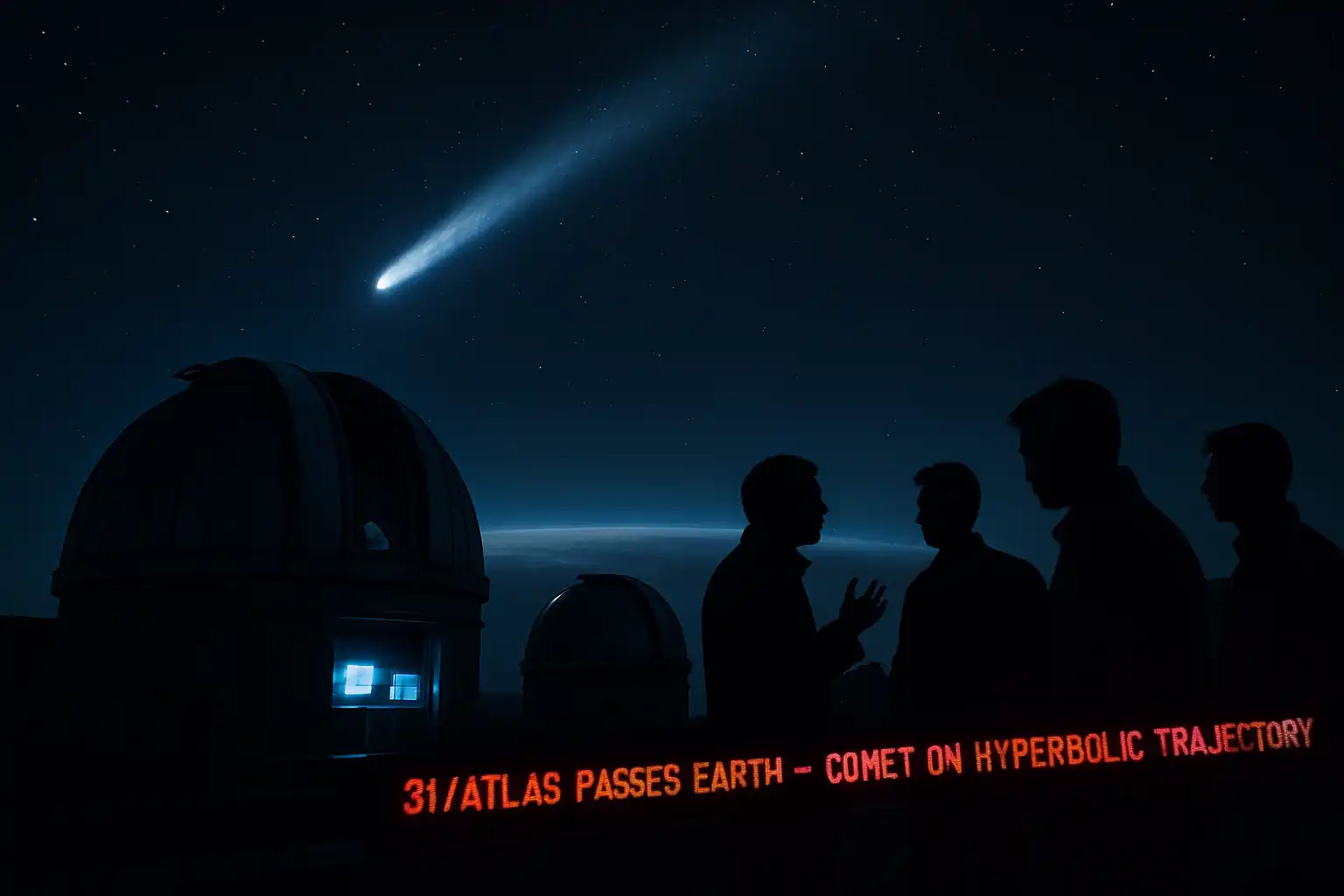
    The discovery of interstellar comet 3I/ATLAS—as a true outsider—has sparked academic fascination and prophetic hysteria. As covered by the Times of India, the comet zipped through our neighborhood in late October, dazzling us with its unusual composition and tail formation. Despite wild claims of “alien origin” or disaster, the facts remain: 3I/ATLAS never approached within 167 million miles of Earth, posing zero threat to humanity. Instead, its passage has provided astronomers a rare sample of interstellar material—helping decode the chemical origins of planetary systems, as evidenced by NASA’s ongoing efforts in their official 3I/ATLAS portal.

    This rare visitor’s data surge mirrors excitement (and speculation) from sources such as deep-dive comet reporting and apocalyptic AI scenario coverage—reinforcing our cultural appetite for cosmic mystery and existential fear-mongering.

    Milankovitch Cycles and the Reality Behind Global Cycle Theories

    Recent media noise about “global cycles” casting Earth as the cosmic focal point echoes centuries-old speculation. Scientifically, these cycles are known as Milankovitch cycles, oscillations in Earth’s tilt, orbit, and wobble—spanning tens to hundreds of thousands of years. NASA’s 2024 climate research (full article) dismisses the idea that current changes are cosmic in origin. Current warming closely correlates to greenhouse gas emissions, with no evidence of extraordinary Earth alignments. Yet these theories resurface during planetary crises, akin to debunks of missing time and occult legend explorations exploiting collective angst. Yet, there’s beauty in the cyclic rhythms that have shaped ice ages, sea levels, and planetary habitability long before and after our Twitter feeds.

    What It Means: Is Earth the Center of the Action, or Just in the Crosshairs?

    Is something big about to happen, with Earth as the headline act? The short answer: Earth is always ‘the center’ from our perspective. However, the 2025 convergence is more about uncertainty and connectivity than any cosmic targeting. Solar superstorm risk is real but manageable with preparation—as demonstrated in infrastructure reviews like this critical assessment. The comet 3I/ATLAS event is remarkable but not threatening; global climate cycles continue as usual. Our fears reflect the interconnectedness and vulnerability of a civilization reliant on technology. As indicated by historical economic collapse parallels and modern security field reports, understanding true existential risk involves separating the spectacular from the speculative.

    Why does it all matter? Building resilience—against space weather, financial shocks, or cultural panics—requires nuance and vigilance, not memes about cosmic destiny. For context, evolving scientific breakdowns, and (occasionally wild) speculation, turn to Unexplained.co, your source for the truly big stories.

  • Campfire Chills: Exploring MrBallen’s Most Terrifying True Stories (and Why They Haunt Us)

    Campfire Chills: Exploring MrBallen’s Most Terrifying True Stories (and Why They Haunt Us)

    Few voices command a fireside like Jonathan Allen, aka MrBallen. He fuses real victim-centered true crime with chilling campfire vibes. MrBallen’s channel and podcast boast millions of fans and tens of millions of monthly views. As a former Navy SEAL, his near-death experience in Afghanistan preceded his storytelling career. He has become the internet’s keeper of the “strange, dark, and mysterious.” In a 2025 roundtable with Shawn Ryan, he shared two outstanding campfire horrors that left even the toughest listeners wide-eyed (YouTube: Campfire Episode).

    “The Broken Tent” and Survival Against the Unknown

    One of MrBallen’s most unsettling recent tales, remastered in 2024 for his podcast, is “The Broken Tent.” Four friends camped in a Finnish forest, expecting nothing more than mosquitoes. Instead, their first night turned into a hellish encounter—something or someone prowled just beyond the tent, focusing on the group (“an unwanted visitor that would pay them a horrifying price,” as stated in his podcast). The eerie stillness, sudden movement, and aftermath left survivors and listeners rattled (Amazon Music: Camping Horror Vol. V).

    This tale echoes real-world paranoia from contemporary Cold War settings (this analysis of revived U.S. bases) and blends real and psychological terror dissected in technology risk features. The campfire may seem safe, but as MrBallen illustrates, nature often offers no guarantees.

    Disappearance in Alaska: The Kevin O’Keefe Mystery

    Another chilling story defining MrBallen’s brand is the vanishing of Kevin O’Keefe. In a remote Alaskan park, the hiker set off but went missing under inexplicable circumstances. Exhaustive searches failed to uncover answers. Alaskan wilderness lore—where geography seems sentient—left more questions than solutions (Amazon Music: Camping Horror Vol. V).

    The terrifying, unsolved aspect taps into our deepest anxieties, paralleling modern missing ship narratives and occult legend reporting. O’Keefe’s case stands out not just for the facts, but for the existential dread it invokes—a motif at the heart of all impactful campfire tales, revisited frequently by MrBallen.

    Unsolved Mysteries and Community Obsession

    MrBallen’s genius lies in curating unsolved mysteries and tales of elusive resolutions. His community on YouTube and Reddit passionately debates these stories, ranking classics like “Tripwire” (footsteps in the dark) and “The Woman in Black” (the line between sleep paralysis and haunting). Meanwhile, platforms like Ballen Studios expand his catalog with graphic novels and podcasts (Ballen Studios), showing how this media-savvy Navy SEAL has forged a new brand of campfire storytelling. This applies not only to ghostly narratives but also to our collective fascination with strange disappearances and unsolved phenomena, evident in investigative notes on timeline controversies and speculative reporting on iconic UFO mysteries.

    Why These Tales Haunt Us: The Enduring Power of the Campfire Lens

    Why do these stories resonate so deeply? Experts highlight our neurological wiring—campfire stories evolved to bond, warn, and prepare for existential threats. MrBallen’s style, blending verified accounts with a touch of the unexplainable, updates this tradition for the digital age. His fusion of fact, atmosphere, and ambiguity has established his platforms as benchmarks of modern horror. As noted in Beacons, MrBallen’s delivery “straddles the line between outright terror and social catharsis.” For those seeking deeper rabbit holes that transcend algorithms, explore the relentless context and extensive archives at Unexplained.co.

  • From Euphoria to Crisis: How Every Economic Collapse Unfolds

    From Euphoria to Crisis: How Every Economic Collapse Unfolds

    Economic doom doesn’t arrive all at once. It creeps in silently, disguised in optimism and dense financial jargon. Bubbles grow as we pretend they won’t burst. Hyperinflation in Weimar Germany, the 2008 subprime crisis, and collapses in emerging markets all tell the same story. Historians agree: the path to ruin is familiar (Discovery Alert).

    The Stages of Collapse: Debt, Speculation, and Lost Confidence

    Every meltdown—like the Great Depression or Argentina’s 2001 crisis—has surprising consistency. Early warning signs often include soaring debt. Households, corporations, and governments indulge in cheap credit, banking on future gains to surpass present risks. Market imbalances burgeon, and speculative enthusiasm escalates. A few megacaps skew index weights, with over 36% of S&P 500 capitalization concentrated in just ten stocks (Discovery Alert). This instability makes the market fragile, vulnerable to sudden shocks. Conditions resemble those seen in technology-driven systemic risk cases and global chain reactions chronicled in this strategic report.

    Bond Market Freeze: The Canary in the Collapse Mine

    To spot imminent collapse, monitor liquidity closely. In 2024, U.S. Treasury market liquidity worsened unexpectedly, as investors rushed for cash safety (Brookings). When major players scramble to sell Treasuries—typically regarded as ultra-safe assets—market depth disappears, causing yields to soar. This spike undermines government finances and raises private borrowing costs. Such freezes create feedback loops, with anxious policymakers scrambling to address the issues through rate cuts and special auctions. These moves remind us of strategies employed during the national security sector crises and panicked policy shifts during multifaceted crises.

    Lessons from Argentina: The Dangers of Denial and Policy Paralysis

    A thorough analysis must include Argentina’s 2001-2002 collapse. Warning signs abounded: fixed exchange rates masking currency risks, mounting debts, reckless spending, and panic-induced bank runs. A Policy Perspectives examination shows how cheap credit and a refusal to address structural issues left Argentina exposed to shocks. The outcome was dire: output dropped by about 20% in three years, the government defaulted, and the peso collapsed. Official denial and slow-motion collapse reflect the policy inertia and wishful thinking apparent in today’s economies—complexity escalates, as detailed in geopolitical threat briefings.

    Socioeconomic repercussions such as rising crime and eroding trust echo through historical collapses and investigative analyses, including the historical debunking.

    What It Means: Recognizing Collapse Before It’s Too Late

    Euphoric rallies and soothing central bank rhetoric often blind us to long-term risks. Triggers vary—a poor policy, global crisis, or black swan event—but the story remains strikingly similar: years of imbalance, sudden liquidity crises, and waves of job losses, bankruptcies, and political turmoil follow. The risks are not solely financial; they can inflict deep societal damage. Social unrest and eroded institutional trust frequently accompany (economic collapse overview). The aftershocks extend beyond GDP figures, impacting the lives and futures of billions, as highlighted in investigative reports and survivalism psychology.

    Identifying early crisis signals isn’t about inciting panic; it’s about cultivating resilience, scrutinizing narratives critically, and demanding accountability from experts. For relentless updates and insightful reporting, stay tuned to Unexplained.co.

  • America’s Caribbean Comeback: U.S. Revives Decommissioned Base Amid Venezuela Showdown

    America’s Caribbean Comeback: U.S. Revives Decommissioned Base Amid Venezuela Showdown

    America can’t quit the Caribbean. Venezuela’s headlines and rising military tensions drive the need for renewed focus. Recent satellite imagery and open-source intelligence from Reuters confirm that the Pentagon is reviving a previously mothballed Cold War naval base on a strategic Caribbean island. This isn’t just a fresh coat of paint; upgraded facilities, modern sensors, and an influx of personnel indicate preparation for rapid air and maritime operations—effectively respawning America’s regional power projection.

    Forward Operating Locations: From Counter-Narco to Counter-Maduro

    The U.S. military never truly left the region. After the early 2010s drawdown, Forward Operating Locations (FOLs) in Aruba and Curaçao—now termed Cooperative Security Locations— remained active for counternarcotics flights and logistics. With Caracas growing more aggressive, these sites have become vital in American strategy again. The U.S. Southern Command states these retooled outposts offer rapid support for operations against transnational crime, smuggling, and potentially, contingencies involving Venezuela’s troubled regime.

    History shows how quickly these “warm” bases can shift from quiet surveillance to full-scale staging. Recent hybrid warfare reports illustrate these connections and their links to global crises.

    Show of Force and Regional Realignment

    This time, the scale is unprecedented. Between September and November 2025, the U.S. conducted numerous naval and air maneuvers, drawing assets from across the hemisphere. Reports from Reuters and The Washington Post revealed deployments, including the USS Iwo Jima, aerial refueling tankers, and intelligence aircraft now operating within striking distance of Venezuela. Cooperative exercises in Guyana, Suriname, and the Dutch Caribbean send a clear signal: Washington stands ready to escalate from counternarcotics to outright power competition, echoing SOUTHCOM’s 2025 policy statements.

    Local governments, particularly the Dutch, maintain a neutral facade but are treaty-bound to permit U.S. access to their facilities. This delicate balance recalls new Cold War analyses and the region’s complex intervention history.

    Drug Wars as Geostrategic Theater

    This buildup is officially about narco-trafficking, with drug cartels in both Caribbean and Pacific waters named as adversaries. Yet, writers at The Washington Post and US SOUTHCOM note that increased maritime patrols, airstrikes on trafficking vessels, and drone surveillance intensify pressure on Venezuela’s government, destabilizing networks supporting Maduro’s regime. Since September, the U.S. campaign has reportedly led to at least 14 strikes on so-called ‘narco-ships,’ generating visible panic among Venezuela’s security elite.

    The distinction between counter-narcotics operations and military influence is blurring. Strategies reflect parallels with technology-driven escalation and the psychological dimensions examined in systemic risk reports across various industries.

    Why America’s Caribbean Push Matters in 2025

    Is this more saber-rattling, or does it signal a broader shift in U.S. defense posture? The short answer: both. Recent Wikipedia’s summary of the 2025 deployment indicates U.S. policymakers are playing a dual game: deterring regional chaos while preparing for potential “gray zone” scenarios, ranging from state collapse to open conflict. These forward operating locations may seem like relics, but they signify a twenty-first-century reboot.

    For Venezuela, the proximity of American forces heightens internal fractures and uncertainty for Maduro’s beleaguered government. For the U.S., it tests modern deterrence as geopolitics and technology converge in new ways. For ongoing insights into these developments, follow deep-dive features at Unexplained.co, and stay tuned as the region’s strategic landscape evolves.

    These “banned” bases remain paradoxically the bellwether for the hemisphere’s future. They are not mere outposts but essential nodes in the network of American power projection from the Cold War to the looming storm.

  • Black Ops, Rogue Waters, and Maduro in Hiding: Inside the Venezuela Ghost Ship Mystery

    Black Ops, Rogue Waters, and Maduro in Hiding: Inside the Venezuela Ghost Ship Mystery

    The drama off Venezuela’s coast resembles a techno-thriller, but it springs from black ops and regime paranoia. In late September 2025, satellite imagery showed the U.S. military vessel, the MV Ocean Trader, ominously present near Venezuelan waters. This vessel signals Washington’s covert escalation in the hemisphere. According to OutKick, this “ghost ship” blends into civilian shipping, evading tracking systems. Its true mission remains shrouded in secrecy as tensions rise.

    Black Ops At Sea: The MV Ocean Trader’s Unusual Mission

    The MV Ocean Trader, a heavily modified commercial ship loaded with advanced surveillance tech and Special Operations capabilities, plays a crucial role in America’s blockade of Venezuela. Its recent disappearance from global maritime trackers has sparked speculation: has it slipped into hostile waters for sabotage, or is it merely a decoy in a complex game of cat and mouse? U.S. Navy officials remain silent, prioritizing operational secrecy over public briefings (OutKick).

    Its presence coincides with an uptick in American naval forces, echoing strategies explored in high-level escalation analysis and real-life maritime mysteries highlighted in archival cover-up investigations. U.S. Joint Task Forces operate aggressively in the Caribbean, intensifying actions against trafficking and sanction violations.

    Maduro On the Run: Power Plays and Crumbling Alliances

    As the U.S. “ghost ship” evades trackers and covert operations surge, Nicolás Maduro’s regime descends into crisis. A 2024 plot to turn Maduro’s personal pilot into an informant, uncovered by AP News, illustrates the dictator’s precarious circumstances. While government officials deny he is in hiding, U.S. intelligence reports indicate frantic troop movement and last-minute withdrawals by top officials.

    Recent U.S. deployments, outlined in Pentagon briefings and public warnings, place military pressure directly on Caracas. Opposition factions are divided over transition tactics. The backdrop? A society battered by blackouts, shortages, and a disputed third-term claim by Maduro’s regime inciting mass protests and international condemnation, reflecting crises analyzed in deep-dive political myth analysis and regime-changer exposés.

    Ghost Strikes and Maritime Interdiction: A New Era of Naval Warfare

    Since September 2025, U.S. forces have destroyed multiple vessels they claim were traffickers or linked to cartels, some confirmed near Venezuelan waters. A Newsweek investigation reveals intense debate in Washington over the legality and rules of engagement. Critics label some strikes “sanctioned murder,” with intelligence-gathering and legal justifications kept tightly classified.

    Military experts and journalists tracking these strikes liken them to a new model of warfare: characterized by asymmetric, deniable actions that blur the lines between anti-cartel policing and political pressure. Such operations align with themes from hybrid war playbooks and technology gone rogue, as physical and cyber tactics increasingly converge across conflict arenas.

    Why This Drama Matters: Beyond Regime Change to Global Realignment

    The fate of Venezuela’s strongman and the U.S. maritime campaign extends beyond a mere war story—it signals shifts in global power dynamics. Economic sanctions, cyber ops, blockades, and persistent clandestine naval actions define the new “gray zone” conflict era, which skirts outright war while posing existential threats. For Venezuela, the internal power vacuum is widening. Persistent shortages and civil unrest erode Maduro’s control. Both opposition and intelligence assessments agree: the critical question is not if, but when, a transition—peaceful or not—will erupt in Caracas.

    This standoff illustrates how informatics, disinformation, and special forces shape geopolitics, akin to findings from unlikely alliances and AI-driven regime threat analysis. For relentless, real-time coverage and cold analysis, follow the reporting on Unexplained.co.