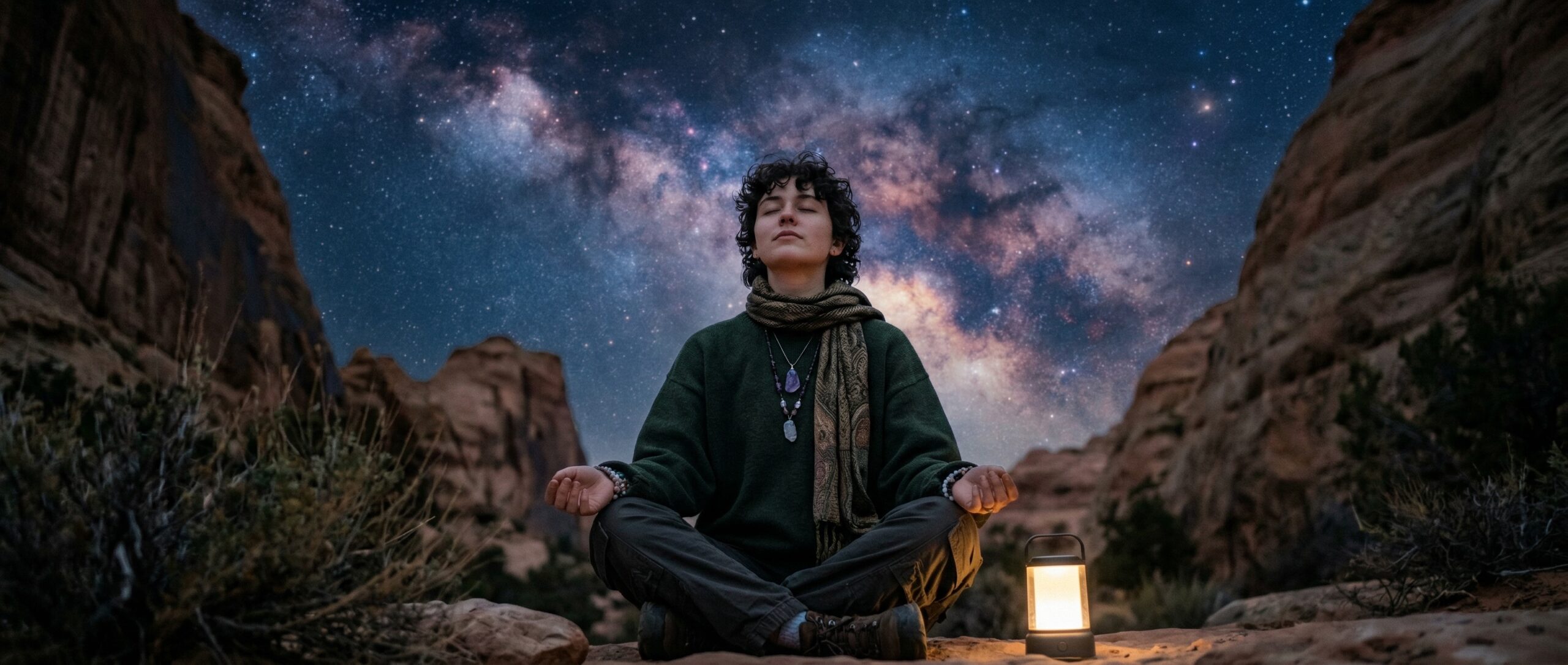
A March 2026 Religion News Service feature put a spotlight on the growing starseed subculture: people who believe they are extraterrestrial or cosmic souls inhabiting human bodies, here on a mission to awaken humanity. The belief system is not new, but it has exploded online in the TikTok/Instagram era and now sits at a fascinating crossroads of spirituality, influencer culture, UFO belief, and conspiracy thinking.
The reason it matters now is scale. According to the RNS reporting, #starseed content has passed the billion-view mark on TikTok, while high-profile influencers are building large audiences around claims involving galactic identities, hidden truths, reptilians, “the Matrix,” and spiritual awakening.
What’s Happening
- Religion News Service profiled influencer Elizabeth April, who presents herself as an alien consciousness in human form and has built a large social following around these claims.
- The story traces modern starseed belief back to Brad Steiger’s 1976 book *Gods of Aquarius*, but stresses that online communities have transformed the idea into a decentralized pseudo-religion.
- Starseed belief often includes:
- cosmic soul origins,
- alien species mythologies (Arcturians, reptilians, etc.),
- hidden-reality frameworks like “the Matrix” or “the system,”
- disclosure-style language about waking others up.
- Experts cited in the report say most participants are harmless, but the ecosystem can overlap with extremist or conspiratorial patterns, especially when spiritual identity fuses with hidden-enemy narratives.
Why It Matters
1. It is where New Age spirituality and conspiracy culture merge
Starseeds are not just a quirky alien belief. They show how spiritual longing can be channeled into alternative cosmologies with conspiratorial edges.
2. It is a huge online-native paranormal trend
Unlike legacy UFO mythology, starseed culture is built for short-form video, personal testimony, and influencer-led identity formation.
3. It offers a softer entry point into fringe belief systems
People may enter through wellness, self-discovery, or alien aesthetics—and only later encounter more extreme claims.
4. It is culturally rich content, not just a debunking exercise
The topic touches belief, belonging, loneliness, online ritual, and the hunger for cosmic meaning.
Related Articles:
- Chris Bledsoe Prophecy 2026 Investigation: Predictions, April Timeline, and the Conspiracy Theory Case File
- Rapture 2026 / March 22 Social Media Panic
- Why the Black Knight Satellite Myth Never Dies
This article was created using Media Blaster – Your content production specialist. Visit www.mediablaster.io for more information.
Leave a Reply