Author: Art Grindstone

  • The Triangle Above the Pines, Inside a Pine Barrens Black Triangle UFO Encounter

    The Triangle Above the Pines, Inside a Pine Barrens Black Triangle UFO Encounter

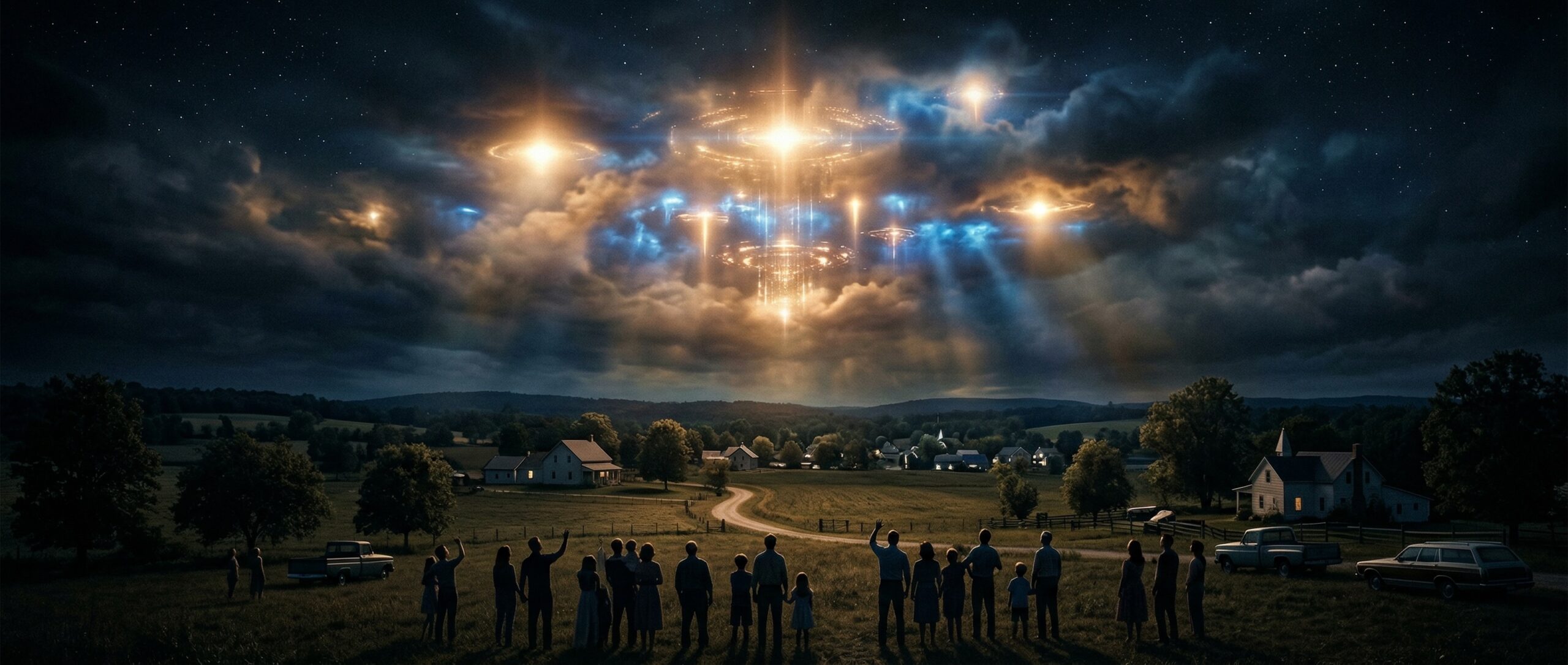
    It begins with the kind of scene that UFO culture never forgets. A Boy Scout camping trip in the New Jersey Pine Barrens. A moonlit forest. A strange burst of chanting somewhere in the dark. Then, according to the witness, everything goes silent. The insects stop. The normal sounds of the woods vanish. The air feels wrong. A static charge crawls over the skin. And above the tree line, a massive black triangle appears and hangs there in the night.

    That is the core of the story told by Tom from New Jersey on UFO Chronicles Podcast Ep.342, “The Triangle Above the Pines”. On its face, it is one more witness account in a genre crowded with enormous claims and inconsistent memories. But this case has a little more weight than the average paranormal retelling because it combines so many of the recurring elements that make black triangle reports so persistent: silence, unnatural atmosphere, a huge low-flying geometric craft, a strange mental impression, delayed disclosure, and a location already loaded with folklore and unease.

    This article looks at what was actually claimed in the UFO Chronicles account, where the story is strongest, where skeptics would push back, and why black triangle encounters like this keep returning to the center of UFO culture. The real interest here is not whether one podcast guest can prove what he saw. It is that this case seems to compress nearly the entire black triangle pattern into one wilderness encounter, and does it in a setting that already feels half-mythic before the object even appears.

    This is a Pine Barrens black triangle case built around one witness account

    The Triangle Above the Pines case comes from UFO Chronicles Podcast Ep.342, published on July 13, 2025. The guest, Tom from New Jersey, describes a major encounter from spring 1998 during a Boy Scout camping trip in Lebanon State Forest, now called Brendan T. Byrne State Forest. According to the episode page, the incident happened sometime around 2 to 3 AM and involved a huge silent black triangle seen above the trees.

    On its own, that would already be enough to draw attention. Black triangle UFO accounts remain one of the most recognizable and most durable subcategories in modern UFO testimony. But the podcast page adds another layer. Tom frames the 1998 event as part of a longer chain of strange experiences, including childhood memory fragments, unusual lights in his room, a disturbing back-deck memory involving faceless figures, and a much later 2022 sighting of what he describes as a glass-cone object in southern New Jersey.

    That broader framework is what gives this story real pillar-article depth. It turns the case from a simple “I saw a strange craft” narrative into something more psychologically and culturally interesting: a witness trying to place one unforgettable event inside a larger life pattern of anomalies, dread, missing certainty, memory fragments, and unexplained impressions. That does not make the story automatically true, but it does make it richer, stranger, and harder to dismiss as just another throwaway light-in-the-sky account.

    This is what the witness says happened during the 1998 camping trip

    According to the episode page and show summary, the main event took place on Tom’s first Boy Scout camping trip in the New Jersey Pine Barrens. The night was already charged. He recalls hearing a nearby group of Wiccans chanting somewhere in the distance, a detail that may or may not matter factually, but certainly matters atmospherically. It is the kind of detail that turns an ordinary wilderness night into something that already feels liminal before the central event even begins.

    Then came the environmental shift. This part of the account is especially important because many UFO stories live or die on their surrounding conditions, not just on the shape of the object. Tom describes the woods going suddenly and completely quiet. Insects stopped. Ambient sound dropped away. The air felt dense and wrong. He also describes a static-like electrical feeling on his skin, as if the environment itself had changed character just before the object appeared.

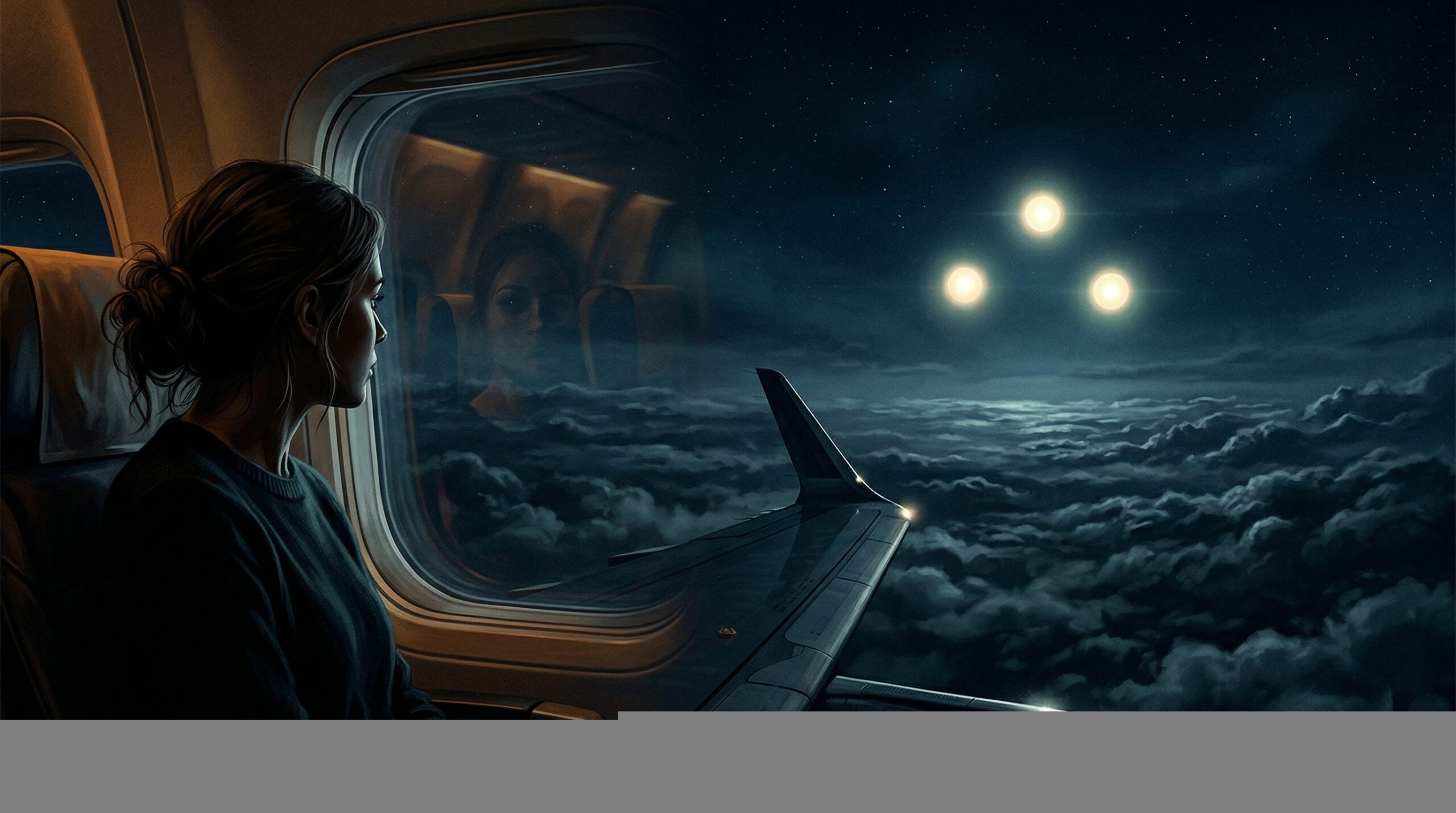
    What he says he then saw was a massive black triangle rising or becoming visible above the tree line. The object was described as dark, seamless, matte, and silent. It reportedly carried three lights with white centers and an aqua-blue haze around them. There was no dramatic engine noise, no obvious propulsion, and no conventional aircraft sound. Instead, the craft seemed to move in an unnervingly smooth way, more like a heavy object gliding over invisible water than a machine pushing through air.

    One of the strangest parts of the story is the claimed mental component. Tom describes a wordless, telepathic-like impression tied to the object. He did not present this as hearing a voice in the conventional sense. It was more like a direct knowledge or emotional imprint, a strong inner certainty that what he was looking at was powerful, non-human, and aware of him. He also describes a snapping or popping sensation in his head, which he likened to popcorn. Meanwhile, the friend beside him reportedly repeated the phrase “he sees it,” a detail that adds another layer of unease but also invites questions about what exactly each witness experienced in the moment.

    Perhaps most telling is what happened next: almost nothing. The boys did not run to adults. They did not alert the whole camp. They did not turn the encounter into an immediate crisis. They returned to the tent and stayed quiet. That subdued aftermath is one reason the story feels psychologically believable to some readers. High-strangeness witnesses often describe not dramatic action, but a kind of stunned compliance, as though the event arrives wrapped in its own emotional logic.

    The Pine Barrens make this encounter feel bigger than a single sighting

    Location matters in unexplained cases, and the Pine Barrens are not just another patch of woods. Southern New Jersey’s Pine Barrens carry a deep regional mythology built from isolation, darkness, local legend, and generations of stories that treat the landscape as emotionally charged. The region is most famously linked to the Jersey Devil, but that is only part of the broader pattern. The Pine Barrens are one of those places where folklore and geography reinforce each other until the setting itself begins to feel like evidence.

    That does not mean the place is paranormal. It means the place is psychologically fertile. Vast wooded areas, limited visibility, unusual nighttime acoustics, and a preloaded expectation of strangeness can all intensify how an event is perceived and remembered. A witness in a dense, culturally charged wilderness is already standing inside a story-rich environment. That matters because encounters do not happen in a vacuum. They happen inside landscapes that shape fear, focus, and interpretation.

    At the same time, that setting is also part of what makes the Triangle Above the Pines account so compelling. A giant black triangle drifting silently over suburban lights would feel eerie. The same object over a moonlit forest in the Pine Barrens feels archetypal. It drops immediately into the deeper current of American high-strangeness geography, where wilderness, secrecy, folklore, and witness isolation all converge. In that sense, the location is not proof, but it is part of the story’s power.

    Black triangle UFO cases endure because they combine geometry, scale, and silence

    Black triangle UFO reports have been circulating for decades, and they persist because they strike a very specific psychological nerve. Unlike glowing orbs, erratic lights, or distant luminous anomalies, black triangle craft often sound solid. Witnesses describe them as structured, immense, geometric, and physically present. That makes them feel less like fleeting atmospheric confusion and more like impossible machines intruding into ordinary space.

    The pattern is surprisingly consistent across many reports. A witness sees a dark triangular craft, usually at low altitude or at least low enough to feel physically imposing. The object is often silent or nearly silent. It may feature three bright corner lights, sometimes with a central light, sometimes not. It may hover, drift, or move with slow confidence rather than darting in cinematic ways. And the emotional reaction is often not simple terror. It is awe mixed with paralysis, a sense of scale and wrongness that feels bigger than fear.

    That is why the Pine Barrens case slots so easily into the broader black triangle canon. Whether one treats the account as literal, misperceived, embellished, or psychologically filtered, the structural features line up almost too neatly with the recurring template. Huge dark triangle. Silence. Atmospheric distortion. Powerful witness impression. Delayed retelling. Remote nighttime setting. From an editorial perspective, that makes the case useful because it becomes more than a local anecdote. It becomes a gateway into one of the most durable forms in UFO witness culture.

    The silence, static, and telepathic impression are what make this story unusual

    Plenty of UFO stories involve odd lights. Fewer involve a full environmental shift. One reason the Triangle Above the Pines case stands out is the cluster of sensory details attached to the sighting. The witness does not just describe an object. He describes the forest going dead silent, the air feeling pressurized or unnatural, and a static-electric sensation across the body before or during the appearance of the triangle.

    That cluster matters because it appears in many different corners of high-strangeness testimony. Some experiencers report electrical sensations, strange pressure changes, temporary sound suppression, missing ambient noise, or a feeling that the environment has become staged or artificial. Others report a “download,” an impression, or a direct knowing that does not feel like normal thought. These experiences are almost impossible to verify externally, which makes them frustrating from an evidentiary perspective, but they are too common in the witness literature to ignore entirely.

    In this case, the reported telepathic quality is especially interesting because it is presented not as a full message but as a forceful impression. That kind of detail often appears in witness stories that fall somewhere between observation and encounter. It suggests that what frightened the witness was not just the object’s appearance, but the feeling that the object was somehow participating in the moment consciously.

    From a skeptical standpoint, these details can also be read as signs of altered perception, adrenaline, memory layering, or later meaning-making. But even in that reading, they remain important. They are part of what makes UFO witness reports culturally sticky. People do not just remember what they saw. They remember how the world around them felt when the ordinary rules seemed to fail.

    The witness-memory issue is where this case gets strongest and weakest at the same time

    The same thing that gives this story emotional depth also creates its biggest evidentiary vulnerability. Much of the Triangle Above the Pines account is retrospective. The main event occurred in 1998, but the witness says the memory was suppressed or at least not fully integrated until much later. The episode page also includes earlier childhood fragments that sit in the difficult zone between memory, nightmare, dream residue, and later interpretation.

    That matters because childhood memory is notoriously unstable, especially when revisited through adulthood. People can hold vivid, emotionally true memories that are still incomplete, distorted, or reorganized over time. Memory is not a clean playback system. It is reconstructive. It absorbs later meaning, new fears, conversation, media, and personal identity. In UFO and experiencer literature, this problem becomes even sharper because the witness is often trying to connect scattered emotional fragments into a coherent life pattern.

    But this is also where the case becomes more compelling to some readers. The witness is not presenting a frictionless, polished, overconfident story. He is describing an event that seems to have remained psychologically unresolved for years. That unresolved quality can cut both ways. It may indicate memory distortion. It may also make the testimony feel less performative than accounts that arrive fully formed and theatrically certain.

    A strong pillar article has to hold both possibilities at once. The memory issue does not automatically destroy the account. But it absolutely prevents the article from treating the story as clean evidence of an extraordinary craft. The honest position is that the memory complexity is part of the case, not a side note to it.

    The later 2022 glass-cone sighting makes the witness story broader and stranger

    The UFO Chronicles episode page also references a second event from November 26, 2022 involving what the witness describes as a glass-cone object in southern New Jersey. That later sighting is not the core of this article, but it does matter because it changes the shape of the narrative. The witness is not presenting his life as divided into before and after one isolated childhood event. He is suggesting an ongoing relationship with anomaly.

    That can deepen the story, but it can also complicate it. In experiencer narratives, later events often reinforce earlier ones by making them feel newly real. A witness who doubts an old encounter may reinterpret it after another strange experience years later. That process can be psychologically understandable without telling us whether the underlying experiences were objectively paranormal, misperceived, symbolic, or some mixture of all three.

    Editorially, the best use of the 2022 sighting is as a secondary context lane. It should not overshadow the main black triangle encounter. Instead, it should be treated as part of the witness’s broader anomaly framework, a reminder that the triangle story belongs to a larger autobiographical pattern rather than standing alone.

    This is what skeptics would say about the Triangle Above the Pines story

    A credible unexplained article has to take skepticism seriously, especially in a case built around retrospective memory and a podcast retelling. The first skeptical objection is straightforward: there is no known physical evidence tied to this event. No photographs. No contemporaneous report. No radar data. No documented investigation file. What exists publicly is a witness narrative presented many years after the experience.

    The second objection concerns the setting itself. A moonlit forest at night is a powerful distortion environment. Shapes feel larger. Distances become unreliable. Silence can be remembered as absolute even when it was simply unusual. A charged atmosphere, a strange nearby soundscape, fatigue, suggestion, and the emotional intensity of childhood can all make an event feel more structured and supernatural in memory than it may have been in the moment.

    The third skeptical objection is the life-pattern problem. Once a witness begins linking multiple strange experiences across childhood and adulthood, there is always a risk that interpretation becomes self-reinforcing. One event validates another, and the larger story grows more coherent over time. That coherence may reflect reality. It may also reflect the human tendency to build narrative order out of scattered anomalies.

    None of this means the witness is lying. It means the case sits in the difficult middle ground where sincerity and uncertainty coexist. For many of the most enduring UFO witness stories, that is exactly where the real tension lies.

    This case still matters because it compresses the black triangle pattern into one memorable wilderness encounter

    The Triangle Above the Pines case remains interesting not because it proves anything decisively, but because it brings so many durable UFO motifs into one scene. It has the charged location. It has the wilderness isolation. It has the environmental silence. It has the static sensation. It has the giant silent triangle. It has the mental impression that the object was somehow aware. And it has the delayed retelling that makes the story feel half-haunting, half-investigative.

    That combination gives the story unusual staying power. Even readers who remain skeptical can understand why this would become a formative memory for a witness. And readers who follow experiencer literature will recognize nearly every major beat in the pattern. In that sense, the case matters as a piece of witness culture even if one remains agnostic about what the object actually was.

    The bigger reason it matters is that black triangle reports continue to occupy a strange middle territory in UFO belief. They often sound too structured and too close to the ground to be dismissed as distant lights, yet they rarely produce the kind of hard evidence that would settle the question. They survive because they feel more solid than folklore and less provable than conventional case files. The Triangle Above the Pines lives inside that same unresolved zone, which is exactly why people keep coming back to stories like this long after the night itself has passed.

    Frequently Asked Questions

    What is the Triangle Above the Pines case?

    The Triangle Above the Pines is a witness account featured on UFO Chronicles Podcast Ep.342. It centers on a reported spring 1998 black triangle UFO sighting during a Boy Scout camping trip in New Jersey’s Lebanon State Forest, now Brendan T. Byrne State Forest.

    Where did the Pine Barrens UFO encounter reportedly happen?

    According to the episode page, the event happened in Lebanon State Forest in New Jersey, which is now known as Brendan T. Byrne State Forest in the Pine Barrens region.

    What is a black triangle UFO?

    A black triangle UFO is a commonly reported type of unidentified craft described as large, dark, triangular, and often silent. Witnesses frequently report three bright lights, slow movement, and an overwhelming sense of scale.

    Why do some UFO witnesses report silence or telepathy?

    Many high-strangeness witness reports include environmental silence, pressure changes, static sensations, or telepathic-like impressions. These details are common in UFO testimony, though they are difficult to verify and can also be interpreted through psychology, stress, or altered perception.

    How reliable are childhood UFO memories?

    Childhood memories can be vivid and emotionally powerful, but they are also vulnerable to reconstruction, reinterpretation, and dream-memory overlap. That makes them meaningful as testimony, but difficult to treat as clean evidence without external corroboration.

    Was there physical evidence in this case?

    No publicly documented physical evidence is attached to the Triangle Above the Pines story. The case is known through witness testimony and the podcast episode page, not through photos, radar returns, or a formal investigation file.

  • The History of the Occult, From Ancient Magic to Modern Esotericism

    The History of the Occult, From Ancient Magic to Modern Esotericism

    The history of the occult is not one straight line and it is not one single tradition. It is a tangled story made of ancient temple rituals, hidden books, mystical philosophy, forbidden experiments, visionary movements, and recurring waves of fear. Across thousands of years, ideas now grouped under the word occult have moved through Mesopotamia, Egypt, Greece, the Islamic world, medieval Europe, Renaissance courts, secret societies, séance parlors, modern witchcraft circles, and the internet. What changes from era to era is not just the practice itself, but the meaning people assign to hidden knowledge.

    At its core, the occult concerns what is concealed. The word comes from the Latin occultus, meaning hidden or secret. In practice, it usually refers to systems of knowledge and ritual that claim access to unseen forces, symbolic truths, spiritual realities, or techniques of transformation that are not obvious to ordinary perception. That broad umbrella can include astrology, alchemy, ceremonial magic, Kabbalah, divination, spirit communication, mysticism, talismanic practice, and later movements such as Rosicrucianism, Theosophy, the Golden Dawn, and Wicca.

    This history matters because occult ideas have never stayed neatly outside mainstream culture. They have influenced religion, medicine, art, literature, science, psychology, and politics, sometimes quietly and sometimes in ways that changed entire eras. Even during periods of persecution, occult traditions survived by adapting, disguising themselves, or passing through elite and underground networks. If you want to understand why the occult still grips modern audiences, you have to start with the long arc of hidden knowledge itself, and with the recurring human suspicion that reality is stranger than it first appears.

    What the occult actually means

    Today, many people hear the word occult and think only of black magic, demons, satanic imagery, or forbidden ritual. Historically, that is far too narrow. The occult has often referred to bodies of hidden knowledge about how the cosmos works and how the human soul fits into it. In some periods, occult practice was treated as sacred philosophy. In others, it was denounced as fraud, heresy, or dangerous superstition. The category keeps changing, which is part of why the subject is so difficult to pin down.

    Scholars of Western esotericism often group the occult under a broader family of traditions that emphasize symbolic correspondences, initiation, secrecy, spiritual transformation, and the idea that hidden truths lie beneath visible reality. That means occult history is not only about spell books or ritual circles. It is also about attempts to read the universe as a coded system, where planets, metals, angels, sacred letters, dreams, and natural forces all reflect one another.

    For readers coming to this topic fresh, the simplest working definition is this: the occult is the pursuit of hidden knowledge, hidden forces, or hidden methods of transformation. Sometimes that pursuit is mystical and contemplative. Sometimes it is practical and ritualized. Sometimes it leans toward religion, and sometimes toward proto-science. Often it blurs those boundaries entirely.

    Ancient occult practices began as attempts to read a living cosmos

    The earliest roots of occult history appear in ancient civilizations that treated the world as charged with signs. In Mesopotamia, priests developed highly structured systems of divination, including celestial omen reading and extispicy, the interpretation of animal livers. These were not fringe hobbies. They were state-level technologies of prediction and meaning. Kings wanted to know what the heavens were saying, whether war was favored, and how disaster might be prevented.

    In ancient Egypt, ritual and magic were woven deeply into religion and daily life. Protective amulets, funerary texts, temple invocations, and sacred names all belonged to a worldview in which words and symbols could shape reality. Texts now associated with the Egyptian Book of the Dead were not casual superstitions. They were carefully preserved instructions for navigating the afterlife, aligning with divine order, and surviving cosmic judgment.

    These ancient systems matter because they reveal a pattern that persists throughout occult history: hidden knowledge is often treated as power, and power belongs to those who know how to interpret the signs. The priest, astrologer, diviner, or initiate becomes important not because he or she invents a fantasy world, but because that person claims to read the deeper structure beneath ordinary events.

    At this stage, the occult was not yet a separate category. Divination, temple ritual, healing, and sacred cosmology were woven into public religion and governance. Only later would these practices be split into approved knowledge and forbidden knowledge, a division that would shape the rest of occult history.

    The classical and Hellenistic worlds turned hidden knowledge into philosophy

    The Greek and Hellenistic periods added an intellectual framework that changed occult history forever. Mystery cults such as the Eleusinian Mysteries offered initiation into sacred rites that promised revelation, transformation, and a deeper relationship to death and rebirth. These traditions emphasized secrecy, symbolic drama, and experiential knowledge. To know was not just to think. It was to be changed.

    Later, in the cosmopolitan atmosphere of Hellenistic Egypt, especially Alexandria, ideas from Greek, Egyptian, Persian, and Jewish traditions mixed in fertile and often unstable ways. This produced some of the most influential currents in occult history, including Hermeticism, Gnosticism, astrological synthesis, and magical papyri. The writings attributed to Hermes Trismegistus framed the universe as a spiritually layered reality in which humans could ascend through knowledge, discipline, and divine insight.

    Hermetic thought introduced a language that would echo for centuries: as above, so below; the human being as microcosm of the cosmos; spiritual ascent through hidden wisdom; and the belief that symbols, planets, numbers, and elements interlock in meaningful ways. These were not just mystical slogans. They became the backbone of later ceremonial magic, alchemy, and esoteric philosophy.

    At the same time, Jewish mystical traditions laid early foundations for what would later develop into Kabbalah. Sacred language, numerology, angelology, and the hidden dimensions of scripture all contributed to a view of reality as layered, encoded, and spiritually active. That idea, that letters and names carry metaphysical force, would become one of the most enduring themes in occult thought.

    Occult traditions survived the medieval world by moving through religion, scholarship, and secrecy

    The medieval period is often imagined as an age of pure suppression, but the actual history is more complicated. Hidden knowledge did not disappear. It moved. It was translated, commented on, condemned, adapted, and quietly preserved. One of the most important bridges came through the Islamic world, where scholars translated and developed Greek philosophical, astrological, and alchemical texts. Without this transmission, much of what later fueled the European occult revival might have vanished.

    Alchemy matured significantly in Arabic intellectual culture, where it became both an experimental and symbolic art. While many later myths exaggerate the search for literal gold, alchemy was also a theory of matter, transformation, purification, and hidden processes in nature. It influenced medicine, metallurgy, and early natural philosophy. Some of that legacy would eventually feed directly into the scientific tradition, even as alchemy itself was later dismissed.

    Meanwhile, Jewish Kabbalah developed more fully in medieval Spain and Provence. The emergence of texts such as the Zohar turned mystical interpretation, divine emanation, and sacred language into a profound symbolic system. Kabbalah would later be adapted into Christian and occult contexts, often in distorted ways, but its core importance in esoteric history is enormous.

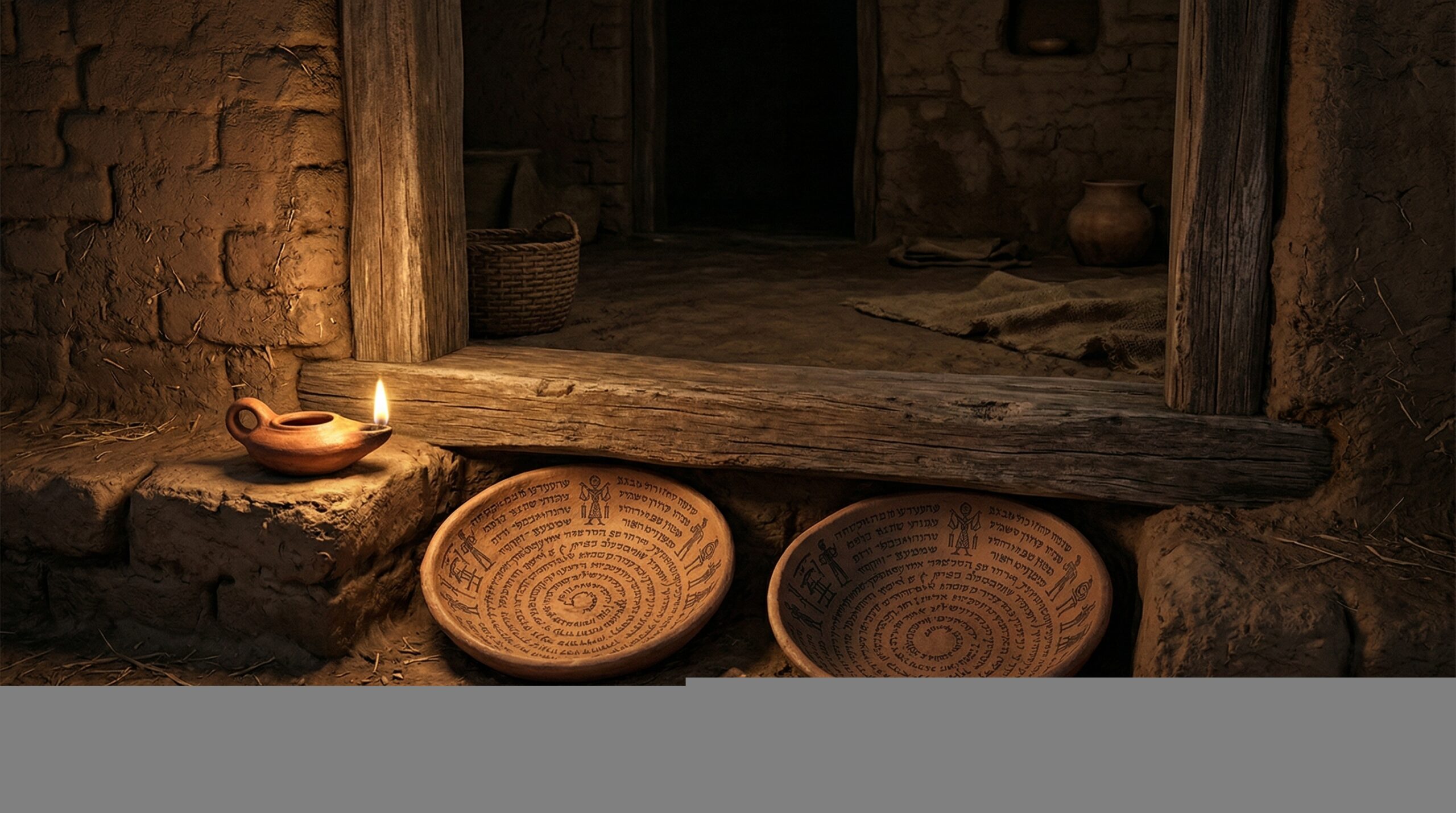
    Medieval Europe also saw the circulation of grimoires, manuals of ritual magic often attributed to ancient authorities. Texts associated with Solomon became especially influential. These works blended prayers, astrological timing, sacred names, talismans, spirits, and ritual procedures into systems that promised access to hidden powers. Some practitioners framed this as licit magic aligned with divine order. Others crossed into forms that church authorities considered illicit, dangerous, or demonic.

    This is where an important division hardens in occult history. Certain forms of hidden knowledge could be tolerated when framed as natural philosophy or sanctioned religious mysticism. The same ideas, placed in the wrong hands or stripped of orthodoxy, could be condemned as sorcery.

    The Renaissance made the occult look like a lost science of the soul

    The Renaissance revived interest in antiquity, but it also revived the dream that ancient wisdom contained forgotten truths about the structure of reality. Thinkers such as Marsilio Ficino, Giovanni Pico della Mirandola, and Heinrich Cornelius Agrippa helped transform occult currents into an ambitious intellectual project. Their work treated Hermetic writings, astrology, natural magic, Christian theology, and Kabbalah as parts of a deeper wisdom tradition that might reunite human beings with cosmic truth.

    In this period, occult philosophy often presented itself not as rebellion but as restoration. The idea was that hidden knowledge had once been known by sages, priests, prophets, and initiates, then fragmented or corrupted over time. To recover that wisdom was to restore a lost harmony between mind, nature, and the divine.

    Agrippa’s Three Books of Occult Philosophy became especially important because it tried to synthesize correspondences between the elemental, celestial, and divine worlds. This model suggested that the universe could be navigated through symbols, planetary influences, sacred names, and ritual techniques. The occult, in other words, became systematized.

    Paracelsus added another crucial strand by linking occult correspondences to healing and medicine. He challenged established medical orthodoxies and treated nature as filled with signatures, hidden properties, and spiritual forces. That approach now looks alien to modern medicine, but in its time it blurred the boundary between mystical speculation and empirical curiosity. Even figures later remembered as pillars of science, including Isaac Newton, spent substantial energy on alchemy and biblical chronology. The line between occult inquiry and scientific inquiry was not yet cleanly drawn.

    Fear, heresy, and witch hunts transformed the occult into a zone of suspicion

    From the late medieval period into the early modern era, Europe entered one of the darkest chapters in occult history. Between roughly 1450 and 1750, tens of thousands of people were prosecuted and executed in witch trials, with the peak occurring between about 1580 and 1650. These persecutions were not a simple response to occult practice as such. They emerged from a volatile mix of religious conflict, local panic, legal change, misogyny, political instability, and demonological imagination.

    The rise of witch-hunting changed the emotional meaning of hidden practice. What had once been framed as natural magic, folk healing, blessing, cunning craft, or mystical knowledge could now be recoded as satanic conspiracy. Manuals such as the Malleus Maleficarum helped build a worldview in which secret ritual was not merely suspect but existentially dangerous.

    This legacy still shapes modern perceptions. Many contemporary fears about the occult, especially in popular media, descend less from actual occult traditions than from the propaganda of demonology and panic. The witch hunts did not just kill people. They rewired the cultural imagination, making hidden knowledge seem inseparable from threat.

    And yet, even under that pressure, occult traditions did not vanish. Folk magic persisted. Grimoires circulated. Astrologers still advised clients. Alchemical laboratories continued to operate. The occult survived not because persecution was weak, but because the appetite for hidden explanation remained stronger than official attempts to erase it.

    Secret societies helped keep esoteric ideas alive in the age of reason

    The Enlightenment is often framed as the triumph of rationality over magic, but the historical reality is more paradoxical. While skepticism and scientific method gained authority, esoteric traditions reorganized themselves through new networks. Rosicrucian manifestos, published in the early 17th century, presented the image of a hidden brotherhood guarding transformative wisdom. Whether the group existed exactly as claimed mattered less than the power of the idea. Secret initiates, hidden masters, and encoded truth became enduring features of occult imagination.

    Freemasonry, formally organized in the early 18th century, was not simply an occult order, but it became deeply entangled with esoteric symbolism, ritual initiation, sacred geometry, temple imagery, and the language of hidden enlightenment. For many later movements, Masonry provided a structure, a symbolic grammar, and a social model for how secret knowledge could be transmitted in modernity.

    At the same time, underground and elite circles alike continued exploring astrology, ceremonial practice, Christian mysticism, alchemy, and speculative correspondences. The occult no longer occupied the center of learned culture, but neither had it been fully expelled. Instead, it adapted to a world increasingly divided between public rationality and private initiation.

    The 19th century occult revival brought hidden knowledge back into public life

    If the Renaissance intellectualized the occult, the 19th century democratized and sensationalized it. Industrial modernity created enormous spiritual anxiety. Scientific progress, urbanization, mass media, colonial contact, and religious doubt all pushed people to seek alternative frameworks. The occult revival answered that need by offering mystery, meaning, and access to realities beyond mechanistic materialism.

    Spiritualism exploded after 1848, when the Fox sisters became associated with spirit communication in the United States. Séances, table-rapping, trance mediumship, and ghost photography all helped turn contact with the dead into a mass phenomenon. What made Spiritualism so powerful was its hybrid nature. It looked emotional and supernatural, but it also borrowed the language of experiment, evidence, and investigation. The séance room became a strange cousin to the laboratory.

    At the same time, the Theosophical Society, founded in 1875 by Helena Petrovna Blavatsky and others, fused esoteric philosophy with global religious synthesis. Theosophy drew on Hindu, Buddhist, Hermetic, Kabbalistic, and occult concepts to construct a grand narrative of hidden masters, spiritual evolution, and lost wisdom traditions. Many later New Age and occult currents owe an enormous debt to that framework.

    The Hermetic Order of the Golden Dawn, founded in 1888, brought another major shift. It systematized ritual magic with a level of structure and symbolic integration that still influences modern practitioners. Drawing from Kabbalah, tarot, astrology, alchemy, Enochian systems, and ceremonial liturgy, the Golden Dawn turned occult initiation into a highly articulated spiritual technology. From this world emerged figures such as Aleister Crowley, one of the most famous and controversial occultists of the 20th century.

    The 20th century turned the occult into a modern spiritual marketplace

    In the 20th century, occult traditions did not disappear into nostalgia. They diversified. Some movements became more formal and initiatory. Others became more personal, eclectic, and experimental. Crowley’s Thelema reframed occult work around will, ritual, and personal spiritual destiny. Dion Fortune brought psychology and esotericism into closer conversation. Later, Gerald Gardner helped launch modern Wicca, which would become one of the most influential forms of contemporary Pagan practice.

    Postwar occult culture also absorbed the language of therapy, self-development, altered consciousness, and liberation. Tarot moved beyond elite or clandestine circles into a broad symbolic tool for reflection and divination. Astrology returned in mass-market form through newspapers, magazines, and later digital platforms. New Age culture blended Eastern spirituality, channeling, crystal work, alternative healing, and esoteric symbolism into a looser but highly influential spiritual ecosystem.

    By the late 20th century, chaos magic pushed things even further. Instead of treating occult systems as fixed inheritances, chaos practitioners often treated belief itself as a tool. Symbols, sigils, ritual scripts, and identities could be adopted, discarded, and recombined according to results. This was a radical break from older lineage-based structures, and it anticipated the hyper-fluid, remix culture of the internet age.

    Meanwhile, academic scholarship became more serious about the subject. Historians of religion and specialists in esotericism increasingly treated occult traditions not as embarrassing leftovers, but as central threads in the history of ideas. That scholarly shift matters because it gave the occult a new kind of legitimacy: not spiritual legitimacy, but historical importance.

    The occult still matters because the hunger for hidden meaning never disappeared

    The modern revival of occult interest is not just a trend driven by aesthetics, though aesthetics certainly help. Social media has made tarot spreads, sigil magic, folk witchcraft, lunar rituals, and ceremonial symbolism more visible than ever. But visibility is only part of the story. The deeper reason the occult still matters is that modern life continues to generate the same anxieties that fueled earlier revivals: uncertainty, dislocation, institutional distrust, and the sense that official explanations are incomplete.

    For some people, the occult offers spiritual agency outside organized religion. For others, it offers symbolic tools for self-reflection, ritual structure, or a language for private transformation. For still others, it provides access to mystery in a world that often feels over-measured and under-explained. Even skeptics remain fascinated by it because occult history keeps colliding with questions about belief, power, secrecy, altered states of consciousness, and who gets to define what counts as legitimate knowledge.

    The occult also remains culturally influential because it has become a bridge subject. It connects to conspiracy culture, psychology, folklore, comparative religion, art history, UFO belief, hidden-history narratives, and the continuing public obsession with secret societies. Once you start tracing its history, you realize the occult is not a strange side corridor of civilization. It is one of the recurring languages people use to talk about forces they feel but cannot fully explain.

    That is why the history of the occult remains so enduring. It is not just the history of hidden rites. It is the history of a recurring human suspicion that visible reality is only the surface.

    Conclusion

    The history of the occult is really the history of hidden explanations. From Mesopotamian diviners and Egyptian funerary magic to Hermetic philosophy, medieval grimoires, Renaissance magi, Victorian séances, and modern occult revivalism, the same underlying pattern keeps returning. Human beings repeatedly imagine that the universe contains veiled structures, and that some combination of symbol, ritual, insight, and discipline can reveal them.

    What changes is the cultural frame. In one era, occult knowledge is priestly and sacred. In another, it is criminalized. In another, it becomes fashionable among intellectuals. In another, it is repackaged for mass media and digital culture. That flexibility explains why the occult has endured for so long. It is not one doctrine. It is a way of approaching mystery itself.

    If you want the shortest answer to why occult history still matters, it is this: the occult survives because people keep feeling that the official map of reality is incomplete. Whether that instinct leads to revelation, illusion, spiritual practice, philosophical insight, or cultural mythology depends on the era and the interpreter. But the instinct itself has never gone away.

    Frequently Asked Questions

    What does the word occult actually mean?

    The word occult comes from the Latin occultus, meaning hidden or concealed. It usually refers to traditions, practices, or systems of thought that claim access to hidden forces, hidden knowledge, or spiritual realities beyond ordinary perception.

    Is the occult the same thing as magic?

    Not exactly. Magic is one part of occult history, but the occult also includes alchemy, astrology, divination, mystical philosophy, sacred symbolism, Kabbalah, spirit communication, and esoteric religious systems. It is a broader category than spellwork alone.

    When did occult practices begin?

    Occult practices have roots in ancient civilizations, especially Mesopotamia and Egypt, where divination, ritual protection, sacred symbols, and hidden cosmological knowledge were part of religious and political life thousands of years ago.

    Why did the occult survive periods of persecution?

    Occult traditions survived by adapting to new cultural forms. Some were preserved in religious mysticism, some in scholarly translation, some in folk practice, and some in secretive or initiatory groups. The ideas kept resurfacing because the desire for hidden explanation never disappeared.

    How is the occult connected to science?

    Before the modern separation between science and spirituality became rigid, many figures explored both. Alchemy influenced early chemistry, astrology shaped early astronomy, and thinkers such as Isaac Newton studied both natural law and esoteric subjects. The relationship was once far more intertwined than modern readers often assume.

    Why is the occult popular again today?

    The occult has regained visibility because it offers meaning, symbolism, ritual, and alternative frameworks at a time when many people feel alienated from institutional religion and unconvinced by purely material explanations. Social media has amplified the aesthetics, but the deeper draw is existential and spiritual.

    Related Articles

    Related Articles

    Suggested SEO Title: The History of the Occult, From Ancient Magic to Modern Esotericism

    Suggested Meta Description: Explore the history of the occult from Mesopotamian divination and Egyptian ritual magic to Hermeticism, witch hunts, secret societies, Spiritualism, and modern esotericism.

    This article was created using Media Blaster – Your content production specialist. Visit www.mediablaster.io for more information.

  • The Dyatlov Pass Mystery: Nine Hikers, One Impossible Night

    The Dyatlov Pass Mystery: Nine Hikers, One Impossible Night

    The dyatlov pass mystery remains one of the most chilling unsolved cases of the twentieth century: in February 1959, nine experienced Soviet ski hikers died in the Ural Mountains under circumstances so bizarre that official investigators could only conclude a “compelling natural force” was responsible. Decades later, declassified documents, competing theories, and a persistent cryptid hypothesis keep this case alive for a new generation of researchers.

    What happened on the slopes of Kholat Syakhl — a name that translates roughly to “Dead Mountain” in the local Mansi language — has never been fully explained. The Dyatlov Pass incident sits at the intersection of Cold War secrecy, wilderness horror, and the kind of evidence that refuses to fit any single explanation. That’s exactly why it won’t go away.

    What This Story Actually Says About the Dyatlov Pass Mystery

    On the night of February 1–2, 1959, the nine hikers — led by Igor Dyatlov, all experienced mountaineers — abandoned their tent in temperatures reaching -30°C. They were barefoot or wearing only socks. The tent had been cut open from the inside, suggesting something drove them out in a frantic rush.

    Their bodies were found scattered across the slope over the following weeks. Some showed signs of extreme trauma: crushed ribs, a fractured skull, one victim missing her tongue. Yet there were no external wounds consistent with a physical assault. Two bodies showed radiation traces. Soviet investigators closed the case with a verdict of “unknown natural forces” — a phrase that has haunted researchers ever since.

    In 2019, declassified documents revealed that investigator Lev Ivanov had observed luminous spheres in the sky above the pass on the night in question — information suppressed at the time. His private notes described these orbs with visible unease. The full Wikipedia overview of the Dyatlov Pass incident documents the timeline in detail, though it cannot resolve the central mystery.

    Why This Topic Spreads So Easily

    The Dyatlov Pass mystery has every element that makes a story go viral before “going viral” was even a concept. It involves real people with names and faces. It happened behind the Iron Curtain, where secrecy was default and truth was rationed. The physical evidence is genuinely strange — the injuries, the radiation, the missing tongue, the luminous spheres. And crucially, every mainstream explanation leaves something unexplained.

    When an avalanche theory feels insufficient, people reach for infrasound. When infrasound doesn’t explain the radiation, the military weapons theory steps in. When no theory fits perfectly, the human mind does what it always does: it looks for an agent. Something with intent. Something watching from the dark. That’s where the cryptid theory enters.

    What the Evidence Actually Supports

    The cryptid theory — specifically, the idea that a Russian Yeti or Menk encountered the group — is popular but faces a fundamental problem: no animal tracks were found near the tent or the bodies. The Soviet investigators, whatever they were hiding, did conduct a physical search of the area. According to dyatlovpass.com, the most comprehensive English-language archive on the case, no evidence of large animal activity was recorded.

    What the evidence does support: the tent was cut from inside, not outside. The hikers fled deliberately rather than stumbling out in confusion. The fatal injuries on some victims were consistent with extreme compression — the kind produced by mechanical force or an explosion at distance — not with animal attack. The radiation traces on two items of clothing remain unexplained.

    The 2019 Russian reinvestigation concluded avalanche was the most likely cause, but acknowledged it could not account for all the anomalies. Researchers affiliated with the United States Holocaust Memorial Museum’s work on Soviet-era secrecy have noted that the systematic suppression of inconvenient evidence was standard practice — meaning what the official record says and what happened may diverge significantly.

    What Skeptics or Mainstream Experts Would Say

    The dominant scientific position is that an avalanche or slab of wind-compacted snow struck the tent, causing the group to flee in panic. The unusual injuries could result from being struck by dense snow while sheltering in a ravine. The radiation, in this view, may be a red herring — some of the hikers worked in facilities where low-level radiation exposure was common.

    The luminous spheres reported by Ivanov? Skeptics point to military flares, rocket tests from the Kapustin Yar facility, or even natural atmospheric phenomena like plasma vortices. The suppression of Ivanov’s notes is explained as standard Soviet-era censorship of anything that might raise uncomfortable questions about military activity — not evidence of a paranormal cover-up.

    Why This Story Still Matters

    The Dyatlov Pass mystery matters because it is, at its core, a story about the limits of institutional honesty. The Soviet government knew something it didn’t tell the families. Whether that something was a weapons test, a classified aerial program, or something stranger, the deliberate opacity transformed a tragedy into a mystery that has now outlasted the government responsible for the cover-up.

    It also matters because the nine hikers were real. Lyudmila Dubinina. Semyon Zolotaryov. Yuri Doroshenko. The tendency to treat this case as a puzzle can obscure the fact that nine young people died in terrible circumstances, and their families never received a satisfactory answer.

    The Bigger Unexplained Pattern

    Dyatlov Pass sits within a long tradition of wilderness encounters that defy easy explanation — from the Bennington Triangle disappearances in Vermont to the mysterious deaths in the forests of Japan’s Aokigahara. What unites these cases is not necessarily the paranormal, but the consistent failure of official investigation to fully account for the evidence. The cryptid angle is the loudest part of the Dyatlov story, but the deeper mystery is institutional: what did the Soviet government know, and why did it matter enough to suppress?

    Final Assessment

    The Dyatlov Pass mystery is unlikely to be solved definitively. Too much time has passed, too many documents remain classified or destroyed, and the physical site has changed. What we can say is that the cryptid theory, while compelling as narrative, lacks the physical evidence to be considered seriously alongside the military, infrasound, and avalanche hypotheses. The luminous spheres reported by Lev Ivanov are the most genuinely unexplained element — and they point not toward a creature in the snow, but toward something in the sky above it. Whatever it was, nine people paid for the encounter with their lives, and Russia has never fully explained why.

    Frequently Asked Questions

    Was the Dyatlov Pass mystery ever officially solved?

    No. A 2019 Russian reinvestigation concluded that an avalanche was the most likely explanation, but acknowledged it could not account for all the physical evidence — including the radiation traces, the unusual injuries, and the luminous spheres reported by investigator Lev Ivanov.

    Is the Russian Yeti theory taken seriously by researchers?

    Mainstream researchers consider it unlikely. The absence of animal tracks near the tent or bodies is a significant problem for the cryptid hypothesis. Most serious researchers focus on military, atmospheric, or geological explanations.

    What were the luminous spheres seen at Dyatlov Pass?

    Investigator Lev Ivanov reported seeing glowing orbs in the sky over the pass on the night of the deaths. His notes were classified and only released in 2019. Explanations range from military flares and rocket tests to natural plasma phenomena — none has been confirmed.

    Why was the Soviet investigation kept secret?

    Historians believe the secrecy was connected to nearby military testing programs. The Kapustin Yar rocket facility was active in the region, and Soviet policy routinely suppressed information that might draw attention to classified military activity.

    Related Articles

    This article was created using Media Blaster – Your content production specialist. Visit www.mediablaster.io for more information.

  • The Mystery Earth Hum and the Lightning Jets Nobody Talks About

    The Mystery Earth Hum and the Lightning Jets Nobody Talks About

    Deep beneath your feet, the planet is humming. Above your head, lightning is firing upward into space. Neither phenomenon is fully explained — and both are happening right now.

    Science has mapped the ocean floor, sequenced the human genome, and landed rovers on Mars. Yet two atmospheric and geological phenomena happening continuously on Earth remain genuinely mysterious. The mystery Earth hum — a persistent low-frequency vibration detected by seismometers on every continent — and gigantic upward lightning jets that punch 50 to 90 kilometres into the mesosphere are real, documented, and still not completely understood. These aren’t fringe claims. They’re published science with open questions attached.

    What This Story Actually Says

    The Earth hum, sometimes called the “Earth’s background free oscillations,” is a continuous seismic signal recorded since the 1990s. It’s not caused by earthquakes. It pulses at frequencies between 2 and 7 millihertz — far too low for human ears — and has been detected by seismographs buried in Antarctica, placed on ocean floors, and installed in remote deserts. The leading hypothesis involves ocean waves interacting with the seafloor, but researchers have not reached consensus.

    Separately, in 1989, a NASA aircraft accidentally photographed a massive upward discharge above a thunderstorm. That image launched the study of transient luminous events — sprites, elves, blue jets, and the largest of them all: gigantic jets. These upward lightning bolts connect storm tops directly to the ionosphere. NASA’s Earth science division has been studying them ever since, and the trigger mechanism remains unknown.

    Why This Topic Spreads So Easily

    There’s something viscerally compelling about discovering that the planet you live on is doing something you never knew about. The Earth hum combines two powerful emotional triggers: the unknown and the ever-present. It’s always been there. You’ve never heard it. That gap between reality and awareness is where viral content lives.

    Upward lightning adds a visual punch — photographs of blue jets and gigantic electrical discharges firing toward space look like science fiction. SpaceWeather.com regularly tracks reports from aircraft pilots and space station crew, which keeps the topic circulating in aviation, astronomy, and unexplained communities simultaneously.

    What the Evidence Actually Supports

    Both phenomena are solidly documented. The Earth hum appears in peer-reviewed seismology journals and has been independently confirmed by research teams on multiple continents. Gigantic jets have been captured on video from the International Space Station and photographed by storm chasers. NOAA’s lightning research resources confirm that upward lightning is a recognized atmospheric phenomenon, even if its full mechanics remain under study.

    What the evidence does not support: supernatural origins, government suppression, or connection to other unexplained phenomena. These are interesting science problems, not cover-ups.

    What Skeptics Say

    Mainstream scientists don’t dispute that these phenomena exist — they dispute the framing that they’re “hidden” or suppressed. The Earth hum has been openly studied since the 1990s. Upward lightning has its own scientific subdiscipline. Skeptics push back on the idea that “not yet fully explained” equals “mysterious in a paranormal sense.” Science has open questions. That’s not a failure — it’s how the discipline works.

    Why It Matters

    Understanding the Earth hum could improve seismic monitoring and early earthquake detection systems. Gigantic jets affect the electrical balance of the upper atmosphere, which influences GPS accuracy, radio propagation, and potentially climate modelling. These aren’t abstract curiosities — they have engineering consequences.

    The Bigger Pattern

    Humans have a long history of discovering that familiar systems — weather, the ocean, the ground itself — are doing things we didn’t notice. Ball lightning was dismissed as folklore for centuries before being photographed. Sprites above thunderstorms were reported by pilots for decades before anyone believed them. The pattern suggests: look harder at the things you assume are understood.

    Final Assessment

    The mystery Earth hum and gigantic lightning jets are two of the most compelling genuine scientific unknowns on the planet. Neither requires supernatural explanation — but both reward curiosity. If you find yourself drawn to the unexplained, these are the cases to follow: real phenomena, serious researchers, and open questions that might resolve within our lifetimes.

    Frequently Asked Questions

    Can humans hear the Earth hum?

    No. The Earth hum oscillates at 2–7 millihertz, far below the 20 Hz lower threshold of human hearing. It can only be detected by sensitive seismographic instruments.

    How big are gigantic lightning jets?

    Gigantic jets can extend from storm tops at around 15–20 km altitude all the way to the ionosphere at 50–90 km. That makes them the largest lightning discharges on Earth by vertical extent.

    Are these phenomena connected to each other?

    There is no established scientific connection between the Earth hum and gigantic jets. They occur in different physical domains — one in the solid Earth, one in the upper atmosphere — and have separate proposed mechanisms.

    Related Articles

    This article was created using Media Blaster – Your content production specialist. Visit www.mediablaster.io for more information.

  • 79 People Just Shared Their Creepiest Unsolved Mysteries

    79 People Just Shared Their Creepiest Unsolved Mysteries

    When ordinary people start sharing their strangest, most disturbing, most unexplained experiences — and millions of others can’t stop reading — something deeper than entertainment is happening. These are unsolved mysteries real stories that refuse to be explained away, and they’re resonating across the internet like a collective confession.

    Bored Panda recently published a listicle compiling 79 of the creepiest unsolved mysteries shared by real people online — and the response was immediate and overwhelming. Ghost sightings, shadow people lurking in doorways, unexplained disappearances of loved ones, dreams that predicted accidents before they happened, cold cases that haunted entire communities. The piece went massively viral, not because it was sensational or fabricated, but because it felt profoundly, uncomfortably real. These weren’t Hollywood horror stories. They were your neighbor’s story. Your aunt’s story. Maybe even yours.

    What This Story Actually Says

    The Bored Panda compilation didn’t invent anything. It gathered. What makes it remarkable is the sheer breadth and consistency of what people submitted. Across dozens of contributors spanning multiple countries, several themes emerged with striking regularity: encounters with shadow figures that couldn’t be explained by sleep paralysis alone, precognitive dreams that turned out to be accurate down to specific details, disappearances of people or objects that defied rational explanation, and cold case connections that left contributors wondering whether they’d witnessed something connected to an unsolved crime.

    The stories weren’t polished. They were raw, often grammatically imperfect, and filled with the kind of specific sensory detail — the particular smell in the hallway, the way the shadow moved, the exact words spoken in the dream — that’s hard to fabricate convincingly. Readers responded not with disbelief, but with recognition. Thousands of comments began with some version of: “This happened to me too.”

    Why This Topic Spreads So Easily

    Viral paranormal content isn’t a new phenomenon, but the Bored Panda format tapped into something particularly powerful: social proof at scale. When one person shares a ghost story, it’s anecdote. When 79 people share structurally similar experiences from independent sources, it starts to feel like data — even if it isn’t scientific data.

    Social sharing platforms have fundamentally changed how paranormal experiences are communicated. Where these stories once lived in hushed conversations or regional folklore, they now spread globally within hours. The result is a kind of distributed folklore archive — unvetted, unfiltered, but also unscripted. Pew Research has consistently found that large percentages of Americans report believing in or having experienced something they consider supernatural, and platforms like Bored Panda are simply giving those experiences somewhere visible to land.

    What the Evidence Actually Supports

    There’s no scientific evidence that the specific events described — ghost sightings, prophetic dreams, shadow people — represent genuinely paranormal phenomena. What the evidence does support is that these experiences are real to the people who have them, and that they’re far more common than mainstream culture tends to acknowledge.

    Sleep research offers partial explanations for some categories: hypnagogic hallucinations, sleep paralysis, and REM intrusion can produce vivid, terrifying experiences of presence or movement. Cognitive research on memory and pattern recognition helps explain why some people see meaningful patterns in coincidences. But these explanations don’t account for all reported cases — particularly the subset of precognitive dreams, which have been studied in controlled settings with results that remain disputed rather than definitively debunked.

    What Skeptics or Mainstream Experts Would Say

    Skeptics would correctly note that a viral listicle is not a research paper. Confirmation bias is a powerful force — people who’ve had strange experiences are more likely to submit, read, and share content that validates those experiences. The absence of mundane explanations in the stories doesn’t mean mundane explanations don’t exist; it more likely means contributors didn’t mention them, or didn’t pursue them.

    Mainstream psychologists would also point to the contagion effect of paranormal belief: exposure to others’ accounts can prime people to interpret ambiguous experiences through a paranormal lens. That said, dismissing 79 accounts across diverse demographics as pure confabulation is its own kind of intellectual overreach.

    Why This Story Still Matters

    The Bored Panda piece matters because it’s a cultural artifact — a snapshot of what people are actually experiencing and choosing to share publicly in 2026. The fact that millions engaged with it tells us something important: the appetite for authentic, unresolved paranormal narrative has not diminished. If anything, it’s growing.

    In an era of algorithmically curated content designed to deliver comfortable certainty, the enduring appeal of genuinely unsolved mysteries is striking. People aren’t just consuming these stories for entertainment. They’re using them to process experiences they don’t have language for, to find community around phenomena that feel isolating, and to push back against a culture that often treats the unexplained as the unimportant.

    The Bigger Unexplained Pattern

    The American Folklore Society has long documented how communities use shared supernatural narratives to process fear, grief, and the unknown. What Bored Panda’s listicle represents is a digital-age evolution of that same impulse. The stories follow recognizable folkloric structures — the warning dream, the entity at the threshold, the vanished person — because these archetypes map onto real psychological experiences that humans have been having for millennia.

    What’s new is the speed and scale. A 1970s shadow person encounter stays local. A 2026 shadow person encounter gets 2 million impressions by Thursday. The folklore is the same. The distribution is entirely new — and that changes what these stories can do, how many people they can reach, and how quickly a shared mythology can form around genuinely unexplained human experience.

    Final Assessment

    The Bored Panda 79 unsolved mysteries compilation is not evidence of the paranormal. It’s evidence of something arguably more interesting: the scale and consistency of human experiences that remain genuinely unexplained. Whether those experiences point toward something beyond conventional understanding is a question the listicle doesn’t answer — and that’s precisely why it went viral. The best unsolved mysteries real stories don’t resolve. They resonate. And right now, they’re resonating with millions.

    Frequently Asked Questions

    Are the stories in the Bored Panda unsolved mysteries list verified?

    No — the compilation is user-submitted and crowd-curated rather than independently verified. That said, the consistency of certain themes across unrelated contributors is itself noteworthy, and many details align with well-documented categories of anomalous experience research.

    Why do unsolved mysteries stories go viral so reliably?

    Unresolved narrative creates a psychological itch that demands scratching. Stories with no clean ending trigger continued mental engagement — you keep thinking about them. Combined with social proof from multiple contributors, viral paranormal content exploits some of the deepest engagement mechanisms in human psychology.

    What’s the most commonly reported type of unexplained experience?

    Shadow figures and precognitive dreams appear most frequently in large-scale user-submitted compilations. Both categories also appear consistently in academic anomalous experience research, making them the most studied — and most contested — categories in paranormal literature.

    Is there scientific research into precognitive dreams?

    Yes, though results are disputed. Studies conducted at institutions including the University of Edinburgh’s Koestler Parapsychology Unit have found statistically anomalous results in some dream precognition trials. Mainstream science remains deeply skeptical, but the research exists and has not been uniformly discredited.

    Related Articles

    This article was created using Media Blaster – Your content production specialist. Visit www.mediablaster.io for more information.

  • The Devonshire Night Thing: A 1970s Paranormal Story That Just Went Viral on Reddit

    The Devonshire Night Thing: A 1970s Paranormal Story That Just Went Viral on Reddit

    A terrifying entity encounter originally documented in a 1970s unexplained mysteries book has resurfaced on Reddit and gone viral — proving that genuinely frightening accounts don’t have expiry dates. The Devonshire Night Thing is the latest case in a growing trend of old paranormal stories being rediscovered by new audiences.

    In a digital landscape saturated with content designed for instant consumption and instant forgetting, few things cut through like a well-documented paranormal encounter from a pre-internet era. The Devonshire Night Thing — an entity encounter originally recorded in a now-obscure unexplained mysteries anthology from the 1970s — was posted to Reddit’s r/Paranormal community and within days had accumulated thousands of comments, cross-posts, and genuine expressions of fear from readers who’d never encountered it before.

    What This Story Actually Says

    The original account, as preserved in the 1970s anthology, describes a rural encounter in Devonshire, England — a county with deep roots in English folklore, moorland legend, and documented paranormal history. The witness reported encountering an entity outside their rural property on multiple consecutive nights. The creature — if creature is even the right word — was described as tall and thin to the point of physical impossibility, with movement that was deeply wrong in ways the witness struggled to articulate. It didn’t walk so much as it redistributed itself through space. It was aware of being observed. And it returned.

    The account is distinguished from typical ghost stories by its specificity and tone. The witness didn’t describe a shape or a feeling — they described a presence that made the surrounding environment feel hostile. The original text has been condensed from a four-page account, and users on Reddit have been debating whether the abbreviations lost crucial details.

    Why This Topic Spreads So Easily

    Pre-internet paranormal accounts carry built-in authenticity signals that modern reports simply cannot replicate. The Devonshire Night Thing was written in an era when there was no social media incentive, no algorithm to game, no audience to perform for. It was a book. Someone experienced something terrible. They wrote it down. That economy of motive is deeply persuasive in an era drowning in engagement farming.

    Reddit’s format is also uniquely suited to this kind of content. The upvote system surfaces the most detailed, most engaging responses. The comment thread format allows collaborative investigation — someone finds the book, someone else locates Devonshire folklore parallels, a third person maps the described location. Within 48 hours, a single post becomes a crowd-sourced research project.

    What the Evidence Actually Supports

    No physical evidence supports the existence of the entity described. What the evidence does support is that this type of encounter report is remarkably consistent across cultures and centuries. Tall, thin, silent figures at the edge of visibility appear in British folklore stretching back to pre-Christian times. Whether that consistency reflects a real phenomenon, a shared psychological response to isolation and darkness, or cultural inheritance is genuinely contested.

    Devon and Cornwall have among the highest per-capita paranormal report rates in England — a fact documented by the British Paranormal Association and regional folklore societies. The county’s moorland landscape, sparse population, and long winter nights create conditions where the boundary between known and unknown feels thinner than in urban settings.

    What Skeptics Say

    Skeptics make two strong points. First, the original text is difficult to verify — the specific book cited in the Reddit thread has not been definitively identified, raising questions about whether the “1970s source” is itself a modern fabrication given a vintage coat of paint. Second, tall thin entity encounters spike sharply after viral exposure: the more people hear the description, the more people report seeing exactly that. Suggestion is a powerful mechanism, especially in low-light, high-stress conditions like driving alone at night on rural roads.

    Why It Matters

    Stories like the Devonshire Night Thing matter because they reveal how folklore actually travels. This wasn’t preserved by academics — it survived in a paperback book, got scanned, made it onto Reddit, and reignited in a new generation. The mechanism of cultural transmission has changed completely, but the content hasn’t. That continuity is worth examining regardless of whether you believe in tall figures on dark roads.

    The Bigger Pattern

    We are living through a golden age of paranormal archaeology. Researchers are digitising old books, scanning crumbling local newspapers, and posting forgotten accounts to communities hungry for authenticity. The Devonshire Night Thing is one of dozens of pre-internet cases that have found new audiences this way. From the Black Monk of Pontefract to Dyatlov Pass, old mysteries are finding new believers — and that pattern tells us something about the current appetite for genuine, unresolved strangeness.

    Final Assessment

    The Devonshire Night Thing is unlikely to be proven real or definitively debunked. The source text is obscure, the witness is anonymous, and the location is vague. But that is precisely what makes it effective as folklore: it resists resolution. It asks you to sit with uncertainty. And in 2026, when every mystery has been solved by algorithm or explained away by content farm, sitting with uncertainty might be the most valuable thing a story can offer.

    Frequently Asked Questions

    Is the Devonshire Night Thing a real case?

    It originated in a 1970s unexplained mysteries book. Whether the original witness account was genuine or literary invention is unknown. The Reddit thread has not definitively identified the source text.

    Why do old paranormal stories go viral?

    Pre-internet accounts carry perceived authenticity because they weren’t written for engagement or profit. When they resurface, they feel more trustworthy than modern reports.

    Are there other similar entity reports from Devon?

    Yes. Devon and Cornwall have rich traditions of tall figure, shadow person, and “night walker” reports spanning centuries. These are documented in regional folklore collections.

    Related Articles

    This article was created using Media Blaster – Your content production specialist. Visit www.mediablaster.io for more information.

  • Her 2026 Predictions Came True — Now She Has 5 New Warnings

    Her 2026 Predictions Came True — Now She Has 5 New Warnings

    An award-winning psychic whose earlier 2026 predictions allegedly came true has issued five new premonitions for the rest of the year, according to Express.co.uk. She is far from alone — 2026 has become the biggest psychic prediction cycle in recent memory, driven by Baba Vanga forecasts, a viral Nostradamus TikTok baby, and a wave of online seers claiming vindication.

    Predictive claims are nothing new. But the 2026 cycle is different in scale, speed, and cultural saturation. Multiple psychics, remote viewers, and prophecy channels are competing for attention in a media environment where algorithmic distribution rewards fear, urgency, and the promise of hidden knowledge. The result is a self-reinforcing loop: predictions go viral, events happen that can be retrofitted to match, the psychic claims vindication, and the next round of predictions arrives with even more authority. Psychic predictions 2026 content is now among the highest-engagement material in the entire unexplained niche.

    What This Story Actually Says

    Express.co.uk reported that the psychic — whose name has been withheld in some coverage — made a series of predictions earlier in 2026 that she now claims have been confirmed by unfolding events. These reportedly include geopolitical tensions, extreme weather events, and celebrity-related occurrences. She has followed up with five new premonitions covering the remainder of the year, though specific details vary across outlets reporting the same story.

    This fits a well-established media pattern. Express.co.uk and similar outlets regularly cover psychic predictions because they generate enormous reader engagement. The format is proven: a psychic makes claims, the claims are vague enough to match multiple outcomes, events occur that loosely fit, and the psychic is presented as having been “right.”

    Why This Topic Spreads So Easily

    Psychic prediction content has a structural advantage over almost every other content type in the unexplained space: it’s unfalsifiable at the moment of publication. A prediction about “tensions in the East” or “a surprise in the entertainment world” can match dozens of real events. By the time the prediction can be checked, the audience has moved on — but the memory of “she predicted this” persists.

    It also connects to genuine anxiety. In a year marked by geopolitical instability, economic uncertainty, and rapid technological change, audiences are actively looking for someone who appears to know what’s coming. Psychics fill that role whether or not their track record holds up to scrutiny. Pew Research has documented consistently that a significant minority of Americans believe in psychic abilities — a stable base of potential engagement that platforms are happy to serve.

    What the Evidence Actually Supports

    No psychic has ever demonstrated predictive ability under controlled laboratory conditions that meets the standards of mainstream science. The Skeptical Inquirer has documented decades of failed tests, including the famous Randi Foundation challenge, which offered one million dollars to anyone who could demonstrate psychic powers under agreed-upon conditions. No one ever claimed the prize.

    What the evidence does support is that confirmation bias is extraordinarily powerful in this context. When a psychic makes twenty vague predictions and two of them loosely match real events, audiences remember the two hits and forget the eighteen misses. This isn’t deception — it’s a genuine feature of human cognition that prediction content exploits by design.

    What Skeptics Say

    Skeptics argue that the entire psychic prediction ecosystem functions as a confirmation bias delivery machine. Predictions are framed broadly enough to be unfalsifiable, published in high-volume formats where individual misses are forgotten, and retroactively connected to events through narrative framing rather than precise dates, names, or details. The cycle repeats because it works — not because predictions come true, but because the human brain is wired to find patterns even where none exist.

    Why It Matters

    This isn’t just about one psychic or one set of predictions. The 2026 prediction cycle matters because it shapes real behavior. Audiences don’t consume these passively — they make financial, social, and emotional decisions based on what they think is coming. Doomscrolling, panic buying, relationship decisions driven by “signs” — these are real consequences of a prediction culture that incentivizes alarm over accuracy.

    The Bigger Pattern

    The psychic predictions 2026 cycle connects directly to the broader phenomenon of prophetic content merging with UFO disclosure culture, conspiracy communities, and mainstream anxiety. Baba Vanga’s prophecies, Nostradamus interpretations, remote viewing communities, and political prophecy channels are converging into a single narrative ecosystem where every global event is a “sign” and every psychic is a potential oracle. That convergence is what makes 2026 feel different from previous prediction years — the ecosystem is bigger, faster, and more interconnected than ever.

    Final Assessment

    The award-winning psychic’s new predictions will likely generate massive engagement, some loose matches with future events, and a fresh round of vindication claims. That is how prediction culture works. Whether any individual prediction “comes true” is almost beside the point — the system rewards the appearance of accuracy, not accuracy itself. The smartest approach is to track predictions against outcomes with specificity and dates, and to remember that the eighteen misses matter as much as the two hits.

    Frequently Asked Questions

    Has any psychic ever proven their predictions under scientific testing?

    No. Decades of controlled testing, including the James Randi Foundation’s million-dollar challenge, have failed to produce a single verified case of psychic prediction ability under agreed-upon scientific conditions.

    Why do people believe psychic predictions?

    Confirmation bias plays a major role — people remember hits and forget misses. Additionally, psychic predictions provide a sense of control and certainty in uncertain times, which is psychologically appealing regardless of accuracy.

    What makes 2026 different from other prediction years?

    The convergence of multiple prediction traditions (Baba Vanga, Nostradamus, remote viewing, political prophecy), combined with social media amplification and geopolitical anxiety, has created a larger and more interconnected prediction ecosystem than in previous years.

    Related Articles

    This article was created using Media Blaster – Your content production specialist. Visit www.mediablaster.io for more information.

  • The Westall UFO Mystery: Why Australia’s Most Famous Mass Sighting Still Casts a Long Shadow

    The Westall UFO Mystery: Why Australia’s Most Famous Mass Sighting Still Casts a Long Shadow

    The mystery of flying saucers at Westall High School is a compelling real-world example of how UFO events can become deeply embedded in local culture, generating decades of witness testimony, official silence, media confusion, and the persistent feeling that something extraordinary happened — even if no definitive proof ever arrives. The Westall UFO mystery isn’t just an isolated incident; it’s a foundational touchstone in Australian UFO lore, shaping how generations understand government secrecy and the possibility of non-human intelligence visiting Earth.

    Here is the clearest answer: the Westall UFO mystery refers to a widely reported mass UFO sighting by students and teachers at Westall High School (now Westall Secondary College) in Melbourne, Australia, in April 1966. While no official explanation has ever fully satisfied the witnesses, the event remains one of the most famous and compelling unsolved UFO cases globally. This article explores the details of the incident, the claims made by witnesses, the ongoing mystery, and its lasting impact on UFO disclosure culture in Australia and beyond.

    What Was the Westall UFO Mystery?

    The Westall UFO mystery occurred on April 6, 1966, when a large number of students, teachers, and other witnesses at Westall High School in Clayton South, Melbourne, Australia, reportedly observed a metallic, saucer-shaped object descend and then rise rapidly from a nearby paddock. The object was described by various witnesses as shiny, grey, or silver, and approximately 12 to 15 feet in diameter. It was said to have been accompanied by smaller craft and maneuvered with incredible speed and silence.

    Witnesses described seeing the object hovering, landing, and then taking off again at high velocity. The incident created a stir at the school, with many students reportedly running to get a closer look. What happened next only deepened the mystery: alleged military involvement, a quick removal of evidence from the site, and a swift attempt to silence witnesses.

    That sequence of events is why Westall continues to resonate. It involved multiple credible witnesses, a clear physical description of an unknown object, and a classic cover-up narrative that aligns perfectly with wider UFO conspiracy theories. As reports from The Age and extensive community research show, the incident left a lasting impression on those who saw it and became a fixture in the public imagination.

    The Witness Accounts and What They Claimed

    The strength of the Westall UFO case lies in the sheer number and consistency of the witness accounts. Dozens of students and teachers independently reported seeing the object, and many of their descriptions—despite slight variations—converged on a similar metallic, saucer-shaped craft and highly unusual flight characteristics.

    Key details from witness accounts include:

    • The object was shiny and grey/silver, estimated to be between 12-15 feet wide.
    • It seemed to interact with the environment, moving rapidly and then hovering silently.
    • Some witnesses described smaller objects accompanying the main craft.
    • After the object departed, there were reports of burnt grass in the paddock where it was seen to land.
    • Military personnel allegedly arrived quickly, confiscated cameras, and warned witnesses not to speak about what they had seen.

    These consistent claims, made by multiple independent observers, are what elevate Westall above many other single-witness UFO sightings. They suggest a shared experience of something genuinely anomalous.

    Allegations of Cover-Up and Official Silence

    Perhaps the most enduring aspect of the Westall UFO mystery is the strong allegation of an official cover-up. Witnesses described military or government personnel arriving at the scene, cordoning off the area, interrogating students and teachers, and allegedly confiscating photographs and drawings. Some witnesses also claimed they were threatened or warned into silence.

    That narrative reinforcement—the official response itself—transforms the incident from a mere sighting into a core piece of disclosure lore. If authorities went to such lengths to control the narrative, it implies they had something substantial to hide. This belief is what fuels the lasting public interest, even in the absence of an official, verifiable explanation. This pattern of alleged suppression is a recurring theme in global UFO investigations, echoing cases seen in The Mellon Leak and discussions around classified UAP sightings.

    The Lasting Impact on Australian UFO Lore

    The Westall incident became a foundational event in Australian UFO history. It proved that mass sightings could happen, that witness memory could persist for decades, and that the interaction between the public and alleged official secrecy was a powerful force in shaping how UFO phenomena are understood nationally.

    For many Australians, the Westall UFO mystery is not just a historical case. It is a living memory—a reminder that some extraordinary events simply refuse to be explained away. The enduring public interest is fueled by reunions, documentaries, journalistic investigations, and online communities that continue to gather testimony and press for answers.

    That cultural persistence is a crucial part of the story. Even those who lean towards skeptical explanations often acknowledge that the Westall incident, whatever its true nature, left a deep and unresolved mark on community memory.

    Why the Westall UFO Mystery Still Matters Today

    In 2026, the Westall UFO mystery continues to resonate because it touches on evergreen themes that modern audiences still care about:

    • Government secrecy and lack of transparency: The alleged cover-up still frustrates many.
    • The credibility of eyewitness testimony: Dozens of witnesses still stand by their accounts.
    • The possibility of non-human intelligence: The classic saucer shape and impossible maneuvers still suggest something beyond conventional craft.
    • The blurring of science, media, and folklore: Westall is a case study in how all three interact.

    This is why stories like Westall contribute to the broader global disclosure movement. They are not just about one event in one place. They are about a persistent pattern: extraordinary claims, official silence, enduring witness conviction, and the enduring human fascination with the unknown.

    What Skeptics Would Offer as Explanations

    Skeptical explanations for the Westall UFO mystery typically focus on a few key areas:

    • Misidentification: The object could have been an experimental aircraft, a weather balloon, or another conventional object misinterpreted under unusual circumstances.
    • Mass hysteria or suggestion: While many witnesses saw something, the collective excitement of a school setting could have led to a shared misinterpretation or exaggeration of details.
    • Media amplification: Early media coverage, even if cautious, could have reinforced and spread certain narrative elements that became harder to dislodge.
    • Folklore hardening: Over decades, the story itself could have become more polished and consistent in memory, even if initial details were more varied.

    While these explanations exist, none have fully satisfied all witnesses or entirely removed the enduring sense of mystery around the Westall incident. The sheer number of consistent reports by multiple observers makes it a particularly challenging case to dismiss outright.

    Final Assessment: The Westall UFO Mystery’s Enduring Legacy

    The Westall UFO mystery remains one of the most significant and compelling unsolved UFO cases because it combines multiple independent witness reports with a strong narrative of official suppression. It is a powerful example of how a singular event can become a cultural touchstone, shaping public perception of UFOs and reinforcing the idea that some truths are deliberately hidden.

    Decades later, the questions persist: What truly happened at Westall High School in 1966? And why has that memory refused to fade?

    Frequently Asked Questions

    What was the Westall UFO incident?

    The Westall UFO incident refers to a mass UFO sighting by students and teachers at Westall High School in Melbourne, Australia, on April 6, 1966, where they observed a metallic saucer-shaped object and alleged military intervention.

    Was the Westall UFO sighting ever officially explained?

    No definitive official explanation has ever satisfied all witnesses. The event remains an open mystery, with ongoing speculation about military involvement and suppression.

    Why is the Westall case so important in UFO lore?

    Because it involved multiple credible witnesses, a detailed description of an anomalous object, and strong allegations of a cover-up, making it a foundational case in UFO history.

    What do skeptics suggest happened at Westall?

    Skeptical explanations range from misidentification of conventional aircraft or weather balloons to mass hysteria or shared misinterpretation amplified by news reports.

    Related Articles:

    This article was created using Media Blaster – Your content production specialist. Visit www.mediablaster.io for more information.

  • Pentagon Century-Long UFO Study: What the Government Actually Reviewed, and Why “No Alien Proof” Isn’t the Whole Story

    Pentagon Century-Long UFO Study: What the Government Actually Reviewed, and Why “No Alien Proof” Isn’t the Whole Story

    The latest Pentagon century-long UFO study is important not because it proves extraterrestrial visitation, but because it shows how the U.S. government now wants the public to understand unidentified aerial phenomena: as a long-running mix of misidentifications, reporting gaps, national-security concerns, and a smaller set of unresolved cases that remain open largely because the data is incomplete. That may sound less dramatic than online disclosure culture wants, but it is still a major shift in how the subject is framed.

    Here is the clearest answer: the government’s review does not establish evidence of aliens. What it does establish is that UAP reporting has been tracked across decades, that many incidents can be explained by ordinary causes, and that some reports remain unresolved because the underlying information is fragmentary rather than because they have been proven extraordinary.

    That distinction matters because the story is now being pulled in two directions at once. Mainstream coverage emphasizes the “no conclusive extraterrestrial evidence” line. Disclosure-focused communities emphasize the unresolved residue and the political pressure for more declassification. Both are drawing from the same story, but they are selling very different meanings. For baseline institutional context, readers should look to AARO’s official public site and broader defense reporting from the U.S. Department of Defense.

    What This Story Actually Says

    Coverage around the Pentagon and AARO review frames the report as a broad historical look at UAP sightings across roughly a century of records and public memory. The mainstream takeaway is straightforward: most cases appear tied to natural events, conventional aircraft, balloons, observational limitations, or incomplete reporting chains.

    But the report’s unresolved category is what keeps the story alive. Those cases are not being presented as proof of non-human intelligence. They are being presented as cases where available evidence was too limited or too inconsistent to close the file confidently.

    This nuance is exactly where online discourse tends to split. Skeptical readers hear “not enough evidence.” Believers hear “the government still cannot explain everything.” In practice, both reactions feed the same attention cycle.

    Why This Story Spreads So Fast

    The subject performs well because it lives at the intersection of secrecy and ambiguity. Once a government office formally studies UFO-related reports over long periods of time, the subject automatically sounds more legitimate to the public, even when the formal conclusions remain cautious.

    It also spreads because “no proof of aliens” is not emotionally satisfying. Audiences are drawn instead to the unresolved edge of the story: the cases that remain open, the documents still classified, and the idea that institutional caution may be hiding something larger.

    That emotional imbalance is important. A bureaucratic explanation rarely competes well with a disclosure narrative. So even when the report is restrained, the online conversation tends to become more dramatic than the document itself.

    What the Evidence Actually Supports

    The strongest evidence supports a narrower conclusion than many viral posts suggest. It supports the claim that governments take anomaly reporting seriously enough to study it, especially where aviation safety, sensor uncertainty, or military context are involved. It does not support the leap to confirmed extraterrestrial visitation.

    That may feel anticlimactic, but it is not trivial. A long-term institutional review still changes the conversation. It moves UAPs away from a purely fringe frame and into one centered on observation, classification, and transparency disputes. That gives researchers and the public a more credible base of discussion even if it stops well short of disclosure mythology.

    The key evidentiary issue remains the same as in many anomaly stories: incomplete data creates interpretive space. That space can be handled cautiously, or it can be filled with certainty that the record itself does not justify. For additional public-facing context, reporting from AP News and analysis from NASA’s UAP-related materials help show how mainstream institutions frame this topic differently from disclosure communities.

    What Skeptics and Mainstream Analysts Would Say

    Skeptics would argue that the report demonstrates something very ordinary: large datasets of sightings naturally contain residual unresolved cases because not every report is clean, timely, or well-instrumented. In other words, an unresolved file is not automatically an extraordinary file.

    Mainstream analysts would likely add that the political side of the story matters too. Calls for declassification, renewed presidential attention, and public fascination all shape how the report is interpreted. The document may be careful, but the discourse around it rarely is.

    That gap between document and narrative is where much of the modern UFO conversation now lives. Official language is procedural. Public reaction is mythic.

    Why This Study Still Matters

    It matters because it reinforces that UAP reporting is now a persistent governance issue, not just an internet fringe obsession. Aviation safety, sensor reliability, military transparency, and public trust all intersect here.

    It also matters because the report does not close the conversation. If anything, it institutionalizes it. Once the government acknowledges that some cases remain unresolved while still rejecting alien certainty, it creates a stable middle ground that both skeptics and disclosure advocates will keep fighting over.

    That makes this kind of study highly significant culturally, even when its conclusions remain cautious. It keeps the UFO subject alive not by proving the extraordinary, but by refusing to collapse all anomalies into either total explanation or total revelation.

    The Bigger Pattern in 2026 Disclosure Culture

    The deeper pattern is that institutional ambiguity now fuels online certainty. Every government report, hearing, or records review is treated as raw material for larger narratives about secrecy, acclimation, or slow disclosure. A cautious sentence about unresolved cases can travel online as if it were a near-confession.

    That does not mean the public interest is irrational. It means the framing battle has become the story. The question is no longer just what the government found. It is how official caution interacts with a public already trained by decades of UFO mythology to treat ambiguity as evidence of concealment.

    Final Assessment

    The Pentagon century-long UFO study is best understood as a credibility story, not a proof story. It confirms long-term institutional attention to anomalous reports while still drawing a firm line short of verified alien evidence. The unresolved cases matter, but mainly because they keep the argument alive. In 2026, that may be the most important function of all: not to settle the UFO debate, but to keep it permanently suspended between skepticism, secrecy, and speculation.

    Frequently Asked Questions

    Did the Pentagon study prove aliens exist?

    No. The study did not provide conclusive evidence of extraterrestrial intelligence. It mainly reviewed reports, explanations, and unresolved cases where data remained limited.

    Why do unresolved cases still matter?

    Because unresolved cases keep the debate open, especially when the missing answer appears to come from incomplete data rather than a fully satisfying explanation.

    Why is the report getting so much attention?

    Because official review gives the UFO topic mainstream legitimacy while declassification pressure and online disclosure culture push audiences toward more dramatic interpretations.

    What is the smartest way to read this report?

    Separate what the document formally concludes from the much louder online narratives built around it. The report shows institutional concern and uncertainty, not confirmed extraterrestrial proof.

    Related Articles

    This article was created using Media Blaster – Your content production specialist. Visit www.mediablaster.io for more information.

  • TikTok Deepfake Ghost Videos Are Getting Harder to Spot: Why Paranormal Footage Faces a New Credibility Crisis

    TikTok Deepfake Ghost Videos Are Getting Harder to Spot: Why Paranormal Footage Faces a New Credibility Crisis

    TikTok’s deepfake ghost trend matters because it attacks the weakest point in paranormal media at exactly the wrong time: trust in visual evidence. Once AI tools can produce convincing hauntings on demand, the old social contract around “caught on camera” footage begins to collapse. That does not just create better hoaxes. It changes how every future ghost clip will be judged.

    The direct answer is this: the current wave of TikTok ghost videos is being fueled by AI-assisted visual tools that can convincingly fabricate paranormal-looking footage. These clips are not simply cheap filter jokes. In many cases, they are sophisticated enough to blur the line between performance, deception, and viral storytelling.

    That makes the trend bigger than a platform fad. It signals a new phase in paranormal culture where the burden of proof around ghost footage becomes dramatically higher, and where audiences may start distrusting even sincere submissions because fabricated clips are now easier to make, harder to spot, and more algorithmically rewarding. That broader credibility problem connects directly to ongoing work around AI-generated content standards at NIST and provenance efforts such as the Content Authenticity Initiative.

    What This Story Actually Says

    Over late March and early April 2026, creators began circulating a new class of ghost-themed TikTok content built around advanced AI filters, face tracking, motion overlays, and deepfake-style compositing. Instead of obviously cartoonish effects, many of these tools can produce photorealistic apparitions integrated into a real environment.

    That shift matters. Older ghost filters were usually visible as novelty effects. The new generation aims for plausibility. A translucent figure in the background, a movement at the end of a hallway, or a spectral face captured through a phone camera can now be generated with enough realism to trigger genuine uncertainty among viewers.

    This is why the issue has moved beyond prank culture. Once the tools become good enough, the distinction between entertainment and evidentiary contamination starts to break down.

    Why This Trend Is Spreading So Quickly

    Paranormal content already performs well because it offers fear, ambiguity, and shareability in a compact visual form. AI tools supercharge that formula by lowering the skill barrier. A creator no longer needs advanced editing knowledge to produce something eerie and convincing enough to go viral.

    Platforms reward this kind of content because it generates comments, dueling interpretations, and repeat viewing. “Is this real?” is one of the most engagement-rich questions a clip can provoke. Deepfake ghost footage is built to trigger exactly that response.

    There is also a cultural timing issue. Audiences are already primed for anxiety about AI deception. So when a ghost video looks just plausible enough, it enters a space where viewers are suspicious, fascinated, and emotionally available all at once. That combination helps the content spread faster than clear debunks can keep up.

    What the Evidence Actually Supports

    The strongest evidence supports the claim that AI-generated and AI-enhanced ghost footage is becoming a serious authenticity problem. It does not support the claim that the current trend has revealed genuine paranormal proof. What has been demonstrated is the capability to fabricate compelling visual experiences at scale.

    That is especially significant in the paranormal niche because witness footage has long been one of its most persuasive currencies. Once AI contamination becomes common, every clip inherits a new default question: was this captured, or was this manufactured?

    For investigators and audiences alike, provenance now matters as much as the image itself. Original file access, metadata, recording context, device history, and corroboration all become more important when the visual alone can no longer carry the claim. Readers interested in the bigger verification fight should also look at guidance from CISA and media-literacy work around synthetic content published by the Anti-Defamation League.

    What Skeptics and Digital Forensics Experts Would Say

    Skeptics would say the trend proves a point they have been making for years: visual evidence without chain of custody is weak evidence. Digital forensics researchers would add that the issue is not just detecting obvious fakes, but dealing with increasingly polished synthetic media that may leave few visible clues to casual viewers.

    Experts focused on provenance and watermarking would likely argue that this is exactly why platforms need better standards for AI-generated media. Without clear labeling, users are left navigating a space where the most emotionally effective deception often wins before correction catches up.

    And in the paranormal context, that can create a particularly corrosive effect. Communities built around testimonies and footage may become harder to trust even when contributors are acting in good faith.

    Why This Story Still Matters

    This trend matters because it changes the conditions under which future paranormal stories will be interpreted. The issue is no longer just whether a given clip is real. It is whether audiences can maintain any shared standard of authenticity once visually convincing fabrications become commonplace.

    It also matters because ghost content is only the low-stakes frontier of a broader synthetic media problem. If creators can make believable hauntings for engagement, the same techniques can be used in political, social, and crisis-driven contexts with much higher stakes.

    In that sense, the deepfake ghost trend is a cultural rehearsal. It teaches audiences what synthetic uncertainty feels like before the same tools are turned more aggressively toward truth-sensitive domains.

    The Bigger Pattern Behind the Deepfake Ghost Boom

    The bigger pattern is that paranormal media has become an early test bed for AI ambiguity. Ghost clips are ideal because they are supposed to be unclear, fleeting, and emotionally loaded. That makes them one of the easiest genres in which synthetic media can flourish without immediate collapse.

    As a result, paranormal communities may be among the first to feel the full credibility shock of generative media. Not because they are uniquely gullible, but because their evidence style was already built around ambiguity. AI simply industrializes that ambiguity.

    Final Assessment

    TikTok’s deepfake ghost wave is not just another social-media gimmick. It is a warning shot for paranormal media as a whole. The more realistic synthetic hauntings become, the less any single clip can stand on its own. The real story is not that AI has proven ghosts fake. It is that AI may force the entire paranormal ecosystem to rebuild how it thinks about evidence, authenticity, and belief.

    Frequently Asked Questions

    Are TikTok ghost videos now being made with AI?

    Yes. Many recent clips use AI-assisted tools, filters, and compositing techniques that can create far more convincing ghost imagery than older novelty effects.

    Why is this a problem for paranormal investigations?

    Because visual evidence becomes much harder to trust when believable fabrications can be created quickly and widely shared without clear provenance.

    Can viewers still tell what is fake?

    Sometimes, but not reliably. That is why metadata, source files, context, and digital forensics matter more than ever.

    Why does this matter beyond ghost videos?

    Because the same synthetic media techniques can be applied far beyond paranormal content, making this trend a preview of wider trust problems online.

    Related Articles

    This article was created using Media Blaster – Your content production specialist. Visit www.mediablaster.io for more information.