Author: Daniel Mercer

  • 1957 Electrogravitics Secret: The Classified Research Program Whose Watchers Have All ‘Gone’

    1957 Electrogravitics Secret: The Classified Research Program Whose Watchers Have All ‘Gone’

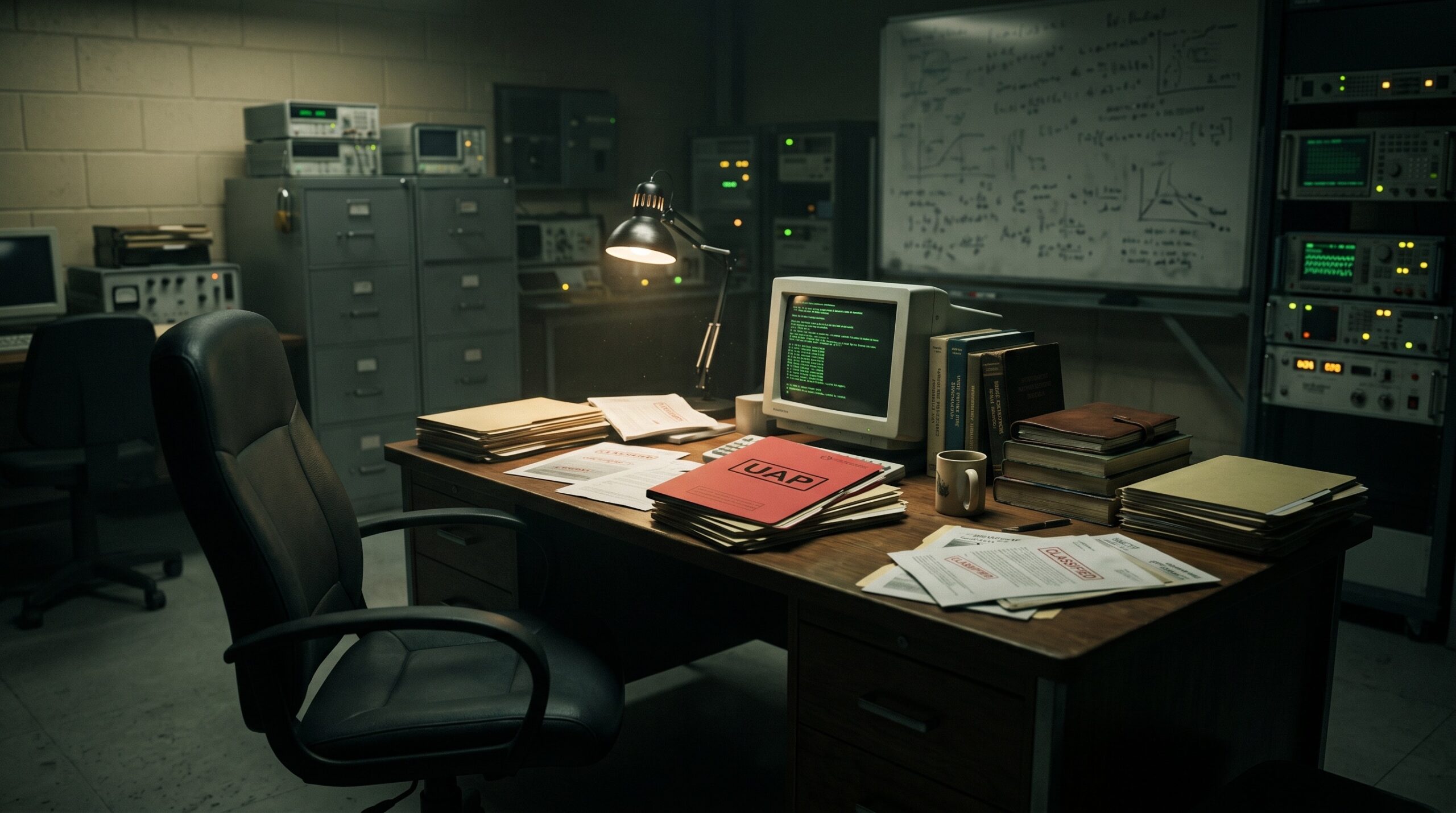
    A piece with the title “They Knew in 1957. And Now the Watchers Are Gone” has been circulating through the stranger corners of the internet — shared across Reddit forums, amplified by independent researchers, and pulled into the broader UAP disclosure conversation by people who see it as a missing chapter in the story of anti-gravity technology, classified military research, and the kind of scientific progress that governments can decide to keep forever. The essay’s claim is simple and explosive: a classified electrogravitics program produced real, usable results in the mid-to-late 1950s, and the researchers who understood what had been achieved are no longer around to confirm or deny it. They have all “gone” — retired, deceased, vanished into the silence that surrounds any project the U.S. military decided to wall off from the rest of the scientific community.

    The essay lives on Fear and Wine, a platform that has built itself around these exact intersections of classified history, fringe science, and the people who try to piece together what the record shows versus what the record was allowed to show. The title alone — “And Now the Watchers Are Gone” — carries the emotional weight of an entire genre of high-strangeness writing: the sense that the truth was real, was documented, was understood by a small group of people, and that time itself has been the ultimate classification mechanism because the last person who held those secrets has since died.

    What Electrogravitics Is and Why It Matters

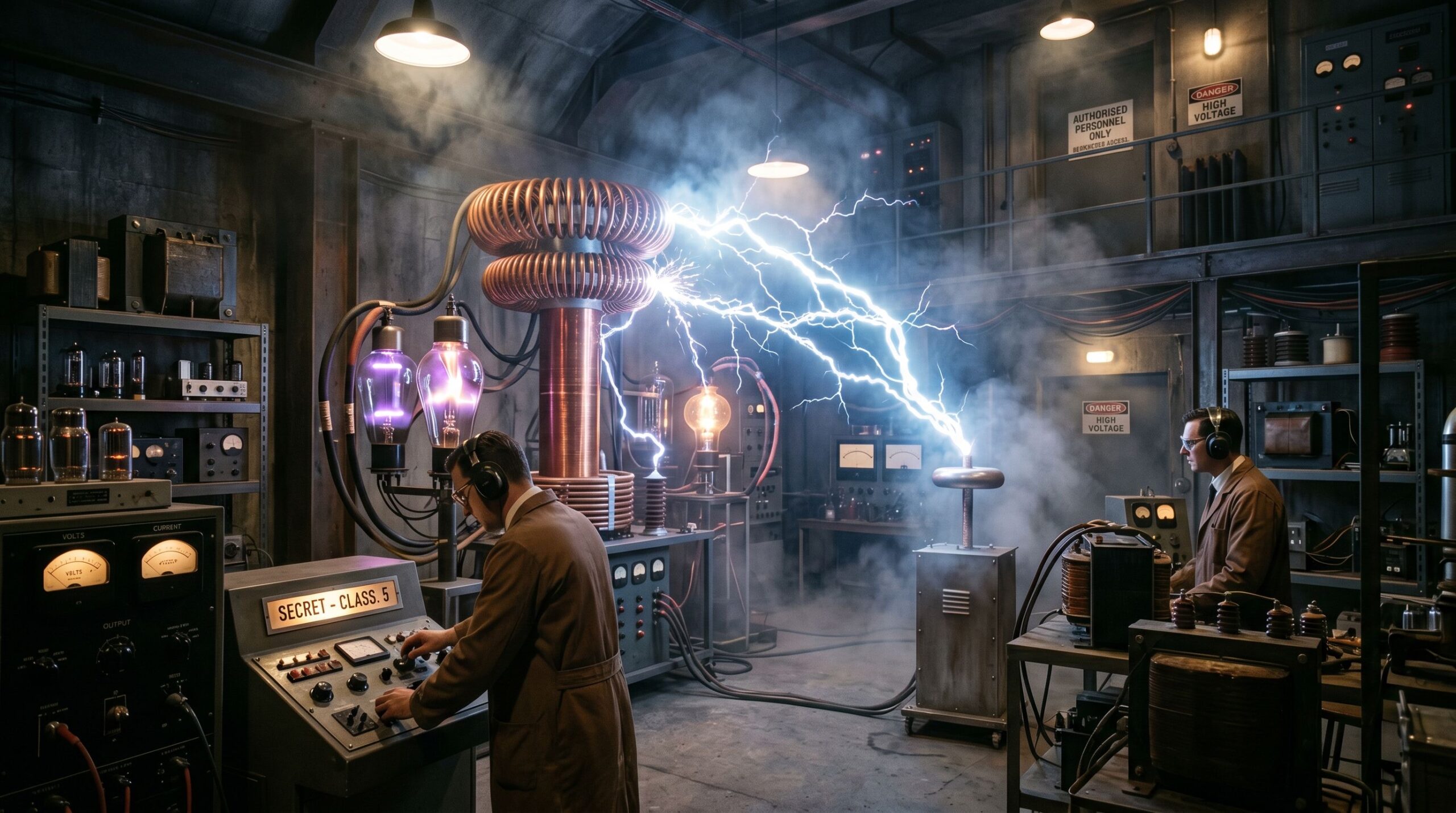
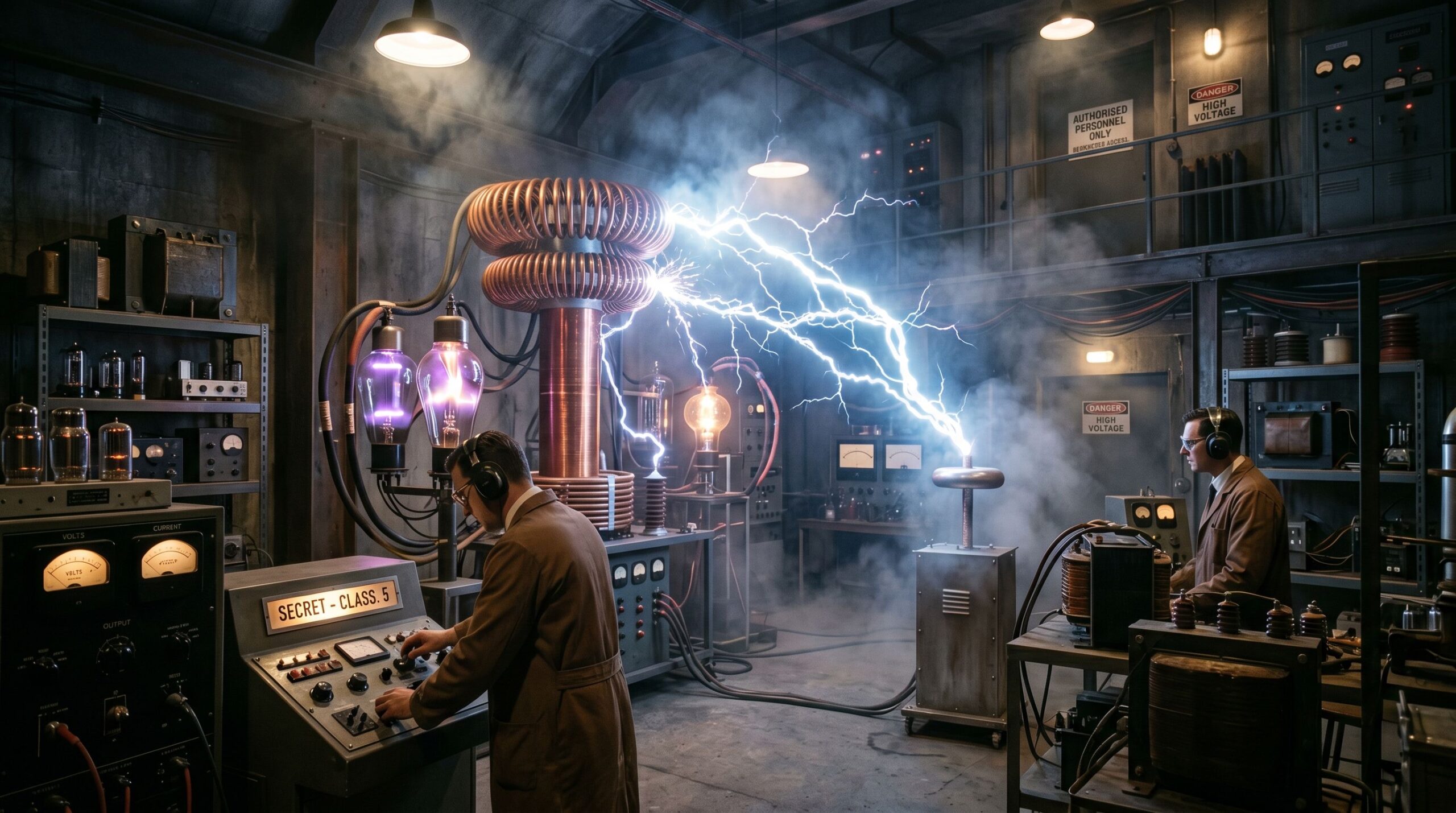
    Electrogravitics is the term applied to technologies that use high-voltage electrical fields to produce a propulsion effect — the idea that electricity, applied in a specific configuration, can generate lift or thrust without combustion, without propellant, and without the conventional mechanisms that power every known aircraft. If the concept works at the scale the 1950s researchers allegedly achieved, it would explain decades of reports describing craft that appear instantaneously, change direction without deceleration, and move in ways that no aerodynamic profile could account for.

    The physics of electrogravitics remains contested. Mainstream physics does not recognize a mechanism by which electrostatic fields can produce significant thrust in free space. But the Wikipedia entry on anti-gravity research documents a long history of military and private-sector interest, the kind of investment that suggests at least someone, at some point, saw something worth pursuing. The gap between what physics textbooks say and what classified programs actually explore has been the subject of debate since the Manhattan Project.

    The 1957 Timeline

    The specific year — 1957 — is not arbitrary. The late 1950s were a period of intense aerospace experimentation, from the X-15 program to the earliest U-2 reconnaissance flights. The United States was building its first practical spy satellites, racing against the Soviet Union, and investing enormous sums into propulsion technologies that could give American aircraft capabilities beyond what was publicly known. In that context, a classified electrogravitics program would not have been an anomaly — it would have been one of many dark projects funded by a government that had just created NASA and was preparing for decades of aerospace dominance.

    What the viral essay claims is that within that broader wave of experimentation, a subset of researchers achieved something that never appeared in any open publication, any patent filing, or any declassified document. They built or observed a propulsion effect that looked like electrogravitics, and they understood its parameters well enough to recognize what it meant. Then the project was sealed, the researchers were reassigned or retired, and the knowledge was compartmentalized into a classification system that outlived the people who held it.

    That is the “watchers are gone” thesis: not that the information was destroyed, but that it was placed into hands and into a bureaucratic structure that no longer includes anyone alive who can speak to it with the specificity that the original researchers could.

    The Connections to Other Classified Science Stories

    Electrogravitics does not exist in isolation. The viral essay appeared at the same moment that the Pentagon was releasing its own trove of previously classified UAP files, and it is being read by researchers who see it as part of the same historical current. Free energy claims from researchers like Tariel Kapanadze, Eric Davis’s testimony about recovered non-human craft, and the long history of mind-control programs that continued decades after their supposed termination — all of these form a constellation of claims about what the government has known, classified, and let die with the people who carried the knowledge.

    The pattern is consistent: a classified program produces results. The results are too sensitive for public scientific discourse. The program is sealed. The researchers age and die. And the evidence degrades from physical documentation into oral history, rumor, and the kind of essay that circulates on platforms outside the mainstream.

    Why the Essay Resonates Now

    The timing is part of the answer. As the U.S. government begins releasing UAP files that it has held for decades, people are looking backward — not just at the encounters documented in those files, but at the history of classified aerospace research that predates the UAP conversation entirely. Electrogravitics, in this reading, is not a fringe theory about alien technology. It is a theory about human technology that was classified so effectively that it now looks alien because no one can talk about it.

    The essay’s emotional power comes from the loss it describes. “The watchers are gone” is not an accusation. It is an obituary — for people who saw something remarkable, who understood it, and who were bound by classification systems that followed them to their graves. The truth they carried died with them, not because it was false, but because it was never meant to survive the people who held it.

    The Gaps in the Story

    The skeptical reading begins where all high-strangeness claims must begin: with documentation. Where is the evidence? Where are the lab notes, the patents filed in classified channels, the photographs? The essay describes a program with real results but produces no primary documents that prove those results occurred. If electrogravitics was achieved in 1957, the physics should be reconstructable — even in principle — and the historical record should contain something more than absence and implication.

    The “watchers are gone” argument is, in part, an admission that the evidence is gone too. That is a coherent position for a conspiracy theorist. It is a harder position for a historian. Absence of evidence is not evidence of absence, but without at least some fragment of corroboration, the claim remains an interpretation of a silence — and silence can mean many things: that something was hidden, that something never existed, or that something existed but was far less remarkable than the story suggests.

    What Remains

    What the 1957 electrogravitics story offers, at minimum, is a framework for thinking about classified research that the public will never see. If the story is true, there was a propulsion technology that could explain some of the UAP encounters that still resist classification today. If the story is false, it is a remarkable piece of mythology — one that emerged organically from the intersection of declassification timing, the history of aerospace experimentation, and the genuine mystery of what happens to classified science when the researchers who created it leave the building for the last time.

    Either way, the story isn’t going away. The watchers may be gone. But the pattern they represent — a government building things in secret that the public is never told about — is the oldest and most verified pattern in American classified research. The question is whether electrogravitics is one more entry in that catalog, or a ghost story that grew because the people who could have disproved it are no longer around to do so.
  • Ukrainian Defense Ministry Advisor Posts Star-Shaped UAP Video — and the Close-Ups Look Nothing Like a Drone

    Ukrainian Defense Ministry Advisor Posts Star-Shaped UAP Video — and the Close-Ups Look Nothing Like a Drone

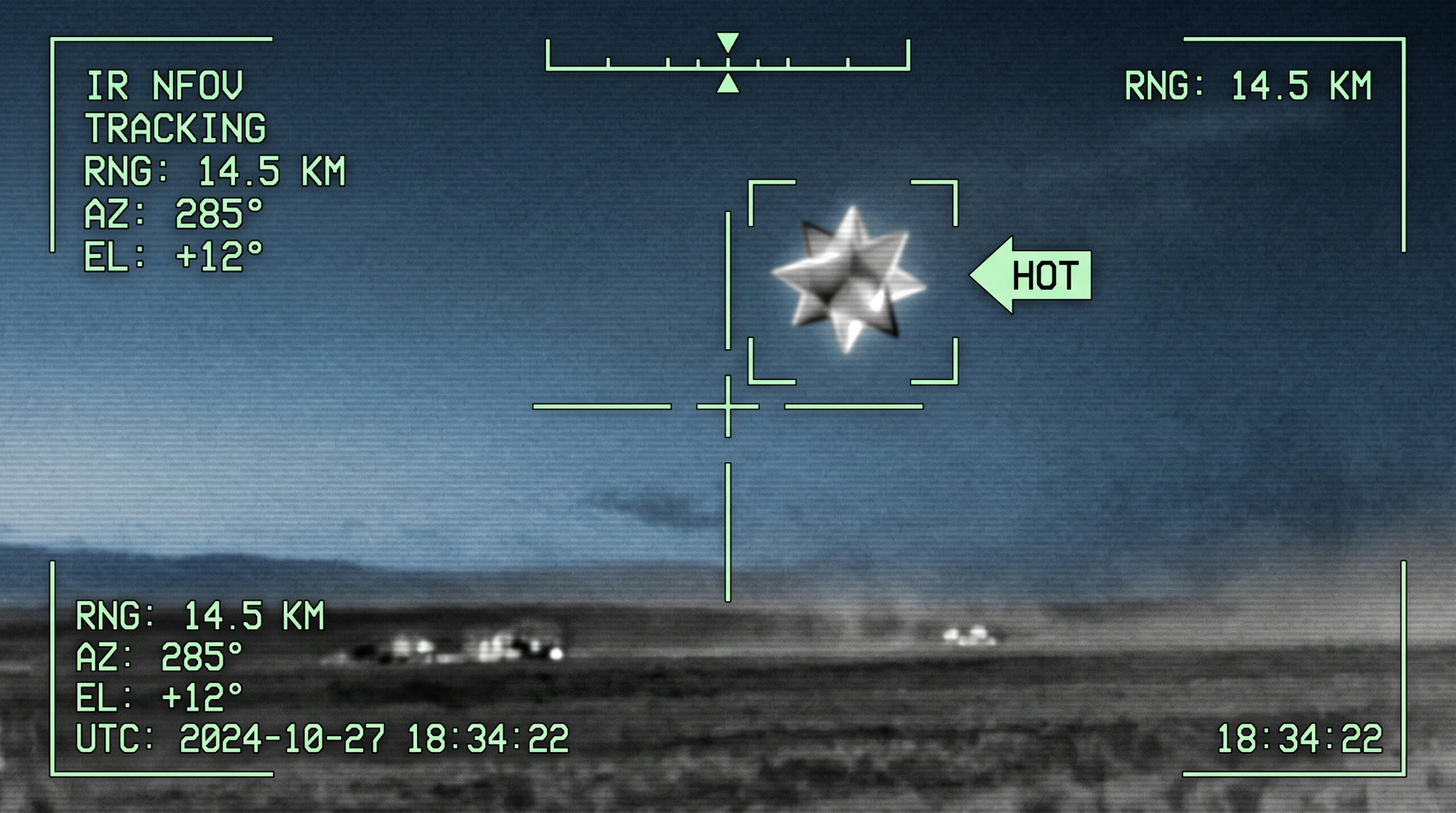
    A five-minute clip surfaced on Telegram last week that sent the entire UAP research community into overdrive, and it didn’t come from a fringe conspiracy channel. It was posted by Serhii “Flash” Beskrestnov — an advisor to the Ukrainian Defense Ministry, a senior official, someone with a public role in one of the most heavily monitored conflicts on the planet. The video shows a bright, star-shaped object hovering high above a flat expanse of terrain. Within hours, the same post had been amplified across Reddit’s UAP forums and racked up more than 8,000 upvotes on r/UFOs alone. What made it go viral was not just the source — it was what people began noticing when they zoomed in.

    The object sits motionless for long stretches, then appears to shift its orientation in ways that don’t match the wobble of a balloon or the drift of a weather platform. Enhanced frames pulled from the original clip, shared by independent analysts, reveal what looks like a structured, multi-pointed geometry — roughly symmetrical, with what some are calling “edges” that catch light asymmetrically as the object rotates. If that analysis holds, the shape is inconsistent with the known drone platforms operating in the theater.

    Why This Footage Has UAP Researchers on Edge

    What separates this from the hundreds of combat-zone UAP clips shared weekly is the combination of provenance and detail. Beskrestnov is not an anonymous uploader. He holds an official advisory position with Ukraine’s military apparatus, meaning the footage entered the public record through someone whose identity and reputation are attached to it. That distinction matters intensely in a landscape where most UAP evidence comes from civilians with dashcams, backyard security cameras, or anonymous Telegram channels.

    The video has already been stabilized, sharpened, and frame-by-frame analyzed by multiple independent researchers. The stabilized version circulated even faster than the original. In at least one frame, observers point to what appears to be a central dark region — described by some as a “pupil” or “eye” — that opens and closes as the craft seemingly rotates. Whether that pareidolia or something more intentional depends on who you ask, but the fact that trained analysts are pulling those frames out and sharing them publicly is itself notable.

    This is not happening in a vacuum. The clip arrived the same week the Department of War began releasing decades of previously classified UAP files from multiple federal agencies — a wave of transparency that has disclosure watchers comparing every new sighting against what the government is finally choosing to unseal.

    What the Pentagon Would Say About This

    The Pentagon’s All-domain Anomaly Resolution Office, or AARO, has spent years building a framework for categorizing UAP reports into identifiable phenomena — drones, balloons, sensor artifacts, and a small residual bucket of cases that resist classification. If this Ukrainian footage were submitted through official channels, AARO would likely begin by checking it against the known inventory of Ukrainian and Russian drone platforms, commercial quadcopters, and atmospheric phenomena common to the region’s altitude bands.

    That is the standard investigative pathway, and it is the right one. Most structured-looking objects in combat footage do resolve into mundane explanations once you have access to the flight logs, radar corroboration, and technical specifications of the equipment involved. The AARO investigation framework was specifically designed to separate the genuinely anomalous from the simply misidentified.

    But here is the gap: AARO does not have jurisdiction over footage collected and released by a foreign ally’s defense ministry during an active conflict. Unless Kiev chooses to route this through official military-to-military channels — which, given the sensitivity of the ongoing war, seems unlikely — the analysis falls to independent researchers, academic UAP groups, and the court of public opinion.

    What Believers Are Arguing

    For the disclosure community, the Ukrainian star-shaped UAP is another piece in an accumulating pattern that goes back several years. Believers point to Jeremy Corbell’s documentary work on classified UAP recovery claims, the UAP photographic plate analysis that surfaced through physicist Sabine Hossenfelder’s platforms, and Eric Davis’s testimony about dozens of craft recovered from the world’s oceans. Each of these threads, taken individually, can be explained away. Taken together, believers argue, they form a picture of a phenomenon that the government has been compartmentalizing for decades and is only now beginning to — reluctantly — let slip into public view.

    The Ukrainian footage, in this reading, is not just another video. It is footage of a craft with a shape that does not match known technology, posted by a high-level defense official, appearing during a period when multiple governments are simultaneously acknowledging UAP programs. Whether that is coincidence or convergence is the debate.

    The Genuine Gaps in the Story

    The honest uncertainty begins with the video quality itself. The footage was shot at distance, through atmospheric haze, by a camera that was almost certainly not designed for precision optical analysis. The “structured” appearance could be an artifact of digital compression, lens distortion, or the interaction between the camera’s sensor and a bright light source at a specific altitude. Every claim about the object’s shape needs to survive contact with those technical caveats.

    There is also the possibility that the object is a classified platform belonging to one of the parties in the conflict — something real, but human-made, and therefore not a UAP in the anomalous sense at all. That would be the most mundane explanation that still accounts for the strange geometry and the silence from both sides of the front line.

    For now, the frames are out there. The close-ups are being sharpened by people who have the time and the training to look closely. Whether this video becomes the clearest piece of structured-craft evidence to emerge from a war zone — or another case of a known object caught at the wrong angle through the wrong lens — depends on what the next set of analysts finds in the pixels. And on whether Kiev, Washington, or anyone with better data decides to say what they know.

  • 1957 Electrogravitics Secret: The Classified Research Program Whose Watchers Have All ‘Gone’

    1957 Electrogravitics Secret: The Classified Research Program Whose Watchers Have All ‘Gone’

    A piece with the title “They Knew in 1957. And Now the Watchers Are Gone” has been circulating through the stranger corners of the internet — shared across Reddit forums, amplified by independent researchers, and pulled into the broader UAP disclosure conversation by people who see it as a missing chapter in the story of anti-gravity technology, classified military research, and the kind of scientific progress that governments can decide to keep forever. The essay’s claim is simple and explosive: a classified electrogravitics program produced real, usable results in the mid-to-late 1950s, and the researchers who understood what had been achieved are no longer around to confirm or deny it. They have all “gone” — retired, deceased, vanished into the silence that surrounds any project the U.S. military decided to wall off from the rest of the scientific community.

    The essay lives on Fear and Wine, a platform that has built itself around these exact intersections of classified history, fringe science, and the people who try to piece together what the record shows versus what the record was allowed to show. The title alone — “And Now the Watchers Are Gone” — carries the emotional weight of an entire genre of high-strangeness writing: the sense that the truth was real, was documented, was understood by a small group of people, and that time itself has been the ultimate classification mechanism because the last person who held those secrets has since died.

    What Electrogravitics Is and Why It Matters

    Electrogravitics is the term applied to technologies that use high-voltage electrical fields to produce a propulsion effect — the idea that electricity, applied in a specific configuration, can generate lift or thrust without combustion, without propellant, and without the conventional mechanisms that power every known aircraft. If the concept works at the scale the 1950s researchers allegedly achieved, it would explain decades of reports describing craft that appear instantaneously, change direction without deceleration, and move in ways that no aerodynamic profile could account for.

    The physics of electrogravitics remains contested. Mainstream physics does not recognize a mechanism by which electrostatic fields can produce significant thrust in free space. But the Wikipedia entry on anti-gravity research documents a long history of military and private-sector interest, the kind of investment that suggests at least someone, at some point, saw something worth pursuing. The gap between what physics textbooks say and what classified programs actually explore has been the subject of debate since the Manhattan Project.

    The 1957 Timeline

    The specific year — 1957 — is not arbitrary. The late 1950s were a period of intense aerospace experimentation, from the X-15 program to the earliest U-2 reconnaissance flights. The United States was building its first practical spy satellites, racing against the Soviet Union, and investing enormous sums into propulsion technologies that could give American aircraft capabilities beyond what was publicly known. In that context, a classified electrogravitics program would not have been an anomaly — it would have been one of many dark projects funded by a government that had just created NASA and was preparing for decades of aerospace dominance.

    What the viral essay claims is that within that broader wave of experimentation, a subset of researchers achieved something that never appeared in any open publication, any patent filing, or any declassified document. They built or observed a propulsion effect that looked like electrogravitics, and they understood its parameters well enough to recognize what it meant. Then the project was sealed, the researchers were reassigned or retired, and the knowledge was compartmentalized into a classification system that outlived the people who held it.

    That is the “watchers are gone” thesis: not that the information was destroyed, but that it was placed into hands and into a bureaucratic structure that no longer includes anyone alive who can speak to it with the specificity that the original researchers could.

    The Connections to Other Classified Science Stories

    Electrogravitics does not exist in isolation. The viral essay appeared at the same moment that the Pentagon was releasing its own trove of previously classified UAP files, and it is being read by researchers who see it as part of the same historical current. Free energy claims from researchers like Tariel Kapanadze, Eric Davis’s testimony about recovered non-human craft, and the long history of mind-control programs that continued decades after their supposed termination — all of these form a constellation of claims about what the government has known, classified, and let die with the people who carried the knowledge.

    The pattern is consistent: a classified program produces results. The results are too sensitive for public scientific discourse. The program is sealed. The researchers age and die. And the evidence degrades from physical documentation into oral history, rumor, and the kind of essay that circulates on platforms outside the mainstream.

    Why the Essay Resonates Now

    The timing is part of the answer. As the U.S. government begins releasing UAP files that it has held for decades, people are looking backward — not just at the encounters documented in those files, but at the history of classified aerospace research that predates the UAP conversation entirely. Electrogravitics, in this reading, is not a fringe theory about alien technology. It is a theory about human technology that was classified so effectively that it now looks alien because no one can talk about it.

    The essay’s emotional power comes from the loss it describes. “The watchers are gone” is not an accusation. It is an obituary — for people who saw something remarkable, who understood it, and who were bound by classification systems that followed them to their graves. The truth they carried died with them, not because it was false, but because it was never meant to survive the people who held it.

    The Gaps in the Story

    The skeptical reading begins where all high-strangeness claims must begin: with documentation. Where is the evidence? Where are the lab notes, the patents filed in classified channels, the photographs? The essay describes a program with real results but produces no primary documents that prove those results occurred. If electrogravitics was achieved in 1957, the physics should be reconstructable — even in principle — and the historical record should contain something more than absence and implication.

    The “watchers are gone” argument is, in part, an admission that the evidence is gone too. That is a coherent position for a conspiracy theorist. It is a harder position for a historian. Absence of evidence is not evidence of absence, but without at least some fragment of corroboration, the claim remains an interpretation of a silence — and silence can mean many things: that something was hidden, that something never existed, or that something existed but was far less remarkable than the story suggests.

    What Remains

    What the 1957 electrogravitics story offers, at minimum, is a framework for thinking about classified research that the public will never see. If the story is true, there was a propulsion technology that could explain some of the UAP encounters that still resist classification today. If the story is false, it is a remarkable piece of mythology — one that emerged organically from the intersection of declassification timing, the history of aerospace experimentation, and the genuine mystery of what happens to classified science when the researchers who created it leave the building for the last time.

    Either way, the story isn’t going away. The watchers may be gone. But the pattern they represent — a government building things in secret that the public is never told about — is the oldest and most verified pattern in American classified research. The question is whether electrogravitics is one more entry in that catalog, or a ghost story that grew because the people who could have disproved it are no longer around to do so.
  • Ukrainian Defense Ministry Advisor Posts Star-Shaped UAP Video — and the Close-Ups Look Nothing Like a Drone

    Ukrainian Defense Ministry Advisor Posts Star-Shaped UAP Video — and the Close-Ups Look Nothing Like a Drone

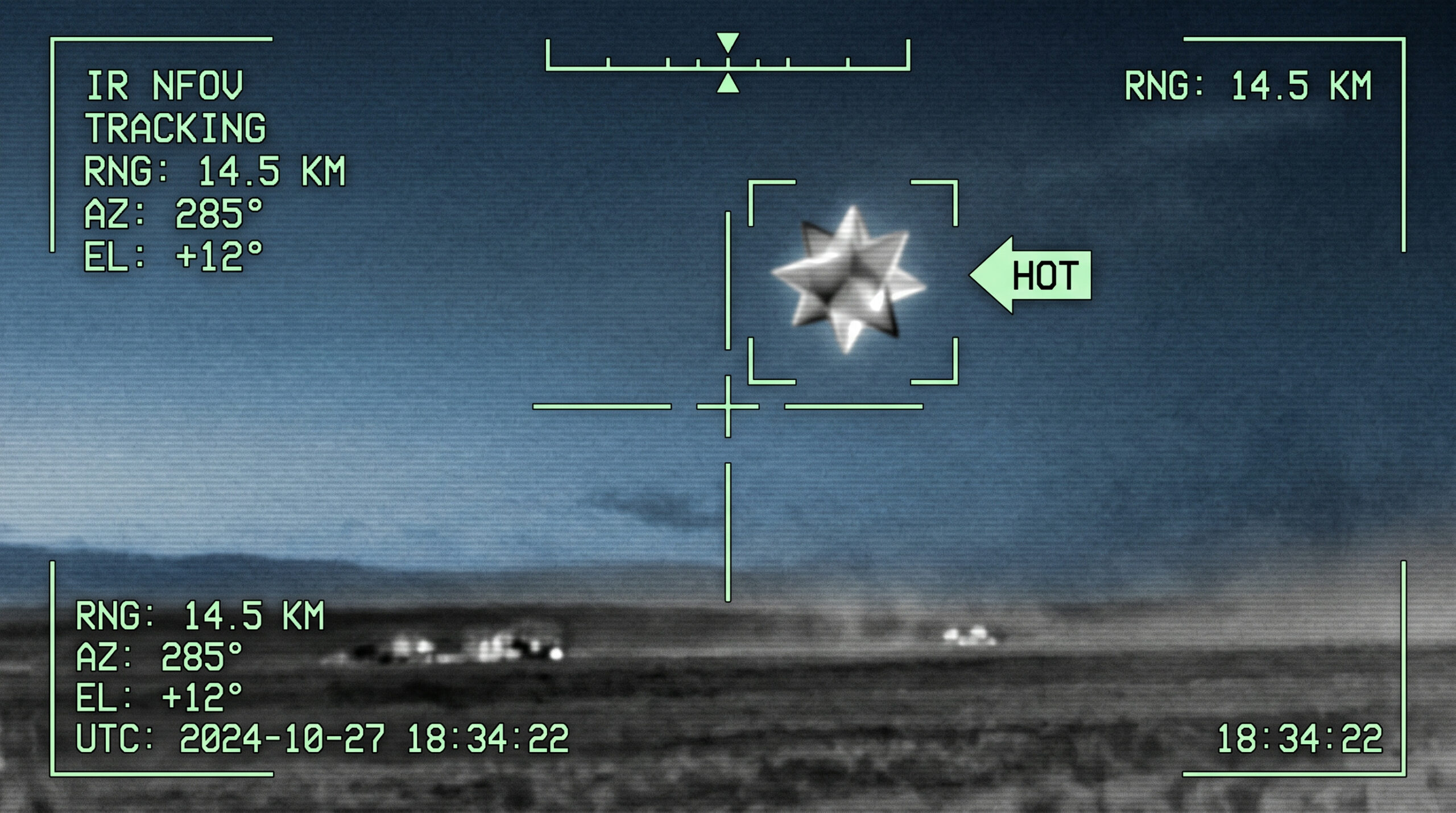
    A five-minute clip surfaced on Telegram last week that sent the entire UAP research community into overdrive, and it didn’t come from a fringe conspiracy channel. It was posted by Serhii “Flash” Beskrestnov — an advisor to the Ukrainian Defense Ministry, a senior official, someone with a public role in one of the most heavily monitored conflicts on the planet. The video shows a bright, star-shaped object hovering high above a flat expanse of terrain. Within hours, the same post had been amplified across Reddit’s UAP forums and racked up more than 8,000 upvotes on r/UFOs alone. What made it go viral was not just the source — it was what people began noticing when they zoomed in.

    The object sits motionless for long stretches, then appears to shift its orientation in ways that don’t match the wobble of a balloon or the drift of a weather platform. Enhanced frames pulled from the original clip, shared by independent analysts, reveal what looks like a structured, multi-pointed geometry — roughly symmetrical, with what some are calling “edges” that catch light asymmetrically as the object rotates. If that analysis holds, the shape is inconsistent with the known drone platforms operating in the theater.

    Why This Footage Has UAP Researchers on Edge

    What separates this from the hundreds of combat-zone UAP clips shared weekly is the combination of provenance and detail. Beskrestnov is not an anonymous uploader. He holds an official advisory position with Ukraine’s military apparatus, meaning the footage entered the public record through someone whose identity and reputation are attached to it. That distinction matters intensely in a landscape where most UAP evidence comes from civilians with dashcams, backyard security cameras, or anonymous Telegram channels.

    The video has already been stabilized, sharpened, and frame-by-frame analyzed by multiple independent researchers. The stabilized version circulated even faster than the original. In at least one frame, observers point to what appears to be a central dark region — described by some as a “pupil” or “eye” — that opens and closes as the craft seemingly rotates. Whether that pareidolia or something more intentional depends on who you ask, but the fact that trained analysts are pulling those frames out and sharing them publicly is itself notable.

    This is not happening in a vacuum. The clip arrived the same week the Department of War began releasing decades of previously classified UAP files from multiple federal agencies — a wave of transparency that has disclosure watchers comparing every new sighting against what the government is finally choosing to unseal.

    What the Pentagon Would Say About This

    The Pentagon’s All-domain Anomaly Resolution Office, or AARO, has spent years building a framework for categorizing UAP reports into identifiable phenomena — drones, balloons, sensor artifacts, and a small residual bucket of cases that resist classification. If this Ukrainian footage were submitted through official channels, AARO would likely begin by checking it against the known inventory of Ukrainian and Russian drone platforms, commercial quadcopters, and atmospheric phenomena common to the region’s altitude bands.

    That is the standard investigative pathway, and it is the right one. Most structured-looking objects in combat footage do resolve into mundane explanations once you have access to the flight logs, radar corroboration, and technical specifications of the equipment involved. The AARO investigation framework was specifically designed to separate the genuinely anomalous from the simply misidentified.

    But here is the gap: AARO does not have jurisdiction over footage collected and released by a foreign ally’s defense ministry during an active conflict. Unless Kiev chooses to route this through official military-to-military channels — which, given the sensitivity of the ongoing war, seems unlikely — the analysis falls to independent researchers, academic UAP groups, and the court of public opinion.

    What Believers Are Arguing

    For the disclosure community, the Ukrainian star-shaped UAP is another piece in an accumulating pattern that goes back several years. Believers point to Jeremy Corbell’s documentary work on classified UAP recovery claims, the UAP photographic plate analysis that surfaced through physicist Sabine Hossenfelder’s platforms, and Eric Davis’s testimony about dozens of craft recovered from the world’s oceans. Each of these threads, taken individually, can be explained away. Taken together, believers argue, they form a picture of a phenomenon that the government has been compartmentalizing for decades and is only now beginning to — reluctantly — let slip into public view.

    The Ukrainian footage, in this reading, is not just another video. It is footage of a craft with a shape that does not match known technology, posted by a high-level defense official, appearing during a period when multiple governments are simultaneously acknowledging UAP programs. Whether that is coincidence or convergence is the debate.

    The Genuine Gaps in the Story

    The honest uncertainty begins with the video quality itself. The footage was shot at distance, through atmospheric haze, by a camera that was almost certainly not designed for precision optical analysis. The “structured” appearance could be an artifact of digital compression, lens distortion, or the interaction between the camera’s sensor and a bright light source at a specific altitude. Every claim about the object’s shape needs to survive contact with those technical caveats.

    There is also the possibility that the object is a classified platform belonging to one of the parties in the conflict — something real, but human-made, and therefore not a UAP in the anomalous sense at all. That would be the most mundane explanation that still accounts for the strange geometry and the silence from both sides of the front line.

    For now, the frames are out there. The close-ups are being sharpened by people who have the time and the training to look closely. Whether this video becomes the clearest piece of structured-craft evidence to emerge from a war zone — or another case of a known object caught at the wrong angle through the wrong lens — depends on what the next set of analysts finds in the pixels. And on whether Kiev, Washington, or anyone with better data decides to say what they know.

  • Neil deGrasse Tyson’s Surprisingly Open-Minded UFO Essay: Why the NYT Column Has the Disclosure Community Talking

    Neil deGrasse Tyson’s Surprisingly Open-Minded UFO Essay: Why the NYT Column Has the Disclosure Community Talking

    Neil deGrasse Tyson has never been kind to UFO believers. For years, the astrophysicist and host of Cosmos was the go-to voice when media outlets wanted someone to dismiss UAP claims with a polished eyebrow and a condescending laugh. So when his New York Times opinion column landed on May 7, 2026 and read like something else entirely — open-minded, curious, and willing to grant that the whistleblower phenomenon might be pointing at something real — the disclosure community did not just read it. It dissected it.

    What Tyson Actually Wrote

    In the column, Tyson did not convert. He did not claim to believe that alien craft are parking in American airspace. What he did do was step away from the wall of dismissiveness he had spent a career building. He wrote that the volume and credibility of whistleblower testimony surrounding UAPs has reached a threshold that makes casual dismissal unreasonable — a position published in the New York Times opinion section and backed by growing evidence that trained military observers are reporting encounters with objects displaying flight characteristics that defy conventional physics. He cited the congressional testimony of whistleblowers like David Grusch as the kind of evidence that can no longer be waved away.

    He also wrote that if the United States government is not hiding something about the UFO phenomenon, it owes the public a clearer accounting of what it does know. The distinction matters. A skeptic demanding transparency is fundamentally different from a skeptic closing the conversation.

    A Scientist’s Shift

    Tyson’s past public statements on UFOs were not ambiguous. He has repeatedly attributed sightings to weather balloons, swamp gas, misidentified aircraft, and the well-documented human tendency to see patterns where none exist. His general position was that the burden of proof rested entirely on the claimant, and that claimants consistently failed to meet it.

    But the current wave of UAP reporting is structurally different from the blurry campfire photos of the 1970s. Military pilots have captured infrared video of objects that defy conventional aerodynamics. Former defense officials have testified under oath about recovery programs. Congressman Tim Burchett has gone public with claims that members of Congress who were not previously interested in UAPs became believers after being briefed on classified material. Even the reports of multiple pastors being privately informed about disclosure have entered the broader conversation around who is getting briefed. Tyson’s column acknowledges that something has changed — not necessarily the phenomenon itself, but the quality and volume of what is being reported by people whose job it is to observe the sky.

    Why the Disclosure Community Cares

    For years, Neil deGrasse Tyson was the face of scientific opposition to the UFO question. His name came up constantly in believer communities as the archetype of the arrogant dismissive scientist who would not even look at the evidence. So when he publishes in the New York Times and says that the whistleblower problem is worth taking seriously, it reads like a boundary stone has moved.

    The argument is not that Tyson has become a believer. The argument is that he has stopped being a hard blocker. And for a movement that has spent the last decade arguing that mainstream science refuses to engage, a mainstream scientist engaging on the merits is the best kind of validation.

    What Remains to Be Seen

    Tyson’s essay does not resolve the UFO question. It does not confirm the existence of non-human intelligence. It does not validate the recovery claims that circulate through UAP forums and congressional hearings. What it does is create space — a small crack in the wall that has always separated the scientific establishment from the people who claim to have seen something real.

    Whether that crack widens depends on what happens next. The Pentagon’s disclosure timeline remains uncertain. Congressional pressure is growing. Trump has hinted that the next batch of released files will contain “things you wouldn’t believe.” If the evidence that emerges from those files is strong, Tyson’s early willingness to take it seriously may look like prescience. If the files are empty, his column may read like a momentary lapse of skepticism.

    Either way, the man who spent years as the UFO question’s most vocal scientific dismissor has just said it deserves a closer look. That alone is worth noticing.

    What did Neil deGrasse Tyson say about UFOs in 2026? In a New York Times opinion piece, Tyson wrote that the volume and credibility of whistleblower testimony on UAPs has reached a level that makes casual dismissal unreasonable. He did not claim to believe in alien craft, but said the evidence deserves genuine scrutiny.

    Is Neil deGrasse Tyson a UFO believer now? No. Tyson’s column stops short of endorsing the existence of non-human technology. What it signals is a willingness to consider the evidence on its merits rather than dismissing it in advance.

  • Multiple Pastors Say They Were Secretly Briefed to Prepare Churches for UFO Disclosure

    Multiple Pastors Say They Were Secretly Briefed to Prepare Churches for UFO Disclosure

    The UFO disclosure narrative has been circling government hearings, congressional deadlines, and military whistleblowers for years. But in late April 2026, the conversation shifted into a territory that few people inside the movement expected: evangelical pulpits. Evangelist Perry Stone went public with a claim that U.S. officials have been privately briefing pastors, warning them to prepare their congregations for the disclosure of non-human entities. Stone was not alone in making the claim. Pastor Greg Locke and commentator Tony Merkel have reported similar briefings, each describing conversations with people they identified as Christians working inside military intelligence operations. Taken individually, each account is easy to write off as coincidence. Taken together, they paint a picture of something far more organized — and far more difficult to dismiss.

    What the Briefings Purportedly Covered

    According to the accounts that have surfaced, the briefings went beyond a simple heads-up about upcoming government releases. Perry Stone described discussions about reptilian entities and non-human materials. Tony Merkel corroborated the general framework, saying he was contacted by the same network of Christians inside the intelligence community with the explicit mission of preparing the broader church. Greg Locke, who commands a massive online following, amplified the message and pushed the conversation into mainstream discourse.

    The discussion of jinn and non-human entities in Islamic tradition has always run parallel to Western UFO narratives, with striking overlaps in how these beings are described. What the pastors are describing — entities that are not human, intelligence operations that have known about them, and a coordinated effort to prepare religious communities — echoes the kind of cross-cultural patterns that people in this space have been tracking for decades.

    Why Pastors Are Being Briefed Specifically

    The theological implications of non-human intelligence disclosure are enormous. If the government is about to reveal the existence of non-human entities — whether they are extraterrestrial, interdimensional, or something else entirely — the people most responsible for helping communities process that reality will be religious leaders. It makes strategic sense that any coordinated disclosure effort would involve pastoral preparation beforehand.

    But the more unsettling question is why the briefings came from military intelligence insiders rather than from civilian or religious authorities directly. If the network doing the briefing truly consists of Christians embedded in intelligence operations, the arrangement suggests something closer to an internal awakening than a public relations strategy. People inside the system who hold religious convictions may be trying to ensure that when the truth comes out, the faith community is not blindsided by it.

    The prophecy community has been watching end-times markers closely throughout 2026, and the convergence of UFO disclosure talk with religious preparation has only deepened the sense that something unprecedented is approaching.

    The spiritual turn within the UFO disclosure community did not happen overnight. The intersection of faith and government insider claims has been building for years, and the pastor briefing claims are a continuation of that trajectory.

    The Cross-Platform Corroboration

    What makes these claims harder to ignore is that they did not come from a single source. Perry Stone shared his account on his podcast. Greg Locke amplified it on social media, where his audience responded with immediate intensity. Tony Merkel corroborated the account independently. Multiple religious leaders across different platforms and different audiences began saying the same thing: they had been contacted by government-adjacent insiders to prepare their people.

    The pattern of religious leaders being briefed for disclosure matches what earlier claims about the spiritual dimension of the UAP insider community predicted. If the intelligence community itself contains people with deep religious convictions, they would naturally reach out to religious leaders rather than wait for a formal press release.

    What This Means for the Disclosure Conversation

    For people who have been tracking the UFO disclosure narrative through congressional hearings and military whistleblowers, the pastoral briefing angle adds an entirely new dimension. It suggests that preparation for disclosure is not happening only in political and military channels but also in religious ones. It suggests that whoever is pushing disclosure from inside the system understands the theological earthquake it could produce, and that they are actively working to soften the shock.

    What Cannot Yet Be Verified

    None of these claims come with independently verifiable documentation. The briefings were described as private, off-the-record conversations. The identities of the military intelligence insiders have not been confirmed. The specific claims about reptilian entities and non-human materials remain at the level of reported conversation rather than demonstrated fact.

    The Trump administration has promised UFO document releases, but no official briefing schedule for religious leaders has been made public. Until that changes, the pastor briefing claims sit in the same territory as a thousand other insider accounts: too consistent to dismiss, too unverified to accept.

    What Remains

    The claims made by Perry Stone, Greg Locke, and Tony Merkel represent something unusual in the disclosure conversation — a coordinated narrative crossing religious and intelligence boundaries. Whether those briefings actually happened as described, or whether they are part of a broader information strategy, the fact that the conversation has reached this point at all reveals how much the disclosure movement has expanded. It is no longer just about government documents and congressional hearings. It is about what happens to human belief systems when they encounter something that does not fit inside the boxes we built to contain reality.

  • John Reeves’ Alaska Boneyard UAP Footage: Hidden 1970s Film Resurfaces With Impossible Craft

    John Reeves’ Alaska Boneyard UAP Footage: Hidden 1970s Film Resurfaces With Impossible Craft

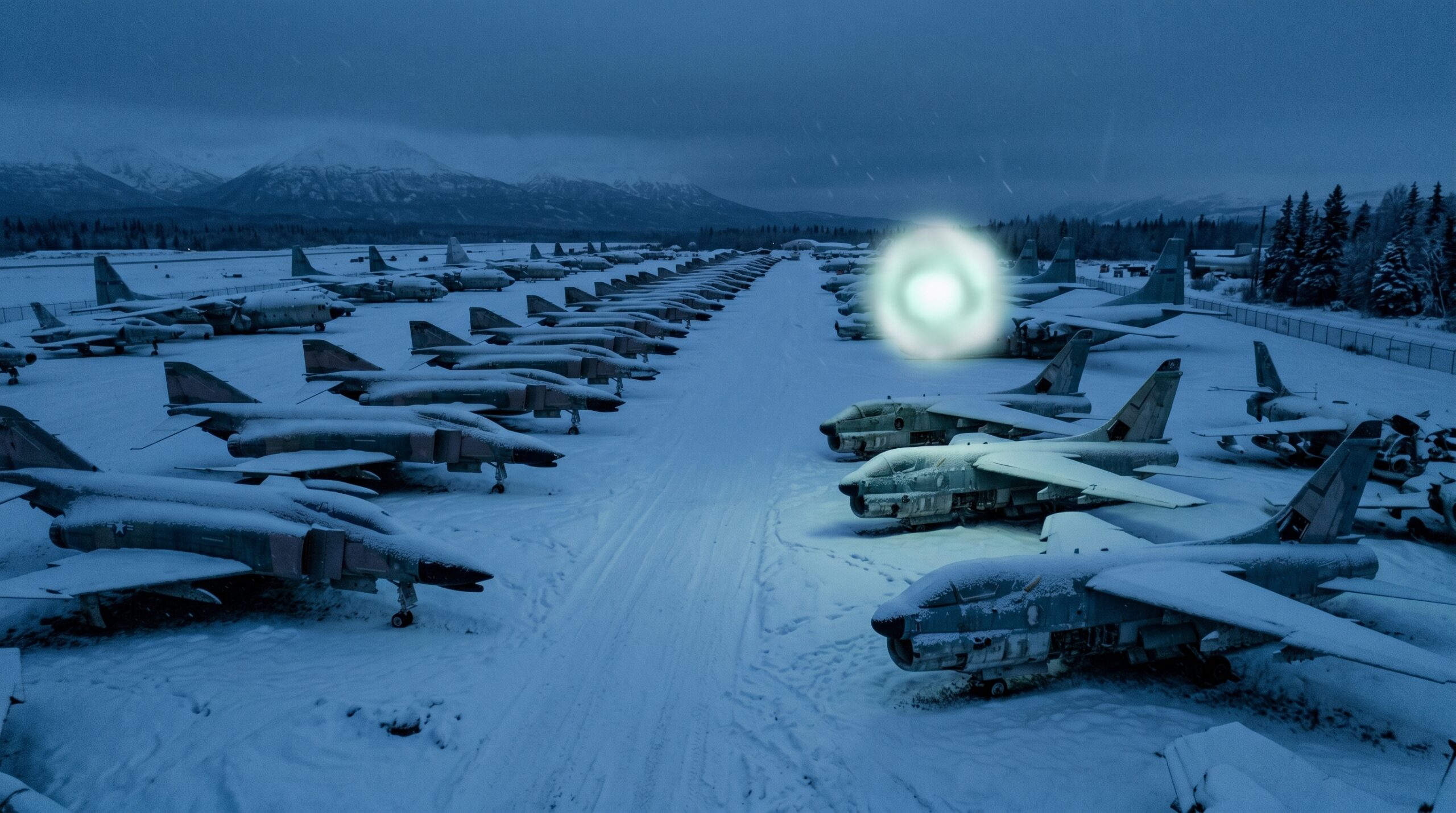
    In the back corner of a military aircraft boneyard at Elmendorf Air Force Base in Alaska, former Air National Guard member John Reeves discovered something that should not have been there: a reel of 1970s film showing an unidentified craft moving in ways that defy conventional explanation. The footage, stored among decommissioned hardware that the military had long since abandoned to the cold, carries the kind of visual evidence that believers have been chasing for years — and the kind that official channels have consistently said does not exist. It earned more than 1,300 points on r/UFOs in a matter of days and has now become one of the most discussed pieces of visual UAP evidence to surface from a military-adjacent source in recent memory. For people who believe that the government has been sitting on UAP evidence for decades, John Reeves’ boneyard discovery lands like a confirmation: the material was always there. It was just waiting for someone with the right clearance and the right timing to find it.

    What the Footage Shows

    The tape dates to the 1970s, an era of active UAP encounters that included the famous Tehran intercept of 1976 and the disappearance of Frederick Valentich off the Australian coast in 1978. The Alaska footage reportedly captures a craft moving with characteristics that standard aviation cannot explain — sudden accelerations, right-angle turns, and flight patterns that do not produce visible exhaust or generate the kind of sonic disturbance expected from conventional aircraft. The craft itself appears structured, metallic, and purpose-built, nothing like a natural atmospheric phenomenon.

    What makes the footage significant is not just what it depicts but where it was found. A military boneyard is not a civilian archive. It is a controlled facility where the military stores, processes, and dismantles equipment it no longer needs. Film stored in that environment suggests that someone inside the military apparatus was tracking these events and documenting them on film, with the expectation that the record would outlast whatever operational need prompted the recording.

    How John Reeves Came Across the Tape

    John Reeves served in the Alaska Air National Guard, giving him the kind of installation access that most civilians do not have. According to accounts shared across UAP communities and discussed extensively on r/UFOs, Reeves encountered the footage during routine work related to decommissioned material at the base. The circumstances of the discovery — finding a reel of UAP-related film among discarded military hardware — feed directly into the narrative that UAP evidence has been systematically lost, abandoned, or buried in government facilities across the country.

    The broader pattern is consistent. From the Chuck Clark Area 51 footage that surfaced from another veteran’s collection to the mass-witness UAP encounters that military personnel have documented in recent years, the story keeps returning to the same theme: the evidence exists, but it is scattered across military installations, personal collections, and discarded files that no one in authority thought was important enough to preserve.

    The 1970s Were Not a Quiet Decade for UAP

    The timing of this footage matters. The 1970s were one of the most active decades in modern UAP history. In 1976, Iranian F-4 Phantom jets tracked and attempted to intercept a massive luminous object over Tehran — and their weapons systems reportedly failed when they tried to lock on. In 1978, Australian pilot Frederick Valentich reported being followed by a metallic object before his final transmission cut out over the Bass Strait. In 1979, the Trans-en-Provence incident in France became one of the few UAP cases where physical trace evidence was collected and analyzed by government investigators.

    If Reeves’ footage is genuinely from that era, it places Alaska among the sites of significant UAP activity during a period when military encounters were being quietly documented. The question is whether the footage represents an ongoing Alaska UAP pattern — the Northwest Territories driller UFO sighting showed that northern regions continue to produce high-strangeness encounters — or whether a specific event in Alaska in the 1970s was documented by the military and then quietly stored away.

    What Cannot Yet Be Confirmed

    The footage has been shared and discussed but has not been independently verified by scientific or government authorities. Reeves’ account of the discovery is credible but has not been corroborated by a second independent source within the military chain of command. The film itself has not been subjected to forensic dating of a kind that would definitively prove its 1970s origin — though the visual quality, grain structure, and recording artifacts are consistent with material from that era.

    The Air Force has not commented on the footage or on Reeves’ claim that it was stored in an Elmendorf boneyard. Without official acknowledgment, the tape remains in the same category as a growing body of military-adjacent UAP evidence that believers consider compelling and skeptics consider insufficient for proof.

    What Remains

    John Reeves’ boneyard discovery adds another layer to a conversation that will not be settled until the government changes its posture toward UAP evidence. Whether that footage will be enough to shift the debate depends not on the image itself — which can be analyzed, doubted, and disputed from any angle — but on the cumulative weight of all the similar discoveries coming from military-adjacent sources. One tape stored in a cold storage boneyard in Alaska is not proof. Ten tapes from ten different installations might be something else entirely.

  • James Hampton’s Throne of Third Heaven: The Secret Installation and the Undeciphered Book

    James Hampton’s Throne of Third Heaven: The Secret Installation and the Undeciphered Book

    A janitor rented a garage on a side street in Washington, DC, and for sixteen years he went there every night after his shift and built something in complete silence. When he died in November 1964, the landlord broke into the room and found it packed from floor to ceiling with 177 objects — thrones, altars, and ritual structures assembled from cardboard, tin foil, broken glass, and light bulbs — arranged into the most ambitious, most mysterious folk-art installation in American history.

    Hampton called it “The Throne of the Third Heaven of the Nations’ Millennium General Assembly.” The name itself is a sentence that sounds like it was delivered rather than composed. The objects are covered in gold and silver foil, built around salvaged furniture and crowned with improvised halos and spires. They read like sacred architecture constructed from a city’s discarded refuse, and they were made by a man who nobody — family, friends, coworkers — had any idea was doing this work.

    The objects are extraordinary. The book Hampton left behind — 104 pages of handwritten text using a partially invented script that linguists have never fully decoded — is what makes people unable to close the case.

    The Discovery

    James Hampton was a 50-year-old World War II veteran who worked as a night janitor for a law firm in Washington. He showed up for his shifts. He cleaned. He was quiet and polite and unremarkable in all the ways a person can be unremarkable during the hours when they are doing their assigned job.

    Nobody knew about the garage on 1413 W Street NW. Nobody knew about the work inside it. Hampton had been visiting that room every night after clocking out and building objects that would take the Smithsonian decades to fully catalog and that scholars still debate today.

    When Hampton died in 1964, the landlord discovered the room during a routine check and found it literally packed with things. The Smithsonian acquired the full collection and it remains one of the landmark works in their permanent collection. The installation was so dense and so extensive that the landlord could barely enter the space. Hampton had transformed an ordinary rented garage into a cathedral of improvised sacred objects.

    The 177 Objects

    The inventory numbers are what make the project feel unreal. Not twelve. Not thirty. One hundred and seventy-seven objects, each constructed with a consistency of vision and a level of ambition that has no parallel in American outsider art.

    The materials are what you find in a city that discards things: cardboard, aluminum foil, broken glass, light bulbs, wire, old wood, fabric scraps, tin cans. Hampton assembled these materials into throne-like structures, altars, crowns, and standing forms that resemble architectural fragments of a civilization that never existed. Each piece is wrapped in foil, creating a metallic surface that catches light in a way that makes the crude materials look precious.

    The craftsmanship is not polished. It is obsessive. Hampton did not build one impressive piece and stop — he built a hundred and seventy-seven of them and arranged them into a complete environment. The level of sustained vision required to do that over sixteen years, in a rented garage, in total secrecy, is what moves the story out of the art category and into the mystery category.

    The Book Nobody Can Read

    Hampton left behind a 104-page book that he called “The Book of the Unknown.” It is written in a mix of recognizable English and symbols, abbreviations, and structural patterns that nobody has fully decoded. The text appears to be Hampton’s own system — a hybrid of conventional spelling and an invented linguistic structure that reflects his personal theology and cosmology.

    Scholars who have worked with the collection have managed to extract some meaning from the text. Passages reference biblical concepts. Fragments of English words appear alongside compressed abbreviations and what look like personal notations that only Hampton would understand. But the full text has never been translated because the full system has never been cracked.

    What makes the script mysterious is not that it is impossible to read — pieces of it are legible — but that its internal logic reflects a framework of thought that was entirely Hampton’s creation. He built a language system to describe a universe that he saw and that no one else had access to, and the system died with him in the sense that no one else has the key to fill in the gaps between the parts everyone can read.

    The story resurfaced on r/HighStrangeness where it generated engaged discussion about the “Director of Special Projects for the State of Eternity” and drew attention back to the Hampton collection among people who study coded texts and hidden messages and drew attention back to the Hampton collection among people who study coded texts, insider language, and the intersection of personal theology and creative output.

    The Religious Vision

    Hampton’s theology — as far as it can be extracted from the surviving text and the installation itself — centers on millennial prophecy and the concept of a “Third Heaven.” In Christian eschatology, the third heaven is a real concept: the highest heaven, the dwelling place of God, described by Paul in 2 Corinthians 12:2. Hampton appears to have constructed his entire installation as a staging area for a future divine assembly — the “Nations’ Millennium General Assembly.”

    The apocalyptic scale of the project was not accidental. Hampton was building for an event he believed would happen. The throne, the altars, the ritual objects, the 104-page book — all of it was designed for a future gathering that only Hampton could see coming.

    This was not the work of someone who believed they were creating art for gallery display. It was the work of someone who believed they were building architecture for an event that would happen after their lifetime, on a timeline they understood and nobody else shared.

    The Mystery That Remains

    The Smithsonian acquired the collection and displays portions of it as a landmark of American self-taught art. Scholars have cataloged the objects. Conservators have preserved them. But the questions that matter are the ones the Smithsonian cannot answer.

    Why did Hampton keep the work completely secret? Sixteen years is an enormous commitment to sustain in isolation. If his goal was recognition, there were easier ways to achieve it. The secrecy suggests that Hampton was not building for an audience. He was building for the event — the assembly — and the act of building itself was the meaningful part, echoing cases where personal belief shapes reality, regardless of who saw it.

    How did a janitor with no formal theological education develop a cosmology elaborate enough to fill a garage with 177 objects and a 104-page theological manuscript? Where did the iconography come from? Where did the script come from?

    The most unsettling question is the simplest: how many people are doing something extraordinary in a room nobody else will enter for the rest of their lives?

    What Is Actually Known

    James Hampton was a night janitor in Washington, DC who died in 1964 at age 50. The Smithsonian Institution acquired his garage installation — 177 objects built from scavenged materials over approximately sixteen years — and it remains one of the largest and most coherent outsider-art collections in a major American museum. Hampton left behind a 104-page handwritten book using a hybrid script combining English fragments with an undeciphered personal code. The “Throne of the Third Heaven of the Nations’ Millennium General Assembly” is the title Hampton gave to the project.

    What is not known is the full content of Hampton’s book, the source of his theological framework, or the complete meaning of the symbols and script he used to encode his private cosmology. The collection is documented. The mystery is the document he left inside it.

  • Trump Says UFO Files Are Coming: ‘Things You Wouldn’t Believe’ — What We Know

    Trump Says UFO Files Are Coming: ‘Things You Wouldn’t Believe’ — What We Know

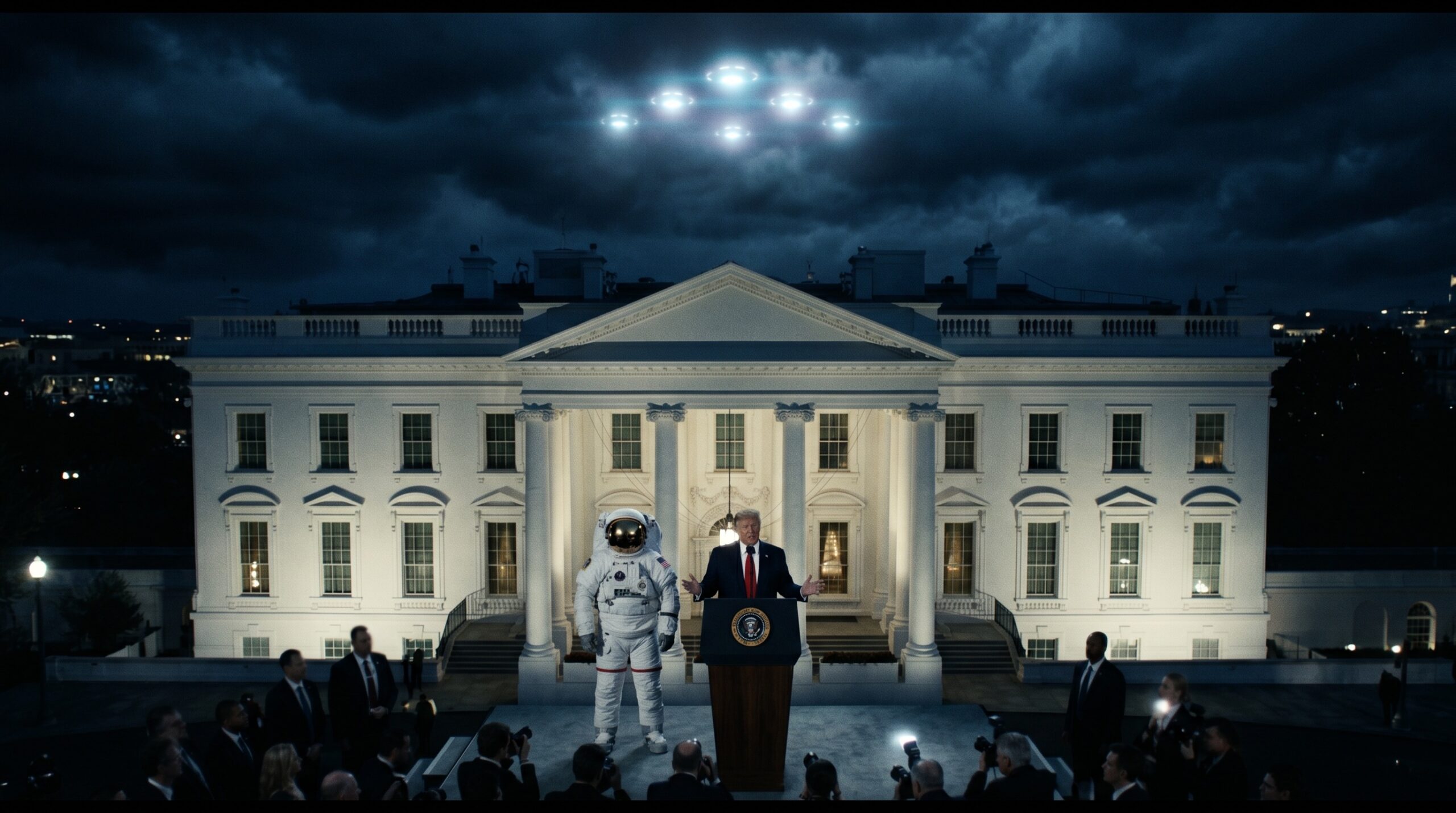
    Donald Trump stood behind a White House podium with the Artemis II astronauts beside him and delivered a line that sent UFO believers across every feed into overdrive — just weeks after the April 2026 White House document release, he doubled down: anything having to do with UFOs or related material is going to be released, and he thinks “a lot of it is going to be very interesting.” He had already said, in the same breath, that he’d interviewed pilots during his first term who saw “things you wouldn’t believe.” The cameras caught the astronauts. But the people locked into the disclosure conversation were locked onto the UFO words.

    This is not the first time Trump has teased a release. It is not the first time a politician has promised transparency while delivering timelines that evaporate. But the signal this time carries weight that older promises lacked. Eric Burlison has been telling anyone who will listen that closed-door Pentagon briefings showed classified UAP videos of objects “defying physics.” Steve Scalise reportedly called those same briefings “eye-opening.” And David Grusch — the man who forced this entire conversation into the congressional record — has been building public support for a release he warns will be “a hard pill to swallow.”

    What Trump Actually Said

    The setting gave the moment its gravity. Trump was introducing the Artemis II crew — the astronauts who will return humans to lunar orbit for the first time in half a century. But in the press conference that followed, the conversation pivoted before the questions even asked about aliens.

    Trump said: “We’re going to be releasing a lot of very interesting things… Anything having to do with UFOs or related material we are going to be releasing.” He paused, then added: “I think a lot of it is going to be very interesting.” He credited conversations with military pilots from his first term — pilots who, he said, “saw things you wouldn’t believe.”

    Newsweek and WSLS both published versions of the same quote within hours. Newsweek covered Trump’s statement about the UFO material and WSLS reported the context of the Artemis II press conference. The video clips spread across X and Reddit within the same hour.

    The words themselves are classic Trump: suggestive, non-specific, and impossible to pin on a date. But the people who have tracked disclosure from the inside say they hear something different underneath the rhetoric.

    What Files Could He Be Talking About?

    The Pentagon has more on UAPs than the public has ever seen. That is not speculation — it is documented. Congressman Eric Burlison has described SCIF briefings where classified UAP videos showed objects defying physics, and the broader recovery-program question remains unresolved. Steve Scalise reportedly called those briefings eye-opening, and the Office of the Director of National Intelligence has released summary reports identifying cases unexplained by any conventional explanation. And the AARO — the Pentagon’s own UAP task force — has compiled case files spanning years of military encounters.

    The question is not whether there is material. The question is how much of it will actually be released, and in what form.

    Trump’s framing — “anything having to do with UFOs or related material” — is sweeping enough to mean almost anything. A curated selection of declassified videos? A dump of raw intelligence? A formal report with findings he can call a “release”? Or a handful of videos the Pentagon has already reviewed and cleared for public consumption, dressed up as a landmark event?

    Grusch’s sworn statement before Congress outlined exactly the type of material believers are expecting — and what he described goes well beyond blurry cockpit footage.

    Grusch, Burlison, and the Disclosure Engine

    Trump’s comments did not land in a vacuum. They landed on top of a months-long disclosure push from the people most involved in driving it.

    David Grusch has been building toward this moment since his 2023 congressional appearance, where he testified under oath about alleged non-human programs and crash-retrieval operations. He has since warned that public disclosure will be “a hard pill to swallow” and that the American public needs to be prepared. His language has been deliberate: he is not promising a specific revelation, but he is signaling that what the government knows would fundamentally change how people think about humanity’s place in the cosmos.

    Eric Burlison has been the most aggressive advocate in Congress for full transparency. He has described SCIF briefings where lawmakers viewed videos of UAPs performing maneuvers that no known physics can explain. He has named specific objects and specific incidents and refused to back down from the language he uses to describe them. His most recent briefing — the one where he described an encounter involving military and intelligence personnel successfully luring and documenting a craft in controlled conditions — apparently reached Steve Scalise directly, which is why House leadership is now involved.

    Cybernews reported on the classified UAP videos shown in congressional briefings that Burlison says depict objects defying the known laws of physics.

    The alignment between Grusch’s public warnings, Burlison’s congressional pressure, and now Trump’s presidential promises creates a convergence that has not existed at any earlier point in the disclosure timeline. All three are working the same frequency at the same time.

    Why This Time Feels Different

    Previous disclosure promises have collapsed under their own weight. The Pentagon released those Navy videos, yes — but they went cold after the viral moment. Congress held hearings. Grusch testified. Then the news cycle moved on.

    What has changed is the narrative momentum.

    r/UFOs posts about Trump’s disclosure promises drew over 3,200 upvotes and 1,000 comments in a matter of hours, making them some of the most engaged threads in the subreddit’s history. The disclosure conversation stopped being an insider topic months ago — it became a feed topic, and feeds are where narratives gain momentum regardless of institutional speed. Goldie Hawn describing her alleged encounter on Jimmy Kimmel brought disclosure into daytime television. Burlison is talking about it in congressional briefings. Trump is talking about it at presidential press conferences. The narrative is moving from Washington to Hollywood to the world exactly as disclosure advocates have been trying to do it.

    What to Watch For

    The most important thing believers can do right now is manage expectations — not dismiss the signals, but understand how government releases work.

    A genuine disclosure event would include material that cannot be explained away as sensor artifacts, balloons, or optical illusions. It would confirm something that was previously only claimed in testimony. It would have specific, verifiable details that go beyond what has already been released through AARO and the ODNI reports.

    A managed disclosure event — and many disclosure advocates worry this is what happens — would look different. It would feature videos the Pentagon has already reviewed and cleared, with careful language attached, and a press release designed to answer the question without opening new ones.

    Watch for the difference. If the release is real, it will include specific incident data, pilot names, and radar confirmation. If it is managed, it will include language about “preliminary assessments” and “inconclusive data” and an invitation to stay tuned.

    What Is Actually Known

    Trump has said the Pentagon is preparing a UFO release. No date has been announced. No documents have been identified by title. Eric Burlison has seen classified UAP videos in a SCIF briefing that he says show objects defying physics. David Grusch has been warning that disclosure will be uncomfortable and that the evidence exists. These are all real, documented claims made by real people.

    What is not known is whether Trump’s promise translates into a specific release timetable, whether the material he is referring to is the same material Grusch and Burlison have described, or whether the public will receive anything beyond a small, carefully sanitized preview.

    For now, the pressure is real. The convergence is real. The material almost certainly exists in some form. Whether the release that Trump is promising matches the disclosure that believers are waiting for — that remains the biggest unanswered question.

  • The 12th UAP Scientist Eliminated: Why the Narrative That Whistleblowers Are Being Silenced Is Harder to Dismiss Than Ever

    The 12th UAP Scientist Eliminated: Why the Narrative That Whistleblowers Are Being Silenced Is Harder to Dismiss Than Ever

    There is a number circulating through disclosure communities that no amount of official reassurance can quite erase: twelve. Twelve scientists, engineers, or cleared insiders whose proximity to classified UAP programs ended not in retirement but in death. Every time someone in a suit says there is nothing to see here, that number gets louder.

    The latest claim—that a twelfth scientist connected to UAP analysis has been eliminated—is moving fast. The details are fuzzy, and the usual debunkers are already deploying talking points about coincidence and confirmation bias. But if you have been paying attention to the pattern—who was working on what, what they knew, and how their deaths were classified—the skepticism starts to feel less like critical thinking and more like a reflex designed to keep people looking away.

    Something is happening. The question is whether anyone with the authority to stop it wants to.

    Where the ’12th scientist’ talking point comes from

    The “twelfth scientist” framing did not emerge from thin air. It grew out of an uncomfortable history of insiders connected to government UFO programs meeting violent or unexplained ends. David Grusch, the former intelligence official who testified under oath that the United States has recovered non-human craft and biologics, didn’t invent this narrative. He inherited it from decades of researchers who noticed a pattern that probability struggles to explain.

    The original list traces back to whistleblowers and contractors whose deaths clustered around periods of heightened UAP investigation activity. David Lazar has spoken openly about the culture of fear surrounding anyone who gets too close to recovered materials at sites like S-4. Lazar survived. Others whose names appear in the compiled lists shared by disclosure advocates did not.

    Twelve crystallized because it represents a threshold. One or two strange deaths are tragic but explainable. Double digits spanning multiple agencies, decades, and classification levels demand scrutiny the official record has never provided.

    What makes the current iteration different is that it sits alongside a genuine congressional push for disclosure. The establishment can no longer treat UAP as a fringe topic. Members of Congress are holding hearings. Intelligence committees are demanding briefings. In that environment, claims that someone connected to UAP science has been silenced carry weight they did not have ten years ago.

    This is not about conspiracy theories. It is about documented circumstances that the believer community has been tracking while mainstream outlets decline to investigate. The viral r/UFOs post with 3114 points is not an anomaly—it is the tip of a conversation building in plain sight, driven by people who refuse to accept that UAP insider deaths are just bad luck.

    The twelfth scientist’s identity is not always named publicly. Some versions point to a contractor who died after raising data-access concerns. Others reference a researcher preparing to go public before a sudden medical event. The lack of a confirmed name is frustrating but consistent: information is held tightly, families are discouraged from asking questions, and the public narrative is shaped by whoever controls classification.

    What matters is what was happening around them. Were they in possession of data? Scheduled to speak to investigators? Did their deaths follow steps toward disclosure? These questions remain unanswered.

    Trump and the pilots who have seen things

    Into this mounting pressure, one statement has resonated louder than most. Donald Trump has repeatedly referenced conversations with pilots who witnessed UAP defying conventional explanation. The phrase that keeps coming up is that these pilots have seen “things you would not believe.”

    That is not a casual remark. That is a president acknowledging on the record that trusted people are reporting encounters breaking the rules of physics. From someone historically dismissive of UFOs, the shift matters.

    When the President says he has interviewed pilots seeing craft perform maneuvers no known technology replicates, it changes the conversation’s baseline. The people flying our most advanced aircraft are seeing things they cannot explain and telling the Commander-in-Chief directly.

    This connects directly to the scientist narrative. Pilots see objects. Scientists study the data. Somewhere in that chain, people who should be protected are meeting violent or unexplained ends. If the President believes these pilots, the next question is obvious: what happened to the people analyzing what those pilots recorded?

    The tension is almost unbearable. Highest levels of government acknowledge something real in our skies. Insiders keep dying before going public. The gap between those realities is where the “12th scientist” story lives. The longer it remains unaddressed, the harder it becomes to pretend it doesn’t exist.

    Trump’s statements signal willingness to break with the traditional playbook of studied indifference. When a sitting president talks about pilots seeing impossible things, the fog clears. What emerges gets more troubling the longer you look.

    The broader community is noticing. Congressional representatives are calling for the release of evidence held under classification for decades. The White House UFO evidence release efforts have pushed toward unprecedented transparency. Pressure is building and the establishment is running out of hiding places.

    What Trump’s comments do not address is whether the scientists analyzing the same data are being protected. The pattern suggests they are not.

    The pattern of UAP insiders who met strange fates

    The individual cases making up the “twelve” are disturbing alone. Together they form a mosaic much harder to dismiss.

    Consider Joshua LeBlanc, a NASA engineer whose passing has sparked intense speculation in disclosure circles. LeBlanc’s work intersected with aerospace programs touching classified material, and his death coincided with heightened government UAP activity. Details around his passing have never been fully explained. Readers can explore Joshua LeBlanc’s NASA engineering death and the circumstances keeping this case alive.

    Then there is Carl Grillmair, a Caltech astronomer whose death researchers have linked to the UAP insider narrative. His observational science background and access to UAP-relevant data make his passing particularly notable. Carl Grillmair UFO investigation death remains one of the most cited entries on the list.

    These names join a constellation of others. Contractors dying in convenient accidents. Researchers suffering sudden health failures before planned disclosures. Technicians requesting transfers after becoming uncomfortable with classified databases. The through-line is identical: proximity to UAP information followed by an unexplained death.

    The psychological impact on remaining insiders is immense. Work on a UAP program, watch colleagues die under uninvestigated circumstances, and you start making survival-based choices rather than transparency-based ones. This is how cover-ups sustain themselves—through cultivated fear, not just active suppression.

    The believer community has refused to let fear win. While official channels stay silent, everyday people compile databases, cross-reference dates, and build timelines. They are doing the journalism mainstream outlets won’t.

    Mass-witness phenomena add another layer. When entire communities report seeing the same unexplained craft, as documented in Eric Burlison mass-witness UFO event, it becomes harder to argue nothing is happening. The witnesses are real. The sightings are real. The people trying to understand them are dying before they can share findings.

    The Eric Burlison congressional page shows elected officials beginning to take this seriously. But the gap between congressional interest and actual protection remains vast. Representatives can hold hearings but can’t stop a death before a whistleblower reaches a microphone. By the time the system notices, it may be too late.

    The international dimension compounds everything. Researchers beyond U.S. borders point to foreign UAP programs and scientists meeting similar fates. Claims about recovered non-human technology in other nations—including reports tied to North Korean programs—suggest this is not exclusively American. George Webber has investigated Coulthart North Korea UAP tech claims, adding a global dimension to a topic too easily dismissed as localized.

    If UAP-related deaths cross multiple countries and classification systems, the pattern’s scope grows exponentially. The “twelve” believers cite may be conservative.

    What disclosure communities say comes next

    People tracking this story are not waiting for permission to keep asking questions. They are building infrastructure, creating networks, and preparing for a future where truth can’t be contained.

    They expect more deaths. Not pessimism—pattern recognition. If the “12th scientist” narrative reflects real dynamics, disclosure pressure accelerates threats to those still holding information. Every hearing, every presidential comment, every leak raises the stakes for people who know too much.

    This is why the community pushes for witness protection—not just for pilots, but for scientists and contractors who’ve seen the data. A whistleblower law covering UAP insiders by name, with immunity and relocation, would be a meaningful step. It hasn’t happened.

    The second expectation is a data dump. Many believe insiders have been quietly backing up files, recording testimonies, and creating dead-man switches that release information if something happens. The template exists—Snowden, Manning, Ellsberg. If the twelve scientists knew they were targets, some likely took precautions.

    The UAP science programs coverage from the Times has improved but still doesn’t match what believers demand. Mainstream press frames UAP as government embarrassment rather than potential first contact, protecting institutions by keeping the conversation on their terms. An insider data dump would blow past that framing entirely.

    Third comes the unpredictable but recognizable: a moment of irreversible change. Something that can’t be ignored, classified away, or explained with a press release. A sighting so documented denial fails. A leak so comprehensive the UAP program architecture is exposed. A scientist’s posthumous research proving we are not alone.

    Whatever form it takes, the disclosure community believes it’s coming. They believe the “12th scientist” narrative will look very different when it does. The names will no longer be mysteries. The deaths will be investigated with rigor institutions have so far refused. The cover-up, if real, will be visible to everyone.

    This moment feels different because of converging forces. A former intelligence official testifying under oath. A president speaking about pilot encounters without embarrassment. Bipartisan congressional pressure for evidence release. A viral online community watching every detail. A body count growing despite efforts to change the subject.

    The believer community isn’t asking for blind faith. They want scrutiny. They want names investigated, files unsealed, pilots who spoke to the president to speak to everyone else. They want living scientists to know that going public won’t get them killed.

    Until that happens, the twelfth name keeps being whispered. And the thirteenth, if anyone listens, might still be saved.

    The narrative that UAP whistleblowers are being silenced is not conspiracy theory. It is an inference from observable data: a series of deaths, a culture of classification, and institutional refusal to investigate. Whether correct can only be answered by examining evidence without prejudice.

    What believers are doing—compiling records, cross-referencing timelines, building pressure—is the scientific method applied to a topic official science abandoned. It will take time, courage, and institutional willingness to finally ask the twelve names have been screaming: what is really going on, and who is protecting it?

    Until those answers come, the twelfth scientist’s story will not end. It will multiply.