Author: Daniel Mercer

  • The Al Qasimi Palace Jinn Mystery: Why a $130 Million Mansion Was Abandoned Overnight

    The Al Qasimi Palace Jinn Mystery: Why a $130 Million Mansion Was Abandoned Overnight

    The servants did not pack their bags. They ran.

    In the arid hills outside Ras Al Khaimah, the Al Qasimi Palace still stands like a mirage that refused to vanish—marble columns crumbling under salt wind, Swarovski chandeliers swinging in empty ballrooms, and a fleet of luxury cars rusting in the courtyard. The family who built it as a $130 million monument to opulence left so abruptly that dinner plates remained on the table, closets still held tailored silk robes, and the keys to a Rolls-Royce Silver Shadow sat on a kitchen counter gathering dust. Officially, the story stopped there. But in the surrounding villages, whispers traveled faster than any press release. They spoke of jinn.

    Not ghosts. Not superstition. Jinn—intelligent, unseen beings recognized in Islamic theology long before Hollywood invented the poltergeist. According to locals who still refuse to approach the palace after sunset, something ancient and territorial had decided the Qasimi family had built too close, dug too deep, or simply claimed what was never meant to be owned. Within weeks of the sudden evacuation, construction workers hired to seal the property reportedly heard footsteps in corridors where no human walked. Security cameras placed by subsequent caretakers allegedly captured doors slamming with force that shattered their frames. One watchman, interviewed anonymously by Gulf paranormal investigators, claimed he saw a figure in traditional Emirati dress standing on the main balcony at 3:00 a.m.—a balcony that had collapsed the previous year.

    The palace was never merely a residence. Its architecture blended ancient Egyptian motifs with Islamic geometric patterns and subterranean chambers that extended far beneath the foundation plans filed with the municipality. Some researchers who have studied the property from satellite imagery note that the underground levels form a shape disturbingly similar to older temples found in the region—structures predating Islam by millennia. If the Qasimis accidentally built atop a site with older significance, the theory goes, they may have provoked guardians that do not recognize modern deeds of ownership. Islamic theological texts on jinn describe them as territorial beings capable of displacing human occupants from land they claim.

    What the Watchmen Saw

    By 2012, the palace had cycled through four different security firms. Each company terminated its contract early. The common thread in their exit interviews was not pay or working conditions—it was the third floor.

    Multiple guards described identical phenomena: a pervasive feeling of being observed in the east wing, electronic equipment failing simultaneously at 3:33 a.m., and the sound of heavy furniture dragging across marble above rooms that were definitively empty. One firm installed motion detectors throughout the corridor network. According to leaked maintenance logs, the sensors triggered 200–400 activations per night in a building with no occupants, no animals, and no accessible entry points. The pattern was not random. The activations moved sequentially, as if something was patrolling the halls on a route.

    A former supervisor told regional journalists that his team captured audio of a voice speaking classical Arabic—a dialect none of the guards recognized until a linguist identified it as rooted in pre-Islamic Nabataean pronunciation. The recording, which circulated briefly on Middle Eastern paranormal forums before vanishing, allegedly contained a single repeated phrase: “This threshold is older than your God.”

    The Jinn Framework

    Western paranormal enthusiasts often default to ghostly explanations, but the Arabian Peninsula has a far older conceptual vocabulary. Jinn are described in the Quran as beings created from “smokeless fire,” possessing free will, intelligence, and territorial instincts. Unlike ghosts—residual echoes of the dead—jinn are considered living entities with agency, capable of jealousy, rage, and protection of sacred spaces.

    Scholars of Islamic esotericism note that the Ras Al Khaimah region sits on trade routes active since the Bronze Age, corridors where incense, copper, and ritual artifacts moved between Mesopotamia and the Indus Valley. Local folklore holds that certain hills are “inhabited,” not empty, and that construction without proper acknowledgment can provoke retaliation. In this context, the Al Qasimi Palace is not an anomalous haunting but a predictable outcome within a cosmology that treats land as occupied by multiple orders of beings.

    The Official Narrative

    The Qasimi family has never publicly addressed the paranormal claims. Through representatives, they maintain that the palace was vacated for undisclosed financial reasons following the 2008 market contraction. Real estate analysts point out that Ras Al Khaimah’s luxury property sector did suffer significant losses during that period, and that abandoning a trophy asset—while extreme—is not unprecedented.

    However, the financial explanation struggles against certain details. The family left behind art collections conservatively valued in the millions. They abandoned vehicles rather than shipping them. They did not sell the property, lease it, or demolish it—they simply stopped returning, stopped answering questions, and stopped paying the local utilities, which were eventually disconnected by the municipality in 2010. A bankruptcy-driven exit typically involves asset liquidation. This looked like evacuation.

    Global Parallels

    The Al Qasimi case belongs to a category of high-value abandonments that resist neat accounting. In India, the Bhangarh Fort carries a legally enforced sunset curfew due to persistent phenomena that have made overnight stays impossible for centuries. In Romania, the Baciu Forest has driven experienced researchers to psychological breakdown. These locations share a common feature: they were not abandoned because of economic downturn, but because human presence became untenable.

    What distinguishes the Al Qasimi Palace is its scale of luxury. Haunted houses are typically decaying Victorian structures or remote cabins. A $130 million palace with imported marble, gold-plated fixtures, and underground temples suggests that whatever prompted the departure was powerful enough to override the most potent human motivator: wealth.

    What Remains

    Today, the palace stands in controlled decay. Local authorities have sealed the main entrances, but satellite photography shows fresh disturbances in the desert around the subterranean wings—excavation marks that do not match any permitted archaeological or construction activity. Drone operators who have flown over the property report GPS interference localized specifically above the central dome, a phenomenon documented in video but never explained by geologists.

    The surrounding communities have integrated the palace into their oral tradition. Parents warn children away from the perimeter fence. Taxi drivers refuse fares that end at the palace gates after dark. The structure has become a landmark not of wealth, but of boundary—a physical reminder that certain territories remain ungovernable by money, law, or modernity.

    Skeptics note that abandonment often breeds legend, and that economic trauma can be mythologized into supernatural narrative by communities seeking symbolic explanations for inequality. The Qasimi family’s silence, while consistent with private grief or legal strategy, has also created a vacuum that folklore naturally fills. Without access to the property’s interior, investigators cannot verify the motion logs, the audio recording, or the collapsed balcony apparition. Documented cases of abandoned luxury properties frequently attract paranormal attribution within months of vacancy.

    Yet the guards who quit keep quitting. The sensors keep triggering. And in the villages below the palace, where the call to prayer echoes across hills older than recorded history, the answer to what happened inside those marble halls has never changed. The jinn were there before the foundation was poured. They will be there when the last column falls.
  • Stonehenge AI Scan: Has Artificial Intelligence Finally Solved the 5,000-Year Mystery?

    Stonehenge AI Scan: Has Artificial Intelligence Finally Solved the 5,000-Year Mystery?

    The machine saw what five millennia of human eyes had missed.

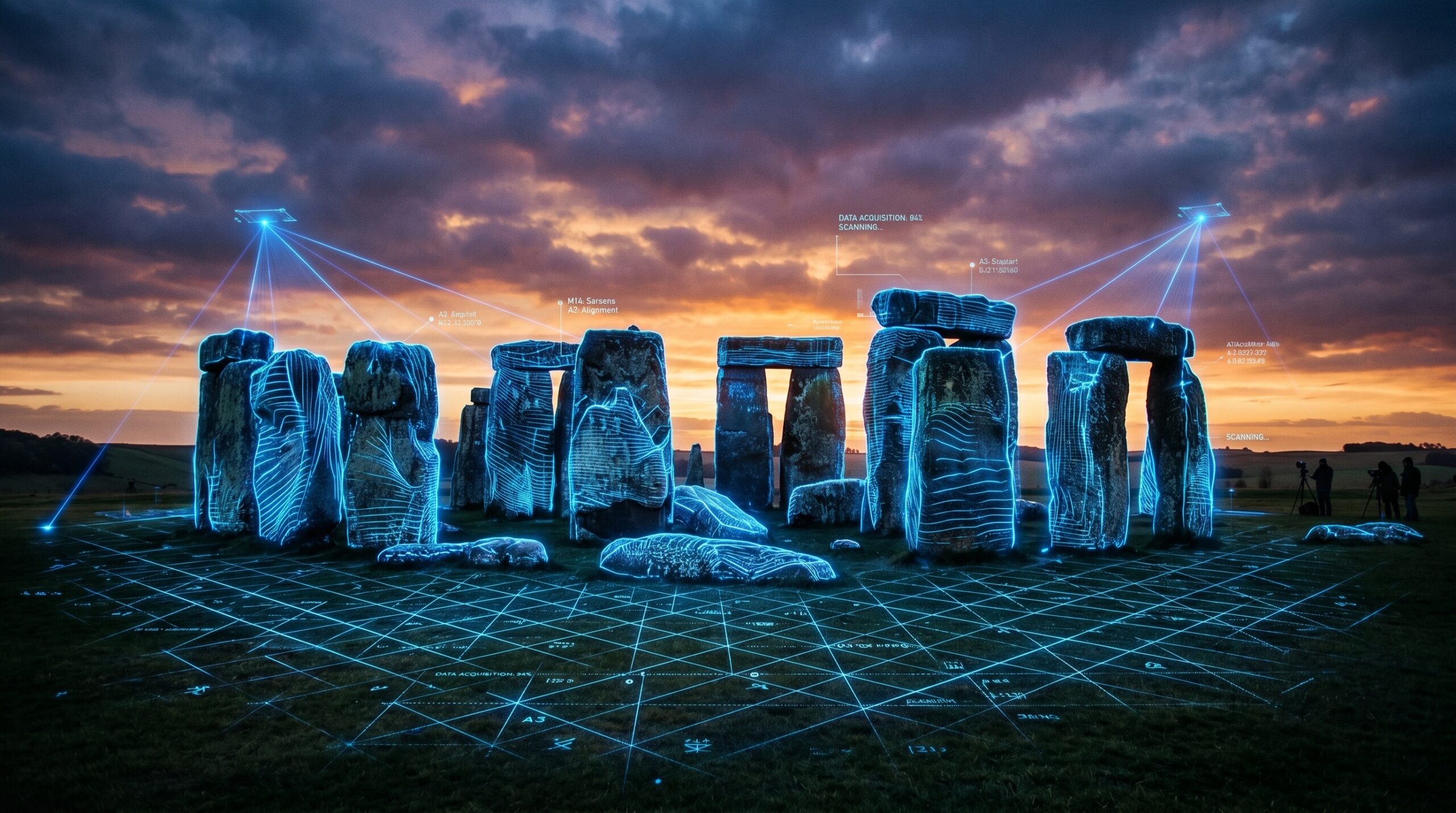
    In February 2026, a joint team from the University of Birmingham and the Ludwig Maximilian University of Munich deployed a new synthetic-aperture radar array beneath the Stonehenge monument, feeding raw geophysical data into a neural network trained on archaeological pattern recognition. The goal was modest: refine existing maps of buried lintels and postholes. The result was anything but. The AI identified a subterranean chamber system extending radially from the monument’s center, arranged in geometric ratios that do not appear in any known Neolithic architectural tradition. The chambers are lined with material that returns radar signatures inconsistent with local sarsen stone or chalk bedrock. And at the deepest mapped point, forty feet below the altar stone, the scan detected a void shaped like a perfect sphere.

    The preliminary paper, leaked to the journal Antiquity before peer review, has triggered an earthquake in multiple disciplines. Archaeologists are arguing about Neolithic engineering capabilities. Physicists are debating whether the radar anomalies represent natural geological formations misread by overtrained algorithms. And in the corners of the Internet where ancient-mystery enthusiasts gather, a more radical theory is gaining traction: that Stonehenge was never merely a temple, and that the AI has accidentally mapped the control architecture of something far older than the standing stones.

    What the Scan Revealed

    Traditional ground-penetrating radar has mapped Stonehenge’s surroundings since the 1980s, revealing the broader landscape of Durrington Walls, the Avenue, and the Cursus. Those surveys produced linear maps—foundations, ditches, burial pits. The 2026 AI-assisted survey produced something different: a three-dimensional model showing twelve radial tunnels extending from a central cylindrical chamber beneath the monument’s horseshoe arrangement. The tunnels average six feet in height and terminate at points that correspond precisely to the positions of the outer sarsen circle.

    The alignment is mathematically exact. Independent geometer Dr. Helena Voss, consulting on the project, calculated that the tunnel endpoints form a dodecagon whose internal angles match the geodetic ratios found in certain Nazca line complexes—a correspondence that Voss describes as “either impossible or deeply uncomfortable.” The Nazca lines and Stonehenge were constructed by cultures with no known contact, separated by oceans and six thousand miles. Shared mathematical architecture at this precision suggests either convergent genius on a superhuman scale, or a common source of knowledge that predates both civilizations. English Heritage, which manages the Stonehenge site, has not commented publicly on the AI findings pending peer review of the research.

    The most controversial finding concerns the material lining the tunnel walls. Spectral analysis of radar returns indicates a crystalline structure with uniform density, unlike the fractured chalk and flint of the surrounding Salisbury Plain. The AI classified this material as “anomalous” with 94% confidence. Human reviewers have been unable to suggest a geological process that would produce a forty-foot band of uniform crystal beneath a Neolithic monument.

    The Sphere

    At the lowest mapped depth, the AI identified a spherical void approximately twelve feet in diameter, centered beneath the altar stone. The void is not a natural cave. Its surface returns radar as smoother than any known geological formation, with curvature variance below 2 millimeters. To the project’s imaging specialists, it looks manufactured.

    The sphere’s position is symbolically loaded. The altar stone, a five-ton block of green micaceous sandstone imported from Wales, has long been interpreted as the ritual heart of the monument. If the sphere sits directly beneath it, the implication is that the stone was placed as a cap or marker rather than as an independent altar. Some researchers have revived theories that Stonehenge functioned as an energy focal point—a concept dismissed by mainstream archaeology for decades but persistent in alternative literature.

    Dr. Marcus Chen, the project’s lead data scientist, has been cautious in public statements. “The AI detects pattern and anomaly,” he told The Guardian. “It does not interpret intent. The spherical void could be a collapsed cavern, a glacial feature, or a post-Neolithic excavation that backfilled uniformly. We need core samples before we claim anything extraordinary.” Privately, however, team members have described the consistency of the findings as “deeply weird.” The same AI architecture, trained on identical datasets, has been deployed at over two hundred archaeological sites across Europe. It has never produced a false positive of this magnitude.

    Competing Interpretations

    The mainstream archaeological response has emphasized patience. Stonehenge has been the subject of fantastical claims since the twelfth century, when Geoffrey of Monmouth attributed its construction to Merlin. The scientific consensus holds that the monument was built between 3000 and 2000 BCE by successive Neolithic and Bronze Age communities, primarily as a ceremonial and astronomical site. The new findings, while unexpected, do not automatically require rewriting that narrative.

    Dr. Alison Sheridan, a leading Neolithic specialist, has proposed that the radial tunnels represent drainage channels or foundation reinforcements for a timber phase of the monument that later decayed. The “crystalline” radar signature, she suggests, could be compacted silica deposited by millennia of groundwater flow through chalk fissures. The spherical void might be a solutional chamber formed by acidic water action on buried limestone. A 2021 Nature study on Stonehenge’s geological setting established that local groundwater chemistry is capable of producing unusual mineral deposits, though none on the scale detected by the AI survey.

    These explanations are geologically plausible but face a common challenge: none explain the mathematical precision. Drainage channels follow topography, not dodecagonal geometry. Silica deposition is irregular. Solutional chambers are rarely spherical and never with surface variance below 2 millimeters. The mainstream position requires accepting multiple independent natural processes, each operating at the extreme edge of its known range, converging by chance beneath one of the world’s most studied monuments.

    The Ancient Technology Hypothesis

    Alternative researchers have been less restrained. The discovery has revitalized interest in Göbekli Tepe, the Turkish complex that predates Stonehenge by six thousand years and displays similarly inexplicable engineering. If both sites contain subterranean architecture that exceeds their apparent technological level, the question becomes whether they represent isolated flukes or fragments of a lost technological tradition.

    Engineer and author Christopher Dunn has long argued that ancient monuments display evidence of precision machining impossible with known Bronze Age tools. The Stonehenge sphere, with its near-perfect curvature, fits Dunn’s thesis. If the void contains a manufactured object rather than empty space, it would constitute the strongest physical evidence yet for advanced pre-Ice-Age civilization.

    More speculative theorists have drawn connections to global mythology. Hindu texts describe vymanika shastra—flying machines powered by mercury vortex engines whose schematics include spherical reaction chambers. Sumerian accounts reference the me—divine objects of power buried beneath sacred sites. These parallels are generally dismissed by academics as selective reading, but they have gained traction in public discourse precisely because the official narrative now contains a hole shaped like a sphere.

    The AI Question

    Beyond the archaeological implications, the Stonehenge scan has raised epistemological questions about AI-assisted science. The neural network that identified the anomalies was trained on thousands of validated archaeological features, but its confidence metrics are not fully explainable. When the AI marks a formation as “anomalous,” it cannot always articulate why in terms human geophysicists recognize. The project team has described the model’s behavior as “pattern recognition beyond human perceptual thresholds”—a capability that produces genuine discoveries but also genuine confusion.

    Critics argue that over-reliance on black-box algorithms risks generating a new category of pseudoscientific artifact: the AI phantom. If a neural network trained on European megaliths finds “impossible” geometry at Stonehenge, the anomaly may reside in the training data rather than the ground. The project’s response—that independent manual review confirmed the radar raw data before AI processing—has not fully silenced these concerns.

    What is clear is that the technology has opened a door. Core sampling at the tunnel locations is scheduled for summer 2026, subject to approval by English Heritage. If the samples confirm crystalline lining or manufactured surfaces, the discovery will force a reassessment of Neolithic capability regardless of theoretical framework. If they reveal natural formations, the AI will have produced its most expensive false positive in archaeological history.

    The Weight of Waiting

    Stonehenge has always been a mirror. Each age projects its own anxieties onto the stones: medieval Christians saw a monument to pagan sacrifice, Romantics saw sublime connection to nature, twentieth-century archaeologists saw seasonal calendars, and twenty-first-century technologists now see the possibility of buried machinery. The AI scan has not resolved these projections. It has intensified them.

    For believers in lost civilizations, the findings validate decades of marginal research. For defenders of orthodox chronology, they represent a test of scientific patience against sensationalism. For the broader public, they offer a rare moment of genuine uncertainty at a site long since strip-mined for mystery tourism.

    The sphere waits forty feet down. The altar stone has stood above it for four thousand years. Whether the void contains a machine, a tomb, or merely the hollow laughter of geology, its existence changes something fundamental about the monument: Stonehenge is not a surface. It is a roof. And whatever was built below it may finally matter as much as what was raised above.

  • Oregon Bigfoot Rock Thrown at Truck: Why the Forest-Road Story Feels Like a Warning

    Oregon Bigfoot Rock Thrown at Truck: Why the Forest-Road Story Feels Like a Warning

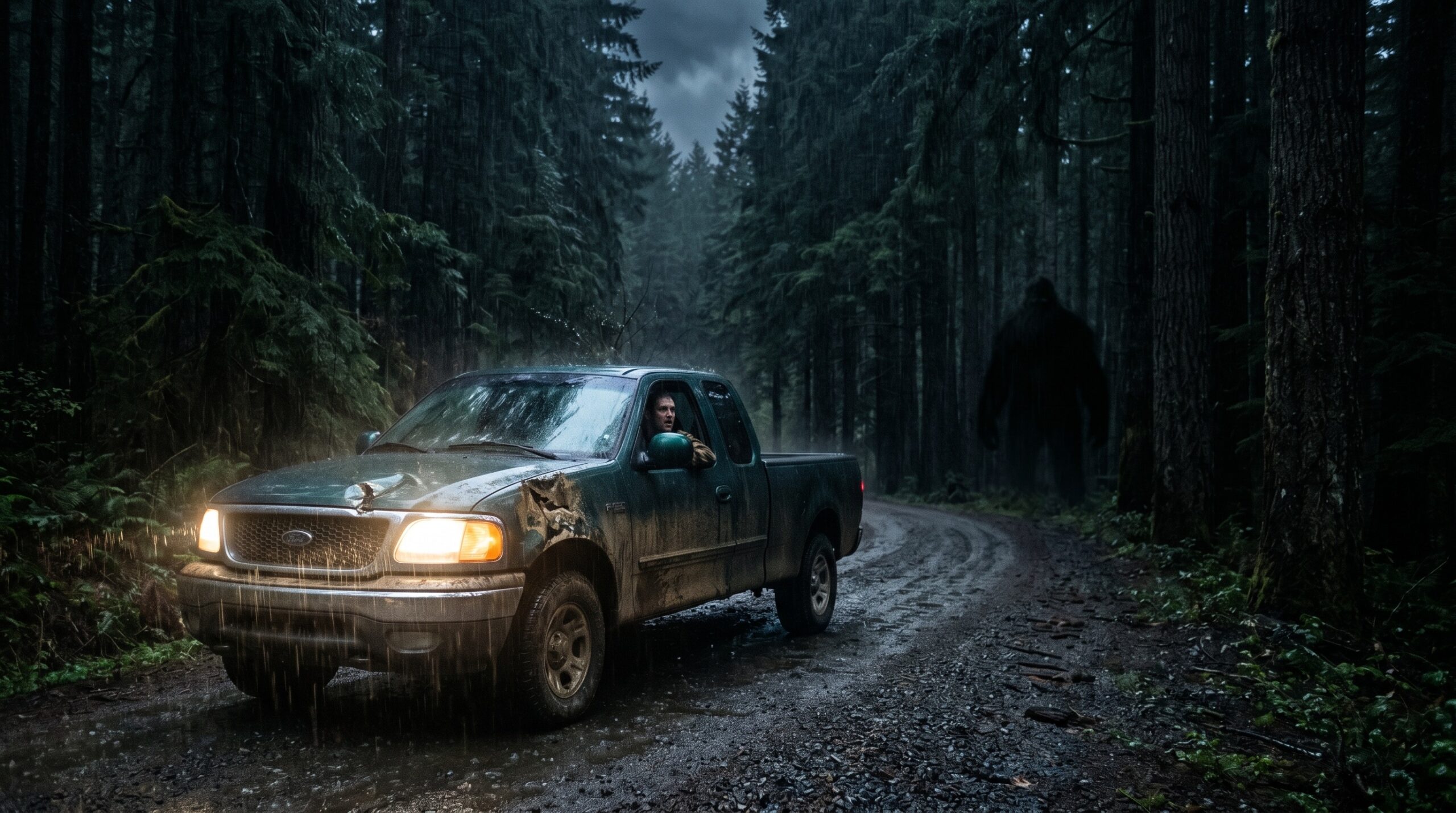
    Some stories do not arrive like normal news. They crawl in through a grainy clip, a half-panicked Reddit post, a search result that feels too fresh to be folklore, and suddenly Oregon Bigfoot rock thrown truck is not just a phrase on a screen — it is a door cracked open in the wall of ordinary reality.

    That is why this story is moving now. The fresh signal is not a laboratory announcement or a police file; it is the collision of social chatter, search interest, and a believer community already trained to notice patterns before institutions acknowledge them. A current source trail includes the r/Bigfoot report about a rock thrown at a truck in Oregon, corroborating search visibility through NorthWestBigfoot on April 2026 Pacific Northwest report patterns, and wider background from Popular Mechanics on the FBI Bigfoot file. None of that proves the strangest version of the claim. It explains why people are leaning closer.

    For Unexplained readers, Oregon Bigfoot rock thrown truck also fits a larger map: Ohio Bigfoot flap, the Giant of Kandahar, Oklahoma mystery-animal attack. The details change — a creature, a stone, a church warning, a forest road — but the emotional charge is the same. Something old seems to be pushing through a modern feed.

    The oldest Bigfoot signal is not a footprint

    The first thing believers notice is not the evidence package. It is the atmosphere. Oregon Bigfoot rock thrown truck carries the feeling of a message received from the edge: a report that sounds small until you imagine being there, alone, when the ordinary world stops behaving normally.

    That is the reason the story survives the first skeptical shrug. A strange post can be dismissed in seconds, but a vivid image keeps working on the mind after the tab closes. The shape in the yard, the sound in the trees, the stone that should not fit, the prophecy language that suddenly feels public — these are not just claims. They are scenes.

    Why thrown rocks scare believers more than photos

    What makes the current wave sticky is specificity. The internet is full of generic mystery bait, but concrete details give believers something to hold: a place, a date, a witness, a source, a visual, a named tradition. Those details become hooks. People argue over them, remix them, search for them, and compare them against older cases.

    A good unexplained story does not need everyone to believe. It only needs enough people to feel that the official category is too small. Once that happens, the story starts behaving less like content and more like a signal flare.

    How the Oregon report fits the Pacific Northwest pattern

    Skeptics have a simpler framework. They see social traction, old folklore, misread context, suggestive imagery, and the human hunger for patterns. In many cases, that caution is warranted. Viral mystery culture rewards speed, emotion, and repetition long before it rewards verification.

    But skepticism does not erase the cultural question. Why this story, and why now? Why does Oregon Bigfoot rock thrown truck keep finding an audience at the exact moment people feel that institutions, science, churches, and media are all leaving something unsaid? That is the layer where the mystery keeps breathing.

    What can and cannot be verified

    The most grounded reading is this: the current discussion around Oregon Bigfoot rock thrown truck is real, the sources show a live curiosity signal, and the strongest versions of the claim remain unconfirmed. The available material supports an article about why the story is spreading, what believers think they see in it, and why the unresolved pieces keep pulling people back.

    That may sound like a narrow conclusion, but it is exactly where many unexplained stories live. Not proven, not empty, not finished. The facts set the boundary. The feeling presses against it. Whether Oregon Bigfoot rock thrown truck becomes another internet flare-up or a lasting chapter in the unexplained archive depends on what surfaces next — and on whether readers decide the official explanation is large enough to hold what they sense in the dark.

    FAQ

    What is Oregon Bigfoot rock thrown truck?

    Oregon Bigfoot rock thrown truck is the search phrase now gathering attention around this specific unexplained topic, combining a fresh online signal with an older mystery tradition or belief system.

    Why are people talking about it now?

    People are talking because Reddit, search results, and adjacent Instagram mystery tags are all feeding attention into the same lane. That is a trend signal, not proof.

    Is Oregon Bigfoot rock thrown truck confirmed?

    No public source trail confirms the most dramatic interpretation. The story is best read as a believer-first mystery with an evidence gap that still matters.

    Why does it fit Unexplained.co?

    It sits at the crossroads of folklore, internet signal, spiritual anxiety, and unresolved evidence — exactly where modern unexplained culture keeps producing its most persistent stories.

  • Calvary Chapel End-Times Prophecy Debate: Why Apocalypse Talk Feels Mainstream Again

    Calvary Chapel End-Times Prophecy Debate: Why Apocalypse Talk Feels Mainstream Again

    Some stories do not arrive like normal news. They crawl in through a grainy clip, a half-panicked Reddit post, a search result that feels too fresh to be folklore, and suddenly Calvary Chapel end times prophecy is not just a phrase on a screen — it is a door cracked open in the wall of ordinary reality.

    That is why this story is moving now. The fresh signal is not a laboratory announcement or a police file; it is the collision of social chatter, search interest, and a believer community already trained to notice patterns before institutions acknowledge them. A current source trail includes the r/Reformed discussion of Calvary Chapel and recent end-times emphasis, corroborating search visibility through Salon on far-right Christian apocalypse politics around Iran war talk, and wider background from Wikipedia’s list of predicted apocalyptic dates. None of that proves the strangest version of the claim. It explains why people are leaning closer.

    For Unexplained readers, Calvary Chapel end times prophecy also fits a larger map: red heifer prophecy 2026, Kim Clement’s Iran prophecy, Doomsday Clock at 85 seconds. The details change — a creature, a stone, a church warning, a forest road — but the emotional charge is the same. Something old seems to be pushing through a modern feed.

    Why rapture language is lighting up again

    The first thing believers notice is not the evidence package. It is the atmosphere. Calvary Chapel end times prophecy carries the feeling of a message received from the edge: a report that sounds small until you imagine being there, alone, when the ordinary world stops behaving normally.

    That is the reason the story survives the first skeptical shrug. A strange post can be dismissed in seconds, but a vivid image keeps working on the mind after the tab closes. The shape in the yard, the sound in the trees, the stone that should not fit, the prophecy language that suddenly feels public — these are not just claims. They are scenes.

    The church debate beneath the internet panic

    What makes the current wave sticky is specificity. The internet is full of generic mystery bait, but concrete details give believers something to hold: a place, a date, a witness, a source, a visual, a named tradition. Those details become hooks. People argue over them, remix them, search for them, and compare them against older cases.

    A good unexplained story does not need everyone to believe. It only needs enough people to feel that the official category is too small. Once that happens, the story starts behaving less like content and more like a signal flare.

    How war, Israel, and countdown theology merge online

    Skeptics have a simpler framework. They see social traction, old folklore, misread context, suggestive imagery, and the human hunger for patterns. In many cases, that caution is warranted. Viral mystery culture rewards speed, emotion, and repetition long before it rewards verification.

    But skepticism does not erase the cultural question. Why this story, and why now? Why does Calvary Chapel end times prophecy keep finding an audience at the exact moment people feel that institutions, science, churches, and media are all leaving something unsaid? That is the layer where the mystery keeps breathing.

    What is belief, what is politics, and what remains unresolved

    The most grounded reading is this: the current discussion around Calvary Chapel end times prophecy is real, the sources show a live curiosity signal, and the strongest versions of the claim remain unconfirmed. The available material supports an article about why the story is spreading, what believers think they see in it, and why the unresolved pieces keep pulling people back.

    That may sound like a narrow conclusion, but it is exactly where many unexplained stories live. Not proven, not empty, not finished. The facts set the boundary. The feeling presses against it. Whether Calvary Chapel end times prophecy becomes another internet flare-up or a lasting chapter in the unexplained archive depends on what surfaces next — and on whether readers decide the official explanation is large enough to hold what they sense in the dark.

    FAQ

    What is Calvary Chapel end times prophecy?

    Calvary Chapel end times prophecy is the search phrase now gathering attention around this specific unexplained topic, combining a fresh online signal with an older mystery tradition or belief system.

    Why are people talking about it now?

    People are talking because Reddit, search results, and adjacent Instagram mystery tags are all feeding attention into the same lane. That is a trend signal, not proof.

    Is Calvary Chapel end times prophecy confirmed?

    No public source trail confirms the most dramatic interpretation. The story is best read as a believer-first mystery with an evidence gap that still matters.

    Why does it fit Unexplained.co?

    It sits at the crossroads of folklore, internet signal, spiritual anxiety, and unresolved evidence — exactly where modern unexplained culture keeps producing its most persistent stories.

  • Ross Coulthart Claims US Special Forces Retrieved Non-Human Technology From North Korea

    Ross Coulthart Claims US Special Forces Retrieved Non-Human Technology From North Korea

    The border was crossed. The object was brought back. And the story was told not by an anonymous forum poster, but by one of the most respected investigative journalists in the UFO field.

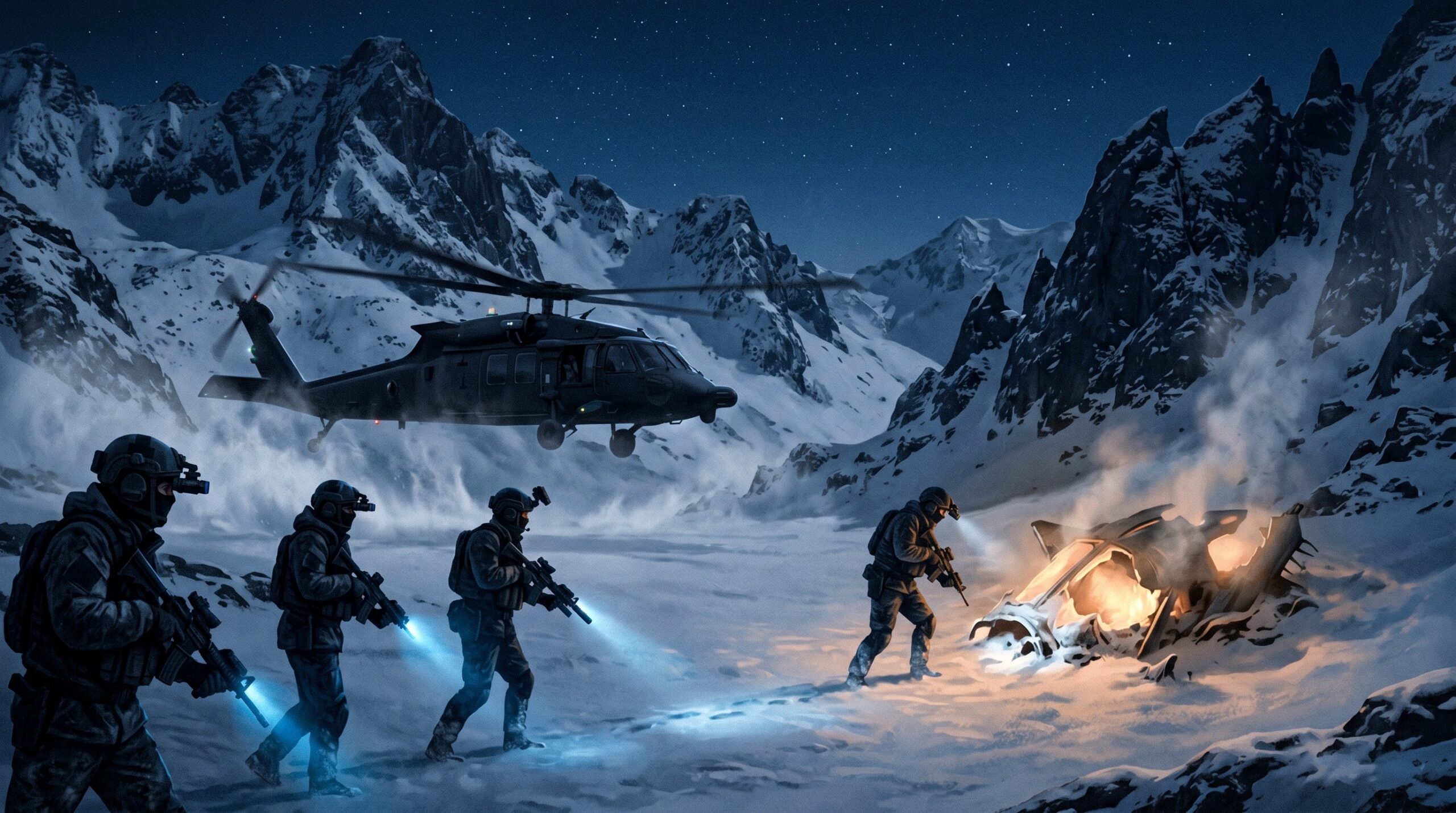
    Ross Coulthart, the Australian journalist whose reporting has shaped the global disclosure conversation, recently made a claim that sounds like fiction even by the standards of this subject. According to Coulthart’s statement on X, a United States special forces retrieval team entered North Korean territory and recovered non-human technology. The object was not manufactured on Earth, he says. And the operation was real.

    Wikipedia on Ross Coulthart outlines why, for believers who have followed his work, the claim carries weight. He is not a hobbyist. He is a veteran reporter with a track record of breaking stories that later prove accurate, including details about hidden UAP programs and whistleblower protections. When Coulthart speaks, the community listens. And what he is saying now is that the United States has already retrieved craft from one of the most isolated and hostile nations on Earth.

    North Korea is a logical but disturbing location for such an operation. The country is sealed off from satellite scrutiny, foreign media, and international oversight. If an object crashed there, the regime would have no incentive to share it with the world, and every incentive to study it in secret. For the United States, recovering such material would require a covert military incursion into a nuclear-armed dictatorship. The risk would be extraordinary. The payoff, if the object truly is non-human, would be immeasurable.

    Coulthart’s claim feeds directly into the broader retrieval narrative that has consumed disclosure circles for years. Eric Davis and his claim of forty recovered craft set a benchmark that believers have never forgotten. James Clapper’s allegations about a retrieval program suggested that the intelligence community has known about this for decades. And the Immaculate Constellation documents hinted at a secret architecture far larger than the public has been allowed to see.

    If Coulthart is correct, then the retrieval program is not limited to friendly territory or accident sites in the American Southwest. It is global. It involves special forces operating in active war zones and behind enemy lines. And it suggests that the United States is in a quiet race with other nations to secure technology that could rewrite the balance of power on Earth.

    Skeptics are, understandably, demanding proof beyond what NewsNation UFO coverage has so far been able to corroborate. Coulthart has offered documents in previous stories, but on the North Korea claim he has so far provided only his word and his source. Critics argue that a story this explosive requires more than a journalist’s reputation. They point out that North Korea is the perfect setting for an unverifiable claim: no independent access, no way to confirm or deny, and a regime so paranoid that even satellite imagery is limited.

    Believers counter that the lack of proof is the point. If the operation was covert, there would be no public record. The absence of evidence, they say, is exactly what you would expect from a mission that violated North Korean sovereignty to secure alien technology. They also note the pattern of missing persons and suspicious deaths among researchers with UAP ties. Steven Garcia’s disappearance remains unsolved. The scientists keep dying. And now Coulthart is describing retrievals so dangerous they require special forces.

    The mainstream media has largely ignored the claim, which is standard for Coulthart’s more explosive reporting. But inside the community, the story is spreading fast. If true, it is the biggest disclosure revelation in history. If false, it is another breadcrumb in a trail that never seems to end. For now, the only thing certain is that Coulthart has raised the stakes. The conversation is no longer about lights in the sky. It is about ground teams, hostile territory, and technology that does not belong to us.

  • Matthew Sullivan UFO Whistleblower Death: Why Believers Call the Timing Impossible

    Matthew Sullivan UFO Whistleblower Death: Why Believers Call the Timing Impossible

    Disclosure culture has a new name to whisper, and it arrived with the kind of timing that makes believers go cold. The Matthew Sullivan UFO whistleblower death story is spreading because it sounds less like an isolated tragedy and more like another witness chair going empty a moment before the curtain rises.

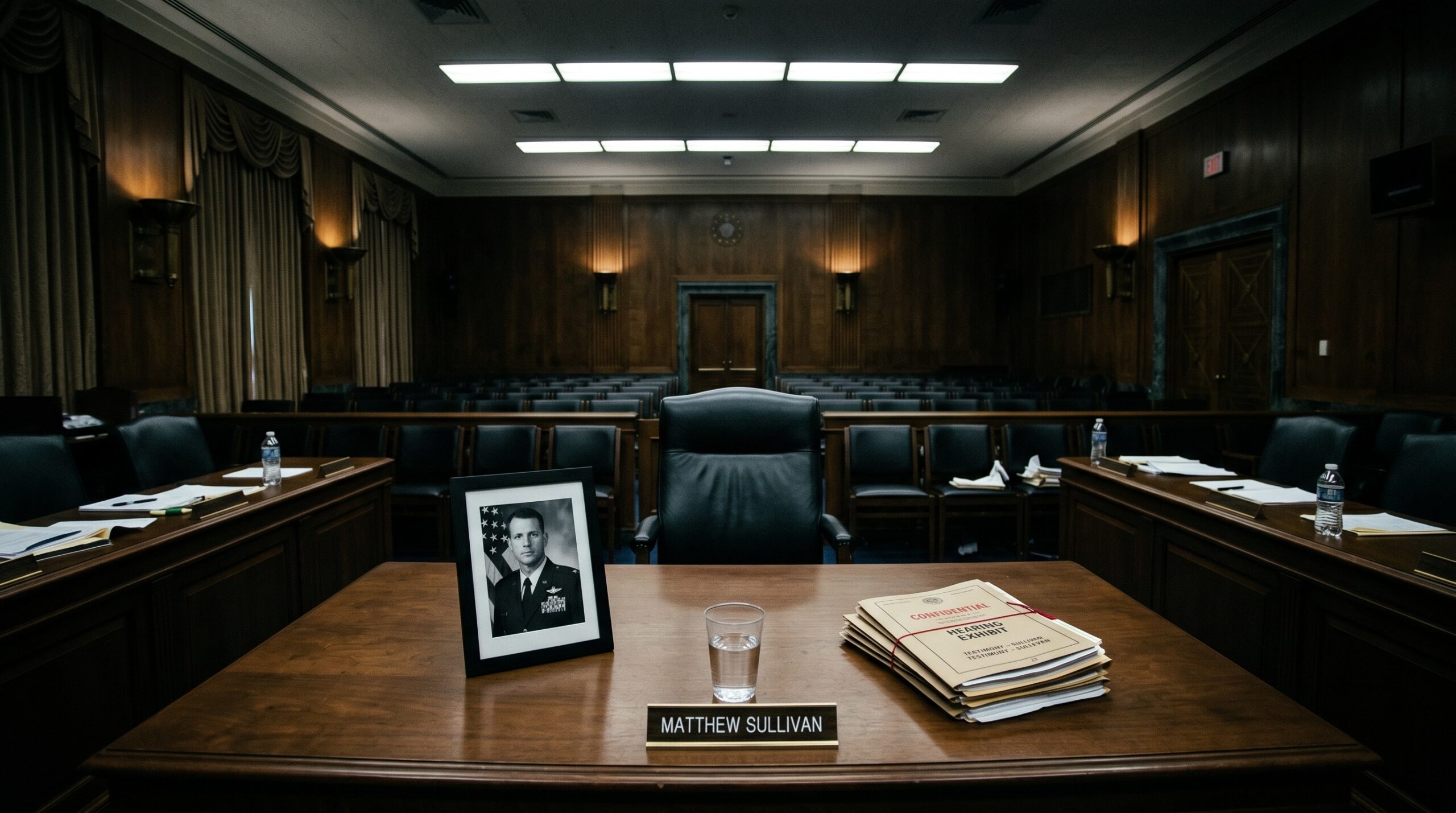
    The direct answer is that Matthew Sullivan is being discussed across UFO media after Rep. Eric Burlison and allied disclosure voices pointed to him as a former Air Force intelligence officer linked to sensitive knowledge who died before a hoped-for congressional interview. The current surge comes from a widely shared Reddit post about Sullivan’s credentials and timing, tabloid-style pickup from the Daily Mail’s report on the death being called suspicious, and follow-on amplification such as BroBible’s summary of the congressional alarm. None of that proves what Sullivan knew. It does explain why his name is now ricocheting through disclosure channels.

    The reason it lands so hard is simple: this story did not emerge in a vacuum. It emerged beside the Amy Eskridge case, the Steven Garcia disappearance narrative, and the larger cycle of online UFO leak mythology. Once those names are already circulating, a fresh death with even a partial whistleblower frame feels combustible by default.

    Why Sullivan’s name detonated across disclosure feeds

    The heart of the story is not only who Sullivan was said to be. It is when believers think the public was about to hear more from him. Disclosure audiences are intensely sensitive to timing. A witness who dies years after leaving a program is one thing. A witness who reportedly dies in the same emotional window as congressional pressure and new secrecy claims is something else entirely.

    That is why the case has been framed so aggressively online. Sullivan is being positioned less as a private citizen and more as a nearly opened vault. In the believer imagination, the most powerful stories are always the ones where the door was about to crack and then suddenly shut.

    What believers think he was about to reveal

    The online version of the case treats Sullivan as someone who moved close enough to the inner rooms of military secrecy to matter. In that telling, he was not just adjacent to UFO rumor but connected to the kind of classification layers disclosure activists think hide the real architecture of the phenomenon.

    That story remains compelling because it folds perfectly into the larger mood of 2026 disclosure culture: missing footage, dead researchers, nervous lawmakers, and a public beginning to suspect that key witnesses keep disappearing right before narrative thresholds. Whether or not that pattern is real, it is emotionally legible to the audience consuming it.

    Why the case landed inside the dead-scientist panic

    Believers did not need much to attach Sullivan to the wider missing-scientists panic. They were already primed. Over the past week, the disclosure internet has behaved like a system searching for names that fit an emerging shape. Sullivan fit that shape immediately: intelligence background, UFO proximity, suspicious framing, congressional mention, and a death that can be described as badly timed.

    Once that frame locks in, the story becomes more than biography. It becomes a confirmation object. Every new mention seems to validate the old fear that witnesses do not vanish randomly when the pressure around secrecy rises.

    What the public record can actually confirm

    This is where the drama narrows.

    Public reporting does support that Sullivan’s name has been raised by UFO-interested lawmakers and commentators as part of a suspicious death narrative. It also supports that the case is being discussed in direct connection with whistleblower culture and congressional interest. What is still missing in public view is hard documentation proving exactly what Sullivan was prepared to disclose, what a formal congressional interview would have contained, or that his death can be tied to anything beyond the suspicion now attaching to it.

    That does not kill the story. It explains the story’s power. Sullivan now lives in the most durable zone of disclosure lore: close enough to real institutions to feel credible, distant enough from public proof to stay explosive. For believers, that is often the sweet spot. It leaves the file open, the timing haunting, and the sense that another voice was lost just before it might have said too much.

  • Ohio School TikTok Skinwalker: The Viral Video That Has Everyone Asking What Was Walking Outside That School at Night?

    Ohio School TikTok Skinwalker: The Viral Video That Has Everyone Asking What Was Walking Outside That School at Night?

    Something was moving in the dark outside that Ohio school—and someone caught it on camera. When a viral TikTok surfaced in February 2026, it didn’t take long for the internet to reach a verdict: skinwalker. Within weeks, millions had seen the footage, forums were ablaze, and even mainstream outlets were asking the same unsettling question. What exactly was walking near that school at night? iHorror on TikTok skinwalker hysteria is one of the main outside reports driving that part of the discussion.

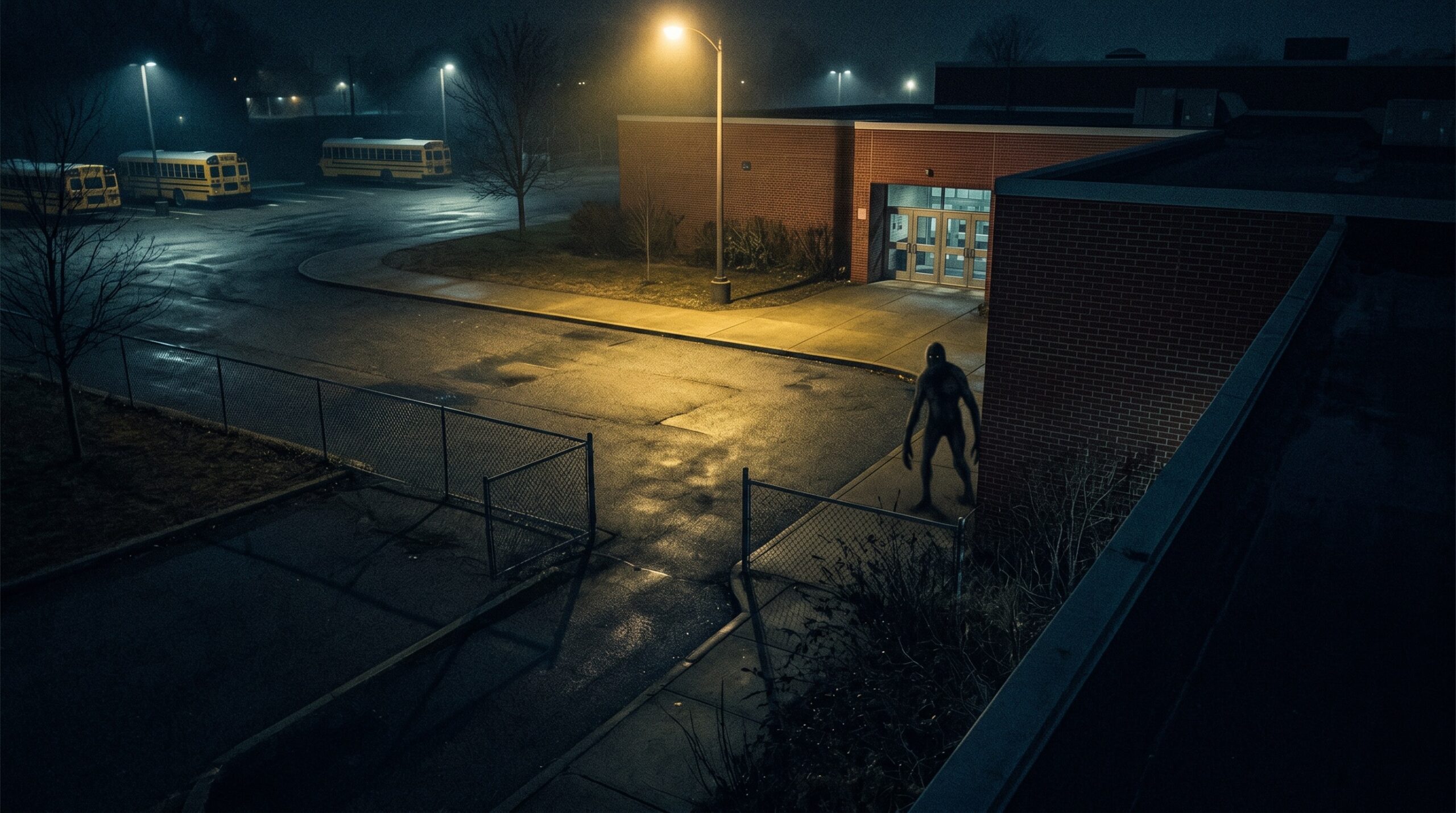
    The video, posted anonymously to TikTok in mid-February, appears to capture grainy CCTV footage from the exterior of a school building somewhere in Ohio. The timestamp reads like a punch to the gut: 3:47 AM. In the footage, a figure moves across the frame with a gait that several viewers described as “fundamentally wrong”—too tall, too thin, moving in a way that seemed to defy normal human locomotion. The poster’s caption, since deleted in a wave of attention, reportedly read: “Something is wrong in our town.”

    Within days, the video had accumulated several million views. By the time TikTok’s algorithm finished with it, the conversation had shifted from “creepy video” to something far more specific—and far more disturbing. TikTok skinwalker videos is one of the main outside reports driving that part of the discussion.

    The TikTok That Started It All

    The original TikTok video was uploaded with minimal context, which only amplified the mystery. A dark parking lot. A school building silhouetted against a moonlit sky. And then—that movement. The figure enters the frame from the left side, walking with long, deliberate strides toward the right edge before disappearing behind a structure. At no point does the figure turn, look at the camera, or break its stride. It simply passes through, as if it knows exactly where it’s going.

    What makes the footage particularly unsettling isn’t just the figure itself—it’s the way the figure moves. In the grainy night-vision resolution, legs appear to bend at angles that don’t quite match typical human locomotion. The proportions seem off: the torso too long, the limbs too angular. Someone watching it reported feeling a visceral sense of unease they couldn’t explain.

    “They know,” one commenter wrote beneath the reshared video. “They know exactly where they’re going. That’s what makes it so wrong.”

    The video gained traction on TikTok through a series of duets and stitches—other creators reacting to the footage, adding their own commentary, sometimes their own theories. Within two weeks, the original post had been viewed an estimated eight million times across multiple shares. The account that posted it went private, then deleted entirely. The same vacuum of context that surrounded the Oklahoma mystery animal attack—where an attacker was never identified despite injuries and DNA evidence—also applies here: anonymity amplifies both fear and credibility in equal measure.

    The Spread to Twitter and Mainstream

    By late March, the video had migrated to Twitter, where it found an entirely new audience. The transition from TikTok to Twitter is a pattern often seen with viral content—the TikTok audience tends to be younger, more meme-literate, while Twitter draws a crowd more inclined toward longer analysis and debate. This video seemed to bridge that gap, spawning threads that analyzed every frame, every pixel, every possible mundane explanation.

    One particularly viral thread garnered over two million views, breaking down the footage frame by frame and concluding—reluctantly—that nothing in the video suggested a human figure. Another user compiled comparisons with known skinwalker sightings, creating what became a reference post for the emerging discourse.

    Mainstream outlets began covering the phenomenon in early April. iHorror’s April 2026 piece, titled “TikTok’s Skinwalker Obsession Has Gone Full CCTV Hysteria,” documented the spread and attempted to contextualize why this particular video had resonated so deeply. Local Ohio news stations ran segments. National mystery-focused publications picked up the story. The pattern was familiar to anyone who’s watched viral paranormal content unfold before—but this time felt different.

    Why? Part of it has to do with the setting. A school. At night. The implications alone are enough to generate anxiety. But beyond that, the video’s ambiguity meant that no one could definitively say what they were looking at. That uncertainty is precisely what keeps these conversations burning.

    Why the “Skinwalker” Label Matters

    The word “skinwalker” carries weight. It isn’t a term that internet culture invented or diluted—it comes from Navajo mythology, describing a practitioner of witchcraft who has the ability to shapeshift into animals, particularly wolves, coyotes, and other creatures. In the traditional understanding, a skinwalker is never merely an animal in disguise. It retains something fundamentally inhuman—the way it moves, the way it watches, the wrongness that radiates from it even in animal form.

    When viewers described the Ohio school figure as moving with a “wrong” gait, they were invoking this exact cultural memory. The figure didn’t walk like a person pretending to be something else. It moved like something that had never been a person at all—something wearing a shape that only approximated humanity. This distinction matters enormously to those who study the skinwalker phenomenon.

    The comparison to other footage intensified the speculation. When the Alberta valley Bigfoot footage surfaced, viewers immediately drew parallels—not to Bigfoot, but to the same category of encounter. The uncanny, the unverifiable, the deeply unsettling footage that defies easy categorization. These videos don’t prove anything, but they share something important: the feeling they produce is real, even if the explanation is uncertain.

    Believers in the skinwalker concept have a framework for understanding this footage. They would argue that the figure’s behavior—walking purposefully past the school at 3:47 AM, never breaking stride, never acknowledging the camera—fits a pattern. Skinwalkers, in the folklore, are said to be drawn to places of significance, to circle and observe. The school, in this reading, isn’t just a random location. It’s a gathering point for young people, for potential victims, for something the entity might view as prey or territory.

    The skeptic’s counter-argument—that the label is applied too broadly, that any dark unclear footage gets labeled “skinwalker” now—has merit. Internet paranormal culture does have a tendency to over-apply dramatic terminology. But the response from believers is equally valid: when you see something that genuinely unsettles you, you reach for the language that most precisely captures that feeling. For many viewers, “skinwalker” was the only phrase that fit.

    What the Video Actually Shows

    It’s worth being clear about what the video does and doesn’t show.

    The footage is grainy, captured on what appears to be a standard school security camera operating in low-light or night-vision mode. The figure that crosses the frame is visible only as a dark silhouette against a lighter background. At no point does the footage clearly reveal a face, hands, or any of the details that would allow for confident identification.

    Could it be a person? Yes. A maintenance worker, a security guard, a teenager sneaking out to meet friends. The school is a location where humans have every reason to be present, even at 3:47 AM. A person walking normally, even purposefully, could produce something like this if the footage were degraded enough by the camera quality.

    Could it be an animal? A deer caught in the camera’s field of view might create strange elongated shapes in night vision. The proportions that seem “wrong” to human eyes might simply be an animal’s legs and body rendered poorly by low-resolution equipment.

    Could it be a衣架—a clothing rack, a decorative structure, something that caught the wind or the camera’s glitch in a way that produced a moving silhouette? Some users have floated this possibility, though it doesn’t account for the consistent movement across multiple frames.

    The honest assessment is this: the video does not contain enough information to definitively identify what it shows. The ambiguity is genuine, not manufactured. The figure could be human. It could be animal. It could be something else entirely. The footage doesn’t prove anything—and that’s precisely what keeps the conversation alive.

    Video analysis communities have made various attempts to enhance the footage, to pull details from the grain, to compare pixel patterns. Some analyses have suggested the figure’s height exceeds normal human parameters. Others have noted that the movement pattern doesn’t match typical human walking gait under careful frame-by-frame review. None of these analyses are conclusive, but together they build a picture of genuine ambiguity—footage that resists easy explanation.

    Why This Story Won’t Fade

    The Ohio school skinwalker video is not going to disappear from the cultural conversation, and there are structural reasons for that.

    Platform algorithms are designed to amplify content that generates strong emotional responses. Mystery. Unease. Fear. The video produces all three in viewers who encounter it unprepared. When content performs well by these metrics, platforms reward it with more distribution. The result is a self-reinforcing cycle: more people see it, more people discuss it, more people create derivative content about it.

    But beyond the algorithmic mechanics, there’s something else at work. The skinwalker concept is tied to real cultural folklore—real enough that the Navajo Nation has historically asked that outsiders not engage with or sensationalize skinwalker stories. When a video like this goes viral, it brings that folklore into mainstream conversation in a way that feels both thrilling and disrespectful, depending on your perspective.

    This pattern of viral paranormal content isn’t new, but each iteration seems to generate more intensity than the last. Something about our current cultural moment—the isolation of recent years, the erosion of trust in institutions, the sense that the world might contain more than we were taught—makes us hungry for mystery. We want there to be something beyond the mundane. We want the dark to hold secrets. The Loch Ness Monster sightings that continue to arrive every year—including the first 2026 report from the Caledonian Canal in March—demonstrate that this appetite for cryptid mystery isn’t fading.

    And so the debate continues, months later, still unresolved. The video sits on servers, archived and reshared, watched by new audiences who find it through different pathways each time. Forums continue to analyze it. Skeptics continue to propose mundane explanations. Believers continue to feel, in their bones, that something was out there that night.

    Something was out there that night. That much, at least, the footage does show.

    Frequently Asked Questions

    What is a skinwalker?

    A skinwalker is a figure from Navajo mythology—specifically from the tradition of the Navajo people (Diné). In the traditional understanding, a skinwalker is a person who has gained supernatural powers through witchcraft and can shapeshift into animals, most commonly wolves, coyotes, foxes, and crows. The term is often used more broadly in paranormal culture to describe any entity that appears to mimic human or animal form while possessing something fundamentally “wrong” or otherworldly.

    Was the Ohio school video verified?

    The video has not been officially verified by any authority. The school has not publicly confirmed or denied the footage’s authenticity, and the original poster’s account has been deleted. Attempts by journalists and researchers to identify the school or confirm the video’s origins have not produced definitive results.

    What do skeptics say about the video?

    Skeptics have proposed several mundane explanations: the figure could be a person walking normally, an animal rendered indistinguishably by low-quality footage, or an inanimate object caught in a way that produced a moving silhouette. Video quality limitations—CCTV grain, night-vision distortion—make it impossible to clearly identify details that would allow for definitive explanation either way.

    Why did this video go so viral?

    The video’s virality is attributed to several factors: the inherently unsettling setting (a school at night), the genuine ambiguity of the footage (which resists easy debunking), the emotional response it generates in viewers, and the role of platform algorithms in amplifying mystery and shock content. The spread from TikTok to Twitter to mainstream outlets followed a pattern commonly seen with viral paranormal content.

    Has this happened before with other videos?

    Yes. The skinwalker phenomenon has produced numerous viral videos over the years, from dashcam footage to security camera captures. The pattern of a grainy, ambiguous video generating massive online discussion and debate is well-established in paranormal internet culture. Each new video adds to the corpus of footage that believers point to when making their case.

  • Giant of Kandahar: The Military Encoutner

    Giant of Kandahar: The Military Encoutner

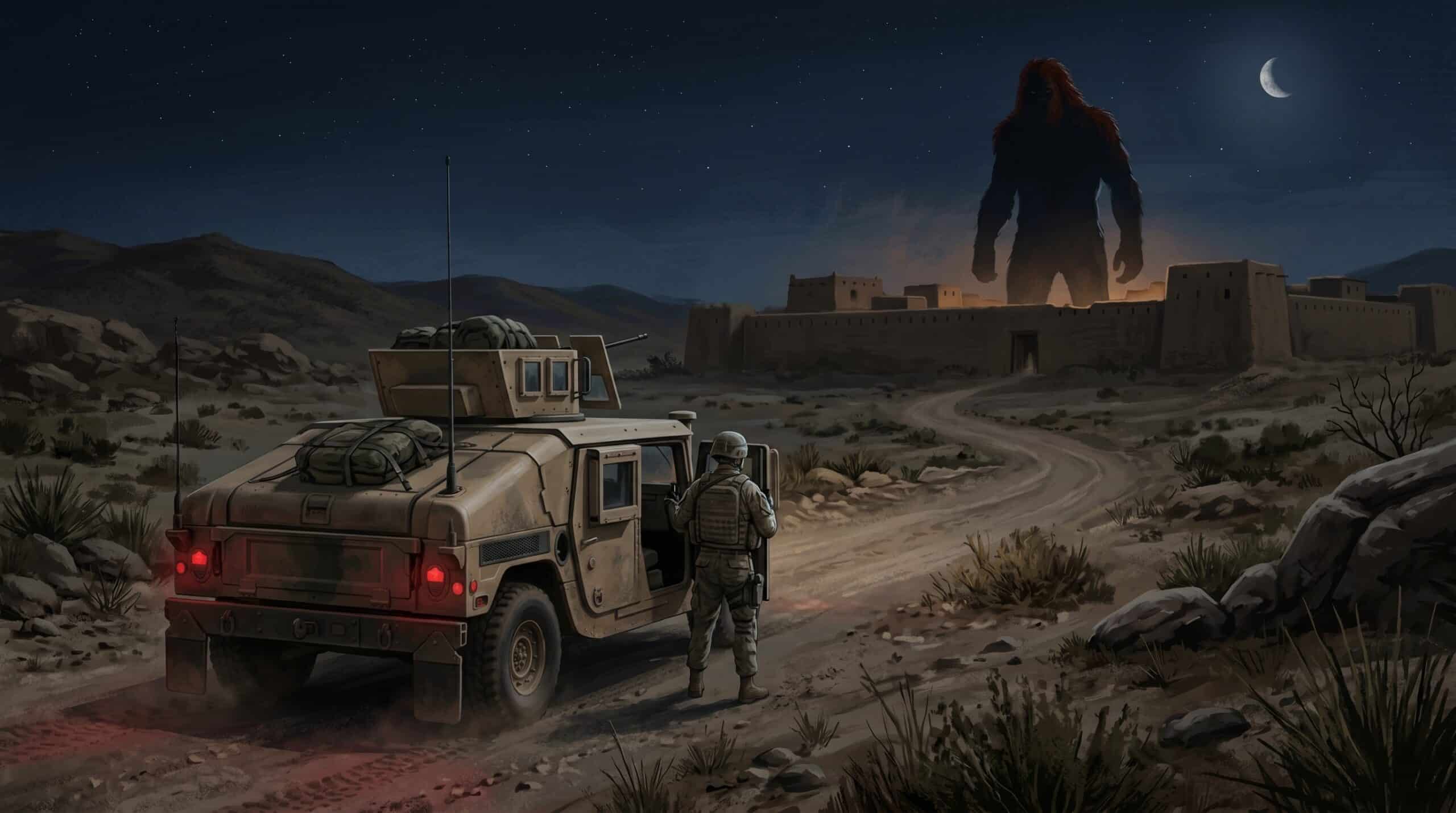
    In 2003, US Marines stationed near Kandahar, Afghanistan, reportedly encountered something that did not fit any category in their training. Near a cluster of remote farms on the edge of the desert, a patrol reported a figure standing upright — roughly 13 feet tall, with red hair, moving in a way that did not look human. The encounter lasted less than a minute. By the time the Marines regrouped and returned to the location, the figure was gone.

    Twenty-three years later, the story is still circulating. And in 2026, it’s getting fresh attention on TikTok and YouTube in a way that suggests the Giant of Kandahar has become, once again, exactly the kind of story the algorithm loves to push. Sources: TikTok search: Giant of Kandahar YouTube: Soldiers vs Giants – The Shocking 13-Foot Encounter in Kandahar.

    The Shape of the Story

    The Kandahar Giant story belongs to a family of military encounter reports that share a rough structure: American troops in a remote location encounter a humanoid figure that is too large, moves too fast, or behaves in ways that don’t match any known animal. The figure vanishes before a full investigation can be mounted. Official records, if they exist at all, are never made public. The story survives through secondhand accounts, forum posts, and periodic waves of social media attention.

    The specific Kandahar version adds a detail that has kept it in rotation for more than two decades: the red hair. Most giant humanoid encounter stories describe figures that are either hairless or covered in dark hair. The red hair in the Kandahar account is unusual enough that researchers who track these stories note it as a distinguishing feature — one that places the report closer to certain religious and mythological traditions than to the typical cryptid sighting pattern.

    Ancient traditions around the world describe tall, powerful beings that were sometimes characterized as protective and sometimes as hostile. The Mesopotamian incantation bowl tradition — in which households placed specially inscribed ceramic bowls beneath doorways to entrap malevolent spiritual entities — speaks to a belief system in which the boundary between the physical and spiritual was permeable, and in which large, hairy humanoid figures could move between them.

    Whether anyone who encountered the Kandahar Giant was thinking in those terms is, of course, impossible to know. What the record shows is that at least one military patrol in Afghanistan in 2003 believed they saw something large enough and strange enough to remember for more than two decades.

    The 2003 Encounter: What the Reports Say

    The story has circulated primarily through military forums and high-strangeness communities since at least the mid-2000s. Details vary somewhat between versions — exactly how many Marines were present, how long the encounter lasted, whether the figure made any sound — but the core elements are consistent across tellings: a very tall figure, a remote location, a brief and confusing interaction, and no physical evidence that anyone has ever been able to produce.

    The red hair has remained the detail that keeps the story distinctive. Military personnel are trained observers. They are not, as a rule, the kind of witnesses who would mistake a large animal for a human figure. The fact that multiple accounts describe the figure as both large and red-haired suggests either that the details are consistent because they come from a shared actual experience, or that the story has been refined over years of retelling to produce the most memorable version of itself.

    The counter-explanation, offered by skeptics and mainstream military analysts, is straightforward: remote duty in a combat zone generates enormous psychological pressure, and unusual perceptual experiences are a documented consequence of sustained stress, sleep deprivation, and hypervigilance. Soldiers in Afghanistan reported seeing things that were not there with enough regularity that the US military eventually issued guidance on what was sometimes called “battlefield stress perceptual phenomena.” The Kandahar Giant, on this reading, is a misidentified stress response, not a genuine encounter.

    Why the Story Has Endured

    For the communities that track these reports seriously, the Kandahar story has persisted because it has structural features that distinguish it from the typical cryptid sighting. The military context provides a built-in credibility boost — soldiers are trained to observe, and their reports carry an institutional weight that anonymous civilian sightings do not. The specific location — Afghanistan, a country with a rich tradition of mythological and folkloric beings — creates an associative field that makes the story feel less random than it might otherwise. And the red hair gives it a distinctive character that keeps it from being confused with other tall humanoid reports.

    Ancient civilizations around the world have built monumental structures, left behind technological artifacts, and developed spiritual frameworks for understanding beings that move between the seen and unseen worlds. The Giant of Kandahar fits into a tradition that includes the Nephilim of the Hebrew Bible, the beings described in the Book of Enoch, and dozens of similar accounts from cultures across the Middle East, Central Asia, and the Mediterranean. Whether those traditions describe literal beings or something more metaphorical is, of course, a matter of deep disagreement. But their existence as a cultural framework means that any encounter with a very tall, unusual-looking figure in this part of the world is going to be interpreted through a rich set of associations.

    TikTok, YouTube, and the 2026 Resurgence

    The Kandahar Giant story has surfaced in 2026 in two distinct formats: short-form video on TikTok and long-form commentary on YouTube. The TikTok versions are typically quick-hit retellings with AI-generated or stylized imagery — the kind of content that lives and dies by its ability to create a visceral first impression in under 60 seconds. The YouTube versions are more detailed, typically featuring someone walking through the evidence as they understand it, with varying degrees of analytical rigor.

    The algorithm has been good to the story. High-strangeness content performs well in the recommendation pipelines of viewers who watch UFO videos, cryptid content, and ancient mystery material. Once a viewer watches one Kandahar Giant video, the platform begins suggesting similar content, creating a feedback loop that keeps the story in rotation even when no genuinely new information has emerged.

    What is new in 2026 is the volume of fresh content being produced. Multiple TikTok creators have generated thousands of views with their own retellings of the encounter, each adding small variations that the algorithm rewards for novelty. The effect is not that the underlying story has changed — it has not — but that the story feels newly present in the information environment in a way it has not felt for several years.

    What Skeptics Say

    The skeptical case against the Kandahar Giant is straightforward: there is no physical evidence. No hair sample, no footprint cast, no photograph, no official record of any kind. What exists is a set of oral accounts that have circulated through forums and social media for more than twenty years, and which have never been attached to any verifiable identity or verified document.

    The military context, which believers cite as a credibility marker, cuts the other way for skeptics: military personnel in combat zones operate under enormous stress, and perceptual disturbances in those conditions are common enough to have generated their own institutional guidance from the US Army. The fact that no physical evidence has ever been produced is consistent with a stress-related misperception, not with an actual encounter with an unknown being.

    The red hair detail has also been noted as a potential indicator of story refinement over time. Oral accounts that circulate for years tend to accumulate distinctive details — details that help distinguish the story from similar ones, and that make it more memorable and more shareable. Whether the red hair was part of the original account or was added during the story’s circulation is not recoverable from the available record.

    What Remains Unknown

    What is genuinely unknown is what, if anything, was seen near Kandahar in 2003. The US military does not typically publish records of anomalous encounter reports of this kind, even when those reports are documented internally. The combination of a remote location, a brief and confusing interaction, and the passage of more than two decades means that the factual record of what happened may be permanently inaccessible — visible only through the stories that have survived in civilian circulation.

    What is clear is that the story continues to find new audiences, and that those audiences bring to it the same mix of fascination and unease that the story has always generated. Whether that says more about what was seen in Afghanistan or more about what human beings need stories to be is a question the evidence available cannot answer.

    Sources: US military encounter reporting (internal records unverified); r/HighStrangeness community discussion; r/cryptids community discussion; TikTok and YouTube content analysis. No verified official documentation of the Kandahar Giant encounter has been publicly released.

  • Bluegill Triple Prime UFO Shootdown: Why a 1962 Nuclear Test Is Back in the Retrieval Debate

    Bluegill Triple Prime UFO Shootdown: Why a 1962 Nuclear Test Is Back in the Retrieval Debate

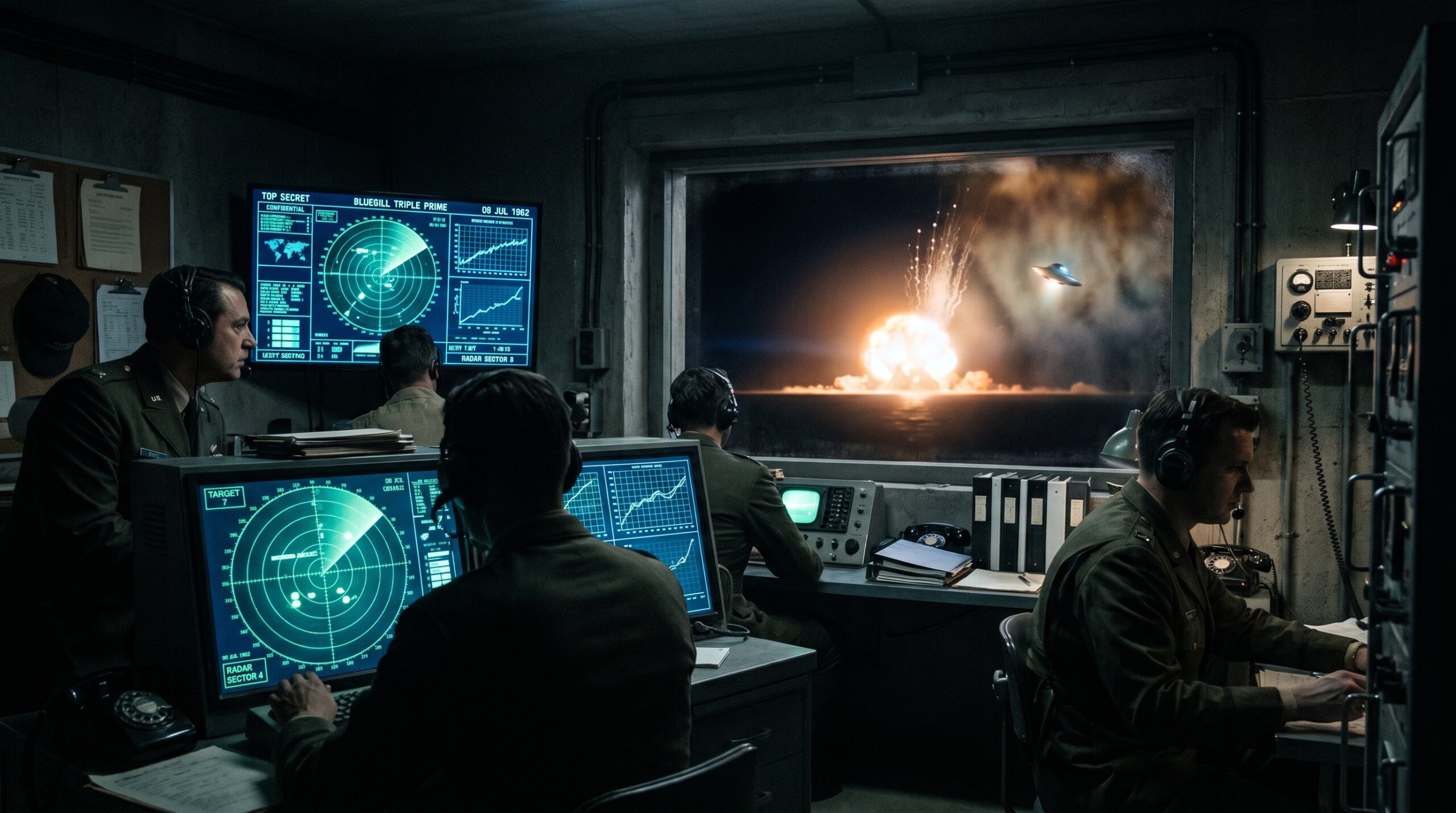
    There is something about the words Bluegill Triple Prime that already sounds like a cover story. It was a real Cold War test, a real flash above the Pacific, a real moment when the United States hurled nuclear fire into the upper atmosphere. But in 2026, believers are dragging the name out of the archive for a different reason: they think the blast may have hidden something far stranger than weapons research.

    That is why the story has broken out of the usual history forums and into UFO feeds again. To the disclosure crowd, Bluegill Triple Prime does not feel like a dead chapter. It feels like one of those sealed rooms in the house — the one everyone passes, the one no one opens, the one that starts making sense only after you read too much about recovery programs, missing footage, and documents that never seem to arrive. The same mood that powers Pete Hegseth’s missing UFO videos deadline is now being projected backward into the Cold War itself.

    The latest push came from Reddit threads and UFO communities treating a revived Bluegill Triple Prime theory as the kind of clue that should never have survived this long. In that version of the story, a nuclear test was not just a test. It was a weaponized response to an object that should not have been there, followed by a recovery effort buried under the language of national defense. Once you are already primed by stories like the same online disclosure cycle repeating itself, the theory lands with real force.

    Why Bluegill Triple Prime suddenly feels important again

    Believers are not treating Bluegill Triple Prime as a random historical curiosity. They are treating it as an origin point — a place where the government may have learned that extreme force, secrecy, and scientific ambiguity could all be folded into one official event. In that frame, the story is not about whether a detonation happened. It is about what else might have been happening under that detonation’s glare.

    That is why the discussion keeps getting folded into larger retrieval lore. People connect it to the same paranoid architecture that fuels Ghost Murmur and other high-tech search mysteries: classified systems, compartmented knowledge, and a public explanation that sounds complete until you stare at it too long.

    Outside the believer ecosystem, the searchable record is still mostly the old Cold War material. Operation Fishbowl is laid out in broad strokes in the Operation Fishbowl overview, while the revived social conversation is easy to trace through the recent Reddit thread pushing the new-evidence angle. The gap between those two worlds — official history and fevered reinterpretation — is exactly where this story now lives.

    What Operation Fishbowl actually was

    Bluegill Triple Prime was one of the high-altitude nuclear shots in Operation Fishbowl, part of the larger Operation Dominic series in 1962. The point, in plain terms, was to understand what nuclear detonations did in the upper atmosphere and near space — how they affected missiles, electronics, communications, and the invisible architecture of modern war.

    That alone is enough to make the event feel uncanny. These were not ordinary tests on ordinary ground. They were experiments conducted in a zone that already lends itself to myth: edge-of-space darkness, military telemetry, radiation effects, interrupted instruments, and after-action reporting that almost nobody outside specialist circles ever reads. Even the broader historical write-up at IFLScience’s summary of Operation Fishbowl reads like the beginning of a conspiracy novel, because the underlying event really was that surreal.

    Add the name Starfish Prime, the electromagnetic effects, the atmosphere of Cold War brinkmanship, and the fact that these tests happened in a period already drenched in UFO rumor, and Bluegill Triple Prime stops feeling like dry archival material. It starts to feel like the kind of file believers assume is missing its most important page.

    Where the shootdown theory comes from

    The modern shootdown theory depends less on one smoking-gun document than on a pattern of interpretation. Believers look at the secrecy of the era, at the willingness to hide strategic programs in plain sight, and at the long afterlife of crash-retrieval claims. Then they ask a question that sounds outrageous until you remember the rest of the disclosure conversation: if officials were already operating in a culture of extreme secrecy, why would an anomalous target be documented plainly at all?

    In that version of events, the nuclear test becomes camouflage. The launch, the detonation, the instrumentation, the military traffic, and the sealed reporting structure all provide a perfect shell around a second story the public was never meant to hear. That is why people tie Bluegill to modern retrieval rhetoric rather than to ordinary historical skepticism. To them, the point is not that the archive is thin. The point is that the archive was built to be thin.

    The theory also survives because it lets believers retrofit meaning into a period already associated with murky state power. The United States was conducting extreme experiments in the sky at exactly the same moment that UFO reports, intelligence anxieties, and national-security secrecy were all swelling. Bluegill Triple Prime offers a stage dramatic enough to hold the theory, which is why the theory keeps returning.

    Why believers think the details do not sit right

    For believers, the strongest part of the story is emotional rather than technical. A classified operation in near space, during the peak years of nuclear and intelligence paranoia, simply feels like the kind of place where something nonhuman could have been engaged and then buried under procedure. It has the right texture. It has the right decade. It has the right official silence.

    The more the disclosure world talks about retrievals, reverse-engineering, and hidden materials programs, the more older events get reread through that lens. Bluegill Triple Prime is now being treated less like a standalone mystery and more like a lost prologue.

    What the record can and cannot support

    The grounded version is narrower. Bluegill Triple Prime was a documented high-altitude nuclear test inside a real military program. Publicly accessible material does support the existence of the test, its Cold War setting, and the broader strangeness of Operation Fishbowl. What it does not currently provide is direct evidence that the event was staged to shoot down a UFO or conceal a recovery operation.

    That does not mean the theory will disappear. Stories like this survive because they sit at the junction of real secrecy and unresolved suspicion. Bluegill Triple Prime belongs to that category now: a real historical event onto which a much bigger hidden-war narrative has been mapped. The official record gives us the blast, the program, and the atmosphere. The retrieval claim remains an interpretation built from implication, timing, and distrust.

    For believers, that will be enough to keep the rabbit hole open. For everyone else, it is enough to say the story is powerful because the setting is real, even if the shootdown claim remains unproven. And that may be why Bluegill Triple Prime refuses to stay buried: it still sounds like the name of something we were never supposed to understand all at once.

  • Lafferty Brothers Mormon Cult Murders: Why the Case Still Feels Like Prophecy Gone Feral

    Lafferty Brothers Mormon Cult Murders: Why the Case Still Feels Like Prophecy Gone Feral

    Some cult stories disturb people because of what a leader did. The Lafferty brothers story is worse than that. It disturbs people because it feels like revelation itself turned rabid inside an ordinary family and walked straight into a house with a knife. There is no monster costume here, no desert compound mythology grand enough to create emotional distance. Just the terrifying idea that once private prophecy becomes absolute, blood can start to look like obedience.

    That is why the case is surging through cult-watch communities again. It is being revisited not just as true crime, but as a warning about what happens when certainty hardens into command. The same audiences that locked onto Samuel Bateman’s false-prophet world and still return to Heaven’s Gate as an afterlife cult relic are now dragging the Lafferty story back into daylight.

    What grips people is not merely the violence. It is the atmosphere around it — a world where religious language becomes private code, where family rebellion becomes cosmic war, and where a man can persuade himself that murder is not murder if heaven signed the order. That is also why the case sits so close to other cult nightmares, from charismatic spiritual movements that still unnerve outsiders to modern documentary-driven resurgences that turn old crimes into fresh acts of cultural panic.

    Why the Lafferty brothers are back in the feed

    The immediate trigger is social recirculation. Reddit cult communities and history accounts have been resurfacing the case, often presenting it as one of the bleakest examples of prophecy mutating into family annihilation. The algorithmic afterlife of the story is powerful because it already has everything the internet amplifies: religion, extremism, murder, secrecy, and a wider culture still trying to understand Mormon fundamentalist splinter worlds.

    Most readers who arrive through that route quickly hit the same reference points: the legal background in State v. Lafferty, the broader cultural framework around Under the Banner of Heaven, and the wider context of Mormon fundamentalism. Those sources do not make the case less chilling. They make it more legible.

    What happened in the murders

    The essential facts are horrifyingly clear. In 1984, brothers Dan and Ron Lafferty murdered Brenda Lafferty and her infant daughter, Erica, in Utah. The killings were tied to extremist religious beliefs and to the brothers’ conviction that they had received divine revelation demanding the deaths.

    That is the point where the story stops being merely bizarre and becomes spiritually radioactive. The murders were not framed by the perpetrators as ordinary revenge or rage. They were placed inside a private sacred logic. Once that happens, the crime becomes more frightening because it no longer obeys normal human restraint. It believes itself justified beyond appeal.

    How revelation language became a weapon

    This is why the Lafferty case still matters. It shows how violent certainty can hide inside language that sounds holy from the outside. The words revelation, commandment, purification, obedience — once detached from accountability — can become tools of psychological and moral isolation. The brothers did not need a giant organization around them in order to become dangerous. They needed a worldview in which contradiction itself looked evil.

    That is also why the case continues to fascinate cult-watchers. It sits at the edge between organized high-control religion and freelance apocalyptic certainty. It is not just about a church or a sect. It is about what happens when revelation becomes self-authenticating and no outside reality check is allowed to survive.

    Why the case still haunts cult-watchers

    Because it feels replicable. The details are specific, but the mechanism is universal: grievance, purity, cosmic mission, a shrinking circle of trusted voices, and then a moral inversion so severe that cruelty starts to feel like righteousness. That pattern is not ancient. It is not safely buried. It keeps reappearing in new forms, which is why old cases like this keep being rediscovered whenever modern cult anxiety spikes.

    The Lafferty story also lingers because it ruins the comforting idea that extremism always looks theatrical from the outside. Sometimes it looks domestic. Sometimes it uses scripture instead of slogans. Sometimes it grows inside a family before the wider world even realizes what it is becoming.

    What the historical record clearly establishes

    The grounded record is solid on the central facts. The Lafferty murders were real, the victims were Brenda Lafferty and her infant daughter, and the case involved extremist religious beliefs tied to Mormon fundamentalist ideology. The brothers’ acts were not part of the FLDS organization itself, though the story is often discussed alongside broader Mormon-fundamentalist and polygamist movements because of overlapping theological terrain and social atmosphere.

    What matters most is that the case does not need embellishment. The true record is already grim enough. The social-media revival is real, and the case continues to resonate because it captures something people fear but struggle to name: the moment belief stops being a guide and becomes a weapon.

    That is why the Lafferty brothers still feel dangerous in the cultural imagination. Not because the mystery is unresolved, but because the mechanism is painfully clear. Prophecy, once severed from reality and restraint, can become its own private permission slip to do the unthinkable — and that possibility never stays safely in the past for long.