Author: Elena Voss

  • The Sandia Quantum Scientist Who Vanished: Ingrid Lane’s Double Life and the Mystery No One Solves

    The Sandia Quantum Scientist Who Vanished: Ingrid Lane’s Double Life and the Mystery No One Solves

    On the surface, she was a musician — brilliant, intense, carrying a diagnosis that made the people around her shake their heads whenever her name came up. Bipolar. Erratic. Unraveling. That was the story her friends, family, and acquaintances knew. But Ingrid Lane had a second identity that almost none of them could have imagined: she was a scientist at Sandia National Laboratories, working on quantum computing systems at one of the most heavily secured research installations in the United States. Then she vanished. No body. No clear trail. Just two completely different versions of the same person, both erased at once.

    The story first surfaced in long-form pieces on high-strangeness platforms, where it quickly became the kind of case that refuses to stop circulating. A quantum researcher at one of America’s most classified facilities — a woman living what appeared to be a double life — disappears under circumstances that don’t resolve into a neat narrative. Was she ill? Did she choose to leave? Was something else happening beneath the surface of both identities she carried? The questions multiply the longer you look.

    Two Lives, One Person

    The gap between the public persona and the classified reality is what makes the case feel like a piece of fiction that someone forgot to label as such. On one side, there was the musician — the person who performed, who struggled publicly with mental health, who lived in plain sight and was seen as someone whose life was spiraling in ways everyone around her understood, or thought they understood. On the other side was the quantum computing scientist, an identity that required the highest levels of security clearance, daily access to restricted facilities, and technical expertise that places her among a very small population of people in the world.

    These two versions of Ingrid Lane do not naturally overlap. The people in her music community had no idea she worked at Sandia. The people at Sandia may not have fully understood the intensity of her public-facing life. In between those two circles sat a woman who navigated both, and the question that the case poses is whether that navigation itself was meaningful — or whether she simply found two outlets for the same restless mind and kept them separated for the same reason most people keep their professional and personal lives apart.

    The fact that the case has become a fixation in high-strangeness communities says something about the era we are living in. After years of disappearing UAP insiders, whistleblowers who died under suspicious circumstances, and astronomers whose deaths became investigations, the pattern of scientists connected to sensitive work vanishing or dying has become something that people actively watch for. Whether Lane’s case fits that pattern or whether it is simply a tragic personal story that happened to occur at the intersection of quantum research and public mental health is the unresolved tension at the center of everything written about her.

    The Fear and Wine Breakdown

    The most thorough account of Lane’s case came from Fear and Wine, a platform that has built a reputation for deep-dive investigations into high-strangeness cases. The piece documents the contradiction at the heart of the story: a quantum computing researcher with clearance at Sandia National Laboratories, a woman whose technical credentials suggest someone operating at the highest levels of American scientific infrastructure, was simultaneously living a public life that was marked by mental health struggles and instability.

    What makes the breakdown difficult to resolve is that neither version of the story contradicts the other. A person can be a brilliant scientist and also struggle with bipolar disorder. A person can hold a security clearance at a classified facility and also maintain a creative outlet that looks nothing like their day job. The case becomes strange not because any individual claim is impossible but because the totality — both lives, the disappearance, the silence — creates a picture that no single explanation satisfies.

    The Government Connection That Makes People Nervous

    Sandia National Laboratories is not just another research institution. It is a Department of Energy facility, managed primarily through contracts with the federal government, with a research portfolio that includes nuclear weapons systems, national security technologies, and — increasingly — quantum computing applications that have direct implications for cryptography, surveillance, and intelligence. A person who works at Sandia in quantum computing, with the associated clearances, has access to information that most citizens will never encounter.

    This is where the case crosses from personal mystery into the territory that high-strangeness communities monitor closely. Congress has recently been asking questions about missing scientists at national laboratories. The disappearance of a quantum researcher at a DOE facility, regardless of the circumstances, feeds into a broader narrative that has been building for months: that the people closest to the technologies that matter most to national security are finding themselves in situations that ordinary news cycles don’t explain away easily.

    None of this means Ingrid Lane’s case is connected to anything classified or conspiratorial. It means the context in which her disappearance occurred makes a simple explanation feel insufficient, and that insufficiency is what keeps the story alive.

    What Could Explain This Entirely Without Conspiracy

    The skeptical reading is straightforward and humane. Ingrid Lane was a person dealing with a serious mental health condition while operating under the demands of one of the most pressure-intensive jobs that exists in science. The combination of bipolar disorder and the cognitive demands of quantum research is not something anyone outside that intersection should claim to understand. People in crisis make decisions that their colleagues and families cannot predict. The disappearance may have nothing to do with her professional work at all — it may simply be the kind of vanishing that happens when a brilliant, struggling person reaches a breaking point that no one saw coming.

    That explanation is emotionally coherent and does not require any classified narrative. It is also, frustratingly for everyone who has followed the case, impossible to confirm or refute without information that has not been made public.

    The Pattern People See Anyway

    What keeps this case circulating is its resonance with a pattern that has grown louder over the past year. Scientists connected to sensitive programs, insiders who vanish, whistleblowers whose deaths arrive at inconvenient times — each case is different, each explanation is different, but the aggregate of them creates a feeling that people who work at the intersection of frontier technology and national secrecy are living in a world that the rest of us cannot fully see.

    Ingrid Lane’s case may be a personal tragedy that happened to intersect with that world. Or it may be another thread in something larger. The only honest answer is that nobody outside the people who knew her, who worked with her, or who hold whatever information Sandia and the DOE have kept to themselves will ever know for certain. And that absence of certainty is why the story keeps returning to feeds that cover the strange, the classified, and the unresolved.

    Because when a quantum researcher at one of America’s most classified facilities drops out of sight, and the two lives she was living were as separated as an open-mic stage from a Sandia security gate, the question isn’t whether something strange is going on. The question is whether the strangeness is something we are invited to understand.

  • The Sandia Quantum Scientist Who Vanished: Ingrid Lane’s Double Life and the Mystery No One Solves

    The Sandia Quantum Scientist Who Vanished: Ingrid Lane’s Double Life and the Mystery No One Solves

    On the surface, she was a musician — brilliant, intense, carrying a diagnosis that made the people around her shake their heads whenever her name came up. Bipolar. Erratic. Unraveling. That was the story her friends, family, and acquaintances knew. But Ingrid Lane had a second identity that almost none of them could have imagined: she was a scientist at Sandia National Laboratories, working on quantum computing systems at one of the most heavily secured research installations in the United States. Then she vanished. No body. No clear trail. Just two completely different versions of the same person, both erased at once.

    The story first surfaced in long-form pieces on high-strangeness platforms, where it quickly became the kind of case that refuses to stop circulating. A quantum researcher at one of America’s most classified facilities — a woman living what appeared to be a double life — disappears under circumstances that don’t resolve into a neat narrative. Was she ill? Did she choose to leave? Was something else happening beneath the surface of both identities she carried? The questions multiply the longer you look.

    Two Lives, One Person

    The gap between the public persona and the classified reality is what makes the case feel like a piece of fiction that someone forgot to label as such. On one side, there was the musician — the person who performed, who struggled publicly with mental health, who lived in plain sight and was seen as someone whose life was spiraling in ways everyone around her understood, or thought they understood. On the other side was the quantum computing scientist, an identity that required the highest levels of security clearance, daily access to restricted facilities, and technical expertise that places her among a very small population of people in the world.

    These two versions of Ingrid Lane do not naturally overlap. The people in her music community had no idea she worked at Sandia. The people at Sandia may not have fully understood the intensity of her public-facing life. In between those two circles sat a woman who navigated both, and the question that the case poses is whether that navigation itself was meaningful — or whether she simply found two outlets for the same restless mind and kept them separated for the same reason most people keep their professional and personal lives apart.

    The fact that the case has become a fixation in high-strangeness communities says something about the era we are living in. After years of disappearing UAP insiders, whistleblowers who died under suspicious circumstances, and astronomers whose deaths became investigations, the pattern of scientists connected to sensitive work vanishing or dying has become something that people actively watch for. Whether Lane’s case fits that pattern or whether it is simply a tragic personal story that happened to occur at the intersection of quantum research and public mental health is the unresolved tension at the center of everything written about her.

    The Fear and Wine Breakdown

    The most thorough account of Lane’s case came from Fear and Wine, a platform that has built a reputation for deep-dive investigations into high-strangeness cases. The piece documents the contradiction at the heart of the story: a quantum computing researcher with clearance at Sandia National Laboratories, a woman whose technical credentials suggest someone operating at the highest levels of American scientific infrastructure, was simultaneously living a public life that was marked by mental health struggles and instability.

    What makes the breakdown difficult to resolve is that neither version of the story contradicts the other. A person can be a brilliant scientist and also struggle with bipolar disorder. A person can hold a security clearance at a classified facility and also maintain a creative outlet that looks nothing like their day job. The case becomes strange not because any individual claim is impossible but because the totality — both lives, the disappearance, the silence — creates a picture that no single explanation satisfies.

    The Government Connection That Makes People Nervous

    Sandia National Laboratories is not just another research institution. It is a Department of Energy facility, managed primarily through contracts with the federal government, with a research portfolio that includes nuclear weapons systems, national security technologies, and — increasingly — quantum computing applications that have direct implications for cryptography, surveillance, and intelligence. A person who works at Sandia in quantum computing, with the associated clearances, has access to information that most citizens will never encounter.

    This is where the case crosses from personal mystery into the territory that high-strangeness communities monitor closely. Congress has recently been asking questions about missing scientists at national laboratories. The disappearance of a quantum researcher at a DOE facility, regardless of the circumstances, feeds into a broader narrative that has been building for months: that the people closest to the technologies that matter most to national security are finding themselves in situations that ordinary news cycles don’t explain away easily.

    None of this means Ingrid Lane’s case is connected to anything classified or conspiratorial. It means the context in which her disappearance occurred makes a simple explanation feel insufficient, and that insufficiency is what keeps the story alive.

    What Could Explain This Entirely Without Conspiracy

    The skeptical reading is straightforward and humane. Ingrid Lane was a person dealing with a serious mental health condition while operating under the demands of one of the most pressure-intensive jobs that exists in science. The combination of bipolar disorder and the cognitive demands of quantum research is not something anyone outside that intersection should claim to understand. People in crisis make decisions that their colleagues and families cannot predict. The disappearance may have nothing to do with her professional work at all — it may simply be the kind of vanishing that happens when a brilliant, struggling person reaches a breaking point that no one saw coming.

    That explanation is emotionally coherent and does not require any classified narrative. It is also, frustratingly for everyone who has followed the case, impossible to confirm or refute without information that has not been made public.

    The Pattern People See Anyway

    What keeps this case circulating is its resonance with a pattern that has grown louder over the past year. Scientists connected to sensitive programs, insiders who vanish, whistleblowers whose deaths arrive at inconvenient times — each case is different, each explanation is different, but the aggregate of them creates a feeling that people who work at the intersection of frontier technology and national secrecy are living in a world that the rest of us cannot fully see.

    Ingrid Lane’s case may be a personal tragedy that happened to intersect with that world. Or it may be another thread in something larger. The only honest answer is that nobody outside the people who knew her, who worked with her, or who hold whatever information Sandia and the DOE have kept to themselves will ever know for certain. And that absence of certainty is why the story keeps returning to feeds that cover the strange, the classified, and the unresolved.

    Because when a quantum researcher at one of America’s most classified facilities drops out of sight, and the two lives she was living were as separated as an open-mic stage from a Sandia security gate, the question isn’t whether something strange is going on. The question is whether the strangeness is something we are invited to understand.

  • Obama Says UFO Disclosure Won’t Happen — ‘Government Is Terrible at Keeping Secrets’

    Obama Says UFO Disclosure Won’t Happen — ‘Government Is Terrible at Keeping Secrets’

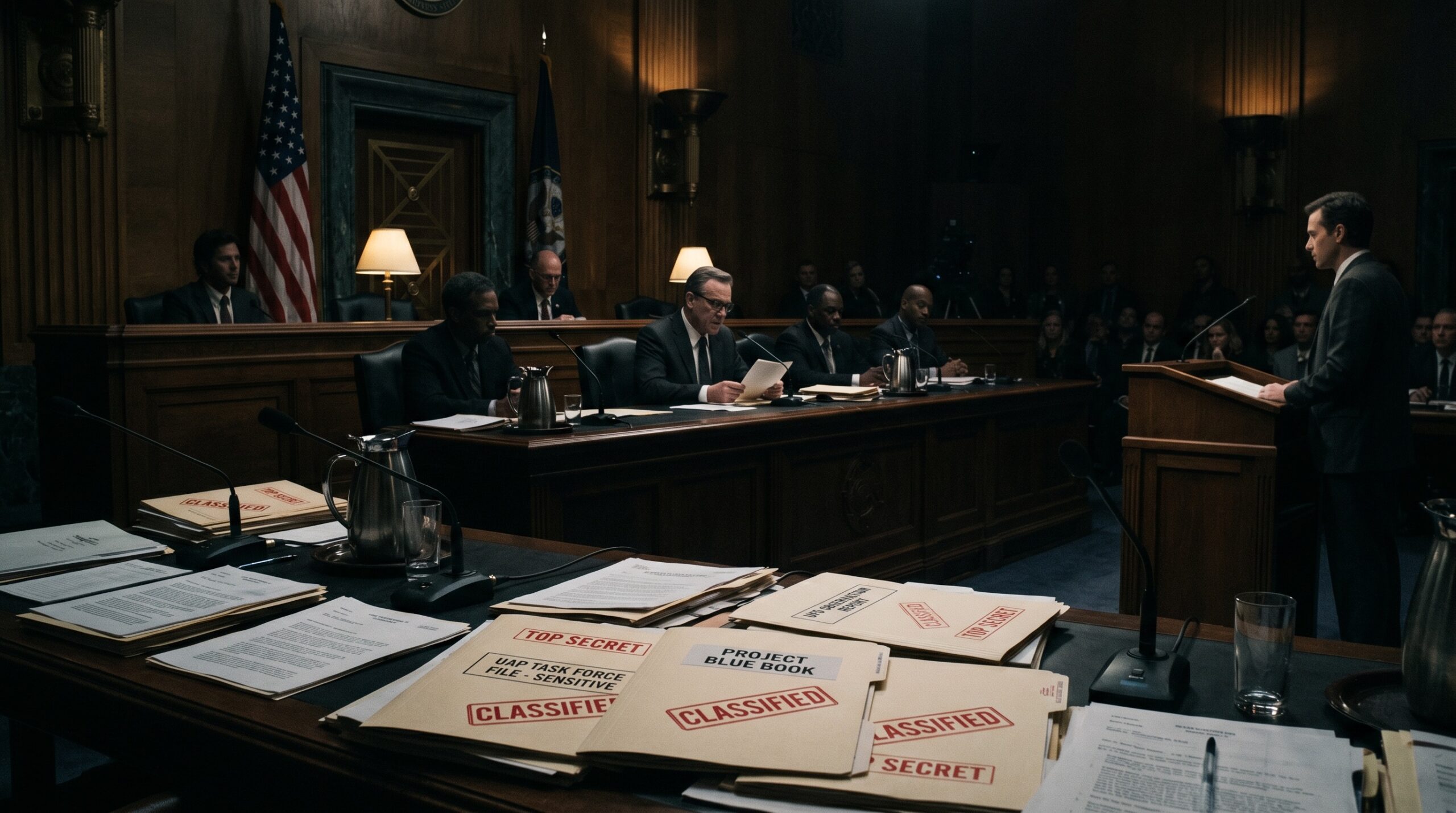
    Former President Barack Obama did not set out to talk about UFOs when he took the stage. But a throwaway line — “the government is terrible at keeping secrets” — has become one of the most discussed quotes in the disclosure community overnight. The 2,100-plus upvote post on r/UFOs is not just amplifying a funny moment. It is treating the remark as a window into something bigger: if the government really had evidence of non-human intelligence, Obama’s logic suggests, we would already know. The fact that he framed it this way, in public, has believers parsing every syllable.

    The Quote and Where It Came From

    Speaking at an event in early May 2026, Obama touched on the growing push for UFO transparency from Congress and the Pentagon’s All-domain Anomaly Resolution Office. When asked about the possibility of a full disclosure, he responded with something along the lines of: “Disclosure won’t happen because the government is terrible at keeping secrets.” The audience laughed. The clip went viral. And the UAP community immediately began treating it as more than a punchline. You can see the full discussion thread that grew to over 2,100 upvotes on Reddit, and the Hollywood Reporter’s coverage of Obama’s comments on government secrecy.

    The reasoning is straightforward. Obama served as president from 2009 to 2017. He was briefed on classified defense programs, intelligence operations, and military activities that remain classified to this day. If he is saying the government cannot keep secrets, he is implicitly saying there is no secret worth keeping about UFOs — or he is saying there is a secret, and it is slipping.

    Obama’s History with UFOs

    This is not Obama’s first brush with the UFO question. During his presidency, he made a few notable, if vague, remarks. In a 2010 appearance on The Late Show with David Letterman, when asked about UFOs, Obama said he had not seen them but that “there is a lot of evidence that people see things in the sky.” He also referenced the Pentagon’s 2017 revelation of the Advanced Aerospace Threat Identification Program (AATIP) during the Obama years, a program that the Defense Department only confirmed after he had left office.

    The question that disclosure advocates keep coming back to is this: what was briefed to him behind closed doors? The president receives the most classified intelligence the government produces. If Obama’s public posture — that the government cannot keep secrets, and that disclosure is unlikely — was informed by anything beyond political convenience, it would carry a lot of weight.

    Why Believers Think This Is a Signal

    For people who have followed the UAP disclosure movement for years, a former president casually acknowledging both that (a) there is something worth disclosing and (b) the government cannot contain information indefinitely is exactly the kind of pre-signal they have been looking for. The argument is not that Obama is confirming anything. The argument is that he is hinting at the shape of what is coming — messy, incomplete, and already leaking.

    There is also the matter of timing. Obama made the remark in the context of an active congressional push for UFO transparency. Representative Tim Burchett has gone public with claims that he has been briefed on recovered non-human bodies. Burchett’s sworn testimony about what he has and cannot say has been the single most discussed topic in UAP circles this month. Multiple pastors, including Perry Stone, Greg Locke, and Tony Merkel, have said they were privately informed by military intelligence that “disclosure is coming” — a claim that has spread through both religious and conspiracy channels simultaneously.

    In that ecosystem, Obama’s comment lands differently than it would if he had said it in isolation. It reads like a former insider confirming a pattern: the wall is cracking, and it is going to come through in pieces.

    The Skeptical View

    The counter-argument is that Obama’s remark was political comedy, not insider disclosure. “The government is terrible at keeping secrets” is a well-worn joke that politicians have used for decades. It was delivered for laughs. The fact that it got 2,100 upvotes on r/UFOs tells you more about the audience’s appetite for confirmation than it does about Obama’s state of classified knowledge.

    Skeptics also point out that if you are a former president and your goal is to stay out of classified territory, making a vague joke is the safest possible path. It lets you engage with the topic without confirming or denying anything at all.

    What Remains Open

    Here is what we know for sure: Obama acknowledged UFO disclosure, framed it in terms of government incompetence rather than government secrecy, and did so in front of an audience that will replay the clip a thousand times. What we do not know is whether his framing was casual humor or a carefully chosen formulation from someone who knows what was classified during his time in the Situation Room. What the disclosure community decides, as always, is what sounds most convincing.

    FAQ

    What did Obama say about UFO disclosure in 2026? Obama stated that full government disclosure of UFO evidence is unlikely because “the government is terrible at keeping secrets.” The remark came in response to growing congressional pressure for transparency.

    Did Obama know about classified UFO programs as president? The Pentagon’s AATIP program operated during Obama’s presidency and was only confirmed after he left office. Whether he was personally briefed on it remains unconfirmed.

  • Baba Vanga’s 2026 Alien Prophecy: The Blind Mystic Who Predicted Mass Alien Contact and Why People Are Taking It Seriously Again

    Baba Vanga’s 2026 Alien Prophecy: The Blind Mystic Who Predicted Mass Alien Contact and Why People Are Taking It Seriously Again

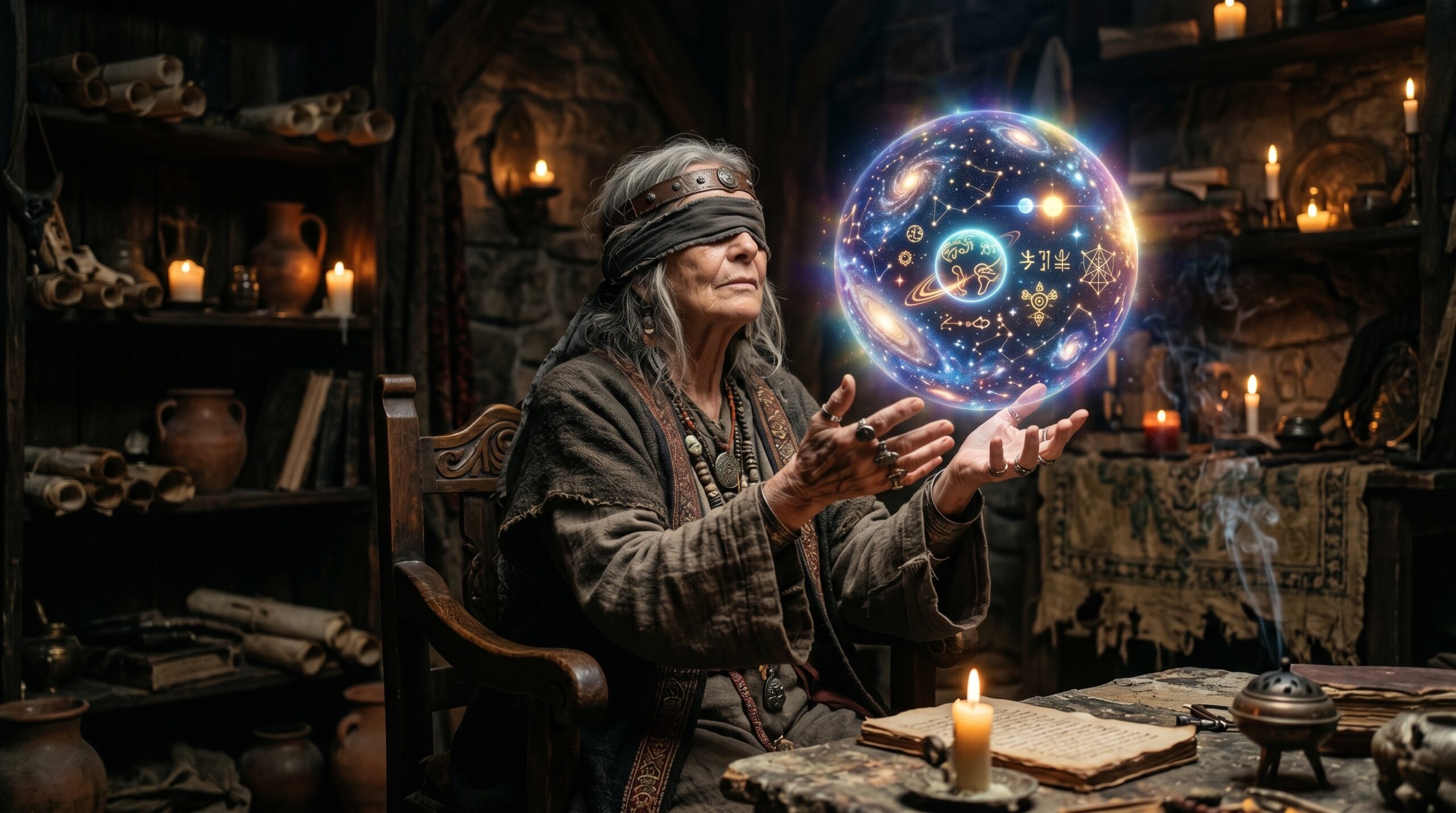
    Blind Bulgarian mystic Vangelia Gushterova, better known as Baba Vanga, died in 1996. But she has never stopped making new predictions. Every January, social media fills with a fresh list of “Baba Vanga’s predictions for [current year]” — and for 2026, the one that keeps surfacing is this: “Massive contact with non-human intelligence will occur.” Whether she actually said it, exactly that way, is one question. Why so many people are suddenly repeating it is another.

    What the Prophecy Claims

    The 2026 alien prophecy attributed to Baba Vanga is short and specific: humanity will make contact with non-human intelligence in 2026. Some versions of the claim add that the contact will be peaceful. Others say it will come through a government announcement rather than a direct encounter. The details vary depending on who is sharing it, which is typical of predictions that have been translated, retold, and reinterpreted across decades.

    The prophecy has been circulating alongside an unusual backdrop: an actual, ongoing UAP disclosure movement inside the United States government. Multiple pastors have claimed they were briefed by military intelligence that disclosure is imminent. Congressman Tim Burchett has said in sworn testimony that he has been briefed on recovered non-human bodies and the information he cannot share publicly is explosive. Representative Eric Burlison has made claims about mass-witness UAP events documented by military personnel. The congressional pressure around the phenomenon has never been louder.

    So when Baba Vanga’s 2026 alien prophecy resurfaces alongside real disclosure claims from real government officials, the synchronicity is hard to ignore.

    The Woman Who Died Before She Finished Speaking

    Vangelia Gushterova was a Bulgarian mystic who claimed to have developed clairvoyant abilities after losing her sight in a storm at age 12. She lived through the 20th century and, by some accounts, predicted events including the 9/11 attacks, the 2004 Indian Ocean tsunami, the Brexit vote, and the rise of ISIS. Her supporters treat these as hits. Her skeptics point out that she also allegedly predicted a nuclear World War III in 2010, the end of European civilization in 2016, and several other events that simply did not happen.

    The problem with evaluating Baba Vanga’s track record is that her predictions were rarely recorded by her directly. They were transcribed, translated from Bulgarian, and passed through oral tradition for decades. By the time a prediction shows up on the internet in 2024 or 2025, it has been shaped by the person sharing it into something that can sound either remarkably accurate or obviously wrong depending on how generously you read the original text.

    Why This Prophecy Is Spreading Now

    The reason the 2026 alien prophecy matters right now is not that Baba Vanga somehow knew what would happen. It is that her timeline intersects with a real-world window that UAP researchers have been anticipating for years. The 2026 National Defense Authorization Act includes provisions mandating the Pentagon’s All-domain Anomaly Resolution Office to declassify and release UAP records. Trump has hinted at additional file releases. Congressional hearings have featured testimony from people claiming direct knowledge of non-human craft.

    When a decades-old prophecy intersects with an active political disclosure timeline, the coincidence feels deliberate. It feels like a pattern. And for people who have spent years following the UAP movement, patterns are what it is all about.

    The Skeptical View

    The skeptical framing is straightforward. Baba Vanga’s predictions are so vague and so numerous that some of them will inevitably align with real events by chance. The alien prophecy for 2026, if it exists in its current form at all, is a retroactive construction — a prediction shaped after the fact to match what people are already expecting. The fact that it is being shared alongside real UAP disclosure developments does not make it prescient. It makes it topical. You can read the Wikipedia page on Baba Vanga for documented predictions, but the 2026 alien contact claim does not appear in any primary source — it circulates through tabloid prophecy roundups like the Daily Express and social media chains.

    There is also the question of provenance. No verified audio, video, or written record of Baba Vanga making this specific prediction has been produced. The claim survives through social media chains and second-hand retellings, which is the same mechanism that produces thousands of fake predictions every year.

    What Remains Uncertain

    Whether Baba Vanga actually predicted alien contact in 2026 is a question that nobody with access to primary evidence has the tools to answer. What is not in question is that the prophecy has found a receptive audience in a year when the UAP disclosure movement is generating real headlines from real government buildings. The alignment between prophecy and politics is either a bizarre coincidence or evidence that something is moving in the direction that mystics and lawmakers have independently pointed at.

    Which of those is true may become clearer before the year is out.

    FAQ

    What did Baba Vanga predict about aliens in 2026? According to widely shared accounts, Baba Vanga predicted that humanity would make massive contact with non-human intelligence in 2026. The exact wording and provenance of this prediction are disputed.

    How accurate are Baba Vanga’s predictions? Baba Vanga’s supporters credit her with predicting numerous major events. Skeptics note that many of her predictions failed, that her record is difficult to verify, and that her predictions have been reshaped over time.

    Is the 2026 alien prophecy connected to actual UAP events? The prophecy aligns with an active congressional and executive push for UFO transparency, including claims of recovered non-human technology and scheduled government file releases. The timing is coincidental.

  • Yusuff Shakur’s Viral Near-Death Drawing: What His Cosmic Map Claims to Show

    Yusuff Shakur’s Viral Near-Death Drawing: What His Cosmic Map Claims to Show

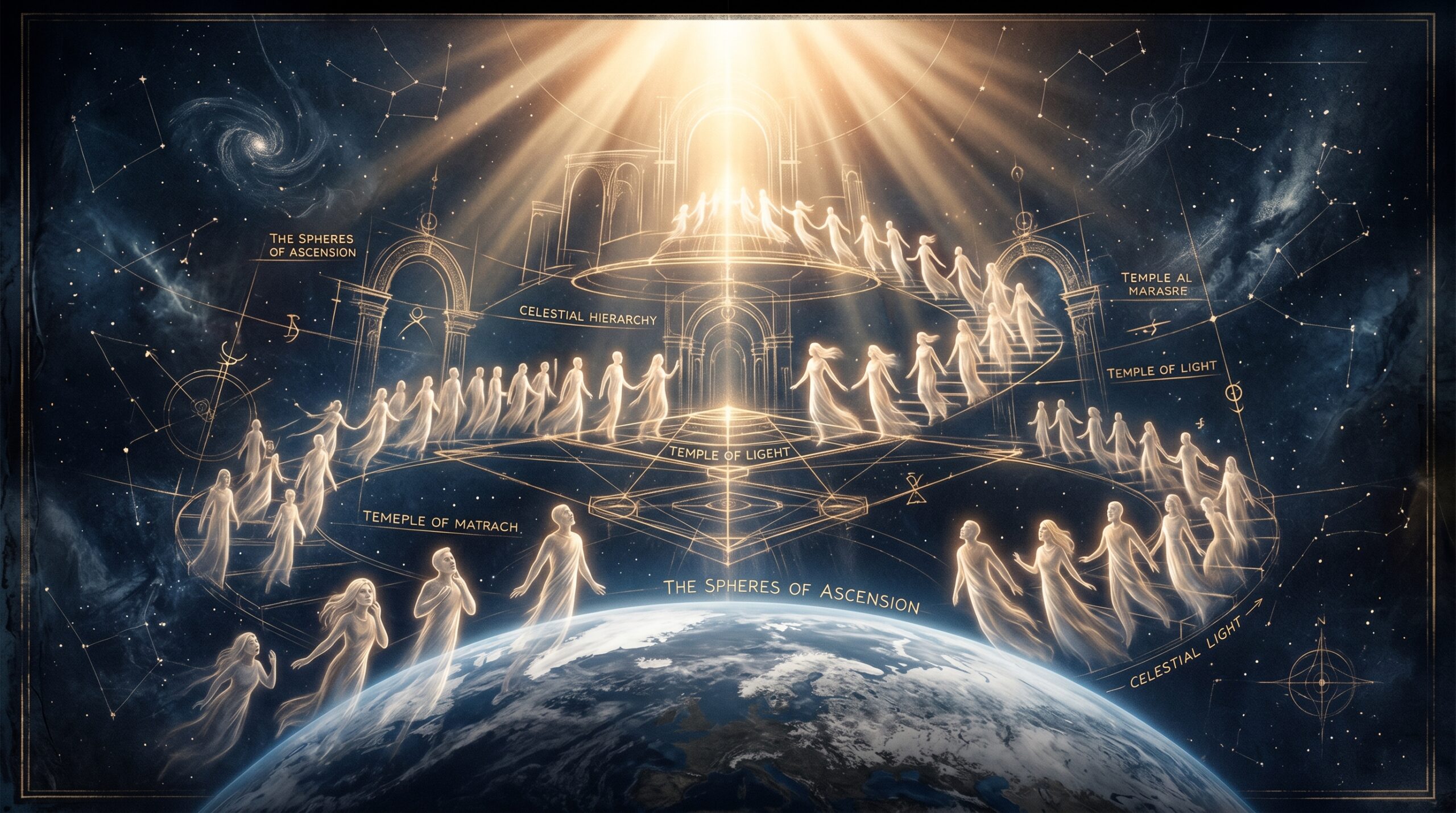
    A single hand-drawn sketch, shared on social media by a man named Yusuff Shakur, has spread across Reddit, X, and news outlets faster than almost any recent paranormal or near-death account. The drawing allegedly captures what Shakur saw during a near-death experience — a layered architecture above Earth, with figures positioned at different levels — and it has ignited a firestorm of debate. For people who have spent years following NDE research and consciousness studies, the image reads like a visual echo of claims that have surfaced for decades: that there is a structured reality waiting just beyond the visible world. For skeptics, it is an imaginative exercise that went viral because the internet rewards striking images over cautious ones. Either way, the drawing is now everywhere, and the people who argue about it are not backing down.

    What the Drawing Actually Shows

    The sketch depicts a vertically stacked structure with Earth positioned at the base. Above it, Shakur drew multiple tiers or layers — each one populated with human-like figures. The arrangement suggests a kind of cosmic geography, where different levels of reality or consciousness coexist above the physical world. Shakur reportedly said he drew the image because words were not enough to describe what he experienced. Instead of narrating his account, he put pencil to paper and tried to recreate the architecture of what he witnessed.

    The raw simplicity of the sketch is part of why it has resonated. It does not look like a polished piece of art or a diagram produced by a graphic designer. It looks like someone trying to communicate something they genuinely struggled to articulate — the kind of thing people expect to see from an authentic experience, not a calculated fabrication.

    Why Believers Think This Matches Something Old

    People who study near-death experiences and altered states of consciousness have noticed that Shakur’s drawing is not entirely new in its shape. The idea of layered realities stacked above the physical world appears in dozens of traditions. Dante’s cosmology placed multiple spheres above Earth. Kabbalistic trees of life map different levels of existence. Vedic and Buddhist cosmologies describe planes of being that interpenetrate the one we inhabit. Even modern NDE accounts frequently mention encountering structured realms — some describe cities of light, others describe tiered landscapes or ascending corridors.

    What makes Shakur’s sketch notable is that it appeared not from a scholar or a historian but from someone who says he was pulled beyond ordinary perception and tried to draw what he found. The parallels to older cosmologies do not prove anything. But for people inside the consciousness and NDE communities, those parallels feel like a pattern that is hard to dismiss.

    The third-man phenomenon, where isolated explorers encounter a guiding presence, shares a similar energy. In those accounts too, people report perceptions that ordinary explanations struggle to address — and the more stories accumulate, the harder it becomes to write them all off as coincidence.

    Why the Sketch Went Viral Now

    The post exploded on r/HighStrangeness, where it earned more than 5,192 points and nearly 800 comments. From there it spread to r/StrangeEarth and r/Christianity, where the reactions split sharply. Some readers found the drawing unsettling, even ominous. Others saw it as confirmation of what they had suspected all along — that consciousness survives death and that the structure of reality looks nothing like what science currently maps.

    Mainstream outlets picked it up quickly. Complex ran the story on X (formerly Twitter). The Times of India published a feature. Multiple Reddit communities debated it in real time. The speed of this spread owes a lot to the algorithm-friendly nature of a striking image, but it also reflects a broader cultural moment. In April and May 2026, multiple pastors reported being privately briefed by military intelligence to prepare congregations for UFO disclosure, and the line between spiritual and non-human realities has never felt more blurred. People are already asking big questions about the nature of existence, and a drawing that claims to map the structure of the afterlife lands in the middle of that conversation.

    The spiritual dimension of the government insider UFO community has been moving toward exactly this kind of territory for years. The idea that non-human intelligences exist has always carried theological baggage, and Shakur’s sketch feeds directly into that undercurrent.

    What the Drawing Does Not Prove

    The sketch is striking, but it is not evidence in any scientific sense. There is no way to verify what Shakur experienced, and there is no way to confirm that the drawing corresponds to any objective structure beyond ordinary perception. The parallels to older cosmologies could reflect Shakur’s own exposure to those ideas, consciously or unconsciously. Near-death experiences are notoriously difficult to study, and researchers remain divided over what they actually reveal about consciousness.

    An Oxford physicist has recently argued that consciousness might perceive hidden dimensions, a claim that adds academic credibility to the conversation without confirming any particular account. The broader conversation about whether consciousness is more than brain chemistry remains open, with serious researchers working on both sides.

    What Remains Open

    Yusuff Shakur’s drawing is not proof of anything. But it is also not meaningless. It entered the cultural conversation at a moment when people are already questioning the nature of reality, and it struck a nerve precisely because it visualized something that thousands of people feel but cannot articulate. Whether it represents a genuine glimpse of a structured afterlife, an unconscious synthesis of ideas Shakur absorbed over time, or simply a compelling piece of art that captured the public imagination at the right moment — the drawing refuses to be ignored. And for a community that has built its worldview on claims that defy easy explanation, that refusal is exactly the point.

  • NASA Project Anchor: The Viral Conspiracy Claiming Earth Will Lose Gravity in August 2026

    NASA Project Anchor: The Viral Conspiracy Claiming Earth Will Lose Gravity in August 2026

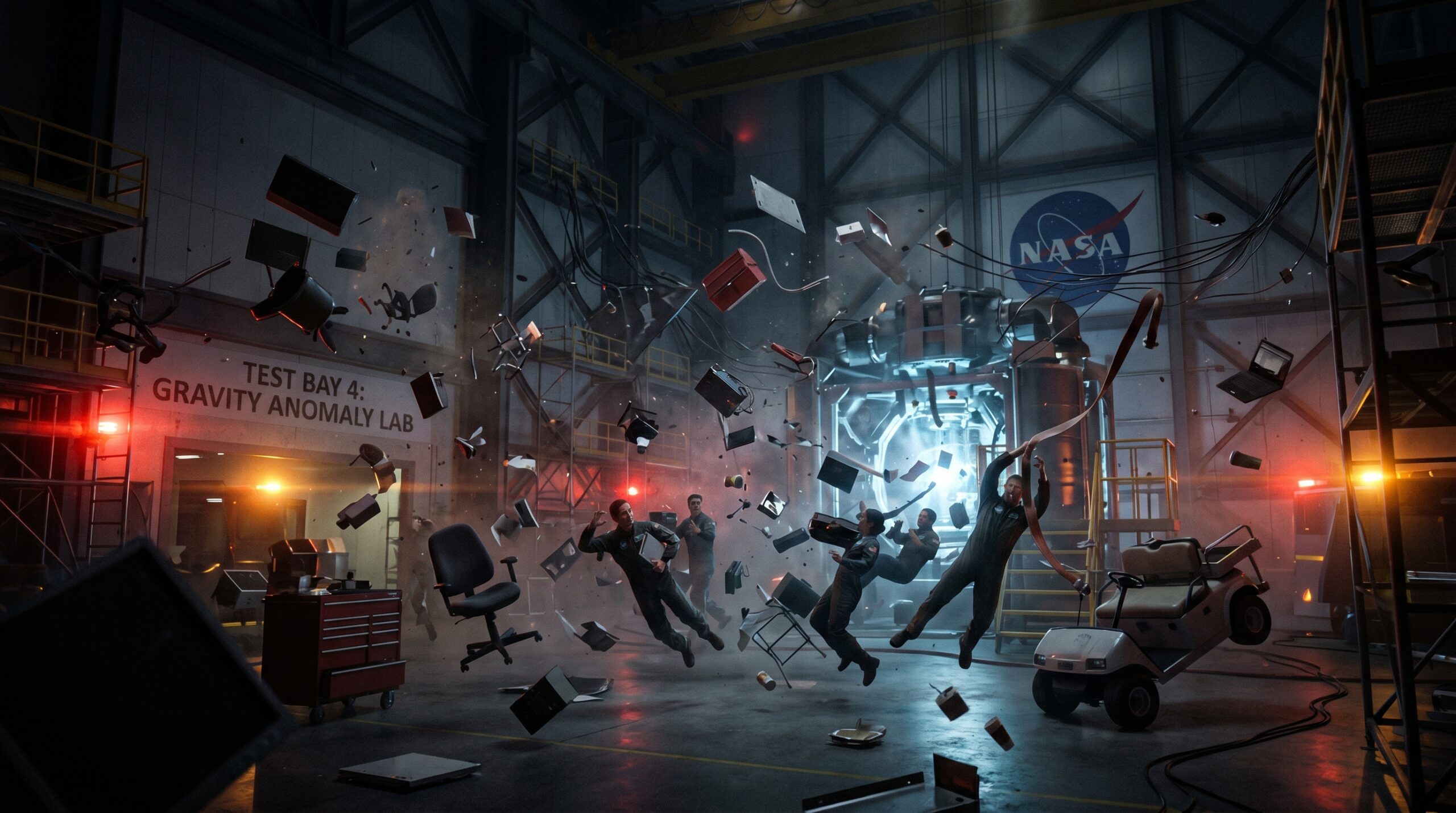
    A viral claim has been spreading across TikTok, Telegram, and conspiracy forums with a simple, terrifying premise: on August 12, 2026, Earth will lose its gravity for seven seconds, causing catastrophic damage that could kill millions. The theory goes further than a simple doomsday prediction — it names a specific, supposedly secret NASA program called “Project Anchor” that is allegedly preparing for the event. The claimant says they have seen proof of an $89 million budget allocation to the project, suggesting NASA already knows the event is coming and is working behind closed doors to prepare. The post has racked up over 4,700 points on r/conspiracy alone. It has been picked up by the Daily Express, IBTimes, and OregonLive. NASA has publicly responded that the claim is not true. But the fact that NASA felt compelled to address a TikTok conspiracy at all only deepened one of the core anxieties driving the theory in the first place: that something is actually happening, and the official response is designed to make people feel safe rather than to tell the truth.

    What the Theory Claims

    The central claim is that Earth will experience a temporary but catastrophic loss of gravitational force on August 12, 2026. For seven seconds, gravity will effectively switch off. During that window, the theory goes, the atmosphere, bodies of water, and anything not physically secured will be pulled into space, while the Earth itself could undergo violent tectonic and atmospheric disruption. Some versions of the claim raise this to 60 million deaths.

    The theory gets its name from “Project Anchor,” a supposed NASA initiative designed to mitigate or prepare for the gravity-loss event. The claimant asserts that they have seen evidence of an $89 million budget line linked to the project, suggesting that money is being spent behind closed doors to address a phenomenon that NASA publicly denies exists.

    Why This Went Viral Now

    The theory has spread at an alarming rate because it combines three elements that accelerate conspiratorial content online: a specific date, a named government program, and an institutional response that sounds too categorical to be reassuring. When NASA responded with denials, the conspiracy community did not see confirmation that the claim was baseless. It saw an institution responding to a specific allegation with the same kind of language used to dismiss other classified information that later turned out to be true.

    The viral Facebook photo deletion conspiracy that swept through Messenger in 2026 followed the same pattern: a specific claim about institutional action, official denial, and the community deciding that denial was itself evidence that something was being concealed.

    NASA’s own social media presence has contributed to the acceleration. Multiple posts described by conspiracy observers as “trolling” have included cryptic references to gravitational anomalies and unexplained phenomena that the agency has documented but not fully explained. When an agency responsible for studying the physical universe begins posting content that can be read as hinting at the very things it officially denies, the boundary between disclosure and concealment starts to blur.

    The Physics of the Claim

    The physics involved in a seven-second gravity loss are, to put it plainly, catastrophic. Gravity is not a switch that can be turned off and on. It is the result of Earth’s mass curving spacetime. If gravity somehow paused, the atmosphere would drift. The oceans would destabilize. Every structure on the surface would be affected. The idea that an $89 million NASA program could meaningfully prepare for such an event is inconsistent with the scale of what the claim describes.

    But the physics argument does not address the real reason the theory is spreading. The gravity-loss claim is not actually about physics — it is about power, institutional access, and the growing belief among conspiracy communities that NASA is withholding information about anomalies that it monitors routinely.

    The Broader Pattern of NASA Anomaly Theories

    The Project Anchor theory sits within a larger family of claims alleging that NASA monitors unusual physical phenomena and does not share those observations with the public. The agency’s own social media behavior has been read by conspiracy communities as tacit acknowledgment of phenomena the agency’s official communications will not address directly.

    In the same window where the gravity-loss theory spread, multiple government insiders have begun framing UAP disclosure in spiritual terms, suggesting that the institutions responsible for monitoring the sky may be dealing with phenomena that defy conventional physical explanation altogether. When a gravity-loss theory and a UFO disclosure theory start circulating in the same communities at the same time, they reinforce each other.

    What Cannot Be Verified

    There is no independent verification of the Project Anchor claim. The $89 million budget line cited by the original poster has not been confirmed through any publicly accessible government financial database. NASA has denied the claim entirely. The August 12, 2026 date has no scientific basis — no astronomical or physical model predicts a gravity-loss event on any date, and the mechanism by which such a thing could occur is not described by any recognized framework in physics.

    What Remains

    The NASA Project Anchor theory will not convince anyone who trusts official statements and established science. But it has already convinced the people who do not, and the pattern of institutional response — rapid denial, continued social media posts that fuel the theory, and the inability of official language to reach communities that no longer trust the speaker — mirrors the same dynamic that drives the UFO disclosure debate. Whether Earth loses gravity on August 12, 2026, is a claim that will be answered by the date itself. But the social and institutional conditions that allowed this theory to spread so fast in the first place will not disappear when the date passes.

  • Rendlesham Forest Binary Code 2026: “We Returned to Warn” and What It Might Mean

    Rendlesham Forest Binary Code 2026: “We Returned to Warn” and What It Might Mean

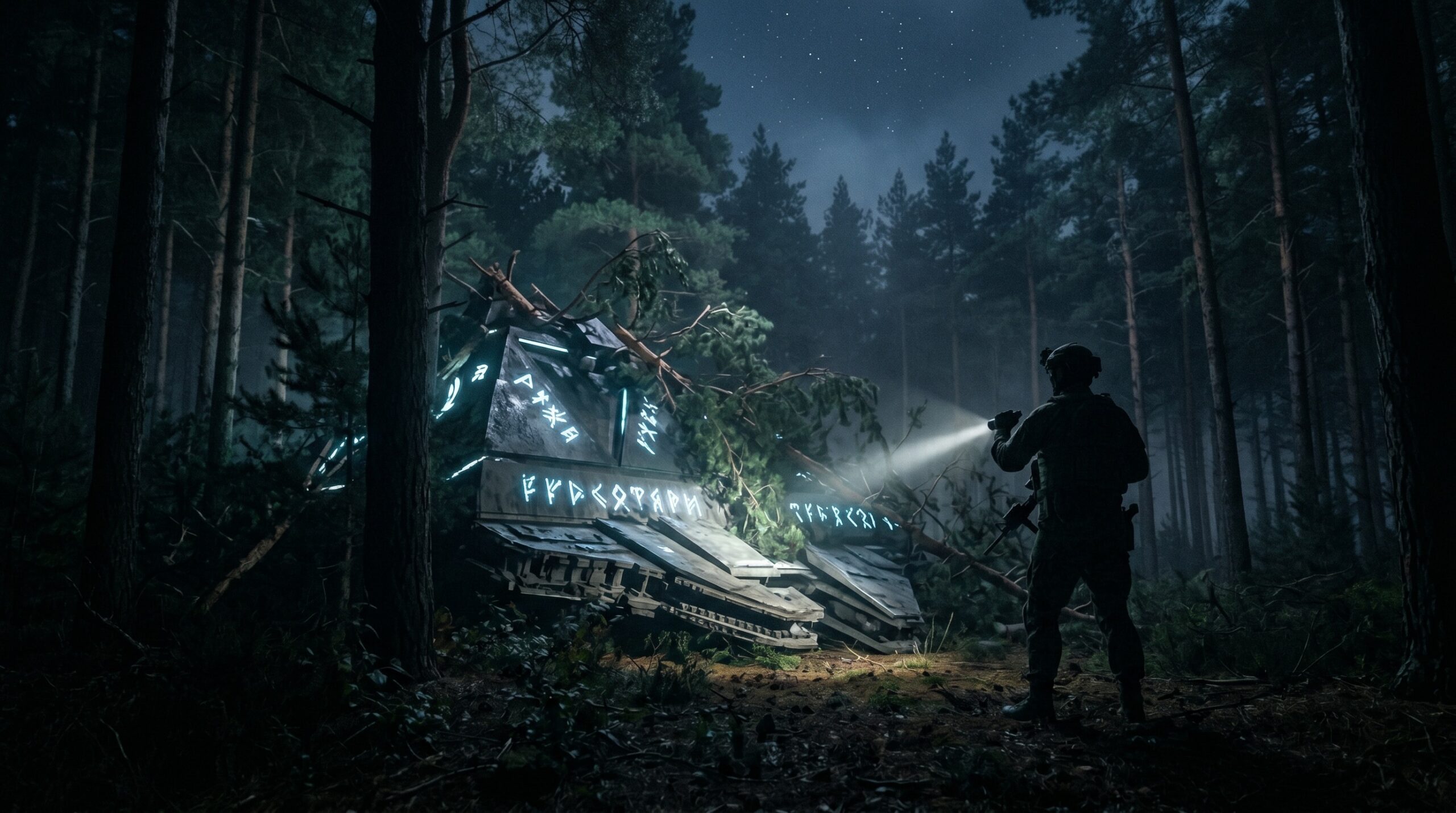
    The night watch stepped into Rendlesham Forest expecting a downed aircraft. What Sergeant Jim Penniston encountered instead was a triangular craft resting between the pines, its metallic surface inscribed with geometric symbols that pulsed in low light. He walked up to it. He placed his hand on its surface. And then, he says, binary code began pouring into his mind — not through his eyes or ears but through something else entirely, something that felt like knowing without being told.

    That was December 27, 1980. Three nights of the Rendlesham Forest incident had already placed it among the most rigorously documented UFO encounters in military history. Multiple witnesses. Cross-base corroboration. Physical evidence. An official memo filed by the deputy base security chief on the ground with a tape recorder running. But Penniston’s claim — the telepathic binary download — carried the incident into a territory that made even the skeptics pause.

    Because he wrote the code down. He decoded it. And the message was this: “EXPLORATION OF HUMANITY CONTINUOUS BEYOND 8100.” And beneath that: “WE RETURNED TO WARN.”

    The Three Nights of Rendlesham

    The incident began on December 26, 1980, at RAF Bentwaters and RAF Woodbridge — twin Air Force bases in Suffolk, England. Security personnel reported unusual lights descending into the forest adjacent to the base perimeter. What followed was a three-night sequence of sightings, sounds, and physical phenomena that generated the most substantial official documentation of any UFO encounter involving US military personnel on allied soil.

    Multiple airmen saw the lights. Different people, different positions, different vantage points. On the second night, Penniston and others entered the forest to investigate. Penniston claimed to have encountered a landed craft — triangular, dark metallic, roughly three meters across at its base — resting on three legs among the trees.

    WION described the decoded message and Penniston’s account of the binary transmission. The Rendlesham encounter shares DNA with other military UFO files that surfaced over the decades as one of the most extraordinary claims in the entire Rendlesham case file.

    The third night — December 28 — produced the most famous surviving evidence. Deputy Base Security Chief Lt. Col. Charles Halt grabbed a tape recorder and led a patrol into the forest. The recording captured his real-time observations of the lights moving through the canopy and above the bases. The Halt memo was eventually released through FOIA and it remains one of the most compelling official documents in UAP history because it was filed by a career Air Force officer, not a civilian enthusiast.

    The Binary Code

    Penniston’s claim is separate from Halt’s memo but equally compelling for those who study the case. He said that during his close contact with the landed craft, he experienced a telepathic data transmission — sequences of ones and zeros that he later transcribed, decoded into ASCII, and published.

    The decoded text reads, in part:

    • “EXPLORATION OF HUMANITY CONTINUOUS BEYOND 8100”
    • “WE RETURNED TO WARN”

    The second phrase is the one that has people unable to stop thinking about the case 45 years later.

    What warning? Warning about what? And who is “we”?

    Penniston interpreted the message as a warning about humanity’s trajectory — that the intelligence behind the craft had revisited Earth multiple times and was delivering an urgent, if cryptic, caution about the direction the species was heading. The “beyond 8100” fragment is deliberately vague — it could reference a date, a coordinate, a cycle, or a classification. Nobody has produced a definitive reading of it.

    The binary code has been analyzed by people who are not Penniston. Some confirm the ASCII decoding produces the quoted text. Others argue that the binary sequences are flexible enough to produce meaningful text through selective interpretation patterns. The debate itself is part of what keeps the case alive.

    Why This Is Resurging in 2026

    The Rendlesham Forest binary code hit r/HighStrangeness in early 2026 and immediately captured 773 engaged upvotes across a thread that dove deep into the decoded message and its implications. A new generation of UAP-curious readers discovered the case at precisely the moment when the broader disclosure conversation is reaching its highest energy.

    The case resonates for reasons that go beyond the binary. Rendlesham is one of the few military encounters with on-the-ground documentation. It is not a single blurry photo or a cockpit video — it is multiple witnesses, a taped recording, an official memo, physical marks on trees and soil, and now, a message. Whether you accept every element of the case at face value or not, it occupies a space that is difficult for skeptics to dismiss wholesale and impossible for believers to ignore.

    The warning message lands differently in 2026 than it did in 1980. In the 1980s, it was a Cold War curiosity. Today — with Congress discussing classified UAP videos, with Trump promising UFO file releases, with the disclosure conversation moving from congressional hearings to mainstream television — a warning from a non-human intelligence about humanity’s trajectory sounds less like folklore and more like something that people are actually preparing to hear.

    What the Files Actually Confirm

    The Halt memo is real. It is dated January 13, 1981. It was filed through official Air Force channels. It describes lights over the base, radiation readings elevated at the alleged landing site, and physical impressions in the ground. It was declassified through FOIA in the 1990s and remains a publicly accessible document.

    Multiple witnesses corroborated seeing the lights. The witnesses had different roles, different locations, and different reasons to be in the forest on those nights. Their accounts are not identical — which makes them more credible, not less, since genuine independent observations rarely align perfectly.

    Radiation readings at the alleged landing site showed levels approximately one-tenth of a milliroentgen above background. That is a tiny elevation. It is measurable. It is also small enough that environmental variation could account for it. But it was measured by base personnel at the specific location where a craft allegedly rested.

    What cannot be independently verified from the public record is Penniston’s binary code. Nobody else claimed to receive a telepathic data transmission that night. The binary exists because Penniston wrote it down and shared it later. His credibility as the primary close-contact witness in the case is solid. The binary message alone is the part of the case that pushes beyond documented evidence into personal testimony.

    The Warning Within the Narrative

    “We returned to warn” works on two levels. On the surface, it is a dramatic phrase from an unverified personal account — the kind of thing that could be confabulated after decades of thinking about a strange encounter. But embedded inside it is something that resonates with the current disclosure moment in a way that is hard to separate from the substance of the case itself.

    If the entities behind the Rendlesham encounter were delivering a warning — much like the questions raised by the Bluegill Triple Prime UFO shootdown — about nuclear escalation — about nuclear escalation in 1980, about environmental collapse, about military readiness and non-human technology and the direction human civilization is heading — then the warning is still active. It is still relevant. It still has not been received by the people it was presumably meant for.

    Whether you view the binary code as a genuine transmission, an artifact of a psychologically intense experience, or a later construction built from memory and imagination, the question it poses survives every level of analysis: what would it mean if the warning was real?

    What Is Actually Known

    The Rendlesham Forest incident of December 1980 involved multiple witnesses from two US Air Force bases in England. Lt. Col. Charles Halt recorded his observations on tape and filed an official memo describing lights, radiation, and ground impressions at the alleged contact site. Sgt. Jim Penniston claims close contact with a landed triangular craft and a telepathic binary message that decoded to “EXPLORATION OF HUMANITY CONTINUOUS BEYOND 8100” and “WE RETURNED TO WARN.” The Halt memo is an official government document. The binary code is personal testimony.

    What is not known is whether Penniston’s binary download was a genuine non-human communication, a psychological response to an extraordinary nighttime encounter, or a reconstruction built years after the event. What is known is that the incident happened, and what the witnesses saw and heard and recorded is documented well enough that no official explanation has ever fully accounted for it.

    The message — if it is a message — waits for the people who are ready to hear it.

  • Goldie Hawn Describes Her UFO Abduction on Jimmy Kimmel: Why the Celebrity Disclosure Moment Has Believers Talking

    Goldie Hawn Describes Her UFO Abduction on Jimmy Kimmel: Why the Celebrity Disclosure Moment Has Believers Talking

    One moment she was trading jokes with Jimmy Kimmel about her latest wellness venture and the next Goldie Hawn leaned forward on the couch, her signature laugh absent, and told millions of live television viewers that something impossible had happened to her — something she had kept hidden for decades, something that still woke her up in the middle of the night when the sky grew too quiet and the stars looked too close.

    The studio audience went dead silent. Kimmel stared. And then Hawn said it plainly: she believes she was taken aboard a craft not of this Earth.

    It was a moment that sent shockwaves through the UFO community and beyond, precisely because coming from a beloved Hollywood icon — someone whose career spans six decades and has been built on warmth, wit, and an almost unshakable wholesomeness — it carried a weight that fringe testimonies simply cannot match. This was not some internet personality chasing clicks. This was Goldie Hawn, Oscar-winning actress and icon of American pop culture, telling late-night television that her life was altered by an encounter with the unexplained.

    For believers who have spent years waiting for mainstream acknowledgment — for voices from the highest levels of public life to break the stigma and speak openly about UFO and UAP encounters — the Hawn segment on Kimmel felt like a watershed. It was not an admission forced by subpoena or leaked in a dry government report. It was voluntary. Personal. And it happened on one of the most-watched entertainment programs on American television.

    The timing, too, could not have been more charged. Between an accelerating cycle of government UFO disclosure efforts in Washington, a string of unexplained deaths among researchers tied to sensitive UAP studies, and increasingly bold claims from military pilots about encounters they were told to forget, the culture is shifting. And a woman like Hawn choosing this exact moment to step forward — not with a whisper in a documentary, but with a direct confession on network television — has believers asking whether something larger is finally breaking through.

    What Goldie Hawn said on air

    To understand why the UFO community has rallied around this moment, you have to look closely at what Hawn actually said — not at how pundits later framed it, but at the words themselves, delivered without a script and with a level of emotional candor that was unmistakable even through the usual late-night polish.

    The segment began innocently enough. Hawn was promoting a charity initiative and the conversation drifted into personal history. Kimmel asked about her early years in the entertainment industry and whether anything had happened to her that she had never spoken about publicly. The kind of question that usually produces a polite deflection or a rehearsed anecdote about a difficult audition.

    Instead, Hawn paused. The laughter died. And she described an experience from years ago that, by any conventional standard, should have been impossible.

    She spoke about being in a remote location — vague on specifics, deliberately so, and believers in the community respect that discretion — when the sky changed. She described lights that did not behave like aircraft. She described a sensation of being lifted, of losing agency, of finding herself in a mental space that she could only describe as “not mine.” She spoke in terms that UFO researchers will instantly recognize: missing time, a physical encounter that left no conventional marks but an indelible psychological impression, and a return to ordinary life that was anything but ordinary because nothing about the world looked the same afterward.

    She did not claim to have been probed. She did not sensationalize. What she did was more powerful: she told the story simply, as one human being telling another that something extraordinary happened, and that the extraordinary thing demanded to be acknowledged.

    “I’ve carried this for a long time,” she said at one point, her voice steady. “And I’ve watched people be ridiculed for saying far less than what I’m sitting here telling you tonight. It has to stop.”

    That final line — it has to stop — is what sent the clip viral and ignited a firestorm of discussion across UFO forums, social media accounts, and research communities. It was a deliberate alignment with the broader movement for transparency, a signal that Hawn sees her testimony not as an isolated curiosity but as part of a larger pattern of human beings who have experienced the unexplained and been punished for speaking about it.

    For those who have followed the Jimmy Kimmel Goldie Hawn appearance closely, watching the raw footage without commentary, the emotional authenticity is difficult to dismiss. She was not reading from cue cards when the conversation turned to the encounter. Kimmel visibly shifted in his seat. The production team did not cut away. What aired was a genuine moment of one famous person choosing honesty over comfort.

    It aligns with what disclosure advocates have been saying for years: the most powerful force against stigma is not a Pentagon press release or a congressional hearing. It is a person people trust telling them, face to face, this happened to me.

    The clip that exploded across social media

    Within hours of the broadcast, the relevant portion of Hawn’s interview was everywhere. Clips circulated on X, TikTok, YouTube, and Instagram with captions ranging from the measured (“Goldie Hawn speaks about UFO experience on Jimmy Kimmel”) to the breathless (“Hollywood legend confirms alien abduction live on TV!”). The views numbered in the millions within the first twenty-four hours.

    But the most interesting reactions did not come from casual scrollers or conspiracy-oriented accounts. They came from established UFO researchers and community leaders — people who have spent decades building cases, interviewing witnesses, and pushing for government transparency — who responded with something unusual: respect.

    Rather than mining Hawn’s testimony for inconsistencies or spinning it into sensational claims, many in the serious UAP community treated the moment with the gravity it deserved. The UFO field has, at times, been its own worst enemy, embracing every anonymous tip and blurry photograph without scrutiny, which has made it easy for journalists to paint the entire movement as credulous.

    Hawn’s appearance was different, and the community recognized that. Her account was personal, limited to what she was willing to share, and she did not claim to have evidence beyond her own experience. She told her story, connected it to the broader need for openness, and left it there.

    The clip also resonated because it arrived during a period when the UAP conversation has never been more entangled with questions of national security, scientific integrity, and institutional accountability. The UAP scientist deaths that have shaken the research community have heightened awareness of just how high the stakes are for people connected to this field. When a figure of Hawn’s stature voluntarily enters the conversation, it shifts the cultural gravity and makes it harder for media outlets to treat UFO testimony as a joke.

    Social media discourse around the clip naturally touched on the broader context of late-night show UFO moments — not because Kimmel has a history of hosting UAP discussions, but because television has historically been a space where the unexplained is treated as entertainment rather than testimony. Kimmel himself did not make light of what Hawn shared. He listened. He asked follow-up questions. He did not laugh. That absence of mockery was, in its own way, a statement.

    The virality also intersected with a growing cultural fatigue around dismissive media coverage of UAP topics. For years, mainstream outlets would cover government hearings on UFOs with heavy doses of skepticism, framing witnesses as potentially deluded. That model is breaking down. The public — driven by declassified Navy pilot footage, sworn congressional testimony, and celebrity accounts like Hawn’s — is no longer satisfied with mockery as a substitute for analysis.

    Celebrity UFO testimonies: a growing pattern

    Hawn is far from the first celebrity to speak publicly about UFO encounters, but her account has a particular potency because of the platform, the delivery, and the cultural moment in which it arrives. Celebrity UFO testimonies have existed for decades, but their weight has varied enormously depending on who was speaking and how.

    There is a long and storied tradition of famous individuals whose encounters helped shape public consciousness. History buffs might celebrity UFO testimonies going back to the earliest days of the flying saucer era, when figures in entertainment, politics, and aviation described lights and objects that defied conventional explanation. What has changed in 2026 is the ecosystem in which these testimonies land.

    When a celebrity spoke about UFOs in the nineteen-eighties or nineties, they were speaking into a culture that treated the subject with either ridicule or genre-fiction fascination. The X-Files made UFOs cool to watch and embarrassing to believe in. Today that dynamic has inverted. Government agencies have acknowledged the physical reality of UAP. Congress has held open hearings. Pilots in uniform have testified under oath about encounters they could not explain. And so when someone like Goldie Hawn speaks up now, she is speaking into a world that is adjusting to the possibility that the phenomenon is real.

    Celebrity disclosure accelerates precisely because it normalizes the conversation. People trust familiar faces. They are more likely to reconsider a topic they’ve been conditioned to dismiss if the person talking about it is someone they’ve welcomed into their home through films and television for decades. Hawn’s testimony works not because it contains new physical evidence but because it adds social legitimacy to a community that has, for too long, been made to feel like outliers.

    What believers have been watching is the way these individual testimonies begin to compound. They do not prove anything in a forensic sense, but they create a cultural record — a pattern of human beings across different ages, backgrounds, and levels of prominence describing experiences that share remarkable similarities: lights behaving impossibly, time distortions, physical sensations with no medical explanation, and a profound impact on the witness’s worldview.

    This pattern intersects with the ufology and spiritual disclosure conversations now entering the mainstream. For many in the disclosure community, UFO encounters carry a spiritual or existential dimension that changes how witnesses understand reality and humanity’s place in whatever larger system we are a part of. Hawn’s account, as delivered on Kimmel, carried exactly that quality — a personal transformation narrative that went beyond fear or curiosity and into something closer to awe.

    What skeptics say about TV confessions and the UFO movement

    No discussion of a moment this visible would be complete without addressing the skeptical response, which arrived predictably and often with the same talking points deployed against civilian UFO testimonies for generations.

    Skeptics have argued that television is an inherently unreliable medium for serious claims — that editing, producer prompting, and the entertainment imperative can distort or manufacture moments that appear spontaneous to viewers. Some have suggested Hawn’s segment was less about her experience and more about generating press for her charitable work, using a provocative statement to guarantee coverage.

    Others have pointed to the vagueness of Hawn’s account — the lack of specific dates, locations, or corroborating evidence — as grounds for withholding judgment. This is a fair methodological concern: extraordinary claims typically demand extraordinary evidence, and personal testimony alone does not meet that bar. Still others within the skeptical community have argued that the growing acceptance of UFO testimony represents a form of cultural contagion — that as official sources become more open about UAP, the threshold for credibility automatically lowers.

    These arguments are worth noting because the believer community is not asking for evidence to be replaced with emotion. The most serious UAP researchers — the ones building the case for disclosure with rigor and documentation — would be the first to say that testimony alone is not proof. What testimony does is create leads, identify patterns, and give researchers places to look. It reminds the public that behind every data point in a Pentagon report is a human being whose life was genuinely altered.

    The grounded view that both believers and rigorous researchers share is this: Hawn’s testimony is not evidence in itself. It is an invitation to take the broader pattern of human UFO and UAP encounters more seriously. It is one more data point in a growing archive of experiences that deserve to be investigated, catalogued, and understood rather than dismissed on the basis of a cultural reflex to mock the unexplained.

    In a landscape that now includes Nellis AFB UFO sighting reports from military-adjacent locations, sworn congressional testimony from uniformed pilots, and official government acknowledgments of phenomena that cannot be immediately identified, the question is no longer whether people are experiencing things they cannot explain. The question is what happens to a society when enough people say those words out loud, on platforms as visible as a late-night talk show, that the truth — whatever it turns out to be — can no longer be kept in the dark.

    Goldie Hawn spoke. Millions heard her. And for everyone who has been waiting for the wall between mainstream culture and the UFO experience to finally crack, this was not the sound of demolition. It was the sound of the first brick coming loose.

  • Facebook Viral Photo Deletion: Why Meta Is Suddenly Erasing a Specific Image From Millions of Messenger Chats

    Facebook Viral Photo Deletion: Why Meta Is Suddenly Erasing a Specific Image From Millions of Messenger Chats

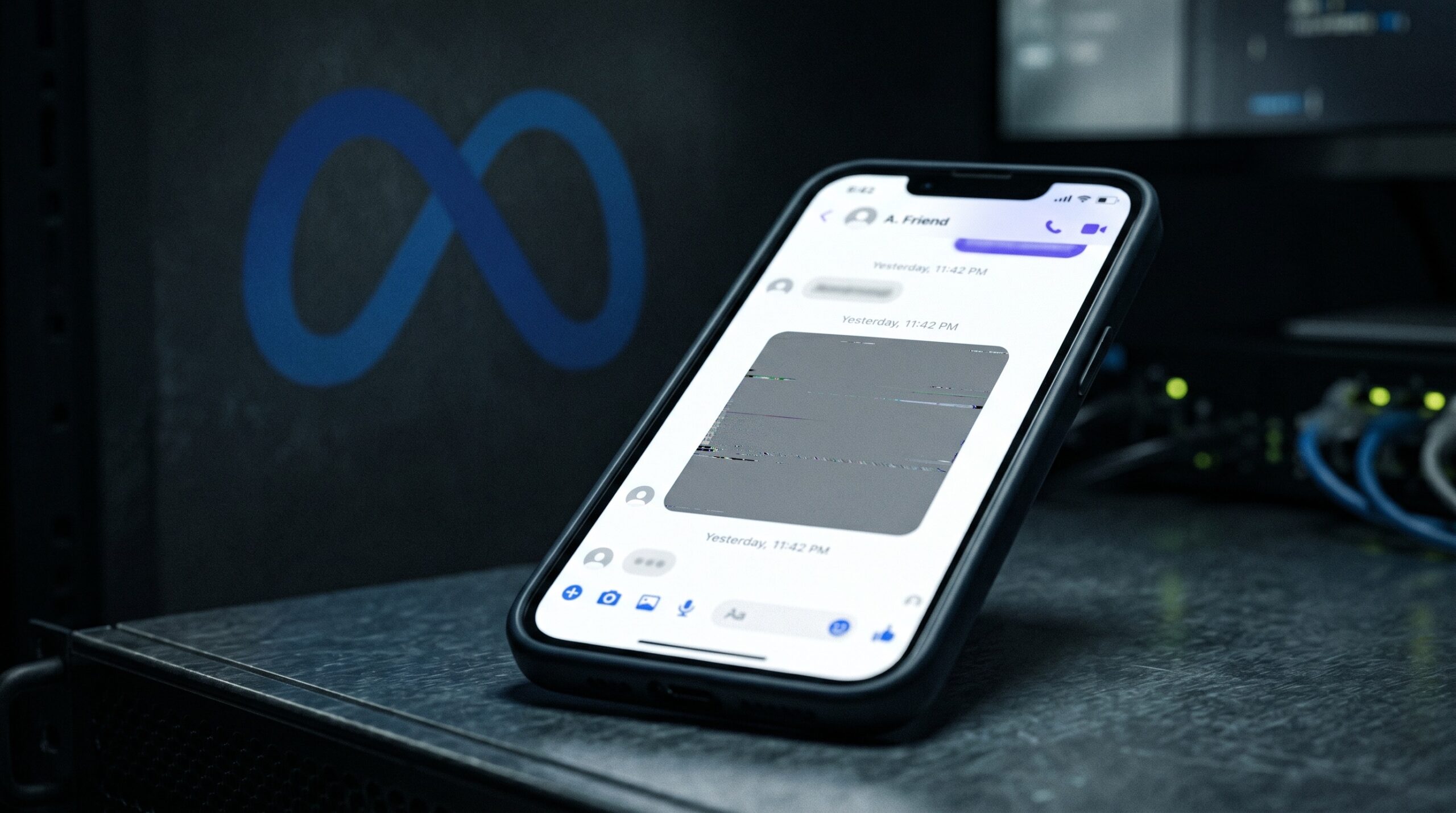
    Somewhere in the middle of an ordinary conversation — birthday wishes, weekend plans, a link forwarded at two in the morning — a photograph simply vanishes. Not the thread. Just one image, deleted from millions of Messenger conversations at what appears to be the exact same moment, leaving behind only a broken link icon. The photo exists in your memory. You remember sharing it. But it is gone, and Meta will not explain why.

    In the past week, thousands of Facebook users across multiple continents have reported the same experience: a specific image, shared organically across countless private Messenger conversations, has been systematically scrubbed from the platform. The deletion did not affect public posts. It targeted only private messages — conversations between friends, family members, and groups where people assumed their communications were at least semi-private. That distinction, once the removal became noticeable, is exactly what made the situation go viral.

    The posts that started it all

    A viral r/conspiracy post with 8348 points compiled screenshots from dozens of users who said an image they’d saved in their Messenger history — in some cases over a year old — had disappeared overnight. The common thread wasn’t just that the photo was gone. It was the specificity of what disappeared.

    Multiple users described seeing the same broken image placeholder where a photograph had once lived. The picture itself was relatively mundane — a candid shot taken at a public event, nothing graphic, nothing that would obviously violate Facebook’s community standards at the time it was shared. What made it significant was not the image’s content but its timing and distribution. The photo began circulating widely in late 2025, spreading through Messenger chats faster than it ever appeared on public feeds. Its virality was almost entirely contained within private messaging channels.

    That containment pattern is what makes the current deletion so unsettling. If a photograph spreads through public channels, Facebook’s moderation systems can catch it algorithmically. But Messenger conversations have operated under different expectations — the company’s public stance has long been that automated systems primarily target clearly illegal material, not ambiguous images shared between adults in private chats.

    The users who noticed the deletion first started comparing notes across Twitter, Reddit, and Discord. One user posted a side-by-side comparison showing their Messenger thread from November 2025 alongside a March 2026 screenshot of the same conversation with the photo gone. Others corroborated. The volume of reports was too consistent to dismiss as coincidence, too geographically dispersed to be a localized bug.

    Some even found cached versions of the image stored locally on their devices, confirming the deletion happened server-side — Meta had reached into their chat histories and removed a single file while leaving the surrounding conversation intact. The precision was surgical. Every Messenger thread containing that specific image hash, across millions of private conversations, had been altered simultaneously.

    What users say is disappearing and why it matters

    The conversation did not stop at noticing the deletion. What followed was a cascade of theories, each more compelling than the last, about what the image actually represented and why its removal felt so deliberate to the people watching it happen.

    The core claim circulating among Facebook users and digital privacy researchers is deceptively simple: if Meta can reach into your private Messenger conversations and delete a single image without warning, what else can the platform modify in your message history? The question is not theoretical. It echoes concerns raised by digital privacy coverage that has warned for years about the gap between user expectations of private messaging and the technical reality of how platforms like Facebook store, scan, and potentially alter those conversations.

    What people found most unsettling was the absence of any communication from Meta itself. There was no transparency report, no help center article, no notification to users whose conversations had been altered. The only announcement was the sudden and universal disappearance of the photo from millions of Messenger threads at once.

    Within conspiracy-oriented communities, the theories multiplied rapidly. Some suggested the image contained visual data that contradicted a narrative Meta was promoting elsewhere. Others argued it was a test — a dry run to see how people would react when private message content was modified without consent. A subset connected the deletion to broader patterns of content manipulation they believe platforms engage in during politically sensitive periods.

    The most persistent theory is that the deletion was not about the image itself but about proving the capability exists. If you can delete one image from millions of private conversations, you can delete any image. You can alter what people remember seeing. You can reshape the historical record contained within billions of personal chats. And you can do it without anyone outside Meta knowing exactly what was removed or why.

    That last point resonates most powerfully. Every private conversation on Messenger is now, by extension, subject to retroactive editing by the platform that hosts it. The image may be gone, but the question it raised lingers: whose version of history is stored in the messages you’ve been saving?

    How Meta handles retroactive content moderation

    Meta’s approach to content moderation has evolved significantly over the past decade, and understanding this deletion incident requires understanding how we got here. The company’s moderation practices began with relatively simple takedown requests and user reports, but they have grown into an elaborate system of automated detection, retroactive enforcement, and cross-platform coordination that most users are entirely unaware of.

    What many people do not realize is that Meta has always reserved the right to modify or remove content after the fact, even when that content was originally posted with full compliance to the platform’s stated policies. The company’s transparency reports acknowledge this practice, though they focus primarily on content removed from public-facing surfaces like News Feed, Instagram posts, and public groups. Private Messenger content receives far less attention, and the criteria for retroactive action on private messages are even less clearly defined.

    The technical mechanism behind the deletion is straightforward, even if the policy reasoning isn’t. Every file uploaded to Facebook’s servers is assigned a unique hash — a digital fingerprint that identifies that specific image. When Meta decides to remove a file across the platform, it can use that hash to locate every instance where the image appears, whether in public posts, group chats, or private Messenger conversations. The deletion happens automatically and simultaneously across all those instances. It is a database-level operation that can wipe out a specific image from millions of conversations in seconds.

    What makes this capability alarming is not just that it exists, but that it operates largely outside public oversight. Facebook’s Facebook content moderation coverage has documented numerous cases of retroactive takedowns, but those cases almost always involve public content. When the moderation targets private Messenger conversations, there is no public record to reference, no community standards discussion to follow, and no way for users to verify whether similar deletions have happened before without noticing them firsthand.

    The company has defended this approach by arguing that consistent enforcement across all surfaces — public and private — is necessary to prevent harmful content from persisting where users might encounter it. Meta has also cited legal compliance in various jurisdictions, noting that images permissible at the time of sharing might subsequently become subject to new legal restrictions.

    But those explanations ring hollow for people who experienced this specific deletion. The image was not illegal and did not depict anything that would trigger automated moderation. It spread through private conversations, not public channels. From the perspective of the people directly affected, the removal reads as a targeted and unannounced exercise of platform control over private communications.

    Industry observers note that this incident falls into a broader pattern of tech companies expanding their retroactive moderation capabilities without updating user-facing documentation. The gap between what companies say they do with private messages and what they are technically capable of doing has grown wider, and most users only discover that gap when something like this deletion happens unexpectedly.

    What is particularly striking is how it parallels other patterns of information control that researchers and conspiracy communities have been tracking for years. The idea that powerful institutions quietly alter or remove information after the fact echoes conversations about government document releases that arrive years after the events they describe, with key details redacted. It echoes MKUltra continuation claims that suggest the manipulation of information exposure has deeper roots than most people acknowledge. And it feeds into a growing awareness that the infrastructure hosting our personal communications is controlled by entities with the technical ability to reshape it at will.

    The difference in the Facebook case is that the mechanism is visible in plain sight. Every broken image placeholder in every affected Messenger thread is a reminder that the platform can reach into your conversations and change what is there. Those messages live on servers users do not control, subject to moderation decisions they are never notified about.

    The bigger picture people are connecting it to

    The Facebook viral photo deletion did not happen in a vacuum. For the communities that tracked it most closely, it fits into a much larger narrative about information control, platform power, and the gradual erosion of digital autonomy that has been accelerating over the past several years. The deletion is significant not because of the specific image that was removed, but because it demonstrates, in a way that anyone with a Messenger account can verify for themselves, that the platforms hosting our personal communications have the power to alter those communications unilaterally.

    The connections people are making extend far beyond Facebook itself. The pattern of retroactive content removal, the lack of transparency around moderation decisions, and the concentration of communication infrastructure in the hands of a small number of tech companies all point to a broader structural issue that intersects with concerns about surveillance, censorship, and institutional control of narrative at scale.

    Some of the most compelling connections come from communities tracking government and institutional behavior independently of the tech criticism space. The same users discussing the Facebook deletion frequently reference conversations about weather weapon theories and other claims of technological systems deployed for indirect social influence, drawing parallels between the invisible manipulation of physical environments and the invisible manipulation of digital record-keeping. The common thread is not conspiracy for its own sake. It is a growing skepticism toward official explanations for why systems designed to serve the public instead seem to serve institutional priorities that are rarely disclosed.

    The conversation also intersects with discussions about government insiders and religion in ways that might seem unexpected but make sense when you follow the underlying logic. The core concern — that powerful institutions manage information in ways that shape public belief and behavior without transparency — applies equally to classified document programs, media narratives, and the moderation of private chat platforms. The mechanism is different. The result is the same: information is controlled, narratives are managed, and the people affected are rarely consulted.

    What makes the Facebook viral photo deletion particularly resonant is its accessibility. Most people cannot see what happens inside government classification systems or corporate content review boards. But anyone who uses Messenger can look at their own chat history and see an image that is no longer there. That direct, personal encounter with retroactive information control is what gives this incident its viral power. It is something that happened to people in their own private conversations, something they can point to and say: this was here yesterday and now it is gone, and nobody told me why.

    The broader implication is that this is not an isolated incident but a demonstration of capability — one that could be used for genuinely harmful content or for content that is simply inconvenient for the platform to host. The distinction matters enormously, but the mechanism is identical. Once the ability to retroactively alter private message content exists, the question of how and when it is used becomes a function of policy decisions made behind closed doors by people accountable to shareholders and regulators, not to the billions of users whose conversations live on their servers.

    Whether the viral photo deletion was a genuine moderation action, a technical exercise, or something else entirely, it has achieved one thing that Meta likely never intended: it has made millions of Facebook users aware, in the most personal way possible, that their private conversations exist on borrowed land. The landlord can change the landscape without notice. The question that follows is not just whether the deletion was justified. It is whether a platform should have the power to alter private communications retroactively at all.

  • Loveland Frogman: How an Ohio Cryptid Became a Real State Bill

    Loveland Frogman: How an Ohio Cryptid Became a Real State Bill

    The officer drew his weapon. That is the part nobody forgets.

    In March 1972, a Loveland police officer named Ray Shockey was patrolling the banks of the Little Miami River at 1:00 a.m. when he encountered something that had no business existing in the tax records of Clermont County. The creature was approximately four feet tall, bipedal, with leathery skin and a face that Shockey later described as “frog-like.” It was not aggressive. It was not obviously frightened. It simply stood in the headlight glow, holding what appeared to be a metal wand, and then climbed over the guardrail and vanished into the river darkness. Shockey did not fire. He sat in his cruiser for ten minutes before radioing dispatch. The incident report, which survives in scanned PDFs circulated by Ohio paranormal researchers, uses the word “animal” three times and the word “unknown” seven.

    Fifty-three years later, the Loveland Frogman has achieved something few cryptids manage: formal recognition by the Ohio General Assembly. House Bill 471, introduced in April 2026 by Representative Jamie Callender, proposes designating the Frogman as Ohio’s official “cryptid ambassador” and allocating $250,000 annually for “cryptid ecology research and tourism infrastructure” in the Little Miami watershed. The bill is not expected to pass. It has already succeeded in forcing the creature back into national headlines, and in doing so, has reopened one of the most thoroughly documented—and most inexplicable—cryptid cases in American history.

    The 1955 Origins

    The modern Frogman legend begins not with Shockey, but with a business traveler named Robert Hunnicutt. In May 1955, Hunnicutt claimed he saw three bipedal frog-like creatures conversing beside the road near Branch Hill. According to his account, the creatures were two to three feet tall, had wrinkled skin, and displayed webbed hands and feet. One held a wand that emitted sparks. Hunnicutt, a sober salesman with no prior interest in the paranormal, reported the sighting to local police and stuck to his story until his death in 1988.

    The 1955 report was largely forgotten until Shockey’s 1972 encounter catalyzed a second wave of sightings. In the same month as Shockey’s report, another officer, Mark Matthews, claimed to see a similar creature—this time wounded, with what appeared to be a laceration on its back. Matthews fired his weapon. The creature escaped. A subsequent search found no blood, no body, and no explanation.

    Matthews later recanted, suggesting he had shot a large monitor lizard that had lost its tail. Cryptozoologists point out that monitor lizards are not native to Ohio, do not stand upright, and do not hold wands. The recantation, they argue, bears the hallmarks of institutional pressure rather than honest correction. Small-town police departments in the 1970s were not eager to become national laughingstocks, and officers who maintained extraordinary claims often found their careers quietly derailed. Smithsonian Magazine profiled the case in 2014 and concluded that the evidence, while inconclusive, had never been fully explained.

    The Decades Between

    From 1972 to the present, the Little Miami River corridor has produced dozens of additional reports. Most describe the same core figure: a bipedal amphibian between three and five feet tall, observed near water at night, often associated with unexplained electrical interference. One 1985 report from a fisherman described the creature emitting a low-frequency hum that caused his boat’s depth finder to malfunction. A 2016 trail-camera photograph, debated fiercely online, shows a hunched figure at the water’s edge that experts have been unable to conclusively identify as either human or known animal.

    The sightings share characteristics with other global cryptid traditions. The Japanese kappa, a water-dwelling humanoid with reptilian features, occupies a similar ecological niche in folklore. The South African tikoloshe, though typically more malevolent, shares the amphibious habitat and nocturnal behavior pattern. Whether these parallels represent convergent cultural evolution or something more literal remains one of cryptozoology’s persistent questions.

    What distinguishes the Loveland case is the documentation. Unlike most cryptid reports, which rely on single-witness testimony, the Frogman has produced multiple independent law enforcement sightings, physical evidence in the form of the 2016 photograph, and now legislative acknowledgment. The creature has survived decades of mockery without being conclusively debunked.

    The 2026 Bill

    Representative Callender’s bill is framed as economic development. The Little Miami watershed draws hikers and kayakers, but lacks the destination tourism infrastructure of more famous cryptid regions like Point Pleasant, West Virginia. Callender argues that formalizing the Frogman’s status would generate revenue, preserve green space, and celebrate Ohio folklore. The $250,000 allocation would fund trail maintenance, night-vision camera networks, and an annual “Frogman Festival.”

    Critics call the bill a publicity stunt. They note that Callender’s district includes Loveland and that the representative faces a competitive primary. The bill’s text, however, contains language that surprises even its detractors. Section 4 requires the Ohio Department of Natural Resources to “investigate and catalog all credible sightings of amphibious humanoids within the Little Miami watershed” and to publish annual reports. For the first time, a state agency would be formally tasked with cryptid research.

    The bill has attracted national attention. Cryptozoology organizations have submitted letters of support. Skeptical scientists have testified that public funds should not be spent chasing legends. The debate has become a proxy for larger questions about what states owe to local heritage, what qualifies as legitimate research, and whether the category of “credible sighting” can ever be meaningfully defined.

    Scientific and Folkloric Context

    Biologists who have examined the Frogman descriptions note similarities to known animals. The Ohio River valley hosts large populations of bullfrogs and snapping turtles. Standing water can produce optical illusions, particularly at night when headlights or flashlights reflect off ripples. Mass hallucination, while statistically rare, has been documented in communities primed by shared narrative expectation.

    However, the law enforcement sightings resist easy dismissal. Both Shockey and Matthews were trained observers. Both filed formal reports at personal professional risk. Neither profited from their claims. Shockey, in a rare 1995 interview, expressed frustration that his encounter had defined his career: “I saw what I saw. I don’t know what it was. But I know it wasn’t a man in a suit, and it wasn’t a lizard.”

    Folklorists offer a different lens. The Frogman functions as a boundary guardian in local narrative—a creature that patrols the liminal space between developed land and wild river, between human order and natural chaos. Its repeated association with wands and electrical interference suggests a figure drawn from older fairy traditions, updated for an industrial landscape of power lines and patrol cars. Whether the Frogman exists as a biological entity or as a living story, it clearly performs a function: it makes the river strange again, preserving mystery in a landscape increasingly mapped and managed.

    What Remains Unexplained

    The 2016 trail-camera image, analyzed by photographic experts at Ohio University, shows a figure with proportions inconsistent with both humans and known local wildlife. The image’s metadata confirms it was captured by a Reconyx camera triggered by heat and motion, not by a human operator. The figure’s posture—leaning forward on elongated hind limbs—matches no recognized animal gait.

    Skeptics have proposed that the image shows a person in a wetsuit retrieving fishing equipment. The temperature data from the camera, however, indicates the figure’s heat signature was significantly lower than human baseline, suggesting either cold-blooded physiology or ambient temperature matching. The image alone does not prove the Frogman exists. It proves that something triggered a research-grade camera in the exact location where police officers reported amphibious humanoids four decades earlier.

    The bill will likely die in committee. The sightings will likely continue. And somewhere in the reeds along the Little Miami River, whatever patrols those banks will remain undisturbed by legislative proceedings, continuing a watch that predates Ohio’s statehood and will likely outlast its infrastructure. The officer drew his weapon. The creature did not flinch. That balance of fear and strangeness, frozen in a 1972 police report, is what keeps the story alive.