Category: Ancient Civilizations

  • Beneath the Surface: Mapping the Old World’s Underground Cities and Tunnel Secrets

    Beneath the Surface: Mapping the Old World’s Underground Cities and Tunnel Secrets

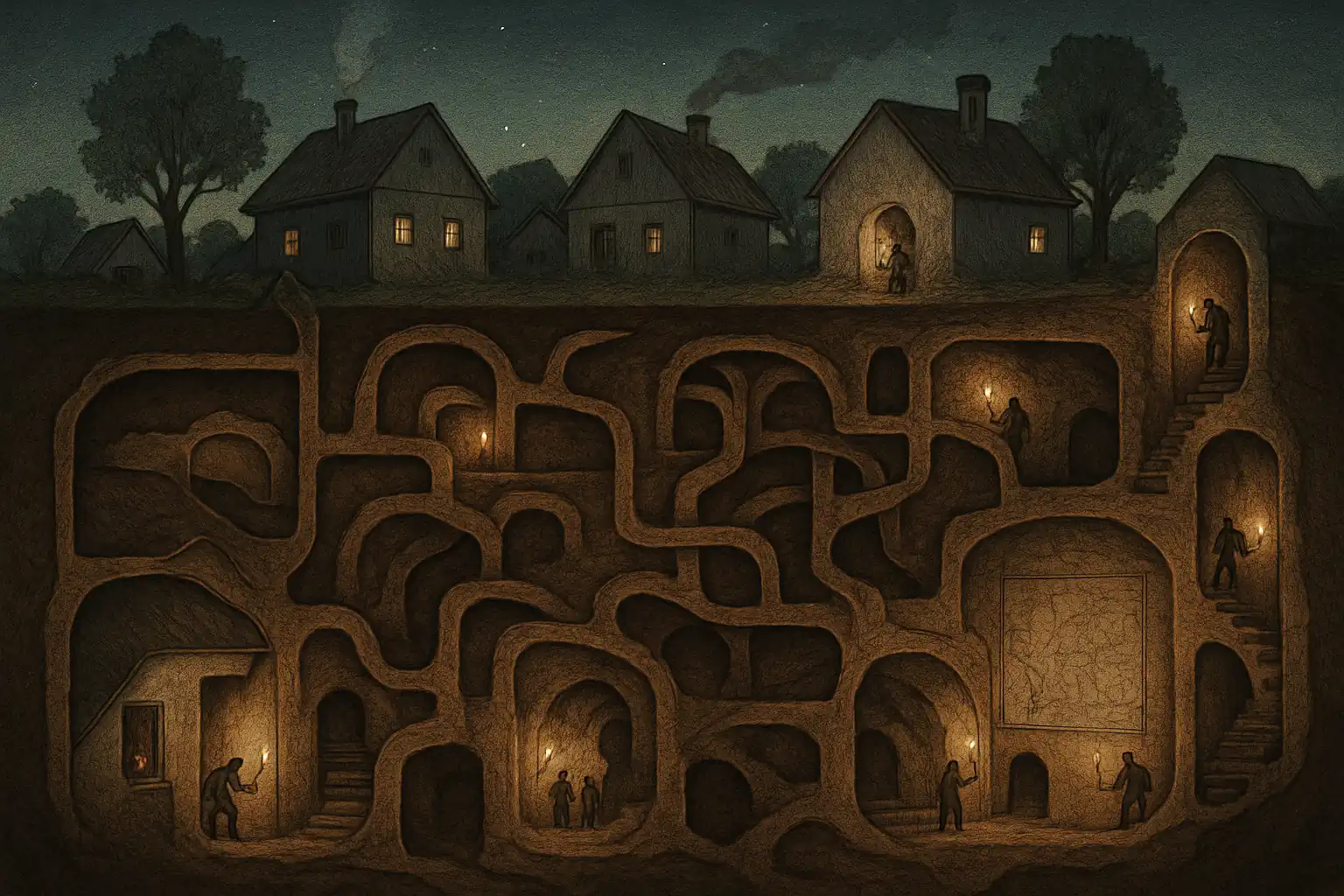
    For centuries, tales of vast underground cities and tunnel systems have flourished in folklore and fringe archaeology. Recent discoveries and serendipitous events have shifted these stories from myth to map. The reality below us may be more astonishing than modern textbooks state. Take the famous story from Derinkuyu, Cappadocia: in 1963, a Turkish villager renovating his home broke through a wall, revealing not a forgotten room but a corridor leading to a vast ancient city. His chicken was the first to explore this hidden underworld, but certainly not the last.

    These underground marvels, including those in this account of hidden tunnels discovered by accident, are not mere passageways—they encompass entire environments featuring wineries, marketplaces, chapels, and defensive structures. The scale and sophistication of cities like Derinkuyu compel us to reconsider timelines of technological progress and legends of lost cultures. Curious about what else might lurk in the shadows? Exploring these findings is like entering a real-life cataclysm or navigating uncanny resets found in long-cycle catastrophe research.

    The Discovery of Derinkuyu: When History Hides in Rock

    The Derinkuyu underground city, now a UNESCO World Heritage site, emerged unexpectedly during a renovation in Nevşehir, Turkey. This find ranks among the greatest archaeological discoveries of the 20th century. Spanning 85 meters deep and capable of housing around 20,000 people, livestock, and food supplies, Derinkuyu shows that ancient people had knowledge and purpose rivaling our own (Wikipedia). Large stone doors sealed off floors, vertical shafts provided ventilation and wells, and connections to the nearby Kaymakli network created a vast hidden world. The tunnels even sheltered locals from persecution well into the early 20th century.

    These ancient wonders reflect themes found in legends of underground realms and lost civilizations, as well as contemporary studies of societal collapse and cosmic resets. The astonishing reality? Many such cities and tunnels—throughout Turkey, Europe, and beyond—came to light by accident, often during construction or renovation, as documented in sources like this exposé of accidental tunnel finds.

    Hidden Tunnel Systems: Accident, Legend, and Global Surprises

    Some of the most remarkable archaeological finds stem from chance encounters. Farmers, urban engineers, and even chickens have exposed ancient chambers and waterproof corridors stretching for kilometers (see here). In Europe, notably in Wales and Austria, workmen and adventurers rediscover medieval tunnels with advanced masonry, posing questions about forgotten technologies, migrations, and emergencies missing from official histories. These accidental discoveries are linked not only to global trade routes or invasions but may also suggest an organized, interconnected underworld akin to our modern digital networks. This resonates with the fears examined in AI-driven existential threat reports: sometimes, significant dangers and wonders only emerge after we’ve stopped paying attention.

    Stories of neglected tunnels have stirred interest from both religious and conspiracy theorists, paralleling fascination with lost vaults beneath the Vatican (see captivating details in the Vatican’s secret archives). Whether relics, refugees, or rituals used these labyrinths, their narratives resist obscurity.

    Theories, Myths, and the Science of Subterranean Construction

    Why did ancient cultures pour resources into underground construction? Some theories emphasize survival: evading invasions, environmental threats, or persecution. Others, as explored in speculative Atlantean accounts and pole-shift stories, envision global calamities triggering subterranean migrations. The truth could be even more bizarre—but whatever motivated these projects, they demanded remarkable engineering. From the Cappadocians of antiquity to medieval monks, those who constructed and expanded these cities possessed skills that would impress today’s urban planners.

    The expertise of these tunnel creators matched only their sense of secrecy. New discoveries in Europe and Asia continually disrupt established archaeological narratives. Each new revelation sheds light (or shadows) on the ancient world’s resilience, adaptability, and affinity for secrecy—a theme as enigmatic as apocalypse prophecies or cataclysmic astrophysics, as explored in this exploration of coded prophecies.

    Beneath Our Feet: Rethinking Civilization, Risk, and Human Ingenuity

    Below our malls and cities, ancient peoples mastered a world of stone and shadow. Underground cities like Derinkuyu and Kaymakli showcase a tradition challenging the surface narrative of civilization. Some scholars now question if humanity’s greatest risks—and escapes—are not found above ground but buried below. As planetary crises mount, it’s easy to envision a new generation forced to take refuge underground, echoing the cycles detailed in global reset theories.

    The earth beneath us may be older, deeper, and stranger than we imagine. Each discovery raises further questions: who else traversed these passages, and what lies buried? For those wanting to keep pace with fresh revelations (and risks), track Unexplained.co—because sometimes, the only barrier between the ordinary and extraordinary is a thin layer of stone and an adventurous chicken with a knack for the hidden.

  • Demonic Activity Dissected: The Dark Science and History of Evil Entities

    Demonic Activity Dissected: The Dark Science and History of Evil Entities

    Whisper “demon,” and the air chills, whether you’re in a candle-lit crypt or a psychologist’s office. Obsessive detail isn’t a flaw of demonic lore—it’s a feature. Over centuries, people have described, exorcised, and scrutinized demonic activity with a blend of feverish imagination and sober dread. This saga blurs the lines between the metaphysical, the psychological, and the bizarre—a story not just of supernatural evil, but of humanity’s shadow side and our efforts to confront it (see case analysis).

    Demonic activity reflects cultural anxieties. From biblical exorcism tales and the desert daemons of ancient Mesopotamia to modern poltergeist investigations and viral TikToks, the language of demons adapts easily. Folklore and religious doctrine impart horror, but today’s obituaries of demonic terror often come from surprising places—like psychiatric literature (the scientist’s experience) and interdisciplinary reviews straddling science and myth (full case compendium).

    Cultural Origins: Demons from Folklore to Modernity

    Demon belief arises wherever humans dread the unknown—desert winds, plague-ridden villages, or unexplained midnight noises. As the Wikipedia entry on demons notes, belief stretches back to the Paleolithic. Ancient Near Eastern societies codified demons as entities capable of haunting or possessing, making special rituals necessary for management or expulsion. Over time, these beliefs infiltrated Jewish, Christian, and Islamic traditions, enhancing demons’ diabolical image. Even rational Greeks conceptualized intermediaries—daimons—some playful, others sinister. The ancients saw omens as potential evidence of demonic intent, which is no surprise to those following recent reporting on papal election omens or studies of unusual global anomalies.

    Medieval Madness: Exorcism, Witch Hunts, and the Age of Demonic Detail

    In medieval and early modern Europe, demonic activity became a subject of obsessive documentation. Possessions, convulsions, and inexplicable illnesses led to widespread witch hunts, institutional exorcisms, and chilling manuals for clergy. During these centuries, the question wasn’t whether demons acted, but how they infiltrated flesh and society. Exorcists, akin to today’s cybersecurity analysts (see the exposé on digital incursions), considered themselves on the front lines of an invisible war. Documentation of possession “symptoms” has found modern psychological reinterpretation (selected medieval cases), suggesting untamed mental illness or mass psychogenic events—making medieval superstition unsettlingly resemble early clinical charting.

    Science and Psychiatry: Demonic Possession or Pathology?

    The dawn of psychiatric science introduced a new demonology: the mental illness model. Yet, as several documented cases reveal involving contemporary psychiatrists (one psychiatrist’s account), distinguishing psychosis from purported possession is often more art than science. Interdisciplinary reviews show possession claims span cultures and eras, with modern clinicians writing about cases defying established psychological categories (diagnostic dilemmas). The tension remains electric: are today’s demons simply mental disorders with convincing special effects, or is something unmeasurable lurking just out of sight? Like those studying shadowy anomalies or AI-driven existential threats, the best minds tread cautiously.

    Modern Media: Demonic Activity in Pop Culture and the Digital Era

    Demonology’s evolution now focuses less on sulfur and more on streaming and memes. From Hollywood possession films to horror podcasts, and the TikTok trend of “real-life exorcisms,” demonic activity has become a pervasive brand. This cultural obsession ironically mirrors our digital age’s fascination with hidden malware, shadow conspiracies, and viral panic (reports of uncanny phenomena). Some researchers draw parallels between traditional demons and the threats of today’s interconnected systems and social contagion. It’s no surprise that the idea of evil entities thrives alongside fears of cyber incursions or information hazards.

    Ultimately, regardless of belief, demonic activity persists as both a metaphor and a mystery, as constant as humanity’s need to catalog darkness. For deeper insights into what the shadows might conceal, keep a browser tab open to Unexplained.co—and perhaps keep the nightlight on, too.

  • Cosmic Reset: Randall Carlson and the 26,000-Year Cycle That Shapes Civilization

    Cosmic Reset: Randall Carlson and the 26,000-Year Cycle That Shapes Civilization

    Picture a clock so slow that its tick and tock can only measure the rise and fall of entire civilizations. Randall Carlson’s address at the Cosmic Summit 2024 discusses this very topic. He argues Earth’s fate is tied to the 26,000-year arc of axial precession—a cosmic pendulum that might have rebooted human history multiple times. Forget prepping for the next lockdown or century. Carlson believes cycles stretch back before Egypt, Atlantis, or any known civilization.

    Fans of doomsday scenarios, take note: You’ve been thinking too small.

    Understanding the 26,000-Year Precessional Cycle

    Axial precession—the slow, gravity-driven wobble in Earth’s spin—completes one full cycle roughly every 26,000 years (Wikipedia’s scientific background). As the axis shifts, star positions change, impacting Earth’s climatic stability. Carlson’s talk at the Cosmic Summit integrates geology, astronomy, and mythology. He argues that ancients recognized these wobbles and encoded warnings in their monuments. This isn’t just mystery; serious studies link chaos—like ice ages and mass extinction events—to these cosmic cycles (evidence from sacred geometry).

    Cataclysms and Lost Civilizations: Is the Clock Behind the Collapse?

    Have you ever wondered why history seems full of sudden collapses—flood myths, drowned lands, and vanished mega-cities? Carlson claims it’s no coincidence. Each tick of the 26,000-year clock triggers violently disruptive cosmic or geological events. The Younger Dryas—the cold snap and mass extinction about 12,800 years ago—serves as a key example of the cycle’s power (Randall Carlson’s further analysis and scientific overview). Many see hints of advanced, now-lost, societies beneath jungles and polar ice—think satellite finds of underground ruins at Giza and investigations into underground cities.

    This cyclic apocalypse narrative is dramatic—a sharp contrast to the tidy “march of progress” story in most textbooks. But blink, and you’ll see the evidence: synchronized global myths about floods, fire, or chaotic skies, all arriving with suspicious regularity. The ancients weren’t primitive; they chronicled a cosmic warning system our hubristic age risks ignoring.

    Science, Skepticism, and Cataclysmic Possibilities

    Despite cosmic cycles gaining attention at conferences and on podcasts, mainstream science remains skeptical. Critics label these doom theories as modern geomyth-making. However, mounting evidence becomes harder to ignore with each archaeological discovery and sediment core. For every strong link, there’s caution: not every global cataclysm aligns neatly, nor does every ancient monument serve as a survival manual. In a world where even top physicists worry about AI going rogue or civilization resetting in a blink (macro reset analysis), many now prepare for potential threats.

    The result is a lively debate, fueled by passionate voices—and the occasional government white paper—about whether we’re skating along a razor’s edge of periodic resets. Wild weather, anomalous magnetic data (solar cycle investigations), and unexplained archaeological finds feed this narrative.

    Facing the Next Reset: Lessons from the Cosmic Summit

    What should we do with this knowledge? Beyond adding another can to the bunker—or a telescope? Carlson’s advice, echoed by communities monitoring magnetosphere changes, is timeless: pay attention. Study Earth’s cycles, observe the skies, and heed warnings carved into myth, stone, or sacred site architecture. Recent discussions about hidden threats (exposé on buried dangers) and debates regarding the potential erasure of ancient worlds (further reading) push us to reconsider our understanding of time, destiny, and survival.

    This narrative is ongoing, with each core sample and new monument unearthed by satellite. Want to stay ahead of the cosmic curve? Remain skeptical, stay vocal, and—above all—stay tuned, perhaps at Unexplained.co, where cataclysms, cycles, and civilization resets await daily exploration. If civilization does reboot, may the next generation learn to read the cosmic clock better than we did.

  • Nine Days from Catastrophe: Alaska, Solar Superstorms, and What Almost Hit Earth

    Nine Days from Catastrophe: Alaska, Solar Superstorms, and What Almost Hit Earth

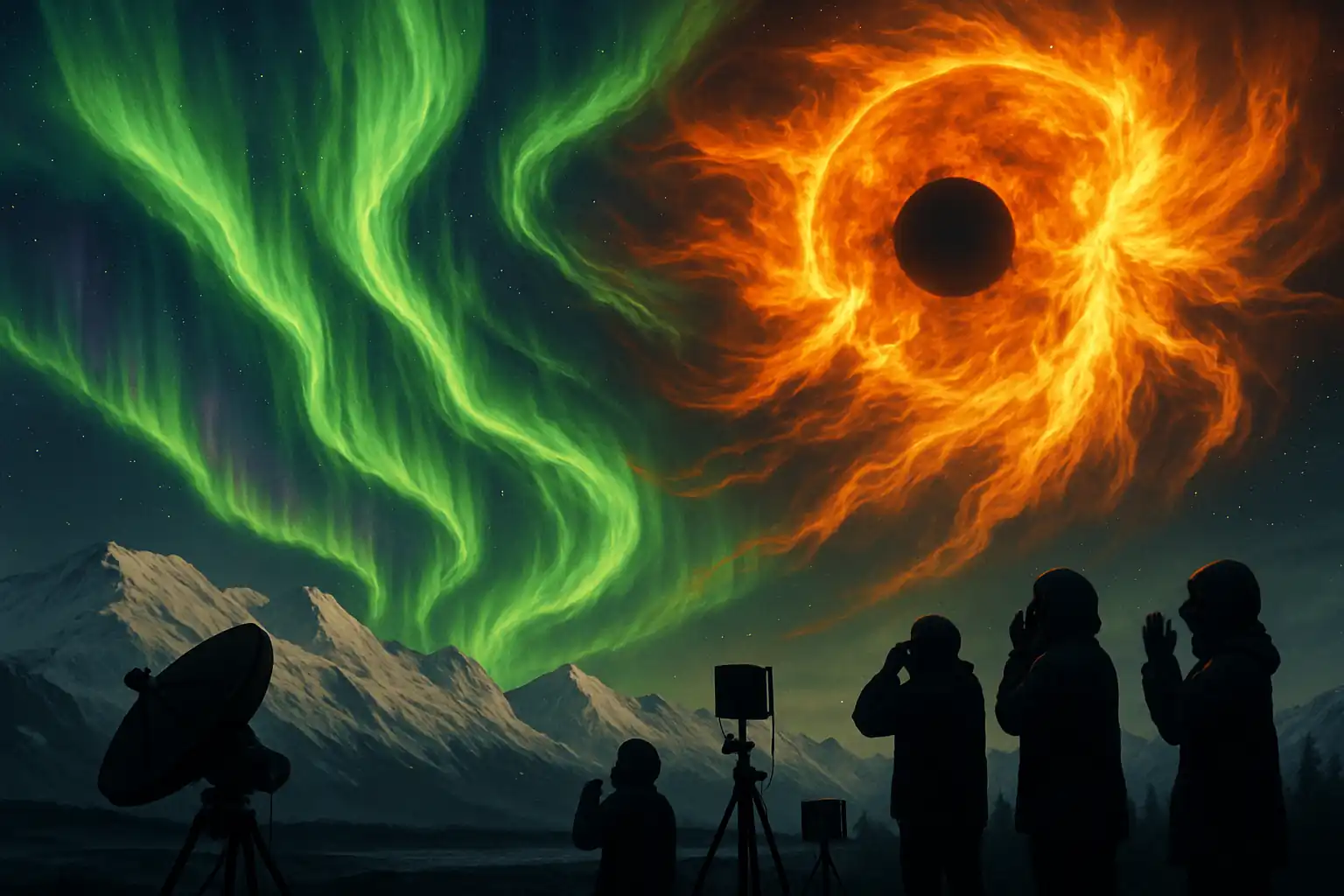
    It sounds like a doomsday cult newsletter or the fevered rantings of a late-night survivalist. This isn’t science fiction: In recent history, the planet sidestepped a solar bullet by less than two weeks. With solar superstorms, the difference between normalcy and grid meltdown can be a cosmic rounding error. This event—often compared to the infamous Carrington Event of 1859—missed Earth by just nine days, preserving our fragile technologies (for now). For Alaska’s aurora researchers, the near-miss reminds them that while the lights in the sky dazzle, the science behind them holds life-or-death implications.

    Solar storms, or coronal mass ejections (CMEs), hurl billions of tons of electrically charged plasma across the solar system. When these high-speed ejecta collide with Earth’s magnetosphere, chaos ensues. If the timing aligns poorly, GPS, the internet, and national power grids could vanish overnight, much like tube radios and telegrams. Recent research and satellite observations confirm (event overview) that Earth’s last near miss could have mirrored the Carrington Event—a superstorm so fierce that telegraph wires ignited while auroras made night skies glow from the Arctic to the Caribbean (full history).

    Alaska: Frontline of Aurora Science and Superstorm Surveillance

    Want to see space weather in action? Go north—way north. Alaska isn’t just a permafrost paradise; it’s a living laboratory for geomagnetic phenomena. Scientists at the Geophysical Institute and the legendary HAARP facility have made the state ground zero for aurora research. They conduct real-time experiments to decipher the secrets behind every emerald-green shimmer (historic context). While some conspiracy theorists blame HAARP for weather control, the real aim is studying how charged particles from the sun impact the planet’s atmosphere—creating psychedelic skies and clues for future solar hurricanes (science interview).

    This research goes beyond vacation planning for aurora chasers. It’s about establishing early-warning systems when space weather turns volatile. Ground-based magnetometers and global partnerships may one day provide crucial moments—seconds, perhaps—to unplug and protect technological civilization. For a broader view of how disruptions can ripple through society, see this investigative analysis on unexplained solar activity impacts.

    Carrington Event: The Benchmark for Existential Solar Risk

    The benchmark for sun-induced chaos remains the Carrington Event. In the early hours of September 1859, telegraph lines crackled with currents induced by Earth’s fluctuating magnetic field. Messages flowed without batteries, while some equipment scorched or ignited. The auroras glowed so brightly miners in the Rockies mistook it for sunrise and began cooking breakfast. If a similar event struck today’s electronic world, experts predict weeks—if not months—of catastrophic outages (risk assessment).

    Our near miss isn’t just a historical curiosity. An event of Carrington strength needs only to align with Earth’s orbit—and its results could overshadow Y2K, even reset civilization itself (deep reset scenarios). Planners worry about losses ranging from electrical grid failures to digital currency collapses, with long-term societal stress creating systemic irregularities detailed in latest global anomaly reports.

    What Would Happen if a Solar Superstorm Hit Today?

    Picture your phone dying, your car refusing to start, and your refrigerator becoming a glorified cupboard. Now multiply that by a billion. Beyond blackouts, a Carrington-level CME would fry satellite networks, scramble GPS data, and transform your online bank account into Schrödinger’s ledger. In the ensuing chaos, water systems, hospitals, and emergency responses could regress to the dark ages before you can say “Faraday cage.” Solar superstorms aren’t average blackouts—they’re civilization-level wildcards (ITU global readiness).

    It’s no surprise agencies and governments are finally paying attention. Some are reevaluating infrastructure resilience while others game out chain-reaction catastrophes darker than those in generic disaster movies. Even tech giants are now mapping space weather risks alongside threats like cyberwarfare (digital warfare insights) and AI failure scenarios (alignment warnings).

    Are We Ready for the Next Near Miss—or Direct Hit?

    The silver lining? Superstorms are rare—a Carrington-scale blast statistically occurs only once every 500 years. Yet, rising solar activity and more devices per square meter mean the world is increasingly vulnerable than ever (NOAA’s educational take). Alaska’s status as aurora capital positions it as a natural watchtower. The collaboration among scientists, survivalists, and dreamers may make a critical difference.

    One thing is clear: the next “missed us by nine days” could result in a direct hit. So keep your bug-out bag ready and subscribe to solid sources like Unexplained.co. The northern lights remind us that beautiful phenomena can also serve as nature’s warning shot. In times of crisis, it’s not the prepared who panic, but everyone else.

  • Peering Through the Veil: The Parallel Universe Mystery and the Story That Started It All

    Peering Through the Veil: The Parallel Universe Mystery and the Story That Started It All

    Inside quantum physics, near Schrödinger’s cat and various paradoxes, lies the idea that our universe may be one among countless parallel realities. This concept extends beyond Marvel movies and internet theorists; it occupies the minds of serious physicists. For those anticipating the next existential crisis, the parallel universe theory presents a fascinating idea: what if the apocalypse occurs in a different timeline while we are left with mere remnants?

    The idea of parallel universes permeates speculative fiction and online discussions, but quantum physics provides the strongest support for these cosmic doppelgänger dreams. The many-worlds interpretation, proposed by physicist Hugh Everett in the 1950s, suggests that every quantum event creates a new universe—a split for every possible “what if” you have imagined (Wikipedia overview). Each parallel world exists unseen and unreachable, yet occasionally, the lines blur enough to spark unforgettable legends.

    Quantum Physics and the Scientific Search for Parallel Realities

    For decades, physicists have sought concrete evidence of parallel universes, analyzing cosmic background radiation and experimenting with subatomic particles. Mainstream science journalism features outlets like Space.com and Live Science, which explore how quantum superposition and the “many-worlds” hypothesis hint at the existence of alternate worlds. However, despite advanced models and wild theories, no lab-verified passage to alternate realities exists—at least, not according to any government documents. Yet, as our world becomes increasingly bizarre (see this report), public interest in parallel universes rises dramatically.

    The Legend of the Man from Taured: The Most Convincing Parallel Universe Story?

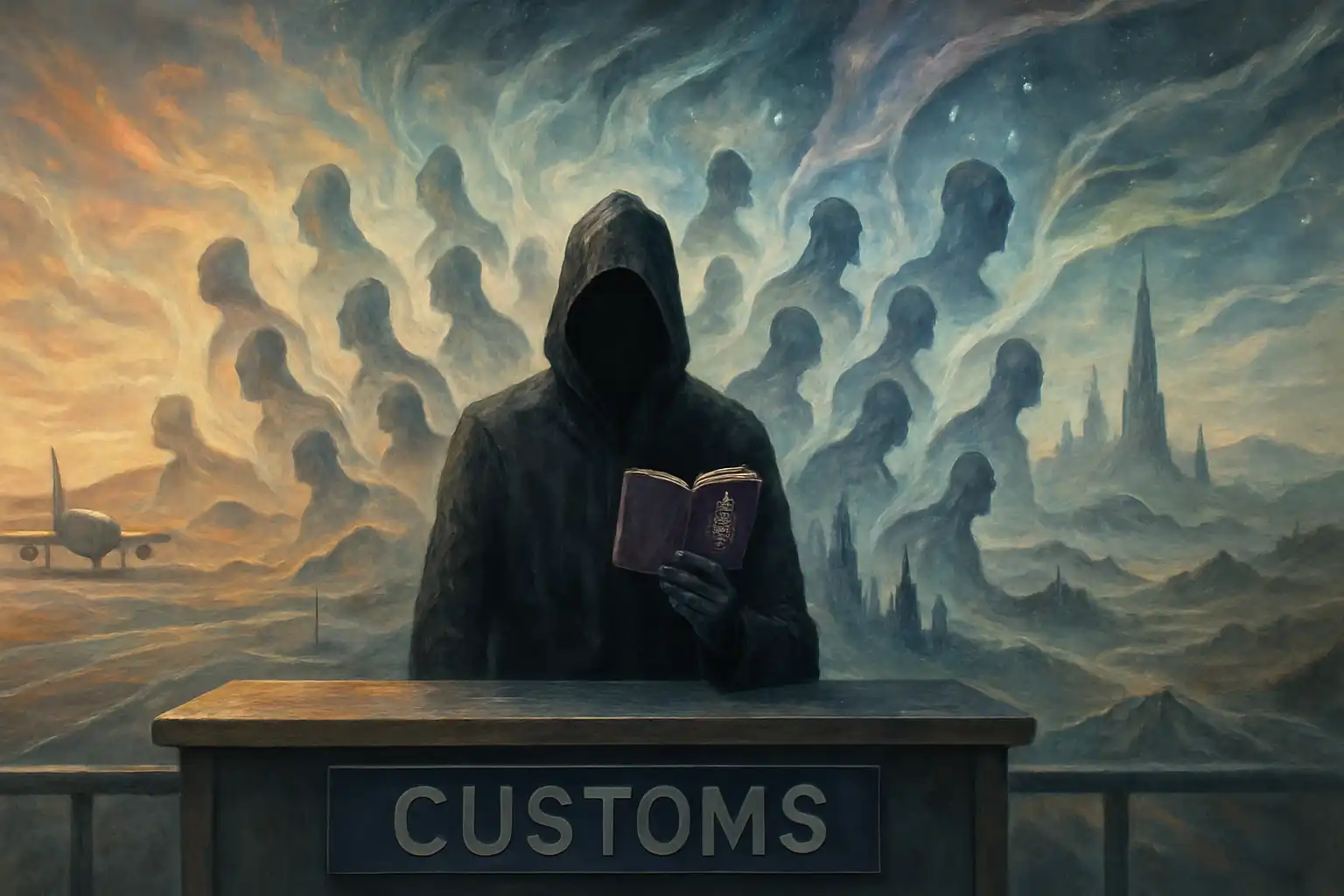
    Conversations about credible parallel universe tales inevitably lead to the most famous: the man from Taured. According to the story, in 1954 Tokyo, a well-dressed European man arrived at customs holding a passport from a non-existent country—Taured. He spoke multiple languages and insisted his nation had appeared on maps for centuries. He produced legitimate documents and then vanished from a locked hotel room as officials attempted to determine whether Cold War spies were pranking them or if someone had slipped through a glitch in reality. Though details have become muddled over the years, the core narrative reflects our deepest anxieties regarding identity, reality, and the fragility of normalcy (see Live Science’s quantum angles).

    Internet lore is rich with such accounts—from strange phenomena on the West Coast to odd urban legends that achieve cult status as online sleuths and doomsday theorists search for signs of cosmic ripples. Stories like Taured resonate because they suggest that reality might be uncomfortably fragile. If you are preparing for every eventuality, a parallel reset seems as plausible as a standard apocalypse (consider this scenario).

    Pop Culture, Lost Worlds, and the Endless Appeal of the Multiverse

    Our fascination with alternate universes extends beyond dusty customs records. From Marvel’s multiverse sliding doors to stories of people mysteriously disappearing, the concept captivates all, from skeptical scientists to doomsday preppers tracking hidden survival risks. Even archaeological mysteries, like secrets beneath the Giza pyramids (seen in this feature), fuel our yearning for “elsewheres”—places or times we can’t access yet can’t stop imagining.

    As quantum mechanics continues to confound and inspire, emerging theories view time and history as a branching network of choices rather than a single thread. This complexity makes the multiverse a popular canvas for fiction writers and those convinced that the Mandela Effect is more than mere memory tricks (for a breakdown, check Space.com’s multiverse explainer).

    What If the Story Is True? Risks, Revelations, and the Survivalist’s Edge

    If even a fraction of the parallel universe hypothesis holds true, the implications are staggering. Imagine that every crisis and every catastrophic turning point exists somewhere else—infinite timelines stacked like dominoes, each one just a quantum event away. While physicists debate metaphysics, we should recognize that “normal” shifts after just one anomaly. Any world can become the strange one overnight, as chronicled on Unexplained.co.

    The next time your keys go missing, try not to panic—perhaps you shifted timelines, or maybe the universe holds deeper puzzles than survival radio has ever suggested. Regardless, learn to patch your reality, build your bunker, and remain vigilant for individuals from nations that never existed. Because one thing is clear: both quantum mechanics and internet folklore affirm that the impossible lies closer than you think.

  • Solar Cycle Shocks: Plasma Filaments, Coronal Holes, and Schumann Resonance Mysteries in May 2024

    Solar Cycle Shocks: Plasma Filaments, Coronal Holes, and Schumann Resonance Mysteries in May 2024

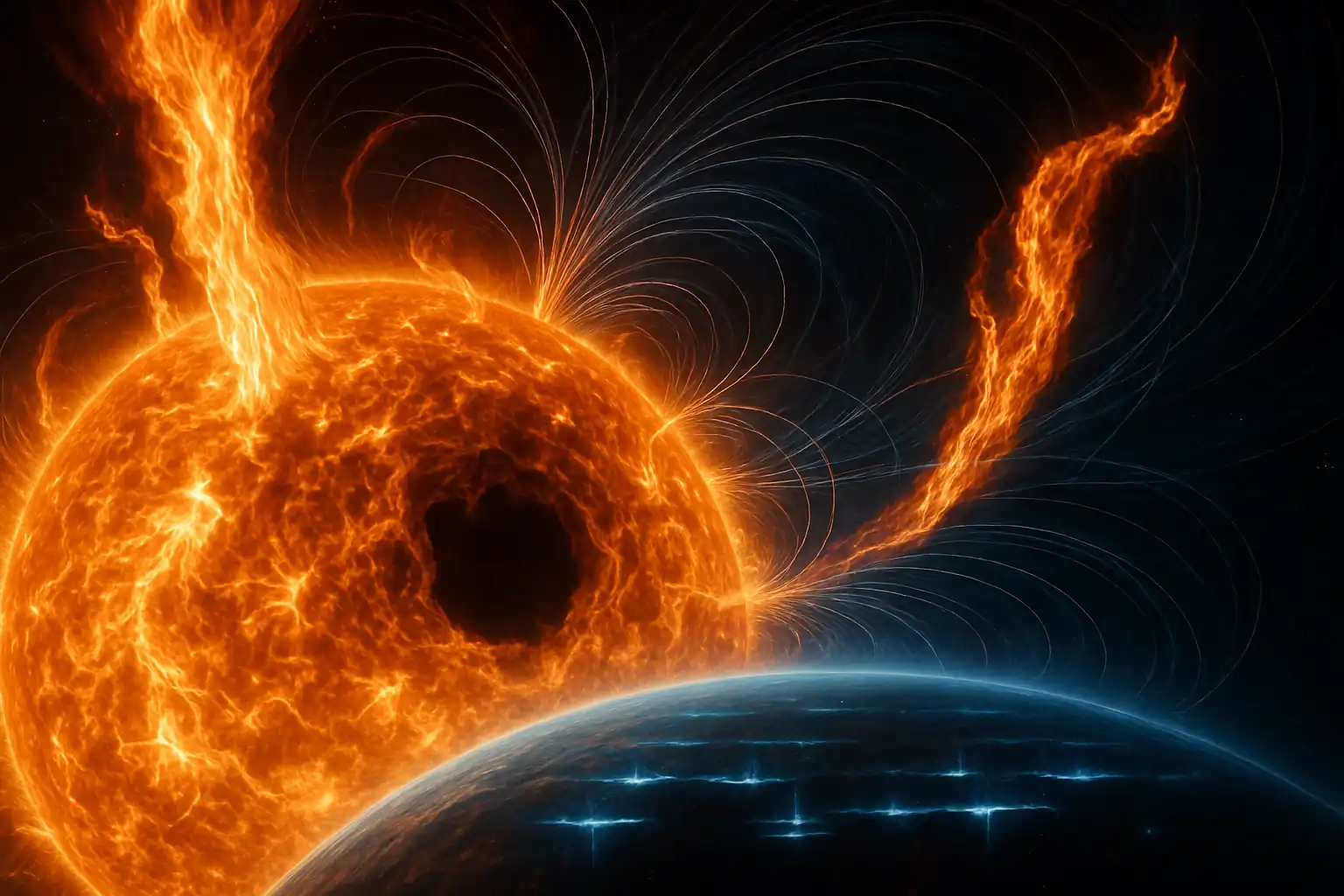
    As we anticipated solar fireworks at the peak of Solar Cycle 25, the Sun has unexpectedly slammed on the brakes. In May 2024, sunspot numbers have plummeted, even as massive plasma filaments—some of the largest in recent years—erupt from the solar surface. A notorious coronal hole aligns once again with Earth’s delicate magnetic bubble. Add in a cluster of unusual Schumann resonance anomalies down on Earth, and the space weather headlines resemble a “prepper’s almanac” more than a typical science report.

    Geophysicist Stefan Burns, who reports at the intersection of solar physics and Earth’s electromagnetic behavior, warns that this “cooling off” of Solar Maximum isn’t a calm sunset. Instead, we see a curious rise in geoeffective solar features and electromagnetic disturbances—phenomena reflected in investigative articles like this report on global weirdness. In summary: the Sun remains unpredictably volatile, and Earth’s atmosphere is responding accordingly.

    Plummeting Sunspots and Powerful Plasma Filament Eruptions

    The sudden drop in sunspot numbers in May signals a notable shift in solar dynamics. Solar maximum typically means rising sunspot counts, but recent data indicates a rapid decline. During this lull, colossal plasma filaments—massive ribbons of electrified gas stretching hundreds of thousands of kilometers—have erupted from the Sun’s surface. Space weather trackers at EarthSky highlighted the most spectacular events.

    Why this contradiction? Some physicists believe “magnetic reconfiguration” is involved—an innate solar process where energy accumulates and releases explosively, even with falling sunspot counts. The results for Earth can be severe: geomagnetic storms, auroras in unexpected latitudes, and rare disruptions to power and communications infrastructure. This dynamic mirrors patterns identified in dark-sky features such as unexpected subterranean threats and the surprising fragility of civilization’s electrical grid, as discussed in doomsday analyses at this grim what-if.

    Coronal Holes and the Ninth Drifting Dragon: Impacts on Space Weather

    A massive coronal hole has rotated into a geoeffective position—marking a record ninth pass facing Earth. Coronal holes are gaps in the Sun’s magnetic field where charged particles flow freely into space, impacting Earth’s magnetosphere and potentially sparking geomagnetic storms. Space weather prediction centers like those at NOAA (NOAA SWPC) warn that this recurring feature poses sustained space weather threats throughout the month.

    It’s not merely about beautiful auroras. A strong hit from a coronal hole’s high-speed stream can induce currents in long conductors on Earth, disrupt satellite orientation, and cause limited power grid fluctuations, as reported by The Watchers. When combined with declining sunspot activity, these events create complex forecasting challenges, a theme examined in analyses of multi-factor global risks like terrestrial groans and magnetic chaos.

    Schumann Resonance Anomalies: Earth’s Pulse Goes Awry

    Amid the upheaval of plasma ejections and electromagnetic disturbances, Earth’s own heartbeat—the Schumann resonance—has begun to behave oddly. These global electromagnetic resonances, essentially standing waves in the atmosphere triggered by lightning and solar weather, have exhibited unusual fluctuations. Some observers link these anomalies to intense geomagnetic activity, while others speculate ominously about significant shifts on a deep Earth or solar system scale. The science behind such resonances and their broader implications can be explored in Wikipedia’s Schumann resonance entry.

    Whatever the cause, it’s evident that the interaction between solar and terrestrial signals can generate ripple effects far beyond auroras or radio static. Earth’s electromagnetic environment, always delicately balanced, is particularly sensitive to the kind of unsettling solar weirdness now reported across independent science bulletins and in overviews of systemic crisis.

    Solar Cycles and the Future: Where Is This Headed?

    Despite our advancements in astrophysics, the solar cycle remains as unpredictable as ever. The periodic rise and fall of sunspots—mapped every 11 years in what’s known as the solar cycle (learn more on Wikipedia)—governs not just surface storms but possibly deeper, poorly understood astrophysical and geomagnetic interactions. This month’s pattern-breaker, where active solar activity occurred despite dropping sunspot numbers, has scientists contemplating what lies ahead. The stakes are significant. Space weather not only affects satellites or captivates skywatchers; it impacts everything from climate to global infrastructure stability, as discussed in doomsday scenario features on Unexplained.co.

    Thus, while the Sun’s recent behaviors may enliven our weather apps, they extend beyond an astronomer’s headache—they serve as a gauge of civilization’s technological resilience. This reminds us that when the cosmos throws a curveball, Earth must be prepared to respond (or duck and cover).

  • Revelations Beneath the Stones: Probing the Subterranean Mysteries of the Great Pyramids

    Revelations Beneath the Stones: Probing the Subterranean Mysteries of the Great Pyramids

    Few mysteries rival the enigma of what lies beneath the Great Pyramids of Giza. A mix of satellite radar imaging, deep geology, and provocative history fuels the debate over hidden voids, lost chambers, and the ancient Nile beneath those timeless stones. Randall Carlson, grounded in empirical data, navigates the intersection of science and legend in his latest exploration. But what does science—and Giza itself—reveal to us?

    Amid swirling headlines and fringe speculation, Carlson methodically dissects decades of dramatic theories. Eschewing clickbait, his case rests on geology: karstic limestone, evidence from flood-prone epochs, and void-mapping radar recently brought to the forefront. To unearth the truth, we follow seismologists, geomorphologists, and engineers across a plateau where echoes of human and natural power persist.

    Piercing the Bedrock: Technology Reveals Egypt’s Hidden Depths

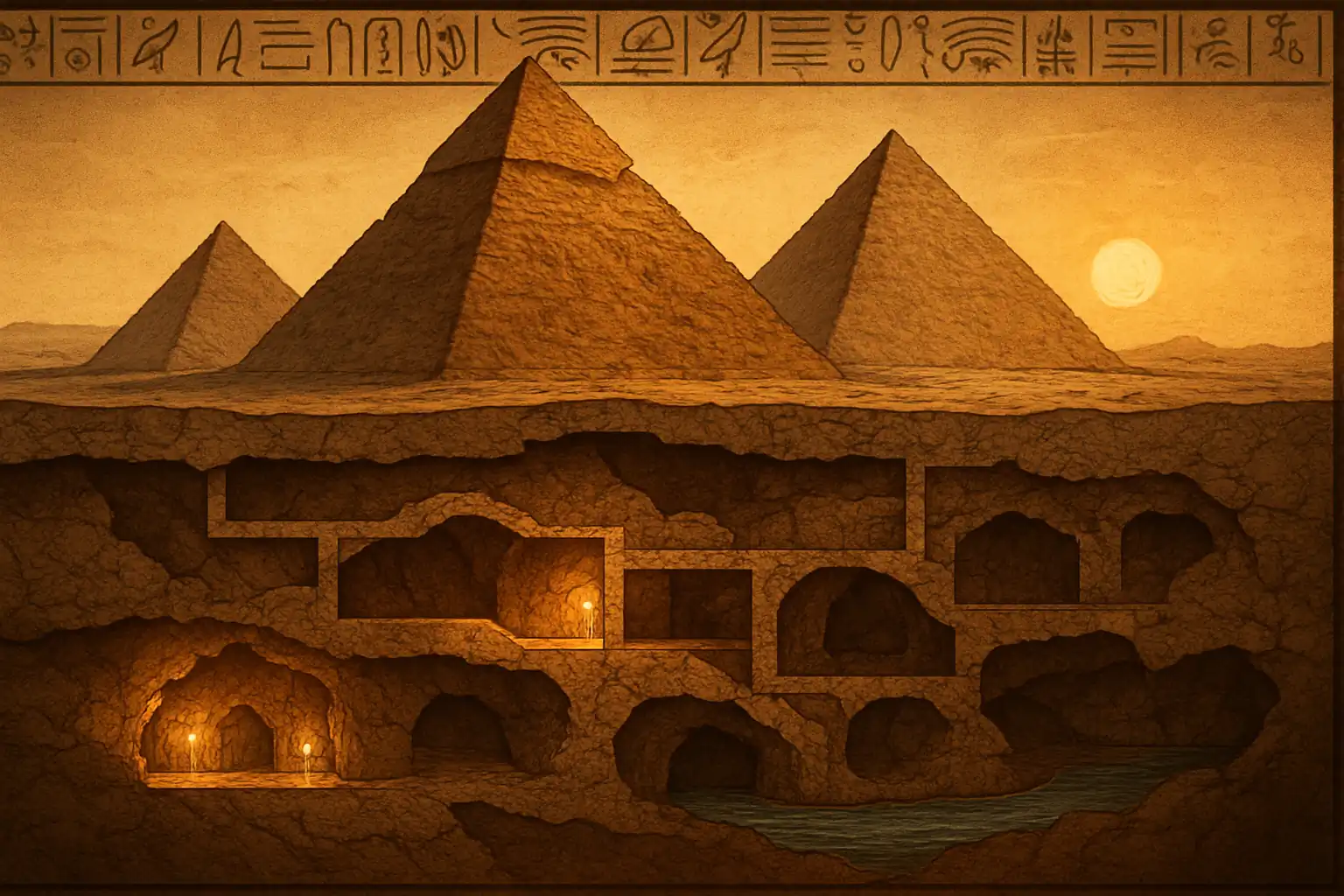
    The recent buzz centers around new radar and geophysical surveys. Synthetic aperture radar and muon tomography—originally designed for outer space and nuclear safety—reveal hidden passages under the pyramids better than treasure hunters ever could. The largest focus is the pyramid of Khafre, where subsurface voids and anomalies lurk within the limestone bedrock.

    Ground-penetrating radar indicates more than cryptic anomalies: it outlines a landscape filled with tunnels, cavities, and groundwater signatures that prompt as many questions as answers. While the data requires cautious interpretation—natural karstification and faulting can mimic artificial corridors—certain features appear too regular or linear to ignore. This resonates with recent findings on Egypt’s greatest unsolved enigmas and strengthens whispers of unseen chambers.

    The Nile’s Ancient Course: Canyons, Floods, and Lost Landscapes

    Satellite and core drilling studies reveal a buried Nile canyon beneath modern Giza, reaching almost 8,000 feet deep and hinting at a cataclysmic past. As detailed in this research and enhanced by new mapping of ancient water channels, Giza was once awash in floods—not the parched plateau we see today. Evidence of scoured gullies and ancient shoreline deposits suggests that monumental tombs were once flanked by verdant banks and even served, as recent scientific studies indicate, as ceremonial harbors.

    This deep-cut canyon’s winding path explains the natural voids and karst features beneath the structures. It also suggests that some underground anomalies may be remnants of vanished riverbeds or flood caves. Thus, subterranean speculations stand firmly on geological ground, not merely legend.

    Karstification, Caves, and the Geology of Mystery

    Not every void beneath Giza points to ancient rites or lost technology. The Mokattam Formation—a thick limestone bedrock—naturally dissolves over millennia into caves and sinkholes through a process known as karstification. Here, Carlson draws on studies of water flow, both ancient and modern, suggesting that nature alone could explain many radar-detected anomalies.

    However, as analytical resources outline, distinguishing geological formations from human-made structures requires both science and skepticism. Carlson argues that every mapped void must undergo scrutiny; geometry, context, and depth may reveal or rule out human intervention. Sometimes mysterious tunnels result from nature’s actions, but at other times, patterns reveal deeper secrets.

    Past Environments, Myths, and the Human Legacy Beneath Giza

    Giza was not always a desert. Studies into prehistoric climate and migration and the impact of ancient anomalies show that the Sahara’s ancient cycles included “Green” periods abundant with life and human activity. Legends of global floods are not mere inventions; they echo collective memories of floods and climate shifts across the Sahara and Nile.

    Consequently, both myths and natural history intertwine within Giza’s substructure. Riddles endure: Do undetected chambers beneath the pyramids safeguard untouched secrets, or do they reflect the Nile’s powerful hand? Until new drilling or robotic surveys penetrate the final veil, curiosity and technology compel us to dig—sometimes literally.

    For those seeking a broader view of underground mysteries and ancient enigmas, resources like Unexplained.co remain vital, while archaeologists, geologists, and myth-busters continue to scrutinize every stone and shadow. The verdict remains undecided—but the excitement of the search shows no signs of fading.

  • Unearthing the Heist of Ages: Egypt’s Hidden Truths Revealed

    Unearthing the Heist of Ages: Egypt’s Hidden Truths Revealed

    Beneath the sands of Egypt, history remains a veiled mystery. Enormous granite sarcophagi lie concealed, raising profound questions that conventional archaeology avoids. These restoration projects merely serve as facades, launched not to preserve history, but to maintain a comforting lie.

    Guardians of the Lost Truth

    The Serapeum of Saqqara, immortalized in granite, opens a portal to antiquity’s darker corners. According to Wikipedia, these immense sarcophagi – some weighing over 154,000 pounds – never conclusively contained bull remains. Instead, they appear as monuments to a civilization intentionally erased, a story detached from modern understanding.

    The Power Behind the Curtain

    Zahi Hawass, a renowned figure in archaeology, frequently arises amid controversy for alleged obstructions against independent exploration. Critics extensively document his narrative control in Smithsonian Magazine, where power and academia intertwine to maintain selective historical versions.

    Giants Amongst Us

    From Illinois to Malta and Peru, tales of giant humanoids appear consistently. These aren’t mere folklore; recent evidence, compellingly detailed by Medium’s George Lin, demands a substantial reconsideration of human history. Such discoveries raise an unsettling question: how much of our past remains deliberately concealed?

    Echoes from Forgotten Chambers

    Despite erasures, fragments surface to challenge the orthodox script. Independent explorations reveal astonishing findings, well documented in features such as this exposé and this archaeological revelation. These glimpses into antiquity resonate against the silence imposed on mainstream academia.

    The Conspiracy of Silence

    This intellectual theft—the suppression of humanity’s authentic evolutionary narrative—defines a new kind of heist. Entities like Unexplained.co strive to breach these walls, working to unravel the realities concealed behind institutional curtains. From hypothetical cosmic entities to potential North American giants, the breadth of hidden truths astounds.

    The relentless pursuit of truth will bring upheaval. Yet, as episodes like these critical discoveries show, integrity requires confronting concealed narratives directly.

    As humanity advances toward unmasked realities, these suppressed histories demand revelation. Ultimately, the most significant treasures stolen from humanity are not shimmering gold or sparkling jewels, but answers to questions we are only now beginning to ask.

  • Mystery Phenomenon Stirring Up Off America’s West Coast

    Mystery Phenomenon Stirring Up Off America’s West Coast

    The tranquil waters off America’s West Coast hide strange secrets this year. Unusual marine anomalies, erratic weather, and surprising seismic activities have sent researchers scrambling for answers. Is this Mother Nature’s tantrum or a sign of a broader environmental shift?

    Pacific Ocean’s Unusual Marine Heatwaves and Anomalies

    Strange occurrences have become alarmingly frequent in the Pacific Ocean, stirring curiosity and concern among oceanographers and marine biologists. Marine heatwaves, significant anomalies causing temperature deviations, have intensified, impacting marine biodiversity and weather patterns. According to NOAA, these marine anomalies raise concerns about ecosystem disruptions and unprecedented climatic consequences. Severe Weather Europe details these anomalies and their potential threats (read summary).

    Seismic Unrest Along the West Coast

    A noticeable increase in seismic activities off California’s coast adds to the environmental intrigue. According to a US Geological Survey model, about 75% of the United States, including California, could experience significant earthquakes due to increased seismic activity along tectonic boundaries (full details). This unrest deepens the mystery and anxiety about potential geological upheavals and their impact.

    The Pacific Decadal Oscillation’s Role

    Analyzing the Pacific Decadal Oscillation (PDO) simplifies understanding the Pacific Ocean’s complexities. Defined by Wikipedia, the PDO features warm or cool surface waters that significantly affect marine life and climate from California to Alaska (learn more). Recent temperature and ecological anomalies may indicate a larger PDO phase change, impacting regional weather patterns and beyond.

    Climate Concerns and Long-Term Impacts

    Experts warn that ecological, climatic, and geological anomalies could have far-reaching effects. Similar instances documented by Unexplained.co offer deeper insights; environmental anomalies worldwide indicate alarming patterns. Marine heatwaves and abrupt climate phenomena correspond with historical precedents, showing potential long-term shifts that require immediate attention.

    A Call for Vigilance

    As researchers closely monitor these phenomena, the public remains divided between scientific explanations and conspiracy theories. While anomalies spark concern, they also necessitate increased vigilance and adaptation strategies. Communities must prepare robust plans to mitigate adverse outcomes and effectively harness scientific advancements in response to environmental threats.

  • The Looming Storage Crunch: Why Our Data Future Hinges on DNA and Glass

    The Looming Storage Crunch: Why Our Data Future Hinges on DNA and Glass

    Your phone feels limitless until the storage bar flashes red. Scale that anxiety to civilization: sensors, satellites, and social media fill cloud arrays that gulp more electricity than many nations. According to Cisco, global data generation will hit 180 zettabytes by 2025—double today’s footprint. Humanity has faced capacity ceilings before, but each time society evolved to survive. The third encounter looms in under two years, and this time silicon cannot save us.

    From clay tablets to quantum drives, information needs room to breathe. When it suffocates, economies seize, scientific progress stalls, and geopolitics falters. Warning signs appear in recent headlines: energy rationing in Dublin’s data centers, hard-drive supply shocks in Bangkok floods, and hospital ransomware exploiting neglected backups, themes dissected on marked-in-code-07212024. History reveals a pattern: we first store, then hoard, panic, and finally innovate. We once again stand on that pivot.

    From Clay to Cloud: A Timeline of Data Overload

    Information overload predates electricity. Ancient Sumerian scribes created clay-tablet catalogs to manage overflowing archives; medieval monks rebuilt scriptoria after fires to track royal edicts. However, the modern era faced its first capacity crisis in the 1890 U.S. census. Herman Hollerith’s punch-card system digitized demographic data and generated sixty million stiff paper tiles—so many that the government created dedicated warehouses and coined the term “data processing.” The tech press of that era questioned whether the republic could physically store its own statistics.

    Punch cards remained in business and academia for nearly a century, but their bulk indicated a ceiling. The punched-card page notes that a single line of code occupied an entire card—about 80 bytes. By the 1960s, universities were disposing of literal tons of cardboard when magnetic tape emerged. Crisis averted, but only for a generation.

    Punch Cards and Humanity’s First Digital Ceiling

    The punch-card crunch was more than a storage hiccup; it sparked the birth of IBM. Machines like the 407 Accounting Unit automated tabulation, highlighting the fragility of capacity planning. Scholars at the Computer History Museum estimate that had punch cards dominated during the space race, Cape Canaveral would need a storage building larger than its Vehicle Assembly Building just to house telemetry.

    The severity became clear during World War II, when encrypted traffic surged. Intelligence officers turned to microfilm to reduce intercept pools, foreshadowing modern compression techniques. Contemporary historians draw parallels to today’s edge-AI frenzy, examined in runaway-minds-ai-07152024, where model sizes balloon faster than GPU farms can grow.

    The 2002 Digital Tipping Point and the Second Crunch

    The second ceiling emerged silently in 2002, the first year digital storage surpassed analog. The landmark Science study by Hilbert & López, “The World’s Technological Capacity to Store, Communicate, and Compute Information”, calculated that humanity had 295 exabytes of storage—barely enough for the eight trillion SMS messages sent that year. It predicted we would double capacity every three years, but demand accelerated faster.

    By 2010, Netflix streaming, iPhone photos, and surveillance video pushed spindle drives to their limits. Engineers responded with flash, RAID arrays, and hyperscale data centers—cathedral-sized halls of humming servers chronicled during thermal emergencies captured on magnetic-mayhem-07172024. Yet each petabyte added more carbon and complexity, inviting new vulnerabilities for nation-state hackers or solar storms like those dissected on seconds-before-midnight-07112024.

    Zettabyte Era: Why We Will Hit Limit #3 by 2025

    Analysts at IDC project that by late 2025, we will generate 463 exabytes per day, exceeding viable growth curves for hard disks and NAND. For proof, check tariffs on helium, a crucial gas for modern 22-terabyte drives. Supply chains twist, CAPEX skyrockets, and enterprise CTOs resurrect tiered-storage strategies reminiscent of magnetic-tape vaults.

    Microsoft’s research arm recognizes the writing on the server rack. Its quartz-based Project Silica claims to etch seven terabytes into a coaster-size glass slate that withstands heat, radiation, and water damage. The initiative gained urgency after floods drowned datacenters in Thailand—themes echoed in celluloid-secrets-07092024, chronicling nitrate film’s flammability and archival loss. Silica pitches long-term archival resilience but acknowledges an imminent shortage of conventional bits per watt.

    Beyond Silicon: DNA and Glass as Radical Storage Futures

    Even glass may serve as a stop-gap. Molecular biologists tout DNA strands as the ultimate write-once medium: dense, self-replicating, and stable for 10,000 years if refrigerated. The concept of DNA digital data storage gained attention when researchers encoded all of Wikipedia into a vial smaller than a pepper flake. Start-ups are courting pharma-lab investors to automate synthesis and sequencing at scale.

    Critics call DNA storage impractical—slow, costly, and error-prone—but so were silicon wafers in 1959. Early transistor fabs could barely yield one functional chip per batch. By analogy, DNA write speeds need only double a dozen times to compete with tape for cold archives. Factor in energy savings—no spinning disks, no air conditioning—and the economics improve. These arguments frequently appear in venture decks, the same kind flagged in bunkered-beneath-07162024, where redundancy plans now list “biomolecular vaults” next to off-planet backups.

    Energy, Security, and the Geopolitics of Infinite Memory

    Storage is not neutral; it shapes sovereignty. The EU’s GAIA-X initiative seeks regional cloud autonomy; China’s Cybersecurity Law demands local data residency. If only a few nations master DNA or glass encoding, information asymmetry will grow. Consider that quartz slabs weigh little and require no power—ideal cargo for lunar habitats discussed in orbital-intruder-07142024. The entity establishing archival standards in orbit will influence future historiography.

    Cyber-offense also evolves. Immutable glass seems secure until adversaries steal a single slab containing state secrets. DNA archives might carry bio-active code, raising dual-use alarms where genomics meets espionage. Policy think-tanks already draft “Geneva conventions for data,” reflecting debates around kinetic and electromagnetic warfare on flashpoint-himalayas-07202024.

    Building Resilience Before the Capacity Cliff

    How can companies and governments avoid crunch #3? Multipronged strategies beckon: content deduplication, on-device AI summarizing instead of storing raw feeds, and regulatory incentives to delete stale logs. Some banks now practice “data fasting,” purging telemetry after verified audits. Edge-compute advocates claim that 70 percent of video analytics can run locally, sending only metadata upstream—an ethos paralleling conservation messages from interstellar-g-cloud-shock-07232024, which warns of limited planetary resources.

    Yet deletion cannot offset creative explosion—4K AR worlds, full-body VR scans, and extensive AI training sets loom large. Humanity will imprint memories into quartz panes and DNA coils, as narrative equals survival. In pursuing these frontiers, we must consider who curates master keys, certifies authenticity, and decides what deserves eternal shelf space. These answers will define cultural memory longer than any empire.

    Stay vigilant. Read the fine print in cloud contracts. For direct updates before the next storage alarm rings, bookmark Unexplained. History shows that when capacity runs dry, only the prepared keep their data—and their story—alive.