Category: Ancient Civilizations

  • The Heliosphere is Weakening: Cosmic Rays Threaten Earth’s Quiet Zone

    The Heliosphere is Weakening: Cosmic Rays Threaten Earth’s Quiet Zone

    The cosmic quiet zone of our solar system may soon amplify—and not in a way you’ll enjoy. Astrophysicists warn that the Sun’s magnetic “bubble,” the heliosphere, erodes due to ongoing coronal holes and high-speed solar winds—just as it should be strengthening at solar maximum. This protective shell has kept galactic cosmic rays at bay, but its weakening threatens Earth with more than just sunburn. Geophysicists like Stefan Burns raise alarms: as the heliosphere shrinks, cosmic radiation and seismic energy could rise, jeopardizing our climate and ground stability (Wikipedia: Heliosphere).

    Why does this cosmic force field matter? The heliosphere functions like a giant magnetic umbrella, extending beyond Pluto’s orbit, shaped by the Sun’s solar wind and magnetic field. Its main power: blocking harmful galactic radiation. New research links cosmic ray surges to cloud formation and—yes—earthquakes. A weakened heliosphere increases the stakes significantly, as outlined in this compelling analysis.

    Coronal Holes and the Shrinking Heliosphere

    Coronal holes—massive dark patches in extreme ultraviolet images of the Sun—are more persistent and larger than ever. Typically scattered and cyclical, their current prevalence has reduced the solar wind’s dynamic pressure, depriving the heliosphere of vital support. This drastically alters the structure observed by Voyager spacecraft—making the boundary between us and interstellar space alarmingly weak. Recent solar observations indicate that we may be entering uncharted territory, increasing Earth’s exposure to galactic visitors.

    Ironically, this occurs when the heliosphere should be stable during solar activity peaks. The suspicion: a shift in solar behavior, reflecting historical solar anomalies that science is racing to understand. Space weather specialists monitor this situation with growing concern.

    Cosmic Rays and Rising Seismic Activity

    The connection between cosmic rays and earthquakes is shifting from speculation to measurable science. Recent studies, including one reported by Phys.org, show a statistically significant correlation: cosmic ray intensity surges align with higher global seismic energy release. The process may involve charged particle cascades that influence Earth’s atmosphere, subtly altering pressure and mineral conductivity along key faults.

    It’s not just a theory. In the New Madrid Seismic Zone, scientists anticipate an increase in quake activity corresponding with spikes in cosmic radiation. If the heliosphere continues to shrink, expect simultaneous space weather alerts and ground shaking in the coming weeks and years. Speculation abounds: could a sufficiently strong cosmic ray storm trigger events reminiscent of historic disasters linked to solar and tectonic unrest?

    Galactic Exposure: What Happens as the Shield Fails?

    If this trend persists, Earth may revisit past epochs when ice ages, mass extinctions, or megafloods coincided with heliosphere contractions. Geological evidence shows that rare cosmic bombardments align with extinction layers or sudden climate shifts—topics often mentioned in discussions of ancient cataclysms. The last time the heliosphere compressed inward, about three million years ago, Earth experienced dramatic changes—potentially sparking evolutionary shifts or collapses.

    In plain terms, the potential for Earth to face exposure to interstellar plasma, micro-meteors, and galactic rays is not mere science fiction. Agencies incorporate this risk discreetly into disaster models, while the public remains mostly uninformed—aside from late-night radio shows or deep dives by doomsday theorists.

    Surging Uncertainty: Prepping for a Cosmic Black Swan

    What does preparation entail in a world where space weather impacts geomagnetic storms and the ground we stand on? It requires closer monitoring of solar and seismic data than ever before. Building national grids and underground bunkers might be a starting point. Yet as history shows in studies of civilization resets, adapting to cosmic risks is a task that seldom announces its rules ahead of time.

    In a reality where rising cosmic rays could trigger city-level earthquakes, having solid insurance and a reliable flashlight seems prudent. The science evolves rapidly, the risks remain largely underreported, and the “shield” we take for granted is thinning day by day. To stay informed about what mainstream channels neglect to discuss, bookmark Unexplained.co. You may not block cosmic rays, but you can prepare for the next surprise.

  • History’s Greatest Unsolved Mysteries: Lost Tombs, Ancient Giants, and the Enigma of the Longyou Caves

    History’s Greatest Unsolved Mysteries: Lost Tombs, Ancient Giants, and the Enigma of the Longyou Caves

    Consider this your portal into the unexplainable. Across cultures and epochs, grand monuments, secretive tombs, and peculiar artifacts taunt science with their cryptic silence. In an age where data reigns and Google claims to have all the answers, true mysteries still hide in plain sight—and sometimes beneath tons of rock. As urban legends fade, these four enduring riddles—China’s untouched imperial tomb, the missing grave of Genghis Khan, the rumored bones of ancient giants, and the mind-bending Longyou Caves—show that history remains a labyrinth, its exits walled by our imagination.

    Let’s start with the tale of the First Emperor’s tomb. Buried around 210 BCE, Qin Shi Huang’s mausoleum lies tantalizingly undisturbed, save for the ranks of the famous Terracotta Army. Despite generations of labor and tales of mercury-filled rivers, archaeologists have never entered the central burial chamber. Why? The very technology meant to grant him immortality—liquid mercury—renders his resting place nearly untouchable. Preservation isn’t the only concern; disturbing the tomb could unleash damage on a scale not seen since the dark pitfalls chronicled in this report on forbidden science. The answer exists somewhere—or maybe six feet under a hill brimming with deadly vapors.

    Next is the lost burial site of Genghis Khan: the world-conqueror whose spirit supposedly rides the Central Asian steppe to this day. For centuries, nomads, historians, and satellite hunters have searched Mongolia in vain. With every expedition—some dead-ending in mystery, others muddled in myth—the legend of the undisturbed tomb only grows. Recent attempts to locate the grave using drones and hyperspectral imaging have ended inconclusively, much like the wild theories surrounding ancient underground networks beneath Eurasia. Khan’s tomb remains the sought-after prize—one powerful enough that finding it could shake the foundations of Central Asian heritage and geopolitics, much as the earth shudders above the New Madrid Fault (which, yes, is rattling again).

    Then we have the giants of folklore. If you think tales of titanic skeletons are mere bedtime stories, consider the archaeological shivers each time a “giant” femur turns up. France’s “Giant of Castelnau,” excavated in 1890, still ignites conspiracy forums and academic journals. Some claim hoax; others mention chronic misinterpretation, odd genetics, or even coverups—echoing the skepticism in today’s coverage of suppressed megalithic data. The bones themselves? Long vanished, lost, or possibly hidden away—similar to the secrets just beneath sites like Göbekli Tepe or the elusive Longyou Caves.

    Lastly, don’t overlook the Longyou Caves of China. This ancient underground network is so massive that modern engineers scratch their heads in awe. Dug over 2,000 years ago, these caves remain one of the biggest enigmas of ancient construction. No tools, no contemporary records—just perfectly carved sandstone chambers of cinematic scale. As highlighted by this exposé and substantiated by Wikipedia, their purpose, builders, and technology remain unknown. The caves’ discovery in 1992—when a local farmer drained his fish pond—upended centuries of Chinese archaeology almost overnight. Some theorists link them to lost civilizations, cataclysms, and drastic changes in human history—resonating with research on long-term catastrophe cycles and post-glacial American floods.

    In every direction, the search for answers plunges into realms stranger than fiction. Whether it’s rumors of alien structures in Antarctica or “impossible” engineering in ancient China, these riddles push the boundaries of archaeology, geology, and history. For those haunted by the echoes of the unexplained, rest assured: the greatest discoveries have yet to be unearthed—or perhaps we’ve already walked by them, distracted by daily headlines. Anyone willing to fall down the rabbit hole can start with Unexplained.co, the digital hearthstone for true mystery fans (and, yes, doomsday radio hosts).

  • New Madrid Awakens: 200+ Earthquakes Rock America’s Hidden Fault

    New Madrid Awakens: 200+ Earthquakes Rock America’s Hidden Fault

    In the heartland of America, below the muddy Mississippi and patchwork farmland, trouble brews. The New Madrid Seismic Zone—often overlooked and rarely prepared for—has erupted with over 200 tremors in recent months. A catastrophic quake, like those that reshaped the region in winter 1811–1812, is no longer an old tale; it’s an urgent risk for scientists, preppers, and many others.

    The Midwest shouldn’t rattle like this. But the New Madrid Seismic Zone defies expectations. While major seismic threats usually haunt the West Coast, New Madrid stands apart—nestled within the North American plate, its faults linked to the ancient Reelfoot Rift, a buried scar that never fully split the continent. Instead, it created a weak zone, waiting patiently through the ages for its chance to snap.

    Lessons from the Forgotten Megaquake

    This region experienced four of the most violent quakes in North American history over just three months two centuries ago. Eyewitnesses in 1811–1812 described weeks-long nights, the ground fracturing, and sand geysers shooting through the winter air. Church bells tolled as far away as the East Coast, and famously, the Mississippi briefly flowed backward. This seismic cluster, known as the New Madrid Sequence, remains legendary for its raw, unpredictable force—chronicled by the U.S. Geological Survey.

    Scientific studies reveal older disasters—ancient sand blows and buried forests indicate periods where the land buckled and shifted. Echoes of these events offer warnings: New Madrid doesn’t shake often, but when it does, it alters history. Anyone dismissing these risks should remember the region’s capacity for silent, catastrophic resets, as seen in cycle catastrophe research.

    Modern Threat: 200+ Earthquakes and Alarming Signs

    Seismometers across the Mississippi Valley now track a tale of pent-up energy. Most recent quakes have been minor—under magnitude 3.0—but their frequency alarms geologists. As explained by this analysis, even small events contribute to releasing or reactivating deeper fault segments, raising vital questions: Are these foreshocks for a larger event, or just a consequence of long-term strain?

    Urban growth and population increase heighten the stakes. Modern models indicate that a repeat of level 1811 events could cause $6 billion in damages in Missouri alone and ripple impacts throughout the region. Critical power networks and infrastructure now crisscross the heartland, while the public largely remains unprepared for disaster (as shown in scenario modeling of grid collapses), making the risks greater than ever—yet largely ignored.

    Disaster Waiting: Impact, Tsunamis, and Infrastructure Risks

    When the big one hits (not if, say many seismologists), the New Madrid Fault promises unprecedented devastation for the Midwest. Ground shaking could last minutes, collapsing bridges, highways, and pipelines. Farmland may sink, rivers might shift course again, and entire communities could vanish overnight, echoing reports from past megaquakes. Disruption would swiftly ripple outward: a major fault rupture could cripple transportation and communications networks, as predicted in analyses of secondary disaster risk.

    Below the surface, the “silent tsunami” risk looms—soft ground and river beds may amplify shocks, causing a churning lake or flash floods in areas far from the epicenter. Studies from Missouri’s Department of Natural Resources reveal that even minor quakes increase vulnerability in already fragile levees and flood controls. This scenario mirrors multi-threat situations, like concurrent solar storms and earthquake disruptions highlighted in recent risk reports.

    The Next Big Quake: How Prepared Is the Midwest?

    If you think the Midwest is ready, reconsider. Recent surveys of disaster readiness reveal low awareness, few drills, and serious weaknesses in public and private response plans. Media reports highlight that complacency is as dangerous as the fault line itself, as seen in this coverage.

    While scientists and agencies urge vigilance, many in the region do not believe a disaster can strike. However, experts cite ongoing tremors as clear signals. The seismic zone’s youth—less than 64,000 years old geologically—indicates ongoing risk and the potential for surprises, much like unexpected disaster trends surfacing in solar science reports and the broader pattern of global shocks discussed by Unexplained.co. Earthquakes, like politics or pandemics, often strike when you least expect it.

    Forget Hollywood clichés—the real threat lies beneath your feet. The Midwest’s sleeping giant is stirring, and only time will reveal if the next chapter echoes history’s worst nightmares or finally galvanizes America to confront the looming threat.

  • Is This the Dawn of Legendary Solar Activity? A Deep Dive into Space Weather’s New Era

    Is This the Dawn of Legendary Solar Activity? A Deep Dive into Space Weather’s New Era

    Let’s get this out of the way: if you feel the Sun is making a dramatic comeback in 2024, you’re not far off base. Solar physicists and risk-obsessed internet communities have issued red alerts, and for good reason. New data from The Washington Post and NASA’s weather trackers confirm: the current surge of solar storms, flares, and coronagraphic outbursts ranks among the most energetic ever for a new cycle. With coronal mass ejections (CMEs) and intense geomagnetic storms bombarding Earth, are we witnessing a solar cycle that rivals legendary events like the Carrington Event of 1859? Or is this simply cosmic business as usual with a touch of Y2K-style hysteria?

    This isn’t only an astronomer’s crisis. The warnings impact everything from airline and satellite operations to the standby instructions in every serious doomsday prepper playbook. If the Sun plans to rewrite the rulebook—or damage billions in infrastructure—you might want to have a few Faraday cages at the ready.

    Solar Cycle 25: The Sun Flexes Its Muscles

    Solar Cycle 25, which officially began in December 2019, has astonished forecasters by quickly reaching its upper energetic limit. Reports like NASA’s summary of the May 2024 solar maximum detail the fierce barrage of solar flares and CMEs. It has triggered stunning auroras far from usual locations—and possibly the strongest geomagnetic storm in over two decades. Even cautious skeptics admit this topsy-turvy maximum exceeds most predictions for solar activity.

    Throughout May and early June, scientists observed unprecedented outbursts, culminating in strong M- and X-class solar flares—a trend tracked by real-time solar weather feeds. Whether Earth faces a doomsday-level CME remains uncertain, but comparisons to the 1859 Carrington Event arise not just in sensational headlines but in serious government reports and disaster simulations like the EMP grid preparedness report. It’s time to upgrade satellite shielding AND your anxiety medication.

    Space Weather Science: Solar Flares, CMEs, and Earth’s Vulnerabilities

    The anatomy of this “legendary” solar storm season is straightforward: it’s a contest between massive plasma outbursts (CMEs), electromagnetic radiation (solar flares), and Earth’s battered magnetosphere. Geomagnetic storms already spark auroras, disrupt high-frequency radio, and lead power grid operators—inspired by historical events detailed on EarthSky—to rethink grid redundancy plans.

    Despite doomsday fears, legitimate risks persist. Models warn that particularly potent solar ejections, like those recently recorded, could knock out transcontinental power infrastructure and satellites, as occurred during smaller events chronicled in this superstorm case study. Even routine CMEs heighten concerns about a repeat of the severe, grid-threatening incidents referenced in these cycle anomaly analyses.

    Solar Anomalies and the Challenge of Prediction

    Space weather forecasting requires a brutal level of humility—solar science blends genius modeling with cosmic guesswork. Despite advanced satellites like the Solar Dynamics Observatory and the upcoming GOES-U, agencies like NOAA often get caught off guard. For instance, a surprise M3.2 class flare rocked forecasters, as discussed in recent solar activity updates. The Sun has a nasty habit of shifting gears with little warning, which is why preppers take no comfort in “official” reassurances from NASA’s cycle posts or the climatology consensus.

    Globally, this space weather anxiety mirrors the cycles of uncertainty outlined in long-term risk research and ancient folklore in accounts of solar phenomena. Are these new solar flares a return to cyclical extremes seen over centuries, or the onset of an anomaly that could baffle historians—and disable a few satellites?

    A Civilization on Edge: Prepping for Solar Outliers

    No matter how much we trust our models, the current surge has sent caution waves through every sector. Airlines have rerouted polar flights, satellite operators checked emergency power modes, and grid managers at national utilities quietly dusted off backup plans straight from EMP fiction. Recent activity has sparked discussions about preparing for outlier events far more powerful than anything seen in previous solar cycles.

    The question isn’t just whether we’re on the edge of legendary space weather, but how deeply our technology and supply chains remain vulnerable. If the next Carrington-level event strikes, the world will quickly learn how thin the line is between a light-speed civilization and a digital blackout. For those seeking a no-nonsense, thrilling look at scientific and real prepper-level reporting, keep watching Unexplained.co—because if history is any guide, when the Sun goes legendary, we all get a front-row seat… and maybe a backup generator.

  • Mysteries Beneath the Stone: The Truth Behind Old World Toilets—Or the Lack Thereof

    Mysteries Beneath the Stone: The Truth Behind Old World Toilets—Or the Lack Thereof

    Digging deeper into history reveals that its grandest secrets often exist in absence rather than presence. If you’ve wandered through a majestic cathedral or the echoing halls of a medieval castle and wondered, “Where did anyone go to the bathroom?”—you aren’t alone. Toilets are nowhere in sight, and there’s nothing resembling modern comforts. Instead, a persistent architectural mystery leaves archaeology and speculative theorists in a tug-of-war beneath our very feet.

    The “great buildings of the Old World”—from gothic sanctuaries to glimmering palaces—showcase baffling advances in geometry, acoustics, and construction. Yet the fundamental question remains: Why didn’t builders create well-designed sanitary spaces? Moreover, could these structures have served unknown functions?

    Historical Plumbing: Hidden, Primitive, or Post-Reset?

    Mainstream scholarship indicates that castle inhabitants weren’t as deprived as legend suggests. According to the World History Encyclopedia and English Heritage, latrines called “garderobes” existed in many castles—often just a hole in a bench leading to a chute and a cesspit or moat. They rarely integrated into living quarters. Renaissance and Enlightenment palaces often featured more private privies, but these were usually built after original construction, hidden among elaborate architecture. Cathedrals, meanwhile, appear almost defiantly devoid of toilets, igniting debates on lost technologies and societal taboos—narratives that suggest entire civilizations may have vanished or been overthrown without hygienic traces.

    This theme echoes through breakdowns of our vulnerable infrastructure—like this analysis of grid-down risks, where modernity’s collapse could erase “essentials” in a single generation.

    Beyond Toilets: Energy Machines, Resonance Chambers, or Symbolic Spaces?

    The latest wave of speculative history takes us into truly strange territory. Some researchers—and a vocal group on Tartarian forums—contend that many Old World cathedrals and palaces served functions beyond worship or governance. They propose these structures functioned as resonance chambers or giant “energy machines,” capable of harnessing electromagnetic frequencies from Earth’s ionosphere. Evidence includes unusual acoustics, precise geometric alignments, and stonework expertly engineered for sound and vibration—ideas unpacked in features on ancient resonance chambers and threads about cathedrals as synchronicity generators (see architectural studies).

    Sound far-fetched? Perhaps. Mainstream voices point to the clear absence of waste disposal, but others suggest this void means these structures served entirely different purposes—whether for spiritual attunement, societal healing (akin to the science of cymatics), or forgotten branches of energy science. Theories like these challenge claims that our ancestors harnessed magnetic fields on levels we can barely comprehend—paralleling warnings of mass resets documented in catastrophic cycles like those in solar-terrestrial risk studies.

    Sanitation, Taboos, and Civilizational Amnesia

    The academic perspective, reflected in the extensive Wikipedia entry on garderobes and BBC investigations, suggests sanitation often lay outside, in rudimentary forms, and definitely out of sight. Many urban areas, particularly in Europe’s so-called “Dark Ages,” relied on chamber pots, privies, and open sewage ditches. Plagues, cholera, and “blackwater” were regular visitors—a pattern familiar to those who’ve read expert projections of disaster scenarios. However, little evidence suggests that cathedrals contained internal restrooms for congregants or clergy; even palatial courts preferred to keep such matters peripheral.

    Still, the question lingers: Were these omissions due to engineering limitations, religious taboos, or civilizational resets that erased technologies—much like the “plumbing as a reset technology” hypothesis explored in modern sanitation histories? This gap invites alternative interpretations, as seen in exposes about hidden mathematical codes in historical construction (see this mathematical deep dive).

    The Absence That’s Present Everywhere

    Ultimately, absence can be the most revealing form of presence. With no toilets found in many grand Old World architectures, scholars and theorists must confront uncomfortable truths about lost knowledge, cultural priorities, or sudden technological shifts. Do missing latrines represent the historical equivalent of a societal blind spot—or does the void itself suggest functions and designs lost to a cataclysm or intentional erasure?

    Either way, the debate reminds us, much like those in post-catastrophe analysis and mythic folklore, that sometimes gaps in our narrative hide the real discoveries. To explore the depths of lost worlds and missing marvels, keep an eye on Unexplained.co—and another on what history might hope you won’t ask.

  • Solar Maximum 2025: Humanity Faces the Sun’s Fury as Solar Storm Risks Spike

    Solar Maximum 2025: Humanity Faces the Sun’s Fury as Solar Storm Risks Spike

    As Earth approaches the Sun’s next solar maximum, 2025 isn’t just another year—it could define our tech-dependent society. Solar cycle peaks bring spikes in solar flares, coronal mass ejections (CMEs), and dangerous geomagnetic storms that might plunge the modern world into darkness. Scientists, emergency planners, and anyone worried about Wi-Fi are sounding alarms as solar activity builds to unprecedented levels.

    This isn’t ancient prophecy; it’s data-driven concern. The last time the Sun displayed such power, the world didn’t rely on the internet, satellites, or interlinked power grids. Today, even a minor solar event could disrupt communications, aviation, and finance. Do you think you’re safe with spare batteries and canned food? Think again. Let’s examine what we know, what history teaches us, and how close we might be to a real solar disaster.

    The Solar Cycle: Why 2025 Is Pivotal for Solar Storm Activity

    Every 11 years, the Sun’s magnetic field flips. This cycle brings sunspot spikes, flares, and plasma blasts that race toward Earth at millions of kilometers per hour. Solar physicists predict that by 2025, this cycle will reach a furious peak, possibly surpassing previous events in frequency and intensity. The risks are real: as noted in the Space.com Carrington Event report, solar outbursts during peak years can damage satellites, disrupt power grids, and force air traffic controllers—and survivalists—to rethink backup plans.

    Coronal mass ejections are the heaviest hitters. These eruptions release billions of tons of solar plasma into space. If a CME hits Earth’s magnetosphere, it could trigger geomagnetic storms that might cause electric grid failures, interfere with GPS, and disrupt everything from phone networks to ATMs. Society is uniquely vulnerable, relying heavily on fragile technology. Just ask the Cassandras in the geomagnetic prepper community, who see each uptick in sunspot activity as a warning for those dependent on global connectivity.

    From Solar Flares and CMEs to the Carrington Event: History’s Warning Shot

    Solar flares and CMEs aren’t new—Earth has faced solar impacts for eons—but the risks skyrocketed in the infamous 1859 Carrington Event. Telegraph lines sparked, igniting fiery showers in offices, and auroras illuminated the sky so brightly that miners in Colorado mistook it for dawn. The consequences today, as Live Science outlines, could be catastrophic: prolonged blackouts, damaged satellites, lost data, and trillions in economic fallout, according to National Geographic.

    Modern infrastructure doesn’t guarantee safety. Our 21st-century lifestyles make us even more vulnerable, as echoed in the magnetic flip risk features and analyses of civilization’s fragility. Even a minor event could cripple transformers, disrupt global shipping, and leave millions relying on camp stoves for reasons unrelated to camping.

    The Science and Technology of Solar Storm Defense

    Fortunately, we can somewhat predict this cosmic disaster. Global space agencies have deployed a fleet of monitoring crafts—from SOHO and SDO to NASA’s Parker Solar Probe—to keep a close eye on the Sun’s activity. Satellites track sunspot eruptions in real-time, providing hours (or even days) of warning before a CME hits our magnetic shield. This early-alert system, unlike ignored warnings surrounding other global threats (see the cautionary tales of whistleblower warnings), offers grid operators a fighting chance. Electric companies can disconnect vulnerable transformers or reroute power, avoiding the feared “global blackout.”

    Yet the margin for safety is slim—even advanced technology can’t always outpace oncoming plasma. Solar maximums in the satellite era show just how much civilization relies on accurate forecasting and effective planning. The debate in grid-down emergency strategies indicates that prepping isn’t just for conspiracy theorists anymore. Civil authorities are drafting new plans, sometimes looking back to analog-age solutions for guidance.

    Preparing for the Carrington-Scale Storm: Can Humanity Survive the Sun’s Cycle Peak?

    Will we survive? Preparation might hinge on top-tier science, resilient infrastructure, and—let’s be truthful—a bit of luck. Practical readiness is vital, but adaptability matters too. Society’s electric heartbeat is more fragile than we care to admit: ask anyone who lost cell service and quickly forgot how to read a map. This isn’t fear-mongering; hard data supports it on the solar storm and Carrington Event pages. Blackouts, financial meltdowns, and supply chain chaos are not mere speculation—they’re established possibilities.

    Despite the impending doom, each solar maximum brings the dazzling beauty of auroras and chances for innovation. Like the tale of northern legends that endure, the Sun’s rhythms challenge humanity to adapt, rethink, and share blackout tales by candlelight—until power is restored. For the latest survival science and threats from above, keep watch on the sky and Unexplained.co. In the age of the Sun’s fury, ignorance is never bliss.

  • Solar Storm Surge: Will Earthquake Activity Spike as Solar Wind Batters Earth?

    Solar Storm Surge: Will Earthquake Activity Spike as Solar Wind Batters Earth?

    If you thought the northern lights over Paris were wild, brace yourself: Earth faces a direct hit from a high-speed stream of solar wind. Geophysicist Stefan Burns warns that heightened earthquake risks could follow. This isn’t our planet’s first exposure; scientists tracked at least eight previous instances where similar solar surges coincided with increased earthquake activity. Is your earthquake insurance up to date?

    Solar wind events, studied by space weather, can trigger dazzling auroras and infrastructure disruptions. They may also influence what rumbles beneath our feet. While the evidence isn’t as solid as your neighbor’s bunker, more experts scrutinize each solar cycle—and for good reason.

    Solar Wind and Geomagnetic Storms: What’s Happening Now?

    Solar activity has exploded recently, as reported in the EarthSky sun news report. A powerful stream of solar particles—driven by the solar wind—is colliding with Earth’s magnetosphere for the ninth time in months. Past high-speed streams have intensified geomagnetic storms, leading to minor to extreme (G5) events that disrupt satellites and power grids. Major outlets like USA Today highlighted May’s G4 and G5 events, some of the strongest in decades. Whether it results in a total grid meltdown or stunning auroras, impacts are catching the attention of power companies and pilots. NASA and the NOAA Space Weather Prediction Center continue to issue rolling warnings.

    The link between solar wind and geomagnetic storms is no conspiracy theory. But the question remains: does all this cosmic action make the ground beneath us shake?

    Is There a Scientific Link Between Solar Activity and Earthquakes?

    On paper, solar wind and earthquakes shouldn’t mix. Geomagnetic storms impact Earth’s magnetic shield, not its tectonic plates. Yet, many researchers believe intense solar wind could subtly trigger stress on fault lines. A SpringerOpen study reports past episodes—like the infamous March 1989 Canadian blackout—where severe geomagnetic storms created surges large enough to affect not just the grid, but possibly seismic systems too. The jury’s still out, but after the seventh and eighth solar wind episodes, some noted earthquake clustering worth investigating.

    While the correlation is intriguing, causation remains unsettled. Other sources, like SpaceWeather.com, observe space’s effects on Earth. However, most experts stress that solar-induced seismic triggers are subtle, not apocalyptic. As recent research into pole reversals and near-miss superstorms indicates, our planet’s finely-tuned systems can get pushed in unexpected ways.

    Wider Risks: Power Surges, Auroras—and Supernatural Speculation

    Even if earthquakes are uncertain, the risks of geomagnetic storms are real. Major solar events have historically knocked out power across continents, disabled GPS and radio, and forced airlines to reroute polar flights. The infamous 1989 Quebec blackout serves as a cautionary tale echoed in current preparation guides like EMP survival plans. During heightened solar activity, some resort to fringe theories, linking cosmic triggers to doomsday codes or to correlations between natural disasters and societal upheaval, as explored in cycle reset chronicles.

    Regardless, the true cosmic fireworks are the auroras—they now venture far beyond their usual zones, delighting city dwellers in latitudes that once only saw December sunsets. As researchers connect climate, the sun, and society, they recommend robust infrastructure upgrades and improved early warning systems, not just another round of canned beans and bottled water.

    Keeping Watch: The Future of Solar Storm Monitoring

    Space weather science is advancing rapidly, using satellite monitoring and fast-response modeling. Experts stress vigilance as our civilization becomes increasingly tech-dependent. One major flare, and humanity’s digital life could fry faster than a bug on a zapper. If you think it can’t happen, just remember: the field emerged when Victorian telegraph lines ignited during the 1859 Carrington Event. We’ve added a few more chips and wires since then.

    So grab your aurora selfies, count your seismic tremors, and follow Unexplained.co for cosmic curveballs and survival hacks. When the sun acts up, the entire planet is on alert—and sometimes, the only thing you can prepare for is the unpredictable.

  • Magnetic Flip: What Happens When Earth’s Poles Reverse?

    Magnetic Flip: What Happens When Earth’s Poles Reverse?

    Imagine waking up to find north is south, GPS is malfunctioning, and auroras are dancing over Miami. It sounds like a budget sci-fi flick, but it’s actual science: Earth’s magnetic poles really do flip. This planetary feature sounds less like doomsday fantasy and more like overdue inevitability. The inconvenient truth? Our planet’s magnetic field has weakened by roughly 30% over the last 3,000 years, and this decline is accelerating. While conspiracy forums panic, geophysicists anxiously check their solar weather alerts.

    Before stockpiling lead aprons and tinfoil hats, let’s clarify geomagnetic reversal and its impact. During a reversal, the magnetic shield that protects us from cosmic rays and solar storms weakens significantly. The latest reversals demonstrate that a flip can take hundreds or thousands of years to complete (Wikipedia), but during this tumultuous time, Earth faces increased exposure to space radiation. This radiation can scramble electronics, threaten power grids, and potentially raise mutation rates in living organisms (Live Science on biosphere risks).

    Geomagnetic Reversals: Science, History, and Mystery

    Earth’s magnetic poles aren’t fixed. They wander, jitter, and occasionally make complete U-turns. These geomagnetic reversals have punctuated Earth’s history at irregular intervals, often aligning with mass extinctions and drastic climatic shifts. According to NASA, the last full reversal—the Brunhes-Matuyama flip—occurred about 780,000 years ago. Since then, paleomagnetic evidence in ocean floors and volcanic rocks has recorded several ‘failed’ reversals and sudden excursions.

    Does our current weakening signal another reversal? Experts aren’t sure, but most believe we’re overdue. This reality means paying attention isn’t just for planetary nerds or those focused on cataclysmic resets. It’s a question of when, not if.

    Magnetic Field Weakening: Why It Matters for Civilization

    The magnetic shield serves as our primary defense against solar and cosmic radiation. If it collapses or fragments during a reversal, increased radiation could reach Earth’s surface. According to Horizon Magazine, this event could create temporary ozone holes, boost cancer rates, and disrupt satellites, power grids, and aviation systems. Sensitive species, including migratory animals, could lose their way. It won’t lead to mass extinction, but it could keep insurance companies and tech CEOs awake at night—and echoes concerns about solar superstorms and near-misses that nearly struck us before.

    Before blaming climate change on geomagnetic drama, NASA is clear: pole shifts do not drive modern climate shifts. They exist independently, sometimes overlapping with icy maelstroms, but they’re not responsible for your unexpected January sunburn.

    Electromagnetic Havoc: Communications, Power Grids, and Societal Risks

    What does a world caught mid-flip look like? The northern and southern lights will put on a once-in-a-millennium show across the globe—not just at the poles. But the downsides are immediate: satellites and high-flying aircraft become more vulnerable to dangerous radiation, potentially causing radio blackouts and GPS failures. Power grids, already straining from heatwaves, could fry from geomagnetic storm surges—think back to near-misses discussed in EMP attack preparedness briefings. Military communications, critical infrastructure, and daily phone calls could spiral into chaos, as detailed in reports about AI existential risks and civilizational reset scenarios.

    The threat is real. Major governments quietly conduct drills for potential magnetic storm blackouts. A full pole reversal—which could fragment rather than merely shift—transforms this from a niche concern into a headline threat. The worst-case scenario? Spending tens of billions on infrastructure just to keep pace with cosmic roulette.

    Historical Resiliency, Extinction Events, and Humanity’s Odds

    Has life survived this before? Yes. Fossil records indicate many past reversals did not trigger mass extinctions, and humanity’s Stone Age ancestors weren’t wiped out during the last significant flip. However, those were simpler times—no satellites, no global internet, no overloaded power strips with smart home assistants listening for clues of impending doom. Some research links past pole instabilities to increased mutation rates and environmental instability, possibly pushing certain extinctions along with other planet-shaking events.

    While survival seems likely, our technological fragility may be a different story. We might need the skepticism and preparation described in visionary predictions or the “just in case” mindset adopted by explorers revealing ancient architectural mysteries. Regardless, humanity should keep an eye on the magnetometers—and perhaps learn to find north the old-fashioned way.

    For those preparing for the next planetary twist, the real advantage is vigilance—not panic. Maintain a healthy skepticism of official reassurances. Monitor global breakouts, blackouts, and magnetic updates at Unexplained.co: where even science reads like a thriller, because sometimes, it truly is.

  • America Shaped by Catastrophe: Mega Floods, Drumlins, and the Geologic Revision of Prehistory

    America Shaped by Catastrophe: Mega Floods, Drumlins, and the Geologic Revision of Prehistory

    If you think the American landscape formed slowly through water and wind, think again. New geological evidence and advanced satellite imaging reveal a lost world of mega floods, immediate transformation, and destructive forces that resemble Hollywood blockbusters more than high school science. Forget slow erosion; consider the continental shock therapy that obliterated entire ecologies, topographies, and possibly forgotten civilizations buried under glacial debris.

    This radical revision of American prehistory extends beyond classrooms, hinting at immense floods, concealed landscapes, and the catastrophic erasure of ancient human chapters. The clash between gradual change and explosive upheaval lies at the heart of modern geology—just ask those immersed in civilizational reset scenarios or the enthusiasts of grid-down strategies like this survival plan.

    Mega Floods: The Violent Birth of American Landscapes

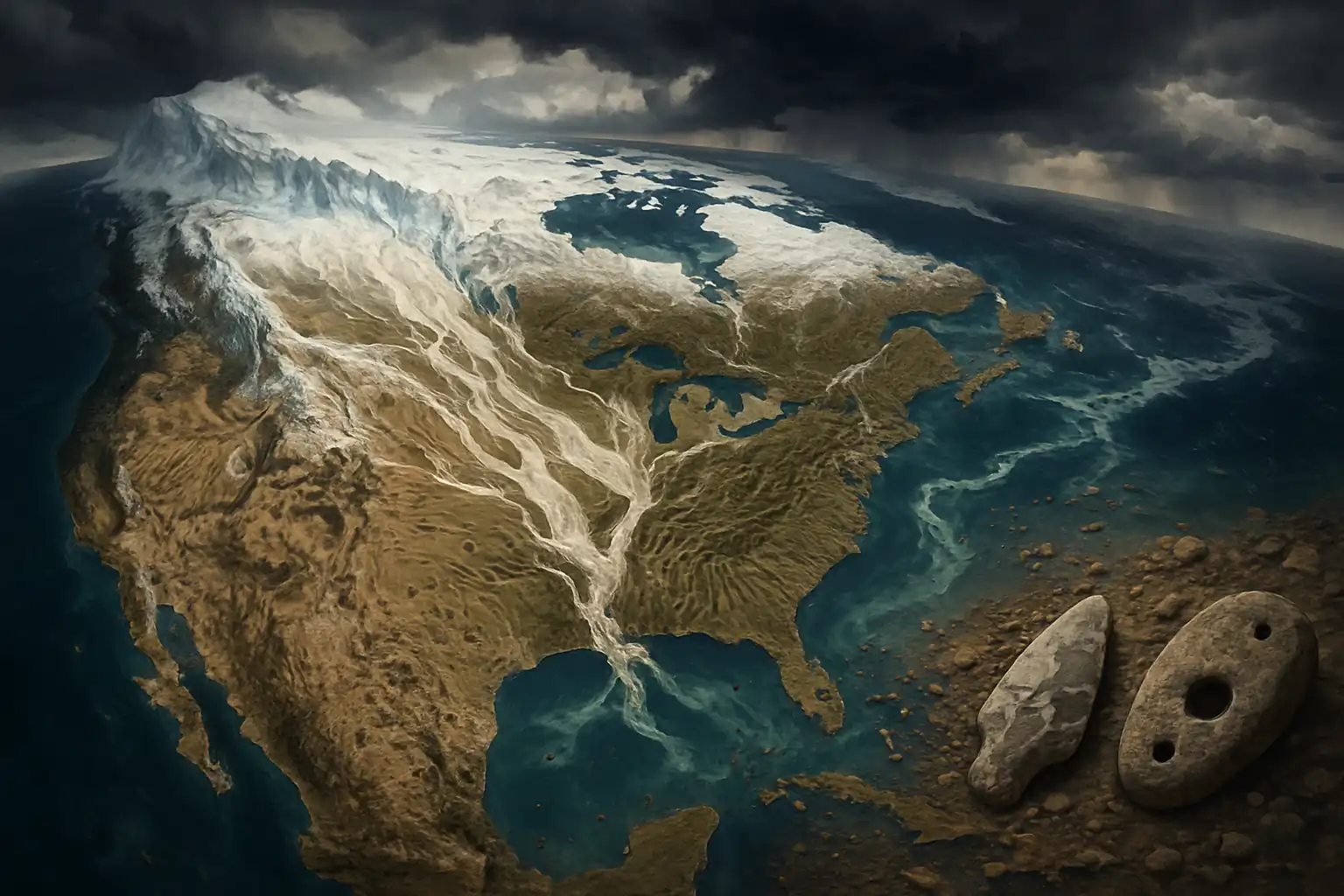
    Glacial Lake Agassiz—once as large as all the Great Lakes combined—didn’t drain gracefully. According to Nature Geoscience, geologists now have proof of an outburst flood of astonishing magnitude that swept across the northern plains as the Ice Age came to a close. These rapid events unleashed hundreds of cubic kilometers of water in mere days, scouring the land and leaving enormous spillways, boulder fields, and channels reminiscent of today’s Channeled Scablands. Catastrophism—the once-controversial notion that Earth’s history is shaped by abrupt, violent events—is regaining popularity, rewriting the old uniformitarian dogma that defined 20th-century education.

    Satellite imagery combined with sediment analysis reveals scars that simple rivers could not have created—not even in millions of years, and certainly not through “gradual” erosion. Geologists, with an eye for disaster, identify megaflood features often mistaken for slowly formed valleys or benign badlands. Once recognized, these signs serve as hard evidence of cataclysmic transformation.

    Glacial Lake Agassiz and the Legacy of Outburst Floods

    The draining of Glacial Lake Agassiz ranks among the most significant flood events in Earth’s modern narrative. ScienceDirect explains that the Agassiz flood may have triggered the Younger Dryas, a return to glacial cold that halted post-Ice Age warming for centuries. Water surged north and east, carving colossal spillways, depositing extensive gravel beds, and altering drainage routes across the continent. The scale was tremendous: water levels in Agassiz plummeted hundreds of feet within days, and the sedimentary record reveals an abrupt, transformative event rather than a prolonged transition.

    This matters beyond just the interests of “rock nerds.” Catastrophic floods act as a geological reset button: rivers, lakes, and coastlines shifted locations overnight. Habitats vanished instantly, and archaeological sites—perhaps even entire lost settlements—disappeared beneath new landscapes. This phenomenon resembles civilization’s reset, discussed in doomsday inquiries and after cataclysmic reset cycles. Like the secrets concealed in the shadowy depths beneath Egyptian pyramids, much of America’s prehistory remains hidden, out of mind, or buried beneath miles of glacial till.

    The Drumlin Dilemma: Erosion Features That Defy Gradualism

    Certain features, such as drumlins and giant flutings—elongated, streamlined hills found across the upper Midwest and Northeast—puzzle even experienced geologists. Traditional theory suggested they formed over thousands of years due to ice flow. However, new models and field data propose that many emerged as ice sheets receded and catastrophic floods swept the land. These streamlined shapes indicate the flow direction of torrents, not the slow crawl of glaciers. Debates about the role of megafloods in shaping drumlins, explored in research on Agassiz and other proglacial lakes, signify a major shift in geomorphology. The evidence for these sudden, high-energy floods—especially in spillways and erosional features detailed by Carleton research—compels us to rethink the timing, formation, and reasons behind these landforms.

    This blurs the lines between catastrophic folklore and contemporary science. The debate pitting gradual change against sudden disaster is just as vivid in geology as in discussions about abrupt shifts in civilization or even technology-driven existential risks.

    Buried Prehistory: Cataclysm, Archaeology, and the Limits of Conventional Wisdom

    If America was indeed sculpted suddenly and violently, what does that imply for early human settlements, lost river valleys, and vanished lakes? New voices in geoarchaeology advocate skepticism toward oversimplified timelines. They warn that entire eras—possibly featuring lost cultures—were swept away in chaos. Debris flows, till sheets, and underwater archaeological sites bear testimony to a world lost in translation, inviting comparisons to whole continents erased by time’s cataclysms.

    The future of earth science will rely not on comforting narratives but on our readiness to confront the turbulent, dynamic truth beneath the surface. Keep questioning the dogma, and watch for new scans, analyses, and disruptive evidence that redefine our understanding of the past—an area of focus for Unexplained.co, where no stone is left unturned and every geological paradox poses a challenge to established narratives.

  • Cyclopean Stone Mysteries: Suppressed Megaliths, Giants, and the Hidden History of Human Civilization

    Cyclopean Stone Mysteries: Suppressed Megaliths, Giants, and the Hidden History of Human Civilization

    Imagine standing at the foot of Peru’s Sacsayhuaman, dwarfed by colossal stones that challenge everything you learned in history class. Cyclopean masonry—an architectural technique using unyielding stones—appears globally, yet explanations feel as cold as granite. Are maritime trade routes, ancient technology, or erased chapters of human history at play, featuring giants, antediluvian science, or forbidden bloodlines?

    Timothy Alberino, leading explorer in this field, holds nothing back. Fortresses like Sacsayhuaman, with their massive doors and stairs designed for enormous beings, echo similar patterns found in Egypt, Sardinia, and even rumored sites beneath Antarctic ice. Theories range from technological mastery lost to disaster—echoing resets in this review of cyclical cataclysms—to deliberate historical suppression by elite interests fearful of public awakening. Legends abound about giants or Nephilim as master builders, predating familiar empires and mainstream science.

    Decoding Cyclopean Masonry: Impossible Engineering or Lost Knowledge?

    Cyclopean construction leaves mainstream scholars uneasy. According to ARCHAEOTRAVEL’s architectural analysis, these walls consist of boulders crudely shaped, densely packed, and locked tightly without mortar—often so close that a strand of hair cannot fit between them. This method, seen in Mycenae’s and Tiryns’s citadels, extends to Indian and European sites. The term “Cyclopean,” as Wikipedia confirms, stems from ancient Greeks who believed only giant Cyclopes could have positioned such stones. Even modern machinery would struggle under that weight—are we witnessing unrecognized ancient technology or mythical strength?

    These engineering marvels aren’t limited to the Mediterranean. The megalithic walls of Peru and Bolivia, with precisely angled joints and massive doorways, ignite debates about lost civilizations or technologies unknown today. Independent researchers discern similar questions in layers of secrecy surrounding Egypt’s oldest monuments, along with the controversial notion of massive megaliths beneath Antarctic ice—an idea dismissed by many yet never disproven. The drive to connect historical dots across time and geography proves irresistible, fueling a global debate akin to the mysteries of Egypt’s secret structures.

    Megaliths of Peru, Egypt, and Antarctica: Connecting Ancient Giants and the Nephilim

    Peru’s Sacsayhuaman, with its massive terraces and polygonal stones, serves as Exhibit A in disproving simple explanations like slave labor and copper chisels. The site features giant-sized stairs and doors, carved stone sockets, and earthquake-resistant fittings rivalling the precision of the Great Pyramid’s blocks. Similar megaliths appear in Sardinia and in remote allegations of Antarctic sites. Some studies, highlighted in speculative Atlantis and pole-shift studies, suggest a network of lost cities and hybrid rulers—the “giants” and biblical Nephilim—before cataclysmic events or a literal deluge obliterated them from cultural memory.

    The giant theory, sensational as it may be, finds support in myths and unusual artifacts from India to South America. This thread connects reality with legend, driving investigations into Nephilim legends and their rumored return. While academics caution against overreach, the puzzle pieces—fitting together with uncanny precision—continue to be unearthed. Reports of hidden structures, relics, and mummified remains suggest this debate will persist for years.

    Hidden Architecture, Rituals, and Astronomical Mysteries

    If these cyclopean titans weren’t just fortress walls, what purposes did they serve? Cutting-edge theories connect these structures to ceremonial centers, star observatories, and even energetic technologies. When Egypt’s temples and pyramids are mapped with platforms like Sacsayhuaman, they often reveal astronomical alignments and ritual significance beyond modern city planning. Some theorists see in these alignments echoes of ancient knowledge lost to catastrophe—warnings similar to today’s concerns about future existential threats facing our society. Others highlight links to initiation rites, sacred geometry, and ley lines, merging science with mysticism in ways that frustrate establishment historians.

    Regardless of origin or purpose, cyclopean sites worldwide defy neat models of “primitive” humanity. They appear to echo warnings—transmitted in stone—of knowledge destroyed or obscured, perhaps protected by secret societies and the “bloodlines” that conspiracy theorists claim still wield influence today, topics explored in-depth in investigations into elite control.

    The Ancient World’s Greatest Cover-Up? Rewriting Human History in Stone

    Who built these monumental structures—and why do mainstream academics hastily overlook their mysteries? One answer lies buried under bureaucratic denial and rigid timelines. However, a growing number of explorers offer an alternative: humanity’s story is longer, stranger, and more tumultuous than we realize, repeatedly reset by catastrophe, cover-up, or both—just as examinations of modern resets illuminate.

    Whether you believe in ancient giants, lost high civilizations, or something more bizarre beneath the Antarctic ice, one thing is clear: cyclopean monuments form a global code, carved for those willing to question accepted wisdom. For further journeys down this rabbit hole—and to stay updated on revelations or cover-ups—make Unexplained.co your archaeological bug-out bag. History isn’t elusive. It lies right beneath our feet, waiting to be uncovered in stone.