Category: Ancient Civilizations

  • Second Sphinx Under Giza? What the Claim Says, What the Scans Show, and What Remains Unproven

    Second Sphinx Under Giza? What the Claim Says, What the Scans Show, and What Remains Unproven

    The idea of a second Sphinx hidden beneath the Giza Plateau has all the ingredients of a durable modern myth: one of the world’s most famous ancient sites, hints of buried chambers, suggestive scans, and the possibility that something enormous has been sitting just out of sight for centuries. But no confirmed archaeological discovery has shown that a second Sphinx lies beneath Giza. For now, the claim remains an interpretation, not an established find.

    That does not make the subject trivial. Giza is exactly the kind of place where genuine uncertainty and grand imagination have always coexisted. The plateau is ancient, complex, and still capable of surprising researchers. Remote-sensing tools add another layer to that mystery, offering glimpses below the surface without immediately telling us what those glimpses mean. In the space between data and conclusion, speculation thrives.

    For more context on the broader mystery, see Ancient Demon Traps in Mesopotamia? The Bowls Buried Beneath the House and Kola Superdeep ‘Screams From Hell’: The Hoax and the Real Discoveries Beneath the Earth.

    So the real story is not simply whether a second Sphinx exists. It is how the claim arose, what the scans can and cannot show, why the theory keeps returning, and what kind of evidence would be needed before archaeologists could treat it as more than an alluring possibility.

    Why the theory keeps resurfacing

    The theory endures because it feels intuitively plausible. Monumental architecture often leans on symmetry. Sacred landscapes are full of paired features, mirrored alignments, and guardian figures arranged with deliberate balance. Once people see the Great Sphinx as a lone sentinel on one of history’s most symbolically charged plateaus, it is a short imaginative step to ask whether it once had a counterpart.

    Ancient Egyptian architecture gives that instinct some cultural grounding. Pairing, alignment, and ceremonial order mattered deeply in Egyptian design. Processional routes could be lined with sphinxes, and monuments often formed parts of larger symbolic arrangements rather than standing as isolated statements in stone.

    But that is also where the theory’s strongest intuitive appeal outruns the evidence. The fact that paired symbolism existed in ancient Egypt does not show that Giza specifically concealed, or once featured, another Great Sphinx-scale monument. It explains why the idea sounds plausible. It does not prove that the idea is true.

    What people usually mean when they cite “new scans”

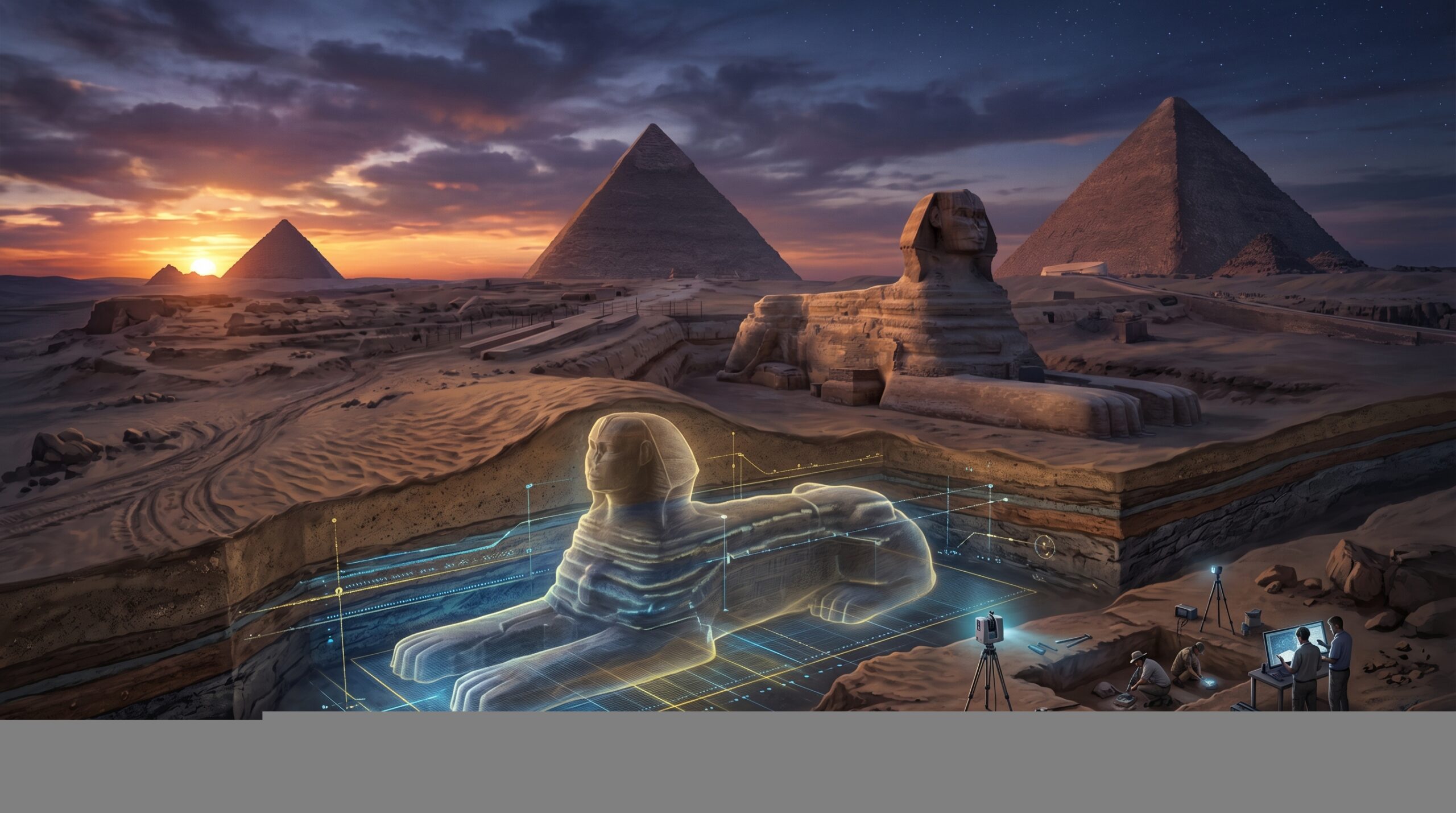
    When headlines or social posts claim that scans have revealed a second Sphinx under Giza, they are almost never describing a clean underground image of a buried statue. More often, they are referring to subsurface anomalies: density shifts, unusual reflections, void-like signatures, geometric-looking shapes, or patterns that some interpreters think appear artificial.

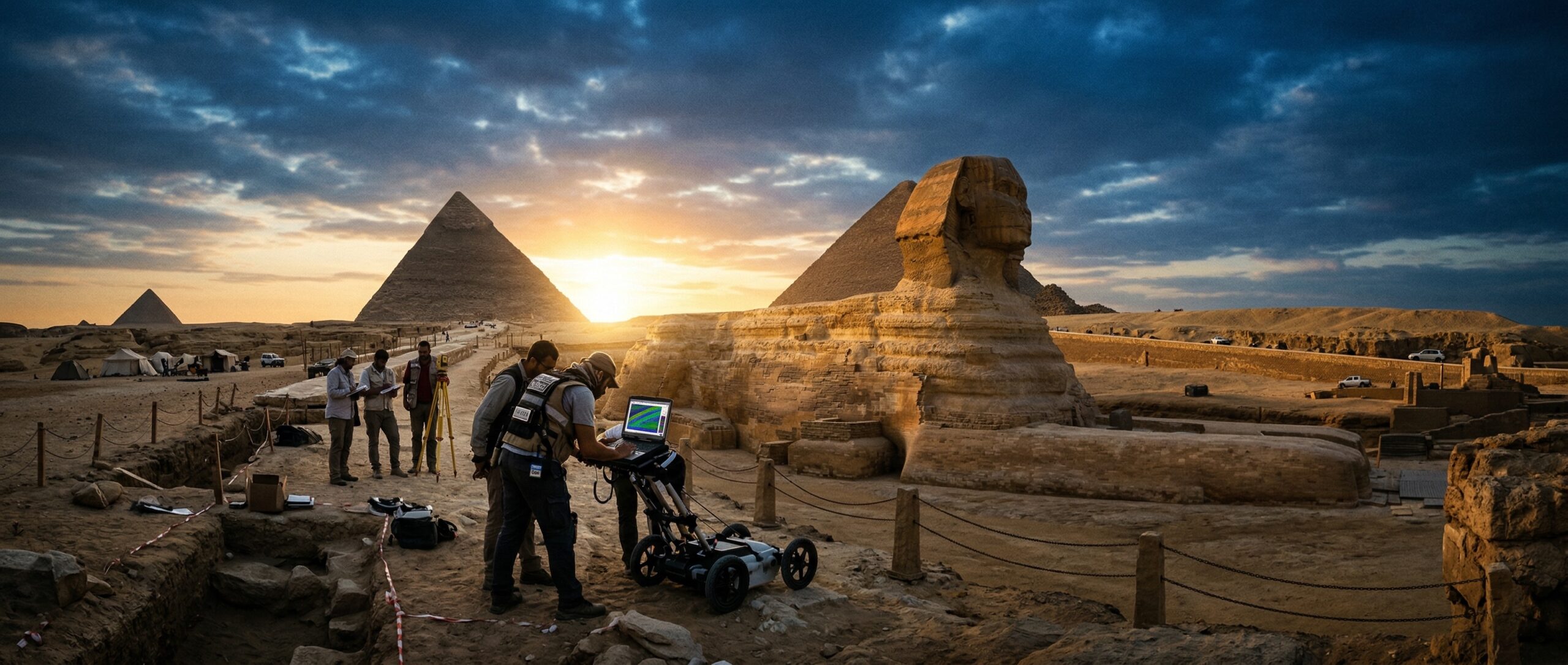
    Those anomalies can be worth attention. Methods such as ground-penetrating radar, seismic analysis, electrical resistivity, and satellite-based remote sensing are useful archaeological tools. They can identify areas that may deserve closer study and sometimes reveal hidden features that would otherwise remain invisible.

    But they are not magical X-rays. These methods do not simply produce a labeled picture of what lies underground. The data must be processed, contextualized, and interpreted. Local geology matters. Bedrock irregularities matter. Depth, calibration, interference, and methodology matter. So do the expectations of the people studying the data.

    That is where the leap often happens. An anomaly becomes a chamber. A chamber becomes a structure. A structure becomes a monument. Before long, a buried Sphinx is being discussed as though the statue itself had already been photographed underground.

    Why Giza attracts theories like this

    Few places invite hidden-structure theories the way Giza does. The reason is obvious the moment the plateau comes into view. The pyramids and the Great Sphinx are not modest ruins. They are among the most famous and most symbolically overloaded monuments on Earth. Their scale alone makes the surrounding landscape feel unfinished in the public imagination, as though more must be waiting below the surface.

    That feeling has been reinforced for generations by a mix of serious investigation, alternative history, esoteric speculation, and popular culture. Giza has been cast again and again as a place of lost chambers, buried records, secret passageways, forgotten sciences, and withheld discoveries. In that atmosphere, even a minor anomaly can acquire a dramatic afterlife.

    A small void becomes a hidden hall. A disputed feature becomes evidence of suppression. A pattern that might have several explanations becomes, in retelling, proof of something extraordinary. Giza’s fame does not create the data, but it strongly shapes how the data is received.

    What archaeologists would need to see

    For mainstream archaeology to treat the buried-second-Sphinx idea as more than speculation, the evidence would need to move well beyond suggestive scans and dramatic interpretation.

    First, the methods would need to be clear and transparent. What instrument was used? At what resolution and depth? How was the data processed? What possible distortions, noise, or geological complications were accounted for?

    Second, the findings would need replication. One intriguing result is not enough for a claim of this scale. Independent teams using comparable or better tools would need to identify the same feature.

    Third, the anomaly would have to be interpreted within the real context of the plateau. Giza is not an untouched blank canvas. It contains cut bedrock, cavities, quarry marks, trenches, restoration work, later interventions, and a long history of excavation and modification. Any unusual signal has to be distinguished from all of that.

    Finally, if permissions and conservation ethics allowed it, some form of targeted physical investigation would usually be needed. Archaeology does not confirm buried monuments through excitement alone. It confirms them through converging evidence.

    Readers who want to compare this story with outside reporting can start with Wikipedia on the Great Sphinx of Giza and Coverage of the recent buried second Sphinx claim.

    Until that happens, the second-Sphinx idea remains an intriguing possibility to some, an overreach to others, and unverified speculation to everyone else.

    Is there historical evidence for a paired Sphinx at Giza?

    This is where the distinction between cultural logic and direct proof matters most. It is true that paired guardians and symmetrical planning existed in Egyptian architecture. It is also true that Giza is a vast ceremonial and funerary landscape shaped by quarrying, redesign, restoration, and layers of later interpretation.

    What is not publicly established is a historical record or archaeological finding showing that a second Great Sphinx-scale monument once stood nearby and was later buried or lost. The theory often borrows force from broader ideas about Egyptian symbolism, or from legends of hidden halls and forgotten structures, but those are not the same thing as evidence for this specific claim.

    Some fringe accounts fold the second-Sphinx theory into much larger stories about lost civilizations or concealed records beneath Giza. Those narratives are culturally influential and undeniably fascinating, but they are not accepted archaeological proof. They tell us more about the modern imagination surrounding Egypt than they do, by themselves, about what lies under the plateau.

    What believers, skeptics, and archaeologists each see

    People drawn to the second-Sphinx theory often argue that Giza is not fully understood, that official institutions can be too cautious or too slow to pursue unconventional leads, and that remote-sensing anomalies deserve more serious attention than they usually receive. Some also believe the plateau is older or more architecturally complex than standard chronologies allow.

    Skeptics answer that the pattern is already familiar. In their view, ambiguous data gets publicized before careful review, symbolic reasoning gets mistaken for measurement, and unresolved questions are recast as evidence of suppression. To them, the second-Sphinx claim looks less like a hidden discovery and more like wonder outrunning proof.

    Professional archaeologists generally occupy a narrower middle ground. They do not need to deny that undiscovered features may exist. Ancient sites often do hold surprises, and noninvasive methods can reveal important structures. But they insist on a basic distinction that is easy to lose online: anomalies are not monuments, interpretations are not discoveries, and possibility is not confirmation.

    It is not the most dramatic position. It is usually the most defensible one.

    Why scan-based stories spread so quickly

    Stories like this travel quickly because they fuse old and new forms of mystery. On one side is ancient Egypt, already surrounded by awe, symbolism, and centuries of speculation. On the other is modern technology, which seems to promise a glimpse beneath the surface without the delay and caution of excavation.

    That combination is powerful. A colorful map, a suspicious shape, and a few scientific terms can create the impression that a breakthrough is already in hand. Once those images begin circulating without full context, interpretation races ahead. People do not need technical expertise to feel that a feature “looks artificial” or that a world-famous site “must be hiding more.”

    Remote sensing is especially vulnerable to this because its outputs are rarely self-explanatory to non-specialists. The mystery lives not just in the underground data, but in the gap between what experts can responsibly say and what the public hopes the images reveal.

    What remains genuinely possible

    It would be a mistake to swing too far in the other direction and insist that nothing of interest lies below Giza. Ancient landscapes of this scale often contain features that are still unexplored, misunderstood, or only partly documented. New tools really can reveal voids, shafts, walls, quarry zones, and other buried elements worth further study.

    So the careful position is not that there is nothing there. It is that there is no confirmed evidence, at least publicly available, that what lies there is a second Sphinx.

    The underground features hinted at in scans could be geological. They could be man-made but unrelated to any sphinx. They could reflect construction activity, quarrying, drainage, later reuse, or other aspects of the plateau’s long history. They could also, in some cases, point toward genuinely surprising discoveries. What they do not currently amount to is a verified buried twin to the Great Sphinx.

    The real fascination is the uncertainty

    A confirmed second Sphinx would be one of the most extraordinary archaeological discoveries of the century. That possibility alone helps keep the theory alive. But the scale of the hypothetical discovery should not be confused with the strength of the present evidence.

    Right now, the evidence points to ambiguity: intriguing anomalies, contested interpretations, and a public eager for a dramatic revelation at one of history’s most myth-laden sites. That may be less sensational than the legend, but it is still a compelling story. It is a story about how wonder gathers around famous places, how new tools can sharpen mystery as much as they resolve it, and how difficult it is to separate possibility from proof when the setting itself seems built to invite both.

    If you want to keep going, Heaven’s Gate Website Still Online? The 1997 Cult Site That Never Went Away expands the picture from another angle.

    For now, that is where the matter stands. The second Sphinx under Giza remains an intriguing theory, a recurring rumor, and an unresolved question—not a confirmed discovery.
  • Ancient Demon Traps in Mesopotamia? The Bowls Buried Beneath the House

    Ancient Demon Traps in Mesopotamia? The Bowls Buried Beneath the House

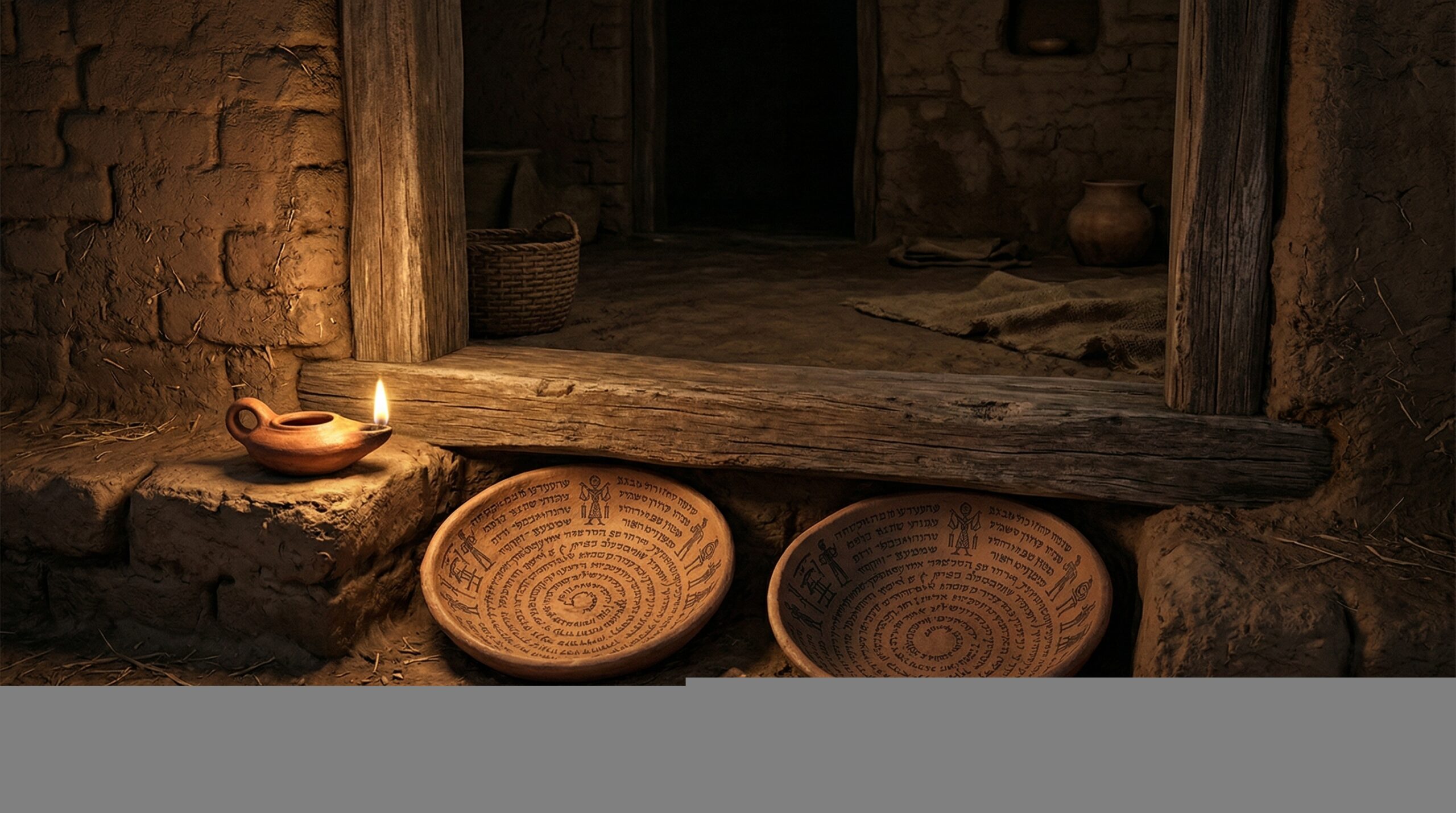
    The short answer is yes: the objects sometimes described as ancient “demon traps” were real, and archaeologists have recovered them in large numbers from late antique Mesopotamia. But the phrase is a modern dramatic gloss. These were not mechanical traps waiting to snap shut on some lurking creature. They were clay incantation bowls—ordinary-looking vessels covered in spiraling texts and buried beneath floors, near thresholds, and around homes to ward off curses, illness, misfortune, and hostile spirits.

    That tension between the sensational label and the documented reality is exactly what makes the subject so compelling. The image is vivid enough to feel cinematic: a household eating, sleeping, and raising children above a hidden bowl inscribed against demons. Yet the evidence itself is solid. These bowls belonged to real domestic ritual life. What remains less certain is how each household imagined the unseen dangers it feared, how literally those beings were understood, and how the objects functioned in day-to-day practice.

    For more context on the broader mystery, see Second Sphinx Under Giza? What the Claim Says, What the Scans Show, and What Remains Unproven and Heaven’s Gate Website Still Online? The 1997 Cult Site That Never Went Away.

    What these bowls were

    Scholars usually call them incantation bowls or magic bowls. Most surviving examples date not to the earliest ages of Babylon and Assyria, but to late antiquity—especially the Sasanian and early Islamic periods in what is now Iraq and nearby regions. They were typically made from plain clay and shaped like everyday bowls, then inscribed on the inside with text that coils inward from the rim toward the center.

    The languages matter. Many bowls are written in Aramaic dialects, including Jewish Babylonian Aramaic, Syriac, and Mandaic. That tells us this was not one isolated custom practiced by a single sect. Jewish, Christian, Mandaean, and other communities in the region seem to have used related forms of household protection, sometimes with overlapping formulas and shared ritual logic.

    The writing was the heart of the object. These bowls were not ornamental. Their force was believed to lie in the words themselves: prayers, adjurations, divine names, legal-style commands, warnings to harmful beings, and protections for named individuals. Some identify the person under threat. Some describe the affliction. Some read almost like buried injunctions, written into the fabric of the home.

    Why they were buried under houses

    A house in late antique Mesopotamia was more than shelter. It was where children were born, food was stored, bodies were tended through illness, and family life unfolded in a world where disease, infant mortality, jealousy, and sudden reversal were common facts of life. If danger could come from outside—or seep in through unseen means—then the threshold, floor, and courtyard became natural places to defend.

    Burying a bowl beneath the house did several things at once. It marked the dwelling as protected. It placed ritual power where a hostile force might be imagined to cross. And because the bowl was hidden, it may also have carried the force of secrecy: protection working silently, continuously, and out of sight.

    Some bowls were buried upside down, which is one reason modern writers so often reach for the word “trap.” The image is irresistible: the demon enters and is pinned beneath the overturned vessel. That interpretation may sometimes fit. But scholars tend to be more careful. In some cases the inverted placement may indeed have suggested confinement; in others, it may simply have been part of ritual convention. The evidence clearly shows protective use. It does not always reveal the precise picture users held in their minds.

    What people were trying to keep out

    The inscriptions reveal a world in which spiritual danger, bodily suffering, and domestic anxiety overlapped. Bowls were used against:

    • demons and malevolent spirits
    • curses sent by enemies
    • illness and wasting conditions
    • misfortune in the household
    • threats to mothers, infants, and fertility
    • harmful supernatural forces recognized in local belief

    In that sense, these bowls were not just about monsters. They addressed ordinary crises of life. A sudden fever, a dead child, a failing marriage, unexplained weakness, mounting bad luck—these were not always separated into neat modern categories of medical, emotional, and supernatural. For many ancient households, those realms bled into one another. A demon might be imagined not simply as a creature with a body and face, but as the unseen agency behind suffering.

    That is part of why the bowls still feel close to us. Their makers were trying to answer a question that has never really gone away: how do you protect a home from dangers you cannot see?

    Did people in Mesopotamia really believe in demons?

    Yes, though the answer is more layered than the modern word suggests. Ancient Mesopotamian religious life included many kinds of supernatural beings, and ideas shifted over long stretches of time. The bowl traditions emerged within a world shaped by multiple religious communities, inherited Near Eastern concepts, and local ritual practices. Demons belonged to that world, but so did angels, sacred names, exorcistic formulas, and appeals to divine authority.

    Modern retellings often flatten this into a simple contest between evil spirits and frightened believers. The historical picture is more textured. Some beings were considered actively hostile. Some were linked to specific forms of harm. Some bowl texts are less interested in narrative mythology than in immediate defense: protect this household, remove this affliction, silence this curse, keep this danger away.

    A useful comparison is the amulet, the protective prayer, or the blessed object in later traditions. The forms differ, but the impulse is familiar. People invoke sacred power to guard the threshold where ordinary life feels most vulnerable.

    What the inscriptions actually say

    Many bowl inscriptions have a strikingly formal tone. They often sound like a blend of prayer, legal decree, and curse reversal. A text may name the person to be protected, identify the spirit or threat, call upon God or angelic powers, and command the hostile force to depart. Some use the language of banishment, divorce, or binding, as though words written in clay could establish a line the enemy had no right to cross.

    Others are stranger. Some include rough drawings or bound figures at the center. Some refer to female demons associated in later discussion with sexuality, childbirth, or attacks on infants. Lilith often appears in modern summaries of the subject, but this is one area where caution matters. Certain bowls and related traditions do invoke figures associated with night danger and child-threatening harm, yet popular accounts often tidy a messier body of evidence into a single, neatly packaged demonology.

    That messiness matters. The bowls are real artifacts, but each one belongs to a particular linguistic and religious setting. There was no universal Mesopotamian handbook for trapping demons beneath the floor. There were many local practices sharing a recognizable family resemblance.

    Were they really meant to trap demons?

    Sometimes perhaps in a symbolic sense. Always, they were meant to protect.

    Readers who want to compare this story with outside reporting can start with The Met on Mesopotamian magic and Wikipedia on incantation bowls.

    The phrase “demon trap” captures part of the idea because some bowls do seem intended to bind or restrain a harmful presence. But the phrase also distorts the practice if it makes the object sound like a physical snare. These bowls worked through ritual language, sacred authority, and symbolic placement. They belong to the broader world of apotropaic magic—acts meant to turn away harm.

    That distinction does not make the history less eerie. If anything, it makes it stranger. These households were not building devices in the modern sense. They were creating a buried perimeter of written protection, a legal-spiritual barrier pressed into the earth beneath domestic life. The bowl was less a cage than a command: you may not enter here.

    What scholars are sure about

    On the central points, the evidence is strong.

    Scholars are confident that:

    • incantation bowls are genuine archaeological artifacts
    • many were placed in domestic settings
    • their inscriptions were intended to protect named people or households
    • they belong to a wider tradition of ritual defense against unseen harm
    • the practice appears across multiple religious communities in late antique Mesopotamia

    Museums and academic collections preserve many examples, and specialists have spent decades translating and comparing them. The core story is not speculative. People really did bury inscribed protective bowls in and around the places they lived.

    What remains uncertain

    The uncertainties begin when historians move from identifying the objects to reconstructing lived experience.

    Researchers still debate questions such as:

    • who wrote the bowls—trained scribes, ritual specialists, or semi-literate practitioners working from familiar formulas
    • how standardized the texts were
    • whether all inverted bowls were intended as symbolic imprisonment
    • how widespread bowl use was across different social classes
    • how closely these practices were tied to official religion versus local custom

    Archaeology also has its limits. Many bowls survive only in fragments. Some were recovered from disturbed contexts or removed long ago from their original settings. The result is a field where the broad outlines are clear, but the most vivid interpretations are not always the most secure.

    Why the bowls still feel eerie

    Part of it is visual. A clay bowl covered in spiraling script already carries the aura of a secret. Learn that it was buried beneath a floor to ward off demons, and the object begins to feel like something lifted from fiction.

    But the deeper unease comes from what the bowls record about ordinary fear. They were made in response to miscarriage, fever, envy, bad luck, sleeplessness, domestic strain, and the steady vulnerability of life before modern medicine. Their makers answered those pressures by placing protection directly into the structure of the house itself.

    For all the historical distance, that impulse is not alien. People still hang blessed objects by the door, recite prayers over children, carry charms, avoid places thought to hold bad energy, or mark a home against harm in whatever language their culture provides. The forms change. The need does not.

    Are modern retellings exaggerating the story?

    Often, yes.

    Online retellings tend to compress centuries of history into one sharp, spooky claim: ancient Mesopotamians buried bowls under their doorsteps to trap demons. There is truth in that sentence, but it strips away the context that makes the practice intelligible. These objects belonged to literate ritual cultures, not just to a ready-made horror image. They were used by Jewish, Christian, and Mandaean communities, along with others shaped by older Near Eastern traditions. They were tied to childbirth, illness, curses, household danger, and spiritual defense—not only to dramatic battles with monsters.

    Timelines are often blurred too. The phrase “ancient Mesopotamia” can make readers picture the deepest antiquity, the age of Gilgamesh or imperial Assyria. Most surviving incantation bowls are later than that. They remain fascinating, but they belong more accurately to late antique Mesopotamia.

    The real story beneath the floor

    The buried bowls of Mesopotamia are not proof that demons were objectively captured beneath ancient houses. They are proof that people believed unseen harm could be resisted, and that writing itself could become a form of defense. That is historically grounded, culturally rich, and unsettling enough without embellishment.

    If you want to keep going, Skinwalkers Caught on Camera? What Viral Videos Usually Show expands the picture from another angle.

    So if the phrase “ancient demon traps” catches the eye, the truth is both plainer and more interesting than the myth. The bowls were real. The fears behind them were real. The ritual words pressed into their surfaces were real. What remains uncertain is the invisible world their users believed surrounded them. That borderland—between household routine and supernatural threat, between buried object and living fear—is what still gives these bowls their enduring power.

  • Science Can Read His DNA, but His Religion Is Still a Mystery

    Science Can Read His DNA, but His Religion Is Still a Mystery

    Modern archaeology can do something that would have sounded impossible not long ago. It can pull ancestry from bone, reconstruct migration patterns from ancient genomes, estimate kinship, diet, and sometimes even illness from human remains buried for thousands of years. But even with all that power, science still runs into a wall when it reaches the interior life of the dead. It can tell us where a person may have come from. It cannot so easily tell us what he believed, what gods or forces he feared, or what sacred role others may have thought he carried into death.

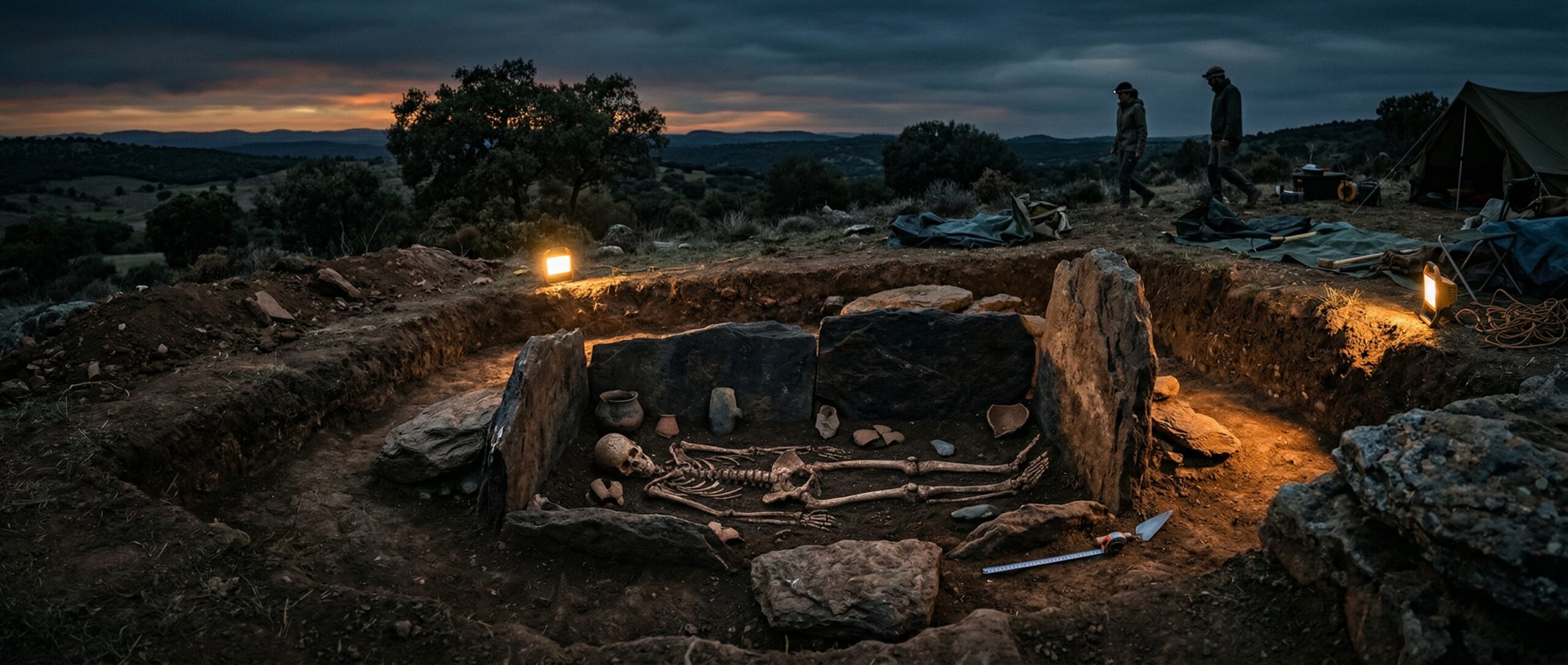
    That tension is exactly what makes the newly discussed Stone Age burial in Spain so compelling, and why the story feels bigger than a narrow archaeology update. As highlighted by Live Science in April 2026, researchers can now say strikingly specific things about the ancestry of a man buried in a prehistoric monument. Yet the deeper question, the one that most naturally grips the imagination, remains unresolved. Why was he buried there? What did the placement mean? Was he socially important, ritually marked, spiritually distinct, or simply one participant in a funerary world whose symbolic language we can only partly recover?

    This is why the story deserves more than a quick archaeology write-up. It sits at the exact threshold where hard evidence meets permanent uncertainty. Readers who have followed the long history of humanity trying to formalize contact with unseen forces or explored ancient-mystery stories where new technology reveals structures but not meaning will recognize the pattern. Science can illuminate the bones. It cannot fully restore the belief system that once surrounded them. That gap is not a failure of archaeology. It is one of the oldest and most haunting limits of human knowledge.

    The Spanish Stone Age burial is revealing precisely because it is only partially decoded

    The current fascination around this case comes from a productive kind of incompleteness. Researchers studying a man buried in a Stone Age monument in Spain have been able to extract information that speaks directly to ancestry and human movement. That alone is enough to make the find archaeologically significant. But the public imagination is not stopping at ancestry. It is moving almost immediately toward the harder question of spiritual meaning. Why this monument? Why this burial treatment? Why does this individual seem to stand out strongly enough to invite speculation about ritual identity?

    That interpretive jump is not irrational. Burial archaeology has always encouraged exactly this kind of thinking, because graves are among the few ancient contexts where material practice and symbolic meaning visibly overlap. A burial is never just a body in the ground. It is a social act, a cosmological act, and often a statement about how the living understood death, transition, ancestry, and power. The problem is that those meanings do not survive evenly. Bones may survive. Stone may survive. Grave goods may survive. The system of belief linking them together often survives only in fragments.

    That makes this Spanish case unusually instructive. It is not a story about science failing. It is a story about science succeeding powerfully in one domain while leaving another domain irreducibly open. That tension is what gives the burial its haunting quality.

    Ancient DNA can recover ancestry, movement, and kinship with astonishing power

    Ancient DNA analysis has transformed archaeology over the last two decades. Researchers can now identify broad ancestry patterns, population mixing, migration events, kin relationships, and sometimes aspects of physical biology that were once permanently out of reach. In prehistoric Europe especially, genomics has changed how scholars understand the movement of peoples, the spread of farming, and the ways communities were formed, absorbed, or replaced over millennia. In a case like this one, the genetic data helps place the buried man within a larger human map rather than leaving him as an isolated skeleton in a monument.

    That is an extraordinary achievement. For much of archaeological history, ancestry had to be inferred indirectly through material culture, burial style, cranial measurement, settlement pattern, or comparative guesswork. Now, scholars can make far more grounded claims, even when those claims still require care and context. As institutions such as Nature’s ancient DNA coverage and broader archaeological genetics literature have shown, prehistoric burials are no longer mute in the same way they once were. They speak through chemistry and sequence.

    But DNA speaks a particular language. It can tell us about descent and relatedness. It can reveal biological connection and population history. It can sometimes clarify whether a buried person was local to the region or connected to wider migration patterns. What it cannot do is leap directly from lineage to worldview. The genome is powerful evidence, but it is not a theology.

    Belief, ritual meaning, and sacred status remain much harder to reconstruct

    This is where the story becomes genuinely philosophical. Archaeology can often say what was done. It struggles more with why it was done in the exact terms the original participants would have used. A body placed in a monument may indicate reverence, status, sacrifice, ancestry worship, cosmological alignment, territorial memory, or social distinction. The material context can narrow possibilities, but it rarely translates directly into the lost language of belief.

    That is especially true in prehistory, where writing is absent. Without inscriptions, myths, prayers, liturgies, or explanatory texts, scholars must read meaning indirectly through architecture, grave treatment, artifact placement, body position, and comparison with better-documented traditions. This is rigorous work, but it remains interpretive. Even when archaeologists are highly confident that a burial had special ritual significance, the exact nature of that significance may remain permanently out of reach.

    That is why the question raised by the Live Science story is so resonant. People instinctively understand that ancestry is not identity in the fullest sense. A person is not reducible to genetic origin. Religion, status, symbolic role, and cosmological place belong to a different layer of being. That layer is often the hardest one to resurrect.

    Burials preserve social meaning long after language is gone

    Archaeologists care so deeply about burial sites because graves are among the richest surviving records of how a society understood the human person. A burial encodes choices. Was the body isolated or communal? Was it accompanied by tools, ornaments, pigments, animal remains, food offerings, or ceremonial architecture? Was it placed inside a monument that required collective labor to build? Was the location already sacred before the burial took place? Each of these questions opens a window onto value systems that would otherwise remain invisible.

    In the case of prehistoric monuments in Iberia, those questions are especially potent. Stone-built or monumental funerary spaces often imply continuity, memory, and social investment. They tell us that the dead mattered not only biologically, but symbolically. Some burials appear ordinary within such systems. Others stand out, either because of placement, treatment, or associated materials. When one individual appears unusually emphasized, it is natural to ask whether he was more than socially prominent. Was he ritually charged? Was he a mediator, an ancestor figure, a lineage founder, a priestly presence, or someone marked by a role we no longer know how to name?

    Those questions may never receive final answers, but they are not arbitrary. They emerge from the material seriousness of burial itself. The dead are often where a culture’s deepest structure becomes momentarily visible.

    Prehistoric Iberia was already a world of migration, monument building, and symbolic complexity

    Any effort to understand this burial has to place it within the wider prehistoric world of the Iberian Peninsula. Stone Age and later prehistoric Iberia was not culturally flat. It was a region shaped by long-term population movement, local continuity, exchange networks, monument construction, and ritual landscapes whose meanings were layered over generations. Megalithic traditions in parts of Spain and Portugal have long fascinated archaeologists because they suggest both engineering coordination and durable sacred geography.

    This matters because the burial is not an isolated curiosity. It belongs to a broader pattern in which monuments were used to structure relationships among the dead, the living, and the land. Institutions such as the British Museum’s prehistoric Europe collections and academic work on Iberian megalithic culture have repeatedly shown that ancient communities invested enormous energy in burial architecture that outlasted individual lifetimes. That investment suggests worldviews concerned with continuity, ancestry, place, and the social management of memory.

    So when a genetically traceable man appears in one of these settings, the question is not only who he was biologically. It is how he fit into that symbolic landscape. The monument places him inside a ritual grammar we can observe structurally but cannot fully translate.

    A burial can suggest ritual importance without ever proving exactly what that importance was

    This is the point where responsible archaeology and public imagination often separate. A dramatic burial context tempts people to supply a title. Shaman. Priest. Chief. Sacrifice. Outcast. Holy man. Chosen dead. But the evidence rarely grants such precision. More often, it supports a narrower and more careful claim: this person appears to have been treated in a way that mattered.

    That distinction is crucial. Treatment can imply importance without revealing the language of that importance. A body may be central because of ancestry, age, prestige, unusual death, inherited status, ritual office, remembered charisma, or cosmological symbolism. Modern categories can illuminate possibilities, but they can also distort them. Prehistoric communities did not necessarily divide religious and social roles the way modern observers do. What looks to us like “religion” may have been inseparable from kinship, territory, healing, seasonal cycles, or political authority.

    That is why this Spanish burial remains so compelling. It offers just enough evidence to make the spiritual question unavoidable, but not enough to settle it cleanly. The monument points toward meaning. It does not surrender the full code.

    This case shows the difference between biological identity and spiritual identity

    One of the most useful ideas this story gives readers is a distinction that extends far beyond archaeology. Biological identity and spiritual identity are not the same thing. Science can map one with increasing precision. The other must usually be inferred through behavior, symbol, testimony, and cultural context. In the contemporary world, we often collapse identity into measurable categories because measurable categories feel secure. This burial is a reminder that human meaning has never been fully measurable.

    The buried man’s ancestry matters. It tells us something real about movement, relation, and historical context. But ancestry does not explain why the living placed him where they did, or how they understood the passage he was making through death. That is a different question, one that sits closer to anthropology, comparative religion, ritual theory, and the study of symbolic systems than to genetics alone.

    That is also why ancient-mystery stories like this endure. They do not survive because science is weak. They survive because science is strong enough to reveal the boundary of its own reach. The clearer the biological picture becomes, the more visible the remaining darkness can feel.

    A cautious reading avoids romantic invention while preserving the mystery

    The best skeptical response to this story is not dismissal. It is restraint. There is no need to invent lost priesthoods, secret cults, or mystical titles to make the burial interesting. Nor is there any need to flatten the case into mere demographic data and pretend the ritual question is irrelevant. A disciplined reading can hold both truths at once: the genetics are meaningful, and the spiritual interpretation remains unresolved.

    This is the kind of caution good archaeology depends on. Overstatement is tempting because ancient burials invite projection so easily. Modern people want the dead to become characters. But responsible interpretation accepts degrees of uncertainty. It allows a burial to remain symbolically potent even when its exact meaning cannot be recovered. That is not a weakness. It is fidelity to the evidence.

    For unexplained.co, that balance is exactly the point. Ancient mystery becomes most interesting when it is not inflated beyond what the material supports. The real intrigue lies in the distance between what we can now sequence and what we may never fully know.

    The story matters because it reveals the real limits of scientific certainty

    There is a cultural lesson here that goes beyond prehistory. We live in an age that often expects enough data to dissolve uncertainty. Genomics, imaging, AI reconstruction, isotope analysis, and digital modeling have dramatically expanded what researchers can recover from the past. That expansion is real, and it is astonishing. But stories like this one remind us that certainty does not increase evenly across all kinds of questions. Some dimensions of human life leave clearer traces than others.

    Belief is one of the hardest dimensions to reconstruct because it often exists not in isolated artifacts, but in systems of use, repetition, symbolism, and shared interpretation. When those systems vanish, archaeology can sketch around them, but not always re-enter them. That makes this burial more than a niche research story. It becomes a case study in epistemic humility, which is one reason ancient-mystery readers respond to it so strongly. We can know a great deal and still not know the thing people most want to ask.

    In that sense, the mystery is not an embarrassment to science. It is part of what makes science honest. The unanswered ritual question gives the case its depth precisely because the researchers can say so much else with confidence.

    Ancient mystery often begins where excellent science reaches its interpretive boundary

    That is why this case belongs to a wider class of stories that continue to grip the public imagination. New tools reveal fresh detail about ancient monuments, burials, landscapes, and bodies, yet the final meaning of those discoveries remains partly occluded. We have seen the same tension in stories about Nazca geoglyphs found through AI-assisted detection, in debates around prehistoric ceremonial sites, and in every excavation where structure survives better than worldview.

    The result is not frustration alone. It is a more mature kind of mystery. Not the mystery of wild speculation, but the mystery of partial access. The dead can now tell us more than they could a generation ago. They still do not tell us everything. That remainder, the space between data and meaning, is where archaeology becomes quietly uncanny.

    Science can read his ancestry. It can place him in time, in relation, perhaps in movement. But his religion, if that is the right word at all, remains dimly visible only through burial context and human inference. That is enough to fascinate, enough to caution, and enough to remind us that the ancient world is not mute. It is simply not finished speaking in a language we fully understand.

    Frequently Asked Questions

    What did researchers learn from the Stone Age burial in Spain?

    They were able to recover ancestry information about a man buried in a prehistoric monument, helping place him within larger population and migration patterns in ancient Iberia.

    Why can science identify ancestry but not religion?

    Because ancestry can be traced through biological evidence like DNA, while belief systems usually have to be inferred indirectly from burial treatment, artifacts, architecture, and cultural context.

    Does a special burial prove a person had a ritual or religious role?

    No. It may suggest social or symbolic importance, but it rarely proves a precise title or religious function without stronger contextual evidence.

    Why are prehistoric burials so important to archaeologists?

    Because burials preserve choices about status, memory, symbolism, and the treatment of the dead, making them one of the richest windows into ancient social and ritual life.

    What makes this story compelling beyond archaeology news?

    It highlights a deeper truth about the past: technology can recover astonishing detail, but some of the most human questions, especially about meaning and belief, remain difficult to answer with certainty.

    This article was created using Media Blaster – Your content production specialist. Visit www.mediablaster.io for more information.

  • Menga Dolmen Medieval Reuse Mystery: Why Ancient Sacred Sites Keep Refusing to Stay in the Past

    Menga Dolmen Medieval Reuse Mystery: Why Ancient Sacred Sites Keep Refusing to Stay in the Past

    A new archaeology story out of southern Spain is drawing attention because it carries the precise kind of symbolic charge that mystery audiences instantly recognize: a 5,000-year-old megalithic monument appears to have been reused for burial in the medieval period. The site is the Menga dolmen in Antequera, one of Europe’s most significant prehistoric structures. What is newly energizing the story is the discovery that people were still placing bodies in relation to this monument thousands of years after its original construction.

    That matters because the Menga dolmen was never just an old tomb. It was a monumental sacred structure embedded in landscape, memory, and symbolism. When later communities deliberately reuse a place like that, the act raises a larger question: what kind of meaning can survive across millennia?

    What the Menga Dolmen Story Actually Says

    The current wave of coverage centers on research showing that two individuals were buried at the entrance of the Menga dolmen during the medieval era, long after the monument’s Neolithic origins. The burial positions reportedly align with the monument’s internal axis, which suggests intentionality rather than random intrusion or simple convenience.

    That detail is the key to why the story matters. It implies not merely that the monument remained physically accessible, but that it may still have carried symbolic or ritual significance many centuries after the culture that built it had vanished.

    This kind of long-duration sacred reuse is archaeologically fascinating because it reveals how monumental places can remain active in human imagination even when their original meanings are no longer fully known.

    Why Ancient Monuments Keep Being Reused

    There is a strong tendency in modern audiences to think of prehistoric monuments as sealed-off relics belonging entirely to the distant past. In reality, many ancient sites have long afterlives. They get revisited, repurposed, reinterpreted, Christianized, mythologized, feared, protected, or absorbed into later ritual systems.

    The Menga dolmen fits that wider pattern. A monument this large and symbolically charged does not simply disappear from cultural memory. Even if the original builders’ intentions are forgotten, the site itself keeps exerting gravity.

    That is one reason stories like this feel so potent. They hint that landscapes remember, even when societies change.

    Why the Medieval Burials Matter So Much

    The burials are important because they suggest a relationship rather than an accident. When bodies are placed in meaningful alignment with a monument’s architecture, archaeologists naturally begin asking whether the people involved saw the site as sacred, ancestral, protective, prestigious, or spiritually powerful in some transformed way.

    The answer may not be fully recoverable. But the act itself still tells us something profound: later communities did not treat the dolmen as irrelevant stone. They treated it as a place that still mattered.

    That is where mystery culture immediately leans in. If meaning survived, what kind of meaning was it?

    What the Genetic and Chronological Details Add

    Reporting around the new study also highlights radiocarbon dating that places the burials between roughly the 8th and 11th centuries CE, along with degraded DNA evidence from one individual suggesting a complex ancestry profile with European, North African, and Levantine connections.

    Those details matter because they anchor the story in the real historical complexity of medieval Iberia. This was not an isolated cultural zone. It was a region shaped by movement, layered identities, religious transitions, and political contestation. In that context, the reuse of a prehistoric monument becomes even more interesting, because it may reflect a society already comfortable inhabiting multiple historical and symbolic worlds at once.

    The monument’s second life, in other words, is happening inside a period of cultural mixing rather than cultural simplicity.

    What Skeptics and Archaeologists Would Say

    Serious archaeologists would caution against turning every act of monument reuse into mystical continuity. A later burial at an ancient site does not automatically prove that specific Neolithic beliefs survived intact into the medieval period. Symbolic reuse can happen for many reasons: territorial prestige, local legend, perceived sanctity, practical landmarking, social status, or transformed spiritual meaning.

    That caution matters. The most responsible interpretation is not that medieval people secretly preserved the exact original cult of the dolmen, but that they recognized the place as meaningful enough to reuse deliberately.

    Even that more restrained conclusion is still extraordinary in cultural terms.

    Why This Story Resonates Beyond Archaeology

    For The Unexplained Company, the power of the Menga dolmen story lies in what it reveals about sacred persistence. Some places do not stop mattering simply because the civilization that built them is gone. They remain active as containers for new meanings, new rites, and new identities.

    This is one of the deepest recurring themes in ancient-mystery culture. Monuments are not inert. They accumulate symbolic afterlives.

    That is also why stories like this spread beyond archaeology into hidden-history and mystery audiences. People are less interested in the technical fact of reuse than in the emotional implication that a place can stay spiritually alive across thousands of years.

    How This Fits the Larger Hidden-History Pattern

    The Menga dolmen story fits with the same wider pattern we have seen in our Great Pyramid corridor coverage, our article on the second Sphinx claim, and our feature on AI-discovered megalithic analogues. The common thread is not “ancient aliens” or easy conspiracy. It is the recognition that old monuments continue to generate new meaning because they were built to outlast ordinary historical scales.

    That durability changes how people relate to them. Each era does not encounter the monument fresh. It encounters it already heavy with previous interpretation.

    Final Assessment

    The Menga dolmen medieval reuse mystery is compelling because it shows how ancient monuments can remain culturally active long after their original builders are gone. The medieval burials do not prove supernatural continuity or preserved Neolithic doctrine, but they do suggest that the dolmen retained enough symbolic power to shape human behavior across an astonishing span of time.

    That is more than an archaeological footnote. It is a reminder that some places never fully become “the past.”

    Frequently Asked Questions

    What is the Menga dolmen?

    The Menga dolmen is a major Neolithic megalithic monument in Antequera, Spain, known for its size, age, and ritual significance.

    What is new about the current research?

    The key finding is that two medieval-era burials were placed at the monument in a way that appears deliberate, suggesting symbolic reuse of the site thousands of years after it was built.

    Does this prove ancient beliefs survived unchanged?

    No. It shows that the monument likely retained meaning, but it does not prove medieval communities preserved the exact original Neolithic religious system.

    Why does this story attract mystery audiences?

    Because it suggests that certain ancient monuments remain symbolically alive across vast stretches of time, which feeds questions about sacred continuity, memory, and lost meanings.

    Related Articles:

    This article was created using Media Blaster – Your content production specialist. Visit www.mediablaster.io for more information.

  • Great Pyramid Secret Corridor Speculation: Why One Sealed Space Can Reignite Every Hidden-Chamber Theory

    Great Pyramid Secret Corridor Speculation: Why One Sealed Space Can Reignite Every Hidden-Chamber Theory

    Fresh speculation is building around the Great Pyramid of Giza after renewed reporting on a narrow internal corridor and the possibility that it could lead to a hidden chamber connected to Khufu. Stories like this always spread fast, but this one is especially potent because it combines one of the world’s most iconic monuments with a near-perfect mystery trigger: a sealed space inside a structure many people already believe still contains undiscovered secrets.

    That is why the current wave of attention matters. Even before any new chamber is confirmed, the combination of robots, inaccessible passages, hidden voids, and sealed barriers is enough to reactivate the entire hidden-history imagination around Giza. In the modern media environment, that kind of setup does not stay archaeological for long. It becomes conspiracy content, mystery content, and symbolic-content bait all at once.

    What the Great Pyramid Corridor Story Actually Says

    The latest round of coverage centers on renewed reporting that a narrow corridor or internal passage in the Great Pyramid may extend toward a still-inaccessible area, and that specialized robotic equipment is being used to explore the structure more carefully. Some accounts frame the corridor as a possible route to a hidden chamber, with the strongest versions of the story implying that the sealed endpoint could conceal something historically significant.

    This is exactly the type of claim that travels well because it offers both a real archaeological hook and a mythic payoff. A corridor inside the Great Pyramid is already compelling. A corridor that may terminate in a still-hidden chamber instantly becomes global mystery fuel.

    Even cautious readers can understand why. Giza is one of the few sites on Earth where the public is always willing to believe one more astonishing discovery might still be waiting behind stone.

    Why Giza Keeps Producing Stories Like This

    The Great Pyramid exists in a unique symbolic category. It is simultaneously one of the most studied ancient structures in the world and one of the most mythologized. That dual status makes it unusually vulnerable to recurring waves of speculation.

    Every time researchers identify a new void, corridor, anomaly, shaft, or inaccessible architectural feature, the story enters a cultural machine much larger than archaeology itself. Some audiences see genuine scientific progress. Others see confirmation that major discoveries have long been hidden or ignored. Still others immediately leap toward alternative-history ideas involving lost civilizations, forbidden chambers, sacred technology, or suppressed knowledge.

    This does not mean the science is invalid. It means the setting is almost too symbolically loaded to stay contained within normal reporting.

    Why the “Sealed Barrier” Detail Is So Powerful

    The strongest viral element in the current story is not just the corridor — it is the idea of a sealed endpoint. The moment a report includes words like “sealed stone,” “blocked passage,” or “hidden chamber,” the narrative takes on a much larger mythic charge.

    That is because a sealed barrier suggests intentional concealment. And intentional concealment is where mystery culture thrives.

    In public imagination, a corridor without an endpoint is architecture. A corridor ending in a sealed barrier is a promise.

    It implies that something is being kept apart from the visible world. Whether that something is a structural dead end, a construction feature, a void, a ritual chamber, or nothing of dramatic importance at all becomes almost secondary. The symbolism does most of the work.

    What Archaeologists and Skeptics Would Say

    The strongest skeptical response is straightforward: unknown space inside a pyramid does not automatically imply hidden treasure, revolutionary knowledge, or suppressed history. Ancient monumental structures are complex. Voids, blocked passages, structural spaces, and inaccessible internal features can exist for many reasons, including engineering, staging, load management, construction sequence, or ritual design.

    That is why serious archaeological interpretation moves more slowly than viral speculation. The fact that a space is hidden does not tell us what it means.

    Skeptics would also point out that Giza’s most dramatic stories tend to escalate faster than the evidence warrants. Once a corridor is discussed publicly, the internet begins writing its ending before the science is finished.

    That pattern is familiar across multiple Egypt-related mystery cycles.

    Why This Story Still Matters

    For The Unexplained Company, the importance of this story is not just whether a new chamber is eventually confirmed. It is what the reaction reveals about the ongoing power of ancient-mystery culture. Giza remains one of the most effective story engines in the entire unexplained world because it sits at the crossroads of archaeology, myth, empire-scale symbolism, and public distrust of closure.

    People do not want the Great Pyramid to feel complete. They want it to remain partially unreadable.

    That desire matters because it keeps every new architectural discovery from being interpreted neutrally. The site is simply too mythic for that. A corridor is never just a corridor for long.

    How This Fits the Larger Hidden-History Pattern

    This corridor story fits neatly alongside other ancient-site narratives that gain intensity not because the evidence is overwhelming, but because the symbolic setting is so potent that even small discoveries feel world-changing. We have seen similar dynamics in our recent coverage of the second Sphinx claim, in our article on AI-discovered megalithic analogues in Israel, and in our coverage of the Nazca geoglyph discoveries.

    In each case, the pattern is the same: archaeological or quasi-archaeological discovery enters public discourse, uncertainty expands, and audiences begin layering symbolic meaning onto incomplete evidence.

    That does not make the stories worthless. It makes them culturally revealing.

    Final Assessment

    The current Great Pyramid corridor speculation is significant because it shows how quickly archaeological reporting can transform into a larger mystery event once the ingredients are right. A hidden passage, a robotic probe, a sealed barrier, and the Great Pyramid itself are enough to ignite enormous imagination before any final answer arrives.

    Maybe the corridor leads to something extraordinary. Maybe it leads to something architecturally important but far less cinematic. Either way, the deeper story is already unfolding in public: Giza remains one of the last places on Earth where even a narrow corridor can still feel like a doorway into the impossible.

    Frequently Asked Questions

    What is the Great Pyramid corridor story about?

    It centers on renewed speculation that a narrow internal corridor in the Great Pyramid may lead to a hidden chamber, with robotic tools reportedly being used to inspect inaccessible areas more closely.

    Has a hidden chamber actually been confirmed?

    Not at this stage. The current story is driven by speculation around internal architecture and the possibility of unexplored space, not by a fully confirmed public discovery of a major chamber.

    Why do stories like this spread so fast?

    Because the Great Pyramid is one of the world’s most symbolically loaded sites. Even small new discoveries there tend to get interpreted through mystery, conspiracy, and hidden-history frameworks.

    What is the skeptical view?

    Skeptics and archaeologists would stress that hidden spaces inside ancient monuments can have many ordinary explanations, and that a corridor or sealed barrier does not automatically imply treasure, secrets, or suppressed history.

    Related Articles:

    This article was created using Media Blaster – Your content production specialist. Visit www.mediablaster.io for more information.

  • Antarctica Pyramid Conspiracy Revival

    Antarctica Pyramid Conspiracy Revival

    A pyramid-shaped Antarctic mountain is back in the viral spotlight, once again triggering claims about lost civilizations, alien bases, and hidden history beneath the ice. The basic image is irresistible: a peak in the Ellsworth Mountains that appears to have clean, pyramid-like faces, just ambiguous enough to let the imagination sprint. According to Indy100, this story is drawing attention well beyond its original niche.

    This is classic unexplained internet fuel. The shape itself is real. The leap from unusual geology to buried civilization is where the myth machine kicks in. Media coverage this week has reignited the debate by juxtaposing the viral visual with expert explanations that it is a natural mountain shaped by erosion.

    What Happened

    This is less a new discovery than a new cycle of belief around an old visual. But that’s exactly why it works: old mysteries become new trends whenever the image is compelling enough. Reporting from Daily Mail adds context to how the story is being framed.

    • Indy100 and other outlets revived attention around the so-called Antarctic pyramid in late March 2026.
    • The renewed wave appears tied to social reposting, conspiracy channels, and fresh articles treating the formation as a viral mystery.
    • The mountain is in the Ellsworth range near Patriot Hills, and the object in question has been circulating online for years, but the current burst gives it new life.
    • Scientists cited in coverage say the shape is a natural result of erosion, particularly freeze-thaw processes acting on exposed rock over long periods.
    • Conspiracy communities are treating the resurfaced imagery as evidence of a hidden ancient civilization, secret Antarctic knowledge, or buried nonhuman architecture.

    What Evidence Exists

    Here’s what is known: A pyramid-shaped Antarctic mountain is back in the viral spotlight, once again triggering claims about lost civilizations, alien bases, and hidden history beneath the ice. The basic image is irresistible: a peak in the Ellsworth Mountains that appears to have clean, pyramid-like faces, just ambiguous enough to let the imagination sprint.

    The strongest evidence in stories like this is often not a final proof object, but a mixture of witness accounts, media framing, prior folklore, and the cultural weight of the subject itself. That is why separating verified facts from interpretation matters.

    Authoritative coverage and primary reporting should stay central to the analysis, including sources such as:

    What Skeptics or Investigators Say

    Researchers and skeptics have argued that unexplained stories often grow fastest when the emotional framing is stronger than the evidentiary record. That does not mean the story is meaningless. It means the burden of proof and the burden of interpretation are not the same thing.

    The most widely cited explanation is usually the least exotic one that still fits the known facts. But unresolved cases persist because the simplest explanation does not always feel emotionally complete to the audience following them.

    Why It Matters

    It shows how visual ambiguity powers conspiracy culture
    People don’t need strong evidence when the image feels archetypal. A pyramid shape in Antarctica instantly connects to Egypt, Atlantis, secret history, and forbidden archaeology.

    Antarctica remains one of the internet’s ultimate mystery maps
    Remote, frozen, militarily and scientifically controlled, and inaccessible to most people, Antarctica naturally attracts hidden-base narratives.

    The story thrives in the gap between geology and myth
    Experts saying “it’s erosion” doesn’t kill the mystery; for many audiences it just becomes the official cover story.

    This is reusable evergreen content
    Unlike one-day UFO clips, Antarctic mystery stories recur. They can be tied to ancient civilization theories, Google Earth mysteries, climate change, and government secrecy.

    It reveals how conspiracy stories mutate rather than disappear
    The same mountain can be framed as alien, Atlantean, pre-flood, Nazi, or deep-state depending on what the culture is primed to believe that week.

    The Bigger Unexplained Angle

    What gives this topic staying power is not just the headline claim, but the way it plugs into deeper themes: secrecy, folklore, institutional mistrust, symbolic fear, wonder, and the human tendency to keep revisiting mysteries that never fully resolve.

    That is exactly why the unexplained-wordpress standard requires more than a quick summary. Strong articles need context, internal discovery, authoritative links, explicit uncertainty, and sections that can stand on their own for readers and AI systems alike.

    Readers interested in the broader pattern should also see The Pentagon UFO Report and What It Still Can’t Explain, which connects this story to a larger unexplained.co theme.

    Frequently Asked Questions

    What is this story about?

    A pyramid-shaped Antarctic mountain is back in the viral spotlight, once again triggering claims about lost civilizations, alien bases, and hidden history beneath the ice. The basic image is irresistible: a peak in the Ellsworth Mountains that appears to have clean, pyramid-like faces, just ambiguous enough to let the imagination sprint.

    Why is this getting attention now?

    It shows how visual ambiguity powers conspiracy culture.

    People don’t need strong evidence when the image feels archetypal. A pyramid shape in Antarctica instantly connects to Egypt, Atlantis, secret history, and forbidden archaeology.

    Is Antarctica Pyramid Conspiracy Revival proven?

    No. These articles are written to separate what is verified, what is claimed, and what remains uncertain. Mystery does not automatically equal proof.

    What should readers focus on?

    Focus on the evidence, the source quality, the skeptical or conventional explanations, and why the story still resonates even when certainty is missing.

    Related Articles

    This article was created using Media Blaster – Your content production specialist. Visit www.mediablaster.io for more information.

  • Second Sphinx at Giza Claim: What the Viral Radar Story Says — and What Experts Reject

    Second Sphinx at Giza Claim: What the Viral Radar Story Says — and What Experts Reject

    The “second Sphinx” story at Giza is back, driven by viral claims that remote-sensing or radar-style analysis has revealed a buried counterpart to the Great Sphinx — perhaps even part of a much larger hidden complex beneath the plateau. It is the kind of theory the internet loves: monumental, ancient, visually dramatic, and just close enough to scientific language to sound plausible. But the reason the story matters is not that a second Sphinx has been confirmed. It is that the claim exposes the constant collision between hidden-history hunger and expert caution.

    Here is the clearest answer: there is currently no confirmed archaeological evidence proving that a second Sphinx lies buried at Giza. The viral claim has been amplified by social media, tabloids, and speculative interpretation of data, while archaeologists and geophysics experts have pushed back strongly on the idea that such a discovery has been demonstrated.

    What the Second Sphinx Theory Actually Claims

    The central theory is that there may be a hidden monument, mirror structure, or buried counterpart to the Great Sphinx somewhere on or beneath the Giza Plateau. In stronger versions of the claim, that possible structure is linked to underground chambers or even a larger “megastructure” narrative that expands the mystery far beyond a single monument.

    This theory spreads well because symmetry is persuasive. The idea that the most famous ancient site on Earth might hide a matching or forgotten monumental partner feels intuitively mythic and dramatically unfinished.

    Why Giza Is So Vulnerable to Viral Mystery Claims

    Giza occupies a unique place in global imagination. It is both one of the most studied archaeological landscapes in the world and one of the most mythologized. That combination makes it ideal terrain for recurring hidden-history claims. Every anomaly, shadow, alignment, or interpretive gap can be reimagined as evidence that mainstream archaeology has missed something world-changing.

    This is why the second Sphinx theory does not need airtight proof to thrive. It only needs enough ambiguity to reactivate the old fantasy that the most famous site on Earth still has a giant secret waiting under the sand.

    That appetite has been fueled for decades by documentaries, speculative books, and pop-history media that frame Egypt as a place where “official” knowledge is always one layer away from collapse. Mainstream references such as Britannica’s overview of the Great Sphinx and the archaeological work discussed by outlets like Smithsonian Magazine show why the burden of proof for any second-Sphinx claim is so high.

    What Experts Are Pushing Back Against

    Archaeologists and geophysics specialists have objected not because they oppose dramatic discoveries, but because the evidentiary threshold for a claim this large is enormous. Remote-sensing interpretation can be useful, but it is not the same thing as confirmed excavation. Suggestive shapes, subterranean anomalies, or speculative visualizations do not automatically translate into a buried monumental structure.

    Researchers and skeptics have argued that viral retellings often strip away technical nuance. What begins as a tentative anomaly or interpretive possibility gets repackaged online as if a discovery has already been made and only stubborn institutions are refusing to admit it.

    That repackaging is a core part of the story.

    Why the Theory Keeps Returning

    The strongest evidence for why this theory survives is psychological rather than archaeological. People want Giza to remain unfinished. They want the possibility that something immense still lies hidden at the center of the world’s most famous ancient site.

    That desire is intensified by the scale of the plateau itself. Monuments this large create a natural feeling that they must contain more than is visible. Once that expectation exists, every speculative claim becomes a candidate for belief.

    It is the same dynamic we have seen in other ancient-mystery stories, including our article on AI-identified stone-circle analogues in Israel and our coverage of newly identified Nazca geoglyphs in Peru: real archaeology, interpretive uncertainty, and public imagination do not stay neatly separated for long.

    What Makes This Story Useful Even if It’s Wrong

    For The Unexplained Company, the second Sphinx story matters not because it is proven, but because it reveals how hidden-history culture works. It shows how quickly technical ambiguity gets transformed into certainty when the setting is iconic enough and the symbolic payoff is large enough.

    The theory also illustrates an important divide between mystery media and archaeological method. Mystery media rewards possibility. Archaeological method rewards confirmation. Viral conflict emerges whenever those systems collide.

    Why This Story Still Fascinates People

    In the end, the second Sphinx claim persists because it offers something most ancient-history stories do not: the fantasy that a world-famous site might still contain a discovery so large it would force a rewrite of what everyone thinks they know. Whether that fantasy is justified is another question entirely.

    But fascination does not require proof. It requires symbolic power — and Giza has more of that than almost any place on Earth.

    FAQ

    Frequently Asked Questions

    Is there a confirmed second Sphinx at Giza?

    No. There is currently no confirmed archaeological evidence proving that a second Sphinx has been discovered at Giza.

    Why did the claim go viral?

    Because it combines ancient Egypt, hidden-history speculation, scientific-sounding remote sensing, and the promise of a discovery dramatic enough to challenge mainstream assumptions.

    What are experts saying?

    Experts have pushed back by emphasizing that interpreted anomalies or suggestive imaging are not the same as a confirmed excavation or verified buried monument.

    Why do stories like this keep coming back?

    Because iconic sites like Giza invite the belief that something enormous remains hidden. The setting itself sustains recurring mystery narratives.

    Related Articles:

    This article was created using Media Blaster – Your content production specialist. Visit www.mediablaster.io for more information.

  • Louisiana Underwater Lost City / Pyramid Claim

    Louisiana Underwater Lost City / Pyramid Claim

    A resurfaced claim about a possible lost city off the Louisiana coast is getting fresh traction in late March 2026. Retired architect and amateur researcher George Gelé says sonar images collected over decades show submerged structures near the Chandeleur Islands, including a pyramid-like formation roughly 280 feet tall, potentially dating back more than 12,000 years.

    The most sensational details are exactly why the story is spreading: an underwater metropolis, a pyramid allegedly tied geographically to Giza, and local reports that compasses and electronics behave strangely near the site.

    What’s Happening

    • Coverage from AOL/New York Post and The Daily Beast pushed the long-running claim back into the 2026 news cycle.
    • Gelé says the site sits roughly 50 miles east of New Orleans, with structures around 30 feet below the water surface and buried under additional sediment.
    • He has reportedly argued that granite blocks appear present in a region where granite does not naturally occur.
    • A local fisherman cited in coverage claimed instrument problems near the site, including spinning compasses and electronics cutting out.
    • The major caveat: the claims have not been validated in peer-reviewed literature, and no mainstream archaeological confirmation has been published.

    Why It Matters

    1. It is basically an American Atlantis story

    Lost civilization narratives always travel, and this one adds Gulf Coast mystery, pyramid symbolism, and magnetic anomalies.

    2. It blends archaeology with classic paranormal motifs

    Once compasses start spinning, the story stops being just archaeology and becomes an anomaly narrative.

    3. It is highly debatable, which makes it sticky

    Skeptics can point to exaggeration, sonar over-interpretation, and lack of peer review. Believers can point to repeat local lore, site persistence, and the emotional power of a hidden ancient city.

    4. It taps directly into prehistory revisionism

    Any claim of advanced structures dating to 12,000 years ago immediately plugs into bigger debates about lost civilizations, cataclysms, and suppressed history.

    Related Articles:

    This article was created using Media Blaster – Your content production specialist. Visit www.mediablaster.io for more information.

  • Bronze Age Treasure Contains Metal From Space: The Villena Mystery

    Bronze Age Treasure Contains Metal From Space: The Villena Mystery

    Hidden in a small city museum in southeastern Spain lies a Bronze Age hoard that has puzzled archaeologists for decades. The Treasure of Villena contains 66 objectsmostly gold and silverbut two small iron pieces have recently been revealed to be made from meteoritic iron, material that originated from beyond Earth.

    In 1963, a civil engineer digging foundations near the town of Villena, in the province of Alicante, Spain, made a discovery that would captivate archaeologists for generations. Buried beneath the earth were 66 objects dating to roughly 14001200 BC, a period when bronze dominated weapons and tools and iron was still extremely rare on Earth.

    Most of the treasure-gold and silver jewelry, vessels, and decorative pieces were stunning enough. But recent analysis has revealed something extraordinary: two small iron objects are made from meteoritic iron, material that literally fell from space.

    The Discovery

    The Treasure of Villena was discovered in 1963 and is now housed at the Archaeological Museum Jose Maria Soler in Villena, Spain. The collection includes gold and silver artifacts that showcase exceptional Bronze Age metallurgy.

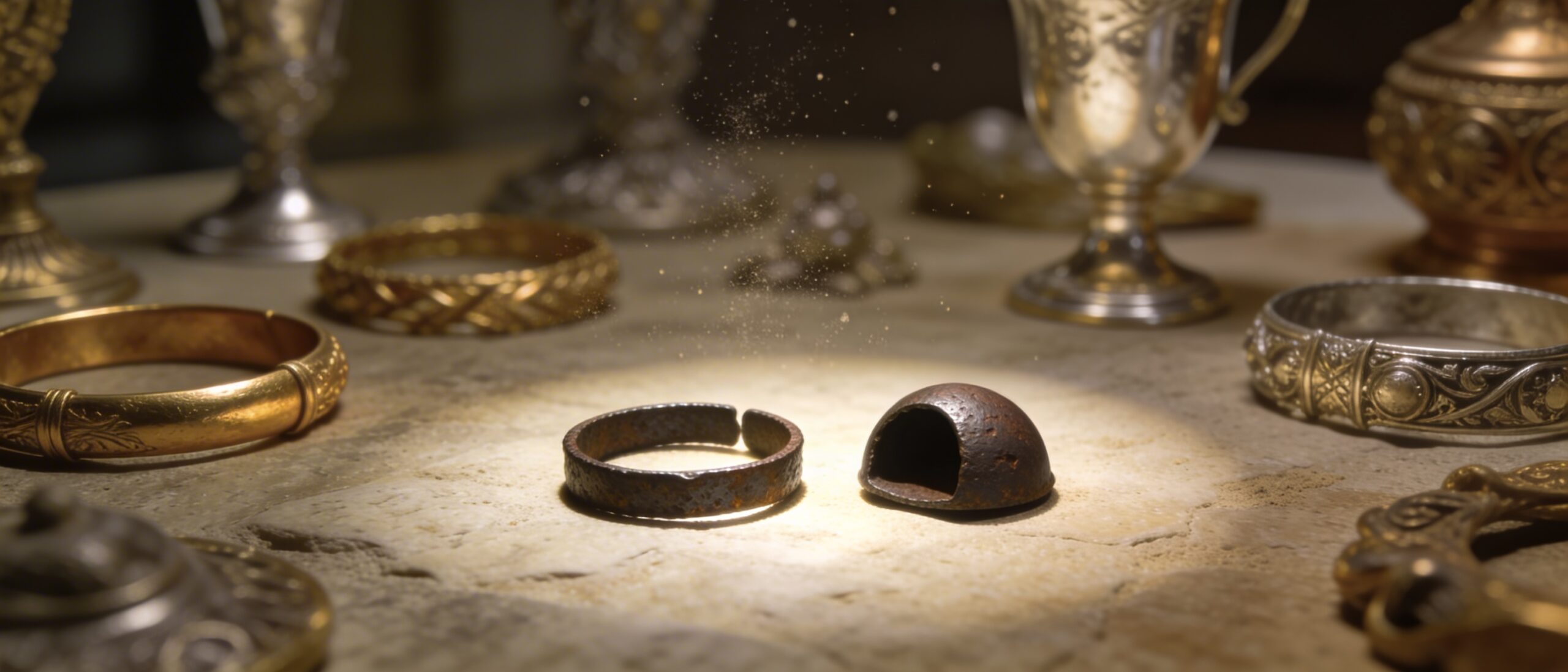
    But it is two iron pieces, a small bracelet and a hollow hemisphere that have revolutionized our understanding of ancient metalworking. Using mass spectrometry, researchers confirmed these objects contain the chemical signature characteristic of meteoritic iron.

    As Smithsonian Magazine reports, the iron originated from a meteor that hit Earth approximately one million years ago.

    The Science

    The team, led by researcher Salvador Rovira-Llorens at the Instituto de Historia in Madrid, compared the chemical composition of these objects with known meteoritic samples and terrestrial iron ores. The results were clear: high nickel content and specific trace elements matched meteoritic sources rather than typical Earth iron ores.

    The findings, published in Trabajos de Prehistoria, make the Villena treasure the first confirmed meteoritic iron artifacts in Iberian archaeology.

    As NDTV reports, this discovery reveals that Bronze Age metallurgists were working with material that literally fell from the skyunknown to them, but prized for its unusual appearance and properties.

    Why Meteoritic Iron Matters

    This discovery connects ancient cultures to cosmic events in ways were only beginning to understand:

    Ancient Space Technology: The Bronze Age metallurgists who created these objects were working with material from beyond Earth. They had no idea what they were working with, but they recognized it was special.

    Status Symbols: Meteoritic iron was likely considered more valuable than gold in Late Bronze Age society. The metals mysterious origin and unusual properties would have made it fit for royalty and ritual objects.

    Global Pattern: This connects to other famous meteoritic iron artifacts, including the dagger in Tutankhamuns tomb and various Iron Age objects across Eurasia and North Africa.

    Rewrites History: It demonstrates that ancient peoples had access to and valued materials from beyond Earth, thousands of years before the Iron Age began.

    The Bigger Picture

    The Villena treasure is not alone. Across the ancient world, meteoritic iron was used for prestigious objects:

    • The famous dagger in King Tuts tomb was made from meteoritic iron
    • Hittite texts reference iron as “metal from heaven”
    • Ancient Mesopotamian cultures prized meteoritic iron for royal objects

    These findings suggest that before humans learned to smelt iron from ore, the only source of this metal was fallen meteorites. The scarcity of these space rocks made them extraordinarily valuable.

    The Treasure of Villena now stands as evidence that ancient peoples were, in a sense, collecting pieces of the cosmos long before we understood where they came from.

    Learn more about this discovery at the History Blog or visit the Archaeological Museum Jose Maria Soler in Villena, Spain.

    Related Articles:

  • Unmasking the Sea Peoples: The 1177 BCE Apocalypse and the Collapse of Bronze Age Empires

    Unmasking the Sea Peoples: The 1177 BCE Apocalypse and the Collapse of Bronze Age Empires

    When the Bronze Age came crashing down, it wasn’t a quiet decline but a catastrophe so profound that historians sometimes describe it as an apocalypse. Around 1177 BCE, the interconnected world of palaces, scribes and merchants stretching from Greece and Anatolia to Egypt disintegrated. Cities burned, trade routes vanished and writing systems vanished. In modern popular culture this calamity is often blamed on enigmatic raiders called the Sea Peoples. Conspiracy theorists weave tales of lost civilizations, alien weapons or Atlantean refugees, while archaeologists struggle with fragmentary evidence. This article explores what we actually know about the Sea Peoples, why the Bronze Age world collapsed, and how the mystery has become a magnet for speculation.

    The Bronze Age World and the Stage for Collapse

    To appreciate the shock of 1177 BCE, it helps to picture the Late Bronze Age as a “globalized” network of powerful kingdoms. From c. 1500 to 1200 BCE, empires like Egypt, the Hittites and Mycenaean Greece maintained diplomatic alliances, exchanged letters and arranged royal marriages. Their economies depended on long‑distance trade: copper from Cyprus mixed with tin from as far away as Afghanistan to make bronze, while luxury goods and ideas flowed along sea lanes. This prosperity fostered monumental architecture, sophisticated writing systems and cosmopolitan port cities.

    Yet this network was fragile. Scholars investigating the Bronze Age collapse note that between c. 1250 and 1150 BCE major cities were destroyed and writing systems disappeared, ushering in a “dark age” in which iron replaced bronze and trade relations were disrupted. Proposed causes range from natural catastrophes (earthquakes), climate change–induced drought and famine, internal rebellions and invasions, to a domino‑like systems collapse when trade routes failed. The Sea Peoples were once regarded as the primary culprits, but modern scholarship sees them as one piece of a larger puzzle.

    Who Were the Sea Peoples?

    The term “Sea Peoples” is not found in ancient texts; it was coined by 19th‑century Egyptologist Gaston Maspero to describe a confederacy of seaborne raiders mentioned in Egyptian inscriptions. Ancient records never identify them collectively, only listing individual groups. Egyptian sources describe a confederacy of tribes—Sherden, Shekelesh, Lukka, Tursha, Akawasha and others—who attacked coastal towns across the Mediterranean between roughly 1276 and 1178 BCE. These groups are known chiefly through battle narratives carved on Egyptian monuments: steles and temple reliefs speak of foes who “came from the sea in their war ships and none could stand against them.” The nationality of the Sea Peoples remains a mystery; scholars have proposed connections to Etruscans, Philistines, Mycenaeans, Sardinians or Minoans, but no ancient inscription explains their origins.

    Nine Groups and Two Battles

    Our main evidence comes from two Egyptian pharaohs. Merneptah (r. 1213 – 1203 BCE) recorded that in his fifth regnal year (around 1207 BCE) he fought invaders identified as the Shardana, Shekelesh, Lukka, Teresh and Ekwesh. Ramesses III (r. 1186 – 1155 BCE) later claimed to have defeated a coalition that included the Shardana, Shekelesh, Tjekker, Denyen, Weshesh and Peleset. Together these inscriptions list nine distinct groups, two of which appear in both lists. Ramesses III’s temple at Medinet Habu preserves reliefs showing naval battles: ships with high prows, feathered‑helmeted warriors and Egyptian soldiers firing arrows from the shore. An inscription there boasts that “the foreign countries made a conspiracy in their islands” and that no land could withstand their arms.

    These records are often interpreted as two waves of attacks—one circa 1207 BCE, another around 1177 BCE—that battered Egypt and neighboring states. The first may correspond to an invasion allied with Libyans; the second, recorded in year eight of Ramesses III, depicts a massive sea battle in which Egypt repelled the attackers. The Egyptians claimed victory, but other civilizations were less fortunate: archaeological evidence shows that cities like Hattusa (capital of the Hittite empire) and Megiddo in Canaan were destroyed.

    Migrants, Mercenaries or Pirates?

    Because the Sea Peoples vanish from history as suddenly as they appear, scholars debate who they were and why they attacked. Egyptian texts sometimes depict them with families in tow, suggesting they were not just raiders but migrants or refugees. One theory holds that they originated in the western Mediterranean—perhaps the Aegean, Sardinia or even the Iberian Peninsula—and were driven eastward by drought and climate change. Linguistic hints link the Lukka to Lycia in southwestern Turkey and the Sherden to Sardinia, while the Peleset are usually identified with the Philistines. Scholars such as Eric Cline emphasize that there is no consensus; the confederacy may have comprised displaced peoples from multiple regions who banded together as they moved along the eastern Mediterranean.

    Others see the Sea Peoples as mercenaries. Ramesses II’s inscriptions mention them serving both with and against Egypt. They may have been skilled seafarers hired by rival powers, switching loyalties as opportunities arose. The discovery of a letter from the king of Ugarit pleading for help against unknown attackers indicates that coastal states faced maritime threats they could not identify. In this reading, the Sea Peoples were part of a broader wave of upheaval rather than its root cause.

    Multiple Stressors: Drought, Earthquakes and Systems Collapse

    Even if seaborne raiders contributed to the violence, modern research suggests that the Bronze Age collapse resulted from a “perfect storm” of disasters. A megadrought between roughly 1250 and 1100 BCE left the eastern Mediterranean parched, as shown by sediment cores from the Sea of Galilee. Famine years correspond to the period when Egyptian texts record invasions; Cline argues that desperate climate refugees might have been among the Sea Peoples. A rapid‑fire series of earthquakes between 1225 and 1175 BCE shook the region. When combined with epidemics, internal rebellions and the loss of trade networks that supplied bronze‑making materials, these crises overwhelmed Bronze Age systems.

    This broader context matters. The American Society of Overseas Research notes that the Sea Peoples are known primarily from two Egyptian inscriptions and that archaeologists have long overemphasized their role. Eric Cline, author of 1177 BC: The Year Civilization Collapsed, argues that they became scapegoats; he doubts they were responsible for all the destructions attributed to them. Instead, the fall of empires likely resulted from interconnected failures—natural, economic and social—that created cascading collapses. In this sense, the Sea Peoples were as much victims of the Bronze Age collapse as they were agents of it.

    Conspiracy Theories and Speculative Connections

    The mystery surrounding the Sea Peoples has fueled a cottage industry of conspiracies. Because they appeared suddenly, left no written records and seem to have brought down civilizations, fringe theorists see them as evidence of lost technologies or aliens. Some claim the Sea Peoples were survivors of Atlantis, citing Plato’s tale of a seafaring civilization that sank beneath the waves. Others draw on modern television shows about “ancient aliens,” suggesting advanced beings equipped the Sea Peoples with otherworldly weapons. A few point to the absence of graves and propose that they were time travellers or interdimensional beings.

    While entertaining, these theories lack evidence. The term “Sea Peoples” is itself a modern construct; ancient Egyptians merely described unknown groups who came by sea. The reliefs at Medinet Habu show ordinary warships, not anti‑gravity craft. There are no inscriptions about alien interventions. Archaeologists find that Bronze Age collapses can be explained through familiar factors: climate change, earthquakes and human migration. Even the dramatic rumours of mysterious fields or energy weapons (inspired by modern podcasts) can be traced to misreadings of battle scenes where swirling smoke and churning waves create visual confusion. Conspiracy‑minded readers may also encounter long‑tail keyword searches like “Sea Peoples aliens,” “Sea Peoples Atlantis,” “ancient apocalypse 1177 BC,” or “Bronze Age collapse conspiracy theory.” Exploring these ideas can be fun, but they should be distinguished from what the archaeological record actually supports.

    Aftermath and Legacy

    Despite the devastation, the collapse did not spell the end of civilization. In the centuries following 1177 BCE, new cultures emerged. The so‑called Greek Dark Age saw the rise of oral traditions that later inspired Homeric epics. The Iron Age ushered in cheaper and stronger tools and weapons; once copper and tin trade collapsed, iron production expanded. The Philistines, often identified with the Peleset group of Sea Peoples, established cities in what is now Israel; Egyptian texts suggest Ramesses III settled captured Sea Peoples in fortresses and strongholds. While the Hittite empire vanished and Mycenaean palaces fell, Egypt survived and Assyria eventually rose to dominance.

    The Sea Peoples’ mystery endures because it embodies the fragility of complex societies. As modern scholars note, the Bronze Age world’s interdependence made it vulnerable to cascading failures. For readers confronting climate change, pandemics and geopolitical upheaval today, the story resonates as a warning: no civilization is immune to systemic shocks. At the same time, the collapse set the stage for renewal; the rediscovery of iron, the spread of alphabetic writing and the birth of classical Greek culture all emerged from the ashes.

    Explore Further

    Interested readers can dive deeper into this mystery through the Unexplained History podcast and articles. The episode “Apocalypse 1177 BC – The Mystery of the Sea Peoples” on Unexplained History introduces listeners to the catastrophe, suspects and theories of the collapse, highlighting how the Hittite empire burned, Mycenaean palaces crumbled and Egypt fought for its life. For scholarly context, Joshua J. Mark’s essay in the World History Encyclopedia provides a balanced overview of the Sea Peoples and notes that the term is modern, the tribes’ origins remain unknown and the pharaohs Ramesses II, Merneptah and Ramesses III recorded battles against them. The American Society of Overseas Research offers a nuanced perspective, cautioning that the Sea Peoples were likely scapegoats and that multiple stressors—including drought, famine and earthquakes—contributed to the collapse. Finally, the history.com article “What Caused the Bronze Age Collapse?” summarizes current research on megadroughts and earthquake storms and reminds readers that the Sea Peoples were probably both raiders and refugees. If you want an overview of the wider Bronze Age collapse, the World History Encyclopedia article explains the broader context of drought, earthquakes and systems collapse.

    The mystery is unlikely to be solved completely, but that is part of its appeal. Between factual analysis and imaginative speculation lies a story that continues to inspire scholars, storytellers and conspiracy theorists alike. Whether you search for “Sea Peoples origin theories,” “Bronze Age collapse causes,” or even “Sea Peoples aliens,” remember that the truth is probably both simpler and more complex than any single explanation. The collapse of 1177 BCE reminds us that civilizations rise and fall on the tides of history—and that understanding the past can help us navigate the uncertainties of the present.