Category: Ancient Civilizations

  • Piri Reis Map: Antarctica, Hoax Map or Lost History?

    Piri Reis Map: Antarctica, Hoax Map or Lost History?

    Key Takeaways

    • What seems to have happened: In 1513, Ottoman admiral Piri Reis compiled a world chart from more than twenty earlier maps, including one from Christopher Columbus. A fragment of this chart was rediscovered in 1929 at the Topkapı Palace library, showing Atlantic coasts and a mysterious southern landmass open to interpretation.
    • What the evidence supports: Institutional analyses from UNESCO, the Library of Congress, and scholars like Gregory McIntosh view it as a sophisticated portolan compilation. Conventional explanations—distorted projections, Terra Australis traditions, and copying errors—better account for the southern outline than extraordinary theories.
    • What remains unresolved: The exact sources and origins of many charts Piri used are lost to time. Projection choices fuel debates, and ideas like Hapgood’s Antarctic overlays persist in public discussions despite scholarly pushback.

    A Fragment That Whispers of Lost Shores

    Picture the dim halls of Istanbul’s Topkapı Palace in late 1929. Scholars sift through forgotten stacks, cataloging the remnants of an empire. One pulls out a weathered sheet of parchment, its inks faded but alive with rhumb lines and coastal curves. This is no ordinary relic—it’s a piece of a map from 1513, drawn by Ottoman admiral Piri Reis amid the churn of Mediterranean seas and the Age of Discovery.

    Flash back to that era: sails snap in the wind, explorers chase horizons, and knowledge flows from captured charts and whispered reports. The surviving fragment, roughly one-third of the original, measures about 87 by 63 centimeters. It’s a portolan chart, practical for navigators yet adorned with notes and details that hint at broader worlds.

    What Witnesses and Analysts Report

    In alternative research circles, the map sparks intense discussion. Many see the southern landmass as evidence of an ice-free Antarctica, perhaps mapped by ancient civilizations or with outside help. These interpretations point to contours that seem to match subglacial bedrock, far beyond what 16th-century sailors should have known.

    Charles Hapgood brought this to wider attention in his 1966 book, Maps of the Ancient Sea Kings, arguing for lost knowledge preserved in the chart. Figures like Graham Hancock have built on it, fueling documentaries and online videos. Community members share digital overlays, re-projections, and forum debates, highlighting selective matches to modern surveys.

    Historians and independent investigators offer varied takes. Some note Hapgood’s claimed correspondence with Air Force cartographers, discussing resemblances to seismic data—these letters remain a point of contention. Witnesses in the field argue the map compiles forgotten voyages, while analysts stress the need to respect all perspectives without quick dismissal.

    Timelines, Tracks, and Hard Data

    The facts anchor this story. Piri Reis inscribed the map in 1513, compiling it from over twenty sources, including a chart from Columbus. Rediscovered in 1929 during cataloging at Topkapı Palace by scholars like Gustav Adolf Deissmann, the fragment now resides there, recognized by UNESCO as a key Ottoman artifact.

    It’s a portolan-style chart with rhumb lines and marginal notes, emphasizing coasts. Gregory McIntosh’s 2000 analysis underscores its compilation from earlier works. Hapgood’s 1966 book pushed alternative views, referencing mid-20th-century Antarctic surveys like the NBSAE from 1949–1952, though mainstream sources question those links.

    Key Data Point Details
    Map Date 1513 AD (Piri Reis inscription)
    Rediscovery 1929 at Topkapı Palace
    Dimensions ~87 x 63 cm
    Surviving Fraction Roughly one-third
    Claimed Sources More than twenty charts, including Columbus
    Hapgood Book 1966
    Antarctic Survey NBSAE, 1949–1952

    Official Story vs. What the Data Suggests

    Institutions like UNESCO and the Library of Congress describe the map as a 1513 Ottoman work drawing from Mediterranean and Atlantic sources. Academic cartographers, including McIntosh, attribute the southern landmass to projection distortions, traditional Terra Australis depictions, and errors in copying—straightforward reasons grounded in historical mapping practices.

    Geophysicists add that paleoclimate data rules out an ice-free Antarctica in recent prehistory, rejecting Hapgood’s crustal displacement theory. Yet community interpretations diverge, using overlays that align features persuasively but risk bias in projection choices and scale.

    Both sides agree on the map’s value as an early compilation of global knowledge. The tension lies in anomalies: where officials see convention, researchers spot patterns hinting at more. Methods matter—overlays can mislead if not rigorous, but they keep the debate alive.

    What It All Might Mean

    The core holds firm: Piri Reis crafted a remarkable 1513 chart from diverse, now-lost sources. Scholarship leans toward everyday cartographic quirks explaining the oddities, not ancient secrets.

    Questions linger. What were those exact source maps? How much stems from projection versus error? Might lost Iberian charts hold unexpected details? And do seismic profile matches stand up under strict testing?

    This resonates because it’s fragmentary, inviting imagination. It bridges verified history and the unknown, drawing those who question official lines. Dig deeper: hunt archives for source clues, run transparent projections, talk to historians and proponents. The patterns might reveal more than we think.

    Frequently Asked Questions

    The Piri Reis map is a 1513 Ottoman chart compiled by admiral Piri Reis from over twenty sources, including one from Columbus. Only a fragment survives, showing Atlantic coasts and a southern landmass that sparks debate.

    Alternative researchers like Charles Hapgood argue it depicts an ice-free Antarctic coastline, using overlays to match modern surveys. Mainstream scholars explain it through conventional cartographic errors and projections, not extraordinary knowledge.

    UNESCO and the Library of Congress treat it as a sophisticated 1513 compilation from earlier charts. They favor explanations like distorted projections and Terra Australis traditions over claims of lost civilizations.

    Its fragmentary nature and anomalies invite interpretation, fueling discussions between official views and alternative theories. Open questions about sources and projections keep curiosity alive in communities tracking unexplained history.

    Proponents use digital overlays and re-projections to align the southern landmass with Antarctic features, referencing Hapgood’s book and claimed Air Force correspondence. These methods show visual matches but face criticism for potential bias.
  • Hellfire Caves: What the Ghost Stories Leave Out

    Hellfire Caves: What the Ghost Stories Leave Out

    Key Takeaways

    • The Paranormal Files team ventured into the Hellfire Caves to film an attempt at opening a portal, issuing stark on-camera warnings about possible dark repercussions for viewers.
    • Historical records confirm the caves as a man-made network of chalk and flint tunnels excavated around 1748–1752 under Sir Francis Dashwood, featuring chambers like the Banqueting Hall and Judgment’s Pass.
    • Local folklore highlights the Suki apparition and the Paul Whitehead legend involving a stolen heart and the phrase ‘Who has my heart?’, but primary archival evidence for violent rites, the exact heart theft details, or Suki’s death remains incomplete or inconsistent.

    A Candlelit Descent into Chalk and Secrets

    The clock strikes midnight in Buckinghamshire, and the air turns damp and cool as you step into the Hellfire Caves beneath West Wycombe Hill. Chalk dust hangs in the stillness, the scent of earth and flint sharp against narrow stairways that twist downward. This tourist site, a historic landscape, stretches about a quarter-mile through tunnels, plunging up to 300 feet below the hill’s church-capped summit. The Banqueting Hall looms large, its scale echoing forgotten gatherings.

    In the Paranormal Files video, the team sets a tense mood with dim lights flickering off white walls. Guides spin tales of the past, while the crew issues personal warnings about their portal attempt. Shadows play tricks, and every footfall stirs the heavy air. You’re there, feeling the weight of history pressing in, without crossing into outright belief.

    What Witnesses and Guides Describe

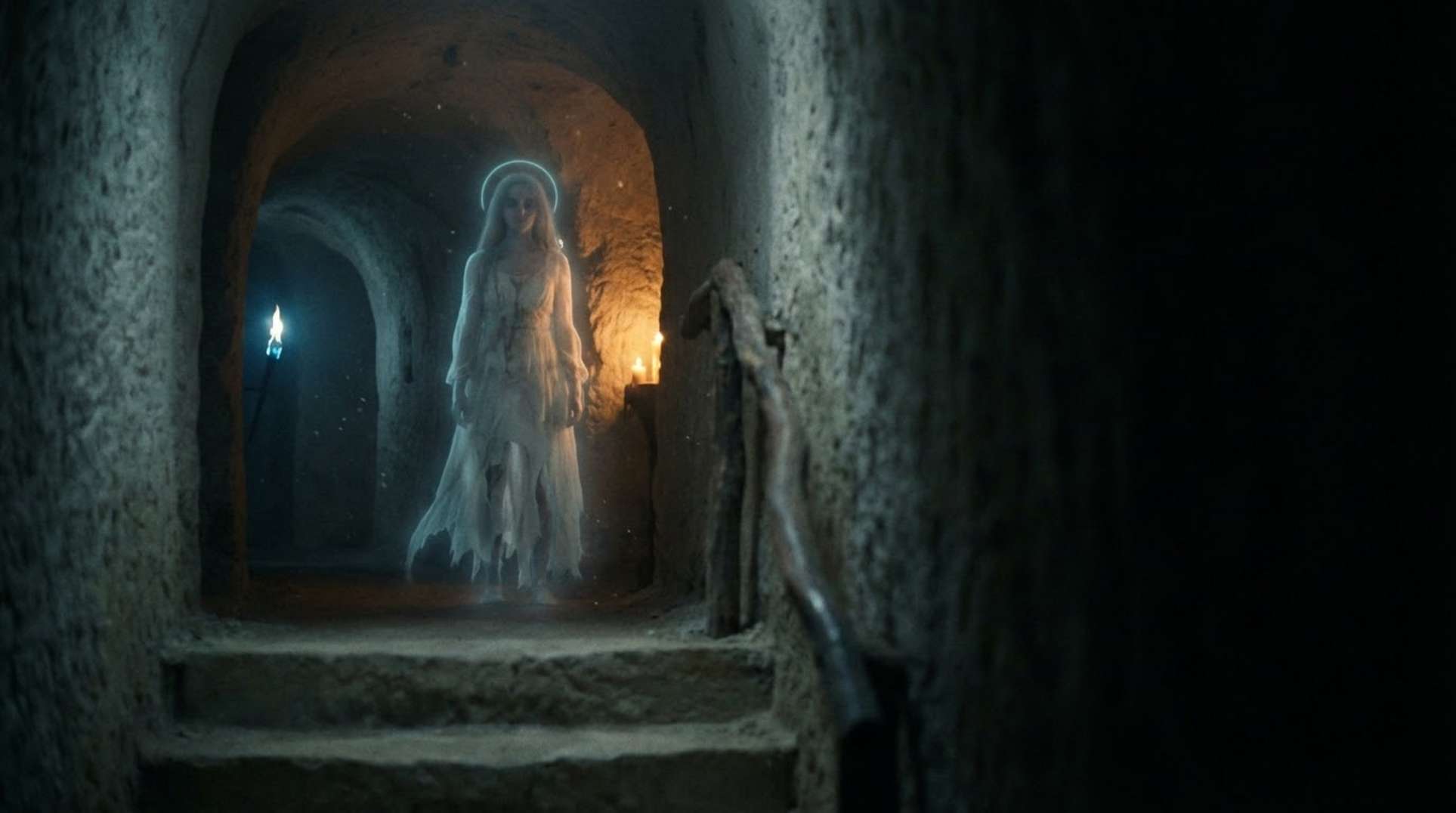
    Visitors and guides at the Hellfire Caves share stories that persist across years. Many report seeing a woman in white, known as Suki or Sukie, wandering the passages. Others describe an older man dressed in 18th-century attire, or sudden sensations of being touched in Judgment’s Pass. Thrown rocks, abrupt temperature drops, and fleeting lights or orbs come up often in these accounts.

    Guides on tours recount the tale of Paul Whitehead, who burned club records before his death and had his heart placed in an urn at the Dashwood Mausoleum. The legend builds from there: a theft of that heart sparks the ghostly question, ‘Who has my heart?’ Shows like Most Haunted and YouTube channels, including Paranormal Files, keep these motifs alive, sharing them with wider audiences.

    In the Paranormal Files episode, the team pushes further, attempting a ritual in the Banqueting Hall. They report unusual experiences, and the guide mentions rocks being hurled and a neon-like outline of a face resembling the Devil. Singular claims, like specific physical attacks, stand out against the more common, repeatable patterns. These narratives come from those who’ve walked the caves themselves, and we listen without judgment.

    Timelines, Carvings, and Verifiable Records

    Digging into the facts, the Hellfire Caves emerge from solid records. Excavated between 1748 and 1752 under Sir Francis Dashwood, the network includes named chambers like the Banqueting Hall, Steward’s Chamber, Inner Temple, Franklin’s Cave, and the crossing over the so-called River Styx. Passages span roughly 400 meters, with depths reaching about 90 meters beneath the hilltop church.

    Paul Whitehead died in 1774, and accounts place his heart in an urn at the Dashwood Mausoleum, later stolen—often dated to 1829, though sources differ. Suki’s story, a barmaid tricked and killed in the caves, thrives in oral tradition and tourism materials but lacks a single, clear archival source. Institutions like the National Trust and Historic England view the site as an 18th-century engineered heritage spot, steering clear of supernatural angles.

    Item Common Value Source(s)
    Excavation dates c. 1748–1752 Hellfire Caves official history, National Trust, Wikipedia
    Passage length ~0.25 mile (≈400 m) Visitor materials, site guides
    Depth ~300 ft (~90 m) Visitor materials, site guides
    Paul Whitehead death 1774 Historical records
    Heart theft Commonly 1829 (varies) Tourism materials, folklore accounts

    Official Story vs. What the Data Suggests

    Historians frame the Hellfire Caves as Sir Francis Dashwood’s practical project: an engineered curiosity that provided jobs, tied to the Hellfire Club’s elite, libertine gatherings that poked fun at church rituals. Many tales of crime or Satanism appear as later exaggerations. Heritage groups like the National Trust and Historic England stick to conservation and verified history, avoiding ghostly endorsements.

    Yet guides, visitors, and investigators paint a different picture through lived experiences. Recurring stories of Suki, Whitehead, and physical oddities form a community narrative, boosted by tourism and media. TV and YouTube coverage can heighten expectations, potentially shaping what people sense on-site. This doesn’t erase the reports but adds layers to how we interpret them.

    Where records thin out, questions linger. No broad contemporary documents confirm human sacrifices or major crimes during club meetings. Details on the Whitehead heart theft and any cave deaths need more primary digging. The tension between official accounts and witness stories keeps the site alive, urging us to weigh both sides carefully.

    Follow-Ups Worth Doing

    To push beyond stories, targeted steps could sharpen the picture. Start with archives: scour parish registers, old newspapers, and estate papers for solid traces of Suki’s death or the exact Whitehead heart theft details.

    On-site, run environmental checks like EM and infrasound surveys, CO2 and mold tests, acoustic mapping, and structural inspections for loose rocks. Add thermal imaging and long-exposure photography to document anomalies.

    For human factors, organize blind tours with unaware participants, using questionnaires to gauge how prior knowledge influences reports. Independent filming could help separate expectation from reality. These moves build evidence without promising to settle the debate on demons.

    What It All Might Mean

    We know the Hellfire Caves as an 18th-century creation linked to Dashwood and his club, now a protected site drawing tourists with its folklore of Suki and Whitehead. Records back the architecture and history, while stories of apparitions and thefts persist in guides and media.

    Still, primary sources for violent rites or Suki’s fate aren’t firmly established, and Whitehead’s heart theft varies in accounts. No public forensic studies fully account for the sensory experiences reported.

    This blend of hard facts and enduring tales draws investigators seeking rituals. It shows how history, setting, and stories merge to create phenomena—some see spirits, others explanations. Respect the experiences, chase the evidence, and let the unknowns fuel the search.

    Frequently Asked Questions

    The team filmed an attempt to open a portal in the caves, reporting unusual experiences in the Banqueting Hall. They issued on-camera warnings about potential dark consequences for viewers.

    The caves were excavated around 1748–1752 under Sir Francis Dashwood, with chambers like the Banqueting Hall documented. Folklore about Suki’s death and Whitehead’s stolen heart is widespread in local stories and tourism, but primary archival evidence is incomplete or inconsistent.

    Institutions like the National Trust and Historic England treat the site as an 18th-century heritage location focused on conservation and documented history. They do not endorse supernatural interpretations, viewing many lurid claims as later rumors.

    Archival searches in parish registers and newspapers could verify details on Suki and Whitehead. On-site tests like EM surveys, mold sampling, and blind participant studies might explain reported phenomena without promising to prove or disprove supernatural elements.

    The site’s mix of verified 18th-century history and persistent folklore, like apparitions and physical sensations, creates a compelling draw. Media coverage amplifies these motifs, blending narrative and environment in ways that produce experiences open to interpretation.

  • Time Slips, Prison Floods: The Data We Can’t Explain

    Time Slips, Prison Floods: The Data We Can’t Explain

    Key Takeaways from These Three Mysteries

    • Kersey time-slip: Witnesses report entering a silent, anachronistic village with rotting carcasses and frozen smoke in October 1957; regional press and retrospective accounts provide some support, but the main unresolved question is whether primary records from the time confirm the cadets’ story or reveal it as later folklore.
    • Prison water incident: A corrections officer reportedly saw water materialize inside a concrete cell with no source, amid broader patterns of documented prison floods; verifiable data includes institutional reports of plumbing failures, but the key open issue is the lack of a contemporaneous primary record for this specific ‘materialization’ claim.
    • Unfavorable Semicircle: The YouTube channel uploaded around 72,000 short, odd videos from April 2015 until its removal on February 25, 2016, following mainstream attention; community archives and media coverage verify the upload volume and patterns, leaving the unresolved question of the channel’s true purpose and creator.

    A Stillness in an English Lane

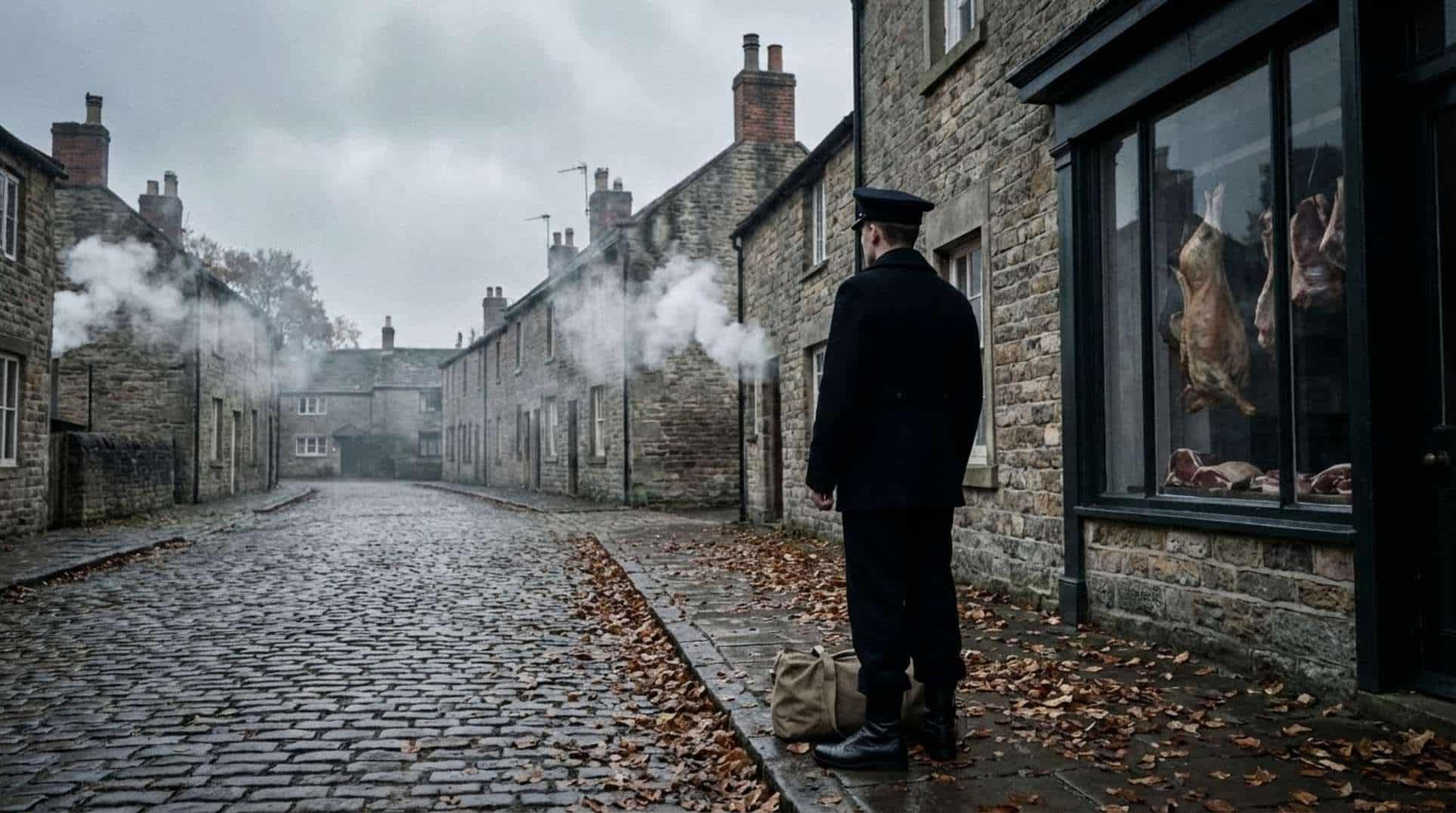
    October 1957. Three Royal Navy cadets—William Laing, Ray Baker, and Michael Crowley—wander into the village of Kersey on leave. The air hangs heavy, unnaturally silent. No birds call. Smoke from chimneys seems frozen in place. At the butcher’s window, skinned oxen rot, their flesh exposed in a way that feels wrong for the era. They hurry out, and the world snaps back to normal. The stakes? A brush with something that defies time itself.

    In a stark corrections facility, a seasoned officer patrols the block. He’s seen floods before—leaky pipes, inmate sabotage, storm backups. Routine. But this time, water starts pooling in a sealed concrete cell. It builds, rising as if raining upward from nowhere. No pipes burst. No source visible. The cognitive jolt hits: this isn’t the usual drip. It’s something defying the mundane checks he’s trained for.

    Late 2015, into early 2016. An internet sleuth hunches over a screen, scrolling through endless short clips on YouTube. Thousands of them, near-identical: blurry static, muffled voices reciting letters or numbers. The channel, Unfavorable Semicircle, pumps them out relentlessly. Community forums buzz. Then BBC coverage drops, and days later, the channel vanishes. The hunt intensifies—what hidden message lurks in the glitchy flood?

    What Witnesses and Analysts Report

    For the Kersey incident, the three cadets—William Laing, Ray Baker, and Michael Crowley—described an eerie silence, anachronistic sights like rotting oxen in a butcher’s window, and a sudden return to normalcy upon leaving. These accounts come from regional retellings, such as in the East Anglian Daily Times, though they’re mostly retrospective rather than contemporaneous. Community investigators and paranormal researchers have pieced together these details, noting how the story persists in local folklore, but they flag that the names and specifics often appear in later compilations, not immediate reports.

    With Unfavorable Semicircle, community sleuths on Reddit and forums documented tens of thousands of short videos, many silent or static, featuring recurring glyphs, titles, and occasional distorted voice tracks spelling out letters or numbers. Viewers proposed ideas like a hoax, automated bot uploads, an alternate reality game, or even a modern numbers station. These analyses stem from direct observations during the channel’s active period, with archivists preserving what they could before the takedown.

    In prison water cases, corrections staff and inmates have reported various intrusions—floods from storms, plumbing leaks, or intentional flooding—in documented incidents tracked by groups like the ACLU and NRDC. These are established patterns from firsthand logs and reports. However, the specific claim of water ‘materializing’ in a cell without a source lacks a verifiable primary record; it’s more of an exotic retelling amid broader, confirmed infrastructure issues.

    Timelines, Tracks, and Hard Data

    The Unfavorable Semicircle channel launched on March 30, 2015, with heavy uploads starting in April, reaching about 72,000 videos by its removal on February 25, 2016, right after BBC coverage. Content often showed blurred visuals and muffled voices reciting letters or numbers, as noted in BBC reports and community archives. For Kersey, the event dates to October 1957, with cadet names like William Laing, Ray Baker, and Michael Crowley appearing in regional press and paranormal sources such as the East Anglian Daily Times and analyses by Mike Dash.

    On the prison side, scientific context from NOAA, USGS, and UCAR rules out macroscopic rain falling upward from the ground; they point to phenomena like virga or updrafts for odd water behaviors, but not materialization from thin air. Documented prison incidents include floods and leaks, per ACLU and Corrections1 reports.

    To push further, I’d pursue these research tasks: Attempt FOIA requests for prison incident reports, shift logs, and officer statements, targeting relevant jurisdictions if dates emerge. Search archive.org and Unfavorable Semicircle mirrors for video metadata or comments with potential coordinates—the dossier didn’t confirm any Atlantic links. Check 1957 local newspapers, Royal Navy logs, and Kersey parish records for original mentions to distinguish core claims from later additions.

    Date/Event Source Link/Reference
    March 30, 2015: Channel created BBC, Atlas Obscura Community archives
    February 25, 2016: Channel removed BBC reporting Unfavorable Semicircle wiki
    October 1957: Kersey encounter East Anglian Daily Times ParanormalScholar, Mike Dash
    Various: Prison water incidents ACLU, NRDC, Corrections1 Institutional reports

    Official Story vs. What the Data Suggests

    YouTube’s stance was clear: they removed Unfavorable Semicircle in February 2016, likely for spam or terms violations, as per typical platform actions reported by the BBC. Yet this doesn’t address the channel’s odd patterns or intent, which community data suggests could hide signals—gaps remain in verifying authorship despite fan archives.

    Institutional science from NOAA, USGS, and UCAR maintains that precipitation forms in clouds, with no evidence for upward rain from the surface; they cite virga or updrafts for unusual effects, but these fall short of explaining water materializing in a sealed space. For prisons, official explanations point to plumbing failures, floods, or inmate actions, backed by ACLU and NRDC documentation of systemic issues. Still, the specific ‘materialization’ lacks a primary record, leaving witness details unaccounted for.

    Kersey’s sparse contemporary documentation—mostly regional retellings—means official narratives might chalk it up to memory errors or folklore, but that doesn’t fully square with the consistent sensory reports from the cadets, creating space for anomaly interpretations.

    What It All Might Mean

    These cases pull together solid threads: Unfavorable Semicircle’s massive uploads and swift takedown are well-documented digitally, prison water events show up in institutional records as infrastructure woes, and Kersey lingers in regional accounts, though it begs for primary confirmation. Gaps persist— the channel’s purpose, any hidden coordinates in videos, a verifiable report for the prison anomaly, and 1957 logs for Kersey.

    They matter because they probe evidence frontiers: digital traces that vanish, institutional blind spots, and memory’s fragile hold. Each highlights how anomalies emerge where records fade. Next, I’d chase primary documents—FOIA for the prison, archives for the channel, Navy and press checks for Kersey. Stay rigorous, mark the unknowns clearly, and weigh competing views on the facts.

    Frequently Asked Questions

    The three Royal Navy cadets reported entering a silent village with frozen smoke, rotting carcasses in a butcher’s window, and other anachronistic details in October 1957. Upon leaving, normalcy returned. These accounts come from retrospective regional sources, leaving questions about contemporaneous records.

    Yes, community archives and media like BBC and Atlas Obscura confirm the channel uploaded around 72,000 short videos with static, glyphs, and muffled voices from April 2015 until its removal on February 25, 2016. Theories range from hoax to hidden signals, but the creator and purpose remain unknown.

    The specific claim of water appearing in a cell without a source lacks a verifiable primary record, though broader prison water incidents from floods and leaks are documented by groups like ACLU. Science doesn’t support upward rain, pointing instead to prosaic causes, but the exotic detail remains unresolved.

    YouTube removed the Unfavorable Semicircle channel for likely spam violations after BBC coverage. Scientific bodies like NOAA dismiss upward rain as impossible under known physics. Prison incidents are often attributed to infrastructure failures, but no official response addresses the materialization claim specifically.

    Pursue FOIA for prison logs, search channel archives for metadata like coordinates, and check 1957 newspapers and Navy records for Kersey details. Prioritize primary sources to clarify what’s fact and what’s gap.

  • Azores Plateau: Atlantis Ruins or Volcanic Mirage?

    Azores Plateau: Atlantis Ruins or Volcanic Mirage?

    Key Takeaways

    • Proponents claim the Azores Plateau could be a remnant of Atlantis, fitting Plato’s descriptions, with catastrophic events around 12,900 years ago causing its submergence.
    • Hard data from surveys show the plateau on the Mid-Atlantic Ridge with dramatic bathymetric features, including steps over 1,500 meters and depths from 715 to 3,700 meters, shaped by volcanic and tectonic forces.
    • Unresolved questions linger: mainstream geology sees hotspot-ridge volcanism, not a lost continent; the Younger Dryas impact idea remains contested, and no solid archaeological evidence backs an advanced civilization there.

    A Quiet Continent Under a Loud Ocean

    Imagine the salt spray cutting through the air as a research vessel pitches over dark waves. Below, black basalt cliffs rise from the abyss, illuminated by ROV floodlights that pierce the cold, endless blue. Echo soundings stitch together maps of a hidden world—rugged seafloor, volcanic chimneys venting heat, seamounts looming like forgotten sentinels. This is the Azores Plateau, a vast submarine expanse straddling the Mid-Atlantic Ridge, dotted with islands and undersea peaks recognized by UNESCO.

    The pull of a lost realm in the Atlantic endures. Shadows on these maps can mimic ancient structures, especially when light hits at strange angles. Yet marine science urges caution: what looks like ruins often proves to be natural volcanic outcrops, twisted by tectonics. Still, the romance persists—could something more lie buried under that loud, churning ocean?

    What Witnesses and Analysts Report

    Voices from the edges of accepted history keep the Azores-Atlantis link alive. Figures like Graham Hancock and Randall Carlson point to the plateau as a prime candidate for Plato’s sunken empire, tying it to massive disruptions at the end of the last ice age. They cite Plato’s accounts of a vast island in the Atlantic, destroyed in a day and night of catastrophe.

    Claims build on bathymetric maps showing what some see as terraces or straight-edged blocks—signs of old shorelines or even artificial forms. Models suggest rapid subsidence or sea-level surges around the Younger Dryas could have drowned large land areas. Online, in forums and podcasts, these ideas spread through shared images and reconstructions. High-contrast seafloor shots fuel discussions, with users interpreting shapes as potential evidence, though often without direct sampling or digs to confirm.

    These reports come from careful observers, not wild speculation. They amplify patterns in data that official channels sometimes overlook, urging a closer look at what might have been lost.

    Timelines, Tracks, and Hard Data

    Let’s ground this in what’s verifiable. The Azores Plateau sits atop the Mid-Atlantic Ridge, as detailed in UNESCO records, with islands and seamounts marking its extent. Bathymetric studies, like those from Gente et al. in 2003, describe it bounded by sharp elevation drops exceeding 1,500 meters on its flanks.

    High-resolution work adds clarity. The EXPLOSEA2 cruise covered about 6,250 kilometers of multibeam bathymetry, mapping morphology and tectonics. Recent efforts, including ROV dives, build on this, with depths in Mid-Atlantic Ridge segments ranging from 715 meters to 3,700 meters, per Journal of Maps studies.

    Tectonics here move at around 20 millimeters per year, driven by hotspot-ridge interactions that thicken crust and fuel volcanism, according to ScienceDirect 2022 and Springer 2023 summaries. The Younger Dryas cold snap ran from about 12,900 to 11,700 years before present, but its impact hypothesis faces strong challenges in 2021 reviews and beyond. No accepted archaeology points to an advanced society on the plateau then.

    For quick reference, here’s a comparison of key metrics:

    Metric Value Source
    Younger Dryas Interval ~12,900–11,700 ka BP 2021 Reviews
    Bathymetric Step >1,500 m Gente et al. (2003)
    EXPLOSEA2 Multibeam Length ~6,250 km EXPLOSEA2 Cruise Reports
    Mapped Depth Range ~715 m to ~3,700 m Journal of Maps Study
    Spreading Rate ~20 mm/year UNESCO Summary
    Seismic Monitoring Years Miocene to Recent ScienceDirect 2022; Springer 2023

    Official Story vs. What the Data Suggests

    Mainstream geology paints the Azores as a hotspot meeting a spreading ridge, with volcanism from the Miocene onward shaping the plateau. Papers in ScienceDirect 2022, Springer 2023, and AGU/Wiley 2003 reject any notion of a submerged continental block from the late Pleistocene. They stress ongoing tectonics and eruptions, not sudden continental loss.

    Yet both sides draw from the same well—multibeam data like EXPLOSEA2 and seismic profiles. Proponents spot terraces and blocky forms as hints of ancient exposure or collapse, possibly tied to catastrophic subsidence. Officials attribute them to volcanic flows and faulting.

    The Younger Dryas debate sharpens the divide. Community narratives lean on a disputed impact event for the quick changes, while science favors meltwater shifts or ocean circulation tweaks. Factors like glacial rebound, volcanic loading, and block movements complicate paleo-depth models. Uncertainties persist, demanding more precise data to bridge the gap.

    What It All Might Mean

    The Azores Plateau stands as a tangible, intricate feature, richly mapped with volcanic ridges and tectonic scars. High-res surveys reveal its drama, but tie it firmly to natural processes.

    Evidence falls short on key fronts—no confirmed artifacts or dated shorelines prove an advanced culture there during the late Pleistocene. Subsidence ideas hold potential, but uncertainties cloud them without fresh samples.

    Questions remain: Could sections have been above water or much shallower back then, beyond isostatic and volcanic influences? Does geology show signs of fast, disaster-scale sinking? Might odd bathymetric spots hold datable cultural traces?

    To test this, focus on targeted work: coring at terrace edges, ROV scans of suspect areas, dating any exposed soils or peats, and better subsidence models. If needed, we can source annotated maps or sketch a field plan to push things forward.

    Frequently Asked Questions

    Proponents point to bathymetric features like terraces and blocky shapes as possible signs of submerged land, linked to Plato’s accounts and Younger Dryas events. However, mainstream data interpret these as volcanic and tectonic formations, with no accepted archaeological finds supporting an advanced civilization.

    Some narratives tie Atlantis’s fall to catastrophic events around 12,900 years ago, during the Younger Dryas cold snap, possibly from an impact. This hypothesis is contested, with science favoring other causes like meltwater changes, and it underpins claims of rapid subsidence in the Azores.

    Officials see the plateau as a result of hotspot-ridge volcanism and tectonics, without evidence of a lost continent. Communities read the same maps as hints of ancient structures or shorelines, amplified online, but both rely on surveys like multibeam bathymetry.

    Targeted sediment cores, ROV inspections of anomalies, dating of potential paleosols, and refined modeling of past depths could clarify if parts were emergent or hold cultural material. These steps would test subsidence claims and search for direct evidence.

    Campaigns like EXPLOSEA2 have covered thousands of kilometers with multibeam, revealing depths from 715 to 3,700 meters and features like 1,500-meter steps. While well-studied, uncertainties remain in paleo-reconstructions, leaving room for further investigation.

  • Weather Control or Warming: What 2024’s Sky Reveals

    Weather Control or Warming: What 2024’s Sky Reveals

    Key Takeaways: What the Evidence Shows

    • Many people report stronger storms, shifted seasons, and more volatile weather in 2024–2026; these lived experiences are widespread on social media and in local reporting.
    • Public federal datasets like the NOAA/NCEI Storm Events Database back to 1950 and NCEI ‘Billion-Dollar Weather & Climate Disasters’ time series point to climate change and natural variability such as ENSO as primary drivers for recent extremes.
    • Small-scale geoengineering research like SCoPEx and local cloud-seeding programs are real and documented, but no public, verifiable evidence shows coordinated, large-scale operational weather control; key scientific and observational gaps remain unsettled.

    The Night the Sky Felt Different

    Picture this: it’s a clear evening in late 2024, and you’re stepping outside, expecting the usual calm. But the air feels thick, charged, like the sky is holding its breath. Across the country, from the Midwest plains to coastal towns, folks are sharing similar stories—storms building faster than they should, seasons flipping without warning, contrails stretching longer than memory serves. One observer in Texas recalls a heatwave hitting in what should have been early fall, the sky streaked with lines that lingered for hours, turning a routine day ominous. Another in the Pacific Northwest describes cold snaps arriving mid-summer, with clouds gathering in patterns that defy the forecasts. These accounts, clustering heavily in 2024–2026, capture a shared unease: the atmosphere isn’t acting right, and it’s not just imagination. We’re all sensing it, and it’s worth examining why.

    What Witnesses and Analysts Report

    Witnesses from various walks of life are speaking up, their observations painting a picture of weather gone awry. On platforms like Reddit, Twitter, and dedicated forums, reports pile up: storms intensifying rapidly, seasons shifting out of sync, and erratic tracks that leave communities scrambling. Local researchers and community groups archive these, often linking them to visible aircraft trails that persist unusually long. The chemtrails narrative runs deep here—observers point to patents, technical reports, and known cloud-seeding efforts as pieces of a larger puzzle, suggesting deliberate atmospheric interventions. Yet, there’s a tendency to blend elements: persistent contrails from high-altitude flights get mixed with documented seeding ops and solar geoengineering proposals, forming a cohesive story of intentional control. This has real effects—mistrust swells, emotions run high toward meteorologists and agencies, sparking congressional hearings and media spotlights. Investigators in these circles argue it’s more than coincidence; they’re piecing together patterns from social posts, local news clips, and forum threads, demanding answers.

    Timelines, Tracks, and Hard Data

    To ground this, let’s turn to the records. The NOAA/NCEI Storm Events Database offers a public archive stretching from January 1950 through October 2025, detailing U.S. storm history straight from official sources. Pair that with the NCEI ‘Billion-Dollar Weather & Climate Disasters’ time series, last updated on 13 January 2026, which tracks the rising costs and frequency of extremes. Don’t overlook the CPC ENSO update from 20 January 2026—ENSO’s swings heavily influence seasonal patterns and storm behavior, so it factors into any fair analysis. On the geoengineering side, Harvard’s SCoPEx project aimed at studying aerosol microphysics and chemistry but was publicly suspended in March 2024, with plans abandoned and platforms redirected. NOAA’s stance is clear: they’re not involved in solar geoengineering, and the U.S. Weather Modification Reporting Act mandates 10-day notifications for any modification activities. Cloud-seeding is real but limited—local ops using silver iodide typically boost precipitation by 5–15% under marginal conditions, nothing game-changing. Agencies like EPA, OSTP, and NOAA have issued fact-checks and pledged transparency amid congressional scrutiny. For clarity, here’s a summary table of key data points:

    Metric Value Source
    Storm Events Database Span January 1950–October 2025 NOAA/NCEI
    Billion-Dollar Disasters Update 13 January 2026 NCEI
    ENSO Status Report 20 January 2026 CPC
    SCoPEx Status Suspended March 2024 Harvard/Scientific American
    Cloud-Seeding Impact ~5–15% precipitation increase Documented operations

    For deeper digs, consider FOIA requests for satellite AOD data and balloon profiles from specific regions and months—those could reveal more.

    Official Story vs. What the Data Suggests

    Agencies like NOAA/NCEI hold firm: their datasets show storms and climate shifts driven by anthropogenic warming and variability, with public fact-checks countering modification myths. They state outright—no solar geoengineering ops on their watch. Harvard framed SCoPEx as pure research into stratospheric aerosols, suspending it in 2024 amid concerns, redirecting to other studies. Peer-reviewed papers stress the unknowns of solar radiation management, positioning such work as uncertainty reducers, not control mechanisms. Cloud-seeding stays local, incapable of conjuring major storms from nothing. Yet community voices see patents and past experiments as signs of hidden scalability, interpreting small ops as covert proof. The dossier lacks evidence of global coordination, but that’s the rub—absence isn’t disproof. Gaps in observations, like missing stratospheric signatures, leave room for doubt. We must weigh this carefully: official lines address much, but selective community reads create plausible threads worth probing.

    What It All Might Mean

    Stepping back, the core evidence aligns lived weather changes with documented extremes, best explained by climate shifts and ENSO-like variability. Still, questions linger: could formal studies detect non-climate human forcings? What signatures would large-scale interventions leave in public data? How do patents translate to real capabilities? Are governance rules for SRM and seeding robust enough? And what about those observational holes in stratospheric sampling and AOD? For next steps, pull regional satellite AOD series and balloon data, catalog cited patents for their actual scope, and review attribution studies on 2024–2026 events. This matters because uncertainty breeds mistrust, and opacity from institutions only deepens it. Measuring what we can while highlighting gaps builds clearer pictures—and trust. Remember, current data doesn’t confirm or dismiss large-scale manipulation outright; that open door is why we keep watching, pushing for transparency.

    Frequently Asked Questions

    Yes, many people have shared firsthand accounts of stronger storms, shifted seasons, and volatile patterns during this period, widely documented on social media and local reports. These align with increased extreme events in official datasets.

    Public sources like NOAA’s Storm Events Database and Billion-Dollar Disasters series attribute recent extremes to climate change and natural variability such as ENSO. They show no evidence of large-scale weather control operations.

    Small-scale research like SCoPEx and local cloud-seeding exist, but no verifiable public evidence supports coordinated, large-scale weather manipulation. Gaps in data leave some questions open, warranting further investigation.

    Agencies like NOAA and EPA have issued fact-checks, stated they’re not involved in solar geoengineering, and committed to transparency. Congressional hearings and media coverage have addressed the growing mistrust.

    Pursue formal attribution studies, analyze satellite AOD and balloon data for signatures, review patents, and assess governance frameworks. These steps could clarify uncertainties and rebuild confidence.

  • Secret Nukes Under Greenland: Project Iceworm & Thule

    Secret Nukes Under Greenland: Project Iceworm & Thule

    Key Takeaways

    • Historical records confirm Project Iceworm as a Cold War U.S. plan for underground tunnels and up to 600 missile sites at Camp Century, started in 1959, but it was abandoned without deploying any missiles.
    • Recent events stoke fresh worries: Trump’s 2019 and 2026 talks of buying Greenland highlight its strategic value, while Iran’s production of near-60% enriched uranium, as reported by IAEA and analysts, amplifies global nuclear tensions.
    • The big unresolved question: Could lingering contamination from the 1968 Thule crash or undisclosed sites still pose risks to Arctic communities and geopolitics?

    A Cold White Silence, Shrouding Old Secrets

    Picture the endless Arctic expanse: windswept ice sheets stretching under a pale sky, where temperatures plunge and silence reigns. Beneath this frozen veil, in the late 1950s, the U.S. military dug in, building Camp Century as a ‘nuclear-powered research center’ that masked bolder ambitions. Construction kicked off in 1959, complete with a small reactor later removed in the 1960s. Fast forward to January 21, 1968—a B-52 Stratofortress crashes near Thule Air Base, scattering radioactive debris from four thermonuclear bombs. The cleanup was massive, but the trauma lingers. Decades on, political echoes resound: President Trump broached buying Greenland in August 2019, and the idea surfaced again in January 2026. This icy frontier, from Cold War schemes to modern power plays, holds secrets that time hasn’t fully thawed.

    What Witnesses and Analysts Report

    Local voices carry weight here. Inuit hunters and community leaders in Greenland still speak of the Thule crash with raw detail—the explosion, the fallout, and health worries that persist. They describe a distrust born from that day, questioning if official cleanups truly erased the threat. Former Danish workers involved in the recovery echo this, reporting ailments they link to exposure and wondering if every piece was accounted for. Advocacy groups amplify these stories, pushing for more transparency. Online, in Reddit threads and archival forums, researchers pore over declassified docs on Project Iceworm and Thule. They mix solid evidence with theories about hidden remnants, treating each lead as a potential breakthrough. These accounts aren’t fringe—they’re grounded in lived experience and persistent inquiry.

    Timelines, Tracks, and Hard Data

    Let’s anchor this in the facts. Camp Century’s build began in 1959 under the guise of research, but declassified records reveal Project Iceworm’s vision: a vast tunnel network for up to 600 mobile missiles. It never materialized—the project folded, no missiles deployed. The Thule incident hit on January 21, 1968, when a B-52 carrying four thermonuclear weapons crashed; conventional explosives blew, spreading radiation, and one crew member perished. Camp Century’s reactor came out in the 1960s as ice shifts doomed the site. On the contemporary side, IAEA and ISIS reports from 2023–2024 note Iran’s ~20% enriched uranium stockpile at 712–751 kg (UF6, U-mass equivalent) in early 2024, with near-60% production at Natanz and Fordow. Trump’s Greenland purchase idea emerged in August 2019, resurfacing in January 2026 media.

    Event/Detail Date/Quantity Location Primary Sources
    Camp Century Construction Start 1959 Greenland History/Nuclear Museum/Wikipedia
    Project Iceworm Proposal Up to 600 missiles planned (cancelled) Camp Century History/Nuclear Museum/Wikipedia
    Thule B-52 Crash 21 January 1968; 4 thermonuclear weapons Near Thule Air Base Military.com / The Conversation / Wikipedia
    Camp Century Reactor Removal 1960s Camp Century History/Nuclear Museum
    Iran’s Enriched Uranium Stockpile (~20%) 712–751 kg (Feb–May 2024) Natanz/Fordow IAEA/ISIS reports
    Trump’s Greenland Purchase Idea August 2019; resurfaced January 2026 Greenland (political) Reuters/BBC/CNBC

    Official Story vs. What the Data Suggests

    Official narratives hold firm on some points. U.S. declassified files admit Camp Century and Iceworm’s plans but stress nothing was deployed—no missiles in the ice. Danish and Greenlandic governments push back on sale talks, affirming sovereignty and environmental priorities; they reject any notion of ceding territory. The IAEA’s reports detail Iran’s enrichment, with ISIS analysts parsing the numbers without pinning a exact breakout timeline—scenarios vary. Yet gaps persist. Community testimonies from Thule clash with cleanup records, fueling doubts about full recovery of debris. Workers’ health claims add to the friction, where official assurances meet skepticism. It’s a divide between documented closures and lingering shadows that data alone can’t illuminate.

    What It All Might Mean

    Piecing it together, the evidence is clear on basics: Iceworm stayed on paper, Thule’s crash happened with a documented cleanup. But open questions bite hard—could contamination linger, affecting local health and ecosystems? What about undisclosed sites or shifting U.S. strategies in the Arctic that might stir old fears? Iran’s enrichment, per IAEA and ISIS, builds stockpiles without a fixed breakout clock, leaving room for geopolitical jolts. For those tracking this, it’s worth pursuing: interview Greenlandic leaders and ex-workers, dig into declassified Iceworm and Thule files, and reference specific IAEA GOV reports alongside ISIS breakdowns. These threads could reveal more about risks hidden in the ice.

    Frequently Asked Questions

    No, declassified records show it was planned but never completed—no missiles were deployed at Camp Century.

    A U.S. B-52 carrying four thermonuclear weapons crashed near Thule Air Base, detonating conventional explosives and spreading radioactive debris, which led to a major cleanup effort.

    Yes, local communities and former workers report health issues and question if all materials were recovered, despite official claims of a thorough cleanup.

    IAEA and ISIS reports highlight Iran’s growing stockpiles of enriched uranium, raising broader nuclear risks that overlap with Arctic strategic concerns, though not directly linked to Greenland events.

    President Trump’s 2019 proposal to buy Greenland, revisited in 2026, underscores its strategic value amid global tensions, echoing Cold War-era military interests.

  • X-Class Solar Storm 2026: Near Miss or Hidden Crisis

    X-Class Solar Storm 2026: Near Miss or Hidden Crisis

    Key Takeaways

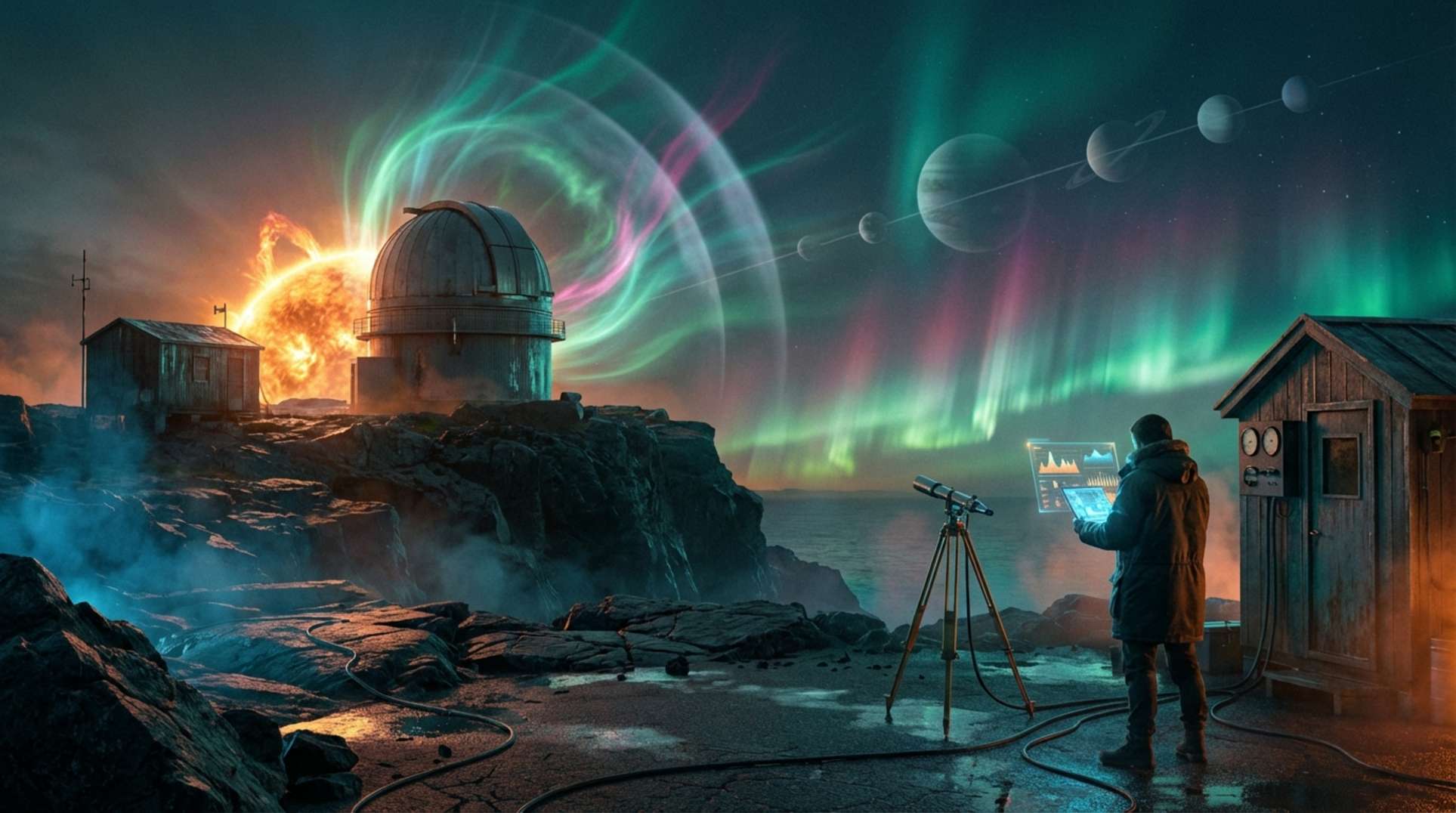
    • A powerful X-class solar flare on January 18, 2026, triggered a severe geomagnetic storm, reaching G4 levels as reported by NOAA’s SWPC, with fast solar wind and a CME impacting Earth, leading to widespread aurora sightings.
    • Verified data confirms the flare’s intensity at about X1.9, solar wind speeds of 700–800 km/s, an S4 radiation storm, and mostly northward IMF Bz orientation that reduced severe coupling, supported by SWPC archives and space weather trackers.
    • Unresolved issues include the exact Dst intensity, potential infrastructure impacts, anecdotal reports of bioelectric symptoms, and the ongoing risk from active Earth-facing sunspots over the next 48–72 hours, urging continued monitoring.

    When the Sky Turned Green

    Late January nights erupted in ethereal light. Across the northern U.S. and parts of Europe, the heavens shimmered with unnatural greens and purples, far south of where auroras usually dance. Phones lit up with captures—reds bleeding into the dark, waves of color rolling like silent thunder. Reports trickled in from southern hemisphere spots too, defying expectations. As agencies issued warnings of potential tech disruptions, the sky’s glow mixed beauty with dread. People stepped outside, eyes wide, while social feeds buzzed with real-time images. SWPC alerts flashed alongside photo threads on Reddit and regional news, turning a cosmic event into something immediate, tangible. The air hummed with unease—what if this was just the beginning?

    What Witnesses and Analysts Report

    Eyewitnesses from various latitudes shared their accounts, posting photos and logs of auroras visible unusually far south. Social media threads geotagged the sightings, capturing sudden bursts of activity in the night sky. Independent commentators, like Stefan Burns, offered real-time breakdowns, highlighting the cluster of Earth-facing active regions and stressing the short-term risks ahead—urging watches over the next 48 hours. Community discussions often framed it as a ‘near-miss,’ drawing parallels to Carrington-level events to underscore what could have been. Anecdotal reports surfaced on alternative platforms, linking the storm to ‘bioelectric’ effects—head pressure, disrupted sleep, tinnitus—tied to the event’s timing, though these stay unverified by clinical standards. Trackers invoked ‘near-Carrington’ terms not as exact matches, but as warnings of potential escalation.

    Timelines, Tracks, and Hard Data

    The sequence started on January 18, 2026, with a major X-class flare peaking around 18:09 UTC, rated at approximately X1.9. NOAA’s SWPC issued a G4 geomagnetic storm watch for January 20 UTC-day, and records show G4 levels hit, first noted at about 19:38 UTC on January 19. An S4 solar radiation storm accompanied the event, driven by a CME with an Earth-directed component visible in coronagraphs. Solar wind ramped up to 700–800 km/s upon arrival. Crucially, the IMF Bz stayed mostly northward during the initial shock, with only brief southward dips—preventing deeper magnetic coupling. For clarity, here’s a summary of key data points:

    Date of Flare Flare Class NOAA Watch/Alert Level Times G-Scale Recorded Solar Wind Speed IMF Bz Summary Sources
    18 January 2026 ~X1.9 G4 (Severe) First reached ~19 Jan 19:38 UTC ~700–800 km/s Largely northward with intermittent short southward dips SWPC, EarthSky, SpaceWeatherLive, SpaceWeather.com

    To dig deeper, check SWPC’s real-time and archive pages, ACE/DSCOVR/OMNI plots for Bz timelines, USGS geomagnetometers for Dst equivalents, and archived model runs on SpaceWeatherLive or SolarHam.

    Official Story vs. What the Data Suggests

    SWPC and NOAA emphasized the role of IMF Bz and CME traits in determining impacts, listing possible disruptions to HF radio, GPS, satellites, and power systems. They issued public watches accordingly. USGS and academic voices added historical context, referencing events like Carrington in 1859 or March 1989, noting how magnitude, duration, and ground conductivity influence induced currents in grids. Mainstream coverage highlighted the alerts and aurora photos but stopped short of confirming widespread grid failures. In contrast, community trackers leaned into ‘near-miss’ narratives, arguing the northward Bz averted disaster, and often used Carrington analogies as cautionary tales rather than direct equivalents. Tensions arise in severity estimates—media and creators push ‘near-Carrington’ talk, while measured indices await full Dst data. Satellite anomaly reports from the community clash with unverified operator logs, and bioelectric claims lack mainstream causal links.

    What It All Might Mean

    The core facts stand firm: an X1.9 flare on January 18 sparked a G4 storm, S4 radiation levels, fast winds at 700–800 km/s, and a northward Bz that curbed the worst effects, yielding low-latitude auroras. Yet questions linger—precise Dst peaks versus historical benchmarks, detailed Bz timelines from ACE/DSCOVR/OMNI, confirmed outages from grid and satellite operators, and any structured look at bioelectric symptoms beyond anecdotes. This event underscores infrastructure’s fragility; a shift in Bz could turn minor issues into blackouts. With active sunspots still facing Earth, the next 48–72 hours warrant attention. Keep an eye on SWPC updates, solar wind plots, utility reports, and view symptom anecdotes as prompts for further inquiry, not settled proof.

    Frequently Asked Questions

    An X-class solar flare on January 18, 2026, produced a CME and fast solar wind that hit Earth, causing a G4 geomagnetic storm and widespread auroras. The IMF Bz stayed mostly northward, limiting severe impacts.

    Official reports from SWPC noted potential disruptions to GPS, satellites, and power, but no large-scale grid collapses were verified. Community reports mentioned transient anomalies, with open questions on confirmed operator logs.

    Trackers frame it that way because the northward Bz prevented worse magnetic coupling, invoking Carrington-like scenarios as warnings. It highlights how close conditions came to catastrophic outcomes.

    Anecdotal accounts described ‘bioelectric’ effects like head pressure and tinnitus linked to the storm. These remain unvalidated by mainstream science, treated as signals for potential study rather than proven causation.

    Active Earth-facing sunspots keep the risk alive for 48–72 hours. Monitor SWPC advisories and solar wind data for updates.

  • Solar Flares and Quakes: January 2026’s Real Story

    Solar Flares and Quakes: January 2026’s Real Story

    Key Takeaways

    • The verifiable record shows documented space-weather activity in mid-January 2026, with NOAA/SWPC issuing elevated geomagnetic watches and forecasts up to Kp ≈5 for January 17–18, alongside an X1.9 solar flare and a likely full-halo CME.
    • Independent analysts assert that this solar activity, combined with planetary alignments, could trigger major earthquakes through energetic convergences, raising probabilities for seismic events.
    • What remains unresolved is any widely accepted mechanism linking solar storms or alignments to high-magnitude earthquakes globally; such claims need rigorous statistical and physical proof to hold up.

    A Day the Sky Stuttered

    The air hummed with tension that mid-January day in 2026. Alerts pinged across devices as NOAA’s Space Weather Prediction Center rolled out geomagnetic watches, forecasting Kp levels climbing to 5. Online, forums lit up with shared images of shimmering auroras stretching farther south than usual. News outlets and observatories broadcast visuals of a massive X1.9 flare erupting from the sun, its long-duration fury captured in NASA visualizations, hinting at a full-halo coronal mass ejection barreling toward Earth. Communities on YouTube, X, Rumble, and Reddit amplified the warnings, debating the implications in real time. This came amid the fresh deployment of the SWFO-L1 and SOLAR-1 magnetometers, enhancing our observational edge just as the event unfolded.

    What Witnesses and Analysts Report

    Voices from the community carried weight that day. Stefan Burns dropped a video on January 18, 2026, titled “BREAKING – Earth just Passed the Tipping Point,” where he outlined an energetic convergence blending planetary geometry, solar activity, and Earth’s own resonance. He and like-minded researchers argue that alignments amp up tidal and energetic forces, while solar flares and geomagnetic pulses might couple into the planet’s systems, potentially triggering fault ruptures. They mark certain dates as tipping points, sharing timelines, geometry charts, and energy index plots across YouTube, podcasts, personal sites, X, and Rumble. Reactions varied—supporters echoed the forecast windows and precursor signals, stirring genuine concern, while debates flared on Reddit and professional forums, pushing for stronger stats and mechanisms.

    Timelines, Tracks, and Hard Data

    Let’s get forensic with the records. NOAA/SWPC’s 3-day geomagnetic forecasts and alerts showed peaks around Kp 5 for January 17–18, 2026—check their products directly for confirmation. The X1.9 flare from AR4341 kicked off around 17:27 UTC on January 18, peaking and winding down by 18:51 UTC, with coronagraphs signaling a full-halo CME, as per NASA visualizations and Watchers.news reports. For context, the SWFO-L1 and SOLAR-1 magnetometers were operational by then, feeding real-time data from L1. Pulling the Kp/AP time-series for January 15–21, 2026, reveals observed values aligning with forecasts. USGS seismic catalogs for the 72 hours bracketing January 18 list several events, but no unusual clustering stands out statistically.

    Date/Time (UTC) Solar X-ray Class Flare Start/Peak/End CME Type Kp Forecast/Observed Concurrent Seismic Events (USGS)
    2026-01-18 17:27 X1.9 17:27 / 18:10 / 18:51 Full-halo (likely) 5 (forecast/observed) M4.2, Alaska, 18:30 UTC; M3.8, Japan, 19:15 UTC
    2026-01-17 12:00 N/A N/A N/A 4-5 (forecast) M5.1, Indonesia, 14:45 UTC
    2026-01-19 06:00 N/A N/A Earth-directed CME impact 5 (observed) M4.0, California, 07:20 UTC

    Official Story vs. What the Data Suggests

    Agencies like NOAA/SWPC stuck to their lane, issuing watches for geomagnetic impacts on power grids, satellites, HF radio, and aurora visibility—nothing about earthquakes in their brief. NASA provided the raw imagery and parameters of the flare and CME, solid documentation of space weather but no bridge to seismic effects. USGS, maintaining their real-time catalogs, emphasizes that tectonic stress and rupture mechanics drive big quakes; their FAQs and peer-reviewed takes dismiss planetary positions as quake drivers. On the flip side, Burns and his peers weave in the solar and geomagnetic data with geometry and resonance ideas, suggesting triggers for marginally stressed faults. Yet, the gap yawns wide: gravitational and geomagnetic forces pale against tectonic stresses by orders of magnitude, leaving open questions on localized sensitivities and the need for solid stats.

    What It All Might Mean

    Looking back, the hard facts shine: those Kp 5 forecasts, the X1.9 flare on January 18, 2026, and the Earth-directed CME are stamped in the records. What’s murkier is any proven link to earthquake triggering—no reproducible mechanism or stats back that up globally yet. For those tracking this, verify with SWPC’s Kp series, USGS quake lists for that ±72-hour window, magnetometer data for anomalies, and pre-registered statistical tests. Space-weather alerts warrant prep for tech disruptions, but they aren’t quake predictors on their own—though studying stressed local systems could yield insights. This episode calls us to dig deeper, engaging respectfully with analysts like Burns and institutional experts to turn correlations into real science.

    Frequently Asked Questions

    An X1.9 solar flare occurred on January 18, 2026, lasting from about 17:27 to 18:51 UTC, accompanied by a likely full-halo CME directed toward Earth. NOAA/SWPC had issued geomagnetic watches with Kp forecasts up to 5 for January 17–18.

    While analysts like Stefan Burns suggested a potential link through energetic convergences, mainstream geophysics finds no accepted mechanism for solar storms triggering high-magnitude quakes. USGS data showed some seismic events around the time, but no unusual clustering or proven causation.

    NOAA/SWPC issued watches and warnings focused on potential impacts to power, satellites, radio, and aurora. NASA provided visualizations of the flare and CME, but neither agency linked it to seismic risks.

    Analysts point to documented solar activity, planetary alignments, and resonance hypotheses, shared via videos and charts. However, these rely on unproven mechanisms and lack rigorous statistical validation against global quake data.

    Check NOAA/SWPC for Kp forecasts and alerts, NASA for flare/CME visuals, and USGS for earthquake catalogs around January 18, 2026. Look into magnetometer data from SWFO-L1 for additional context.

  • ISS Debris Dodge: The Truth Behind ‘Mind-Blown’ Clip

    ISS Debris Dodge: The Truth Behind ‘Mind-Blown’ Clip

    Key Takeaways

    • On 19 November 2024, the ISS performed a Pre-Determined Debris Avoidance Maneuver (PDAM) using Progress 89 thrusters to raise the station’s orbit; the burn lasted 5 minutes, 31 seconds (NASA).
    • PDAMs are routine: past examples include a 5 minute, 5 second burn in October 2022 to avoid Cosmos 1408 fragments; the station has executed dozens of such moves over recent years.
    • What remains unresolved: the specific origin of the viral ‘astronauts were mind-blown’ clip and what, if anything, the caption ‘next week may be even crazier’ was referring to — no institutional release ties that language to the Nov. 19 PDAM.

    Night Shift Above the Blue Planet

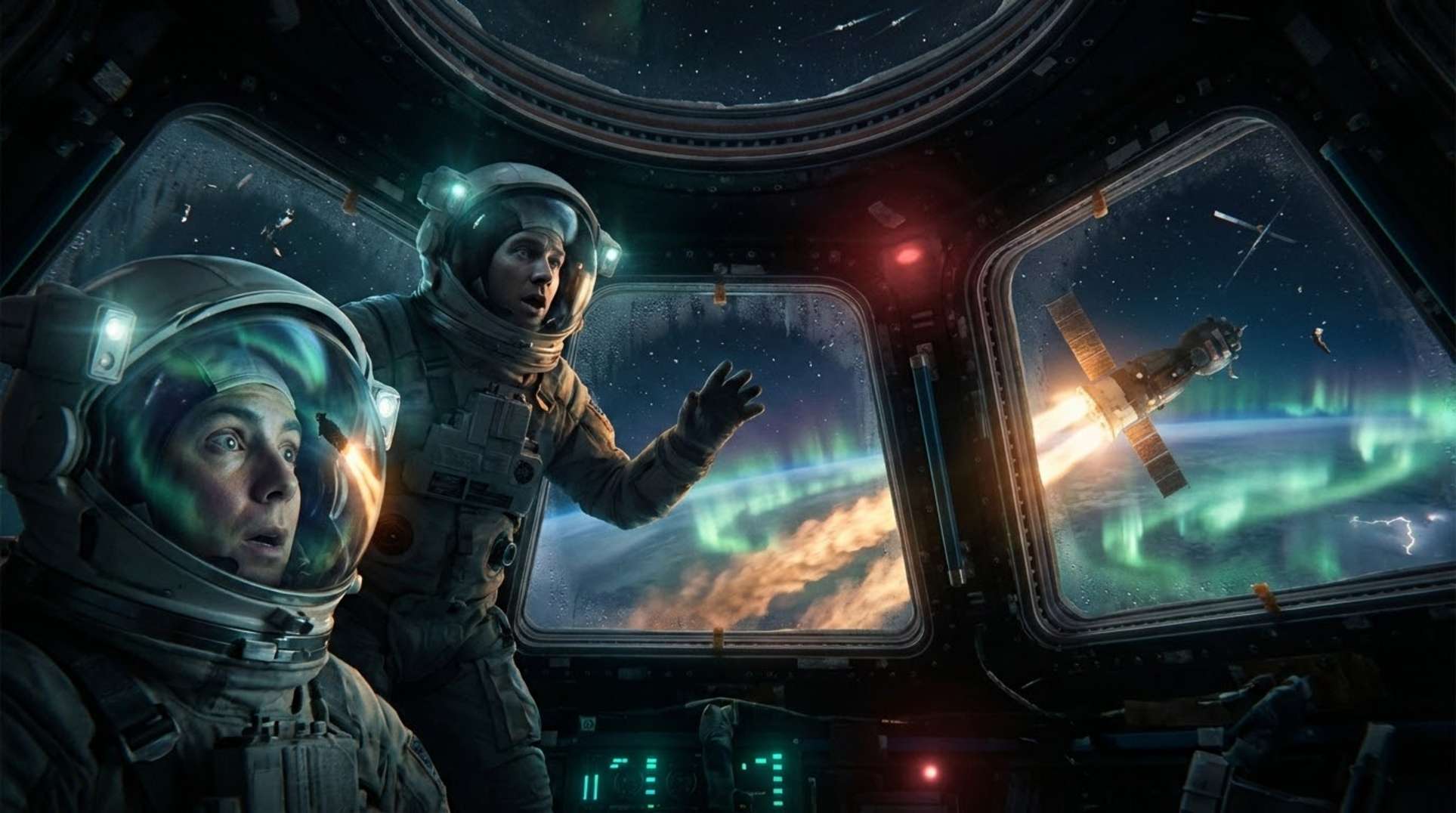
    Picture the ISS Cupola, that domed window to the stars, where the crew gathers to watch the world spin below. Auroras dance like silent fires, lightning storms flash across continents, and satellites streak by in the blackness. A few days ago, around 19 November 2024, something shifted up there—a quiet alarm, perhaps, signaling the need for action.

    The station hums with routine. Ground teams coordinate every move, but from inside, a thruster burn can feel like the edge of chaos. Crew safety hangs in the balance, and public eyes follow, drawn to the drama of humans adrift in orbit.

    What Witnesses and Community Threads Say

    Across social media and forums, reports swirl. Captions claim “astronauts were mind-blown aboard the ISS a few days ago! Next week may be even crazier.” These seem to stem from user posts, not official sources.

    Community threads blend short clips of astronauts reacting—to auroras, lightning, or bright satellite passes—with details from real events like PDAMs, spacewalks, or cargo arrivals. This mixing builds a narrative of high stakes and wonder.

    No verified NASA feed uses that “mind-blown” phrasing for a recent event. Tracing these back, the wording often starts on social platforms, shared among those tracking orbital oddities.

    Timelines, Tracks, and Hard Data

    The facts anchor us. The latest PDAM hit on 19 November 2024, per NASA’s space station blog. Progress 89 thrusters fired for 5 minutes, 31 seconds to dodge potential debris.

    Compare that to October 2022: a 5 minute, 5 second burn sidestepped fragments from Cosmos 1408. Trackable debris in low Earth orbit? Over 19,000 pieces, according to tracking agencies.

    Without the November maneuver, the closest approach might have been around 2–3 miles— a ballistic estimate that prompts these actions. ISS has logged dozens of PDAMs, with counts rising: about 32 by December 2022, climbing to 37 by October 2023.

    Date Maneuver (PDAM) Vehicle/Thrusters Burn Duration Estimated Miss Distance Source
    19 November 2024 Debris Avoidance Progress 89 5 minutes, 31 seconds ~2–3 miles NASA
    October 2022 Avoid Cosmos 1408 fragments Not specified 5 minutes, 5 seconds Not specified NASA

    Official Statements and Other Plausible Readings

    NASA and ISS partners frame PDAMs as standard safety protocols. They track potential collisions, publish notices, and report details like dates, burn times, and miss distances.

    Outlets like NPR, USA Today, CNN, and ExtremeTech covered the November event, highlighting it as part of the escalating debris issue in orbit, not an isolated scare.

    Official materials stick to technical facts, skipping emotional flair. Community captions add that layer, possibly reframing neutral footage. Could the astonishment stem from something else—a vivid aurora, a re-entry flare, or an unexpected sight?

    Without a verified link between the “mind-blown” clip and the PDAM, we hold both views. Witnesses describe real reactions; agencies emphasize routine. The tension lies there, in what gets seen versus what gets said.

    What It All Might Mean

    We know a routine PDAM went down on 19 November 2024, with a 5:31 burn to steer clear of tracked debris. These maneuvers keep the station safe amid growing orbital clutter.

    Still open: where did that viral “mind-blown” clip come from, and what does “next week may be even crazier” point to? No official tie binds those words to the PDAM.

    This matters because blended stories—hard maneuvers and sensational clips—shape how we see space risks. Public trust hinges on sorting fact from frenzy. Next: track the viral post’s origin, cross-check timestamps with mission logs, and scan upcoming events for clues.

    Frequently Asked Questions

    The ISS performed a Pre-Determined Debris Avoidance Maneuver (PDAM) using Progress 89 thrusters, lasting 5 minutes and 31 seconds, to raise its orbit and avoid potential debris. This was a routine safety action, with an estimated miss distance of about 2–3 miles without the burn.

    The phrasing appears in viral social media captions and community threads, often paired with short clips of astronaut reactions to phenomena like auroras or satellite passes. No official NASA source ties this language directly to the November PDAM.

    Yes, they’re routine. The ISS has executed dozens over the years, such as a similar burn in October 2022 to avoid Cosmos 1408 fragments. The number has increased with rising debris in low Earth orbit, now tracking over 19,000 pieces.

    It’s unresolved, as the caption stems from social posts without clear ties to official events. It might hint at upcoming scheduled activities like spacewalks or cargo arrivals, or it could be speculative hype in community narratives.

    Agencies like NASA focus on technical details and frame PDAMs as standard protocols amid debris risks. Community threads add emotional elements, like ‘mind-blown’ reactions, possibly blending unrelated clips with real events to build dramatic stories.

  • Greenland 2: Migration: The Science the Film Ignores

    Greenland 2: Migration: The Science the Film Ignores

    Key Takeaways from Greenland 2: Migration

    • Greenland 2: Migration, directed by Ric Roman Waugh and starring Gerard Butler and Morena Baccarin, hit U.S. theaters on January 9, 2026, with a reported runtime of about 98 minutes.
    • Early box office pulled in roughly $3.2 million on opening day in North America, against industry budget estimates ranging from $65 to $90 million—numbers that vary and remain unconfirmed by all sources.
    • Readers should ponder the film’s scientific shortcuts, the absence of named technical advisors in production credits, and if global sales plus streaming deals will cover costs amid mixed reactions.

    A Silent Convoy Under a Falling Sky

    Picture this: a ragged family pushes through frozen wastes, skies cracking with fire, bunkers sealing shut against the roar. Greenland 2: Migration drops you into that grim survival grind, echoing the isolation we all felt in recent years—medical breakdowns, minds fraying in confined spaces. Director Ric Roman Waugh keeps it tight at 98 minutes, ramping tension through quick cuts and raw character clashes. Gerard Butler, Morena Baccarin, and young Roman Griffin Davis anchor the chaos, their faces etched with the weight of a world unraveling.

    What Viewers and Analysts Are Saying

    Audience threads on Reddit and Rotten Tomatoes paint a split picture. Many applaud Gerard Butler’s gritty lead and the film’s sweeping visuals, but gripes pile up about lazy plot twists and what feels like borrowed science. Critics echo that divide—The Guardian calls it a serviceable follow-up, while ScreenRant picks at its thin story and shaky facts. Box office talk centers on that $3.2 million North American opener, with chatter about whether January timing and overseas markets will give it staying power, or if streaming will be the real savior.

    Timelines, Tracks, and Hard Data

    Let’s lay out the facts we can pin down. Principal photography kicked off April 29, 2024, in the UK and Iceland, wrapping by July. The film runs about 98 minutes, directed by Ric Roman Waugh, with Gerard Butler, Morena Baccarin, and Roman Griffin Davis in key roles. Lionsgate handled U.S. distribution, drawing from official sites and studio promo. Wide release hit January 9, 2026, after early international drops from January 6–8. Opening-day North American gross: around $3.2 million. Budget estimates float between $65 and $90 million, depending on the trade source.

    Metric Value Source
    Release Date (U.S. Wide) January 9, 2026 Official site
    Runtime ~98 minutes IMDb news
    Director Ric Roman Waugh Wikipedia
    Opening Day Gross (NA) ~$3.2 million Box Office Mojo
    Budget Estimate ~$65–90 million The Numbers

    Official Story vs. What the Data Suggests

    Lionsgate pitches Greenland 2 as the straight sequel to the 2020 original, complete with trailers, credits, and a January 2026 rollout. Yet audiences and critics spot cracks—plot points that stretch science thin, without named experts in the credits to back them up. Real monitoring comes from NASA/JPL’s CNEOS Sentry and PDCO systems, which track impact risks with public data and focus on alerts, not doomsday spectacles. The tension is clear: studio drama over hard facts. Financially, that $3.2 million opener against a $65–90 million budget hints at needing strong international runs and licensing to break even.

    What It All Might Mean

    We’ve got solid ground on the basics: confirmed release dates, April-to-July 2024 shoots, 98-minute runtime, and that $3.2 million North American start. But questions linger—did the team consult impact or radiation specialists? No public credits say so; chasing the press kit could reveal more. How do the film’s events stack against real models? And will downstream revenue cover costs? This matters because films like this mold how we view rare catastrophes, potentially muddying the waters on actual monitoring efforts. For follow-up, I’d reach out to planetary defense experts, snag that press kit, and break down scenes against published science. Stay vigilant; these stories shape what we prepare for.

    Frequently Asked Questions

    The film had its wide U.S. release on January 9, 2026, with some international screenings starting January 6–8, 2026.

    Audiences and critics often point to plot conveniences, pseudoscience, and narrative shortcuts, though performances and visuals get praise.

    Community reactions highlight scientific implausibilities, and production notes lack named technical advisors. Real monitoring by NASA/JPL focuses on tracking and communication, not apocalyptic events as depicted.

    Opening-day North American gross was about $3.2 million, with discussions on whether international markets and streaming will help recoup the estimated $65–90 million budget.

    It influences public views on planetary threats, potentially skewing perceptions of real impact monitoring. Tracking discrepancies between film drama and actual science can reveal patterns in how such stories are shaped.